Home Economics in the Victorian Curriculum Leanne Compton

- Slides: 31
Home Economics in the Victorian Curriculum: Leanne Compton Curriculum Manager, Design And Technologies Nerida Matthews Curriculum Manager, Health and Physical Education
Agenda • Exploring the place of Home Economics in the Victorian Curriculum • Design and Technologies • Health and Physical Education • Planning for implementation § Whole school planning § Working with the Victorian Curriculum § Progressing learning • Questions?
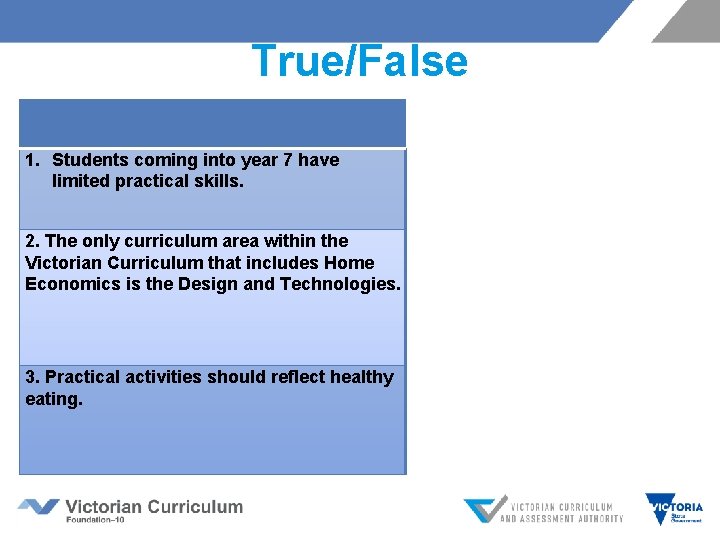
True/False 1. Students coming into year 7 have limited practical skills. 2. The only curriculum area within the Victorian Curriculum that includes Home Economics is the Design and Technologies. 3. Practical activities should reflect healthy eating.
Victorian Curriculum F– 10 Learning Areas Capabilities • • • The Arts o Dance o Drama o Media Arts o Music o Visual Communication Design (7 -10) o Visual Arts English Humanities o Civics and Citizenship o Economics and Business o Geography o History Languages Health and Physical Education Mathematics Science Technologies o Design and Technologies o Digital Technologies Critical and creative thinking Intercultural Ethical Personal and social
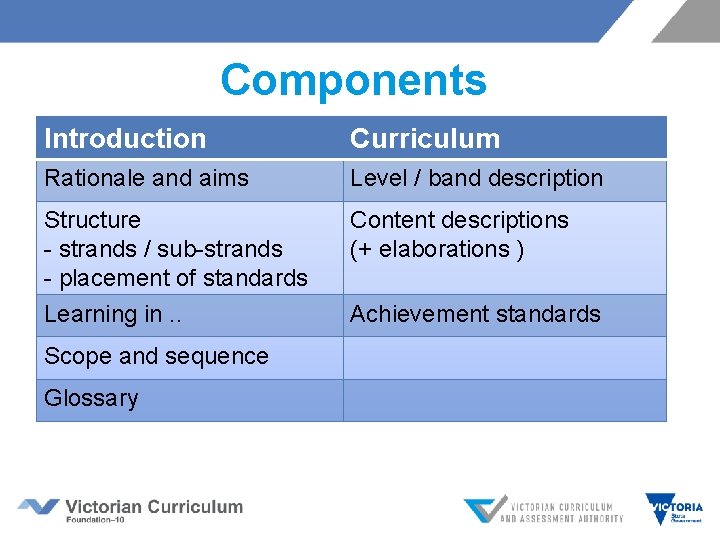
Components Introduction Curriculum Rationale and aims Level / band description Structure - strands / sub-strands - placement of standards Learning in. . Content descriptions (+ elaborations ) Scope and sequence Glossary Achievement standards
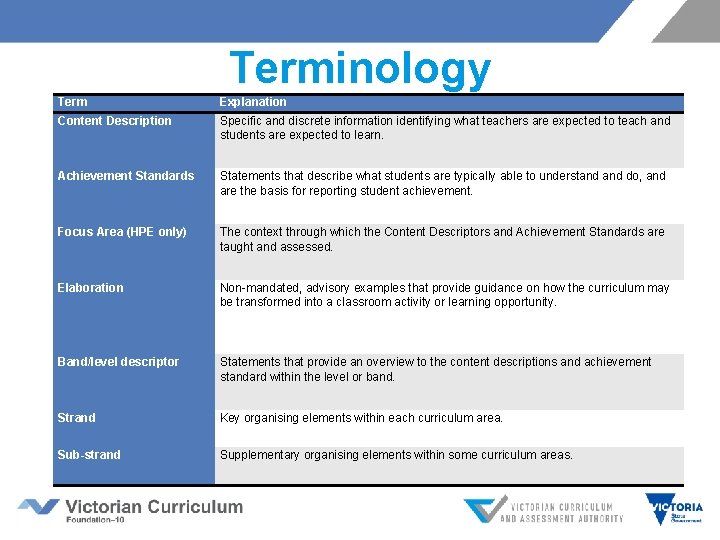
Terminology Term Explanation Content Description Specific and discrete information identifying what teachers are expected to teach and students are expected to learn. Achievement Standards Statements that describe what students are typically able to understand do, and are the basis for reporting student achievement. Focus Area (HPE only) The context through which the Content Descriptors and Achievement Standards are taught and assessed. Elaboration Non-mandated, advisory examples that provide guidance on how the curriculum may be transformed into a classroom activity or learning opportunity. Band/level descriptor Statements that provide an overview to the content descriptions and achievement standard within the level or band. Strand Key organising elements within each curriculum area. Sub-strand Supplementary organising elements within some curriculum areas.
Delivering the curriculum Schools can decide how to structure their teaching and learning program. Teaching and learning programs • reflect local resources, expertise and contexts, and allows for specialisation and innovation • ensures every student has the opportunity to learn the knowledge, understandings and skills defined in the curriculum
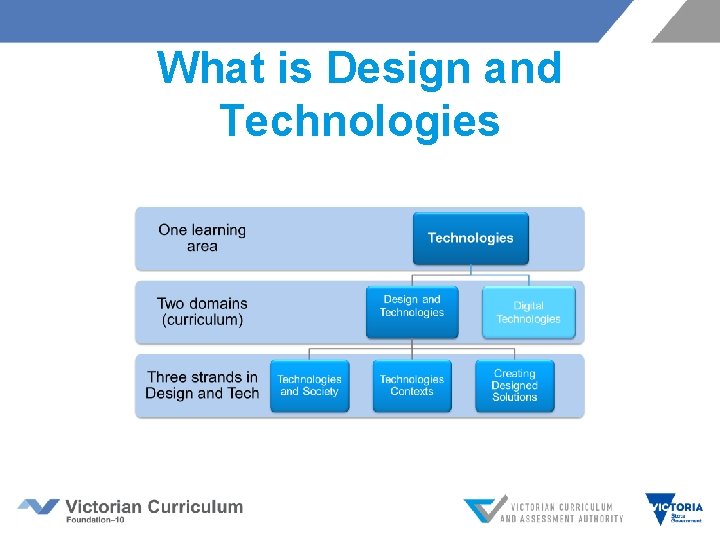
What is Design and Technologies
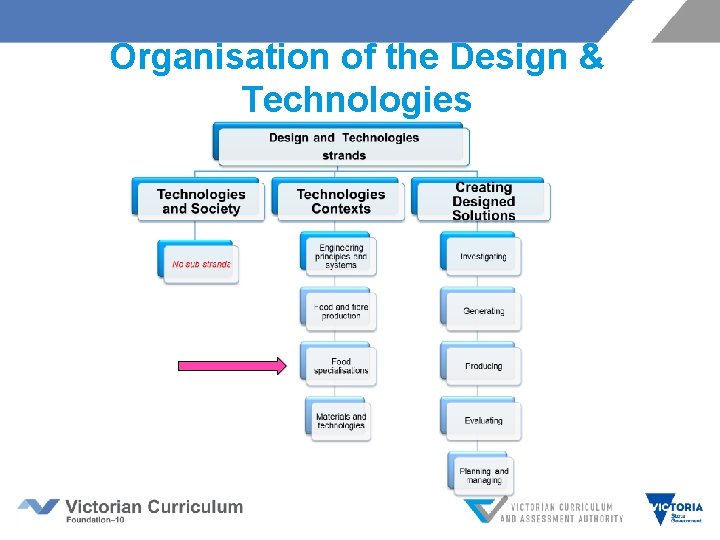
Organisation of the Design & Technologies
Focus on different types of thinking • Design thinking - use of strategies for understanding design needs and opportunities • Systems thinking - generation of ideas and decisions made throughout the design processes; recognition of the connectedness and interactions; • Computational thinking - problem-solving used eg. calculating costs, testing materials
Food specialisations Explores the application of nutrition principles and the characteristics and properties of food, food selection and preparation, and contemporary food issues. Students come to understand the importance of a variety of foods, sound nutrition principles, food preparation and food safety.
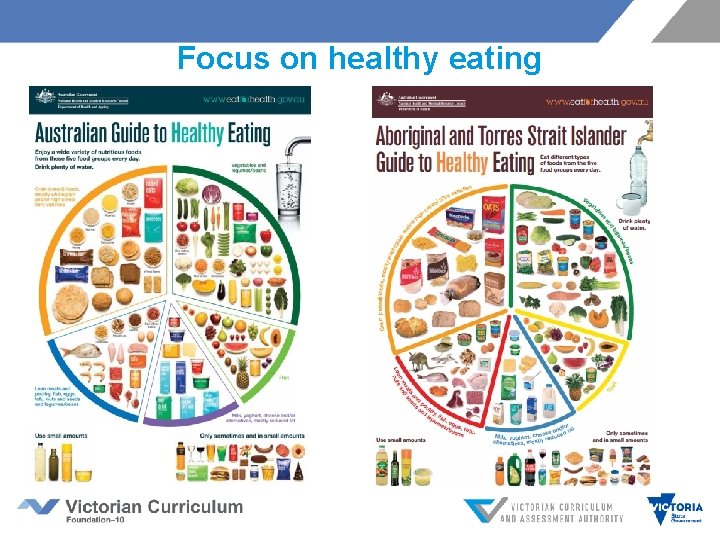
Focus on healthy eating
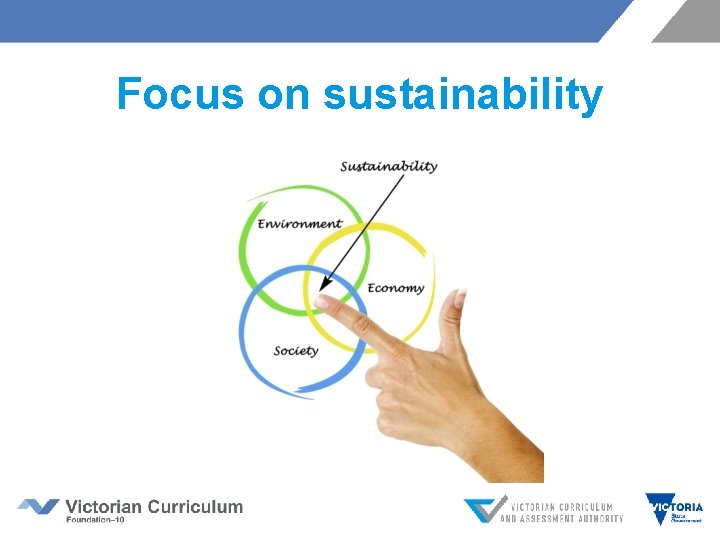
Focus on sustainability
Organisation of Health and Physical Education The content is organised under two strands (each with three substrands): • Personal, social and community health • Being healthy, safe and active • Communicating and interacting for health and wellbeing • Contributing to healthy and active communities • Movement and physical activity • Moving the body • Understanding movement • Learning through movement
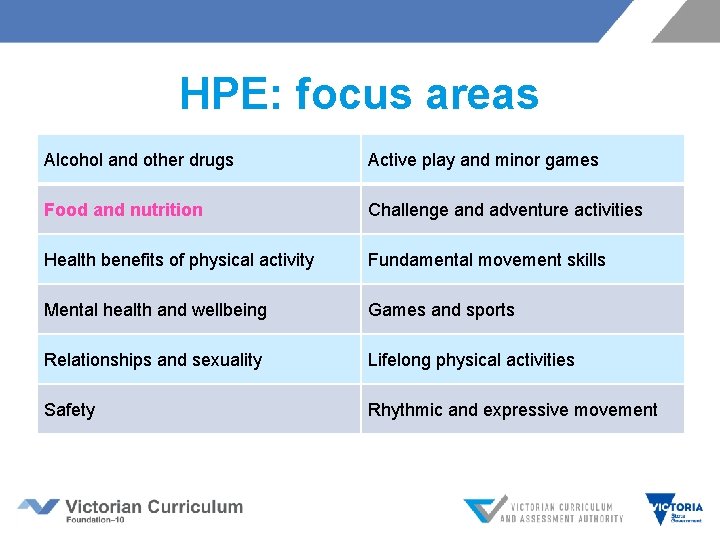
HPE: focus areas Alcohol and other drugs Active play and minor games Food and nutrition Challenge and adventure activities Health benefits of physical activity Fundamental movement skills Mental health and wellbeing Games and sports Relationships and sexuality Lifelong physical activities Safety Rhythmic and expressive movement
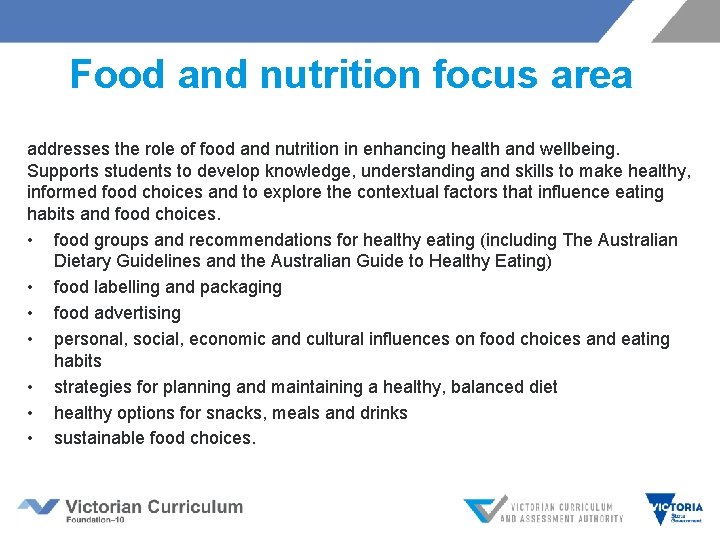
Food and nutrition focus area addresses the role of food and nutrition in enhancing health and wellbeing. Supports students to develop knowledge, understanding and skills to make healthy, informed food choices and to explore the contextual factors that influence eating habits and food choices. • food groups and recommendations for healthy eating (including The Australian Dietary Guidelines and the Australian Guide to Healthy Eating) • food labelling and packaging • food advertising • personal, social, economic and cultural influences on food choices and eating habits • strategies for planning and maintaining a healthy, balanced diet • healthy options for snacks, meals and drinks • sustainable food choices.
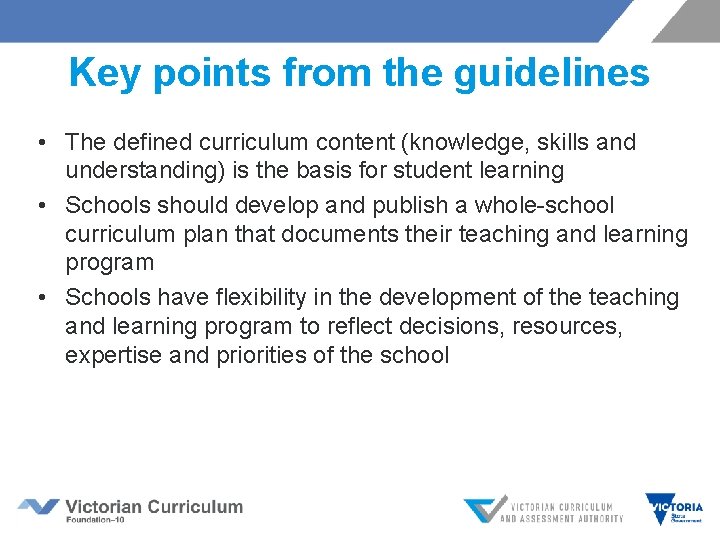
Key points from the guidelines • The defined curriculum content (knowledge, skills and understanding) is the basis for student learning • Schools should develop and publish a whole-school curriculum plan that documents their teaching and learning program • Schools have flexibility in the development of the teaching and learning program to reflect decisions, resources, expertise and priorities of the school
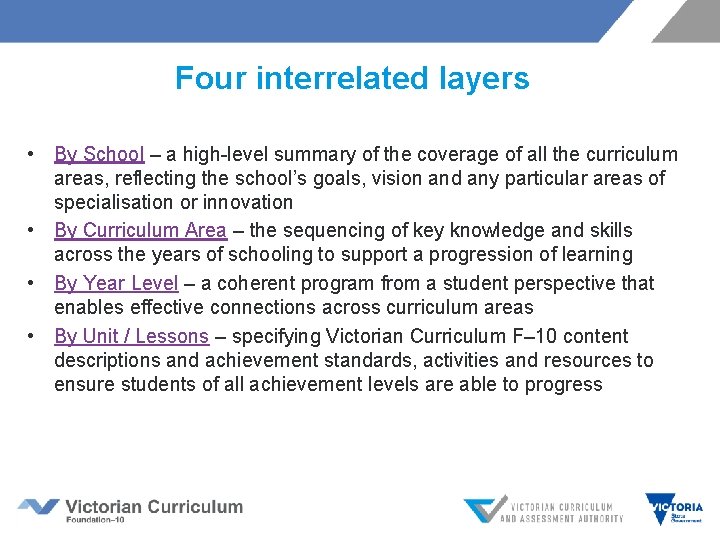
Four interrelated layers • By School – a high-level summary of the coverage of all the curriculum areas, reflecting the school’s goals, vision and any particular areas of specialisation or innovation • By Curriculum Area – the sequencing of key knowledge and skills across the years of schooling to support a progression of learning • By Year Level – a coherent program from a student perspective that enables effective connections across curriculum areas • By Unit / Lessons – specifying Victorian Curriculum F– 10 content descriptions and achievement standards, activities and resources to ensure students of all achievement levels are able to progress
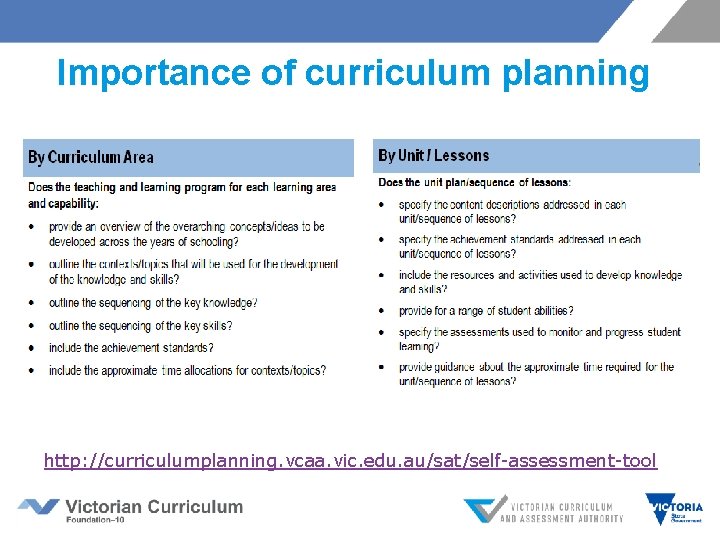
Importance of curriculum planning http: //curriculumplanning. vcaa. vic. edu. au/sat/self-assessment-tool
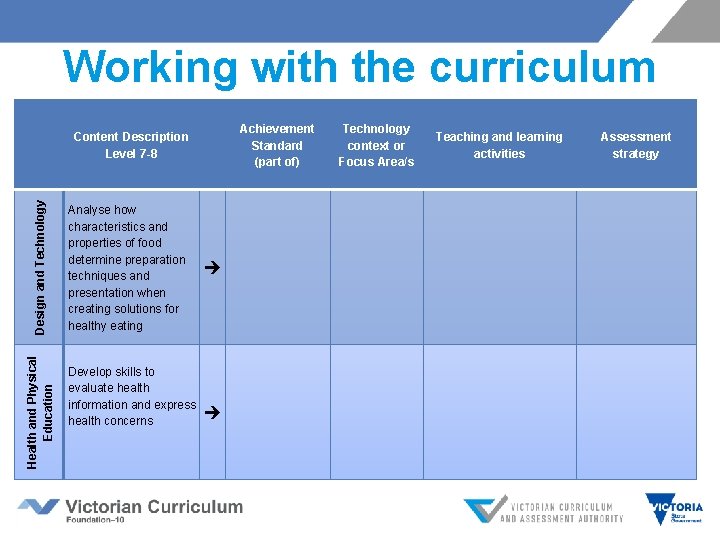
Working with the curriculum Health and Physical Education Design and Technology Content Description Level 7 -8 Analyse how characteristics and properties of food determine preparation techniques and presentation when creating solutions for healthy eating Develop skills to evaluate health information and express health concerns Achievement Standard (part of) Technology context or Focus Area/s Teaching and learning activities Assessment strategy
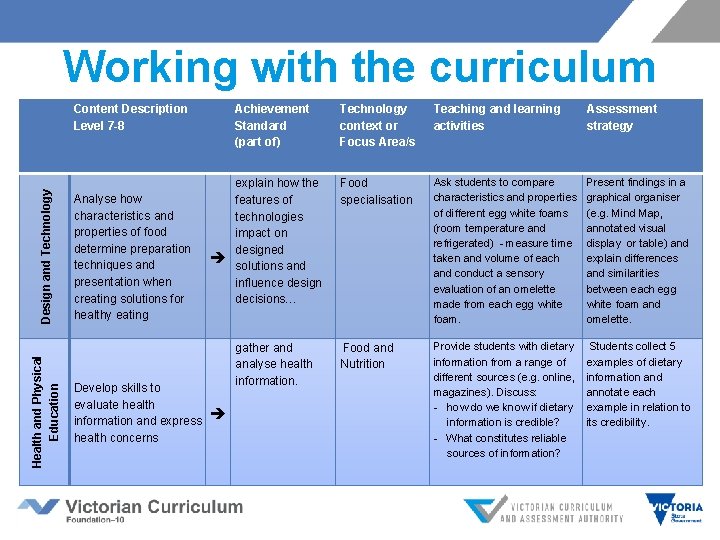
Working with the curriculum Health and Physical Education Design and Technology Content Description Level 7 -8 Analyse how characteristics and properties of food determine preparation techniques and presentation when creating solutions for healthy eating Develop skills to evaluate health information and express health concerns Achievement Standard (part of) Technology context or Focus Area/s Teaching and learning activities Assessment strategy explain how the features of technologies impact on designed solutions and influence design decisions… Food specialisation Ask students to compare characteristics and properties of different egg white foams (room temperature and refrigerated) - measure time taken and volume of each and conduct a sensory evaluation of an omelette made from each egg white foam. Present findings in a graphical organiser (e. g. Mind Map, annotated visual display or table) and explain differences and similarities between each egg white foam and omelette. gather and analyse health information. Food and Provide students with dietary information from a range of different sources (e. g. online, magazines). Discuss: - how do we know if dietary information is credible? - What constitutes reliable sources of information? Students collect 5 examples of dietary information and annotate each example in relation to its credibility. Nutrition
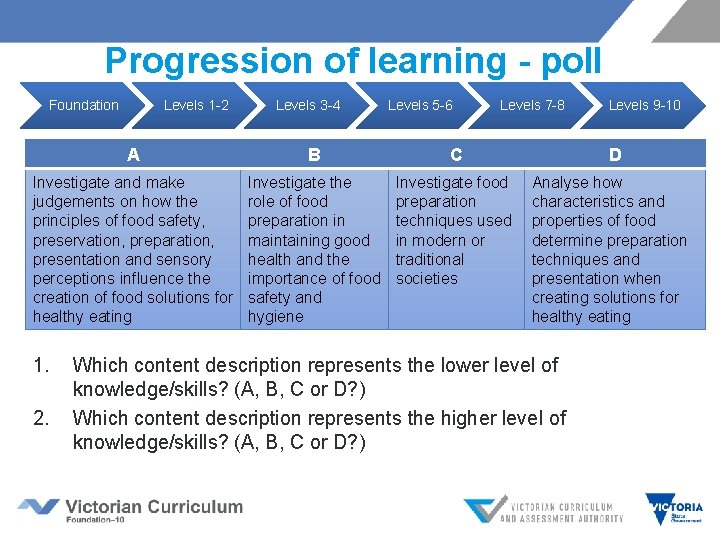
Progression of learning - poll Foundation Levels 1 -2 Levels 3 -4 Levels 5 -6 Levels 7 -8 Levels 9 -10 A B C D Investigate and make judgements on how the principles of food safety, preservation, preparation, presentation and sensory perceptions influence the creation of food solutions for healthy eating Investigate the role of food preparation in maintaining good health and the importance of food safety and hygiene Investigate food preparation techniques used in modern or traditional societies Analyse how characteristics and properties of food determine preparation techniques and presentation when creating solutions for healthy eating 1. 2. Which content description represents the lower level of knowledge/skills? (A, B, C or D? ) Which content description represents the higher level of knowledge/skills? (A, B, C or D? )
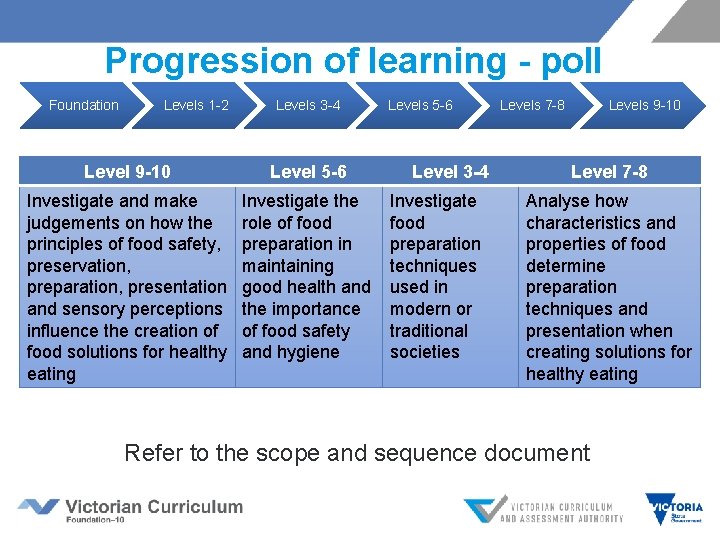
Progression of learning - poll Foundation Levels 1 -2 Levels 3 -4 Level 9 -10 Level 5 -6 Investigate and make judgements on how the principles of food safety, preservation, preparation, presentation and sensory perceptions influence the creation of food solutions for healthy eating Investigate the role of food preparation in maintaining good health and the importance of food safety and hygiene Levels 5 -6 Level 3 -4 Investigate food preparation techniques used in modern or traditional societies Levels 7 -8 Levels 9 -10 Level 7 -8 Analyse how characteristics and properties of food determine preparation techniques and presentation when creating solutions for healthy eating Refer to the scope and sequence document
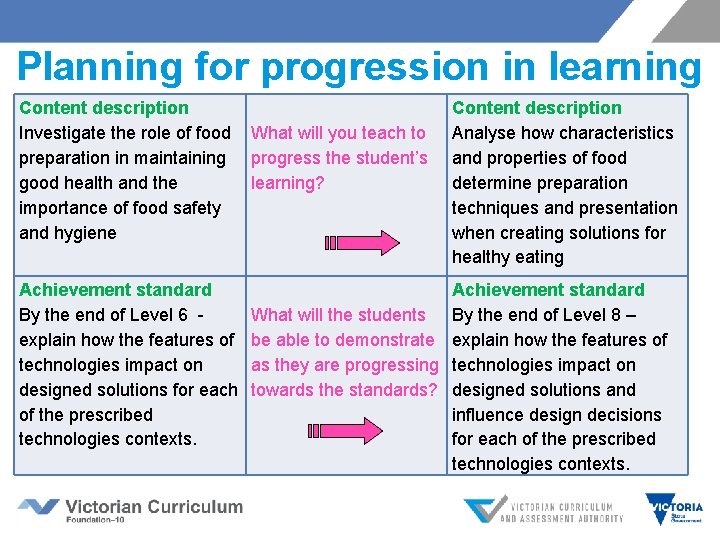
Planning for progression in learning Content description Investigate the role of food What will you teach to preparation in maintaining progress the student’s good health and the learning? importance of food safety and hygiene Achievement standard By the end of Level 6 - explain how the features of technologies impact on designed solutions for each of the prescribed technologies contexts. Content description Analyse how characteristics and properties of food determine preparation techniques and presentation when creating solutions for healthy eating Achievement standard What will the students By the end of Level 8 – be able to demonstrate explain how the features of as they are progressing technologies impact on towards the standards? designed solutions and influence design decisions for each of the prescribed technologies contexts.
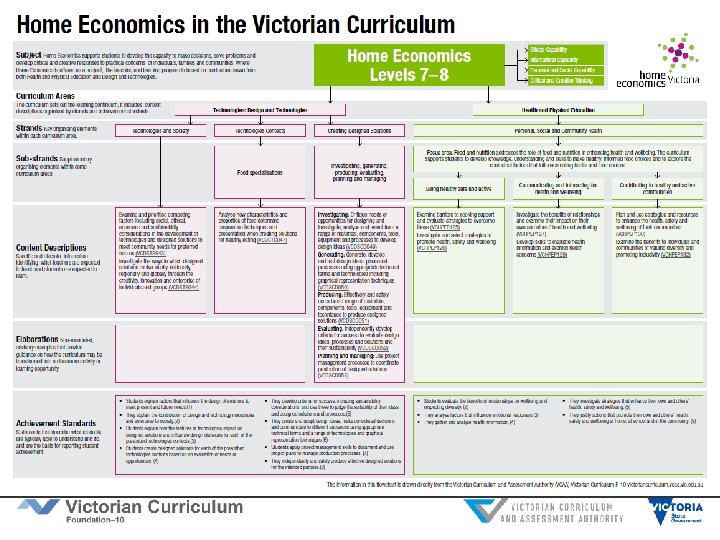
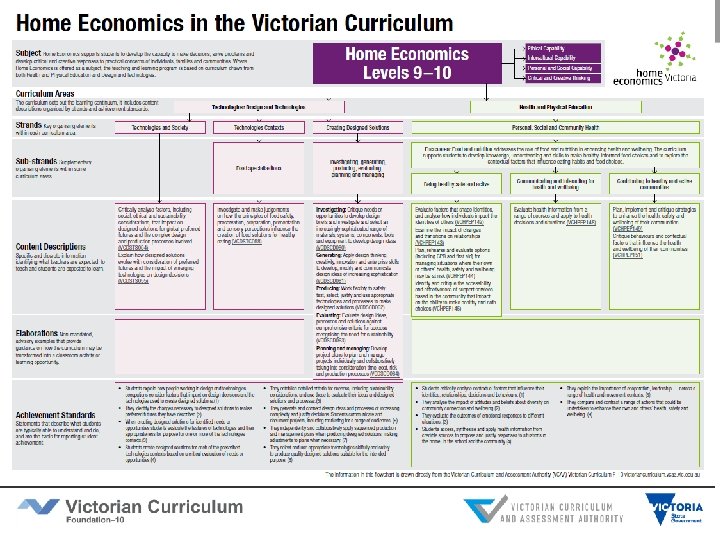
Home Economics Victoria • Curriculum flowcharts • levels 7 -8 • levels 9 -10 https: //www. homeeconomics. com. au/curriculumsupport/victorian-curriculum
Key messages • Know what the primary schools in your area are teaching, Kitchen garden programs etc? • Communicate with HPE, Agriculture and Horticulture and other Design Technologies teachers in your school • Plan your teaching and learning program using both the Victorian Curriculum Design & Technologies and Health and Physical Education
Questions?
Contact Details Victorian Curriculum and Assessment Authority (VCAA) Leanne Compton Curriculum Manager, Design and Technologies compton. leanne. l@edumail. vic. gov. au phone: (03) 9032 1698 Nerida Matthews Curriculum Manager, Health and Physical Education matthews. nerida. a@edumail. vic. gov. au Phone: (03) 9032 1721