
The Professional Learning Focus for Evaluators Jaycie Smith



- Slides: 16
The Professional Learning Focus for Evaluators Jaycie Smith Executive Director for Teacher & Leadership Development
“The improvement of understanding is for two ends: first, our own increase of knowledge; secondly, to enable us to deliver that knowledge to others. ” -John Locke
House Bill 2957 (2016) “Every policy of professional development adopted by a school district board of education shall provide for the development of a focused and individualized program of professional development for the teacher or administrator that is consistent with the qualitative component of the TLE. ”
State-wide Implementation Timeline • 2017 -2018 school year: At least 25% of the certified staff at each school site incorporated the Professional Learning Focus as a new component of the TLE. • 2018 -2019 school year: Every certified staff member, except for the district superintendent, shall fully incorporate the Professional Learning Focus with the qualitative component of the TLE.
PL Focus Requirements from HB 2957 (2016) • Establish an annual professional growth goal for the teacher or administrator that is developed by the teacher or administrator in collaboration with the evaluator. • Be tailored to address a specific area or criteria identified through the qualitative component of the TLE. • Allow the teacher or administrator to actively engage with learning practices that are evidenced-based, researched practices that are correlated with increased student achievement. • Supported by resources from the school district and the state department.
PL Focus During the School Year • Introduce and explain the PL Focus at the beginning of the school year. • PL Focus should be established by the end of the first quarter of the school year. • One PL Focus checkpoint visit is mandated each school year. Two checkpoints would be considered best practice. • PL Focus documentation should be completed by the end of the school year and attached to the final evaluation.
PL Focus Documents • Districts select the PL Focus document that best suits their needs. • Three PL Focus documents are available for districts to select from on the TLE webpage. • Districts may develop their own reporting document as long as the guidelines for the PL Focus have been met.
Sample Timeline • August—Introduce the PL Focus during beginning of school year faculty meetings. • September—Use PLC or department meetings to discuss PL Focus • October—Educators submit/share their PL Focus on the designated document. • December-March—Utilize observation post-conferences to complete checkpoint(s). • April-May—Use PLC or department meetings to discuss progress and next steps. • May—Attach completed PL Focus document to final evaluation.
FAQ’s Answered about PL Focus • The PL Focus is an independent growth model developed by the educator in collaboration with his/her evaluator. • A PL Focus must be completed annually regardless of exemption status. • The PL Focus may be a multi-year learning opportunity. • The PL Focus may be changed during the year based on the needs of the educator. • There is no rating achieved or certain length of time required for the PL Focus.
Utilize What is Currently Available • Emphasize the people and programs available around you. • Reconsider your approach to professional development. • Remember that you are not alone.
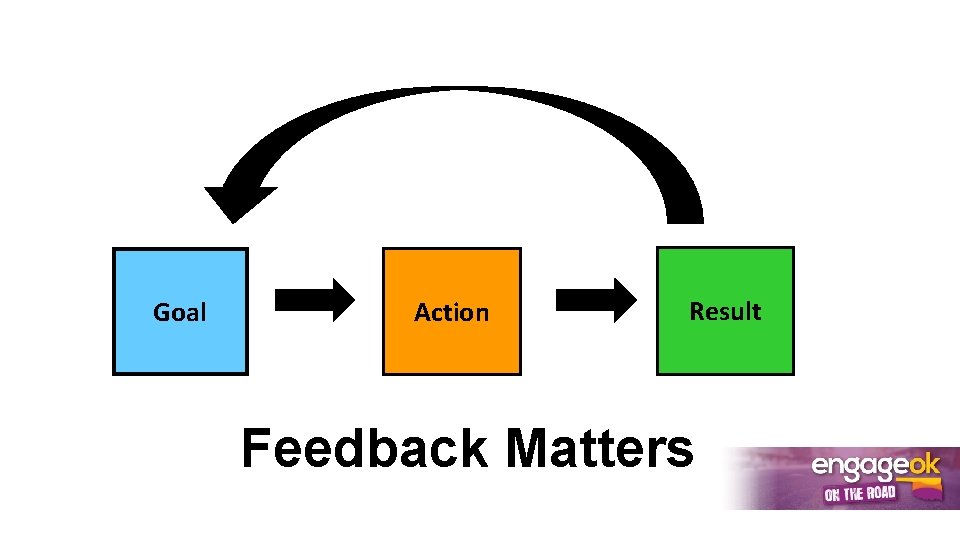
Goal Action Result Feedback Matters
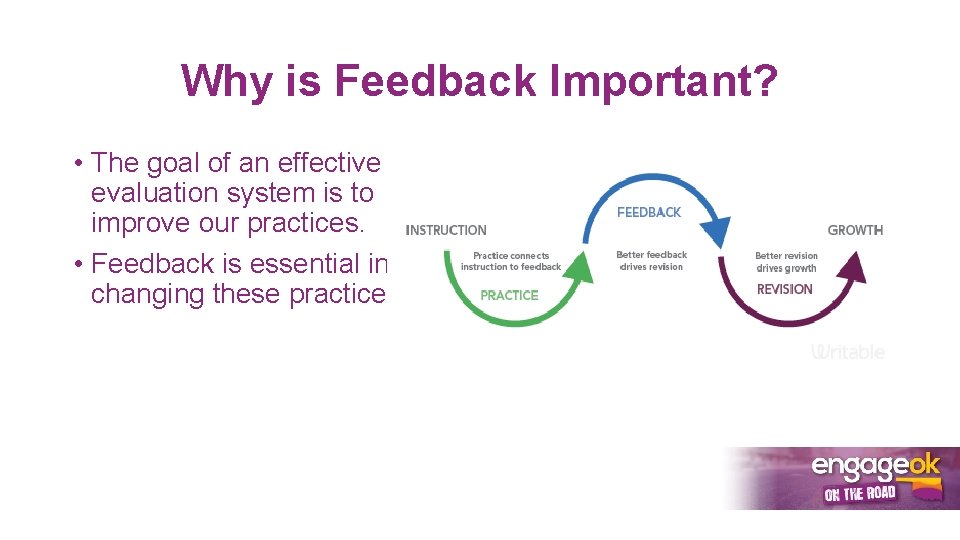
Why is Feedback Important? • The goal of an effective evaluation system is to improve our practices. • Feedback is essential in changing these practices.
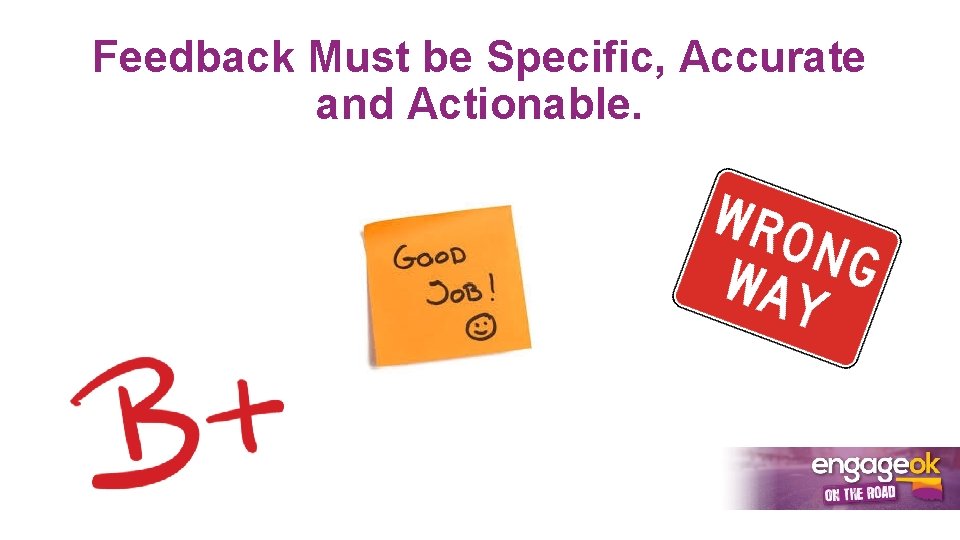
Feedback Must be Specific, Accurate and Actionable.
Feedback is a Conversation • You are both a speaker and a listener in the conversation. • Enter the conversation prepared to learn something new. • Try not to multi-task during the conversation. • Ask open-ended questions. Remember the 5 W’s and the H. • Before you leave the conversation, what are the next steps?
“We all need people who will give us feedback. That’s how we improve. ” --Bill Gates
Contact Information Jaycie Smith Executive Director of Teacher and Leadership Development jaycie. smith@sde. ok. gov 405. 522. 0282