Upper Arkansas Cooperative Weed Dr Scott Nissen Western



- Slides: 50
Upper Arkansas Cooperative Weed Dr. Scott Nissen Western Invasive Weed Short Course Management Association Colorado State University Fall 2016
Outline Aquatic Plant Species �Noxious weed species �Other species Problem Species �Eurasian watermilfoil �Sago pondweed Aquatic Weed Control Methods
CDA Aquatic Noxious Species A List �Hydrilla �Giant Salvinia B List �Eurasian watermilfoil
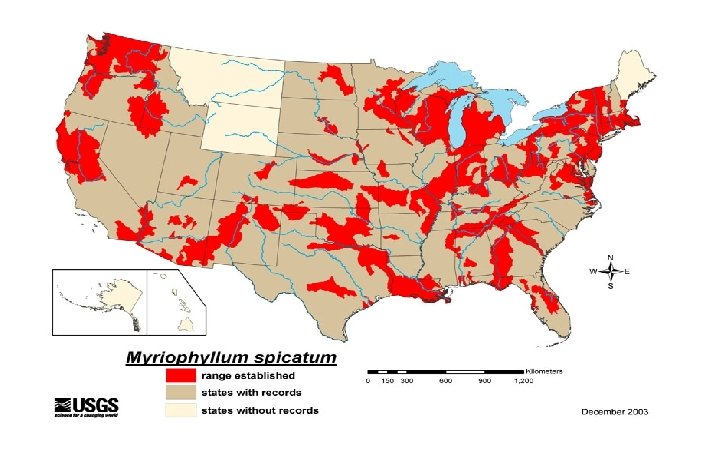
Eurasian Watermilfoil Only aquatic species on the Noxious Weed List found in Colorado Occurs in most western states Submerged perennial with an annual growth habit Grows in waters up to 20 feet deep, but most abundant between 3 and 12 feet Reproduction in through fragmenting, after flowering Has no overwintering structures, is essentially
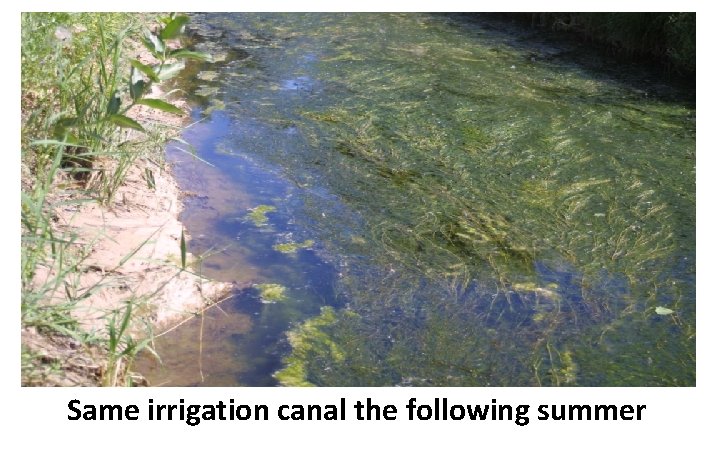
Eurasian Watermilfoil Can quickly colonize ponds, lakes, and irrigation canals Most commonly found in shallow ponds Also found in irrigation canals Will form very dense mats Commonly found in monoculture stands, often misplacing native and desirable species
Eurasian Watermilfoil Negative impacts on: �Recreation-Fishing, swimming, boating, etc… �Water delivery �Habitat-Mats can lead to a reduction in dissolved oxygen
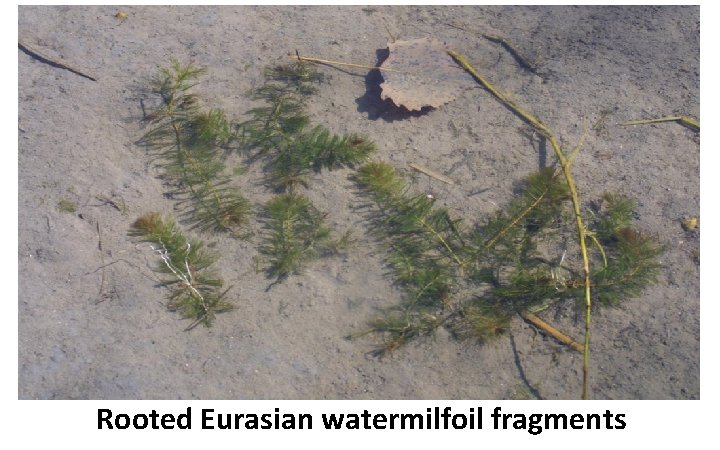
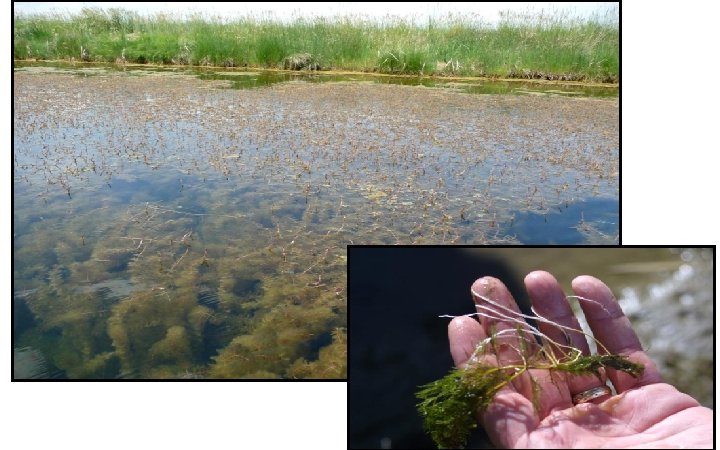
Rooted Eurasian watermilfoil fragments
Same irrigation canal the following summer
Other Common Species Sago pondweed Horned pondweed Curlyleaf Pondweed Native Milfoils Coontail Common Elodea Chara
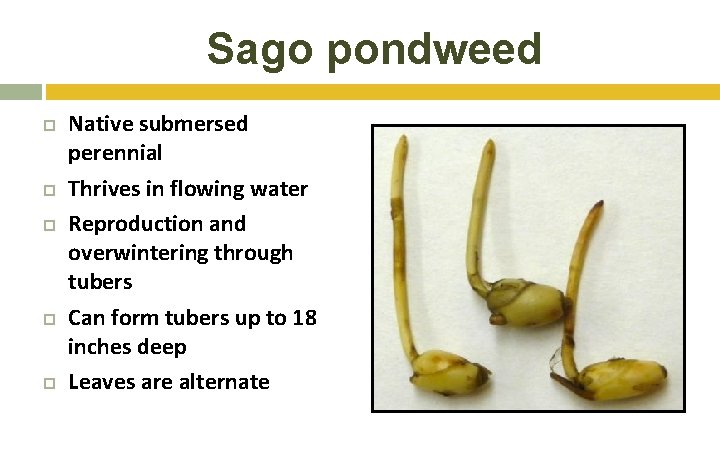
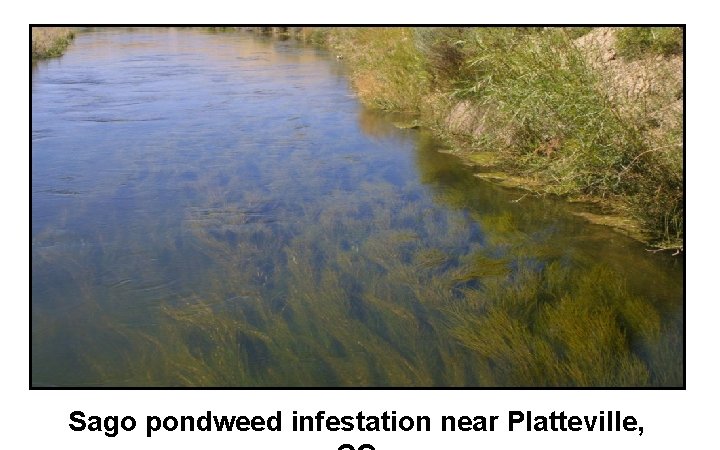
Sago pondweed Native submersed perennial Thrives in flowing water Reproduction and overwintering through tubers Can form tubers up to 18 inches deep Leaves are alternate
Sago pondweed infestation near Platteville,
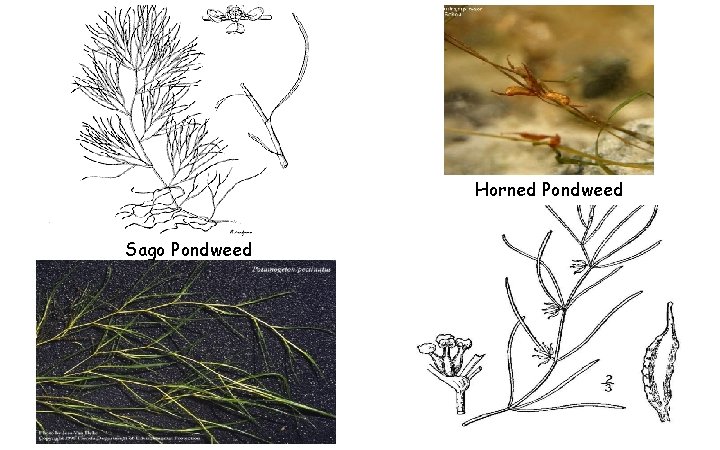
Horned pondweed Annul submerged species, acts as an annual where water is seasonal (irrigation canals) Spreads through seeds as well as creeping rhizomes Long slender leaves Looks very similar to sago pondweed, but has “horns” at each node Leaves are opposite
Horned Pondweed Sago Pondweed
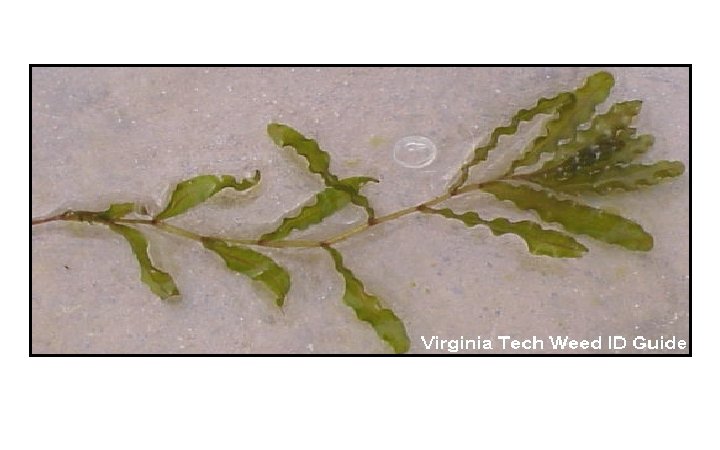
Curlyleaf pondweed Wider leaves than Sago pondweed Does produce seed, but main means of reproduction are through turions and fragments Turions allow plants to over-winter Has leaves that are 2 -3” long that have leaf margins that are “wavy”
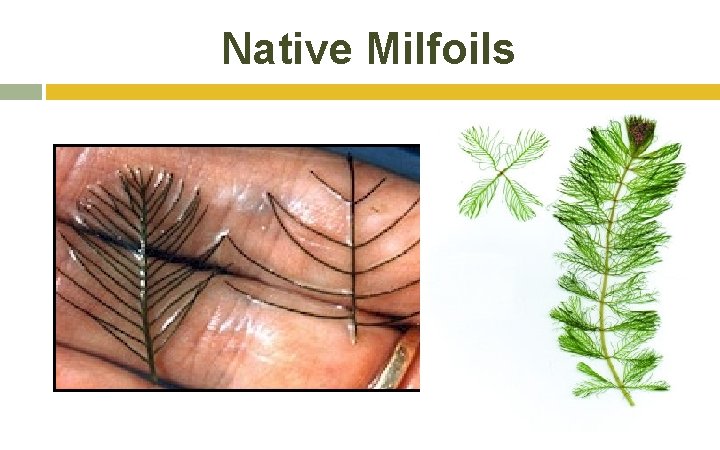
Native Milfoils Northern milfoil Very similar in growth habit to Eurasian watermilfoil, can hybridize with EWM Although native, can still form dense stands and be troublesome To identify hybrids requires genetic testing
Native Milfoils
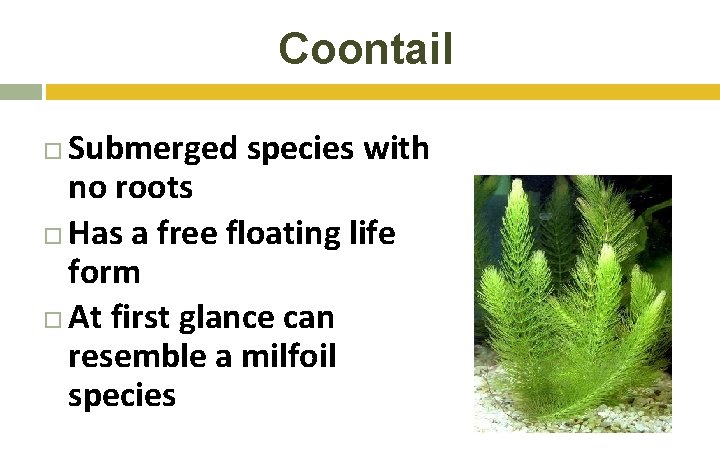
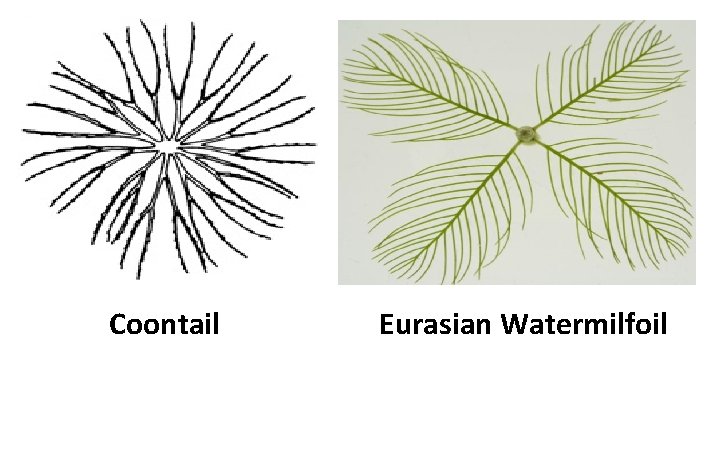
Coontail Submerged species with no roots Has a free floating life form At first glance can resemble a milfoil species
Coontail Eurasian Watermilfoil
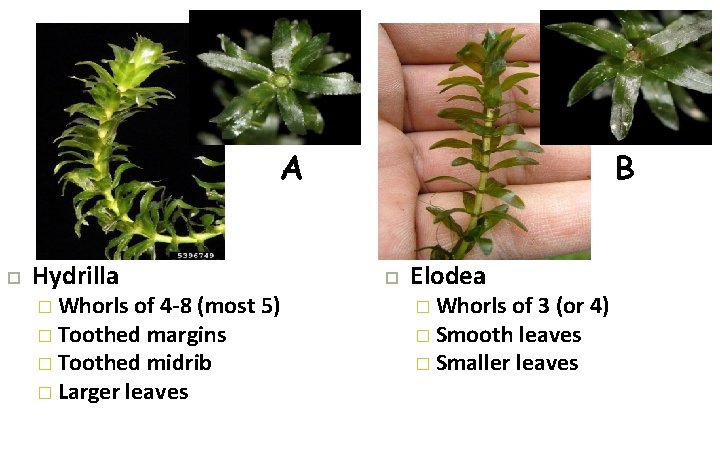
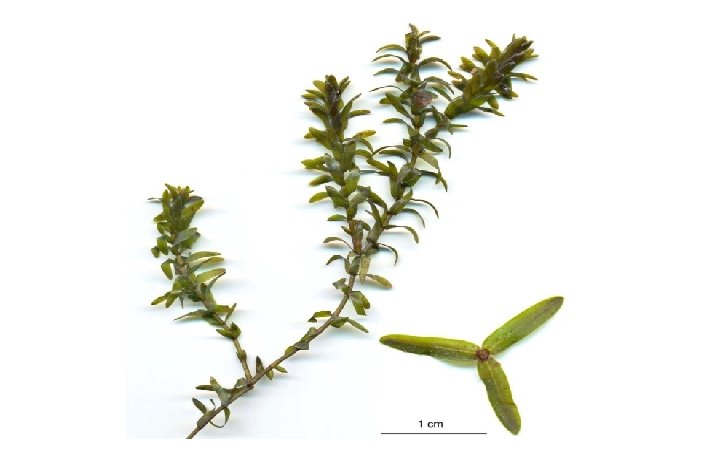
Common elodea Occurs as a submerged perennial species Has long, slender stems with 3 -4 leaves at each node Can sometimes be confused with hydrilla
A Hydrilla � Whorls of 4 -8 (most 5) � Toothed margins � Toothed midrib � Larger leaves B Elodea � Whorls of 3 (or 4) � Smooth leaves � Smaller leaves
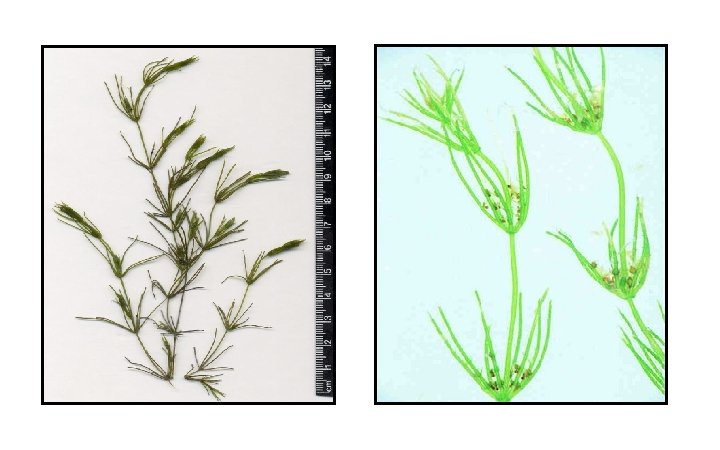
Chara Resembles a vascular plant, but is actually an algae Are anchored to the sediment by root-like structures Have whorls of branches at each node Can also be identified by a skunklike odor when branches are crushed
Control Methods For Aquatic Species
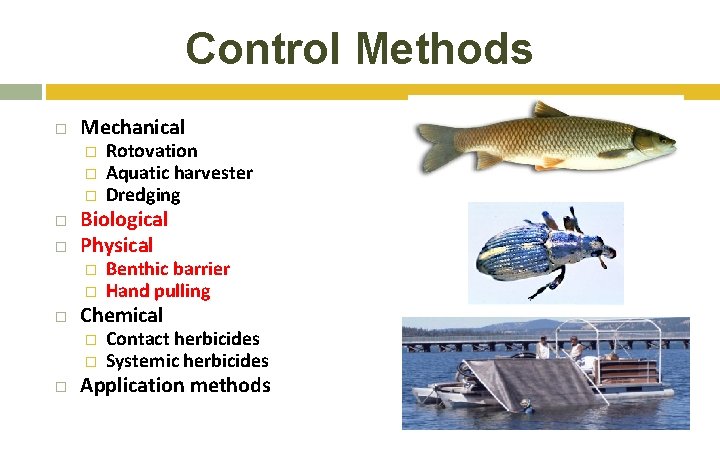
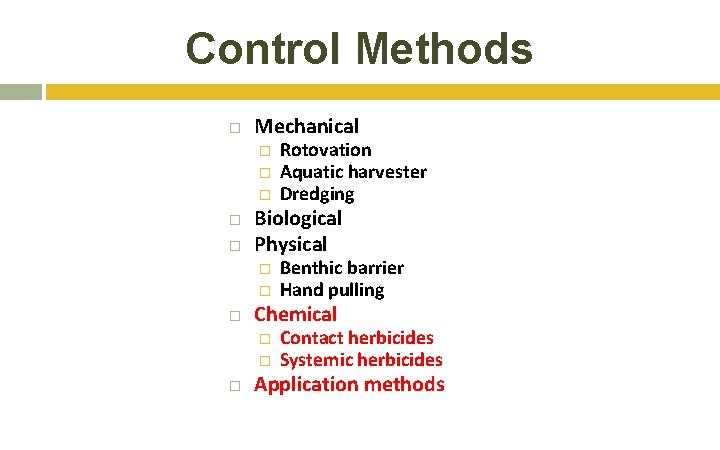
Control Methods Mechanical � � � Biological Physical � � Benthic barrier Hand pulling Chemical � � Rotovation Aquatic harvester Dredging Contact herbicides Systemic herbicides Application methods
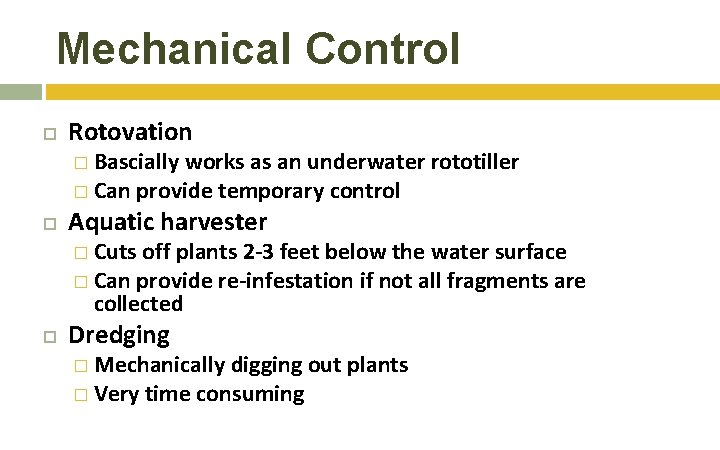
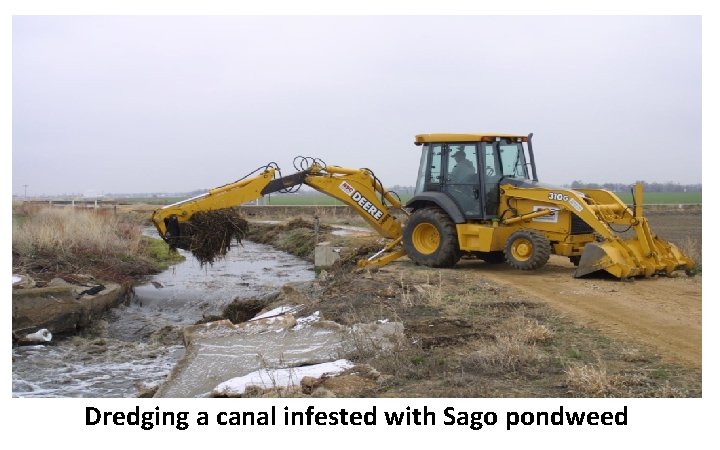
Mechanical Control Rotovation � Bascially works as an underwater rototiller � Can provide temporary control Aquatic harvester � Cuts off plants 2 -3 feet below the water surface � Can provide re-infestation if not all fragments are collected Dredging � Mechanically digging out plants � Very time consuming
Dredging a canal infested with Sago pondweed
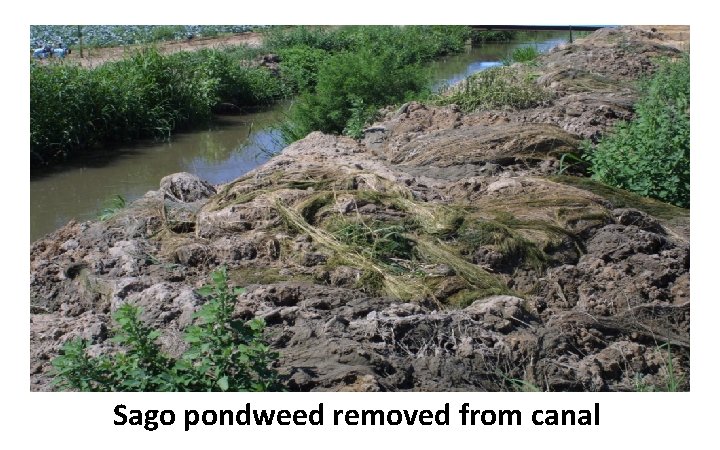
Sago pondweed removed from canal
Control Methods Mechanical � � � Biological Physical � � Benthic barrier Hand pulling Chemical � � Rotovation Aquatic harvester Dredging Contact herbicides Systemic herbicides Application methods
Control Methods Mechanical � � � Biological Physical � � Benthic barrier Hand pulling Chemical � � Rotovation Aquatic harvester Dredging Contact herbicides Systemic herbicides Application methods
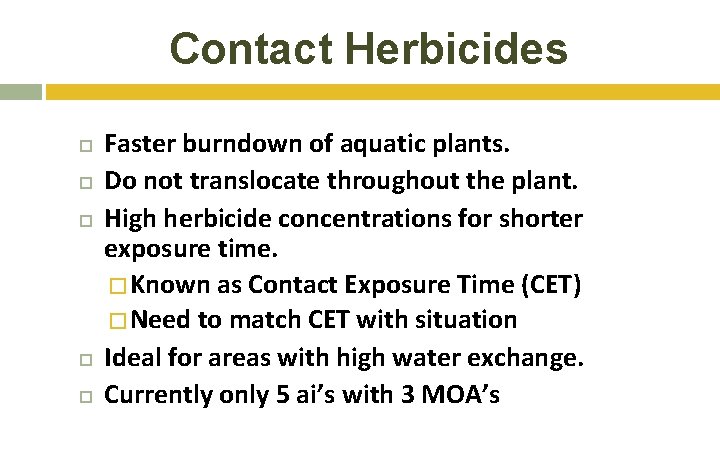
Contact Herbicides Faster burndown of aquatic plants. Do not translocate throughout the plant. High herbicide concentrations for shorter exposure time. � Known as Contact Exposure Time (CET) � Need to match CET with situation Ideal for areas with high water exchange. Currently only 5 ai’s with 3 MOA’s
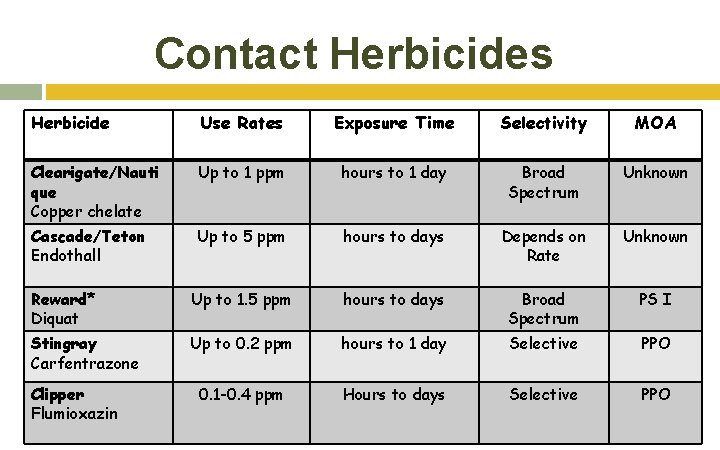
Contact Herbicides Herbicide Use Rates Exposure Time Selectivity MOA Clearigate/Nauti que Copper chelate Up to 1 ppm hours to 1 day Broad Spectrum Unknown Cascade/Teton Endothall Up to 5 ppm hours to days Depends on Rate Unknown Reward* Diquat Up to 1. 5 ppm hours to days Broad Spectrum PS I Stingray Carfentrazone Up to 0. 2 ppm hours to 1 day Selective PPO 0. 1 -0. 4 ppm Hours to days Selective PPO Clipper Flumioxazin
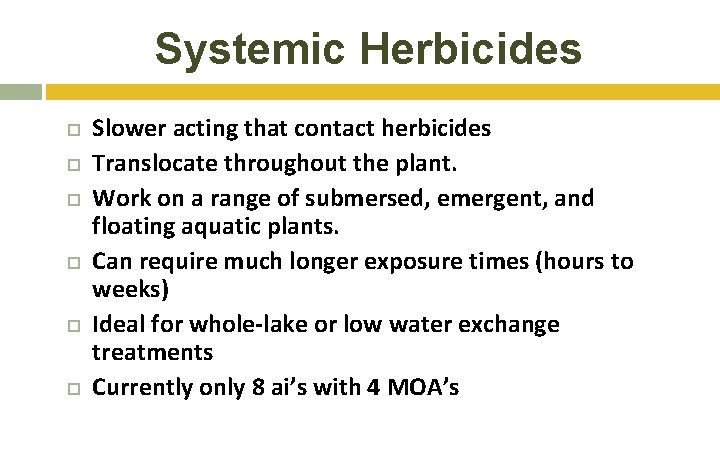
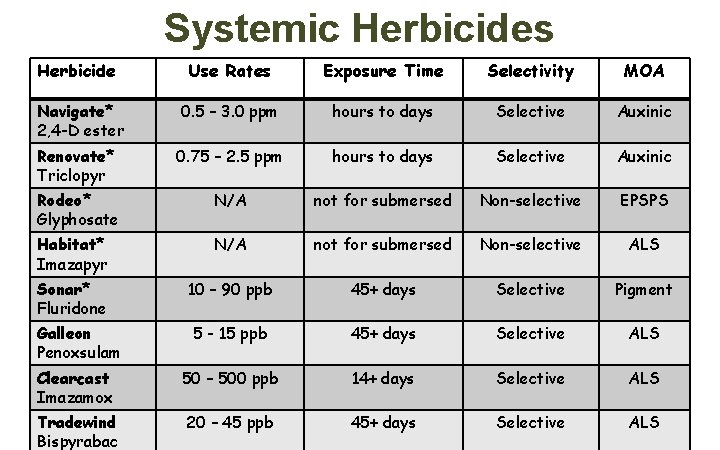
Systemic Herbicides Slower acting that contact herbicides Translocate throughout the plant. Work on a range of submersed, emergent, and floating aquatic plants. Can require much longer exposure times (hours to weeks) Ideal for whole-lake or low water exchange treatments Currently only 8 ai’s with 4 MOA’s
Systemic Herbicides Herbicide Use Rates Exposure Time Selectivity MOA Navigate* 2, 4 -D ester 0. 5 – 3. 0 ppm hours to days Selective Auxinic Renovate* Triclopyr 0. 75 – 2. 5 ppm hours to days Selective Auxinic Rodeo* Glyphosate N/A not for submersed Non-selective EPSPS Habitat* Imazapyr N/A not for submersed Non-selective ALS Sonar* Fluridone 10 – 90 ppb 45+ days Selective Pigment Galleon Penoxsulam 5 - 15 ppb 45+ days Selective ALS Clearcast Imazamox 50 – 500 ppb 14+ days Selective ALS Tradewind Bispyrabac 20 – 45 ppb 45+ days Selective ALS
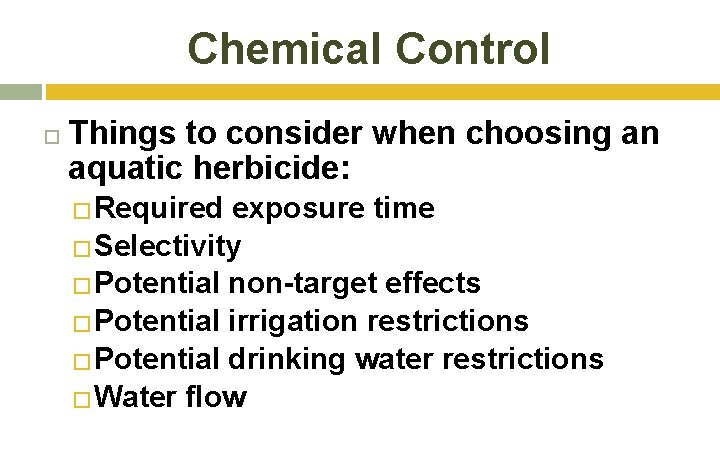
Chemical Control Things to consider when choosing an aquatic herbicide: �Required exposure time �Selectivity �Potential non-target effects �Potential irrigation restrictions �Potential drinking water restrictions �Water flow
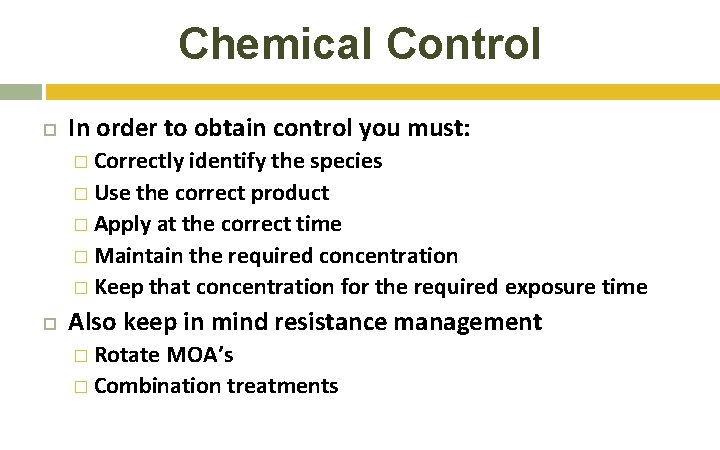
Chemical Control In order to obtain control you must: � Correctly identify the species � Use the correct product � Apply at the correct time � Maintain the required concentration � Keep that concentration for the required exposure time Also keep in mind resistance management � Rotate MOA’s � Combination treatments
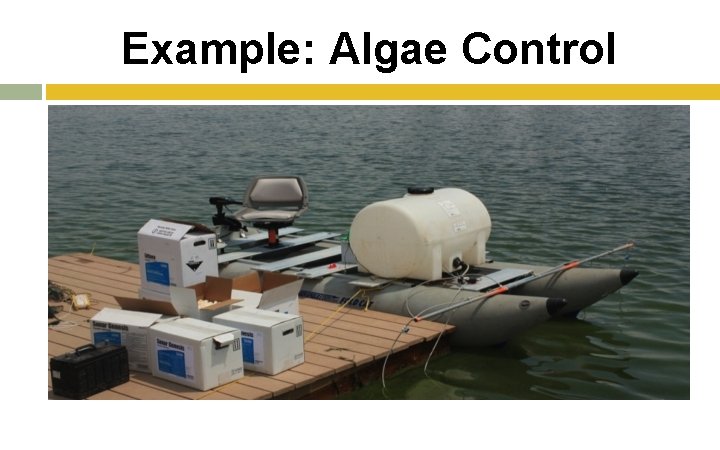
Example: Algae Control
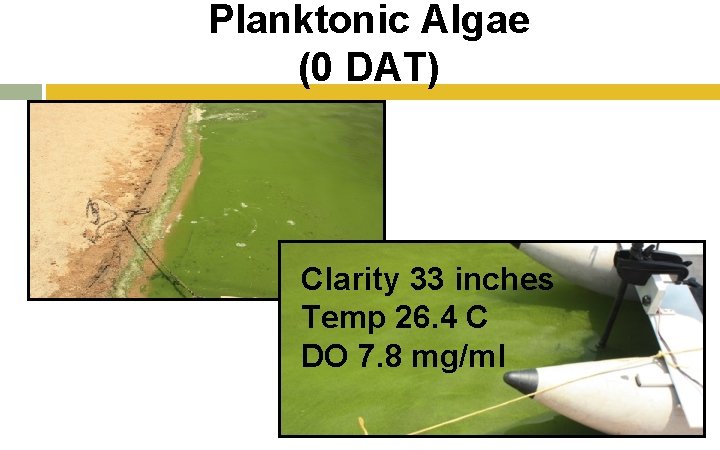
Planktonic Algae (0 DAT) Clarity 33 inches Temp 26. 4 C DO 7. 8 mg/ml
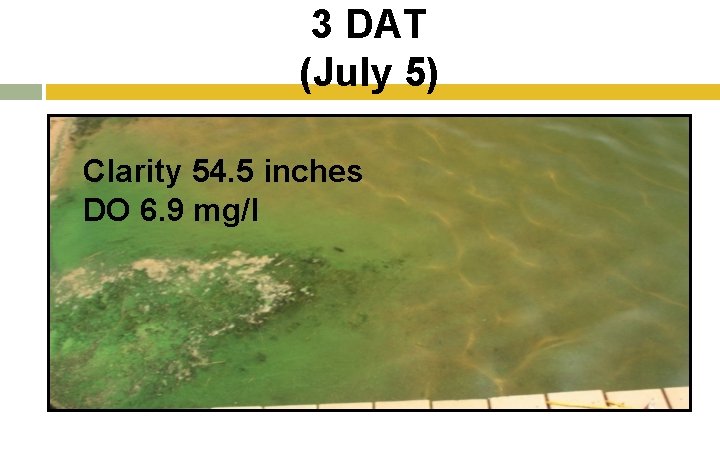
3 DAT (July 5) Clarity 54. 5 inches DO 6. 9 mg/l
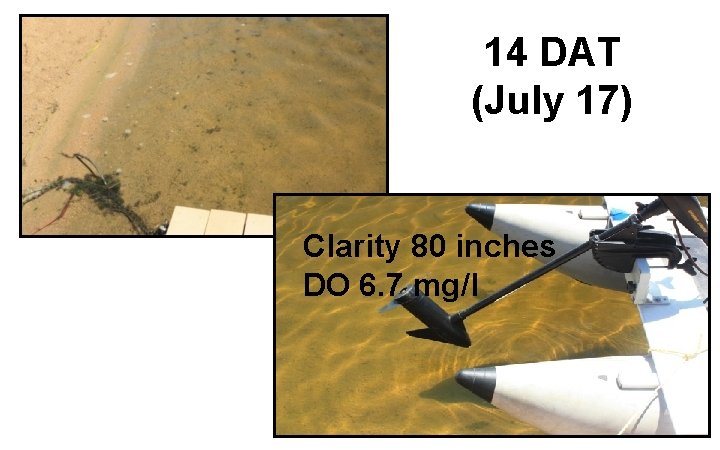
14 DAT (July 17) Clarity 80 inches DO 6. 7 mg/l
Herbicide Application Methods
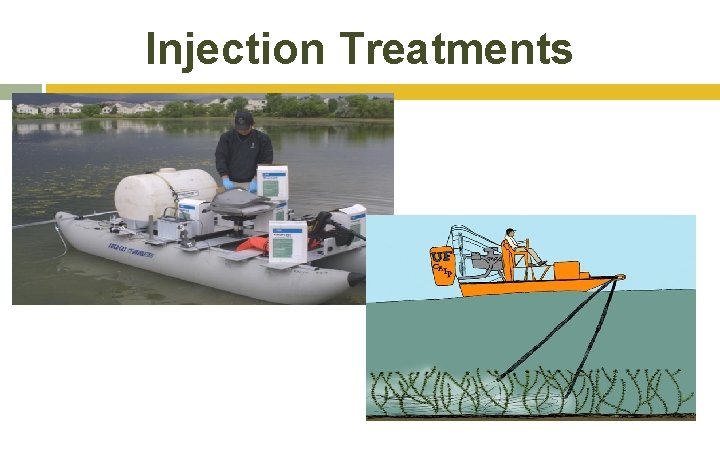
Injection Treatments
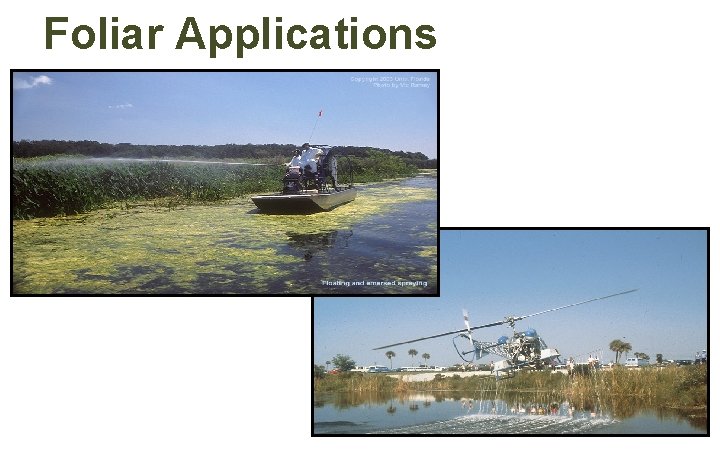
Foliar Applications
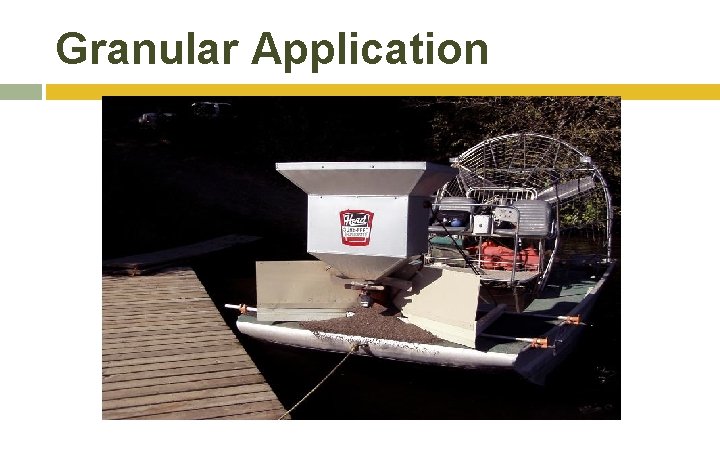
Granular Application
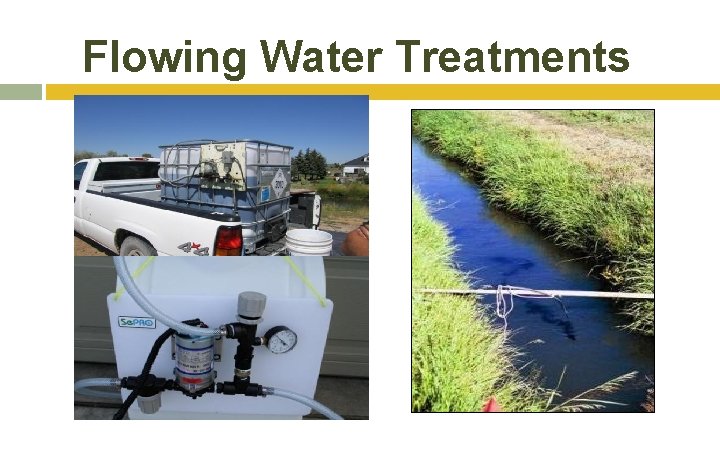
Flowing Water Treatments
For More Information Available at: www. aquatics. org
Questions? Dr. Scott Nissen 970 -491 -3489 Scott. Nissen@Colo. State. edu