
Environmental Fate of Herbicides Tim R Murphy Ph
Environmental Fate of Herbicides Tim R. Murphy, Ph. D. The University of Georgia Crop and Soil Sciences
Public Concerns Ø Ø Ø Health Quality of Life Environment Nuclear and Toxic Waste Chemicals vs. Natural Right-to-Know
“Public Concerns” About Chemicals Ø Ø Cause cancer Not well tested Harm animals Last forever Ø Ø Not “natural” Used carelessly Contaminate water Any amount is dangerous
Herbicide Concerns Last forever Ø Contaminate water Ø Affect human health Ø Sterilize soil Ø Use is not needed Ø Kill all desirable organisms Ø Degrade the environment Ø
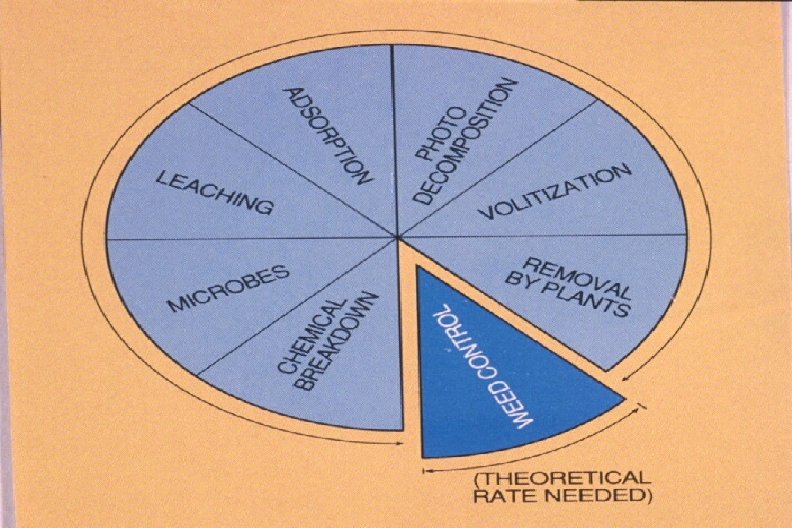
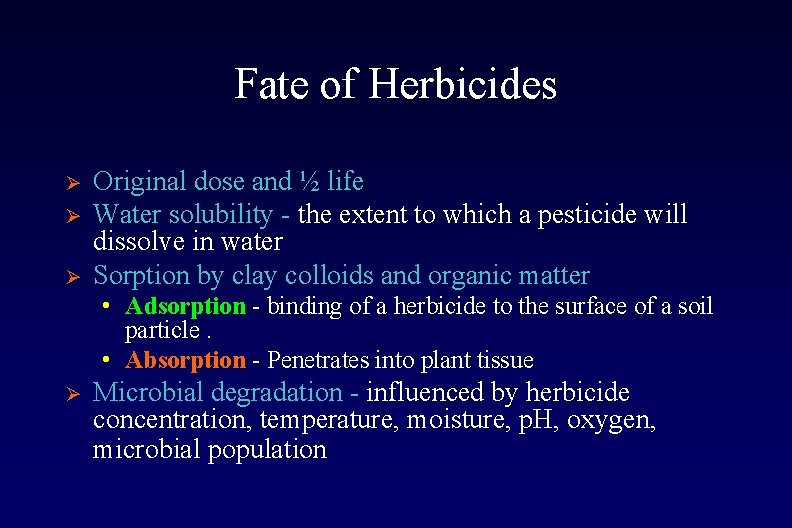
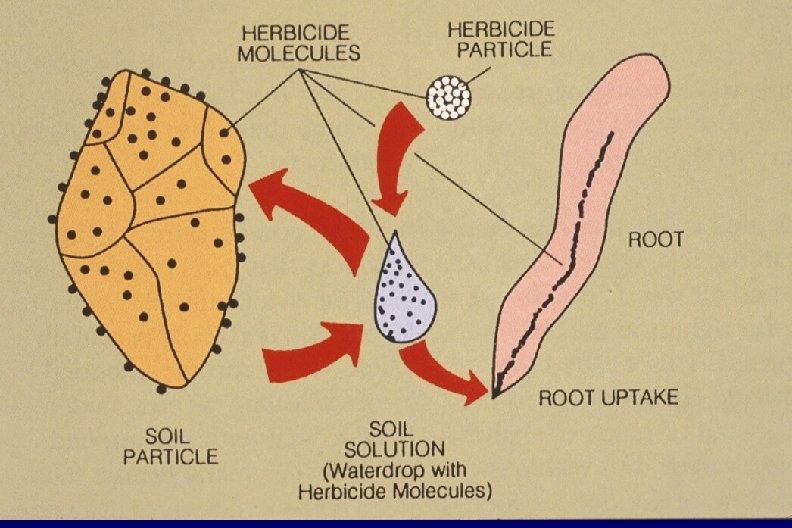
Fate of Herbicides Ø Ø Ø Original dose and ½ life Water solubility - the extent to which a pesticide will dissolve in water Sorption by clay colloids and organic matter • Adsorption - binding of a herbicide to the surface of a soil particle. • Absorption - Penetrates into plant tissue Ø Microbial degradation - influenced by herbicide concentration, temperature, moisture, p. H, oxygen, microbial population
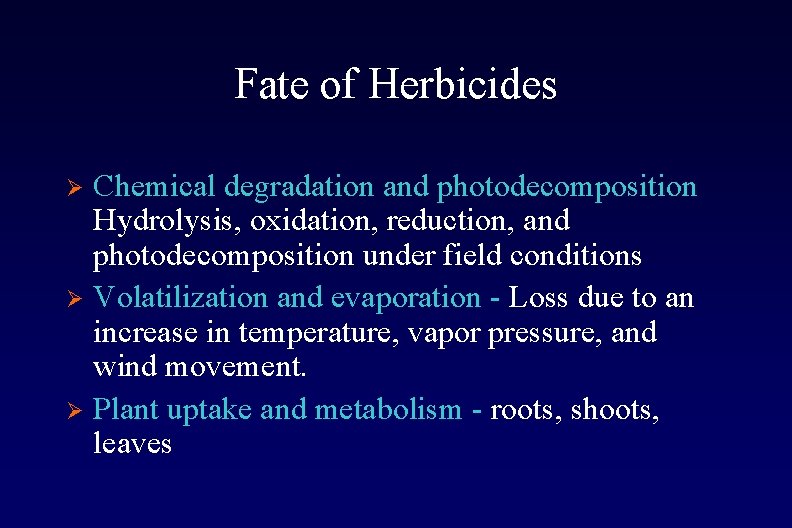
Fate of Herbicides Chemical degradation and photodecomposition Hydrolysis, oxidation, reduction, and photodecomposition under field conditions Ø Volatilization and evaporation - Loss due to an increase in temperature, vapor pressure, and wind movement. Ø Plant uptake and metabolism - roots, shoots, leaves Ø
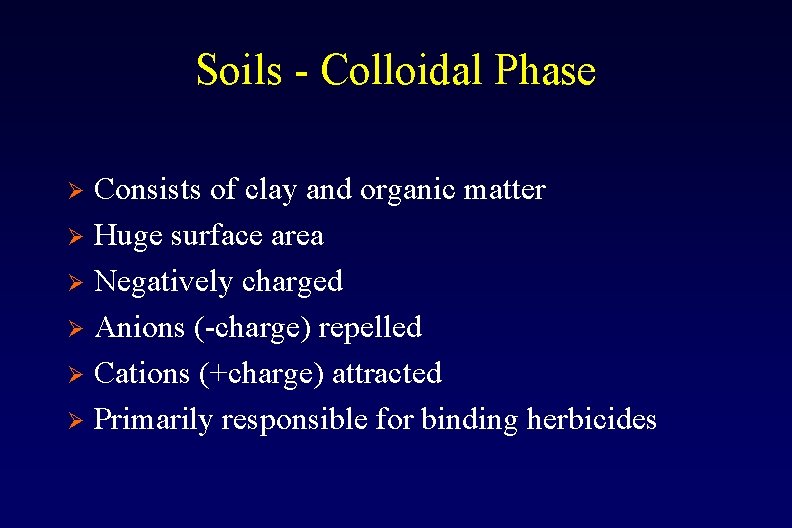
Soils - Colloidal Phase Consists of clay and organic matter Ø Huge surface area Ø Negatively charged Ø Anions (-charge) repelled Ø Cations (+charge) attracted Ø Primarily responsible for binding herbicides Ø
Soils - Living Phase Microorganisms - bacteria, actinomycetes, fungi Ø Algae Ø Vertebrates and Invertebrates Ø Ø Microorganisms degrade herbicides
Microbial Degradation Higher with high microbial populations Ø May use as food source, or just degrade the herbicide Ø Faster under warm, moist conditions Ø Slower under cool, dry conditions Ø
Herbicide Adsorption Ø Soil texture • coarse, sandy soils have few binding sites Ø Permeability • highly permeable soils low in CEC have few binding sites Ø Soil OM and clay content • increase binding Ø Excessive moisture interferes with binding
Water Movement Ø Surface runoff Ø Leaching Ø Capillary action
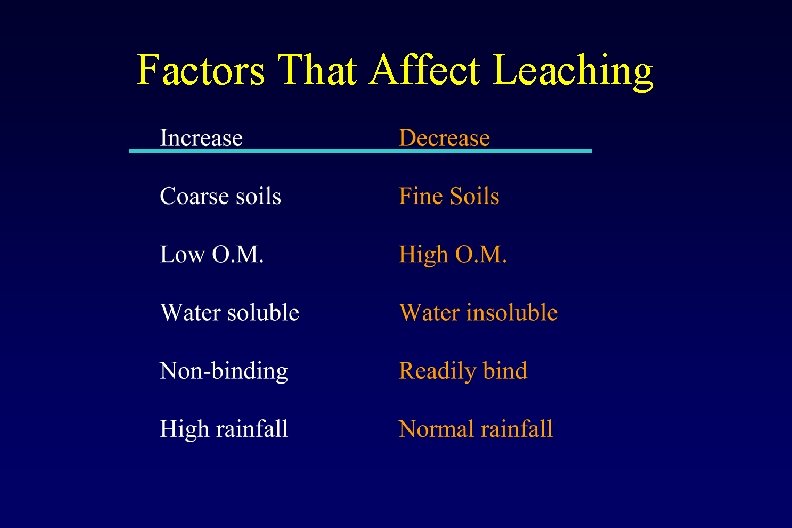
Factors That Affect Leaching
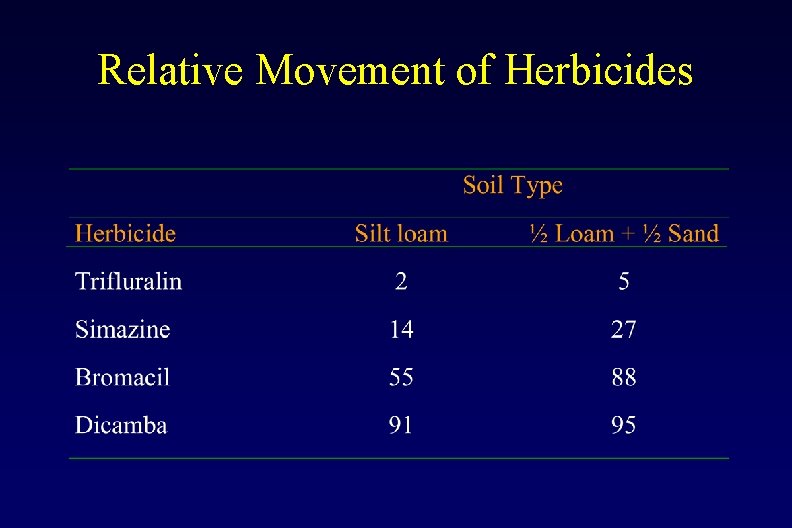
Relative Movement of Herbicides
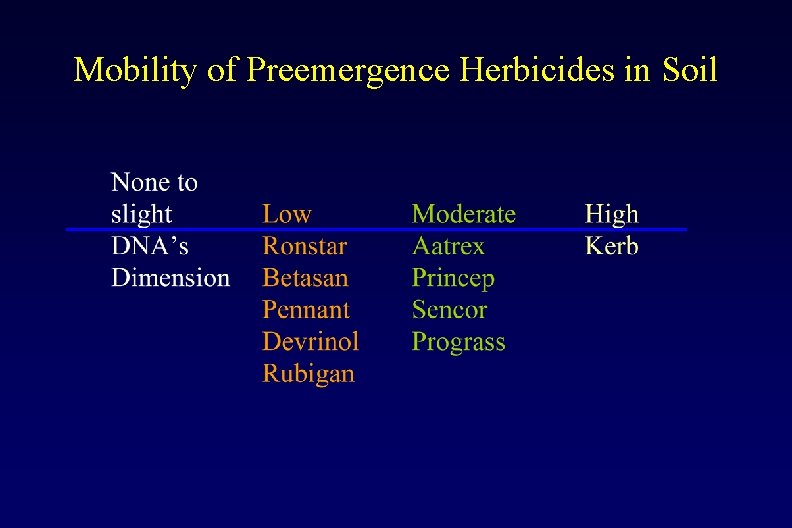
Mobility of Preemergence Herbicides in Soil
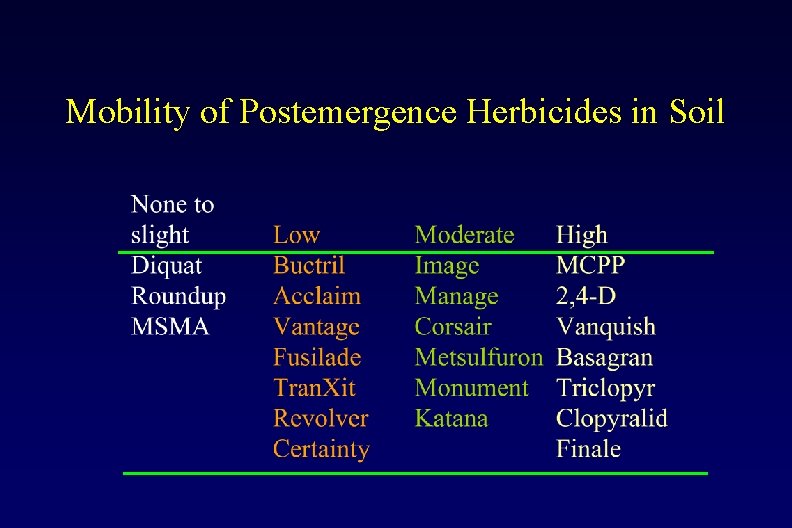
Mobility of Postemergence Herbicides in Soil
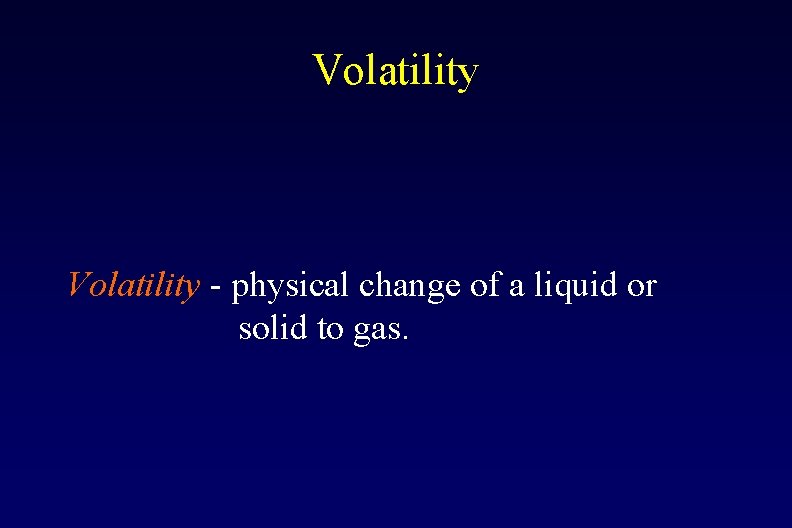
Volatility - physical change of a liquid or solid to gas.
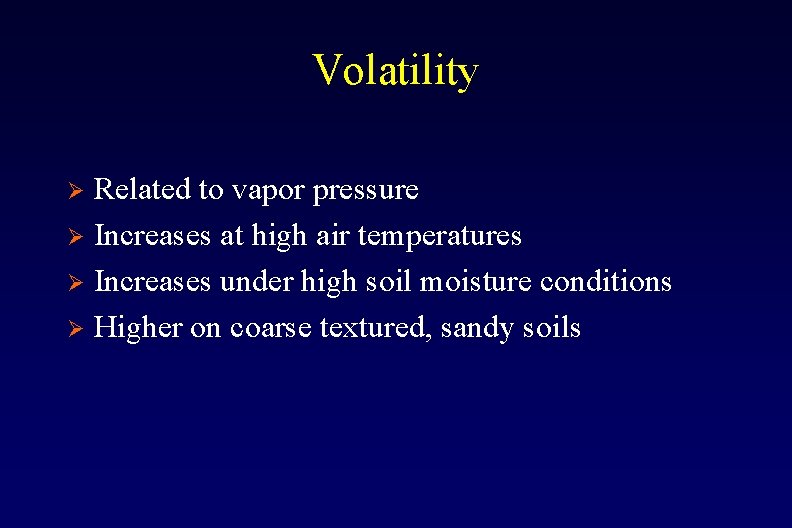
Volatility Related to vapor pressure Ø Increases at high air temperatures Ø Increases under high soil moisture conditions Ø Higher on coarse textured, sandy soils Ø
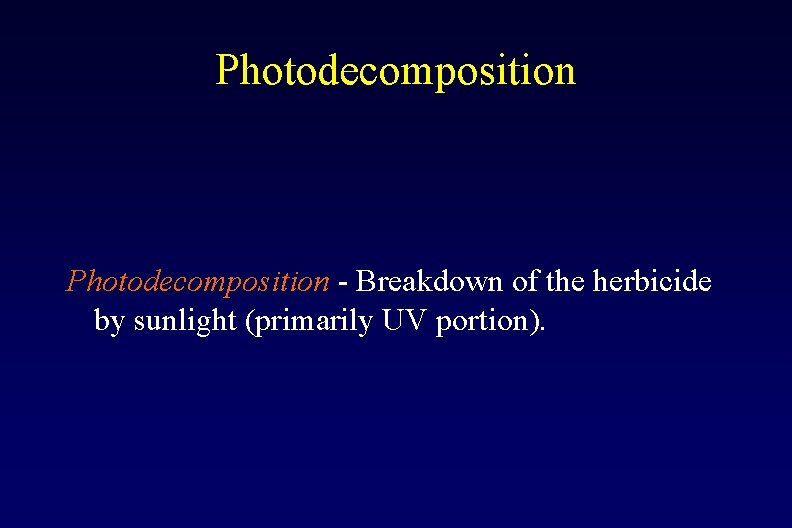
Photodecomposition - Breakdown of the herbicide by sunlight (primarily UV portion).
Herbicide Persistence - Soil Usually expressed as the half-life (t 1/2).
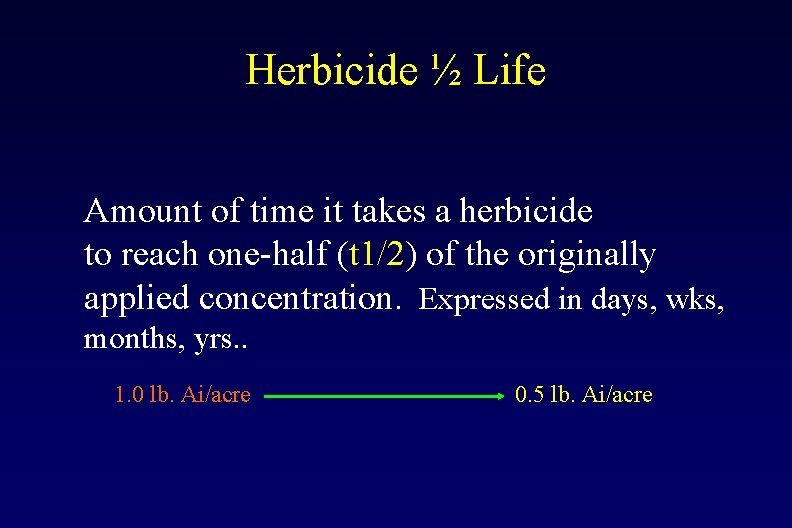
Herbicide ½ Life Amount of time it takes a herbicide to reach one-half (t 1/2) of the originally applied concentration. Expressed in days, wks, months, yrs. . 1. 0 lb. Ai/acre 0. 5 lb. Ai/acre
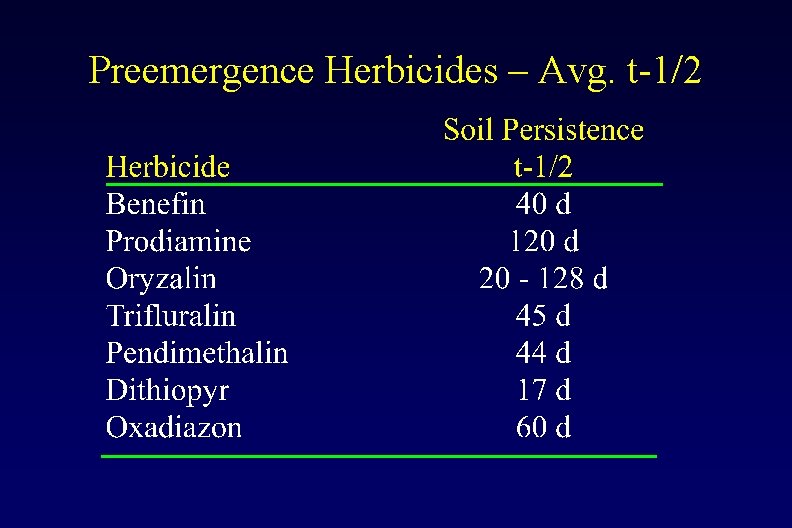
Preemergence Herbicides – Avg. t-1/2
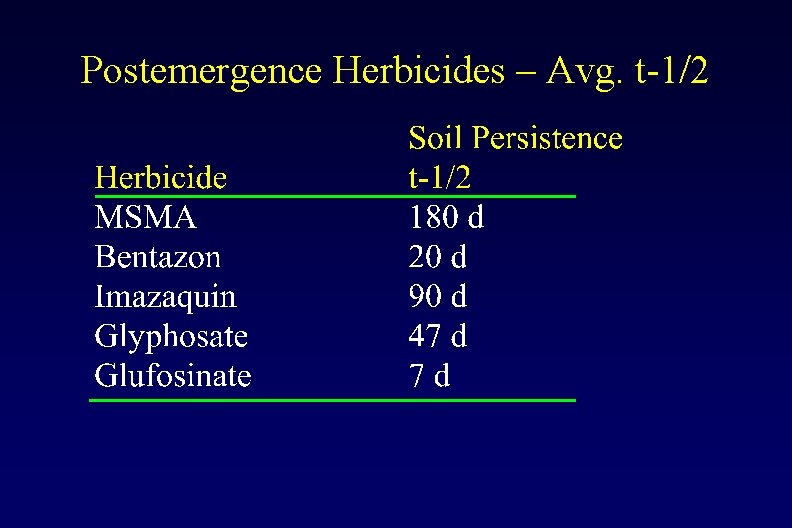
Postemergence Herbicides – Avg. t-1/2
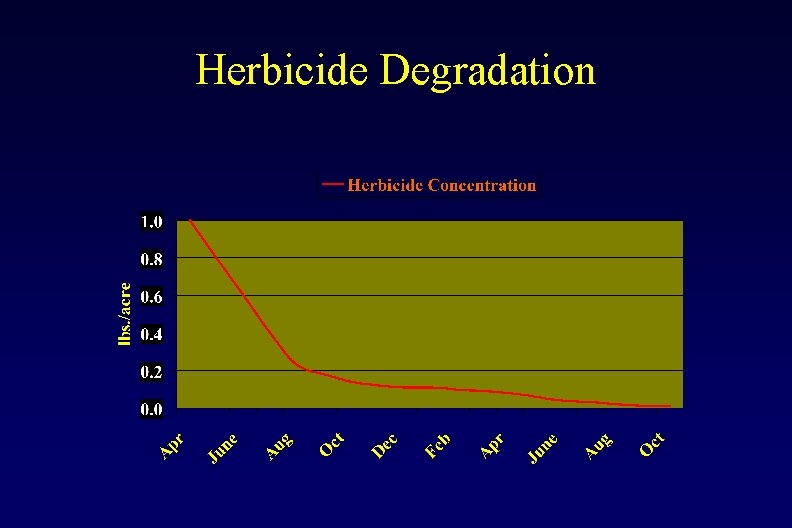
Herbicide Degradation
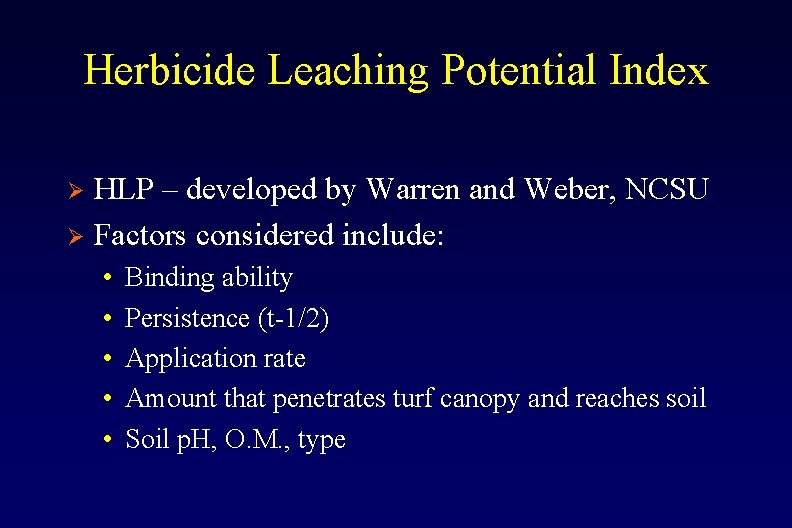
Herbicide Leaching Potential Index HLP – developed by Warren and Weber, NCSU Ø Factors considered include: Ø • • • Binding ability Persistence (t-1/2) Application rate Amount that penetrates turf canopy and reaches soil Soil p. H, O. M. , type
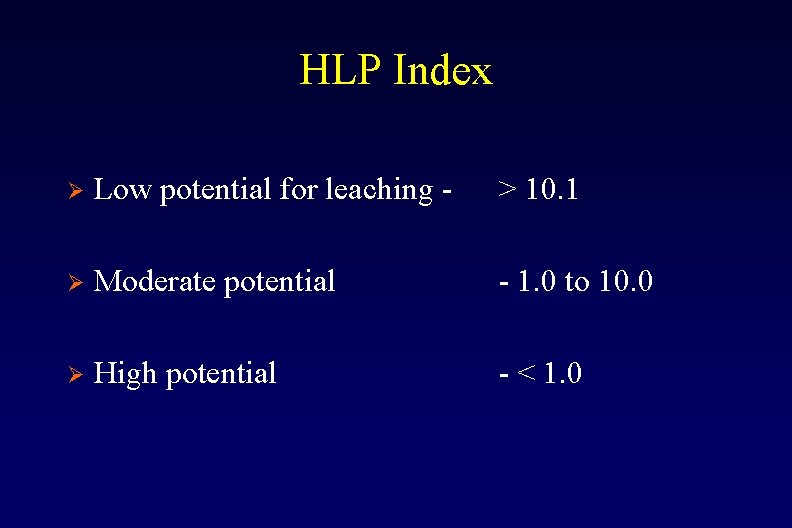
HLP Index Ø Low potential for leaching - > 10. 1 Ø Moderate potential - 1. 0 to 10. 0 Ø High potential - < 1. 0
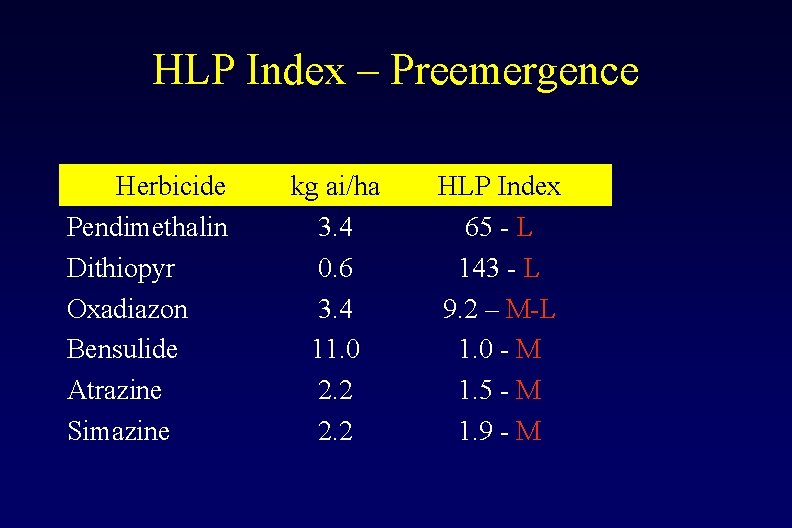
HLP Index – Preemergence Herbicide Pendimethalin Dithiopyr Oxadiazon Bensulide Atrazine Simazine kg ai/ha 3. 4 0. 6 3. 4 11. 0 2. 2 HLP Index 65 - L 143 - L 9. 2 – M-L 1. 0 - M 1. 5 - M 1. 9 - M
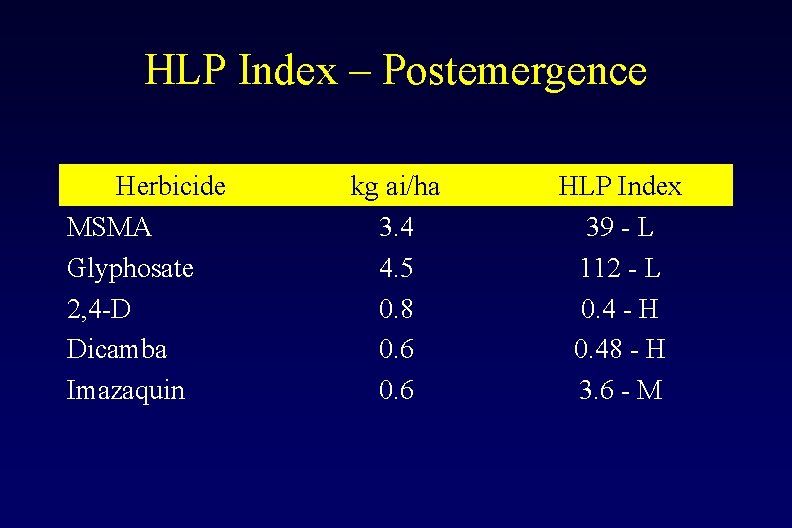
HLP Index – Postemergence Herbicide MSMA Glyphosate 2, 4 -D Dicamba Imazaquin kg ai/ha 3. 4 4. 5 0. 8 0. 6 HLP Index 39 - L 112 - L 0. 4 - H 0. 48 - H 3. 6 - M
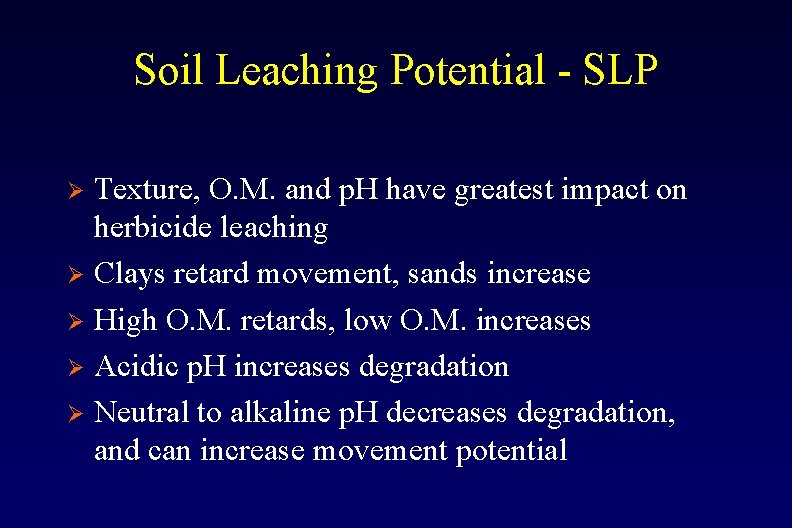
Soil Leaching Potential - SLP Texture, O. M. and p. H have greatest impact on herbicide leaching Ø Clays retard movement, sands increase Ø High O. M. retards, low O. M. increases Ø Acidic p. H increases degradation Ø Neutral to alkaline p. H decreases degradation, and can increase movement potential Ø
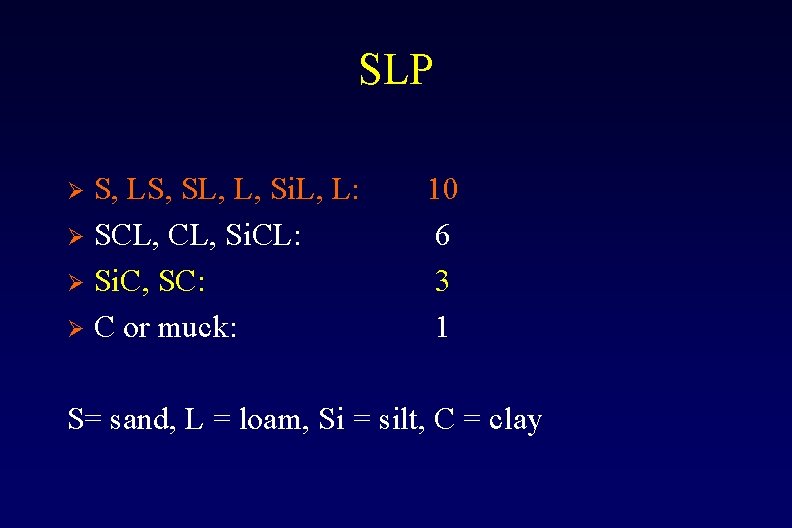
SLP S, LS, SL, L, Si. L, L: Ø SCL, Si. CL: Ø Si. C, SC: Ø C or muck: Ø 10 6 3 1 S= sand, L = loam, Si = silt, C = clay
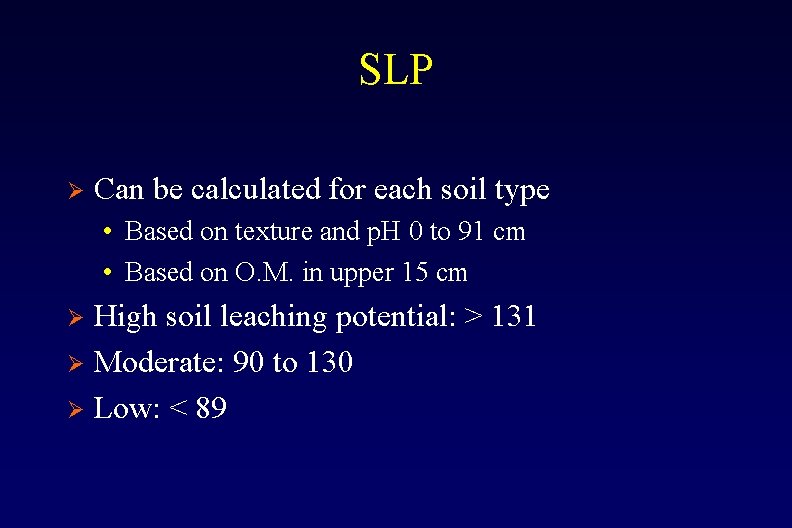
SLP Ø Can be calculated for each soil type • Based on texture and p. H 0 to 91 cm • Based on O. M. in upper 15 cm High soil leaching potential: > 131 Ø Moderate: 90 to 130 Ø Low: < 89 Ø
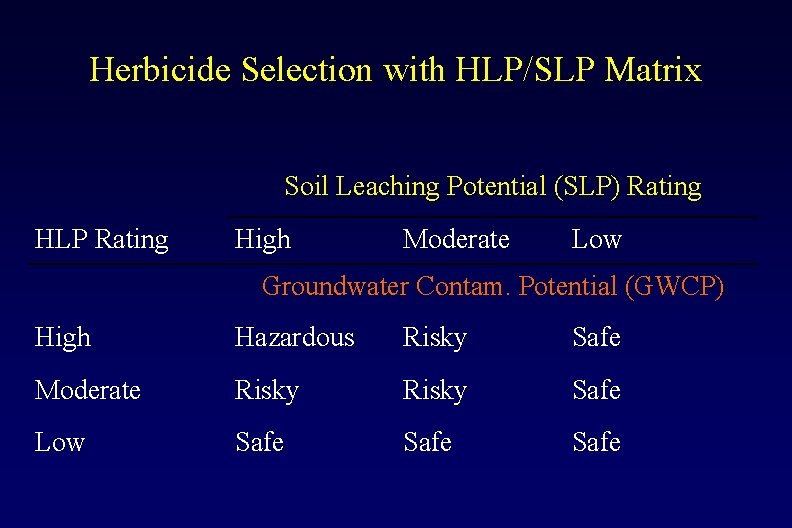
Herbicide Selection with HLP/SLP Matrix Soil Leaching Potential (SLP) Rating HLP Rating High Moderate Low Groundwater Contam. Potential (GWCP) High Hazardous Risky Safe Moderate Risky Safe Low Safe
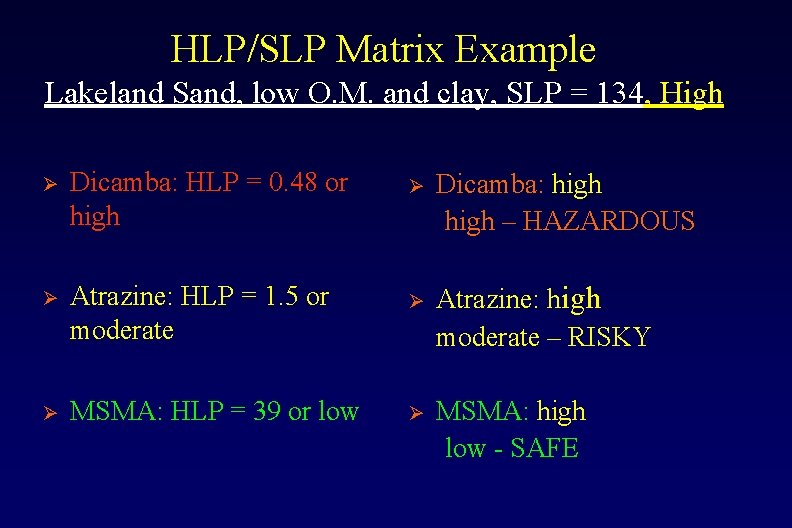
HLP/SLP Matrix Example Lakeland Sand, low O. M. and clay, SLP = 134, High Ø Dicamba: HLP = 0. 48 or high Ø Ø Atrazine: HLP = 1. 5 or moderate Ø Ø MSMA: HLP = 39 or low Ø Dicamba: high – HAZARDOUS Atrazine: high moderate – RISKY MSMA: high low - SAFE
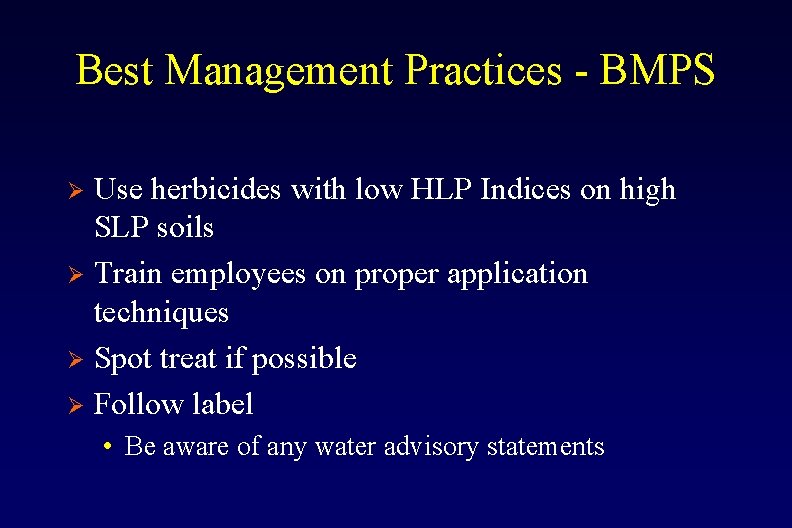
Best Management Practices - BMPS Use herbicides with low HLP Indices on high SLP soils Ø Train employees on proper application techniques Ø Spot treat if possible Ø Follow label Ø • Be aware of any water advisory statements
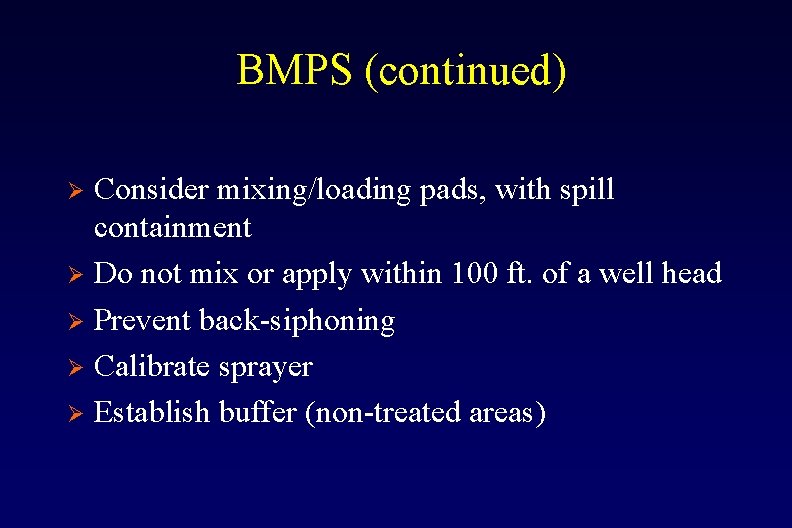
BMPS (continued) Consider mixing/loading pads, with spill containment Ø Do not mix or apply within 100 ft. of a well head Ø Prevent back-siphoning Ø Calibrate sprayer Ø Establish buffer (non-treated areas) Ø
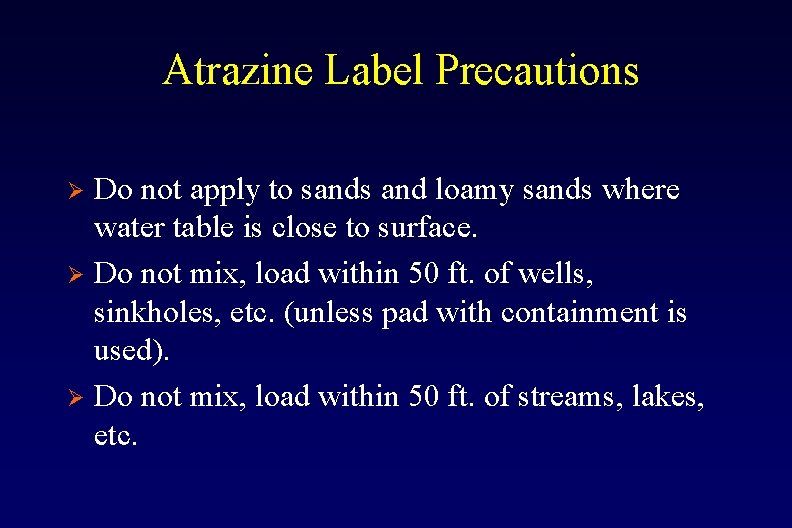
Atrazine Label Precautions Do not apply to sands and loamy sands where water table is close to surface. Ø Do not mix, load within 50 ft. of wells, sinkholes, etc. (unless pad with containment is used). Ø Do not mix, load within 50 ft. of streams, lakes, etc. Ø
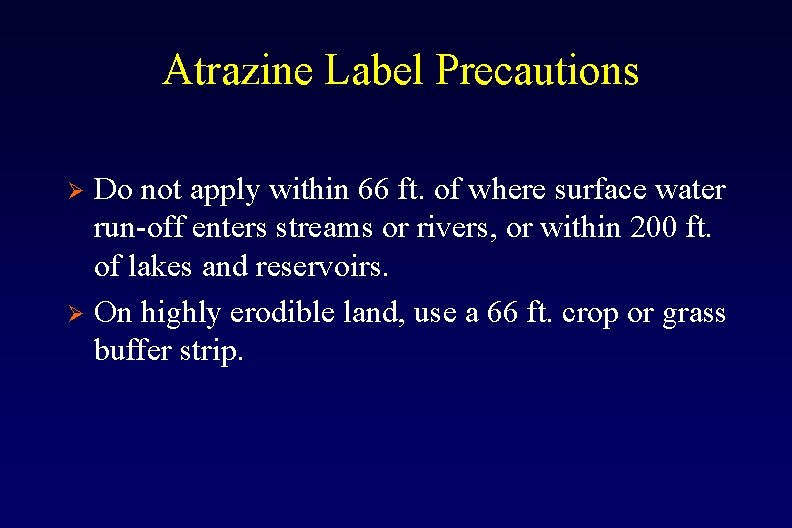
Atrazine Label Precautions Do not apply within 66 ft. of where surface water run-off enters streams or rivers, or within 200 ft. of lakes and reservoirs. Ø On highly erodible land, use a 66 ft. crop or grass buffer strip. Ø
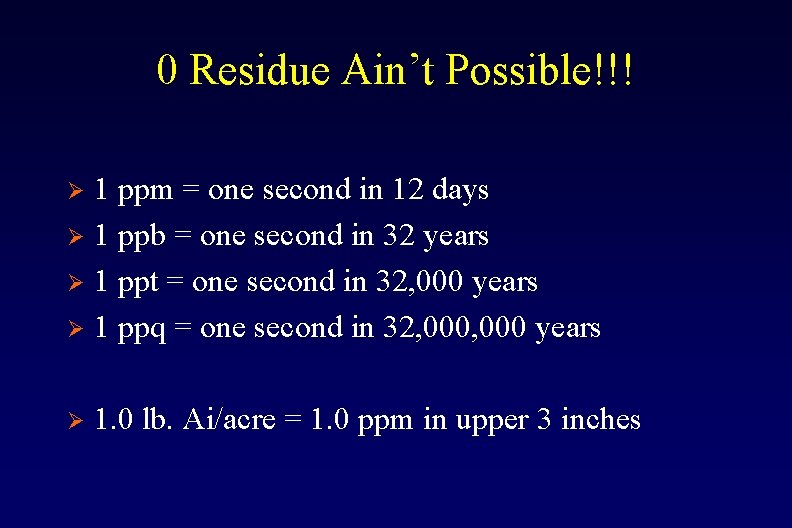
0 Residue Ain’t Possible!!! 1 ppm = one second in 12 days Ø 1 ppb = one second in 32 years Ø 1 ppt = one second in 32, 000 years Ø 1 ppq = one second in 32, 000 years Ø Ø 1. 0 lb. Ai/acre = 1. 0 ppm in upper 3 inches
Risk Communication Ø “Everything is Poison. There is nothing without poisonous properties. The dose differentiates a remedy from a poison. ” Philippus Aureolus Theophrastus Bombastus von Hohenheim 1493 -1541 Better known a Paracelsus
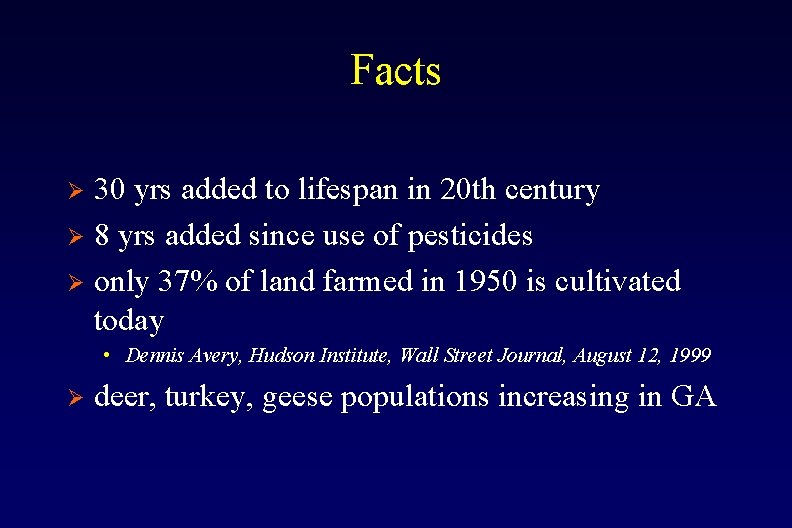
Facts 30 yrs added to lifespan in 20 th century Ø 8 yrs added since use of pesticides Ø only 37% of land farmed in 1950 is cultivated today Ø • Dennis Avery, Hudson Institute, Wall Street Journal, August 12, 1999 Ø deer, turkey, geese populations increasing in GA

Thank you very much!! georgiaturf. com
- Slides: 42