
Seaweeds and Plants The term seaweed refers to
- Slides: 32
Seaweeds and Plants
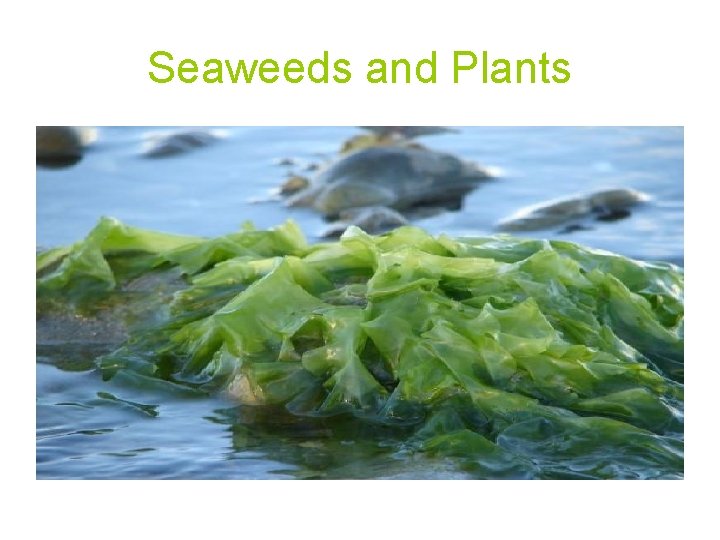
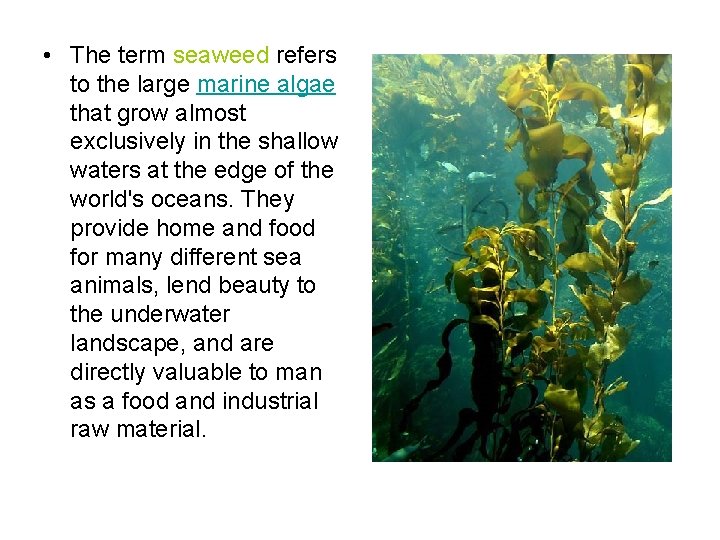
• The term seaweed refers to the large marine algae that grow almost exclusively in the shallow waters at the edge of the world's oceans. They provide home and food for many different sea animals, lend beauty to the underwater landscape, and are directly valuable to man as a food and industrial raw material.
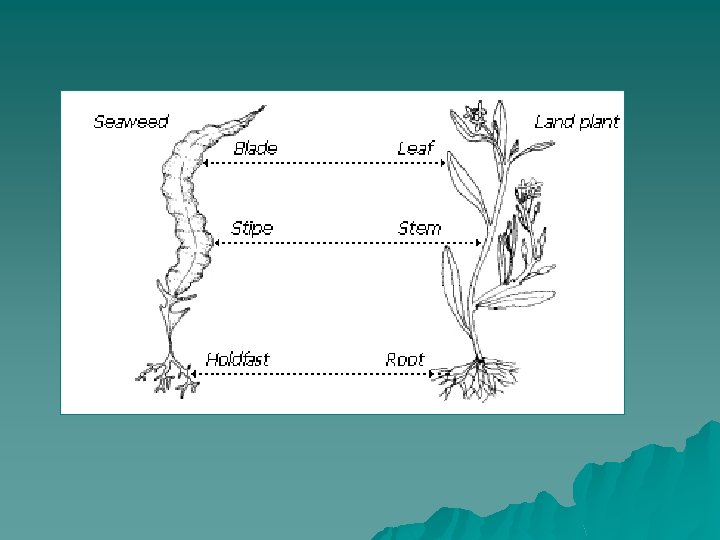
Structure of Seaweeds (also called macropyhtes and macroalgae) • thallus – the complete body • blades- the leaf-like, flattened portions of the thallus • pneumatocysts- gas filled bladders which help keep the blades near the surface Why would blades need to be near the surface? • stipe- stem-like structure providing support • holdfast- attaches the thallus to the bottom
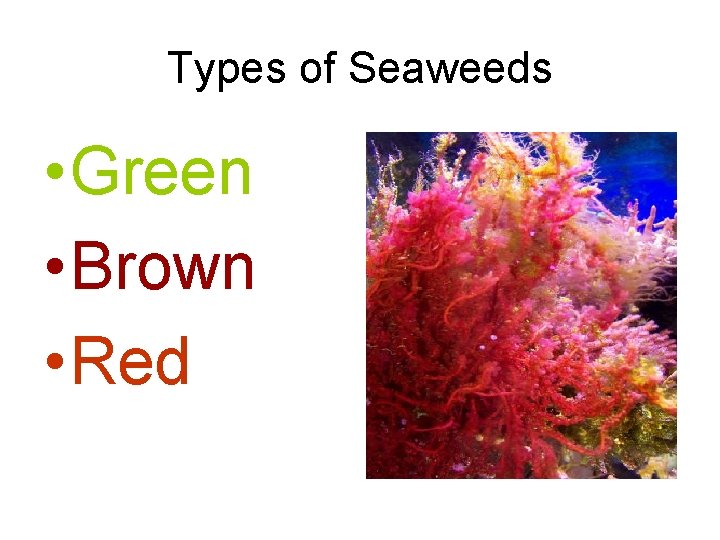
Types of Seaweeds • Green • Brown • Red
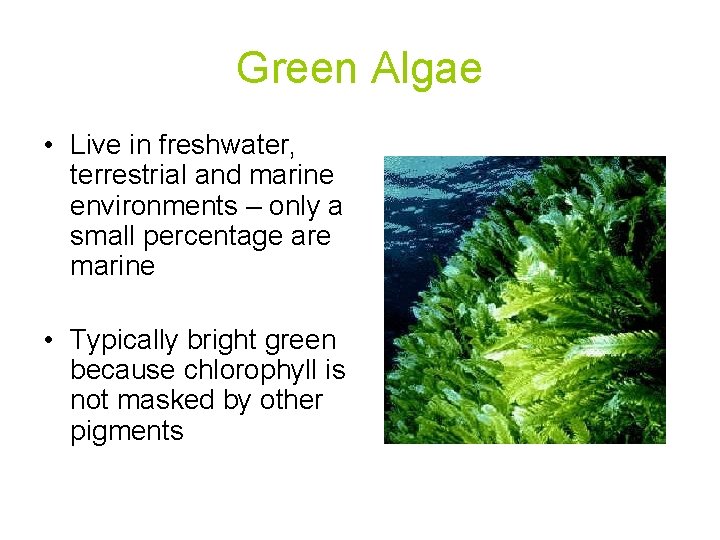
Green Algae • Live in freshwater, terrestrial and marine environments – only a small percentage are marine • Typically bright green because chlorophyll is not masked by other pigments
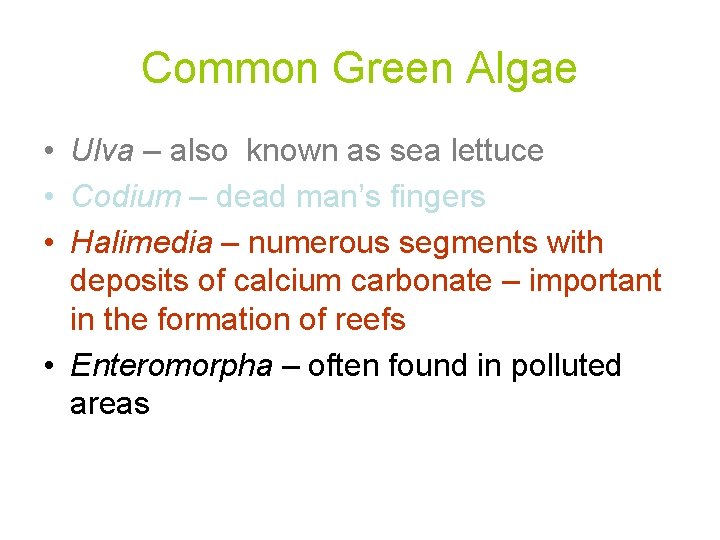
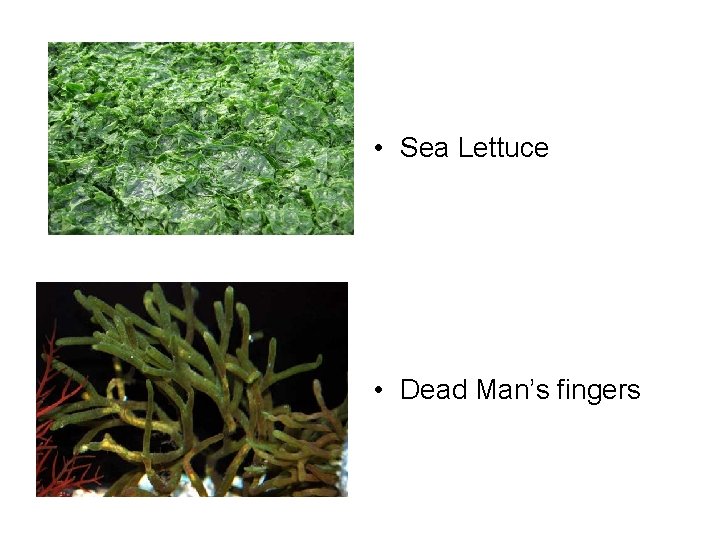
Common Green Algae • Ulva – also known as sea lettuce • Codium – dead man’s fingers • Halimedia – numerous segments with deposits of calcium carbonate – important in the formation of reefs • Enteromorpha – often found in polluted areas
• Sea Lettuce • Dead Man’s fingers
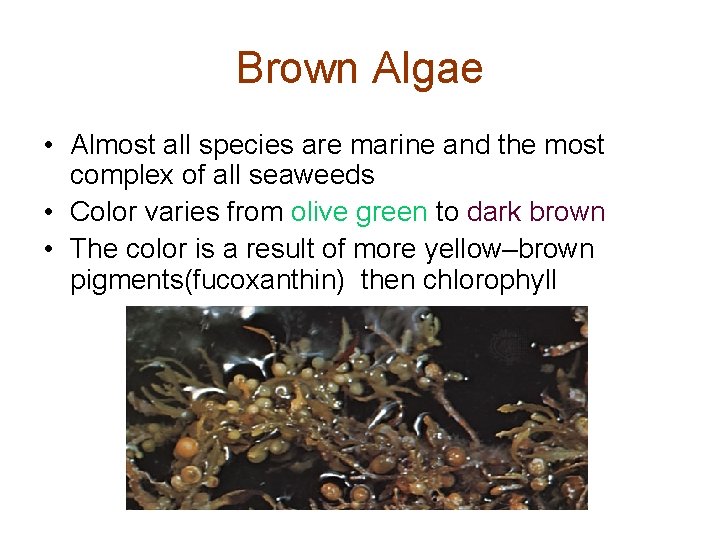
Brown Algae • Almost all species are marine and the most complex of all seaweeds • Color varies from olive green to dark brown • The color is a result of more yellow–brown pigments(fucoxanthin) then chlorophyll
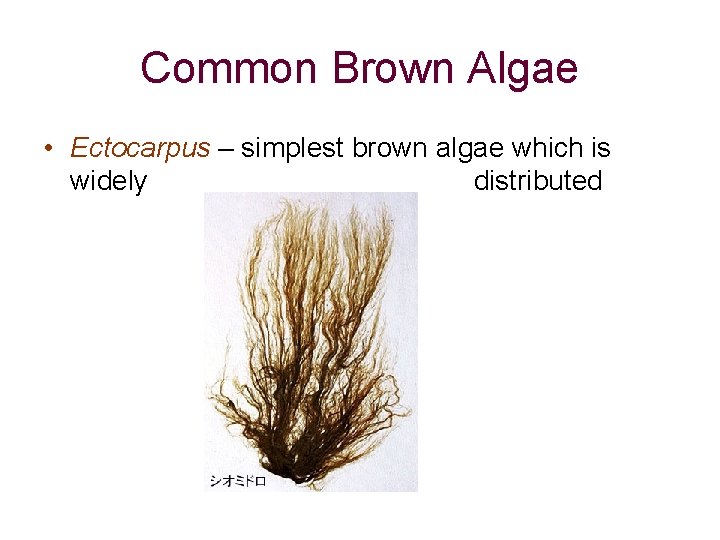
Common Brown Algae • Ectocarpus – simplest brown algae which is widely distributed
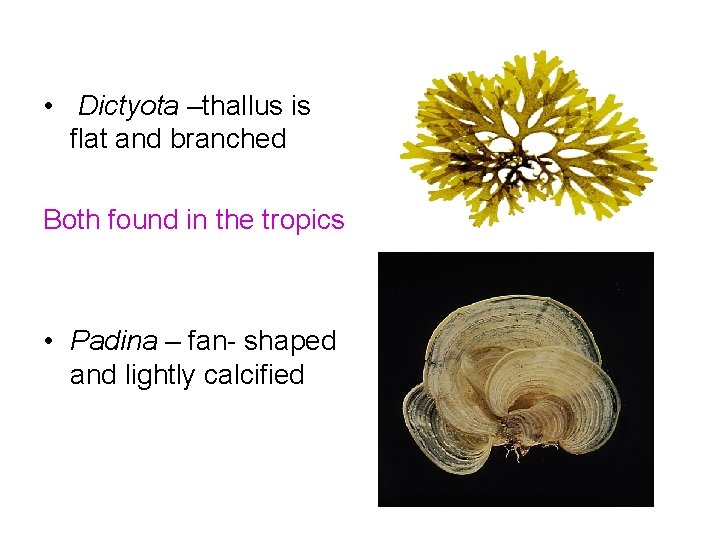
• Dictyota –thallus is flat and branched Both found in the tropics • Padina – fan- shaped and lightly calcified
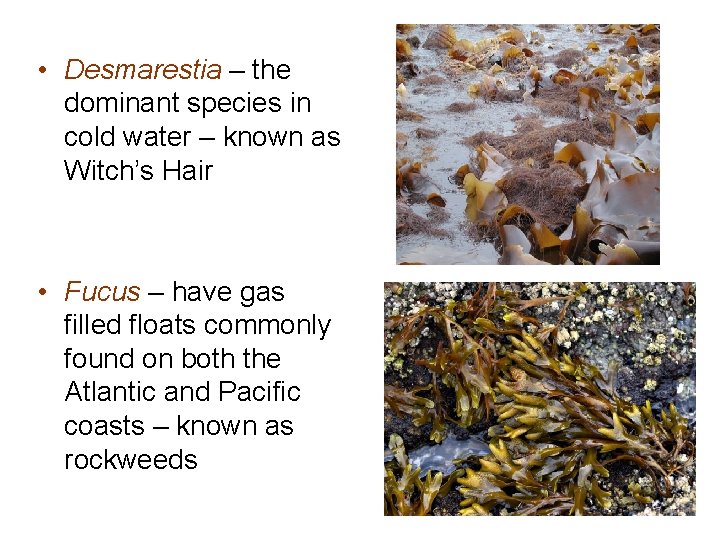
• Desmarestia – the dominant species in cold water – known as Witch’s Hair • Fucus – have gas filled floats commonly found on both the Atlantic and Pacific coasts – known as rockweeds
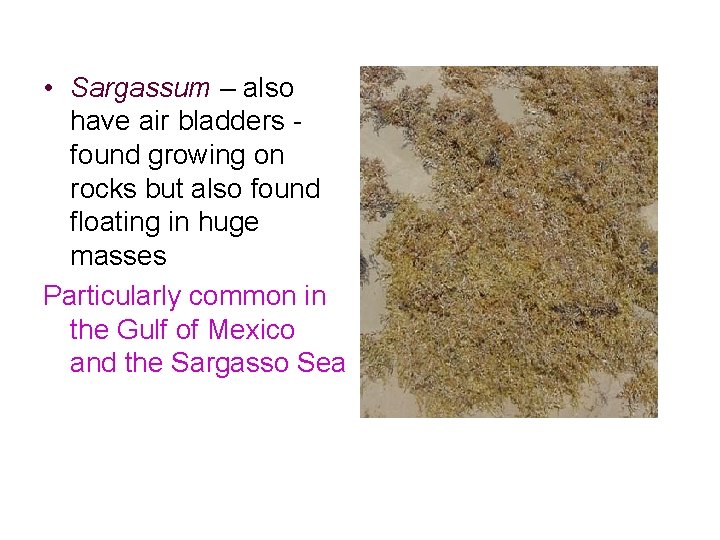
• Sargassum – also have air bladders found growing on rocks but also found floating in huge masses Particularly common in the Gulf of Mexico and the Sargasso Sea
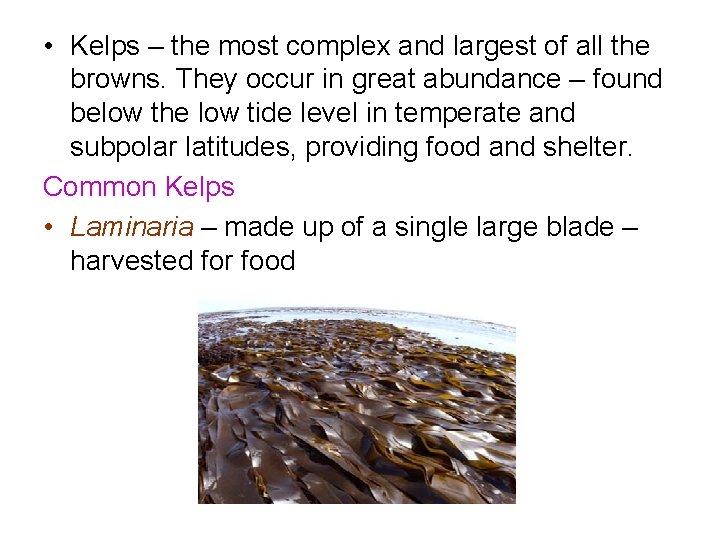
• Kelps – the most complex and largest of all the browns. They occur in great abundance – found below the low tide level in temperate and subpolar latitudes, providing food and shelter. Common Kelps • Laminaria – made up of a single large blade – harvested for food
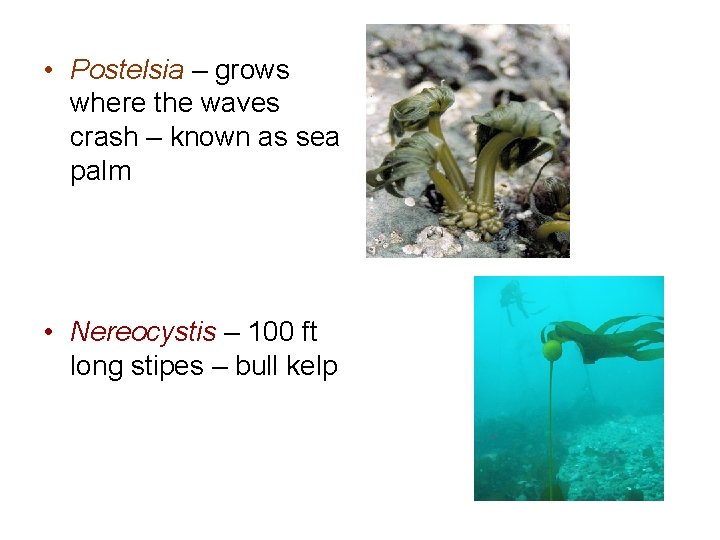
• Postelsia – grows where the waves crash – known as sea palm • Nereocystis – 100 ft long stipes – bull kelp
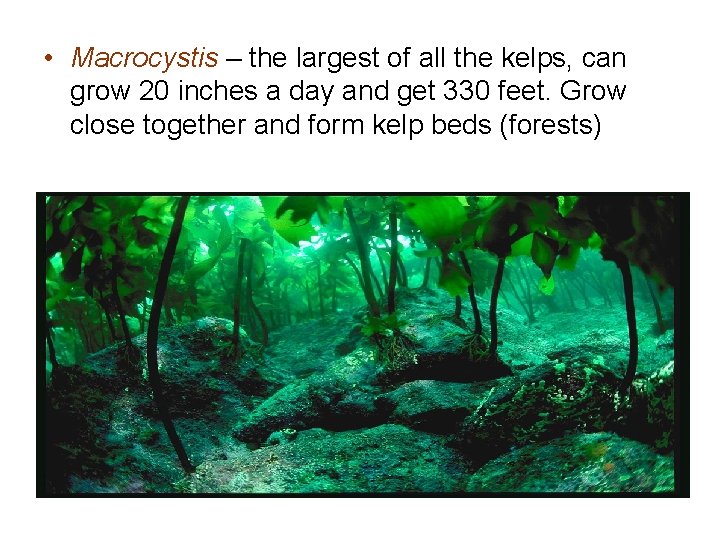
• Macrocystis – the largest of all the kelps, can grow 20 inches a day and get 330 feet. Grow close together and form kelp beds (forests)
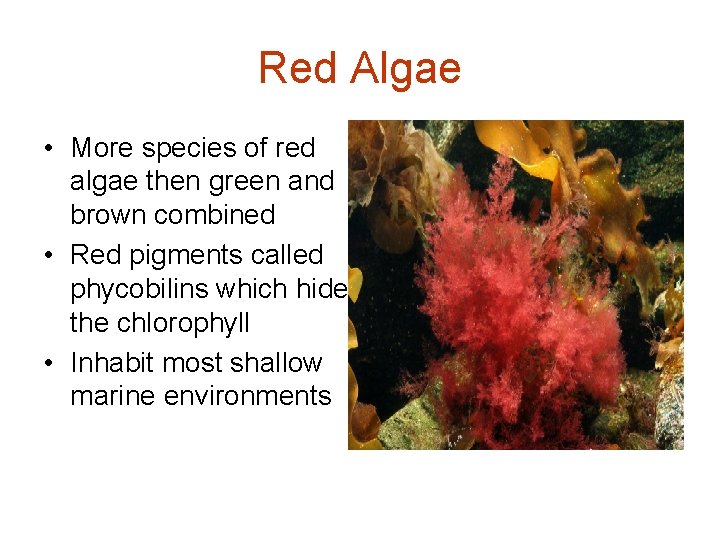
Red Algae • More species of red algae then green and brown combined • Red pigments called phycobilins which hide the chlorophyll • Inhabit most shallow marine environments
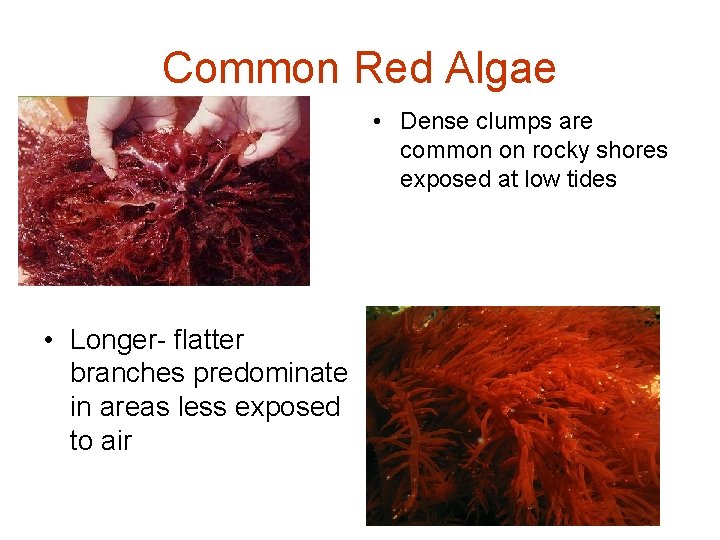
Common Red Algae • Dense clumps are common on rocky shores exposed at low tides • Longer- flatter branches predominate in areas less exposed to air
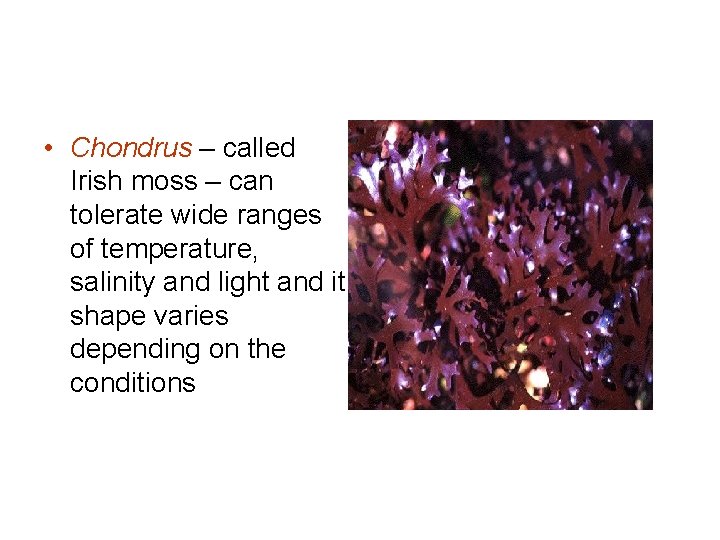
• Chondrus – called Irish moss – can tolerate wide ranges of temperature, salinity and light and it shape varies depending on the conditions
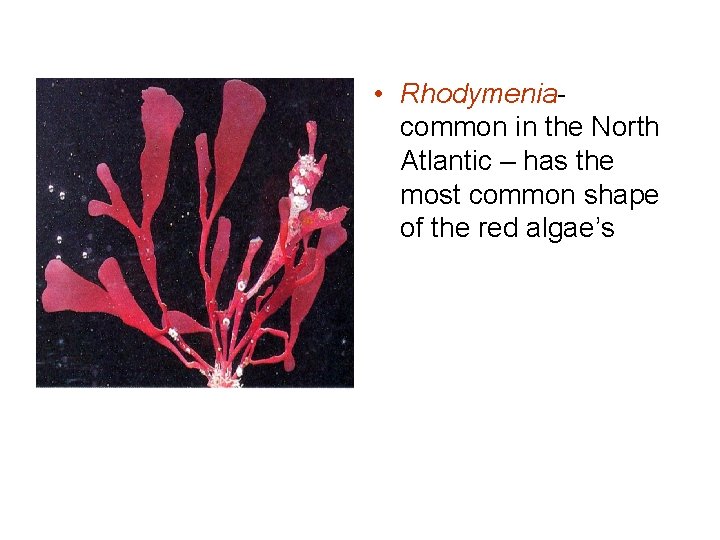
• Rhodymeniacommon in the North Atlantic – has the most common shape of the red algae’s
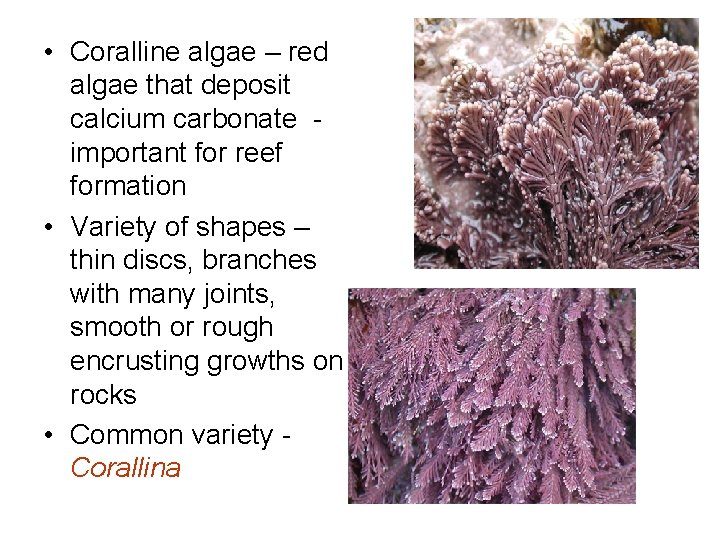
• Coralline algae – red algae that deposit calcium carbonate important for reef formation • Variety of shapes – thin discs, branches with many joints, smooth or rough encrusting growths on rocks • Common variety Corallina
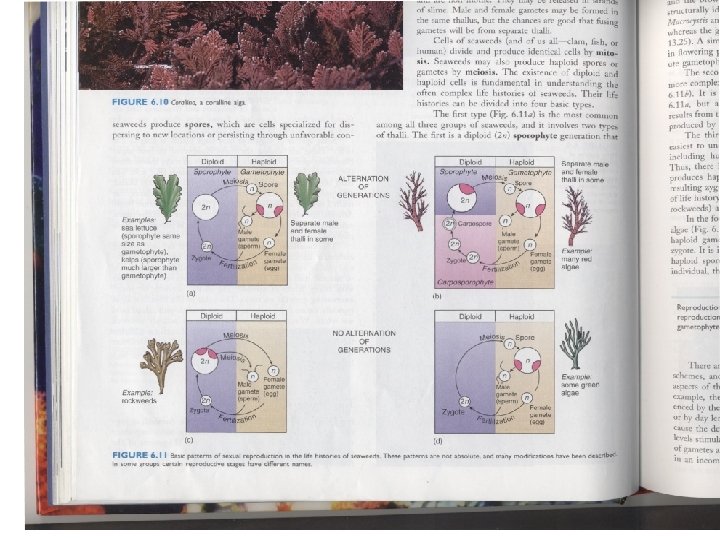
Life History • Reproduction in seaweeds is by asexual and sexual means • Four basic types of reproduction
Most Common form • The sporophyte produces spores by meiosis. These spores develop into a gametophyte. Both the spores and the resulting gametophyte are haploid. • The mature gametophyte produces male or female gametes (or both) by mitosis. The fusion of male and female gametes produces a diploid zygote which develops into a new sporophyte. • This cycle is known as alternation of generations.
Carposporophyte Generation • Very similar to sporophyte, except has a third generation – a diploid carpospore which develops into a sporophyte • Still has alternation of generations
Easiest of all • Thallus produces haploid gametes by meiosis (both male and female) which fuse to form diploid zygote which develops into new thallus (brand new plant).
Last of four types • The thallus is haploid and produces haploid gametes. • Fertilization occurs and forms diploid zygote which undergoes meiosis forming haploid spores which develop into new thallus.
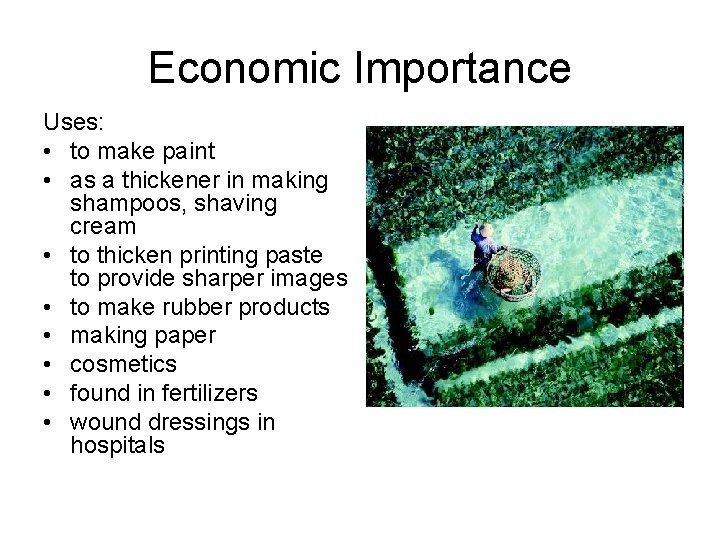
Economic Importance Uses: • to make paint • as a thickener in making shampoos, shaving cream • to thicken printing paste to provide sharper images • to make rubber products • making paper • cosmetics • found in fertilizers • wound dressings in hospitals
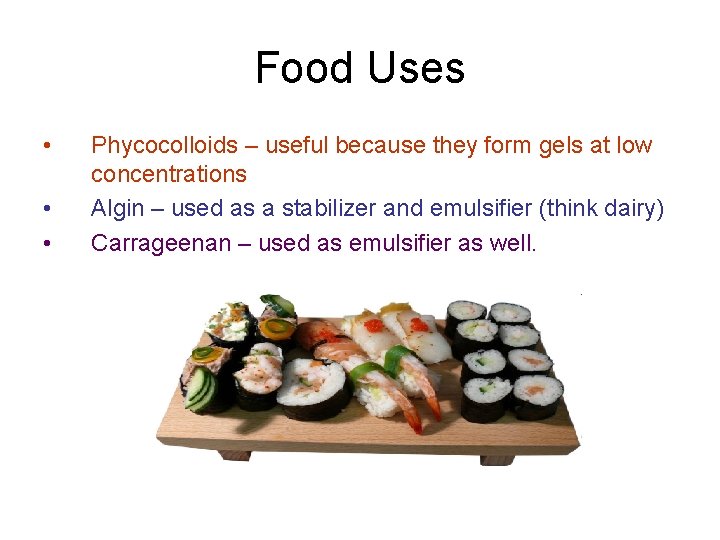
Food Uses • • • Phycocolloids – useful because they form gels at low concentrations Algin – used as a stabilizer and emulsifier (think dairy) Carrageenan – used as emulsifier as well.
Flowering plants • Seagrasses – truly marine, live below water • Salt-marsh plants – land plants tolerant of salt both salt – marsh plants and mangroves live in estuaries and have only their roots below the water • Mangroves – trees or shrubs adapted to live along tropical and subtropical shores around the world
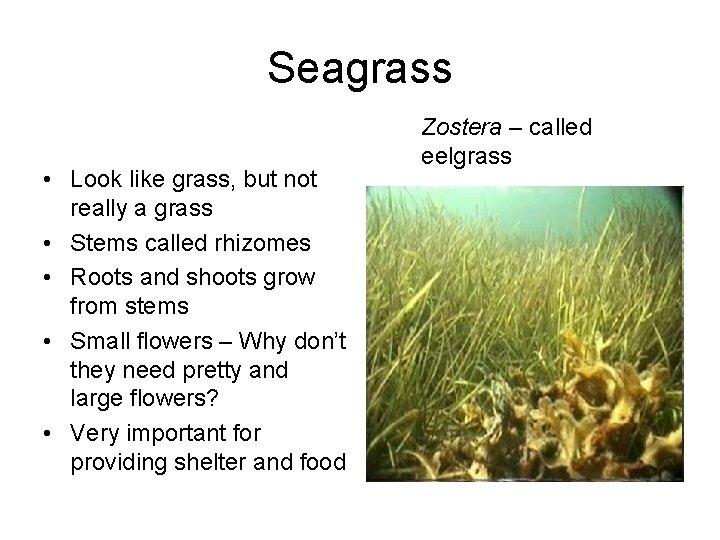
Seagrass • Look like grass, but not really a grass • Stems called rhizomes • Roots and shoots grow from stems • Small flowers – Why don’t they need pretty and large flowers? • Very important for providing shelter and food Zostera – called eelgrass
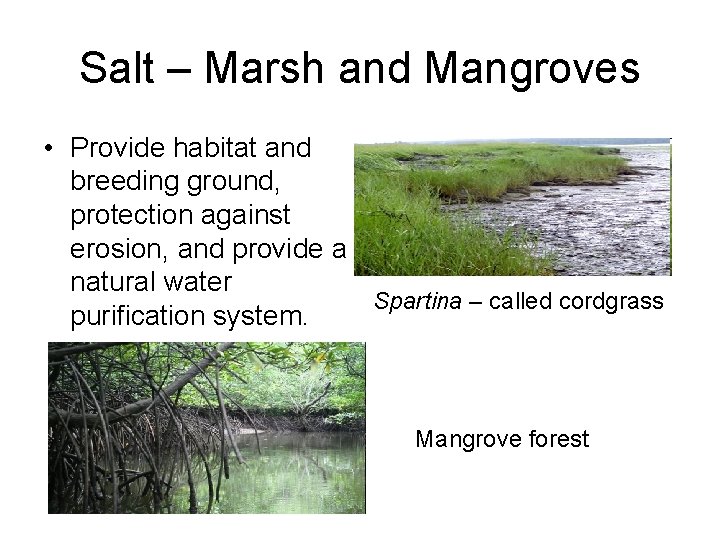
Salt – Marsh and Mangroves • Provide habitat and breeding ground, protection against erosion, and provide a natural water Spartina – called cordgrass purification system. Mangrove forest