Understanding Rheumatoid Arthritis Randall J Reed MD Friday







- Slides: 34
Understanding Rheumatoid Arthritis Randall J. Reed, MD Friday, November 13, 2015 11: 00 a. m. EST
Basic Webinar Instructions l l l Need speakers or headphones to hear the presentation. Check sound via Audio>Test Computer Audio. Please don’t activate camera. Closed captions: use arrow to expand the Closed Captions window to view. Expand/contract any of the windows in the right-hand column with the arrows. Expand/contract the size of the right-hand column.
Basic Webinar Instructions l Questions and comments • Click Chat icon at top right of screen (it should turn blue). Enter message in box, choose who to send it to, and click send. You may enter questions about the presentation at any time • In addition, during the Q & A period, if you have a web microphone, click the “Raise Hand” icon to indicate that you have a question. We will enable your microphone
Basic Webinar Instructions 5 quick survey questions + opportunity to share comments l Session recorded and archived with Power. Point files at www. agrability. org/Online -Training/archived l Problems: use chat window or email agrability@agrability. org l
Potential Webinar Issues Audio continues, but slides don’t advance – Move your mouse or hit Enter l Disconnection with presenters – Hang on – we’ll reconnect as soon as possible l Disconnection with participants – Log in again l
l Agr. Ability: USDA-sponsored program that assists farmers, ranchers, and other agricultural workers with disabilities. – Partners land grant universities with disability services organizations. Currently 20 state projects – National Agr. Ability Project: Led by Purdue’s Breaking New Ground Resource Center. Partners include: l Goodwill of the Finger Lakes l The Arthritis Foundation, Heartland Region l University of Illinois at Urbana-Champaign l Colorado State University – More information available at www. agrability. org
Understanding Rheumatoid Arthritis Randall J. Reed, MD Rheumatology Associates, PC Indianapolis, Indiana
Arthritis l 66 million people with arthritis in America l 2 nd only to heart disease in disability l Costs US $86. 2 billion l More common in women than men l Limits everyday activities for 7 million Americans
Types of Arthritis l Over l l l l l 100 different types of arthritis Osteoarthritis Rheumatoid Arthritis Gout Psoriatic Arthritis Systemic Lupus Erythematosus Septic Arthritis Lyme Disease Ankylosing Spondylitis CPPD Deposition Disease Temporal Arteritis/Polymyalgia Rheumatica
Rheumatoid Arthritis (RA) l Around 2 million people in the US l More common in women than men l Can occur at any age, onset usually in 3 rd to 5 th decades of life l Chronic, inflammatory disease that primarily involves joints l Rheumatoid arthritis can also affect the skin, saliva glands, eyes, lungs, and heart
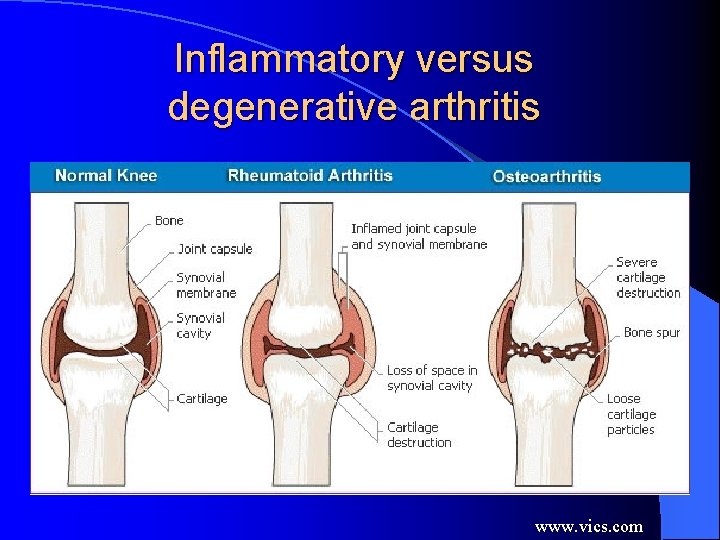
Inflammatory versus degenerative arthritis www. vics. com
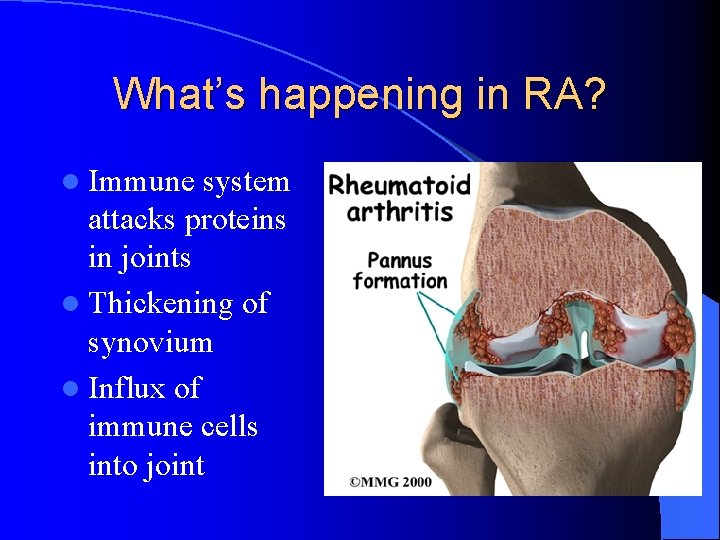
What’s happening in RA? l Immune system attacks proteins in joints l Thickening of synovium l Influx of immune cells into joint
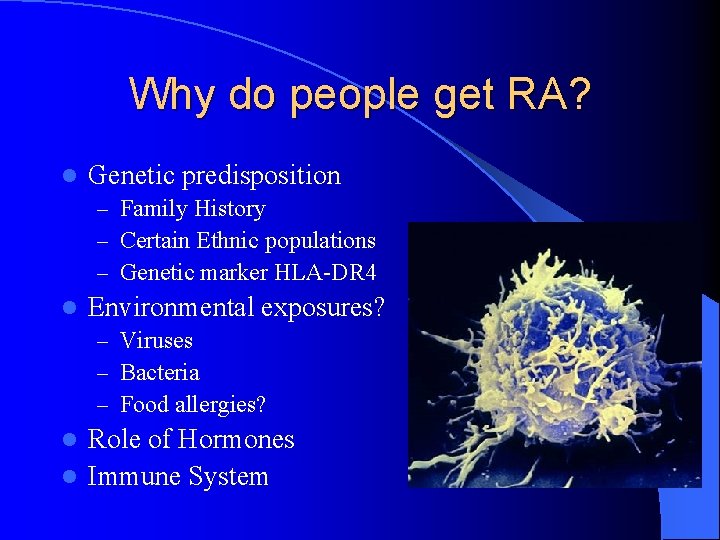
Why do people get RA? l Genetic predisposition – Family History – Certain Ethnic populations – Genetic marker HLA-DR 4 l Environmental exposures? – Viruses – Bacteria – Food allergies? Role of Hormones l Immune System l
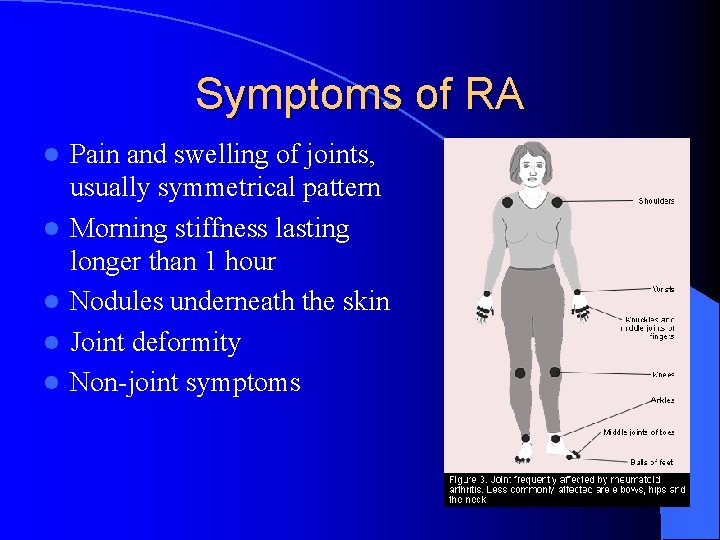
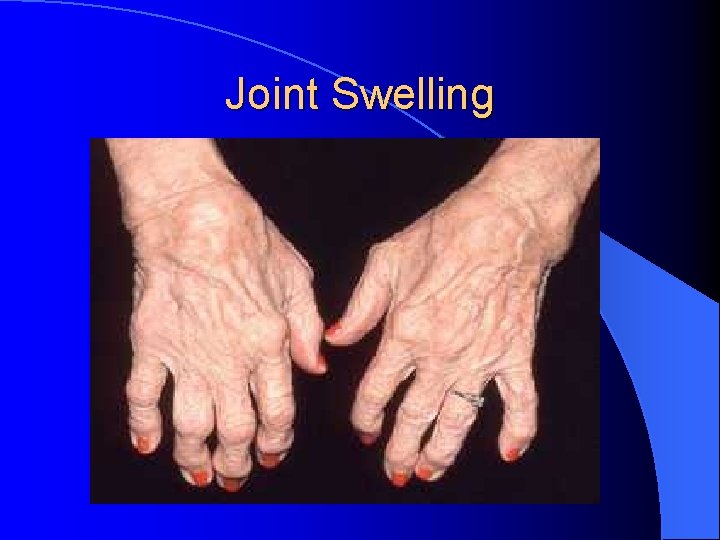
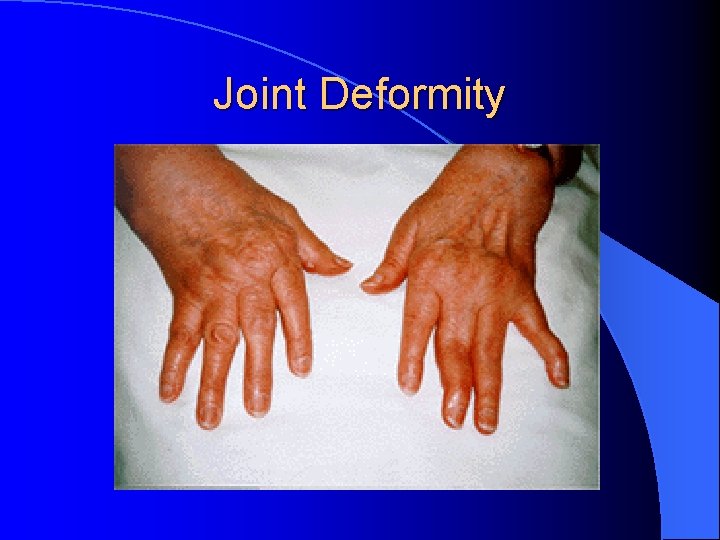
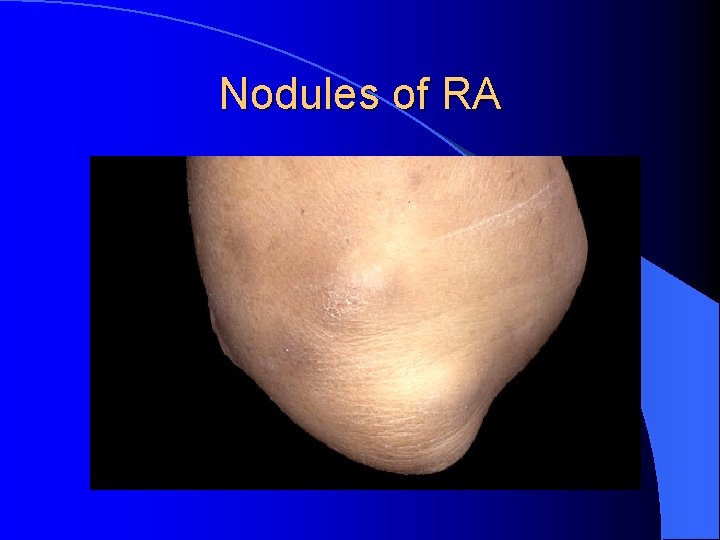
Symptoms of RA l l l Pain and swelling of joints, usually symmetrical pattern Morning stiffness lasting longer than 1 hour Nodules underneath the skin Joint deformity Non-joint symptoms
Joint Swelling
Joint Deformity
Nodules of RA
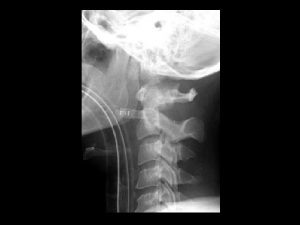
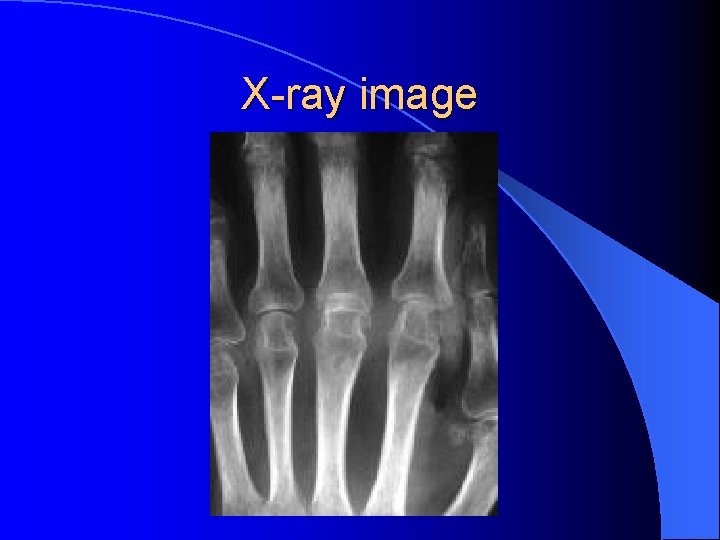
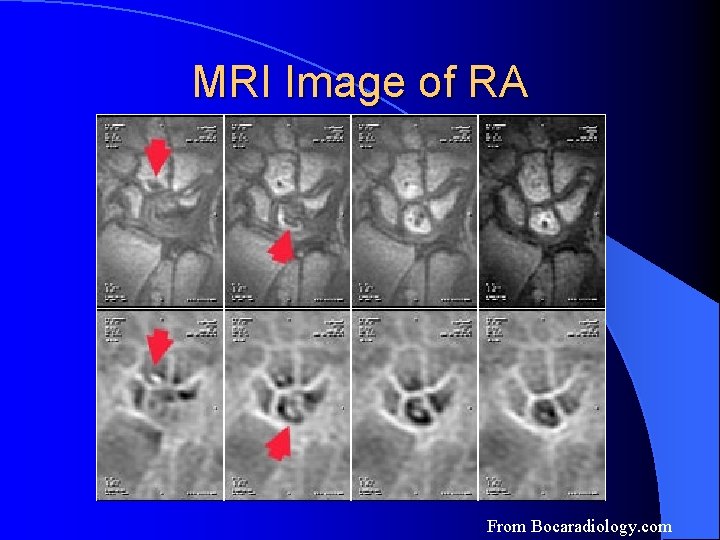
How is RA diagnosed? l Clinical History and Exam l Blood tests – Rheumatoid Factor – Anti-CCP antibody l X-rays l MRI
X-ray image
MRI Image of RA From Bocaradiology. com
What should I expect with RA? l. A chronic illness, only 5 -10% remission rate l Untreated, 90 -95% of patients will have bone damage, usually within first 2 years l 5 -10% of RA patients become disabled every year (old data) l Associated with increased risk of infections, heart disease, and lymphoma
What’s the good news? ! l Advancements in diagnosis – CCP antibody – MRI and Ultrasound l Better treatments! l Advancing Research – Stem cell – Genetic based therapies – Individualized therapies
Goals of therapy for RA Reduce joint pain and swelling l Improve Function l Prevent erosions and joint deformity l Minimize risk of adverse events from medications l
How is RA treated l Most patients will require a “disease modifying anti-rheumatic drug”, or DMARD l Corticosteroids, i. e. prednisone l Non-steroidal anti-inflammatory drugs (NSAIDS) / COX-2 inhibitors l Joint injections l Biological Response Modifiers
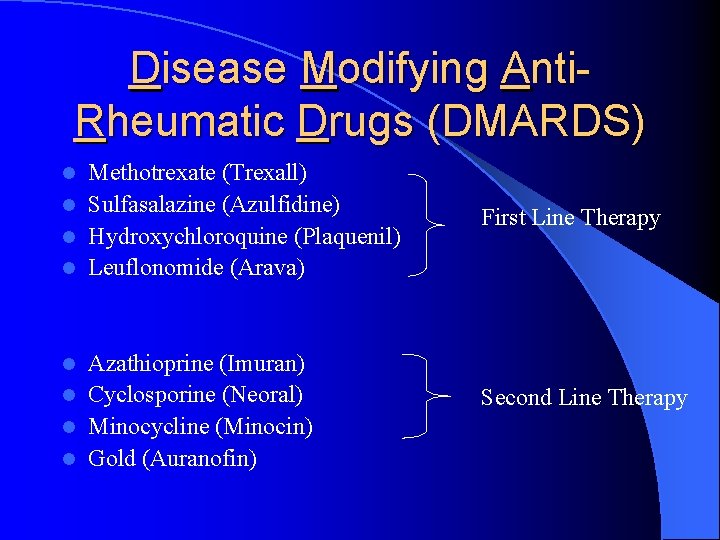
Disease Modifying Anti. Rheumatic Drugs (DMARDS) Methotrexate (Trexall) l Sulfasalazine (Azulfidine) l Hydroxychloroquine (Plaquenil) l Leuflonomide (Arava) l Azathioprine (Imuran) l Cyclosporine (Neoral) l Minocycline (Minocin) l Gold (Auranofin) First Line Therapy l Second Line Therapy
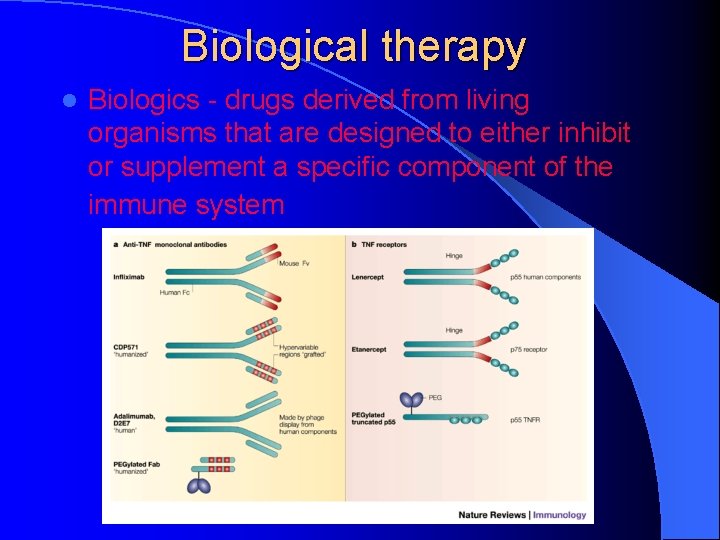
Biological therapy l Biologics - drugs derived from living organisms that are designed to either inhibit or supplement a specific component of the immune system
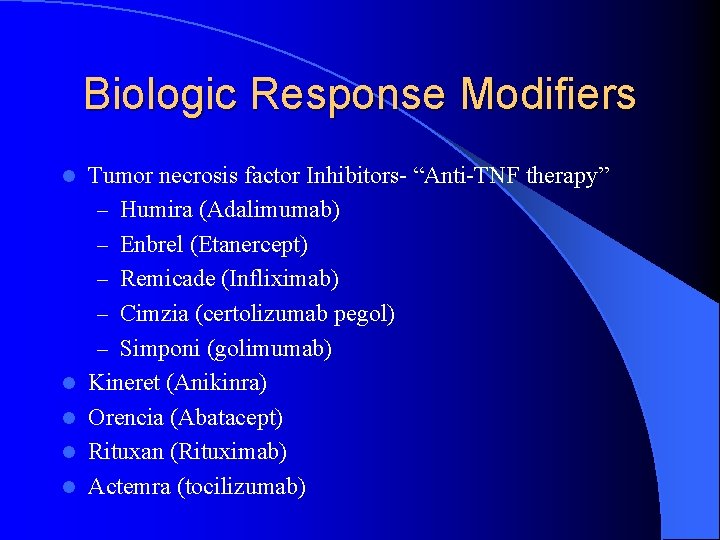
Biologic Response Modifiers l l l Tumor necrosis factor Inhibitors- “Anti-TNF therapy” – Humira (Adalimumab) – Enbrel (Etanercept) – Remicade (Infliximab) – Cimzia (certolizumab pegol) – Simponi (golimumab) Kineret (Anikinra) Orencia (Abatacept) Rituxan (Rituximab) Actemra (tocilizumab)
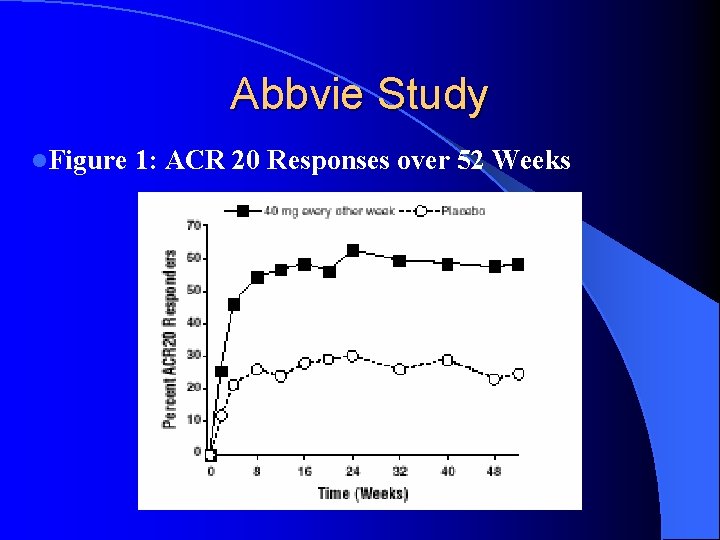
Abbvie Study l. Figure 1: ACR 20 Responses over 52 Weeks
Anti-TNF medicines have revolutionized treatment for RA "The PREMIER data are encouraging because they suggest that early and aggressive treatment may slow or inhibit patients' joint damage, " said Ferdinand Breedveld, M. D. , professor, Department of Rheumatology, University of Leiden, Netherlands –from Arthritis News June 9 th 2005.
Risks of therapy l All treatments will carry some risk! l Not treating RA also carries a risk l Ask doctor about increased risk of infection, potential liver toxicity, stomach upset, interactions with other medicines; recent press about increased cancer risk l Many of the medications require chronic laboratory monitoring
Diet and Arthritis l Weight loss l Anti-oxidants? l Vitamin C l Supplements
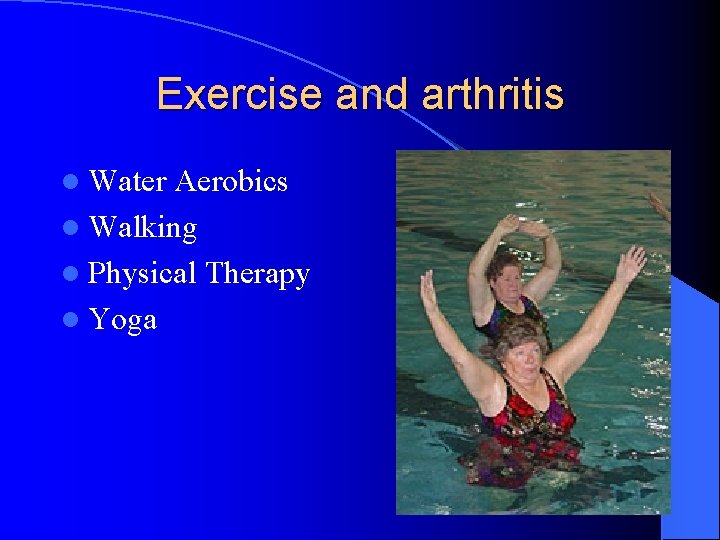
Exercise and arthritis l Water Aerobics l Walking l Physical Therapy l Yoga
Surgery for RA
Summary Rheumatoid arthritis is a chronic inflammatory disease that affects joints in a symmetrical pattern; usually hands, wrists and feet become involved • Left untreated, RA typically leads to joint damage and disability • Medical treatment for RA can halt disease progression and has improved quality of life for patients •