U N I T III KINETIC MOLECULAR DESCRIPTION

- Slides: 40
U N I T III KINETIC MOLECULAR DESCRIPTION OF THE STATES OF MATTER CHAPTER 9 The Gaseous State CHAPTER 10 Solids, Liquids, and Phase Transitions CHAPTER 11 Solutions General Chemistry I
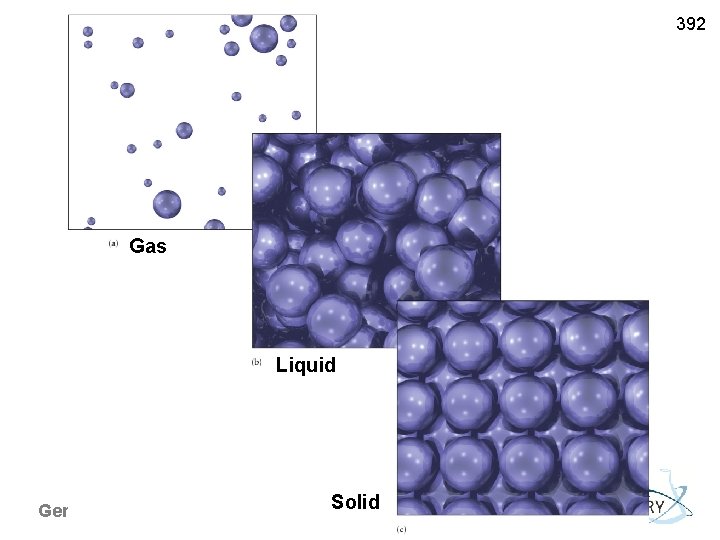
392 Gas Liquid General Chemistry I Solid
9 THE GASEOUS STATE CHAPTER 9. 1 The Chemistry of Gases 9. 2 Pressure and Temperature of Gases 9. 3 The Ideal Gas Law 9. 4 Mixtures of Gases 9. 5 The Kinetic Theory of Gases 9. 6 Real Gases: Intermolecular Forces General Chemistry I
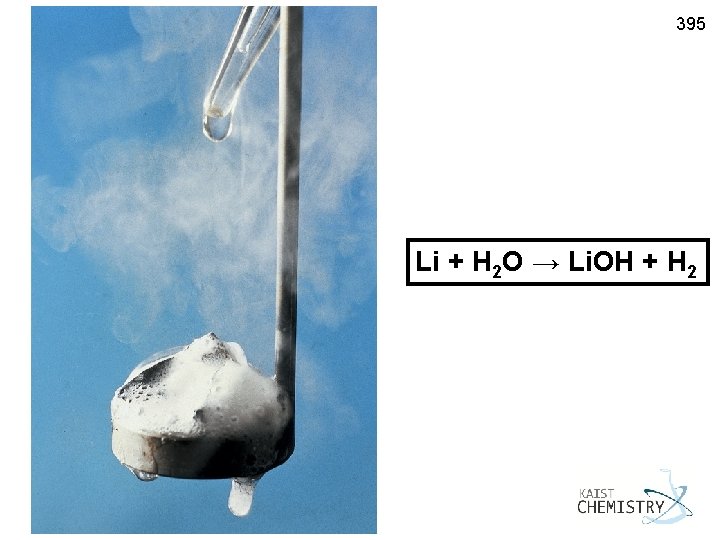
395 Li + H 2 O → Li. OH + H 2 General Chemistry I
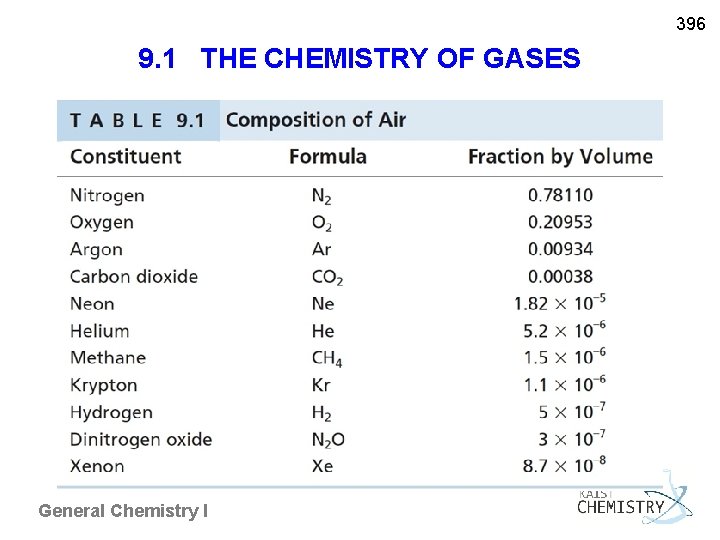
396 9. 1 THE CHEMISTRY OF GASES General Chemistry I
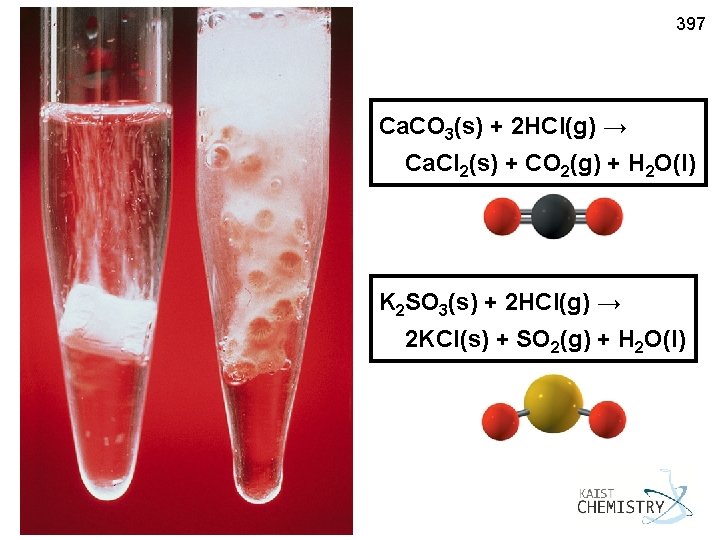
397 Ca. CO 3(s) + 2 HCl(g) → Ca. Cl 2(s) + CO 2(g) + H 2 O(l) K 2 SO 3(s) + 2 HCl(g) → 2 KCl(s) + SO 2(g) + H 2 O(l) General Chemistry I
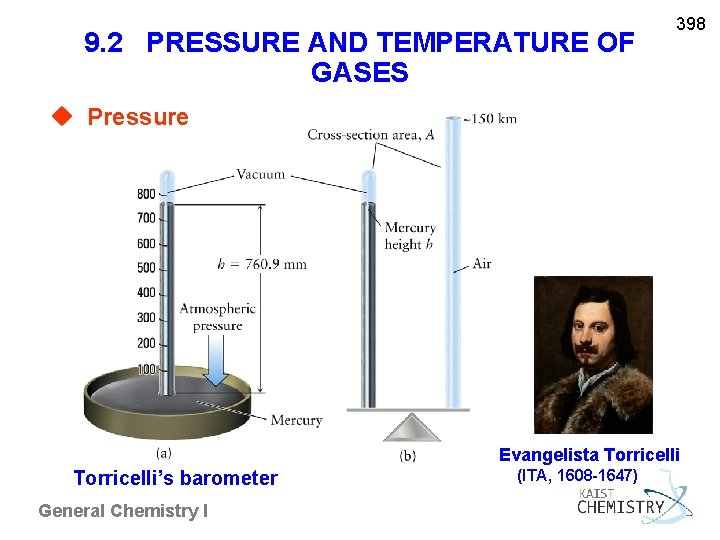
9. 2 PRESSURE AND TEMPERATURE OF GASES 398 u Pressure Evangelista Torricelli’s barometer General Chemistry I (ITA, 1608 -1647)
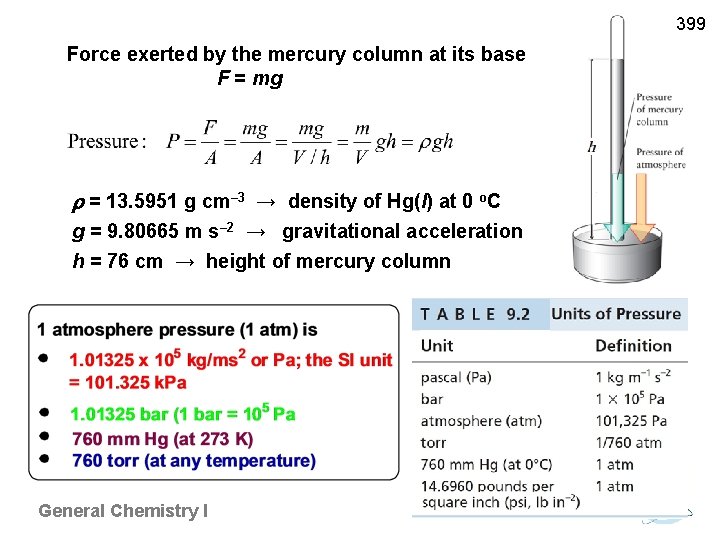
399 Force exerted by the mercury column at its base F = mg = 13. 5951 g cm– 3 → density of Hg(l) at 0 o. C g = 9. 80665 m s– 2 → gravitational acceleration h = 76 cm → height of mercury column General Chemistry I
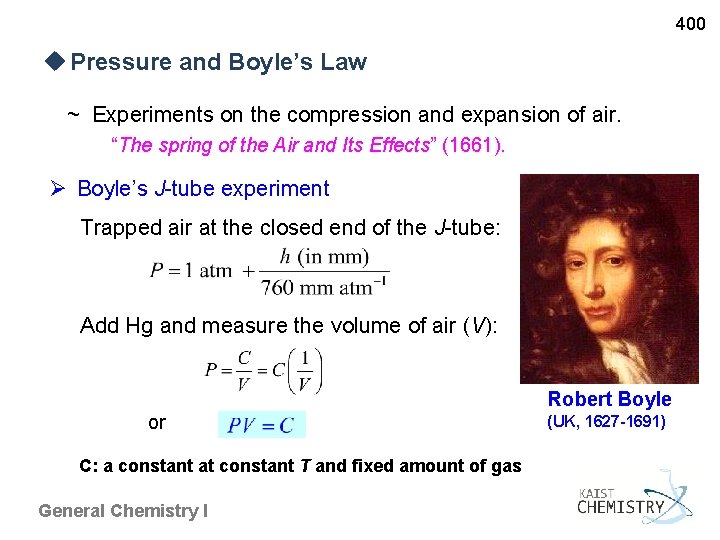
400 u Pressure and Boyle’s Law ~ Experiments on the compression and expansion of air. “The spring of the Air and Its Effects” (1661). Ø Boyle’s J-tube experiment Trapped air at the closed end of the J-tube: Add Hg and measure the volume of air (V): Robert Boyle or C: a constant at constant T and fixed amount of gas General Chemistry I (UK, 1627 -1691)
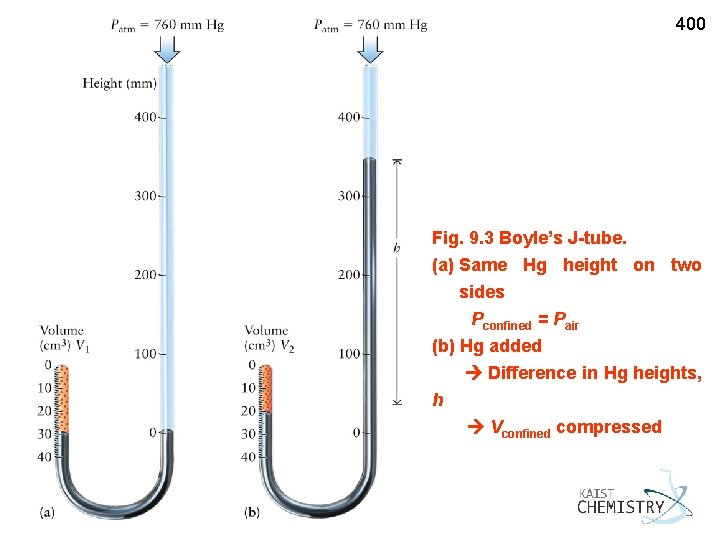
400 Fig. 9. 3 Boyle’s J-tube. (a) Same Hg height on two sides Pconfined = Pair (b) Hg added Difference in Hg heights, h Vconfined compressed General Chemistry I
401 (a) P vs. V hyperbola (b) P vs. 1/V straight line passing through the origin (slope: C) (c) PV vs. P straight line independent of P (parallel to P-axis, intercept C on PV-axis) The value of C at 0 o. C and for 1 mol of gas, ~ good for all gases at very low pressure C = PV = 22. 414 L atm General Chemistry I
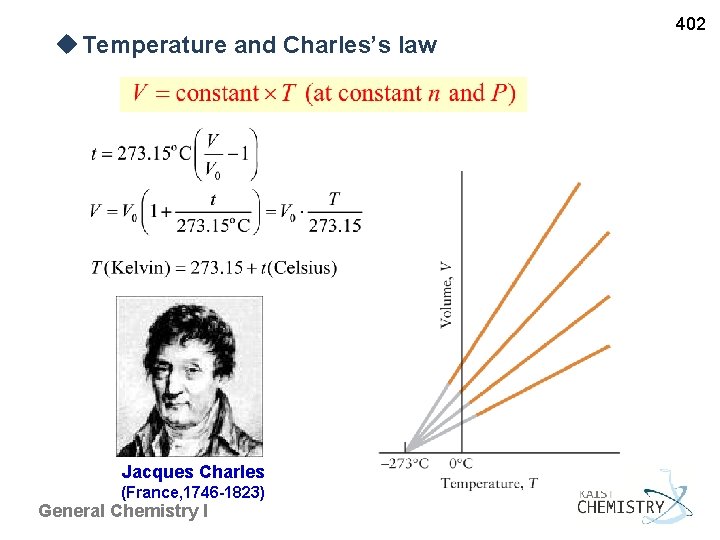
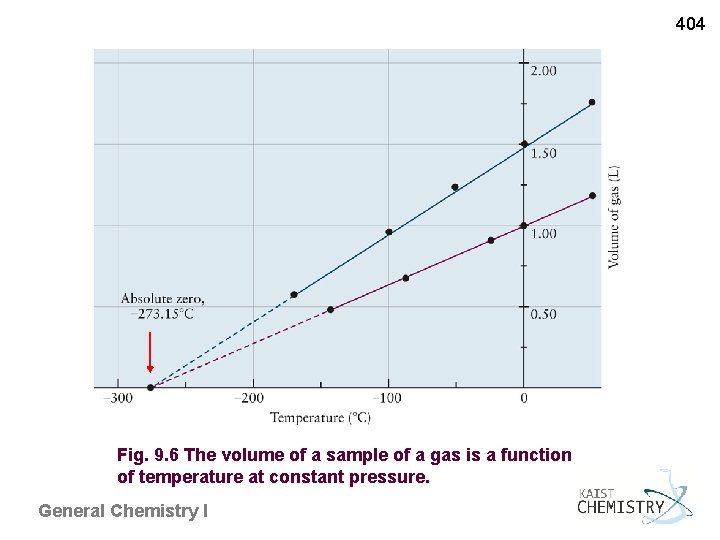
u Temperature and Charles’s law Jacques Charles (France, 1746 -1823) General Chemistry I 402
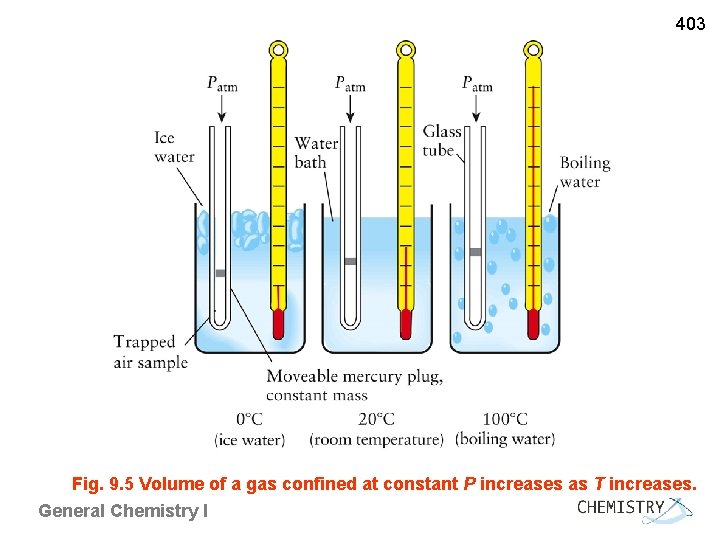
403 Fig. 9. 5 Volume of a gas confined at constant P increases as T increases. General Chemistry I
404 Fig. 9. 6 The volume of a sample of a gas is a function of temperature at constant pressure. General Chemistry I
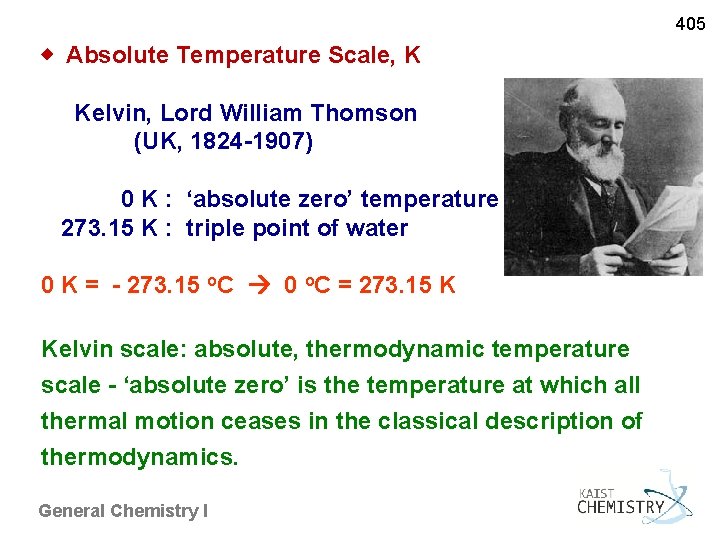
405 ◈ Absolute Temperature Scale, K Kelvin, Lord William Thomson (UK, 1824 -1907) 0 K : ‘absolute zero’ temperature 273. 15 K : triple point of water 0 K = - 273. 15 o. C 0 o. C = 273. 15 K Kelvin scale: absolute, thermodynamic temperature scale - ‘absolute zero’ is the temperature at which all thermal motion ceases in the classical description of thermodynamics. General Chemistry I
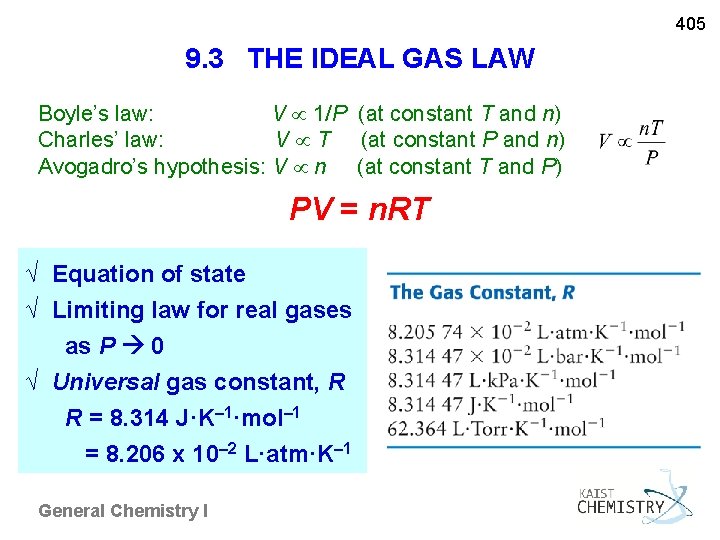
405 9. 3 THE IDEAL GAS LAW Boyle’s law: V 1/P (at constant T and n) Charles’ law: V T (at constant P and n) Avogadro’s hypothesis: V n (at constant T and P) PV = n. RT √ Equation of state √ Limiting law for real gases as P 0 √ Universal gas constant, R R = 8. 314 J·K– 1·mol– 1 = 8. 206 x 10– 2 L·atm·K– 1 General Chemistry I
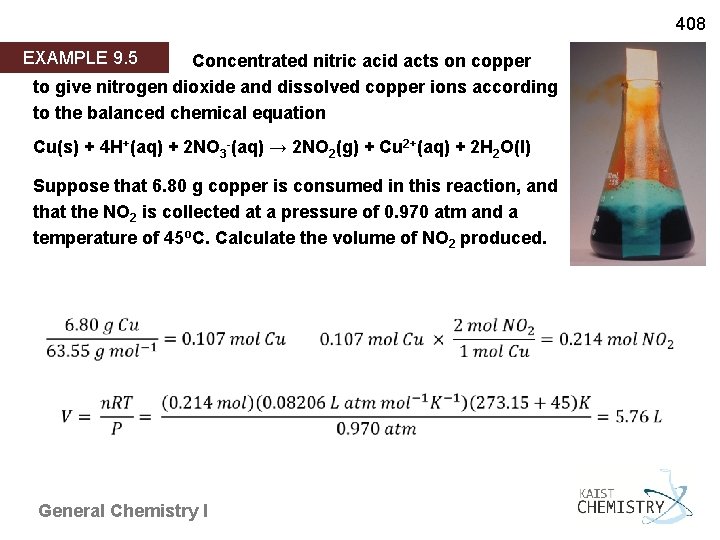
408 EXAMPLE 9. 5 Concentrated nitric acid acts on copper to give nitrogen dioxide and dissolved copper ions according to the balanced chemical equation Cu(s) + 4 H+(aq) + 2 NO 3 -(aq) → 2 NO 2(g) + Cu 2+(aq) + 2 H 2 O(l) Suppose that 6. 80 g copper is consumed in this reaction, and that the NO 2 is collected at a pressure of 0. 970 atm and a temperature of 45 o. C. Calculate the volume of NO 2 produced. General Chemistry I
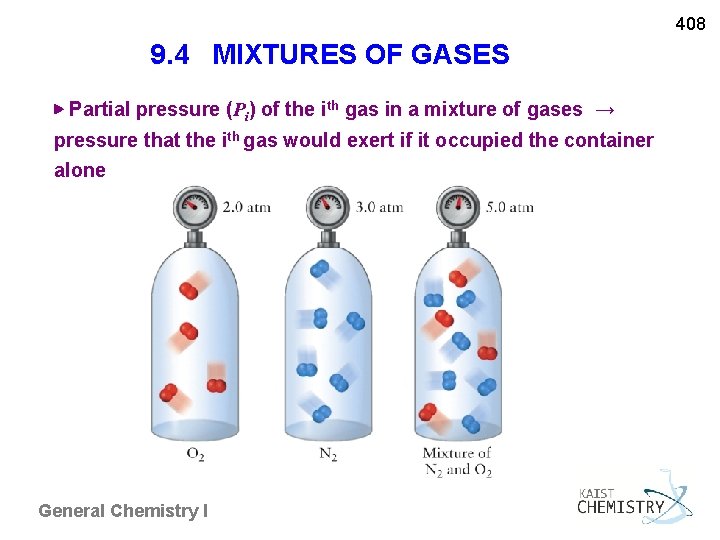
408 9. 4 MIXTURES OF GASES ▶ Partial pressure (Pi) of the ith gas in a mixture of gases → pressure that the ith gas would exert if it occupied the container alone General Chemistry I
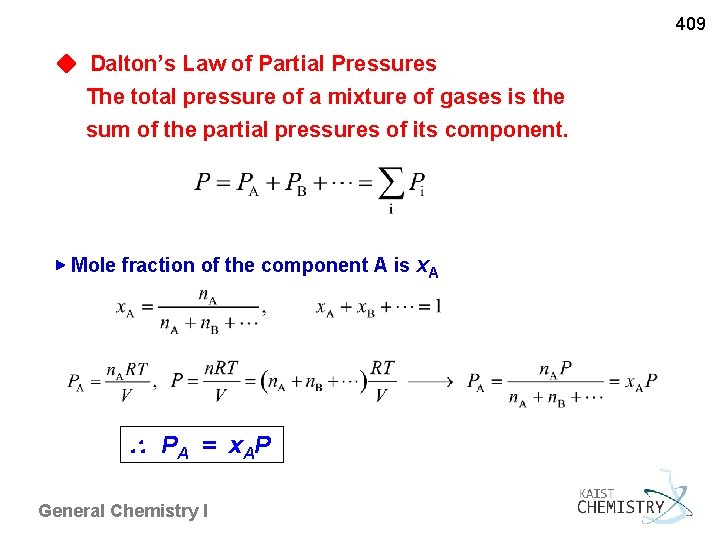
409 ◆ Dalton’s Law of Partial Pressures The total pressure of a mixture of gases is the sum of the partial pressures of its component. ▶ Mole fraction of the component A is x. A P A = x AP General Chemistry I
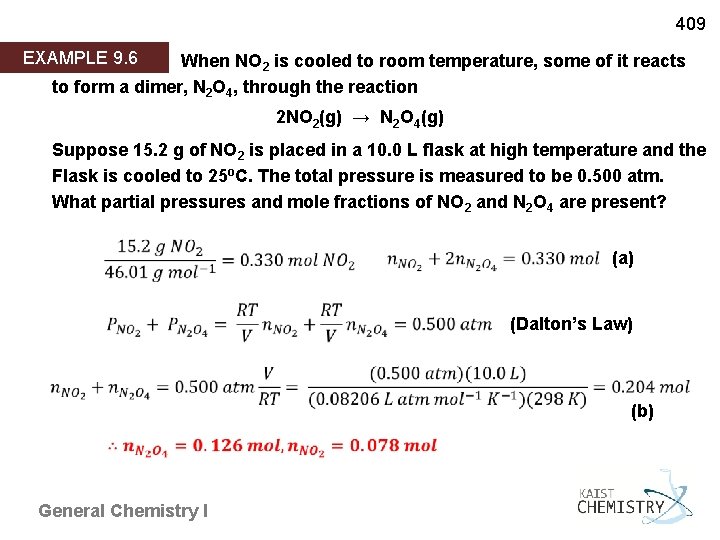
409 EXAMPLE 9. 6 When NO 2 is cooled to room temperature, some of it reacts to form a dimer, N 2 O 4, through the reaction 2 NO 2(g) → N 2 O 4(g) Suppose 15. 2 g of NO 2 is placed in a 10. 0 L flask at high temperature and the Flask is cooled to 25 o. C. The total pressure is measured to be 0. 500 atm. What partial pressures and mole fractions of NO 2 and N 2 O 4 are present? (a) (Dalton’s Law) (b) General Chemistry I
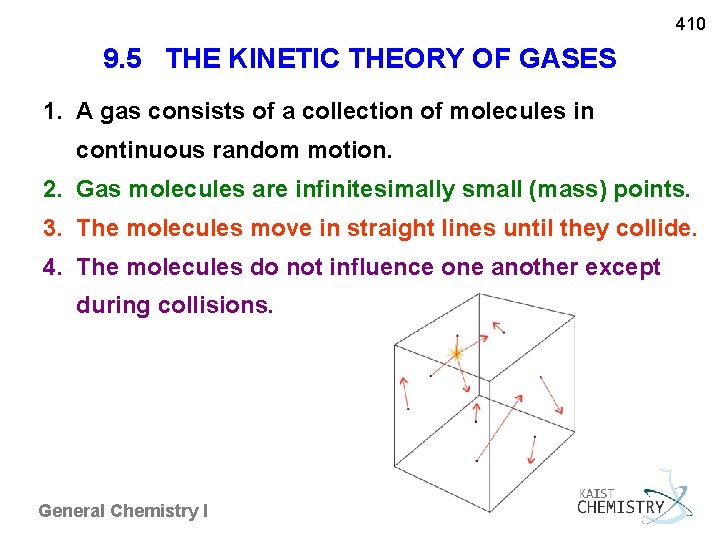
410 9. 5 THE KINETIC THEORY OF GASES 1. A gas consists of a collection of molecules in continuous random motion. 2. Gas molecules are infinitesimally small (mass) points. 3. The molecules move in straight lines until they collide. 4. The molecules do not influence one another except during collisions. General Chemistry I
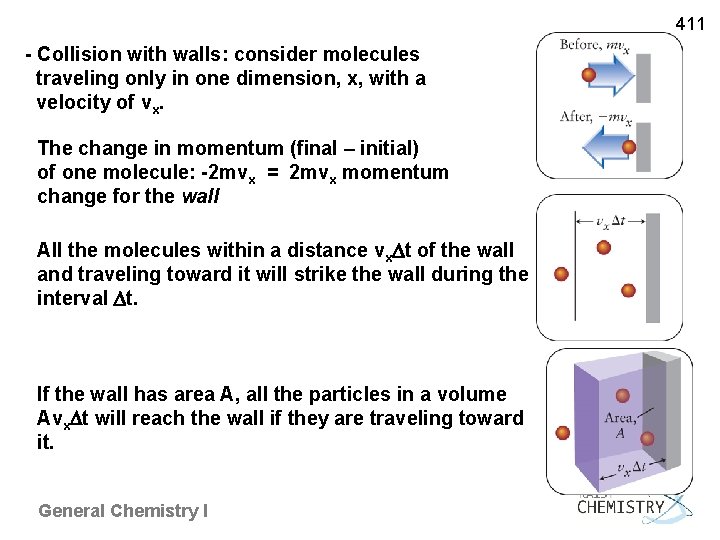
411 - Collision with walls: consider molecules traveling only in one dimension, x, with a velocity of vx. The change in momentum (final – initial) of one molecule: -2 mvx = 2 mvx momentum change for the wall All the molecules within a distance vx. Dt of the wall and traveling toward it will strike the wall during the interval Dt. If the wall has area A, all the particles in a volume Avx. Dt will reach the wall if they are traveling toward it. General Chemistry I
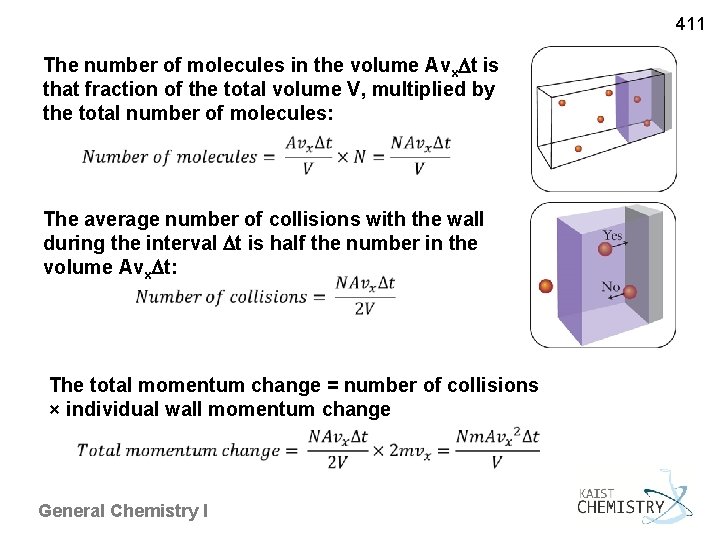
411 The number of molecules in the volume Avx. Dt is that fraction of the total volume V, multiplied by the total number of molecules: The average number of collisions with the wall during the interval Dt is half the number in the volume Avx. Dt: The total momentum change = number of collisions × individual wall momentum change General Chemistry I
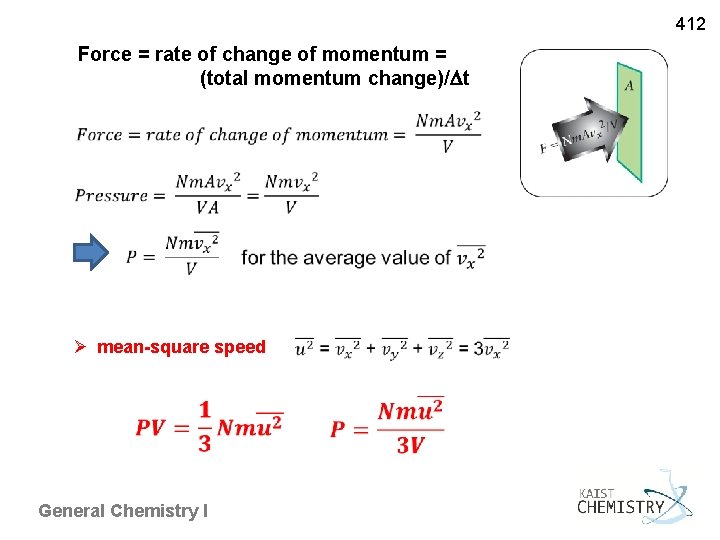
412 Force = rate of change of momentum = (total momentum change)/Dt Ø mean-square speed General Chemistry I
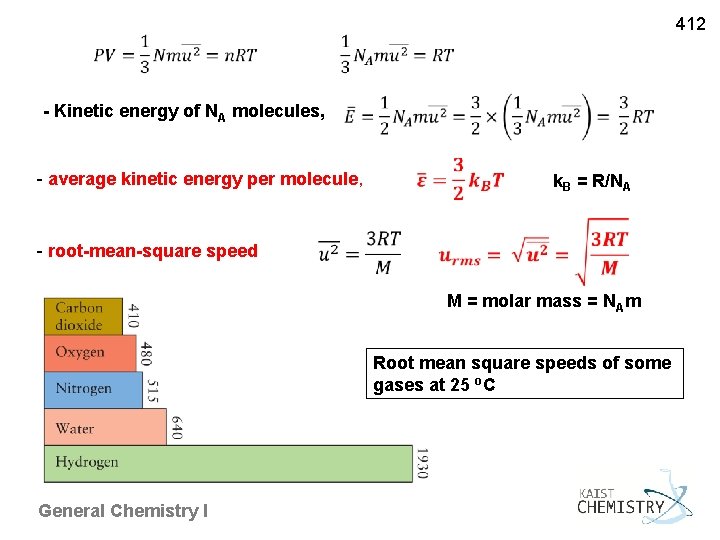
412 - Kinetic energy of NA molecules, - average kinetic energy per molecule, - root-mean-square speed k. B = R/NA M = molar mass = NAm Root mean square speeds of some gases at 25 o. C General Chemistry I
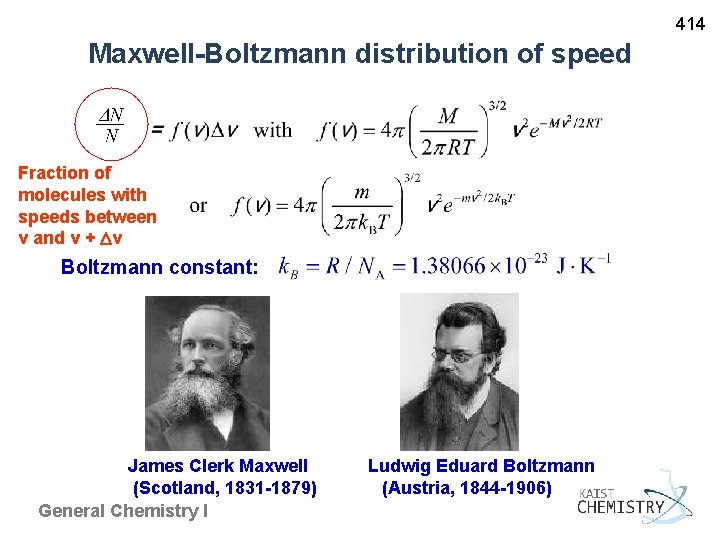
414 Maxwell-Boltzmann distribution of speed Fraction of molecules with speeds between v and v + Dv Boltzmann constant: James Clerk Maxwell Ludwig Eduard Boltzmann (Scotland, 1831 -1879) (Austria, 1844 -1906) General Chemistry I
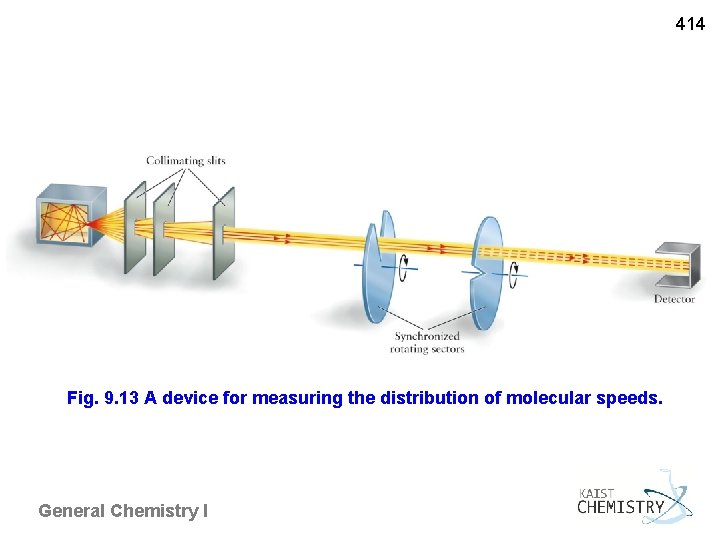
414 Fig. 9. 13 A device for measuring the distribution of molecular speeds. General Chemistry I
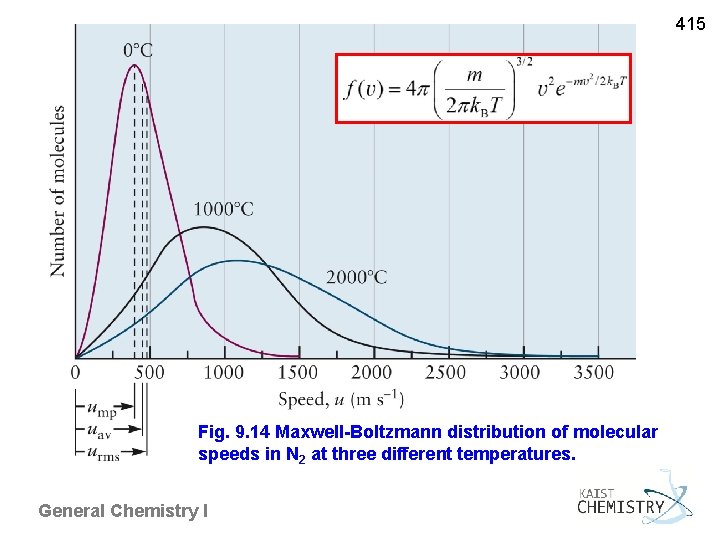
415 Fig. 9. 14 Maxwell-Boltzmann distribution of molecular speeds in N 2 at three different temperatures. General Chemistry I
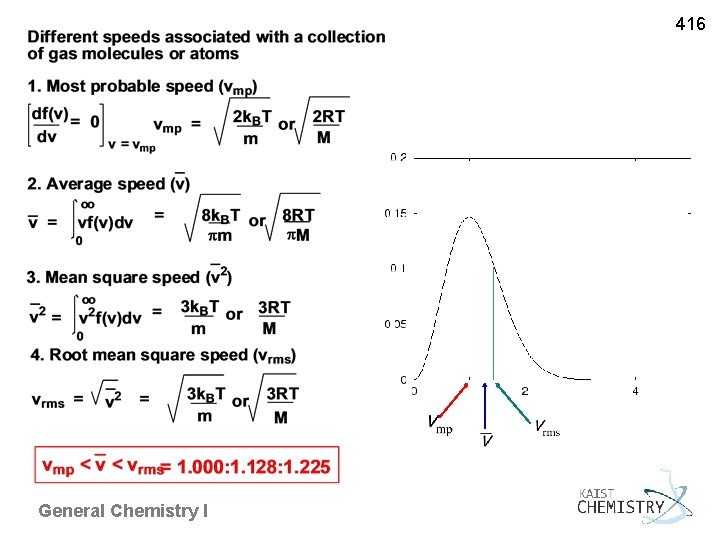
416 General Chemistry I
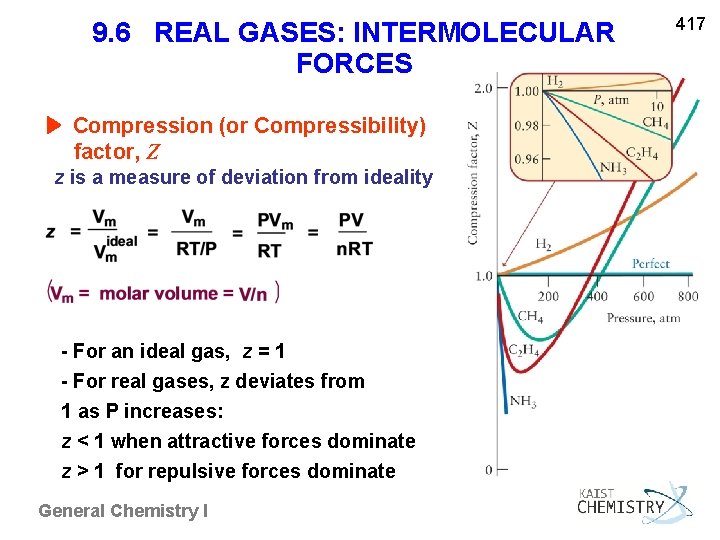
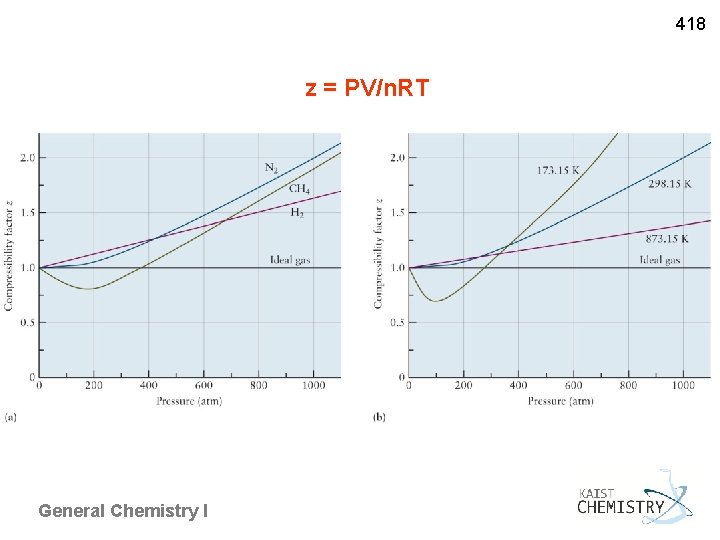
9. 6 REAL GASES: INTERMOLECULAR FORCES ▶ Compression (or Compressibility) factor, Z z is a measure of deviation from ideality - For an ideal gas, z = 1 - For real gases, z deviates from 1 as P increases: z < 1 when attractive forces dominate z > 1 for repulsive forces dominate General Chemistry I 417
418 z = PV/n. RT General Chemistry I
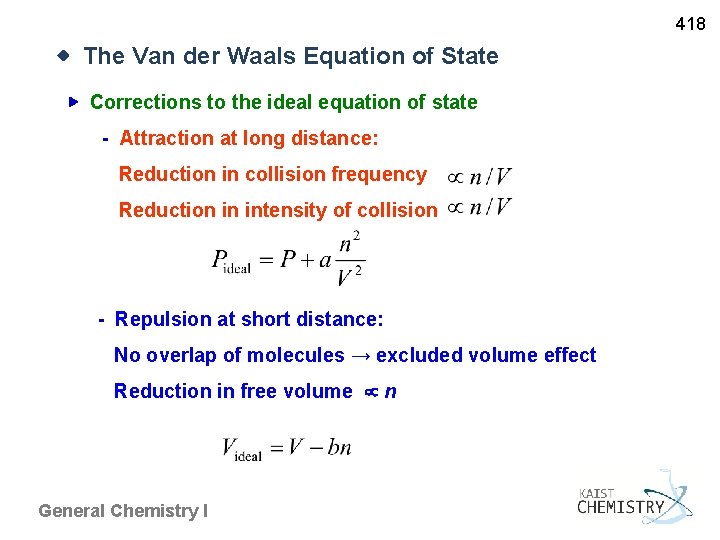
418 ◈ The Van der Waals Equation of State ▶ Corrections to the ideal equation of state - Attraction at long distance: Reduction in collision frequency Reduction in intensity of collision - Repulsion at short distance: No overlap of molecules → excluded volume effect Reduction in free volume n General Chemistry I
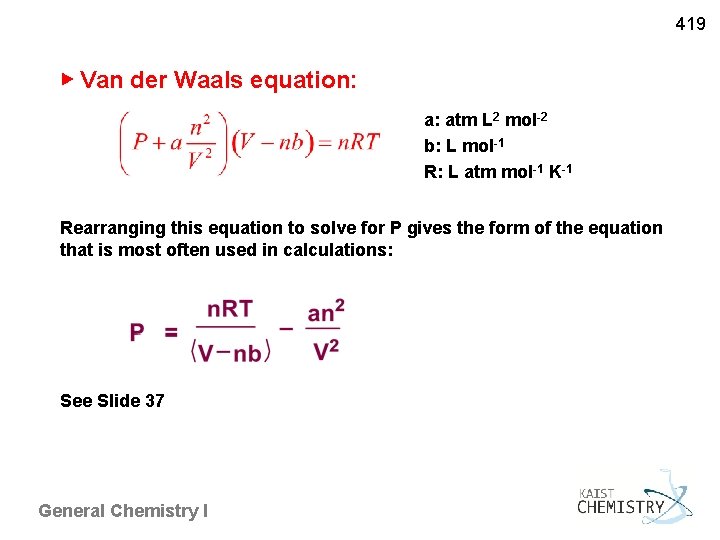
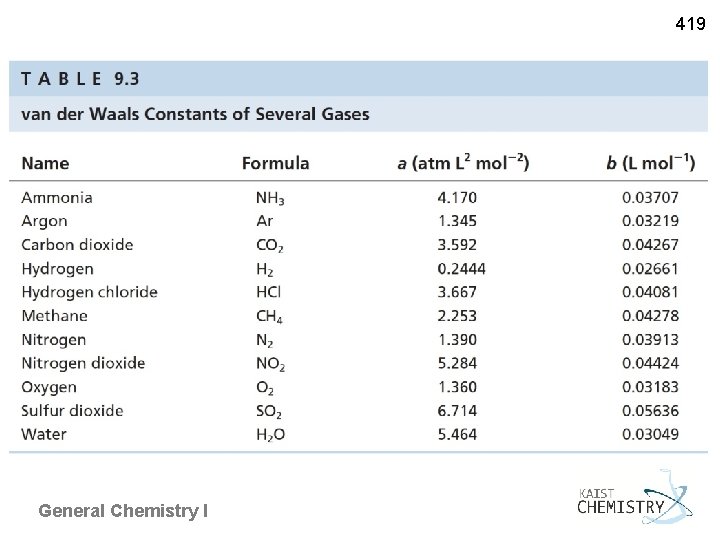
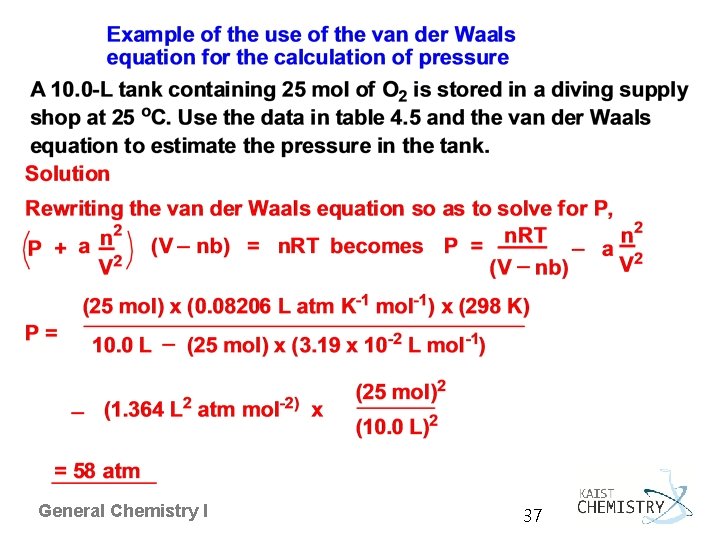
419 ▶ Van der Waals equation: a: atm L 2 mol-2 b: L mol-1 R: L atm mol-1 K-1 Rearranging this equation to solve for P gives the form of the equation that is most often used in calculations: See Slide 37 General Chemistry I
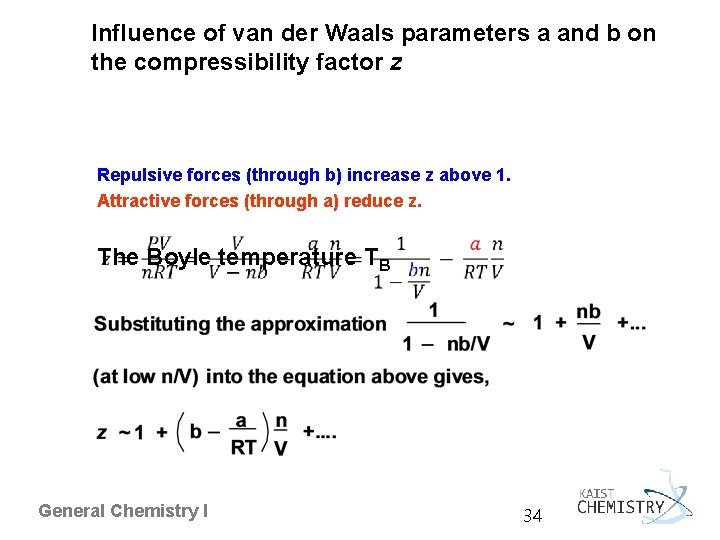
Influence of van der Waals parameters a and b on the compressibility factor z Repulsive forces (through b) increase z above 1. Attractive forces (through a) reduce z. The Boyle temperature TB General Chemistry I 34
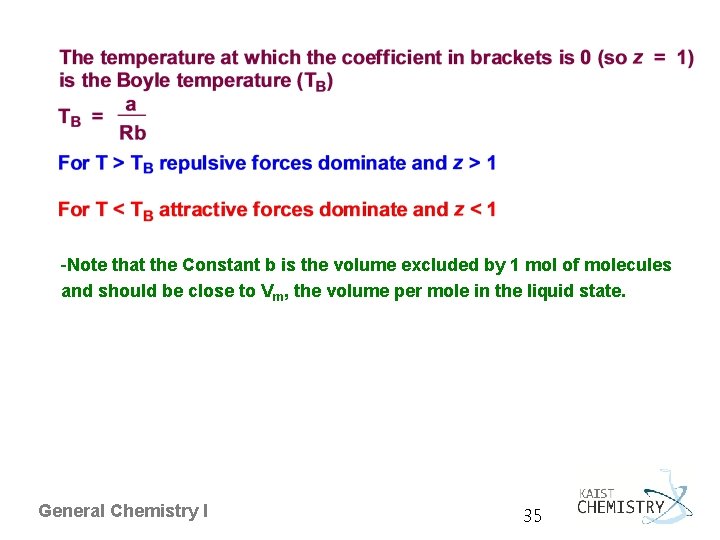
-Note that the Constant b is the volume excluded by 1 mol of molecules and should be close to Vm, the volume per mole in the liquid state. General Chemistry I 35
419 General Chemistry I
General Chemistry I 37
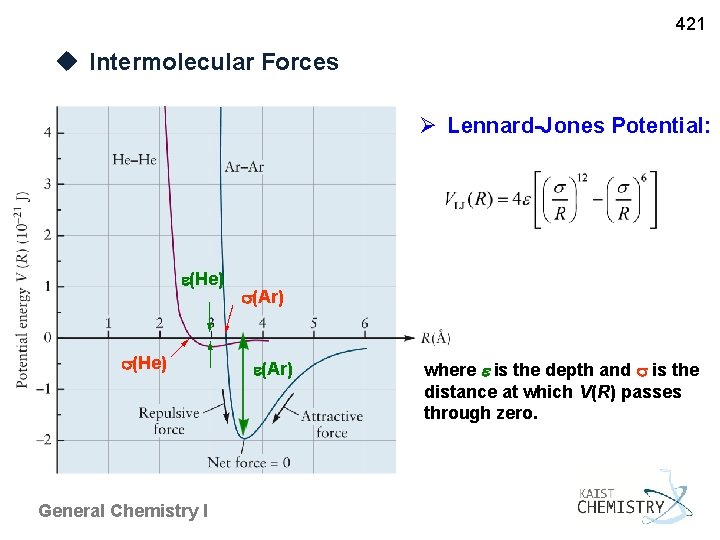
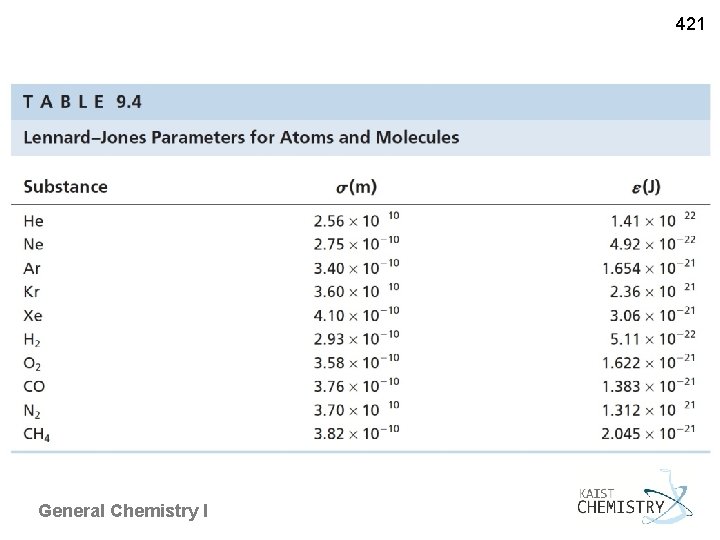
421 u Intermolecular Forces Ø Lennard-Jones Potential: e(He) General Chemistry I (Ar) e(Ar) where is the depth and is the distance at which V(R) passes through zero.
421 General Chemistry I
10 Problem Sets For Chapter 9, 6, 18, 30, 42, 50, 64, 72, 76, 92 General Chemistry I