Today in I S Week 3 Quarter 2

- Slides: 38
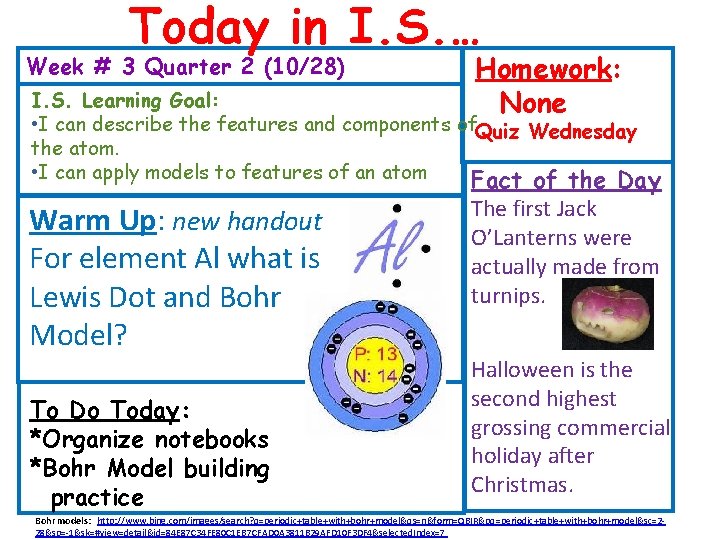
Today in I. S. … Week # 3 Quarter 2 (10/28) Homework: None I. S. Learning Goal: • I can describe the features and components of. Quiz Wednesday the atom. • I can apply models to features of an atom Fact of the Day Warm Up: new handout For element Al what is Lewis Dot and Bohr Model? To Do Today: *Organize notebooks *Bohr Model building practice The first Jack O’Lanterns were actually made from turnips. Halloween is the second highest grossing commercial holiday after Christmas. Bohr models: http: //www. bing. com/images/search? q=periodic+table+with+bohr+model&qs=n&form=QBIR&pq=periodic+table+with+bohr+model&sc=228&sp=-1&sk=#view=detail&id=84 E 87 C 34 FE 80 C 1 EB 7 CFAD 0 A 3811 B 29 AFD 10 F 3 DF 4&selected. Index=7
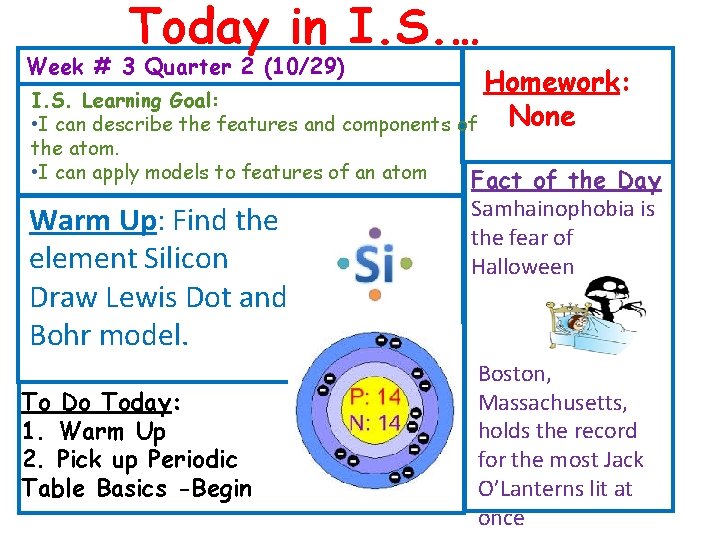
Today in I. S. … Week # 3 Quarter 2 (10/29) Homework: I. S. Learning Goal: • I can describe the features and components of None the atom. • I can apply models to features of an atom Warm Up: Find the element Silicon Draw Lewis Dot and Bohr model. To Do Today: 1. Warm Up 2. Pick up Periodic Table Basics -Begin Fact of the Day Samhainophobia is the fear of Halloween Boston, Massachusetts, holds the record for the most Jack O’Lanterns lit at once
Begin work on periodic table basics. You may work with one partner
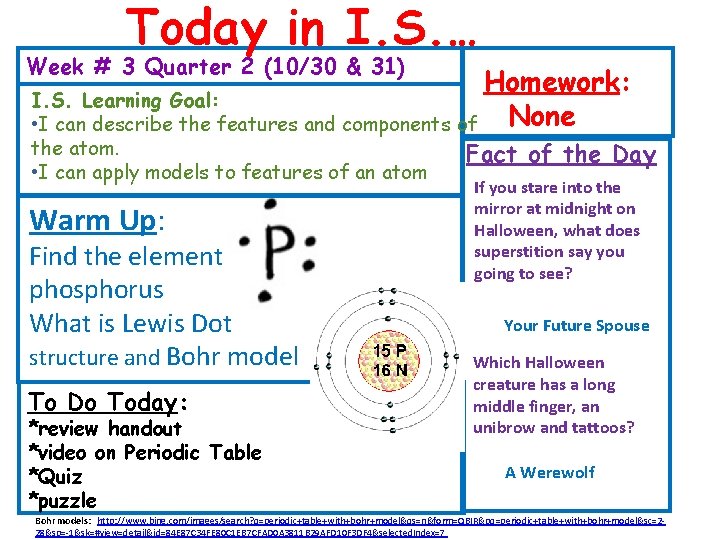
Today in I. S. … Week # 3 Quarter 2 (10/30 & 31) Homework: I. S. Learning Goal: • I can describe the features and components of None the atom. • I can apply models to features of an atom Warm Up: Find the element phosphorus What is Lewis Dot structure and Bohr model To Do Today: *review handout *video on Periodic Table *Quiz *puzzle Fact of the Day If you stare into the mirror at midnight on Halloween, what does superstition say you going to see? Your Future Spouse Which Halloween creature has a long middle finger, an unibrow and tattoos? A Werewolf Bohr models: http: //www. bing. com/images/search? q=periodic+table+with+bohr+model&qs=n&form=QBIR&pq=periodic+table+with+bohr+model&sc=228&sp=-1&sk=#view=detail&id=84 E 87 C 34 FE 80 C 1 EB 7 CFAD 0 A 3811 B 29 AFD 10 F 3 DF 4&selected. Index=7
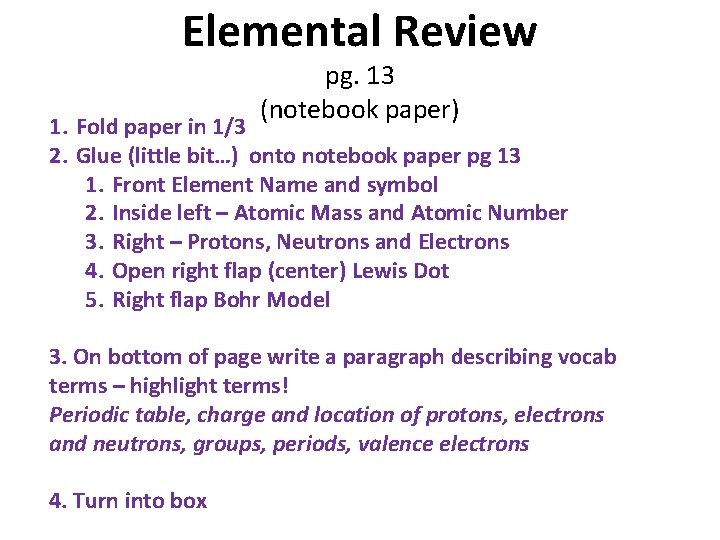
Elemental Review pg. 13 (notebook paper) 1. Fold paper in 1/3 2. Glue (little bit…) onto notebook paper pg 13 1. Front Element Name and symbol 2. Inside left – Atomic Mass and Atomic Number 3. Right – Protons, Neutrons and Electrons 4. Open right flap (center) Lewis Dot 5. Right flap Bohr Model 3. On bottom of page write a paragraph describing vocab terms – highlight terms! Periodic table, charge and location of protons, electrons and neutrons, groups, periods, valence electrons 4. Turn into box
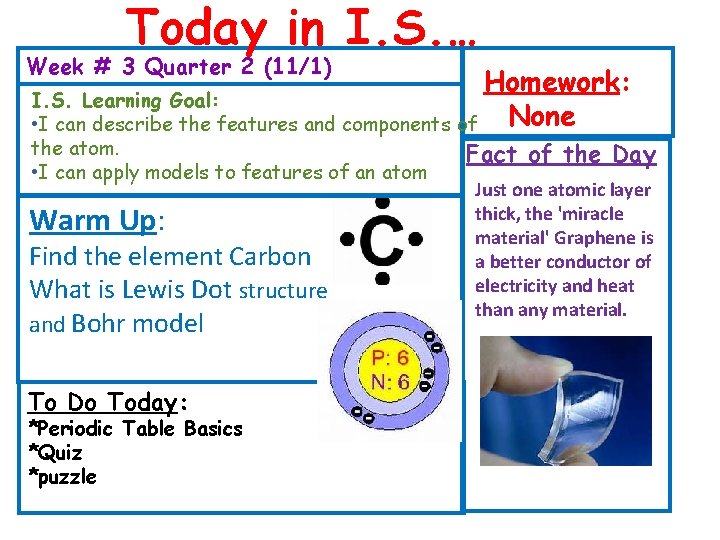
Today in I. S. … Week # 3 Quarter 2 (11/1) Homework: I. S. Learning Goal: • I can describe the features and components of None the atom. • I can apply models to features of an atom Warm Up: Find the element Carbon What is Lewis Dot structure and Bohr model To Do Today: *Periodic Table Basics *Quiz *puzzle Fact of the Day Just one atomic layer thick, the 'miracle material' Graphene is a better conductor of electricity and heat than any material.
Elemental Quiz Complete the Periodic Table Basis Worksheet Review puzzle You should know how to draw Lewis Structures and Bohr Models for the first 20 elements.
Today in I. S. … Week # 3 Quarter 2 (11/4) I. S. Learning Goal: I can describe predict properties of elements and compounds using trends of the periodic table (e. g. , metals, non-metals, bonding – ionic/covalent). Warm Up: To Do Today: Homework: None Fact of the Day
IS Chemical Bonding
Objectives 0 Explain why atoms form bonds 0 Define chemical bond & name three types of chemical bonds 0 Determine the chemical formulas for covalent and ionic compounds
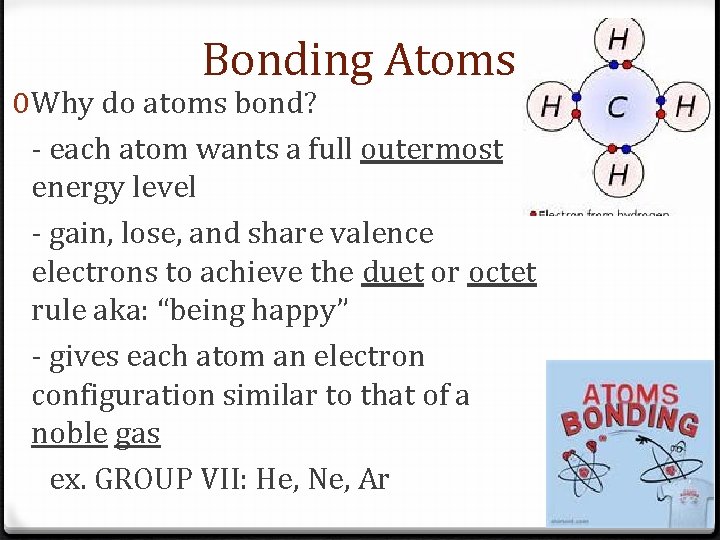
Bonding Atoms 0 Why do atoms bond? - each atom wants a full outermost energy level - gain, lose, and share valence electrons to achieve the duet or octet rule aka: “being happy” - gives each atom an electron configuration similar to that of a noble gas ex. GROUP VII: He, Ne, Ar
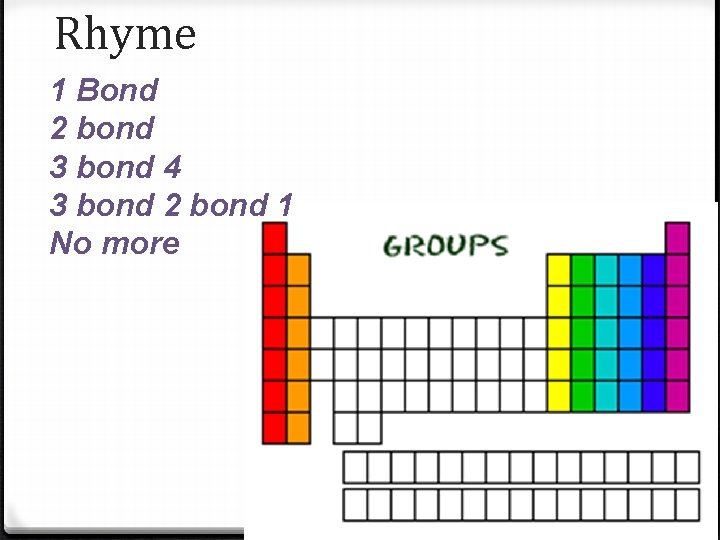
Rhyme 1 Bond 2 bond 3 bond 4 3 bond 2 bond 1 No more
Chemical Bonds 0 Chemical Bonds - attractive force that holds atoms or ions together - 3 types ionic, covalent, metallic - determines the structure of compound - structure affects properties - melting/boiling pts, conductivity etc.
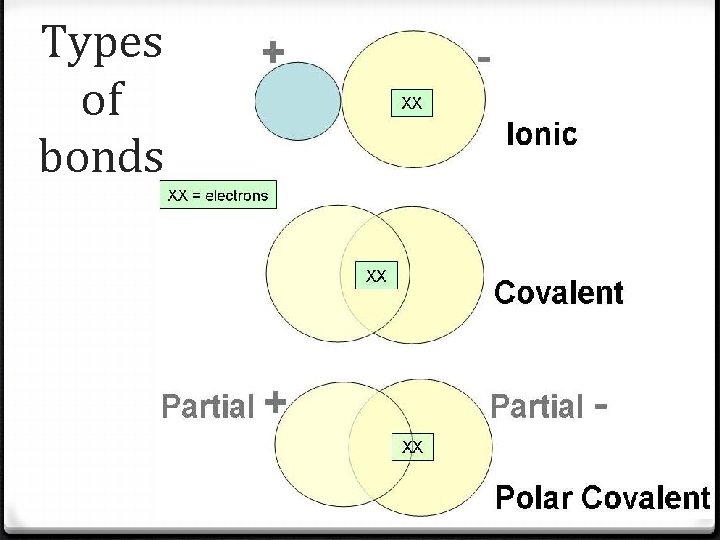
Types of bonds
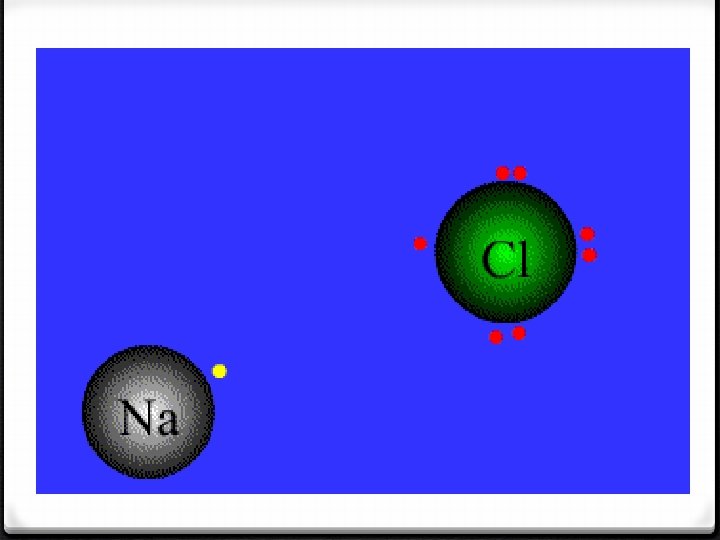
1. Ionic Bond 0 Between atoms of metals and nonmetals with very different electronegativity 0 Electronegativity, symbol χ, is a chemical property that describes the tendency of an atom or a functional group to attract electrons 0 Bond formed by transfer of electrons 0 Produce charged ions all states. Conductors and have high melting point. 0 Examples; Na. Cl, Ca. Cl 2, K 2 O
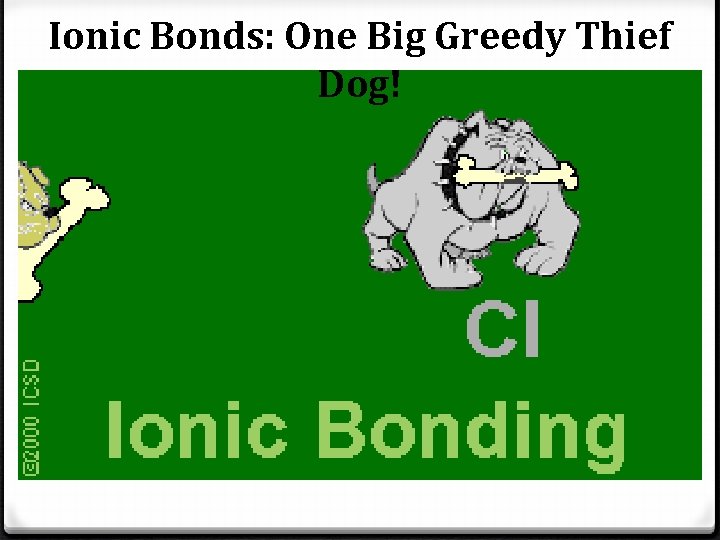
Ionic Bonds: One Big Greedy Thief Dog!
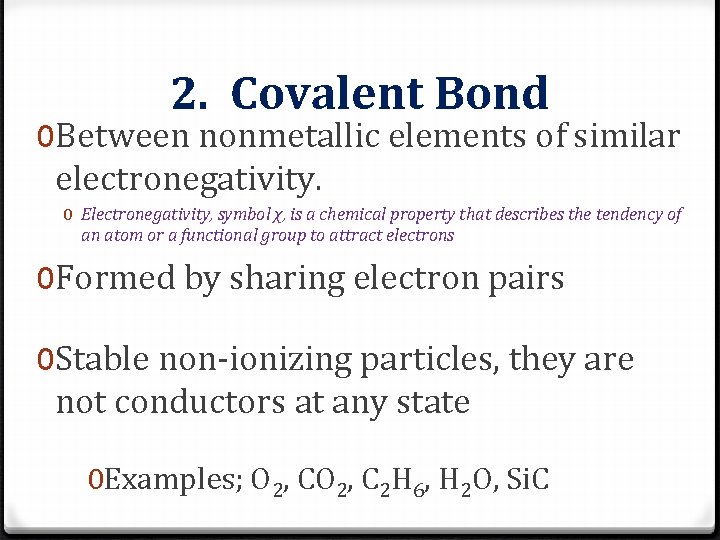
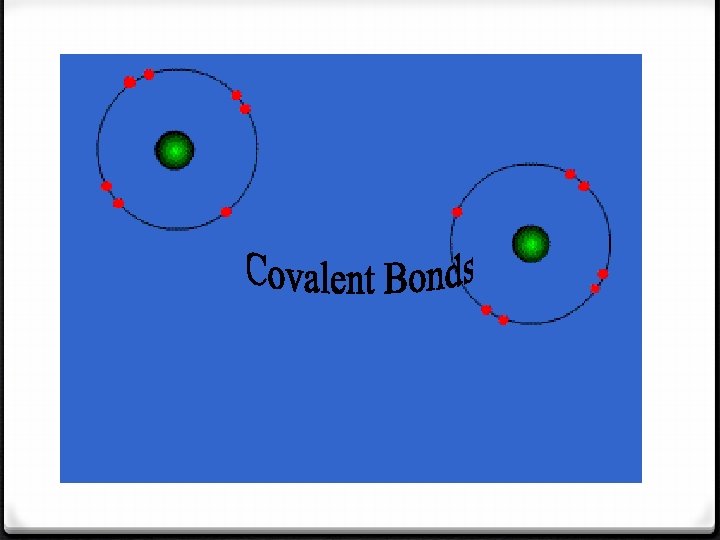
2. Covalent Bond 0 Between nonmetallic elements of similar electronegativity. 0 Electronegativity, symbol χ, is a chemical property that describes the tendency of an atom or a functional group to attract electrons 0 Formed by sharing electron pairs 0 Stable non-ionizing particles, they are not conductors at any state 0 Examples; O 2, C 2 H 6, H 2 O, Si. C
Bonds in all the polyatomic ions and diatomics are all covalent bonds
3. NONPOLAR COVALENT BONDS when electrons are shared equally H 2 or Cl 2
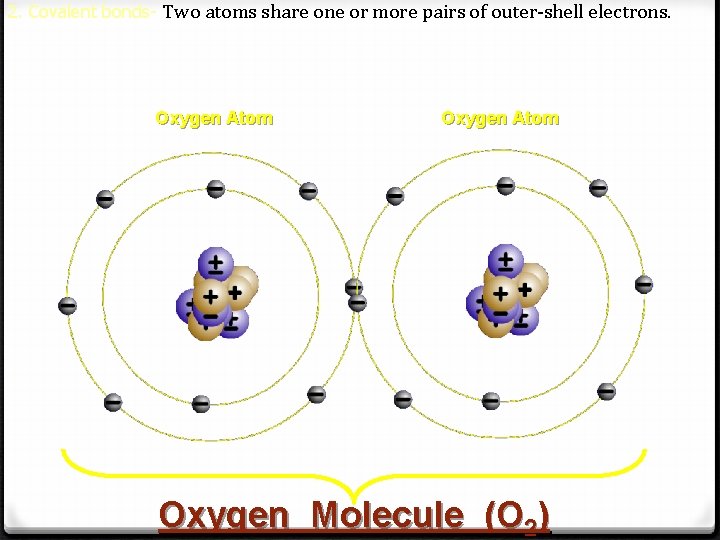
2. Covalent bonds- Two atoms share one or more pairs of outer-shell electrons. Oxygen Atom Oxygen Molecule (O 2)
POLAR COVALENT BONDS when electrons are shared but shared unequally H 2 O
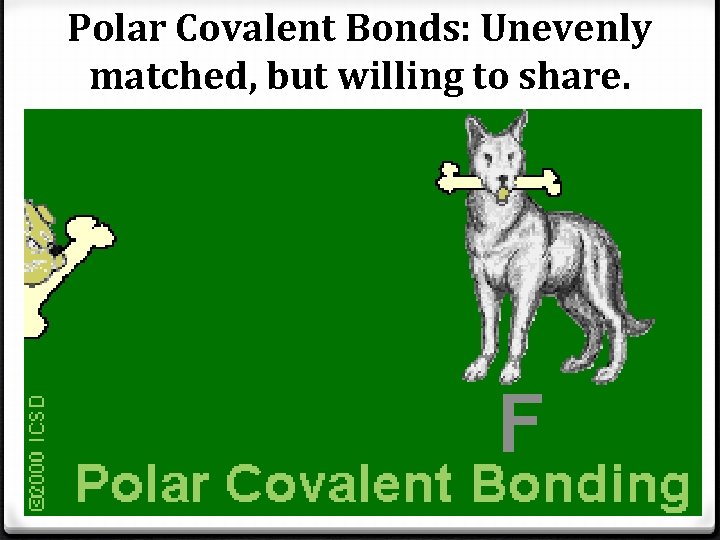
Polar Covalent Bonds: Unevenly matched, but willing to share.
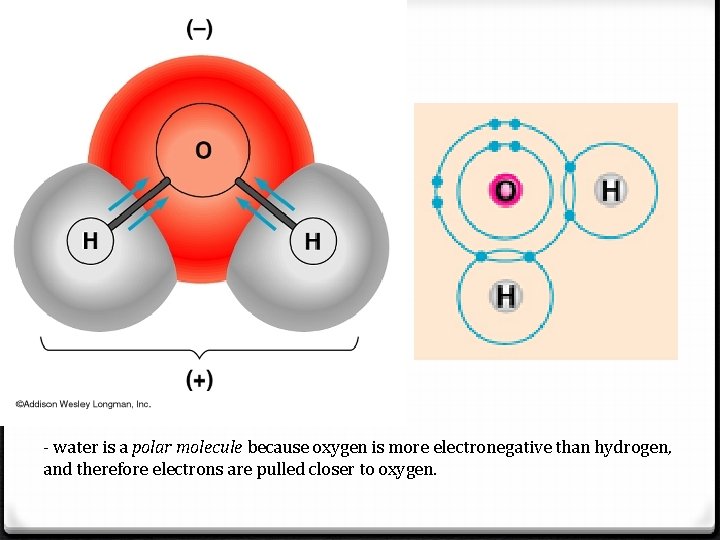
- water is a polar molecule because oxygen is more electronegative than hydrogen, and therefore electrons are pulled closer to oxygen.
METALLIC BOND bond found in metals; holds metal atoms together very strongly
Metallic Bond 0 Formed between atoms of metallic elements 0 Electron cloud around atoms 0 Good conductors at all states, lustrous, very high melting points 0 Examples; Na, Fe, Al, Au, Co
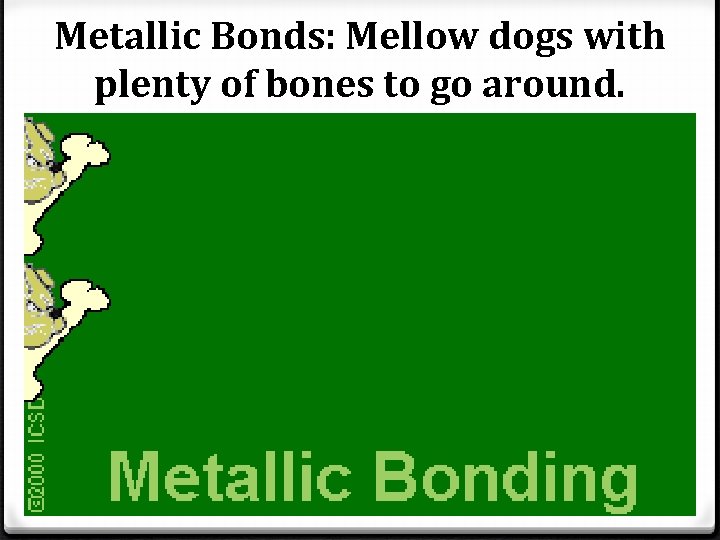
Metallic Bonds: Mellow dogs with plenty of bones to go around.
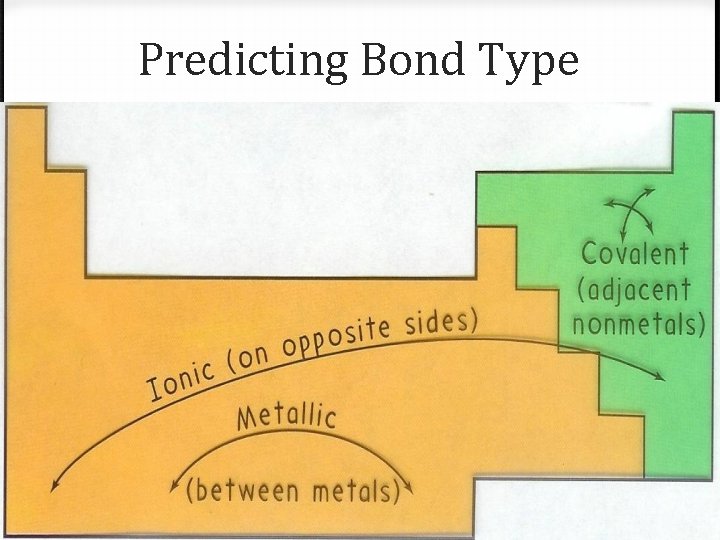
Predicting Bond Type
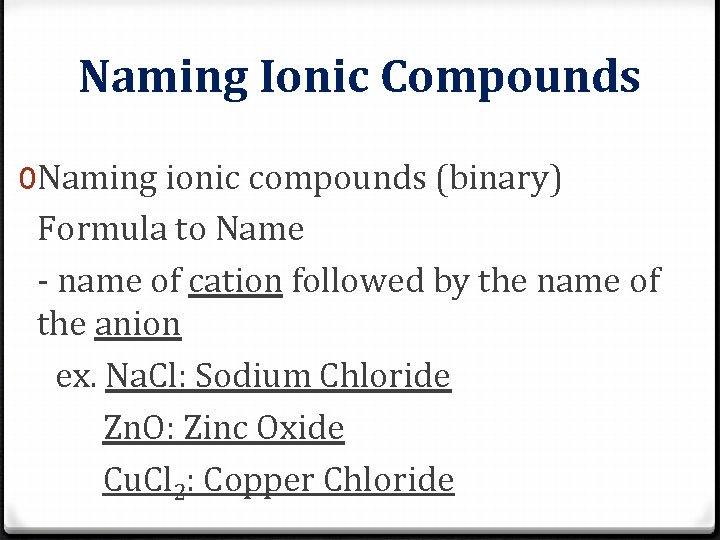
Naming Ionic Compounds 0 Naming ionic compounds (binary) Formula to Name - name of cation followed by the name of the anion ex. Na. Cl: Sodium Chloride Zn. O: Zinc Oxide Cu. Cl 2: Copper Chloride
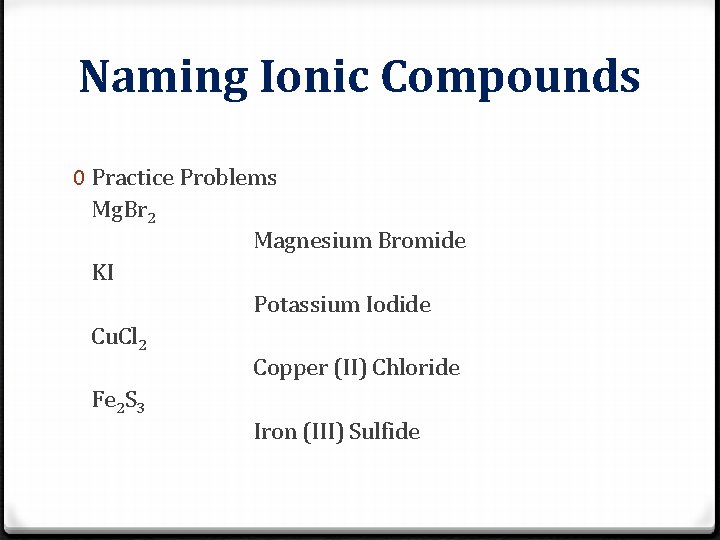
Naming Ionic Compounds 0 Practice Problems Mg. Br 2 Magnesium Bromide KI Potassium Iodide Cu. Cl 2 Copper (II) Chloride Fe 2 S 3 Iron (III) Sulfide
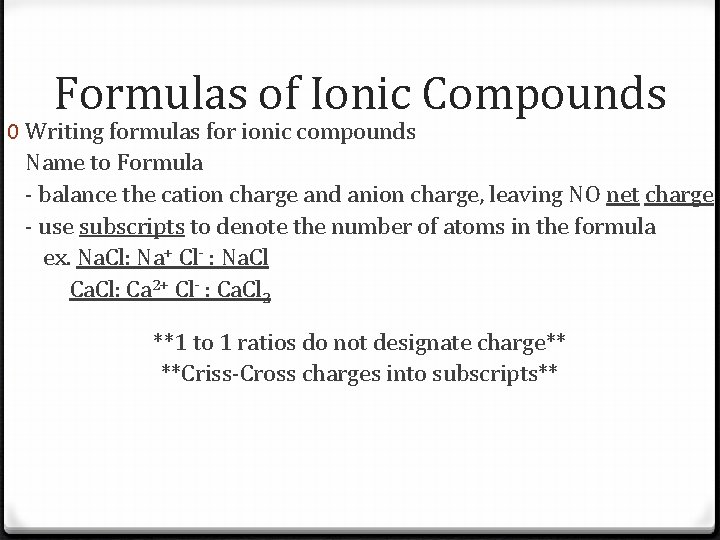
Formulas of Ionic Compounds 0 Writing formulas for ionic compounds Name to Formula - balance the cation charge and anion charge, leaving NO net charge - use subscripts to denote the number of atoms in the formula ex. Na. Cl: Na+ Cl- : Na. Cl Ca. Cl: Ca 2+ Cl- : Ca. Cl 2 **1 to 1 ratios do not designate charge** **Criss-Cross charges into subscripts**
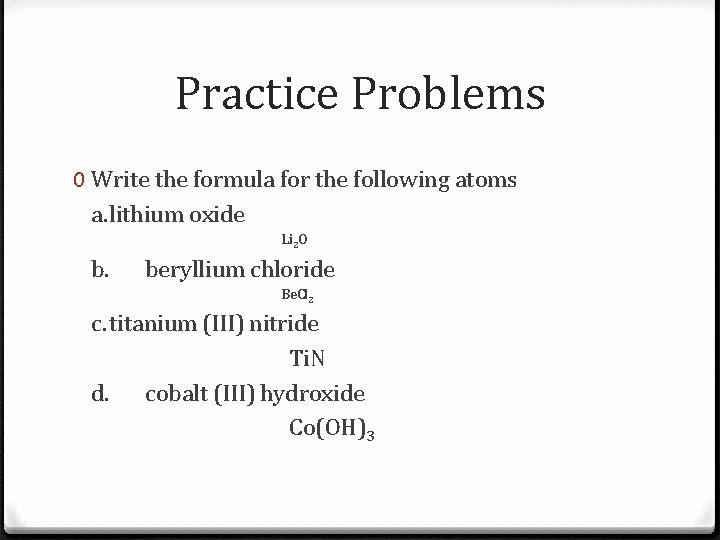
Practice Problems 0 Write the formula for the following atoms a. lithium oxide Li 2 O b. beryllium chloride Be. Cl 2 c. titanium (III) nitride Ti. N d. cobalt (III) hydroxide Co(OH)3
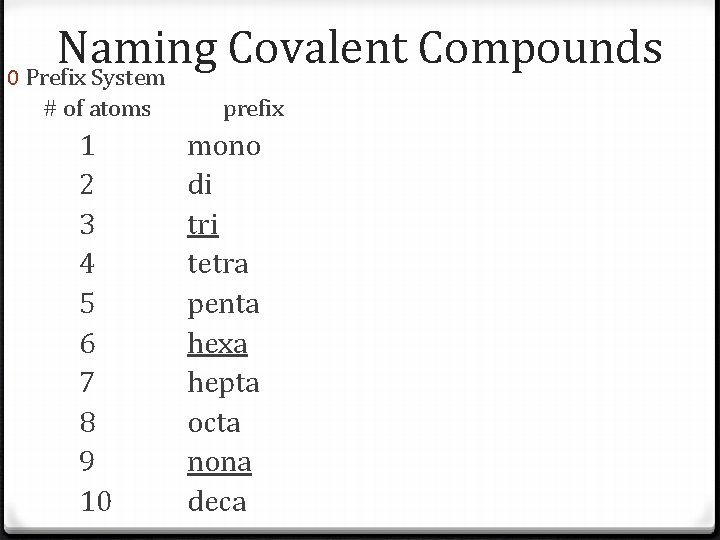
Naming Covalent Compounds 0 Prefix System # of atoms 1 2 3 4 5 6 7 8 9 10 prefix mono di tri tetra penta hexa hepta octa nona deca
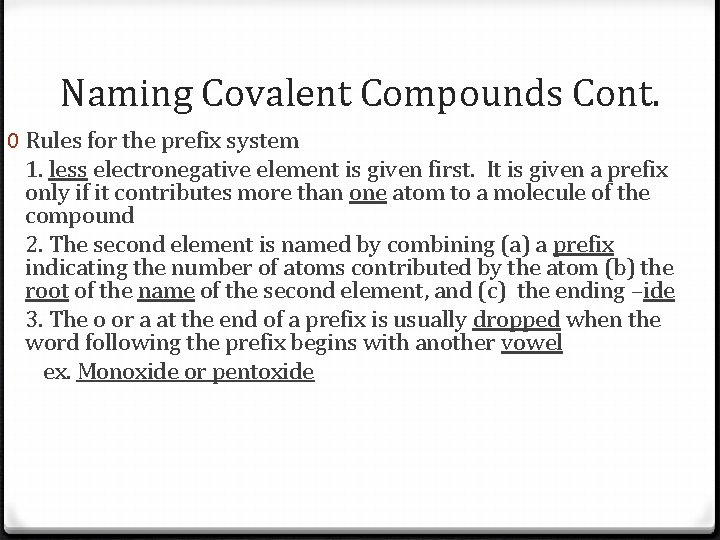
Naming Covalent Compounds Cont. 0 Rules for the prefix system 1. less electronegative element is given first. It is given a prefix only if it contributes more than one atom to a molecule of the compound 2. The second element is named by combining (a) a prefix indicating the number of atoms contributed by the atom (b) the root of the name of the second element, and (c) the ending –ide 3. The o or a at the end of a prefix is usually dropped when the word following the prefix begins with another vowel ex. Monoxide or pentoxide
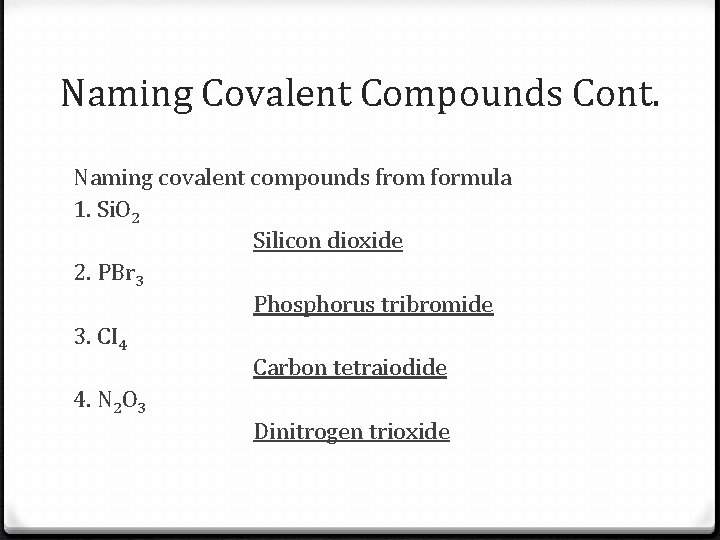
Naming Covalent Compounds Cont. Naming covalent compounds from formula 1. Si. O 2 Silicon dioxide 2. PBr 3 Phosphorus tribromide 3. CI 4 Carbon tetraiodide 4. N 2 O 3 Dinitrogen trioxide
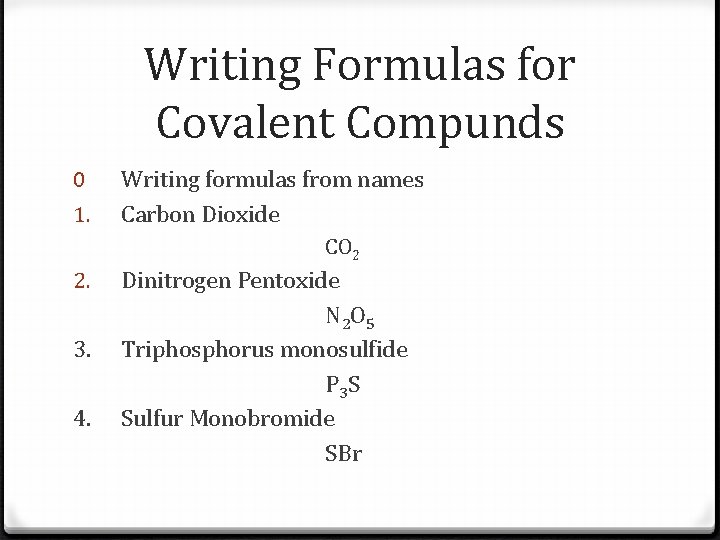
Writing Formulas for Covalent Compunds 0 1. Writing formulas from names Carbon Dioxide CO 2 2. 3. 4. Dinitrogen Pentoxide N 2 O 5 Triphosphorus monosulfide P 3 S Sulfur Monobromide SBr
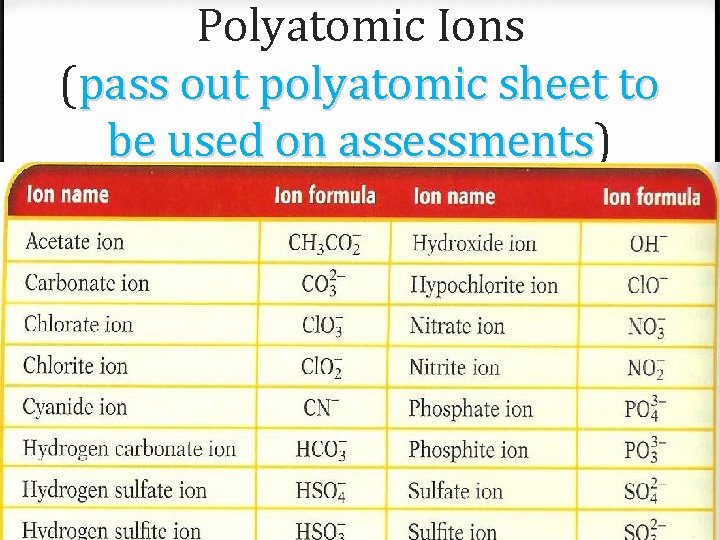
Polyatomic Ions (pass out polyatomic sheet to be used on assessments) assessments 0 Common Polyatomic Ions