TIVA In Children PIP Meeting Thursday 4 th



- Slides: 59
TIVA In Children PIP Meeting Thursday 4 th June 2009 Dr Oliver Bagshaw
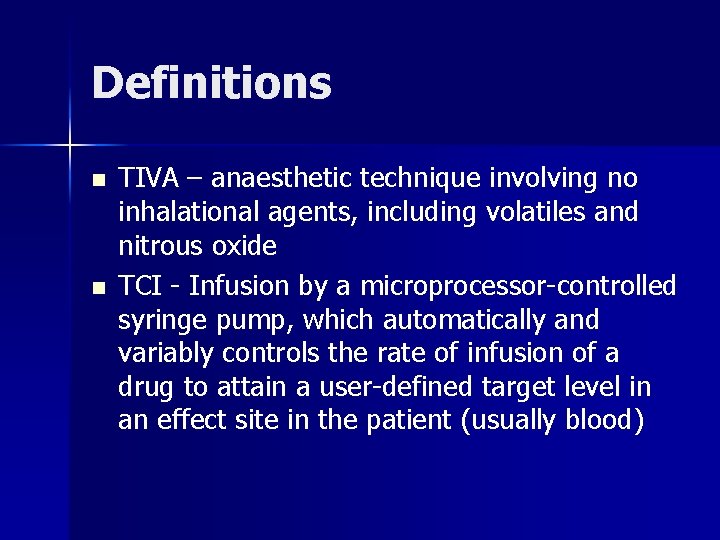
Definitions n n TIVA – anaesthetic technique involving no inhalational agents, including volatiles and nitrous oxide TCI - Infusion by a microprocessor-controlled syringe pump, which automatically and variably controls the rate of infusion of a drug to attain a user-defined target level in an effect site in the patient (usually blood)
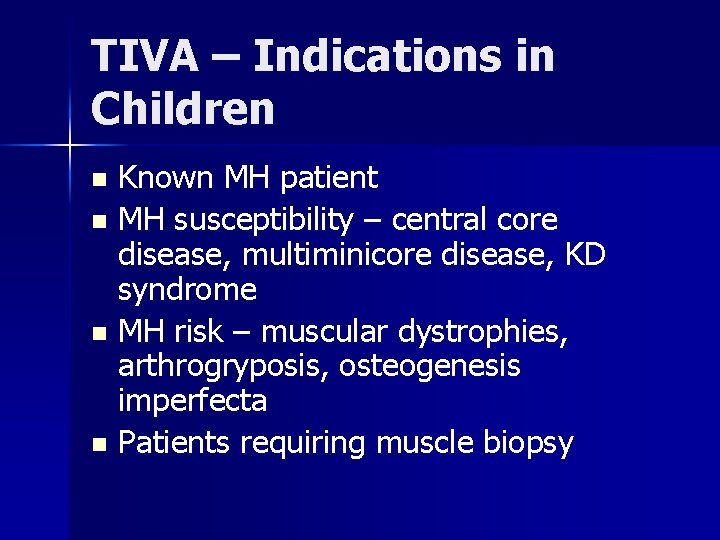
TIVA – Indications in Children Known MH patient n MH susceptibility – central core disease, multiminicore disease, KD syndrome n MH risk – muscular dystrophies, arthrogryposis, osteogenesis imperfecta n Patients requiring muscle biopsy n
TIVA – Indications in Children Previous N&V post anaesthesia n High risk of N&V post anaesthesia, e. g. strabismus, Ts&As, orchidopexy n Scoliosis surgery n Myasthenia gravis n Reduce blood loss – e. g. FESS procedure n
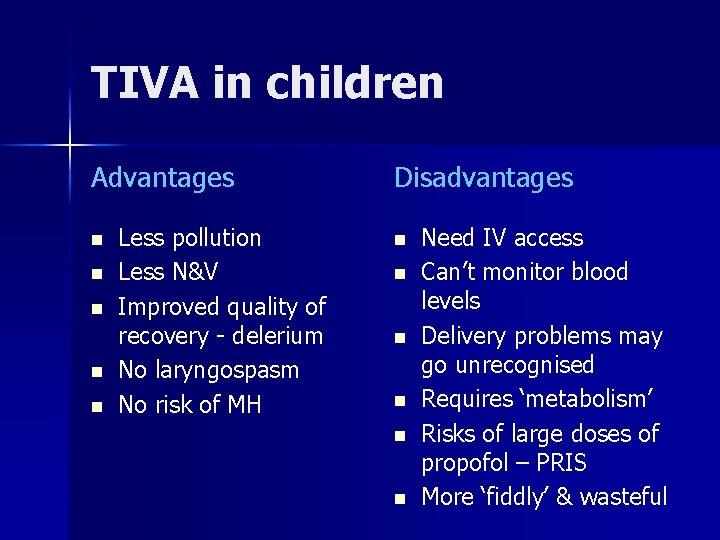
TIVA in children Advantages n n n Less pollution Less N&V Improved quality of recovery - delerium No laryngospasm No risk of MH Disadvantages n n n Need IV access Can’t monitor blood levels Delivery problems may go unrecognised Requires ‘metabolism’ Risks of large doses of propofol – PRIS More ‘fiddly’ & wasteful
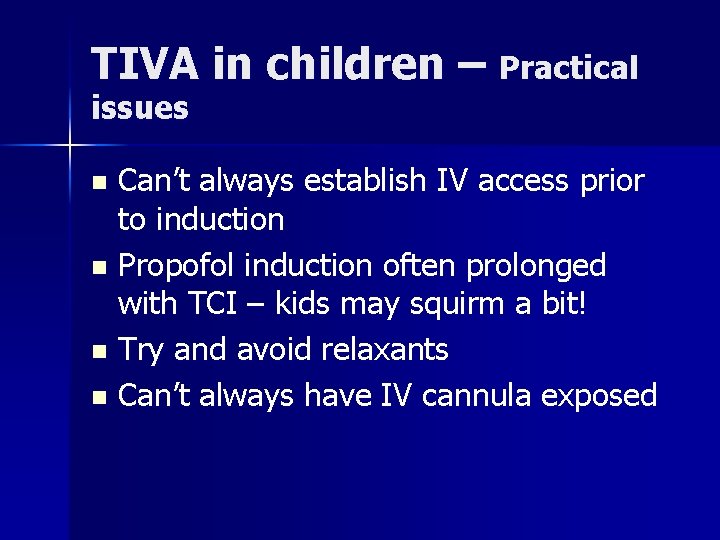
TIVA in children – Practical issues Can’t always establish IV access prior to induction n Propofol induction often prolonged with TCI – kids may squirm a bit! n Try and avoid relaxants n Can’t always have IV cannula exposed n
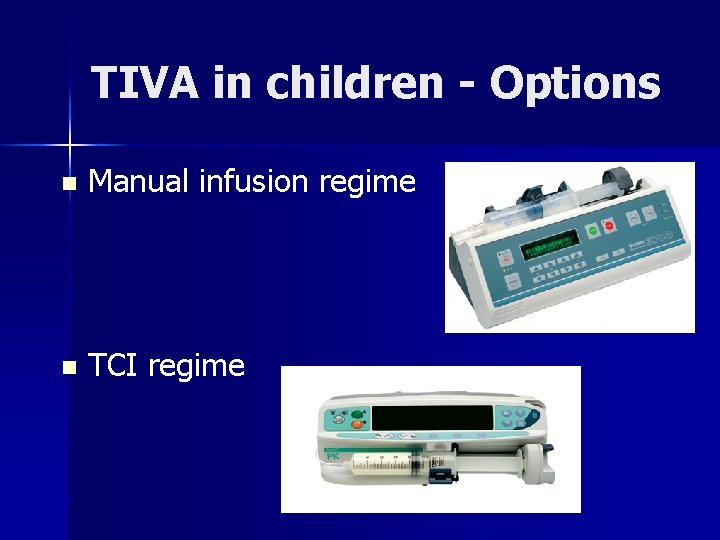
TIVA in children - Options n Manual infusion regime n TCI regime
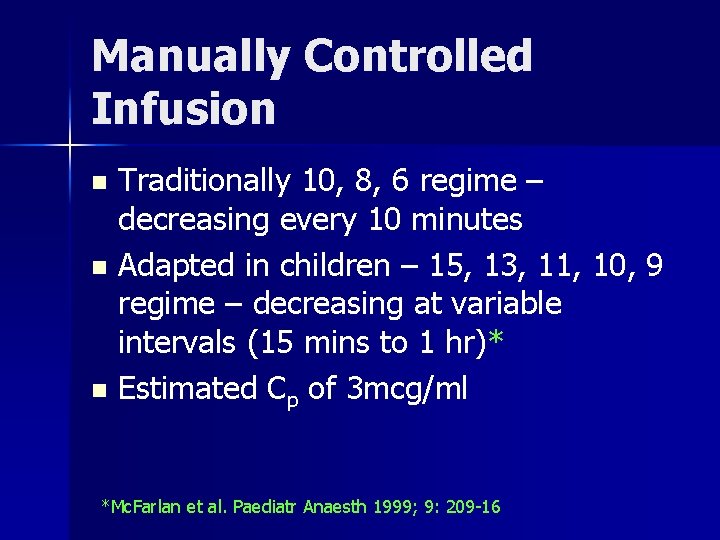
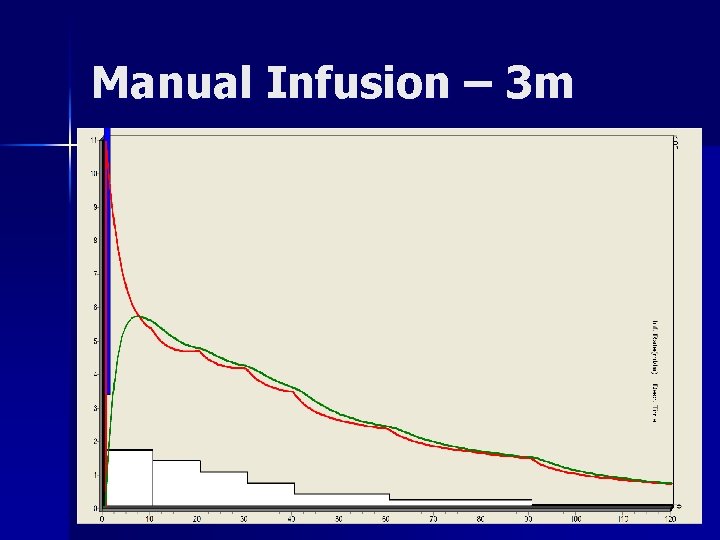
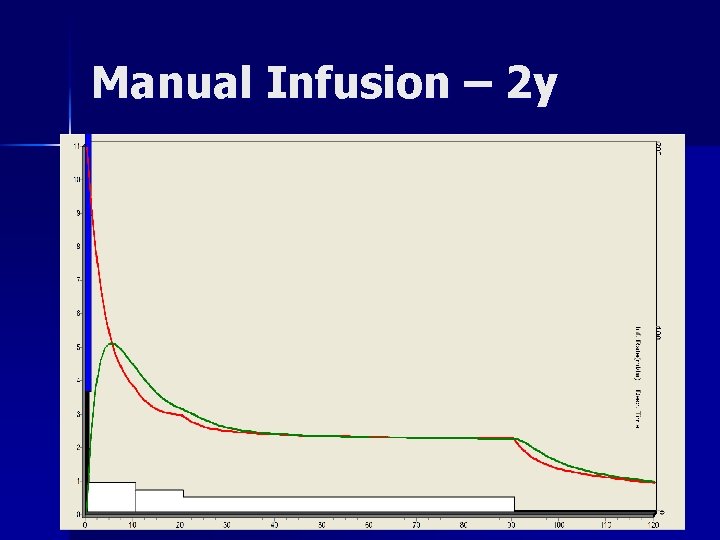
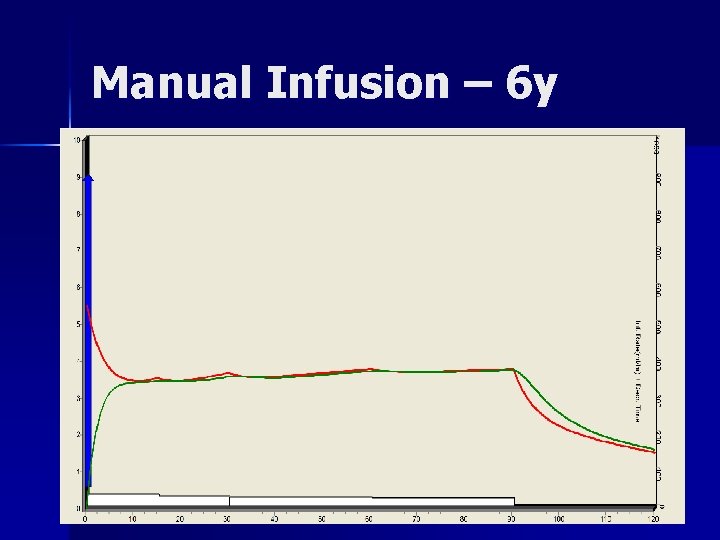
Manually Controlled Infusion Traditionally 10, 8, 6 regime – decreasing every 10 minutes n Adapted in children – 15, 13, 11, 10, 9 regime – decreasing at variable intervals (15 mins to 1 hr)* n Estimated Cp of 3 mcg/ml n *Mc. Farlan et al. Paediatr Anaesth 1999; 9: 209 -16
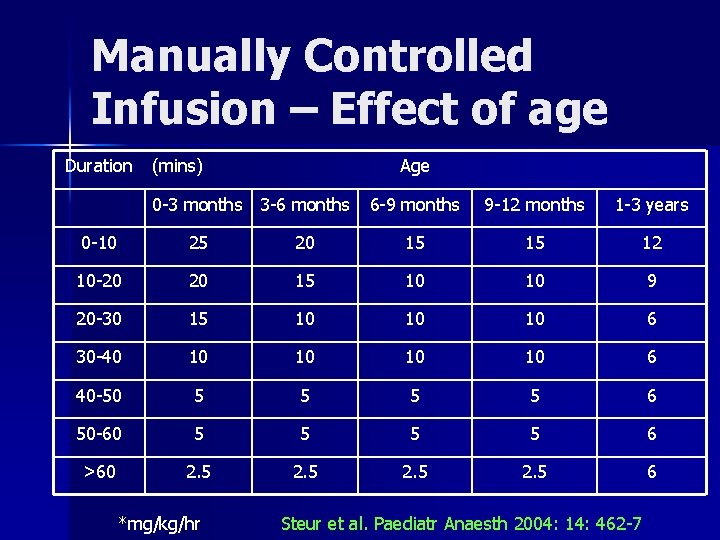
Manually Controlled Infusion – Effect of age Duration (mins) Age 0 -3 months 3 -6 months 6 -9 months 9 -12 months 1 -3 years 0 -10 25 20 15 15 12 10 -20 20 15 10 10 9 20 -30 15 10 10 10 6 30 -40 10 10 6 40 -50 5 5 6 50 -60 5 5 6 >60 2. 5 6 *mg/kg/hr Steur et al. Paediatr Anaesth 2004: 14: 462 -7
Manual Infusion – 3 m
Manual Infusion – 2 y
Manual Infusion – 6 y
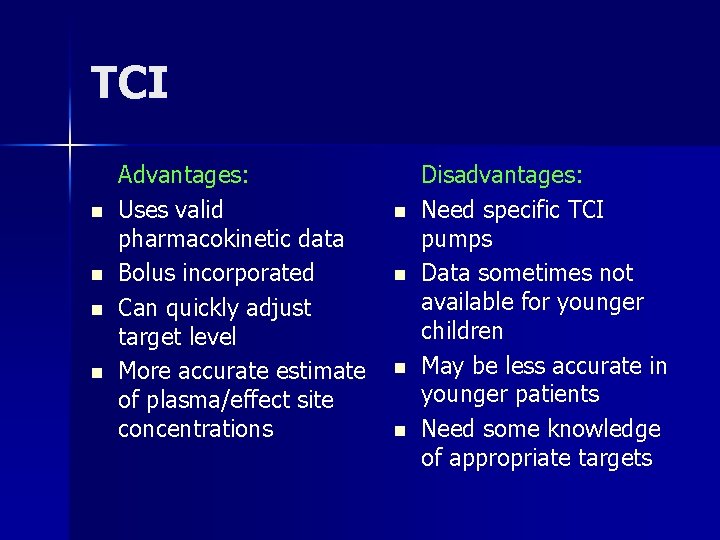
TCI n n Advantages: Uses valid pharmacokinetic data Bolus incorporated Can quickly adjust target level More accurate estimate of plasma/effect site concentrations n n Disadvantages: Need specific TCI pumps Data sometimes not available for younger children May be less accurate in younger patients Need some knowledge of appropriate targets
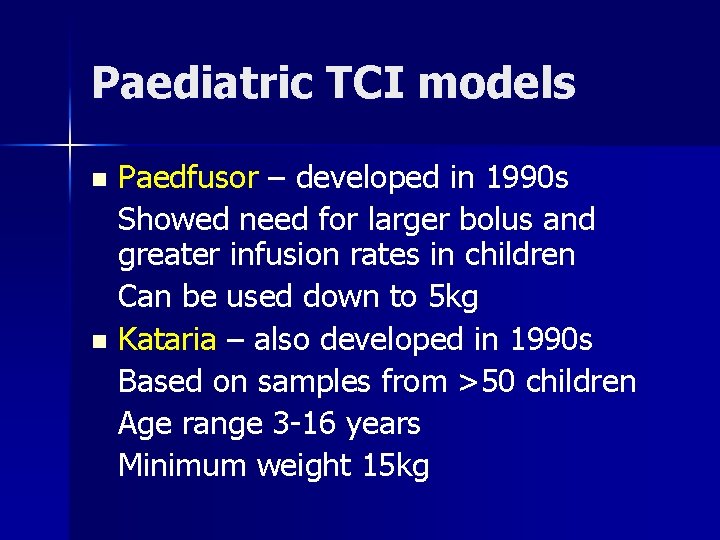
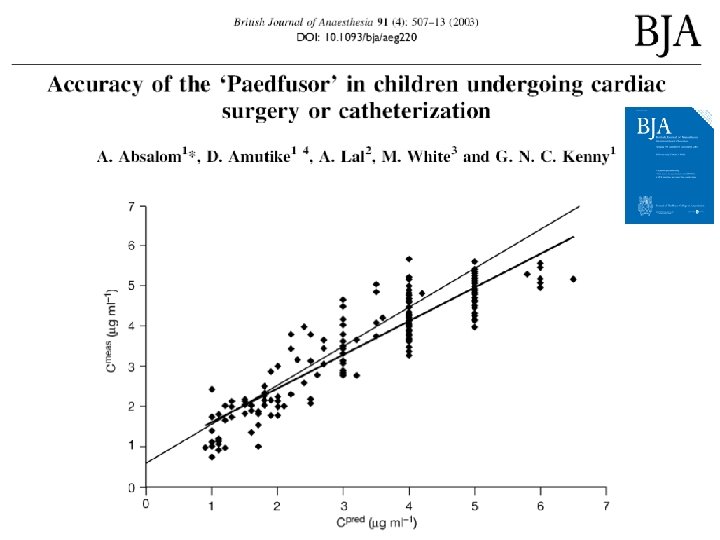
Paediatric TCI models Paedfusor – developed in 1990 s Showed need for larger bolus and greater infusion rates in children Can be used down to 5 kg n Kataria – also developed in 1990 s Based on samples from >50 children Age range 3 -16 years Minimum weight 15 kg n
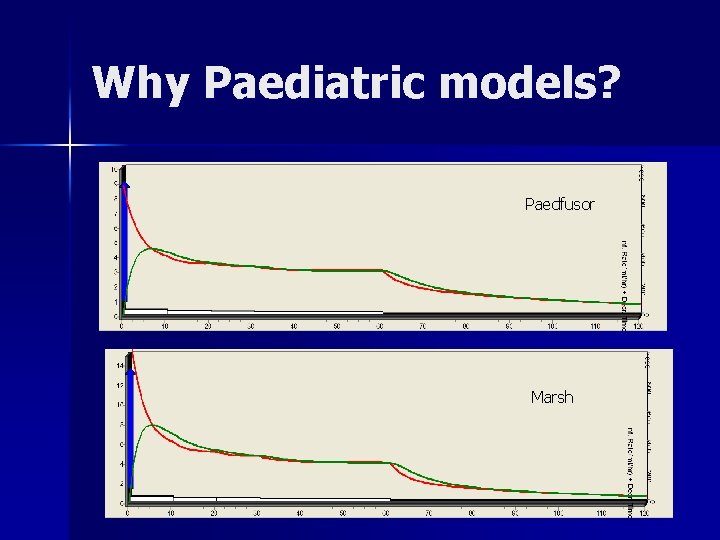
Marsh vs Kataria vs Paedfusor Marsh Kataria Paedfusor V 1 0. 228 L/kg 0. 52 L/kg 0. 458 L/kg V 2 0. 463 L/kg 1. 0 L/kg 1. 34 L/kg V 3 2. 893 L/kg 8. 20 L/kg K 10 (min – 1) 0. 119 0. 066 70 x Weight -0. 3/458. 4 K 12 (min – 1) 0. 112 0. 113 0. 12 K 13 (min – 1) 0. 042 0. 051 0. 034 K 21 (min – 1) 0. 055 0. 059 0. 041 K 31 (min – 1) 0. 0033 0. 0032 0. 0019
Why Paediatric models? Paedfusor Marsh
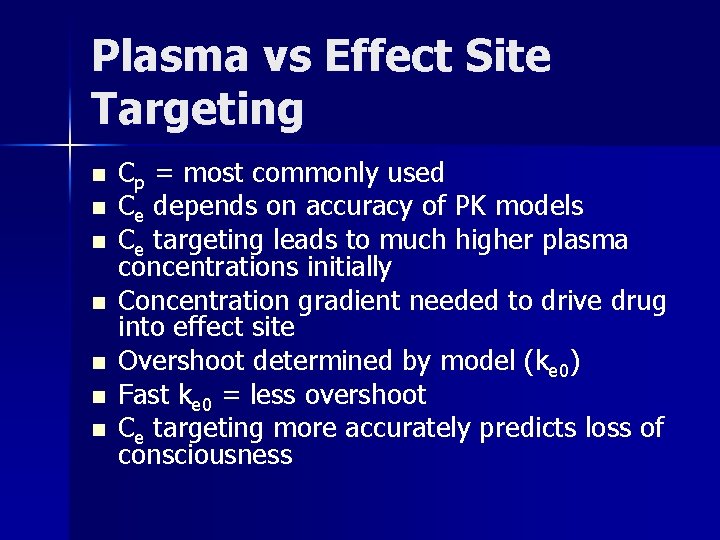
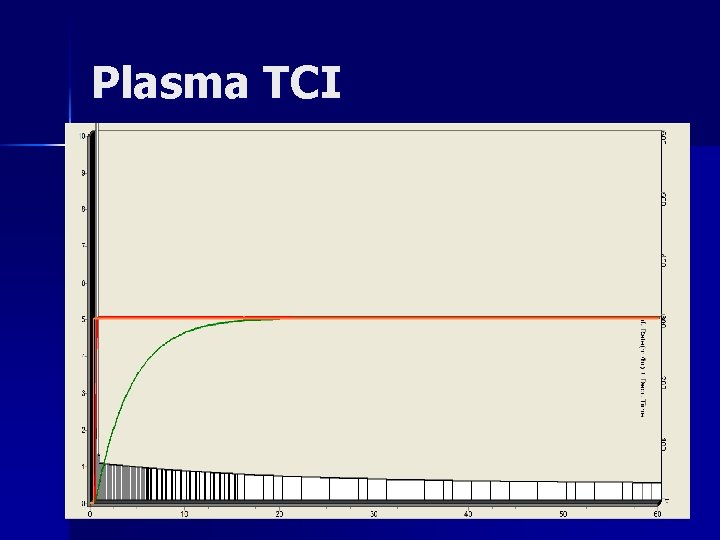
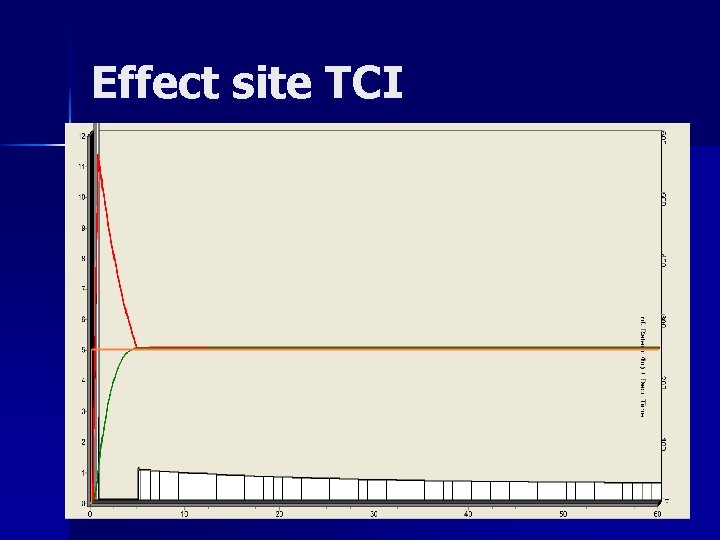
Plasma vs Effect Site Targeting n n n n Cp = most commonly used Ce depends on accuracy of PK models Ce targeting leads to much higher plasma concentrations initially Concentration gradient needed to drive drug into effect site Overshoot determined by model (ke 0) Fast ke 0 = less overshoot Ce targeting more accurately predicts loss of consciousness
Plasma TCI
Effect site TCI
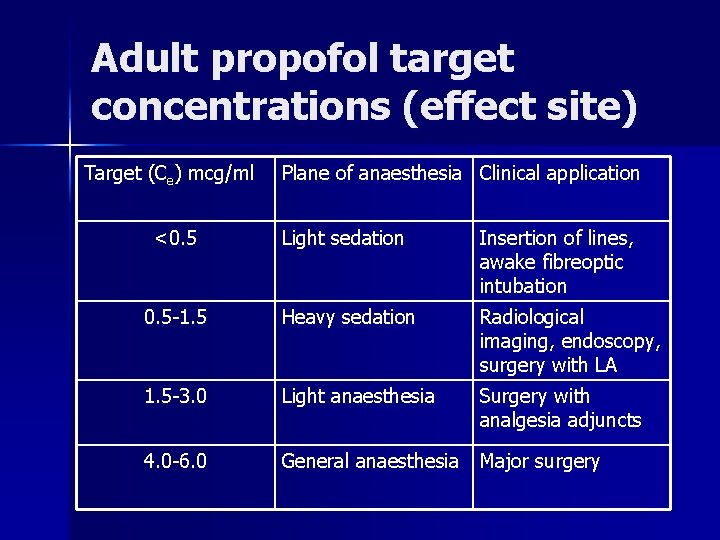
Adult propofol target concentrations (effect site) Target (Ce) mcg/ml Plane of anaesthesia Clinical application <0. 5 Light sedation Insertion of lines, awake fibreoptic intubation 0. 5 -1. 5 Heavy sedation Radiological imaging, endoscopy, surgery with LA 1. 5 -3. 0 Light anaesthesia Surgery with analgesia adjuncts 4. 0 -6. 0 General anaesthesia Major surgery
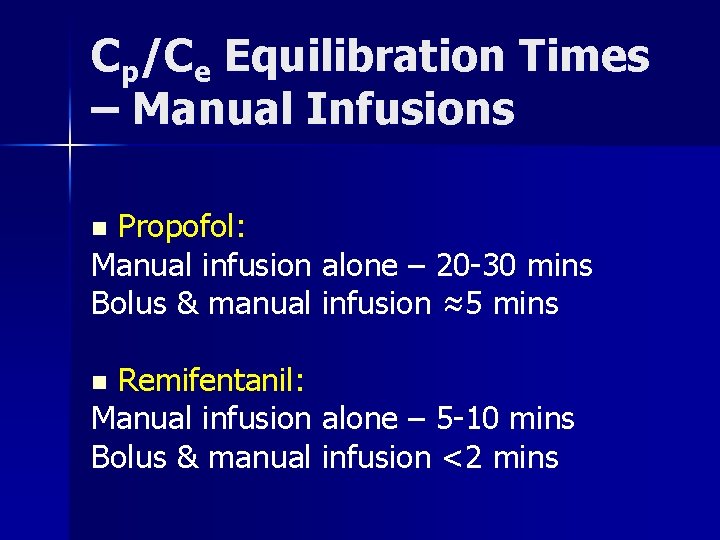
Cp/Ce Equilibration Times – Manual Infusions Propofol: Manual infusion alone – 20 -30 mins Bolus & manual infusion ≈5 mins n Remifentanil: Manual infusion alone – 5 -10 mins Bolus & manual infusion <2 mins n
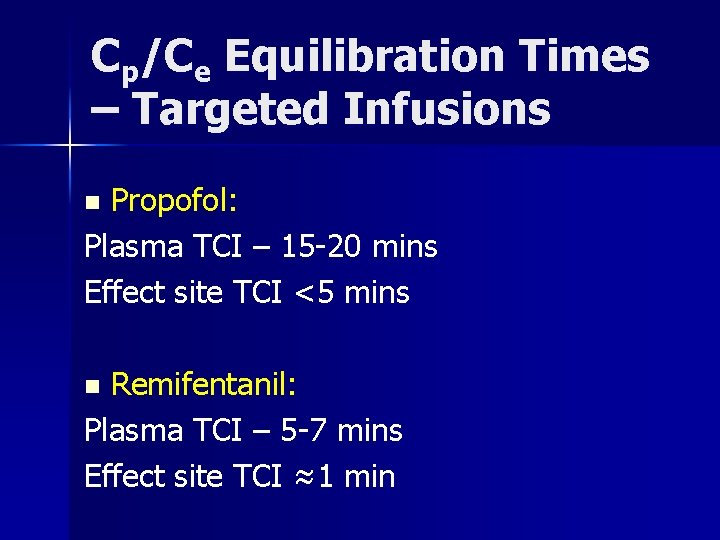
Cp/Ce Equilibration Times – Targeted Infusions Propofol: Plasma TCI – 15 -20 mins Effect site TCI <5 mins n Remifentanil: Plasma TCI – 5 -7 mins Effect site TCI ≈1 min n
How accurate are TCI systems?
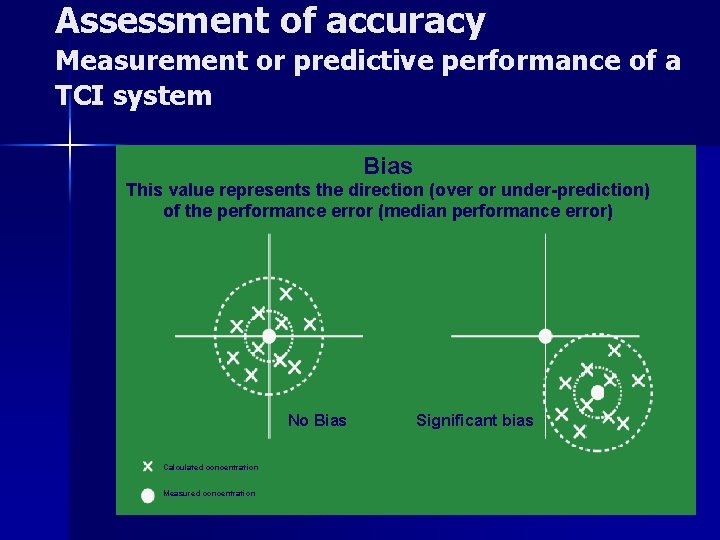
Assessment of accuracy Measurement or predictive performance of a TCI system Bias This value represents the direction (over or under-prediction) of the performance error (median performance error) No Bias Calculated concentration Measured concentration Significant bias
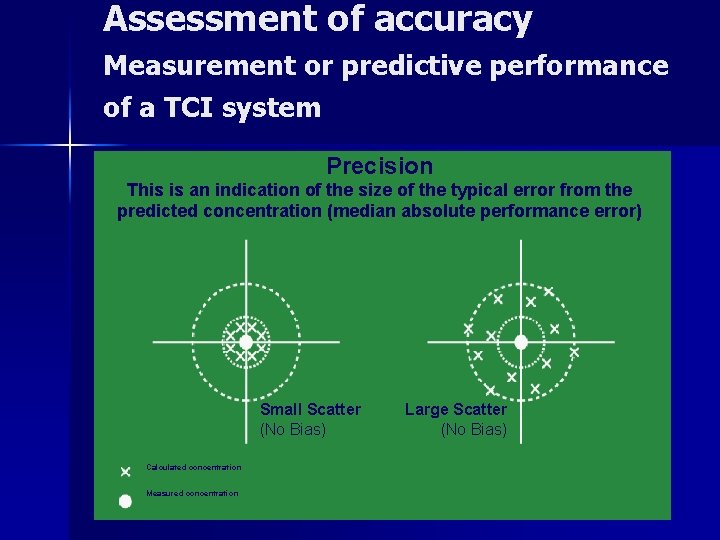
Assessment of accuracy Measurement or predictive performance of a TCI system Precision This is an indication of the size of the typical error from the predicted concentration (median absolute performance error) Small Scatter (No Bias) Calculated concentration Measured concentration Large Scatter (No Bias)
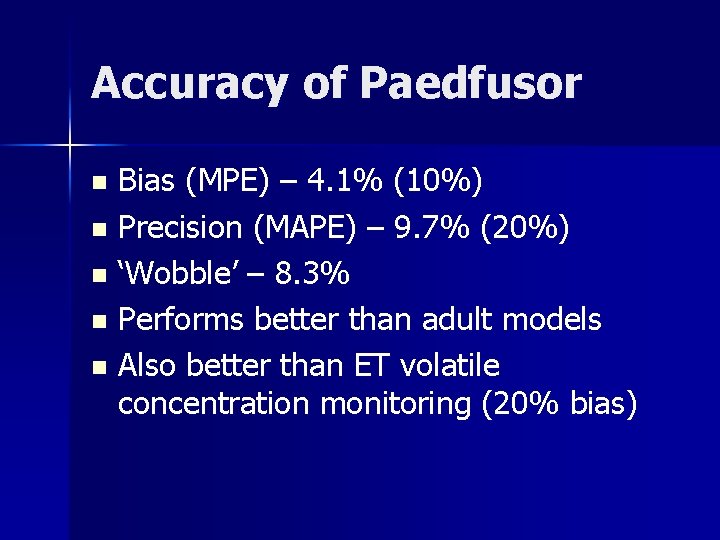
Accuracy of Paedfusor Bias (MPE) – 4. 1% (10%) n Precision (MAPE) – 9. 7% (20%) n ‘Wobble’ – 8. 3% n Performs better than adult models n Also better than ET volatile concentration monitoring (20% bias) n
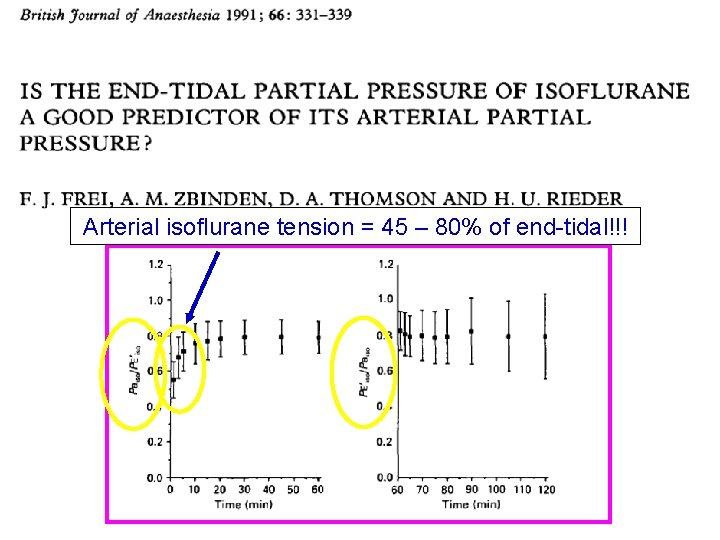
Arterial isoflurane tension = 45 – 80% of end-tidal!!!
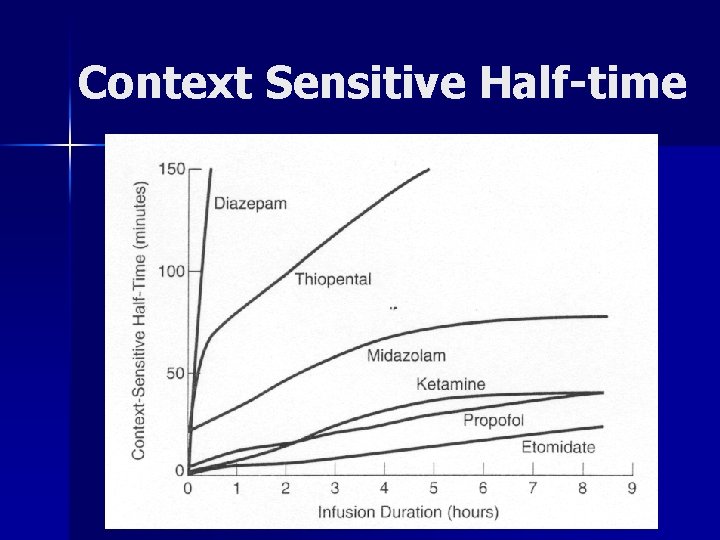
Context Sensitive Half-time
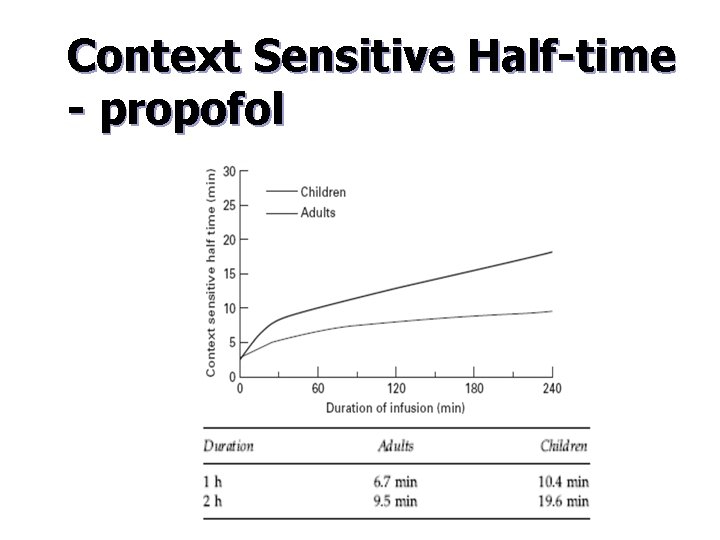
Context Sensitive Half-time - propofol
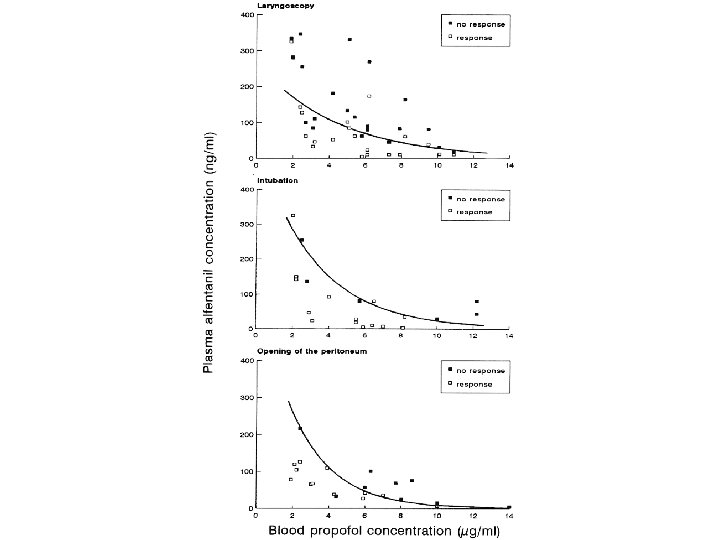
Opioid – hypnotic interactions
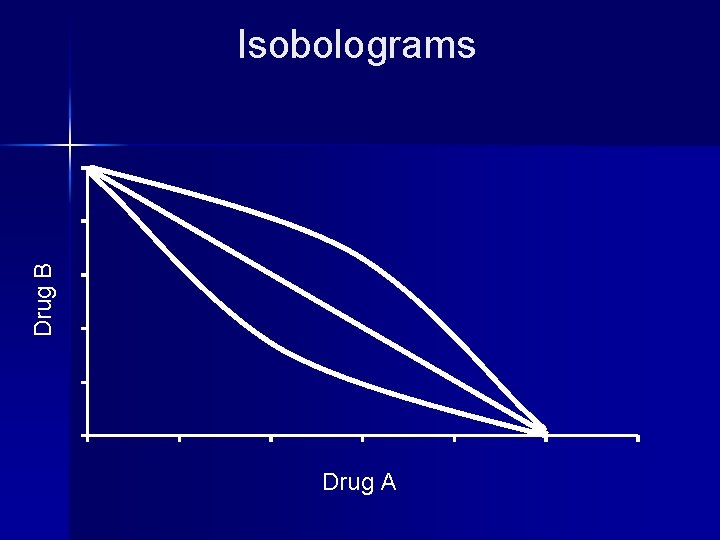
Drug B Isobolograms Drug A
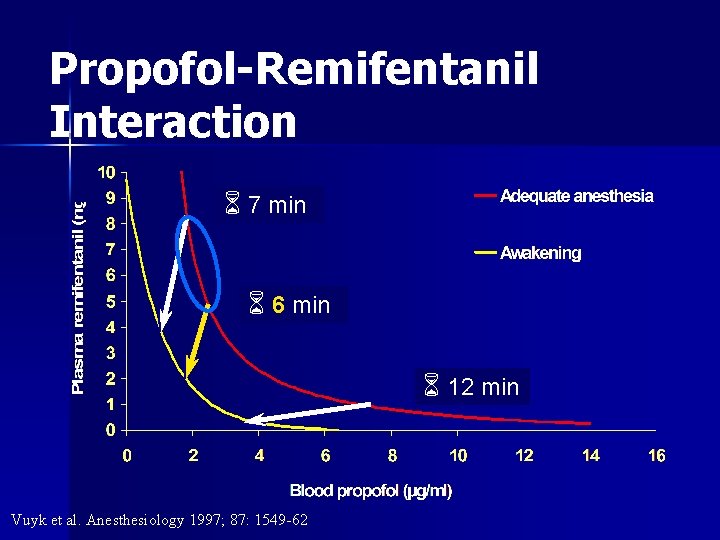
Propofol-Remifentanil Interaction 6 7 min 6 6 min 6 12 min Vuyk et al. Anesthesiology 1997; 87: 1549 -62
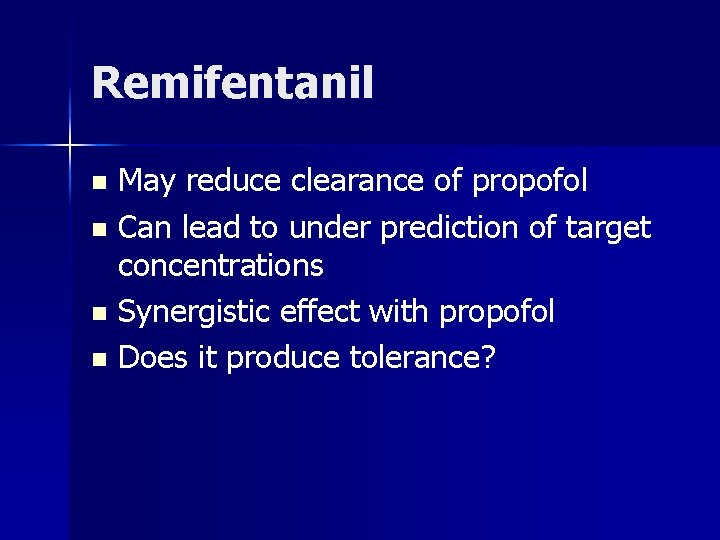
Remifentanil May reduce clearance of propofol n Can lead to under prediction of target concentrations n Synergistic effect with propofol n Does it produce tolerance? n
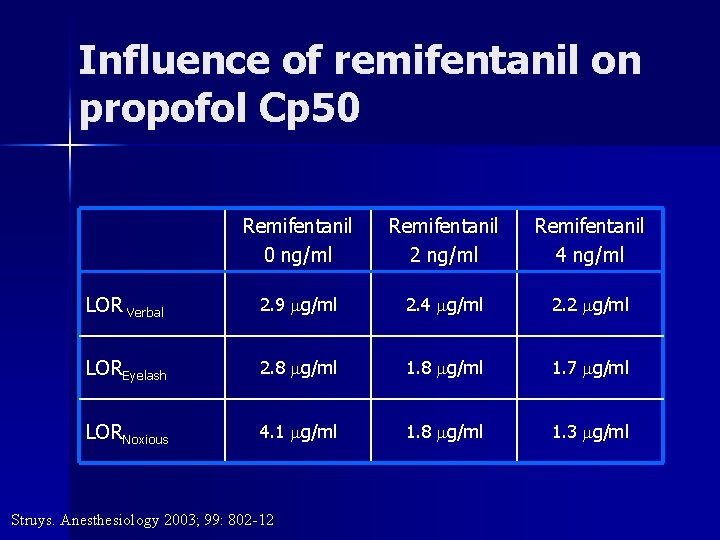
Influence of remifentanil on propofol Cp 50 Remifentanil 0 ng/ml Remifentanil 2 ng/ml Remifentanil 4 ng/ml LOR Verbal 2. 9 g/ml 2. 4 g/ml 2. 2 g/ml LOREyelash 2. 8 g/ml 1. 7 g/ml LORNoxious 4. 1 g/ml 1. 8 g/ml 1. 3 g/ml Struys. Anesthesiology 2003; 99: 802 -12
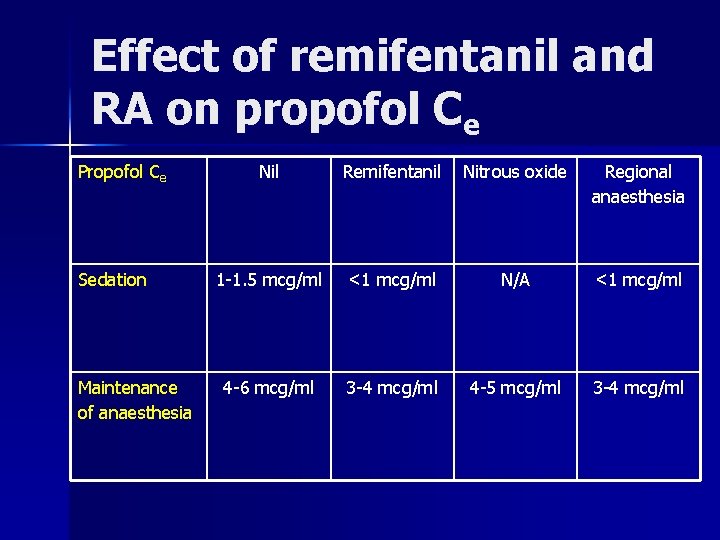
Effect of remifentanil and RA on propofol Ce Propofol Ce Sedation Maintenance of anaesthesia Nil Remifentanil Nitrous oxide Regional anaesthesia 1 -1. 5 mcg/ml <1 mcg/ml N/A <1 mcg/ml 4 -6 mcg/ml 3 -4 mcg/ml 4 -5 mcg/ml 3 -4 mcg/ml
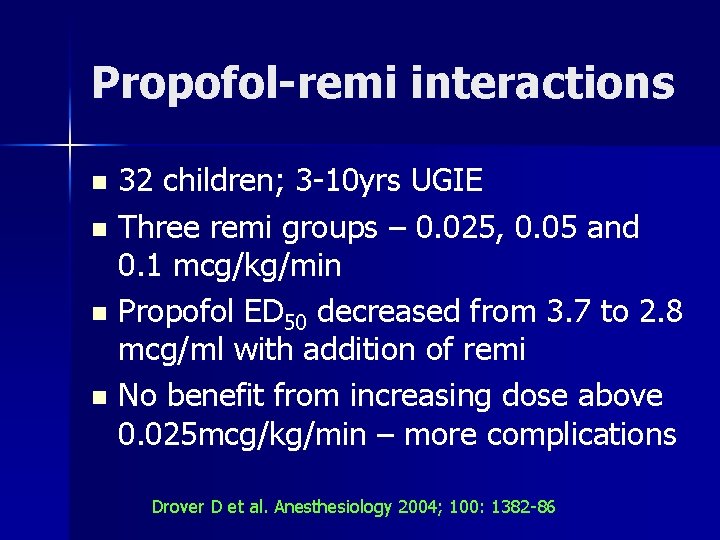
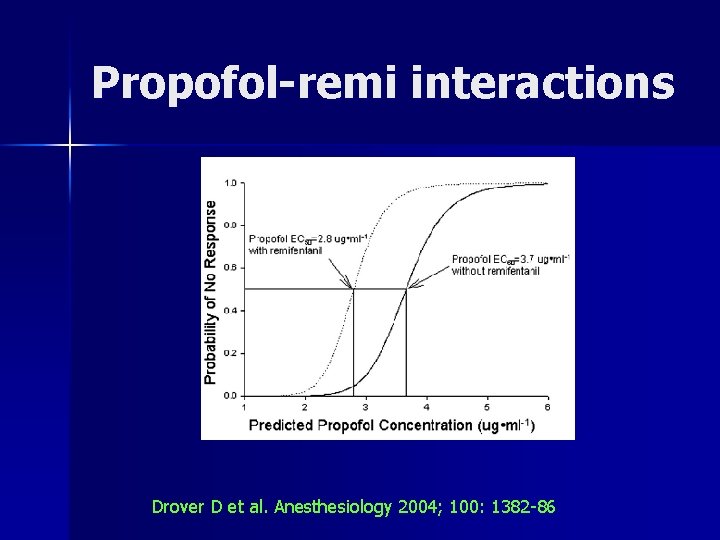
Propofol-remi interactions 32 children; 3 -10 yrs UGIE n Three remi groups – 0. 025, 0. 05 and 0. 1 mcg/kg/min n Propofol ED 50 decreased from 3. 7 to 2. 8 mcg/ml with addition of remi n No benefit from increasing dose above 0. 025 mcg/kg/min – more complications n Drover D et al. Anesthesiology 2004; 100: 1382 -86
Propofol-remi interactions Drover D et al. Anesthesiology 2004; 100: 1382 -86
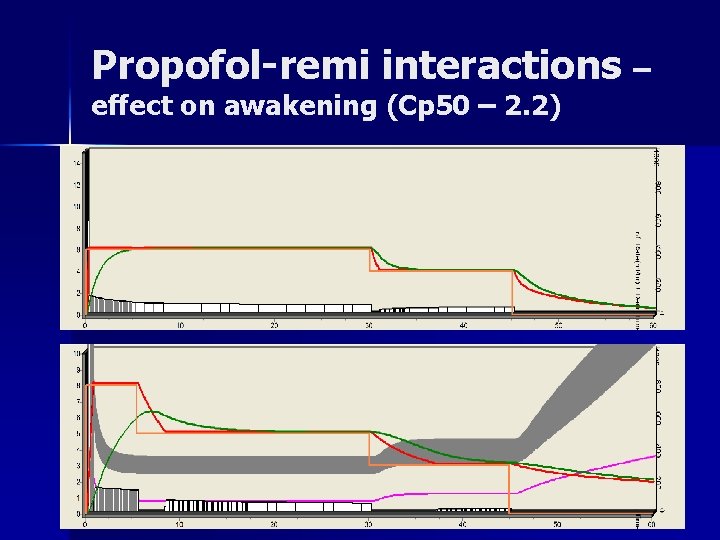
Propofol-remi interactions – effect on awakening (Cp 50 – 2. 2)
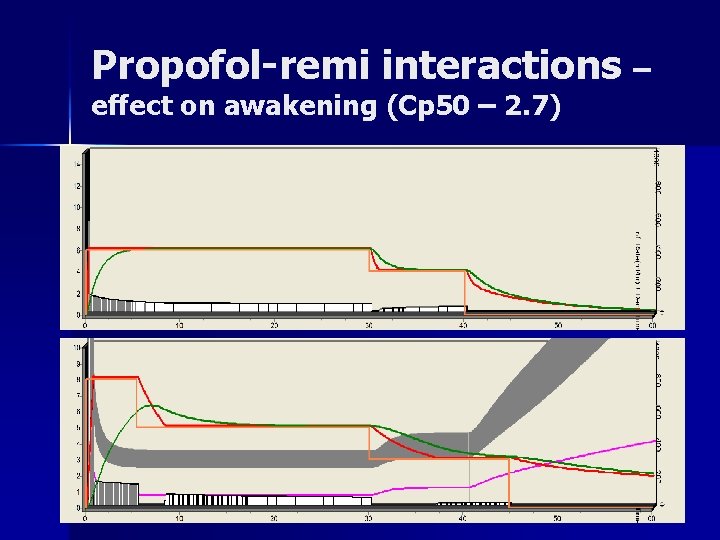
Propofol-remi interactions – effect on awakening (Cp 50 – 2. 7)
Propofol-remi interactions – effect on recovery propofol 6 mg/kg/hr and remi 0. 15 mcg/kg/min vs propofol 3 mg/kg/hr and remi 0. 45 mcg/kg/min n No significant difference in recovery times if propofol or remi pronounced n Less variation in recovery times if remi pronounced n Hackner C et al. BJA 2003; 91: 580 -2
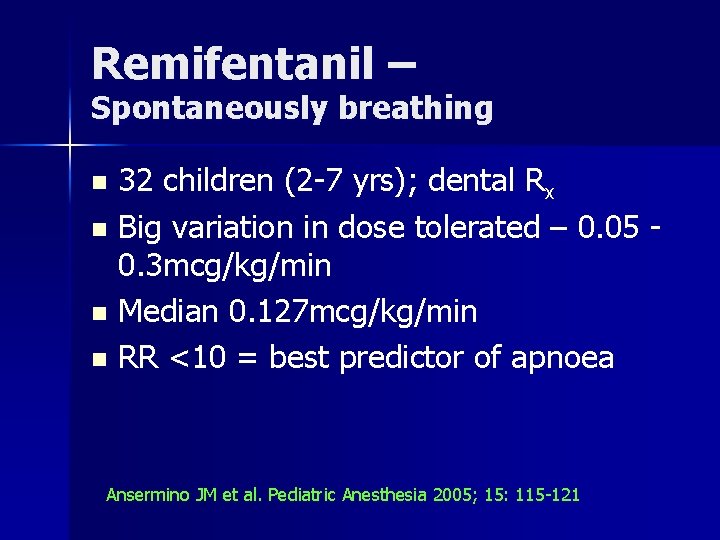
Remifentanil – Spontaneously breathing 32 children (2 -7 yrs); dental Rx n Big variation in dose tolerated – 0. 05 0. 3 mcg/kg/min n Median 0. 127 mcg/kg/min n RR <10 = best predictor of apnoea n Ansermino JM et al. Pediatric Anesthesia 2005; 15: 115 -121
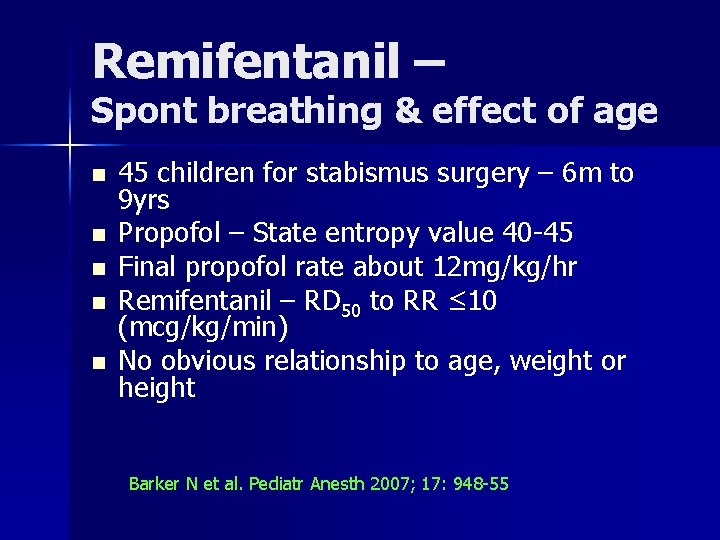
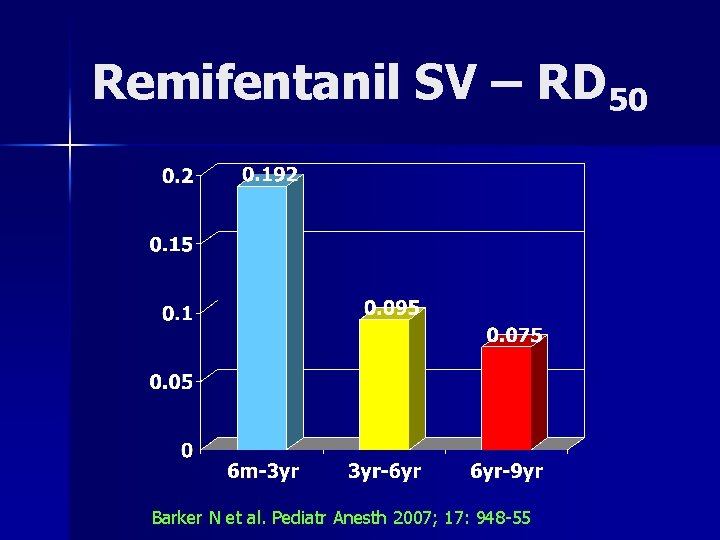
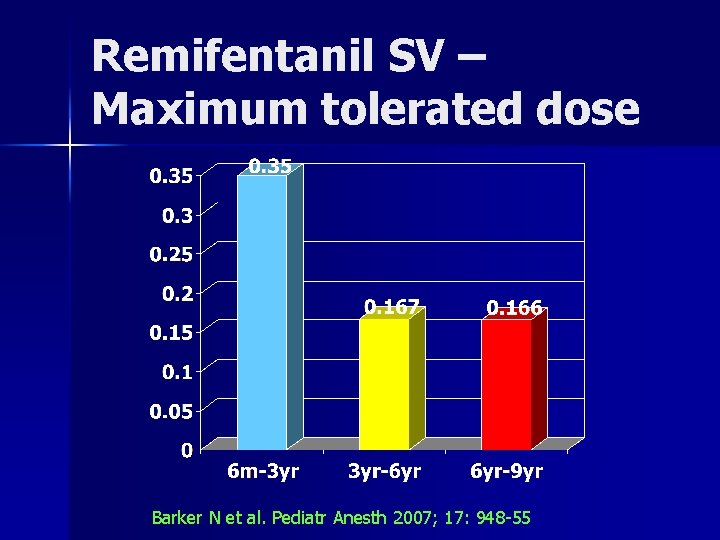
Remifentanil – Spont breathing & effect of age n n n 45 children for stabismus surgery – 6 m to 9 yrs Propofol – State entropy value 40 -45 Final propofol rate about 12 mg/kg/hr Remifentanil – RD 50 to RR ≤ 10 (mcg/kg/min) No obvious relationship to age, weight or height Barker N et al. Pediatr Anesth 2007; 17: 948 -55
Remifentanil SV – RD 50 Barker N et al. Pediatr Anesth 2007; 17: 948 -55
Remifentanil SV – Maximum tolerated dose Barker N et al. Pediatr Anesth 2007; 17: 948 -55
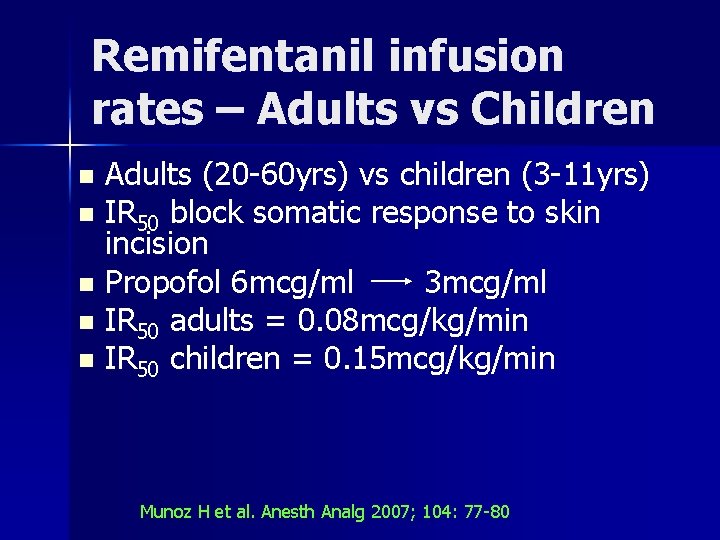
Remifentanil infusion rates – Adults vs Children Adults (20 -60 yrs) vs children (3 -11 yrs) n IR 50 block somatic response to skin incision n Propofol 6 mcg/ml 3 mcg/ml n IR 50 adults = 0. 08 mcg/kg/min n IR 50 children = 0. 15 mcg/kg/min n Munoz H et al. Anesth Analg 2007; 104: 77 -80
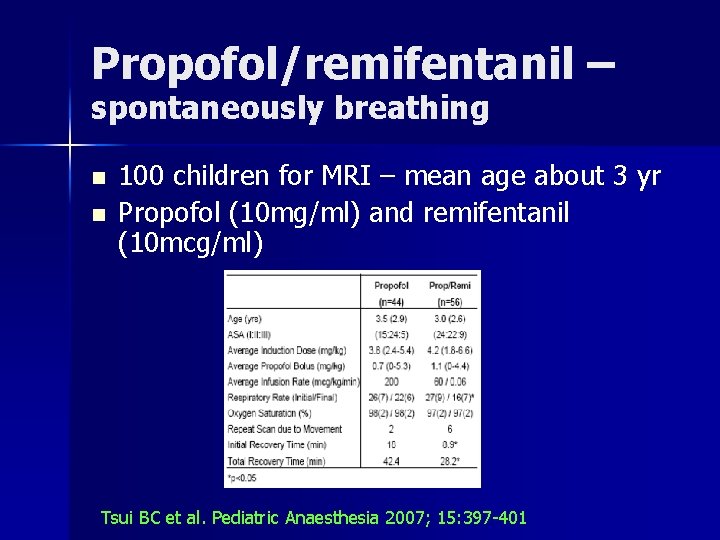
Propofol/remifentanil – spontaneously breathing n n 100 children for MRI – mean age about 3 yr Propofol (10 mg/ml) and remifentanil (10 mcg/ml) Tsui BC et al. Pediatric Anaesthesia 2007; 15: 397 -401
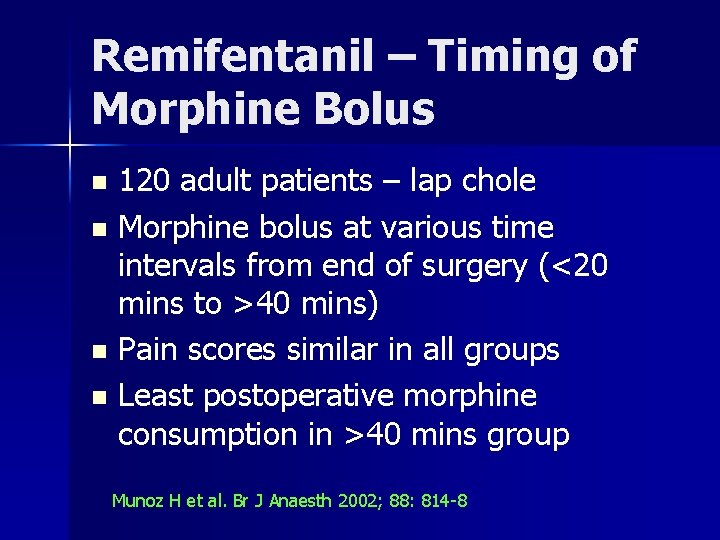
Remifentanil – Timing of Morphine Bolus n n 120 adult patients – lap chole Morphine bolus at various time intervals from end of surgery (<20 mins to >40 mins) Pain scores similar in all groups Least postoperative morphine consumption in >40 mins group Munoz H et al. Br J Anaesth 2002; 88: 814 -8
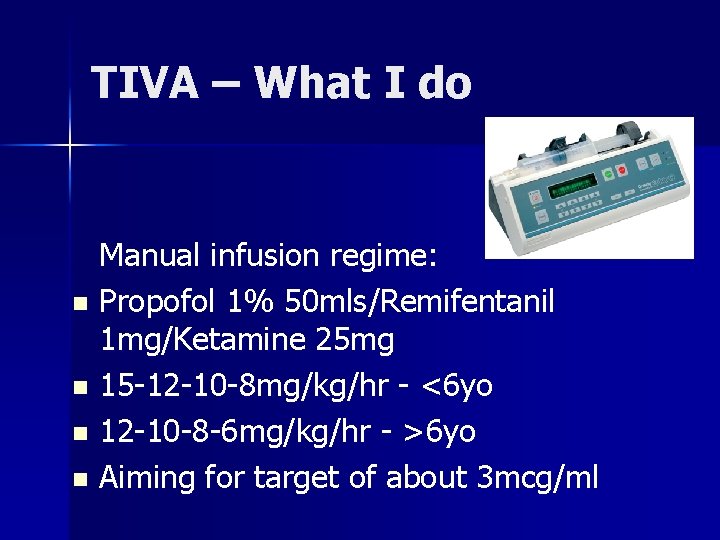
TIVA – What I do Manual infusion regime: n Propofol 1% 50 mls/Remifentanil 1 mg/Ketamine 25 mg n 15 -12 -10 -8 mg/kg/hr - <6 yo n 12 -10 -8 -6 mg/kg/hr - >6 yo n Aiming for target of about 3 mcg/ml
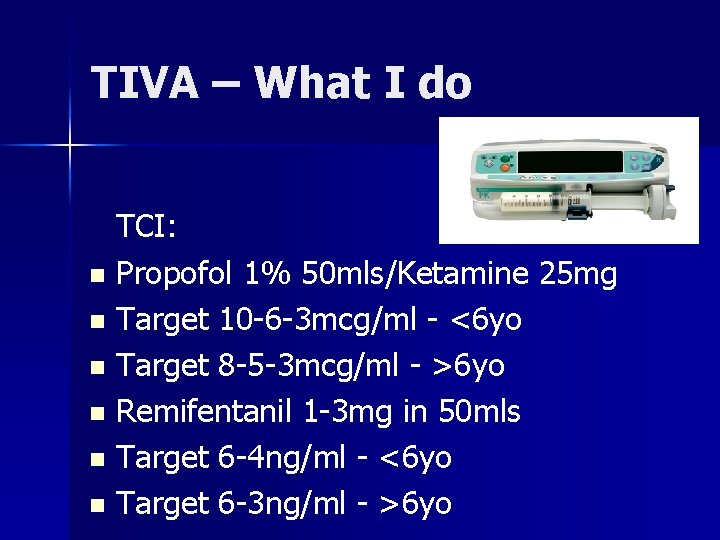
TIVA – What I do TCI: n Propofol 1% 50 mls/Ketamine 25 mg n Target 10 -6 -3 mcg/ml - <6 yo n Target 8 -5 -3 mcg/ml - >6 yo n Remifentanil 1 -3 mg in 50 mls n Target 6 -4 ng/ml - <6 yo n Target 6 -3 ng/ml - >6 yo
Spontaneous breathing Avoid remifentanil n Add ketamine to propofol n Use local/regional anaesthesia n Greater propofol requirements – may need to start at 18 -20 mg/kg/hr; don’t go below 10 -12 mg/kg/hr n
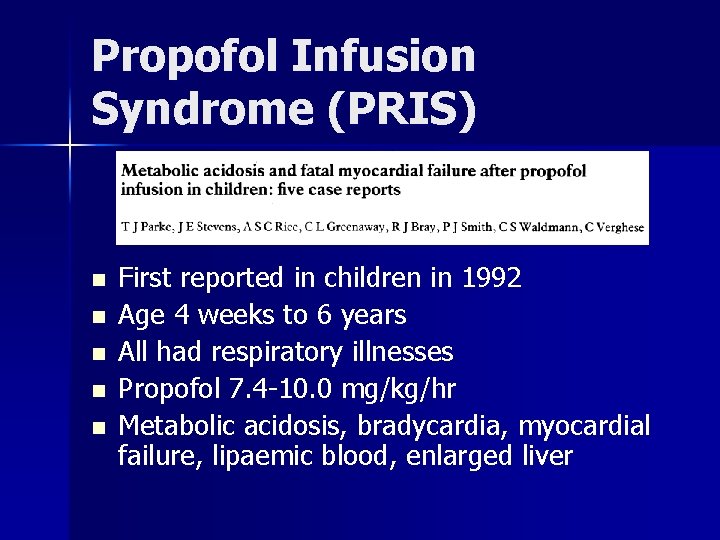
Propofol Infusion Syndrome (PRIS) n n n First reported in children in 1992 Age 4 weeks to 6 years All had respiratory illnesses Propofol 7. 4 -10. 0 mg/kg/hr Metabolic acidosis, bradycardia, myocardial failure, lipaemic blood, enlarged liver
PRIS - Pathophysiology Like mitochondial cytopathy n Impaired fatty acid oxidation n Accumulation of acylcarnitine esters n Propofol 1% at 4 mg/kg/hr = 23 g/kg/day lipid n Worse if inadequate glucose supplemention (6 -8 mg/kg/min), steroids and catecholamines n
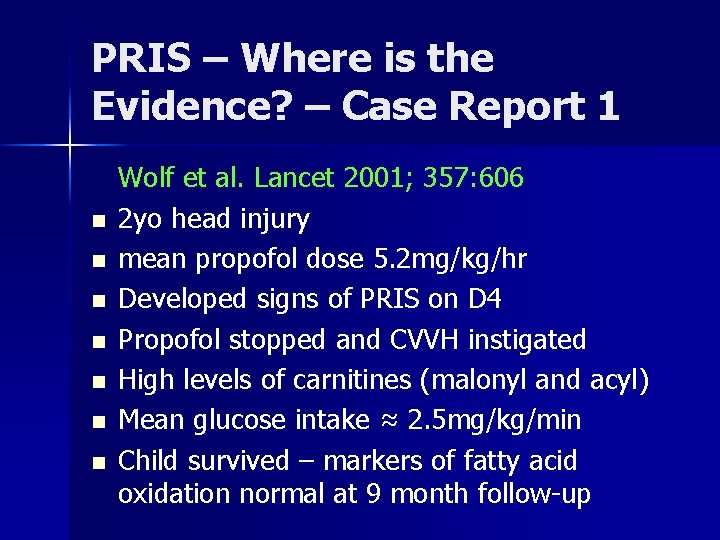
PRIS – Where is the Evidence? – Case Report 1 n n n n Wolf et al. Lancet 2001; 357: 606 2 yo head injury mean propofol dose 5. 2 mg/kg/hr Developed signs of PRIS on D 4 Propofol stopped and CVVH instigated High levels of carnitines (malonyl and acyl) Mean glucose intake ≈ 2. 5 mg/kg/min Child survived – markers of fatty acid oxidation normal at 9 month follow-up
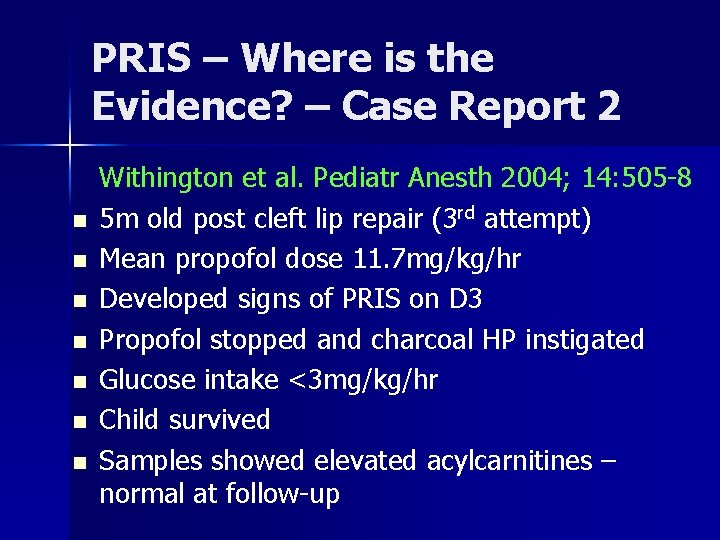
PRIS – Where is the Evidence? – Case Report 2 n n n n Withington et al. Pediatr Anesth 2004; 14: 505 -8 5 m old post cleft lip repair (3 rd attempt) Mean propofol dose 11. 7 mg/kg/hr Developed signs of PRIS on D 3 Propofol stopped and charcoal HP instigated Glucose intake <3 mg/kg/hr Child survived Samples showed elevated acylcarnitines – normal at follow-up
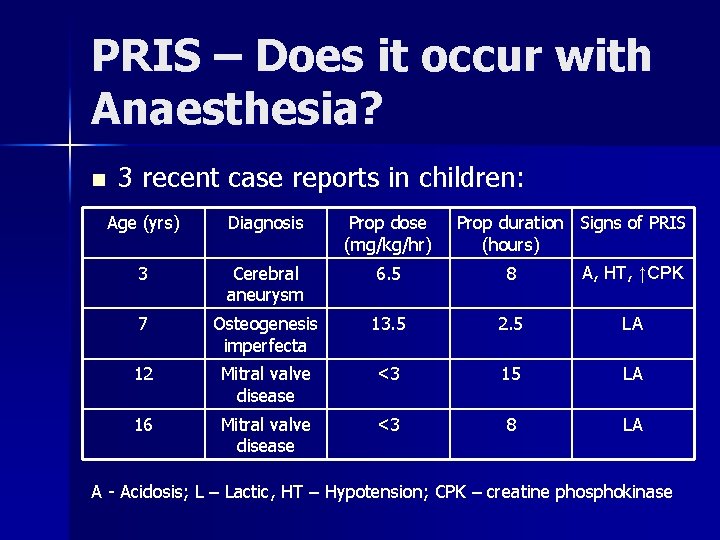
PRIS – Does it occur with Anaesthesia? n 3 recent case reports in children: Age (yrs) Diagnosis Prop dose (mg/kg/hr) Prop duration Signs of PRIS (hours) 3 Cerebral aneurysm 6. 5 8 A, HT, ↑CPK 7 Osteogenesis imperfecta 13. 5 2. 5 LA 12 Mitral valve disease <3 15 LA 16 Mitral valve disease <3 8 LA A - Acidosis; L – Lactic, HT – Hypotension; CPK – creatine phosphokinase
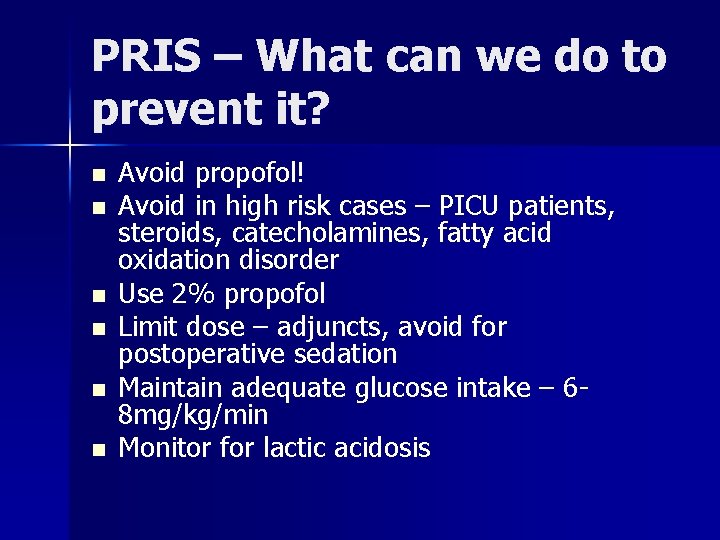
PRIS – What can we do to prevent it? n n n Avoid propofol! Avoid in high risk cases – PICU patients, steroids, catecholamines, fatty acid oxidation disorder Use 2% propofol Limit dose – adjuncts, avoid for postoperative sedation Maintain adequate glucose intake – 68 mg/kg/min Monitor for lactic acidosis
Questions ?