The Reading and Pronunciation Connection The tongue of




- Slides: 41
The Reading and Pronunciation Connection “The tongue of man is a twisty thing, there are plenty of words there of every kind, the range of words is wide, and their variance. ” HOMER, The Iliad, c. 900 B. C. E Presented by: Jamie Mathews, MA; Darece Sperry, MS, Erin Clark, MA; Davis School District, Canyon Heights Adult Learning
Part I Sound Advice about
How do we learn language sound and speak correctly? Students need to know the consonants and vowels Some sounds can be difficult for students as they don’t have that sound in their native language. Students need to know the basics of phonology Voiced/ Voiceless Place of Articulation Manner of Articulation Phonetic features that do not distinguish phonemes syllabic versus nonsyllabic stress versus nonstress aspiration versus non aspiration
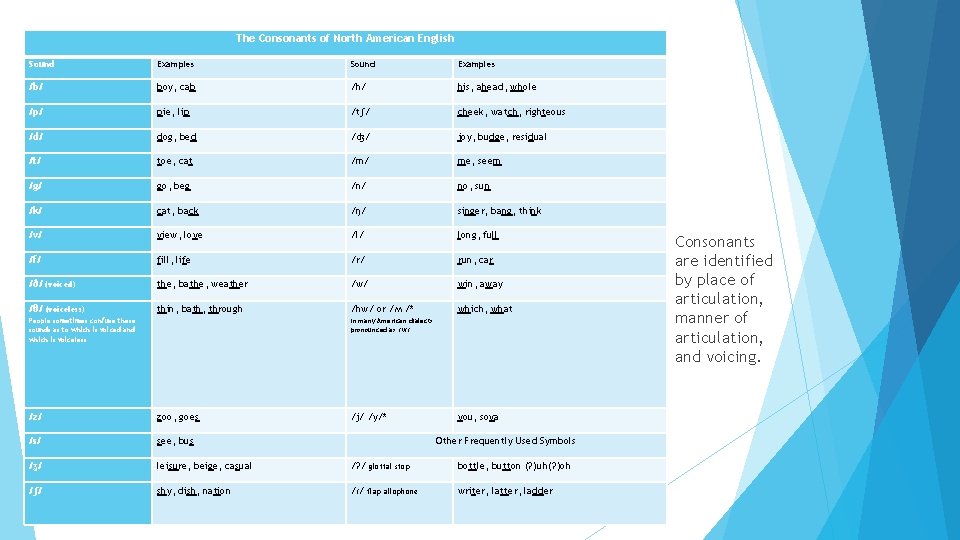
The Consonants of North American English Sound Examples /b/ boy, cab /h/ his, ahead, whole /p/ pie, lip /t∫/ cheek, watch, righteous /d/ dog, bed /ʤ/ joy, budge, residual /t/ toe, cat /m/ me, seem /g/ go, beg /n/ no, sun /k/ cat, back /ŋ/ singer, bang, think /v/ view, love /l/ long, full /f/ fill, life /r/ run, car /ð/ (voiced) the, bathe, weather /w/ win, away /θ/ (voiceless) thin, bath, through /hw/ or /ʍ /* which, what People sometimes confuse these sounds as to which is voiced and which is voiceless. In many American dialects pronounced as /w/ /z/ zoo, goes /j/ /y/* you, soya /s/ see, bus /ʓ/ leisure, beige, casual /ʔ/ glottal stop bottle, button (ʔ)uh(ʔ)oh /∫/ shy, dish, nation /ɾ/ flap allophone writer, latter, ladder Other Frequently Used Symbols Consonants are identified by place of articulation, manner of articulation, and voicing.
Consonants Fromkin, V. , Rodman, R. , & Hyams, N. (2006) stated that consonants are formed by where the airflow is restricted in the vocal tract how the tongue and lips move to create constriction, and the shape of the oral cavity in different ways. All these elements put together in different ways produce the various sounds.
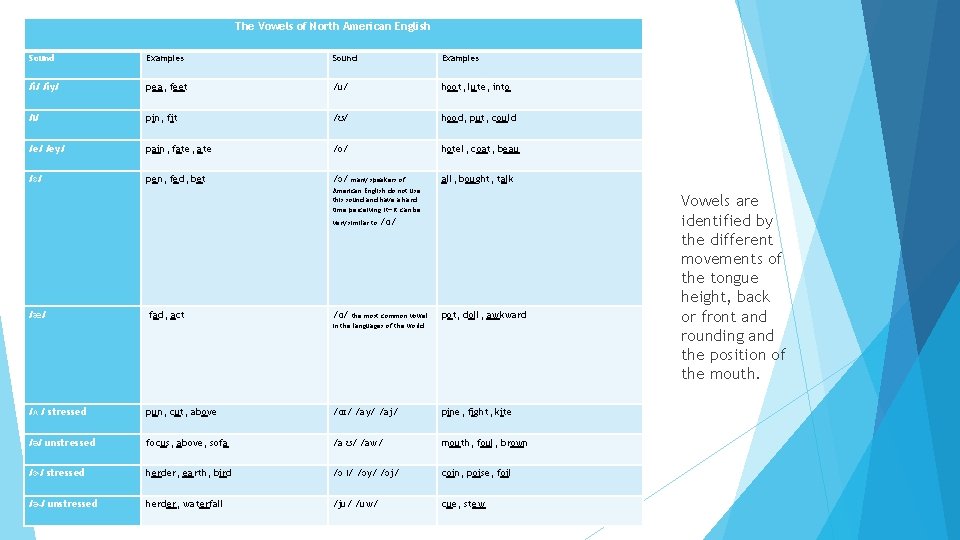
The Vowels of North American English Sound Examples /i/ /iy/ pea, feet /u/ hoot, lute, into /I/ pin, fit /ʊ/ hood, put, could /e/ /ey/ pain, fate, ate /o/ hotel, coat, beau /ɛ/ pen, fed, bet /ɔ/ all, bought, talk many speakers of American English do not use this sound and have a hard time perceiving it—it can be very similar to /ӕ/ fad, act /ɑ/ the most common vowel in the languages of the world pot, doll, awkward /ʌ / stressed pun, cut, above /ɑɪ/ /ay/ /aj/ pine, fight, kite /ə/ unstressed focus, above, sofa /a ʊ/ /aw/ mouth, foul, brown /ɝ/ stressed herder, earth, bird /ɔ I/ /ɔy/ /ɔj/ coin, poise, foil /ɚ/ unstressed herder, waterfall /ju/ /uw/ cue, stew Vowels are identified by the different movements of the tongue height, back or front and rounding and the position of the mouth.
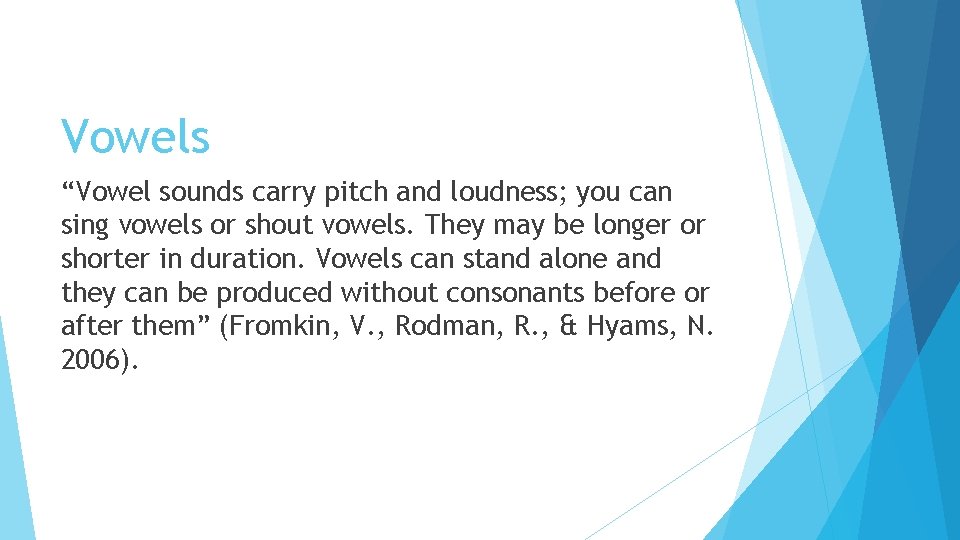
Vowels “Vowel sounds carry pitch and loudness; you can sing vowels or shout vowels. They may be longer or shorter in duration. Vowels can stand alone and they can be produced without consonants before or after them” (Fromkin, V. , Rodman, R. , & Hyams, N. 2006).
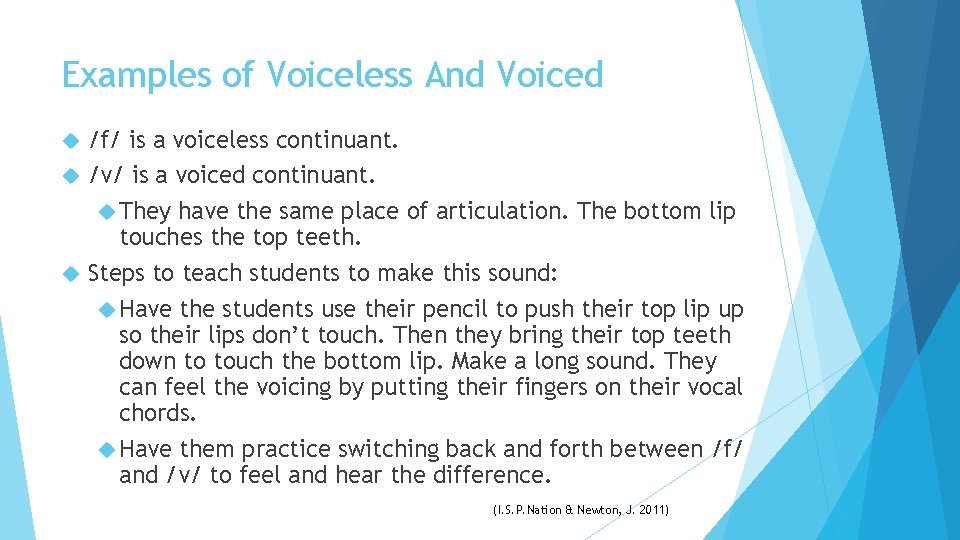
Examples of Voiceless And Voiced /f/ is a voiceless continuant. /v/ is a voiced continuant. They have the same place of articulation. The bottom lip touches the top teeth. Steps to teach students to make this sound: Have the students use their pencil to push their top lip up so their lips don’t touch. Then they bring their top teeth down to touch the bottom lip. Make a long sound. They can feel the voicing by putting their fingers on their vocal chords. Have them practice switching back and forth between /f/ and /v/ to feel and hear the difference. (I. S. P. Nation & Newton, J. 2011)
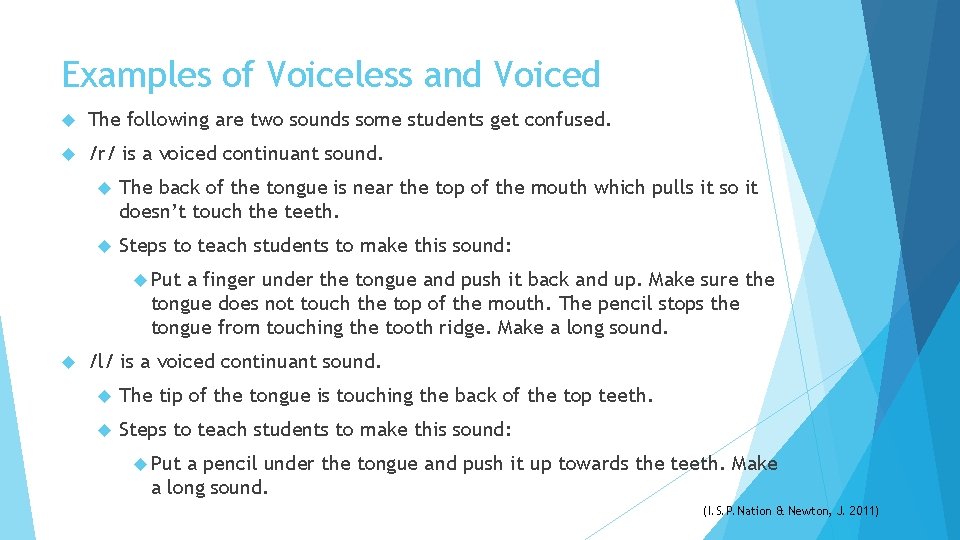
Examples of Voiceless and Voiced The following are two sounds some students get confused. /r/ is a voiced continuant sound. The back of the tongue is near the top of the mouth which pulls it so it doesn’t touch the teeth. Steps to teach students to make this sound: Put a finger under the tongue and push it back and up. Make sure the tongue does not touch the top of the mouth. The pencil stops the tongue from touching the tooth ridge. Make a long sound. /l/ is a voiced continuant sound. The tip of the tongue is touching the back of the top teeth. Steps to teach students to make this sound: Put a pencil under the tongue and push it up towards the teeth. Make a long sound. (I. S. P. Nation & Newton, J. 2011)
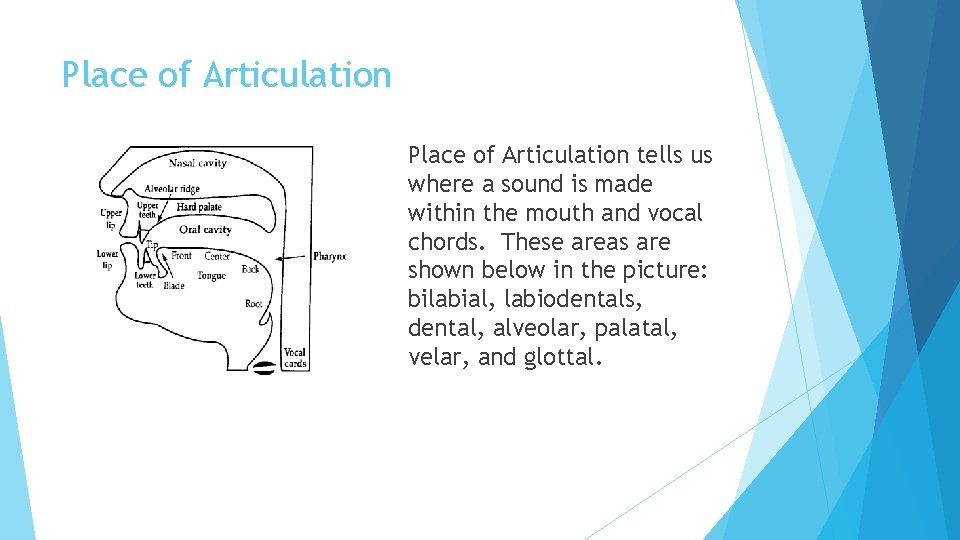
Place of Articulation tells us where a sound is made within the mouth and vocal chords. These areas are shown below in the picture: bilabial, labiodentals, dental, alveolar, palatal, velar, and glottal.
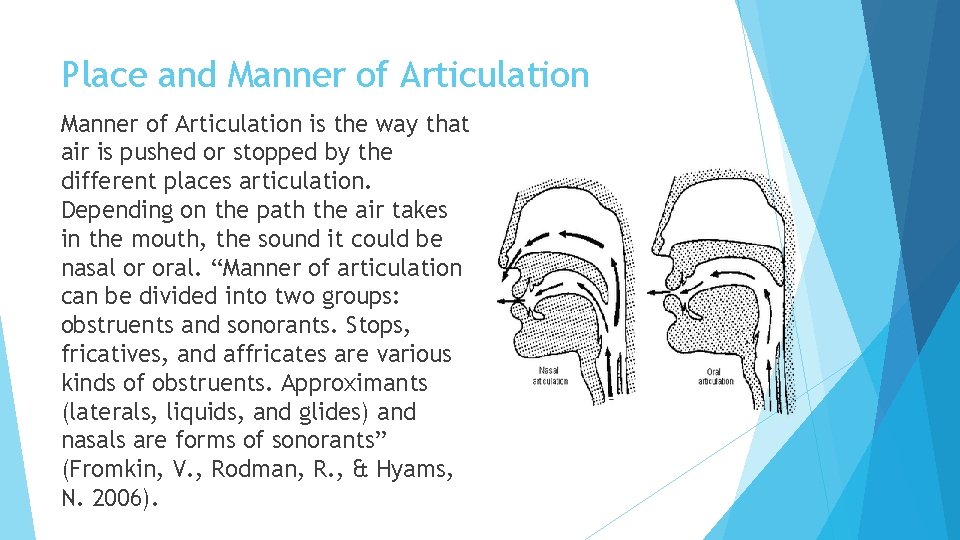
Place and Manner of Articulation is the way that air is pushed or stopped by the different places articulation. Depending on the path the air takes in the mouth, the sound it could be nasal or oral. “Manner of articulation can be divided into two groups: obstruents and sonorants. Stops, fricatives, and affricates are various kinds of obstruents. Approximants (laterals, liquids, and glides) and nasals are forms of sonorants” (Fromkin, V. , Rodman, R. , & Hyams, N. 2006).
Syllabic and Non-Syllabic In English, one or more of the syllables in every content word are stressed. A stressed syllable, is more prominent than an unstressed syllable. A student can tell the how many syllables by the number of vowel sounds. Sometimes there are consonants that act as vowel sounds. There also vowels together to make a diphthong and one of the sounds is not as strong. Saw, Say, cattle, botany, star, boil are some examples. “The schwa is pronounced with the mouth in a neutral position and is a brief, colorless vowel. The schwa is reserved for the vowel sound in all reduced syllables” (Fromkin, V. , Rodman, R. , & Hyams, N. 2006)
Stress versus Non Stress Some words are spelled the same in English but the position in which you put the stress can change the meaning. Examples Object If the stress is ob. JECT, then it means complain. If the stress is OBject, then it means a thing. Resume If the stress is re. SUME, then it means to start again. If the stress is RESume, then it is a for a job document. Wind If the stress is WInd with a long I sound, it means to coil up. If the stress is Wi. Nd with a short I sound, it means air blowing.
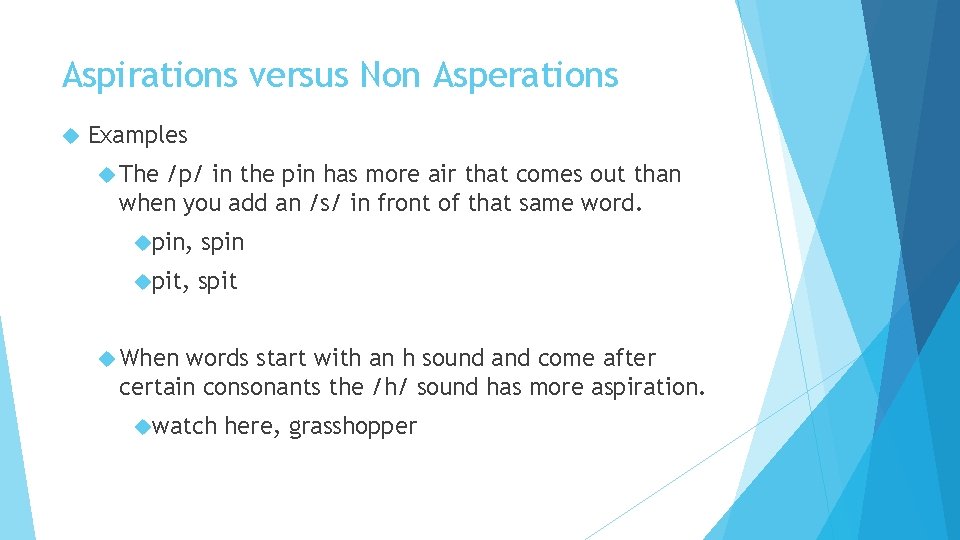
Aspirations versus Non Asperations Examples The /p/ in the pin has more air that comes out than when you add an /s/ in front of that same word. pin, spin pit, spit When words start with an h sound and come after certain consonants the /h/ sound has more aspiration. watch here, grasshopper
Pronunciation Practice v v v Activity Ideas Pronunciation Board Game Challenge Chart Reading Text example “Consistent exposure to fluent input has been established as key to language development, especially when paired with interaction and output as explained by Krashen and Terrell (1983)” as cited by Robertson, K. , Ford, K. (2008)
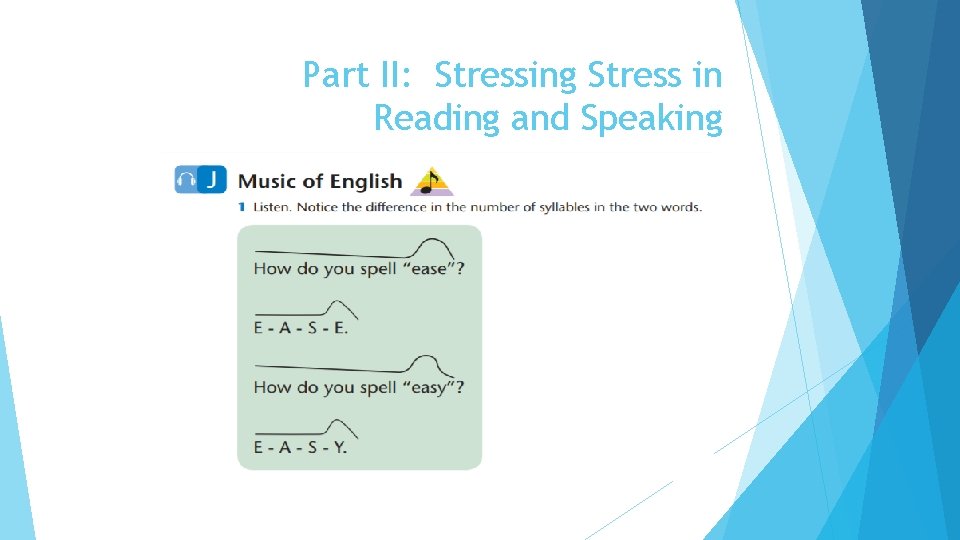
Part II: Stressing Stress in Reading and Speaking
“Students tend to think that word stress is some sort of added decoration, or else they do notice is at all. But far from being merely decorative, stress is an essential part of the pronunciation of English words. This because English speakers tend to store vocabulary according to stress patterns. ” From Clear Speech by Judy B. Gilbert (Brown 1977, 1990; Levelt, 1989)
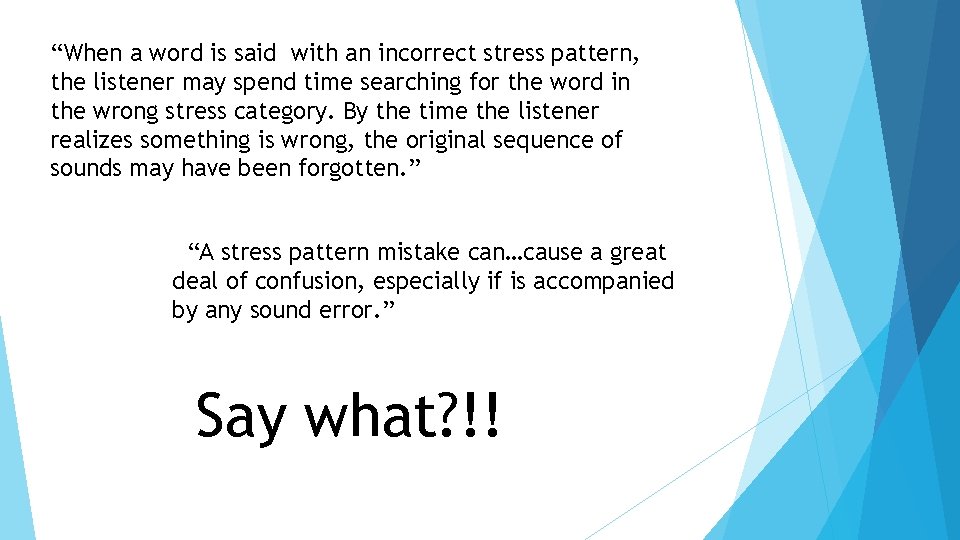
“When a word is said with an incorrect stress pattern, the listener may spend time searching for the word in the wrong stress category. By the time the listener realizes something is wrong, the original sequence of sounds may have been forgotten. ” “A stress pattern mistake can…cause a great deal of confusion, especially if is accompanied by any sound error. ” Say what? !!
q Word stress and vowel length q Word stress and vowel clarity q Word stress patterns From Clear Speech by Judy B. Gilbert
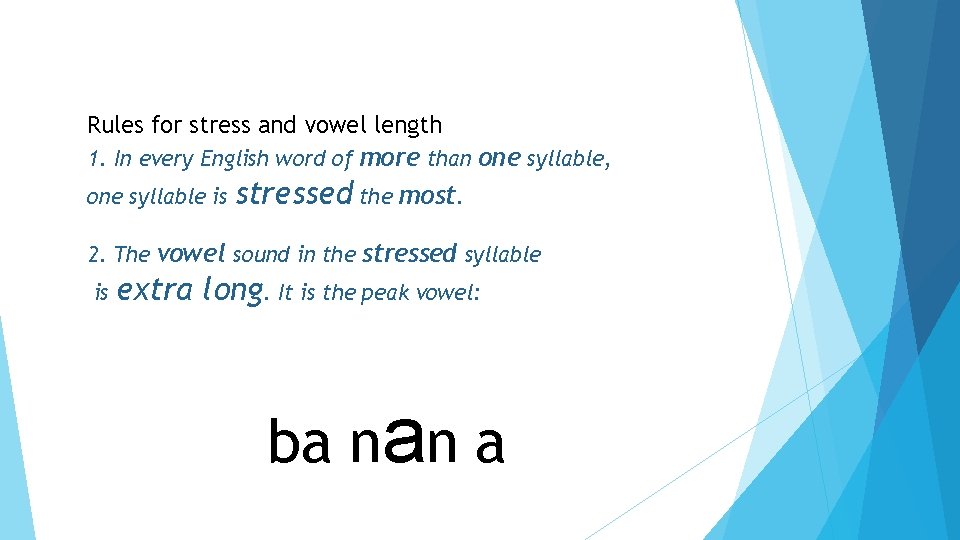
Rules for stress and vowel length 1. In every English word of more than one syllable, one syllable is stressed the most. 2. The vowel sound in the stressed syllable is extra long. It is the peak vowel: ba nan a
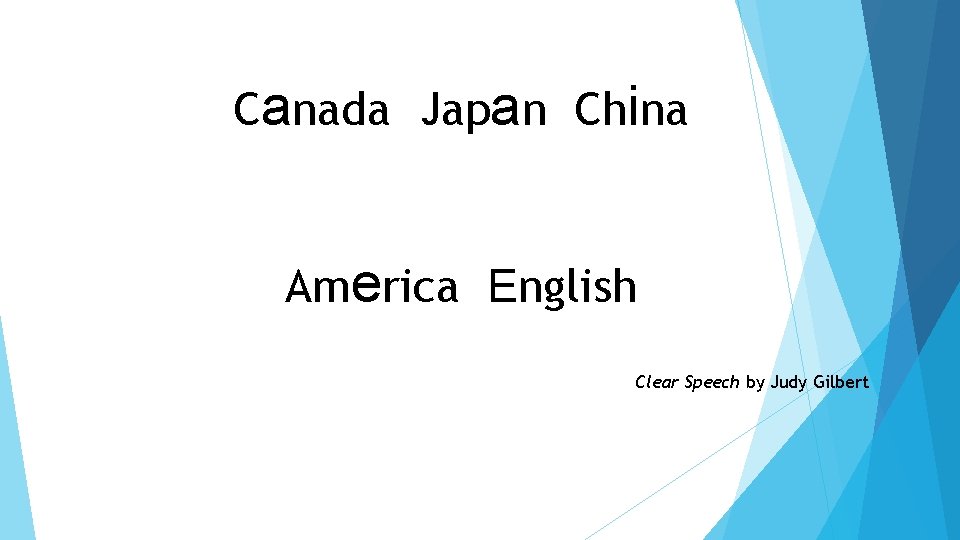
Canada Japan China America English Clear Speech by Judy Gilbert
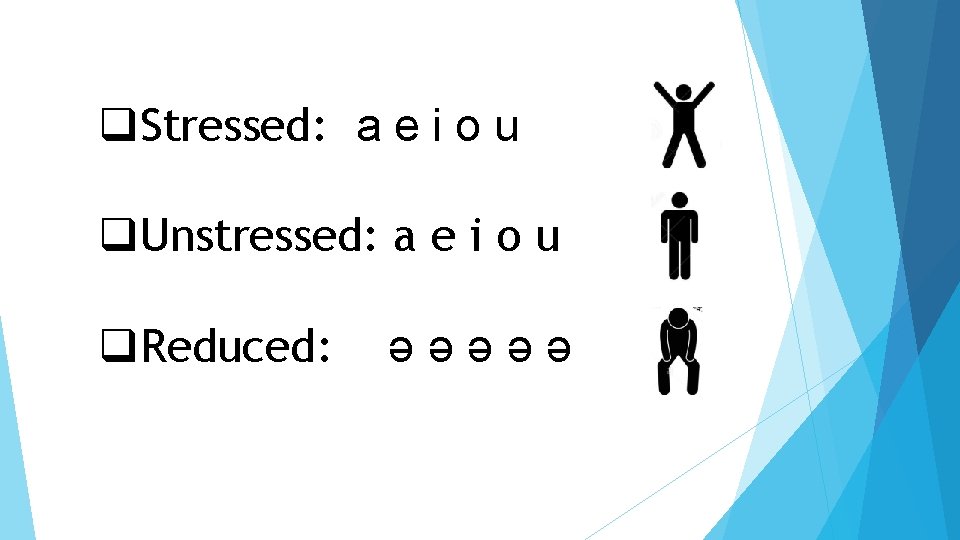
q. Stressed: a e i o u q. Unstressed: a e i o u q. Reduced: əəəəə
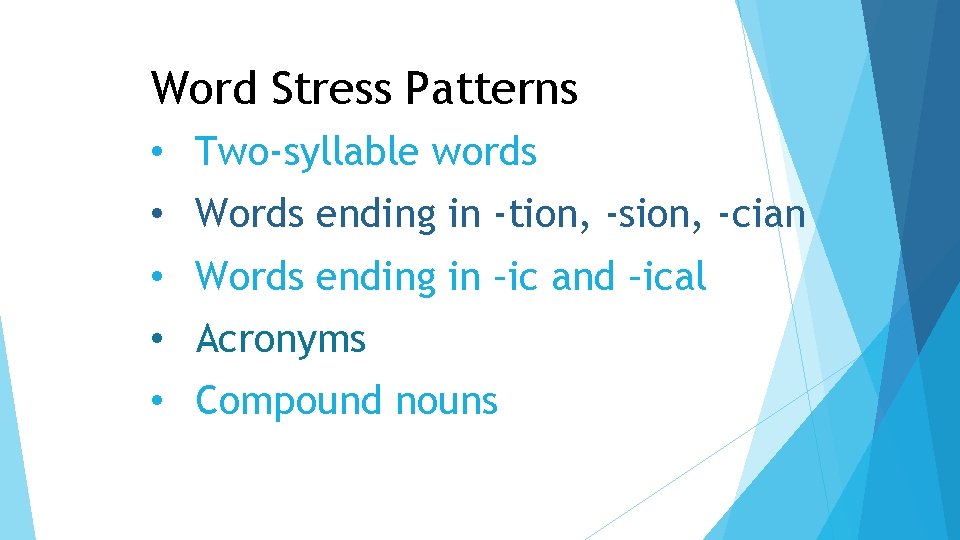
Word Stress Patterns • Two-syllable words • Words ending in -tion, -sion, -cian • Words ending in –ic and –ical • Acronyms • Compound nouns
For Real? ?
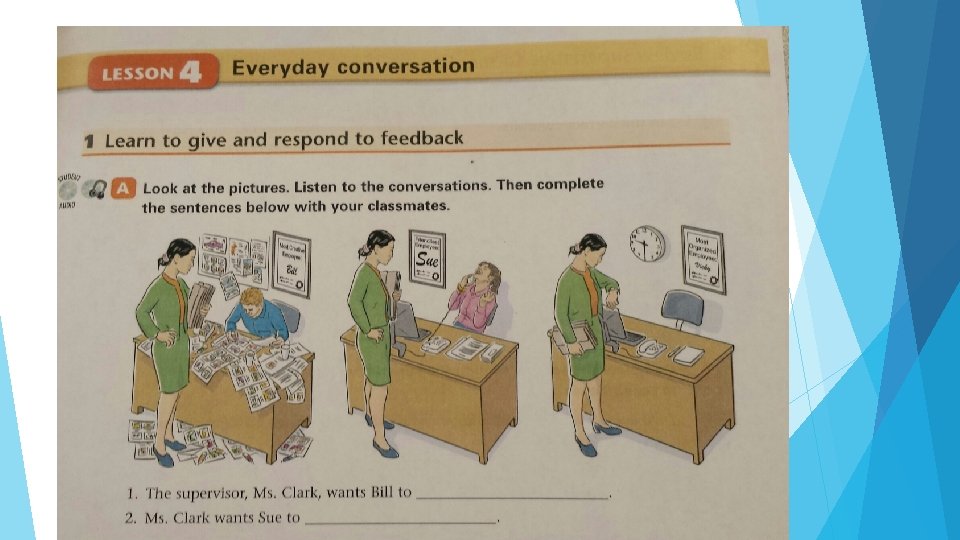
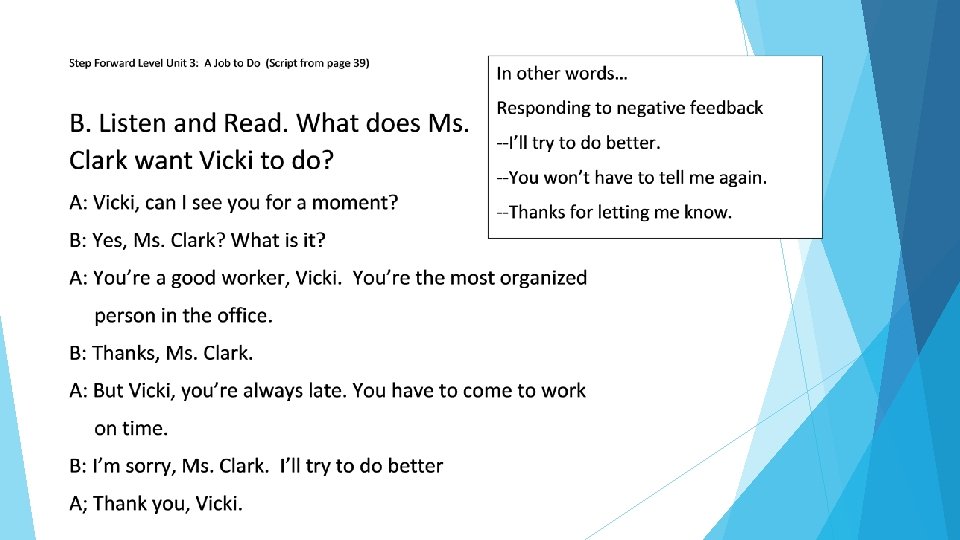
Application Oxford University Press’ Step Forward
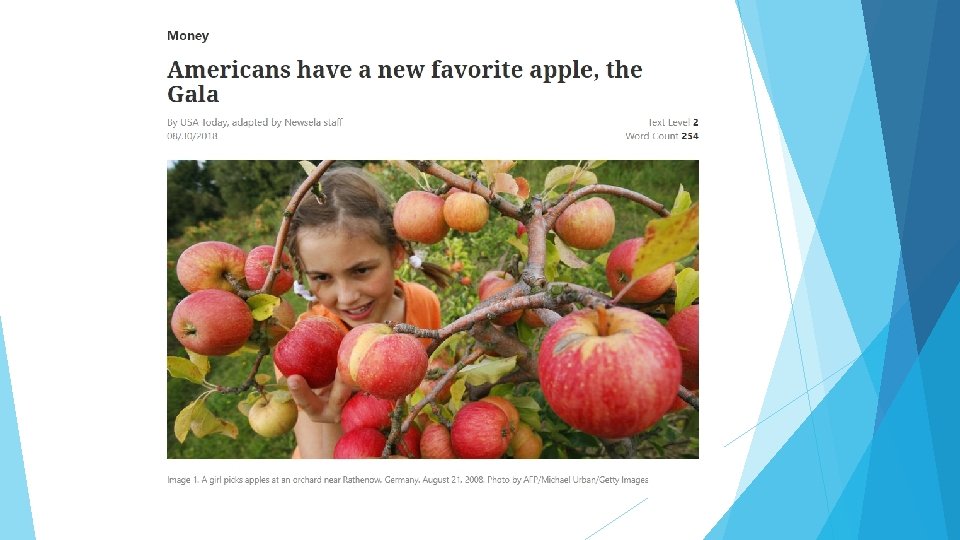
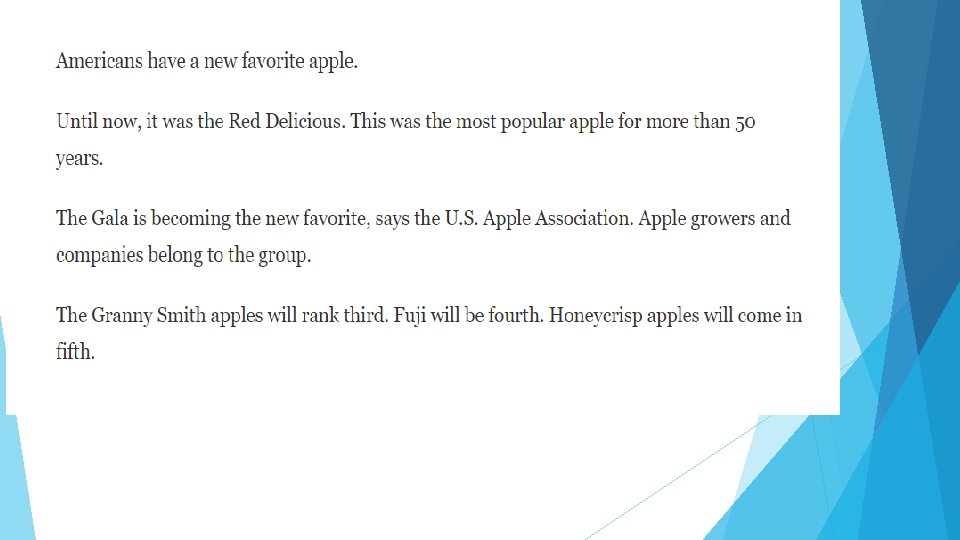
Application: Newsela. com
References Edwards, H. T. (2003). Applied phonetics: The sounds of American English (3 rd ed. ). Thomson Delmar Learning. Fromkin, V. , Rodman, R. , & Hyams, N. (2006). An introduction to language (9 th ed. ). Thomson: Boston, MA. Hudson, J. (2010) Pronunciation Studio. Retrieved from www. anenglishaccent. com/e-book. html Images (2013) Retrieved from http: //iolp. anadolu. edu. tr/dersler/3527/Unit 08/task 3_3. htm I. S. P. Nation & Newton, J. (2011). Teaching ESL/EFL listening and speaking (9 th ed. ). Wadsworth: Boston, MA. Robertson, K. , Ford, K. (2008) Language Acquisition: An Overview Retrieved from http: //www. colorincolorado. org/article/26751/ Wood, D. (2010). Formulaic Language and Second Language Speech Fluency : Background, Evidence and Classroom Applications. London, GBR: Continuum International Publishing, 2010. Retrieved from http: //site. ebrary. com/lib/westerngovernors/Doc? id=10403769&ppg=191
WEBSITES FOR PRONUNCIATION http: //www. e-pron. com/ http: //www. englishclub. com/index. htm http: //www. teacherjoe. us/index. html https: //www. npr. org/programs/all-things- considered/ http: //www. manythings. org/pp/
Part III Improving Pronunciation and Expression through Reader’s Theater Activities
“ As students continue their repeated readings of the script, they are improving their reading skills and comprehension. They will also have the opportunity to practice speaking skills, such as pronunciation, inflection, expression, and varied volume. --Kristina Robertson, “Reader’s Theater: Oral Language Enrichment and Literacy Development for Ells” ”
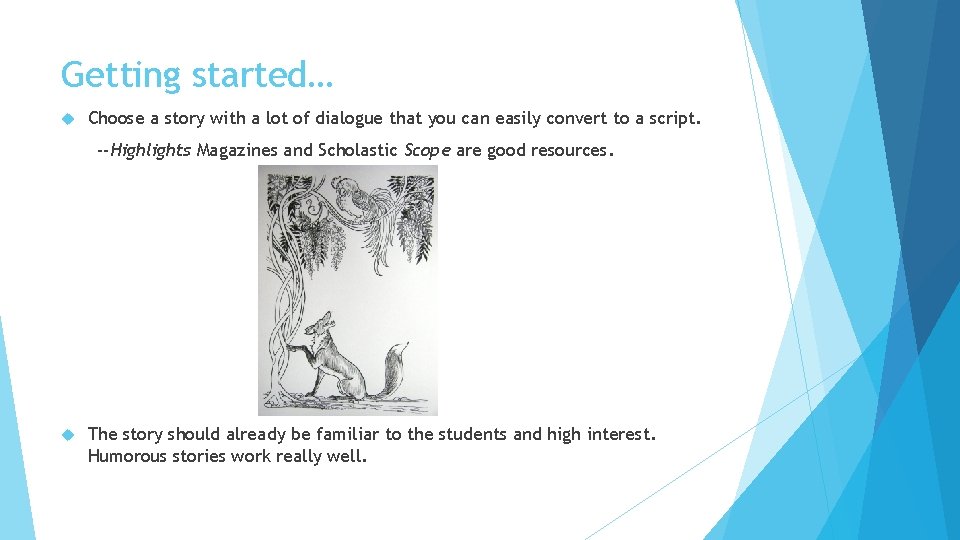
Getting started… Choose a story with a lot of dialogue that you can easily convert to a script. --Highlights Magazines and Scholastic Scope are good resources. The story should already be familiar to the students and high interest. Humorous stories work really well.
Some helpful hints… This activity can be differentiated -- Use a section of a story for lower level students or for a shorter activity. -- Convert a whole story for higher level students. Choose an area of pronunciation you’d like the students to focus on. This could be individualized or done as a whole class. --For example, -ed endings, sound reductions, word stress, or liaisons
Let’s give it a try.
The Rooster and the Fox, adapted from Highlights Magazine A play based on a fable by Aesop Narrator 1 : One evening Rooster flew up into a tree to sleep. He fluffed his feathers and flapped his wings three times. But just before he tucked his head under his wing, Rooster spotted a flash of red. It was moving behind the barn. He looked again and saw Fox standing beneath the tree. Fox: “Good evening, Rooster, have you heard the good news? ” Narrator 1: Rooster was afraid of Fox, but he tried not to show it. Rooster: “News? ”
Narrator 1: He asked calmly. Rooster: “What news? ” Fox “Why, all the animals have agreed to love one another, “ Rooster: “Oh, really? ” Narrator 2: Said Rooster, trying to sound pleasant. Fox “That’s right. From now on, we are all going to be friends. No more fighting, no more need to be afraid. We can all live together happily. Isn’t that wonderful? ” Rooster: “Hmmm. That is great news, Fox. ”