The Parts of Speech Warriner John E Mary
- Slides: 19
The Parts of Speech Warriner, John E. , Mary E. Whitten and Francis Griffith. Warriner’s English Grammar and Composition Third Course. New York: Harcourt Brace Jovanovich, 1977. Print.
The Preposition
• Certain words function in a sentence as relaters. • That is, they relate nouns and pronouns to other nouns and pronouns, to verbs, or to modifiers. • These words are called prepositions.
Definition A preposition is a word that shows the relationship of a noun or pronoun to some other word in a sentence.
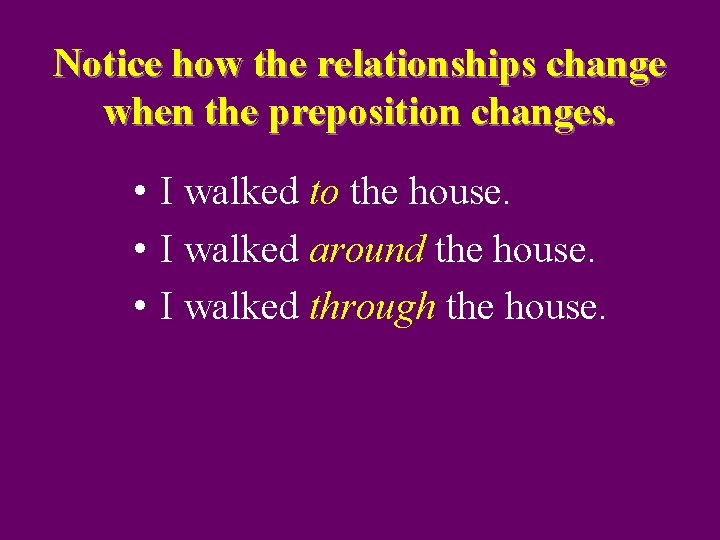
Notice how the relationships change when the preposition changes. • I walked to the house. • I walked around the house. • I walked through the house.
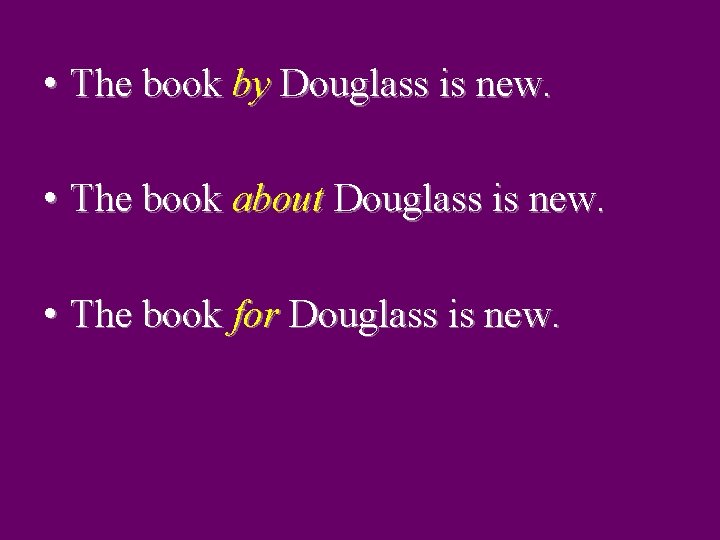
• The book by Douglass is new. • The book about Douglass is new. • The book for Douglass is new.
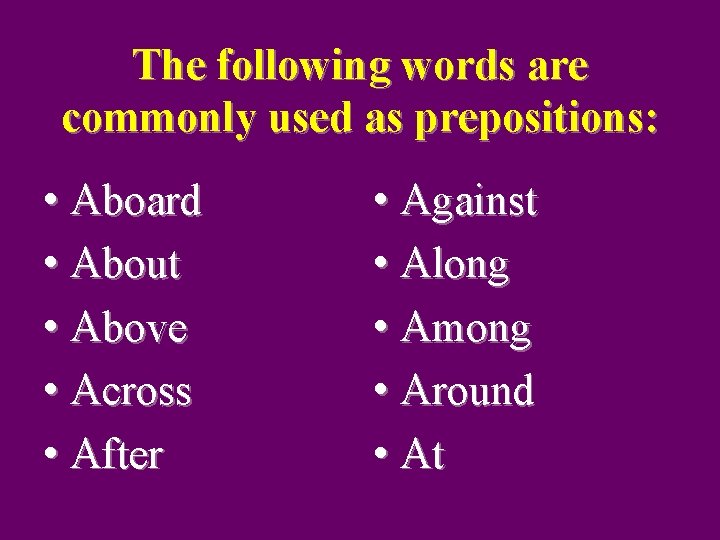
The following words are commonly used as prepositions: • Aboard • About • Above • Across • After • Against • Along • Among • Around • At
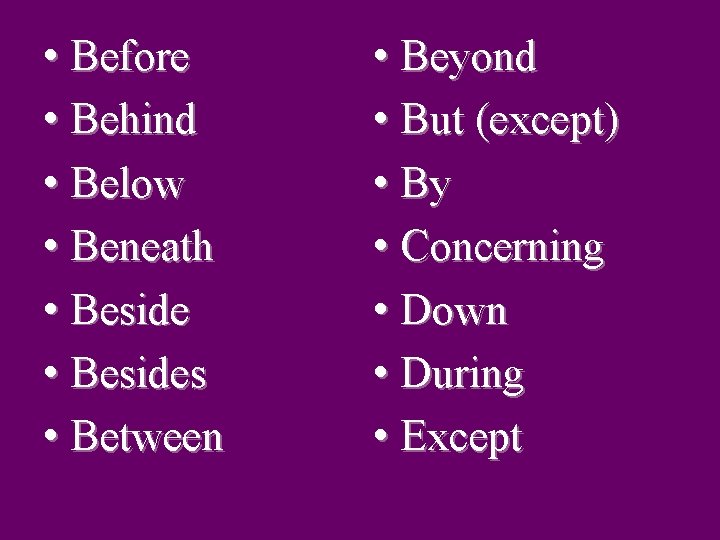
• Before • Behind • Below • Beneath • Besides • Between • Beyond • But (except) • By • Concerning • Down • During • Except
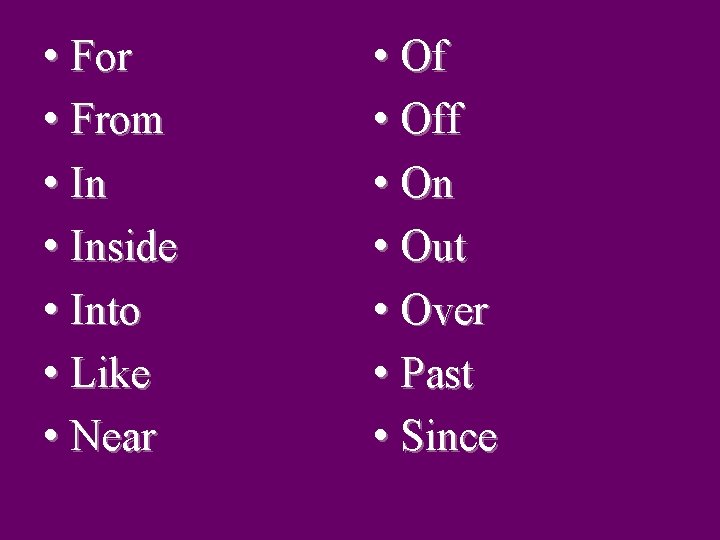
• For • From • Inside • Into • Like • Near • Off • On • Out • Over • Past • Since
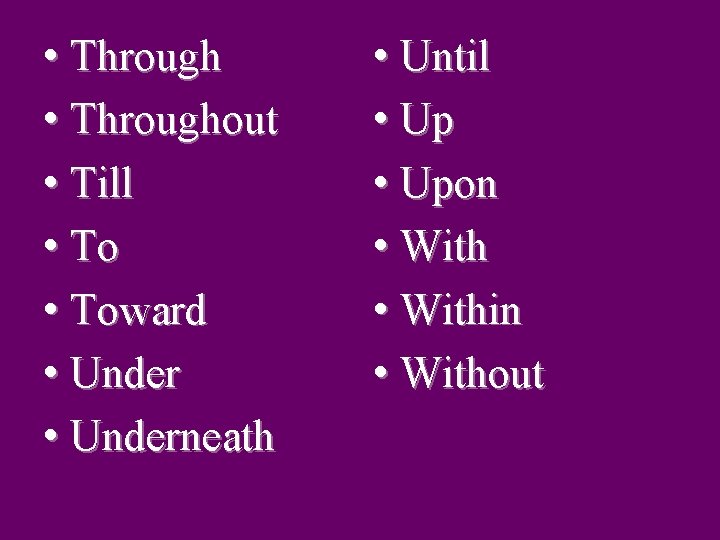
• Throughout • Till • Toward • Underneath • Until • Upon • Within • Without
• Many words in this long list can also be adverbs. • To distinguish between adverbs and prepositions, ask yourself whether the word relates a following noun or pronoun to a word that precedes.
Compare the following: • Look around. [adverb] • Look around the corner. [preposition]
• There also compound prepositions, having more than one word. • Here are some that are frequently used:
• According to • As of • Aside from • Because of • By means of • In addition to • In front of • In place of • In spite of • Instead of • On account of • Out of • Owing to • Prior to
• The preposition and the noun or pronoun that follows combine to form a prepositional phrase. • Add prepositions to the following sentences to form prepositional phrases:
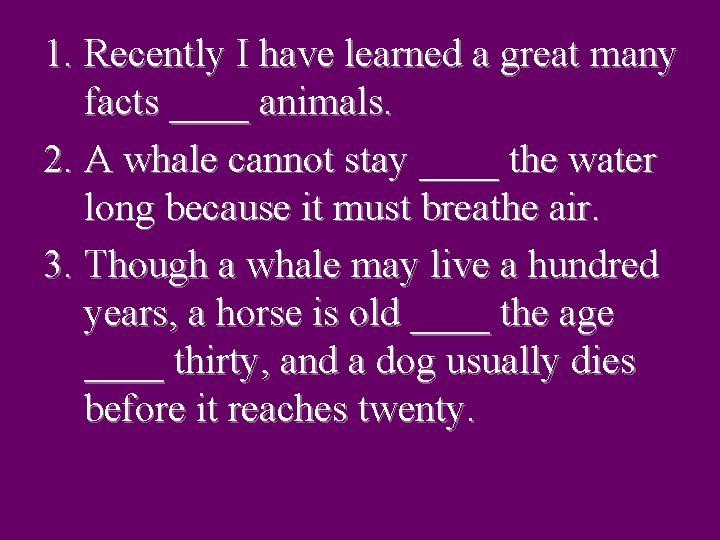
1. Recently I have learned a great many facts ____ animals. 2. A whale cannot stay ____ the water long because it must breathe air. 3. Though a whale may live a hundred years, a horse is old ____ the age ____ thirty, and a dog usually dies before it reaches twenty.
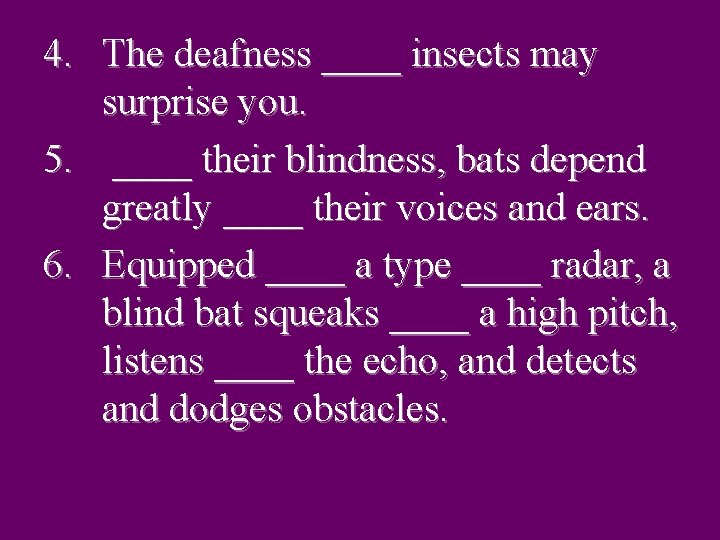
4. The deafness ____ insects may surprise you. 5. ____ their blindness, bats depend greatly ____ their voices and ears. 6. Equipped ____ a type ____ radar, a blind bat squeaks ____ a high pitch, listens ____ the echo, and detects and dodges obstacles.
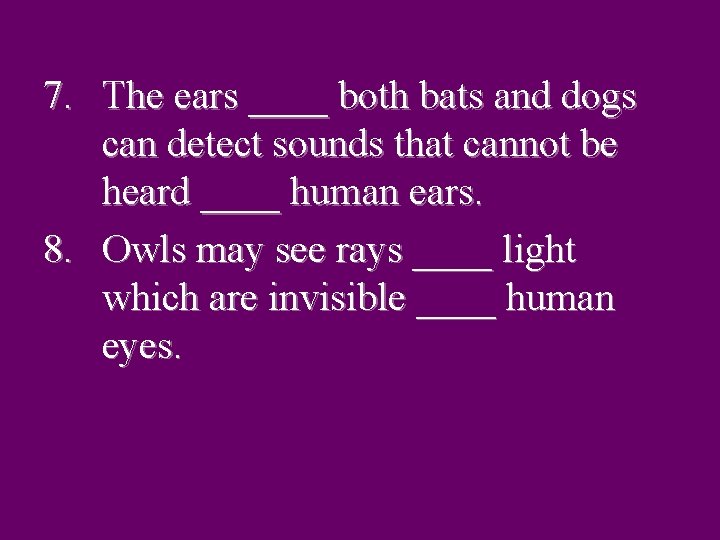
7. The ears ____ both bats and dogs can detect sounds that cannot be heard ____ human ears. 8. Owls may see rays ____ light which are invisible ____ human eyes.
9. It is, ____ course, a tragedy when a person loses an arm or a leg ____ an automobile accident. 10. Yet, if ____ chance a starfish should lose arms, new arms would grow; if one type ____ flatworm should get its head chopped off, it would ____ time grow a new head.