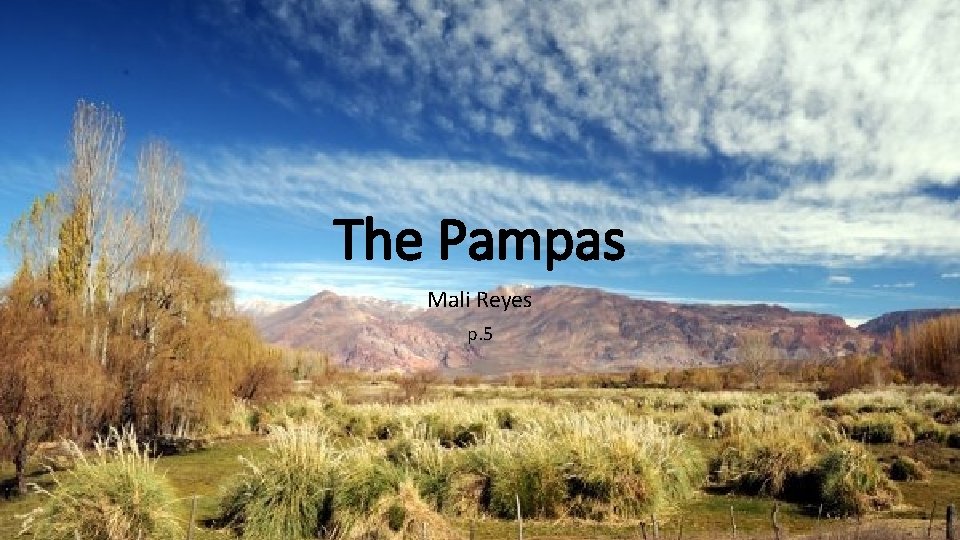
The Pampas Mali Reyes p 5 Location Located


- Slides: 20
The Pampas Mali Reyes p. 5
Location • Located in South America • Includes the Argentine provinces of Buenos Aires, La Pampa, Santa Fe, Entre Ríos and Córdoba • Also includes Uruguay
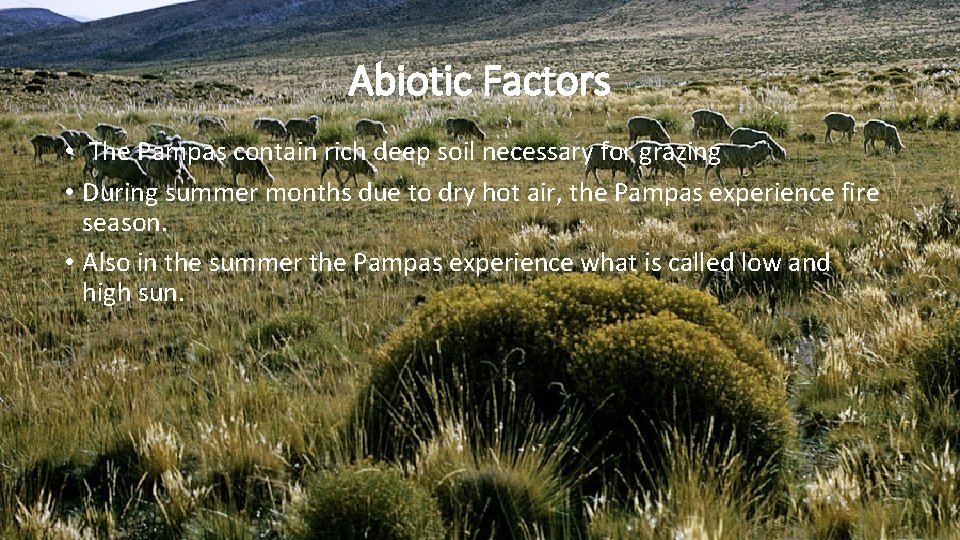
Abiotic Factors • The Pampas contain rich deep soil necessary for grazing • During summer months due to dry hot air, the Pampas experience fire season. • Also in the summer the Pampas experience what is called low and high sun.
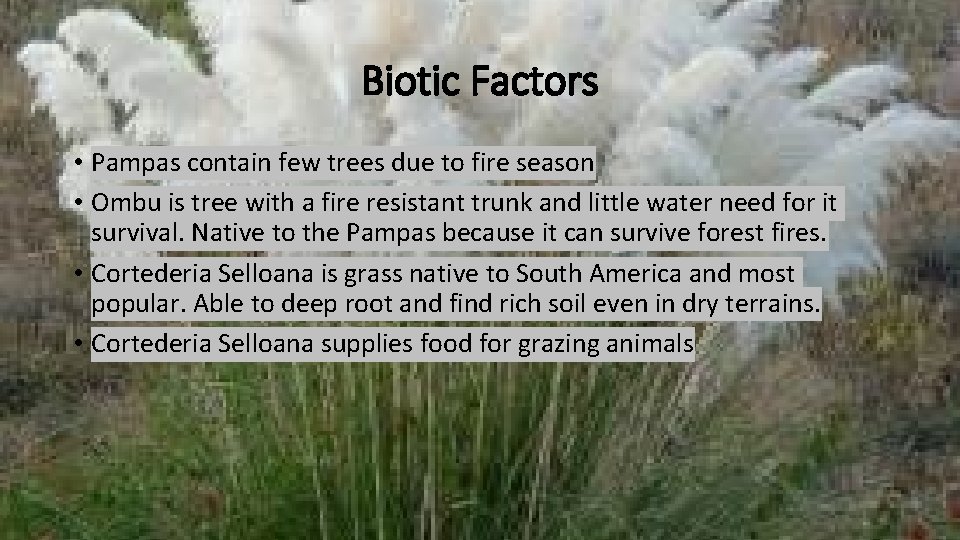
Biotic Factors • Pampas contain few trees due to fire season • Ombu is tree with a fire resistant trunk and little water need for it survival. Native to the Pampas because it can survive forest fires. • Cortederia Selloana is grass native to South America and most popular. Able to deep root and find rich soil even in dry terrains. • Cortederia Selloana supplies food for grazing animals
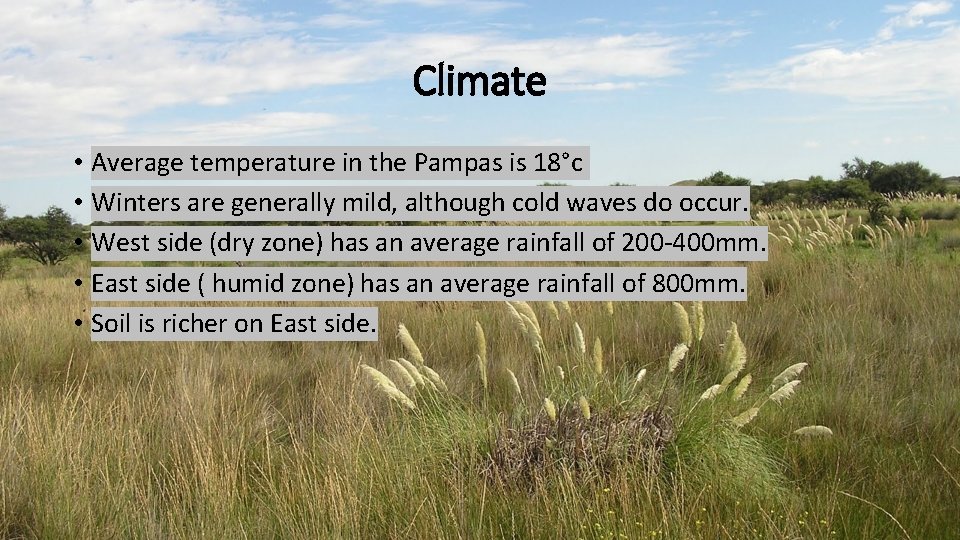
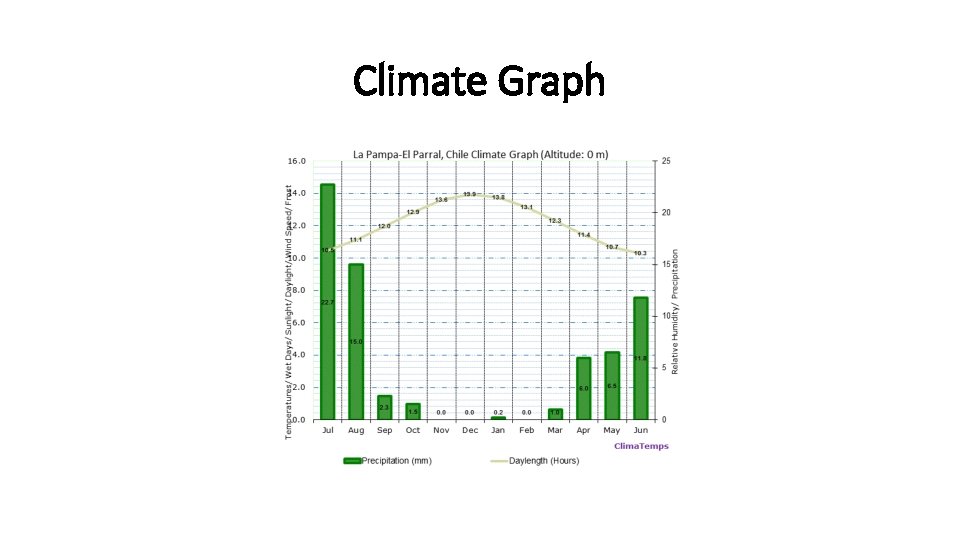
Climate • Average temperature in the Pampas is 18°c • Winters are generally mild, although cold waves do occur. • West side (dry zone) has an average rainfall of 200 -400 mm. • East side ( humid zone) has an average rainfall of 800 mm. • Soil is richer on East side.
Climate Graph
NPP • Annual above-ground net primary productivity (ANPP) of 78 g/m 2/yr was estimated from the sum of the increase in above-ground biomass, dead matter, and litter.
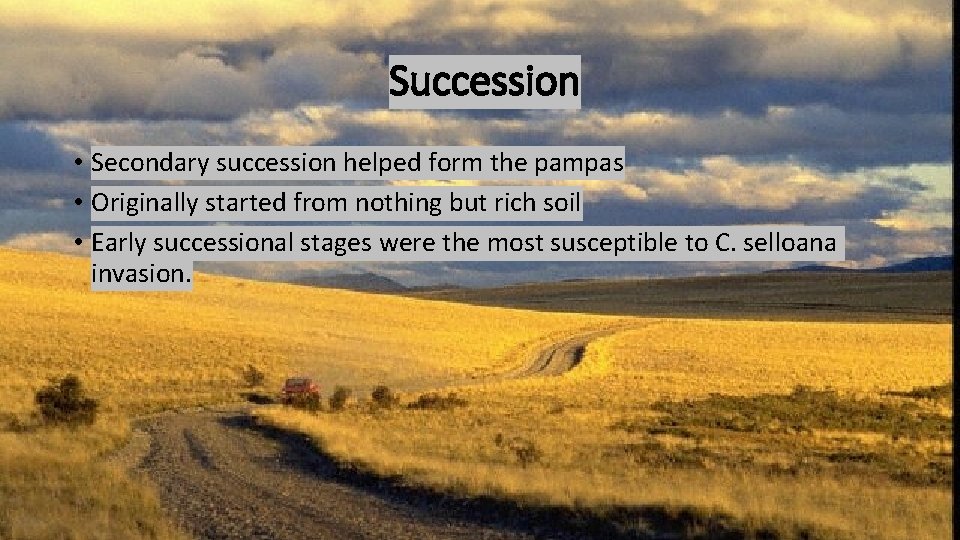
Succession • Secondary succession helped form the pampas • Originally started from nothing but rich soil • Early successional stages were the most susceptible to C. selloana invasion.
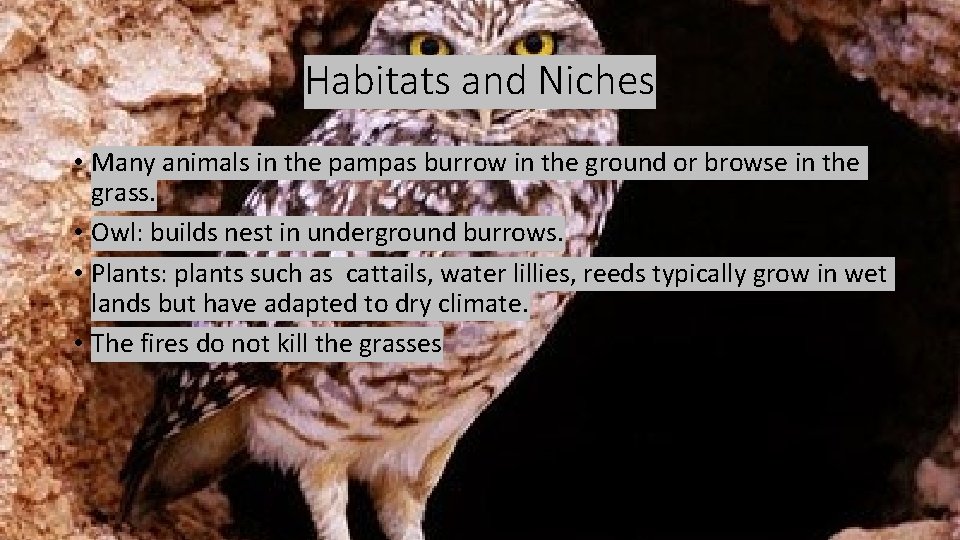
Habitats and Niches • Many animals in the pampas burrow in the ground or browse in the grass. • Owl: builds nest in underground burrows. • Plants: plants such as cattails, water lillies, reeds typically grow in wet lands but have adapted to dry climate. • The fires do not kill the grasses
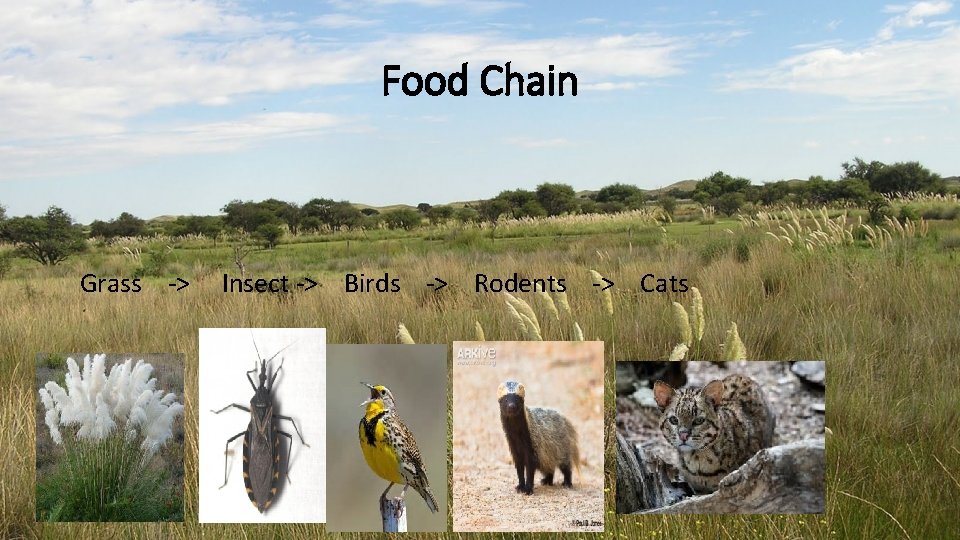
Food Chain Grass -> Insect -> Birds -> Rodents -> Cats
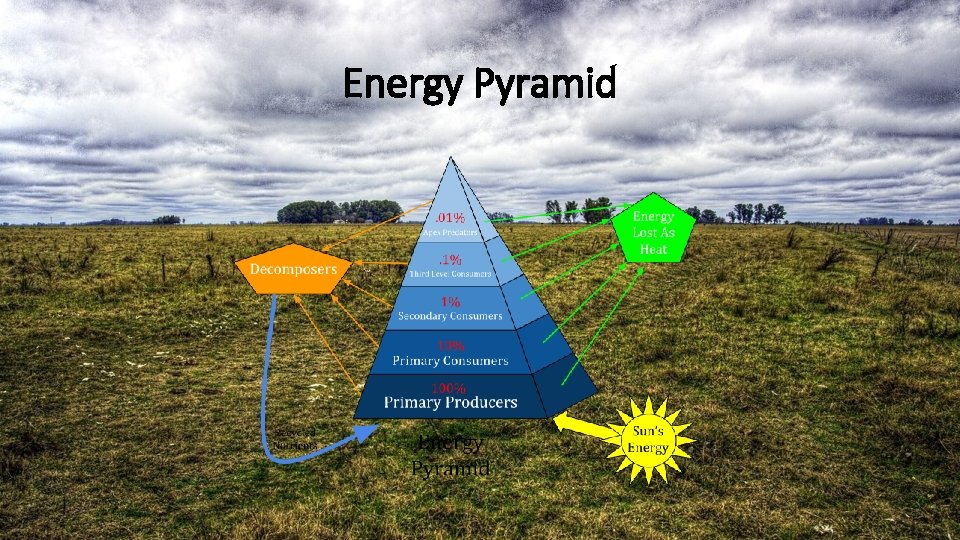
Energy Pyramid
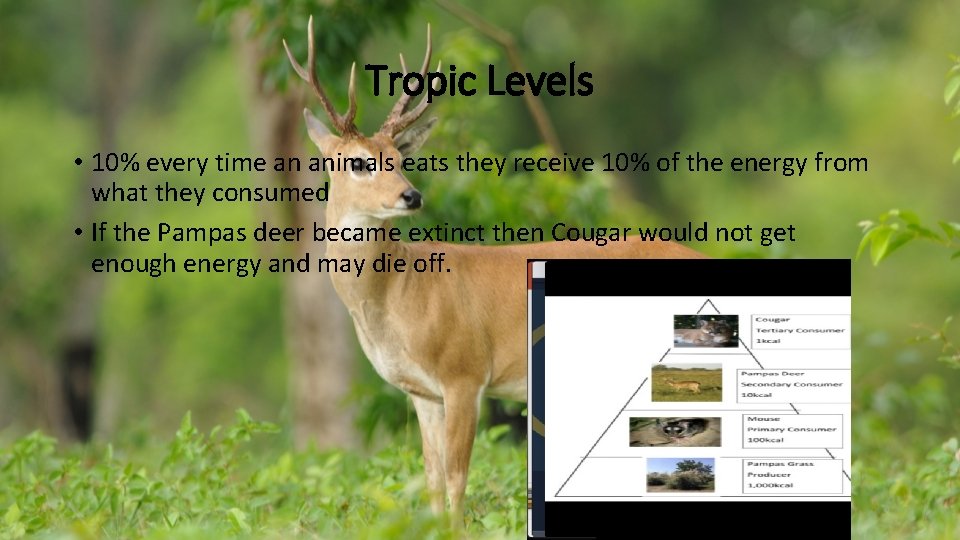
Tropic Levels • 10% every time an animals eats they receive 10% of the energy from what they consumed • If the Pampas deer became extinct then Cougar would not get enough energy and may die off.
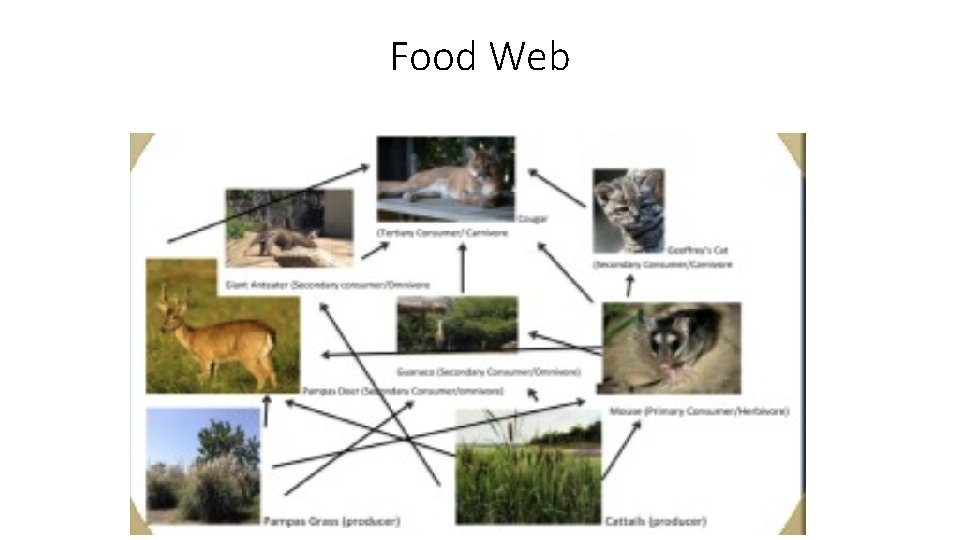
Food Web
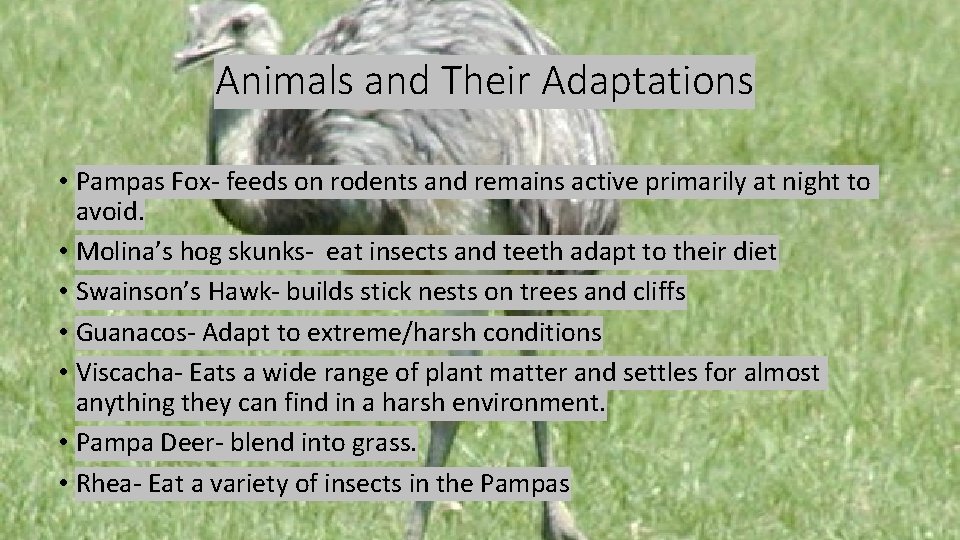
Animals and Their Adaptations • Pampas Fox- feeds on rodents and remains active primarily at night to avoid. • Molina’s hog skunks- eat insects and teeth adapt to their diet • Swainson’s Hawk- builds stick nests on trees and cliffs • Guanacos- Adapt to extreme/harsh conditions • Viscacha- Eats a wide range of plant matter and settles for almost anything they can find in a harsh environment. • Pampa Deer- blend into grass. • Rhea- Eat a variety of insects in the Pampas
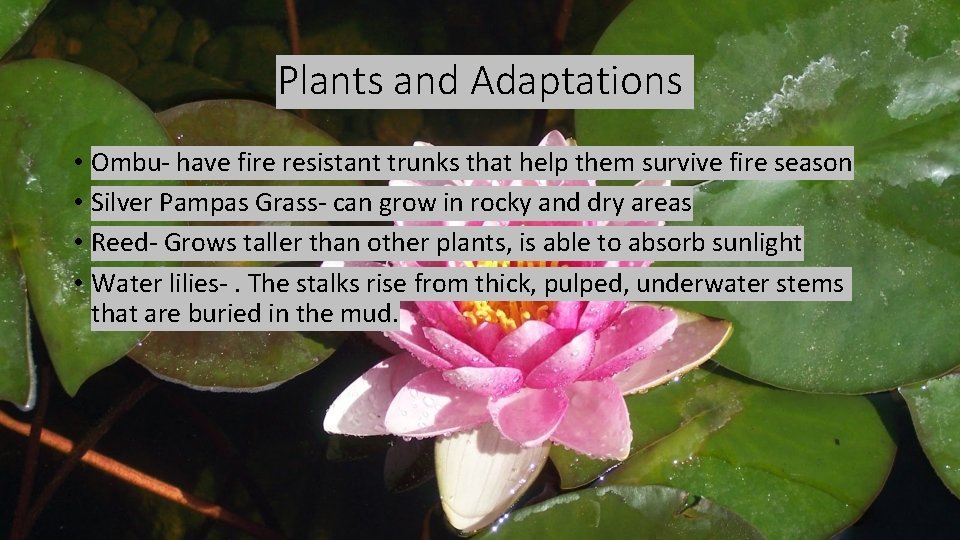
Plants and Adaptations • Ombu- have fire resistant trunks that help them survive fire season • Silver Pampas Grass- can grow in rocky and dry areas • Reed- Grows taller than other plants, is able to absorb sunlight • Water lilies-. The stalks rise from thick, pulped, underwater stems that are buried in the mud.
Human Impact • Cultivated by farmers due to rich soil. • Intensive farming has cause soil erosion • Soil is being depleted of nutrients due to continuous farming. • Some pesticides used are toxic to wild life and even humans in the surrounding environment
Case study (bad) • In this study they characterized landbird assemblages in various agricultural landscapes (cropland, pastoral, and mixed landscapes) in the Pampas of central Argentina, surveying along transects to quantify species richness, composition, and abundance. • Results suggest that maintaining landscape heterogeneity throughout the Pampas (i. e. , mixed landscapes) is important for preserving species richness of birds. • Several threatened grassland specialists inhabiting the Pampas, such as Rhea americana and Asthenes hudsoni, are found exclusively in pastoral landscapes, so the long-term survival of these species will depend on the conservation of this
Case Study Cont. . • http: //www. bioone. org/doi/abs/10. 1525/cond. 2012. 120011
Case Study (good) • This study also revealed correlations between waterbird assemblages and nutrient cycling among lagoons. During the season that predators and omnivores used the lagoons, there were increased levels of phosphorus and nitrogen compared to the season in which insectivores dominated the species assemblages. These differences were attributed to the levels of these nutrients in the different diets represented as well as other factors such as temperature and residence time of the waterbird species. • http: //creoi. org/the-role-of-waterbird-communities-in-the-pampaslagoons-of-buenos-aires-argentina-a-study-of-their-structure-impactand-seasonality/
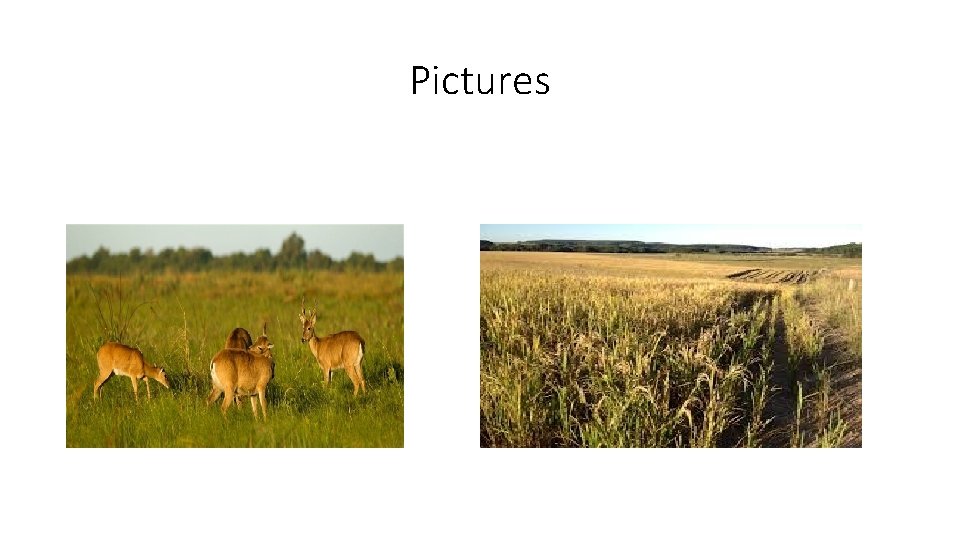
Pictures