The Nature of Procrastination A MetaAnalytic Review Counseling

- Slides: 27
The Nature of Procrastination: A Meta-Analytic Review Counseling the Procrastinator in Academic Settings Piers Steel www. procrastinus. com Piers Steel 1
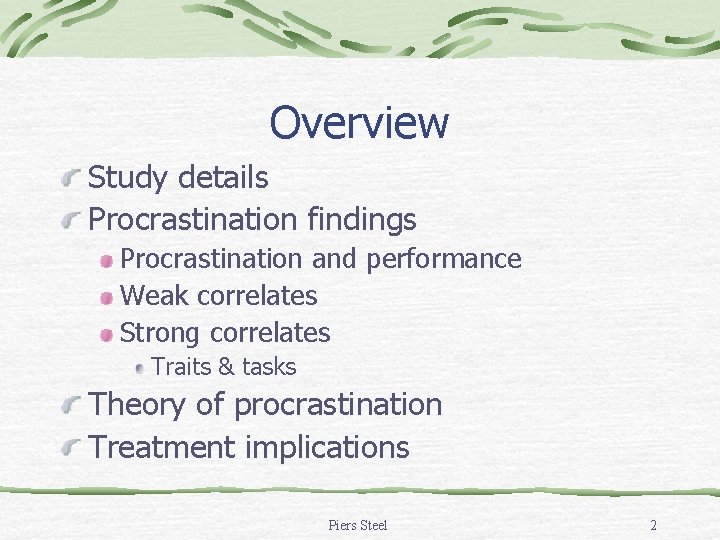
Overview Study details Procrastination findings Procrastination and performance Weak correlates Strong correlates Traits & tasks Theory of procrastination Treatment implications Piers Steel 2
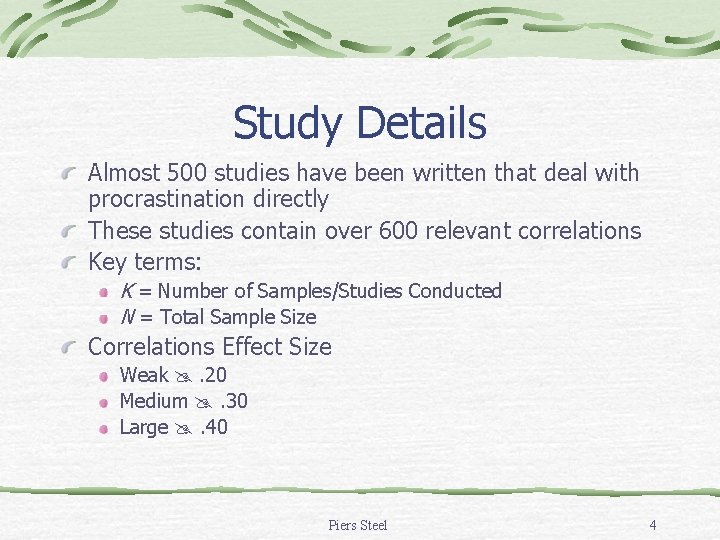
Study Details Almost 500 studies have been written that deal with procrastination directly These studies contain over 600 relevant correlations Key terms: K = Number of Samples/Studies Conducted N = Total Sample Size Correlations Effect Size Weak . 20 Medium . 30 Large . 40 Piers Steel 4
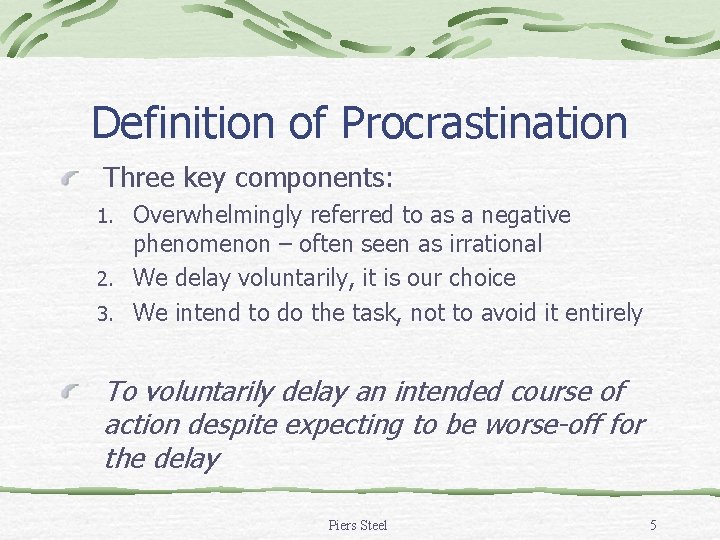
Definition of Procrastination Three key components: Overwhelmingly referred to as a negative phenomenon – often seen as irrational 2. We delay voluntarily, it is our choice 3. We intend to do the task, not to avoid it entirely 1. To voluntarily delay an intended course of action despite expecting to be worse-off for the delay Piers Steel 5
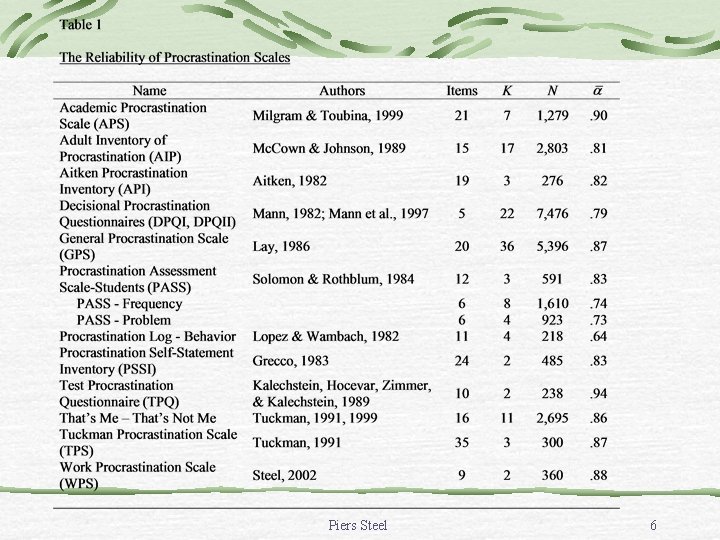
Piers Steel 6
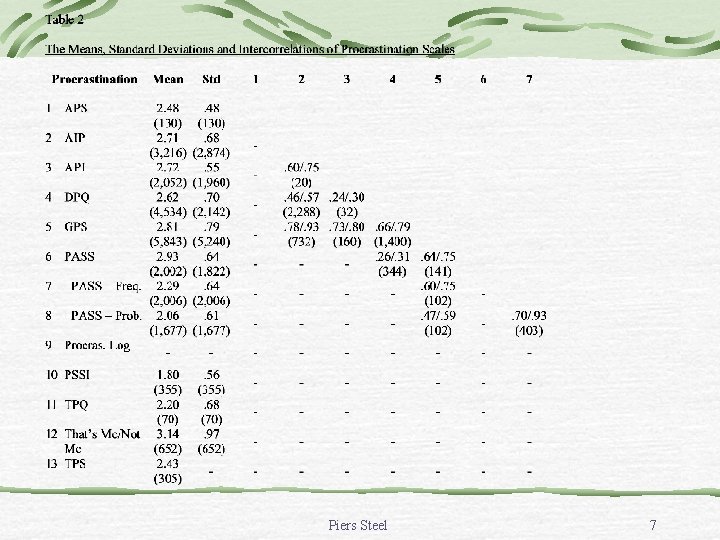
Piers Steel 7
Procrastination & Performance Over all, a weak (r=-. 19, K=34, N=6, 295) but consistently negative relationship with academic criteria (e. g. , GPA, Exam, etc. ) Procrastination is usually harmful, sometimes harmless, but never helpful More serious results for financial/career performance Correlations are negative and moderate to strong in strength Piers Steel 8
Weak Correlates These relationships have long been suspected of being major causes of procrastination Rebelliousness, Sensation-Seeking, Neuroticism, and Irrational beliefs Results here indicate, however, that they generally either are : Weak causes of procrastination Strong causes only for a small percentage of people Piers Steel 9
Rebelliousness Theory Externally imposed schedules are more likely experienced as aversive, and thus avoided. Also, by delaying work and starting it on one’s own schedule, autonomy is reasserted. Results (K=21, N=4, 350) Almost no support Correlations extremely weak Except for adolescents, few report it as a reason Piers Steel 10
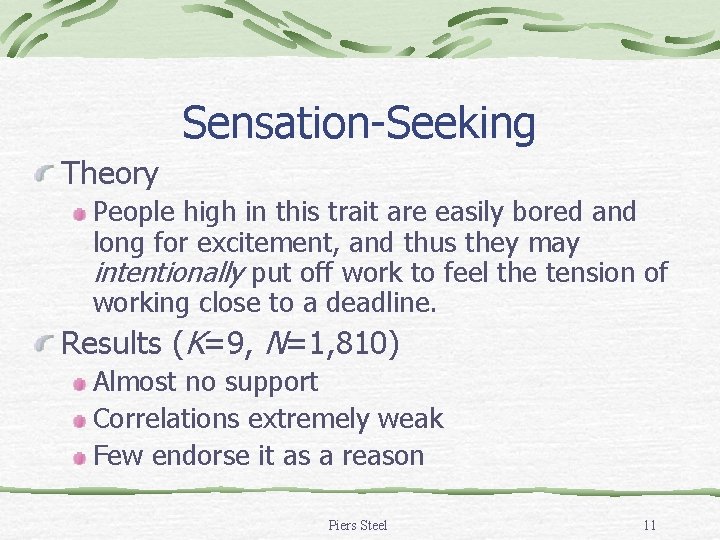
Sensation-Seeking Theory People high in this trait are easily bored and long for excitement, and thus they may intentionally put off work to feel the tension of working close to a deadline. Results (K=9, N=1, 810) Almost no support Correlations extremely weak Few endorse it as a reason Piers Steel 11
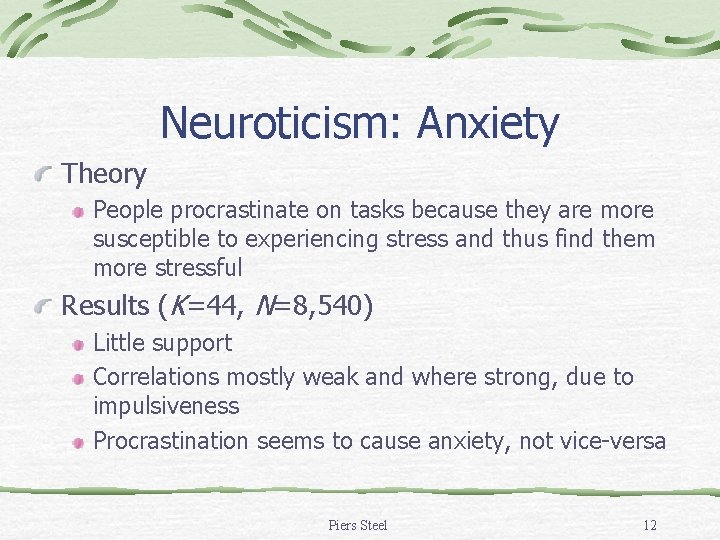
Neuroticism: Anxiety Theory People procrastinate on tasks because they are more susceptible to experiencing stress and thus find them more stressful Results (K=44, N=8, 540) Little support Correlations mostly weak and where strong, due to impulsiveness Procrastination seems to cause anxiety, not vice-versa Piers Steel 12
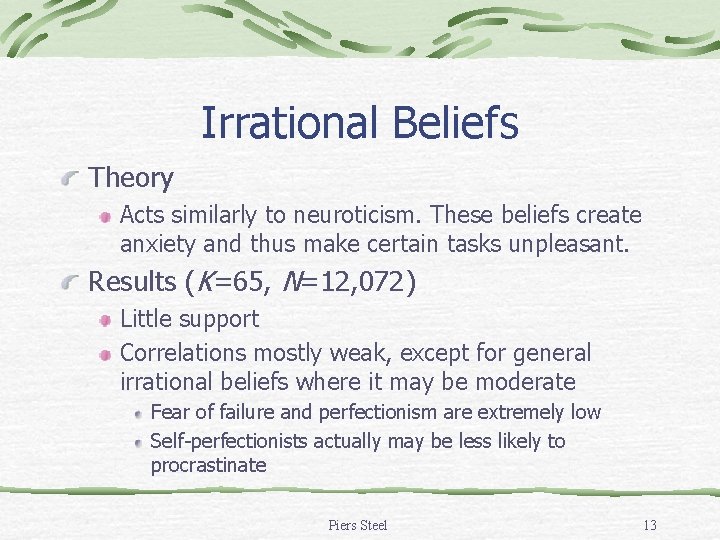
Irrational Beliefs Theory Acts similarly to neuroticism. These beliefs create anxiety and thus make certain tasks unpleasant. Results (K=65, N=12, 072) Little support Correlations mostly weak, except for general irrational beliefs where it may be moderate Fear of failure and perfectionism are extremely low Self-perfectionists actually may be less likely to procrastinate Piers Steel 13
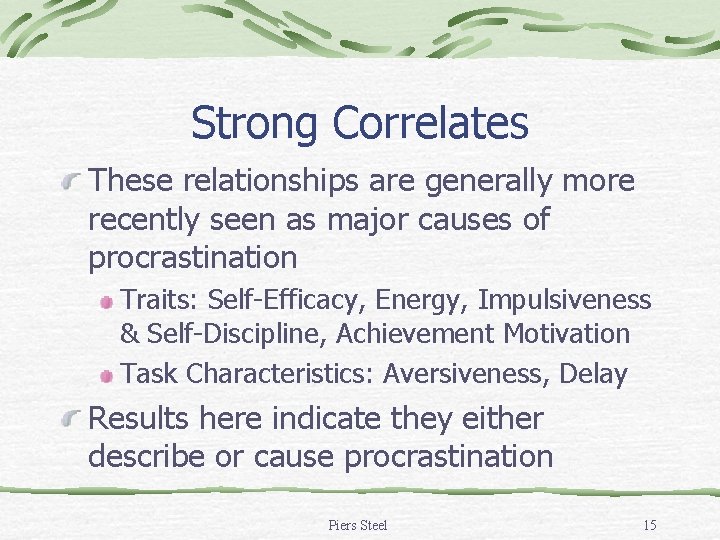
Strong Correlates These relationships are generally more recently seen as major causes of procrastination Traits: Self-Efficacy, Energy, Impulsiveness & Self-Discipline, Achievement Motivation Task Characteristics: Aversiveness, Delay Results here indicate they either describe or cause procrastination Piers Steel 15
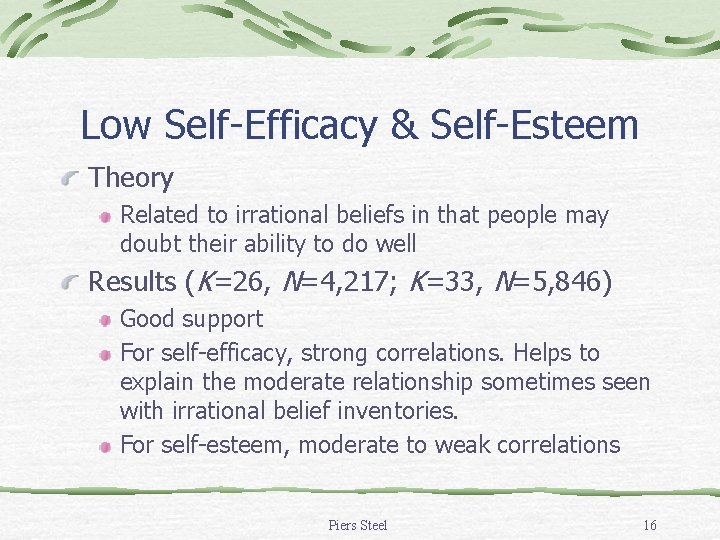
Low Self-Efficacy & Self-Esteem Theory Related to irrational beliefs in that people may doubt their ability to do well Results (K=26, N=4, 217; K=33, N=5, 846) Good support For self-efficacy, strong correlations. Helps to explain the moderate relationship sometimes seen with irrational belief inventories. For self-esteem, moderate to weak correlations Piers Steel 16
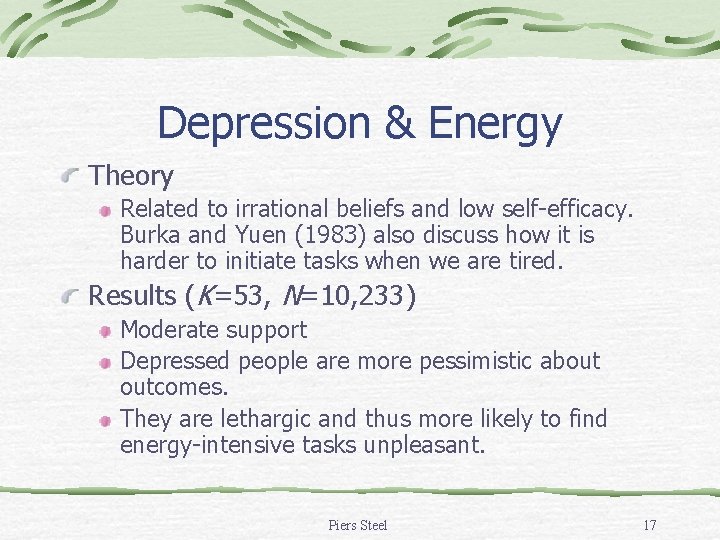
Depression & Energy Theory Related to irrational beliefs and low self-efficacy. Burka and Yuen (1983) also discuss how it is harder to initiate tasks when we are tired. Results (K=53, N=10, 233) Moderate support Depressed people are more pessimistic about outcomes. They are lethargic and thus more likely to find energy-intensive tasks unpleasant. Piers Steel 17
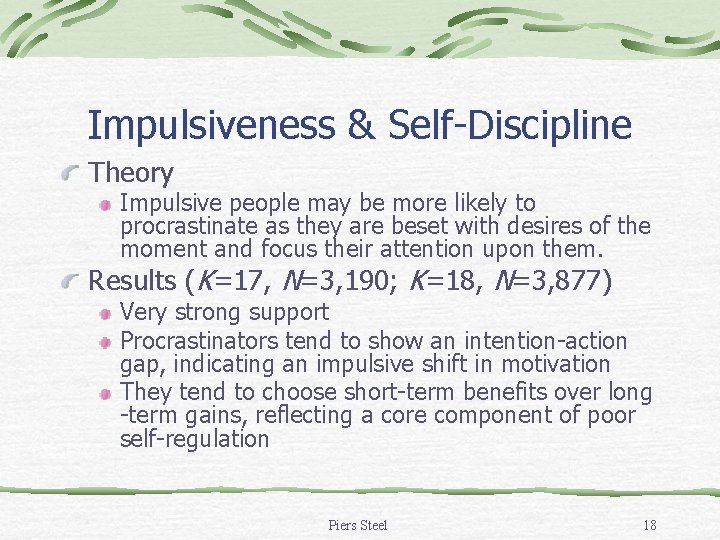
Impulsiveness & Self-Discipline Theory Impulsive people may be more likely to procrastinate as they are beset with desires of the moment and focus their attention upon them. Results (K=17, N=3, 190; K=18, N=3, 877) Very strong support Procrastinators tend to show an intention-action gap, indicating an impulsive shift in motivation They tend to choose short-term benefits over long -term gains, reflecting a core component of poor self-regulation Piers Steel 18
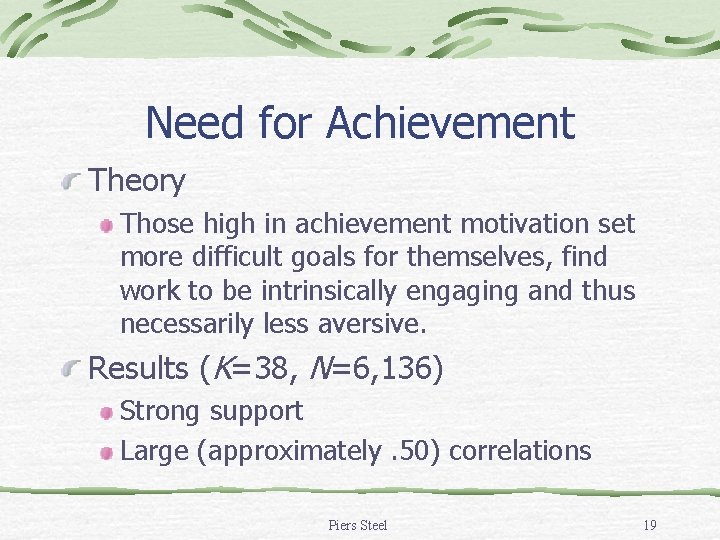
Need for Achievement Theory Those high in achievement motivation set more difficult goals for themselves, find work to be intrinsically engaging and thus necessarily less aversive. Results (K=38, N=6, 136) Strong support Large (approximately. 50) correlations Piers Steel 19
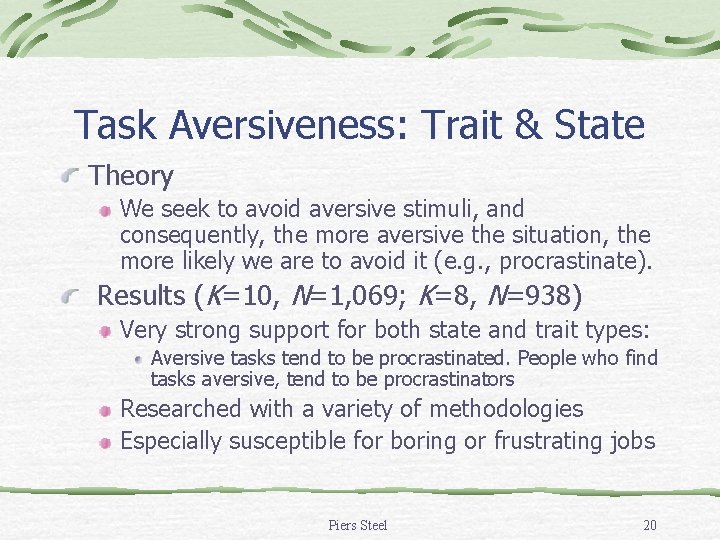
Task Aversiveness: Trait & State Theory We seek to avoid aversive stimuli, and consequently, the more aversive the situation, the more likely we are to avoid it (e. g. , procrastinate). Results (K=10, N=1, 069; K=8, N=938) Very strong support for both state and trait types: Aversive tasks tend to be procrastinated. People who find tasks aversive, tend to be procrastinators Researched with a variety of methodologies Especially susceptible for boring or frustrating jobs Piers Steel 20
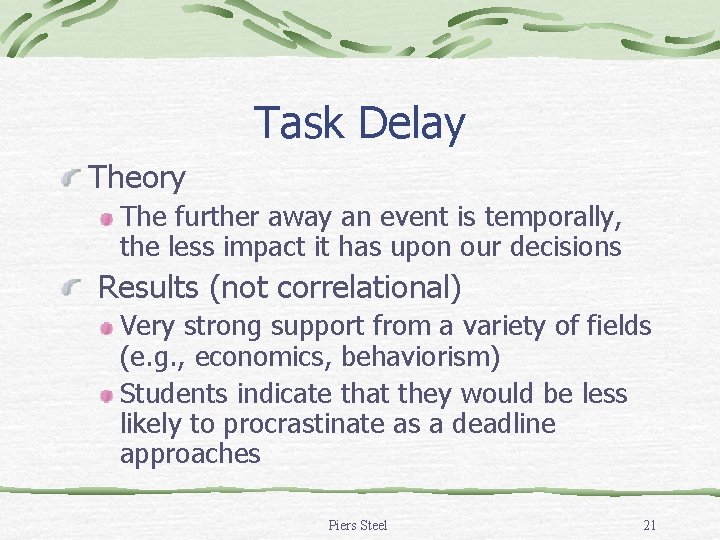
Task Delay Theory The further away an event is temporally, the less impact it has upon our decisions Results (not correlational) Very strong support from a variety of fields (e. g. , economics, behaviorism) Students indicate that they would be less likely to procrastinate as a deadline approaches Piers Steel 21
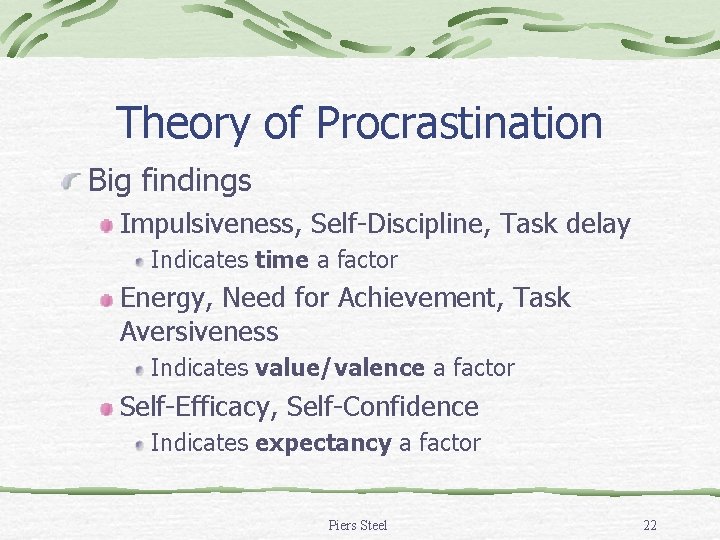
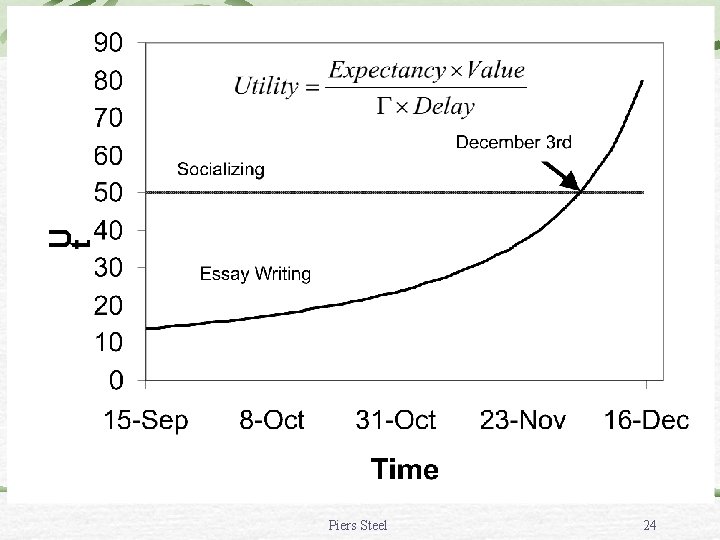
Theory of Procrastination Big findings Impulsiveness, Self-Discipline, Task delay Indicates time a factor Energy, Need for Achievement, Task Aversiveness Indicates value/valence a factor Self-Efficacy, Self-Confidence Indicates expectancy a factor Piers Steel 22
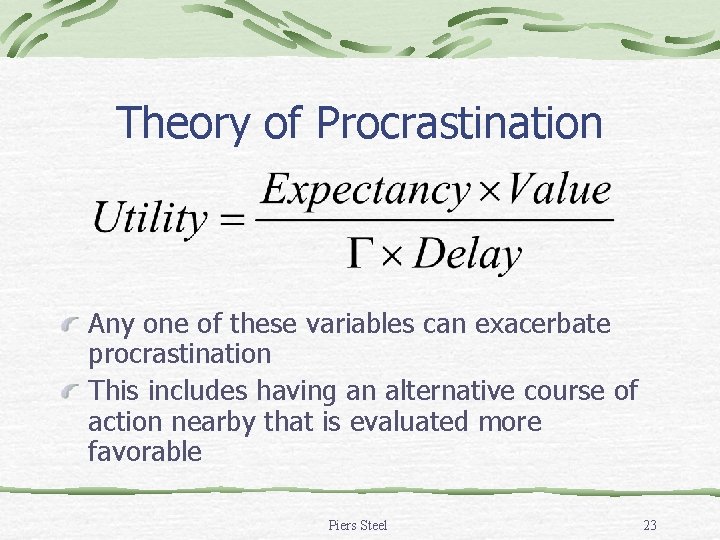
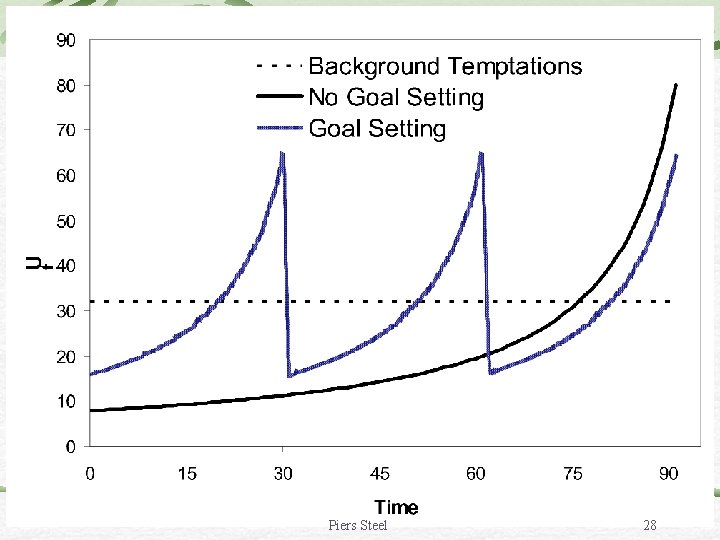
Theory of Procrastination Any one of these variables can exacerbate procrastination This includes having an alternative course of action nearby that is evaluated more favorable Piers Steel 23
Piers Steel 24
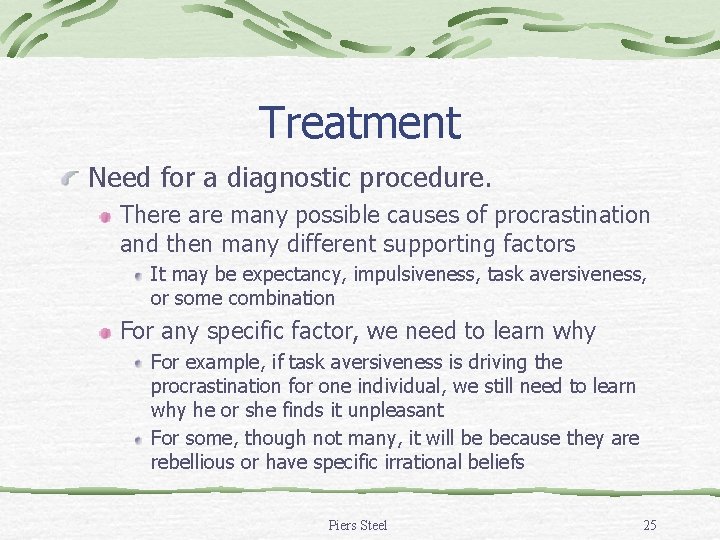
Treatment Need for a diagnostic procedure. There are many possible causes of procrastination and then many different supporting factors It may be expectancy, impulsiveness, task aversiveness, or some combination For any specific factor, we need to learn why For example, if task aversiveness is driving the procrastination for one individual, we still need to learn why he or she finds it unpleasant For some, though not many, it will be because they are rebellious or have specific irrational beliefs Piers Steel 25
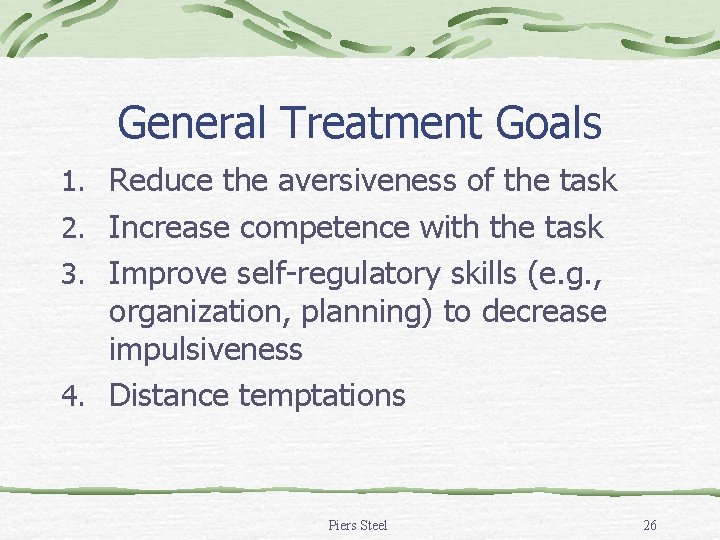
General Treatment Goals 1. Reduce the aversiveness of the task 2. Increase competence with the task 3. Improve self-regulatory skills (e. g. , organization, planning) to decrease impulsiveness 4. Distance temptations Piers Steel 26
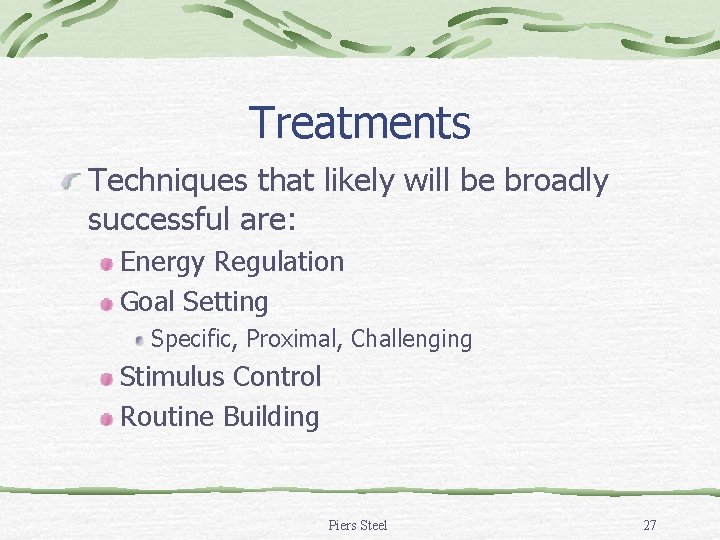
Treatments Techniques that likely will be broadly successful are: Energy Regulation Goal Setting Specific, Proximal, Challenging Stimulus Control Routine Building Piers Steel 27
Piers Steel 28
Final Thought: Procrastination Rising We have been formally measuring procrastination since 1978 It has been significantly rising over the last 25 years, as has debt, obesity and other impulse related issues The need for effective treatments has never been greater than now Piers Steel 29