The Integumentary System Stephanie Childs JeanPhilippe Dion Valancy




- Slides: 46
The Integumentary System Stephanie Childs Jean-Philippe Dion Valancy Miranda Genevieve Perreault-Murphy
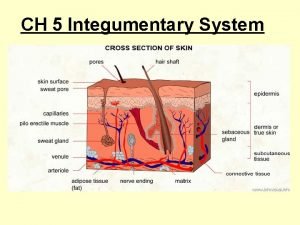
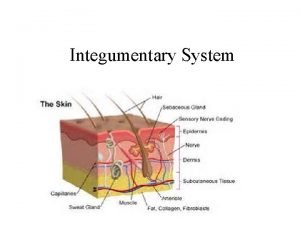
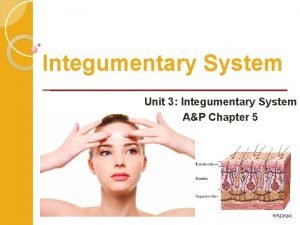
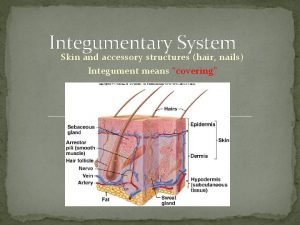
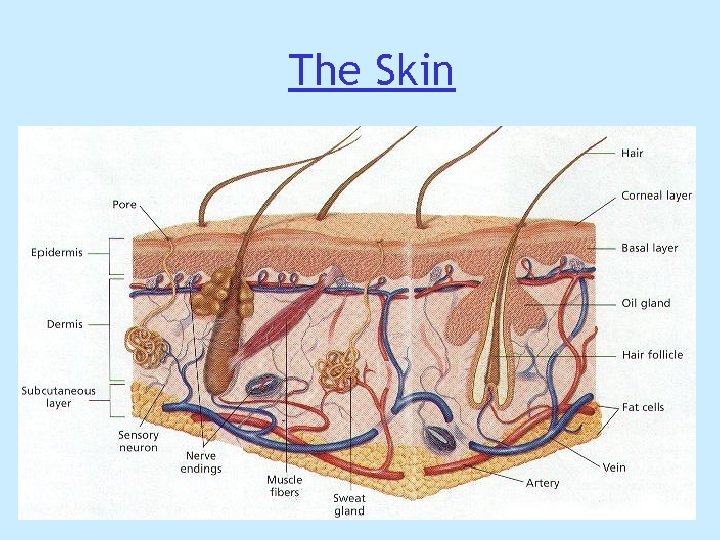
Anatomy and Physiology of the Skin Epidermis Dermis Hypodermis/Subcutaneous Layer
The Skin
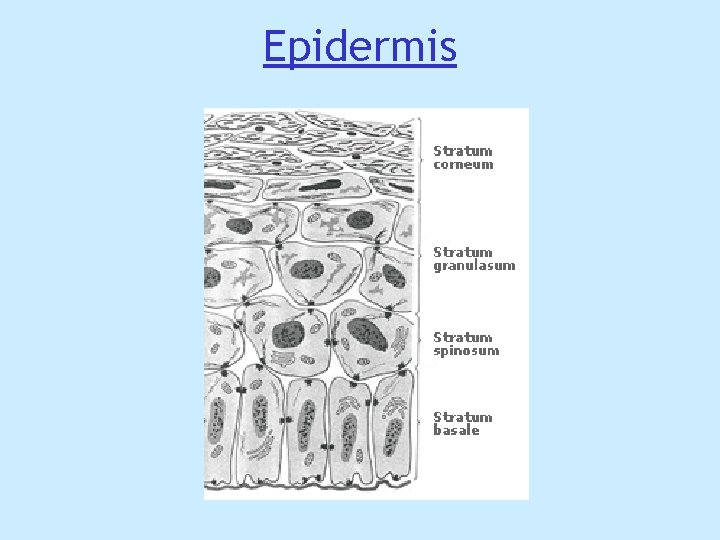
Epidermis Protects, senses, insulates, and regulates temperature • Stratum Corneum Consists of dead cells • Stratum Granulosum Stratified squamous • Stratum Spinosum Langerhans’ cells function in defense • Stratum Basale Columnar cells Merkel’s cells function in sensation Melanocytes produce melanin (skin shade)
Epidermis
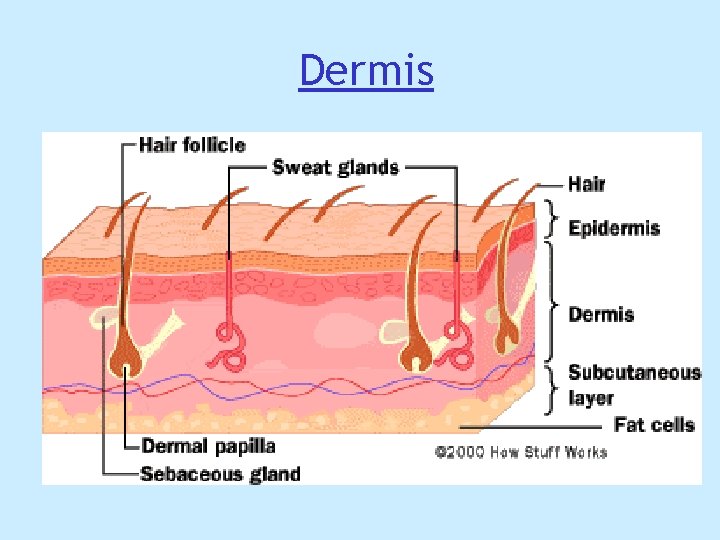
Dermis Provides nutrients, removes wastes, protects, senses • Collagen Retain water Connected by elastin fibres • Hair Follicles Insulate, protect and regulate temperature Held by erector pili muscles Oil and scent glands are located near the follicle • Sweat Glands Produce sweat • Blood Vessels Bring nutrients and O 2 to skin, and remove waste • Nerves Transmit sensory messages to brain
Dermis
Hypodermis/Subcutaneous Layer • Made mostly of fat and connective tissue • Insulates • Cushions • Connects skin tissue to surrounding tissues
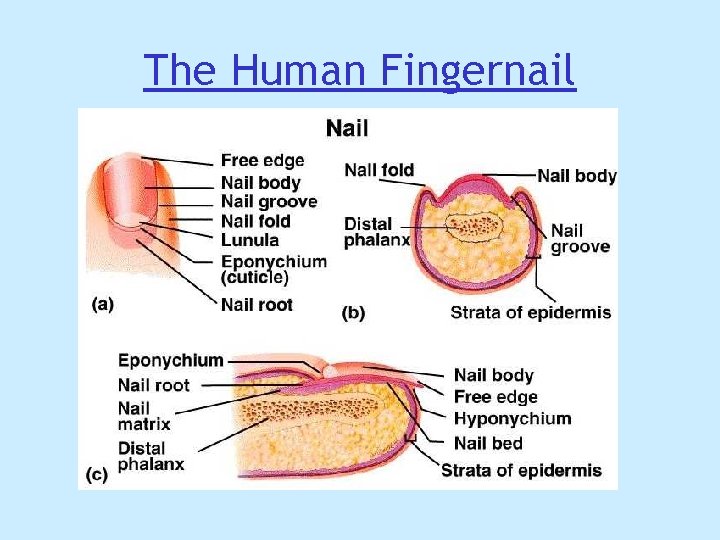
The Human Fingernail
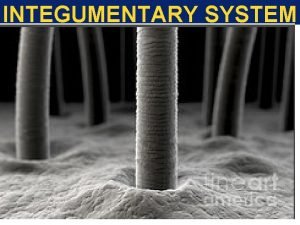
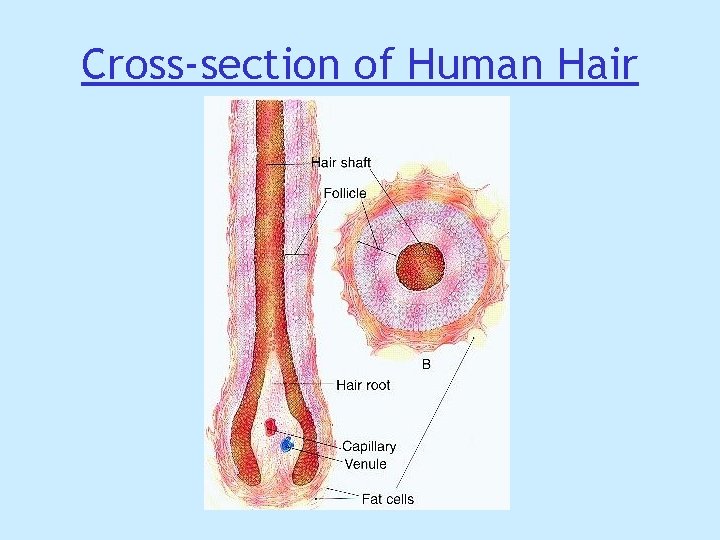
Cross-section of Human Hair
How the System Contributes to the Overall Well-Being of the Organism Protection Homeostasis Sensory Functions Secretion
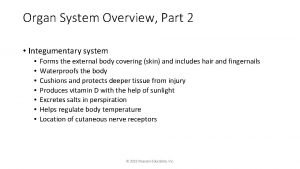
Protection: Provides a barrier against potentially harmful agents • Nails protect the tips of fingers and toes • The skin serves as a barrier • Melanocytes protect the skin by providing its colour
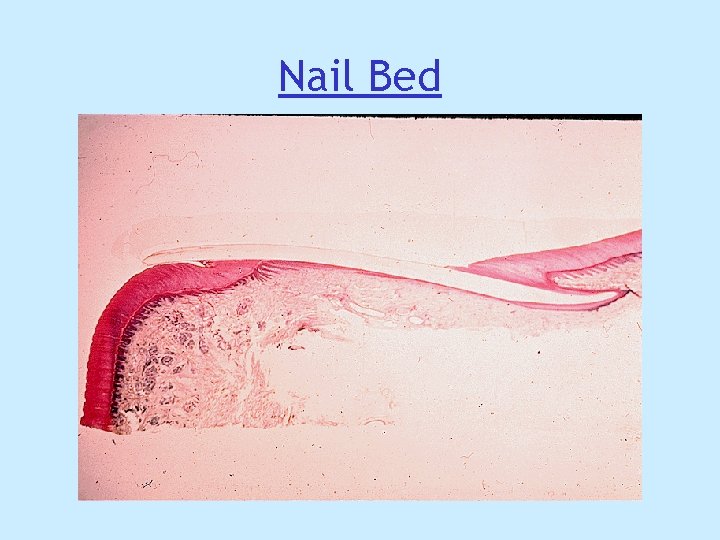
Nail Bed
Homeostasis: Preserving the Internal & External Environments • The skin and hair provide insulation • The skin cells synthesize melanin and carotenes, which give the skin its colour • The skin assists in the synthesis of vitamins • The skin serves as a selectively permeable membrane, allowing the passage of certain substances to the bloodstream
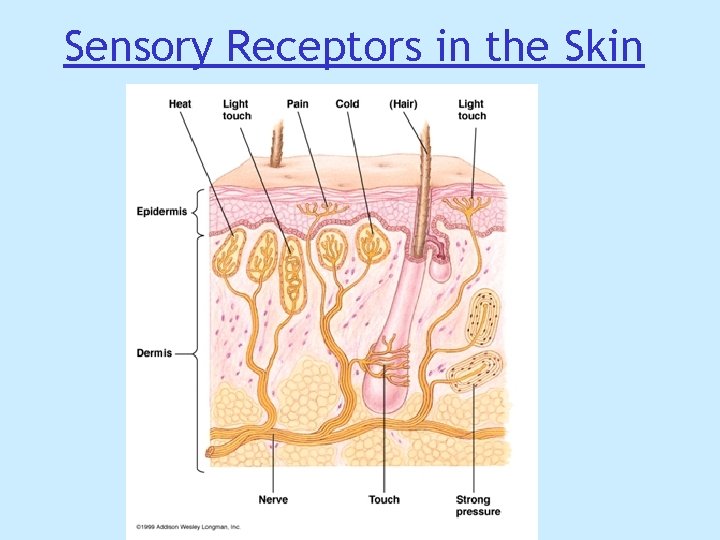
Sensory Functions: Provides information and responds to various stimuli • The skin houses many types of sensory receptors called cutaneous receptors • Include phasic receptors (hair follicle receptors and Meissner’s corpuscles) and tonic receptors (Ruffini endings and touch dome endings) • Pacinian corpuscles are sensitive to pressure
Sensory Receptors in the Skin
Secretion: Secretes Chemicals and Sweat • The skin protects the body by secreting chemicals on its surface • The skin’s p. H is acidic (3 to 5), which inhibits the growth of many microorganisms, due to oil and sweat glands • Sweat secretions also include the enzyme lysozyme, which digests bacterial cell walls
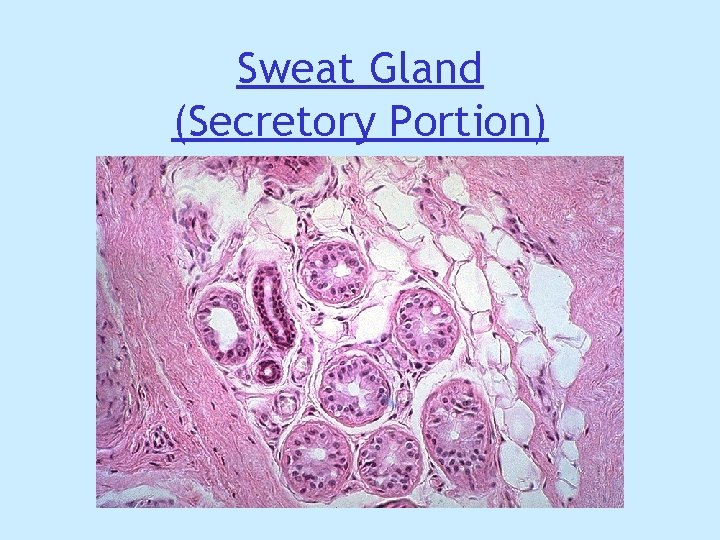
Sweat Gland (Secretory Portion)
Diseases Affecting the Integumentary System Skin Cancer Alopecia Areata Acne Eczema Psoriasis Rosacea
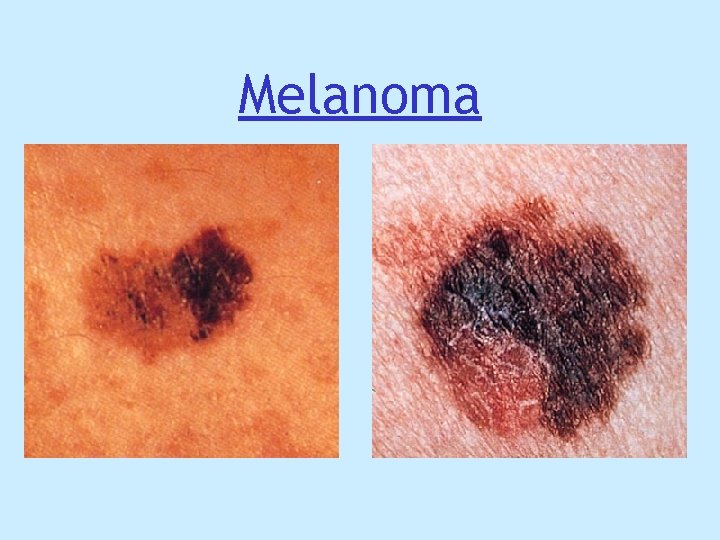
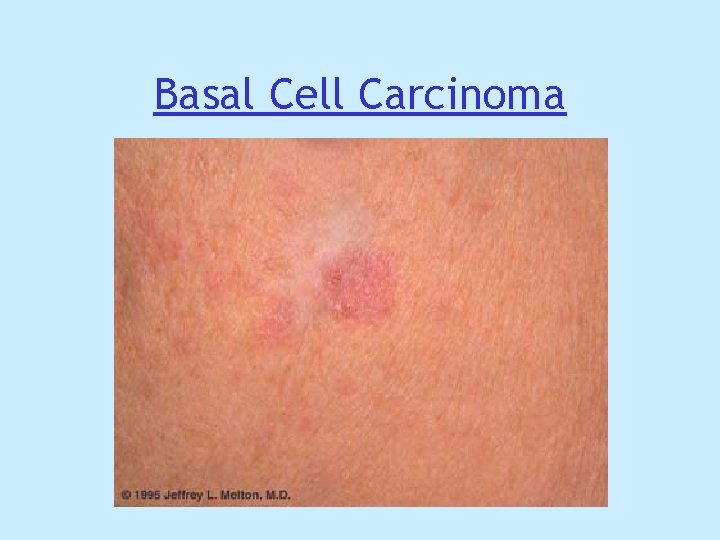
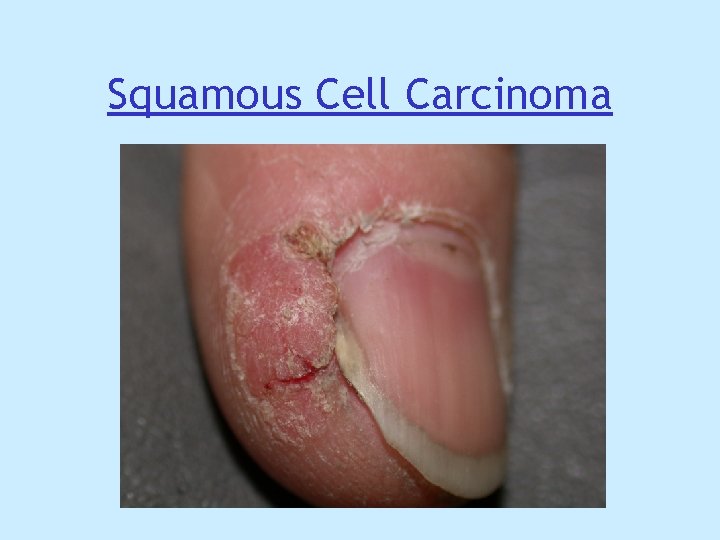
Skin Cancer • Melanoma It affects the melanocytes (cells that give skin its colour) Signs can be moles that appear and grow in size • Basal Cell Carcinoma Affects the basal cells located in the epidermis • Squamous Cell Carcinoma A type of skin cancer arising in squamous cells (flat cells on surface of skin)
Melanoma
Basal Cell Carcinoma
Squamous Cell Carcinoma
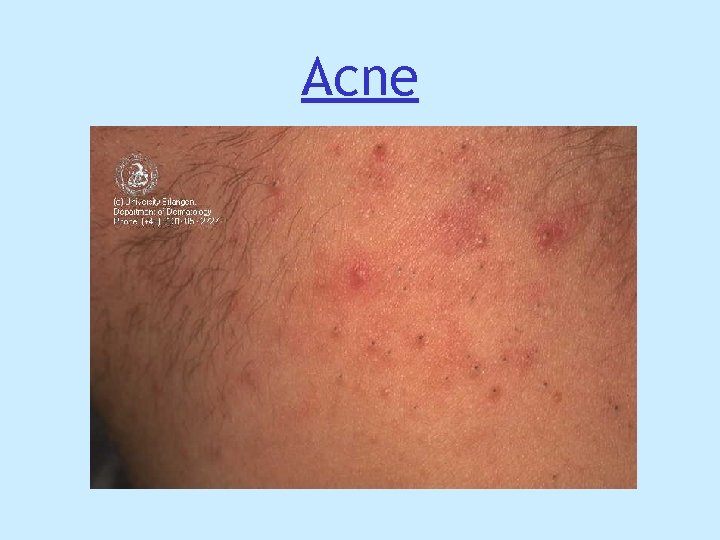
Acne • Acne refers to plugged pores, pimples and even deeper lumps that can occur on the face, neck, chest, back and shoulders • Types of acne include Comedo, Papule, Macule and Cyst • Acne can be treated by: Reducing sebum production in the skin Reducing P. acnes (acne bacteria) Normalizing the shedding of skin cells
Acne
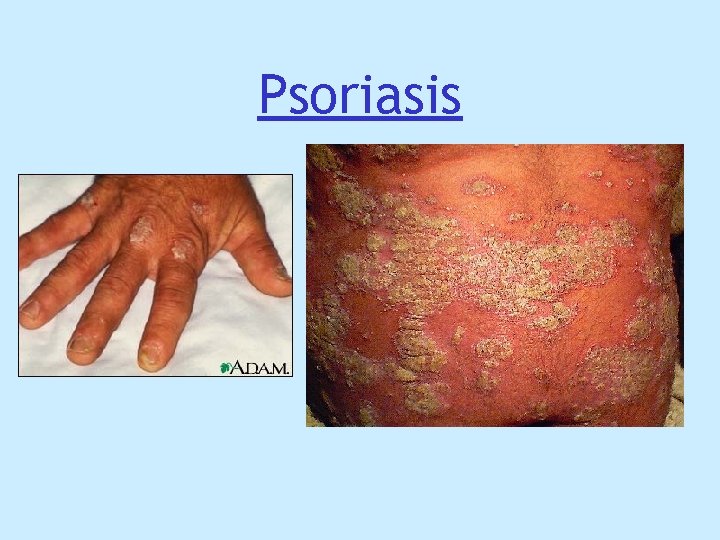
Psoriasis • A chronic, genetic, non-contagious disorder that can affect the skin, nails or scalp • Types of Psoriasis include: Pustular Psoriasis Plaque Psoriasis Erythrodermic Psoriasis Gutate Psoriasis
Psoriasis
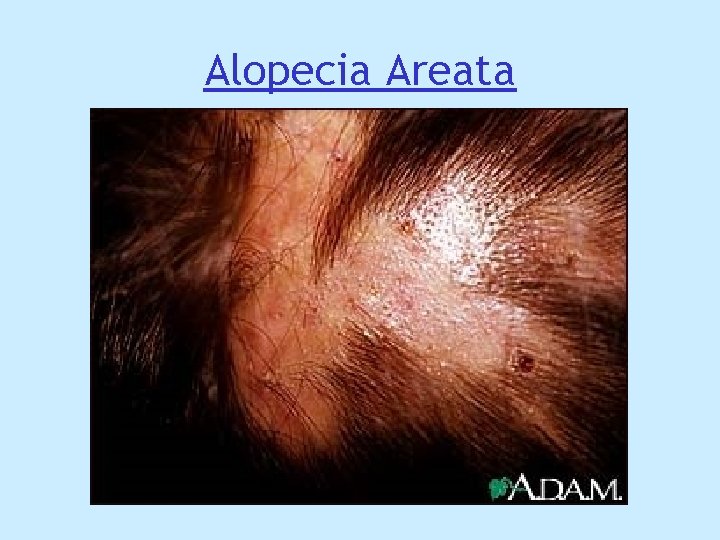
Alopecia Areata Inflammatory, hair loss disease that can affect men, women and children Possibly an autoimmune disease where an individual’s own immune system prevents hair follicles from producing hair fibres There are several other factors that may affect the onset of alopecia
Alopecia Areata
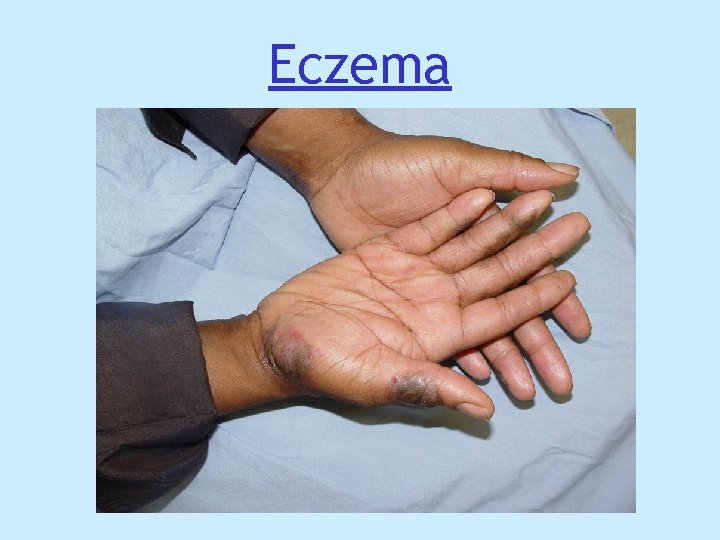
Eczema It seems to be linked to an abnormal response of the body’s immune system. The inflammatory skin response to irritating substances is overactive. Usually characterized by dry, red and itchy patches on the skin New drugs known as Topical immunomodulators can be used to modulate the responses of the immune system to different irritating substances
Eczema
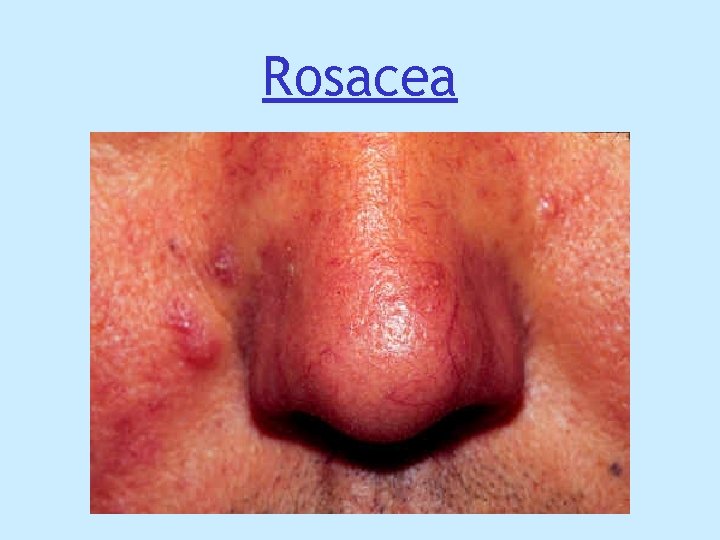
Rosacea A chronic disease that causes redness and swelling, primarily of the face Some scientists believe that heredity is what causes the blood vessels in the face to dilate Another theory is that a mite known as Demodex folliculorum lives in the hair follicles and could be the cause of rosacea
Rosacea
Comparative Anatomy of the Integumentary System All Vertebrates Mammals Other Vertebrates Arthropods
All Vertebrates Share… • Two basic layers, the dermis and epidermis • Structures such as hair and feather follicles found in the dermis
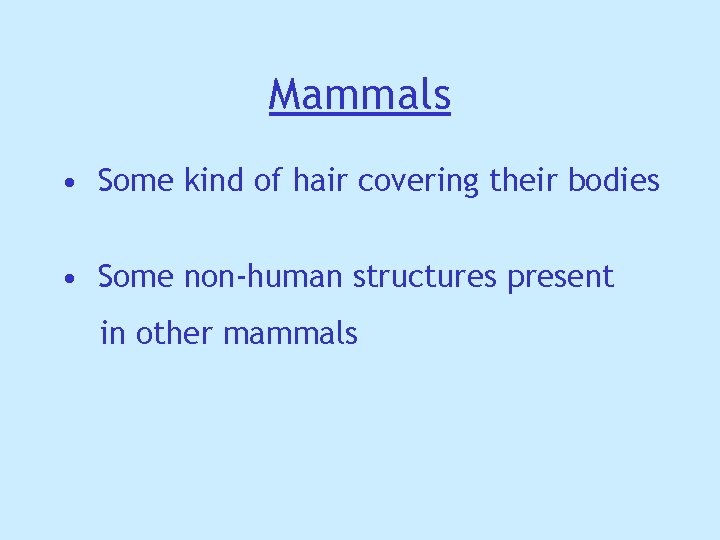
Mammals • Some kind of hair covering their bodies • Some non-human structures present in other mammals
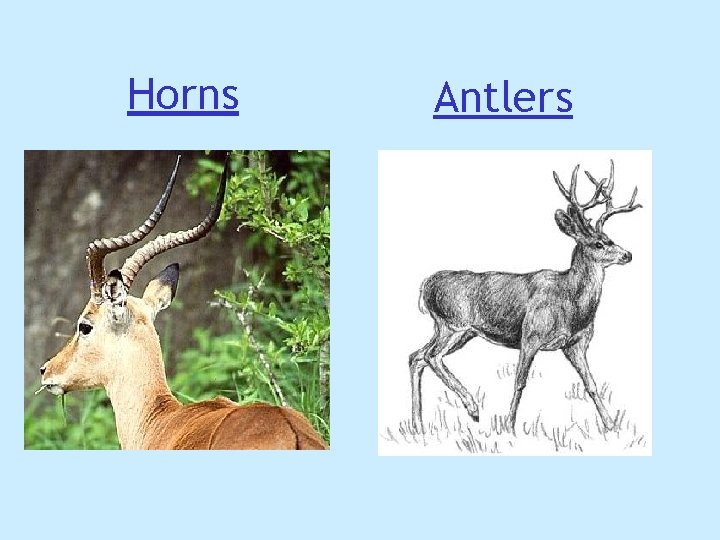
Horns Antlers
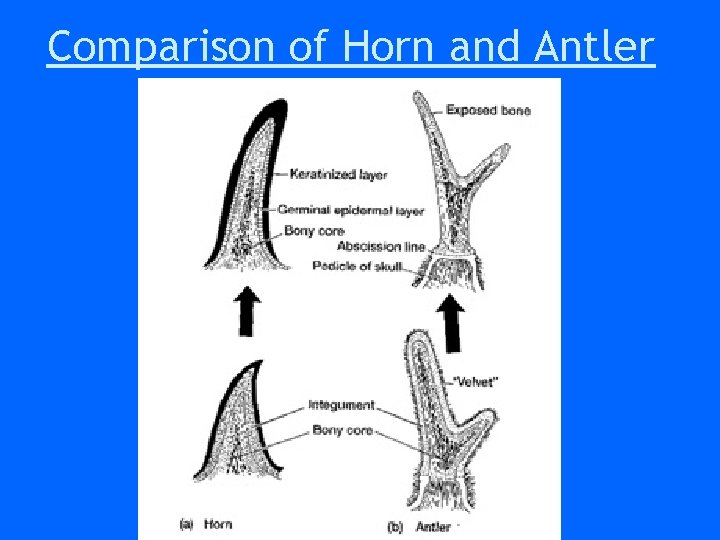
Comparison of Horn and Antler
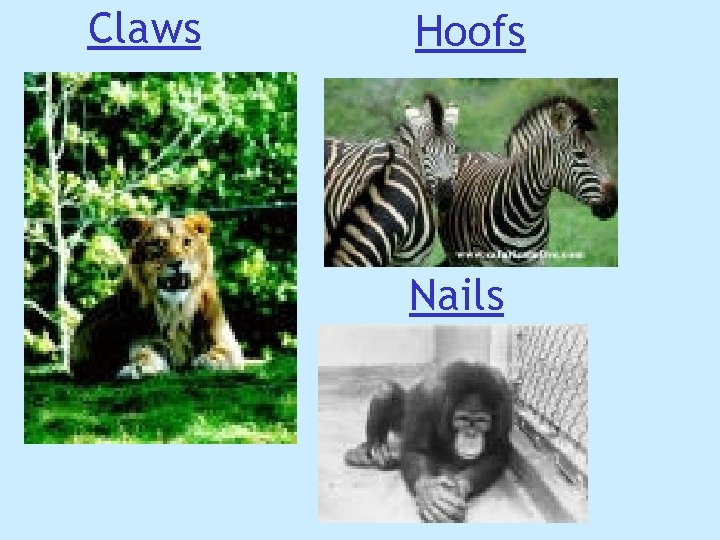
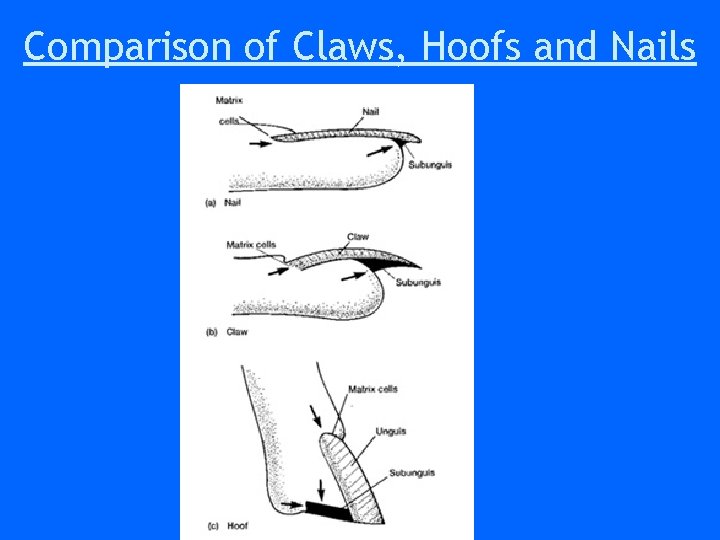
Claws Hoofs Nails
Comparison of Claws, Hoofs and Nails
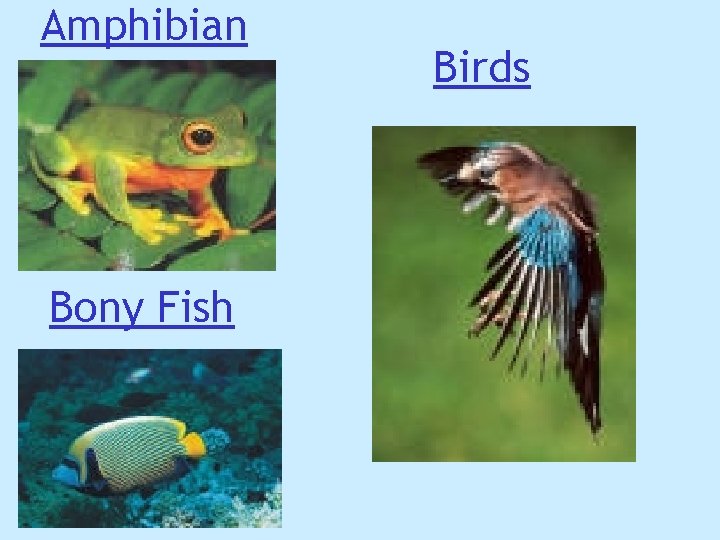
Amphibian Bony Fish Birds
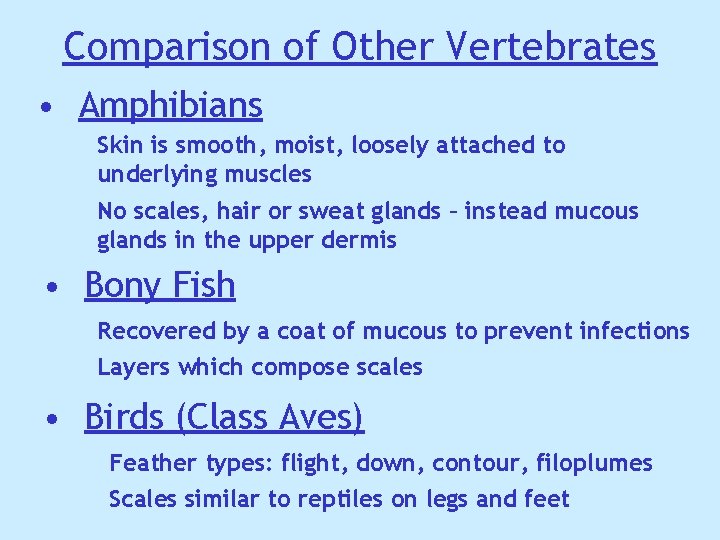
Comparison of Other Vertebrates • Amphibians Skin is smooth, moist, loosely attached to underlying muscles No scales, hair or sweat glands – instead mucous glands in the upper dermis • Bony Fish Recovered by a coat of mucous to prevent infections Layers which compose scales • Birds (Class Aves) Feather types: flight, down, contour, filoplumes Scales similar to reptiles on legs and feet
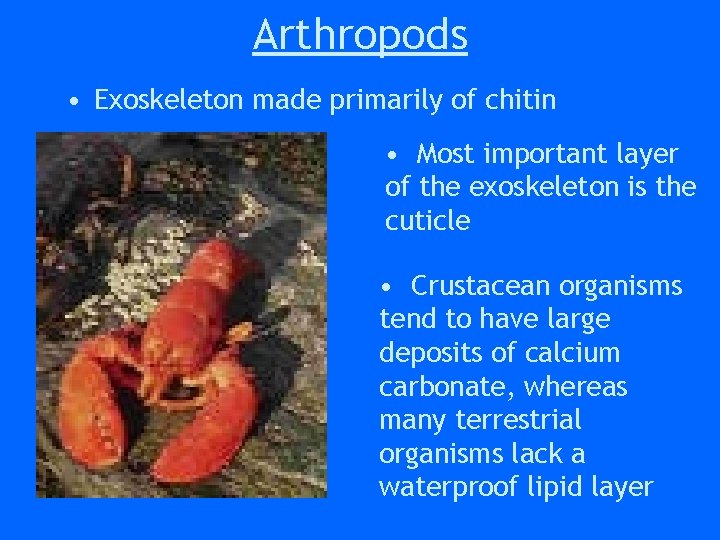
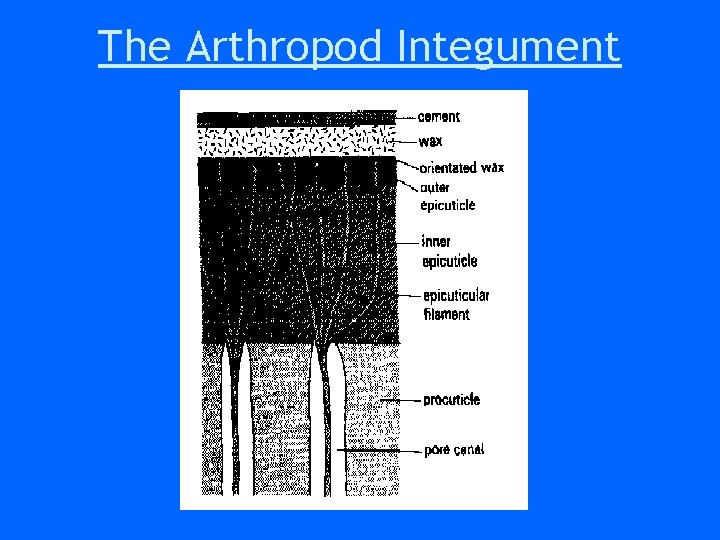
Arthropods • Exoskeleton made primarily of chitin • Most important layer of the exoskeleton is the cuticle • Crustacean organisms tend to have large deposits of calcium carbonate, whereas many terrestrial organisms lack a waterproof lipid layer
The Arthropod Integument
Works Cited “Comparative Anatomy - Topic 6: The Integument” from the Auburn University website. http: //www. auburn. edu/academic/classes/zy/0301/Topic 6. html Last updated Feb. 12 2002, Accessed April 14 2004. Johnson, Laubengayer Cole and De. Lanney. Biology, Third edition. Holt Rinehart and Winston. New York: 1966. p. 359 Winchester, A. M. Biology and its Relation to Mankind, Fourth Edition. Van Nostrand Reinhold company. New York: 1969. p. 449 -452. Farb, Peter. “The Insects” from the Life Nature Library. Time inc. New York: 1962. p. 34 -35. Hutchison, Rob. “How the Arthropod Skeleton has been exploited in the Colonization of the Land” from Veterinary Entomology. http: //www. roberth. u-net. com/ectoskel. htm. Last Update: July 11 1998. Accessed April 18, 2004. Raven, Peter H. & Johnson, George B. Biology, Sixth Edition. Mc. Graw Hill Publishing Company. New York: 2002.
http: //www. udel. edu/Biology/Wags/histopage/colorpage/cin. htm http: //sln. fi. edu/biosci/systems/integumentary. html http: //shs. westport. k 12. ct. us/mjvl/anatomy/mandalaweb/integumentary. htm http: //www. geocities. com/medinotes/his_integumentary_system. htm http: //www. sirinet. net/~jgjohnso/skin. html http: //www. emc. maricopa. edu/faculty/farabee/BIOBK/Bio. Book. INTEGUSYS. html http: //www. cancerindex. org http: //www. keratin. com http: //www. skincarephysicians. com http: //www. scro. police. uk/images/sfs/epidermis. gif http: //www. occunomix. com/images/dermis. gif http: www. sirinet. net/~jgjohnso/ skin. html http: //fig. cox. miami. edu/~cmallery/150/neuro/49 x 1. jpg http: //academic. wsc. edu/faculty/jatodd 1/ap 1/nail. jpg http: //www. sirinet. net/~jgjohnso/hairfoliclenew. jpg