
Dion Glenn Tomer FirefighterEMTCardiac Tech Ft Lee Fire


- Slides: 43
Dion Glenn Tomer Firefighter/EMT-Cardiac Tech Ft. Lee Fire and Emergency Services
Diabetes Mellitus • Diabetes is a chronic disease that has no cure!! • Almost every one of us knows someone who has diabetes. An estimated 15. 7 million people in the United States have diabetes--a serious, lifelong condition. • Each year, about 798, 000 people are diagnosed with diabetes. That is 2, 200 people per day.
About 123, 000 children and Diabetes costs society around $92 billion each year teenagers age 19 and younger have diabetes. . Diabetes is the seventh leading cause of death in the United States Diabetes Mellitus
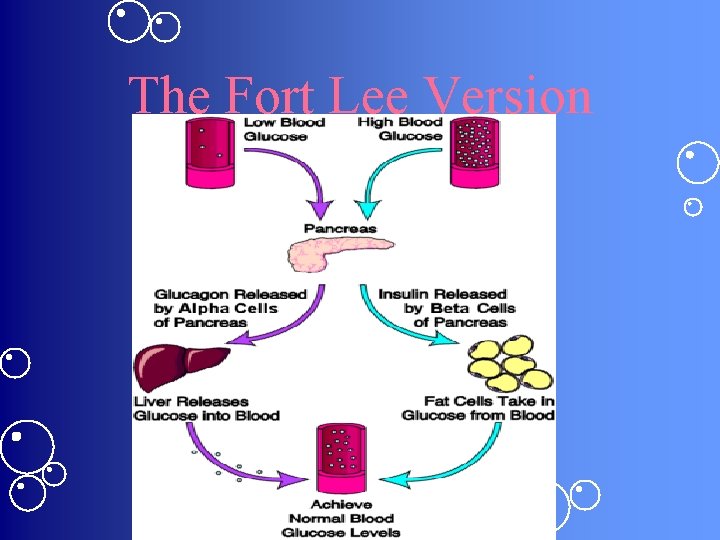
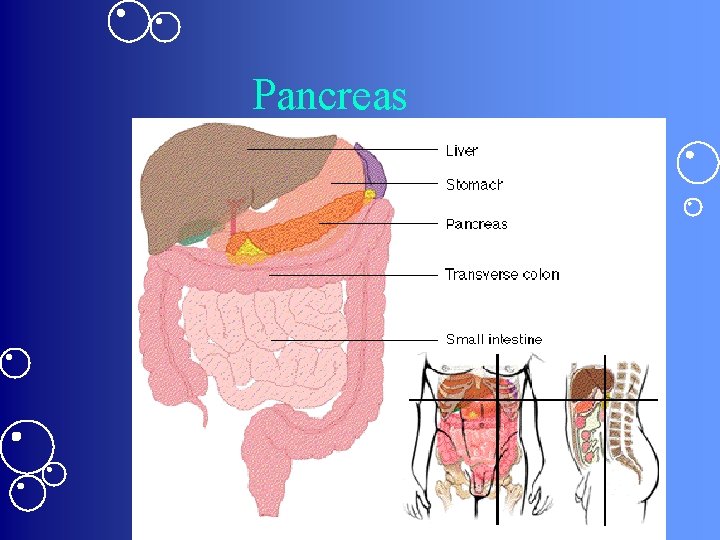
What Is Diabetes Mellitus? ? Diabetes is a disorder of metabolism--the way our bodies use digested food for growth and energy. Most of the food we eat is broken down by the digestive juices into a simple sugar called glucose. Glucose is the main source of fuel for the body. After digestion, the glucose passes into our bloodstream where it is available for body cells to use for growth and energy. For the glucose to get into the cells, insulin must be present. Insulin is a hormone produced by the pancreas, a large gland behind the stomach. When we eat, the pancreas is supposed to automatically produce the right amount of insulin to move the glucose from our blood into our cells. In people with diabetes, however, the pancreas either produces little or no insulin, or the body cells do not respond to the insulin that is produced. As a result, glucose builds up in the blood, overflows into the urine, and passes out of the body. Thus, the body loses its main source of fuel even though the blood contains large amounts of glucose. BLAH
The Fort Lee Version
Pancreas
Diabetes Mellitus • Types Of Diabetes – Type 1 Diabetes – Type 2 Diabetes – Gestational Diabetes
Diabetes Mellitus • Type 1 Diabetes – Once Known as insulin-dependent or juvenile – Pancreas produces little or no insulin – Accounts for 5 -10% of diagnosed diabetes – Need Insulin injections to survive
Diabetes Mellitus • Who is at Greater Risk for Type 1 Diabetes? · Siblings of people with type 1 diabetes · Children of parents with type 1 diabetes • Risk Factors – Occurs equally among males and females – More common in whites than nonwhites – Overweight – Family Hx of same
Diabetes Mellitus • Type 1 Diabetes Symptoms – Usually develop over short period – Increased thirst, urination, constant hunger, weight loss, blurred vision, and extreme tiredness. – If not diagnosed or treated with insulin, a person can lapse into a life-threatening coma
Diabetes Mellitus • Treatment – Daily injections of Insulin are basic therapy – Injections must be balanced with meals and daily activities – Glucose levels must be closely monitored through blood sugar testing
Diabetes Mellitus • Type 2 Diabetes – Most common form – About 90 -95% of people have this type – Usually develops in adults over 40 yrs old – The pancreas produces insulin, but for some reason , the body can’t use the insulin
Diabetes Mellitus • Who is at Greater Risk for Type 2 Diabetes? · People over age 45 · People with a family history of diabetes · People who are overweight · People who do not exercise regularly · People with low HDL cholesterol or high triglycerides
Diabetes Mellitus • Who is at Greater Risk for Type 2 Diabetes? · Certain racial and ethnic groups (e. g. , African Americans, Latinos, Asian & Pacific Islanders, and Native Americans) · Women who had gestational diabetes, a form of diabetes occurring in 2 -5 percent of all pregnancies, or who have had a baby weighing 9 pounds or more at birth
Diabetes Mellitus • Type 2 diabetes is more common among these ethnic groups: · African Americans are 1. 7 times as likely to have type 2 diabetes as the general population. An estimated 2. 3 million African Americans, or 10. 8%, have diabetes. · Latinos are almost twice as likely to have type 2 diabetes. For example, diabetes affects 1. 2 million or 10. 6% of the Mexican American population. · Native Americans. Overall prevalence of type 2 diabetes in Native Americans is 12. 2% vs. . 5. 2% of the general population. In some tribes, 50% of the population has diabetes.
• Type 2 Diabetes Symptoms – Develop gradually and are not as noticeable as type 1 – Symptoms include feeling tired or ill, frequent urination (esp. at night), unusual thirst, weight loss, blurred vision, frequent infections, and slow healing of sores.
Diabetes Mellitus • Treatment – Diet – Exercise – Blood Testing – Some take oral drugs or insulin to lower blood glucose levels.
Diabetes Mellitus • Gestational Diabetes – Develops or is discovered during pregnancy – Usually disappears when pregnancy is over, BUT women have a higher risk of developing type 2 diabetes later in their lives
Diabetes Mellitus • Medications – Oral • • Tolbutamide Chloropropamide Tolazamide Acetohexamide Glyburide Glipizide Glucotrol GLUGOPHAGE
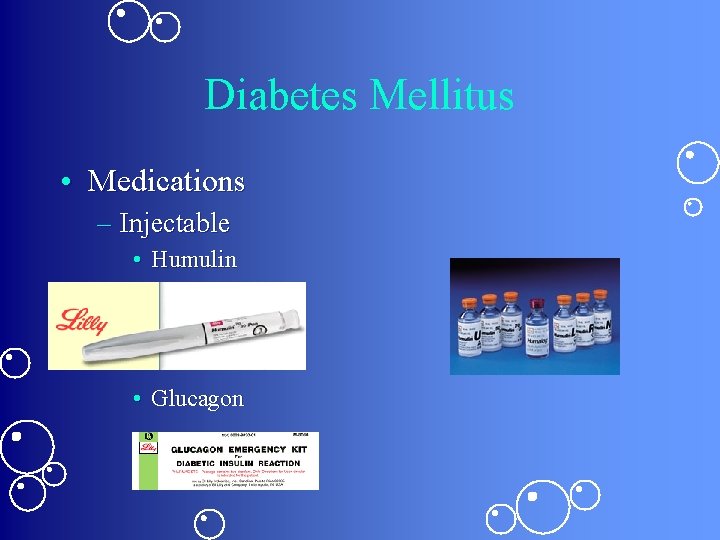
Diabetes Mellitus • Medications – Injectable • Humulin • Glucagon
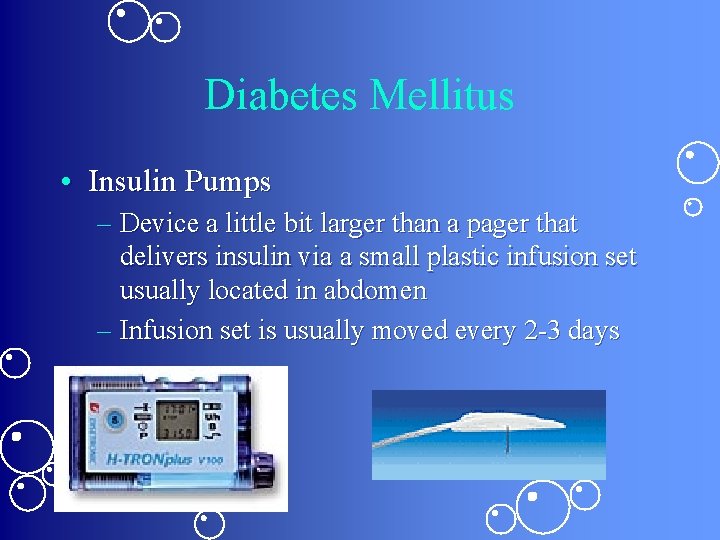
Diabetes Mellitus • Insulin Pumps – Device a little bit larger than a pager that delivers insulin via a small plastic infusion set usually located in abdomen – Infusion set is usually moved every 2 -3 days
• Heart Disease is 2 -4 times common in diabetics • High Blood Pressure affects 60 -65 percent of people with diabetes • Diabetes is the leading cause of blindness among adults 20 -74 years of age (12, 0024, 000 people per year) • Nearly 60, 000 people with diabetes undergo dialysis or transplantation • More than 1/2 of the amputations in the U. S. occur among people with diabetes (6 out of every 1000 people, more that 50, 000 people a year)
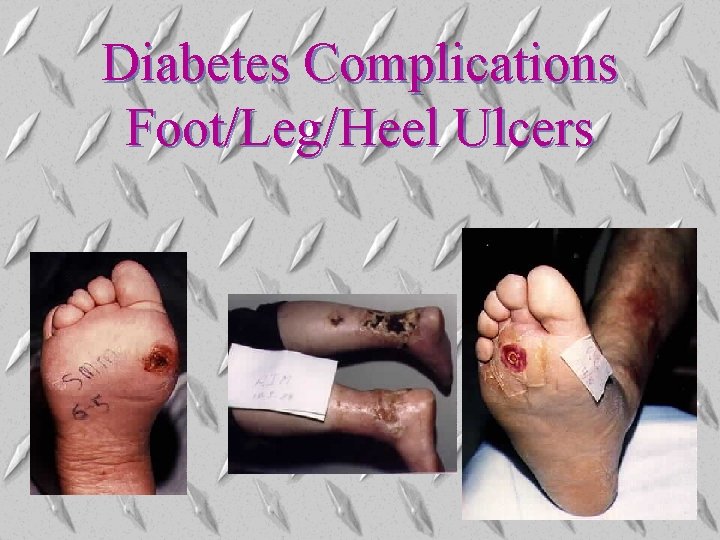
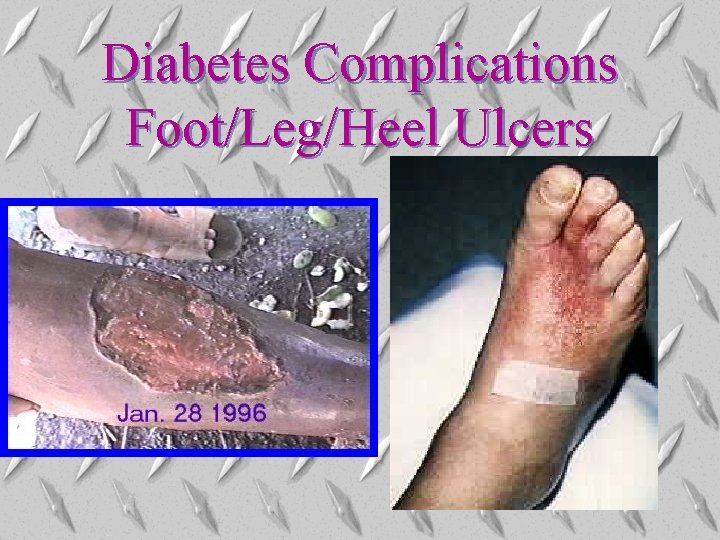
• At least 15% of all people with diabetes with eventually have a foot ulcer/and or leg ulcer. • Gangrene is common in diabetes due to poor circulation of lower extremities • Blindness/and or Glaucoma
Diabetes Complications Foot/Leg/Heel Ulcers
Diabetes Complications Foot/Leg/Heel Ulcers
H y p e r g l y c e m i a • Develops as blood glucose levels increase and individual cells become glucose depleted. • The body begins dumping sugar into the urine • This causes serious dehydration • As cellular glucose depletion continues, ketone and acid production occur • Usually rated at 180 mg/dl over 3 days or 240 mg/dl
H y p e r g l y c e m i a • Causes – Pt has not taken his/her insulin – Pt has overeaten, flooding the body with carbohydrates – Pt has infection that disrupts glucose/insulin balance
H y p e r g l y c e m i a • Signs and Symptoms – Polyuria (frequent urination) – Polydypsia (excessive thirst) – Polyphagia (excessive hunger) – Nausea/Vomiting – Kussmaul’s Respiration's (Deep and Rapid) – Warm, Dry Skin – Fruity Odor on Breath – Abdominal Pain
H y p e r g l y c e m i a • Signs and Symptoms Cont. . – Falling Blood Pressure – Fever – Decreased LOC
H y p e r g l y c e m i a • Treatment BLS – Airway – Breathing – Circulation – Disability – Asses for trauma: protect C-spine if indicated – Administer O 2 per Pt assessment – Suction airway if needed
H y p e r g l y c e m i a • Treatment BLS – Obtain Hx if possible – Check finger stick – Protect airway – Call for ALS if Available (don’t delay transport) – Transport
Insulin Shock (Hypoglycemia) • Occurs when insulin levels are too high • It is an Urgent medical emergency • Prolonged hypoglycemia can result in serious brain damage • Can occur if a pt accidentally or intentionally takes too much insulin • Alcohol Intake
Insulin Shock (Hypoglycemia) • Signs and Symptoms – Weak, Rapid Pulse – Cold, clammy skin – Weakness/uncoordination – Headache – Irritable, nervous behavior – May appear intoxicated – Coma (severe cases)
Insulin Shock (Hypoglycemia) • Treatment BLS – Airway – Breathing – Circulation – Disability – Asses Pt for trauma-protect C-spine if Ness. – Administer O 2 per assessment – Suction Airway if Necessary
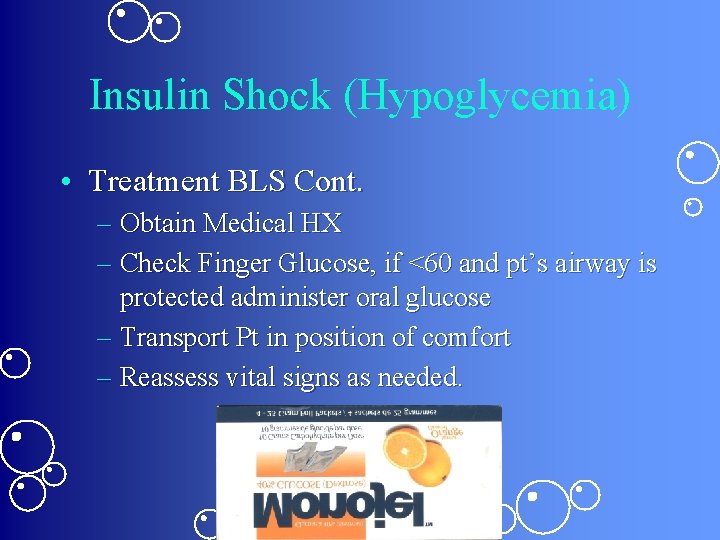
Insulin Shock (Hypoglycemia) • Treatment BLS Cont. – Obtain Medical HX – Check Finger Glucose, if <60 and pt’s airway is protected administer oral glucose – Transport Pt in position of comfort – Reassess vital signs as needed.
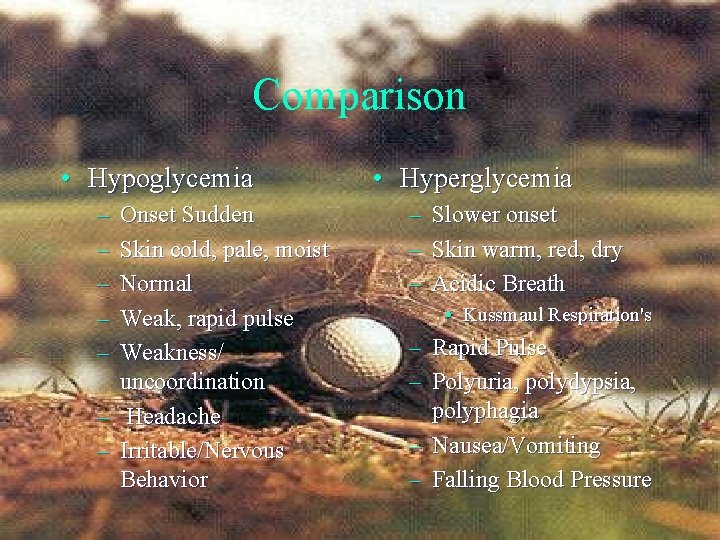
Comparison • Hypoglycemia – – – Onset Sudden Skin cold, pale, moist Normal Weak, rapid pulse Weakness/ uncoordination – Headache – Irritable/Nervous Behavior • Hyperglycemia – – – Slower onset Skin warm, red, dry Acidic Breath • Kussmaul Respiration's – Rapid Pulse – Polyuria, polydypsia, polyphagia – Nausea/Vomiting – Falling Blood Pressure
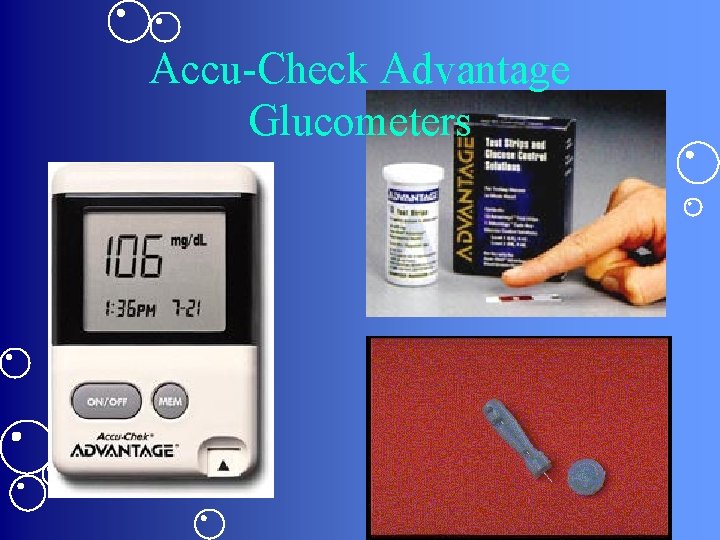
Accu-Check Advantage Glucometers
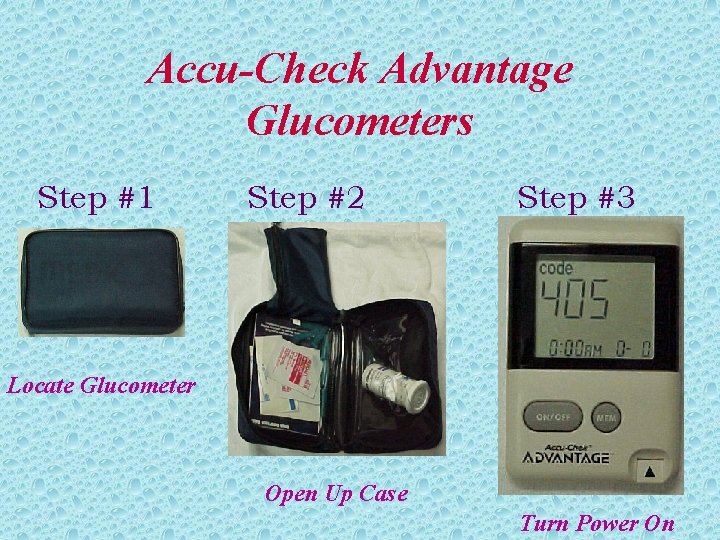
Accu-Check Advantage Glucometers Step #1 Step #2 Step #3 Locate Glucometer Open Up Case Turn Power On
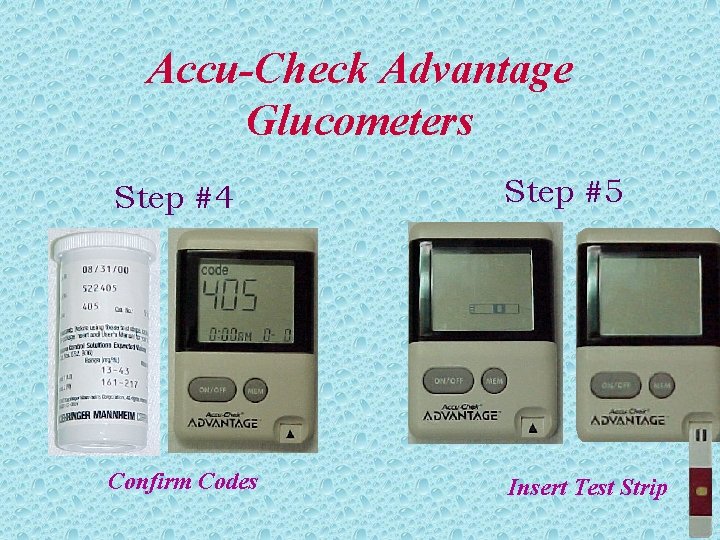
Accu-Check Advantage Glucometers Step #4 Step #5 Confirm Codes Insert Test Strip
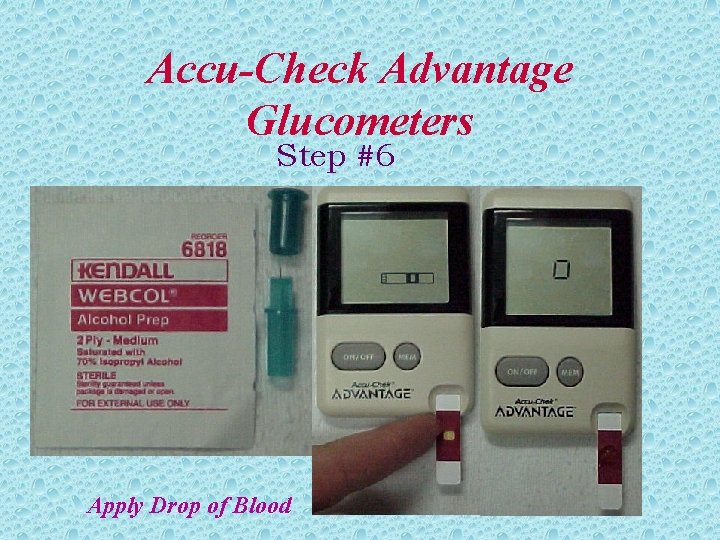
Accu-Check Advantage Glucometers Step #6 Apply Drop of Blood
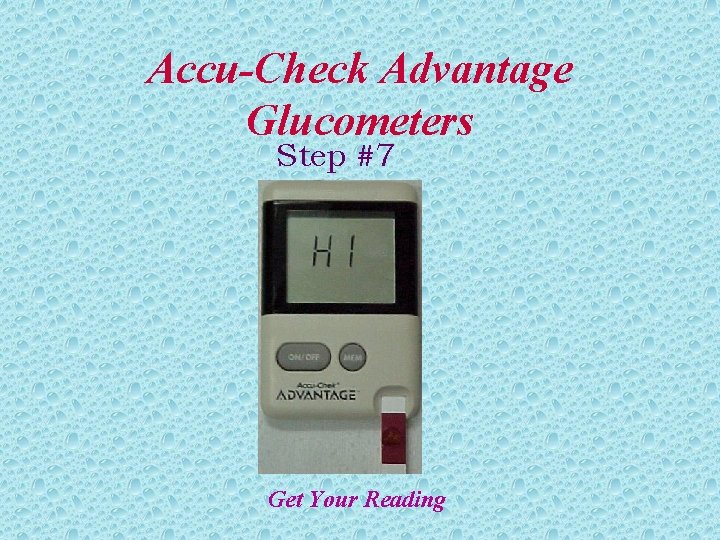
Accu-Check Advantage Glucometers Step #7 Get Your Reading
Certification Number Skip First Space!!! Level B = EMT-Basic D = Cardiac Tech E = Paragod Course Number = 25858 Cat 1 = BLS 2 = ALS Topic = 01501