TEACHERS NAME TUMAINI A LUPANDE SCHOOL NAME LUSANGA














- Slides: 63
• TEACHER’S NAME: TUMAINI A LUPANDE • SCHOOL NAME: LUSANGA SECONDARY SCHOOL • SUBJECT: ENGLISH LANGUAGE 1 • TOPIC: READING SKILLS • SUB-TOPIC: • CLASS: FORM FIVE HGL • DATE: 17/03/2020
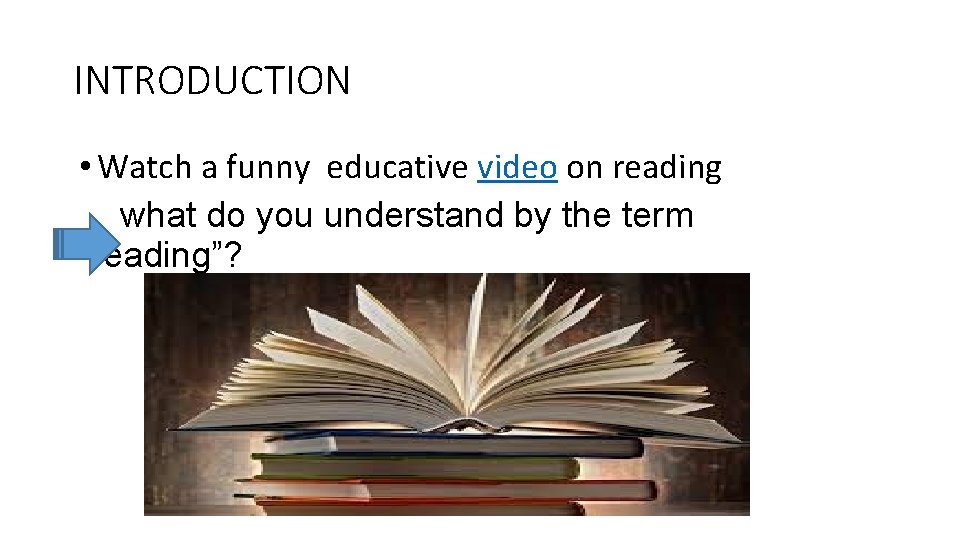
INTRODUCTION • Watch a funny educative video on reading what do you understand by the term “reading”?
What is Reading SKILLS? Activity • Think write and then pair your answers with your fellow (2 min) • Reading skills is the ability of an individual to read, comprehend and interpret written words on a page of an article or any other reading material. The possession of a good reading skill will enable the individual to be able to assimilate a written work within a short period while reading. • We sometime find difficultness to understand some texts since we lack reading techniques which are very important.
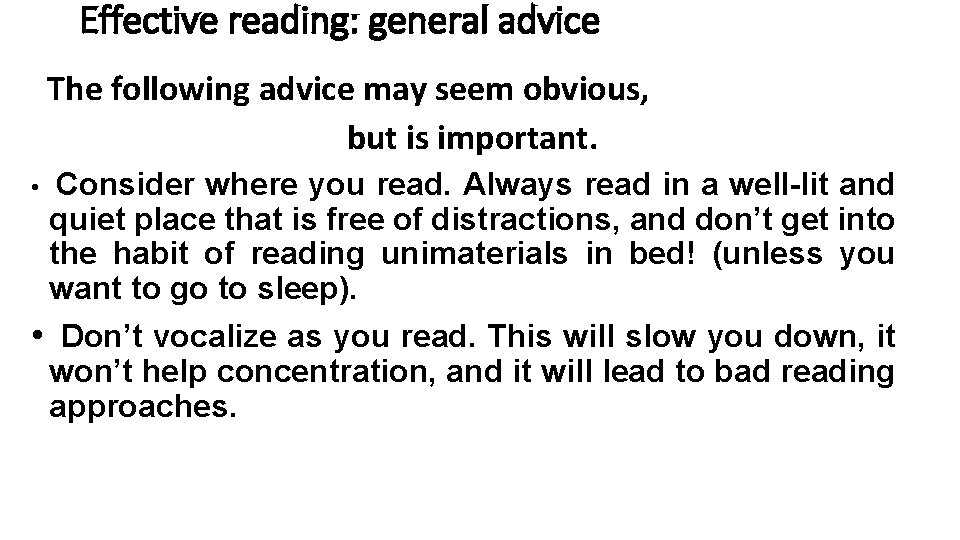
Effective reading: general advice The following advice may seem obvious, but is important. • Consider where you read. Always read in a well-lit and quiet place that is free of distractions, and don’t get into the habit of reading unimaterials in bed! (unless you want to go to sleep). • Don’t vocalize as you read. This will slow you down, it won’t help concentration, and it will lead to bad reading approaches.
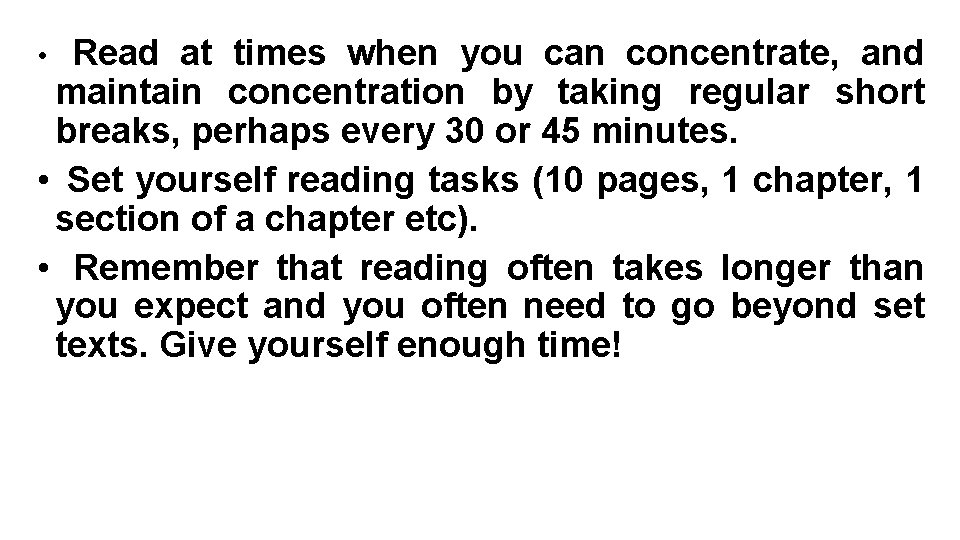
Read at times when you can concentrate, and maintain concentration by taking regular short breaks, perhaps every 30 or 45 minutes. • Set yourself reading tasks (10 pages, 1 chapter, 1 section of a chapter etc). • Remember that reading often takes longer than you expect and you often need to go beyond set texts. Give yourself enough time! •
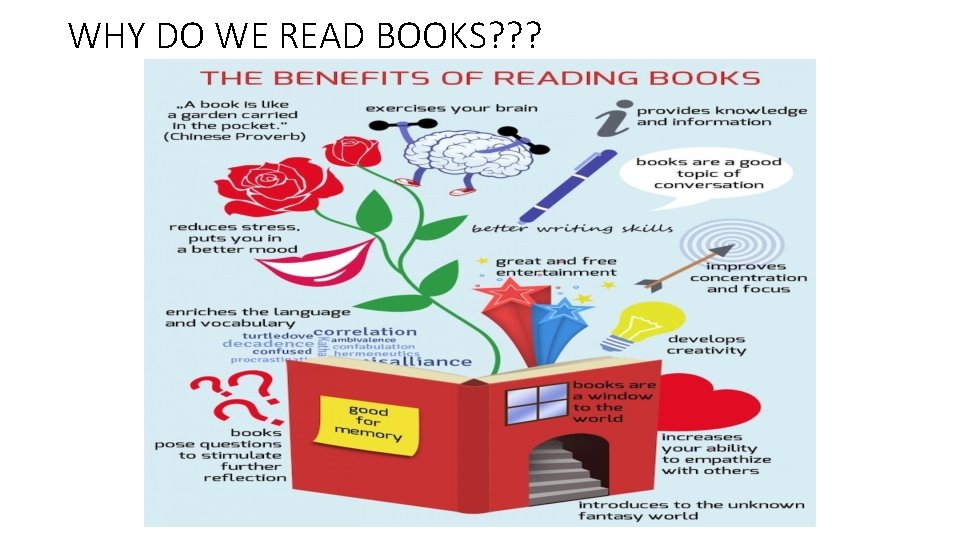
WHY DO WE READ BOOKS? ? ?
questions 1. How does reading books enrich language and vocabulary? ? 2. Why do we say reading reduces stress and puts you in a better mood 3. how does scanning differ from skimming? . 4. Why do we read intensively, what makes a different between intensive vs extensive reading 5. Mention six importance of reading books
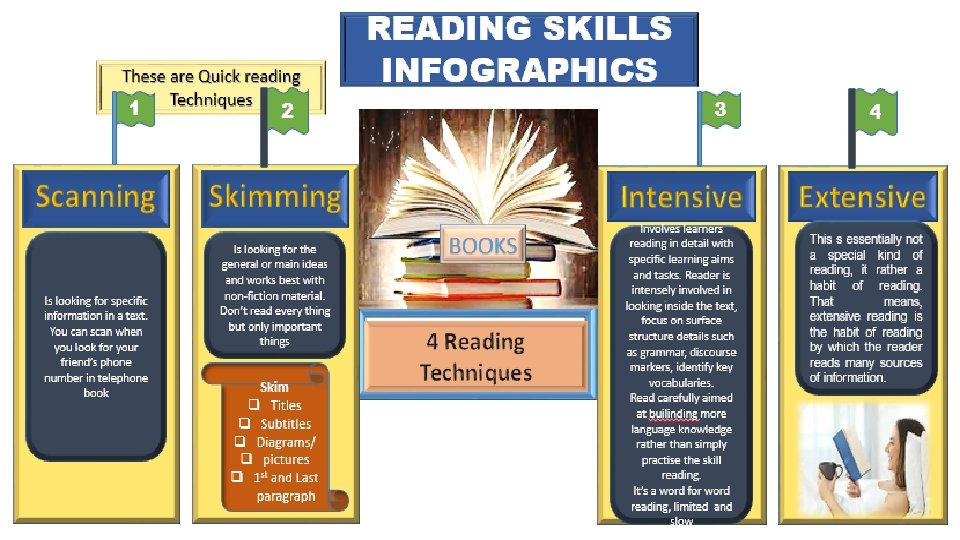
Skimming • This is a kind of reading where the reader is interested in just knowing what the text read is about. • Therefore, the reader is about to know the general idea about the information, text / what the material or text is about.
• Skimming is reading quickly to gain a general idea. Skimming may allow you to ‘read’ up to 1000 words a minute. • It helps you identify whether or not to continue reading, what to read carefully, and where the best place is to begin.
Cont…. . Skimming an academic text immediately before you read it carefully can help you consider what you already know and can help you develop a purpose for reading. • An initial skim can also help maximize your interest in the text and your understanding and reflection on the material.
As with scanning, skimming does not involve reading every word. Instead, you may skim by reading: • Titles • Sub-headings • words in that are in bold, in italics or underlined • Diagrams a report’s abstract, introduction or conclusion • The first sentence of every paragraph • Chapter questions • Chapter objectives
Scanning • Scanning is reading quickly to search for specific information. You may not realize it, but you are already good at scanning. You scan, for example, when checking a TV guide or a phone book. Scanning may allow you to ‘read’ up to 1, 500 words a minute.
• One reason to scan an academic text that you have found while researching is to locate key terms as a means to assess the text’s relevance.
• THE END
Analytical reading • Analytical reading (or study reading/ intensive reading) is needed when you want to make sure that you fully grasp and appreciate what you are reading. You may have to read statements more than once, stop to think about them, or jot down key words when using this style. As a result, your reading rate can easily drop to below 100 words a minute.
Cont… • This is a relative slow, careful reading process that is more appropriate for difficult texts. It is the style that allows the reader to pause, look up on a new word in the dictionary and careful study difficult sentences so as to understand them.
Note-taking • If you don’t take notes well, or don’t take them at all, now is the time to develop this essential skill! Notetaking can help you gain deeper understanding and reflection, a better ability to remember and good exam preparation materials for later.
: When taking notes, pay keep in mind the following 7 principles
a. Record publication details Always note publication details of any text you may use. Specifically, record such things as the title, author, date, publisher, place of publication, URL, and page numbers.
b. Preview the text before you take notes • As mentioned earlier, scan, skim and ‘surface read’ the text before noting to help you develop understanding of the text and awareness of what is important to note. • Taking notes of everything is a slow, boring, ineffective exercise.
c. Maintain a central place for your notes • Where record your notes is up to you. Some people prefer using a computer, while others use flash cards, folders, or exercise books. • What is important is that you will be able to find the notes and understand their layout and content a few weeks or months later.
4. d. Paraphrase and summarize ideas Writing out sentences word for word is probably even less useful than just highlighting sentences with a marker. Sure, they will be times you need write things word for word (use quotation marks when you do this!) but better understanding will come through putting things in your own words. Not sure how to do this? Say the key points in your own words out loud and then write them down. Finish by checking your paraphrase is clear and accurate.
e. Note your thoughts Don’t forget the great value of noting beyond just what is said in the text. Note down such things as your ideas, points you agree or disagree with, relevant experiences, questions, examples, and relationships with other texts. Those initial thoughts you have as you read may be of great use later, and it is a mistake to risk forgetting them.
f. Be creative • Consider how you should note different parts of texts as well as just what you should note. The process of thinking about how to note can aid understanding as well as ability to remember information and reflect. • Depending on the nature of the information you wish to note, you may choose to use spider diagrams, concept maps, titles, columns, dot points, numbers, symbols, colours, pictures or columns for your reflections.
g. Review your notes • Once you have completed some notes, always look back at them and check: 1. they are accurate, 2. they are readable, 3. you will be able to use them later and 4. they contain full reference details.
Managing vocabulary • Even if you are a native English speaker, you may at times feel overwhelmed by the amount of unfamiliar vocabulary you encounter. Of course, as a university student, you have a great opportunity and need to build you vocabulary (discipline specific and general), so consult glossaries and use a dictionary.
Cont……. • Keep a list of new words: record their definitions and write example sentences which show meaning and usage. • When using your dictionary, be discerning. Know which words can be ignored, and see if it is possible to guess the meanings of words. You may be able do this if you
1. 1. Use the context to get the meaning; - • It is not necessary to stop at every word and look its meaning in the dictionary. However, the context in which the word is used can be used to get the meaning of the word, even if it just a rough idea of meaning.
2. Use experience to get the meaning; Our own experience can be the best aid of getting at the meaning of new words that contain them without having to consult to a dictionary or ask somebody else.
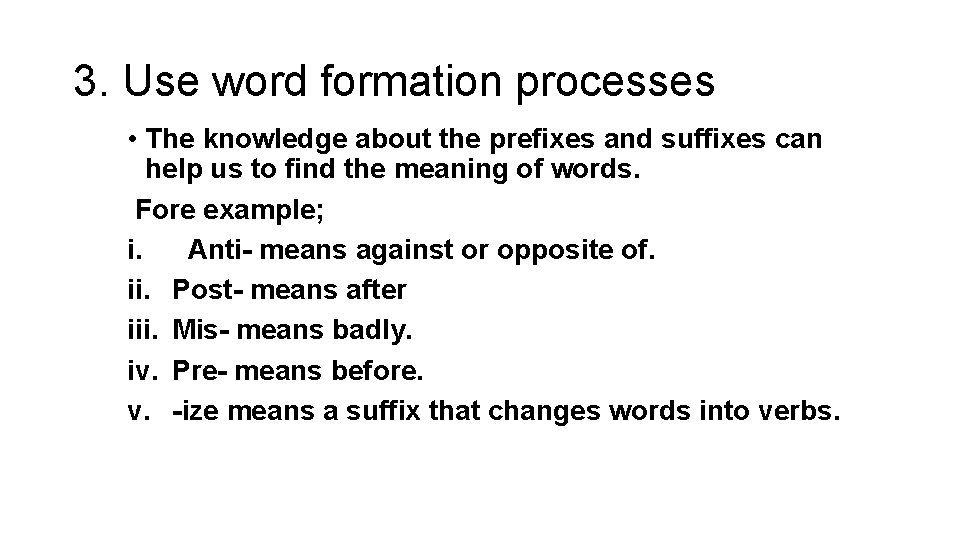
3. Use word formation processes • The knowledge about the prefixes and suffixes can help us to find the meaning of words. Fore example; i. Anti- means against or opposite of. ii. Post- means after iii. Mis- means badly. iv. Pre- means before. v. -ize means a suffix that changes words into verbs.
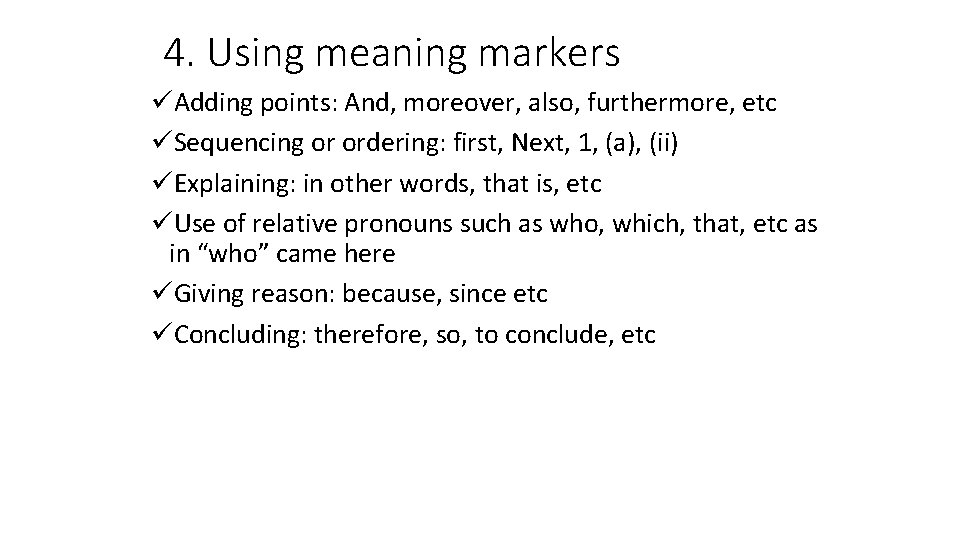
4. Using meaning markers üAdding points: And, moreover, also, furthermore, etc üSequencing or ordering: first, Next, 1, (a), (ii) üExplaining: in other words, that is, etc üUse of relative pronouns such as who, which, that, etc as in “who” came here üGiving reason: because, since etc üConcluding: therefore, so, to conclude, etc
Reading with others • Consider getting a “study buddy” or study group. Be careful to keep focused on what you need to do and you may find that by sharing notes, explaining, asking and quizzing each other, you can increase you ability to understand, reflect upon and remember key points in texts.
Extensive reading v. This s essentially not a special kind of reading, it rather a habit of reading. That means, extensive reading is the habit of reading by which the reader reads many sources of information.
Cont…. • At school for example, extensive reading so helpful to students to enrich the content/ knowledge. The student gets a lot of information since books talk of many things. ü More over, different books talk about the same topics differently. In addition, different sources differ in how materials are presented and the details they contain, so you are advised to read more books or look for more source information.
Cont… üThe internet is one among the sources of information that you can use in expanding the knowledge that you get from your teacher, fellow student and books in general.
READING AND LOCATING REFERENCES IN THE LIBRARY • IN LIBRARIES- There are variety of books, journals and other references such as encyclopedia which you may need to read for various information.
Cont…. • However, it may not necessarily be easy to find information found in these references, so there is a need for us to provide some guide on how to locate reference in the library as well as how to look for information in there references.
Catalogue in the Library • A catalogue is simply a register of materials in the library. These materials may include books, films, encyclopedias, yearbooks, and other resources found in the library.
Catalogues are either in form of cards • Card catalogue is normally made up of three by five inch card. The catalogues are field alphabetically. A catalogue may be referred to as author catalogue and if it has authors' surname first on the top line. This is called the Title card Catalogue
• If it has the title of the work on the top of the line it is referred as Subject Card Catalogue. This lists the subjects such as Biology , Chemistry , Geography, History, and alphabetically.
LIBRARY CLASSIFICATION SYSTEMS • There are two classification of the Library i. e 1. Congress classification of the library 2. Dewey Decimal classification (DDC) system In the library congress classification system uses letter of the alphabet in classifying books and other resources on the shelves.
Cont… • In the Dewey decimal classification system uses numbers in classifying library resources.
USING LIBRARY RESOURCES • There are resources which are purely for reference 1. DICTIONARY Dictionaries are of two types: - (a) abridged dictionary and (b) unabridged dictionary
Cont… • Abridged dictionary is the abbreviated kind of dictionary because it is shortened and lacks some linguistic information • On the other hand, unabridged one is referred co a complete or full version dictionary and it contains a lot of linguistic information with all important details that the reader is likely to be interested in.
Cont. . § Unabridged dictionaries are very big in size and hence less portable. § They provide information in satisfying amount
Cont… v. Examples of Unabridged dictionaries include; ü Webster’s Third New International Dictionary of the English Language. üThe oxford English Dictionary üThe Random House Dictionary of the English Language.
Cont… 2. ENCYCLOPEDIAS Ø An encyclopedia is a reference very closely to the dictionary, it does not give the meaning only rather it expounds the topic in detail. Ø Normally encyclopedias are in volumes, and topics are arranged alphabetically
Cont… 3. YEAR BOOKS q These are references that are concerned by major occurrences and development of the preceding year. q Example; a science yearbook may deal with a different subject matter each year.
REFERENCING is the way of using other people’s ideas with acknowledgement. It is important to acknowledging other people’s ideas because if you don’t acknowledge, you will be committing an academic theft that is called “Plagiarism” Citation
Cont…. . • Citation is done by following particular rules which vary according to the type of the source being cited. • E. g a book, a journal, a newspaper article etc. • One of the systems used in citation is the APA style.
APA Citation Style • APA is the short form for American Psychological Association. This association has the style that is comprised of rules and conventions which are used formatting books, research papers, journal articles, etc
There are two main ways of showing citation by using the APA system a) THE IN-TEXT CITATION: - The APA in-text citation is the one in which the source is shown within the text. It is done by quoting directly the exact words of the original author or by paraphrasing them.
Example: (i) One Author: Use the family name and year of publication. ü (Kimaro, 2009) When citation is repeated within the same paragraph, use the name only e. g ü According to Kimaro (2009), “More People are increasingly moving into towns”. Kimaro says that in twenty years time, urban population will equal rural population.
Cont… ü Masunga (2009) argues that, “We can arrest this situation if…” (ii) Two Authors: Use the family names of both authors and the year of publication except when citation is repeated within the same paragraph.
Example ü According to Hamidu and Sanga (1995)… (iii) Three to five Authors: Write all family names and the year the first time you cite, then the first name and et al in other citation.
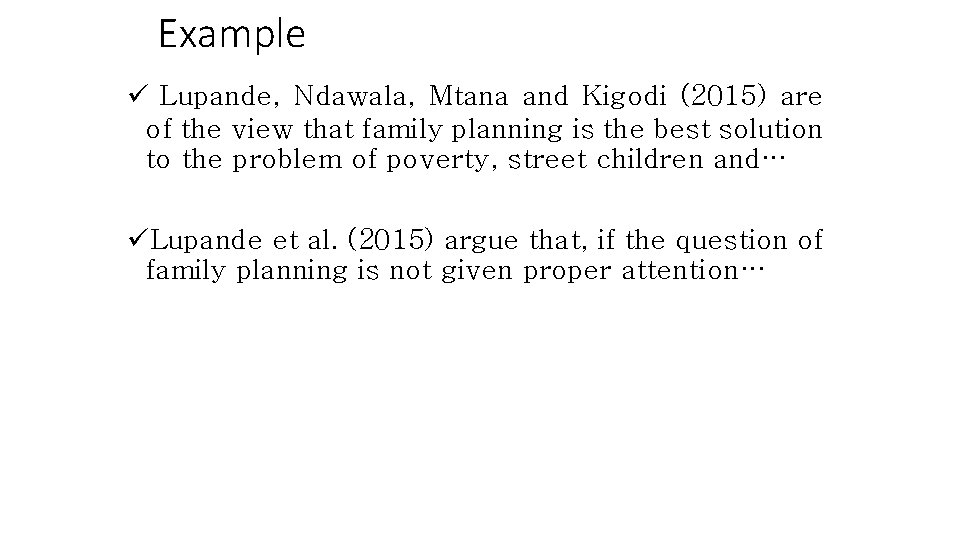
Example ü Lupande, Ndawala, Mtana and Kigodi (2015) are of the view that family planning is the best solution to the problem of poverty, street children and… üLupande et al. (2015) argue that, if the question of family planning is not given proper attention…
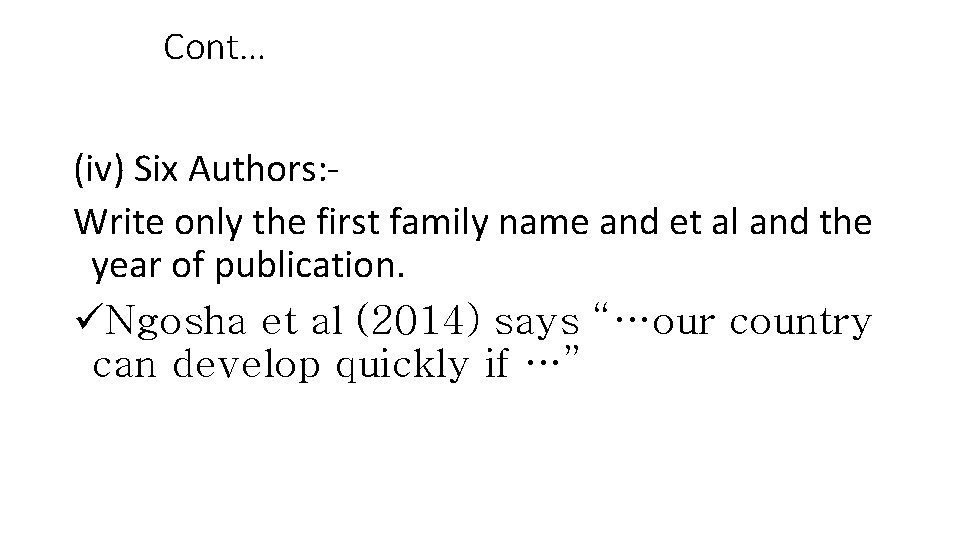
Cont… (iv) Six Authors: Write only the first family name and et al and the year of publication. üNgosha et al (2014) says “…our country can develop quickly if …”
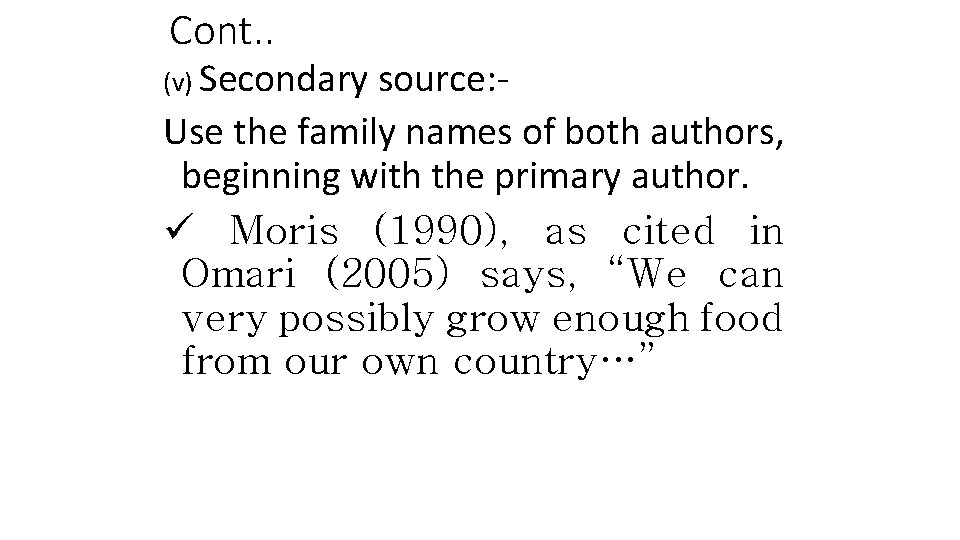
Cont. . (v) Secondary source: Use the family names of both authors, beginning with the primary author. ü Moris (1990), as cited in Omari (2005) says, “We can very possibly grow enough food from our own country…”
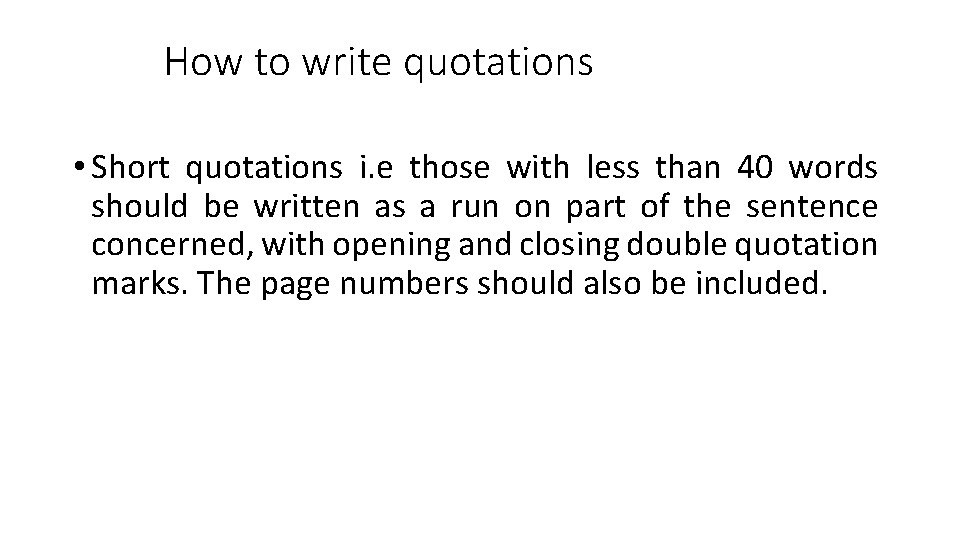
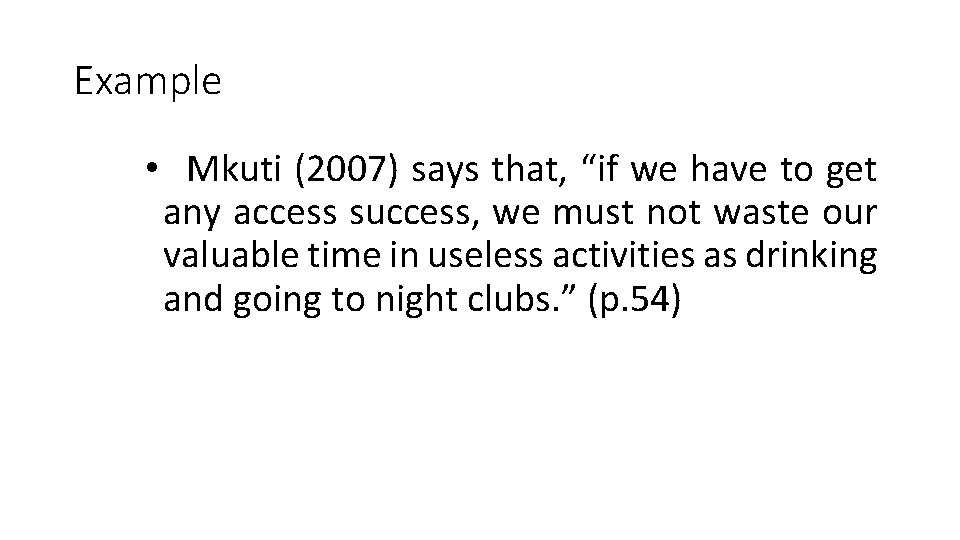
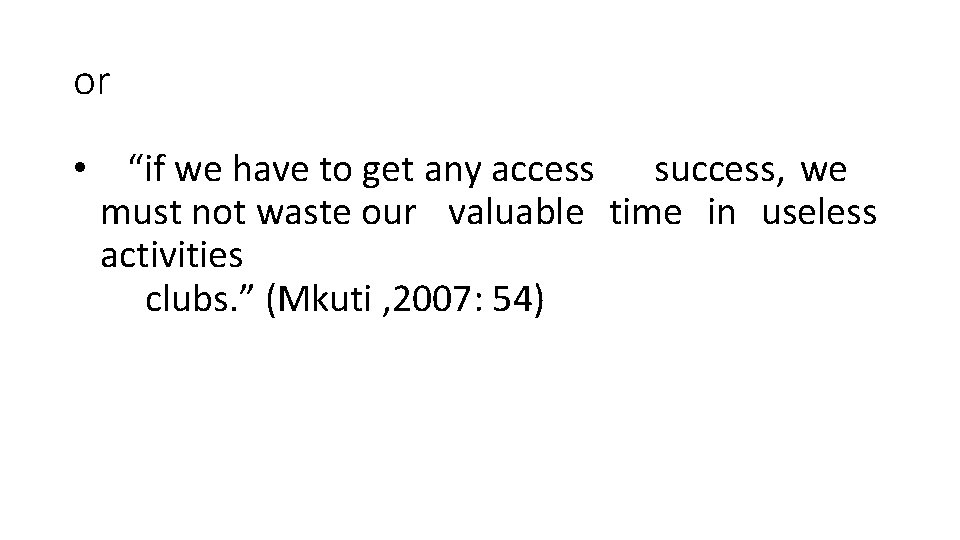
How to write quotations • Short quotations i. e those with less than 40 words should be written as a run on part of the sentence concerned, with opening and closing double quotation marks. The page numbers should also be included.
Example • Mkuti (2007) says that, “if we have to get any access success, we must not waste our valuable time in useless activities as drinking and going to night clubs. ” (p. 54)
or • “if we have to get any access success, we must not waste our valuable time in useless activities clubs. ” (Mkuti , 2007: 54)
Cont. . • For long quotations i. e with more than 40 words, (block quotes) begin on the new line, indent about 5 spaces from the left margin and use no quotation marks.