
Habits of High Performing Teachers Prof Dr Md

Habits of High Performing Teachers Prof. Dr. Md. Golam Samdani Fakir Vice Chancellor, Green University
Focus of the presentation • • At the end of the session, the learners will be able to Define the concepts of habits. • Explain 7 habits of high performing teacher. • Gain tools and techniques in applying 7 habits for ensuring high performance in their teaching carrier.

Habits defined • Habits are the intersection of knowledge, skills and desire. • Knowledge= what to do and why • Skills = how to do • Desire = the driving force for doing something. • In order to make something a habit in our lives, we have to have all three

Effective Habits Knowledge Habits Desire Skills Internalized Principles and Patterns of Behavior
The 7 Habits • The 7 habits are based on universal, timeless, and self-evident principles that are just as true in the world of human relations as the law of gravity in the physical world. • These principles ultimately govern in all of life. They have been part of successful individuals, families, organizations, and civilizations throughout time.
Effectiveness • • Seven habits are habits of Effectiveness. They are based on principles. They bring long-term beneficial results. They become the basis of person’s character
Performance • Performance = Productivity/Productive Capacity Pf= P/PC Habits are responsible for promoting productive capacity Effectiveness lies in the balance of P/PC

The Maturity Continuum You: You take care of me I: I can do it Dependence Private Victory Habits: 1, 2, 3 Independence We: we can do it Interdependence Public Victory Habits: 4. 5. 6
Principles of Personal Vision
Proactively defined • Proactively means more than taking initiatives. • It means that as human beings, we are responsible for our lives. • Our behavior is a function of our decisions, not our conditions. • We have the initiative and the responsibility to make things happen. • The word “responsibility” – response- ability – the ability to choose our response.
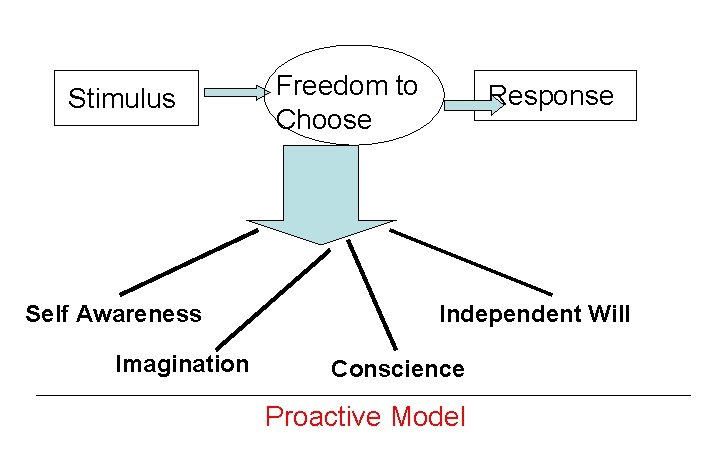
Stimulus Self Awareness Imagination Freedom to Choose Response Independent Will Conscience Proactive Model

Languages of Proactive and Reactive person • Proactive – Let us look at other alternative – I can choose a different approach – I control my own feelings – I can create an effective presentation – I will choose an appropriate response – I choose – I prefer – I will • Reactive – There is nothing I can do – That’s just the way I am – – – This makes me so mad They won’t allow that I have to do that I can’t I must If only
Who is responsible for our lives? • We are responsible for our lives. We need to decide what we should do and get on with it. • We should blame others or the circumstances. • This shifting mindset does not help us.

Proactive Focus Circle of Influence Concern Positive Energy Enlarges the Circle of Influence

Reactive Focus Circle of Concern Circle of Influence Negative Energy reduces the Circle of Influence
Principles of Personal Leadership
Becoming Your Own First Creator • Begin with end in mind is based on the principle that all things are created twice. • Mental – first creation • Physical – second creation
Personal Mission Statement • Begin with end in mind demands to have a personal mission statement or philosophy. • It focuses on what you we want to be and to do and on the values upon which being and doing are based.
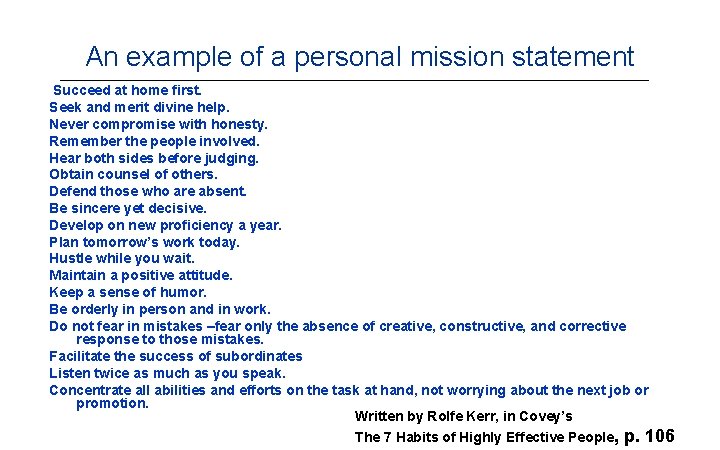
An example of a personal mission statement Succeed at home first. Seek and merit divine help. Never compromise with honesty. Remember the people involved. Hear both sides before judging. Obtain counsel of others. Defend those who are absent. Be sincere yet decisive. Develop on new proficiency a year. Plan tomorrow’s work today. Hustle while you wait. Maintain a positive attitude. Keep a sense of humor. Be orderly in person and in work. Do not fear in mistakes –fear only the absence of creative, constructive, and corrective response to those mistakes. Facilitate the success of subordinates Listen twice as much as you speak. Concentrate all abilities and efforts on the task at hand, not worrying about the next job or promotion. Written by Rolfe Kerr, in Covey’s The 7 Habits of Highly Effective People, p. 106
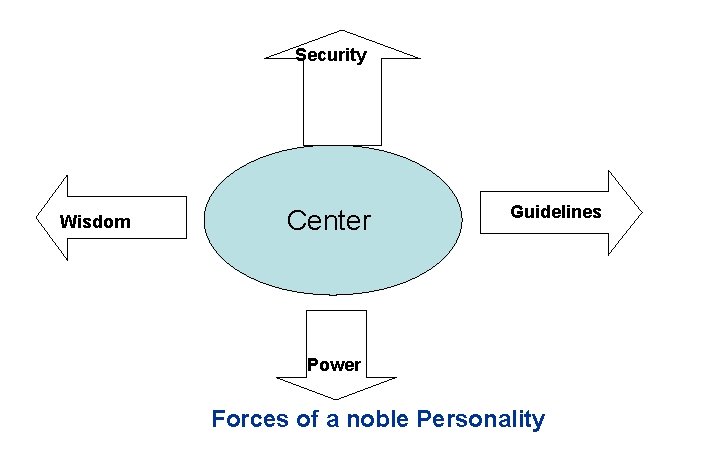
Security Wisdom Center Guidelines Power Forces of a noble Personality
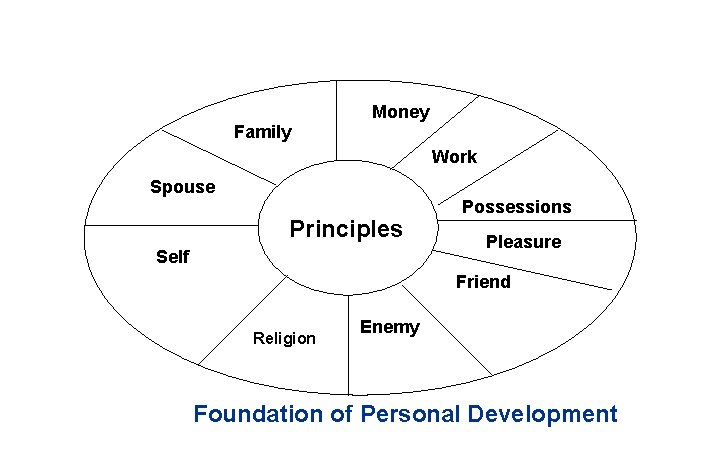
Family Money Work Spouse Principles Self Possessions Pleasure Friend Religion Enemy Foundation of Personal Development
How do you want to be remembered? • Think of how you want to be remembered: – By your colleagues in your organizations that you served. – By your relatives when you will be no more alive. – By your friends when you are not with them. – By you at the time of your death. • Use these as basis of for your behavior.
Principles of Personal Management
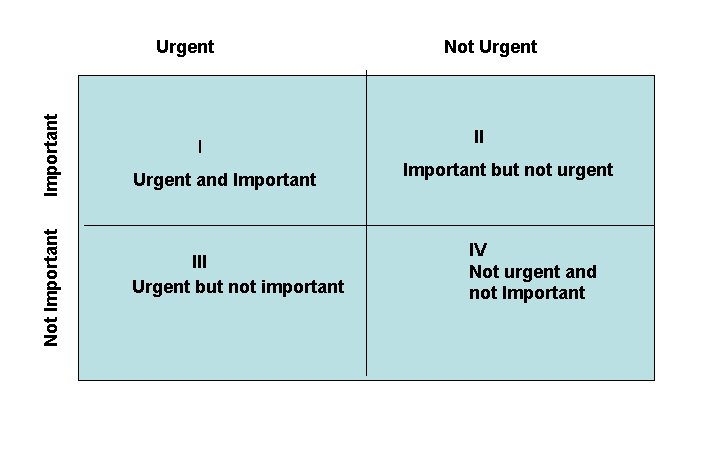
Not Important Urgent I Urgent and Important III Urgent but not important Not Urgent II Important but not urgent IV Not urgent and not Important
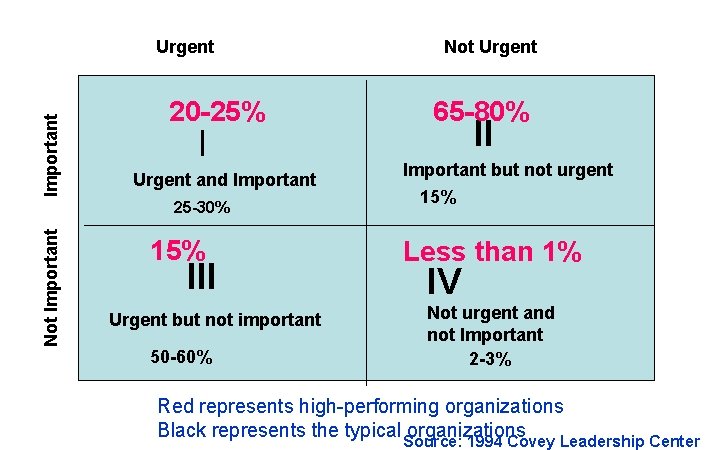
Important Urgent 20 -25% I Urgent and Important Not Important 25 -30% 15% III Urgent but not important 50 -60% Not Urgent 65 -80% II Important but not urgent 15% Less than 1% IV Not urgent and not Important 2 -3% Red represents high-performing organizations Black represents the typical Source: organizations 1994 Covey Leadership Center
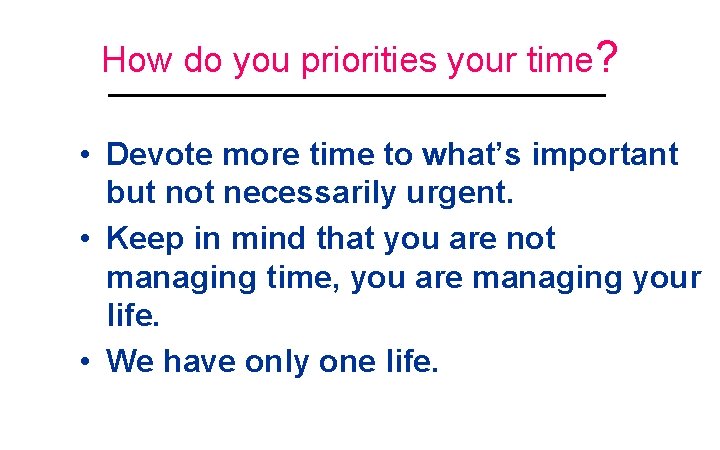
How do you priorities your time? • Devote more time to what’s important but not necessarily urgent. • Keep in mind that you are not managing time, you are managing your life. • We have only one life.

The Interdependent Paradigm • Quality of life is interdependent. • It is a 360 degree totally integrated view of interdependent paradigm. • But at the center is the personal dimension. • Effective interdependence can only be built on a foundation of true independence.
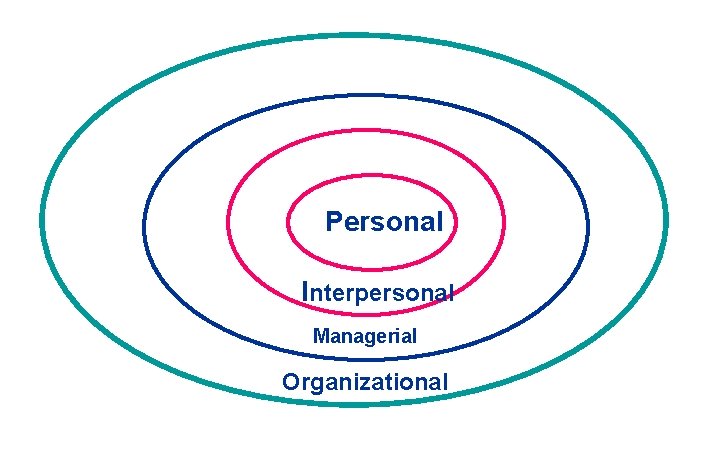
Personal Interpersonal Managerial Organizational
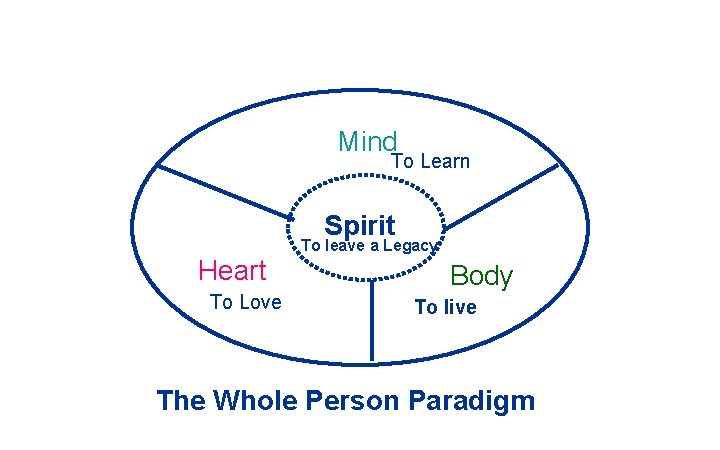
Mind To Learn Spirit To leave a Legacy Heart To Love Body To live The Whole Person Paradigm
Four Endowments in interdependence • • Self –awareness Conscience Independent will Creative Imagination
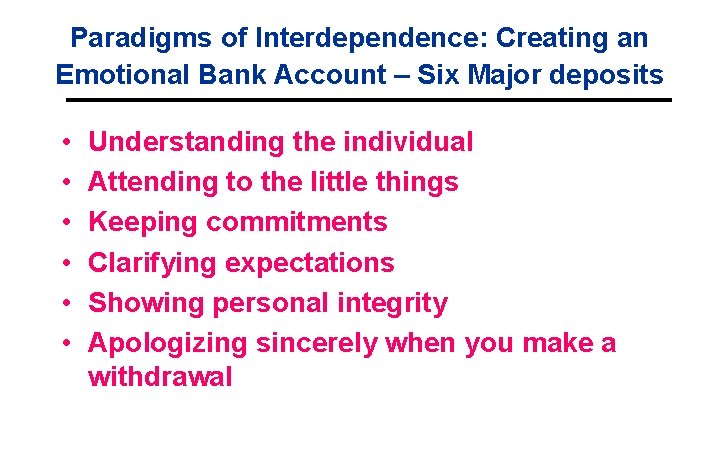
Paradigms of Interdependence: Creating an Emotional Bank Account – Six Major deposits • • • Understanding the individual Attending to the little things Keeping commitments Clarifying expectations Showing personal integrity Apologizing sincerely when you make a withdrawal
Principles of Interpersonal Leadership
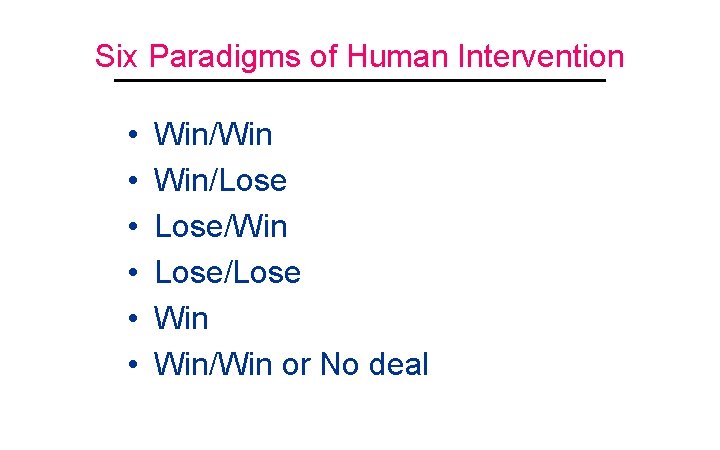
Six Paradigms of Human Intervention • • • Win/Win Win/Lose/Win Lose/Lose Win/Win or No deal

Win-Win • Win/Win - People can seek mutual benefit in all human interactions. – Principle-based behavior.
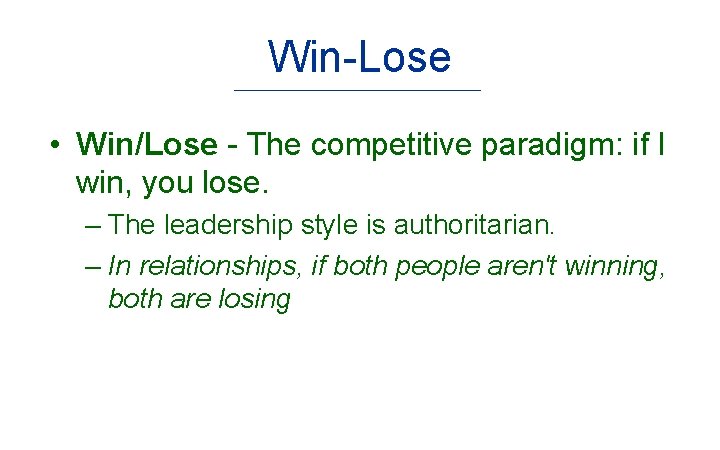
Win-Lose • Win/Lose - The competitive paradigm: if I win, you lose. – The leadership style is authoritarian. – In relationships, if both people aren't winning, both are losing
Lose- Win • Lose/Win - The "Doormat" paradigm. The individual seeks strength from popularity based on acceptance. • The leadership style is permissiveness. Living this paradigm can result in psychosomatic illness from repressed resentment
Lose-Lose • Lose/Lose - When people become obsessed with making the other person lose, even at their own expense. – This is the philosophy of adversarial conflict, war, or of highly dependent persons. (If nobody wins, being a loser isn't so bad. )
Win • Win - Focusing solely on getting what one wants, regardless of the needs of others.
Win/Win or No Deal • Win/Win or No Deal - If we can't find a mutually beneficial solution, we agree to disagreeably - no deal. – This approach is most realistic at the beginning of a business relationship or enterprise. – In a continuing relationship, it's no longer an option.
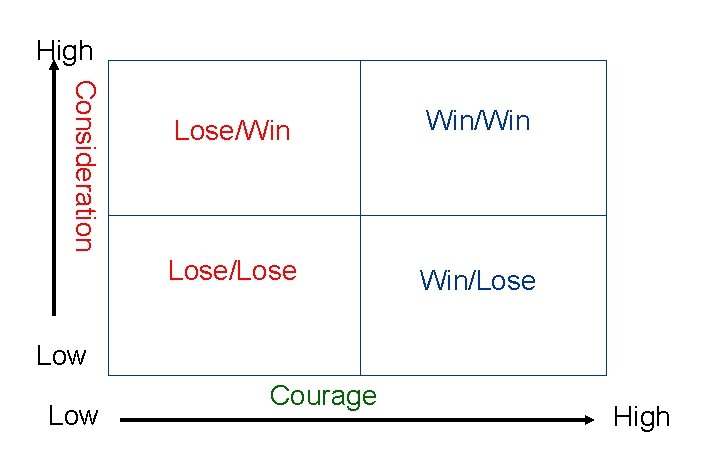
High Consideration Lose/Win Win/Win Lose/Lose Win/Lose Low Courage High
Are you ready to work with others? • Have an abundance mentality; • seek solutions that benefit all parties.
Principles of Emphatic Communication
Where does understanding begin? • Demanding to be understood is a way of saying, "You open your mind for me. “ • • Wanting to understand the other person is a way of saying, "I'll open my mind for you. " • The two are so different in tone and meaning that it's hard to do both at the same time. •
Where does understanding begin? • We generally focus on one or the other. • Most people want only to be understood. • At the root of personality conflicts is the feeling that "he or she doesn't understand me. "
Quote from Covey • The single most important principle in the field of interpersonal relations is this: Seek first to understand, then to be understood. Most people listen, not with the intent to understand, but with the intent to reply. Steven R. Covey (p. 28)
Keys to Communication • To understand another person, we must be willing to be influenced. • When we are open, we give people room to release their fixed positions and consider alternatives. • Seeking first to understand, we gain influence in the relationship. • Seeking first to understand leads people to discover the third alternative
Some key Elements • • • Character and Communication Empathic Listening Diagnosing before prescribing Understanding and Perception Seek to be understood
Are you ready to understand others and allowing others to understand you? • Don’t dire into a conversation. • Listen until you truly understand the other person. • Allow others to understand you.
Principles of Creative Cooperation
Synergy? • Synergy is the essence of principlecentered leadership. • The whole is greater than the sum of its parts. • One plus one equals three or more.
Synergy is the essence of principlecentered leadership • . It catalyzes, unifies and unleashes the greatest powers within people. • All the other habits prepare you to create synergy. • When we truly value, respect and engage our differences, we are prepared to reach for entirely new ideas and breakthrough results.
Synergy: Valuing differences? • Valuing differences is the essence of synergy: the mental, the emotional, the psychological differences between people. • Find ways to cooperate with everyone. • Value the difference between people.
Synergistic Communication • When we communicate synergistically, we are simply opening our mind and heart and expressions to new possibilities, new alternatives and new options.
Synergy in the classroom? • How can we create synergy in the classroom?
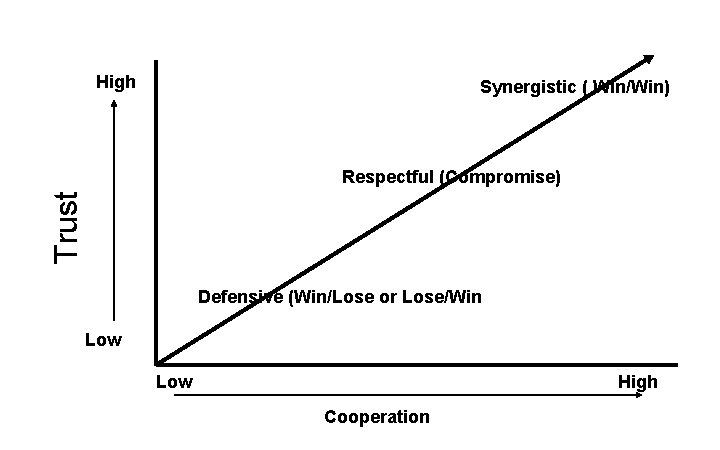
High Synergistic ( Win/Win) Trust Respectful (Compromise) Defensive (Win/Lose or Lose/Win Low High Cooperation

Principles of Balanced Self-renewal
Four dimension of motivations • Sound motivation and organization theory embrace four dimensions of motivations- 1) The economic ( Physical) 2) The Social: How people are treated 3) The Mental: How people are developed and used 4) The spiritual: How the services are rendered
Sharpen the Saw? • Sharpen the saw basically means using all four motivations.
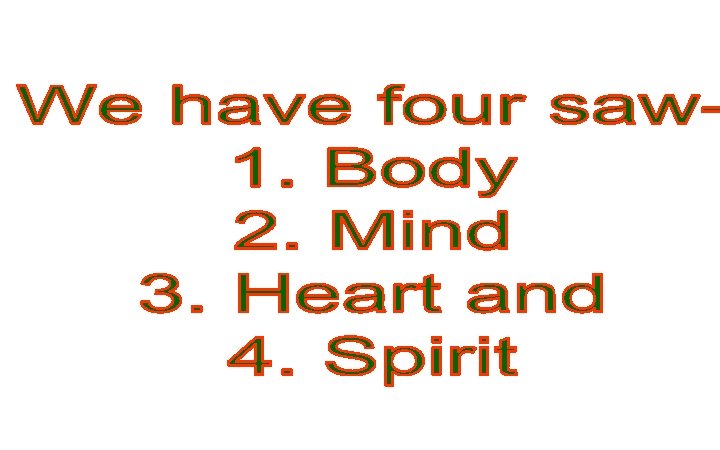
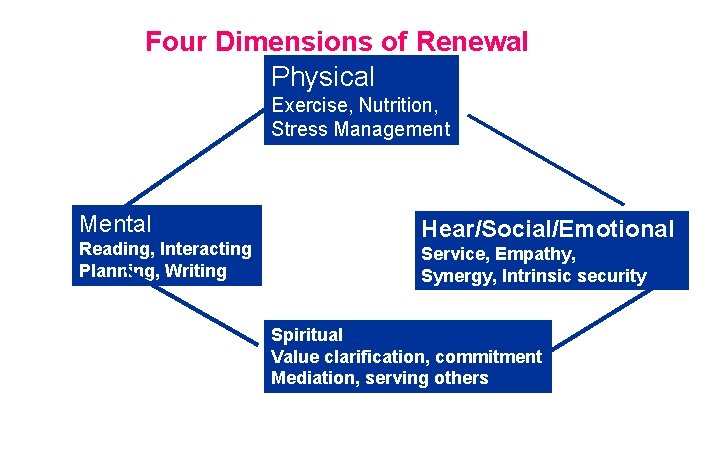
Four Dimensions of Renewal Physical Exercise, Nutrition, Stress Management Mental Reading, Interacting Planning, Writing Hear/Social/Emotional Service, Empathy, Synergy, Intrinsic security Spiritual Value clarification, commitment Mediation, serving others
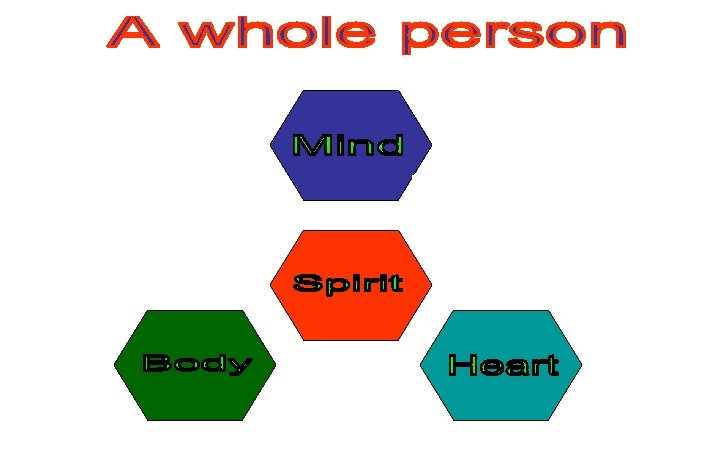
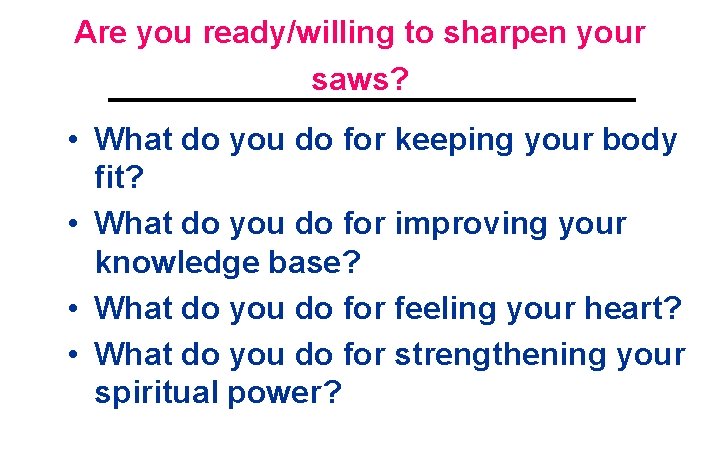
Are you ready/willing to sharpen your saws? • What do you do for keeping your body fit? • What do you do for improving your knowledge base? • What do you do for feeling your heart? • What do you do for strengthening your spiritual power?
Source: Covey R. Stephen (1989), The 7 Habits of Highly Effective People
- Slides: 66