Social Media Records Management Session 6 of 7



- Slides: 74
Social Media Records Management Session 6 of 7 on records management This training does not constitute a legal opinion or legal advice on the part of the Library, Archives and Public Records Branch, of the Secretary Of State.
Presenters Kurtis Chandler Records Analyst Archives and Records Management Branch Ruben Vargas Records Analyst Archives and Records Management Branch Timothy Provenzano Records Analyst Archives and Records Management Branch
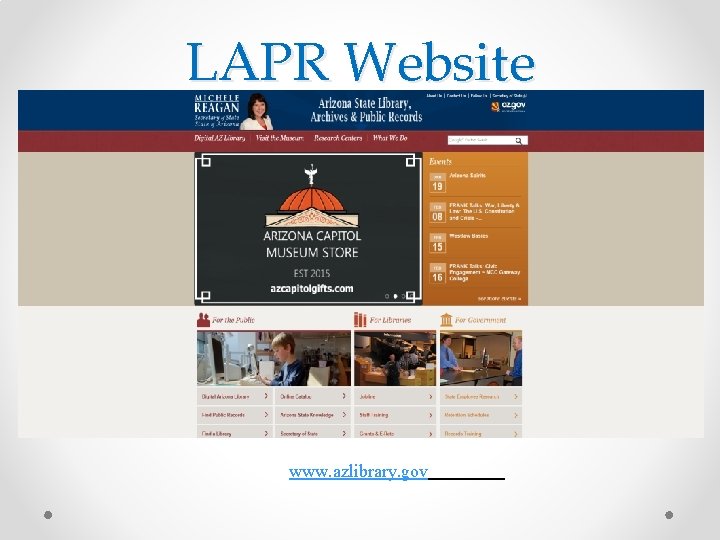
LAPR Website www. azlibrary. gov
LAPR Website www. azlibrary. gov
Archives and Records Management Center Website
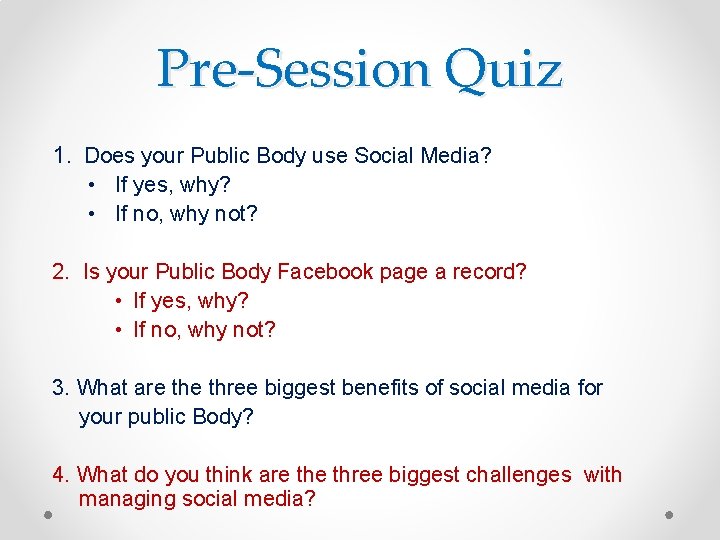
Pre-Session Quiz 1. Does your Public Body use Social Media? • If yes, why? • If no, why not? 2. Is your Public Body Facebook page a record? • If yes, why? • If no, why not? 3. What are three biggest benefits of social media for your public Body? 4. What do you think are three biggest challenges with managing social media?
Pre-Session Quiz 5. Is your Public Body currently managing its social media content? o If yes, who is doing this? o If yes, how is it doing this? 6. Are there RM risks to social media? • If yes, what are some of them? 7. Is your Public Body currently providing employee training on social media? 8. Does your Public Body have a Social Media Policy? 9. Given all the problems with managing social media, should your Public Body NOT be on social media?
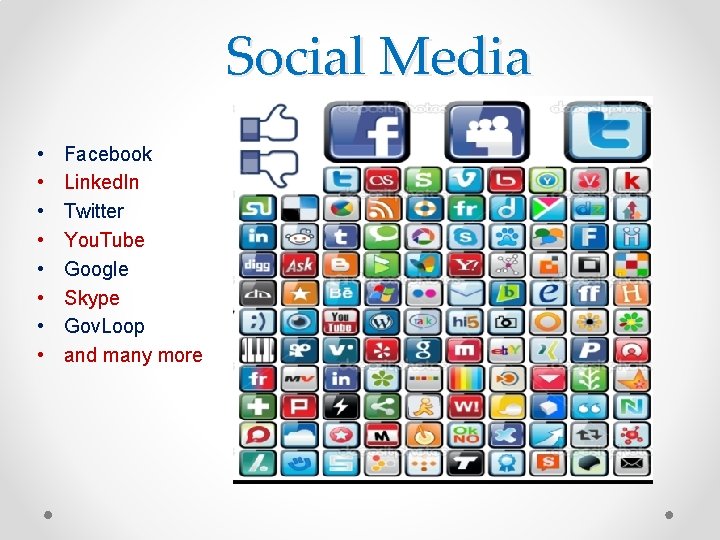
Social Media • • Facebook Linked. In Twitter You. Tube Google Skype Gov. Loop and many more
Is Social Media a “Record”? 41 -151. 18. Definition of records In this article, unless the context otherwise requires: • "records" means all books, papers, maps, photographs or other documentary materials, • Regardless of physical form or characteristics, • Made or received by any governmental agency in pursuance of law or in connection with the transaction of public business • As evidence of the organization, functions, policies, decisions, procedures, operations or other activities of the government, or because of the informational and historical value of data contained in the record, and includes records that are made confidential by statute.
Benefits of Social Media: Why, Who, Where Session 6 of 7 on Records Management
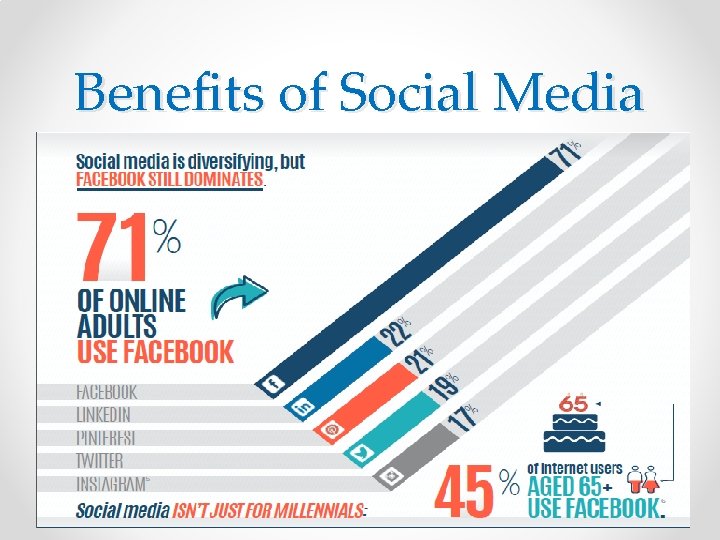
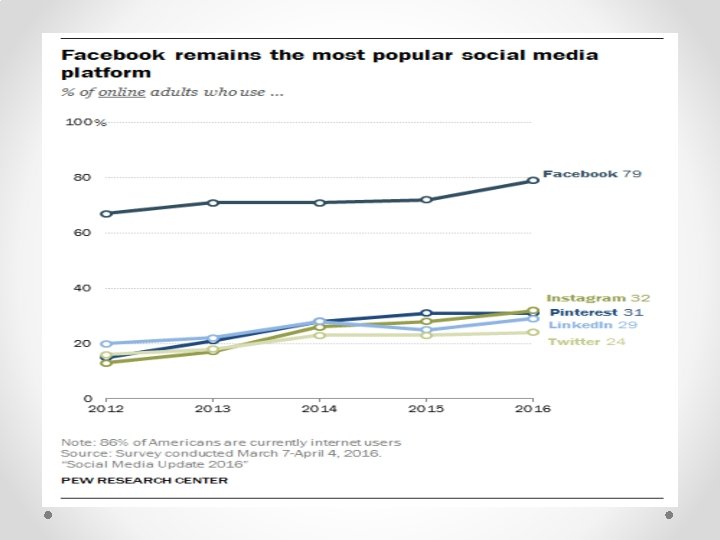
Benefits of Social Media
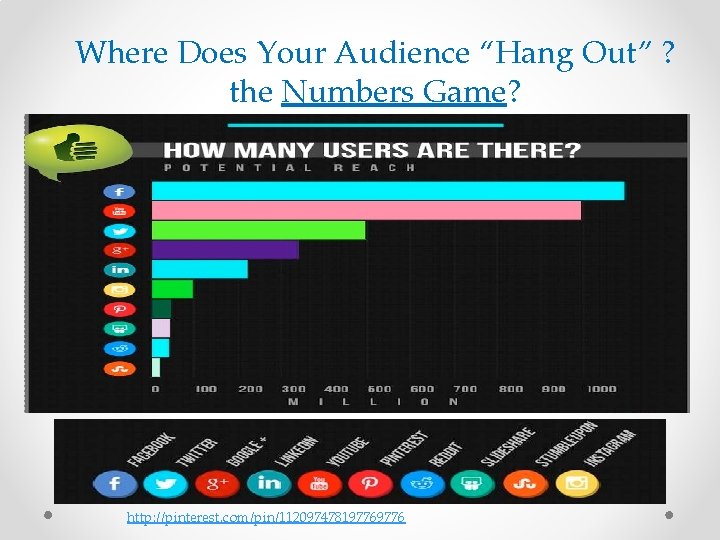
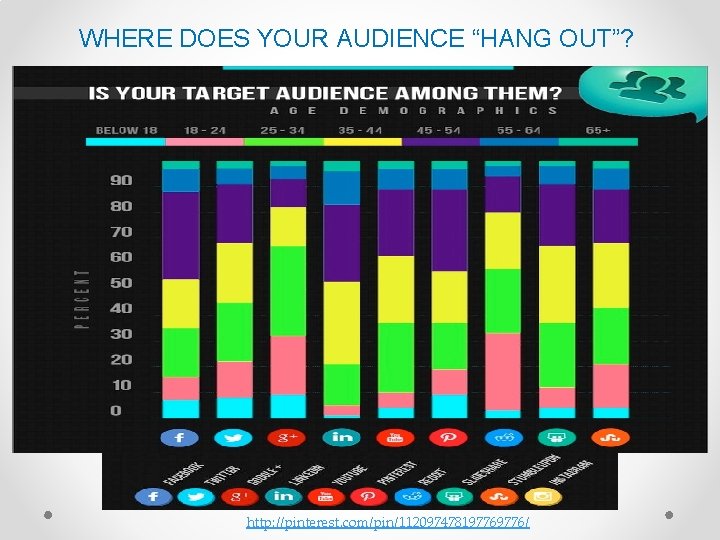
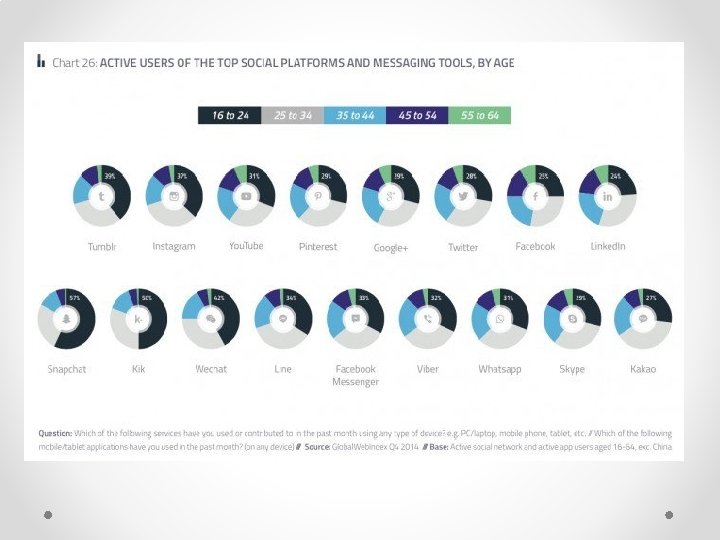
Where Does Your Audience “Hang Out” ? the Numbers Game? http: //pinterest. com/pin/11209747819776
WHERE DOES YOUR AUDIENCE “HANG OUT”? http: //pinterest. com/pin/11209747819776/
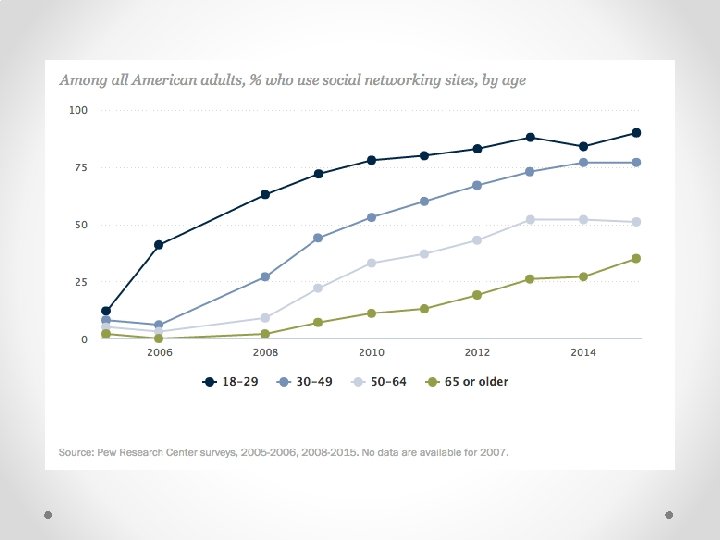
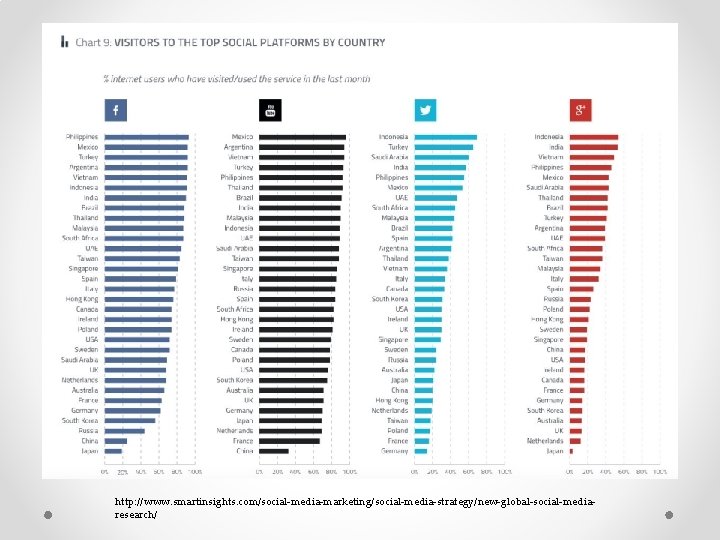
http: //www. smartinsights. com/social-media-marketing/social-media-strategy/new-global-social-mediaresearch/
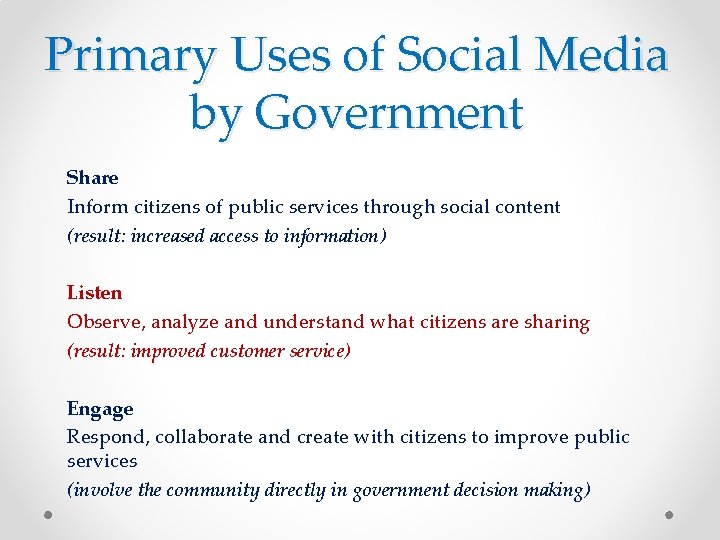
Primary Uses of Social Media by Government Share Inform citizens of public services through social content (result: increased access to information) Listen Observe, analyze and understand what citizens are sharing (result: improved customer service) Engage Respond, collaborate and create with citizens to improve public services (involve the community directly in government decision making)
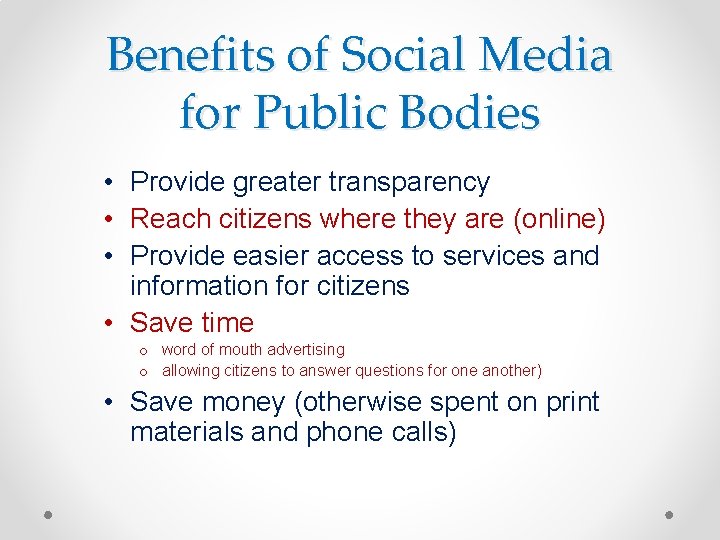
Benefits of Social Media for Public Bodies • Provide greater transparency • Reach citizens where they are (online) • Provide easier access to services and information for citizens • Save time o word of mouth advertising o allowing citizens to answer questions for one another) • Save money (otherwise spent on print materials and phone calls)
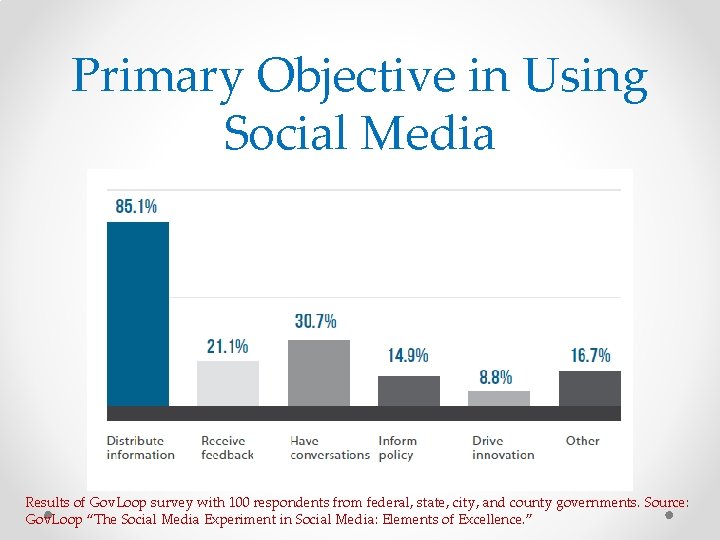
Primary Objective in Using Social Media Results of Gov. Loop survey with 100 respondents from federal, state, city, and county governments. Source: Gov. Loop “The Social Media Experiment in Social Media: Elements of Excellence. ”
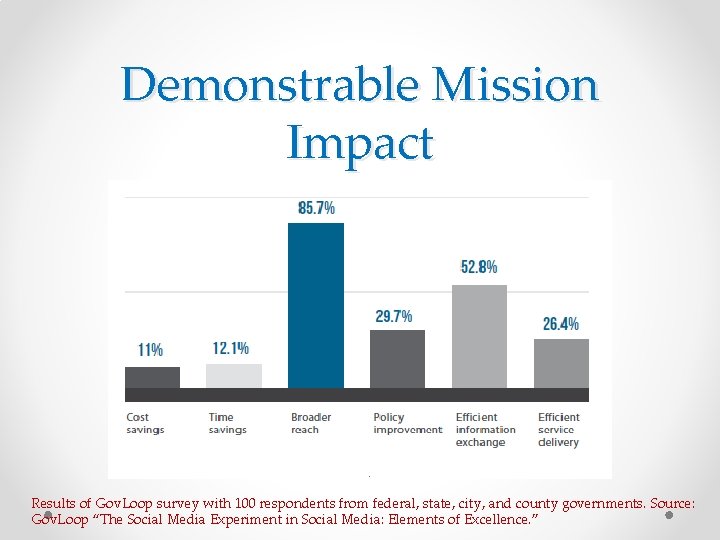
Demonstrable Mission Impact Results of Gov. Loop survey with 100 respondents from federal, state, city, and county governments. Source: Gov. Loop “The Social Media Experiment in Social Media: Elements of Excellence. ”
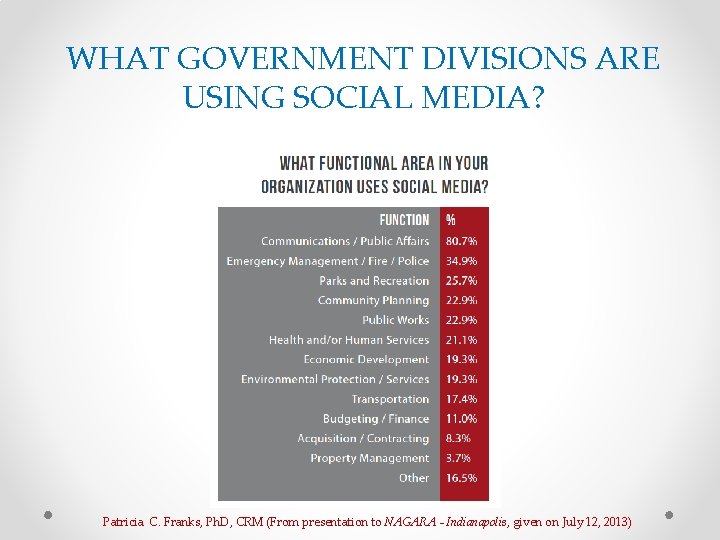
WHAT GOVERNMENT DIVISIONS ARE USING SOCIAL MEDIA? Patricia C. Franks, Ph. D, CRM (From presentation to NAGARA - Indianapolis, given on July 12, 2013)
Question #4: What are Some of the Challenges of Social Media Session 6 of 7 on Records Management
The “Place" of Public Records Why Mix Social Media and Records Management? Isn’t Inherent Transparency of Social Media Enough? Are Openness and Transparency the only responsibilities of Government?
Duties of All Public Bodies and Employees for Retention & Preservation Establish and maintain an active, continuing program for the economical and efficient management of the public records of the agency. ARS 41 -151. 14(A)(1)
Who is Managing all that Stuff? Questions to think about: • What is the difference between data and records? • Whose “responsibility” is it to provide Records Management service to their customers? • Who is in the best position to “manage” electronic records? • Is the creator of the content / record? • Or, is the “post-er” of the content / record? • Why do these questions matter?
RM Questions For Content Management Important RM Concept for all forms of Electronic Communication: • Is Content in Communication a Copy? • Is that content (of original not copy) being retained and managed (from RM perspective) elsewhere? • Is Content Unique information? • Is Unique Content being retained and managed (from RM perspective)? • Why do these questions matter?
When is Social Media Not So Social? Challenges with Social Media Records: § A. R. S. require we (government) control (manage) our records during their entire retention period. § Social Media sites provide little to no tools to help manage YOUR records on THEIR sites. § Who controls the content on Social Media sites? ______________________________________________________ = Challenges to compliance with RM Statutes.
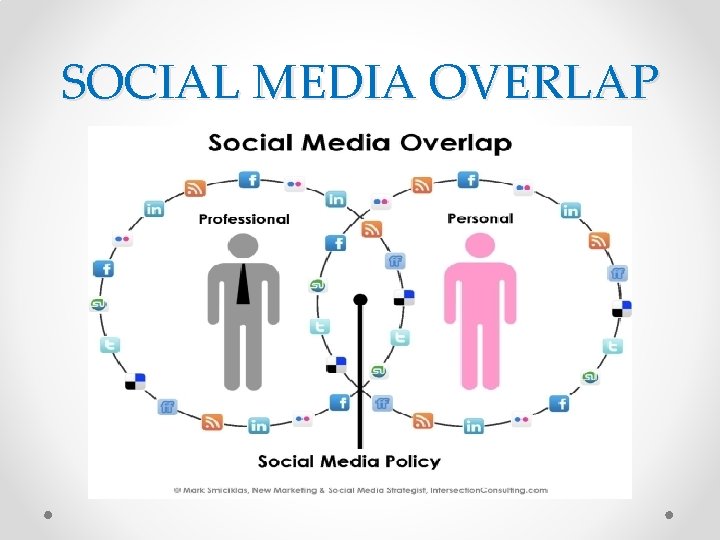
SOCIAL MEDIA OVERLAP
Social Media Virgins Beware! 1. If You Post it, You Own It • Whatever content / records government bodies post to Social Media sites belongs to the public body and NOT to the Social Media site - from a Records Management point-of-view. 2. If You Own It, You Manage It • If you post something to any Social Media site, and the posting (words, pics, video, etc. ) is work-related, then you have a statutory responsibility to retain the posted information for the approved & correct retention period. • • Link to Social Media Records Retention Schedule: http: //www. azlibrary. gov/records/documents/pdf/all%20 -%20 email. pdf 3. If You Created It, You Own It • The Creator of any content being posted to social media sites (or other websites) needs to be responsible for the proper retention of the content they created.
You’ve Got the Power - at least some 4. Unique vs. Copy • Copies Are Not Records. As such, copies do not need to be managed. • Avoid posting any unique or original content to social media sites. Post only copies of information being managed elsewhere by a specific person responsible for its retention. This is especially grievous with Videos posted to You. Tube, and the like. 5. “Blogs and Wall Posts, Oh My!” • These are the two most likely areas for Unique content that will need to be managed. 6. Email All Wall Posts • Make sure you set up your social media site to generate an email to your designated email account (ex. records@azlibrary. gov) whenever anyone posts a comment to your wall. You can then manage that email for retention since you cannot manage the retention on your social media site.
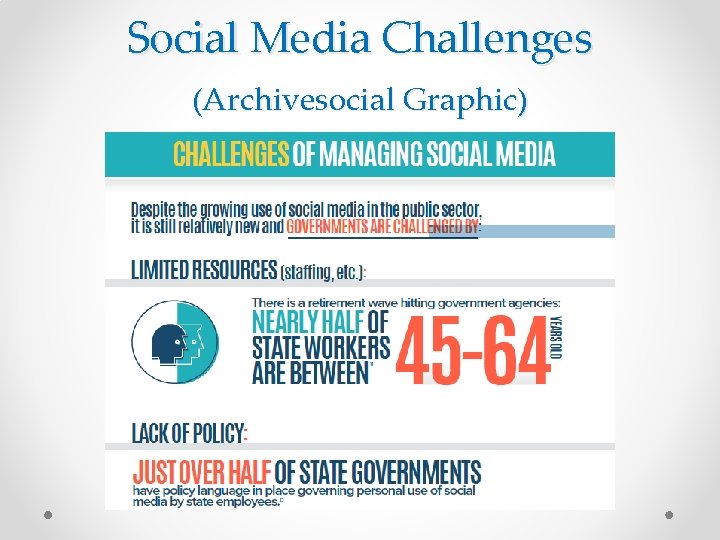
Social Media Challenges (Archivesocial Graphic)
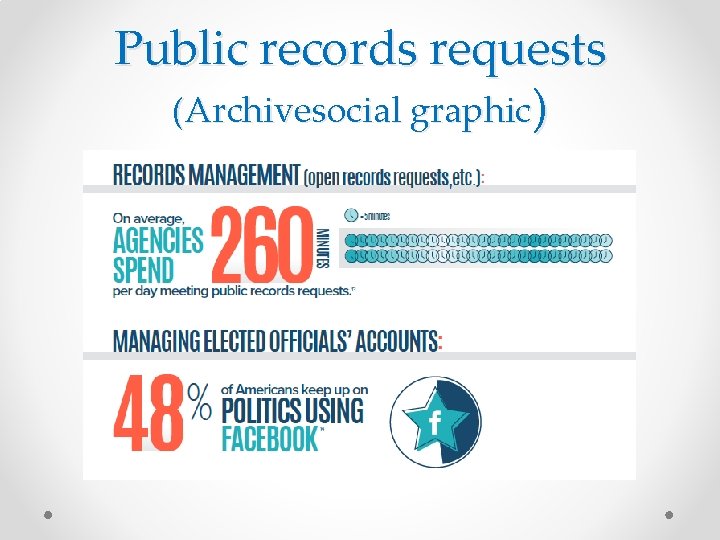
Public records requests (Archivesocial graphic)
What Records Managers Need to Know About Social Media Session 6 of 7 on Records Management
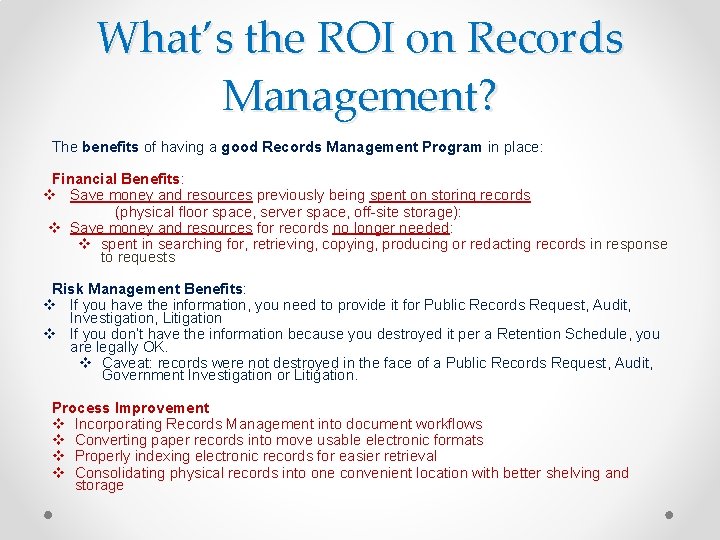
What’s the ROI on Records Management? The benefits of having a good Records Management Program in place: Financial Benefits: v Save money and resources previously being spent on storing records (physical floor space, server space, off-site storage): v Save money and resources for records no longer needed: v spent in searching for, retrieving, copying, producing or redacting records in response to requests Risk Management Benefits: v If you have the information, you need to provide it for Public Records Request, Audit, Investigation, Litigation v If you don’t have the information because you destroyed it per a Retention Schedule, you are legally OK. v Caveat: records were not destroyed in the face of a Public Records Request, Audit, Government Investigation or Litigation. Process Improvement v Incorporating Records Management into document workflows v Converting paper records into move usable electronic formats v Properly indexing electronic records for easier retrieval v Consolidating physical records into one convenient location with better shelving and storage
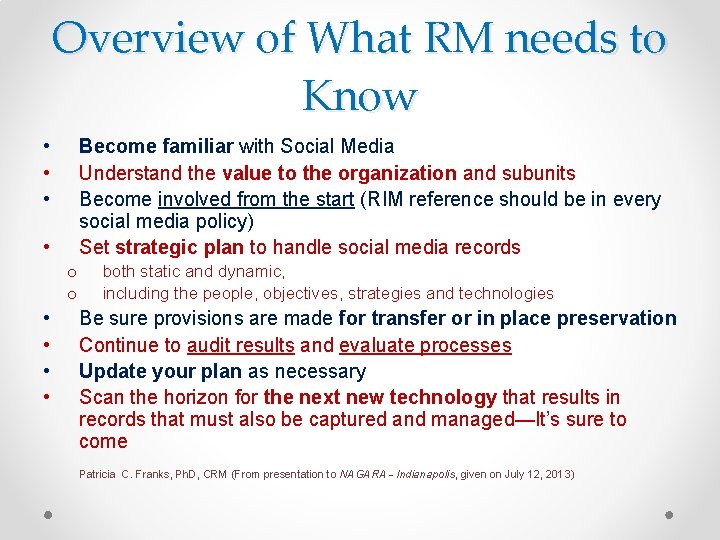
Overview of What RM needs to Know • • • Become familiar with Social Media Understand the value to the organization and subunits Become involved from the start (RIM reference should be in every social media policy) Set strategic plan to handle social media records • o o • • both static and dynamic, including the people, objectives, strategies and technologies Be sure provisions are made for transfer or in place preservation Continue to audit results and evaluate processes Update your plan as necessary Scan the horizon for the next new technology that results in records that must also be captured and managed—It’s sure to come Patricia C. Franks, Ph. D, CRM (From presentation to NAGARA - Indianapolis, given on July 12, 2013)
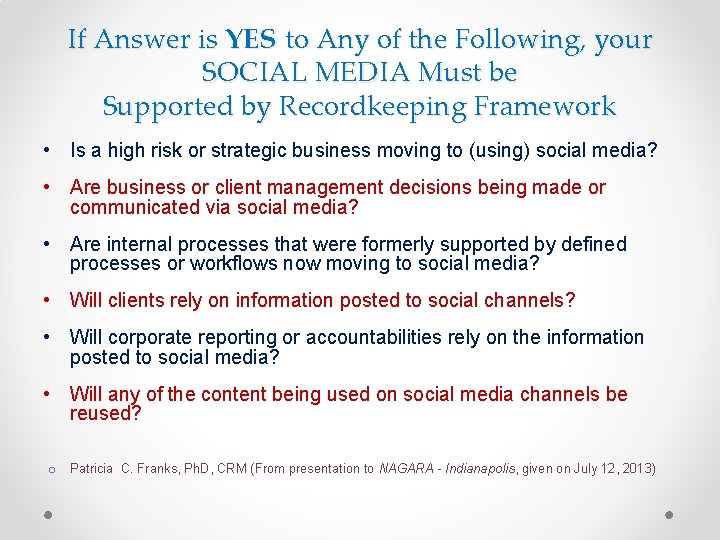
If Answer is YES to Any of the Following, your SOCIAL MEDIA Must be Supported by Recordkeeping Framework • Is a high risk or strategic business moving to (using) social media? • Are business or client management decisions being made or communicated via social media? • Are internal processes that were formerly supported by defined processes or workflows now moving to social media? • Will clients rely on information posted to social channels? • Will corporate reporting or accountabilities rely on the information posted to social media? • Will any of the content being used on social media channels be reused? o Patricia C. Franks, Ph. D, CRM (From presentation to NAGARA - Indianapolis, given on July 12, 2013)
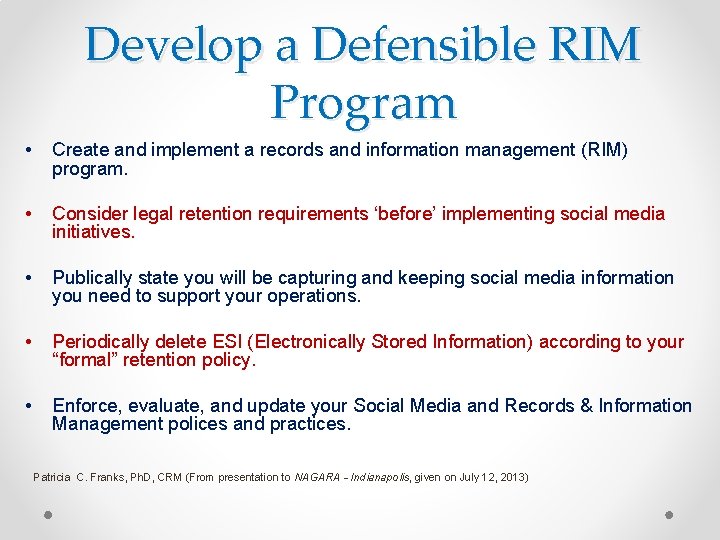
Develop a Defensible RIM Program • Create and implement a records and information management (RIM) program. • Consider legal retention requirements ‘before’ implementing social media initiatives. • Publically state you will be capturing and keeping social media information you need to support your operations. • Periodically delete ESI (Electronically Stored Information) according to your “formal” retention policy. • Enforce, evaluate, and update your Social Media and Records & Information Management polices and practices. Patricia C. Franks, Ph. D, CRM (From presentation to NAGARA - Indianapolis, given on July 12, 2013)
To Implement Social Media Recordkeeping • Understand the specific risks that apply to social media • Know what the organization is doing with social media • Develop a social media information strategy • Support social media use with a policy that supports recordkeeping • Be proactive • Keep abreast of emerging trends in social media systems and use o Patricia C. Franks, Ph. D, CRM (From presentation to NAGARA - Indianapolis, given on July 12, 2013)
Your Social Media Records Management Arsenal Session 6 of 7 on Records Management
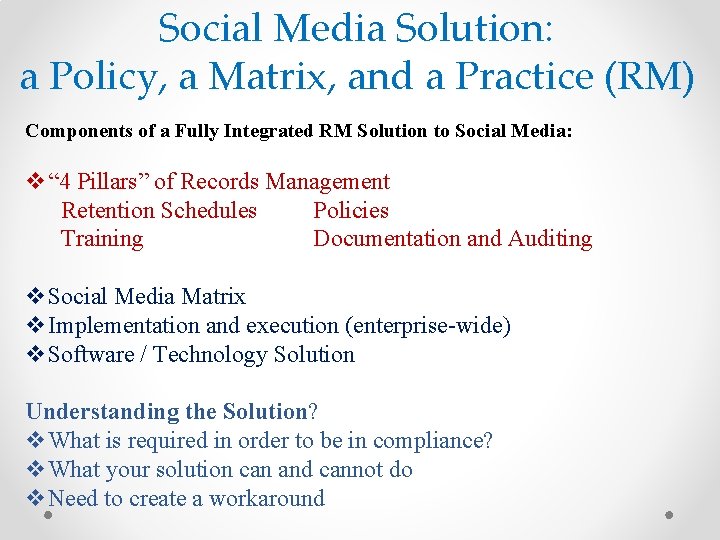
Social Media Solution: a Policy, a Matrix, and a Practice (RM) Components of a Fully Integrated RM Solution to Social Media: v“ 4 Pillars” of Records Management Retention Schedules Policies Training Documentation and Auditing v. Social Media Matrix v. Implementation and execution (enterprise-wide) v. Software / Technology Solution Understanding the Solution? v. What is required in order to be in compliance? v. What your solution can and cannot do v. Need to create a workaround
Social Media Retention Periods Social Media Records managed by content Public Information and Marketing Records General Retention Schedule: http: //apps. azlibrary. gov/records/general_rs/Public%20 Inf ormation%20 and %20 Marketing. pdf
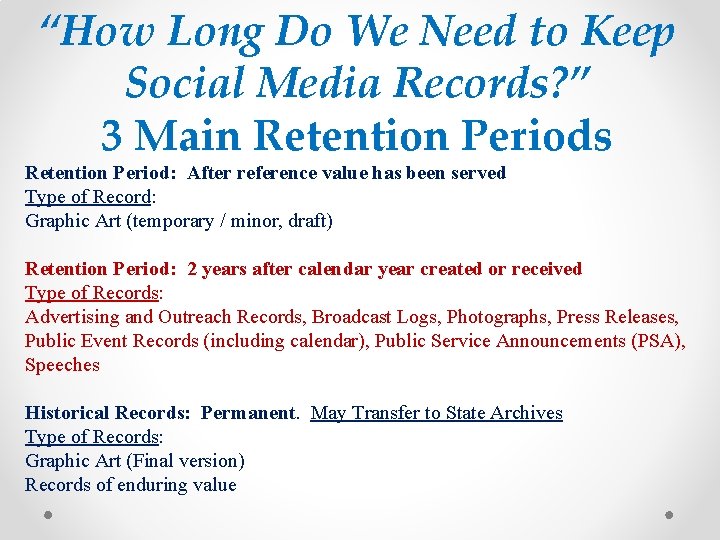
“How Long Do We Need to Keep Social Media Records? ” 3 Main Retention Periods Retention Period: After reference value has been served Type of Record: Graphic Art (temporary / minor, draft) Retention Period: 2 years after calendar year created or received Type of Records: Advertising and Outreach Records, Broadcast Logs, Photographs, Press Releases, Public Event Records (including calendar), Public Service Announcements (PSA), Speeches Historical Records: Permanent. May Transfer to State Archives Type of Records: Graphic Art (Final version) Records of enduring value
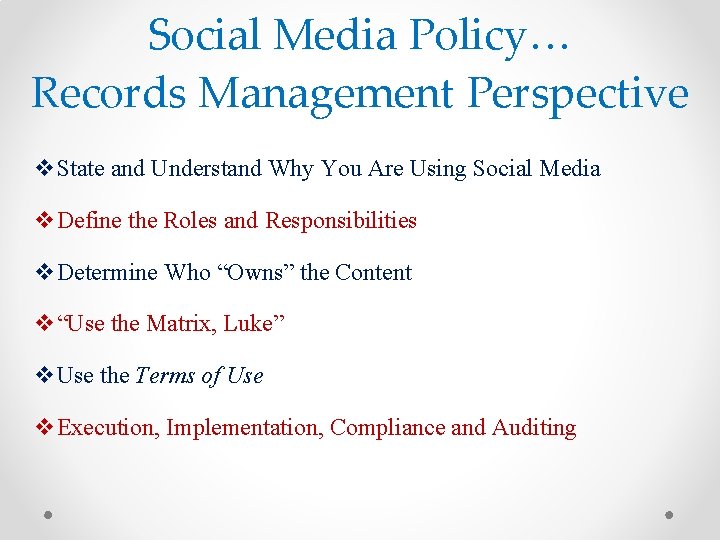
Social Media Policy… Records Management Perspective v. State and Understand Why You Are Using Social Media v. Define the Roles and Responsibilities v. Determine Who “Owns” the Content v“Use the Matrix, Luke” v. Use the Terms of Use v. Execution, Implementation, Compliance and Auditing
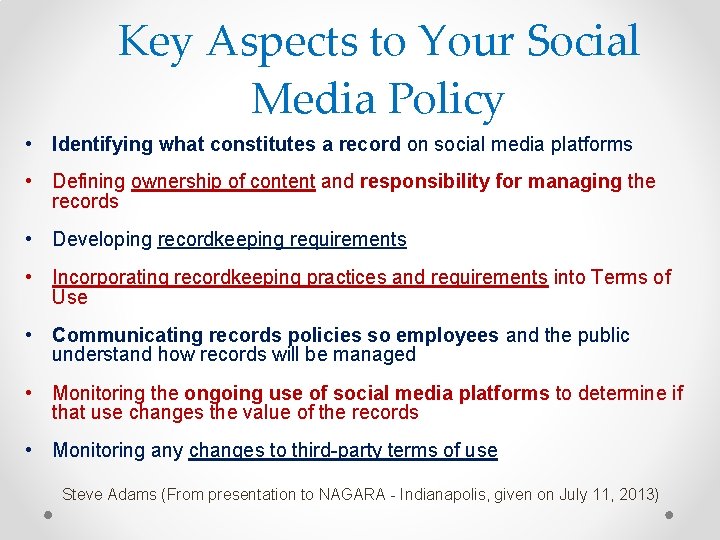
Key Aspects to Your Social Media Policy • Identifying what constitutes a record on social media platforms • Defining ownership of content and responsibility for managing the records • Developing recordkeeping requirements • Incorporating recordkeeping practices and requirements into Terms of Use • Communicating records policies so employees and the public understand how records will be managed • Monitoring the ongoing use of social media platforms to determine if that use changes the value of the records • Monitoring any changes to third-party terms of use Steve Adams (From presentation to NAGARA - Indianapolis, given on July 11, 2013)
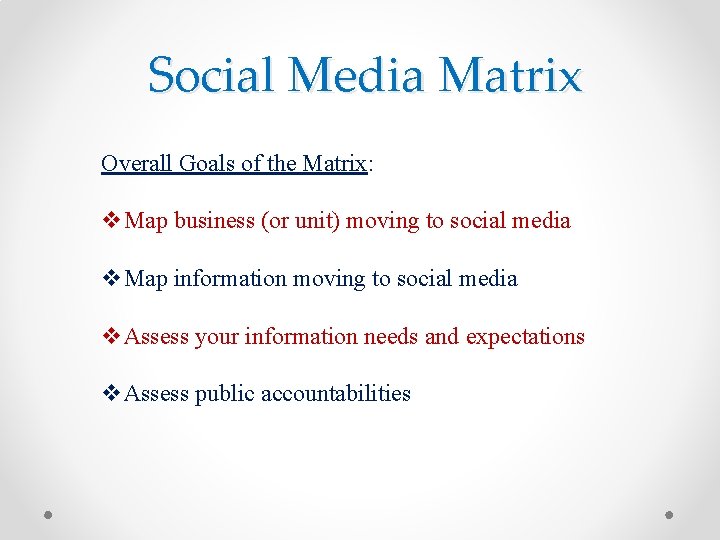
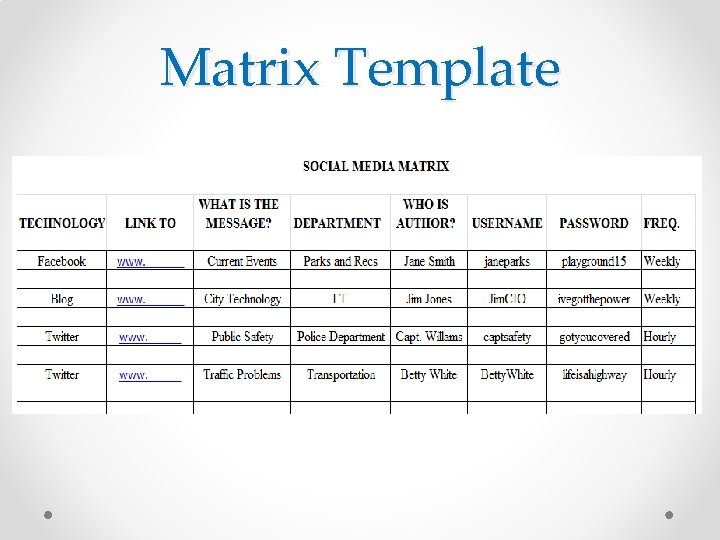
Social Media Matrix Overall Goals of the Matrix: v. Map business (or unit) moving to social media v. Map information moving to social media v. Assess your information needs and expectations v. Assess public accountabilities
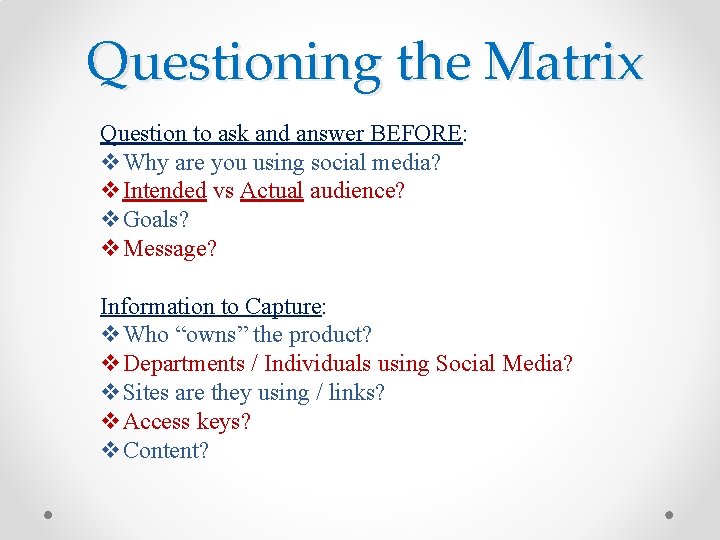
Questioning the Matrix Question to ask and answer BEFORE: v. Why are you using social media? v. Intended vs Actual audience? v. Goals? v. Message? Information to Capture: v. Who “owns” the product? v. Departments / Individuals using Social Media? v. Sites are they using / links? v. Access keys? v. Content?
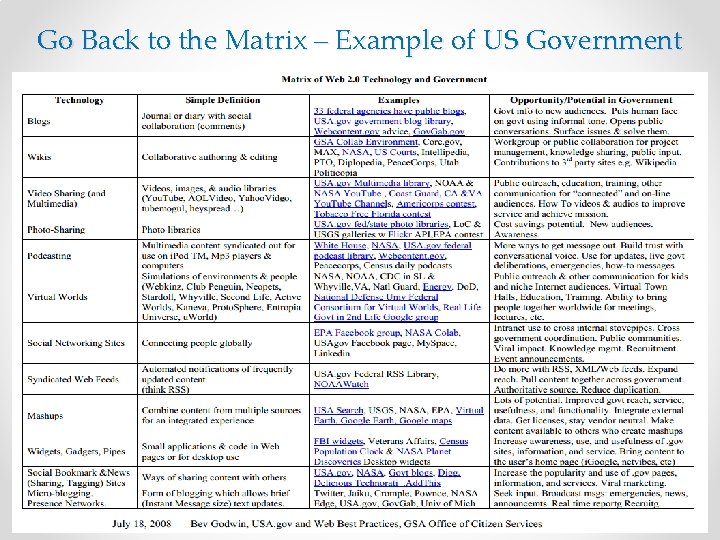
Go Back to the Matrix – Example of US Government social media Matrix
Matrix Template
Verifying Your Municipality’s Social Media Accounts Session 6 of 7 on Records Management
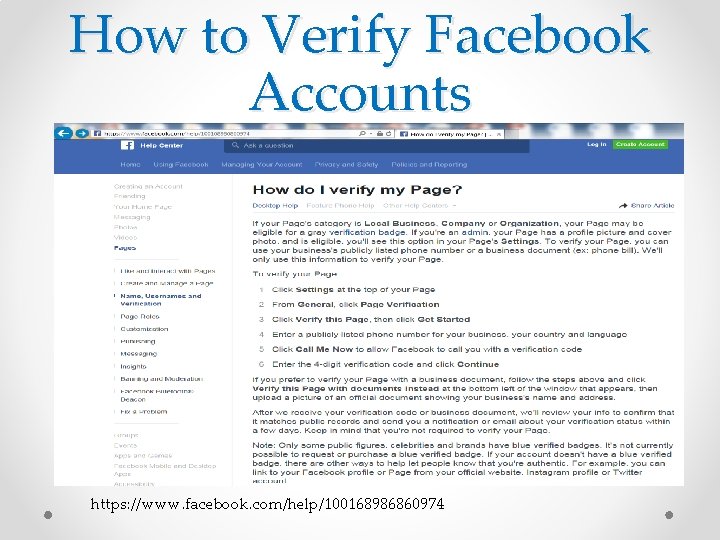
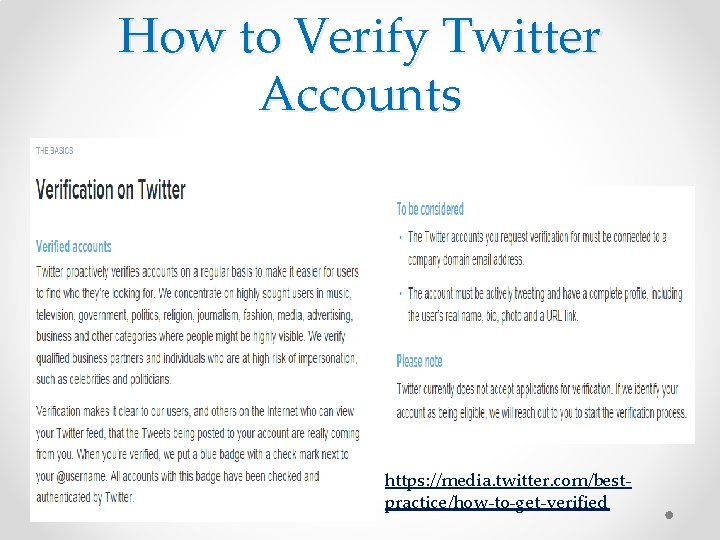
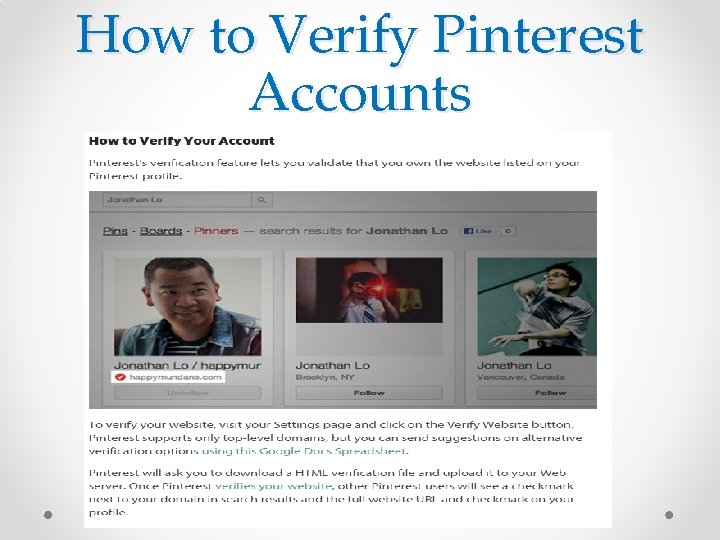
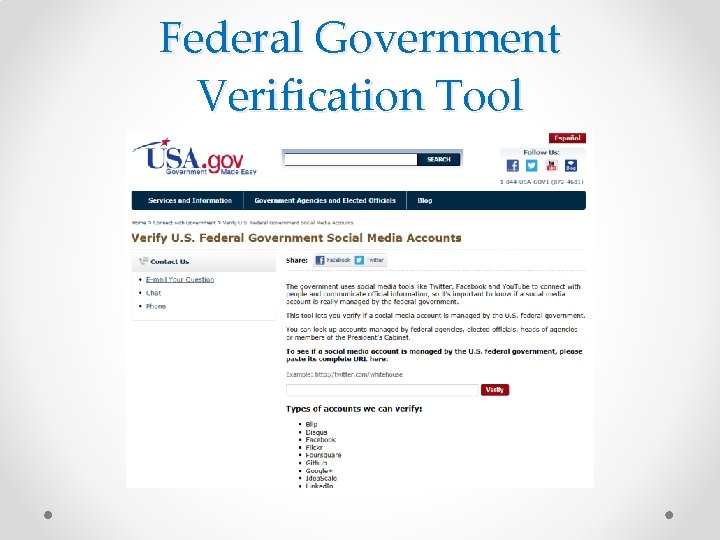
Why Verify Your Municipality’s Social Media Sites? 1. Verification ensure the public we are who we say we are 2. More important now than ever: thousands of government social media and more all the time pages on 3. Impersonation and Parody accounts are common 4. Fake accounts can create confusion and chaos Examples: Baltimore riots saw as many as 100 fake government accounts Hurricane Sandy impersonation accounts gave misleading information 5. Fake accounts can hijack your message 6. Verify NOW and not later – after an emergency, problem
How to Verify Facebook Accounts https: //www. facebook. com/help/100168986860974
How to Verify Twitter Accounts https: //media. twitter. com/bestpractice/how-to-get-verified
How to Verify Pinterest Accounts
Federal Government Verification Tool
Legal Challenges of Social Media for Municipalities Session 6 of 7 on Records Management
Risk Component – Terms of Use (Tof. U) Contracts Problem – If you want to use the Social Media site you Agree! § Employee mindset toward setting up Social Media account is trained by their own personal use of Social Media § We have been trained by previous use to “Click to Agree” to Terms and Conditions – but this is a CONTRACT § Contract between Public Body and Social Media site very likely to be established by employee NOT Lawyer or Procurement professional § Employee likely did not even scroll through Tof. U to review for acceptability § If they did, they probably would not know what is significant, what is in violation of Public Body procurement policies & practices, etc.
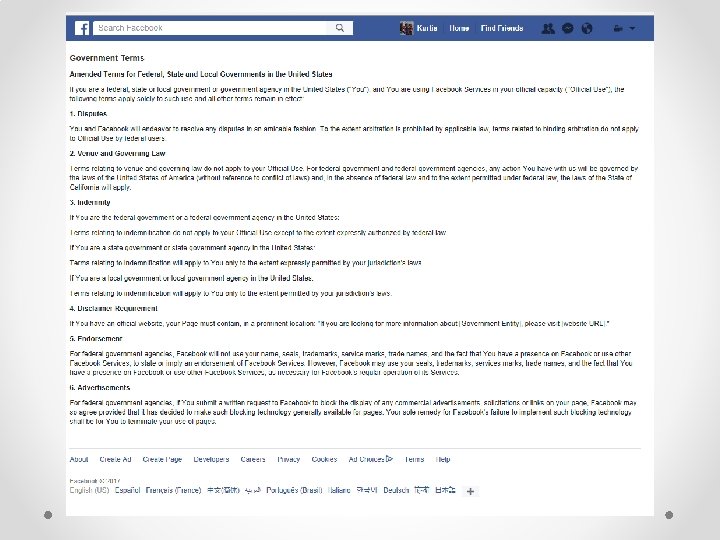
Facebook – California is Jurisdiction • If you (or your employees) click “Accept” – Your Public Body Agrees to: o You agree to handle any legal challenges in California • Santa Clara County • California State Laws apply • Agree to limit Indemnity • Are your Public Body Attorneys licensed in California? o What You Lose – Your right to handle dispute in Arizona
Successes from State & Municipal Partnership - New Facebook Tof. U for Public Bodies New Option for 2011 State and Local Government Exception – What You Get § Strikes Jurisdiction / venue in CA § Strikes Application of CA Law § Strikes the indemnity clause except to the extent indemnity is allowed by a state’s constitution or law § Encourage amicable resolution between public entities and Facebook over any disputes
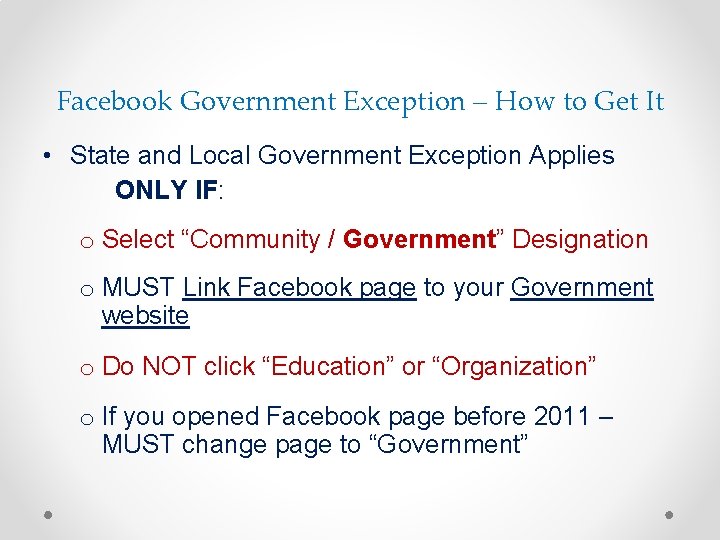
Facebook Government Exception – How to Get It • State and Local Government Exception Applies ONLY IF: o Select “Community / Government” Designation o MUST Link Facebook page to your Government website o Do NOT click “Education” or “Organization” o If you opened Facebook page before 2011 – MUST change page to “Government”
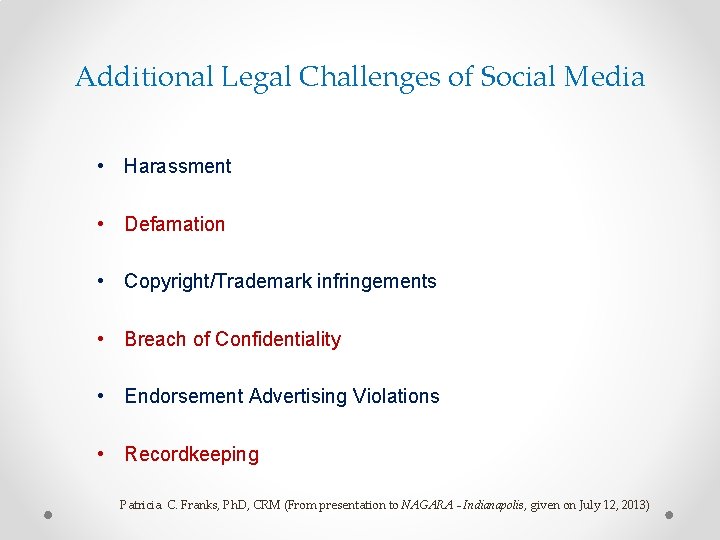
Additional Legal Challenges of Social Media • Harassment • Defamation • Copyright/Trademark infringements • Breach of Confidentiality • Endorsement Advertising Violations • Recordkeeping Patricia C. Franks, Ph. D, CRM (From presentation to NAGARA - Indianapolis, given on July 12, 2013)
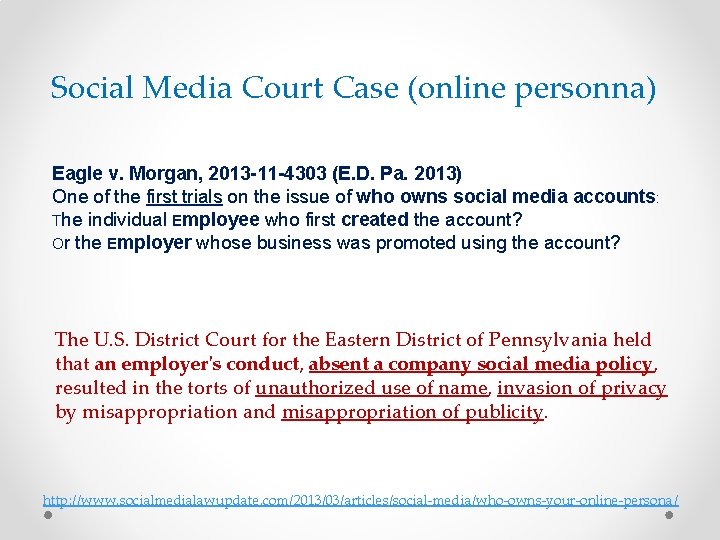
Social Media Court Case (online personna) Eagle v. Morgan, 2013 -11 -4303 (E. D. Pa. 2013) One of the first trials on the issue of who owns social media accounts: The individual Employee who first created the account? Or the Employer whose business was promoted using the account? The U. S. District Court for the Eastern District of Pennsylvania held that an employer's conduct, absent a company social media policy, resulted in the torts of unauthorized use of name, invasion of privacy by misappropriation and misappropriation of publicity. http: //www. socialmedialawupdate. com/2013/03/articles/social-media/who-owns-your-online-persona/
“online persona” Court Case (continued) The employer may have prevailed if it had implemented a social media policy that covered factors relevant to ownership, such as whether: (1) the employer paid the social media account fees; (2) the employer dictated the precise contents of the employee's account; (3) the employee acted expressly on behalf of the employer due to their position, role or responsibility; or (4) the social media account was developed and built through investment of the employer's time and resources. http: //www. socialmedialawupdate. com/2013/03/articles/social-media/who-ownsyour-online-persona/
Specific Problem Areas Session 6 of 7 on Records Management
#1. Beware “Executive Communication” and Social Media § Executive Correspondence is a Permanent record if it “sets or discusses policy” § Any communication / correspondence that either discusses or sets policy, and takes place in any “physical form or characteristic” (ARS § 41 -151. 18), involving an executive (any Board, Commission or Council member, an Agency Director, elected official, County / Department / Division Leadership) will meet the definition of “Executive Correspondence” • Since Policies are Permanent, then executive discussions of Policies become important Permanent records to help provide context to the Policy(ies) § Where this discussion takes place does not matter: could be on paper, on a website, in an email, on Social Media, in a blog, in a shared workspace, definitely in Sire, etc. § This specific records series is from General Schedule GS 1021 Officials Records Why is this a challenge?
#2. Beware of Historical Records If a record is historically significant, it is a permanent record. **Permanent Records are of interest to the State Archives and future researchers. Records are deemed historically significant records when they: § Document a controversial issue § Document a program, project, event or issue that results in a significant change that affects the local community, county or state § Document a program, project, event or issue that involves prominent people, places or events § Document a program, project, event or issue that resulted in media attention locally, statewide or nationally Why is this a challenge?
#3. Elected Officials and Social Media § Avoid “cleaning house” to make room for the newly elected official. § Include both in-house and vendor / media produced § Controversial Topics / Topics of Interest (prev. 2 slides) § What records on Social Media will be of interest to the State Archives and the future: § Videos / Tweets / Media attention specifically § § § § involving the elected official Inauguration Speeches / Statements Letters / Proclamations Press Releases Significant Events Photos Bio Statements Involving Core Values / Duties of Office
#4. Video as Record / Permanent Record Videos and Tweets: Your website, You. Tube, Facebook, Twitter, etc. § Make sure your only copy of the video / tweet is NOT online @ Social Media site. What types of videos / tweets would be of interest: § Involving Core Values / Duties of Office § Deal with controversial topics and/or topics of interest – You will recognize many of these issues, especially if you suddenly get a large number of letters, calls or e-mails on a hot topic: in opposition to an issue in support of an issue expressing a concern § Examples of Current / Recent Issues Abortion, Alternative fuels, Environmental issues, Fiscal concerns, Forests, wildfires and forest management, Gambling / casinos, Gas prices, Gay rights, Gun control, Freeways or highways, Illegal immigration, Land development issues, Legalization of drugs, Legislation (involving your Agency), Important landmarks (if you still have correspondence), Terrorism/terrorists, Water issues, Welfare issues (for or against)
Social Media Retention Tools Available From …? Session 6 of 7 on Records Management
Social Media Tools for Capturing Content - WARNING • Some social media sites now provide built-in “archiving” tools that will help you capture the content in a location outside of the social media site. • Most of these tools are NOT RM approved tools, because they don’t have any retention capabilities, but merely a way of grabbing and saving content. • These may not provide a legally defensible audit trail in court, so choosing between the tools requires a critical analysis, and may require additional technology layers. • Since Facebook and Twitter did not initially provide archiving tools themselves, some other third-party applications have popped up to perform the task. • Ask your potential vendor about the retention management capabilities.
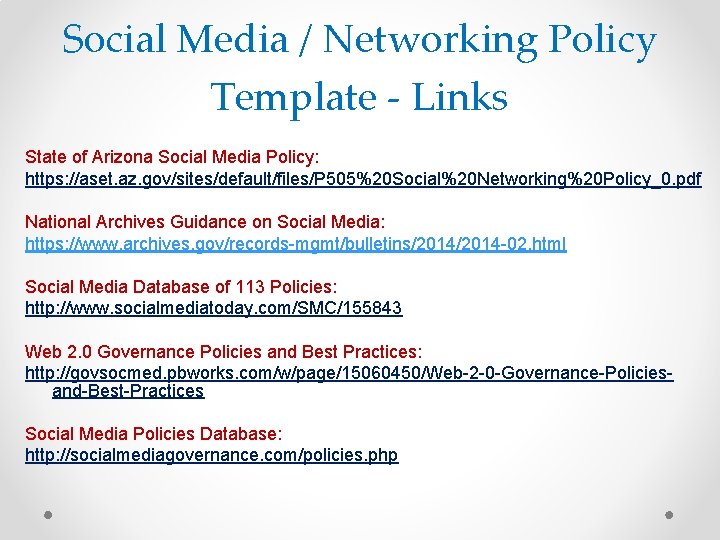
Social Media / Networking Policy Template - Links State of Arizona Social Media Policy: https: //aset. az. gov/sites/default/files/P 505%20 Social%20 Networking%20 Policy_0. pdf National Archives Guidance on Social Media: https: //www. archives. gov/records-mgmt/bulletins/2014 -02. html Social Media Database of 113 Policies: http: //www. socialmediatoday. com/SMC/155843 Web 2. 0 Governance Policies and Best Practices: http: //govsocmed. pbworks. com/w/page/15060450/Web-2 -0 -Governance-Policiesand-Best-Practices Social Media Policies Database: http: //socialmediagovernance. com/policies. php
Got Questions? Of course you do!!
HELPFUL CONTACTS Records Management Center (LAPR): http: //www. azlibrary. gov/records/ Phone: 602 -926 -3815 records@azlibrary. gov Dr. Ted Hale State Archivist thale@azlibrary. gov Phone: 602 -926 -3736 Kurtis Chandler kchandler@azlibrary. gov Phone: 602 -926 -3817 Ruben Vargas rvargas@azlibrary. gov Phone: 602 -926 -3719 Timothy Provenzano tprovenzano@azlibrary. gov Phone: 602 -926 -3720 State Ombudsman’s Office http: //www. azleg. gov/ombudsman/default. asp State Attorney General – Records Publication https: //www. azag. gov/sites/default/files/sites/all/d ocs/agency-handbook/ch 06. pdf ARMA International: http: //www. arma. org/ Institute of Certified Records Managers (ICRM): http: //www. icrm. org/ National Archives and Records Management (NARA): http: //www. archives. gov/records-mgmt/ National Association of Government Archivists and Records Administrators (NAGARA): http: //www. nagara. org/index. cfm AIIM – Global Community of Information Professionals http: //www. aiim. org/