SINDROME HEPATORRENAL IV CURSO PARA RESIDENTES DE LA


- Slides: 28
SINDROME HEPATORRENAL IV CURSO PARA RESIDENTES DE LA AEEH DIAGNÓSTICO Y TRATAMIENTO DE LAS ENFERMEDADES HEPÁTICAS Barcelona, 18 -19 de Octubre de 2013 ASCITIS Y SINDROME HEPATORRENAL Pere Ginès Servei d’Hepatologia Hospital Clínic Universitat de Barcelona
ASCITES Pathogenesis and established therapies CIRRHOSIS TIPS Portal hypertension Splanchnic arterial vasodilation Reduced effective arterial blood volume Activation of vasoconstrictor /antinatriuretic systems Aldosterone antagonists Renin-aldosterone system Sympathetic nervous system Other diuretics Sodium retention Large-volume paracentesis + albumin ASCITES/EDEMA
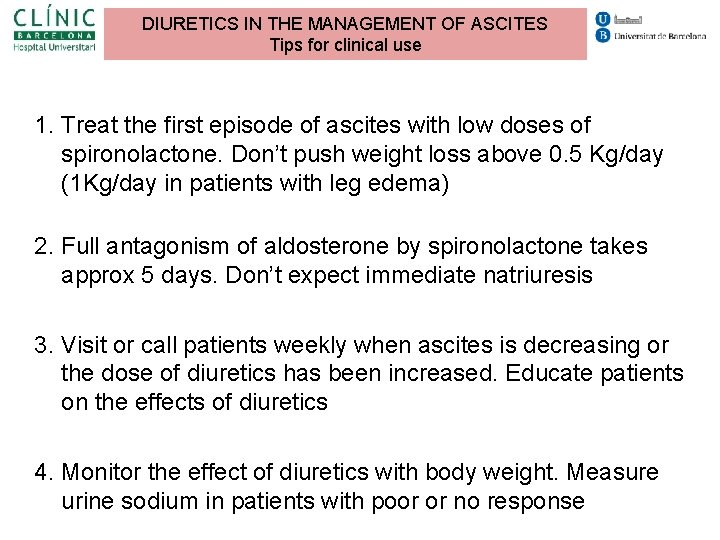
DIURETICS IN THE MANAGEMENT OF ASCITES Tips for clinical use 1. Treat the first episode of ascites with low doses of spironolactone. Don’t push weight loss above 0. 5 Kg/day (1 Kg/day in patients with leg edema) 2. Full antagonism of aldosterone by spironolactone takes approx 5 days. Don’t expect immediate natriuresis 3. Visit or call patients weekly when ascites is decreasing or the dose of diuretics has been increased. Educate patients on the effects of diuretics 4. Monitor the effect of diuretics with body weight. Measure urine sodium in patients with poor or no response
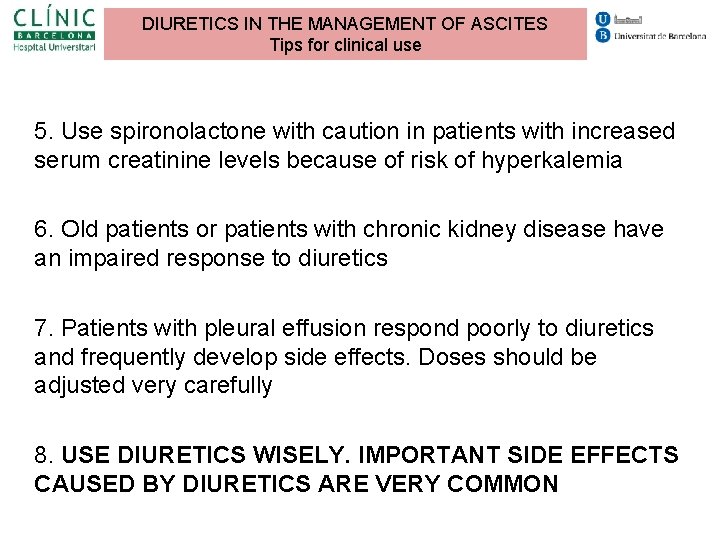
DIURETICS IN THE MANAGEMENT OF ASCITES Tips for clinical use 5. Use spironolactone with caution in patients with increased serum creatinine levels because of risk of hyperkalemia 6. Old patients or patients with chronic kidney disease have an impaired response to diuretics 7. Patients with pleural effusion respond poorly to diuretics and frequently develop side effects. Doses should be adjusted very carefully 8. USE DIURETICS WISELY. IMPORTANT SIDE EFFECTS CAUSED BY DIURETICS ARE VERY COMMON
HYPOVOLEMIC HYPONATREMIA IN A PATIENT WITH CIRRHOSIS AND ASCITES DUE TO OVERDIURESIS 1. 50 Furosemide (40 mg/day) + Spironolactone (200 mg/day) 130 1. 25 128 1. 00 126 0. 75 124 122 BW (kg) Hepatic encephalopathy 1 2 74 72 3 4 5 6 7 8 9 10 11 Days 70. 5 68. 3 67. 2 64. 8 61. 5 59. 2 59. 5 60. 3 61. 1 0. 50 Serum creatinine (mg/d. L) ( ) Serum sodium (m. Eq/L) ( ) 132
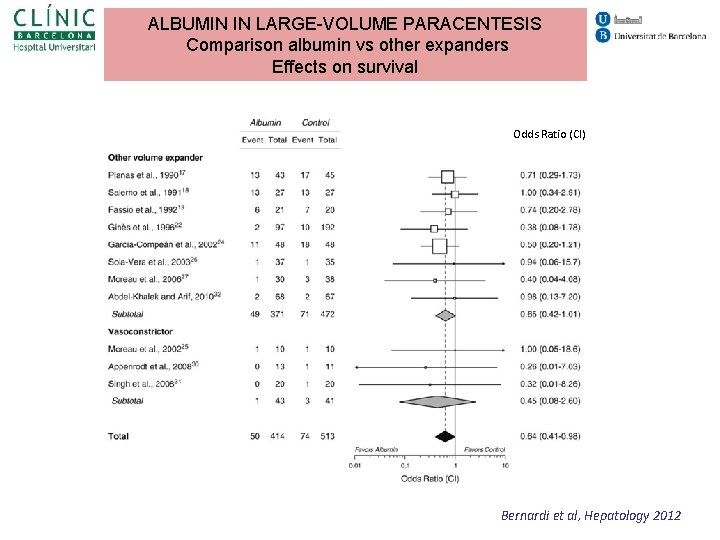
ALBUMIN IN LARGE-VOLUME PARACENTESIS Comparison albumin vs other expanders Effects on survival Odds Ratio (CI) Bernardi et al, Hepatology 2012
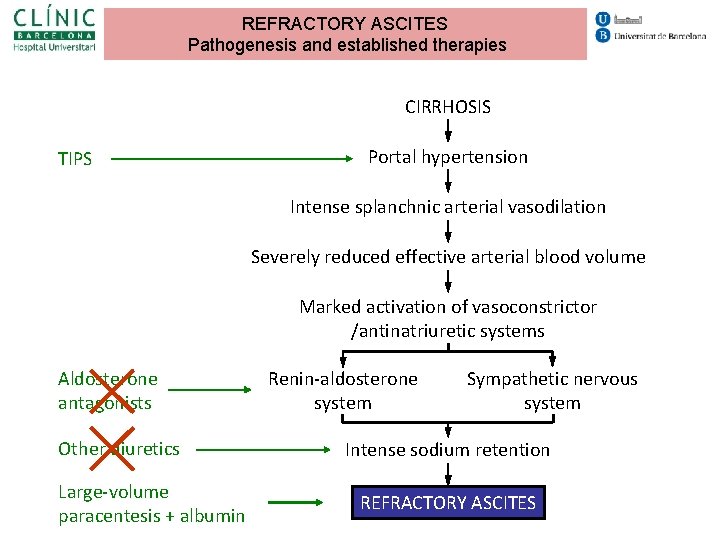
REFRACTORY ASCITES Pathogenesis and established therapies CIRRHOSIS TIPS Portal hypertension Intense splanchnic arterial vasodilation Severely reduced effective arterial blood volume Marked activation of vasoconstrictor /antinatriuretic systems Aldosterone antagonists Other diuretics Large-volume paracentesis + albumin Renin-aldosterone system Sympathetic nervous system Intense sodium retention REFRACTORY ASCITES
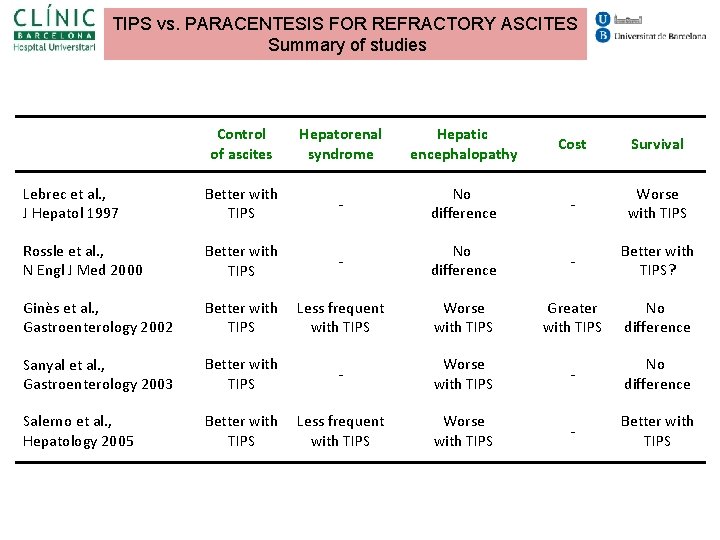
TIPS vs. PARACENTESIS FOR REFRACTORY ASCITES Summary of studies Control of ascites Hepatorenal syndrome Hepatic encephalopathy Cost Survival Lebrec et al. , J Hepatol 1997 Better with TIPS - No difference - Worse with TIPS Rossle et al. , N Engl J Med 2000 Better with TIPS - No difference - Better with TIPS? Ginès et al. , Gastroenterology 2002 Better with TIPS Less frequent with TIPS Worse with TIPS Greater with TIPS No difference Sanyal et al. , Gastroenterology 2003 Better with TIPS - Worse with TIPS - No difference Salerno et al. , Hepatology 2005 Better with TIPS Less frequent with TIPS Worse with TIPS - Better with TIPS
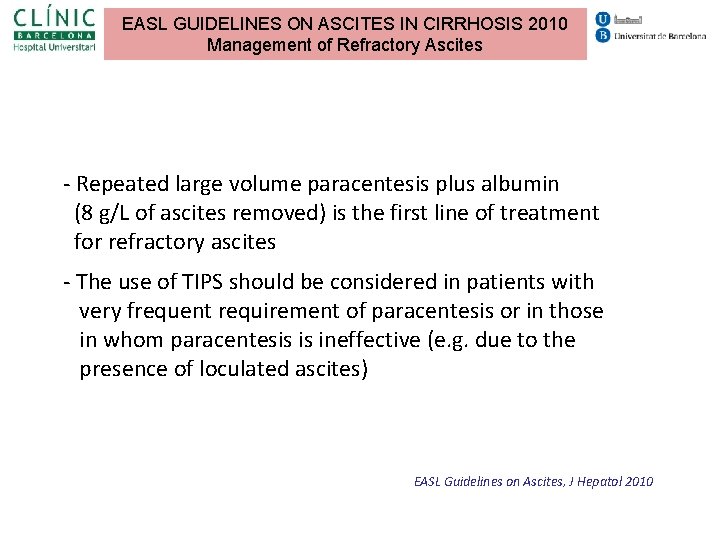
EASL GUIDELINES ON ASCITES IN CIRRHOSIS 2010 Management of Refractory Ascites - Repeated large volume paracentesis plus albumin (8 g/L of ascites removed) is the first line of treatment for refractory ascites - The use of TIPS should be considered in patients with very frequent requirement of paracentesis or in those in whom paracentesis is ineffective (e. g. due to the presence of loculated ascites) EASL Guidelines on Ascites, J Hepatol 2010
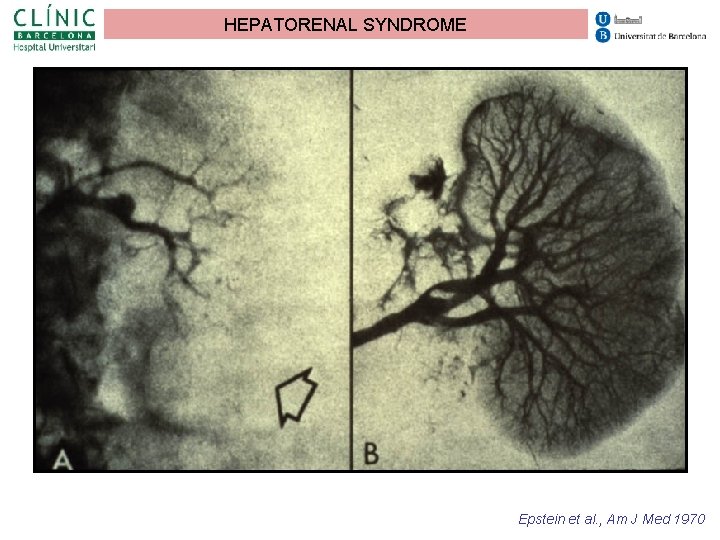
HEPATORENAL SYNDROME Epstein et al. , Am J Med 1970
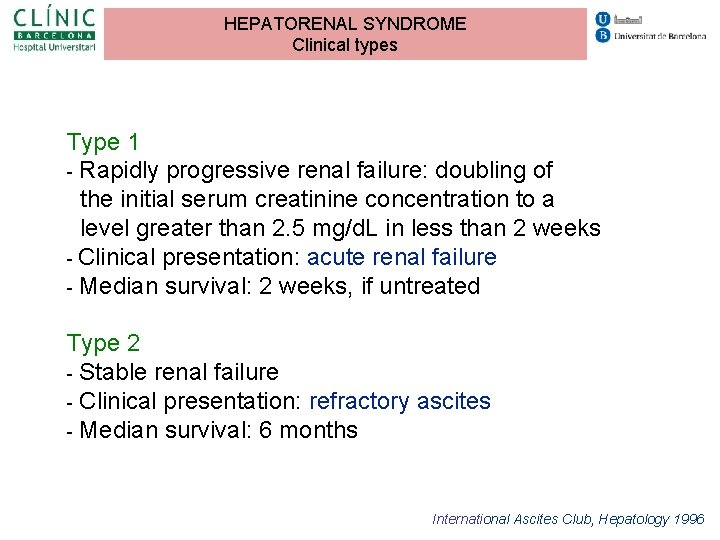
HEPATORENAL SYNDROME Clinical types Type 1 - Rapidly progressive renal failure: doubling of the initial serum creatinine concentration to a level greater than 2. 5 mg/d. L in less than 2 weeks - Clinical presentation: : acute renal failure - Median survival: 2 weeks, if untreated Type 2 - Stable renal failure - Clinical presentation: refractory ascites - Median survival: 6 months International Ascites Club, Hepatology 1996
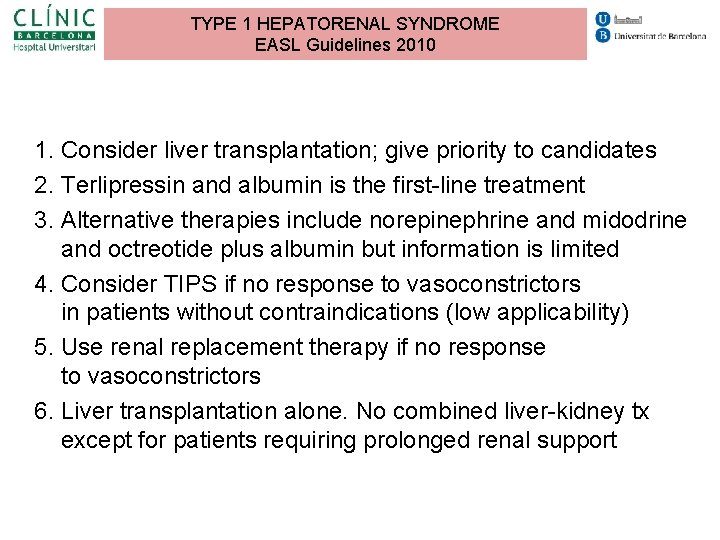
TYPE 1 HEPATORENAL SYNDROME EASL Guidelines 2010 1. Consider liver transplantation; give priority to candidates 2. Terlipressin and albumin is the first-line treatment 3. Alternative therapies include norepinephrine and midodrine and octreotide plus albumin but information is limited 4. Consider TIPS if no response to vasoconstrictors in patients without contraindications (low applicability) 5. Use renal replacement therapy if no response to vasoconstrictors 6. Liver transplantation alone. No combined liver-kidney tx except for patients requiring prolonged renal support
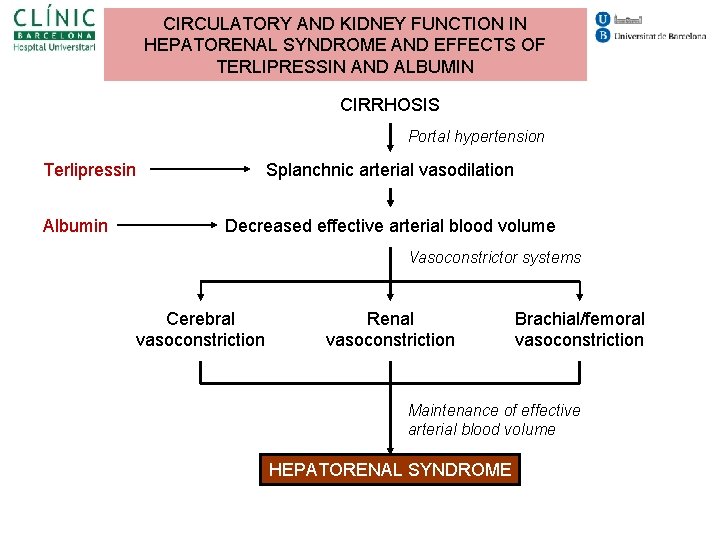
CIRCULATORY AND KIDNEY FUNCTION IN HEPATORENAL SYNDROME AND EFFECTS OF TERLIPRESSIN AND ALBUMIN CIRRHOSIS Portal hypertension Terlipressin Albumin Splanchnic arterial vasodilation Decreased effective arterial blood volume Vasoconstrictor systems Cerebral vasoconstriction Renal vasoconstriction Brachial/femoral vasoconstriction Maintenance of effective arterial blood volume HEPATORENAL SYNDROME
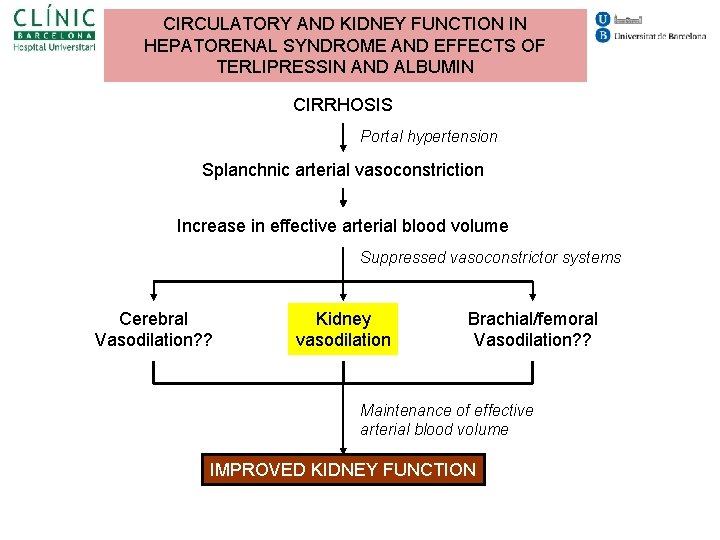
CIRCULATORY AND KIDNEY FUNCTION IN HEPATORENAL SYNDROME AND EFFECTS OF TERLIPRESSIN AND ALBUMIN CIRRHOSIS Portal hypertension Splanchnic arterial vasoconstriction Increase in effective arterial blood volume Suppressed vasoconstrictor systems Cerebral Vasodilation? ? Kidney vasodilation Brachial/femoral Vasodilation? ? Maintenance of effective arterial blood volume IMPROVED KIDNEY FUNCTION
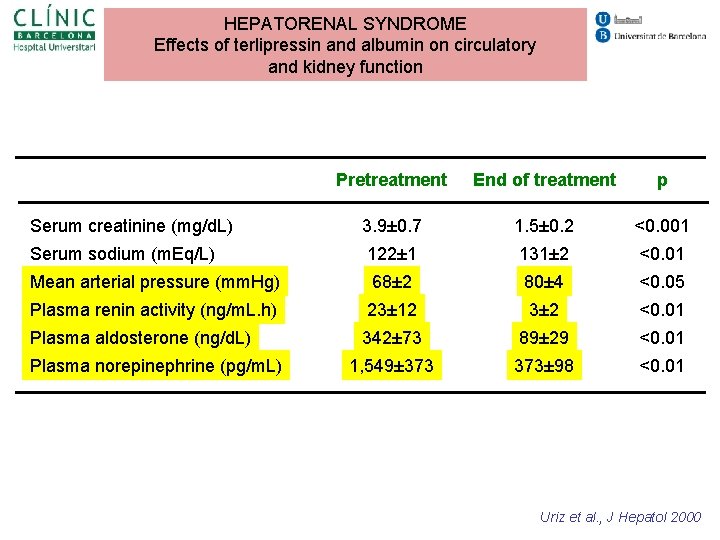
HEPATORENAL SYNDROME Effects of terlipressin and albumin on circulatory and kidney function Pretreatment End of treatment p Serum creatinine (mg/d. L) 3. 9± 0. 7 1. 5± 0. 2 <0. 001 Serum sodium (m. Eq/L) 122± 1 131± 2 <0. 01 Mean arterial pressure (mm. Hg) 68± 2 80± 4 <0. 05 Plasma renin activity (ng/m. L. h) 23± 12 3± 2 <0. 01 Plasma aldosterone (ng/d. L) 342± 73 89± 29 <0. 01 1, 549± 373± 98 <0. 01 Plasma norepinephrine (pg/m. L) Uriz et al. , J Hepatol 2000
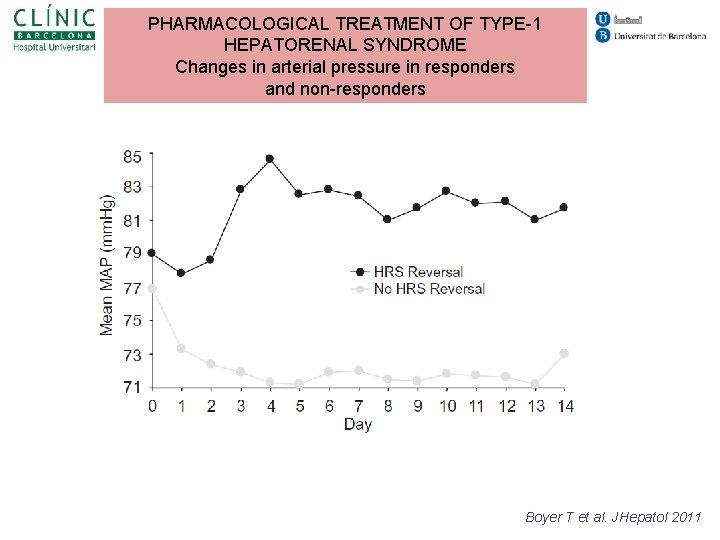
PHARMACOLOGICAL TREATMENT OF TYPE-1 HEPATORENAL SYNDROME Changes in arterial pressure in responders and non-responders Boyer T et al. JHepatol 2011
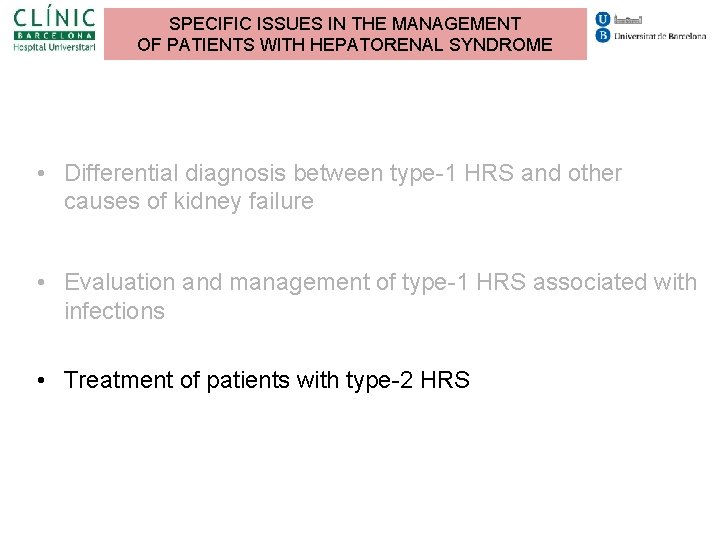
SPECIFIC ISSUES IN THE MANAGEMENT OF PATIENTS WITH HEPATORENAL SYNDROME • Differential diagnosis between type-1 HRS and other causes of kidney failure • Evaluation and management of type-1 HRS associated with infections • Treatment of patients with type-2 HRS
SPECIFIC ISSUES IN THE MANAGEMENT OF PATIENTS WITH HEPATORENAL SYNDROME • Differential diagnosis between type-1 HRS and other causes of kidney failure • Evaluation and management of type-1 HRS associated with infections • Treatment of patients with type-2 HRS
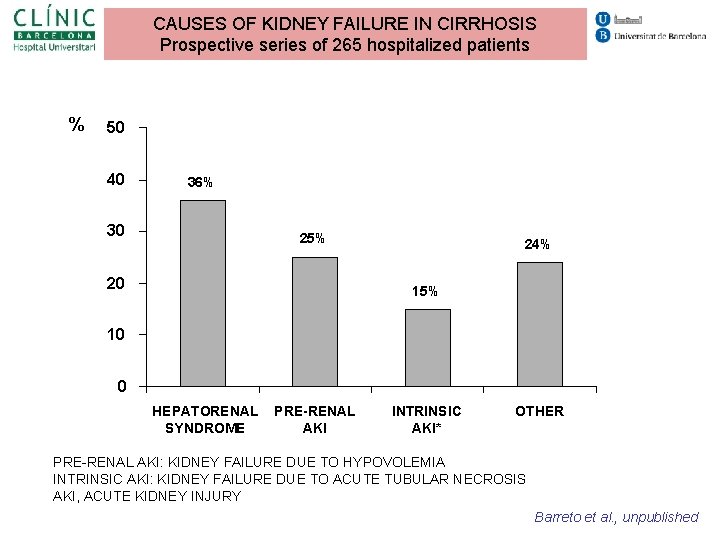
CAUSES OF KIDNEY FAILURE IN CIRRHOSIS Prospective series of 265 hospitalized patients % 50 40 36% 30 25% 20 24% 15% 10 0 HEPATORENAL SYNDROME PRE-RENAL AKI INTRINSIC AKI* OTHER PRE-RENAL AKI: KIDNEY FAILURE DUE TO HYPOVOLEMIA INTRINSIC AKI: KIDNEY FAILURE DUE TO ACUTE TUBULAR NECROSIS AKI, ACUTE KIDNEY INJURY Barreto et al. , unpublished
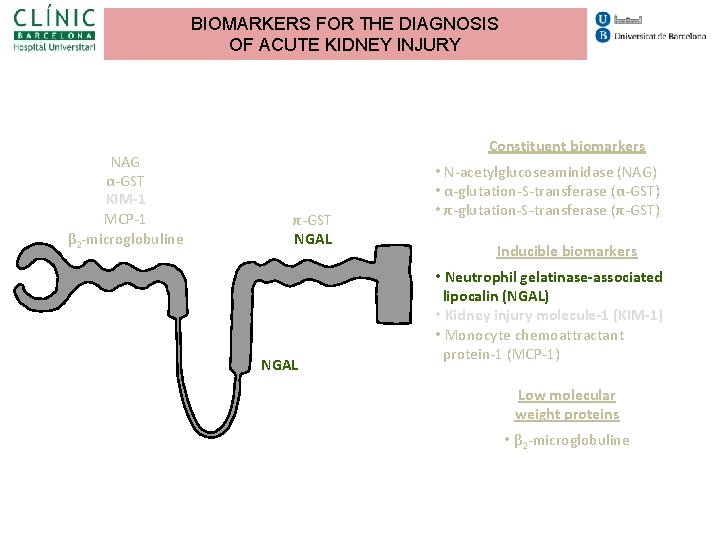
BIOMARKERS FOR THE DIAGNOSIS OF ACUTE KIDNEY INJURY NAG α-GST KIM-1 MCP-1 β 2 -microglobuline Constituent biomarkers π-GST NGAL • N-acetylglucoseaminidase (NAG) • α-glutation-S-transferase (α-GST) • π-glutation-S-transferase (π-GST) Inducible biomarkers • Neutrophil gelatinase-associated lipocalin (NGAL) • Kidney injury molecule-1 (KIM-1) • Monocyte chemoattractant protein-1 (MCP-1) Low molecular weight proteins • β 2 -microglobuline
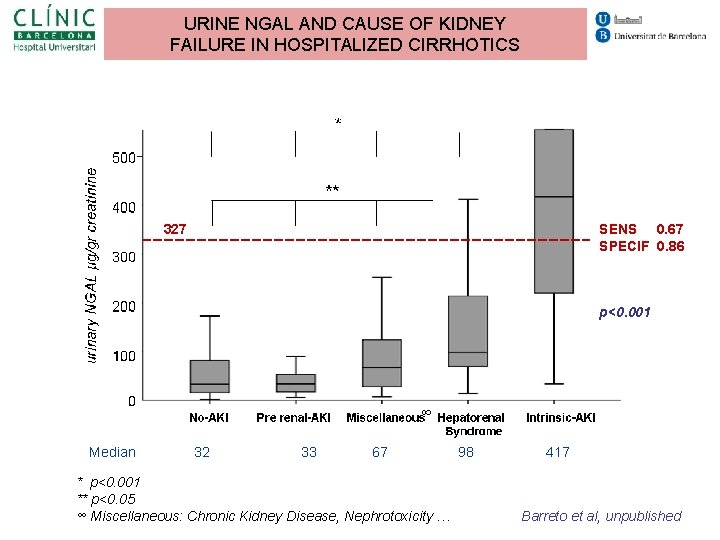
URINE NGAL AND CAUSE OF KIDNEY FAILURE IN HOSPITALIZED CIRRHOTICS SENS 0. 67 SPECIF 0. 86 327 p<0. 001 ∞ Median 32 33 67 * p<0. 001 ** p<0. 05 ∞ Miscellaneous: Chronic Kidney Disease, Nephrotoxicity … 98 417 Barreto et al, unpublished
SPECIFIC ISSUES IN THE MANAGEMENT OF PATIENTS WITH HEPATORENAL SYNDROME • Differential diagnosis between type-1 HRS and other causes of kidney failure • Evaluation and management of type-1 HRS associated with infections • Treatment of patients with type-2 HRS
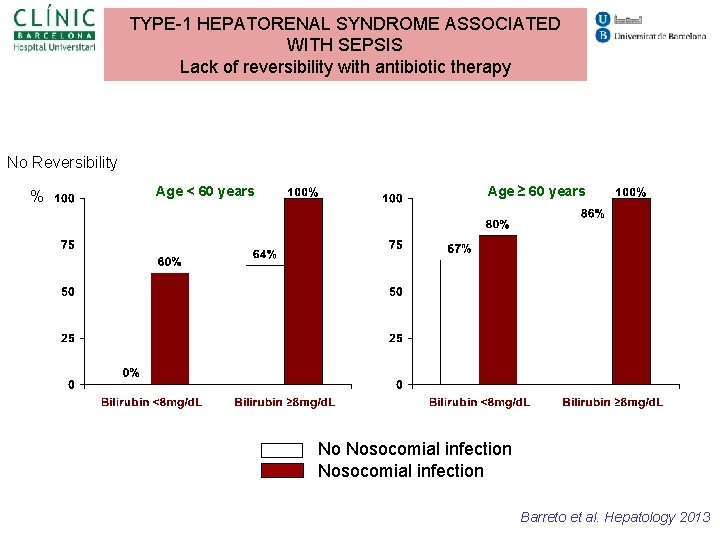
TYPE-1 HEPATORENAL SYNDROME ASSOCIATED WITH SEPSIS Lack of reversibility with antibiotic therapy No Reversibility % Age < 60 years Age ≥ 60 years No Nosocomial infection Barreto et al. Hepatology 2013
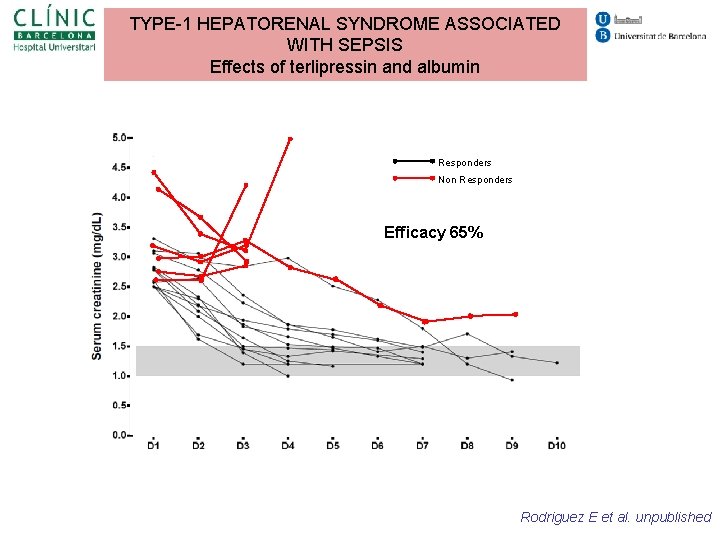
TYPE-1 HEPATORENAL SYNDROME ASSOCIATED WITH SEPSIS Effects of terlipressin and albumin a 0 Responders Non Responders Efficacy 65% Responders Rodriguez E et al. unpublished
SPECIFIC ISSUES IN THE MANAGEMENT OF PATIENTS WITH HEPATORENAL SYNDROME • Differential diagnosis between type-1 HRS and other causes of kidney failure • Evaluation and management of type-1 HRS associated with infections • Treatment of patients with type-2 HRS
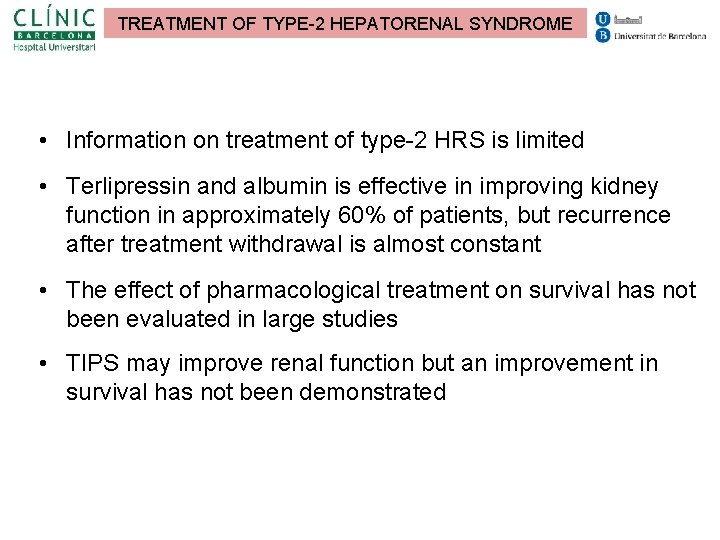
TREATMENT OF TYPE-2 HEPATORENAL SYNDROME • Information on treatment of type-2 HRS is limited • Terlipressin and albumin is effective in improving kidney function in approximately 60% of patients, but recurrence after treatment withdrawal is almost constant • The effect of pharmacological treatment on survival has not been evaluated in large studies • TIPS may improve renal function but an improvement in survival has not been demonstrated
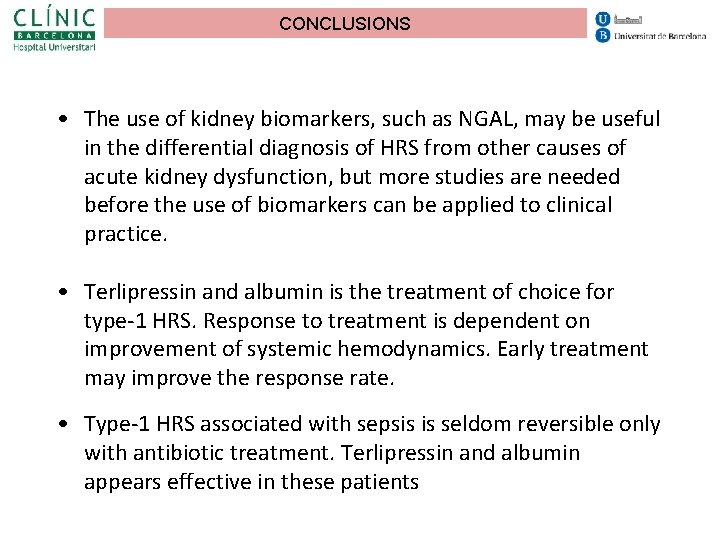
CONCLUSIONS • The use of kidney biomarkers, such as NGAL, may be useful in the differential diagnosis of HRS from other causes of acute kidney dysfunction, but more studies are needed before the use of biomarkers can be applied to clinical practice. • Terlipressin and albumin is the treatment of choice for type-1 HRS. Response to treatment is dependent on improvement of systemic hemodynamics. Early treatment may improve the response rate. • Type-1 HRS associated with sepsis is seldom reversible only with antibiotic treatment. Terlipressin and albumin appears effective in these patients
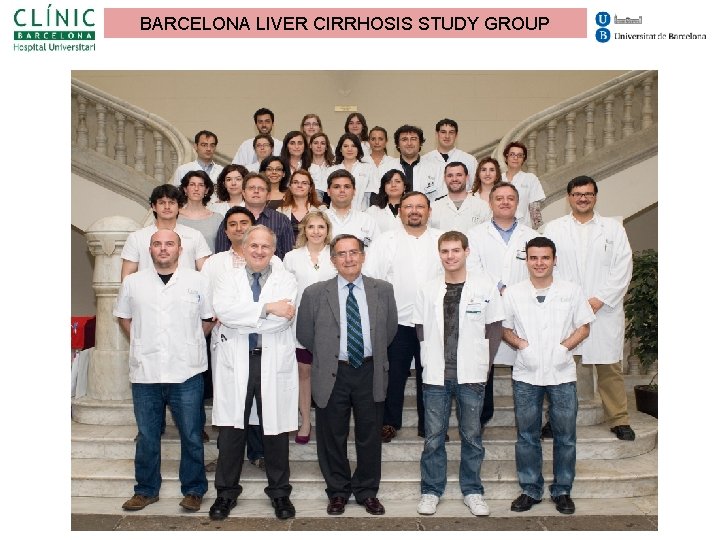
BARCELONA LIVER CIRRHOSIS STUDY GROUP