radaptation cardiaque invit par le Dr Thierry Pepersack




- Slides: 31
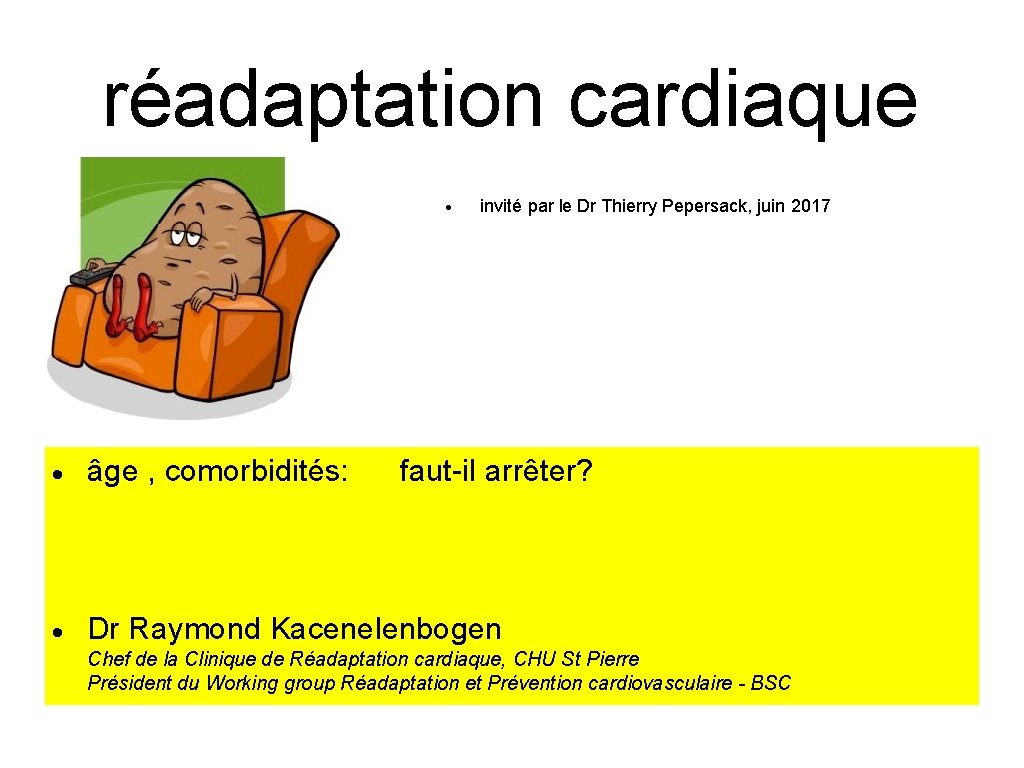
réadaptation cardiaque invité par le Dr Thierry Pepersack, juin 2017 âge , comorbidités: faut-il arrêter? Dr Raymond Kacenelenbogen Chef de la Clinique de Réadaptation cardiaque, CHU St Pierre Président du Working group Réadaptation et Prévention cardiovasculaire - BSC
La réadaptation cardiaque: -Une affaire d’amitié -‘comme ma mère’… -Mais aussi des arguments solides ‘EBM’ ou autres
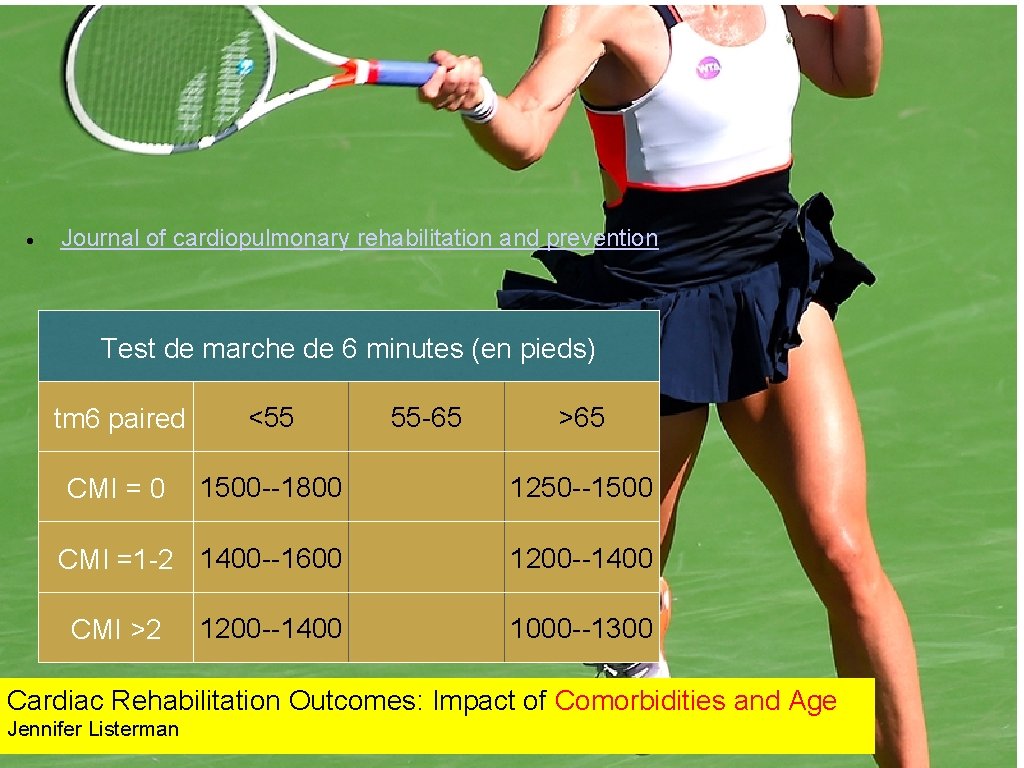
Journal of cardiopulmonary rehabilitation and prevention Test de marche de 6 minutes (en pieds) tm 6 paired <55 CMI = 0 1500 --1800 1250 --1500 CMI =1 -2 1400 --1600 1200 --1400 1000 --1300 CMI >2 55 -65 >65 Cardiac Rehabilitation Outcomes: Impact of Comorbidities and Age Jennifer Listerman
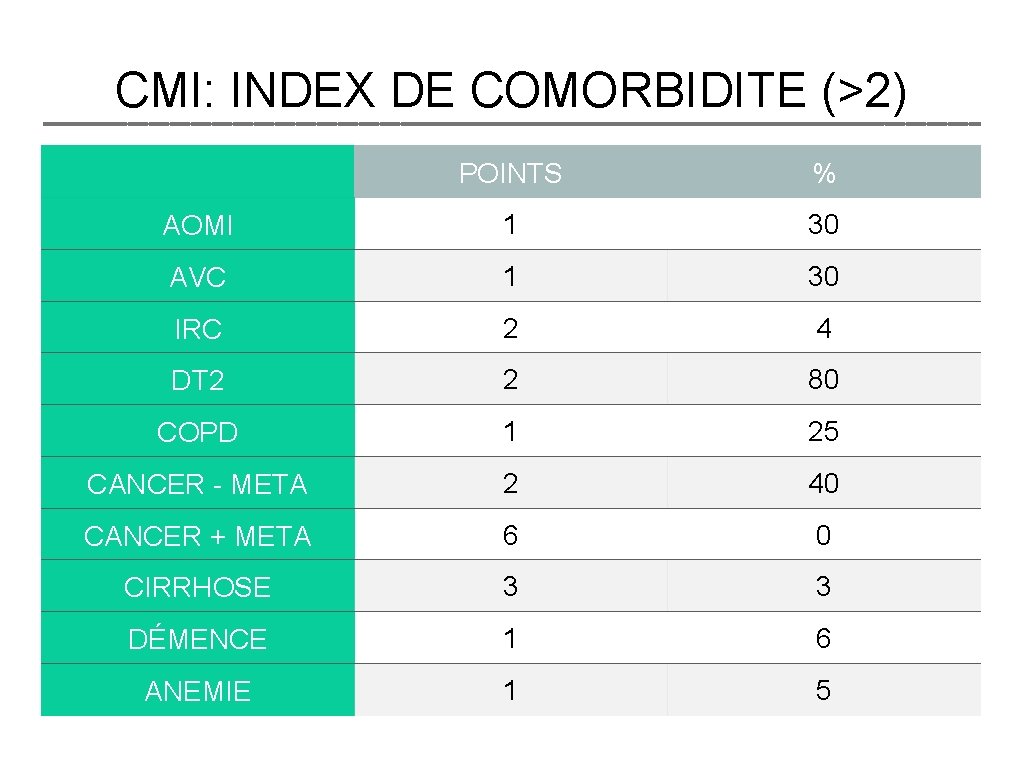
CMI: INDEX DE COMORBIDITE (>2) POINTS % AOMI 1 30 AVC 1 30 IRC 2 4 DT 2 2 80 COPD 1 25 CANCER - META 2 40 CANCER + META 6 0 CIRRHOSE 3 3 DÉMENCE 1 6 ANEMIE 1 5
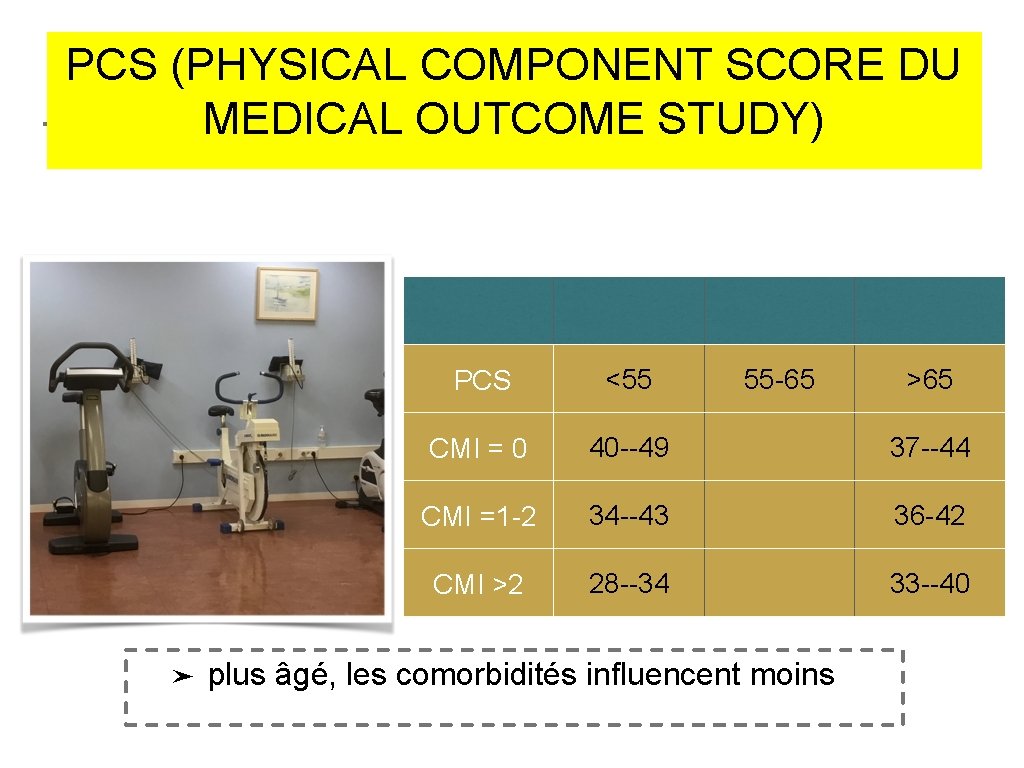
PCS (PHYSICAL COMPONENT SCORE DU MEDICAL OUTCOME STUDY) ➤ PCS <55 55 -65 CMI = 0 40 --49 37 --44 CMI =1 -2 34 --43 36 -42 CMI >2 28 --34 33 --40 plus âgé, les comorbidités influencent moins >65
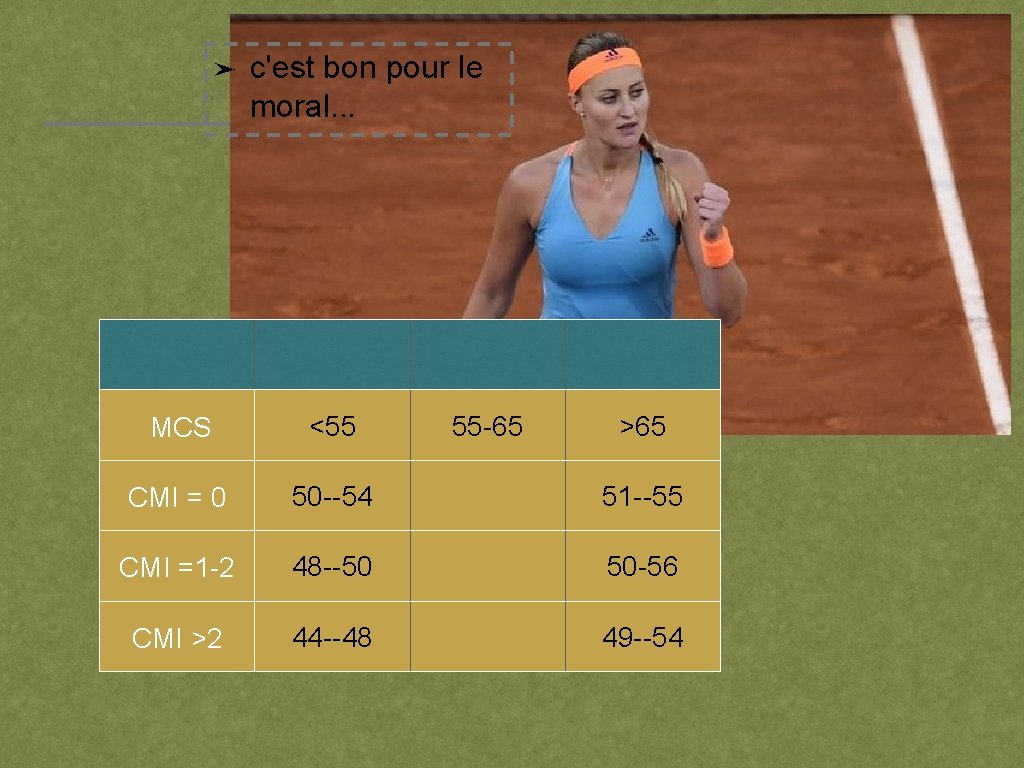
➤ c'est bon pour le MCS moral. . . MCS <55 55 -65 >65 CMI = 0 50 --54 51 --55 CMI =1 -2 48 --50 50 -56 CMI >2 44 --48 49 --54
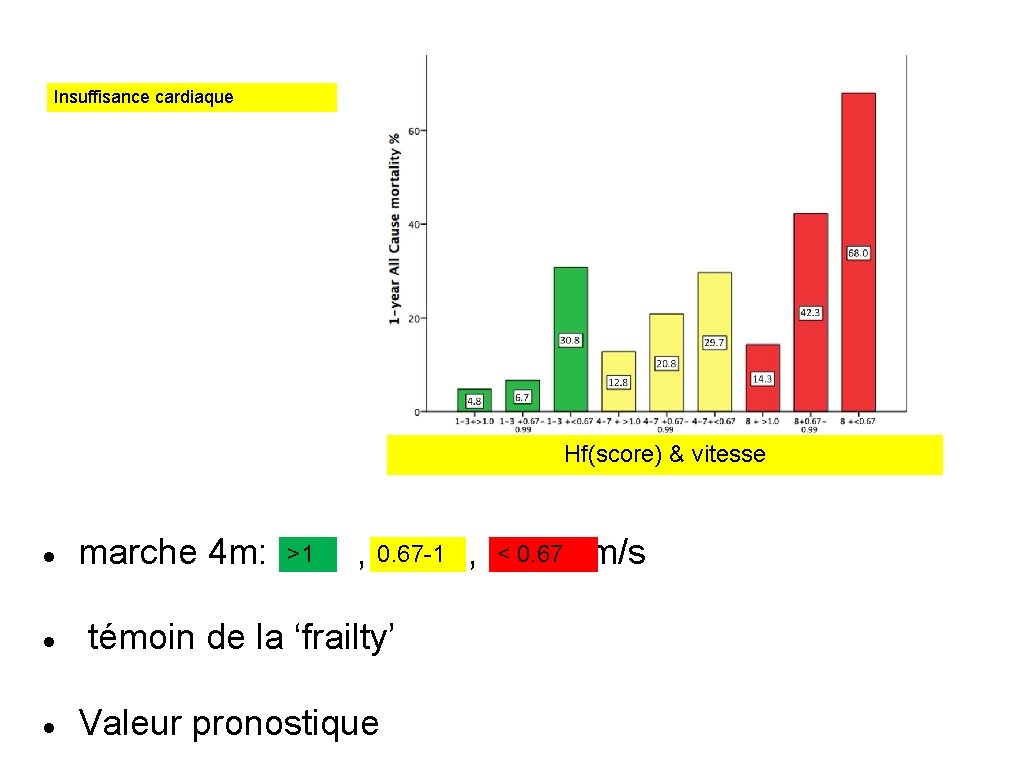
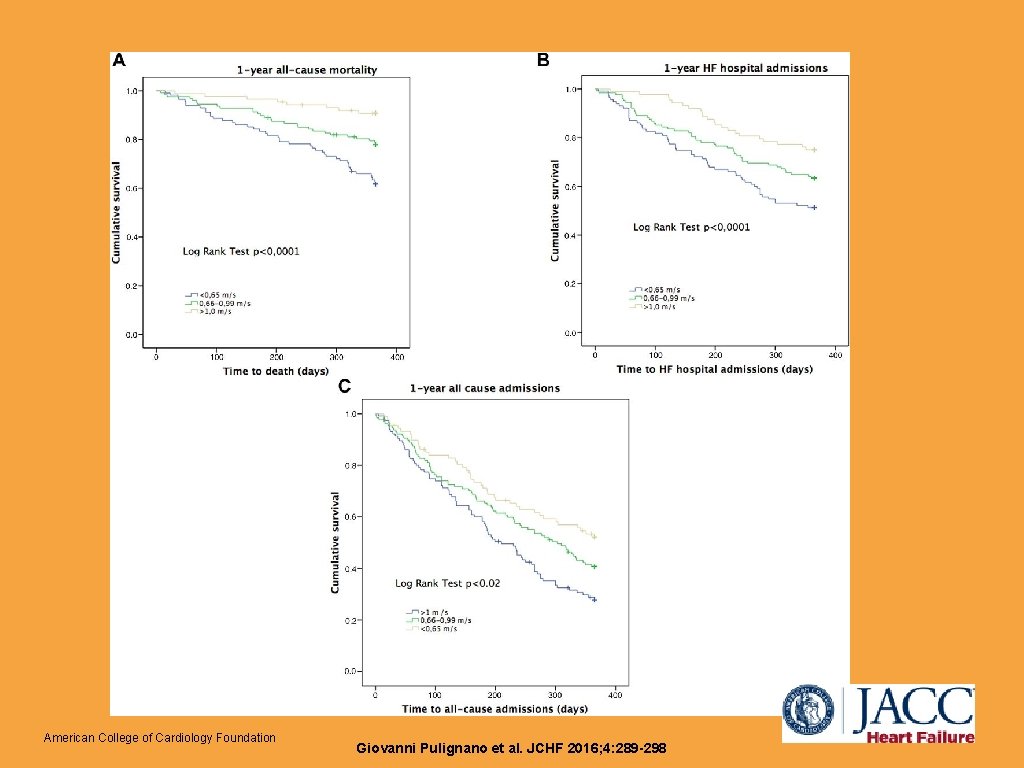
Insuffisance cardiaque Hf(score) & vitesse marche 4 m: >1 , 0. 67 -1 , témoin de la ‘frailty’ Valeur pronostique < 0. 67 m/s
American College of Cardiology Foundation Giovanni Pulignano et al. JCHF 2016; 4: 289 -298
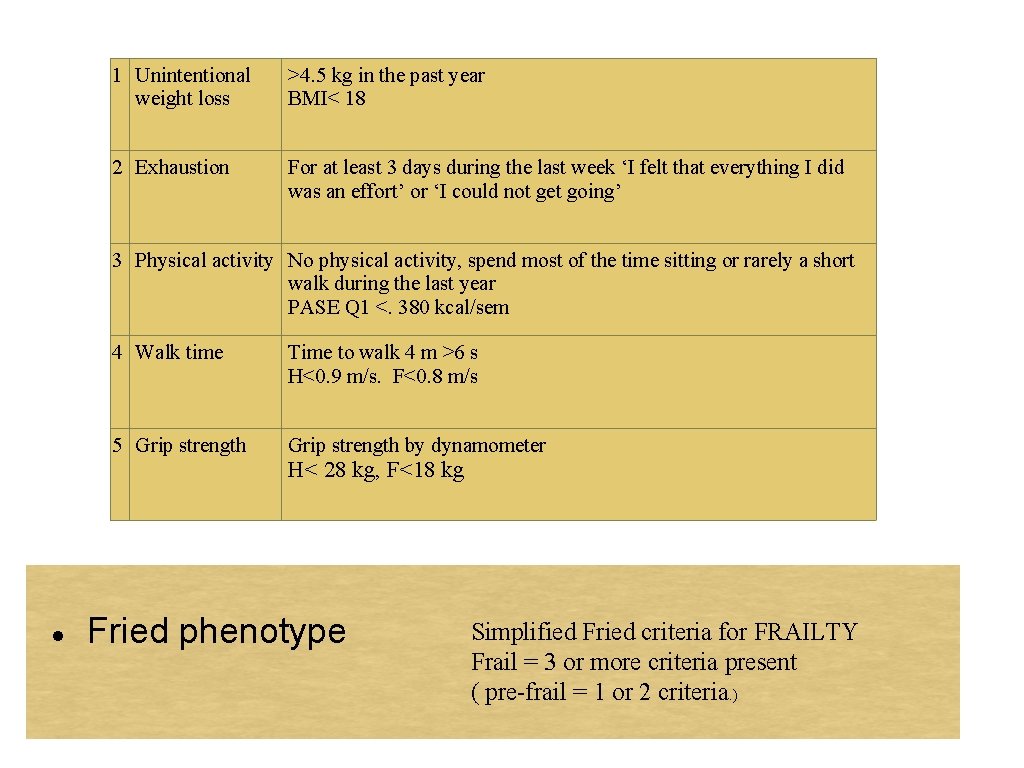
1 Unintentional weight loss >4. 5 kg in the past year BMI< 18 2 Exhaustion For at least 3 days during the last week ‘I felt that everything I did was an effort’ or ‘I could not get going’ 3 Physical activity No physical activity, spend most of the time sitting or rarely a short walk during the last year PASE Q 1 <. 380 kcal/sem 4 Walk time Time to walk 4 m >6 s H<0. 9 m/s. F<0. 8 m/s 5 Grip strength by dynamometer H< 28 kg, F<18 kg Fried phenotype Simplified Fried criteria for FRAILTY Frail = 3 or more criteria present ( pre-frail = 1 or 2 criteria. )
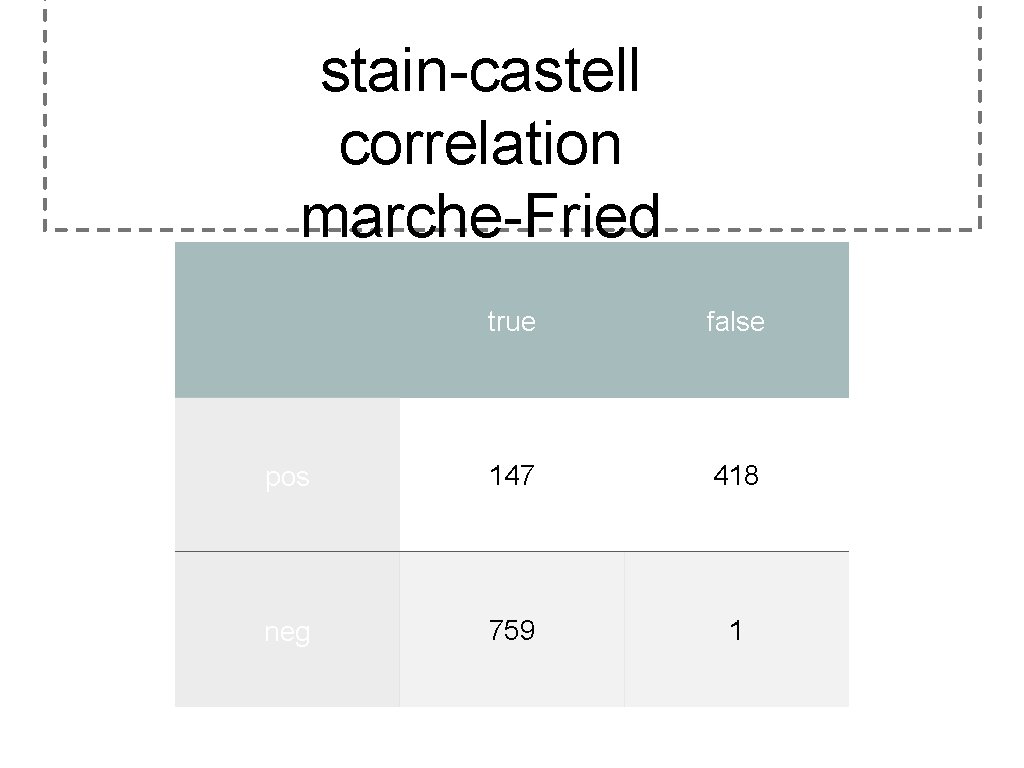
stain-castell correlation marche-Fried true false pos 147 418 neg 759 1
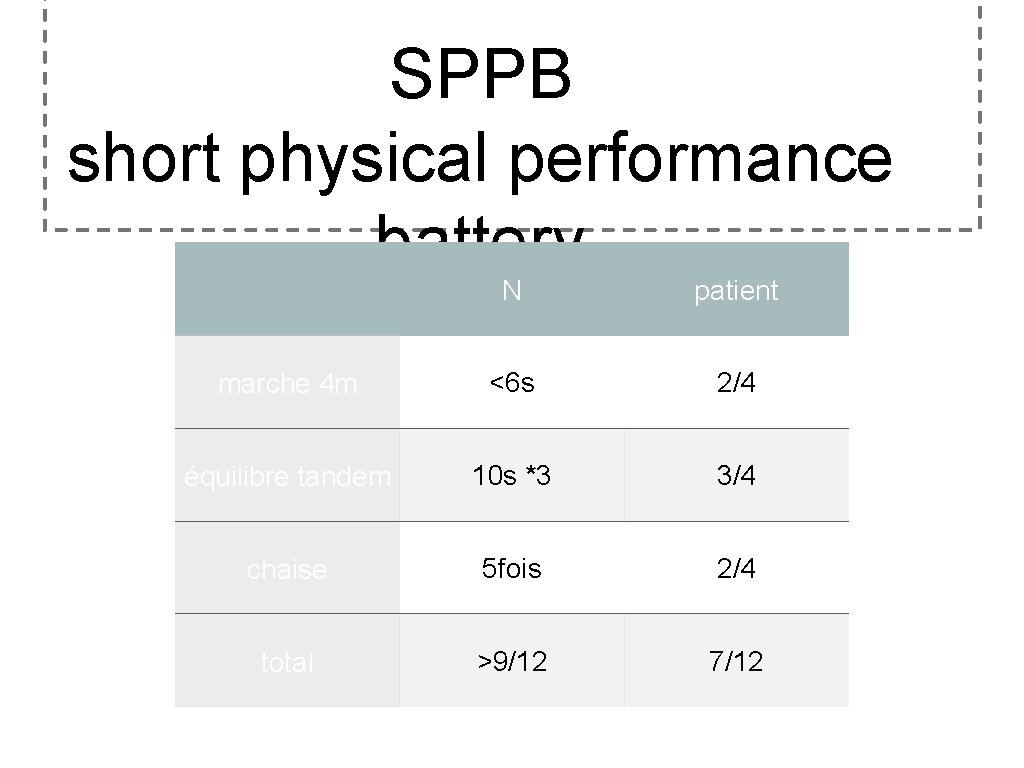
SPPB short physical performance battery N patient marche 4 m <6 s 2/4 équilibre tandem 10 s *3 3/4 chaise 5 fois 2/4 total >9/12 7/12
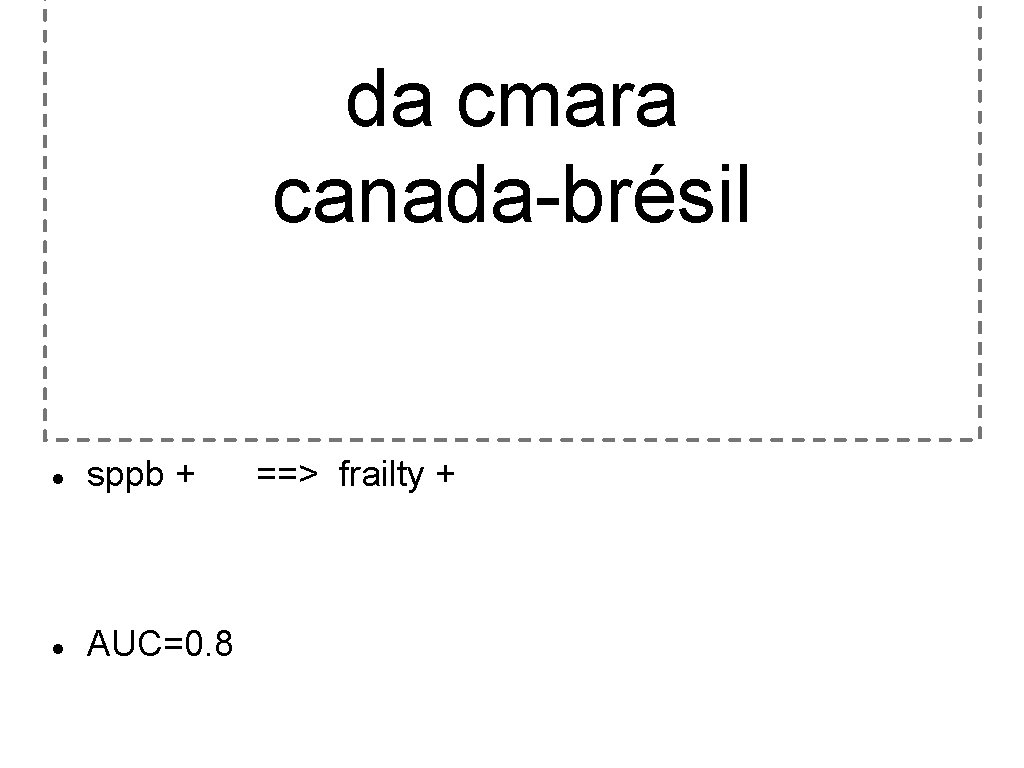
da cmara canada-brésil sppb + AUC=0. 8 ==> frailty +
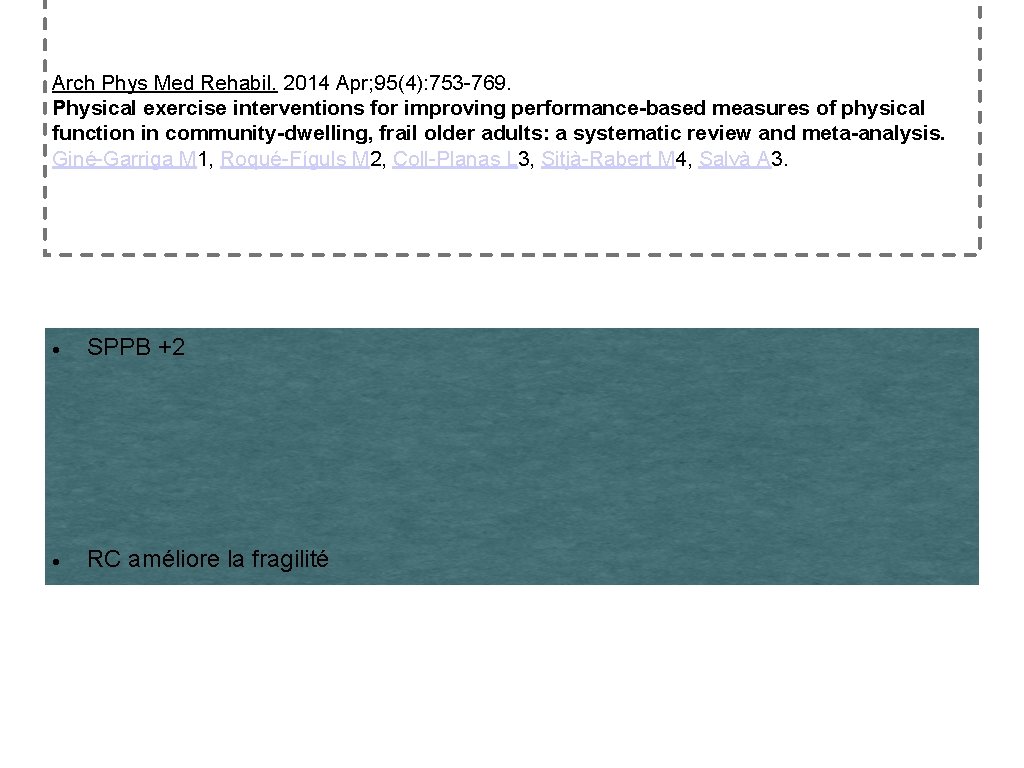
Arch Phys Med Rehabil. 2014 Apr; 95(4): 753 -769. Physical exercise interventions for improving performance-based measures of physical function in community-dwelling, frail older adults: a systematic review and meta-analysis. Giné-Garriga M 1, Roqué-Fíguls M 2, Coll-Planas L 3, Sitjà-Rabert M 4, Salvà A 3. SPPB +2 RC améliore la fragilité
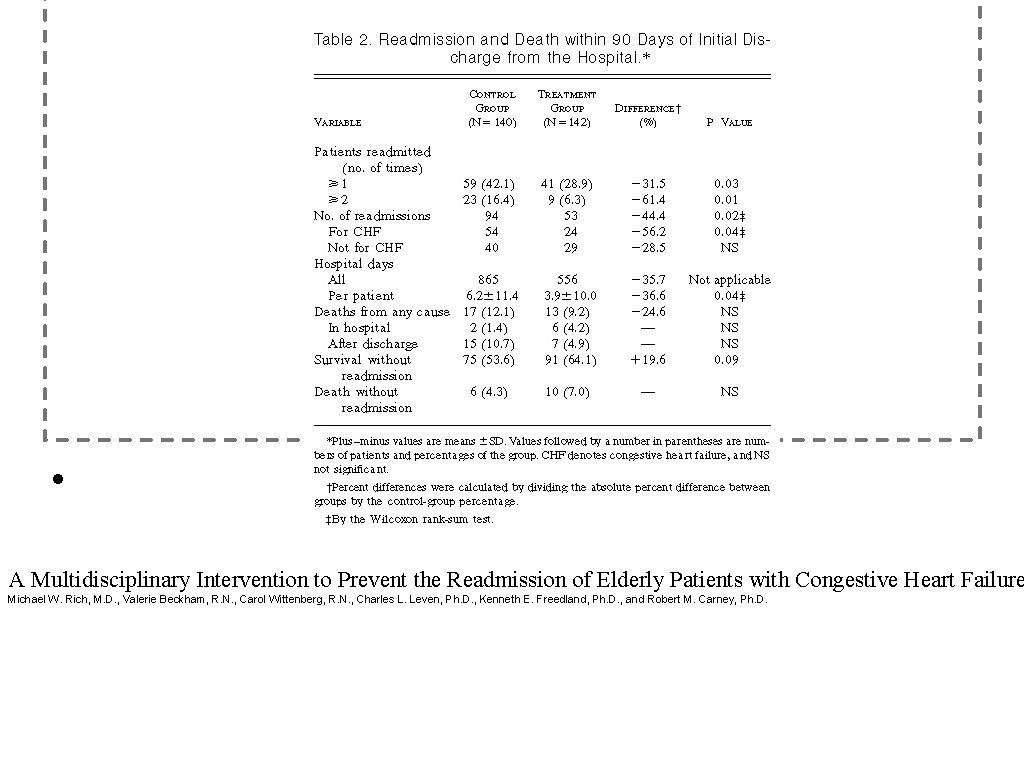
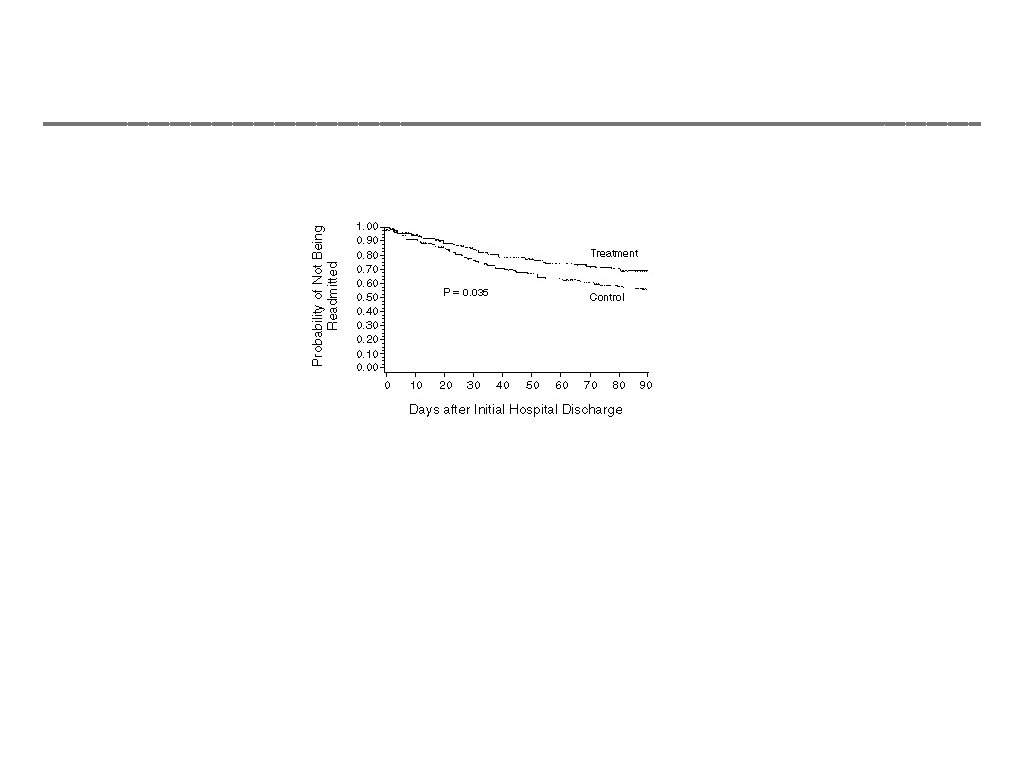
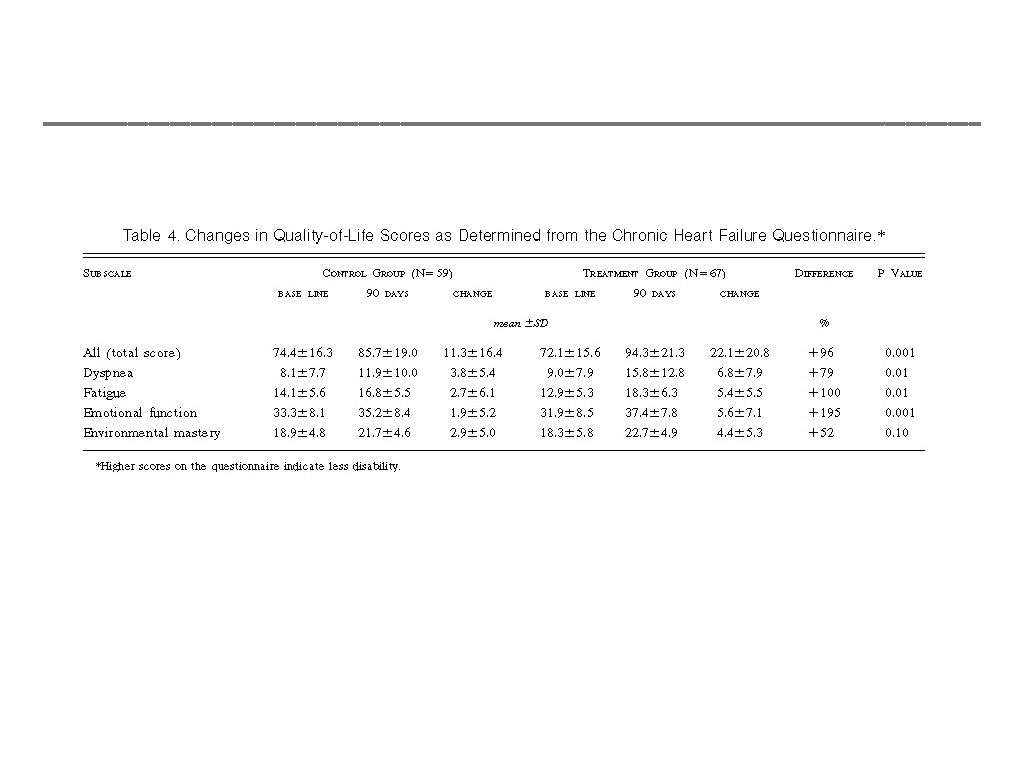
A Multidisciplinary Intervention to Prevent the Readmission of Elderly Patients with Congestive Heart Failure Michael W. Rich, M. D. , Valerie Beckham, R. N. , Carol Wittenberg, R. N. , Charles L. Leven, Ph. D. , Kenneth E. Freedland, Ph. D. , and Robert M. Carney, Ph. D.
http: //www. nejm. org/na 101/hom e/literatum/publisher/mms/journ als/content/nejm/1995/nejm_19 95. 333. issue 18/nejm 199511023331806/prod uction/images/large/nejm 19951 1023331806_t 3. jpeg
Circulation EDITORIAL The Clinical Frailty Scale: Upgrade Your Eyeball Test Jonathan Afilalo Circulation. 2017; CIRCULATIONAHA. 116. 025958 Originally published March 16, 2017
Cardiac Rehabilitation and Secondary Prevention for the Older Patient cal and psychological disability following a coronary event, as well as greater co-mo ogram, as the most powerful predictor of adherence to a rehabilitation program is th ardiac patients. Such a program not only improves body dimensions and blood lipid for aerobic exercise training, since this has been shown to result in significant gains
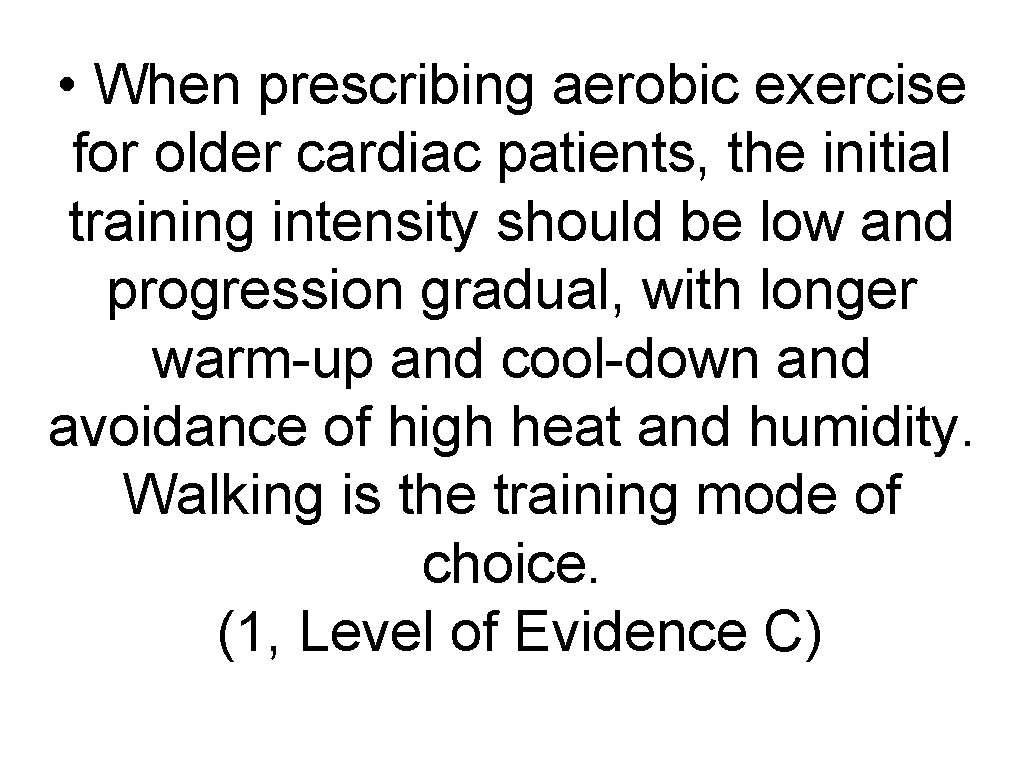
• When prescribing aerobic exercise for older cardiac patients, the initial training intensity should be low and progression gradual, with longer warm-up and cool-down and avoidance of high heat and humidity. Walking is the training mode of choice. (1, Level of Evidence C)
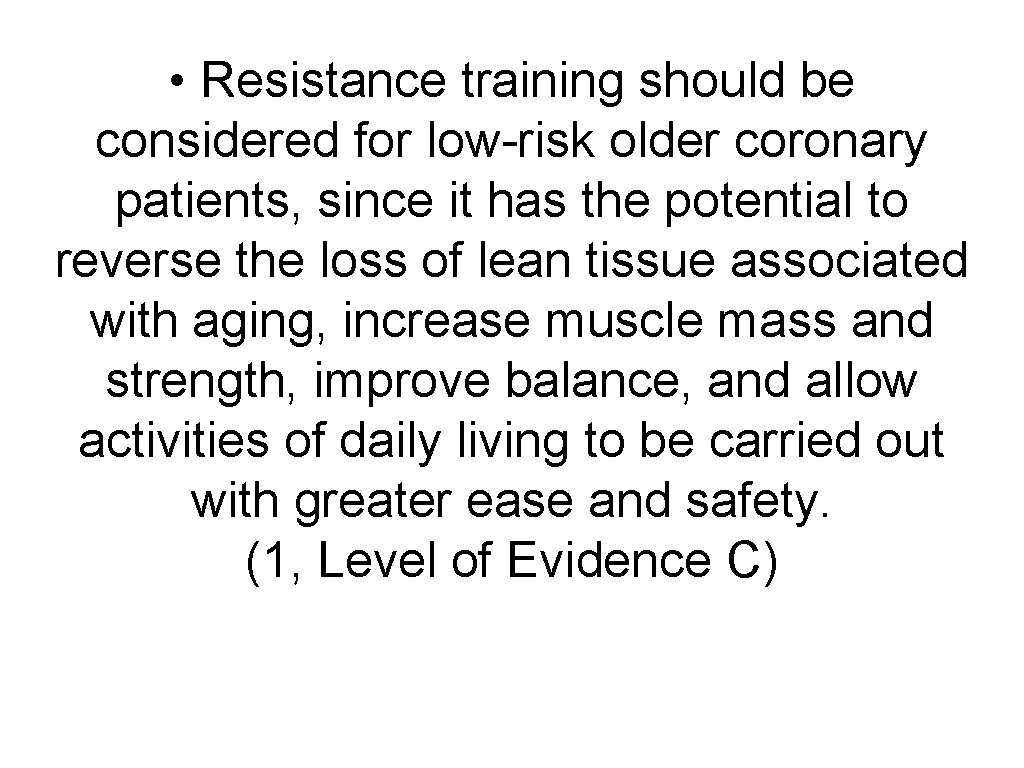
• Resistance training should be considered for low-risk older coronary patients, since it has the potential to reverse the loss of lean tissue associated with aging, increase muscle mass and strength, improve balance, and allow activities of daily living to be carried out with greater ease and safety. (1, Level of Evidence C)
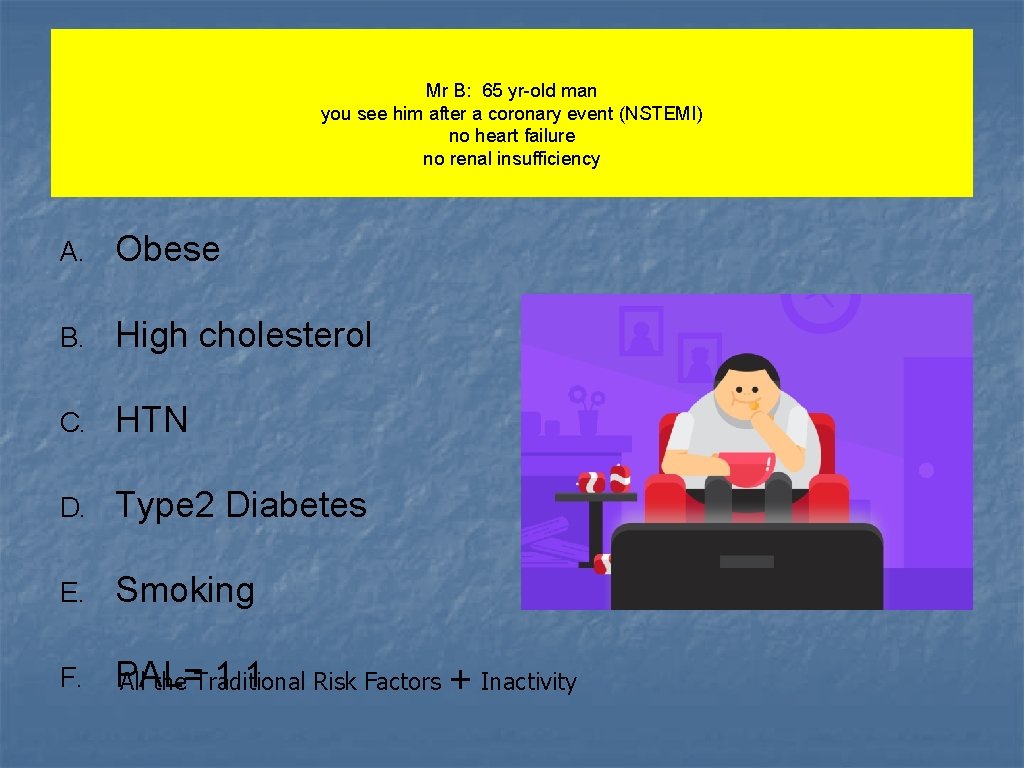
Mr B: 65 yr-old man you see him after a coronary event (NSTEMI) no heart failure no renal insufficiency A. Obese B. High cholesterol C. HTN D. Type 2 Diabetes E. Smoking F. PAL= 1. 1 Risk Factors + Inactivity All the Traditional
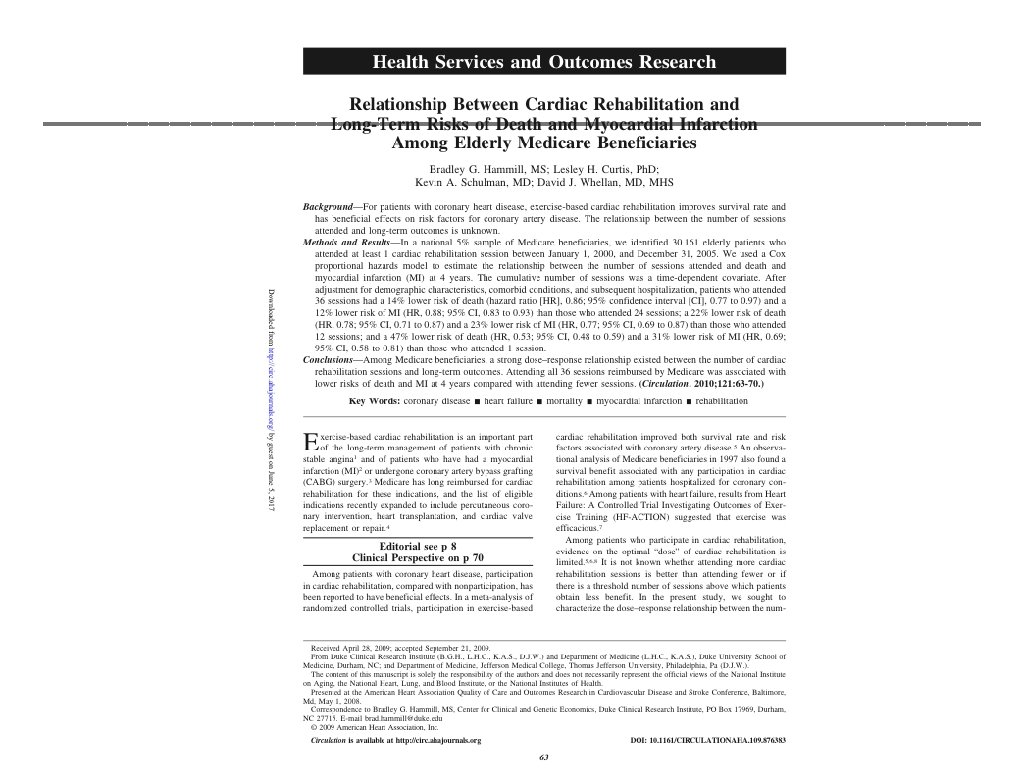
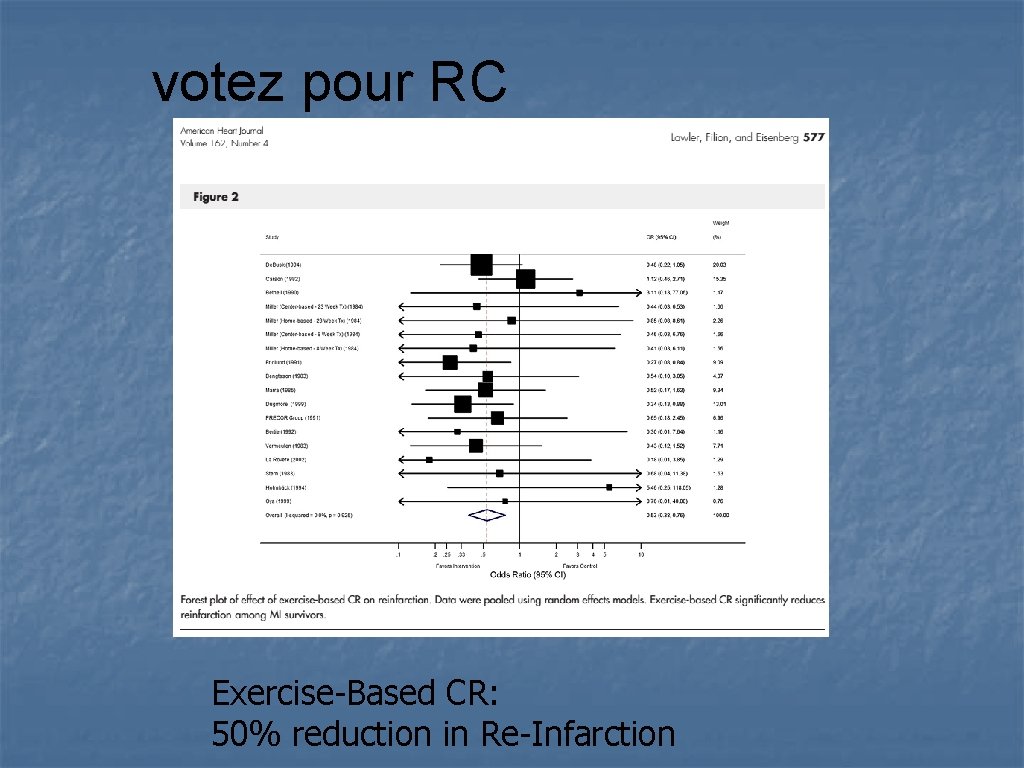
votez pour RC Exercise-Based CR: 50% reduction in Re-Infarction
Cardiac Rehabilitation Dr R. Kacenelenbogen Cardiac Rehabilitation Department
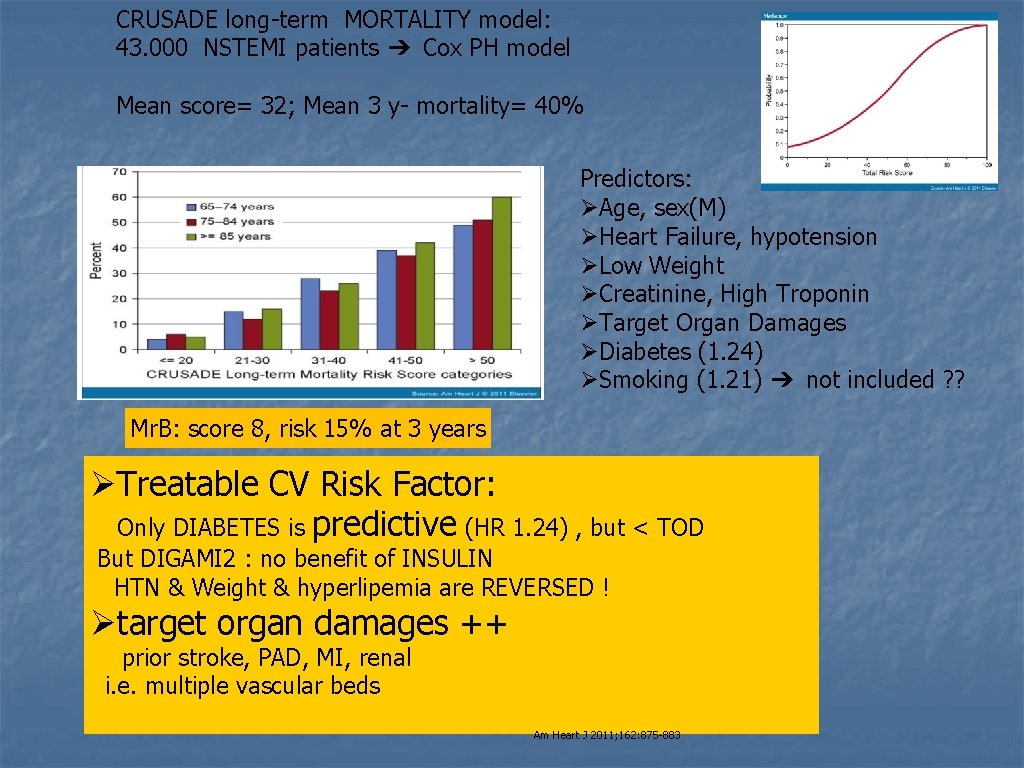
CRUSADE long-term MORTALITY model: 43. 000 NSTEMI patients ➔ Cox PH model Mean score= 32; Mean 3 y- mortality= 40% Predictors: Age, sex(M) Heart Failure, hypotension Low Weight Creatinine, High Troponin Target Organ Damages Diabetes (1. 24) Smoking (1. 21) ➔ not included ? ? Mr. B: score 8, risk 15% at 3 years Treatable CV Risk Factor: Only DIABETES is predictive (HR 1. 24) , but < TOD But DIGAMI 2 : no benefit of INSULIN HTN & Weight & hyperlipemia are REVERSED ! target organ damages ++ prior stroke, PAD, MI, renal i. e. multiple vascular beds Am Heart J 2011; 162: 875 -883