Professional Conduct and Patient Safety Ron Wyatt MD





- Slides: 62
Professional Conduct and Patient Safety Ron Wyatt MD MHA Chief Quality Officer Hamad Medical Corporation
Conflict of interest declaration I hereby declare no conflicts of interest in presenting this session today
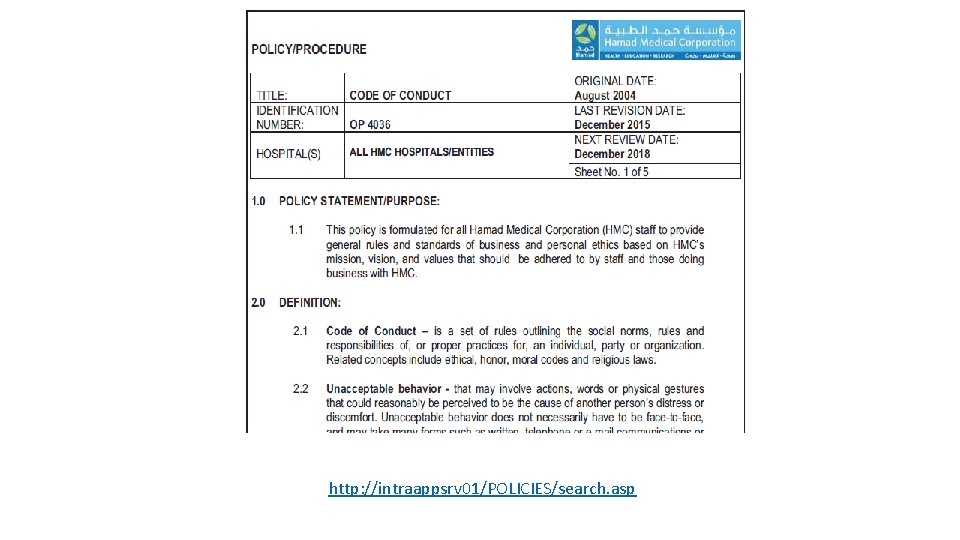
Objectives 1. Describe how professional conduct supports effective teamwork and safe patient care. 2. Define unprofessional conduct. 3. Describe the impact of unprofessional behavior on the clinical care environment. 4. Define patterns of unprofessional conduct including bullying and horizontal violence. 5. Identify two approaches for responding to unprofessional conduct —enforcement and engagement. 6. Describe characteristics of a good & bad role modeling 7. Review HMC policy and how to report unprofessional behavior
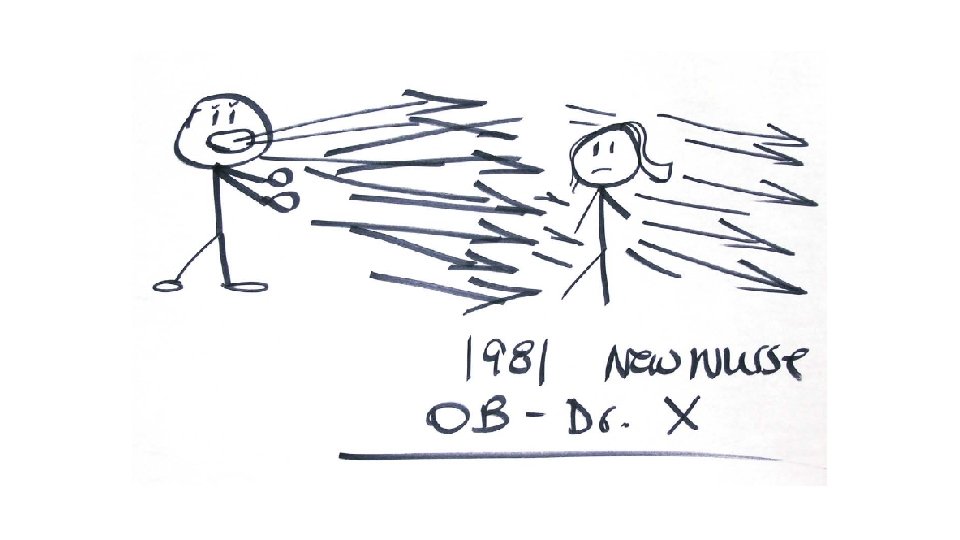
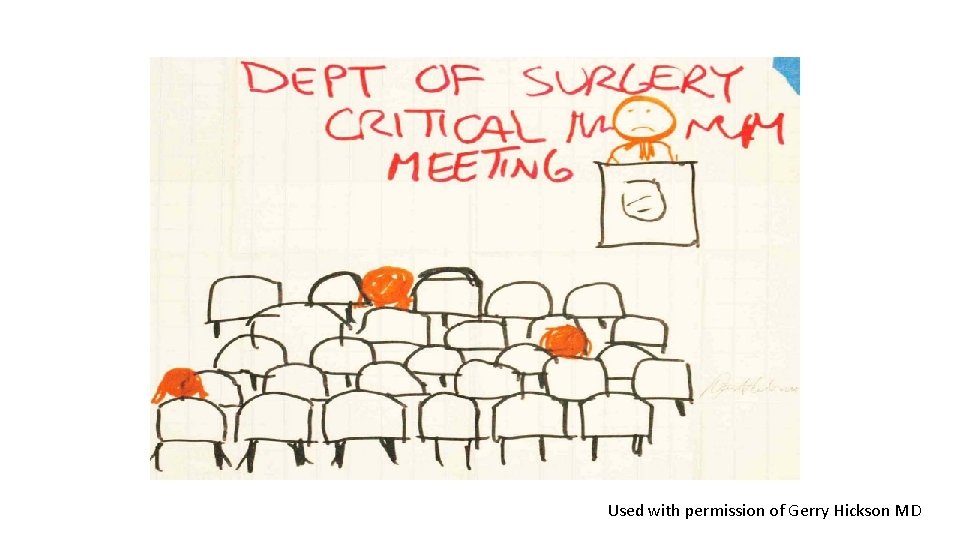
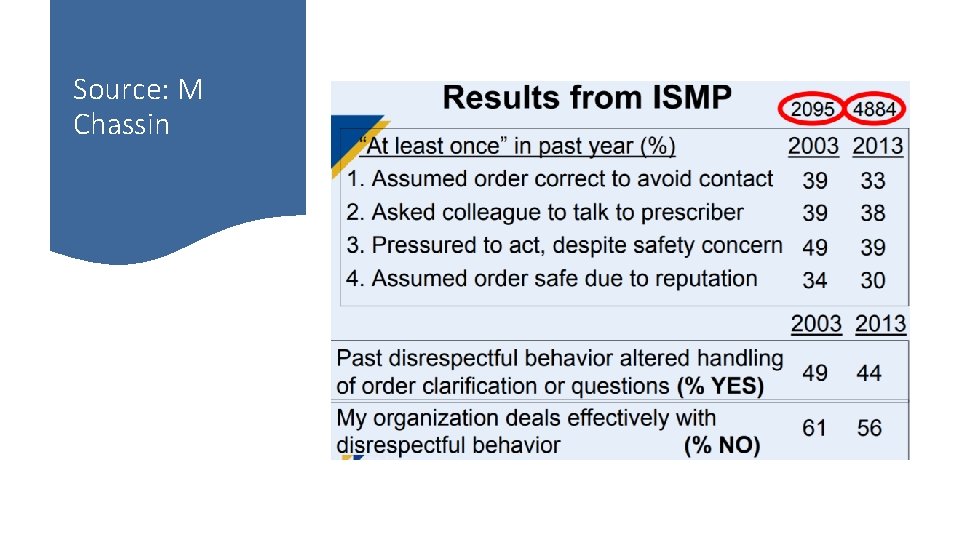
What Behaviors are Intimidating? q Wide range: impatience to physical abuse Most common? q Refusal to answer questions or to return phone calls or pages; condescending tone or language; impatience with questions q 2013 ISMP survey: 11 -15% personally experienced these from MDs and non-MDs q >10 times in past year Used with permission of Gerry Hickson MD
Used with permission of Gerry Hickson MD
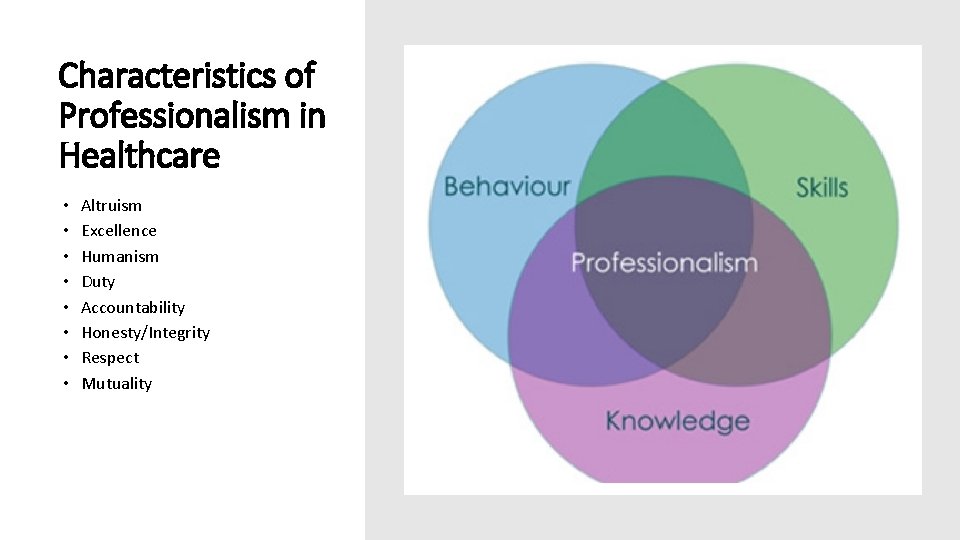
Characteristics of Professionalism in Healthcare • • Altruism Excellence Humanism Duty Accountability Honesty/Integrity Respect Mutuality
Professional Conduct and High. Performing Teams • Professional conduct contributes to safe patient care and is a key component of high performing teams. • Reinforcing professional conduct expectations within the team: • Is a form of self-correction • Provides mutual support • Reinforces trust • Provides needed feedback • Is a key component of care coordination 8
Defining Unprofessional Conduct • Unprofessional conduct includes disruptive and intimidating behaviors that interrupt teamwork and undermine safe care. 9
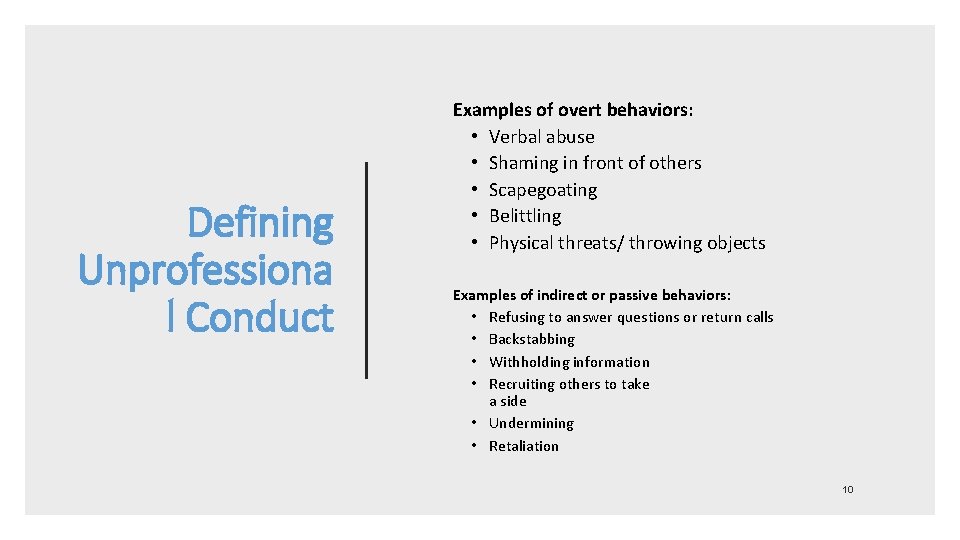
Defining Unprofessiona l Conduct Examples of overt behaviors: • Verbal abuse • Shaming in front of others • Scapegoating • Belittling • Physical threats/ throwing objects Examples of indirect or passive behaviors: • Refusing to answer questions or return calls • Backstabbing • Withholding information • Recruiting others to take a side • Undermining • Retaliation 10
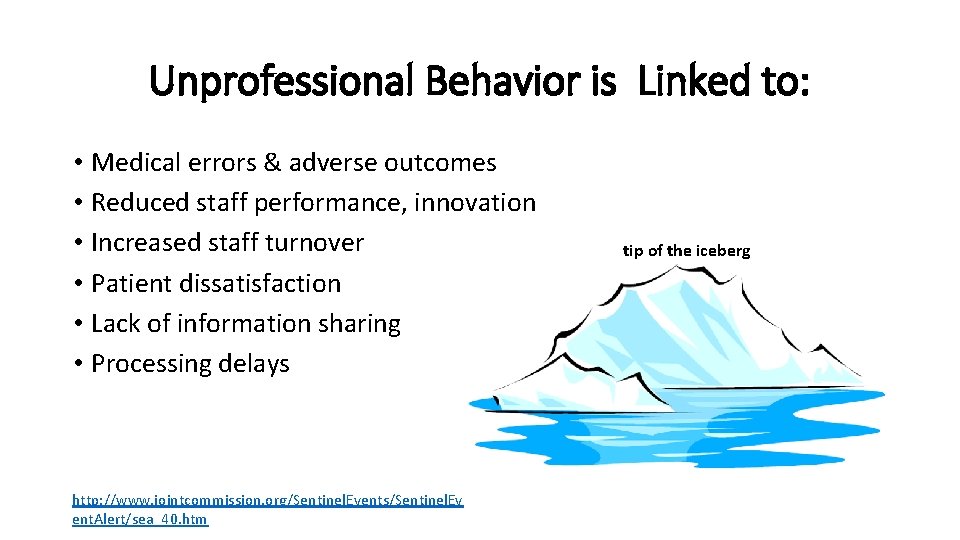
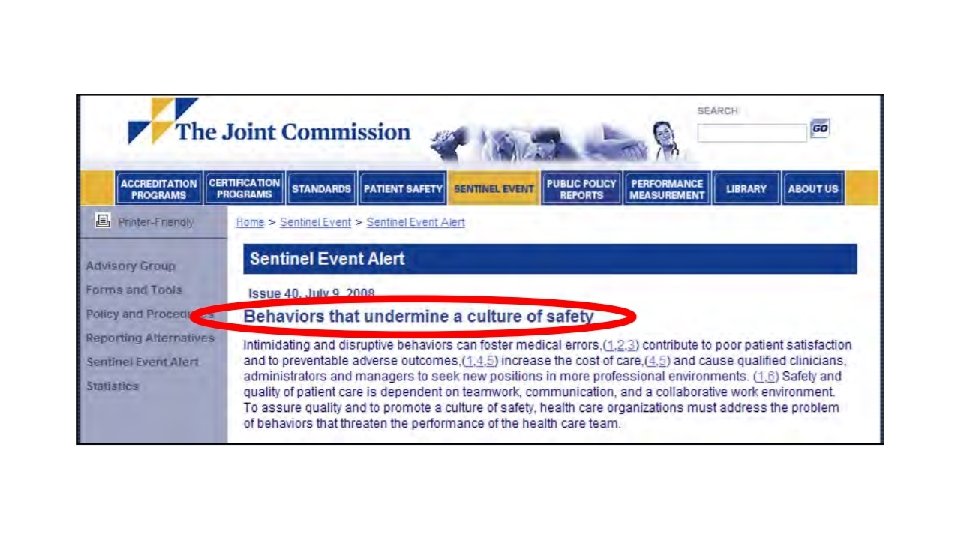
Unprofessional Behavior is Linked to: • Medical errors & adverse outcomes • Reduced staff performance, innovation • Increased staff turnover • Patient dissatisfaction • Lack of information sharing • Processing delays http: //www. jointcommission. org/Sentinel. Events/Sentinel. Ev ent. Alert/sea_40. htm tip of the iceberg
https: //www. jointcommission. org/assets/1/6/SEA_57_infograp hic_11_tenets_safety_culture. pdf
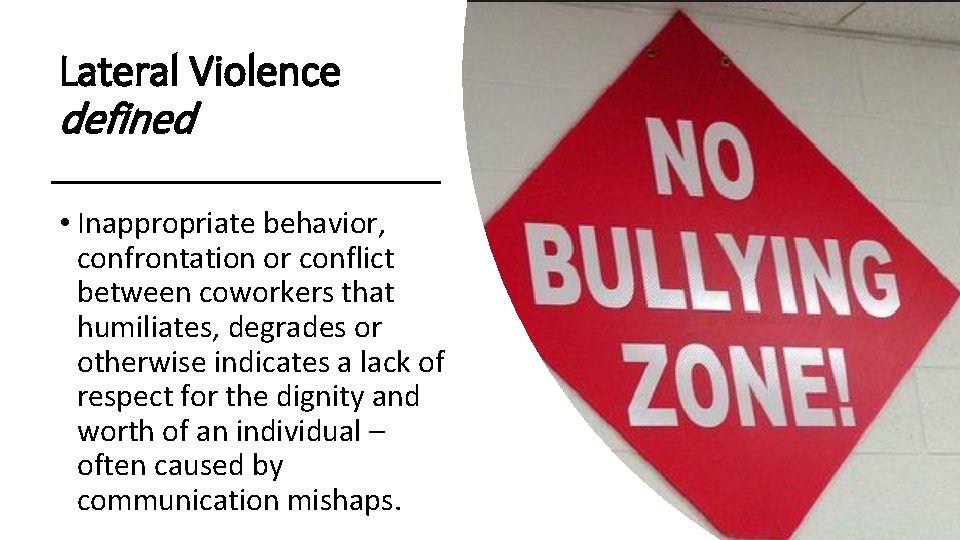
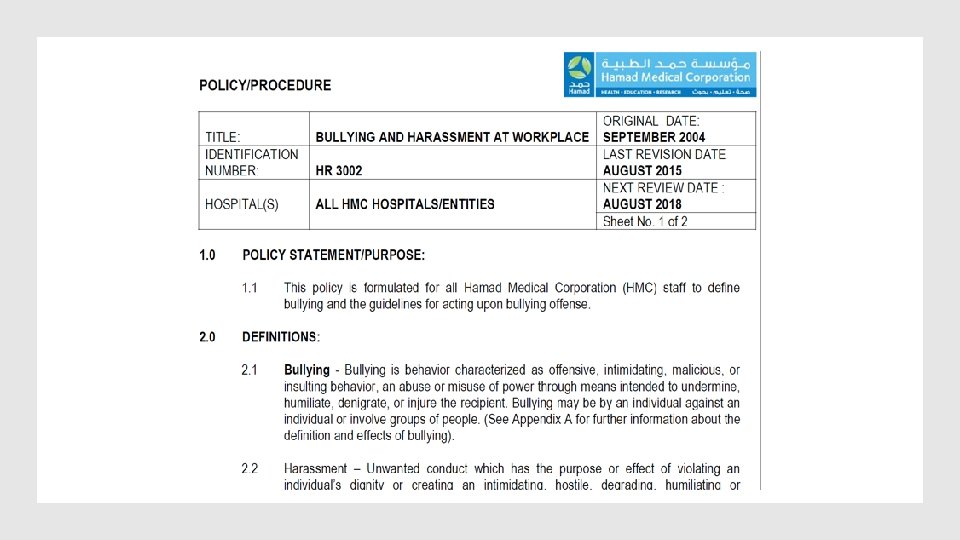
Lateral Violence defined • Inappropriate behavior, confrontation or conflict between coworkers that humiliates, degrades or otherwise indicates a lack of respect for the dignity and worth of an individual – often caused by communication mishaps.
Patterns of Unprofessiona l Conduct • Patterns of unprofessional conduct create barriers to safe care and are embedded within the culture of healthcare. • Bullying and horizontal (lateral) violence are examples of patterned unprofessional conduct. • The impact of ongoing horizontal violence and bullying is significant both to those targeted and those who are incidental to direct attacks. 15
Source: M Chassin
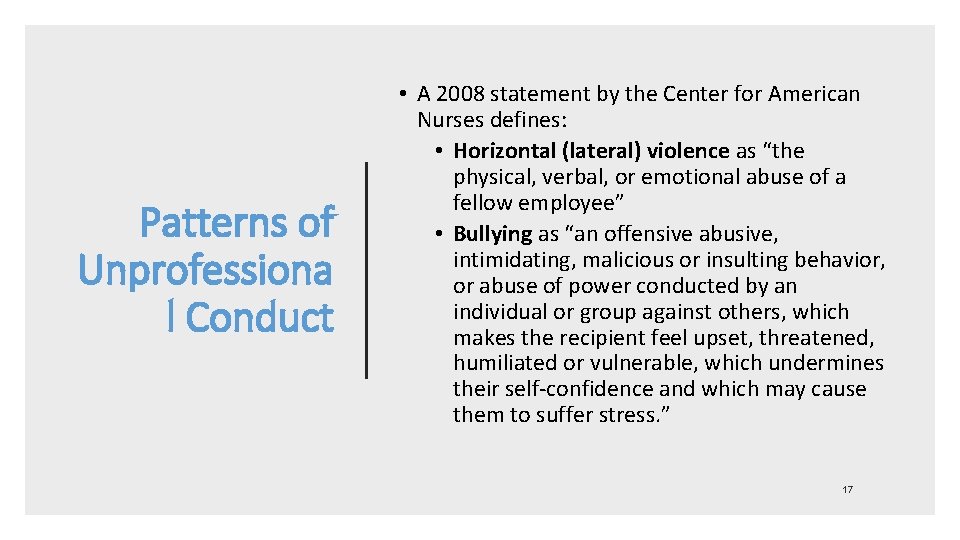
Patterns of Unprofessiona l Conduct • A 2008 statement by the Center for American Nurses defines: • Horizontal (lateral) violence as “the physical, verbal, or emotional abuse of a fellow employee” • Bullying as “an offensive abusive, intimidating, malicious or insulting behavior, or abuse of power conducted by an individual or group against others, which makes the recipient feel upset, threatened, humiliated or vulnerable, which undermines their self-confidence and which may cause them to suffer stress. ” 17
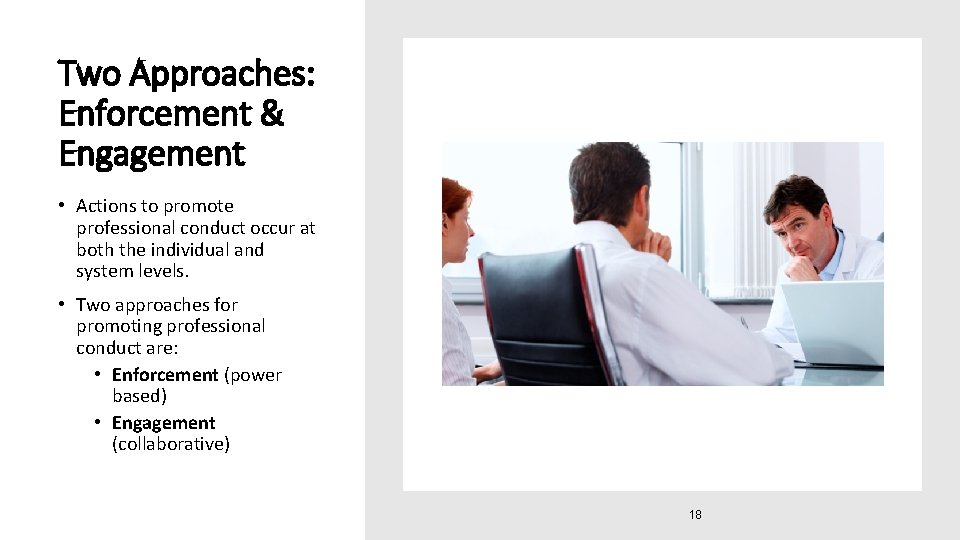
Two Approaches: Enforcement & Engagement • Actions to promote professional conduct occur at both the individual and system levels. • Two approaches for promoting professional conduct are: • Enforcement (power based) • Engagement (collaborative) 18
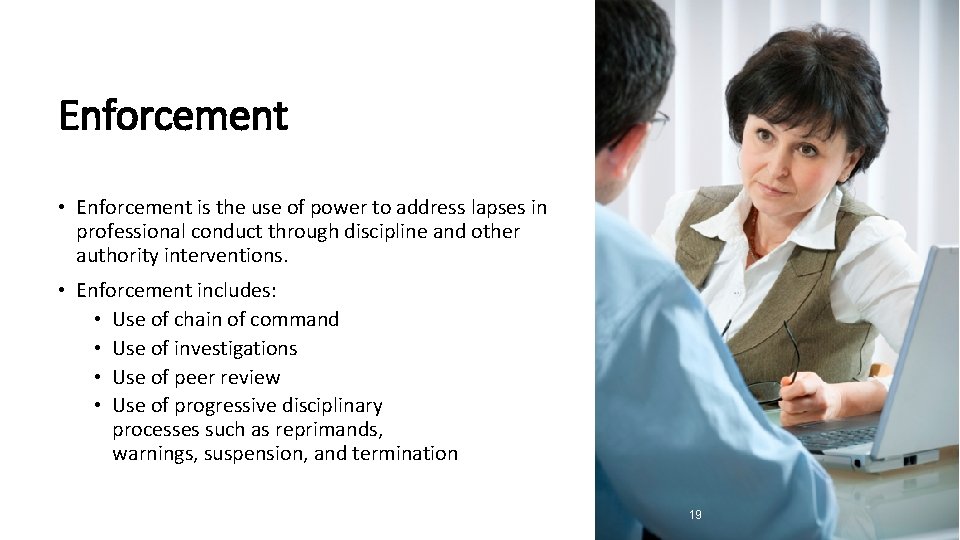
Enforcement • Enforcement is the use of power to address lapses in professional conduct through discipline and other authority interventions. • Enforcement includes: • Use of chain of command • Use of investigations • Use of peer review • Use of progressive disciplinary processes such as reprimands, warnings, suspension, and termination 19
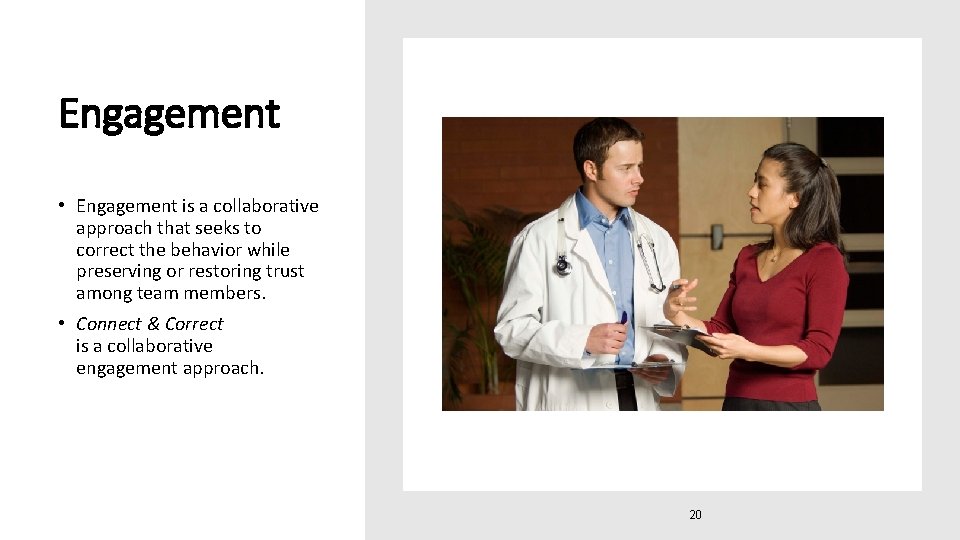
Engagement • Engagement is a collaborative approach that seeks to correct the behavior while preserving or restoring trust among team members. • Connect & Correct is a collaborative engagement approach. 20
Professionals Don’ts • Overstepping Boundaries • Involvement in the affairs of others • Gossip • Personal activities at work • Breaching Confidentiality • Bringing emotional baggage to work • Criticizing superiors • Inappropriate language ©WRH (Aug. 2013)
The care of patients can also be influenced by the following: Medical Colleagues ⋅ Refuse to consult or assist with surgical procedures, potentially causing delays and risking patient safety. Co‐workers (e. g. nurses, technicians, support staff) ⋅ Choose to leave their job rather than endure an atmosphere of stress and tension. ⋅ Become fearful and practice avoidance of the unprofessional individual. ⋅ Hesitate to call the physician for help, or to clarify orders. ⋅ Defer patient care while waiting for another physician to come on duty. ⋅ Take more sick time due to low morale and tension in the workplace. Administrators ⋅ See an increase in staff sick time. ⋅ Have difficulties attracting new staff or keeping existing staff. ⋅ Spend additional time/energy to deal with the behavior – taking time away from more direct patient care issues. Medical and Nursing Students ⋅ Are provided with a negative role model at a critical time during their professional development that could affect their future dealings with patients.
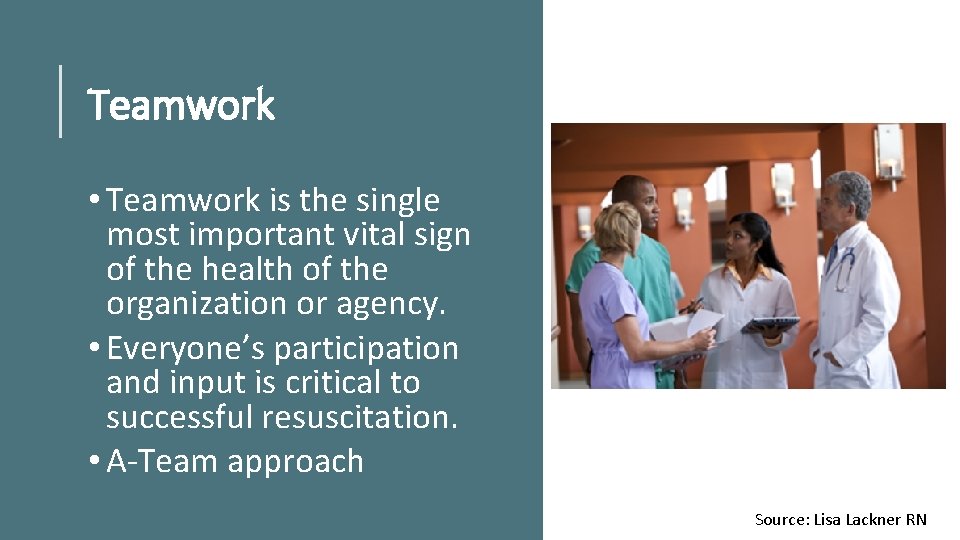
Teamwork • Teamwork is the single most important vital sign of the health of the organization or agency. • Everyone’s participation and input is critical to successful resuscitation. • A-Team approach Source: Lisa Lackner RN
A-Team • • • Proactive Confident Positive Competent Compassionate Communicative Team spirit Teachers Trust Does what it takes Sense of humor Gets results B Team • • Negative Reactive Confused Late Poor communications Constant complaining Can’t do Always surprised Source: Lisa Lackner RN
Why do we struggle with this • Attitude • Ego • Fear • Seniority • Confusion • Poor impulse control • WIFM
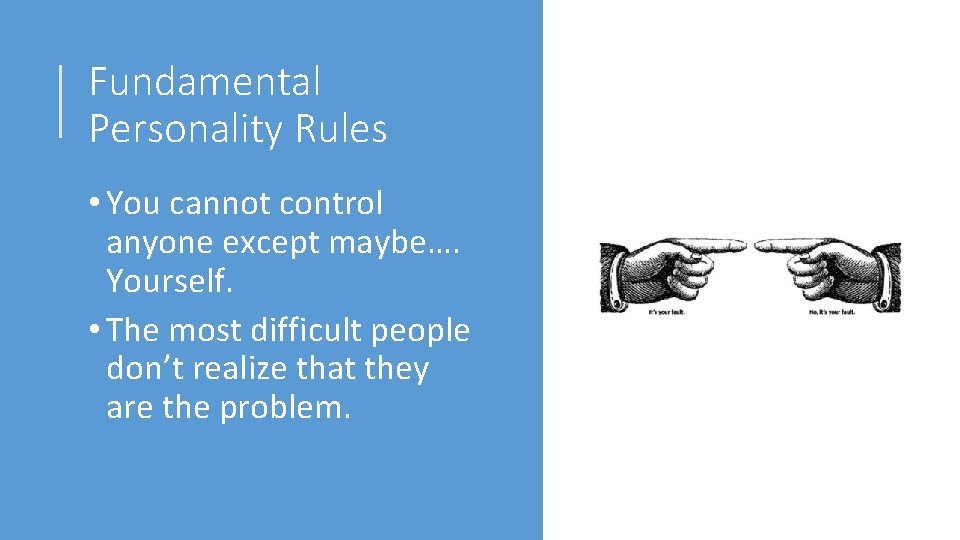
Fundamental Personality Rules • You cannot control anyone except maybe…. Yourself. • The most difficult people don’t realize that they are the problem.
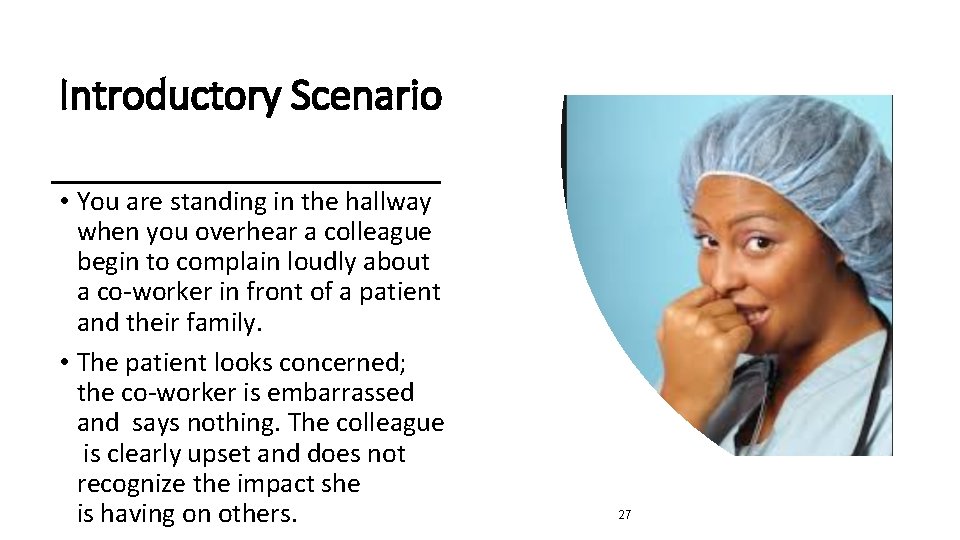
Introductory Scenario • You are standing in the hallway when you overhear a colleague begin to complain loudly about a co-worker in front of a patient and their family. • The patient looks concerned; the co-worker is embarrassed and says nothing. The colleague is clearly upset and does not recognize the impact she is having on others. 27
Unprofessional Conduct • Unprofessional conduct is behavior that interferes with effective communication and negatively impacts team performance and patient care. • People who exhibit disruptive behavior require feedback to increase their awareness of the impact their behavior has on team relationships and patient care. • Disruptive behaviors may also indicate system issues that require further assessment. 28
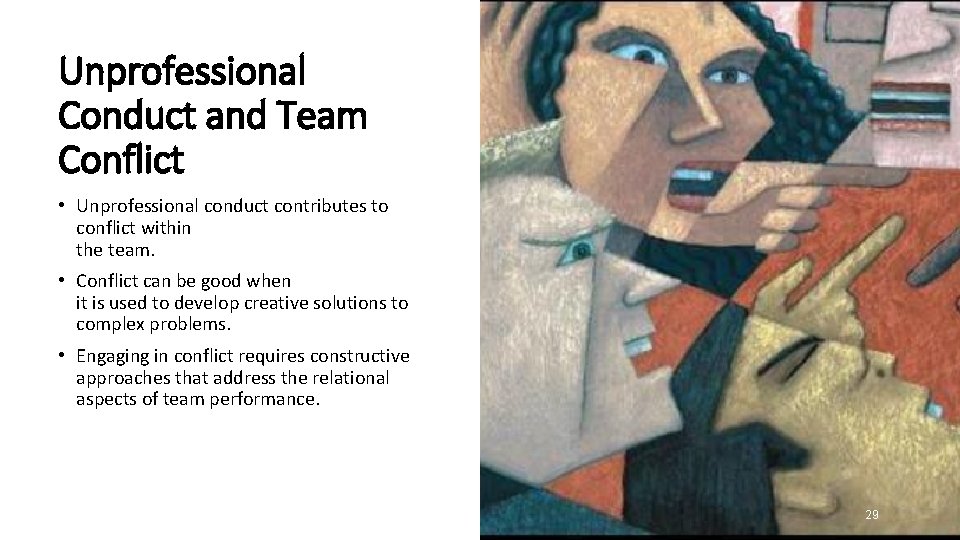
Unprofessional Conduct and Team Conflict • Unprofessional conduct contributes to conflict within the team. • Conflict can be good when it is used to develop creative solutions to complex problems. • Engaging in conflict requires constructive approaches that address the relational aspects of team performance. 29
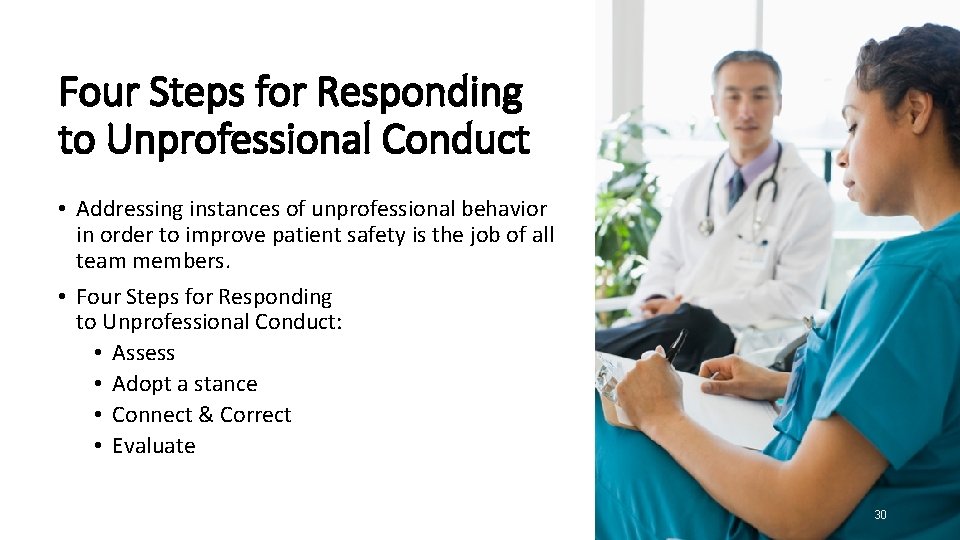
Four Steps for Responding to Unprofessional Conduct • Addressing instances of unprofessional behavior in order to improve patient safety is the job of all team members. • Four Steps for Responding to Unprofessional Conduct: • Assess • Adopt a stance • Connect & Correct • Evaluate 30
Assessing Whether and How to Engage • Determining whether and how to address a difficult situation requires assessment of the risks—to you and to others • Routinely avoiding a difficult conversation can lead to patient harm and does not provide needed feedback to team members • Engaging effectively requires that you are both assertive and cooperative. 31
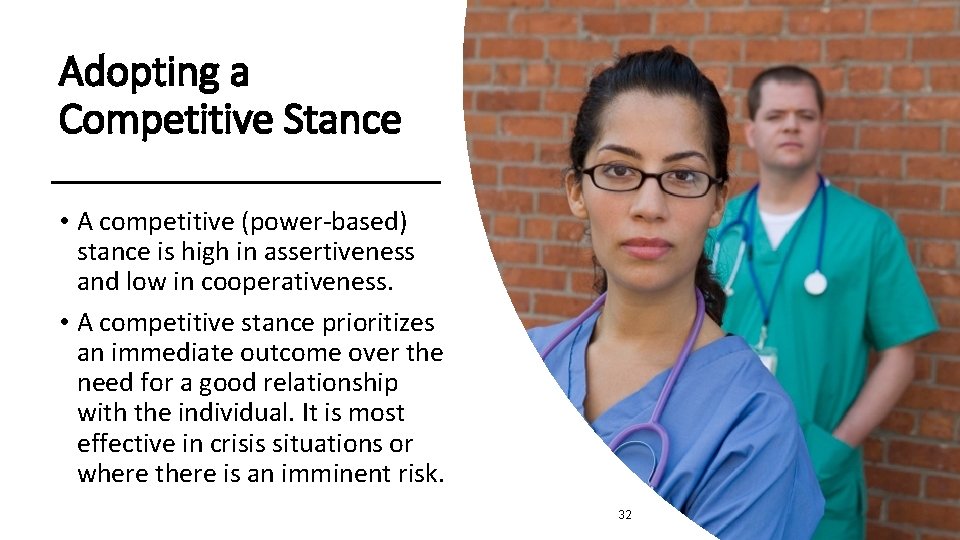
Adopting a Competitive Stance • A competitive (power-based) stance is high in assertiveness and low in cooperativeness. • A competitive stance prioritizes an immediate outcome over the need for a good relationship with the individual. It is most effective in crisis situations or where there is an imminent risk. 32
Adopting a Competitive Stance: Examples • CUS—I’m concerned. I’m uncomfortable. This is a safety issue. • Two‐Challenge Rule—Assertively voicing a concern at least two times to ensure that it has been heard. These are good techniques for ensuring that your concern is heard when there is an imminent risk to patient care. 33
Adopting a Collaborative Stance • A collaborative stance is high in assertiveness and high in cooperativeness. It reflects a “yes, and” approach. • A collaborative stance is useful when: • You try a competitive stance and get resistance • You want to fully understand a situation • You want to learn together • You want to find the most creative solution 34
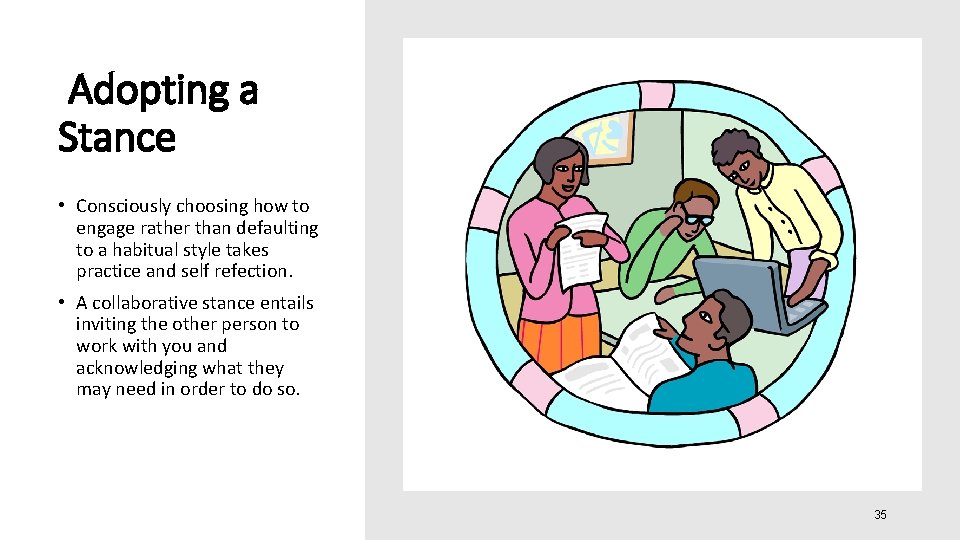
Adopting a Stance • Consciously choosing how to engage rather than defaulting to a habitual style takes practice and self refection. • A collaborative stance entails inviting the other person to work with you and acknowledging what they may need in order to do so. 35
Raising Awareness • The vast majority of people are unaware that their behavior is having a negative impact on others. • This is particularly true if they are upset and are not connected to others, but are instead in fight-or-flight mode. 36
First Connect • The first stage, Connect, focuses on creating a connection with the other person and building trust. • By creating a connection first you: • De-escalate the situation • Develop trust with the person • Gain deeper understanding of the situation • Demonstrate respect 37
Connect: PEARLA • To connect, use the following algorithm: • PEARLA • Presence • Empathy • Acknowledgement • Reflect/reframe • Listen openly • Ask questions 38
Connect: PEARLA Presence and Empathy • Presence: To create connection, you must first focus on the situation that is occurring between you and the other person. • Empathy: Putting yourself in another’s shoes and imagining what might be going on for them is a key element in creating connection. 39
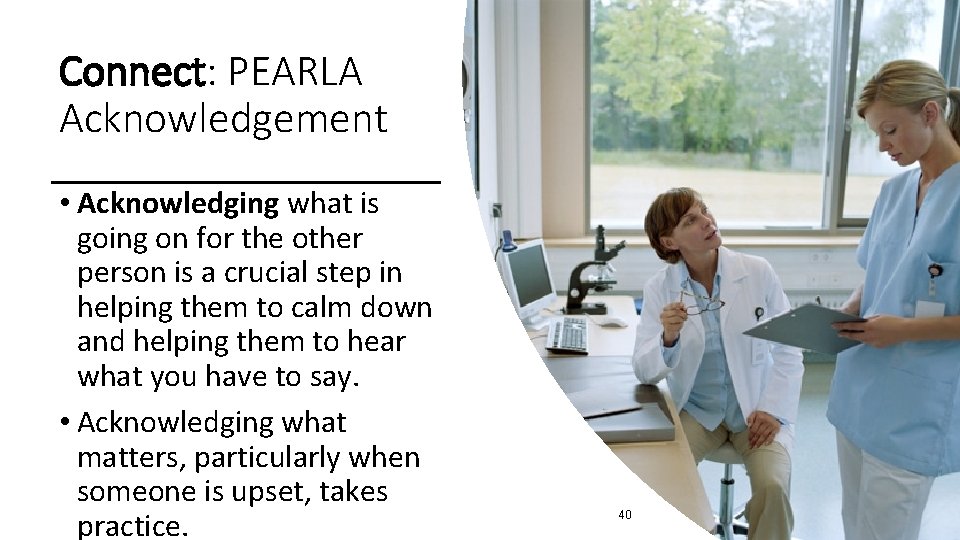
Connect: PEARLA Acknowledgement • Acknowledging what is going on for the other person is a crucial step in helping them to calm down and helping them to hear what you have to say. • Acknowledging what matters, particularly when someone is upset, takes practice. 40
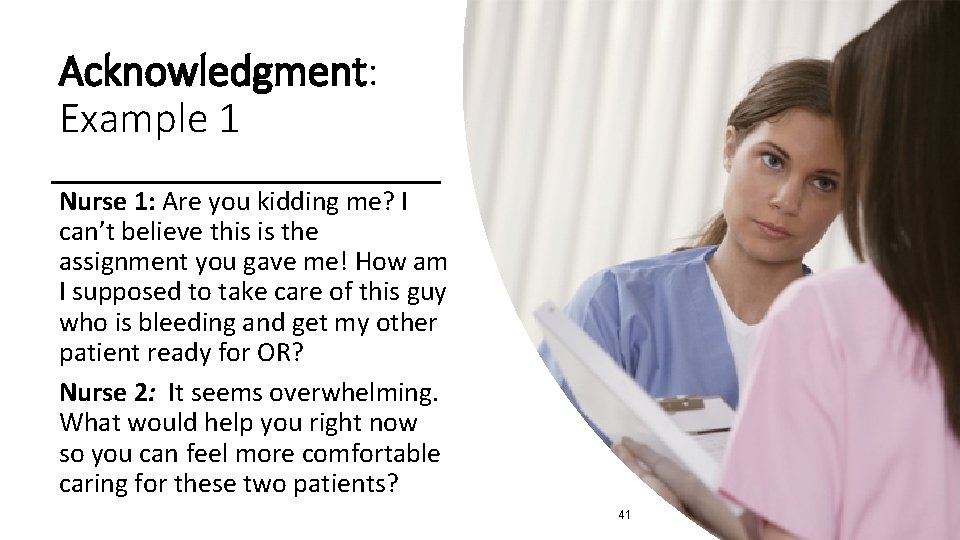
Acknowledgment: Example 1 Nurse 1: Are you kidding me? I can’t believe this is the assignment you gave me! How am I supposed to take care of this guy who is bleeding and get my other patient ready for OR? Nurse 2: It seems overwhelming. What would help you right now so you can feel more comfortable caring for these two patients? 41
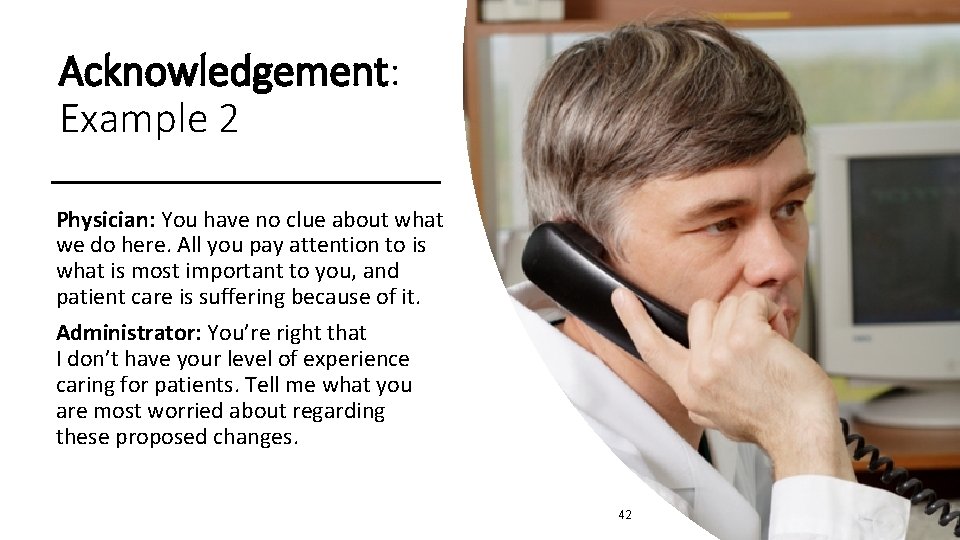
Acknowledgement: Example 2 Physician: You have no clue about what we do here. All you pay attention to is what is most important to you, and patient care is suffering because of it. Administrator: You’re right that I don’t have your level of experience caring for patients. Tell me what you are most worried about regarding these proposed changes. 42
Connect (PEARLA) Reflect and Reframe • Reflect: Reflecting back what you heard using neutral language is a good way to both check that you heard correctly and de-escalate the situation. • Reframe: Reframing means to take a concept, idea, or statement and say it in a way that helps the person view the situation differently. It is a way of refocusing the conversation toward the issues and what matters to the person—and away from blame or rigid positions. 43
Person 1: Reflect and Reframe: Example It figures that the new person was involved in this. It seems like every time something bad happens, he’s had something to do with it. Person 2: • Rarely is one person to blame for everything that goes wrong. What do you think contributed to this particular situation? OR— • So you’re saying you’re concerned about the quality of care on this unit. What concerns you most? OR— • It’s hard to say what happened since he’s not here. Have you spoken to him directly about your concerns? 44
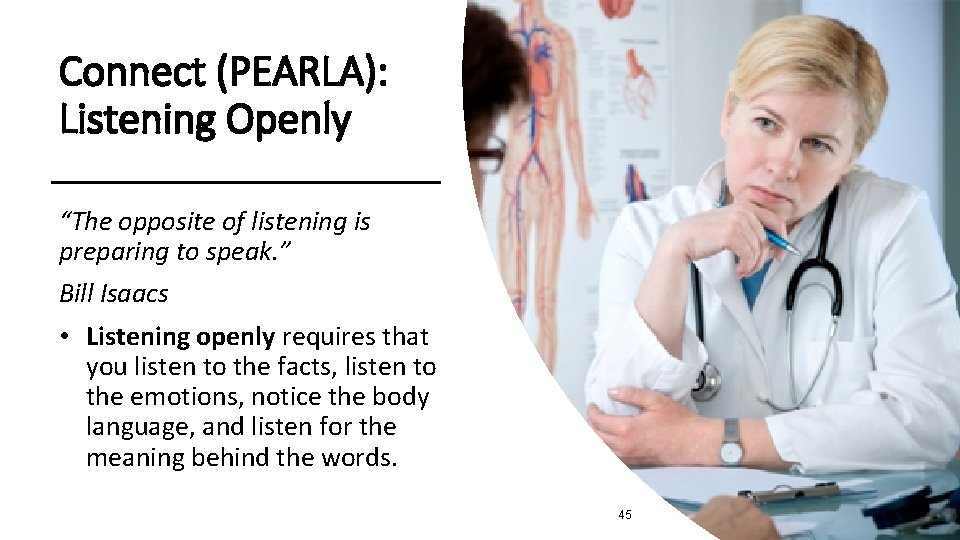
Connect (PEARLA): Listening Openly “The opposite of listening is preparing to speak. ” Bill Isaacs • Listening openly requires that you listen to the facts, listen to the emotions, notice the body language, and listen for the meaning behind the words. 45
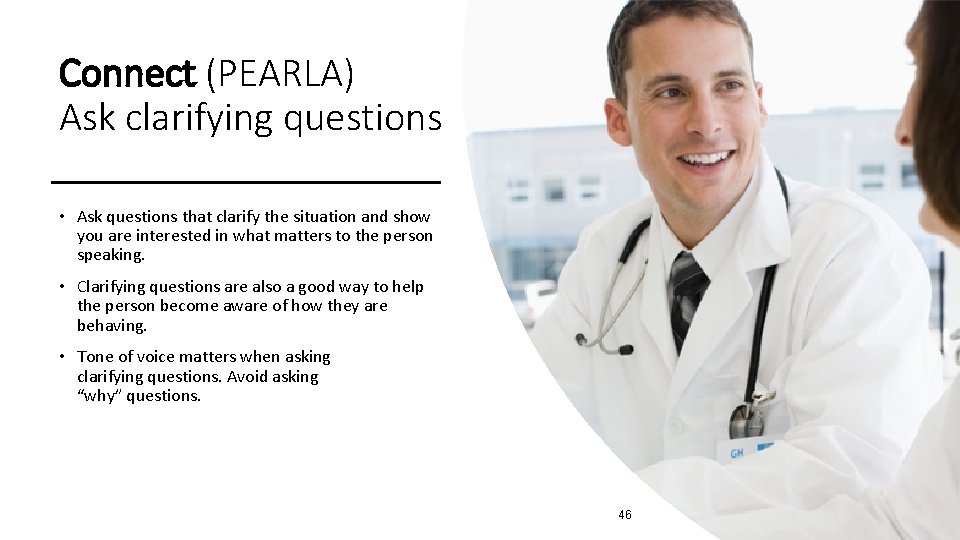
Connect (PEARLA) Ask clarifying questions • Ask questions that clarify the situation and show you are interested in what matters to the person speaking. • Clarifying questions are also a good way to help the person become aware of how they are behaving. • Tone of voice matters when asking clarifying questions. Avoid asking “why” questions. 46
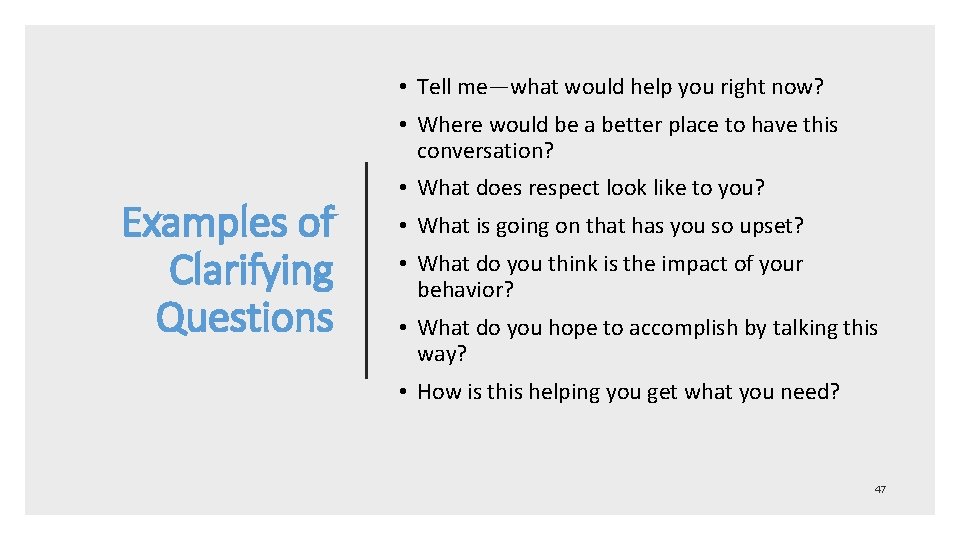
• Tell me—what would help you right now? • Where would be a better place to have this conversation? Examples of Clarifying Questions • What does respect look like to you? • What is going on that has you so upset? • What do you think is the impact of your behavior? • What do you hope to accomplish by talking this way? • How is this helping you get what you need? 47
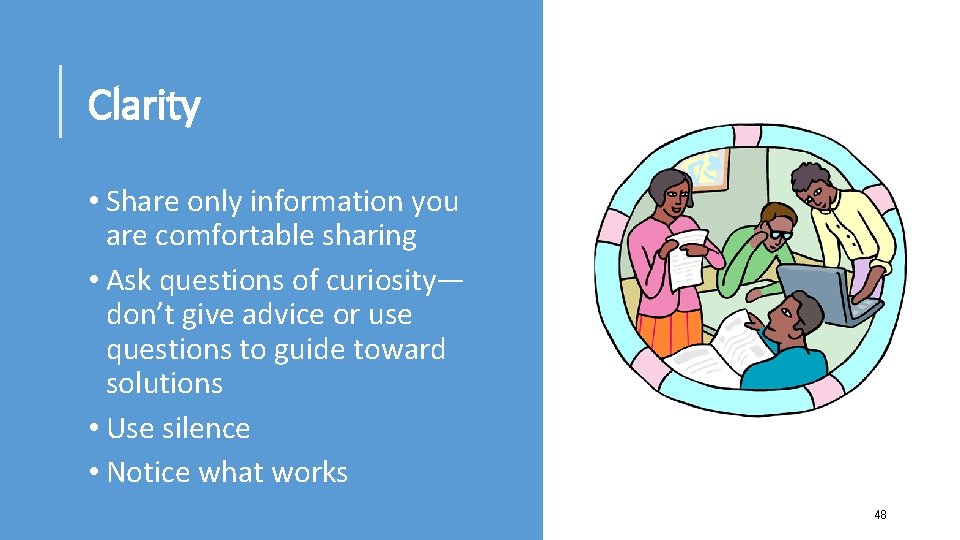
Clarity • Share only information you are comfortable sharing • Ask questions of curiosity— don’t give advice or use questions to guide toward solutions • Use silence • Notice what works 48
Creating Connection Understand first. Explain later… 49
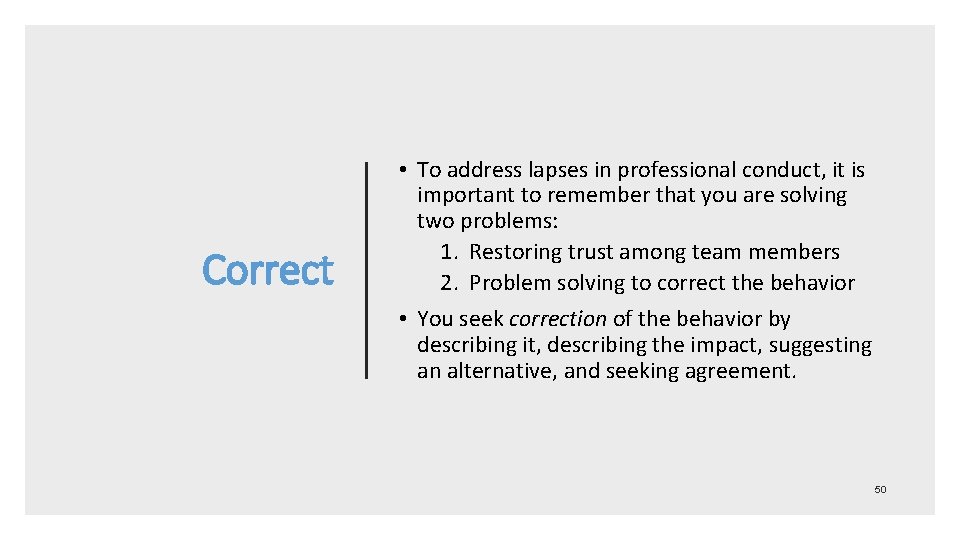
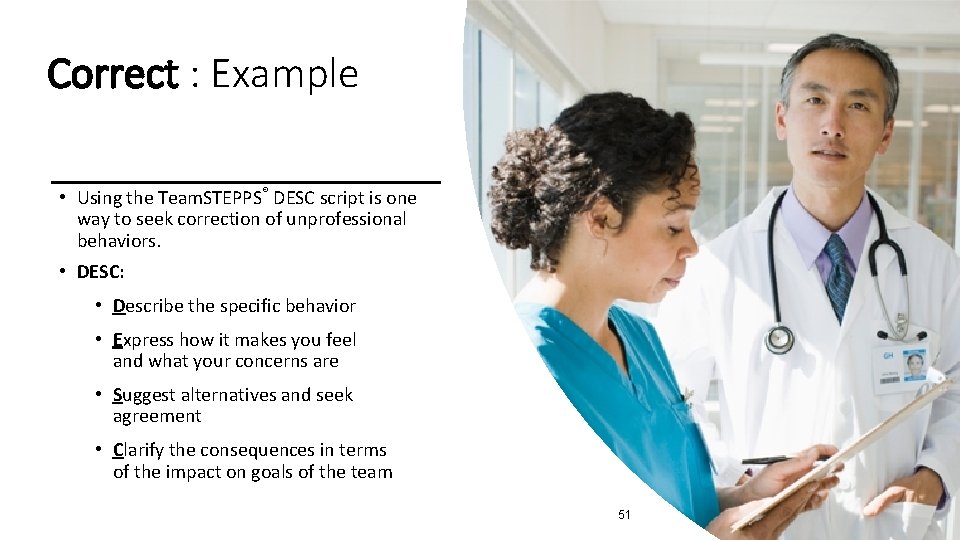
Correct • To address lapses in professional conduct, it is important to remember that you are solving two problems: 1. Restoring trust among team members 2. Problem solving to correct the behavior • You seek correction of the behavior by describing it, describing the impact, suggesting an alternative, and seeking agreement. 50
Correct : Example • Using the Team. STEPPS® DESC script is one way to seek correction of unprofessional behaviors. • DESC: • Describe the specific behavior • Express how it makes you feel and what your concerns are • Suggest alternatives and seek agreement • Clarify the consequences in terms of the impact on goals of the team 51
DESC Script Sample • Describe: When you don’t answer pages or return phone calls … • Explain: I am worried that I won’t be able to give safe care to the patient. • Seek alternatives and agreement: I need for you to respond or have someone call for you if you are busy. Is that something you could try? • Clarify Consequences: If not, it is going to have an impact on patient care and how much I can trust you. 52
Evaluate The final step in the four-step process for responding to unprofessional conduct is to evaluate progress. It is good to evaluate the following: • Your skills and abilities in responding • The outcome of your conversations —what changed? • Next steps if any are required • Identify your support system 53
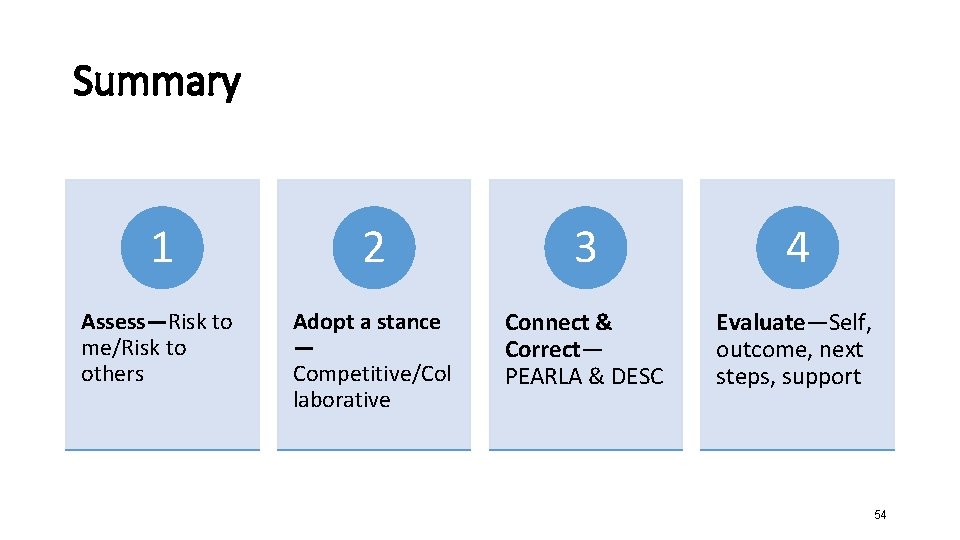
Summary 1 2 3 4 Assess—Risk to me/Risk to others Adopt a stance — Competitive/Col laborative Connect & Correct— PEARLA & DESC Evaluate—Self, outcome, next steps, support 54
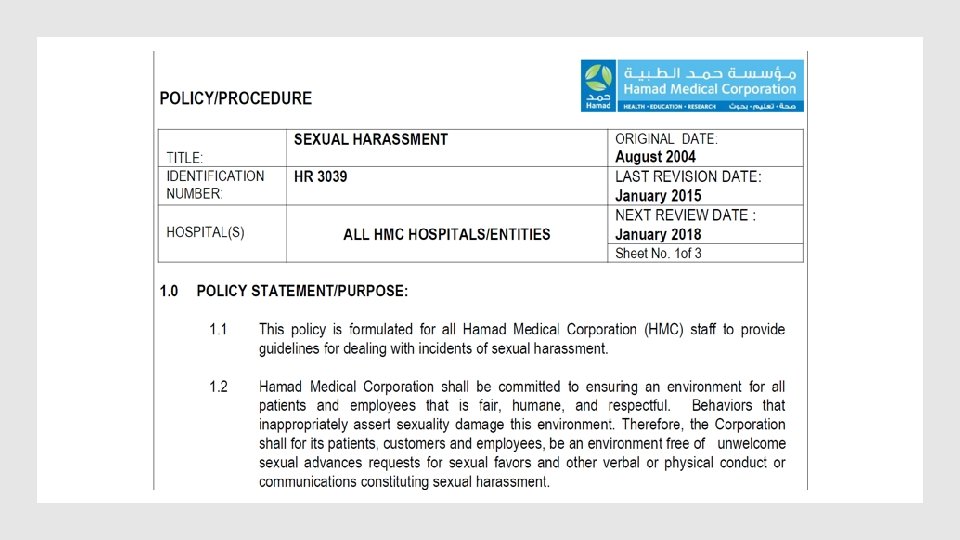
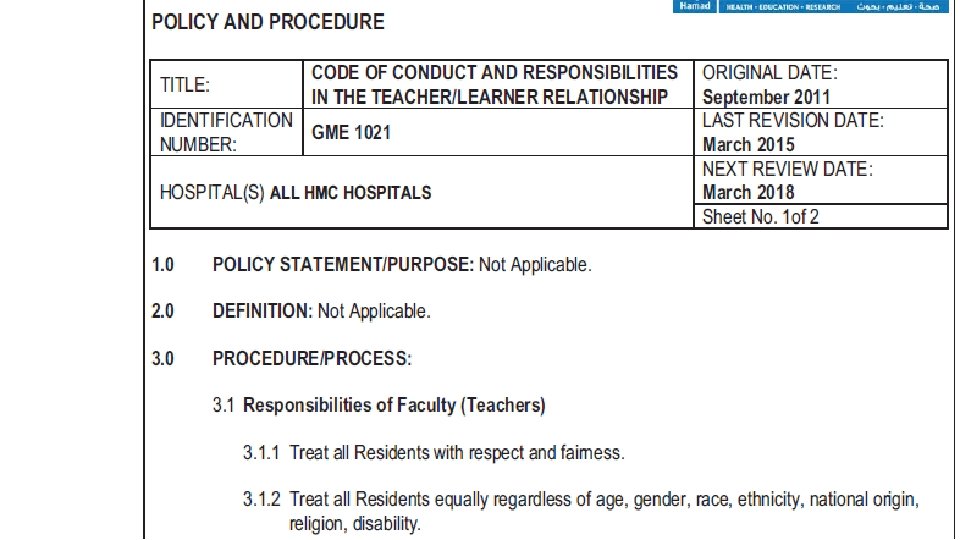
http: //intraappsrv 01/POLICIES/search. asp
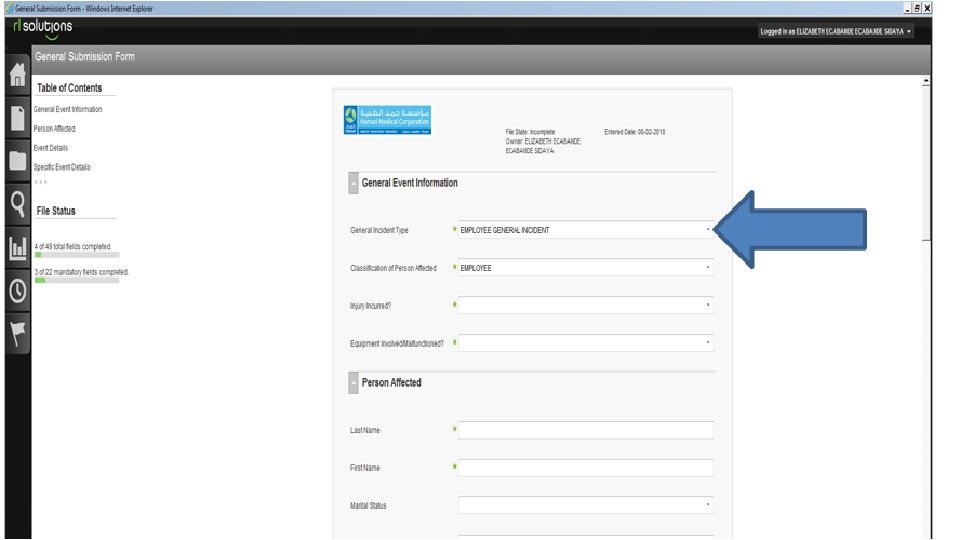
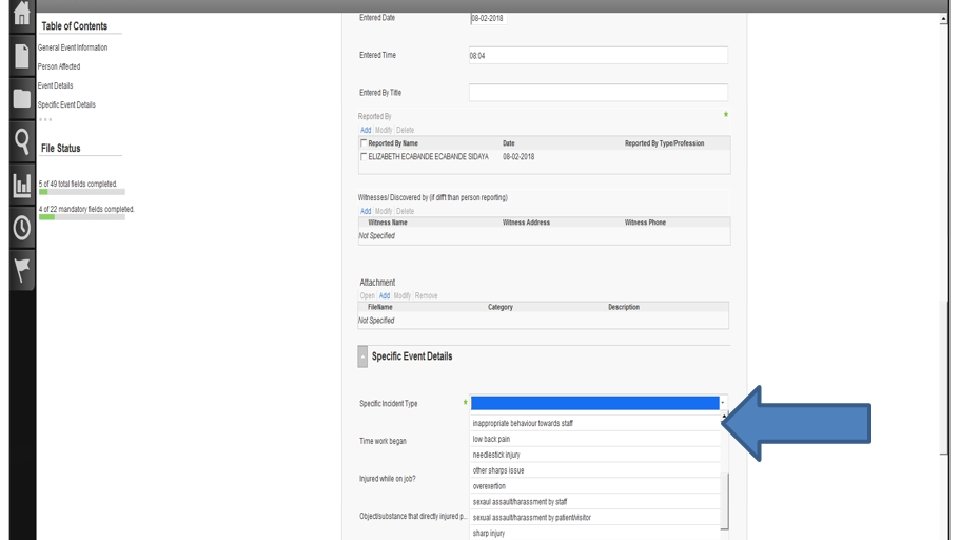
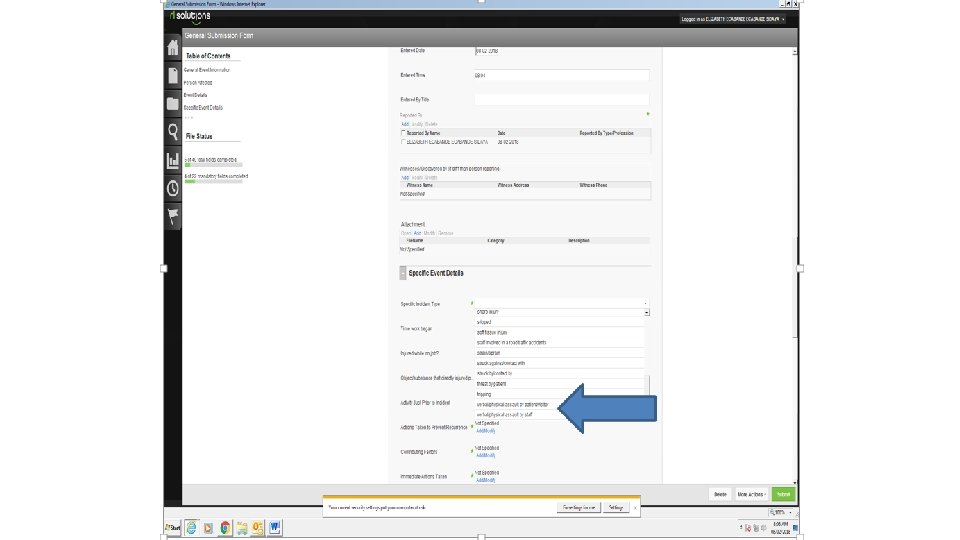
Questions?