
National Patient Safety Goals September 8 2017 Building
National Patient Safety Goals September 8, 2017 Building Leaders – Transforming Hospitals – Improving Care
45 YEARS OF DELIVERING RESULTS Health. Tech. S 3 is a 45 year old, award-winning healthcare consulting and strategic hospital services firm based in Brentwood, Tennessee with clients across the United States. We are dedicated to the goal of improving performance, achieving compliance, reducing costs, and ultimately improving patient care. Leveraging consultants with deep healthcare industry experience, Health. Tech. S 3 provides actionable insights and guidance that supports informed decision making and drives efficiency in operational performance. Our consultants are former hospital leaders and executives. Health. Tech. S 3 has the right mix of experienced professionals that service hospital clients across the nation. Health. Tech. S 3 offers flexible and affordable services, consulting, and technology as we focus on delivering solutions that can be implemented and provide a positive, measurable impact. 1 1
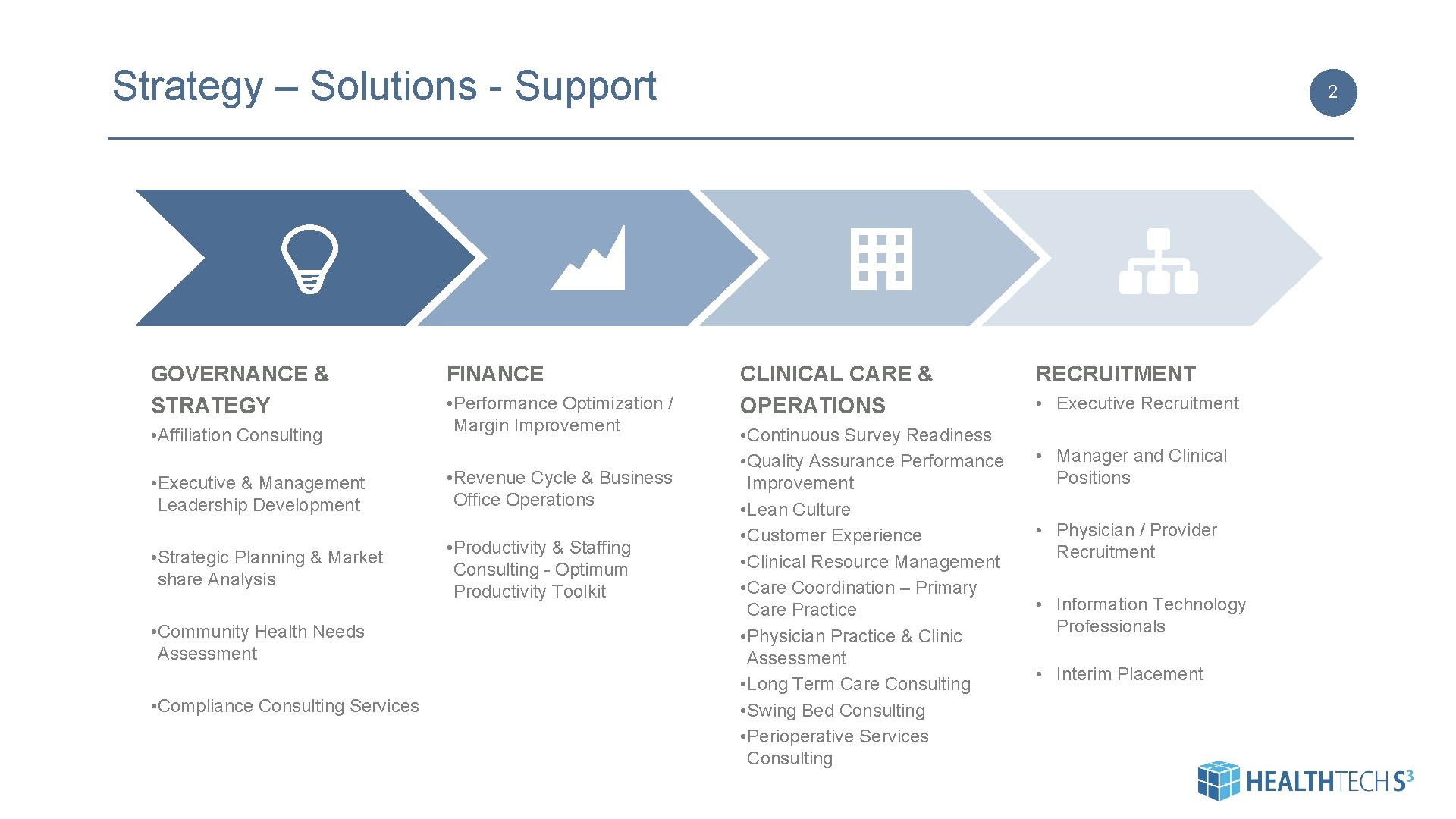
Strategy – Solutions - Support GOVERNANCE & STRATEGY • Affiliation Consulting • Executive & Management Leadership Development • Strategic Planning & Market share Analysis • Community Health Needs Assessment • Compliance Consulting Services FINANCE • Performance Optimization / Margin Improvement • Revenue Cycle & Business Office Operations • Productivity & Staffing Consulting - Optimum Productivity Toolkit 2 CLINICAL CARE & OPERATIONS • Continuous Survey Readiness • Quality Assurance Performance Improvement • Lean Culture • Customer Experience • Clinical Resource Management • Care Coordination – Primary Care Practice • Physician Practice & Clinic Assessment • Long Term Care Consulting • Swing Bed Consulting • Perioperative Services Consulting RECRUITMENT • Executive Recruitment • Manager and Clinical Positions • Physician / Provider Recruitment • Information Technology Professionals • Interim Placement
INSTRUCTIONS FOR TODAY’S WEBINAR 3 You may type a question in the text box if you have a question during the presentation We will try to cover all of your questions – but if we don’t get to them during the webinar we will follow-up with you by e-mail You may also send questions after the webinar to our team (contact information is included at the end of the presentation) www. healthtechs 3. com The webinar will be recorded and the recording will be available on the Health. Tech. S 3 web site: www. healthtechs 3. com Health. Tech. S 3 hopes that the information contained herein will be informative and helpful on industry topics. However, please note that this information is not intended to be definitive. Health. Tech. S 3 and its affiliates expressly disclaim any and all liability, whatsoever, for any such information and for any use made thereof. Health. Tech. S 3 does not and shall not have any authority to develop substantive billing or coding policies for any hospital, clinic or their respective personnel, and any such final responsibility remains exclusively with the hospital, clinic or their respective personnel. Health. Tech. S 3 recommends that hospitals, clinics, their respective personnel, and all other third party recipients of this information consult original source materials and qualified healthcare regulatory counsel for specific guidance in healthcare reimbursement and regulatory matters.
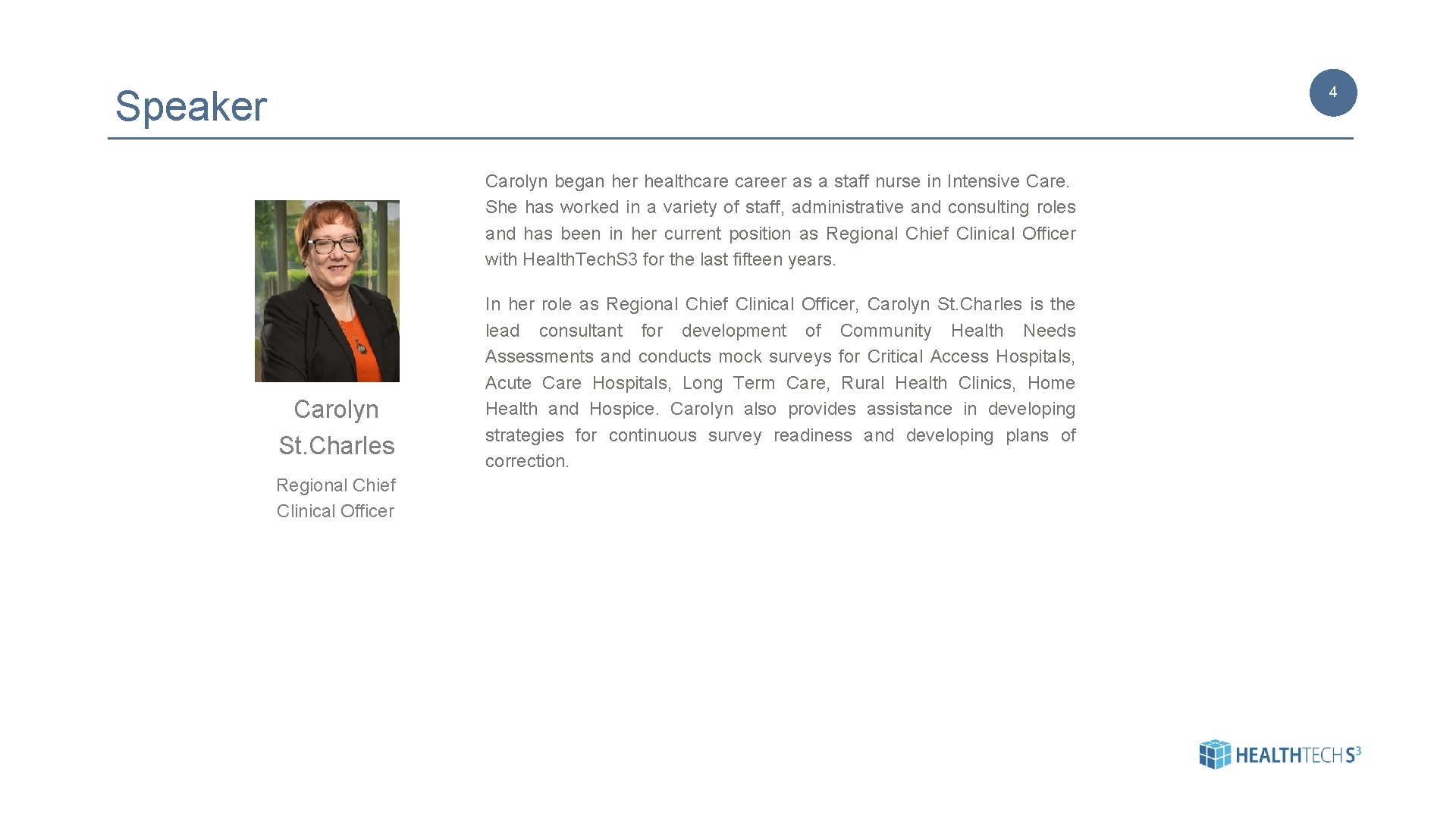
Speaker 4 Carolyn began her healthcareer as a staff nurse in Intensive Care. She has worked in a variety of staff, administrative and consulting roles and has been in her current position as Regional Chief Clinical Officer with Health. Tech. S 3 for the last fifteen years. Carolyn St. Charles Regional Chief Clinical Officer In her role as Regional Chief Clinical Officer, Carolyn St. Charles is the lead consultant for development of Community Health Needs Assessments and conducts mock surveys for Critical Access Hospitals, Acute Care Hospitals, Long Term Care, Rural Health Clinics, Home Health and Hospice. Carolyn also provides assistance in developing strategies for continuous survey readiness and developing plans of correction.
Agenda for Today Why Should We Care (if we’re not TJC accredited) Summary 2017/2018 National Patient Safety Goals Goal 1: Improve the accuracy of patient and residentification Goal 2: Improve the effectiveness of communication among caregivers Goal 3: Improve the safety of using medications Goal 6: Reduce the harm associated with clinical alarm systems 5
Next Time – October 13 6 Goal 7: Reduce the risk of health care-associated infections Goal 9: Reduce the risk of patient harm resulting from falls (Nursing Care Center) Goal 14: Prevent health care-associated pressure ulcers (Nursing Care Center) Goal 15: The hospital identifies safety risks inherent in its patient population (Hospital Universal Protocol for Preventing Wrong Site, Wrong Procedure and Wrong Person Surgery

7 Right thing to do to improve patient / resident safety Evidence-Based Care Adopted by many healthcare organizations Recognized as best practice Specific guidance on elements of compliance
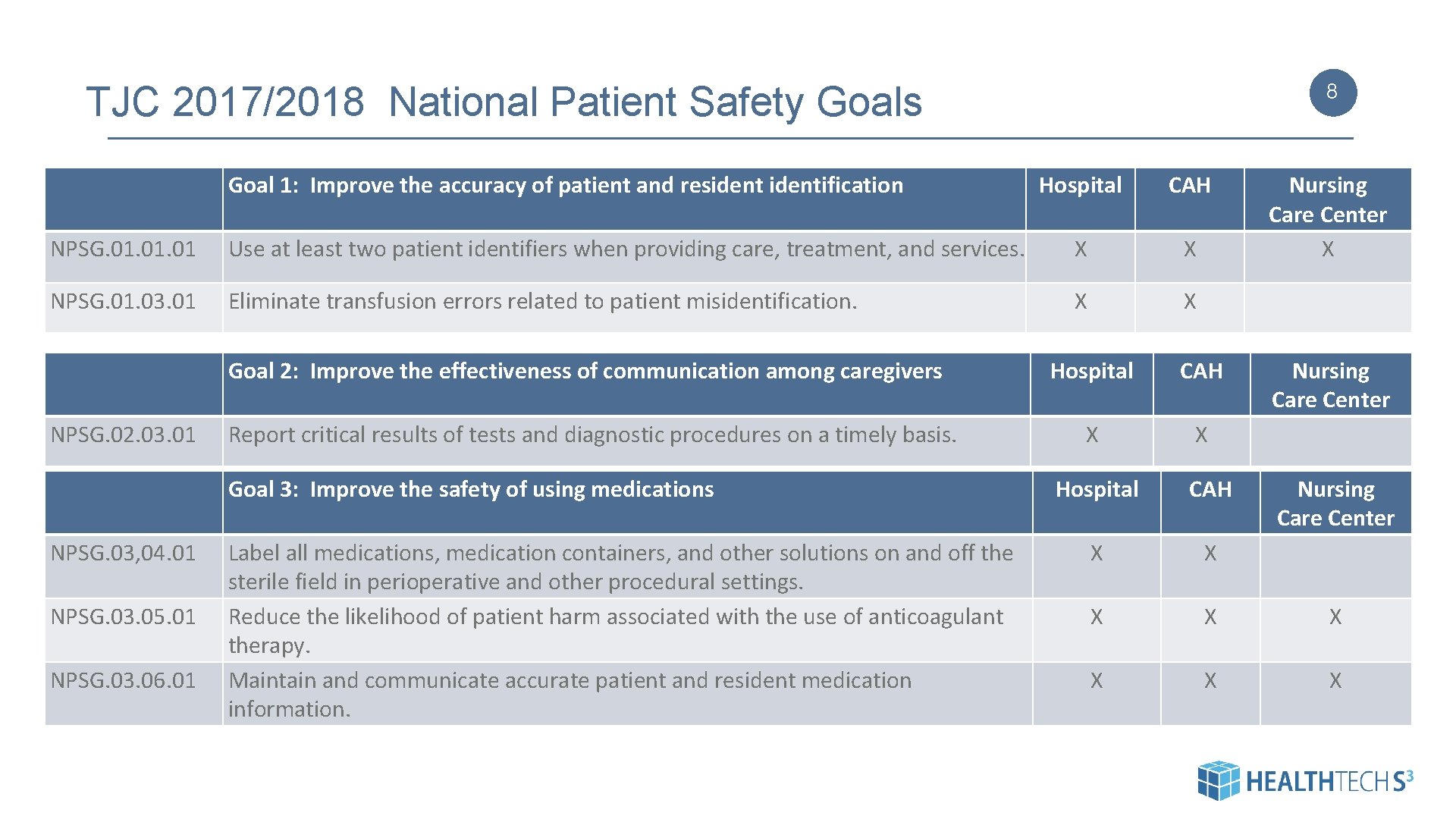
TJC 2017/2018 National Patient Safety Goals Goal 1: Improve the accuracy of patient and residentification 8 Hospital CAH NPSG. 01. 01 Use at least two patient identifiers when providing care, treatment, and services. X X NPSG. 01. 03. 01 Eliminate transfusion errors related to patient misidentification. X X Goal 2: Improve the effectiveness of communication among caregivers NPSG. 02. 03. 01 Report critical results of tests and diagnostic procedures on a timely basis. Goal 3: Improve the safety of using medications NPSG. 03, 04. 01 NPSG. 03. 05. 01 NPSG. 03. 06. 01 Label all medications, medication containers, and other solutions on and off the sterile field in perioperative and other procedural settings. Reduce the likelihood of patient harm associated with the use of anticoagulant therapy. Maintain and communicate accurate patient and resident medication information. Hospital CAH X X Nursing Care Center Hospital CAH Nursing Care Center X X X X
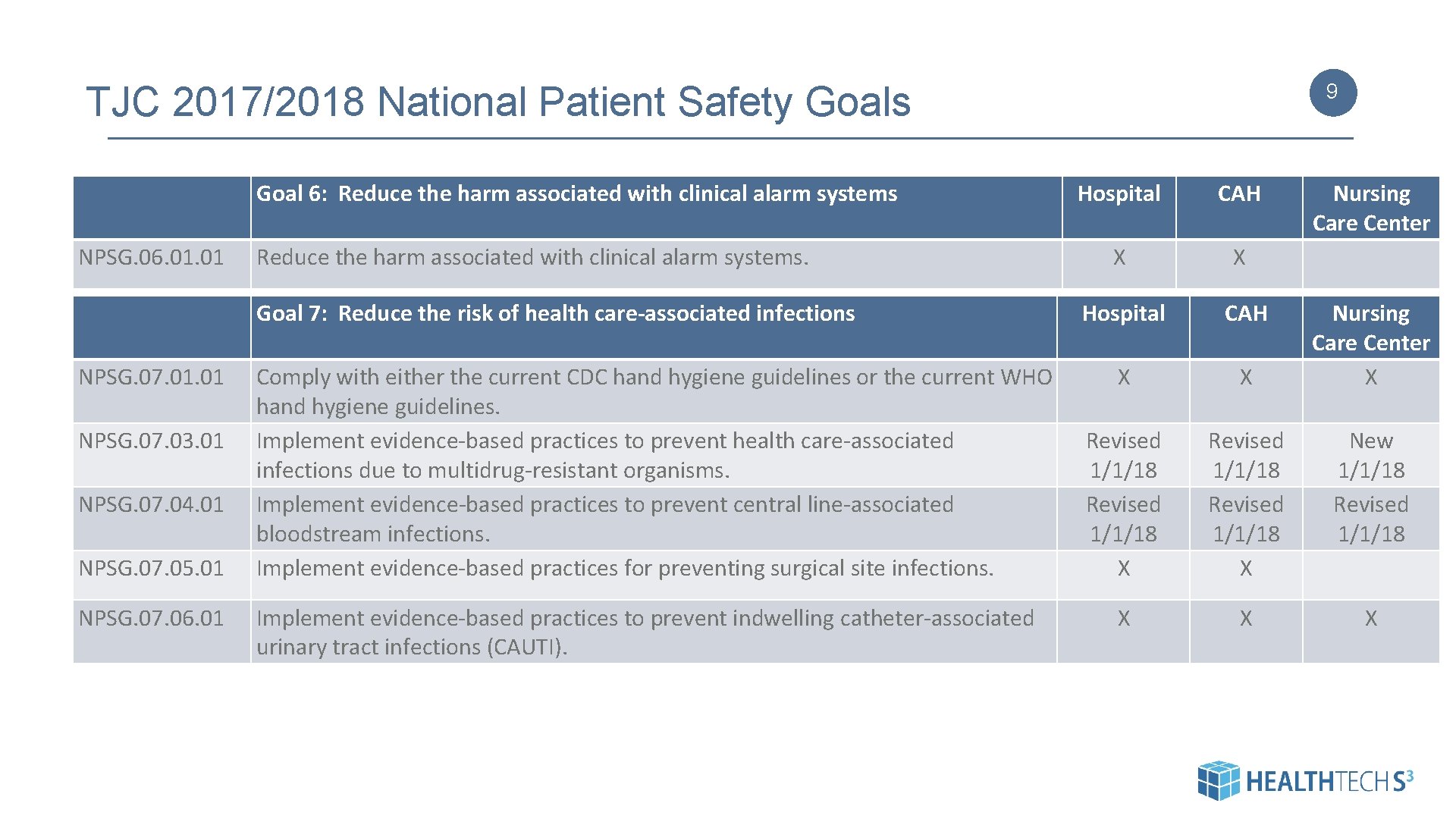
TJC 2017/2018 National Patient Safety Goals NPSG. 06. 01 Goal 6: Reduce the harm associated with clinical alarm systems. Goal 7: Reduce the risk of health care-associated infections NPSG. 07. 01 NPSG. 07. 03. 01 NPSG. 07. 04. 01 NPSG. 07. 05. 01 NPSG. 07. 06. 01 Comply with either the current CDC hand hygiene guidelines or the current WHO hand hygiene guidelines. Implement evidence-based practices to prevent health care-associated infections due to multidrug-resistant organisms. Implement evidence-based practices to prevent central line-associated bloodstream infections. Implement evidence-based practices for preventing surgical site infections. Implement evidence-based practices to prevent indwelling catheter-associated urinary tract infections (CAUTI). 9 Hospital CAH Nursing Care Center X X Hospital CAH X X Revised 1/1/18 X New 1/1/18 Revised 1/1/18 X X X Nursing Care Center X
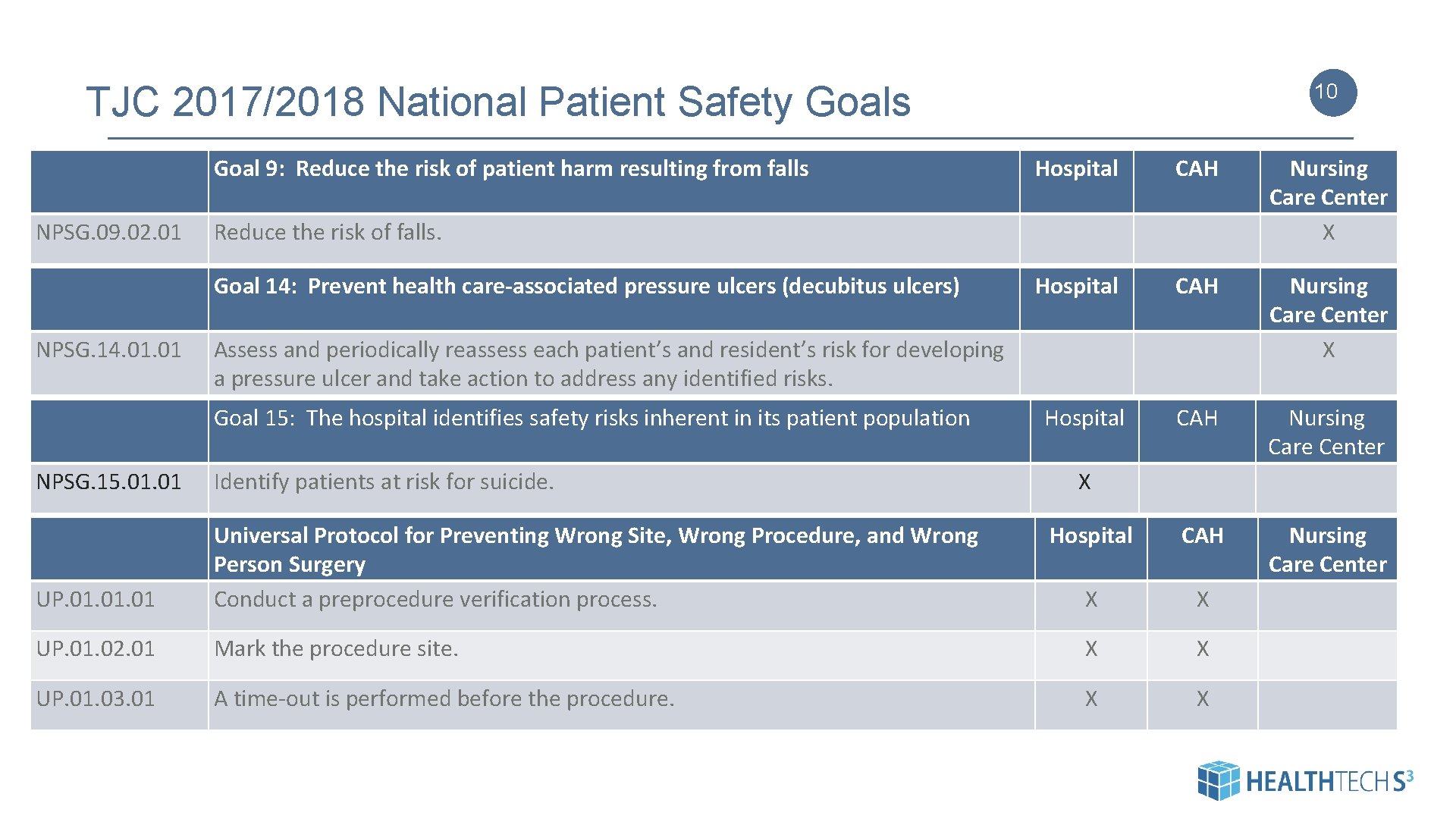
TJC 2017/2018 National Patient Safety Goals NPSG. 09. 02. 01 Goal 9: Reduce the risk of patient harm resulting from falls Hospital CAH Nursing Care Center X X Reduce the risk of falls. Goal 14: Prevent health care-associated pressure ulcers (decubitus ulcers) NPSG. 14. 01 Page 10 Assess and periodically reassess each patient’s and resident’s risk for developing a pressure ulcer and take action to address any identified risks. Goal 15: The hospital identifies safety risks inherent in its patient population NPSG. 15. 01 Identify patients at risk for suicide. X UP. 01. 01 Universal Protocol for Preventing Wrong Site, Wrong Procedure, and Wrong Person Surgery Conduct a preprocedure verification process. UP. 01. 02. 01 Mark the procedure site. X X UP. 01. 03. 01 A time-out is performed before the procedure. X X

Goal 1: Improve the accuracy of patient and residentification NPSG. 01. 01: Use at least two patient identifiers when providing care, treatment, and services 11 1. Use at least two patient or residentifiers when administering medications, blood, or blood components; when collecting blood samples and other specimens for clinical testing; and when providing treatments or procedures. The patient’s room number or physical location is not used as an identifier. 2. Label containers used for blood and other specimens in the presence of the patient or resident. Applies to: Hospital – CAH - Nursing Care Center
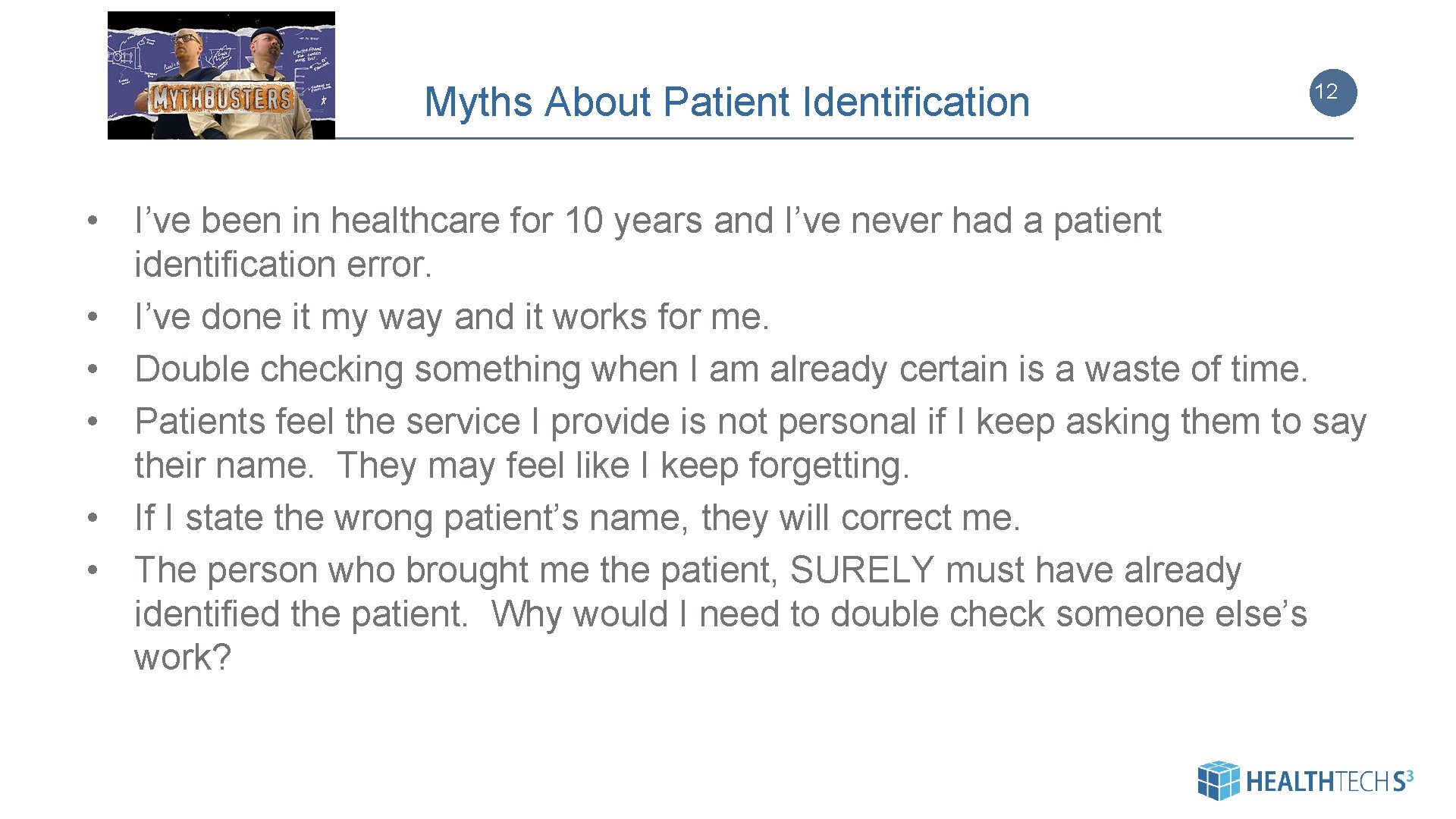
Myths About Patient Identification 12 • I’ve been in healthcare for 10 years and I’ve never had a patient identification error. • I’ve done it my way and it works for me. • Double checking something when I am already certain is a waste of time. • Patients feel the service I provide is not personal if I keep asking them to say their name. They may feel like I keep forgetting. • If I state the wrong patient’s name, they will correct me. • The person who brought me the patient, SURELY must have already identified the patient. Why would I need to double check someone else’s work?
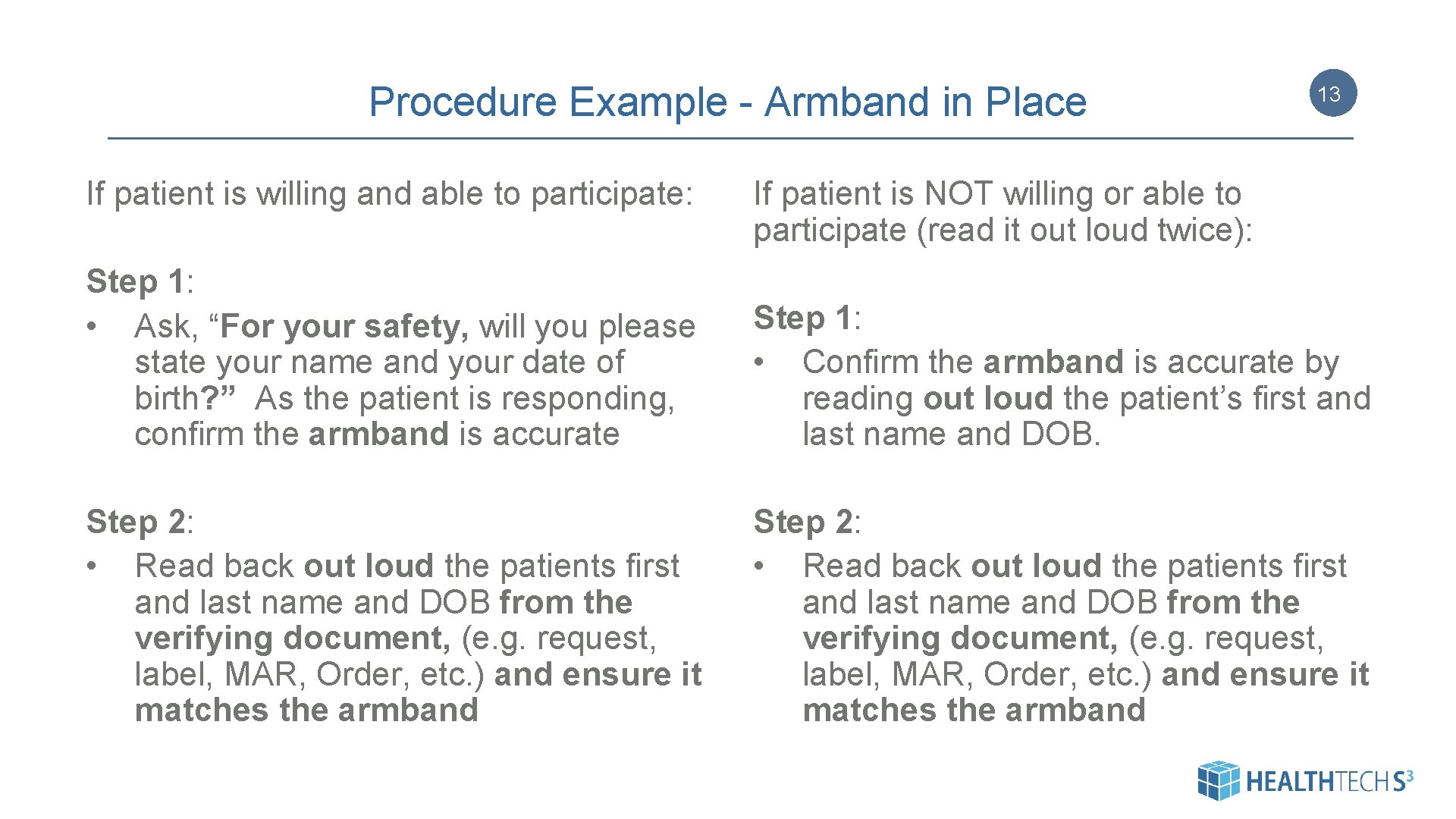
Procedure Example - Armband in Place If patient is willing and able to participate: 13 If patient is NOT willing or able to participate (read it out loud twice): Step 1: • Ask, “For your safety, will you please state your name and your date of birth? ” As the patient is responding, confirm the armband is accurate Step 1: • Confirm the armband is accurate by reading out loud the patient’s first and last name and DOB. Step 2: • Read back out loud the patients first and last name and DOB from the verifying document, (e. g. request, label, MAR, Order, etc. ) and ensure it matches the armband
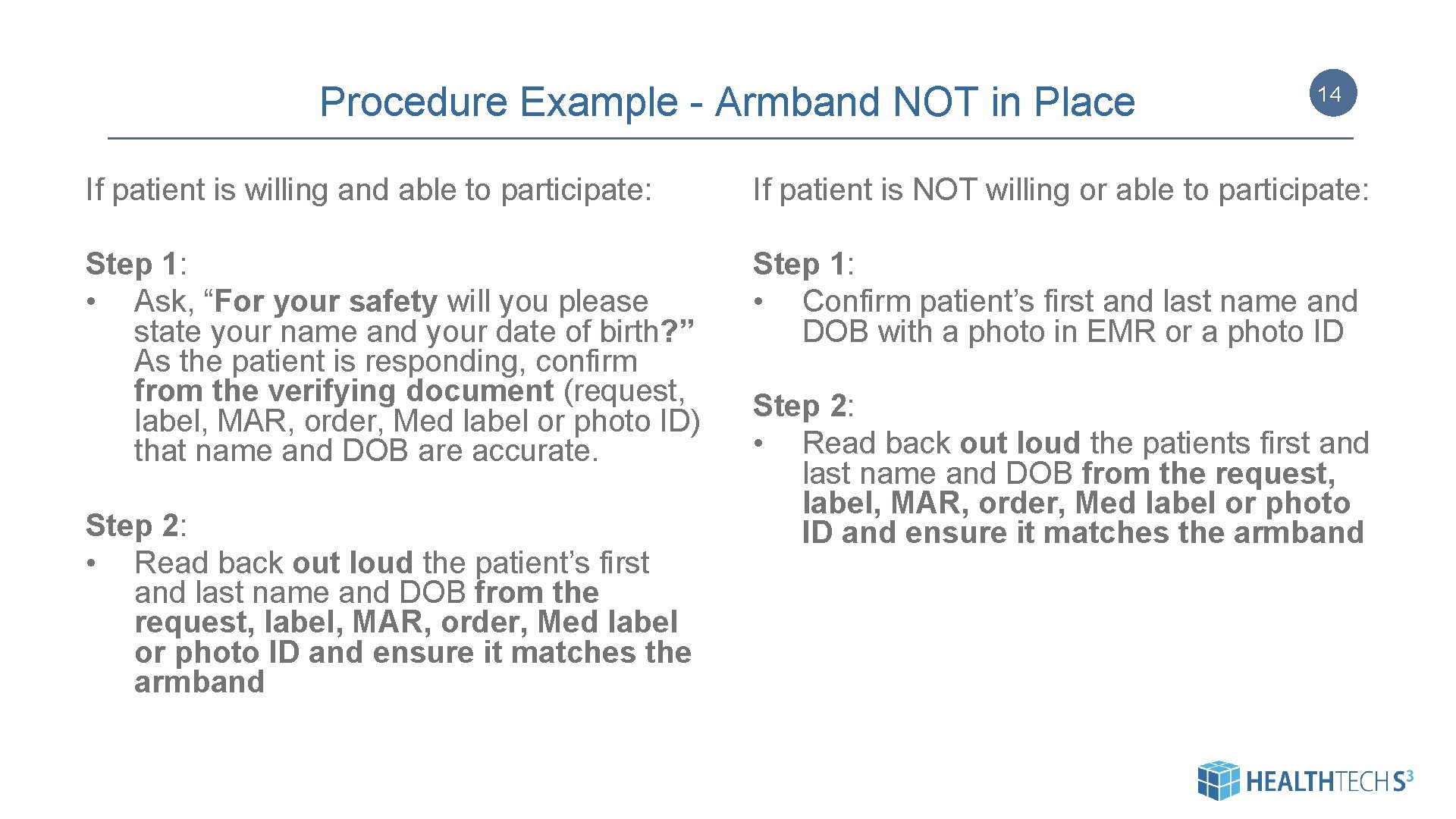
Procedure Example - Armband NOT in Place 14 If patient is willing and able to participate: If patient is NOT willing or able to participate: Step 1: • Ask, “For your safety will you please state your name and your date of birth? ” As the patient is responding, confirm from the verifying document (request, label, MAR, order, Med label or photo ID) that name and DOB are accurate. Step 1: • Confirm patient’s first and last name and DOB with a photo in EMR or a photo ID Step 2: • Read back out loud the patient’s first and last name and DOB from the request, label, MAR, order, Med label or photo ID and ensure it matches the armband Step 2: • Read back out loud the patients first and last name and DOB from the request, label, MAR, order, Med label or photo ID and ensure it matches the armband
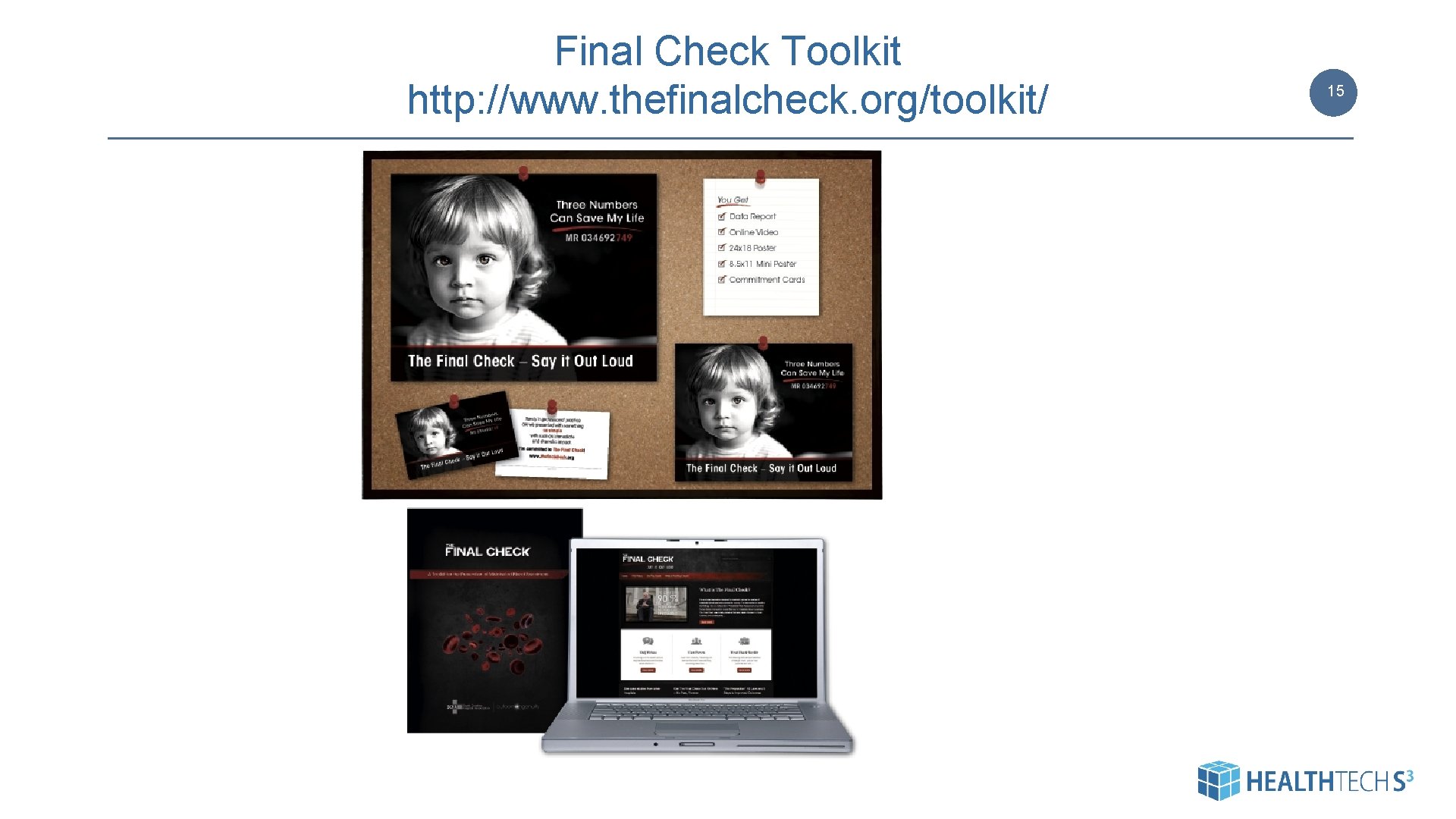
Final Check Toolkit http: //www. thefinalcheck. org/toolkit/ 15
Label Specimen in the Presence of the Patient / Resident 16 The incidence of patient identification errors, including mislabeled and misidentified specimens, is much too high in clinical laboratories. The best data on errors in U. S. laboratories is derived from three separate College of American Pathologists (CAP) Q-Probe studies, in which the reported rates of mislabeled specimens were • 0. 39/1000 in 120 institutions (2006) • 0. 92/1000 in 147 clinical labs (2008), and • 1. 12% of blood bank specimens in 122 clinical labs (2010) Source: Fixing the Problem of Mislabeled Specimens in Clinical Labs - Some Practical Suggestions—and One High Tech Solution. Author: Charles D. Hawker, Ph. D, MBA, FACB and Bonnie L. Messinger, CMQ/OE (ASQ), CPHQ. Date: APR. 1. 2014 Source: Clinical Laboratory News
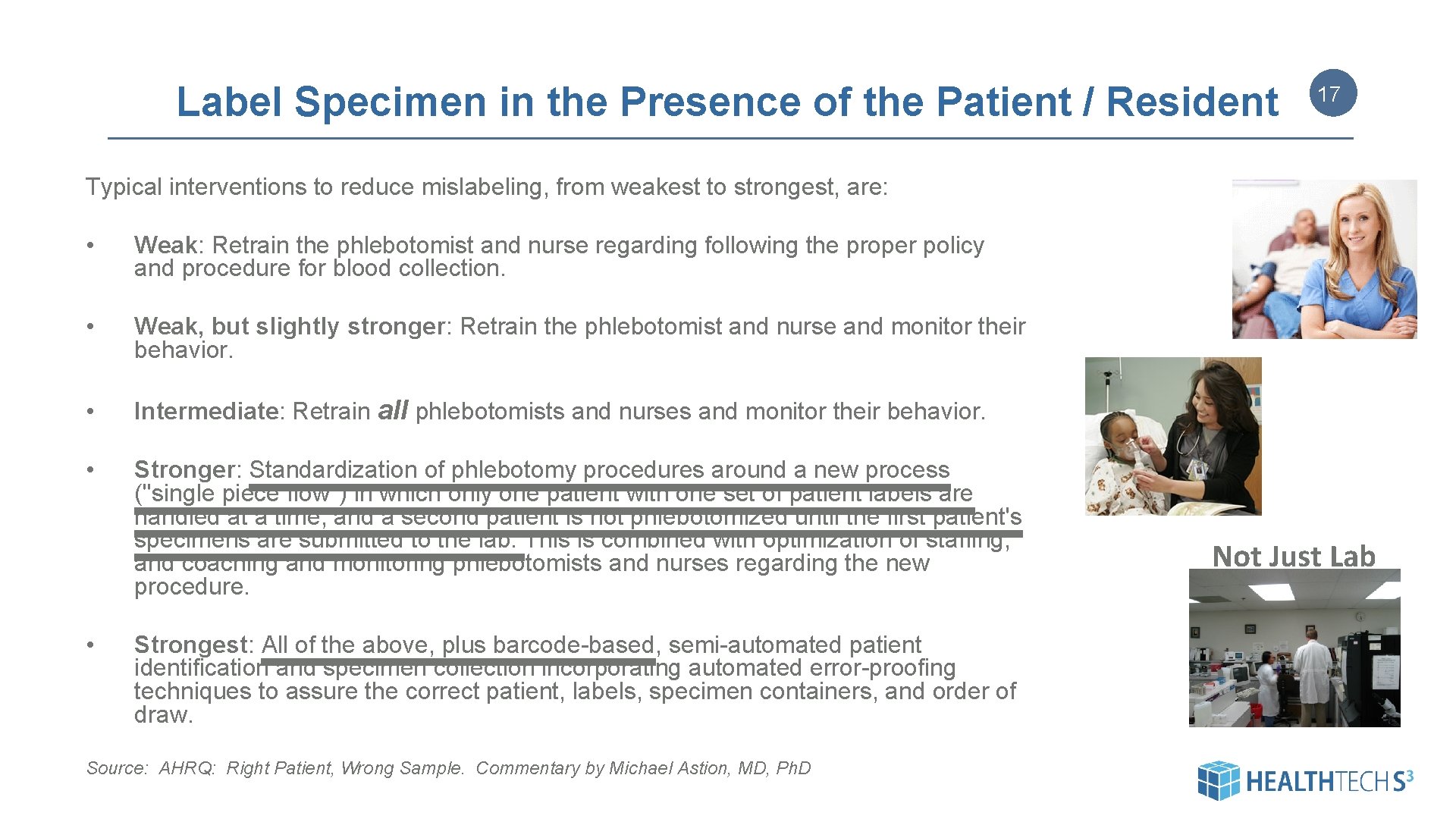
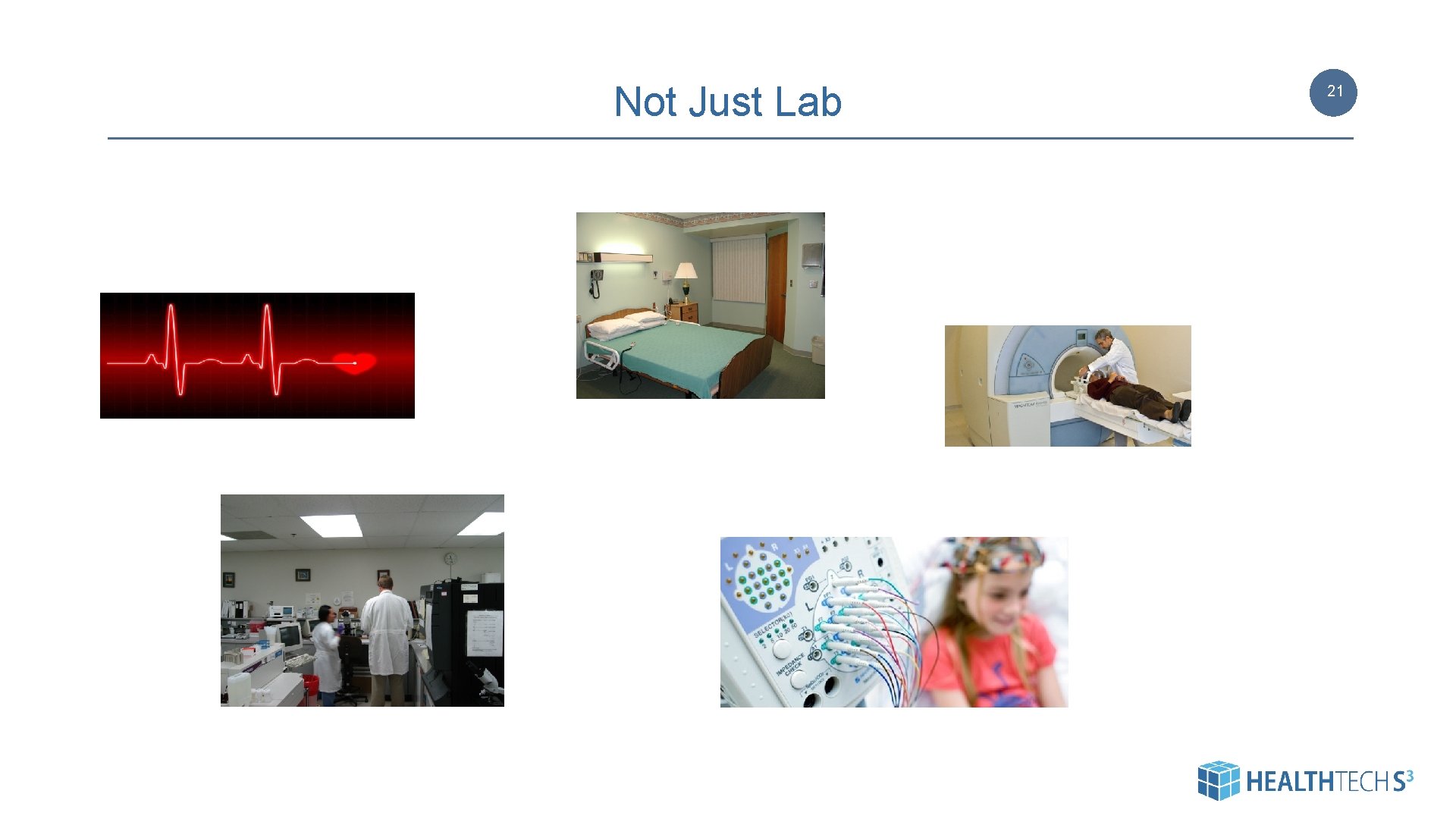
Label Specimen in the Presence of the Patient / Resident 17 Typical interventions to reduce mislabeling, from weakest to strongest, are: • Weak: Retrain the phlebotomist and nurse regarding following the proper policy and procedure for blood collection. • Weak, but slightly stronger: Retrain the phlebotomist and nurse and monitor their behavior. • Intermediate: Retrain all phlebotomists and nurses and monitor their behavior. • Stronger: Standardization of phlebotomy procedures around a new process (''single piece flow'') in which only one patient with one set of patient labels are handled at a time, and a second patient is not phlebotomized until the first patient's specimens are submitted to the lab. This is combined with optimization of staffing, and coaching and monitoring phlebotomists and nurses regarding the new procedure. • Strongest: All of the above, plus barcode-based, semi-automated patient identification and specimen collection incorporating automated error-proofing techniques to assure the correct patient, labels, specimen containers, and order of draw. Source: AHRQ: Right Patient, Wrong Sample. Commentary by Michael Astion, MD, Ph. D Not Just Lab
Goal 1: Improve the accuracy of patient and residentification NPSG. 01. 03. 01: Eliminate transfusion errors related to patient misidentification 1. 18 Before initiating a blood or blood component transfusion: – Match the blood or blood component to the order. – Match the patient to the blood or blood component. – Use a two-person verification process or a one-person verification process accompanied by automated identification technology, such as bar coding. 2. When using a two-person verification process, one individual conducting the identification verification is the qualified transfusionist who will administer the blood or blood components to the patient. 3. When using a two-person verification process, the second individual conducing the identification verification is qualified to participate in the process, as determined by the organization. Applies to: Hospital - CAH
Carolyn’s Notes 19 1. Review to make sure your blood administration policy is the same as your EMR documentation template (many times they are different) 2. If your lab isn’t staffed 24 hours - what is the process for accessing blood afterhours? 3. Audit blood administration documentation
Goal 2: Improve the effectiveness of communication among caregivers NPSG. 02. 03. 01: Report critical results of tests and diagnostic procedures on a timely basis 1. 20 Develop written procedures for managing the critical results of tests and diagnostic procedures that address the following: – The definition of critical results of tests and diagnostic procedures – By whom and to whom critical results of tests and diagnostic procedures are reported – The acceptable length of time between the availability and reporting of critical results of tests and diagnostic procedures 2. Implement the procedures for managing the critical results of tests and diagnostic procedures. 3. Evaluate the timeliness of reporting the critical results of tests and diagnostic procedures. Applies to: Hospital - CAH
Not Just Lab 21
Carolyn’s Notes • Does your policy / procedure include: – – – – • time frame for reporting? what to do if timeframe is not met (i. e. cannot reach provider)? who is responsible for contacting provider? what to do if patient has been discharged? what to do if patient’s physician cannot be reached / contacted? read back? what to document in the medical record? Is timeliness measured and reported internally for ALL critical test results in all departments? Consider: – Order to test – especially if STAT – Test to result – Result to Nurse and Nurse to Provider (if that’s your process) OR Clinician to Provider 22
Goal 3: Improve the safety of using medications NPSG. 03. 04. 01: Label all medications, medication containers, and other solutions on and 23 off the sterile field in perioperative and other procedural settings 1. In perioperative and other procedural settings both on and off the sterile field, label medications and solutions that are not immediately administered. This applies even if there is only one medication being used. 4. Verify all medication or solution labels both verbally and visually. Verification is done by two individuals qualified to participate in the procedure whenever the person preparing the medication or solution is not the person who will be administering it. 2. In perioperative and other procedural settings both on and off the sterile field, labeling occurs when any medication or solution is transferred from the original packaging to another container. 5. Label each medication or solution as soon as it is prepared unless immediately administered. 6. Immediately discard any medications or solutions found unlabeled. 3. In perioperative and other procedural settings both on, and off the sterile field, medication or solution 7. Remove all labeled containers on the sterile field labels include the following: and discard their contents at the conclusion of the – Medication or solution procedure. – Strength – Amount of medication or solution containing 8. All medications and solutions both on and off the medication (if not apparent from container) sterile field and their labels are reviewed by entering and exiting staff responsible for the management of – Diluent name and volume (if not apparent from medications. container) – Expiration date when not used within 24 hours – Expiration time when expiration occurs in less than 24 hours Applies to: Hospital - CAH
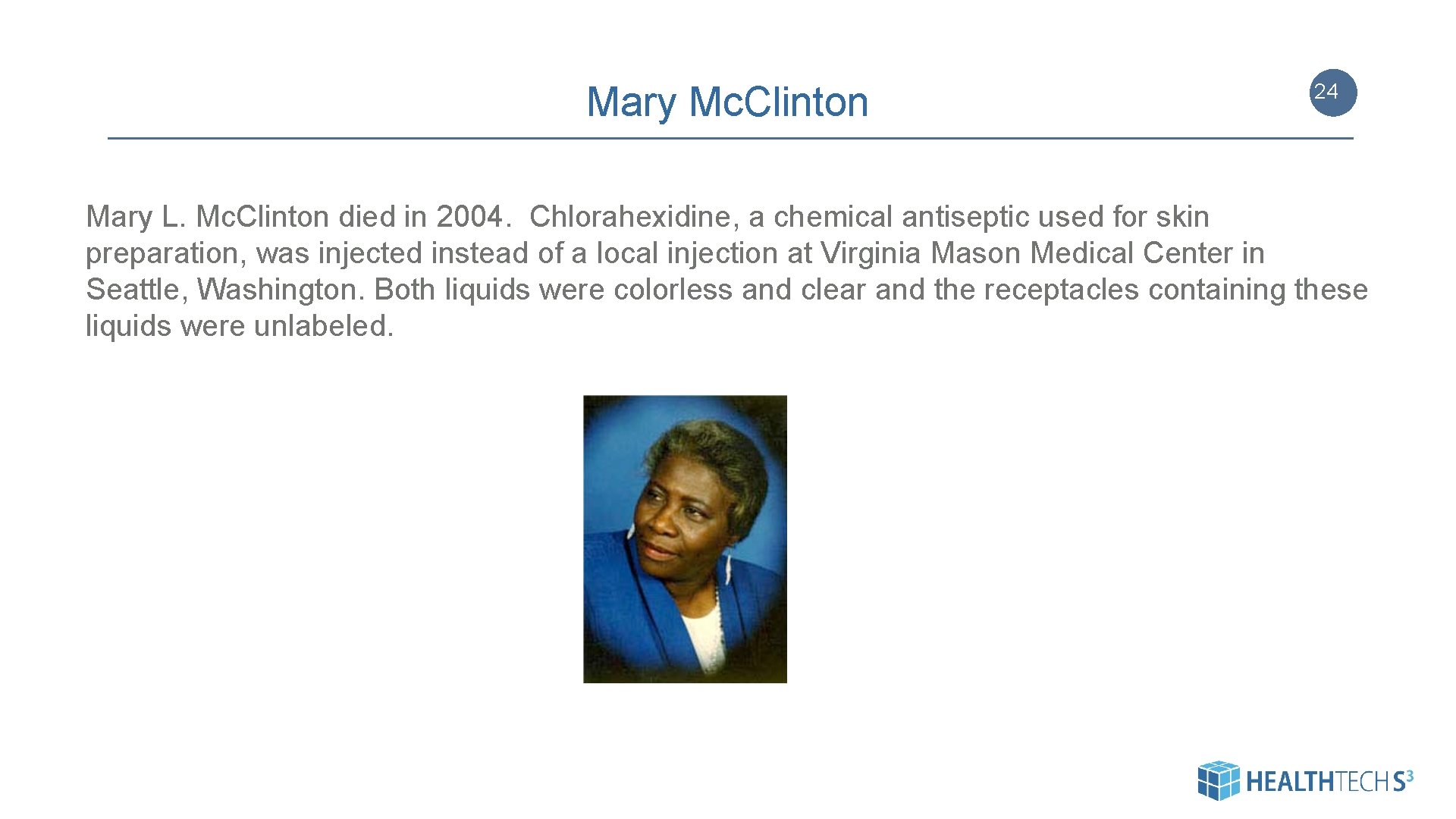
Mary Mc. Clinton 24 Mary L. Mc. Clinton died in 2004. Chlorahexidine, a chemical antiseptic used for skin preparation, was injected instead of a local injection at Virginia Mason Medical Center in Seattle, Washington. Both liquids were colorless and clear and the receptacles containing these liquids were unlabeled.
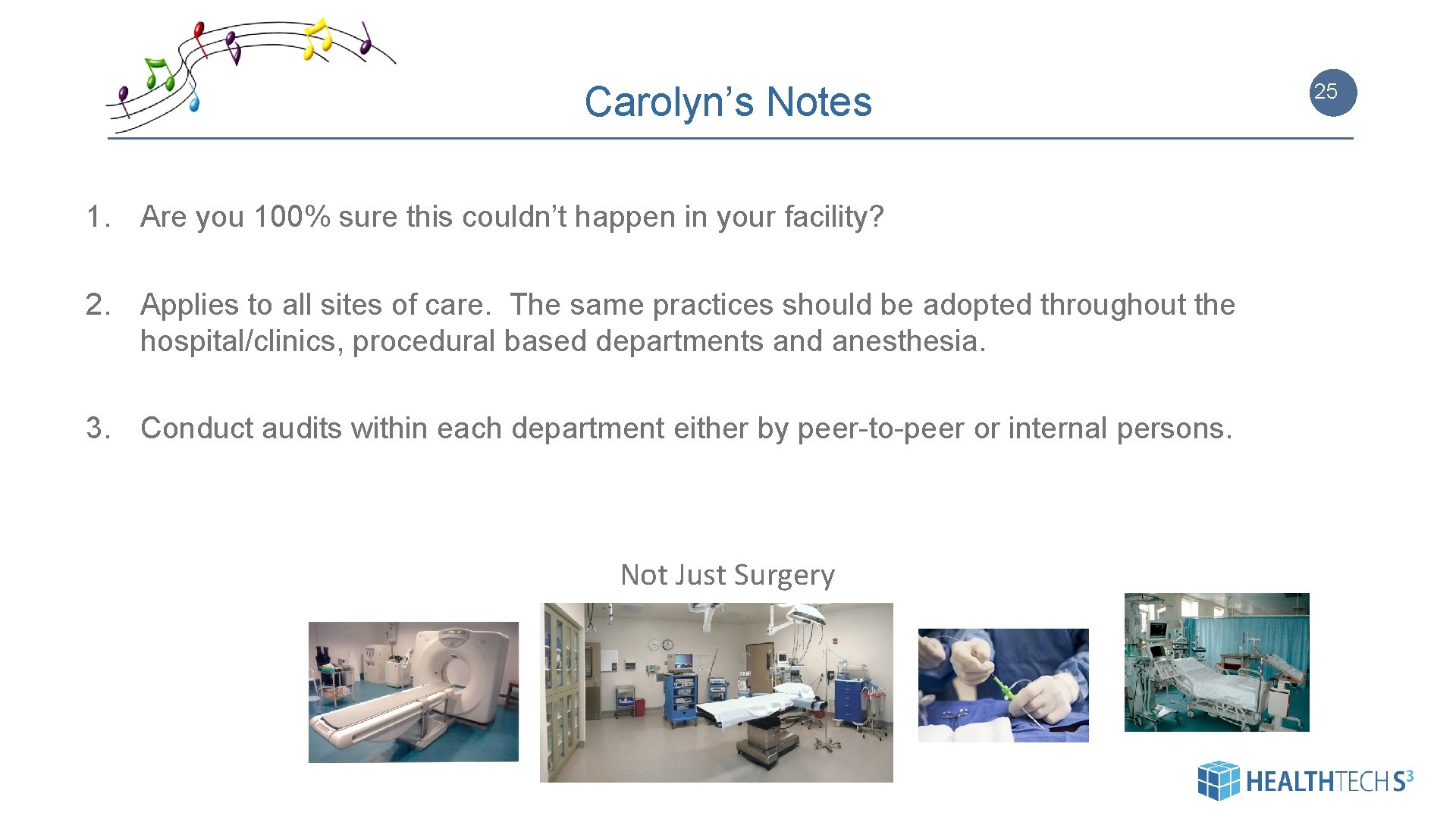
Carolyn’s Notes 1. Are you 100% sure this couldn’t happen in your facility? 2. Applies to all sites of care. The same practices should be adopted throughout the hospital/clinics, procedural based departments and anesthesia. 3. Conduct audits within each department either by peer-to-peer or internal persons. Not Just Surgery 25
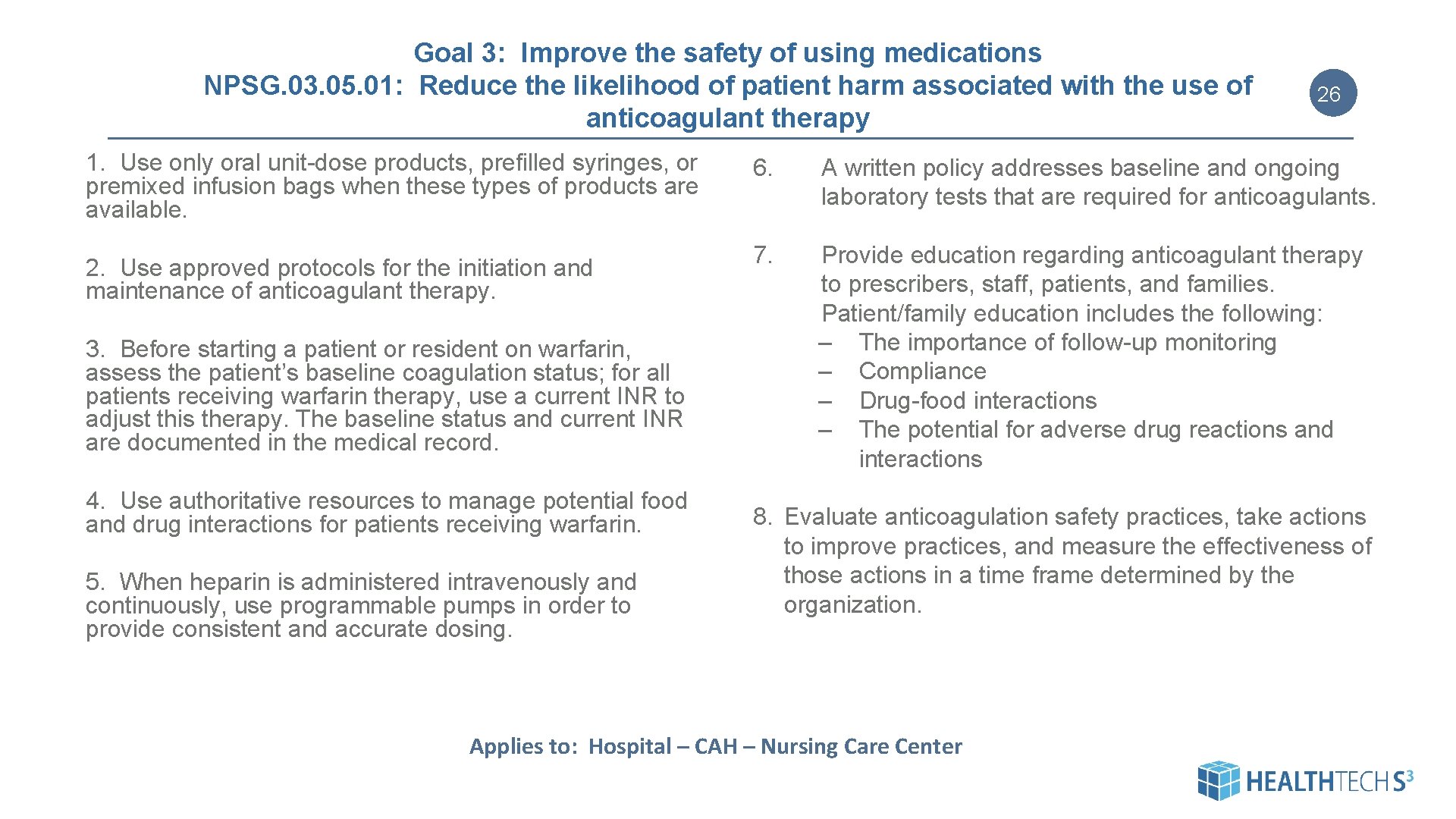
Goal 3: Improve the safety of using medications NPSG. 03. 05. 01: Reduce the likelihood of patient harm associated with the use of anticoagulant therapy 1. Use only oral unit-dose products, prefilled syringes, or premixed infusion bags when these types of products are available. 2. Use approved protocols for the initiation and maintenance of anticoagulant therapy. 3. Before starting a patient or resident on warfarin, assess the patient’s baseline coagulation status; for all patients receiving warfarin therapy, use a current INR to adjust this therapy. The baseline status and current INR are documented in the medical record. 4. Use authoritative resources to manage potential food and drug interactions for patients receiving warfarin. 5. When heparin is administered intravenously and continuously, use programmable pumps in order to provide consistent and accurate dosing. 26 6. A written policy addresses baseline and ongoing laboratory tests that are required for anticoagulants. 7. Provide education regarding anticoagulant therapy to prescribers, staff, patients, and families. Patient/family education includes the following: – The importance of follow-up monitoring – Compliance – Drug-food interactions – The potential for adverse drug reactions and interactions 8. Evaluate anticoagulation safety practices, take actions to improve practices, and measure the effectiveness of those actions in a time frame determined by the organization. Applies to: Hospital – CAH – Nursing Care Center
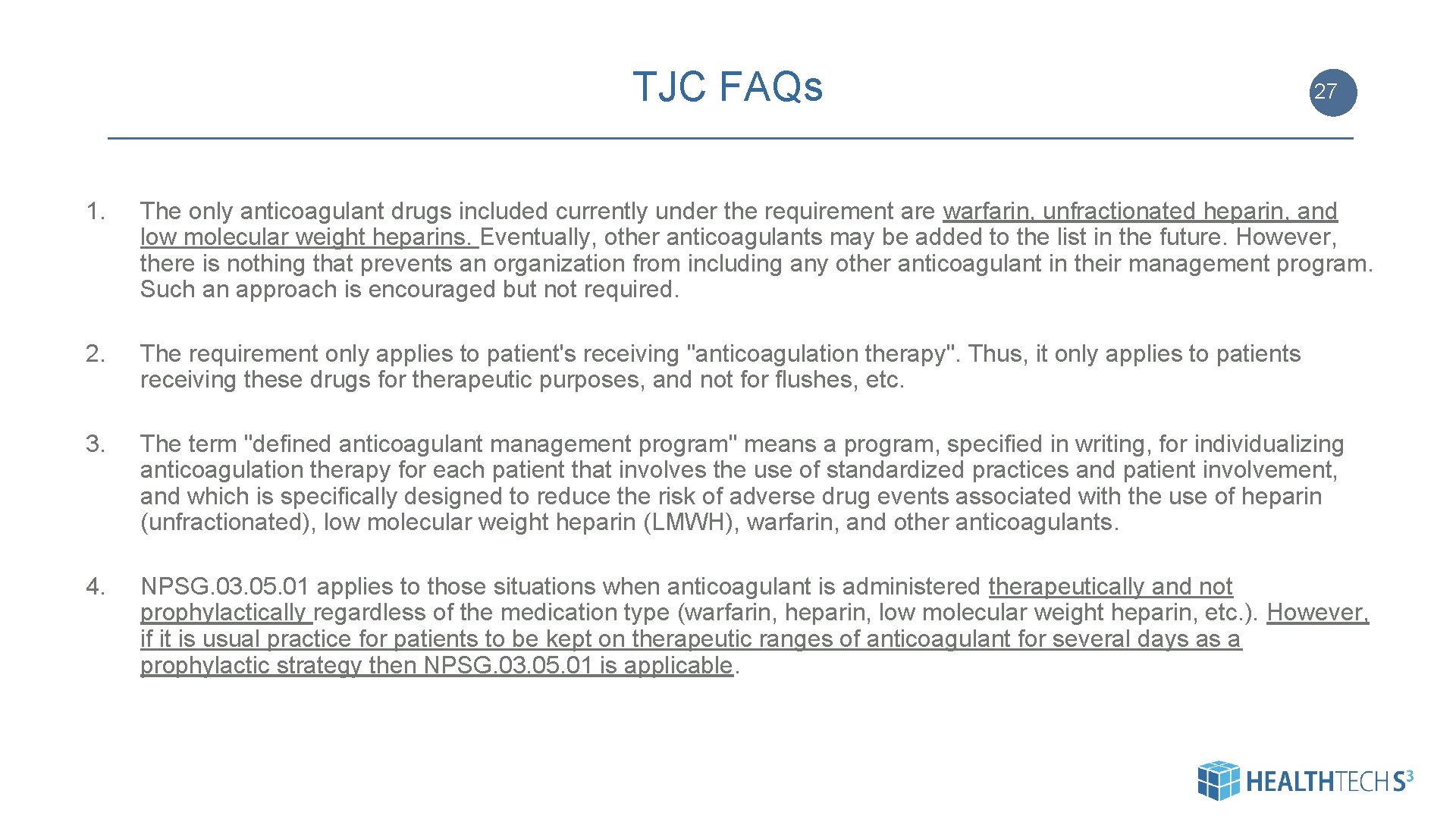
TJC FAQs 27 1. The only anticoagulant drugs included currently under the requirement are warfarin, unfractionated heparin, and low molecular weight heparins. Eventually, other anticoagulants may be added to the list in the future. However, there is nothing that prevents an organization from including any other anticoagulant in their management program. Such an approach is encouraged but not required. 2. The requirement only applies to patient's receiving "anticoagulation therapy". Thus, it only applies to patients receiving these drugs for therapeutic purposes, and not for flushes, etc. 3. The term "defined anticoagulant management program" means a program, specified in writing, for individualizing anticoagulation therapy for each patient that involves the use of standardized practices and patient involvement, and which is specifically designed to reduce the risk of adverse drug events associated with the use of heparin (unfractionated), low molecular weight heparin (LMWH), warfarin, and other anticoagulants. 4. NPSG. 03. 05. 01 applies to those situations when anticoagulant is administered therapeutically and not prophylactically regardless of the medication type (warfarin, heparin, low molecular weight heparin, etc. ). However, if it is usual practice for patients to be kept on therapeutic ranges of anticoagulant for several days as a prophylactic strategy then NPSG. 03. 05. 01 is applicable.
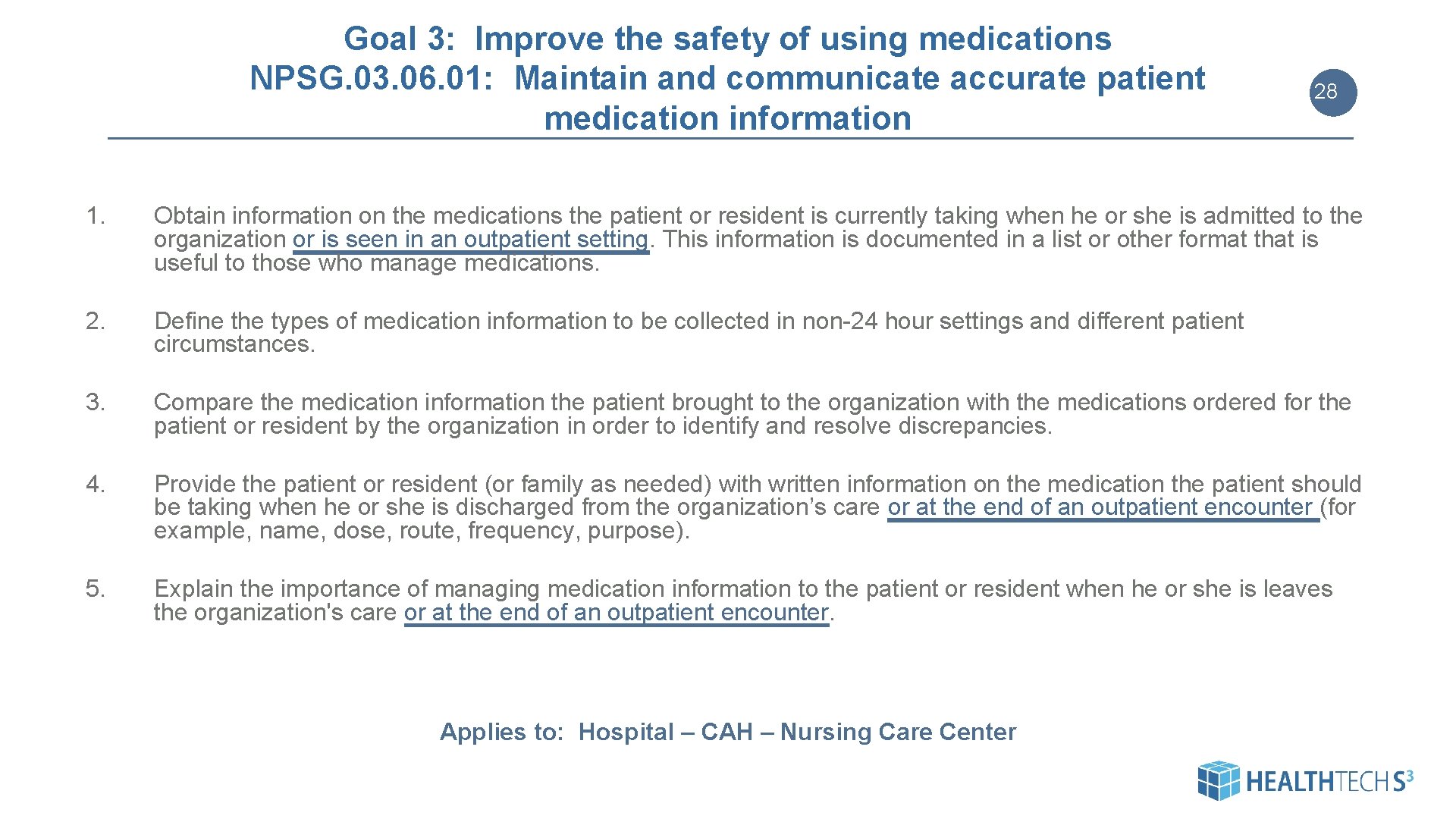
Goal 3: Improve the safety of using medications NPSG. 03. 06. 01: Maintain and communicate accurate patient medication information 28 1. Obtain information on the medications the patient or resident is currently taking when he or she is admitted to the organization or is seen in an outpatient setting. This information is documented in a list or other format that is useful to those who manage medications. 2. Define the types of medication information to be collected in non-24 hour settings and different patient circumstances. 3. Compare the medication information the patient brought to the organization with the medications ordered for the patient or resident by the organization in order to identify and resolve discrepancies. 4. Provide the patient or resident (or family as needed) with written information on the medication the patient should be taking when he or she is discharged from the organization’s care or at the end of an outpatient encounter (for example, name, dose, route, frequency, purpose). 5. Explain the importance of managing medication information to the patient or resident when he or she is leaves the organization's care or at the end of an outpatient encounter. Applies to: Hospital – CAH – Nursing Care Center
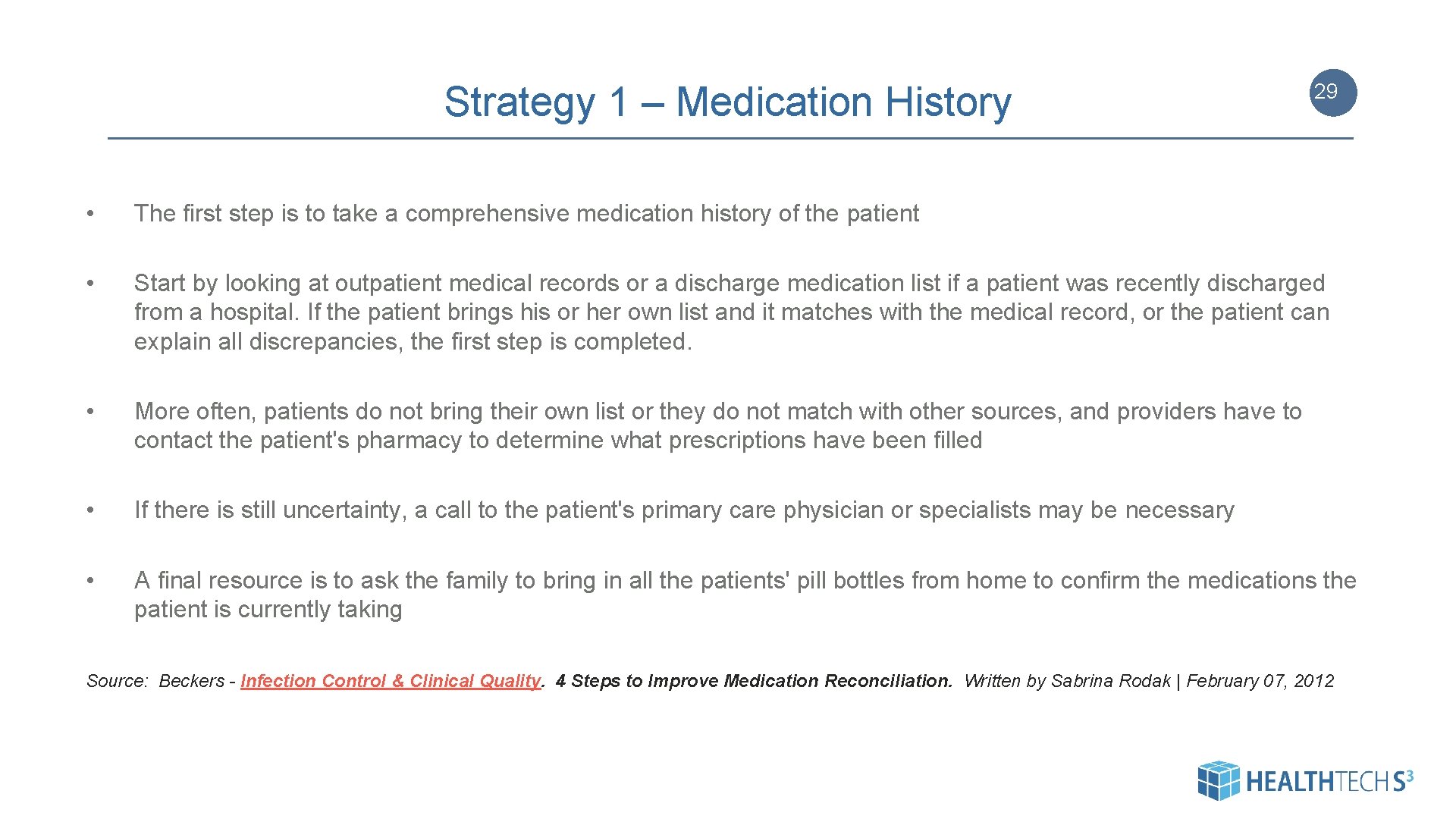
Strategy 1 – Medication History 29 • The first step is to take a comprehensive medication history of the patient • Start by looking at outpatient medical records or a discharge medication list if a patient was recently discharged from a hospital. If the patient brings his or her own list and it matches with the medical record, or the patient can explain all discrepancies, the first step is completed. • More often, patients do not bring their own list or they do not match with other sources, and providers have to contact the patient's pharmacy to determine what prescriptions have been filled • If there is still uncertainty, a call to the patient's primary care physician or specialists may be necessary • A final resource is to ask the family to bring in all the patients' pill bottles from home to confirm the medications the patient is currently taking Source: Beckers - Infection Control & Clinical Quality. 4 Steps to Improve Medication Reconciliation. Written by Sabrina Rodak | February 07, 2012
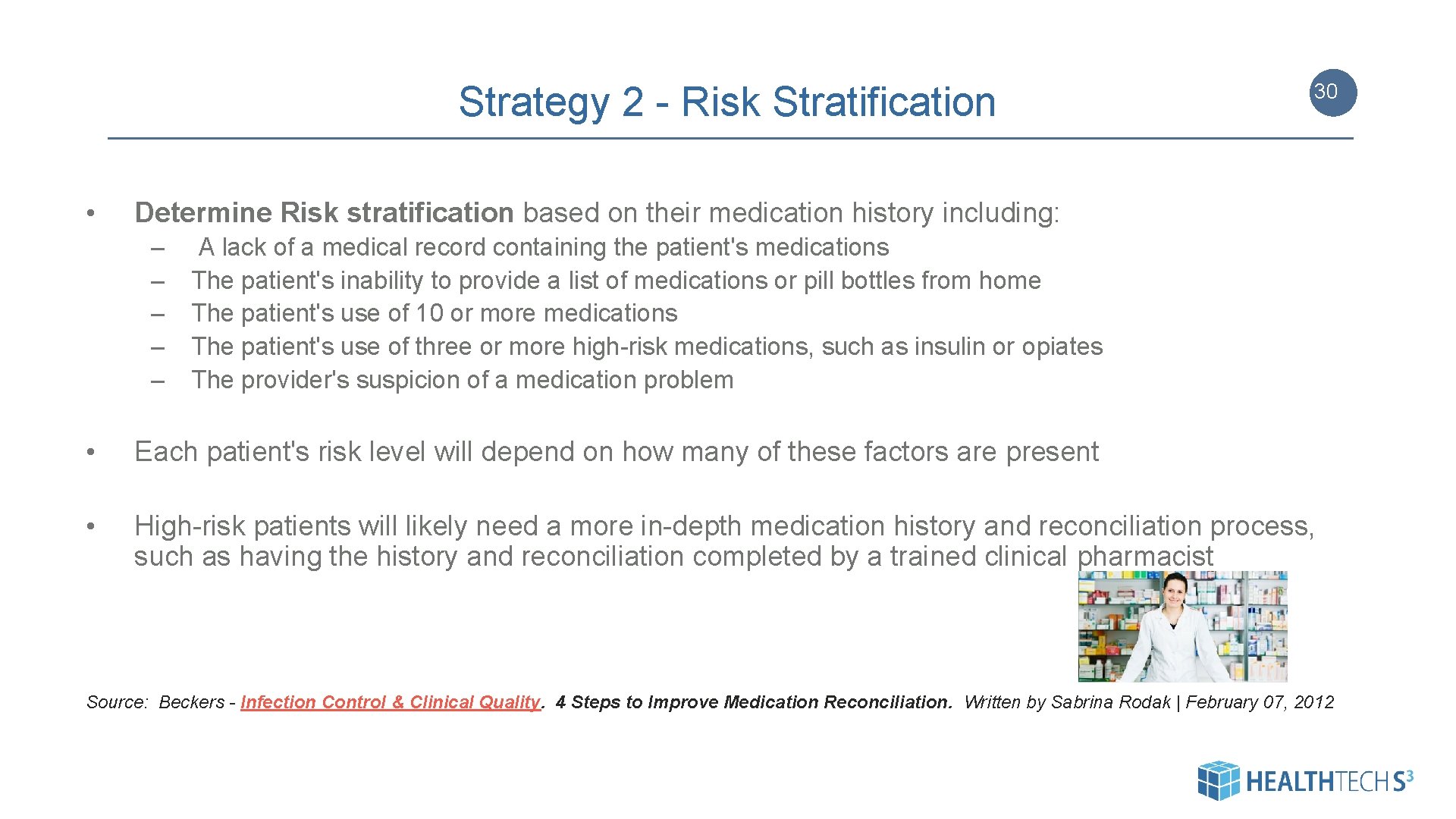
Strategy 2 - Risk Stratification • 30 Determine Risk stratification based on their medication history including: – – – A lack of a medical record containing the patient's medications The patient's inability to provide a list of medications or pill bottles from home The patient's use of 10 or more medications The patient's use of three or more high-risk medications, such as insulin or opiates The provider's suspicion of a medication problem • Each patient's risk level will depend on how many of these factors are present • High-risk patients will likely need a more in-depth medication history and reconciliation process, such as having the history and reconciliation completed by a trained clinical pharmacist Source: Beckers - Infection Control & Clinical Quality. 4 Steps to Improve Medication Reconciliation. Written by Sabrina Rodak | February 07, 2012
Strategy 3 - Reconciliation at Discharge 31 • Reconciliation at discharge is one of the most critical components of a medication reconciliation program because it can affect the patient's post-hospital safety and health, and thus the chance of readmission. • Discharge orders should clearly categorize the medications that are: – – – • the same from pre-admission new medications that require a different dose or frequency. Show very clearly how the discharge regimen is different than what the patient was taking prior to admission. Source: Beckers - Infection Control & Clinical Quality. 4 Steps to Improve Medication Reconciliation. Written by Sabrina Rodak | February 07, 2012
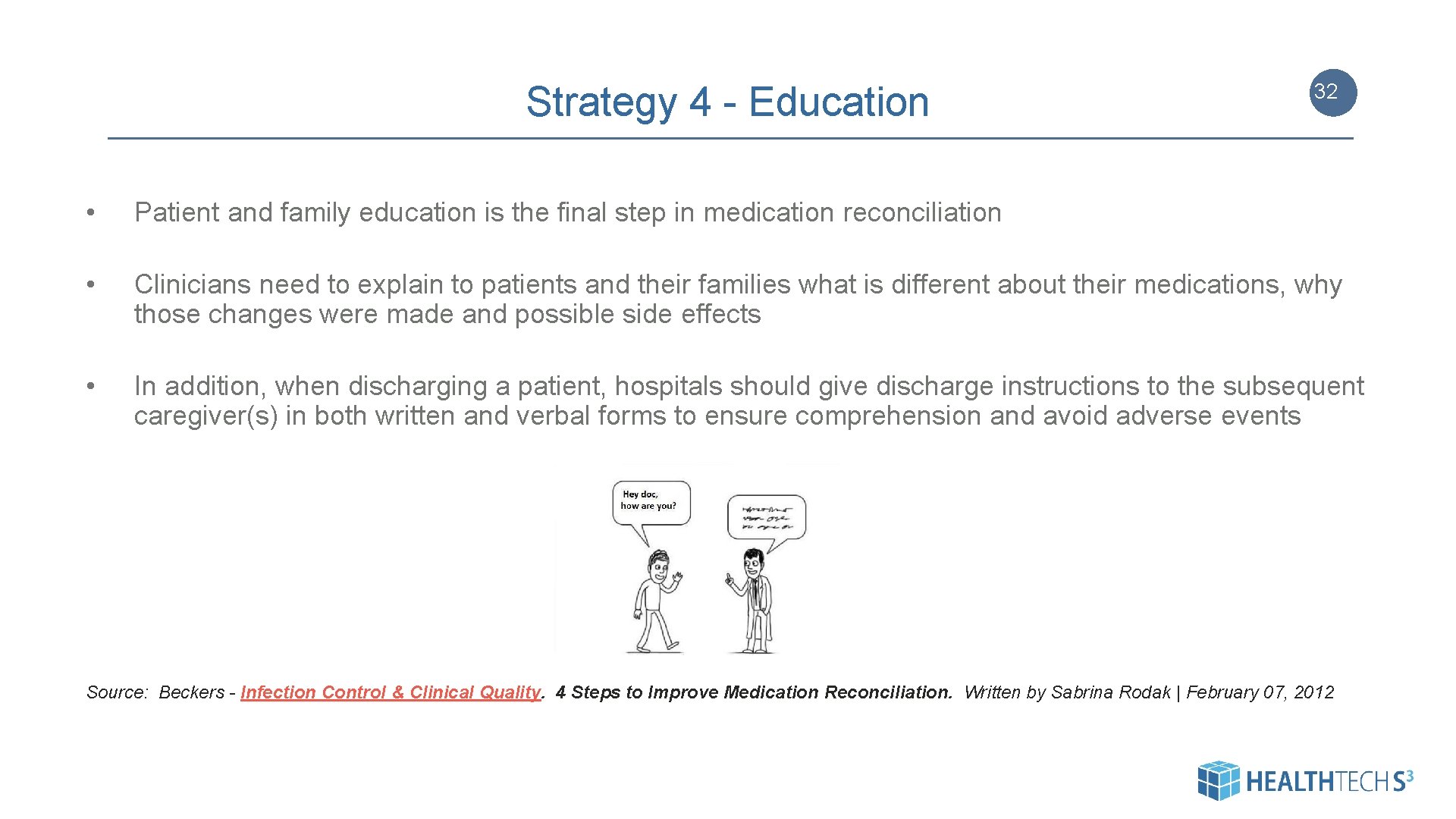
Strategy 4 - Education 32 • Patient and family education is the final step in medication reconciliation • Clinicians need to explain to patients and their families what is different about their medications, why those changes were made and possible side effects • In addition, when discharging a patient, hospitals should give discharge instructions to the subsequent caregiver(s) in both written and verbal forms to ensure comprehension and avoid adverse events Source: Beckers - Infection Control & Clinical Quality. 4 Steps to Improve Medication Reconciliation. Written by Sabrina Rodak | February 07, 2012
Cultural Competency 33 Cultural Competency in Health Services and Care published by the Washington State Department of Health outlines six strategies for improving interpersonal communication with culturally diverse patients or those with limited English proficiency or low health literacy rates: • • • Slowing down your rate of speaking Using simple, non-medical language Showing, or drawing pictures Limiting the amount of information provided and repeating as necessary Using the “teach-back” or “show-me” technique Creating an accepting and respectful atmosphere Source: Washington State Department of Health, Health Systems Quality Assurance. Cultural Competency in Health Services and Care, A Guide for Health Care Providers. June, 2010
Additional Strategies 34 1. Develop a single medication list ("One Source of Truth"), shared by all disciplines for documenting the patient's current medications. 2. Clearly define roles and responsibilities for each discipline involved in medication reconciliation. 3. Standardize and simplify the medication reconciliation process throughout the organization, and eliminate unnecessary redundancies (the flowchart of the current process can help you identify these redundancies). 4. Make the right thing to do the easiest thing to do within the patterns of normal practice. 5. Develop effective prompts or reminders for consistent behavior if true forcing functions (i. e. , required reconciliation step presented to the physician during admission order entry within an electronic health record [EHR] are not possible. 6. Educate patients and their families or caregivers on medication reconciliation and the important role they play in the process. 7. Ensure process design meets all pertinent local laws or regulatory requirements. Linking medication reconciliation to other strategic goals (e. g. , heart failure publicly reported process of care measures related to discharge instructions on medications) and/or other initiatives (e. g. , a hospital project working on improving patient satisfaction related to pain management or patient communication regarding medications) when appropriate can also strengthen the importance of this process Source: AHRQ: Medications at Transitions and Clinical Handoffs (MATCH) Toolkit for Medication Reconciliation. Chapter 3. Developing Change: Designing the Medication Reconciliation Process
“One Source of Truth” 35 • Medication reconciliation process design should center on the concept of a single list to document patient's current medications. This will be referred to as "one source of truth. " This list should be shared and utilized by all physicians, nurses, pharmacists, and others caring for the patient. • All disciplines caring for the patient should be working from the same medication list, regardless of the format (electronic or paperbased). • The list should be centrally located and easily visible within the patient's medical record. • This list becomes the reference point for ordering decisions and reconciliation, screening medications to be administered during a procedure/episode of care, and determining the patient's medication regimen upon discharge. • Each discipline should have the ability to update the home medications as new or more reliable information becomes available. • In a paper-based format, old or modified information could be crossed out, new information can be added, and each change can be dated, timed, and signed. • In an electronic system, changes would be date and time stamped, and the prescriber's name automatically captured. If the patient's medication list requires changes at discharge, updated information will remain stored for review and modification for future admissions. Source: AHRQ: Medications at Transitions and Clinical Handoffs (MATCH) Toolkit for Medication Reconciliation. Chapter 3. Developing Change: Designing the Medication Reconciliation Process
Goal 6: Reduce the harm associated with clinical alarm systems NPSG. 06. 01: Improve the safety of clinical alarm systems 36 1. Leaders establish alarm system safety as a critical access hospital priority. 2. Identify the most important alarm signals to manage based on the following: – Input from medical staff and clinical departments – Risk to patients if the alarm signal is not attended to or if it malfunctions – Whether specific alarm signals are needed or unnecessarily contribute to alarm noise and alarm fatigue – Potential for patient harm based on internal incident history – Published best practices and guidelines 3. Establish policies and procedures for managing the alarms identified in EP 2 above that, at a minimum, address the following: – When alarm signals can be disabled – When alarm parameters can be changed – Who in the organization has the authority to set alarm parameters – Who in the organization has the authority to change alarm parameters – Who in the organization has the authority to set alarm parameters to “off” – Monitoring and responding to alarm signals – Checking individual alarm signals for accurate settings, properation, and detectability 4. Educate staff and licensed independent practitioners about the purpose and properation of alarm systems for which they are responsible. Applies to: Hospital - CAH
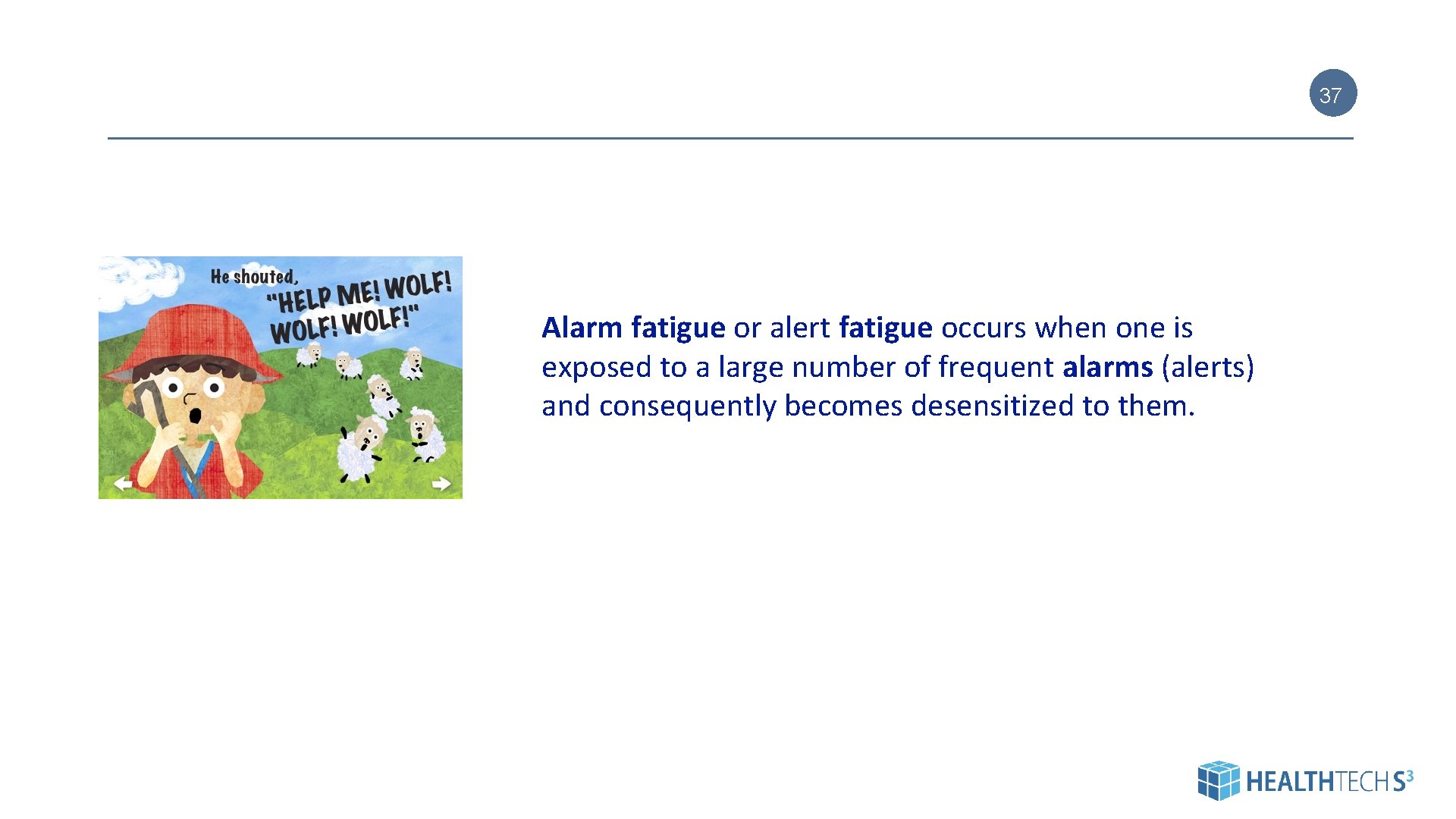
37 Alarm fatigue or alert fatigue occurs when one is exposed to a large number of frequent alarms (alerts) and consequently becomes desensitized to them.
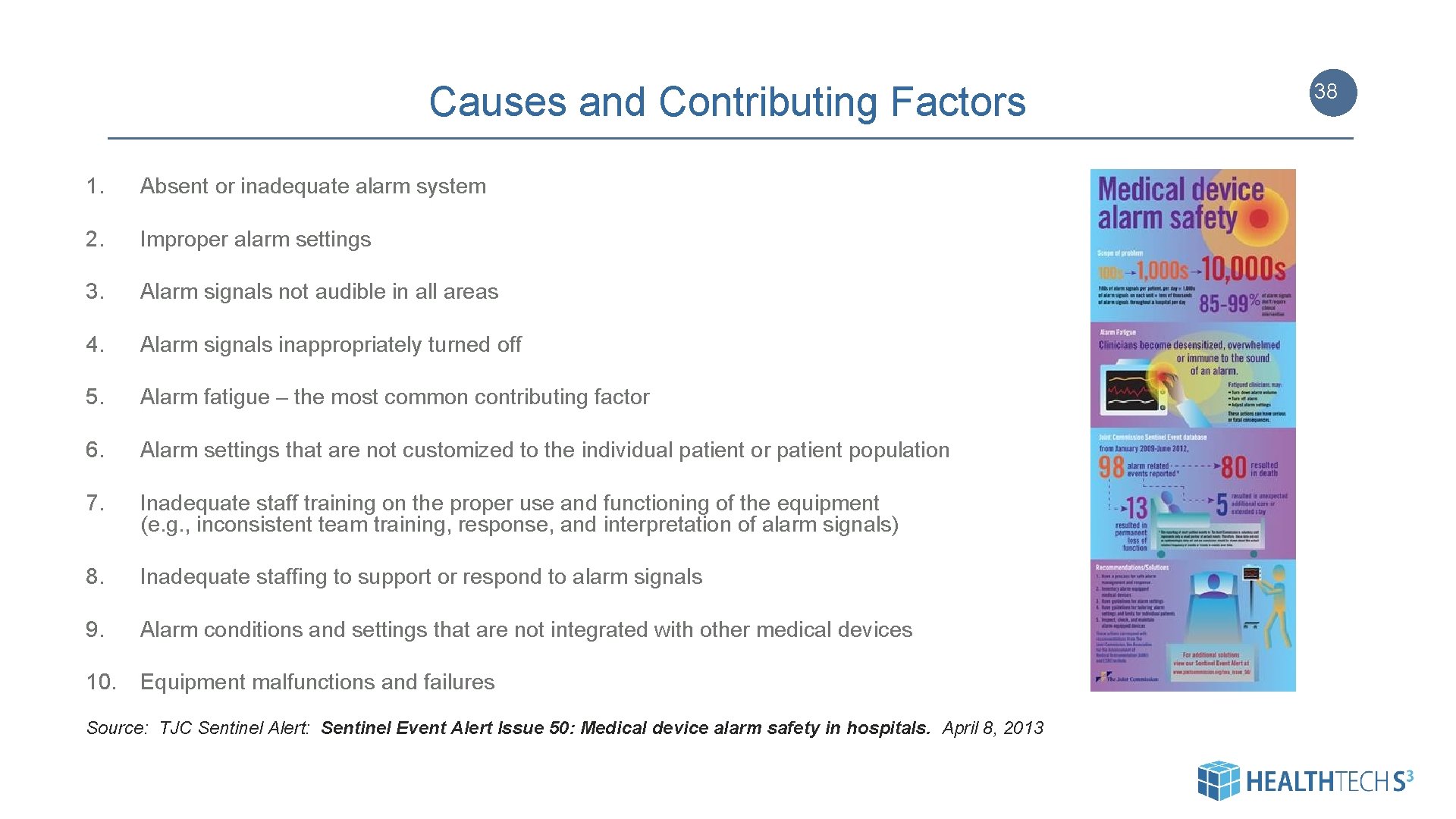
Causes and Contributing Factors 38 1. Absent or inadequate alarm system 2. Improper alarm settings 3. Alarm signals not audible in all areas 4. Alarm signals inappropriately turned off 5. Alarm fatigue – the most common contributing factor 6. Alarm settings that are not customized to the individual patient or patient population 7. Inadequate staff training on the proper use and functioning of the equipment (e. g. , inconsistent team training, response, and interpretation of alarm signals) 8. Inadequate staffing to support or respond to alarm signals 9. Alarm conditions and settings that are not integrated with other medical devices 10. Equipment malfunctions and failures Source: TJC Sentinel Alert: Sentinel Event Alert Issue 50: Medical device alarm safety in hospitals. April 8, 2013
Strategies 39 1. Leadership ensures that there is a process for safe alarm management and response in high-risk areas (as identified by the organization) 2. Prepare an inventory of alarm-equipped medical devices used in high-risk areas and for high-risk clinical conditions, and identify the default alarm settings and the limits appropriate for each care area 3. Establish guidelines for alarm settings on alarm-equipped medical devices used in high-risk areas and for high-risk clinical conditions; include identification of situations when alarm signals are not clinically necessary 4. Establish guidelines for tailoring alarm settings and limits for individual patients. The guidelines should address situations when limits can be modified to minimize alarm signals and the extent to which alarms can be modified to minimize alarm signals 5. Inspect, check, and maintain alarm-equipped devices to provide for accurate and appropriate alarm settings, properation, and detectability. Base the frequency of these activities on criteria such as manufacturers’ recommendations, risk levels, and current experience. Source: TJC Sentinel Alert: Sentinel Event Alert Issue 50: Medical device alarm safety in hospitals. April 8, 2013
TJC Sentinel Alert Additional Strategies 40 Training and education 6. Provide all members of the clinical care team (as defined by the organization) with training on the organization’s process for safe alarm management and response in high-risk areas (as identified by the organization), and on the safe use of the alarmed medical devices on which they rely. Also provide ongoing training on new alarmed medical devices and updates to alarmed medical devices, and ensure that new members of the clinical care team receive training on the alarmed medical devices on which they rely. Equipment and physical environment 7. To help reduce nuisance alarm signals, change single-use sensors (for example, ECG leads) according to manufacturer’s recommendations, unless contraindicated 8. Assess whether the acoustics in patient care areas allow critical alarm signals to be audible Leadership and organizational planning 9. Re-establish priorities for the adoption of alarm technology; the priority-setting process should drive technology adoption rather than allowing technology to drive the process 10. Establish a cross-disciplinary team that includes representation from clinicians, clinical engineering, information technology, and risk management, to address alarm safety and the potential impact of alarm fatigue in all patient care areas. – Establish a process for continual improvement and constant optimizing of alarm system policies and configurations. – Review trends and patterns in alarm-related events to identify opportunities for improving alarm use. – Implement an alarm system management policy, including the periodic review of alarm coverage processes and systems, and the development of realistic, implementable strategies to address vulnerabilities. 11. Share information about alarm-related incidents, prevention strategies, and lessons learned with appropriate organizations, such as AAMI, ECRI Institute, the FDA, and The Joint Commission Source: TJC Sentinel Alert: Sentinel Event Alert Issue 50: Medical device alarm safety in hospitals. April 8, 2013
And A Few More 41 1. Provide proper skin preparation for electrocardiogram electrodes to improve conductivity and decrease the number of false alarms 2. Change ECG electrodes daily 3. Customize alarm parameters and levels on ECG monitors 4. Customize delay and threshold settings on oxygen saturation via pulse oximetry (Sp. O 2) monitors 5. Provide initial and ongoing education about devices with alarms 6. Establish interprofessional teams to address issues related to alarms, such as the development of policies and procedures 7. Monitor only those patients with clinical indications for monitoring Source: American Association of Critical Care Nurses. 7 Alarm Management Strategies for Nurses Written by Sabrina Rodak | June 21, 2013
Goal 7: Reduce the risk of health care-associated infections NPSG. 07. 01: Comply with either the current CDC hand hygiene guidelines of the current WHO hand hygiene guidelines 42 1. Implement a program that follows categories 1 A, 1 B and 1 C of either the current CDC or the current WHO hand hygiene guidelines. 2. Set goals for improving compliance with hand hygiene guidelines. 3. Improve compliance with hand hygiene guidelines based on established goals Applies to: Hospital – CAH – Nursing Care Center
Key Causes of Hand Hygiene Noncompliance • Ineffective placement of dispensers or sinks • Hand hygiene compliance data are not collected or reported accurately or frequently • Lack of accountability and just-in-time coaching • Safety culture does not stress hand hygiene at all levels • Ineffective or insufficient education • Hands full • Wearing gloves interferes with the process • Perception that hand hygiene is not needed if wearing gloves • Health care worker forgot • Distractions 43 Source: The Joint Commission Journal on Quality and Patient Safety, January 2015, Volume 41, Number 1. Sustaining and Spreading Improvement in Hand Hygiene Compliance
Strategies 44 1. Start the culture change with leaders 2. Refresh the message 3. Connect the World Health Organization's five moments for hand hygiene to the whole patient journey 4. Provide actionable audit results 5. Empower patients to remind healthcare workers to wash their hands 6. Possibly reframe non-compliance with hand hygiene protocol as a healthcare error 7. Introduce penalties for non-compliance Source: Becker’s Hospital Review: 7 ways to improve hand hygiene, from hospital managers Written by Heather Punke (November 21, 2014
World Health Organization – Five Moments 45 1. BEFORE PATIENT CONTACT WHEN? Clean your hands before touching a patient when approaching him or her WHY? To protect the patient against harmful germs carried on your hands 2. BEFORE AN ASEPTIC TASK WHEN? Clean your hands immediately before any aseptic task WHY? To protect the patient against harmful germs, including the patient’s own germs, entering his or her body 3. AFTER BODY FLUID EXPOSURE RISK WHEN? Clean your hands immediately after an exposure risk to body fluids (and after glove removal) WHY? To protect yourself and the health-care environment from harmful patient germs 4. AFTER PATIENT CONTACT WHEN? Clean your hands after touching a patient and his or her immediate surroundings when leaving WHY? To protect yourself and the health-care environment from harmful patient germs 5. AFTER CONTACT WITH PATIENT SURROUNDINGS WHEN? Clean your hands after touching any object or furniture in the patient’s immediate surroundings, when leaving - even without touching the patient WHY? To protect yourself and the health-care environment from harmful patient germs
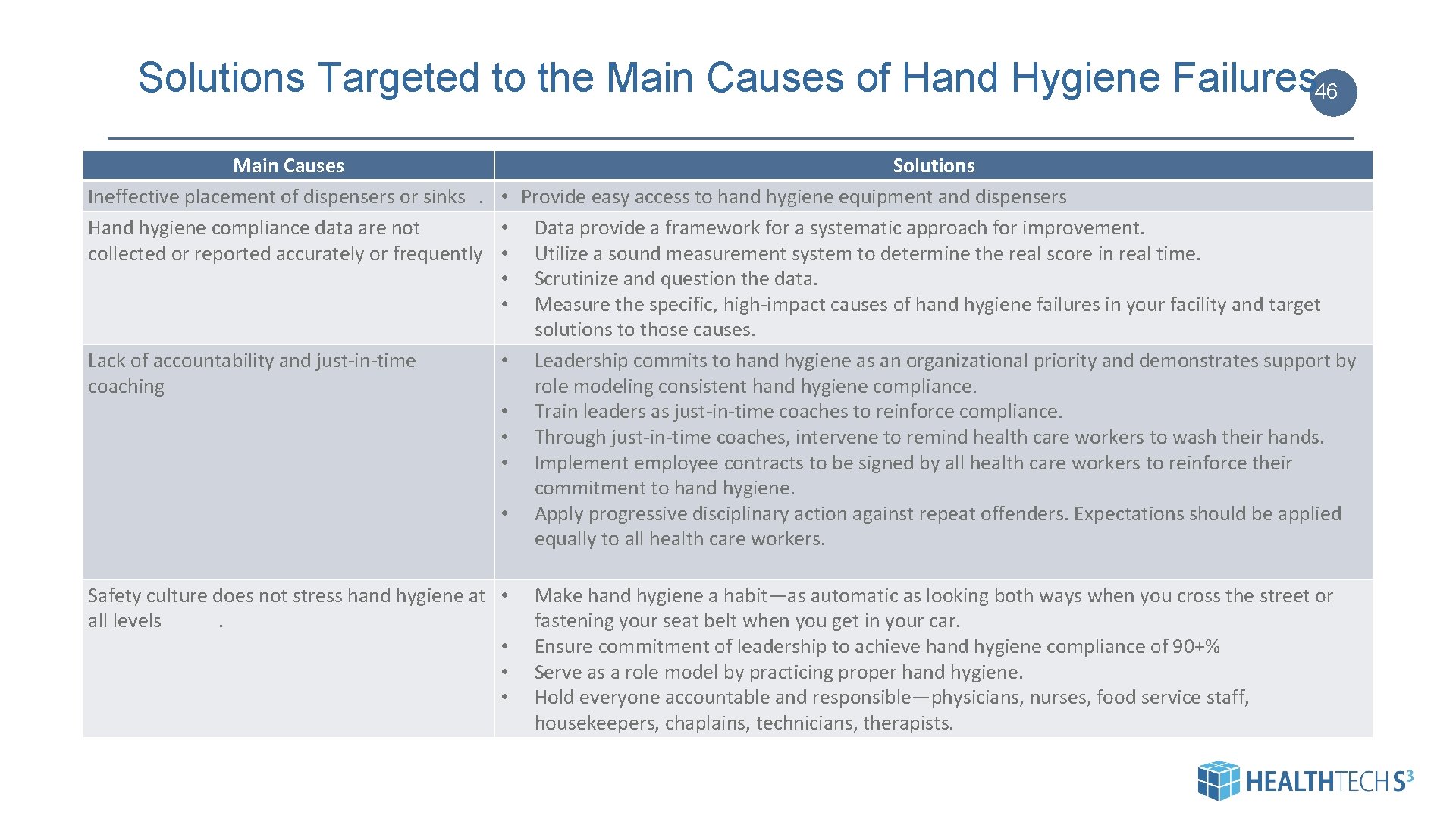
Solutions Targeted to the Main Causes of Hand Hygiene Failures 46 Main Causes Solutions Ineffective placement of dispensers or sinks. • Provide easy access to hand hygiene equipment and dispensers Hand hygiene compliance data are not • Data provide a framework for a systematic approach for improvement. collected or reported accurately or frequently • Utilize a sound measurement system to determine the real score in real time. • Scrutinize and question the data. • Measure the specific, high-impact causes of hand hygiene failures in your facility and target solutions to those causes. Lack of accountability and just-in-time • Leadership commits to hand hygiene as an organizational priority and demonstrates support by coaching role modeling consistent hand hygiene compliance. • Train leaders as just-in-time coaches to reinforce compliance. • Through just-in-time coaches, intervene to remind health care workers to wash their hands. • Implement employee contracts to be signed by all health care workers to reinforce their commitment to hand hygiene. • Apply progressive disciplinary action against repeat offenders. Expectations should be applied equally to all health care workers. Safety culture does not stress hand hygiene at • all levels. • • • Make hand hygiene a habit—as automatic as looking both ways when you cross the street or fastening your seat belt when you get in your car. Ensure commitment of leadership to achieve hand hygiene compliance of 90+% Serve as a role model by practicing proper hand hygiene. Hold everyone accountable and responsible—physicians, nurses, food service staff, housekeepers, chaplains, technicians, therapists.
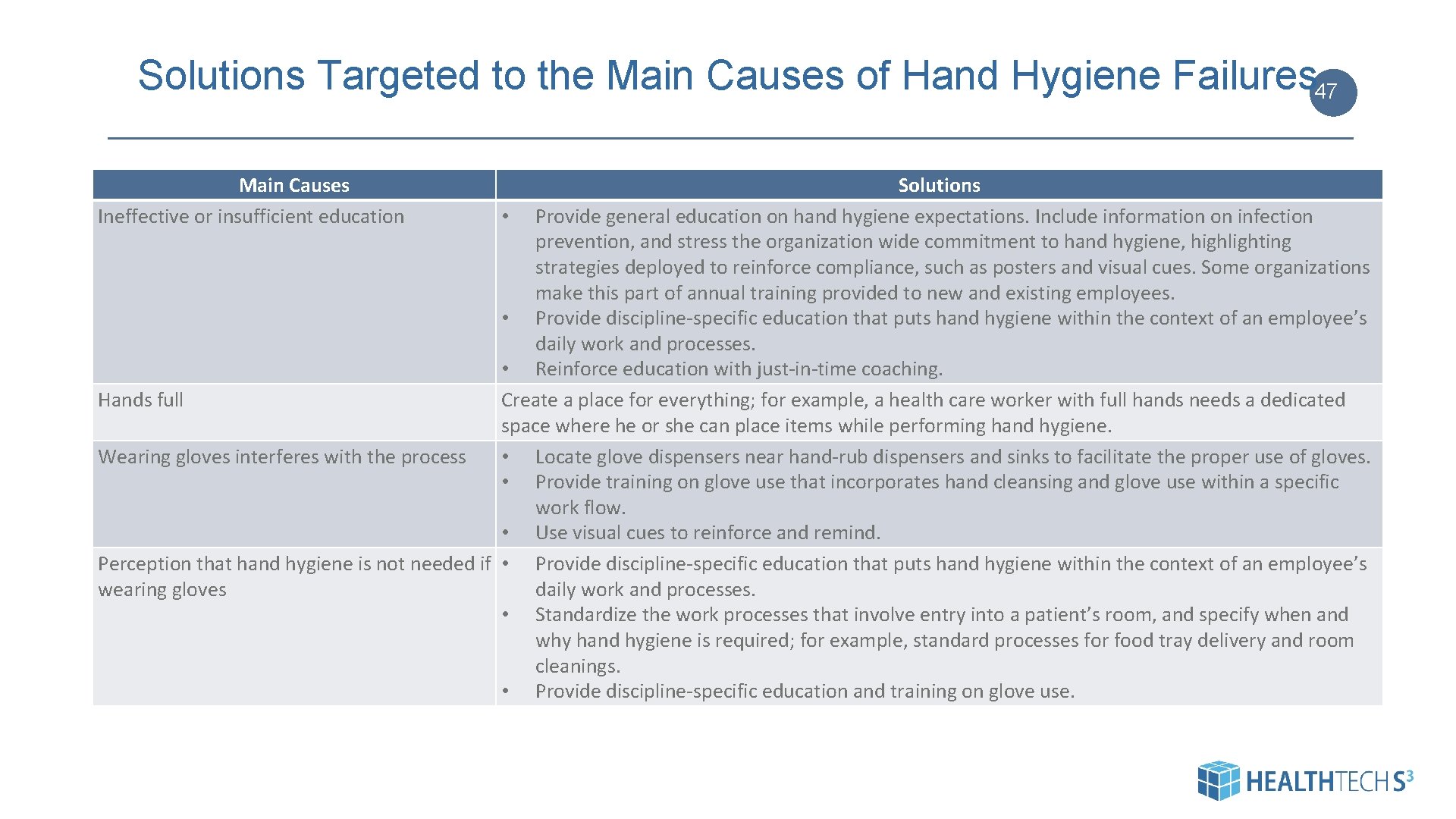
Solutions Targeted to the Main Causes of Hand Hygiene Failures 47 Main Causes Ineffective or insufficient education Solutions • Provide general education on hand hygiene expectations. Include information on infection prevention, and stress the organization wide commitment to hand hygiene, highlighting strategies deployed to reinforce compliance, such as posters and visual cues. Some organizations make this part of annual training provided to new and existing employees. • Provide discipline-specific education that puts hand hygiene within the context of an employee’s daily work and processes. • Reinforce education with just-in-time coaching. Hands full Create a place for everything; for example, a health care worker with full hands needs a dedicated space where he or she can place items while performing hand hygiene. Wearing gloves interferes with the process • Locate glove dispensers near hand-rub dispensers and sinks to facilitate the proper use of gloves. • Provide training on glove use that incorporates hand cleansing and glove use within a specific work flow. • Use visual cues to reinforce and remind. Perception that hand hygiene is not needed if • Provide discipline-specific education that puts hand hygiene within the context of an employee’s wearing gloves daily work and processes. • Standardize the work processes that involve entry into a patient’s room, and specify when and why hand hygiene is required; for example, standard processes for food tray delivery and room cleanings. • Provide discipline-specific education and training on glove use.
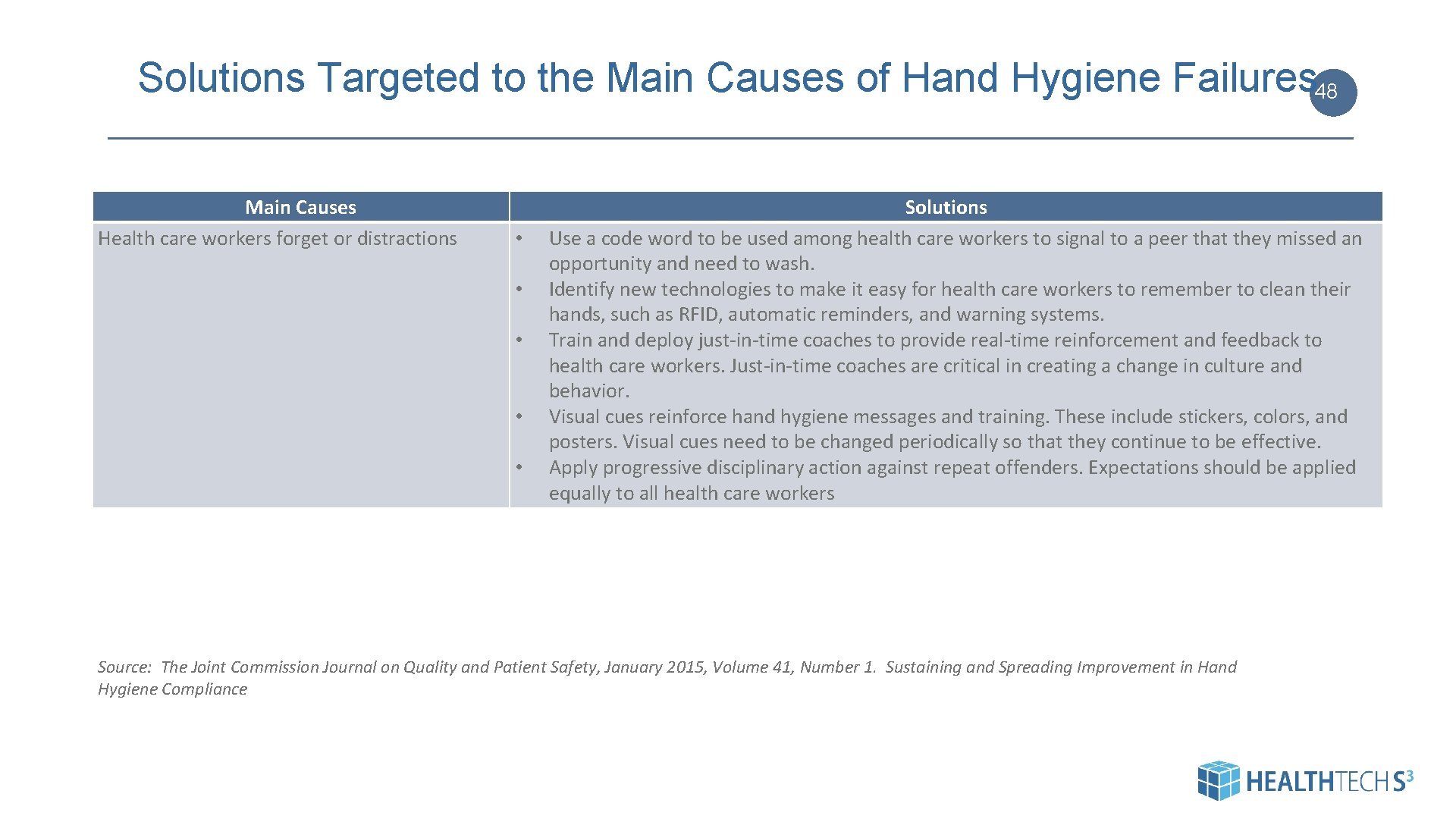
Solutions Targeted to the Main Causes of Hand Hygiene Failures 48 Main Causes Health care workers forget or distractions • • • Solutions Use a code word to be used among health care workers to signal to a peer that they missed an opportunity and need to wash. Identify new technologies to make it easy for health care workers to remember to clean their hands, such as RFID, automatic reminders, and warning systems. Train and deploy just-in-time coaches to provide real-time reinforcement and feedback to health care workers. Just-in-time coaches are critical in creating a change in culture and behavior. Visual cues reinforce hand hygiene messages and training. These include stickers, colors, and posters. Visual cues need to be changed periodically so that they continue to be effective. Apply progressive disciplinary action against repeat offenders. Expectations should be applied equally to all health care workers Source: The Joint Commission Journal on Quality and Patient Safety, January 2015, Volume 41, Number 1. Sustaining and Spreading Improvement in Hand Hygiene Compliance
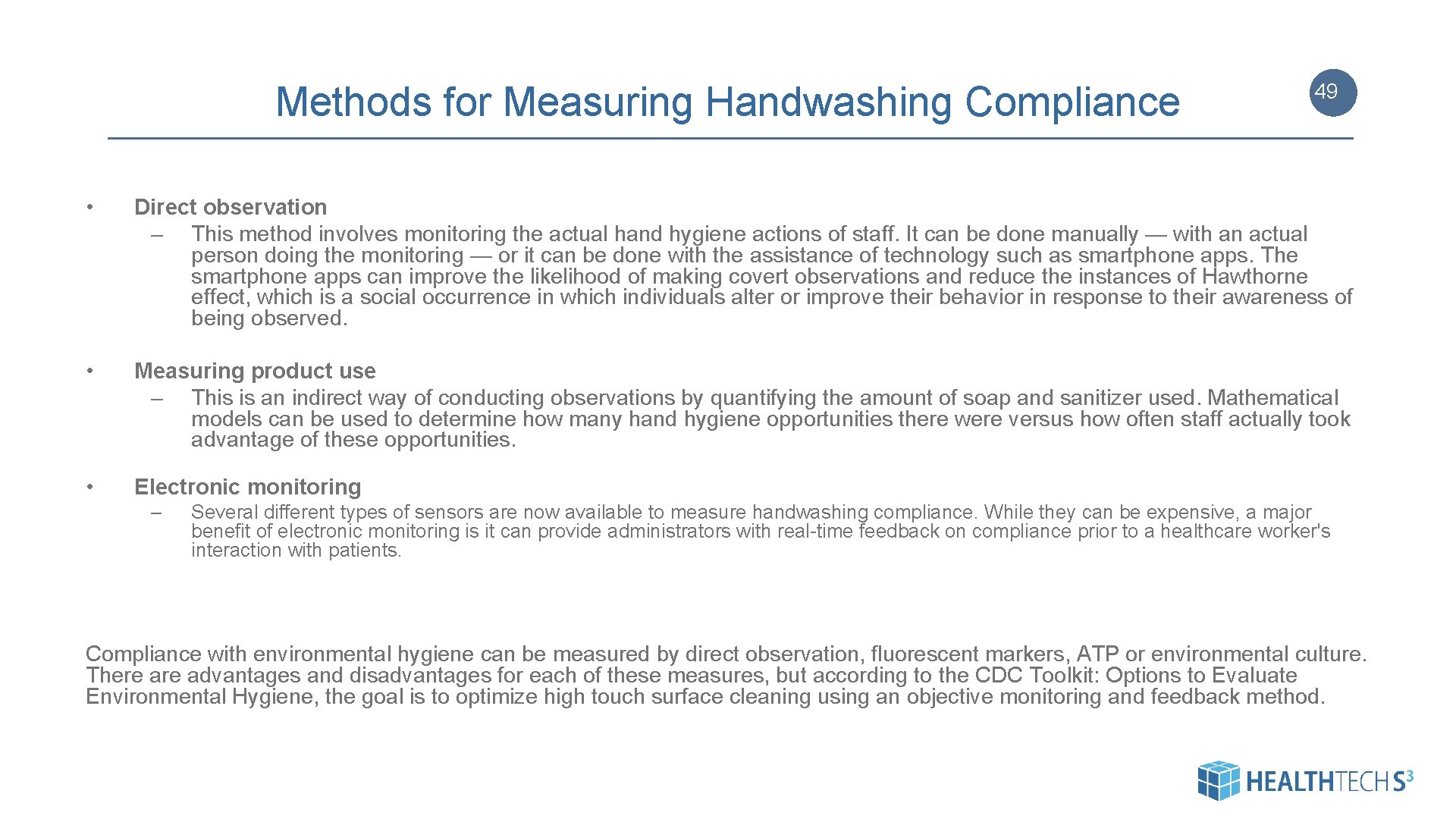
Methods for Measuring Handwashing Compliance 49 • Direct observation – This method involves monitoring the actual hand hygiene actions of staff. It can be done manually — with an actual person doing the monitoring — or it can be done with the assistance of technology such as smartphone apps. The smartphone apps can improve the likelihood of making covert observations and reduce the instances of Hawthorne effect, which is a social occurrence in which individuals alter or improve their behavior in response to their awareness of being observed. • Measuring product use – This is an indirect way of conducting observations by quantifying the amount of soap and sanitizer used. Mathematical models can be used to determine how many hand hygiene opportunities there were versus how often staff actually took advantage of these opportunities. • Electronic monitoring – Several different types of sensors are now available to measure handwashing compliance. While they can be expensive, a major benefit of electronic monitoring is it can provide administrators with real-time feedback on compliance prior to a healthcare worker's interaction with patients. Compliance with environmental hygiene can be measured by direct observation, fluorescent markers, ATP or environmental culture. There advantages and disadvantages for each of these measures, but according to the CDC Toolkit: Options to Evaluate Environmental Hygiene, the goal is to optimize high touch surface cleaning using an objective monitoring and feedback method.
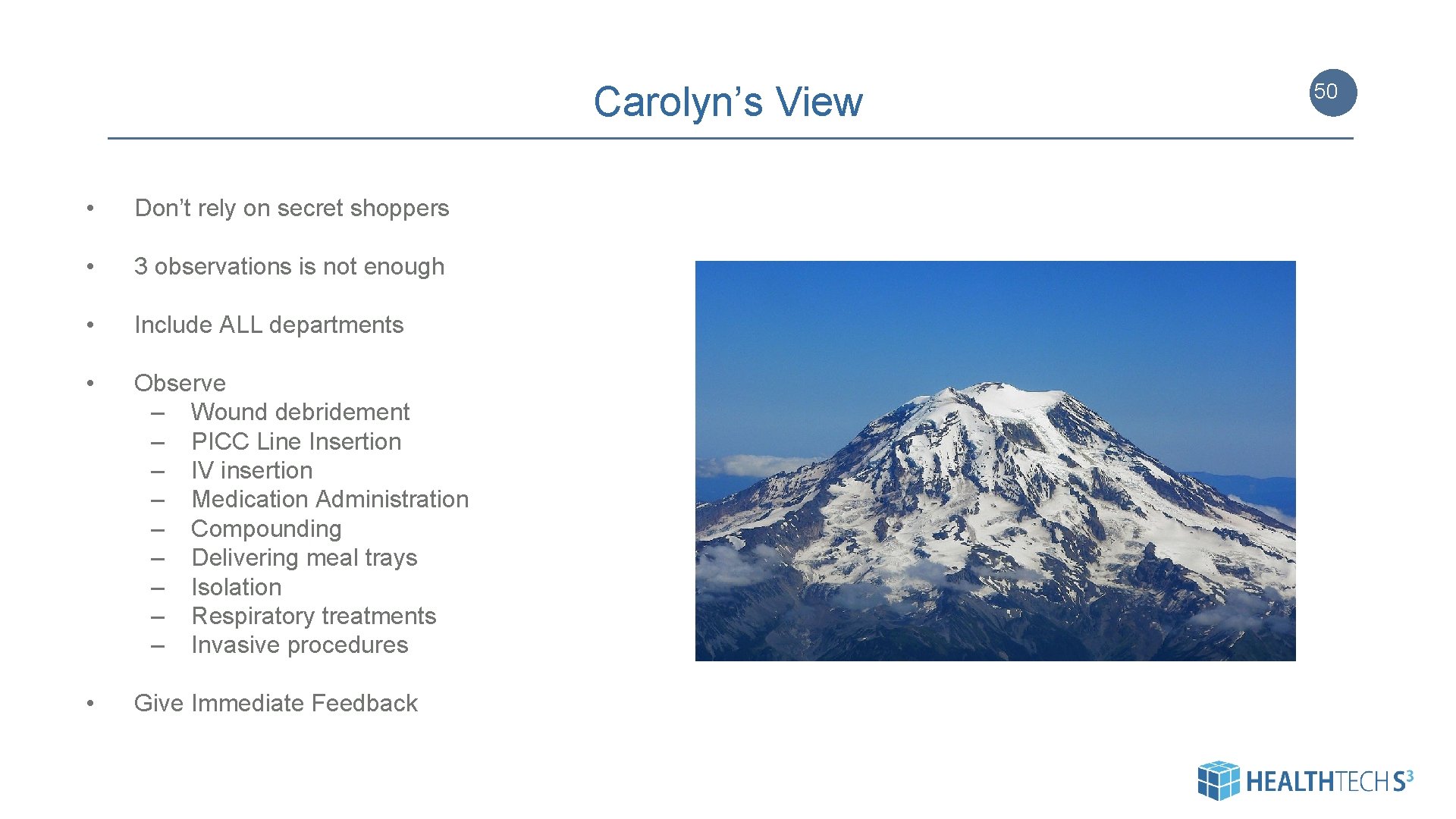
Carolyn’s View • Don’t rely on secret shoppers • 3 observations is not enough • Include ALL departments • Observe – Wound debridement – PICC Line Insertion – IV insertion – Medication Administration – Compounding – Delivering meal trays – Isolation – Respiratory treatments – Invasive procedures • Give Immediate Feedback 50
Next Time – October 13 51 Goal 7: Reduce the risk of health care-associated infections Goal 9: Reduce the risk of patient harm resulting from falls (Nursing Care Center) Goal 14: Prevent health care-associated pressure ulcers (Nursing Care Center) Goal 15: The hospital identifies safety risks inherent in its patient population (Hospital Universal Protocol for Preventing Wrong Site, Wrong Procedure and Wrong Person Surgery
52
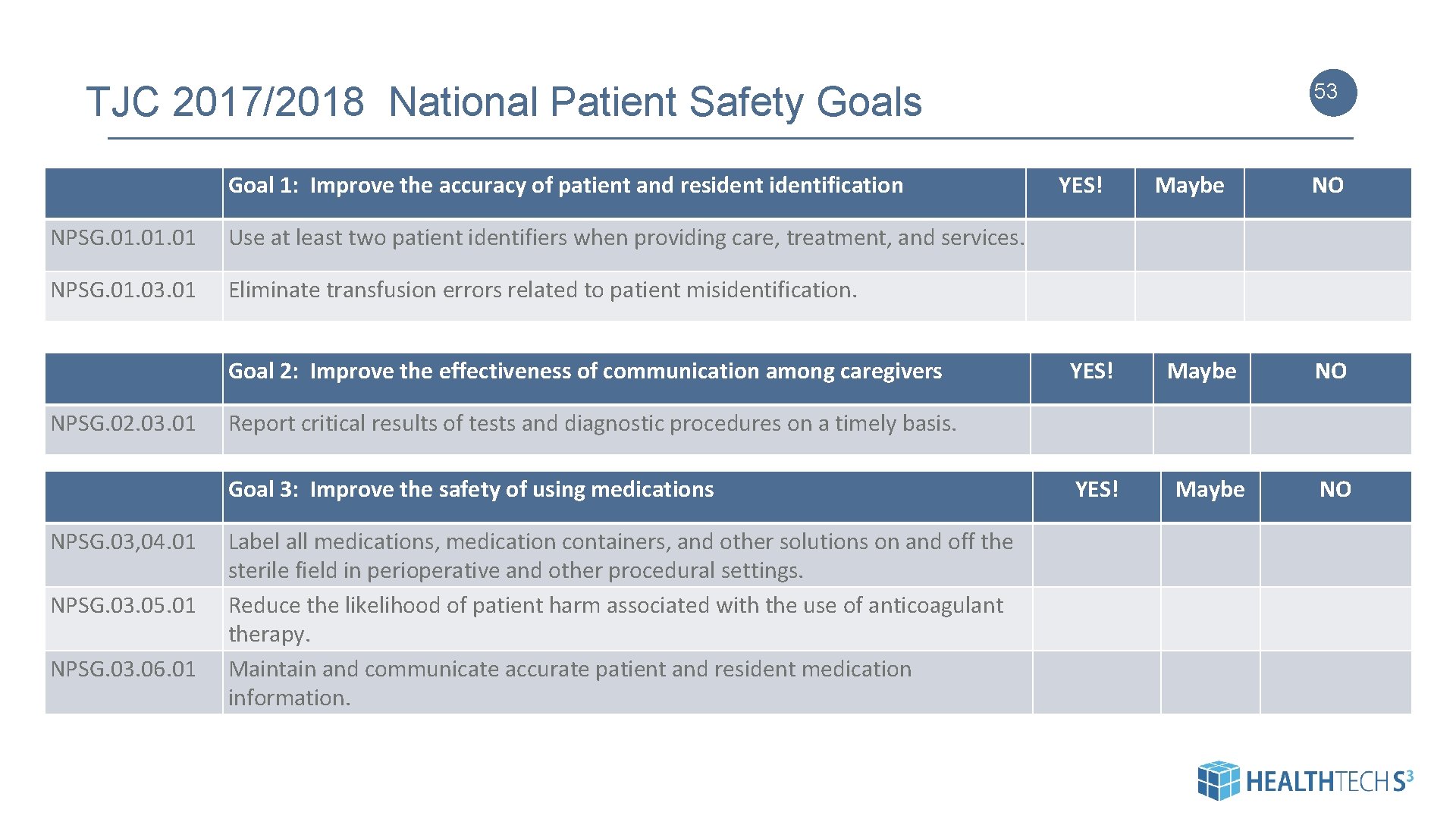
TJC 2017/2018 National Patient Safety Goals Goal 1: Improve the accuracy of patient and residentification NPSG. 01. 01 Use at least two patient identifiers when providing care, treatment, and services. NPSG. 01. 03. 01 Eliminate transfusion errors related to patient misidentification. Goal 2: Improve the effectiveness of communication among caregivers NPSG. 02. 03. 01 NPSG. 03. 05. 01 NPSG. 03. 06. 01 YES! Maybe NO NO Report critical results of tests and diagnostic procedures on a timely basis. Goal 3: Improve the safety of using medications NPSG. 03, 04. 01 Page 53 Label all medications, medication containers, and other solutions on and off the sterile field in perioperative and other procedural settings. Reduce the likelihood of patient harm associated with the use of anticoagulant therapy. Maintain and communicate accurate patient and resident medication information. YES! Maybe NO

TJC 2017/2018 National Patient Safety Goals NPSG. 06. 01 Goal 6: Reduce the harm associated with clinical alarm systems NPSG. 07. 03. 01 NPSG. 07. 04. 01 NPSG. 07. 05. 01 NPSG. 07. 06. 01 YES! Maybe NO Reduce the harm associated with clinical alarm systems. Goal 7: Reduce the risk of health care-associated infections NPSG. 07. 01 Page 54 Comply with either the current CDC hand hygiene guidelines or the current WHO hand hygiene guidelines. Implement evidence-based practices to prevent health care-associated infections due to multidrug-resistant organisms. Implement evidence-based practices to prevent central line-associated bloodstream infections. Implement evidence-based practices for preventing surgical site infections. Implement evidence-based practices to prevent indwelling catheter-associated urinary tract infections (CAUTI).
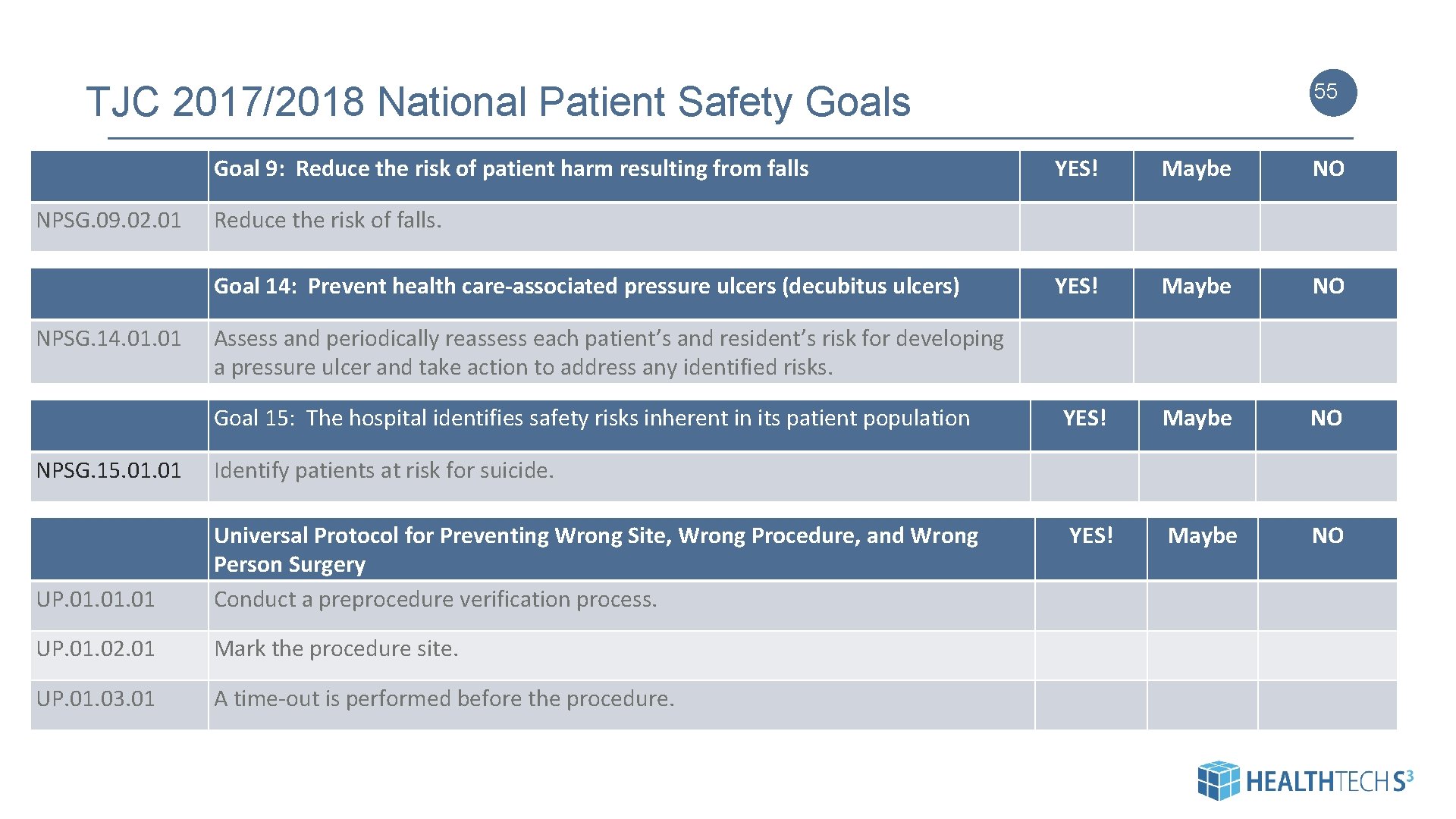
TJC 2017/2018 National Patient Safety Goals NPSG. 09. 02. 01 Goal 9: Reduce the risk of patient harm resulting from falls YES! Maybe NO Reduce the risk of falls. Goal 14: Prevent health care-associated pressure ulcers (decubitus ulcers) NPSG. 14. 01 Page 55 Assess and periodically reassess each patient’s and resident’s risk for developing a pressure ulcer and take action to address any identified risks. Goal 15: The hospital identifies safety risks inherent in its patient population NPSG. 15. 01 Identify patients at risk for suicide. UP. 01. 01 Universal Protocol for Preventing Wrong Site, Wrong Procedure, and Wrong Person Surgery Conduct a preprocedure verification process. UP. 01. 02. 01 Mark the procedure site. UP. 01. 03. 01 A time-out is performed before the procedure.
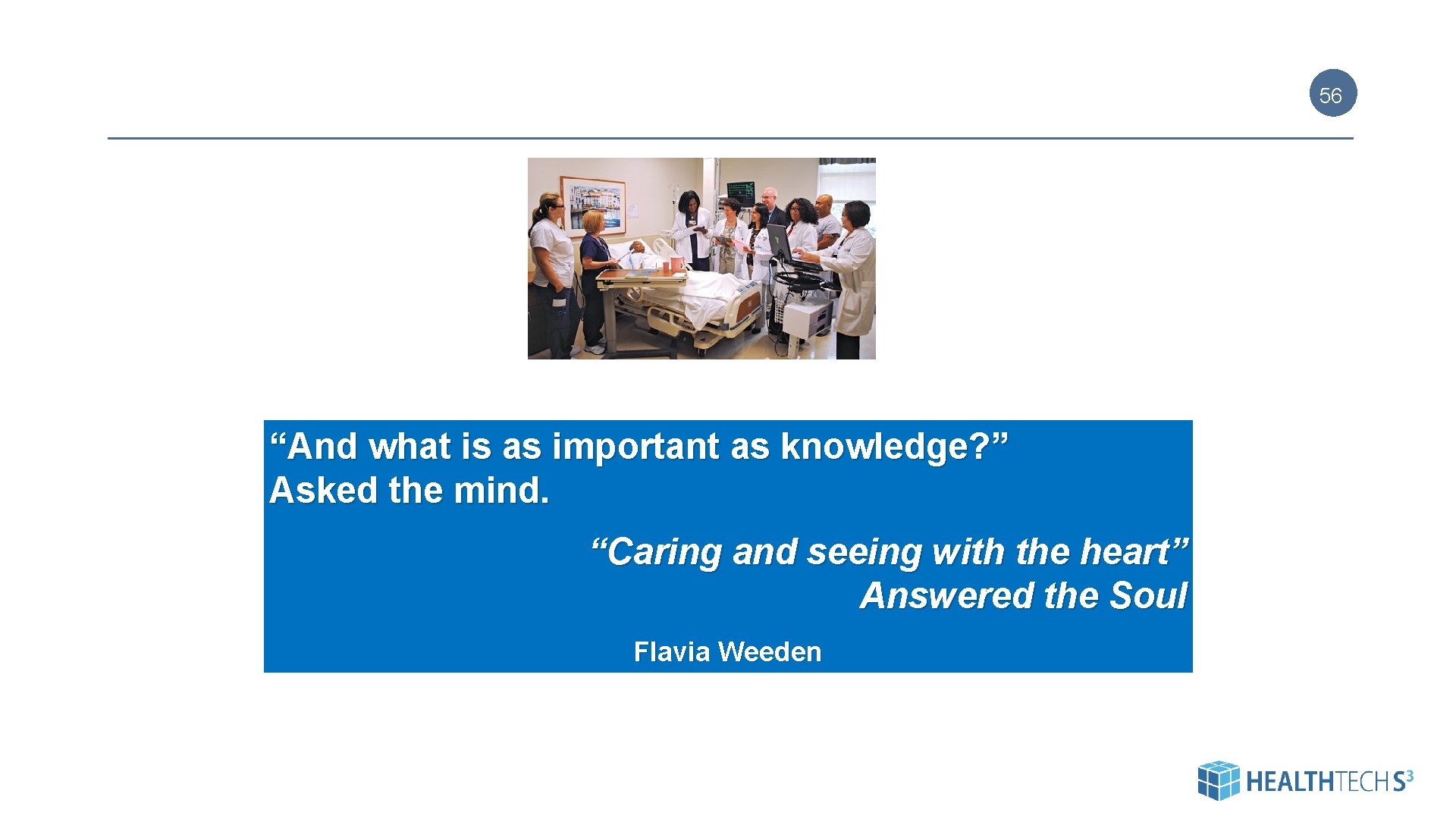
56 “And what is as important as knowledge? ” Asked the mind. “Caring and seeing with the heart” Answered the Soul Flavia Weeden
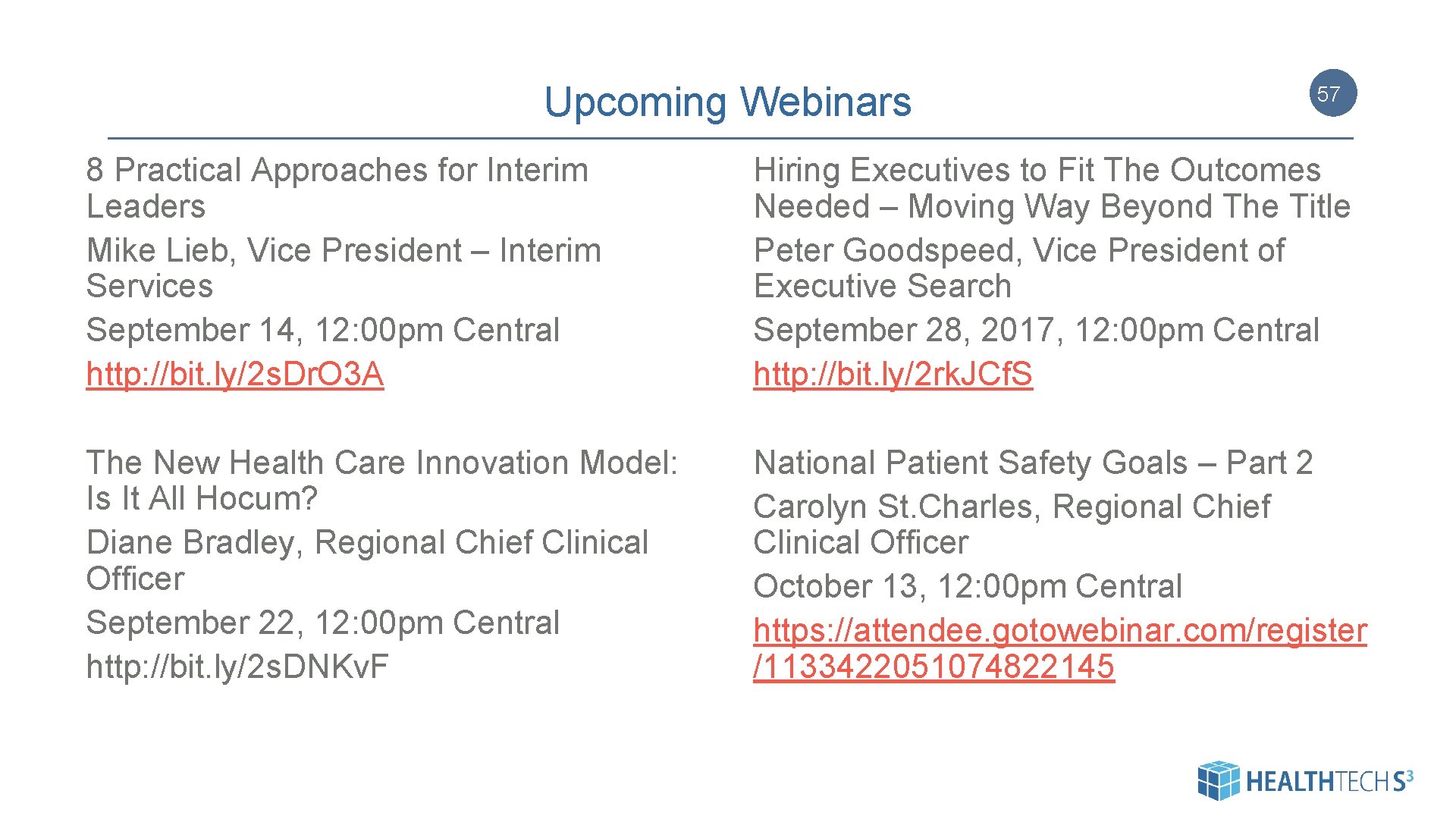
Upcoming Webinars 57 8 Practical Approaches for Interim Leaders Mike Lieb, Vice President – Interim Services September 14, 12: 00 pm Central http: //bit. ly/2 s. Dr. O 3 A Hiring Executives to Fit The Outcomes Needed – Moving Way Beyond The Title Peter Goodspeed, Vice President of Executive Search September 28, 2017, 12: 00 pm Central http: //bit. ly/2 rk. JCf. S The New Health Care Innovation Model: Is It All Hocum? Diane Bradley, Regional Chief Clinical Officer September 22, 12: 00 pm Central http: //bit. ly/2 s. DNKv. F National Patient Safety Goals – Part 2 Carolyn St. Charles, Regional Chief Clinical Officer October 13, 12: 00 pm Central https: //attendee. gotowebinar. com/register /1133422051074822145
58 Thank you! 58 Dallas Office Brentwood Office Our Phone Email / Website 2745 North Dallas Parkway, Suite 100, Plano, TX 75093 5110 Maryland Way, Suite 200 Brentwood, TN 37027 Main Office: 615. 309. 6053 Executive Placement: 972. 265. 4549 Carolyn St. Charles Carolyn. stcharles@healthtechs 3. com 360 -584 -9868
- Slides: 59