Principles of Design The way the elements of

- Slides: 52
Principles of Design The way the elements of art are organized.
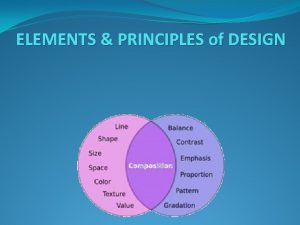
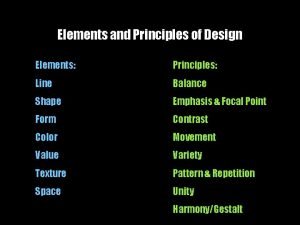
Principles of Design Balance • Emphasis • Contrast • Proportion • Pattern • Repetition • Movement • Rhythm •
Balance Arranging the elements of an artwork so that no part feels heavier or overpowers another.
Three Types of Balance n Symmetrical n Asymmetrical n Radial n All SUCCESSFUL artworks have one type of balance!
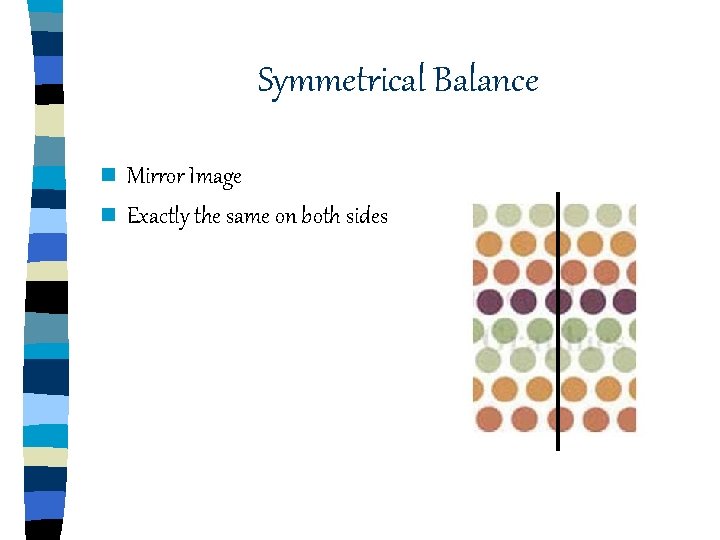
Symmetrical Balance n Mirror Image n Exactly the same on both sides
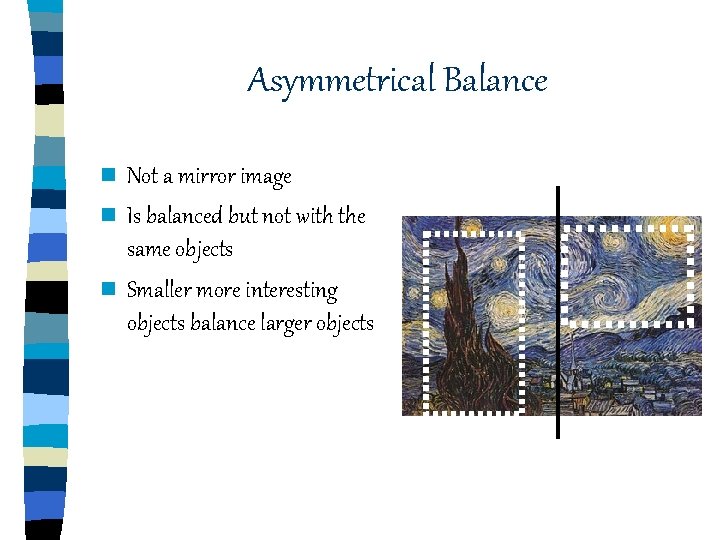
Asymmetrical Balance n Not a mirror image n Is balanced but not with the same objects n Smaller more interesting objects balance larger objects
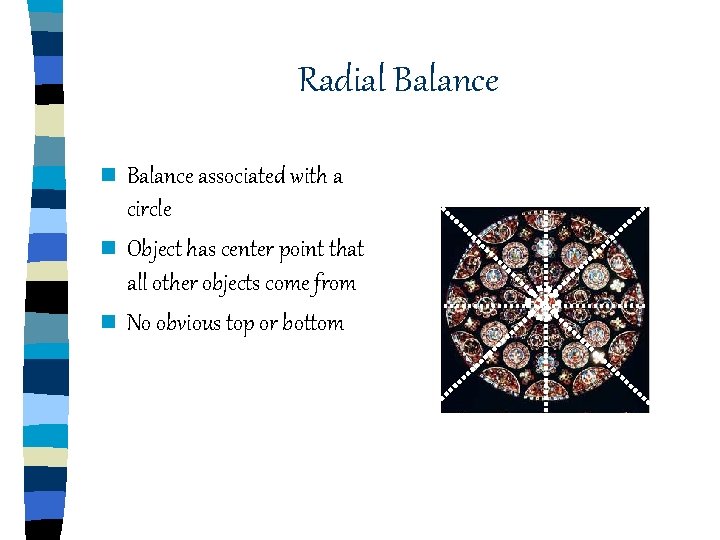
Radial Balance n Balance associated with a circle n Object has center point that all other objects come from n No obvious top or bottom
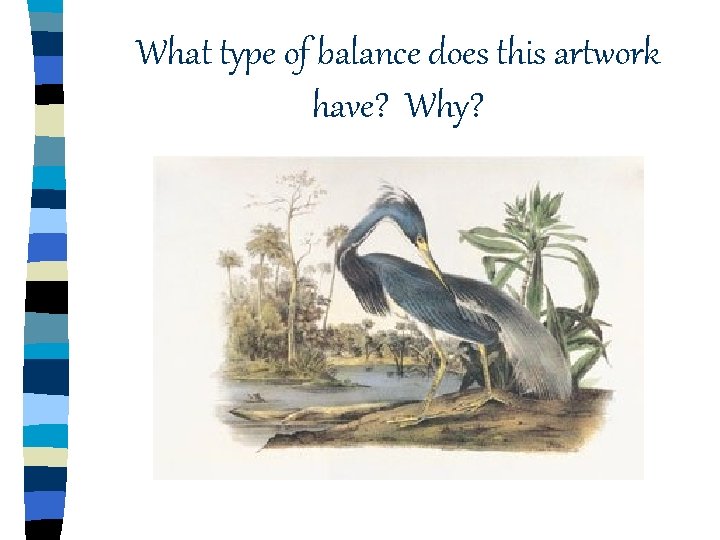
What type of balance does this artwork have? Why?
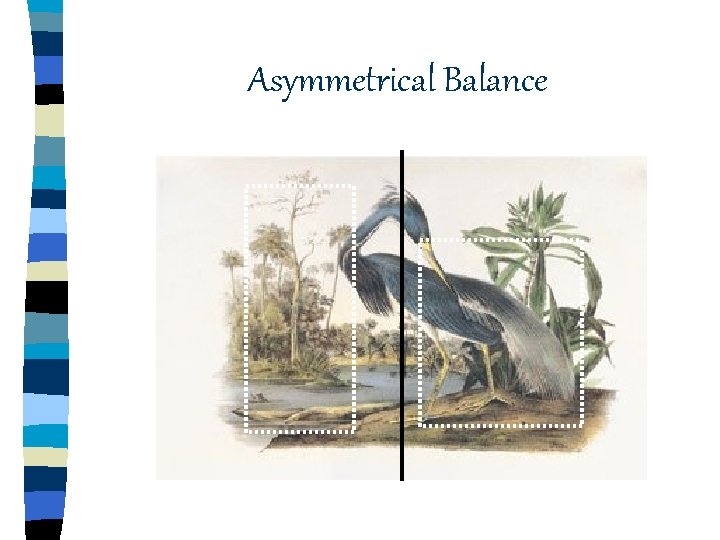
Asymmetrical Balance
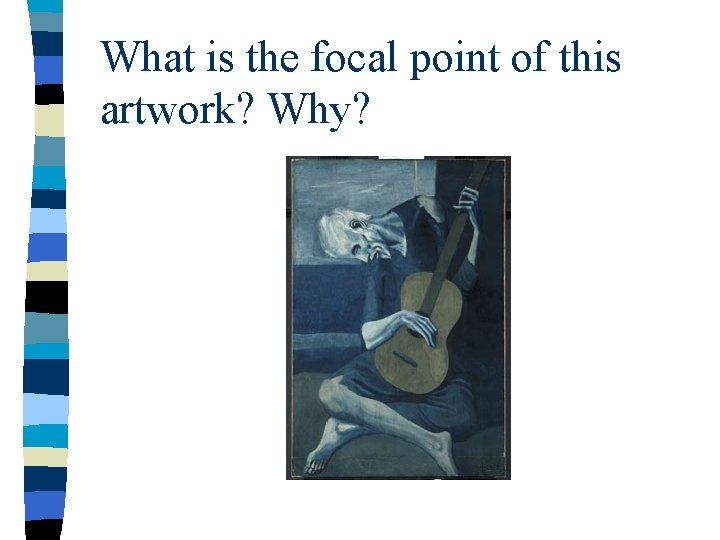
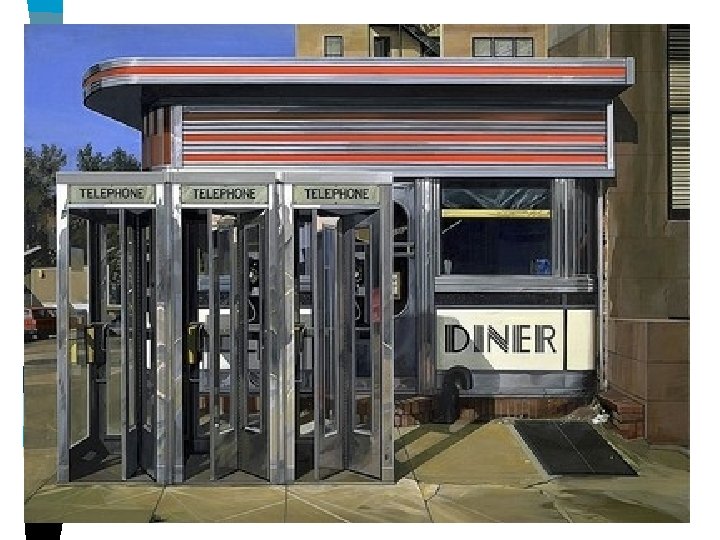
Emphasis Creating a focal point in an artwork Focal point- the first thing you see in an artwork.
How do you create a focal point? Make an object larger Make it brighter Make it more detailed Make it in the center of the page
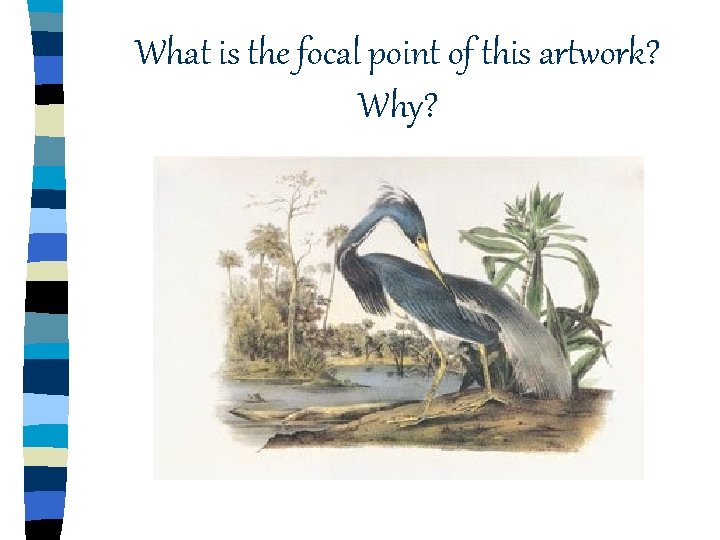
What is the focal point of this artwork? Why?
What is the focal point of this artwork? Why?
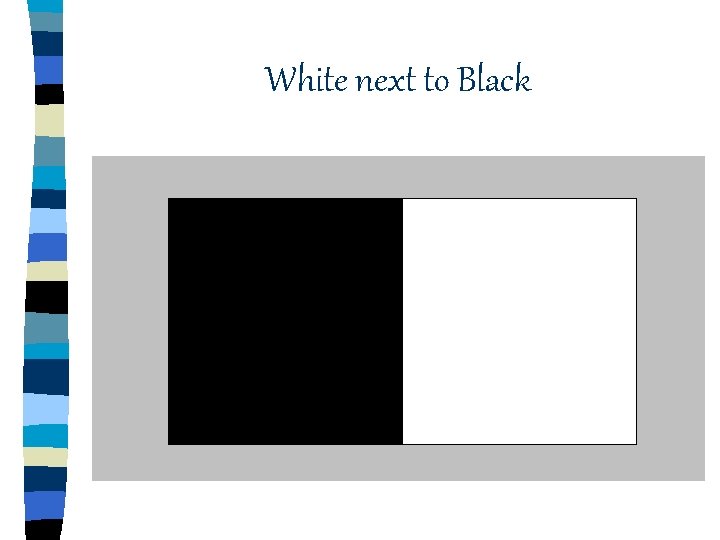
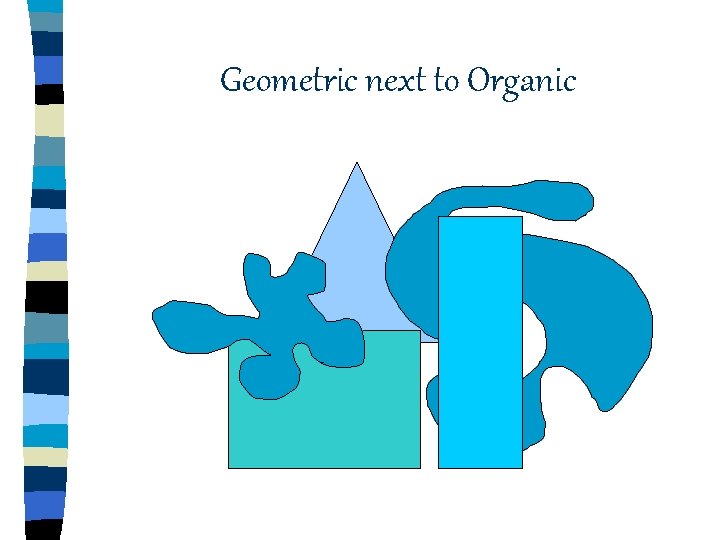
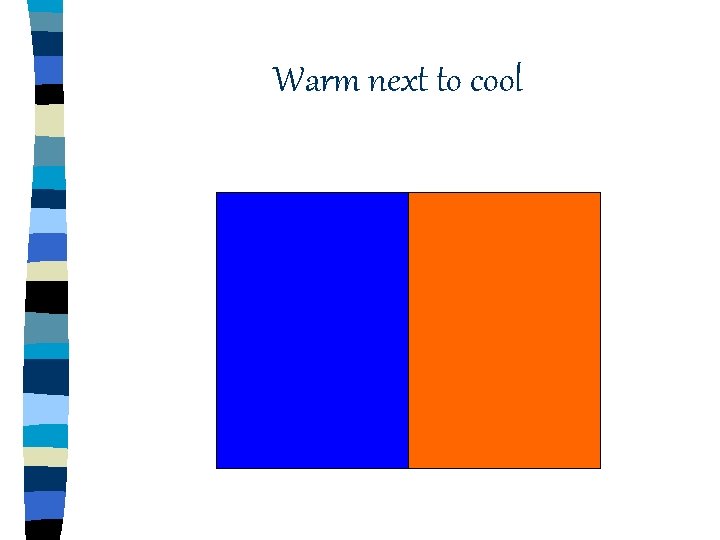
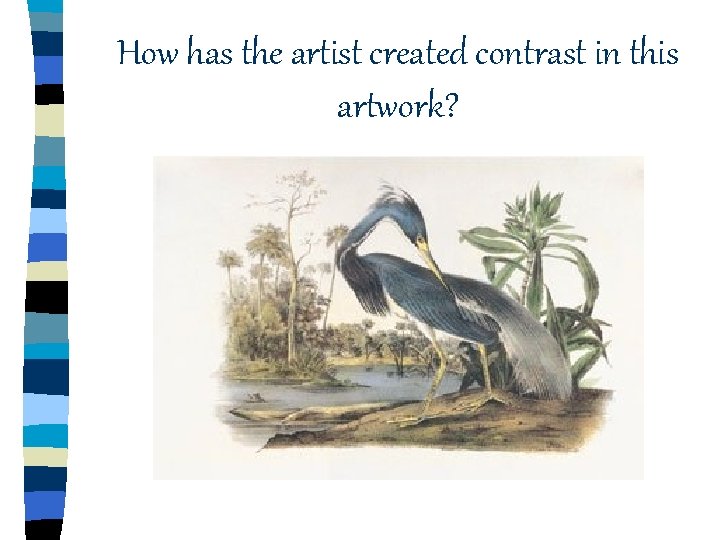
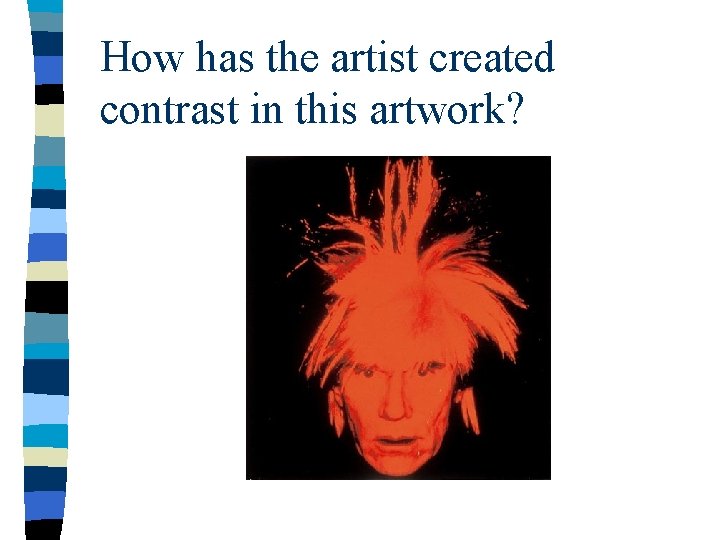
Contrast Placing the opposites within an element next to each other to create interest Can be made with any element of art!
White next to Black
Geometric next to Organic
Warm next to cool
How has the artist created contrast in this artwork?
How has the artist created contrast in this artwork?
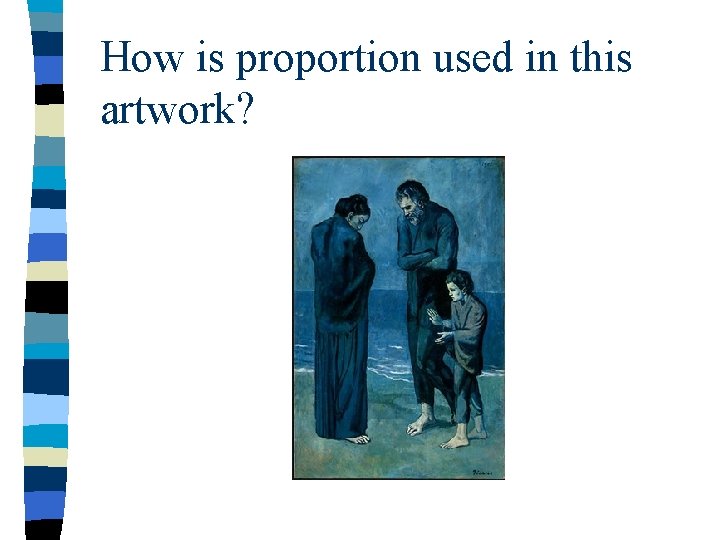
Proportion The relationship in size or amount between the elements in an artwork
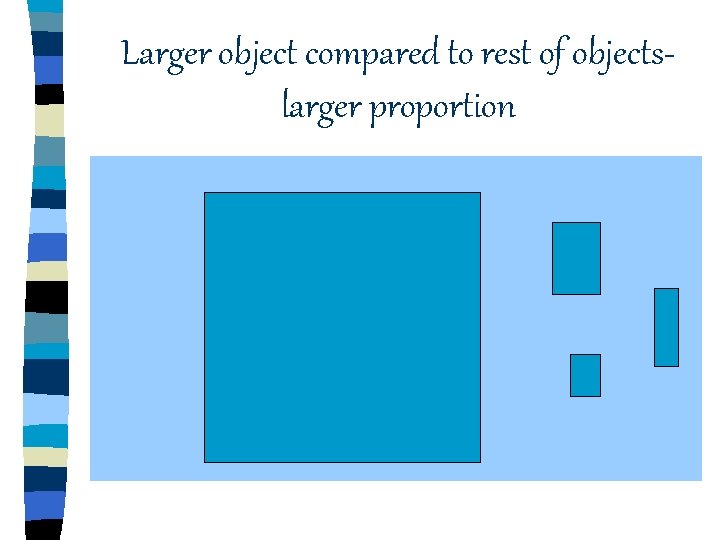
Larger object compared to rest of objectslarger proportion
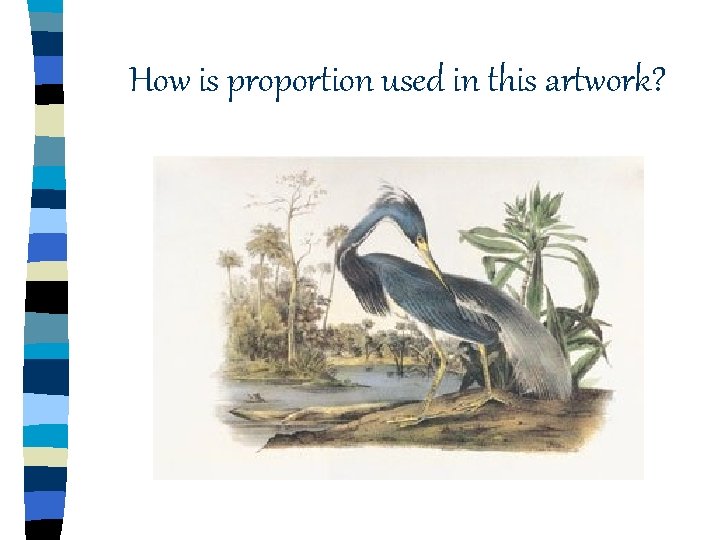
How is proportion used in this artwork?
How is proportion used in this artwork?
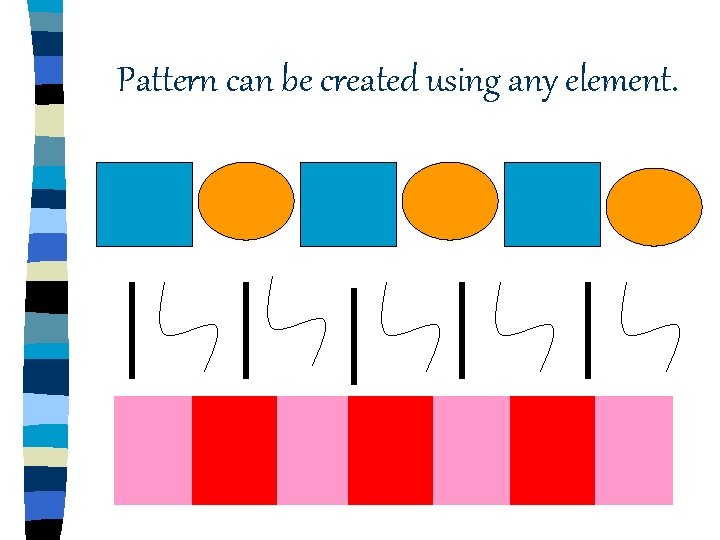
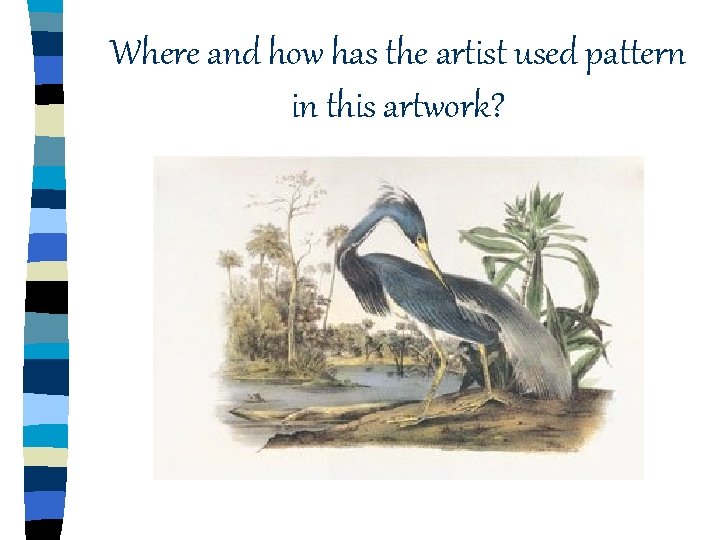
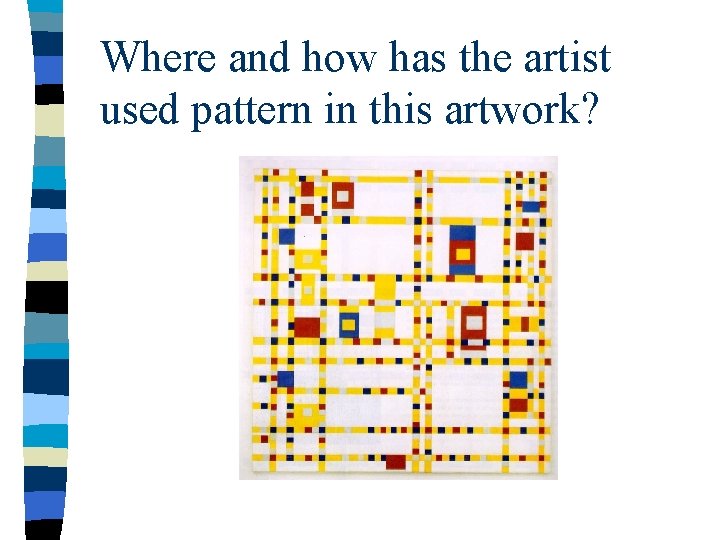
Pattern The repeating of a motif of elements. Motif- a set of objects that is repeated
Pattern can be created using any element.
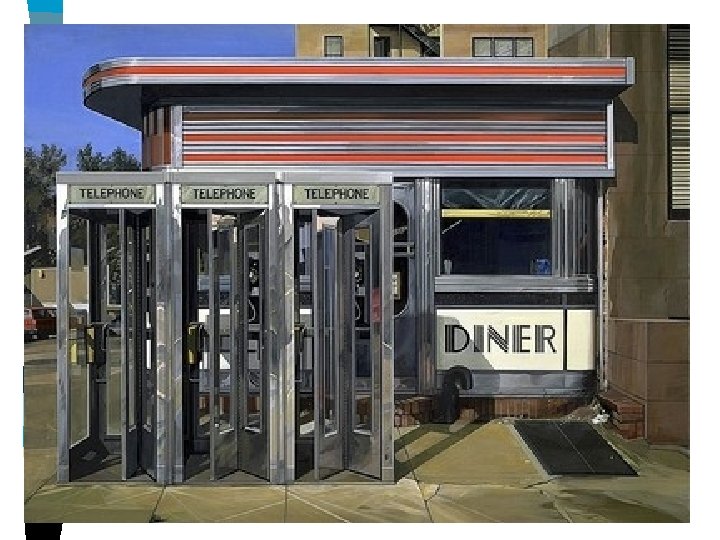
Where and how has the artist used pattern in this artwork?
Where and how has the artist used pattern in this artwork?
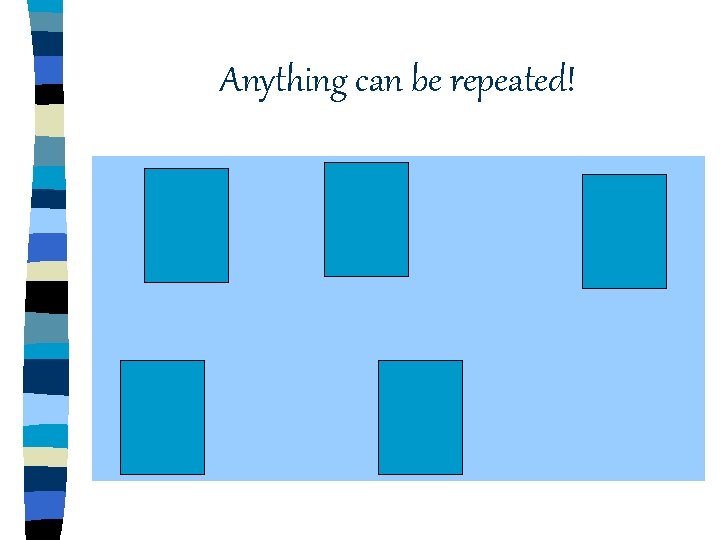
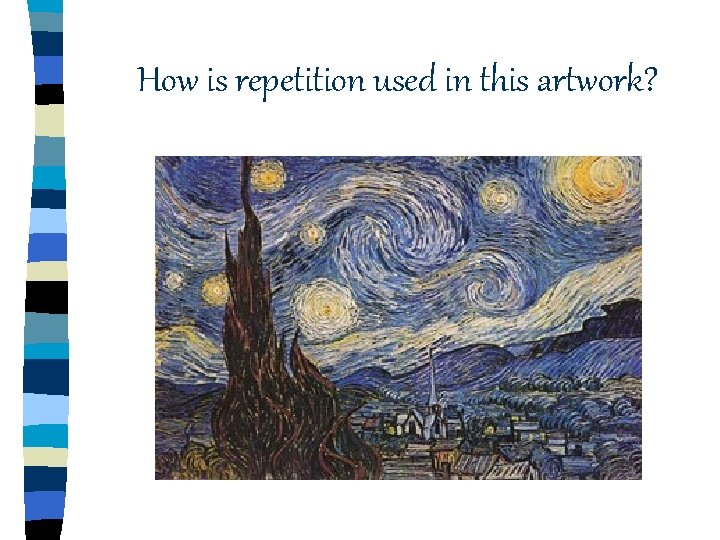
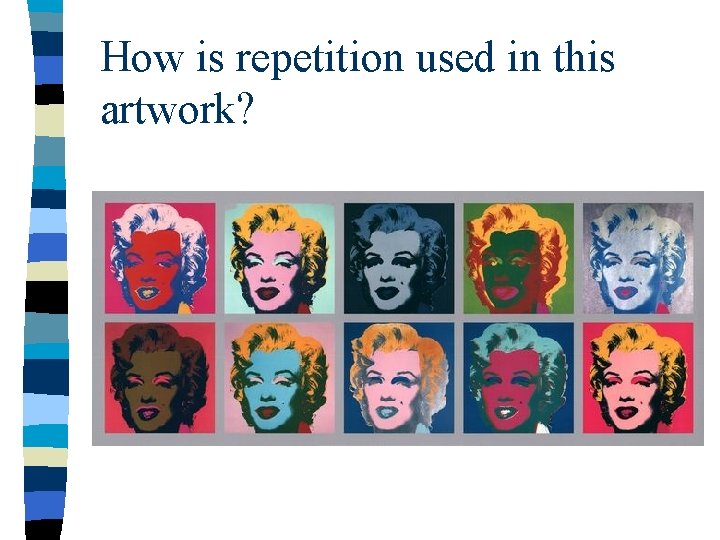
Repetition The repeating of an object or element throughout an artwork Different then pattern in that it does not have to be a set motif!
Anything can be repeated!
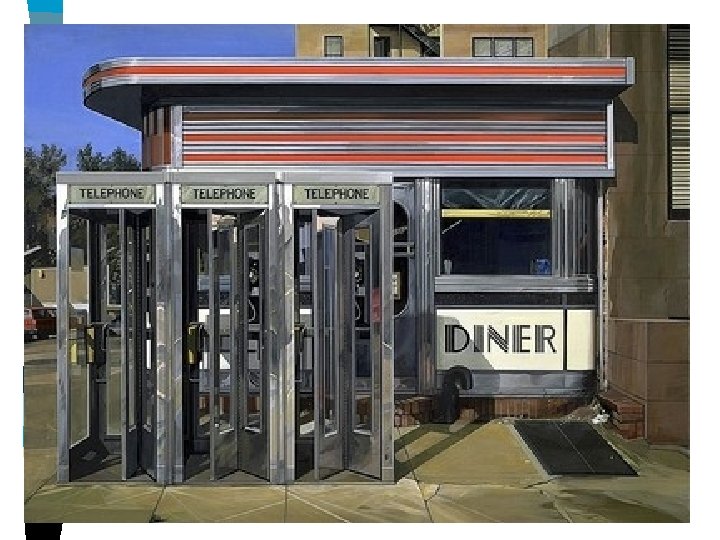
How is repetition used in this artwork?
How is repetition used in this artwork?
Movement Definition one- Creating the look of action in an artwork.
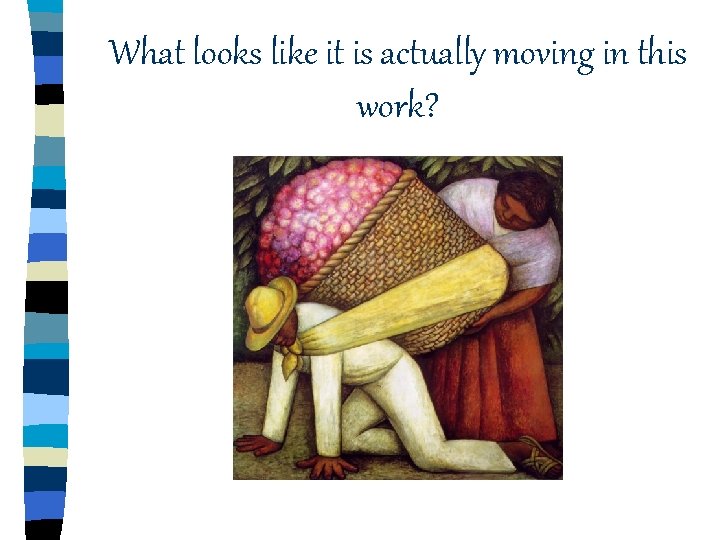
What looks like it is actually moving in this work?
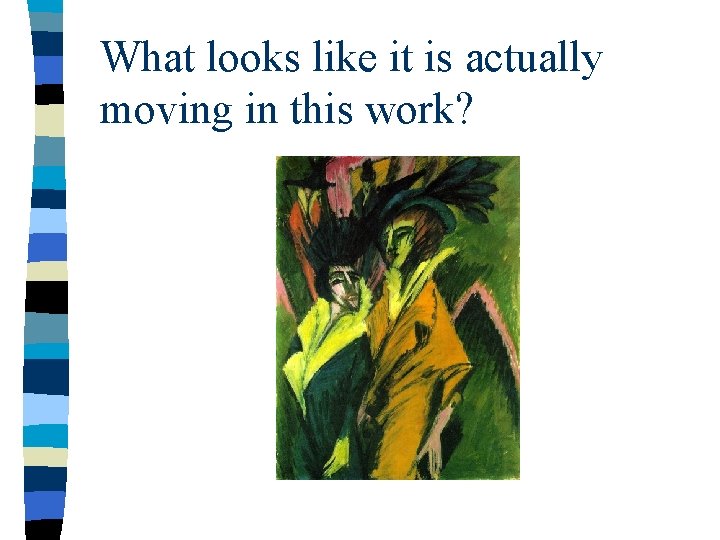
What looks like it is actually moving in this work?
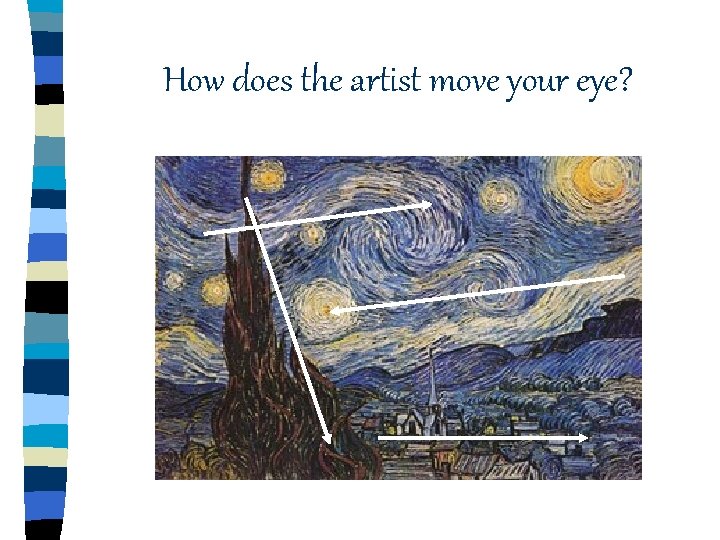
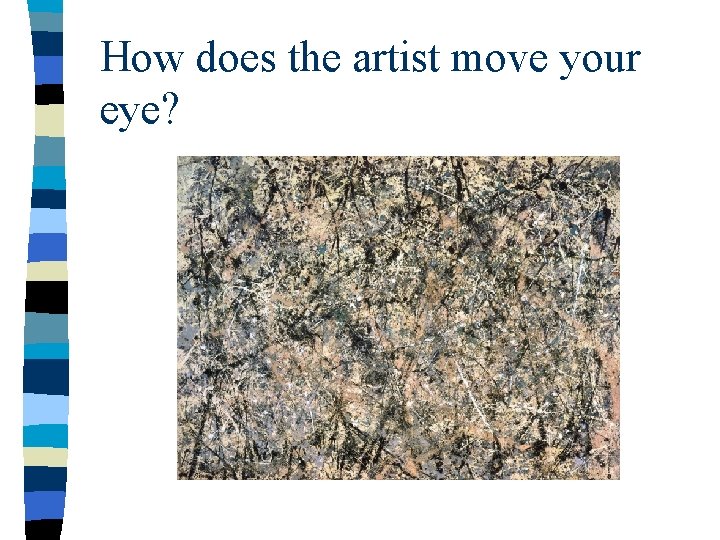
Movement Definition two- moving the viewer’s eye through the artwork.
How does the artist move your eye?
How does the artist move your eye?
Rhythm The beat or movement of an artwork Repeating an element to make an artwork seem to move or vibrate Created by repeating a motif
Three types of Rhythm n Regular n Alternating n Random
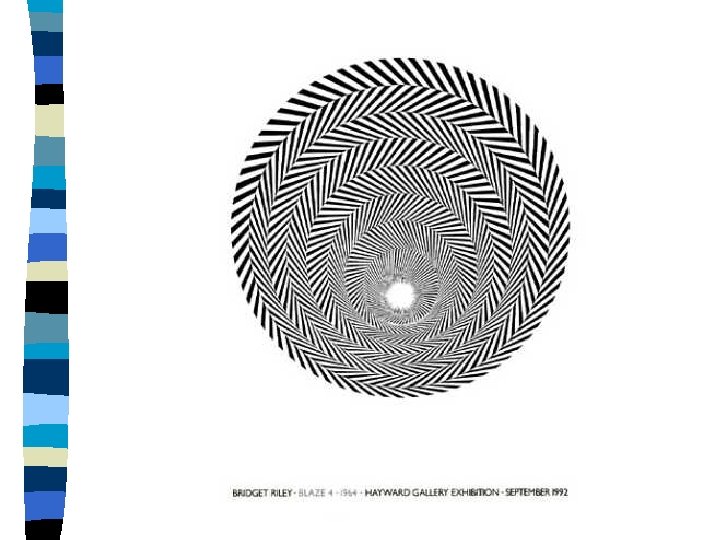
Regular Rhythm Motif is repeated without change!
Alternating Rhythm Motif is repeated with changes
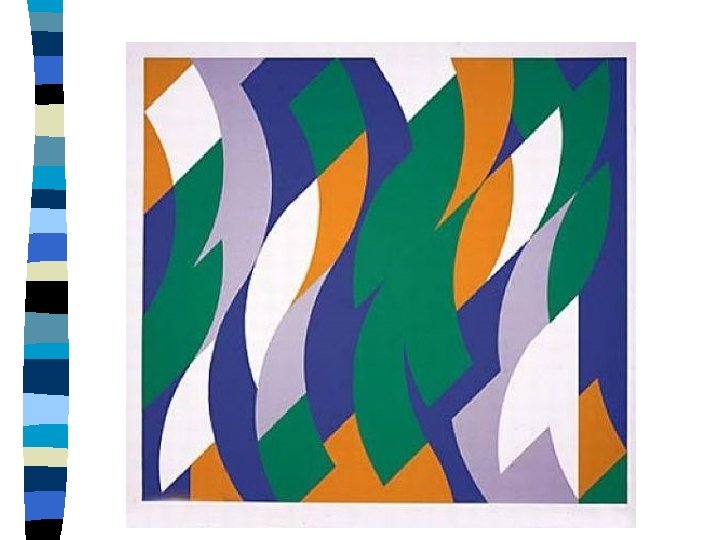
Random Rhythm Motif is repeated randomly