POPULATIONS AND COMMUNITIES Chapter 14 LIVING THINGS AND
- Slides: 67
POPULATIONS AND COMMUNITIES Chapter 14
LIVING THINGS AND THE ENVIRONMENT LESSON 1
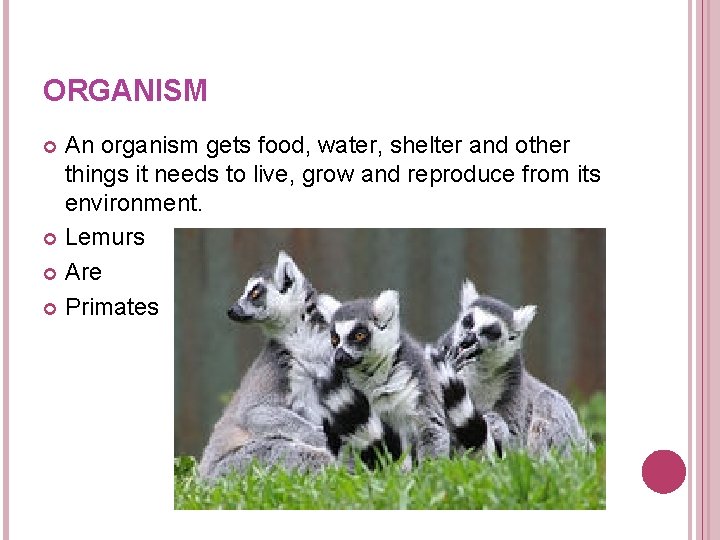
ORGANISM An organism gets food, water, shelter and other things it needs to live, grow and reproduce from its environment. Lemurs Are Primates
PRIMATES According to fossil evidence, the primitive ancestors of primates may have existed in the late CRETACEOUS period, around 65 million years ago. Characteristics: Generally Mammals Primarily Terrestrial than arboreal. Locomotion techniques: leaping. Three color vision. Opposable thumbs. Prehensile tails. Large Brains.
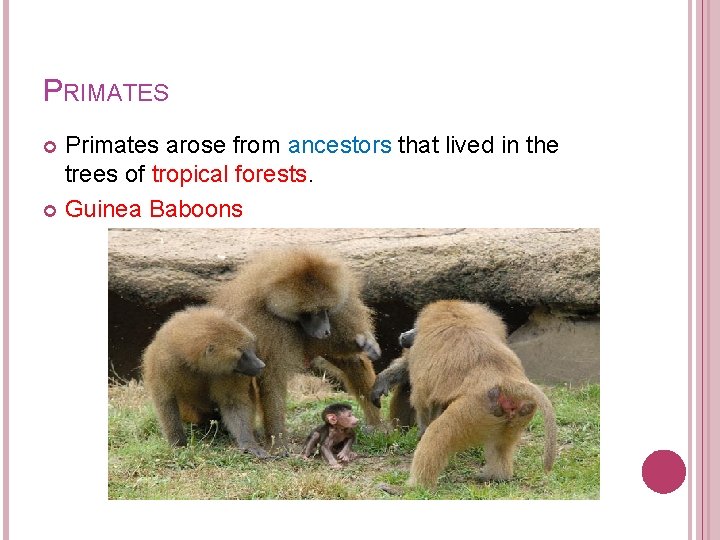
PRIMATES Primates arose from ancestors that lived in the trees of tropical forests. Guinea Baboons
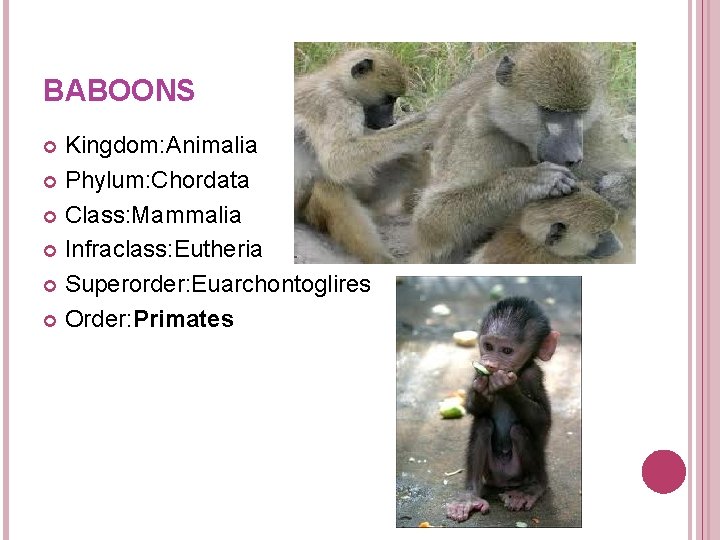
BABOONS Kingdom: Animalia Phylum: Chordata Class: Mammalia Infraclass: Eutheria Superorder: Euarchontoglires Order: Primates
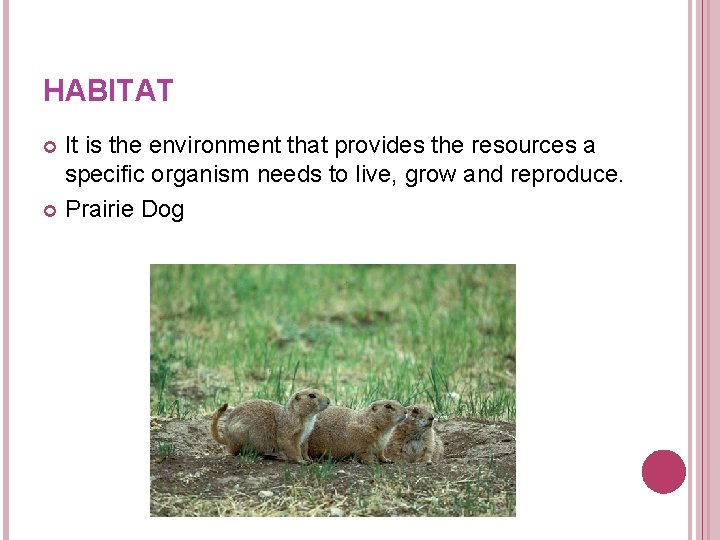
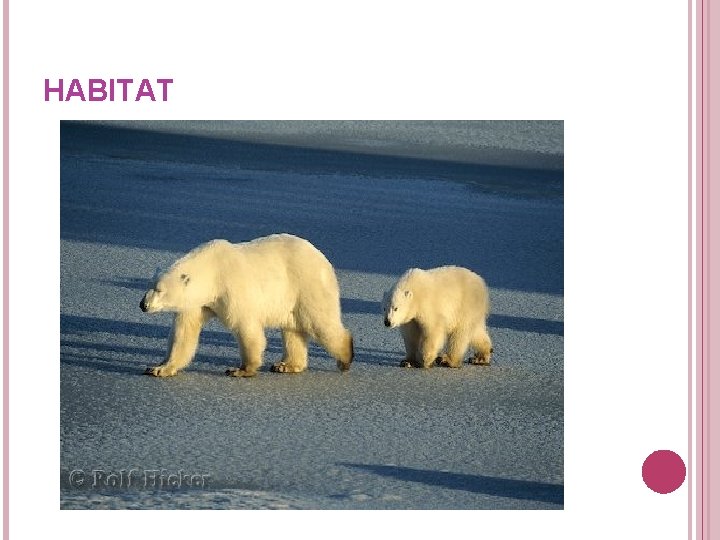
HABITAT It is the environment that provides the resources a specific organism needs to live, grow and reproduce. Prairie Dog
NICHE Niche is how an organism makes a living. The ecological niche describes how an organism or population responds to the distribution of resources and competitors (e. g. , by growing when resources are abundant, and when predators, parasites and pathogens are scarce)
HABITAT
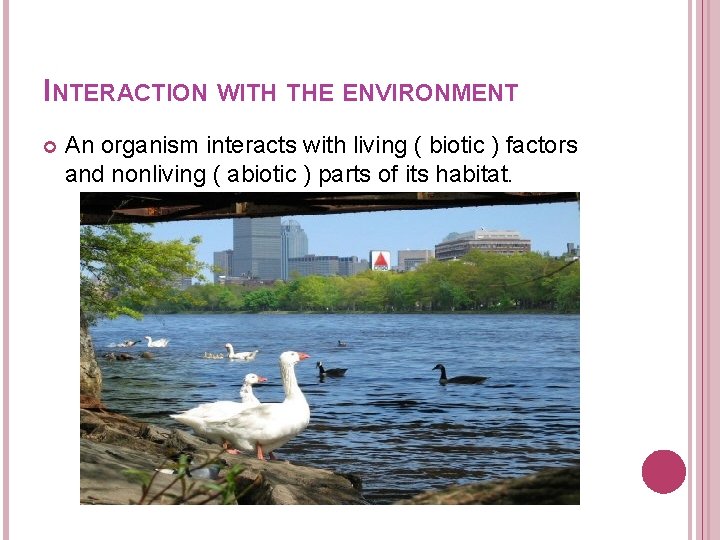
INTERACTION WITH THE ENVIRONMENT An organism interacts with living ( biotic ) factors and nonliving ( abiotic ) parts of its habitat.
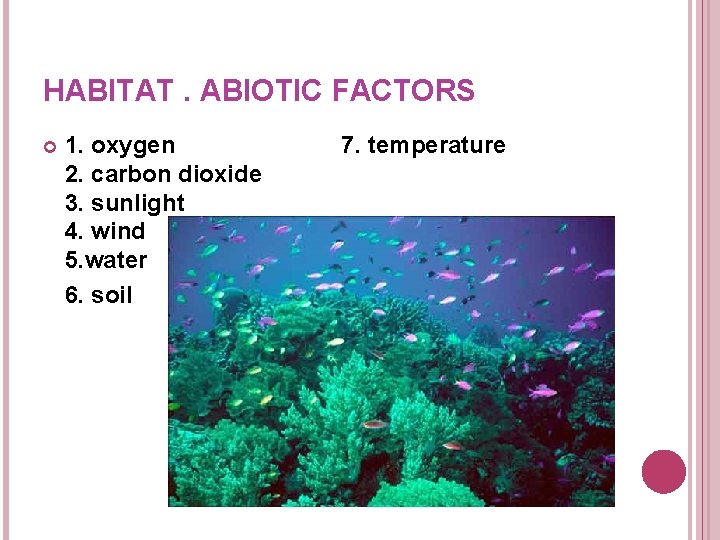
HABITAT. ABIOTIC FACTORS 1. oxygen 2. carbon dioxide 3. sunlight 4. wind 5. water 6. soil 7. temperature
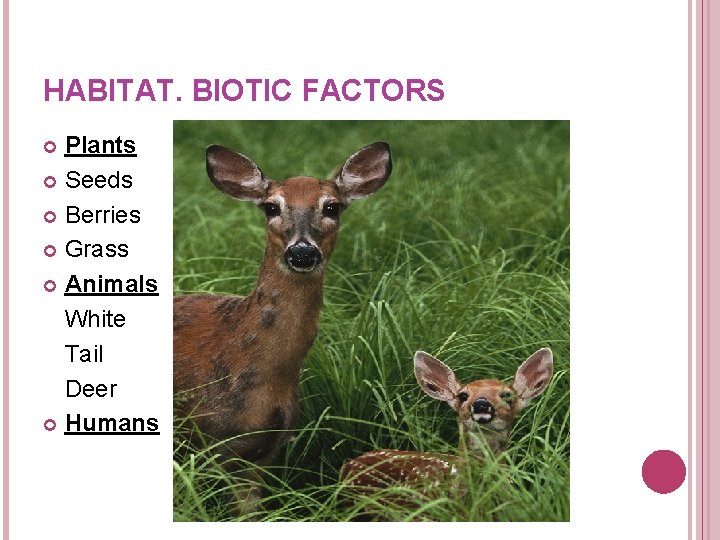
HABITAT. BIOTIC FACTORS Plants Seeds Berries Grass Animals White Tail Deer Humans
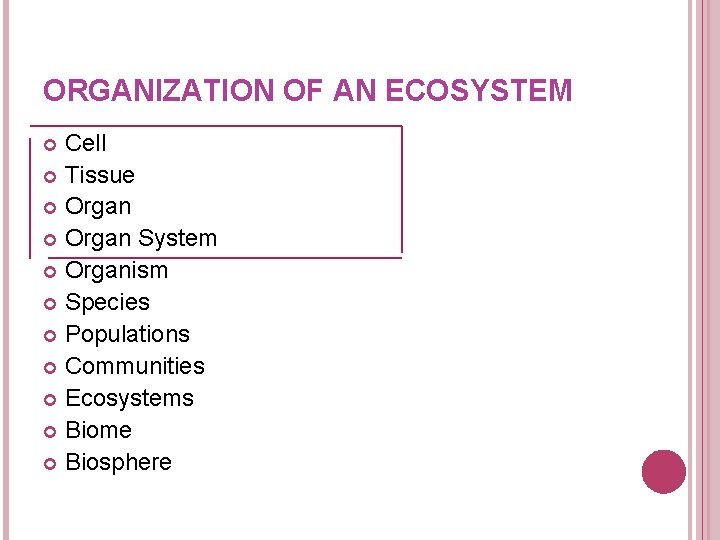
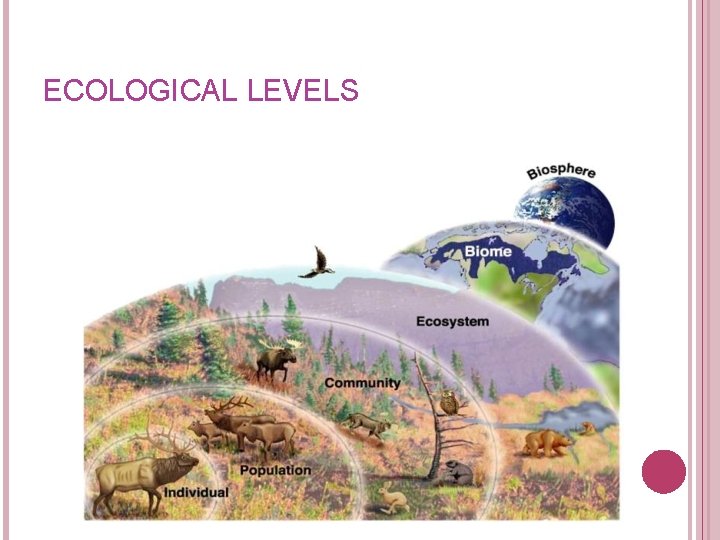
ORGANIZATION OF AN ECOSYSTEM Cell Tissue Organ System Organism Species Populations Communities Ecosystems Biome Biosphere
ECOLOGICAL LEVELS
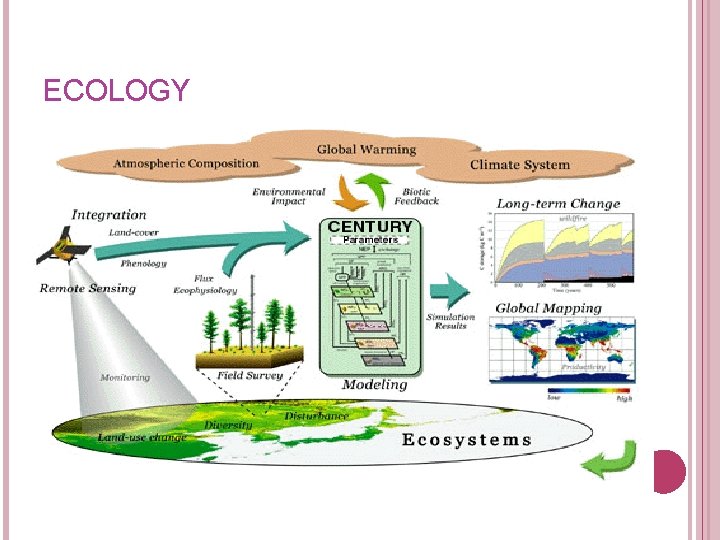
ECOLOGY Because the populations in an ecosystem interact with one another, any change affects all the different populations that live there. The study of how organisms interact with each other and with their environment is called … ECOLOGY.
ECOLOGY
ENERGY FLOW IN ECOSYSTEMS Each of the organisms in an ecosystem fills the energy role of producer, consumer or decomposer.
ENERGY FLOW IN THE ECOSYSTEM LESSON 2
THROPIC LEVELS Levels of feeding in a food web of organisms. Producers Autotrophic Primary Consumer Secondary Consumer Tertiary Consumer Heterotrophic Quaternary Consumer Decomposer
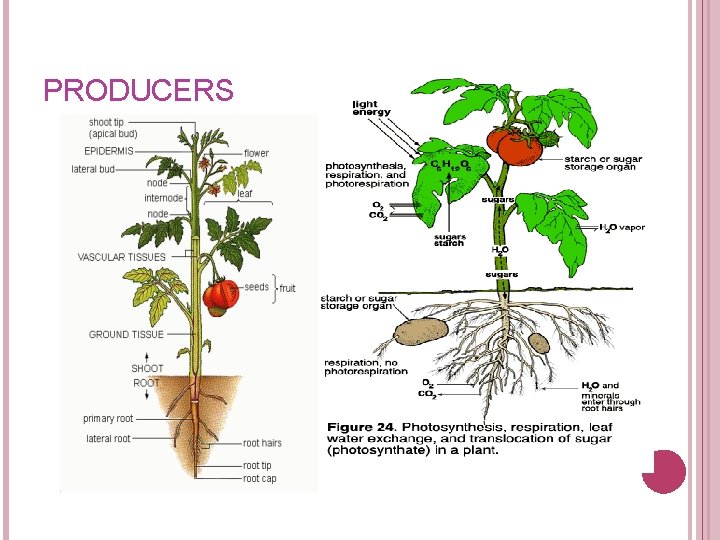
PRODUCERS Producers are the source of all the food in an ecosystem. Producers obtain energy from sunlight and store it as food energy. These organisms use the sun’s energy to turn water and carbon dioxide into food molecules in a process called photosynthesis. Certain bacteria produce their own food using the energy in hydrogen sulfide, a gas that is present in their environment.
PRODUCERS
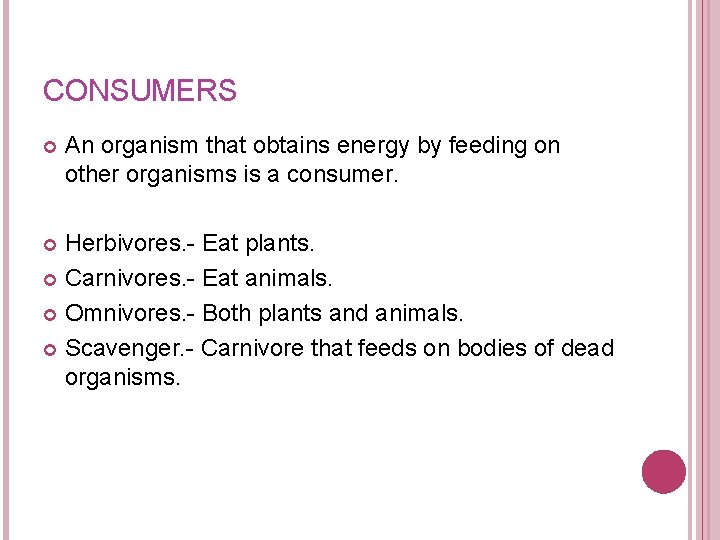
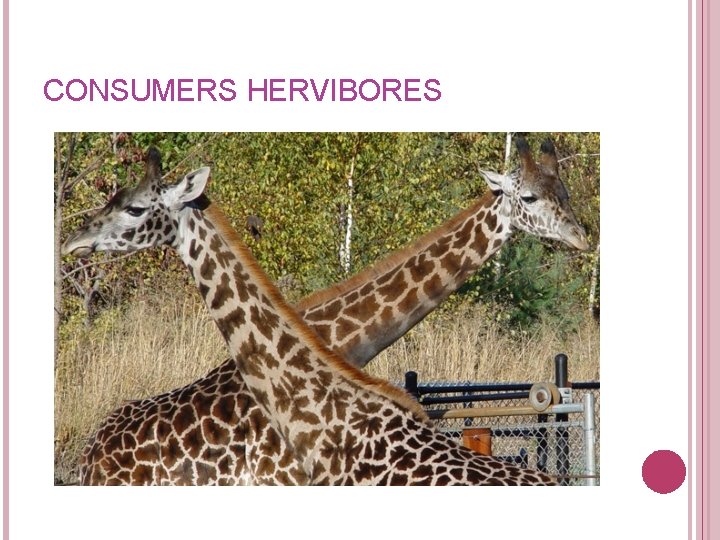
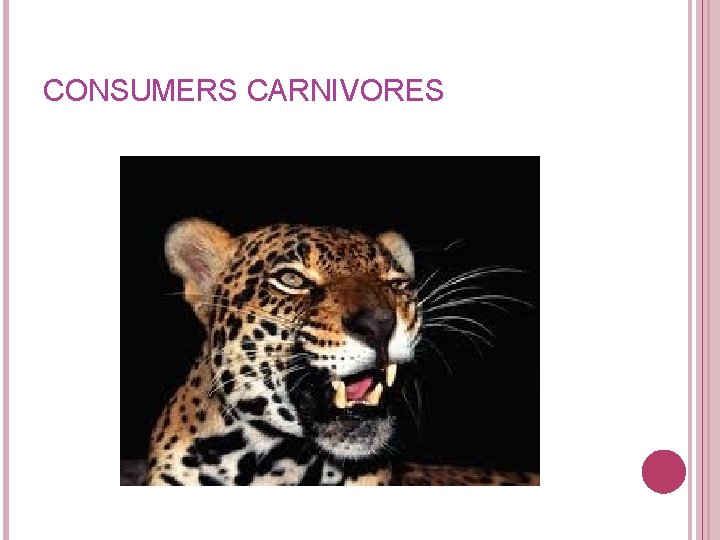
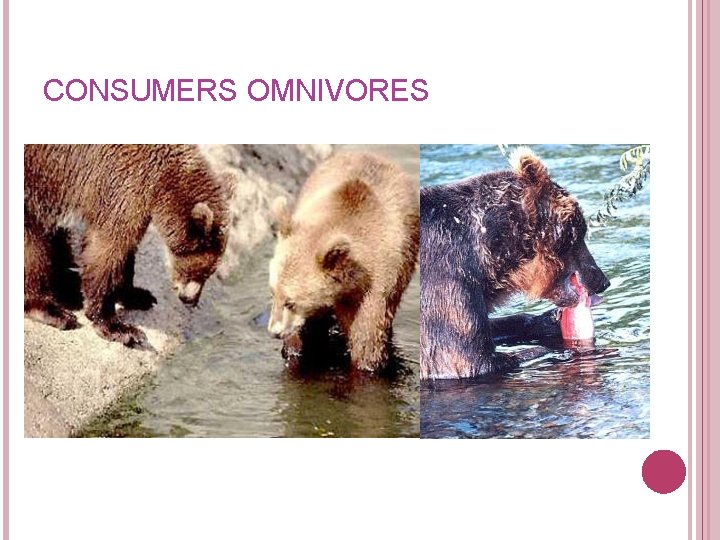
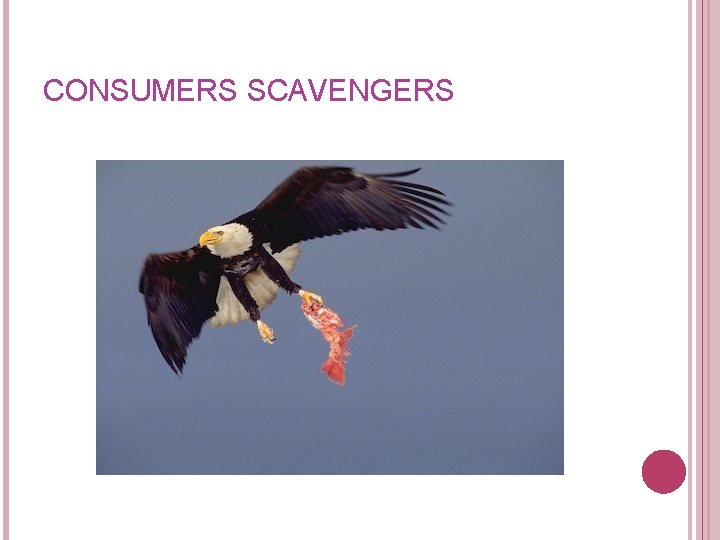
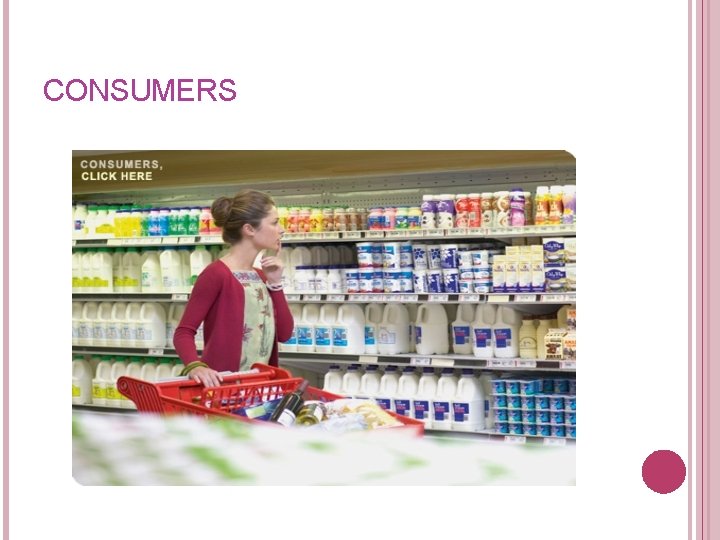
CONSUMERS An organism that obtains energy by feeding on other organisms is a consumer. Herbivores. - Eat plants. Carnivores. - Eat animals. Omnivores. - Both plants and animals. Scavenger. - Carnivore that feeds on bodies of dead organisms.
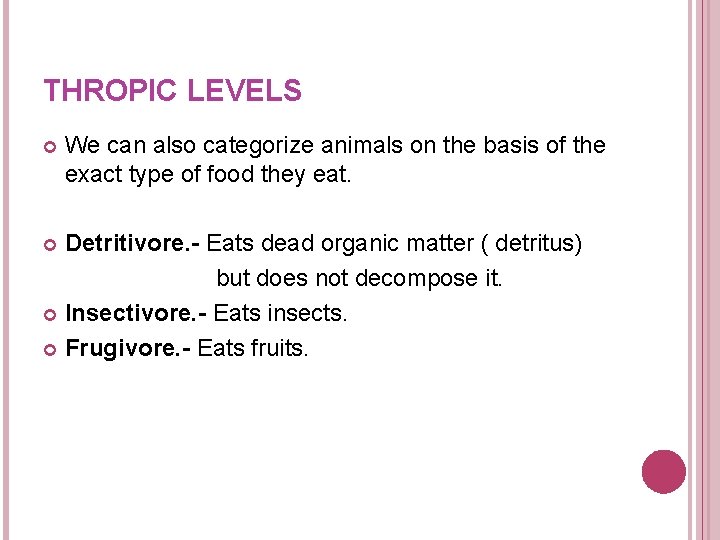
THROPIC LEVELS We can also categorize animals on the basis of the exact type of food they eat. Detritivore. - Eats dead organic matter ( detritus) but does not decompose it. Insectivore. - Eats insects. Frugivore. - Eats fruits.
CONSUMERS HERVIBORES
CONSUMERS CARNIVORES
CONSUMERS OMNIVORES
CONSUMERS SCAVENGERS
CONSUMERS
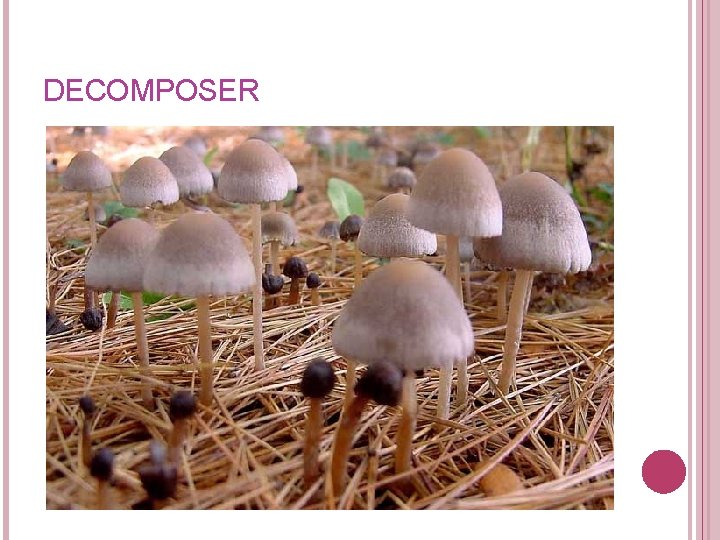
DECOMPOSERS Decomposers break down wastes and dead organisms and return raw materials to the environment. Carbon and Nitrogen ( raw materials ) Example: Bacteria Fungi Mushrooms
DECOMPOSER
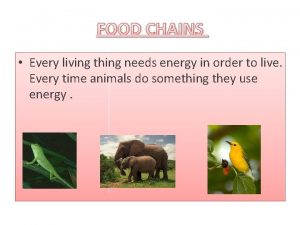
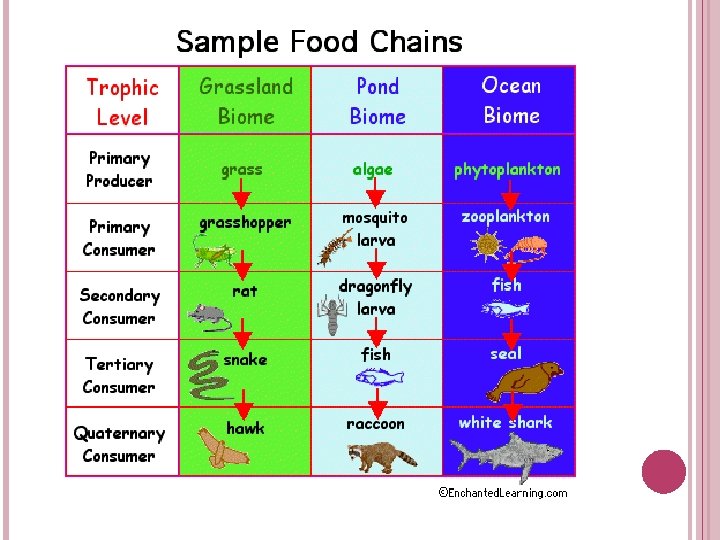
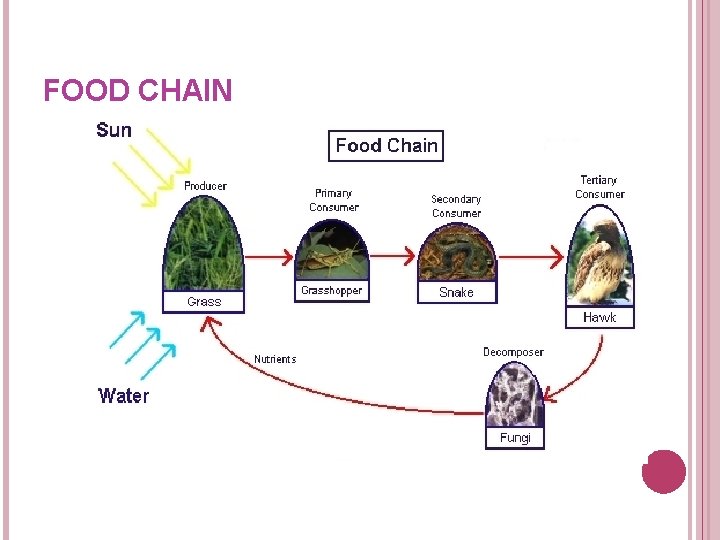
FOOD CHAIN A food chain is a series of events in which one organism eats another and obtains energy. Energy moves through an ecosystem when one organism eats another.
ENERGY Energy can exist in different forms: Heat Light Potential Energy Kinetic Energy Electrical Energy Chemical Energy
FOOD CHAIN
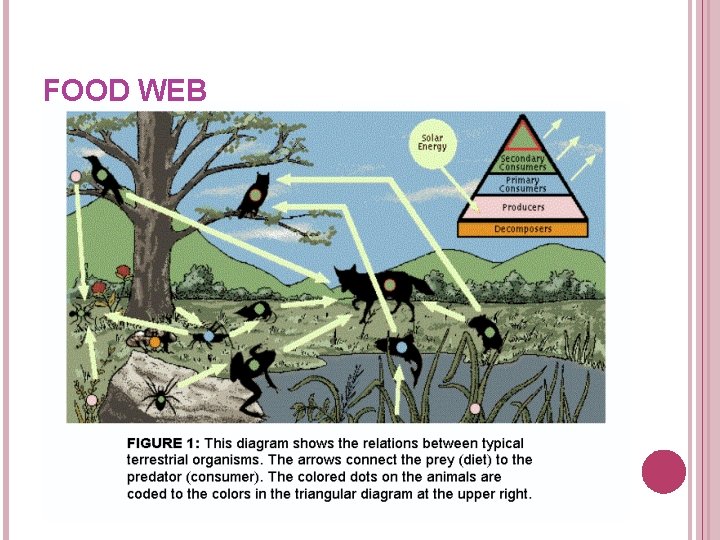
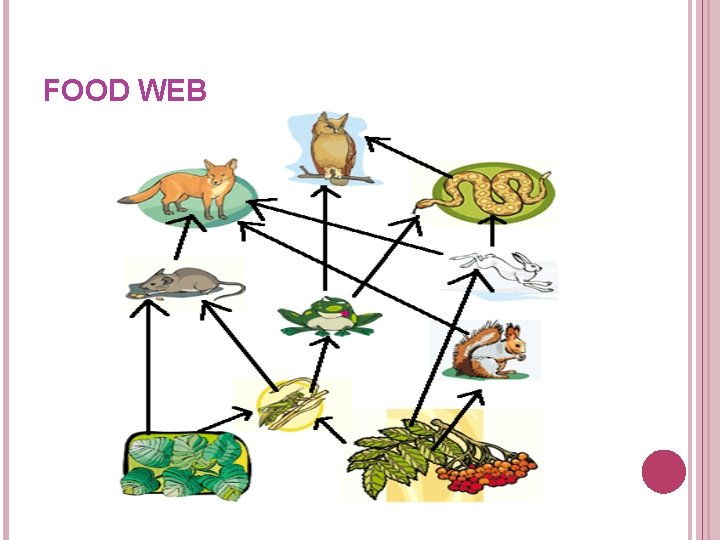
FOOD WEB A food web consists of many overlapping food chains in an ecosystem. Organisms play more than one role in an ecosystem.
FOOD WEB
FOOD WEB
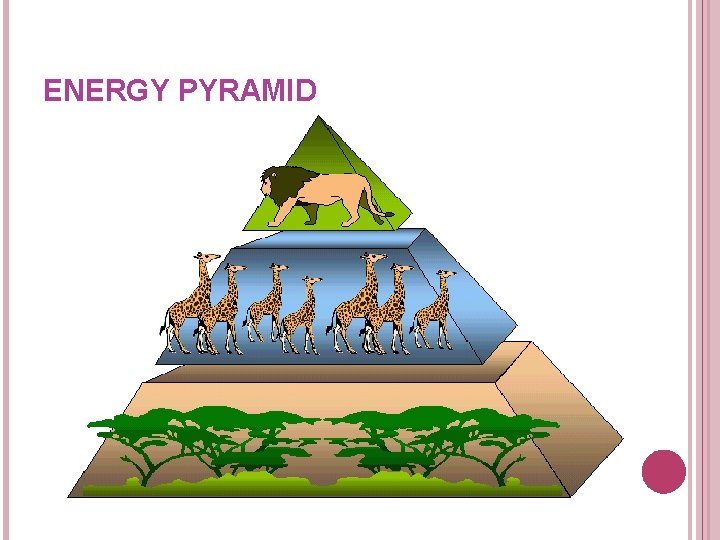
ENERGY PYRAMID The most energy is available at the producer level of the pyramid. As energy moves up the pyramid, each level has less energy available than the level below.
ENERGY PYRAMID
CARRYING CAPACITY Because amounts of matter and energy in an ecosystem are limited , population growth within the ecosystem is limited too. The largest population that an environment can support at any given time is called carrying capacity.
INTERACTIONS AMONG LIVING THINGS LESSON 3
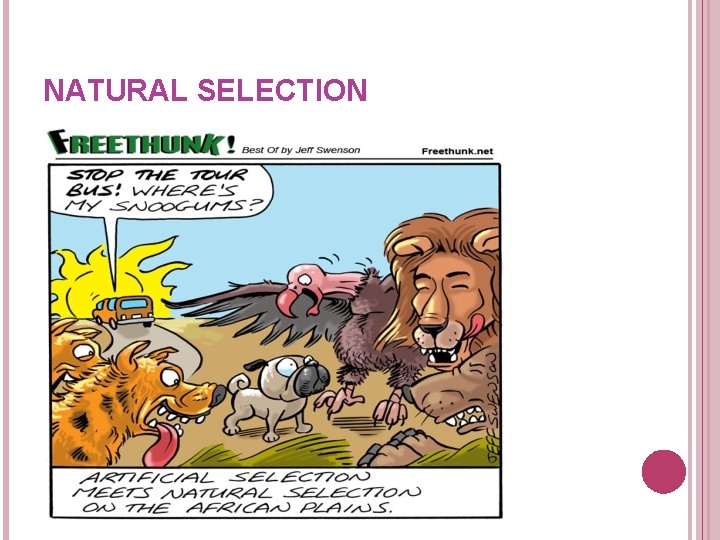
NATURAL SELECTION A characteristic that makes an individual better suited to a specific environment may eventually become common in that species through a process called natural selection. Individuals whose unique characteristics are wellsuited for an environment tend to survive and produce more offspring.
NATURAL SELECTION
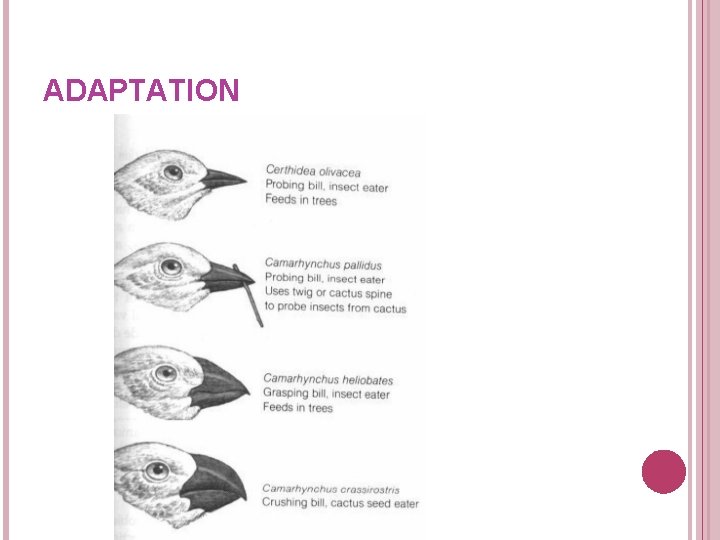
ADAPTATION The behaviors and physical characteristics that allow organisms to live successfully in their environment is an adaptation.
ADAPTATION
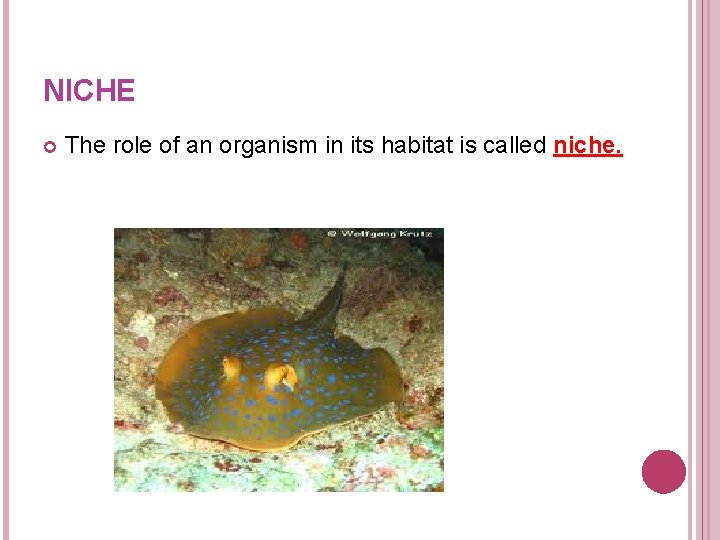
NICHE The role of an organism in its habitat is called niche.
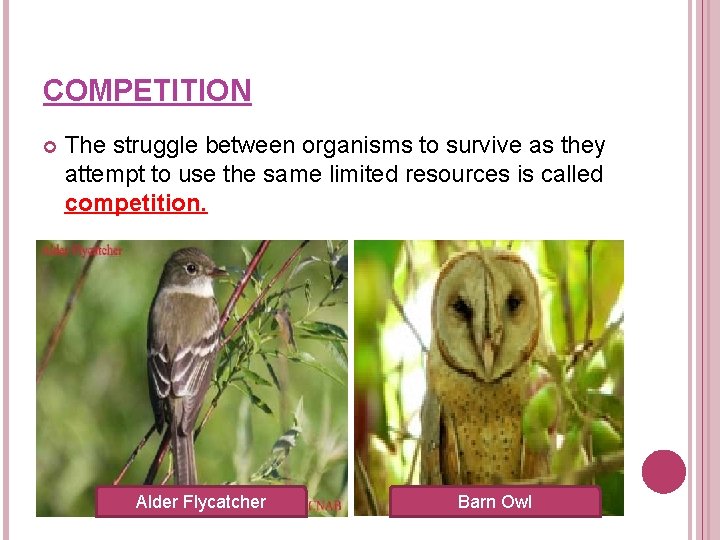
COMPETITION The struggle between organisms to survive as they attempt to use the same limited resources is called competition. Alder Flycatcher Barn Owl
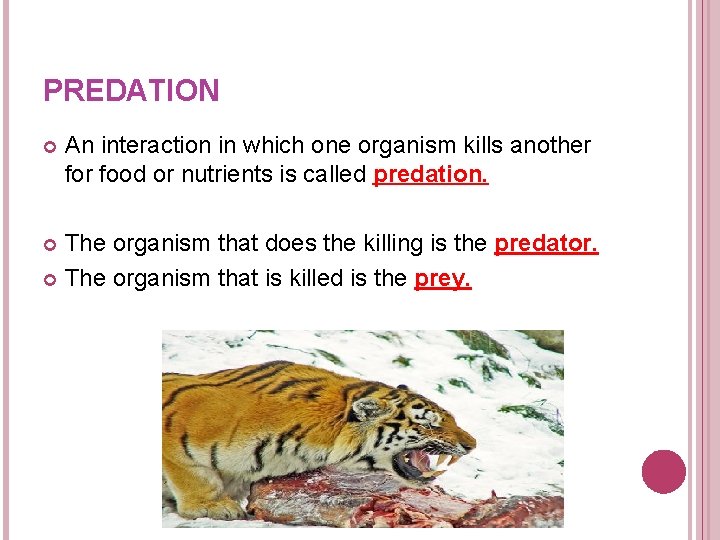
PREDATION An interaction in which one organism kills another food or nutrients is called predation. The organism that does the killing is the predator. The organism that is killed is the prey.
SYMBIOSIS Symbiosis is any relationship in which two species live closely together and at least one of the species benefits. The three types of symbiotic relationships are: Mutualism Commensalism Parasitism
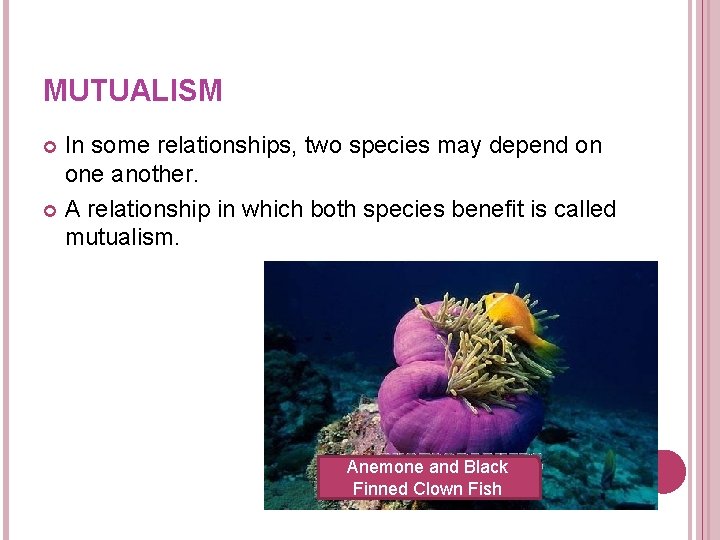
MUTUALISM In some relationships, two species may depend on one another. A relationship in which both species benefit is called mutualism. Anemone and Black Finned Clown Fish
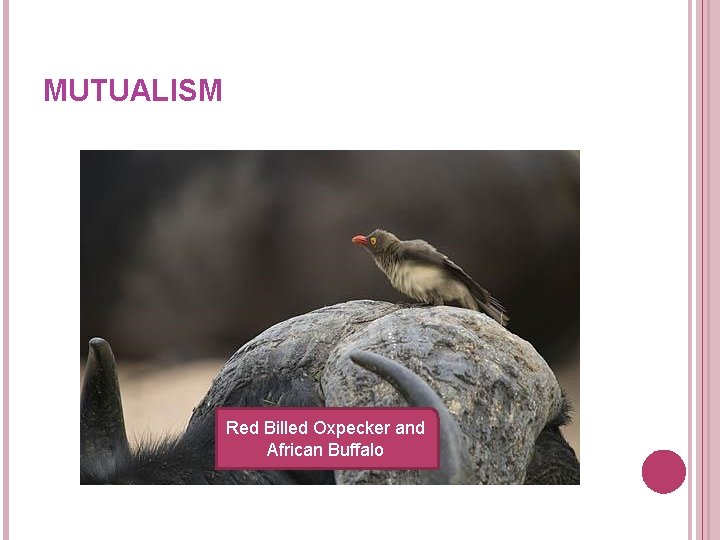
MUTUALISM Red Billed Oxpecker and African Buffalo
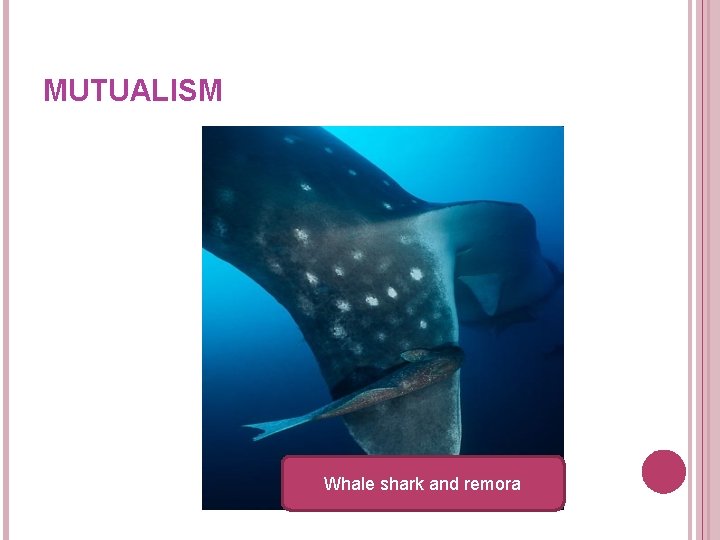
MUTUALISM Whale shark and remora
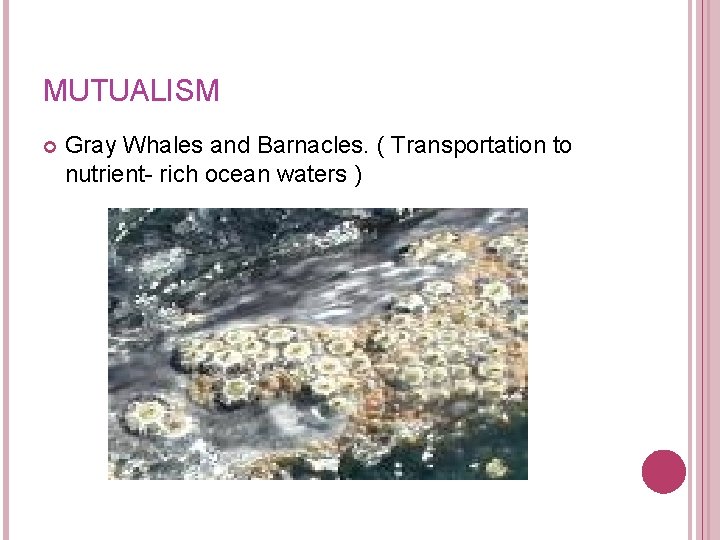
MUTUALISM Gray Whales and Barnacles. ( Transportation to nutrient- rich ocean waters )
COMENSALISM Commensalism is the relationship in which one species benefits and the other species is neither help nor harmed. In native commensalism is not very common because two species are usually either helped or harmed a little by an interaction.
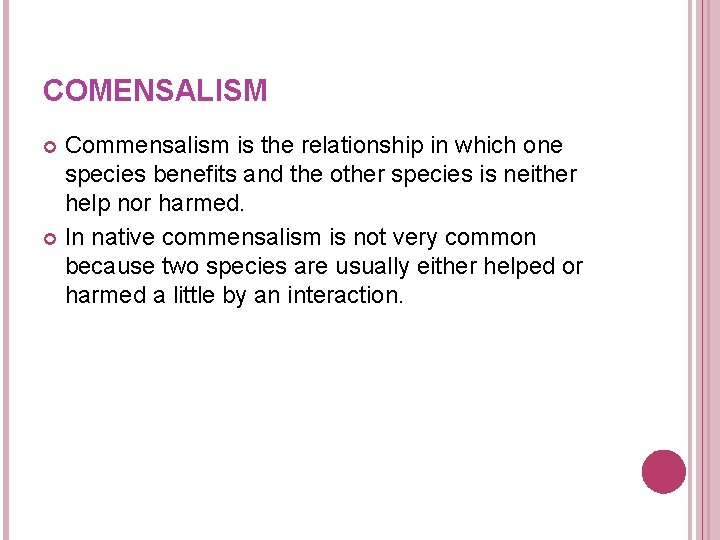
COMENSALISM Ladybugs live on plants, eating the aphids and benefiting by getting food, while the plant benefits by being rid of the aphids.
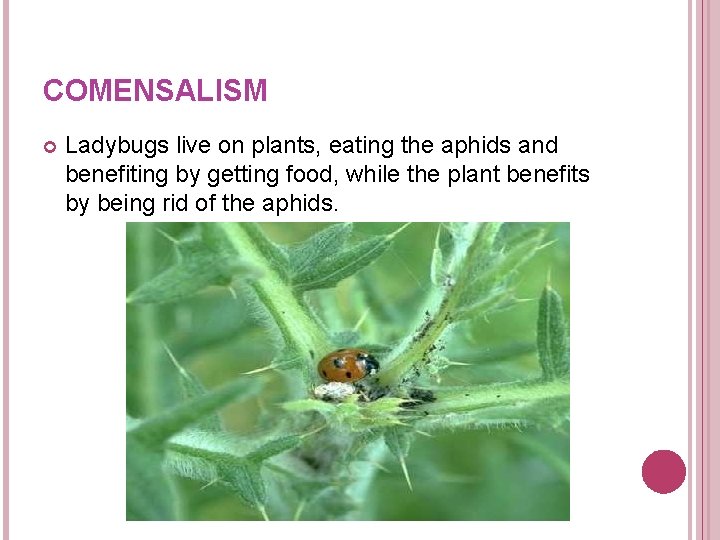
COMENSALISM An example would be mosses living on the bark of a tree.
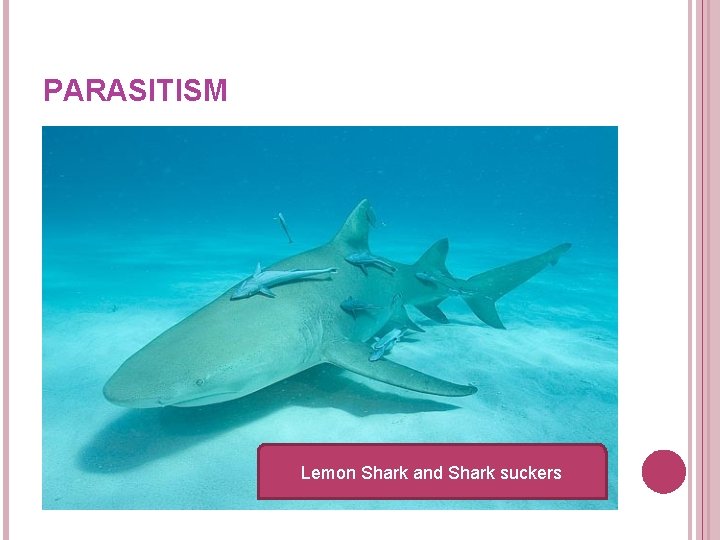
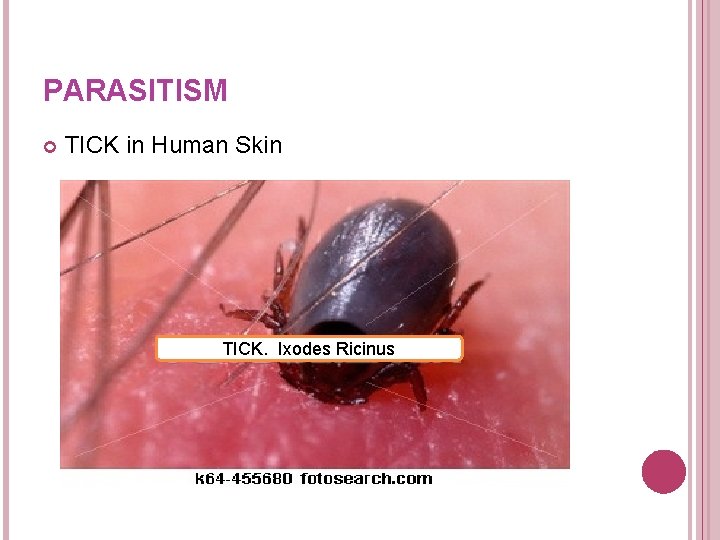
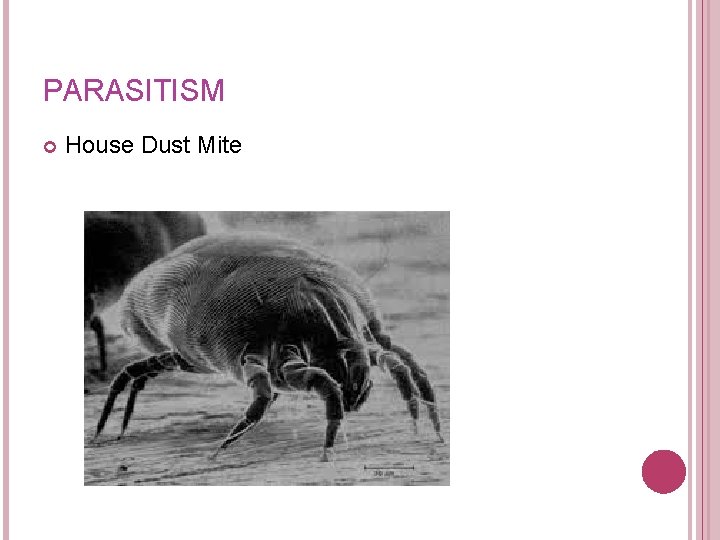
PARASITISM A relationship that involves an organism living with, on, or inside another organism and harming it is called parasitism. The organism that benefits is called parasite. The organism it lives on or in is called a host.
PARASITISM Lemon Shark and Shark suckers
PARASITISM TICK in Human Skin TICK. Ixodes Ricinus
PARASITISM House Dust Mite
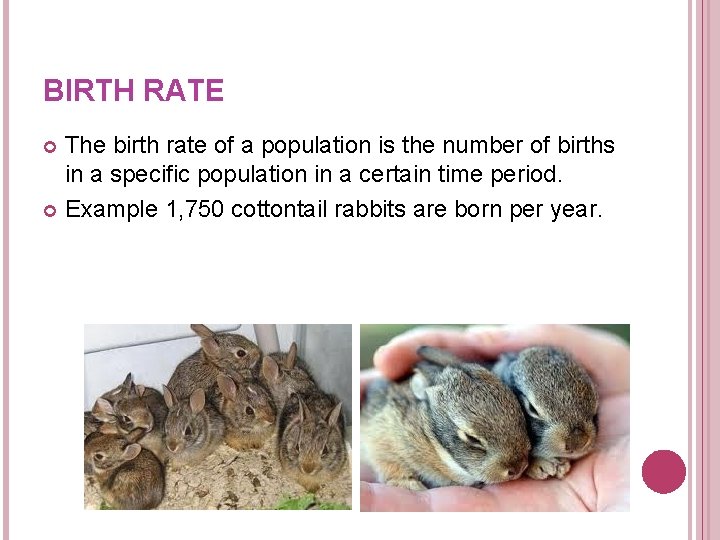
BIRTH RATE The birth rate of a population is the number of births in a specific population in a certain time period. Example 1, 750 cottontail rabbits are born per year.
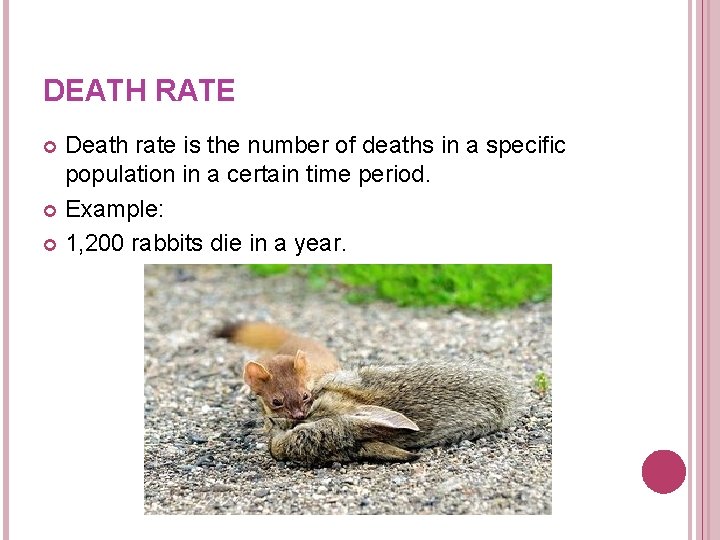
DEATH RATE Death rate is the number of deaths in a specific population in a certain time period. Example: 1, 200 rabbits die in a year.
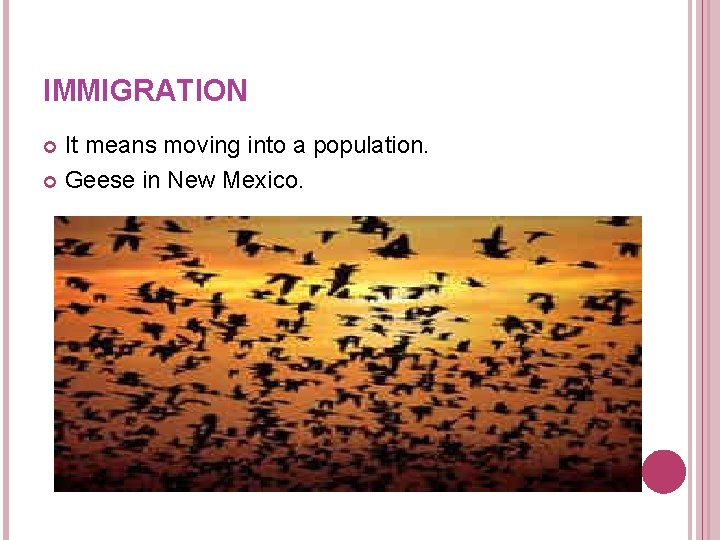
IMMIGRATION It means moving into a population. Geese in New Mexico.
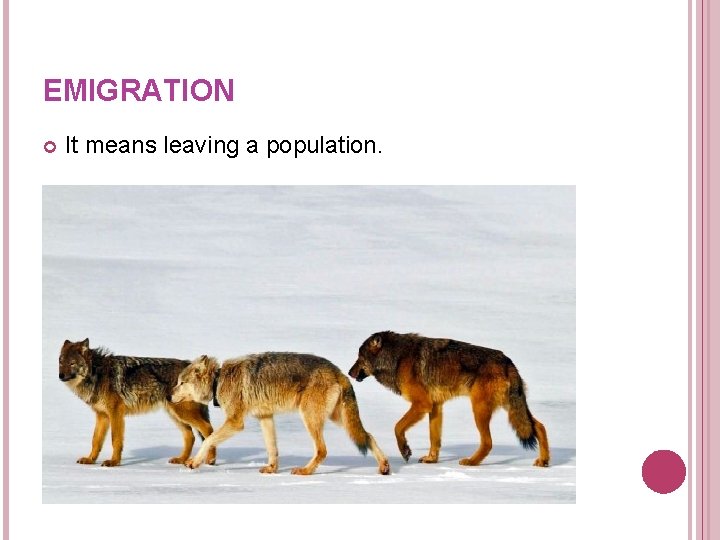
EMIGRATION It means leaving a population.
POPULATION DENSITY It is the number of individuals in an area of a specific size. Population density = Number of Individuals Unit of AREA
LIMITING FACTOR A limiting factor is an environmental factor that causes a population to stop growing or decrease. Some limiting factors are: 1. Food 2. Shelter 3. Water 4. Space 5. Disease 6. Parasitism 7. Predation 8. Nesting
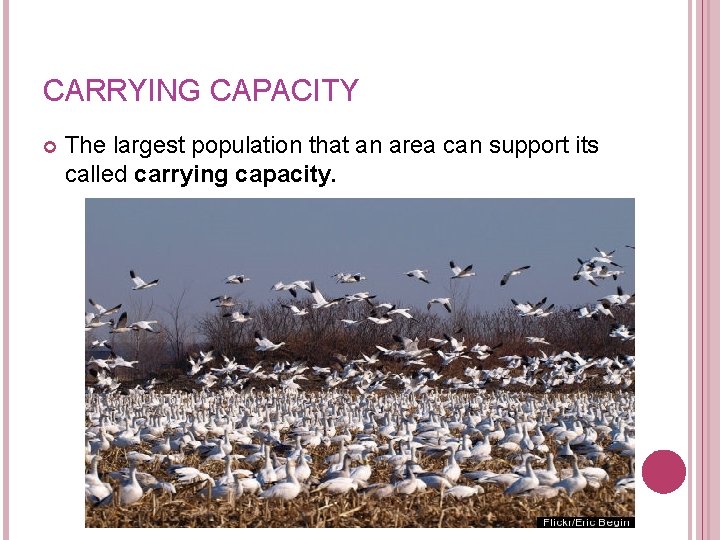
CARRYING CAPACITY The largest population that an area can support its called carrying capacity.