
How Populations Evolve Chapter 13 Clown Fool or
- Slides: 43
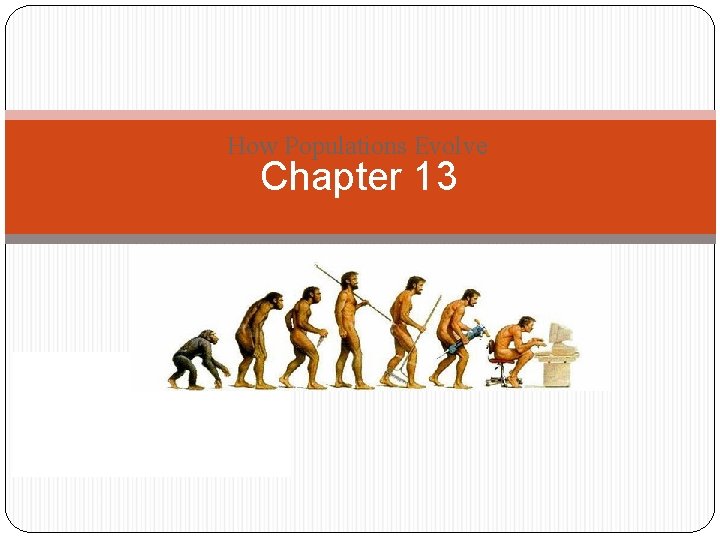
How Populations Evolve Chapter 13
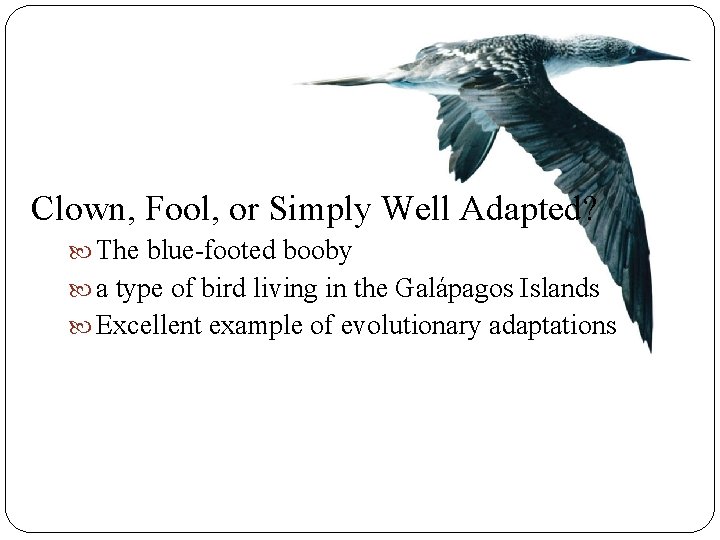
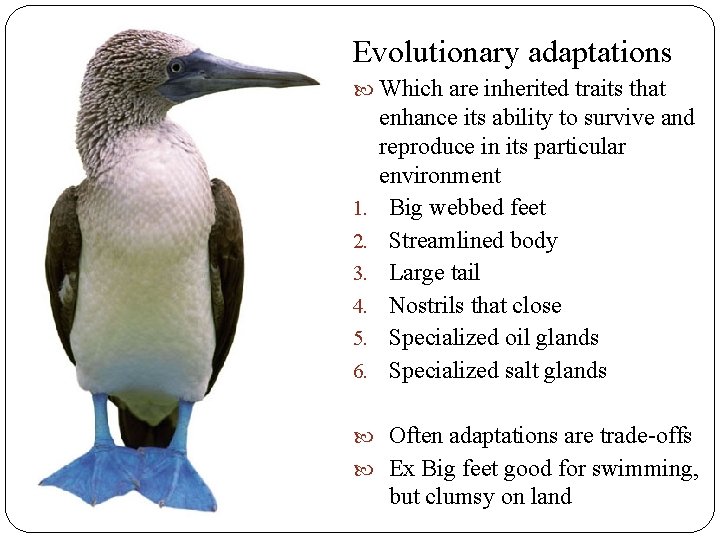
Clown, Fool, or Simply Well Adapted? The blue-footed booby a type of bird living in the Galápagos Islands Excellent example of evolutionary adaptations
Evolutionary adaptations Which are inherited traits that 1. 2. 3. 4. 5. 6. enhance its ability to survive and reproduce in its particular environment Big webbed feet Streamlined body Large tail Nostrils that close Specialized oil glands Specialized salt glands Often adaptations are trade-offs Ex Big feet good for swimming, but clumsy on land
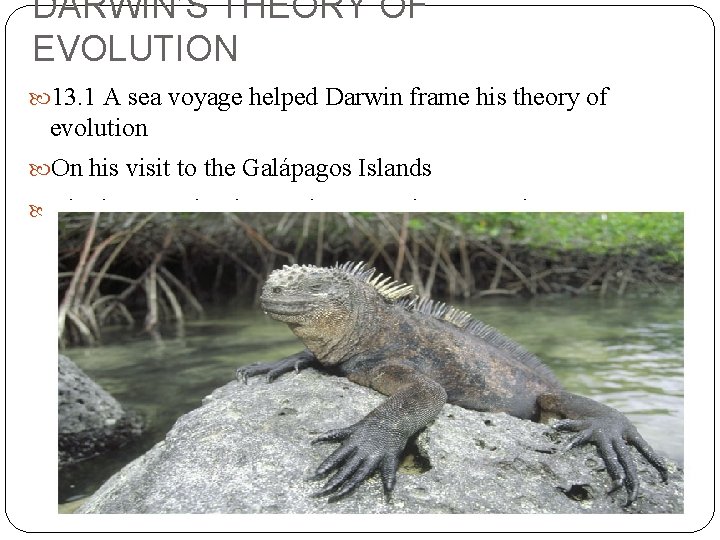
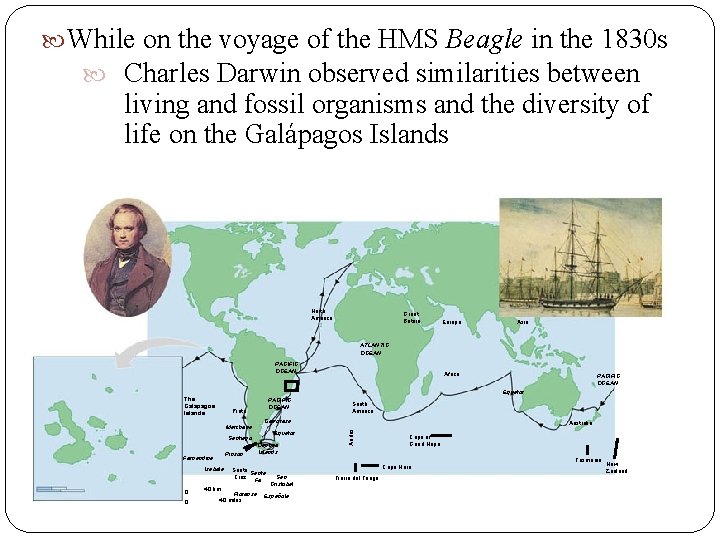
DARWIN’S THEORY OF EVOLUTION 13. 1 A sea voyage helped Darwin frame his theory of evolution On his visit to the Galápagos Islands Charles Darwin observed many unique organisms
What were Darwin’s Main ideas anyway? ? ? 1. Species change over time 2. Living species have arisen from earlier life forms (descending from a common ancestor) * Close ties between organisms and their environments* Darwin’s main ideas Can be traced back to the ancient Greeks Aristotle and the Judeo-Christian culture Believed that species are fixed
In the century prior to Darwin The study of fossils suggested that life forms change Others were developing ideas: Buffon- proposed fossils may be ancient versions of similar living species Lamark- “big mistake” but was instrumental in early concept of evolution, before Darwin Geologists proposed that a very old Earth Is changed by gradual processes Much older than 6, 000 years
While on the voyage of the HMS Beagle in the 1830 s Charles Darwin observed similarities between living and fossil organisms and the diversity of life on the Galápagos Islands North America Great Britain Europe Asia ATLANTIC OCEAN PACIFIC OCEAN Africa PACIFIC OCEAN Equator PACIFIC OCEAN Pinta Marchena Genovesa Equator Santiago Pinzón Fernandina Isabela 0 0 40 km Daphne Islands Australia Cape of Good Hope Tasmania Santa Cruz Fe Florenza 40 miles South America Andes The Galápagos Islands Cape Horn San Cristobal Española Tierra del Fuego New Zealand
Evolution is the greatest unifying theme in biology, and The Origin of Species fueled an explosion in biological research and knowledge that continues today. Evolutionary theory continues to expand beyond Darwin’s basic ideas. Nonetheless, few contributions in all of science have explained so much, withstood as much repeated testing over the years, and stimulated as much other research as those of Darwin.
13. 2 Darwin proposed natural selection as the mechanism of evolution Darwin observed that organisms 1. Produce more offspring than the environment can support (economist, Malthus) 2. Individuals of a population vary in their characteristics 3. Many characteristics can be inherited
Survival in a limited environment depends on the features the organisms inherit from their parents Within a varied population, individuals whose characteristics adapt them best to the environment are most likely to survive and reproduce Natural selection results in favored traits being represented more and unfavored ones less and less in ensuing
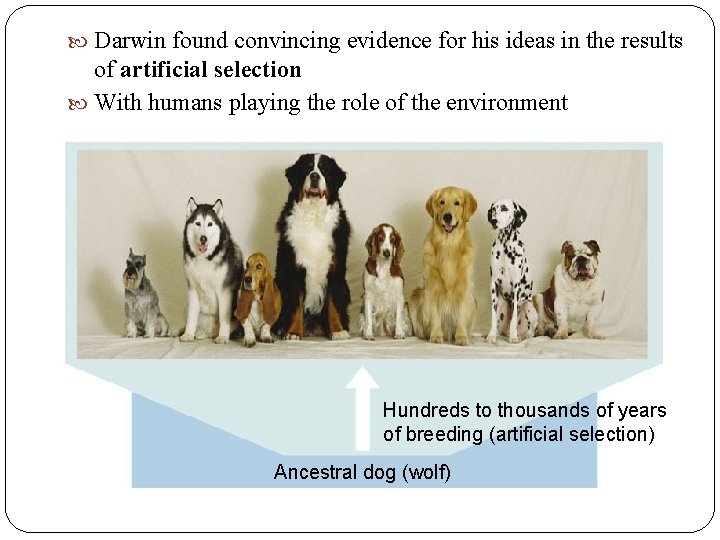
Darwin found convincing evidence for his ideas in the results of artificial selection With humans playing the role of the environment Hundreds to thousands of years of breeding (artificial selection) Ancestral dog (wolf)
Evidence of Evolution 1. Fossil Evidence 2. Biogeography 3. Comparative Anatomy 4. Comparative embryology 5. Molecular biology 6. In vitro/ In field observations
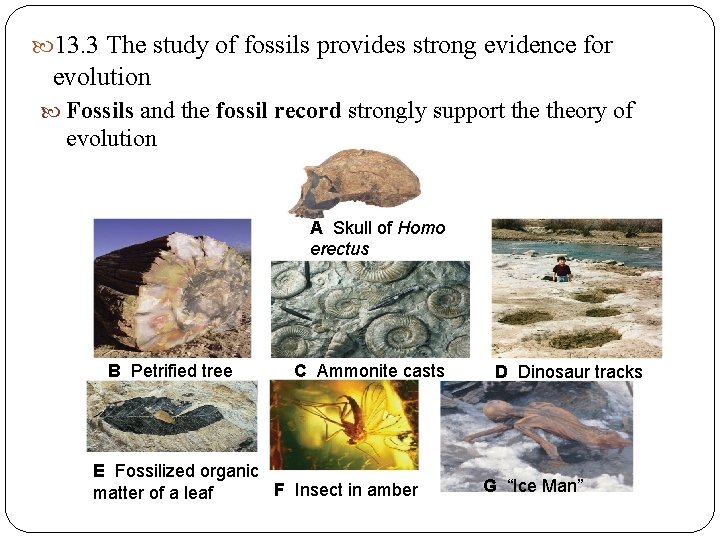
13. 3 The study of fossils provides strong evidence for evolution Fossils and the fossil record strongly support theory of evolution A Skull of Homo erectus B Petrified tree C Ammonite casts E Fossilized organic F Insect in amber matter of a leaf D Dinosaur tracks G “Ice Man”
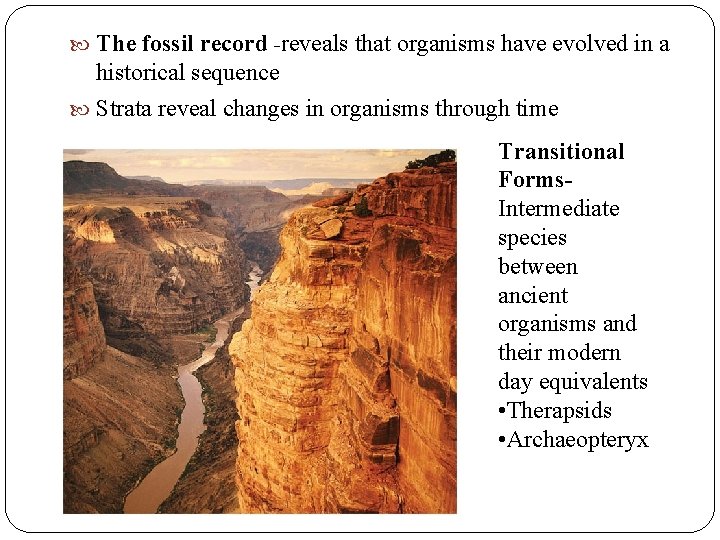
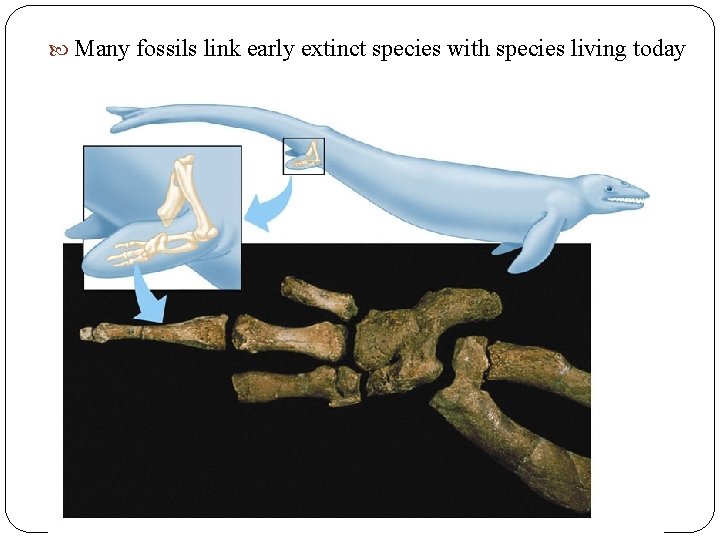
The fossil record -reveals that organisms have evolved in a historical sequence Strata reveal changes in organisms through time Transitional Forms. Intermediate species between ancient organisms and their modern day equivalents • Therapsids • Archaeopteryx
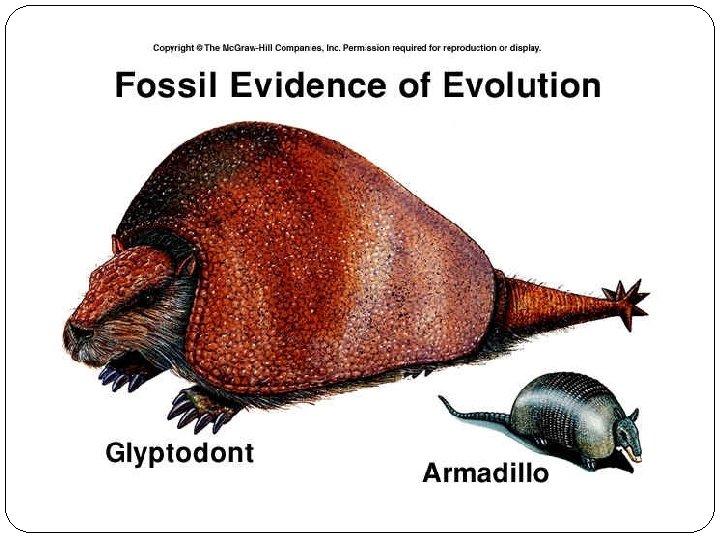
Many fossils link early extinct species with species living today
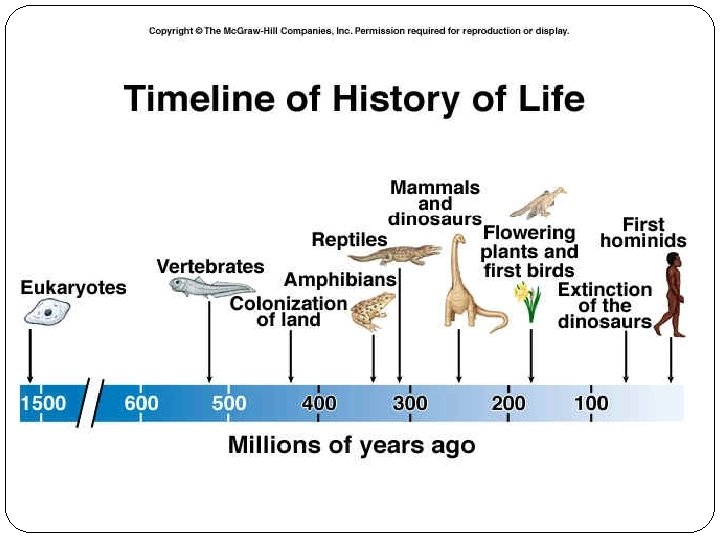
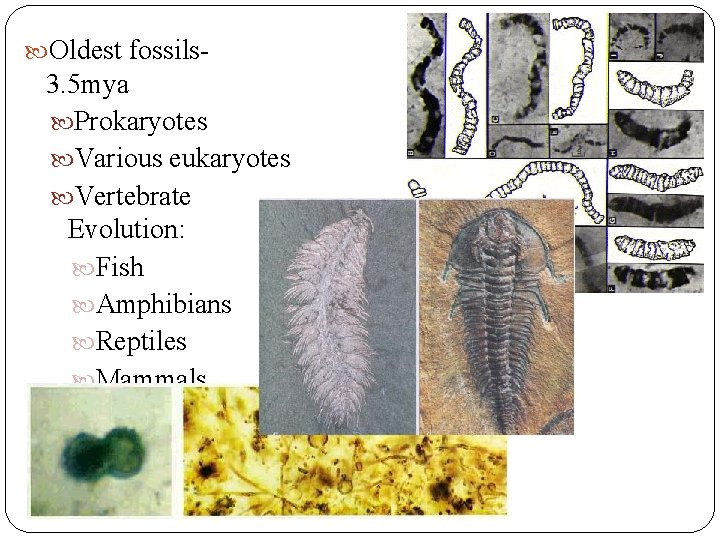
Oldest fossils- 3. 5 mya Prokaryotes Various eukaryotes Vertebrate Evolution: Fish Amphibians Reptiles Mammals Birds
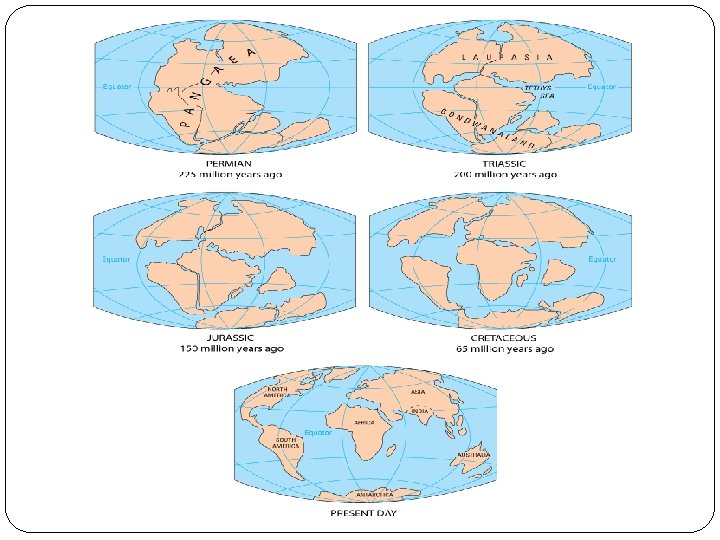
Biogeography- the geographic distribution of species Suggested to Darwin that organisms evolve from common ancestors Break up of pangea Darwin noted that Galápagos animals Resembled species of the South American mainland more than animals on similar but distant islands
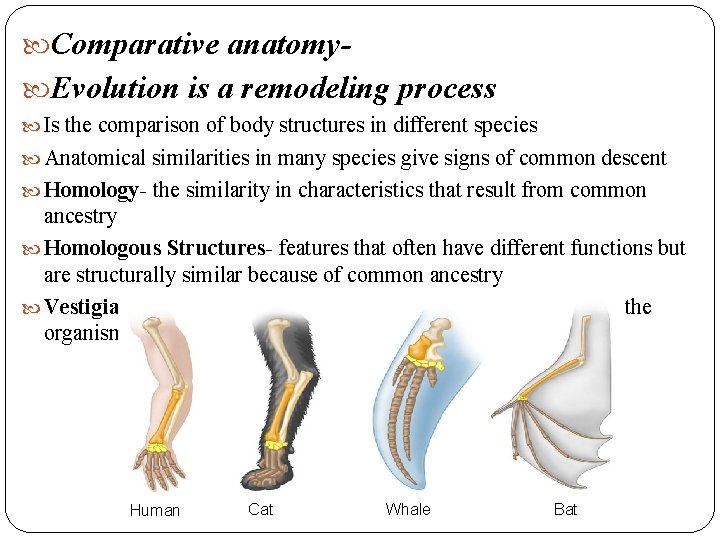
Comparative anatomy Evolution is a remodeling process Is the comparison of body structures in different species Anatomical similarities in many species give signs of common descent Homology- the similarity in characteristics that result from common ancestry Homologous Structures- features that often have different functions but are structurally similar because of common ancestry Vestigial Structures- structures of marginal if any importance to the organism Human Cat Whale Bat
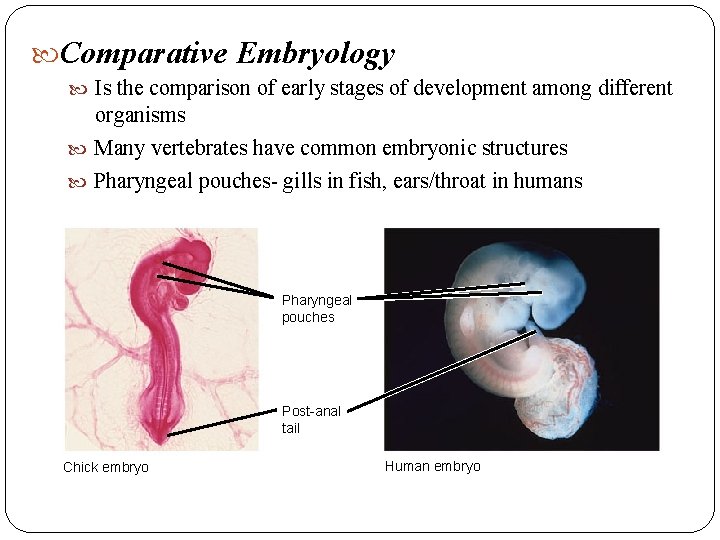
Comparative Embryology Is the comparison of early stages of development among different organisms Many vertebrates have common embryonic structures Pharyngeal pouches- gills in fish, ears/throat in humans Pharyngeal pouches Post-anal tail Chick embryo Human embryo
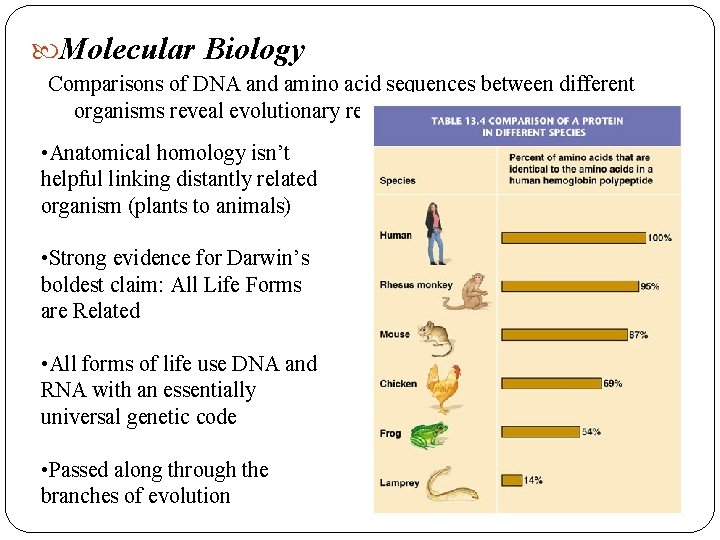
Molecular Biology Comparisons of DNA and amino acid sequences between different organisms reveal evolutionary relationships • Anatomical homology isn’t helpful linking distantly related organism (plants to animals) • Strong evidence for Darwin’s boldest claim: All Life Forms are Related • All forms of life use DNA and RNA with an essentially universal genetic code • Passed along through the branches of evolution
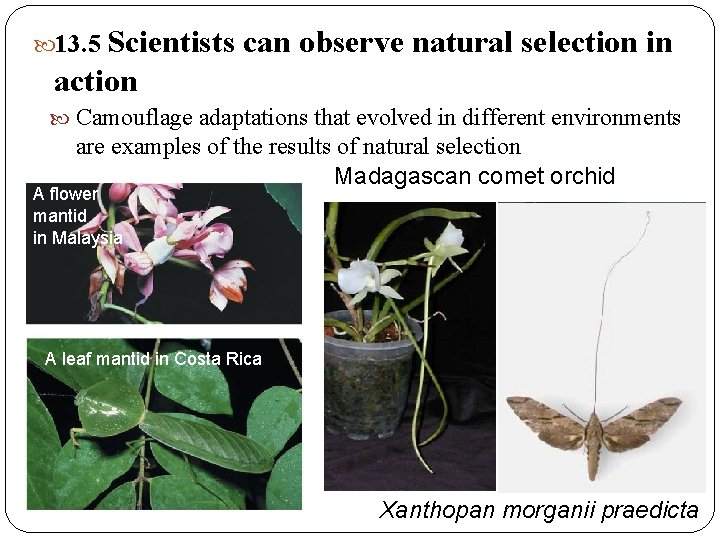
13. 5 Scientists can observe natural selection in action Camouflage adaptations that evolved in different environments are examples of the results of natural selection Madagascan comet orchid A flower mantid in Malaysia A leaf mantid in Costa Rica Xanthopan morganii praedicta
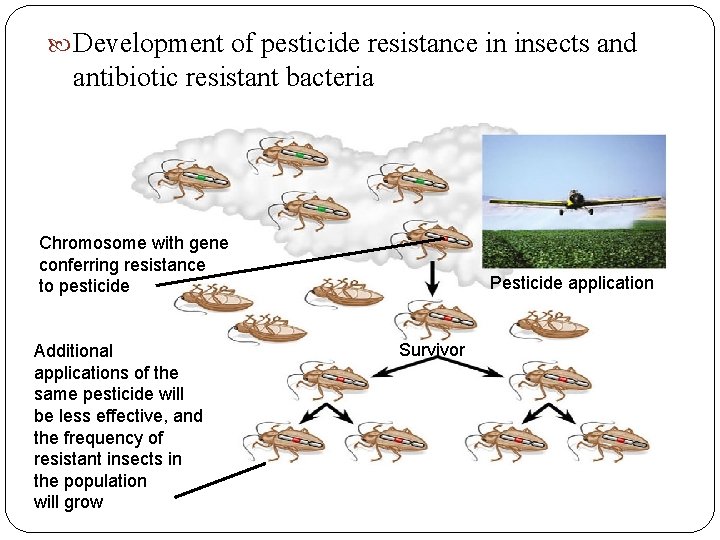
Development of pesticide resistance in insects and antibiotic resistant bacteria Chromosome with gene conferring resistance to pesticide Additional applications of the same pesticide will be less effective, and the frequency of resistant insects in the population will grow Pesticide application Survivor
13. 9 In addition to natural selection, genetic drift and gene flow can contribute to evolution Genetic drift Is a change in the gene pool of a population due to chance Can alter allele frequencies in a population Has greatest impact on small populations Bottleneck Effect 2. Founder Effect 1.
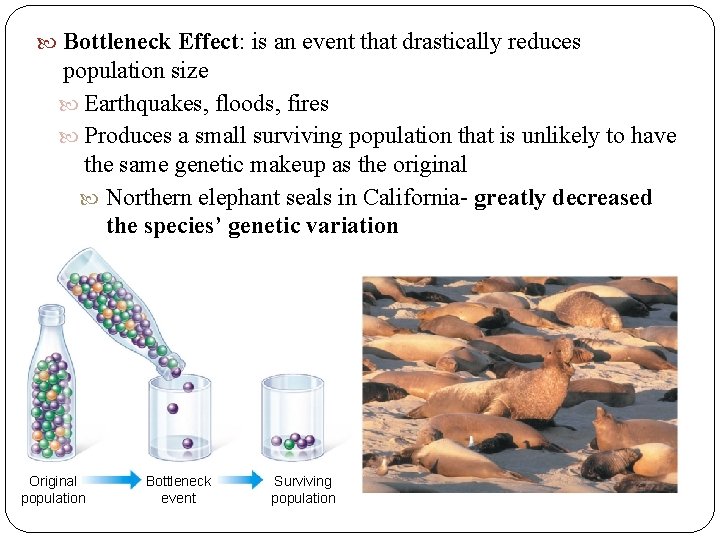
Bottleneck Effect: is an event that drastically reduces population size Earthquakes, floods, fires Produces a small surviving population that is unlikely to have the same genetic makeup as the original Northern elephant seals in California- greatly decreased the species’ genetic variation Original population Bottleneck event Surviving population
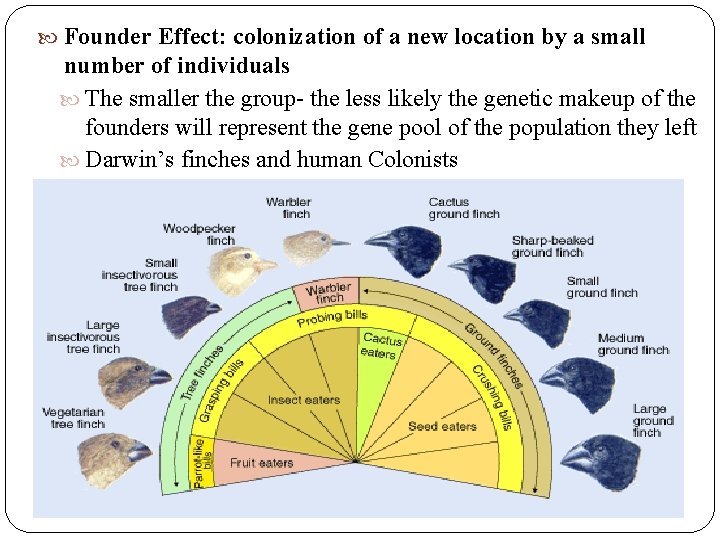
Founder Effect: colonization of a new location by a small number of individuals The smaller the group- the less likely the genetic makeup of the founders will represent the gene pool of the population they left Darwin’s finches and human Colonists
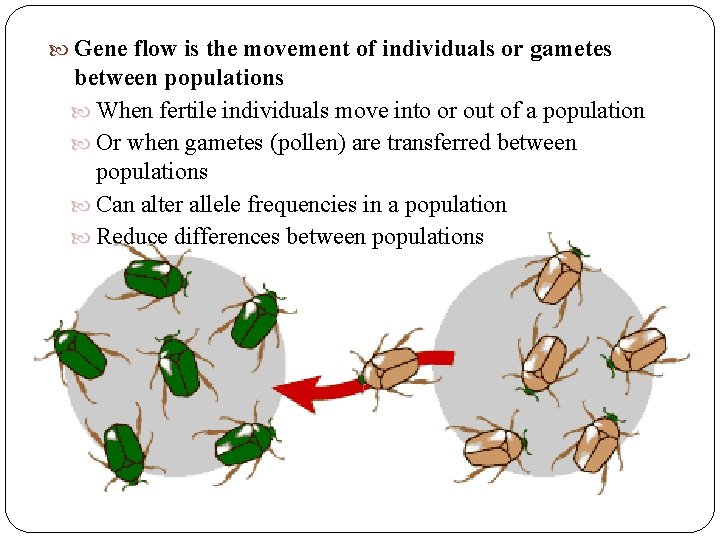
Gene flow is the movement of individuals or gametes between populations When fertile individuals move into or out of a population Or when gametes (pollen) are transferred between populations Can alter allele frequencies in a population Reduce differences between populations
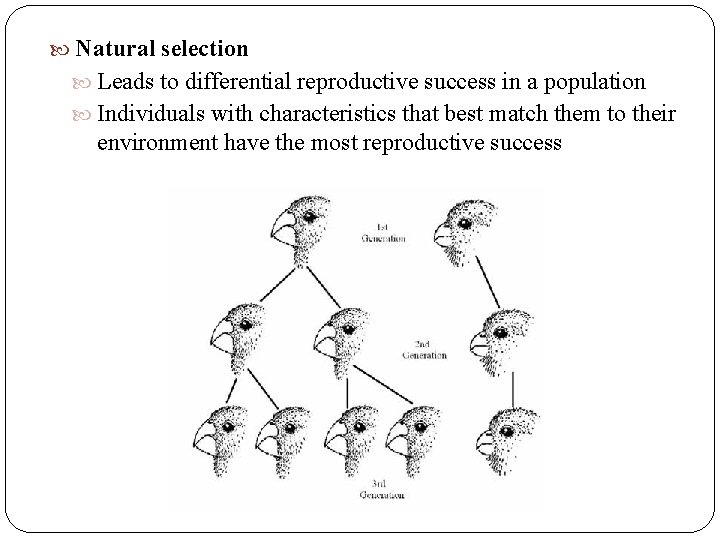
Natural selection Leads to differential reproductive success in a population Individuals with characteristics that best match them to their environment have the most reproductive success
Natural Selection Can alter allele frequencies in a population Results in accumulation and maintenance of traits that adapt a population it’s environment The degree of adaptation is limited by the amount and kind of genetic variation in a population
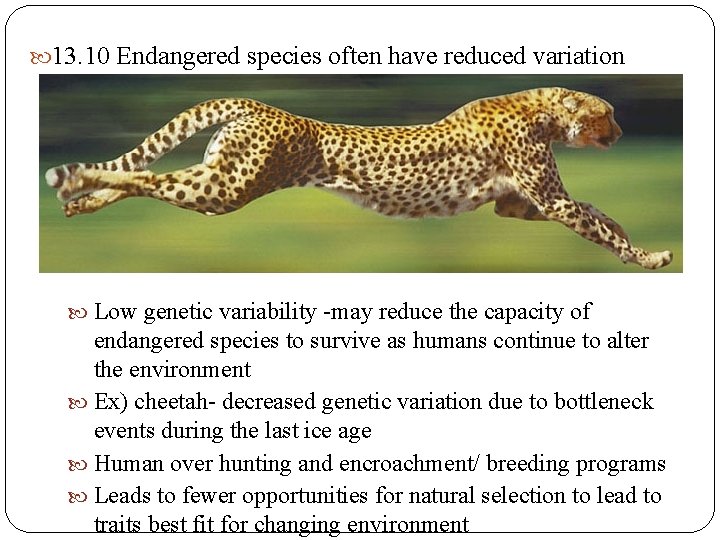
13. 10 Endangered species often have reduced variation Low genetic variability -may reduce the capacity of endangered species to survive as humans continue to alter the environment Ex) cheetah- decreased genetic variation due to bottleneck events during the last ice age Human over hunting and encroachment/ breeding programs Leads to fewer opportunities for natural selection to lead to traits best fit for changing environment
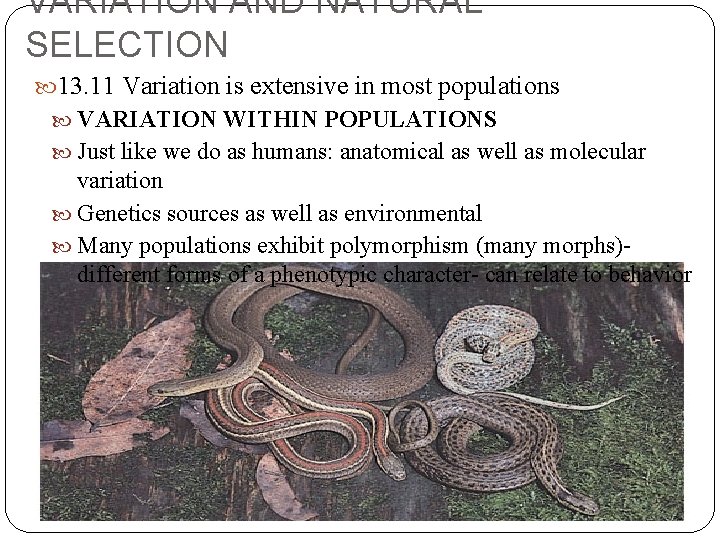
VARIATION AND NATURAL SELECTION 13. 11 Variation is extensive in most populations VARIATION WITHIN POPULATIONS Just like we do as humans: anatomical as well as molecular variation Genetics sources as well as environmental Many populations exhibit polymorphism (many morphs)different forms of a phenotypic character- can relate to behavior
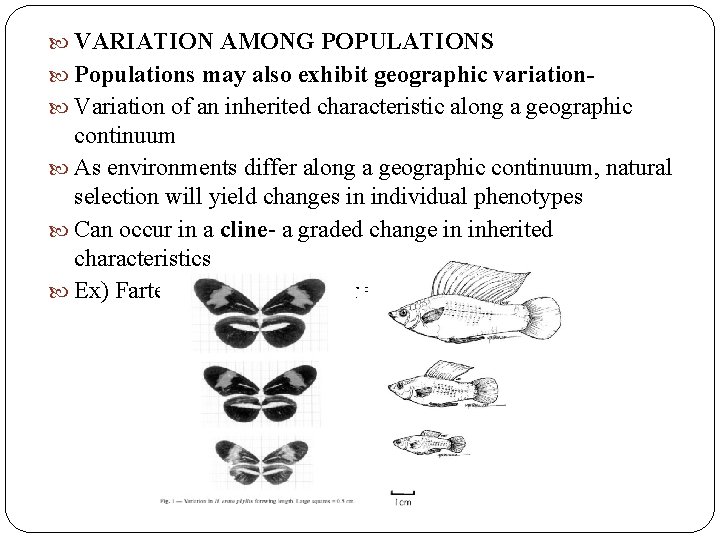
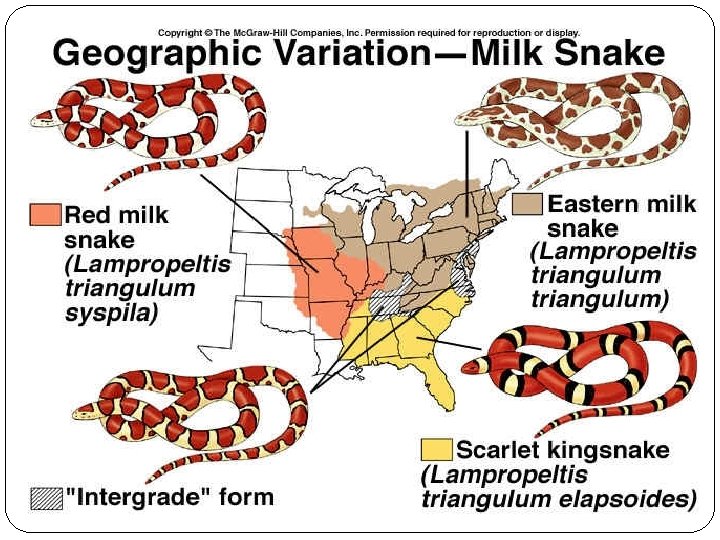
VARIATION AMONG POPULATIONS Populations may also exhibit geographic variation Variation of an inherited characteristic along a geographic continuum As environments differ along a geographic continuum, natural selection will yield changes in individual phenotypes Can occur in a cline- a graded change in inherited characteristics Ex) Farter away from equator = larger body size
13. 12 Mutation and sexual recombination generate variation Mutations- changes in the nucleotide sequence of DNA Nucleotide substitutions Chromosomal mutations Can create new alleles when they occur in gametes Not in somatic cells Most are of no effect, Few are deleterious or have a negative effect , very few are positive Rate of mutation varies Bacteria- quick Plants and animals- slowly (1 in every 100, 000 genes per generation) Plants and animals depend more so on sexual recombination to introduce variation
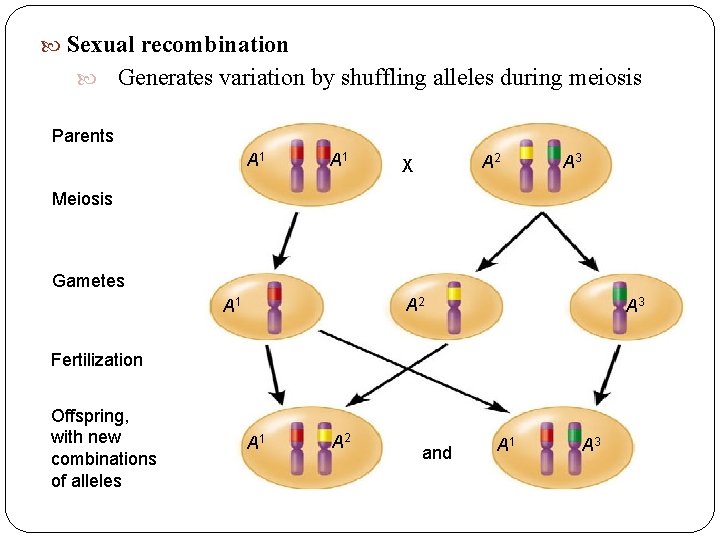
Sexual recombination Generates variation by shuffling alleles during meiosis Parents A 1 A 2 X A 3 Meiosis Gametes A 2 A 1 A 3 Fertilization Offspring, with new combinations of alleles A 1 A 2 and A 1 A 3
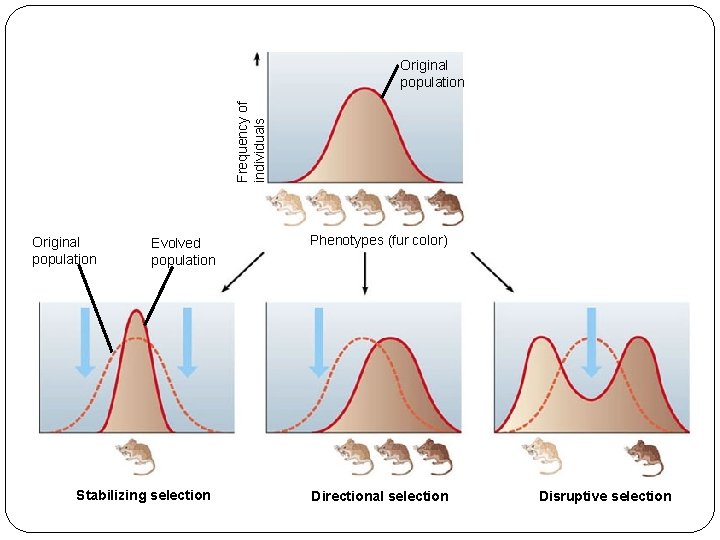
13. 16 Natural selection can alter variation in a population in three ways Stabilizing selection Favors intermediate phenotypes Directional selection Acts against individuals at one of the phenotypic extremes Disruptive selection Favors individuals at both extremes of the phenotypic range
Frequency of individuals Original population Evolved population Stabilizing selection Phenotypes (fur color) Directional selection Disruptive selection
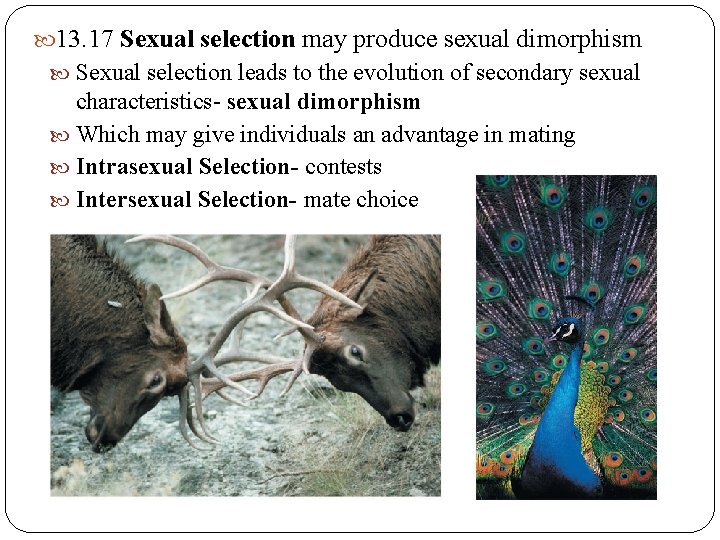
13. 17 Sexual selection may produce sexual dimorphism Sexual selection leads to the evolution of secondary sexual characteristics- sexual dimorphism Which may give individuals an advantage in mating Intrasexual Selection- contests Intersexual Selection- mate choice
13. 18 Natural selection cannot fashion perfect organisms There at least four reasons why natural selection cannot produce perfection 1. Organisms are limited by historical constraints 2. Adaptations are often compromises 3. Chance and natural selection interact 4. Selection can only edit existing variations
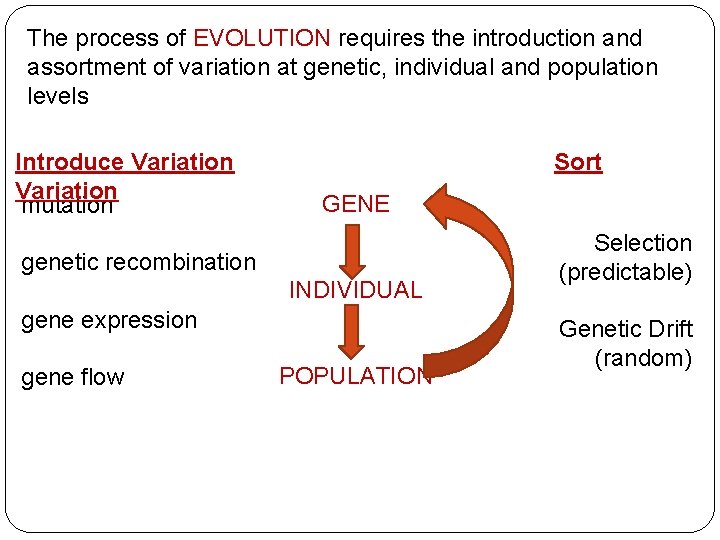
The process of EVOLUTION requires the introduction and assortment of variation at genetic, individual and population levels Introduce Variation mutation Sort GENE genetic recombination INDIVIDUAL gene expression gene flow POPULATION Selection (predictable) Genetic Drift (random)