Pharmacoeconomics one of supporting columns in Social Pharmacy















- Slides: 64
Pharmacoeconomics one of supporting columns in Social Pharmacy. An aid to better decision-making in the rational use of medicines. Evaluation of drug therapies. JAMASOFT 2017 1
The aim of this lecture is to provide an overview of the issues and theory which lie at the heart of Pharmacoeconomics and to show these can be applied in practice to decisions about drug therapy. JAMASOFT 2017 2
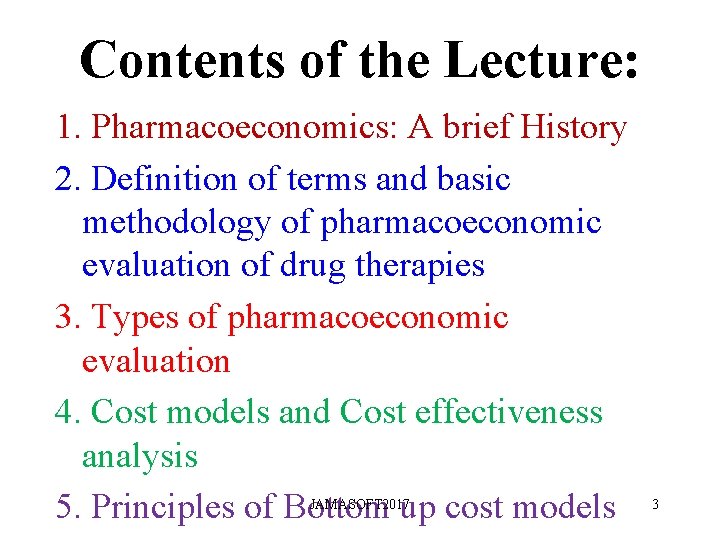
Contents of the Lecture: 1. Pharmacoeconomics: A brief History 2. Definition of terms and basic methodology of pharmacoeconomic evaluation of drug therapies 3. Types of pharmacoeconomic evaluation 4. Cost models and Cost effectiveness analysis 5. Principles of Bottom up cost models JAMASOFT 2017 3
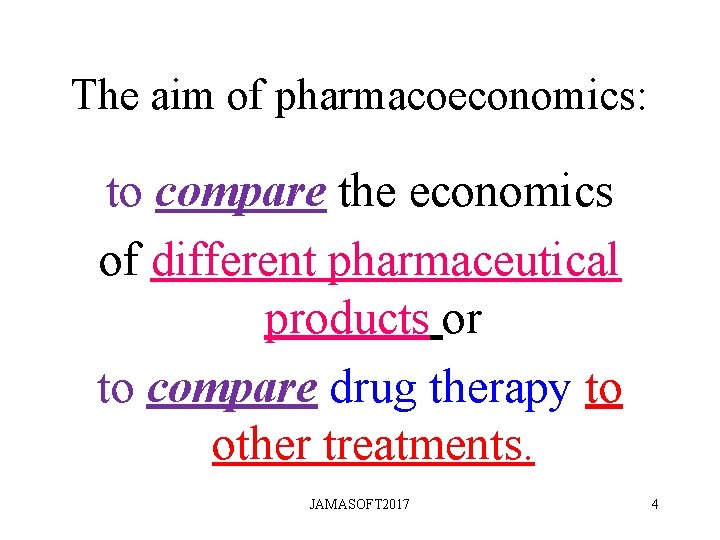
The aim of pharmacoeconomics: to compare the economics of different pharmaceutical products or to compare drug therapy to other treatments. JAMASOFT 2017 4
INTRODUCTORY REMARKS Health care funders (governments, social security funds, insurance companies) are struggling to meet their rising costs. They make many efforts to contain drug costs, by price negotiation, patient co-payments or dedicated drug budgets. The aim is to identify what is most efficient, so that the greatest amount of benefit can be bought for a given amount of money or resources. JAMASOFT 2017 5
INTRODUCTORY REMARKS Pharmacoeconomics is a branch of health economics that particularly considers drug therapy. It is of particular interest to pharmaceutical companies who in developing a new drug and after the traditional hurdles of efficacy, safety and tolerability must now jump over a fourth hurdle of cost effectiveness. JAMASOFT 2017 6
BASIC CONCEPTS AND TERMINOLOGY JAMASOFT 2017 7
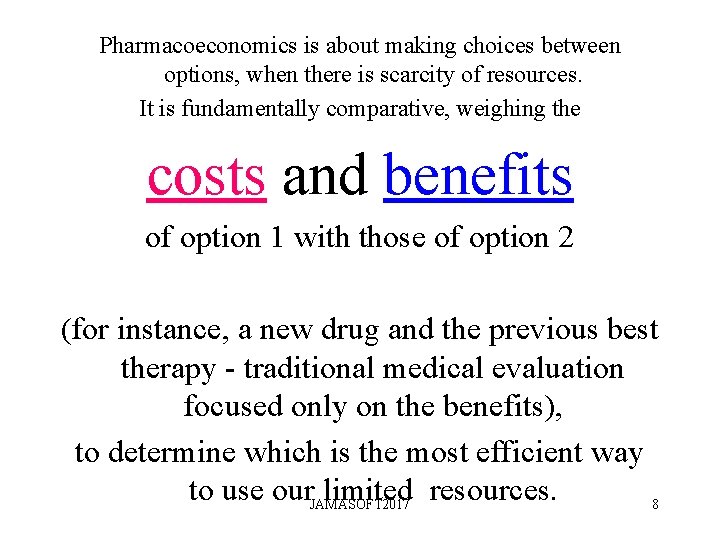
Pharmacoeconomics is about making choices between options, when there is scarcity of resources. It is fundamentally comparative, weighing the costs and benefits of option 1 with those of option 2 (for instance, a new drug and the previous best therapy - traditional medical evaluation focused only on the benefits), to determine which is the most efficient way to use our limited resources. JAMASOFT 2017 8
BASIC CONCEPTS AND TERMINOLOGY Efficiency is a key concept in pharmacoeconomics, i. e. how to buy the greatest amount of benefit for a given resource use. JAMASOFT 2017 9
BASIC CONCEPTS AND TERMINOLOGY Despite some problems, pharmacoeconomic evaluations of drug therapy are increasingly important in decision making. JAMASOFT 2017 10
BASIC CONCEPTS AND TERMINOLOGY The professionals should welcome this as a means to promote efficiency and effectiveness of prescribing, and aim to move the professionals’ debate away from pure cost to the question of value for money in prescribing. JAMASOFT 2017 11
Benefits The benefits we expect from an intervention might be measured in: A. “Natural” units - e. g. years of life saved, strokes prevented, peptic ulcers healed etc. B. “Utility” units - utility is an economist’s word for satisfaction, or sense of well being, and is an attempt to evaluate the quality of a state of health, and not just its quantity. JAMASOFT 2017 12
Benefits Utility estimates can be obtained through direct measurement (using techniques such as time trade off or standard gambles, or by imputing them from the literature or expert opinion ). They are often informed by measures of quality of life in different disease states. JAMASOFT 2017 13
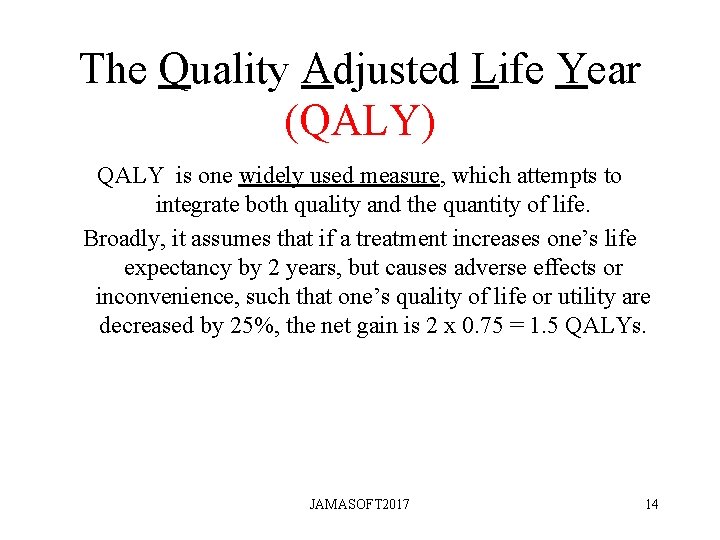
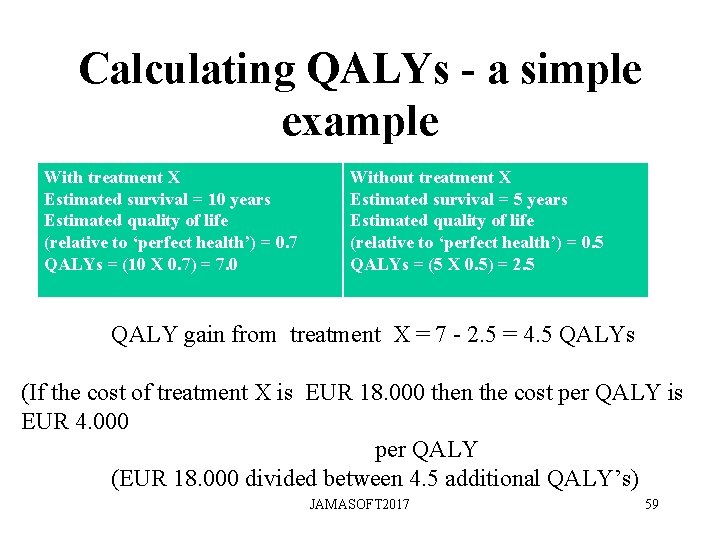
The Quality Adjusted Life Year (QALY) QALY is one widely used measure, which attempts to integrate both quality and the quantity of life. Broadly, it assumes that if a treatment increases one’s life expectancy by 2 years, but causes adverse effects or inconvenience, such that one’s quality of life or utility are decreased by 25%, the net gain is 2 x 0. 75 = 1. 5 QALYs. JAMASOFT 2017 14
QUALY CRITICISMS QALYs are controversial for many reasons, not least that measuring patient utilities is difficult and preferences may change in the course of an illness (what seems an intolerable burden to a healthy individual may not seem so bad to someone who might otherwise be dead). JAMASOFT 2017 15
The Quality Adjusted Life Year (QALY) Despite these criticisms, the concept of the QALY has advanced thinking on how to incorporate quality of life into pharmacoeconomic evaluations. JAMASOFT 2017 16
From the pharmaceutical industry’s point of view pharmacoeconomics is at the interface between research and development and marketing, covering the entire drug product life cycle as well as scientific and commercial planning. JAMASOFT 2017 17
Whilst pharmaceutical companies generally recognise the importance of pharmacoeconomic analysis, academic community needs to do pharmacoeconomic research which is relevant for managerial decision-making. JAMASOFT 2017 18
1. Pharmacoeconomics: A Brief History Pharmacoeconomics is a subdivision of health economics and results from that discipline coming of age through consolidation to diversification. One can hardly find any systematic reference to it before the mid 1960’s and the first reading book on this subject was published in 1973. JAMASOFT 2017 19
2. Definition of terms and basic methodology of economic evaluation. Earliest definitions of Pharmacoeconomics are very narrowly focused on the "analysis of the costs of drug therapy to health care systems and society ". This perception of pharmacoeconomic research is solely concerned with costs and does not consider the outcome from the use JAMASOFT 2017 20 of pharmaceutical products.
2. Definition of terms and basic methodology of economic evaluation. Of course, the role of Pharmacoeconomics does not remain the same during the different phases of drug development. Pharmacoeconomics is a tool which should be applied to strategic and operational decisions about pharmaceutical development, production or consumption. JAMASOFT 2017 21
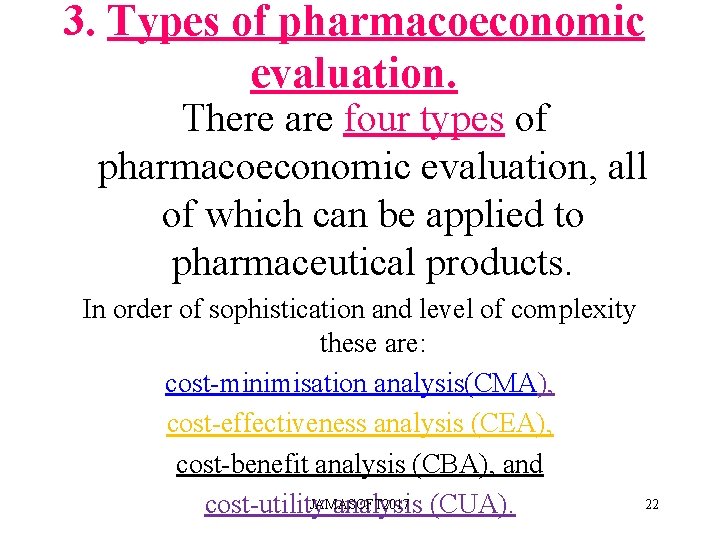
3. Types of pharmacoeconomic evaluation. There are four types of pharmacoeconomic evaluation, all of which can be applied to pharmaceutical products. In order of sophistication and level of complexity these are: cost-minimisation analysis(CMA), cost-effectiveness analysis (CEA), cost-benefit analysis (CBA), and JAMASOFT 2017 22 cost-utility analysis (CUA).
The ultimate objective of all four methods is to compare the cost and outcome of alternative regimens, ideally by generating a single index or cost-outcome ratio. The nature of outcome measurement is the all important factor determining both the level of complexity and sophistication as well as the reliability and validity of a comparison of alternative regimens. JAMASOFT 2017 23
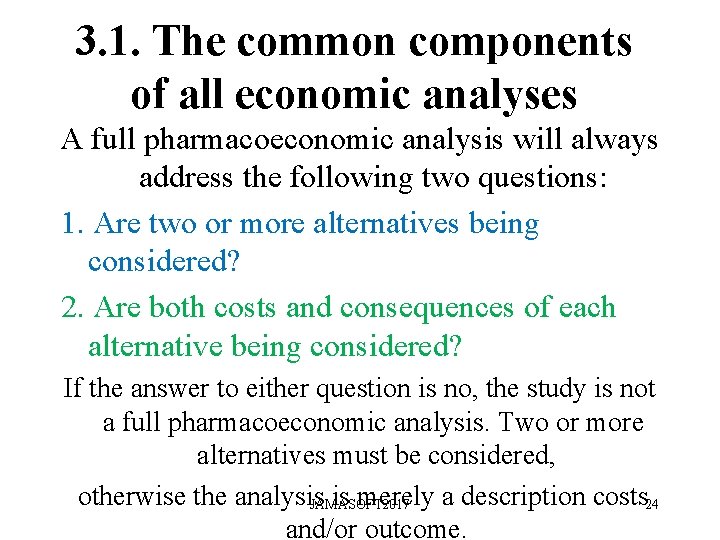
3. 1. The common components of all economic analyses A full pharmacoeconomic analysis will always address the following two questions: 1. Are two or more alternatives being considered? 2. Are both costs and consequences of each alternative being considered? If the answer to either question is no, the study is not a full pharmacoeconomic analysis. Two or more alternatives must be considered, otherwise the analysis is merely a description costs JAMASOFT 2017 24 and/or outcome.
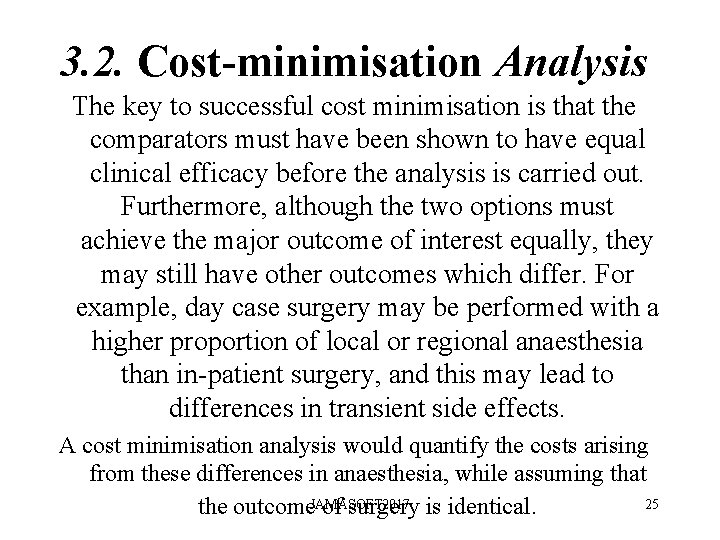
3. 2. Cost-minimisation Analysis The key to successful cost minimisation is that the comparators must have been shown to have equal clinical efficacy before the analysis is carried out. Furthermore, although the two options must achieve the major outcome of interest equally, they may still have other outcomes which differ. For example, day case surgery may be performed with a higher proportion of local or regional anaesthesia than in-patient surgery, and this may lead to differences in transient side effects. A cost minimisation analysis would quantify the costs arising from these differences in anaesthesia, while assuming that JAMASOFT 2017 25 the outcome of surgery is identical.
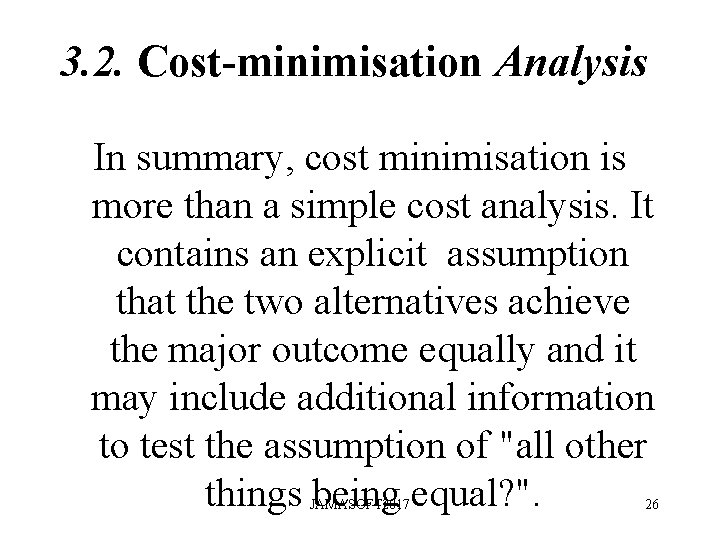
3. 2. Cost-minimisation Analysis In summary, cost minimisation is more than a simple cost analysis. It contains an explicit assumption that the two alternatives achieve the major outcome equally and it may include additional information to test the assumption of "all other things being equal? ". JAMASOFT 2017 26
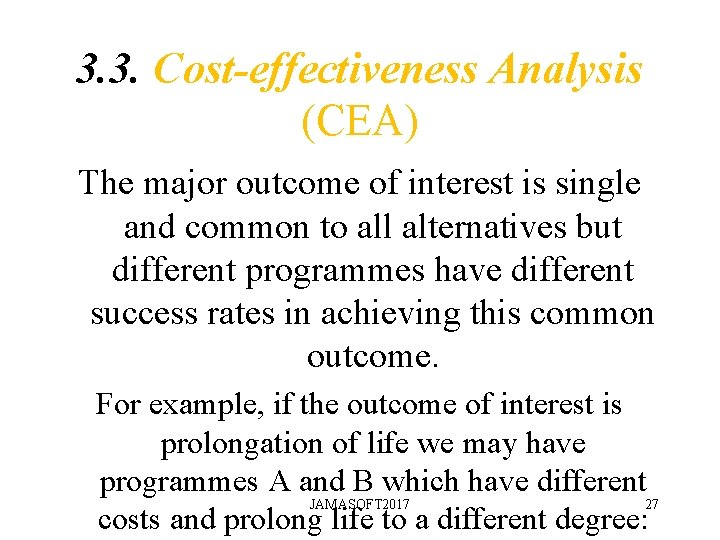
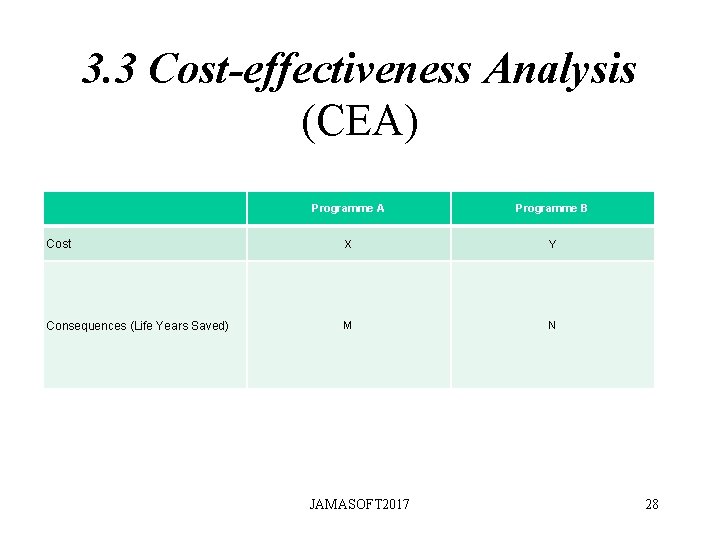
3. 3. Cost-effectiveness Analysis (CEA) The major outcome of interest is single and common to all alternatives but different programmes have different success rates in achieving this common outcome. For example, if the outcome of interest is prolongation of life we may have programmes A and B which have different JAMASOFT 2017 27 costs and prolong life to a different degree:
3. 3 Cost-effectiveness Analysis (CEA) Programme A Programme B Cost X Y Consequences (Life Years Saved) M N JAMASOFT 2017 28
Cost effectiveness analysis (CEA) The term cost effectiveness is often used loosely to refer to the whole of economic evaluation, but should properly refer to a particular type of evaluation, in which the health benefit can be defined and measured in natural units (e. g. years of life saved, ulcers healed) JAMASOFT 2017 29 and the costs are measured in money.
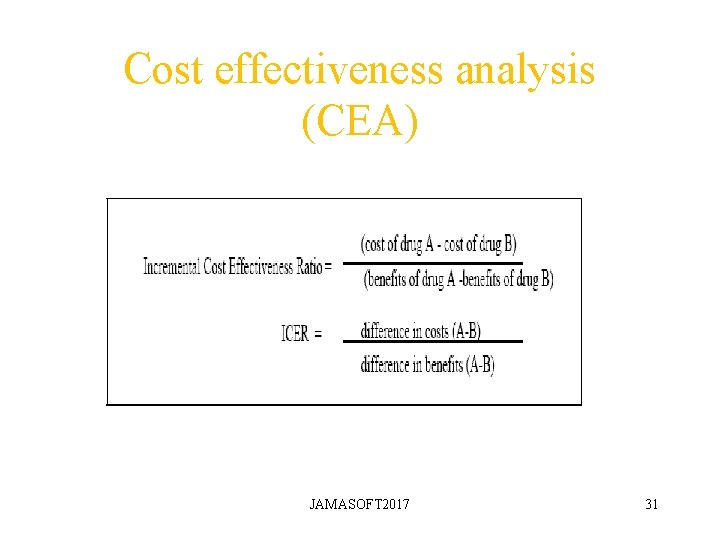
Cost effectiveness analysis (CEA) It therefore compares therapies with qualitatively similar outcomes in a particular therapeutic area. For instance, in severe reflux oesophagitis, we could consider the costs per patient relieved of symptoms using a proton pump inhibitor compared to those using H 2 blockers. CEA is the most commonly applied form of economic analysis in the literature, and especially in drug therapy. It does not allow comparisons to be made between two totally different areas of medicine with different outcomes. The broad form of these evaluations are shown in box 1, and the key measure is the incremental cost effectiveness JAMASOFT 2017 30 ratio (ICER).
Cost effectiveness analysis (CEA) JAMASOFT 2017 31
3. 4. Cost-benefit Analysis (CBA) The aim here is the same as before i. e. to construct cost/outcomes ratios (average and incremental) to compare alternative regimens. JAMASOFT 2017 32
3. 4. Cost-benefit Analysis (CBA) However, cost-effectiveness analysis cannot be applied because the alternatives achieve fundamentally different outcomes. For example, one prolongs life and improves quality of life (e. g. coronary artery bypass grafting) whereas the other only improves quality of life (e. g. hip joint replacement). JAMASOFT 2017 33
3. 4. Cost-benefit Analysis (CBA) In CBA the common denominator for conversion is money. We express in monetary terms the positive and negative consequences of the medical intervention and aggregate them to construct comparable cost-benefit ratios. JAMASOFT 2017 34
3. 4. Cost-benefit Analysis (CBA) Healthcare professionals often feel instinctively uncomfortable about putting a financial value on human suffering. However, the function of money is quite simply to allow society to compare the value of totally different commodities. JAMASOFT 2017 35
3. 4. Cost-benefit Analysis (CBA) The most controversial aspect of CBA is to put value on items which are perceived to be inherently unvaluable by healthcare professionals, for example the loss of eye sight, impairment of hearing, renal failure or even loss of human life. However, this practice is well established in the insurance industry. Indeed, this is neither new nor exclusive to JAMASOFT 2017 36 the insurance industry.
3. 4. Cost-benefit Analysis (CBA) CBA are not that common in Pharmacoeconomics, and where performed the investigators usually have calculated the costs and benefits which easily (and non-controversially) can be expressed in money terms. Alternatively, there are techniques for quantifying the strengths of individual preferences for alternatives. These include willingness to pay and the standard gamble technique, in which hypothetical examples are used to ask individuals how much they would be willing to pay to secure improvements in treatment. JAMASOFT 2017 37
3. 5. Cost-utility Analysis (CUA) In CUA a different measure of value derived directly from Economics is used to measure an outcome called utility. The basic idea behind CUA is that one purpose of medical intervention is to improve the quality of life of patients and that changes in quality of life should be measured alongside measures of increase in life expectancy. JAMASOFT 2017 38
3. 5. Cost-utility Analysis (CUA) Therefore, the comparative efficacy of the alternative treatments is captured and measured through their contribution to the quality of life of the patients undergoing such treatments. This is an important idea which deserves a more detailed explanation and will be covered later on. However, despite the obvious theoretical advantages of CUA there are major practical difficulties in establishing the exact utility attached to different health states. JAMASOFT 2017 39
Discounting of future costs and benefits One final point relevant to all four methods of economic evaluation is the problem of discounting, based on the ‘time preference principle’ derived directly from mainstream economics. JAMASOFT 2017 40
The process of discounting involves finding the present value of the costs and outcome of alternative methods of intervention by choosing an appropriate discount rate. Although there is no general agreement on what constitutes an appropriate discount rate, in principle everybody agrees that costs should be discounted. JAMASOFT 2017 41
Discounting of future costs and benefits In practice, discounting is only an issue if the costs or outcomes of alternative programmes occur at different times. Fortunately this is usually not the case in pharmacoeconomic studies. We believe that the best solution is to include discounting in a sensitivity analysis, a practice endorsed in some national guidelines on pharmacoeconomic analysis. A range of discount rates should be applied to both costs and outcomes. The final analysis should then make it clear that the conclusion is or is not sensitive to application of discount rates from x% to y%, applied either to costs alone or to costs and outcomes. JAMASOFT 2017 42
4. Cost models and cost effectiveness analysis 4. 1. Cost Models 4. 1. 1. Top down versus bottom up 4. 1. 1. 1. Principles of top down cost models JAMASOFT 2017 43
4. 1. 1. 1. Principles of top down cost models Top down cost models estimate the overall economic burden of diseases and are often referred to as cost of illness studies. The most commonly used method is based on an estimate of the prevalence of a particular disease (the number of people who are suffering from the disease in any given year) and an estimate of the costs accrued during that year. Alternatively the cost of illness may be estimated from information about the incidence of disease (the number of new cases which occur in one year) and the JAMASOFT 2017 estimated lifetime costs accrued by these patients. 44
4. 1. 1. 1. Principles of top down cost models Clearly the second approach is more difficult to execute because it requires information about the rate of progression of disease and the incremental costs incurred as the disease progresses. However, a longitudinal model of disease progression facilitates discussion about the relative merits of strategies such as primary or secondary prevention versus treatment of established disease. JAMASOFT 2017 45
5. Principles of bottom up cost models Classification of costs Bottom up cost models are based on prospective collection of data about individual patients. Any model has two principal aims. The first is to quantify costs and the second is to allocate them to the appropriate person(s) or budget(s). In health economics it is usual to separate JAMASOFT 2017 46 3 broad categories of costs:
(I) Healthcare costs Financial costs which fall on the health services (e. g. drug acquisition costs, days in hospital). Healthcare costs are usually subdivided as follows: (1. a) Variable costs Costs which vary immediately according to the number of patients treated (e. g. drug acquisition costs, costs of other consumables such as needles and syringes) (1. b) Fixed costs Costs which do not vary with the number of patients treated, at least in the short term, usually one year (e. g. capital costs of building or equipment; staff salaries). JAMASOFT 2017 47
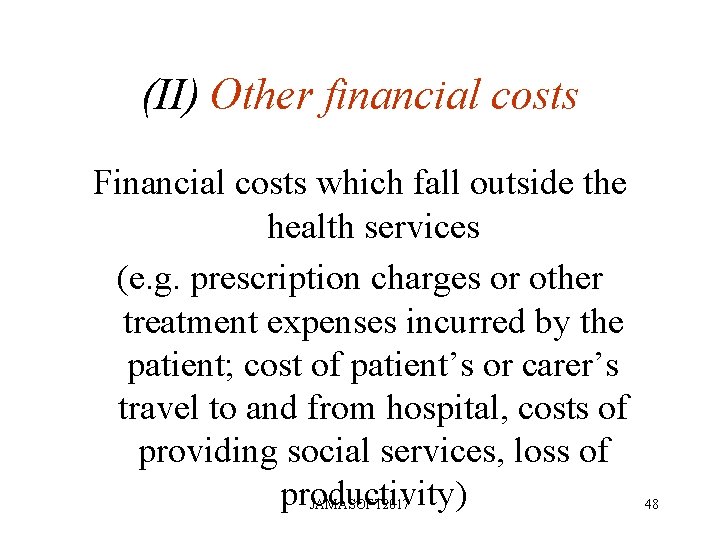
(II) Other financial costs Financial costs which fall outside the health services (e. g. prescription charges or other treatment expenses incurred by the patient; cost of patient’s or carer’s travel to and from hospital, costs of providing social services, loss of productivity) JAMASOFT 2017 48
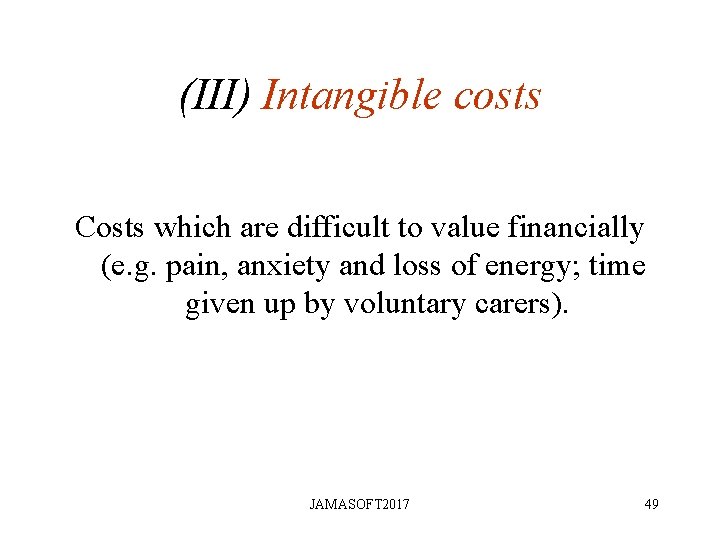
(III) Intangible costs Costs which are difficult to value financially (e. g. pain, anxiety and loss of energy; time given up by voluntary carers). JAMASOFT 2017 49
Direct costs, indirect costs and overheads The terms direct and indirect costs appear frequently in the pharmacoeconomic literature. JAMASOFT 2017 50
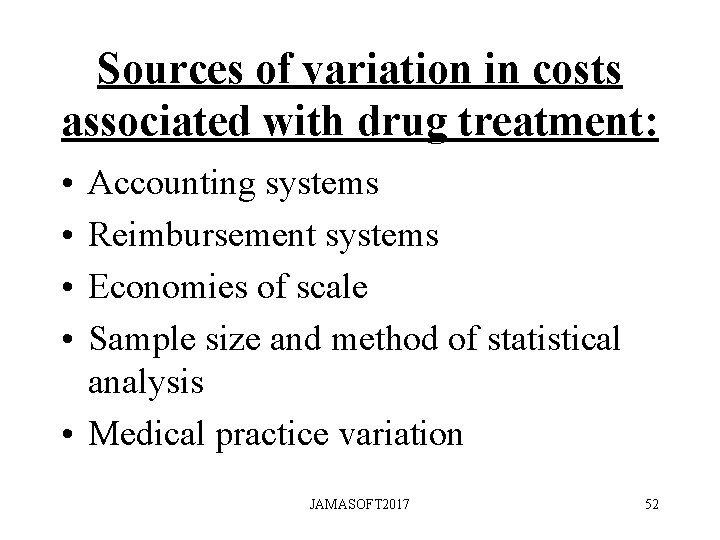
Sources of variation in healthcare costs There are genuine variations in the costs of treatments both within and between individual countries. It is important to be aware of this when interpreting pharmacoeconomic analyses which have been performed in other settings and also in planning the sensitivity analysis for new pharmacoeconomic analyses: JAMASOFT 2017 51
Sources of variation in costs associated with drug treatment: • • Accounting systems Reimbursement systems Economies of scale Sample size and method of statistical analysis • Medical practice variation JAMASOFT 2017 52
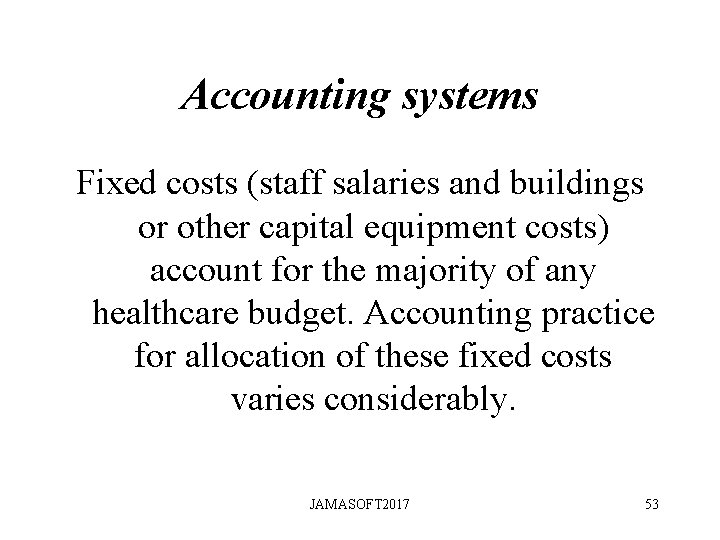
Accounting systems Fixed costs (staff salaries and buildings or other capital equipment costs) account for the majority of any healthcare budget. Accounting practice for allocation of these fixed costs varies considerably. JAMASOFT 2017 53
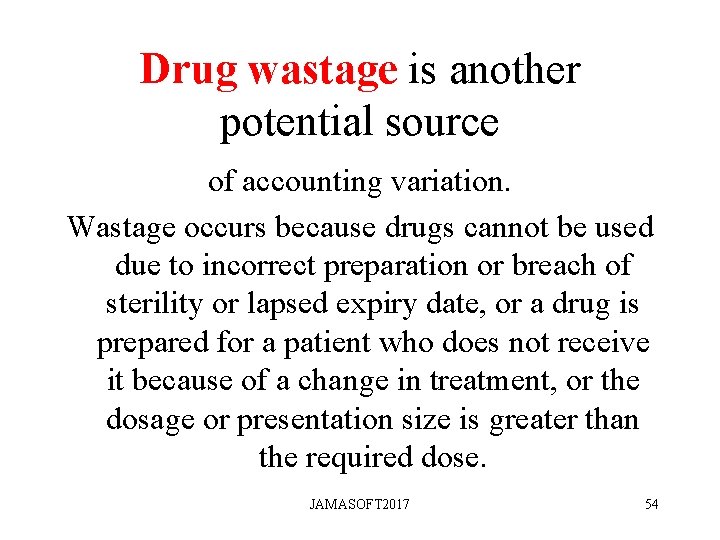
Drug wastage is another potential source of accounting variation. Wastage occurs because drugs cannot be used due to incorrect preparation or breach of sterility or lapsed expiry date, or a drug is prepared for a patient who does not receive it because of a change in treatment, or the dosage or presentation size is greater than the required dose. JAMASOFT 2017 54
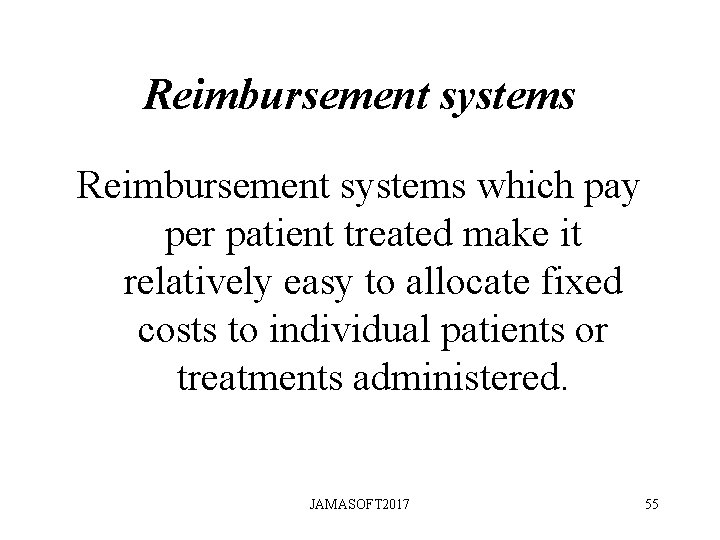
Reimbursement systems which pay per patient treated make it relatively easy to allocate fixed costs to individual patients or treatments administered. JAMASOFT 2017 55
Medical practice variation There are many examples of systematic variation in medical practice, that is consistent variation between doctors working in two different institutions or geographic areas. Naturally, doctors would like to believe that variations in practice are due to genuine variations in the epidemiology of disease, but this rarely explains the marked systematic medical practice variations which exist. JAMASOFT 2017 56
Medical practice variation Much of the research in this area relates to elective surgery but a few examples related to antibiotic therapy in hospitals will serve to illustrate the potential impact of medical practice variation on pharmacoeconomic analysis. JAMASOFT 2017 57
Medical practice variation The impact of medical practice variation on pharmacoeconomic studies can be illustrated by comparing the costs of antibiotics administered to treat infections occurring. JAMASOFT 2017 58
Calculating QALYs - a simple example With treatment X Estimated survival = 10 years Estimated quality of life (relative to ‘perfect health’) = 0. 7 QALYs = (10 X 0. 7) = 7. 0 Without treatment X Estimated survival = 5 years Estimated quality of life (relative to ‘perfect health’) = 0. 5 QALYs = (5 X 0. 5) = 2. 5 QALY gain from treatment X = 7 - 2. 5 = 4. 5 QALYs (If the cost of treatment X is EUR 18. 000 then the cost per QALY is EUR 4. 000 per QALY (EUR 18. 000 divided between 4. 5 additional QALY’s) JAMASOFT 2017 59
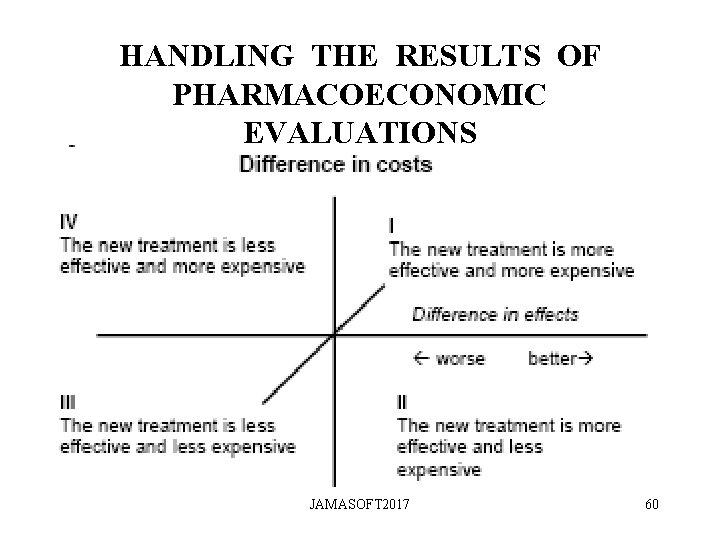
HANDLING THE RESULTS OF PHARMACOECONOMIC EVALUATIONS JAMASOFT 2017 60
A definition of pharmacoeconomics as a separate discipline is still being hotly debated, and the term itself is used interchangeably with ‘health economics’, ‘outcomes research’, ‘policy research’ and other such titles. JAMASOFT 2017 61
ISPOR International Society for Pharmacoeconomics and Outcomes Research JAMASOFT 2017 62
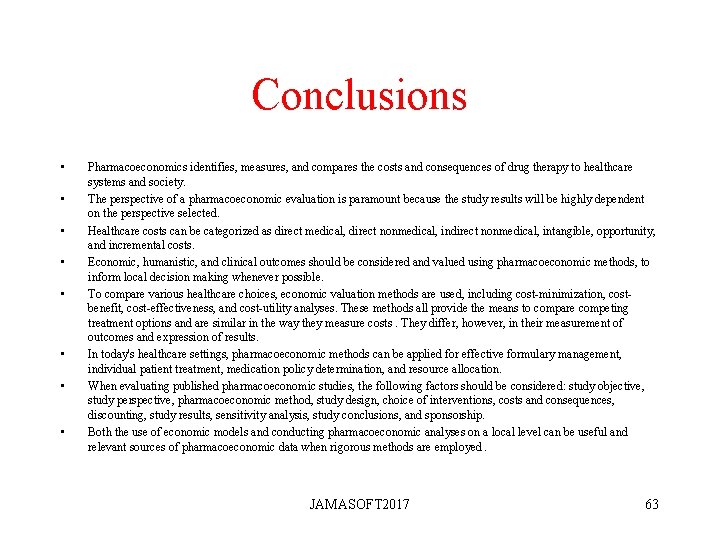
Conclusions • • Pharmacoeconomics identifies, measures, and compares the costs and consequences of drug therapy to healthcare systems and society. The perspective of a pharmacoeconomic evaluation is paramount because the study results will be highly dependent on the perspective selected. Healthcare costs can be categorized as direct medical, direct nonmedical, intangible, opportunity, and incremental costs. Economic, humanistic, and clinical outcomes should be considered and valued using pharmacoeconomic methods, to inform local decision making whenever possible. To compare various healthcare choices, economic valuation methods are used, including cost-minimization, costbenefit, cost-effectiveness, and cost-utility analyses. These methods all provide the means to compare competing treatment options and are similar in the way they measure costs. They differ, however, in their measurement of outcomes and expression of results. In today's healthcare settings, pharmacoeconomic methods can be applied for effective formulary management, individual patient treatment, medication policy determination, and resource allocation. When evaluating published pharmacoeconomic studies, the following factors should be considered: study objective, study perspective, pharmacoeconomic method, study design, choice of interventions, costs and consequences, discounting, study results, sensitivity analysis, study conclusions, and sponsorship. Both the use of economic models and conducting pharmacoeconomic analyses on a local level can be useful and relevant sources of pharmacoeconomic data when rigorous methods are employed. JAMASOFT 2017 63
Thanks for your attention. JAMASOFT 2017 64