PEDIATRIC PHYSIOLOGY IMPLICATIONS FOR THE ANESTHESIOLOGIST Updated 52017
- Slides: 47
PEDIATRIC PHYSIOLOGY: IMPLICATIONS FOR THE ANESTHESIOLOGIST Updated 5/2017 Francine S Yudkowitz, MD FAAP Professor of Anesthesiology, Perioperative and Pain Medicine, and Pediatrics Icahn School of Medicine at Mount Sinai New York
DISCLOSURE No relevant financial relationships
OBJECTIVES • Review the physiologic differences in the infant and adult: �Respiratory system �Cardiac system • Discuss the implications of these differences on anesthetic management
RESPIRATORY SYSTEM Anatomic Considerations
OCCIPUT • Large occiput tends to over flex neck • Clinical significance • shoulder roll for optimal positioning • positioning after extubation
TONGUE • Relatively large • Clinical significance • more prone to airway obstruction • mask ventilation may be difficult • difficulty manipulating the laryngoscope blade
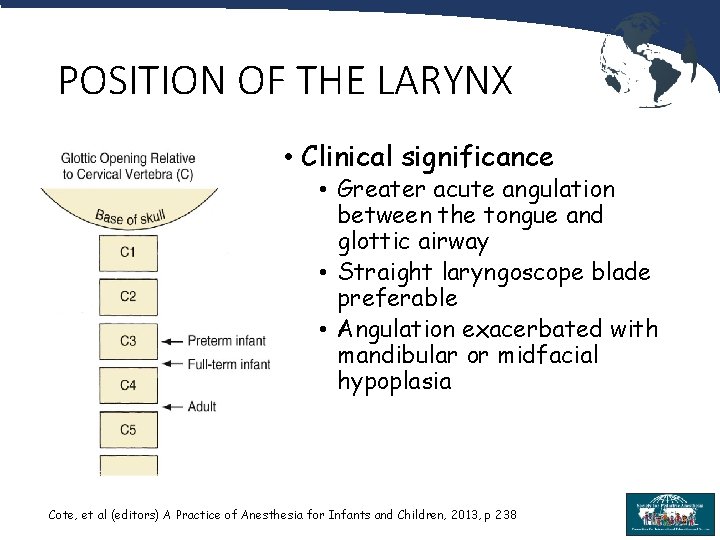
POSITION OF THE LARYNX • Clinical significance • Greater acute angulation between the tongue and glottic airway • Straight laryngoscope blade preferable • Angulation exacerbated with mandibular or midfacial hypoplasia Cote, et al (editors) A Practice of Anesthesia for Infants and Children, 2013, p 238
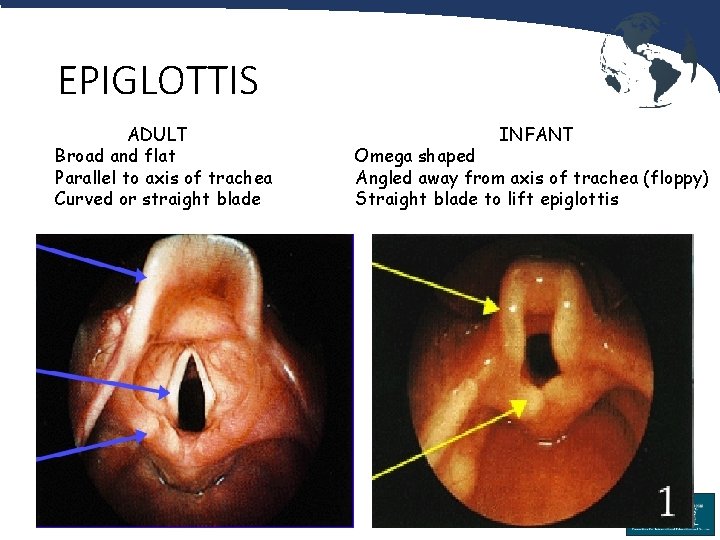
EPIGLOTTIS ADULT Broad and flat Parallel to axis of trachea Curved or straight blade INFANT Omega shaped Angled away from axis of trachea (floppy) Straight blade to lift epiglottis
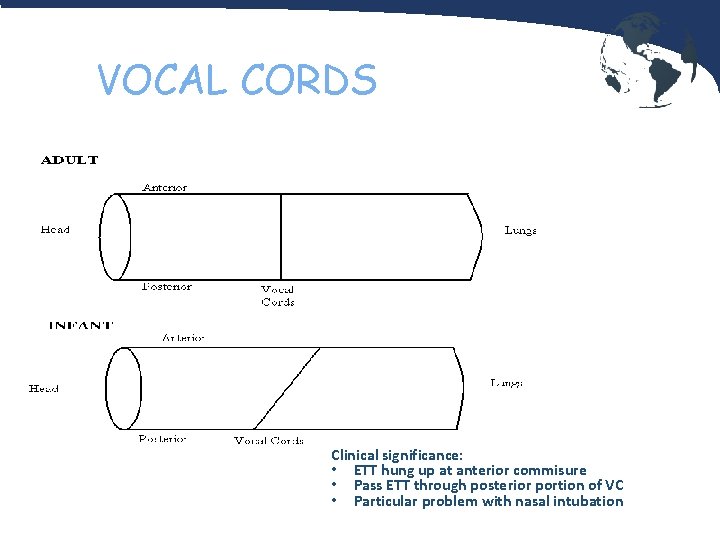
VOCAL CORDS Clinical significance: • ETT hung up at anterior commisure • Pass ETT through posterior portion of VC • Particular problem with nasal intubation
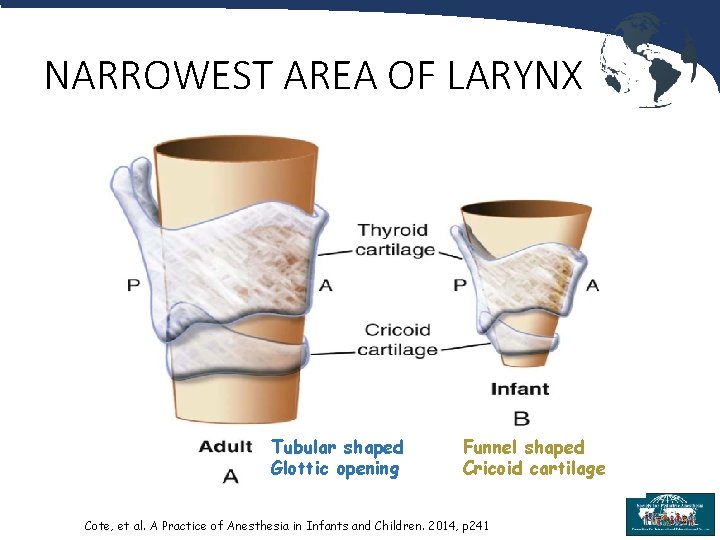
NARROWEST AREA OF LARYNX Tubular shaped Glottic opening Funnel shaped Cricoid cartilage Cote, et al. A Practice of Anesthesia in Infants and Children. 2014, p 241
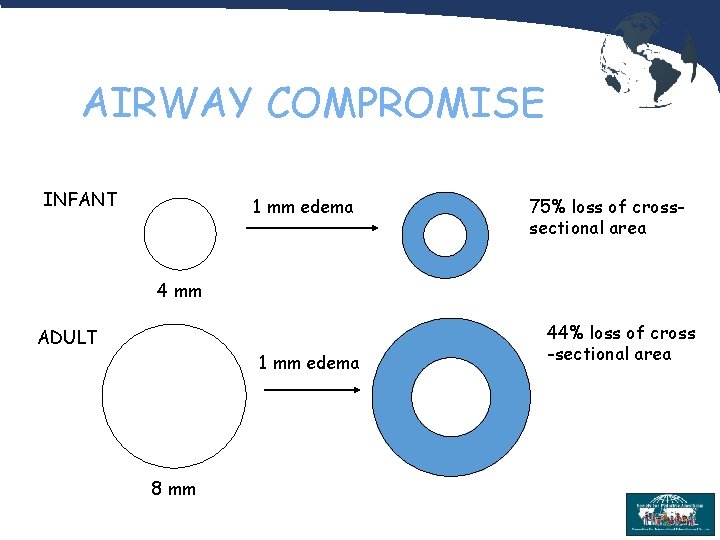
AIRWAY COMPROMISE INFANT 1 mm edema 75% loss of crosssectional area 4 mm ADULT 1 mm edema 8 mm 44% loss of cross -sectional area
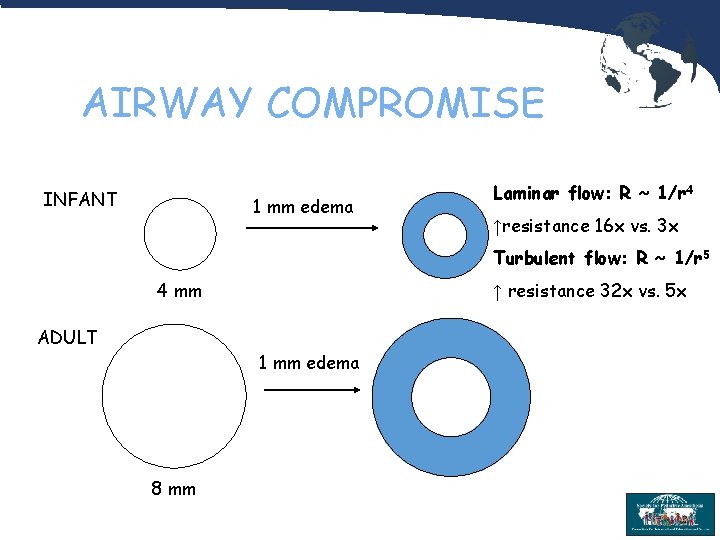
AIRWAY COMPROMISE INFANT 1 mm edema Laminar flow: R ~ 1/r 4 ↑resistance 16 x vs. 3 x Turbulent flow: R ~ 1/r 5 ↑ resistance 32 x vs. 5 x 4 mm ADULT 1 mm edema 8 mm
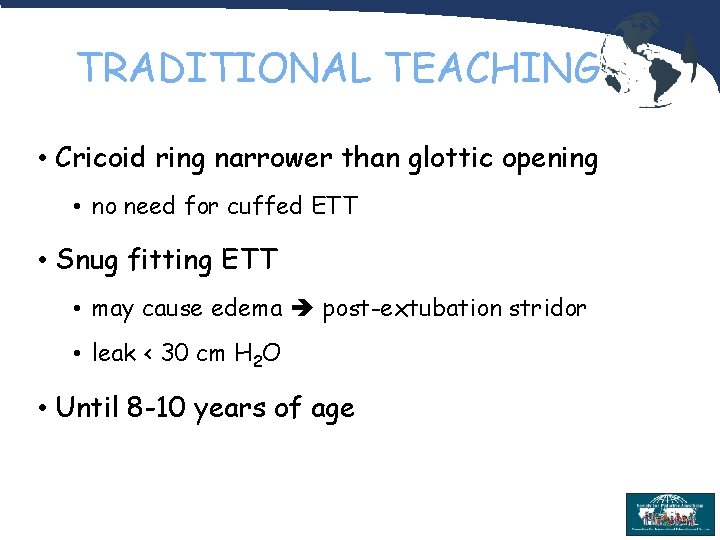
TRADITIONAL TEACHING • Cricoid ring narrower than glottic opening • no need for cuffed ETT • Snug fitting ETT • may cause edema post-extubation stridor • leak < 30 cm H 2 O • Until 8 -10 years of age
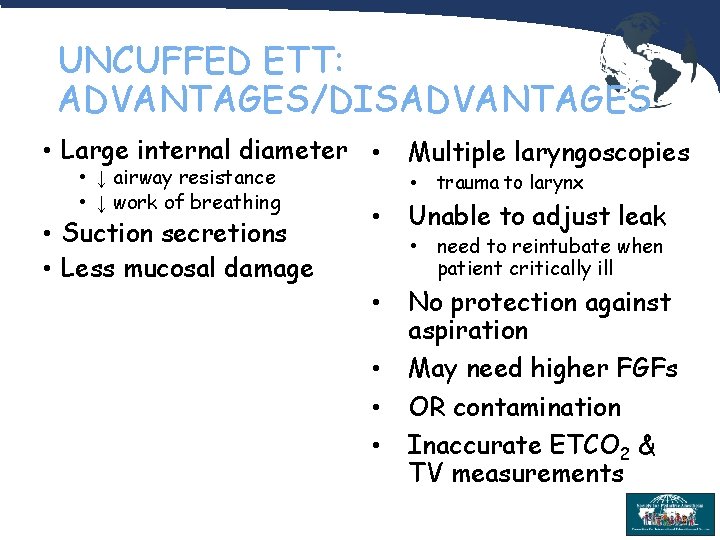
UNCUFFED ETT: ADVANTAGES/DISADVANTAGES • Large internal diameter • • ↓ airway resistance • ↓ work of breathing • Suction secretions • Less mucosal damage Multiple laryngoscopies • • trauma to larynx Unable to adjust leak • need to reintubate when patient critically ill • • No protection against aspiration May need higher FGFs OR contamination Inaccurate ETCO 2 & TV measurements
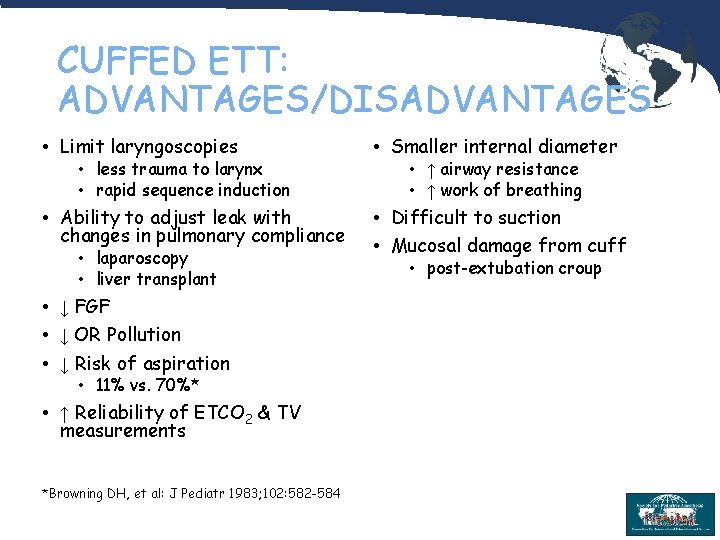
CUFFED ETT: ADVANTAGES/DISADVANTAGES • Limit laryngoscopies • Smaller internal diameter • Ability to adjust leak with changes in pulmonary compliance • Difficult to suction • Mucosal damage from cuff • less trauma to larynx • rapid sequence induction • laparoscopy • liver transplant • ↓ FGF • ↓ OR Pollution • ↓ Risk of aspiration • 11% vs. 70%* • ↑ Reliability of ETCO 2 & TV measurements *Browning DH, et al: J Pediatr 1983; 102: 582 -584 • ↑ airway resistance • ↑ work of breathing • post-extubation croup
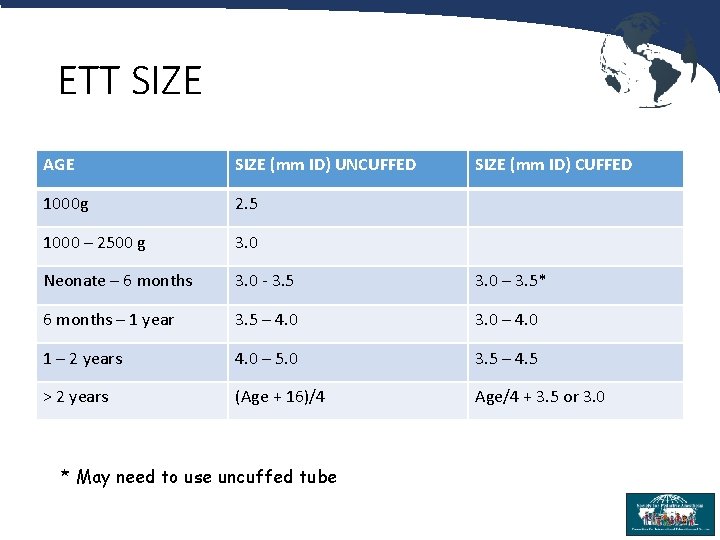
ETT SIZE AGE SIZE (mm ID) UNCUFFED 1000 g 2. 5 1000 – 2500 g 3. 0 Neonate – 6 months 3. 0 - 3. 5 3. 0 – 3. 5* 6 months – 1 year 3. 5 – 4. 0 3. 0 – 4. 0 1 – 2 years 4. 0 – 5. 0 3. 5 – 4. 5 > 2 years (Age + 16)/4 Age/4 + 3. 5 or 3. 0 * May need to use uncuffed tube SIZE (mm ID) CUFFED
RESPIRATORY SYSTEM Physiologic Considerations
LUNG VOLUMES m. L/kg = adult values • Dead space • Tidal volume • Functional residual capacity (dynamic)
AIRWAY RESISTANCE • Work of breathing = to adults on per kg basis • Nose • Adult 60% • Infant 25% • Bronchi and small airways • small diameter • greater compliance of supporting structures • Chest wall • increased compliance Functional airway closure during breathing
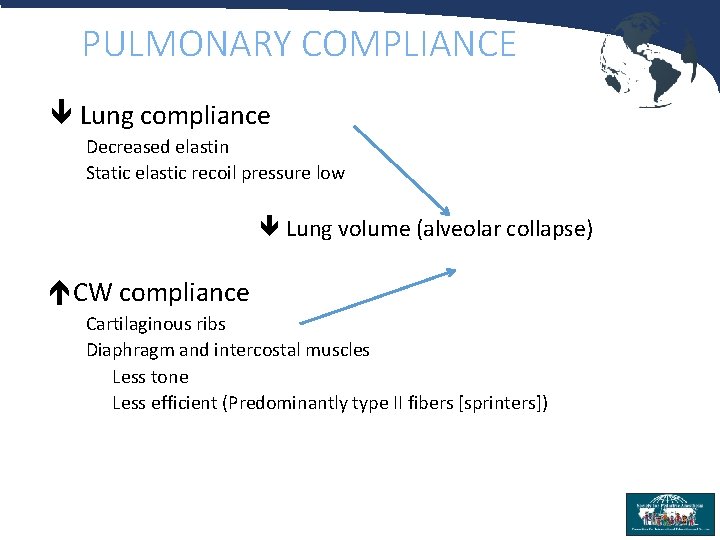
PULMONARY COMPLIANCE Lung compliance Decreased elastin Static elastic recoil pressure low Lung volume (alveolar collapse) CW compliance Cartilaginous ribs Diaphragm and intercostal muscles Less tone Less efficient (Predominantly type II fibers [sprinters])
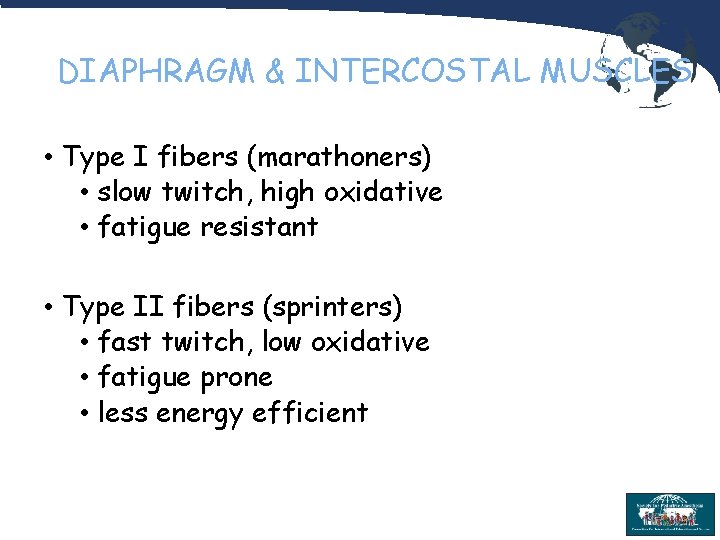
DIAPHRAGM & INTERCOSTAL MUSCLES • Type I fibers (marathoners) • slow twitch, high oxidative • fatigue resistant • Type II fibers (sprinters) • fast twitch, low oxidative • fatigue prone • less energy efficient
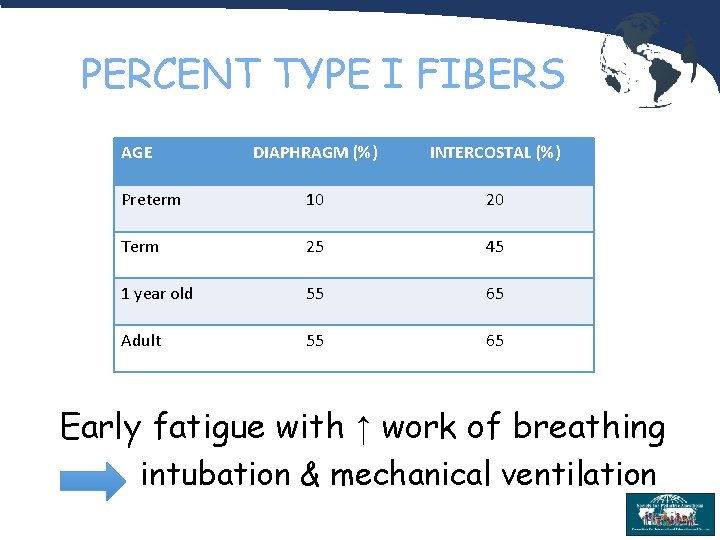
PERCENT TYPE I FIBERS AGE DIAPHRAGM (%) INTERCOSTAL (%) Preterm 10 20 Term 25 45 1 year old 55 65 Adult 55 65 Early fatigue with ↑ work of breathing intubation & mechanical ventilation
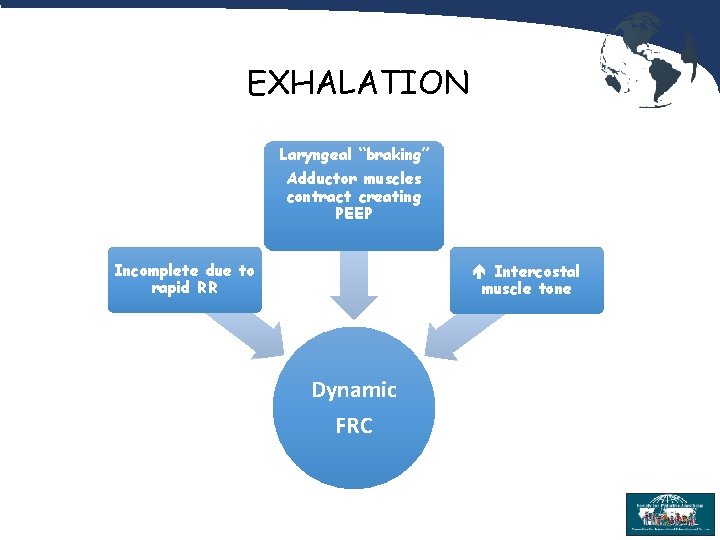
EXHALATION Laryngeal “braking” Adductor muscles contract creating PEEP Incomplete due to rapid RR Intercostal muscle tone Dynamic FRC
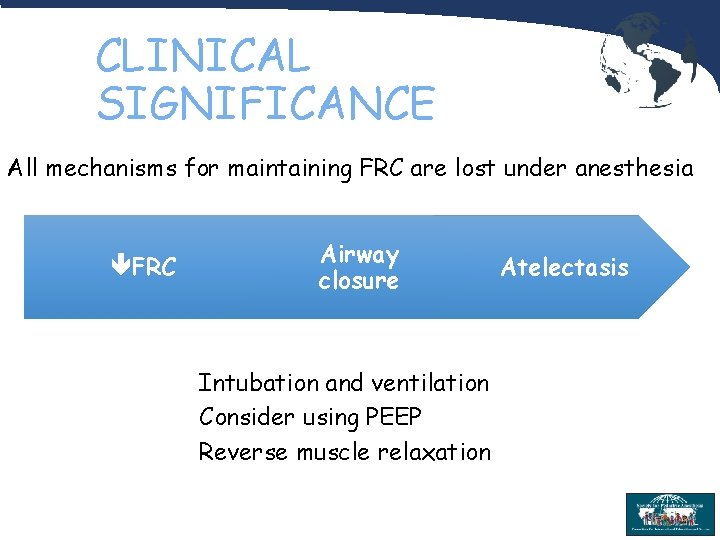
CLINICAL SIGNIFICANCE All mechanisms for maintaining FRC are lost under anesthesia FRC Airway closure Intubation and ventilation Consider using PEEP Reverse muscle relaxation Atelectasis
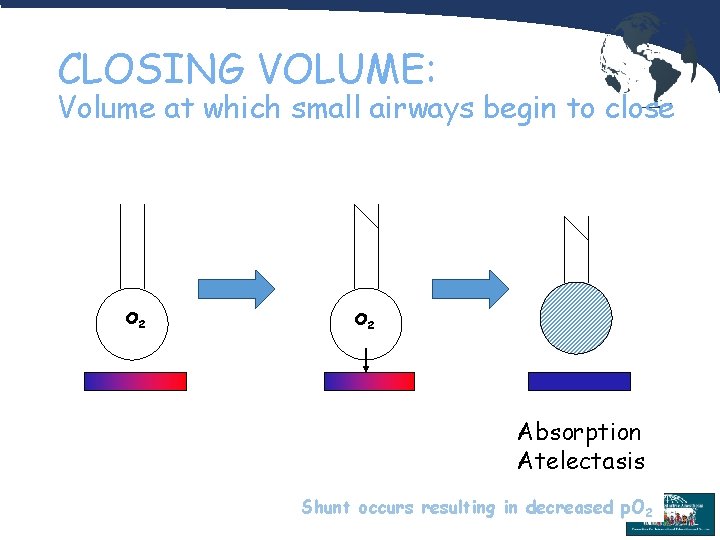
CLOSING VOLUME: Volume at which small airways begin to close O 2 Absorption Atelectasis Shunt occurs resulting in decreased p. O 2
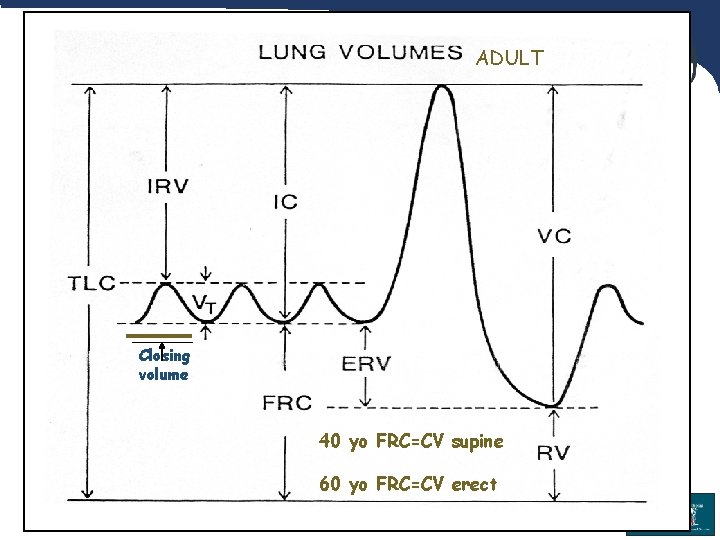
ADULT Closing volume 40 yo FRC=CV supine 60 yo FRC=CV erect
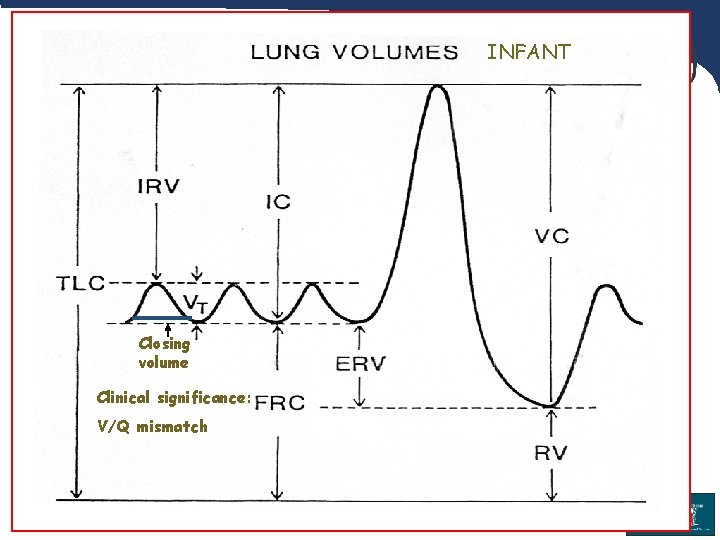
INFANT Closing volume Clinical significance: V/Q mismatch
ALVEOLAR VENTILATION • O 2 consumption • 3 x adult values in preterm • 2 x adult values in infant (6 -7 m. L/kg/min) • Clinical significance: rapid oxygen desaturation during apnea • Alveolar ventilation • 2 -3 x adult values • increased RR • Clinical significance: greater speed of mask induction and emergence
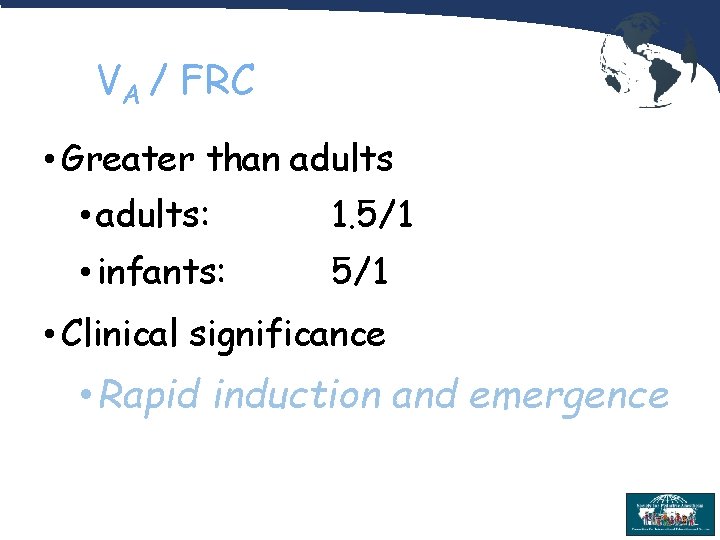
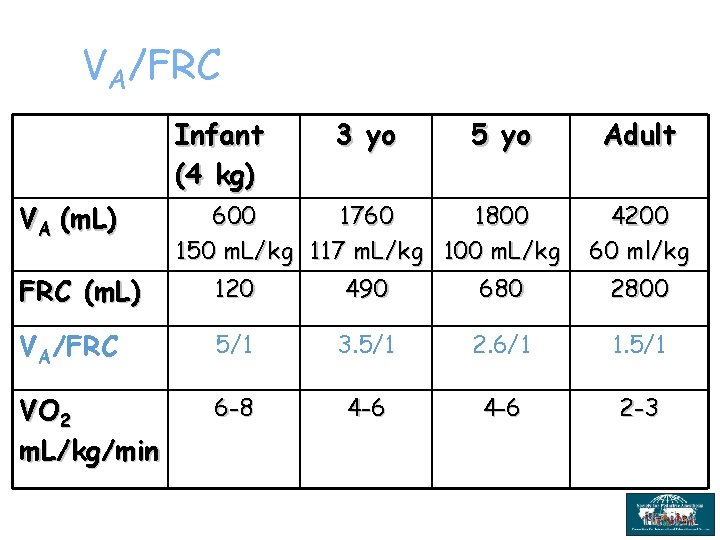
VA / FRC • Greater than adults • adults: 1. 5/1 • infants: 5/1 • Clinical significance • Rapid induction and emergence
VA/FRC Infant (4 kg) VA (m. L) 3 yo 5 yo 600 1760 1800 150 m. L/kg 117 m. L/kg 100 m. L/kg Adult 4200 60 ml/kg FRC (m. L) 120 490 680 2800 VA/FRC 5/1 3. 5/1 2. 6/1 1. 5/1 VO 2 m. L/kg/min 6 -8 4 -6 2 -3
RESPIRATORY SYSTEM CONTROL
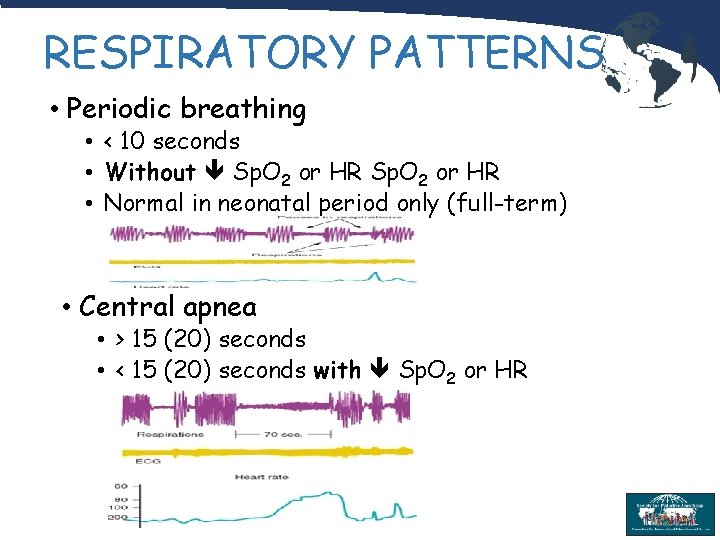
RESPIRATORY PATTERNS • Periodic breathing • < 10 seconds • Without Sp. O 2 or HR • Normal in neonatal period only (full-term) • Central apnea • > 15 (20) seconds • < 15 (20) seconds with Sp. O 2 or HR
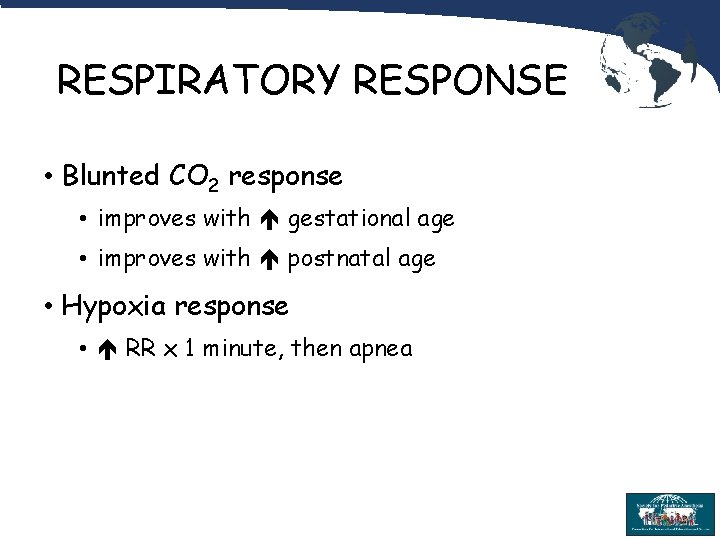
RESPIRATORY RESPONSE • Blunted CO 2 response • improves with gestational age • improves with postnatal age • Hypoxia response • RR x 1 minute, then apnea
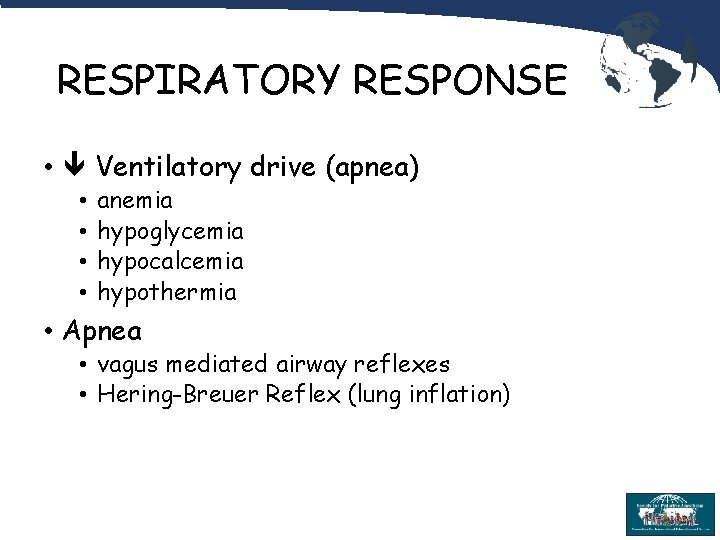
RESPIRATORY RESPONSE • Ventilatory drive (apnea) • • anemia hypoglycemia hypocalcemia hypothermia • Apnea • vagus mediated airway reflexes • Hering-Breuer Reflex (lung inflation)
CARDIOVASCULAR SYSTEM
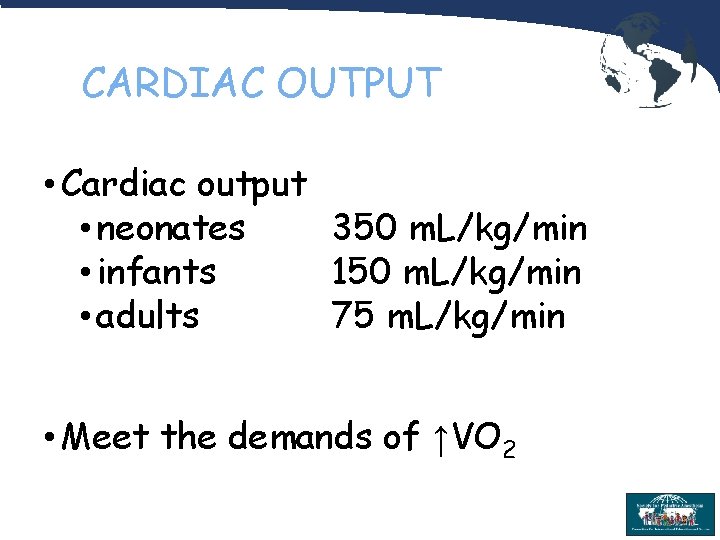
CARDIAC OUTPUT • Cardiac output • neonates 350 m. L/kg/min • infants 150 m. L/kg/min • adults 75 m. L/kg/min • Meet the demands of ↑VO 2
C. O. DETERMINANTS: SV x HR • Limited ability to SV in response to changes in preload and afterload • non-compliant myocardium • more connective tissue • less mature myocytes (30% vs. 60%) • maximum stroke volume at lower LVEDP • C. O. is heart rate dependent • Bradycardia is NOT well tolerated • Tachycardia (> 180) will result in CO
CARDIAC OUTPUT • CO management • optimize volume and hemoglobin • catecholamines most useful • drugs that SVR only are NOT useful • use drugs that HR and contractility
NEURAL CONTROL Vagotonic • immature sympathetic innervation high levels of catecholamines at birth • • maximal adrenergic stimulation of myocytes functional reserve • • Clinical significance: • • bradycardia initial response to various insults • hypoxemia • intubation
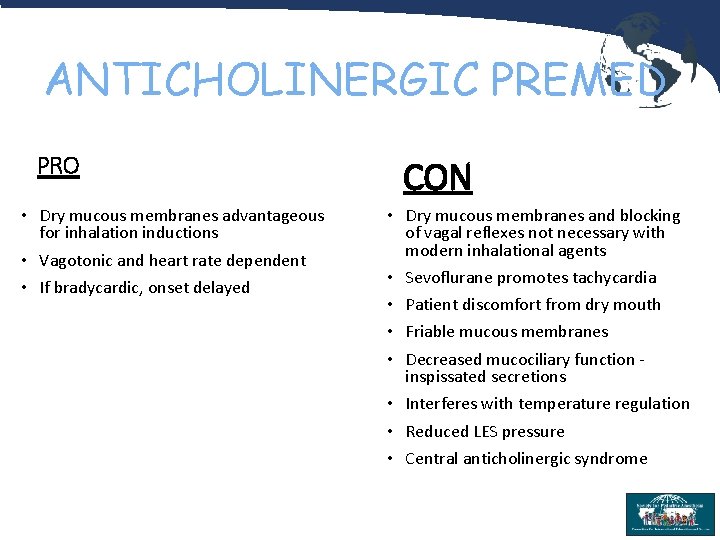
ANTICHOLINERGIC PREMED • Vagotonic • instrumentation of the airway • CO is heart rate dependent • bradycardia with halothane • bradycardia after one dose of succinylcholine
ANTICHOLINERGIC PREMED PRO • Dry mucous membranes advantageous for inhalation inductions • Vagotonic and heart rate dependent • If bradycardic, onset delayed CON • Dry mucous membranes and blocking of vagal reflexes not necessary with modern inhalational agents • Sevoflurane promotes tachycardia • Patient discomfort from dry mouth • Friable mucous membranes • Decreased mucociliary function inspissated secretions • Interferes with temperature regulation • Reduced LES pressure • Central anticholinergic syndrome
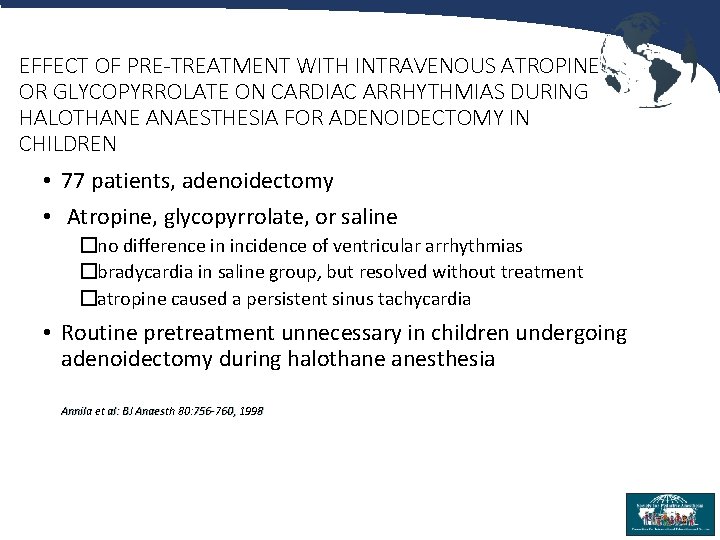
EFFECT OF PRE-TREATMENT WITH INTRAVENOUS ATROPINE OR GLYCOPYRROLATE ON CARDIAC ARRHYTHMIAS DURING HALOTHANE ANAESTHESIA FOR ADENOIDECTOMY IN CHILDREN • 77 patients, adenoidectomy • Atropine, glycopyrrolate, or saline �no difference in incidence of ventricular arrhythmias �bradycardia in saline group, but resolved without treatment �atropine caused a persistent sinus tachycardia • Routine pretreatment unnecessary in children undergoing adenoidectomy during halothane anesthesia Annila et al: BJ Anaesth 80: 756 -760, 1998
ANTICHOLINERGIC PROPHYLAXIS SHOULD IT BE GIVEN ROUTINELY?
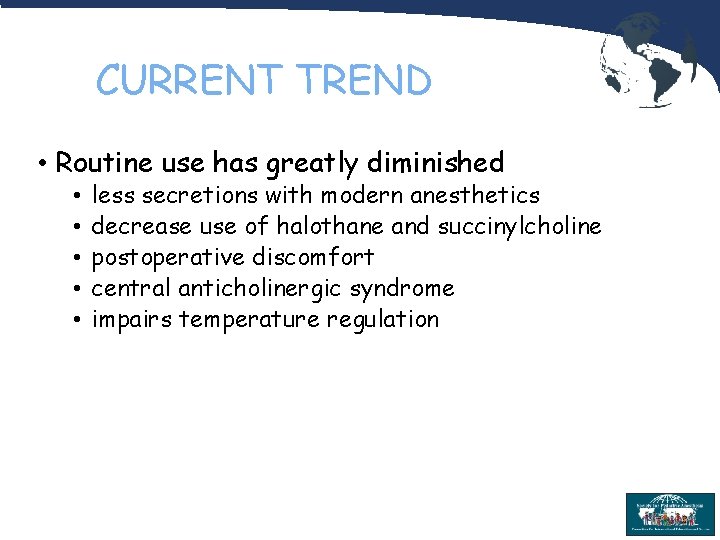
CURRENT TREND • Routine use has greatly diminished • • • less secretions with modern anesthetics decrease use of halothane and succinylcholine postoperative discomfort central anticholinergic syndrome impairs temperature regulation
INDICATIONS • • • Age-related: < 6 months; < 1 year of age Development of bradycardia Hx of bradycardia during intubation/induction Procedures inducing vagal reflexes • oculocardiac reflex Succinylcholine/High dose opioids Ketamine Excessive secretions Oral surgery Position other than supine
ATROPINE DOSE • 20 mcg/kg • AHA 2015 PALS Guidelines • Minimum dose (0. 1 mg) no longer required
SUMMARY • Pediatric patients are not just small adults • Understanding the anatomical and physiologic differences allows for a more intelligent approach to caring for these patients during anesthesia and surgery