Natural History of HIV Infection in Children HAIVN
- Slides: 38
Natural History of HIV Infection in Children HAIVN Harvard Medical School AIDS Initiative in Vietnam
Learning Objectives By the end of this session, participants should be able to: n Describe the characteristic, structure of HIV n Describe the and transmission route of HIV n Describe the HIV life cycle n Explain HIV pathogenesis n Describe the natural history of HIV disease progression in children 2
Basic Concepts
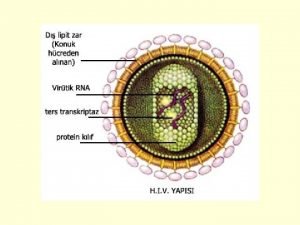
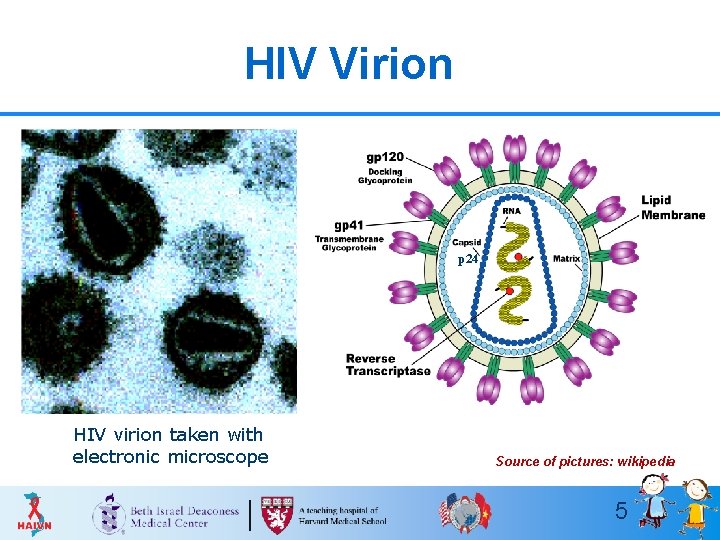
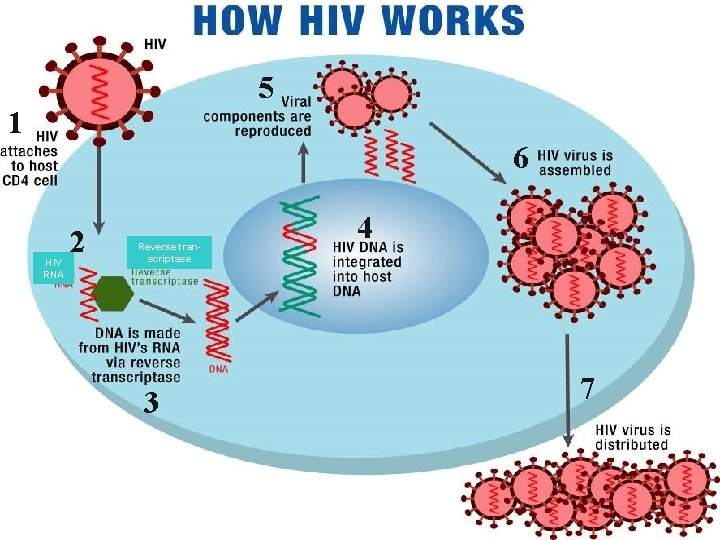
HIV Virology n n n HIV: Human Immunodeficiency Virus HIV is an RNA virus HIV is a “retrovirus”: • replication occurs from RNA to DNA using the enzyme “reverse transcriptase” • the DNA created is then integrated into the host cell genome (T lymphocyte) • further HIV virus is then produced using this DNA complex • Two types: HIV 1 and HIV 2 4
HIV Virion p 24 HIV virion taken with electronic microscope Source of pictures: wikipedia 5
CD 4 Cell – Definition n CD 4 cell is one type of T-Lymphocyte HIV binds with receptors on the CD 4 cell to enter and infect the cell After infection, the number of CD 4 cells gradually declines over time 6
CD 4 Count - Definition n n The CD 4 cell count is the number of CD 4 cells in a cubic millimeter of blood The CD 4 cell count indicates extent of HIV-induced immune damage 7
Viral Load – Definition n The viral load is the amount of HIV in the blood The level of HIV in the blood indicates the magnitude of HIV replication and rate of destruction of CD 4 cells The viral load test measures the amount of HIV RNA in the plasma 8
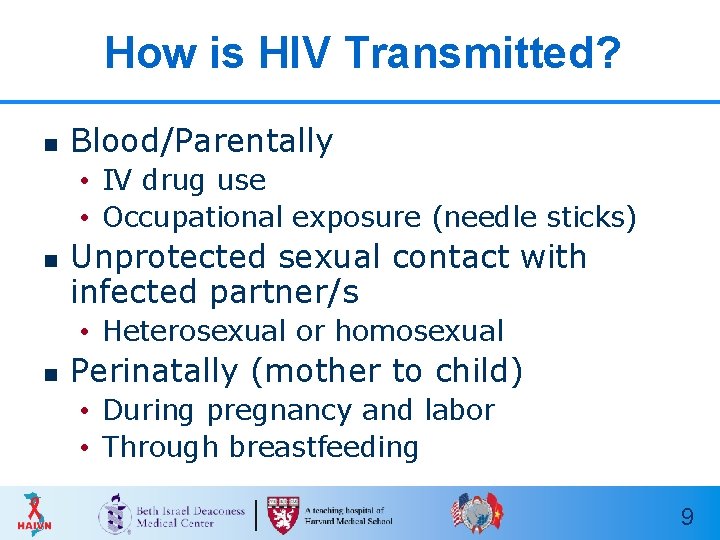
How is HIV Transmitted? n Blood/Parentally • IV drug use • Occupational exposure (needle sticks) n Unprotected sexual contact with infected partner/s • Heterosexual or homosexual n Perinatally (mother to child) • During pregnancy and labor • Through breastfeeding 9
Transmission Activity
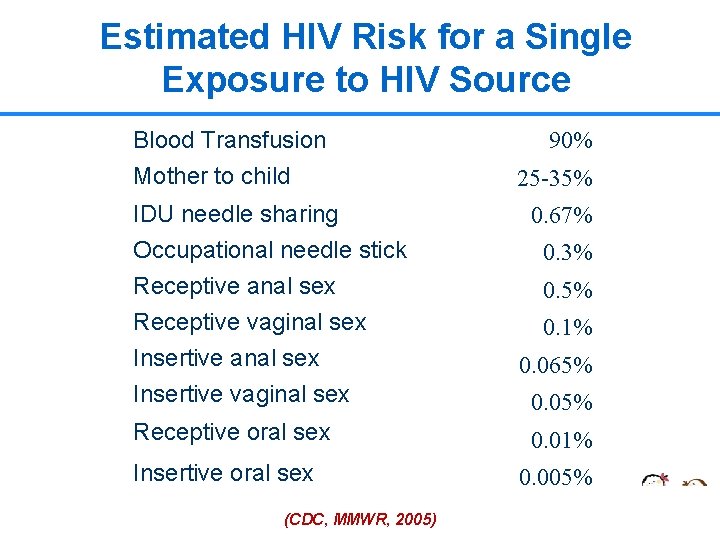
Estimated HIV Risk for a Single Exposure to HIV Source Blood Transfusion Mother to child IDU needle sharing Occupational needle stick Receptive anal sex Receptive vaginal sex Insertive anal sex Insertive vaginal sex Receptive oral sex Insertive oral sex (CDC, MMWR, 2005) 90% 25 -35% 0. 67% 0. 3% 0. 5% 0. 1% 0. 065% 0. 01% 0. 005% 11
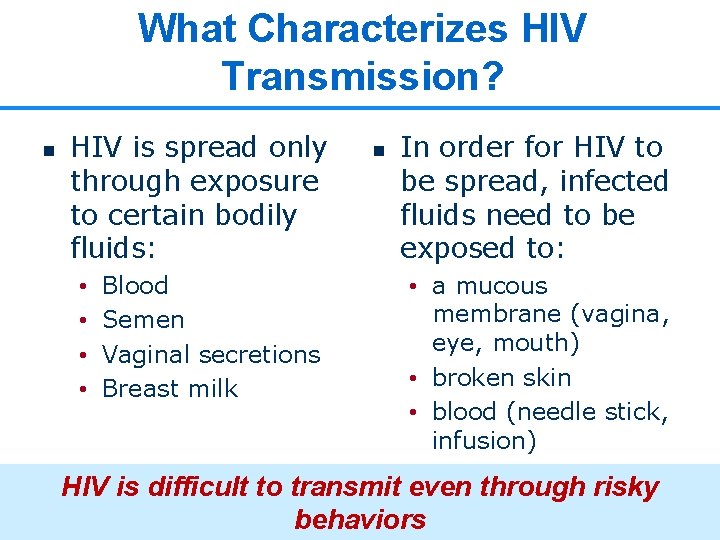
What Characterizes HIV Transmission? n HIV is spread only through exposure to certain bodily fluids: • • Blood Semen Vaginal secretions Breast milk n In order for HIV to be spread, infected fluids need to be exposed to: • a mucous membrane (vagina, eye, mouth) • broken skin • blood (needle stick, infusion) HIV is difficult to transmit even through risky 12 behaviors
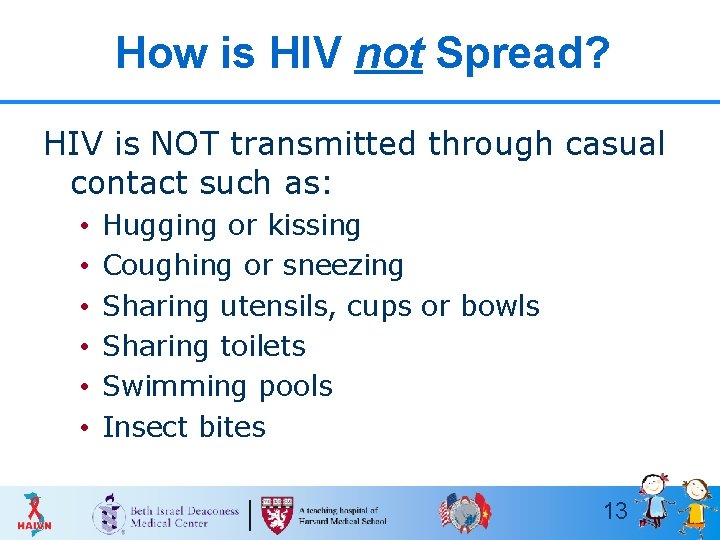
How is HIV not Spread? HIV is NOT transmitted through casual contact such as: • • • Hugging or kissing Coughing or sneezing Sharing utensils, cups or bowls Sharing toilets Swimming pools Insect bites 13
How Does HIV Infect the Human Cell? 14
5 1 6 HIV RNA 2 Reverse transcriptase 3 4 7 15
HIV Pathogenesis
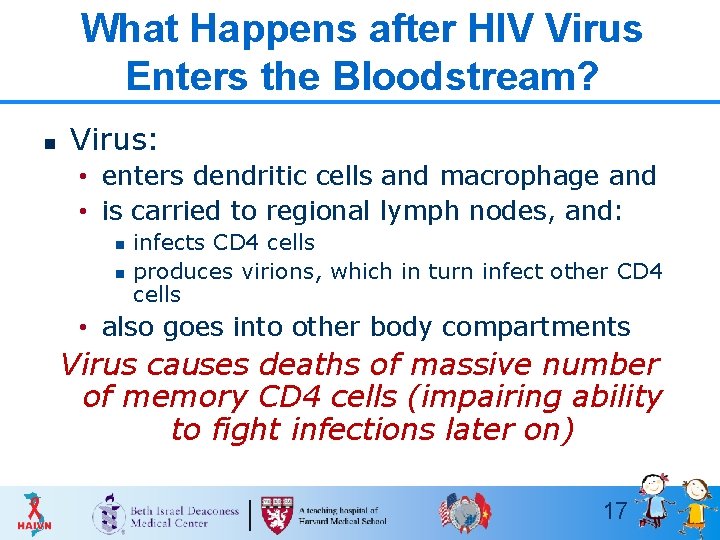
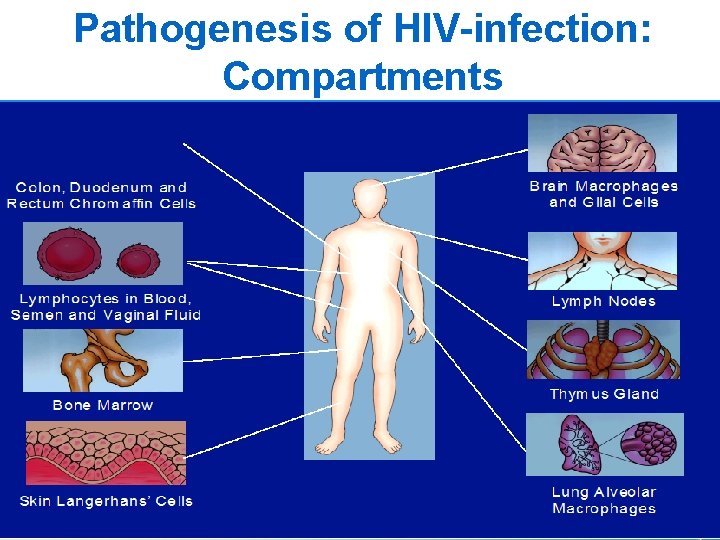
What Happens after HIV Virus Enters the Bloodstream? n Virus: • enters dendritic cells and macrophage and • is carried to regional lymph nodes, and: n n infects CD 4 cells produces virions, which in turn infect other CD 4 cells • also goes into other body compartments Virus causes deaths of massive number of memory CD 4 cells (impairing ability to fight infections later on) 17
Pathogenesis of HIV-infection: Compartments Dendritic cells, macrophage 18
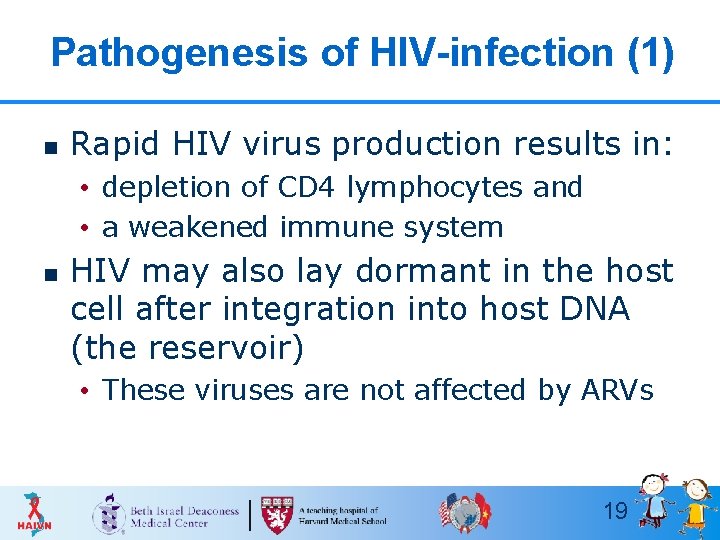
Pathogenesis of HIV-infection (1) n Rapid HIV virus production results in: • depletion of CD 4 lymphocytes and • a weakened immune system n HIV may also lay dormant in the host cell after integration into host DNA (the reservoir) • These viruses are not affected by ARVs 19
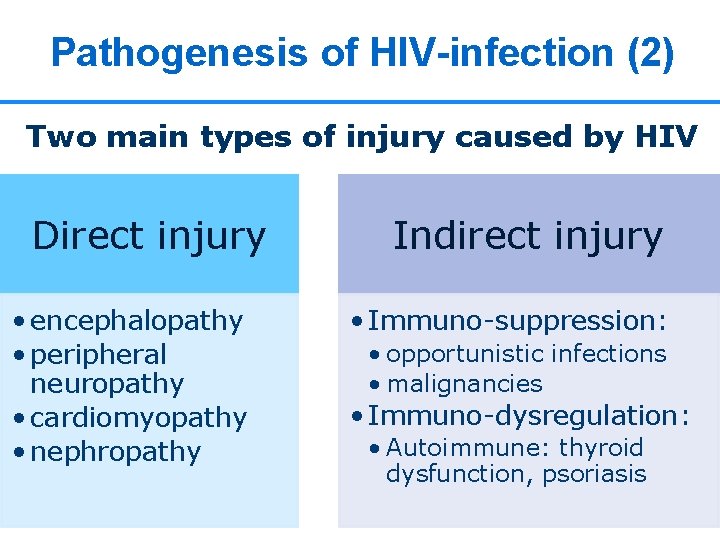
Pathogenesis of HIV-infection (2) Two main types of injury caused by HIV Direct injury • encephalopathy • peripheral neuropathy • cardiomyopathy • nephropathy Indirect injury • Immuno-suppression: • opportunistic infections • malignancies • Immuno-dysregulation: • Autoimmune: thyroid dysfunction, psoriasis 20
Natural History of HIV Infection in Children
Natural History Untreated HIV infection
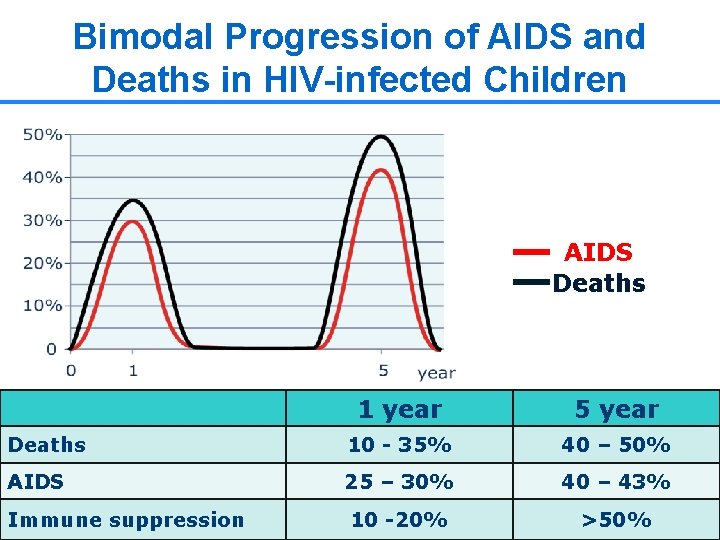
Bimodal Progression of AIDS and Deaths in HIV-infected Children AIDS Deaths 1 year 5 year Deaths 10 - 35% 40 – 50% AIDS 25 – 30% 40 – 43% Immune suppression 10 -20% 23 >50%
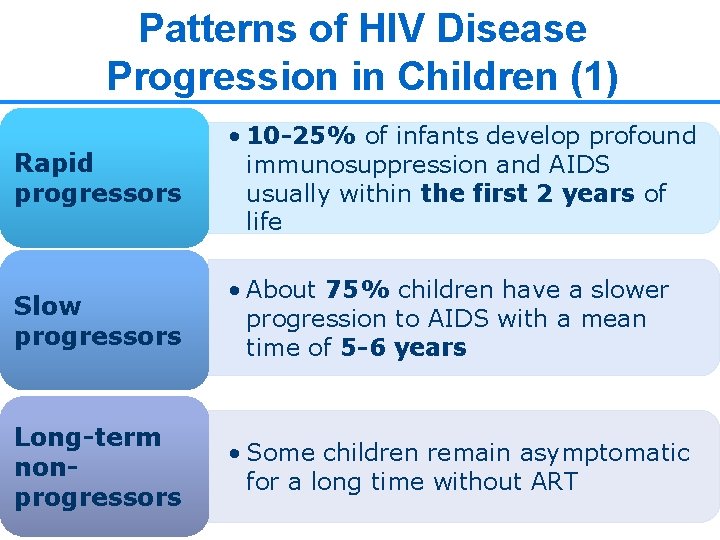
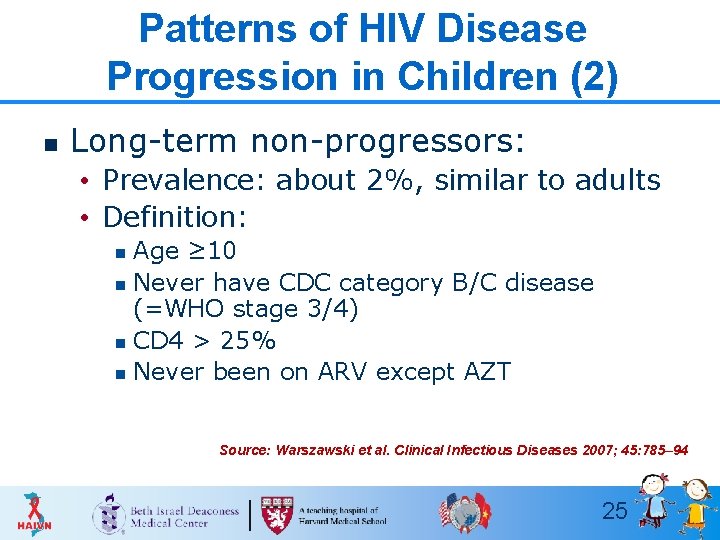
Patterns of HIV Disease Progression in Children (1) Rapid progressors • 10 -25% of infants develop profound immunosuppression and AIDS usually within the first 2 years of life Slow progressors • About 75% children have a slower progression to AIDS with a mean time of 5 -6 years Long-term nonprogressors • Some children remain asymptomatic for a long time without ART 24
Patterns of HIV Disease Progression in Children (2) n Long-term non-progressors: • Prevalence: about 2%, similar to adults • Definition: Age ≥ 10 n Never have CDC category B/C disease (=WHO stage 3/4) n CD 4 > 25% n Never been on ARV except AZT n Source: Warszawski et al. Clinical Infectious Diseases 2007; 45: 785– 94 25
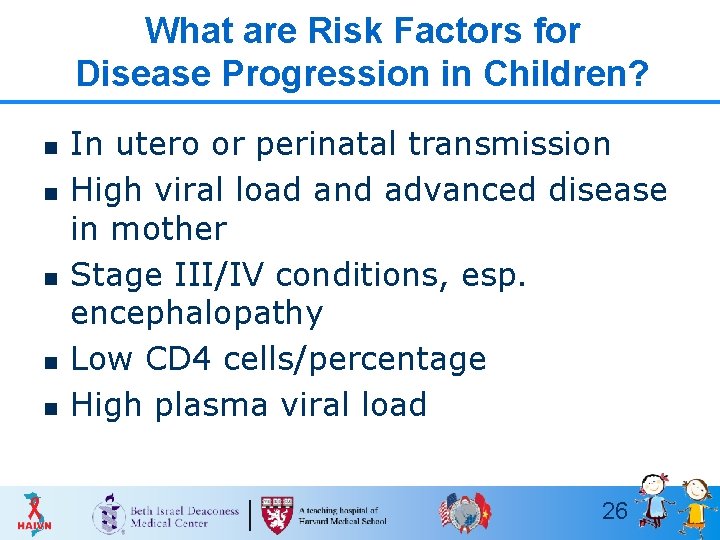
What are Risk Factors for Disease Progression in Children? n n n In utero or perinatal transmission High viral load and advanced disease in mother Stage III/IV conditions, esp. encephalopathy Low CD 4 cells/percentage High plasma viral load 26
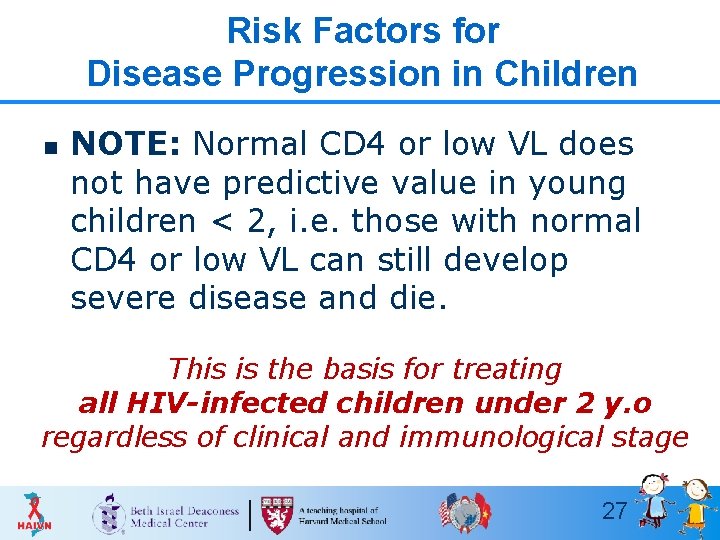
Risk Factors for Disease Progression in Children n NOTE: Normal CD 4 or low VL does not have predictive value in young children < 2, i. e. those with normal CD 4 or low VL can still develop severe disease and die. This is the basis for treating all HIV-infected children under 2 y. o regardless of clinical and immunological stage 27
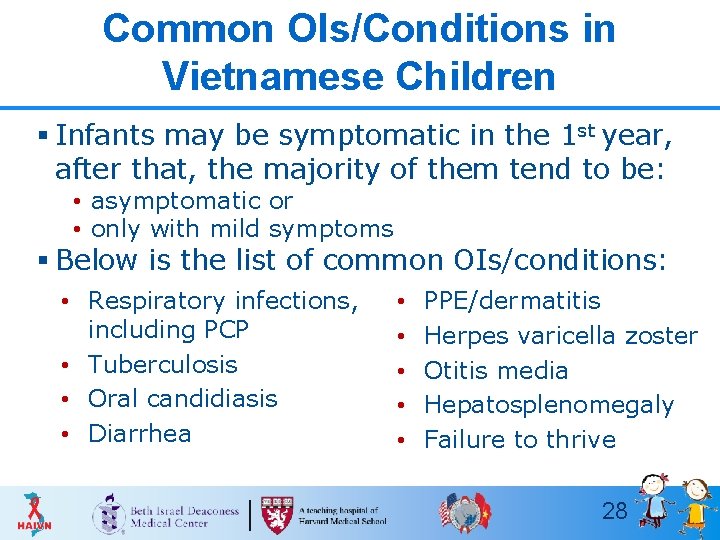
Common OIs/Conditions in Vietnamese Children § Infants may be symptomatic in the 1 st year, after that, the majority of them tend to be: • asymptomatic or • only with mild symptoms § Below is the list of common OIs/conditions: • Respiratory infections, including PCP • Tuberculosis • Oral candidiasis • Diarrhea • • • PPE/dermatitis Herpes varicella zoster Otitis media Hepatosplenomegaly Failure to thrive 28
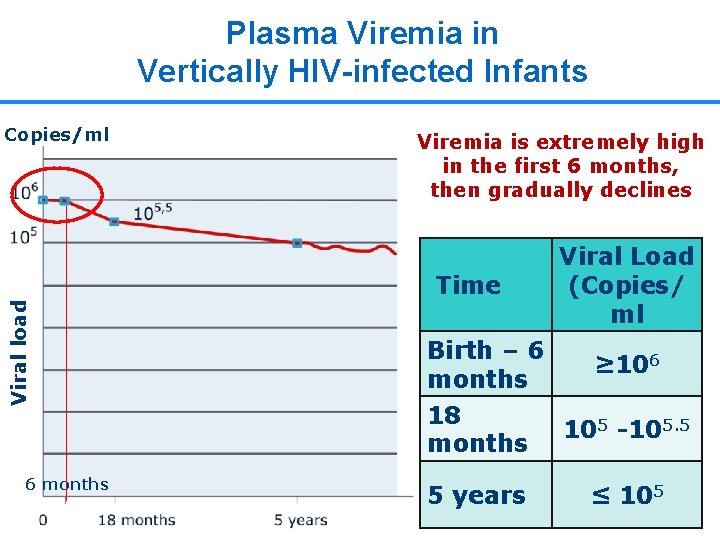
Plasma Viremia in Vertically HIV-infected Infants Copies/ml Viremia is extremely high in the first 6 months, then gradually declines Viral load Time 6 months Viral Load (Copies/ ml Birth – 6 ≥ 106 months 18 105 -105. 5 months 5 years ≤ 105 29
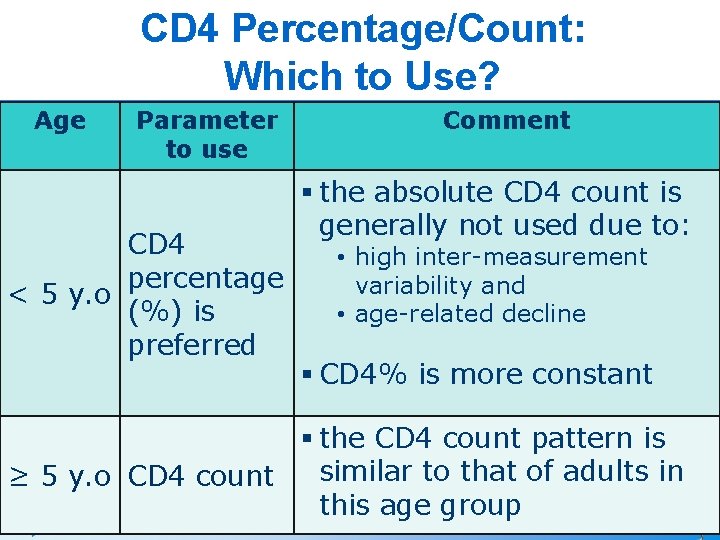
CD 4 Percentage/Count: Which to Use? Age Parameter to use CD 4 percentage < 5 y. o (%) is preferred Comment § the absolute CD 4 count is generally not used due to: • high inter-measurement variability and • age-related decline § CD 4% is more constant § the CD 4 count pattern is similar to that of adults in ≥ 5 y. o CD 4 count this age group 30
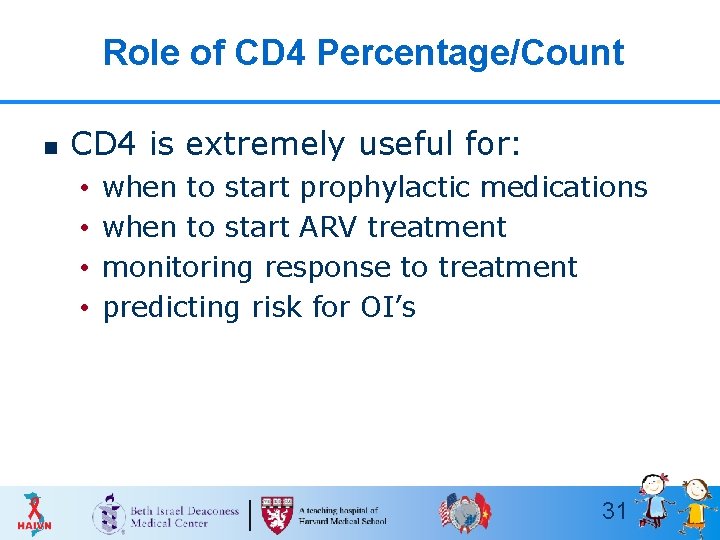
Role of CD 4 Percentage/Count n CD 4 is extremely useful for: • • when to start prophylactic medications when to start ARV treatment monitoring response to treatment predicting risk for OI’s 31
Natural History of HIV infection treated with ART
HIV infection treated with ART n Combination ART is associated with improvement in: • virologic, • immunologic, and • clinical health for HIV-infected adults and children 33
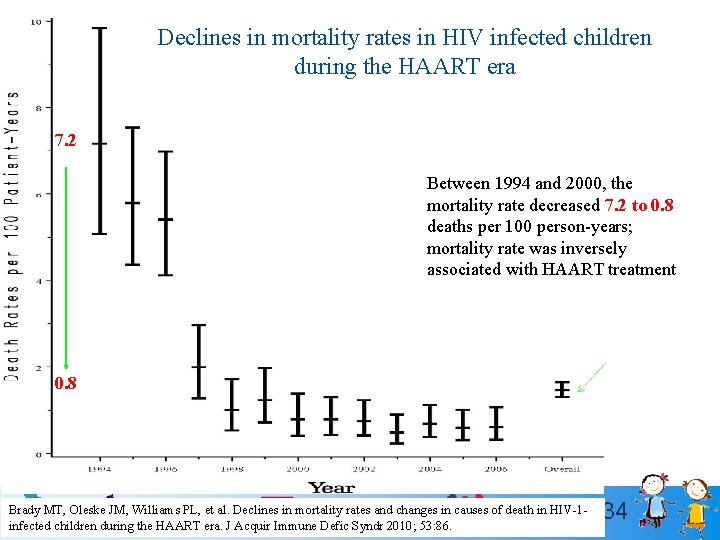
Declines in mortality rates in HIV infected children during the HAART era 7. 2 Between 1994 and 2000, the mortality rate decreased 7. 2 to 0. 8 deaths per 100 person-years; mortality rate was inversely associated with HAART treatment 0. 8 Brady MT, Oleske JM, Williams PL, et al. Declines in mortality rates and changes in causes of death in HIV-1 infected children during the HAART era. J Acquir Immune Defic Syndr 2010; 53: 86. 34
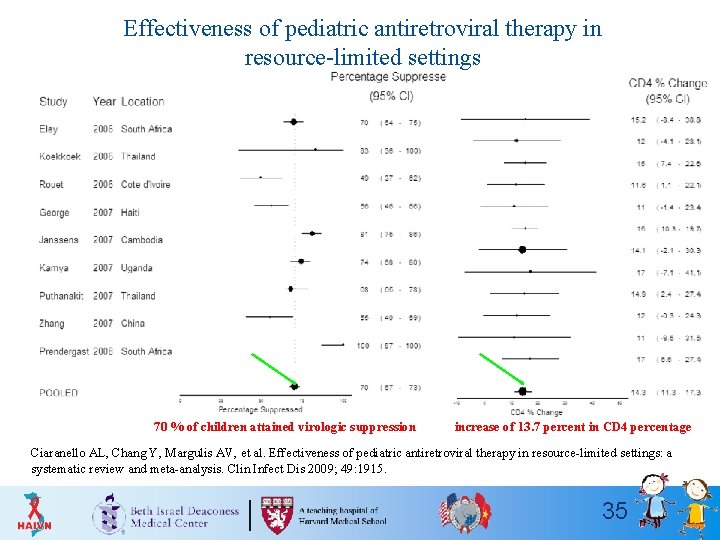
Effectiveness of pediatric antiretroviral therapy in resource-limited settings 70 % of children attained virologic suppression increase of 13. 7 percent in CD 4 percentage Ciaranello AL, Chang Y, Margulis AV, et al. Effectiveness of pediatric antiretroviral therapy in resource-limited settings: a systematic review and meta-analysis. Clin Infect Dis 2009; 49: 1915. 35
Key Points n After infecting CD 4 cells, HIV multiplies rapidly, resulting in: • depletion of CD 4 lymphocytes • weakened immune system n 3 patterns of HIV disease progression in children are : • Rapid progressors • Slow progressors • Long-term non-progressors n In infants infected perinatally, viremia is extremely high in the first 6 months, then gradually declines 36
Key Points n CD 4 count is the best way to: • Determine degree of immune suppression • Make treatment decisions • Monitor for treatment response n Combination ART is associated with improvement in: • Virologic • Immunologic • Clinical health for HIV-infected children. 37
Thank you! Questions?