Multiple Sclerosis JOHN D SCHAEFFER DO PMG NEUROLOGY





- Slides: 56
Multiple Sclerosis JOHN D. SCHAEFFER, DO PMG NEUROLOGY SPECIALISTS
Multiple Sclerosis ● ● ● 450, 000 people in USA, 2. 3 million worldwide Female: Male - 3: 1 Lifetime financial burden: $1. 2 million
What is MS ● ● Recurrent, subacute, focal neurologic symptoms and signs that improve (to some extent) over several weeks or months. These episodes (relapses) associated with demyelination. Also underlying progressive loss of axons and gray matter
Pathogenesis ● ● ● Chronic Inflammatory disorder characterized by damage of myelin sheath with axonal degeneration and neuronal cell death 18 Prevailing dogma: MS is an autoimmune disease mediated by autoreactive CD 4+ T-cells, but why do B-cell depleting immunotherapies work? Most researchers consider MS a primary organ-specific autoimmune disease.
Pathogenesis ● ● MS “develops in a genetically susceptible individual who experiences a ‘sufficient set’ of environmental factors. ” ○ HLA-DRB 1*1501 increases risk by 3 x ○ Northern European monozygotic twins concordance rate of MS is 20 -30% (versus 0. 1 -0. 2% of general population) No single autoantigen, autoantibody, or infectious agent has been unequivocally associated with MS.
Pathogenesis ● Dozens of risk factors, which ones have evidence? : ○ ○ ○ ● EBV: OR 3. 6. Children (no sx), adults develop mono ■ Risk of MS in patients with h/o Mono is 2 x gen population Adolescent obesity: OR 2. 0 Smoking (active [OR 1. 6) and passive [1. 3]). Dose dependent. Vit D deficiency (OR 1. 4)/low UV radiation exposure (OR 2. 0) ■ MS incidence & prevalence are higher in higher latitudes Shift work: OR 1. 7. Protective? ○ ○ ○ Oral tobacco: one study found OR 0. 5 Coffee: OR 0. 7 Alcohol: OR 0. 6
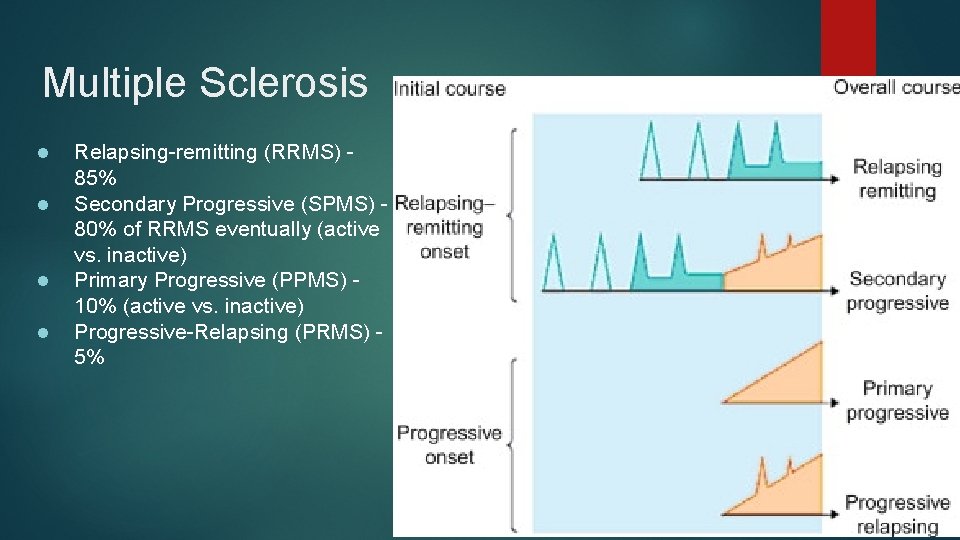
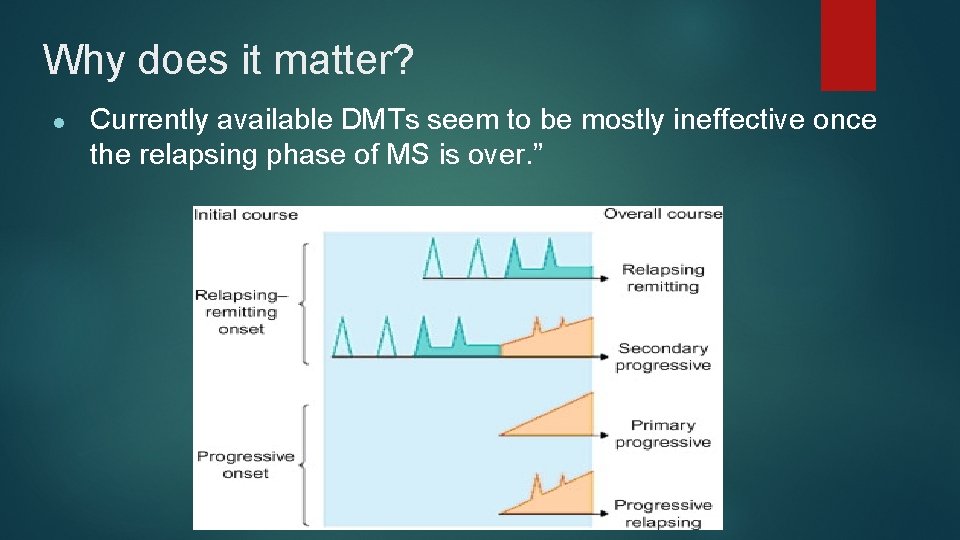
Multiple Sclerosis ● ● Relapsing-remitting (RRMS) 85% Secondary Progressive (SPMS) 80% of RRMS eventually (active vs. inactive) Primary Progressive (PPMS) 10% (active vs. inactive) Progressive-Relapsing (PRMS) 5%
“Benign” MS ● ● ● Recognized by autopsy cases in 1960 s Minimal disability (EDSS 2 or below) 20 years after diagnosis. 13 10 -15% of MS
5 Principles of Diagnosis 1. 2. 3. 4. 5. Identification of a syndrome “typical” of MS-related demyelination Objective evidence of CNS involvement Demonstration of Dissemination in Space (DIS) Demonstration of Dissemination in Time (DIT) No better explanation than MS
#1: Typical Syndromes - Questions to ask patients ● Have you ever experienced ____ that came on subacutely and persisted for days to weeks and then partially or fully resolved over days to weeks ○ ○ ○ Monocular (usually painful) visual loss (optic neuritis) Binocular diplopia Limb weakness Limb numbness Vertigo Lhermitte’s phenomenon By definition, symptoms have to last 24 hours!!
#2: Objective Evidence - exam, MRI, paraclinical ● ● ● Optic neuritis: ○ Relative afferent pupillary defect (R-APD), abnormal VEP Double vision: ○ INO (internuclear ophthalmoplegia), CN 6 palsy Transverse Myelitis ○ Hemisensory level The revised Mc. Donald criteria affirmed that a radiographic abnormality that corresponds to the correct anatomic location meets this criteria (i. e. , T 2 hyperinensity in spinal cord is objective evidence of myelitis)
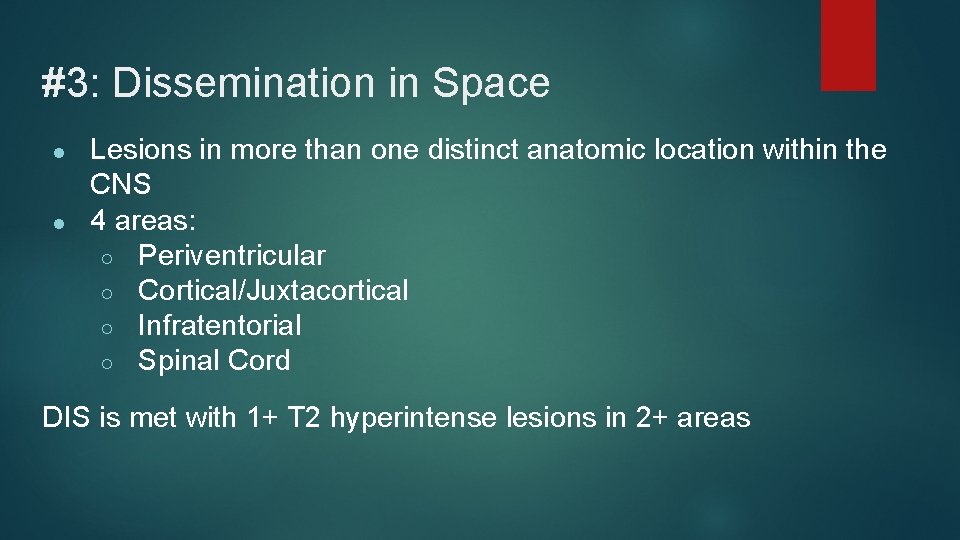
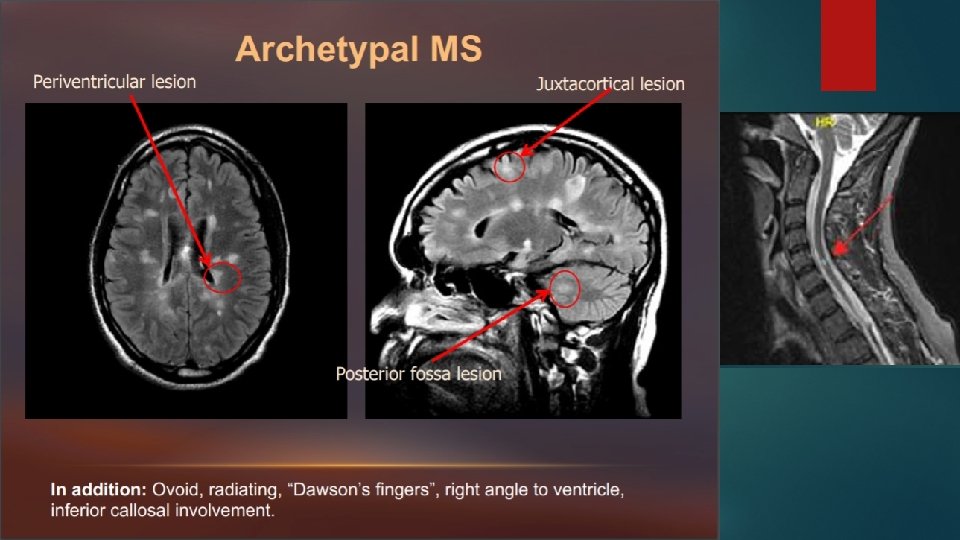
#3: Dissemination in Space ● ● Lesions in more than one distinct anatomic location within the CNS 4 areas: ○ Periventricular ○ Cortical/Juxtacortical ○ Infratentorial ○ Spinal Cord DIS is met with 1+ T 2 hyperintense lesions in 2+ areas
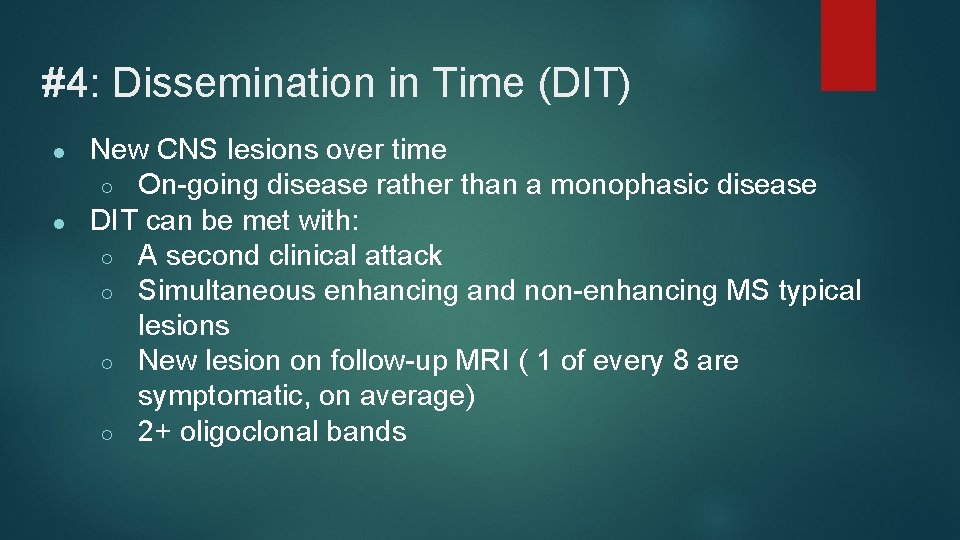
#4: Dissemination in Time (DIT) ● ● New CNS lesions over time ○ On-going disease rather than a monophasic disease DIT can be met with: ○ A second clinical attack ○ Simultaneous enhancing and non-enhancing MS typical lesions ○ New lesion on follow-up MRI ( 1 of every 8 are symptomatic, on average) ○ 2+ oligoclonal bands
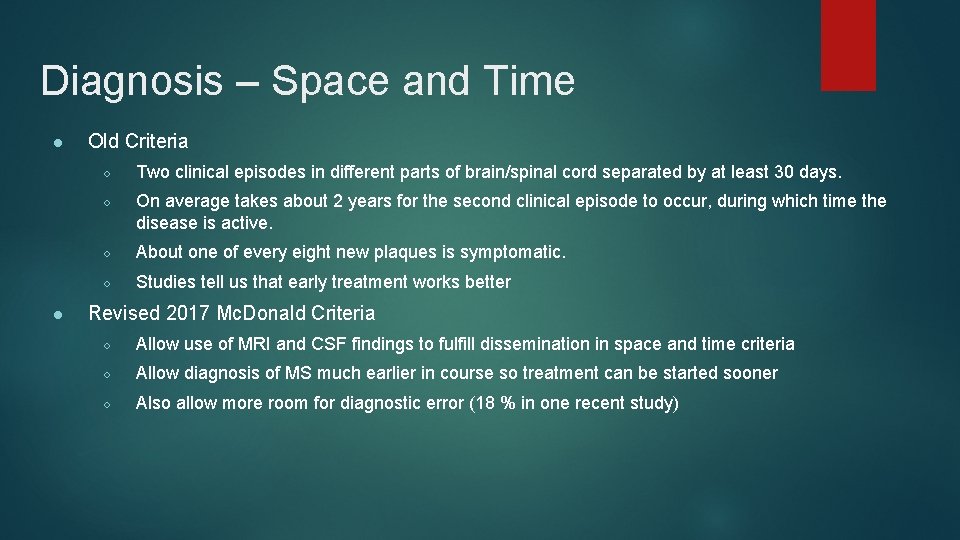
Diagnosis – Space and Time ● ● Old Criteria ○ Two clinical episodes in different parts of brain/spinal cord separated by at least 30 days. ○ On average takes about 2 years for the second clinical episode to occur, during which time the disease is active. ○ About one of every eight new plaques is symptomatic. ○ Studies tell us that early treatment works better Revised 2017 Mc. Donald Criteria ○ Allow use of MRI and CSF findings to fulfill dissemination in space and time criteria ○ Allow diagnosis of MS much earlier in course so treatment can be started sooner ○ Also allow more room for diagnostic error (18 % in one recent study)
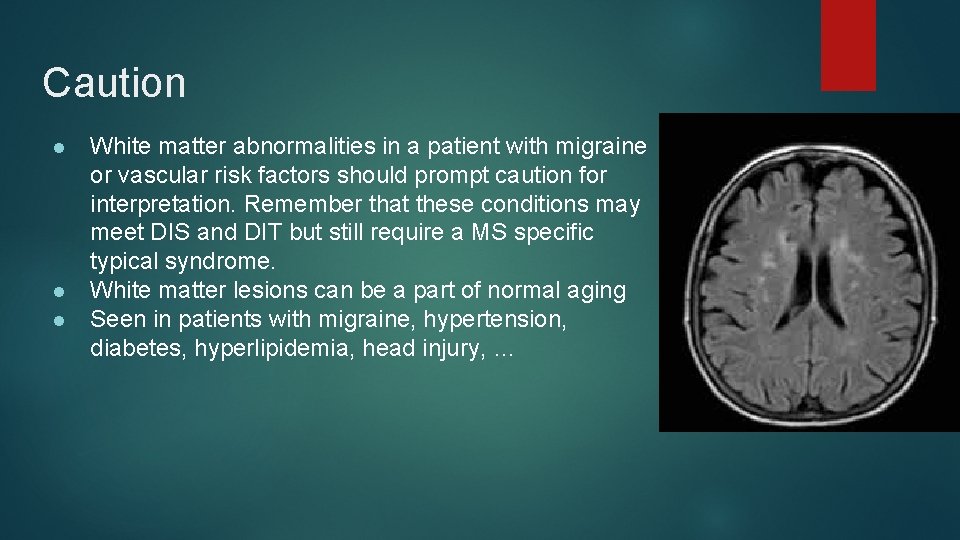
Caution ● ● ● White matter abnormalities in a patient with migraine or vascular risk factors should prompt caution for interpretation. Remember that these conditions may meet DIS and DIT but still require a MS specific typical syndrome. White matter lesions can be a part of normal aging Seen in patients with migraine, hypertension, diabetes, hyperlipidemia, head injury, …
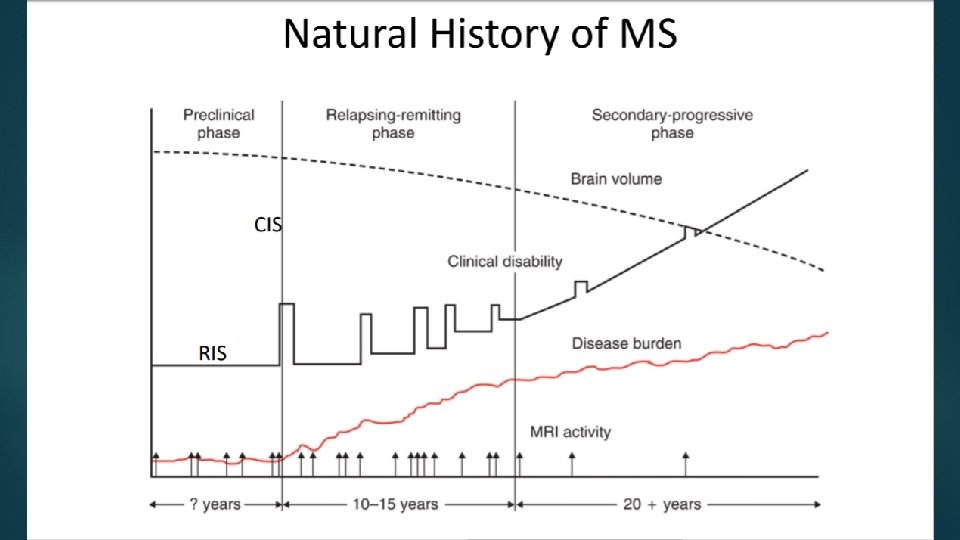
Not Quite MS 1. 2. Radiologically Isolated Syndrome (RIS) a. Classic radiographic findings with no typical symptoms Clinically Isolated Syndrome (CIS): one clinical event. a. 90% will have second attack within 3 years
Why does it matter? ● Currently available DMTs seem to be mostly ineffective once the relapsing phase of MS is over. ”
MS Relapses ● Relapses defined as new or worsening neurologic symptoms that occur in absence of fever/infection, last > 24 hours, and are preceded by 30 days of relative neurologic stability. 2 ○ ○ ○ Sensory system (48%) Optic (20%) Brainstem (21%) Motor (18%) Cerebellar (6%) Bowel/bladder (3%)3
Pseudorelapse ● ● Have to differentiate! Recurrence of symptoms from a previous relapse ○ Tend to occur with heat (Uhthoff phenomenon), infection, exercise, fatigue ○ Should resolve with time/removal of trigger
Interesting Relapse risk increases with systemic infections, perceived stress, postpartum trimester, and assisted reproductive techniques. ● Viral/bacteria infections increase T-cell type 1 immune response (parasitic infections do not, T-cell type 2). ○ Encourage MS patients to get vaccinated (inactivated) ■ Live attenuated vaccines may increase risk of relapse ■ High-dose influenza vaccine is not recommended for MS ■ Wait 4 -6 weeks after relapse ●
Relapses and Treatment Response ● MS relapse treatments: ○ Corticosteroids - There is no convincing evidence that steroids change long term outcome. ○ ACTH ○ PLEX ○ Not every relapse requires treatment
Corticosteroids ● ● ● High doses (500 -1000 mg methylprednisolone) hasten neurologic recovery ○ One placebo controlled meta-analysis showed a 0. 76 point improvement in EDSS 5 -7 days after treatment and 0. 85 points 24 weeks later. IV infusions for 3 days averages $2400 Oral steroids are no less effective per COPOUSEP trial (2015) ○ 1000 mg methylprednisolone = 1250 mg prednisone = 192 mg dexamethasone Tapering is not necessary (no suppression of HPA axis) AE: metallic taste, facial flushing, GI disturbance, insomnia. Avoid in first trimester (cleft palate)
ACTH ● ● ● IM injection No head to head studies One vial cost $40 in 2001, $34, 000 in 2014 = infrequent use
Plasma Exchange (PLEX) ● ● Most patients don’t fully recovery to baseline after relapse Those with severe impairments after steroids ○ PLEX: “significant improvement” in 42% (5% of sham) ○ There are risks with PLEX
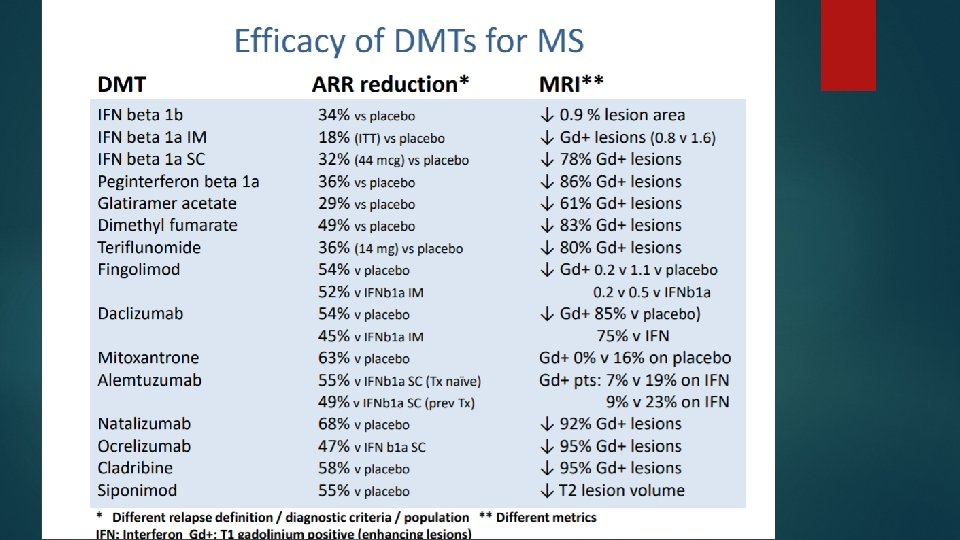
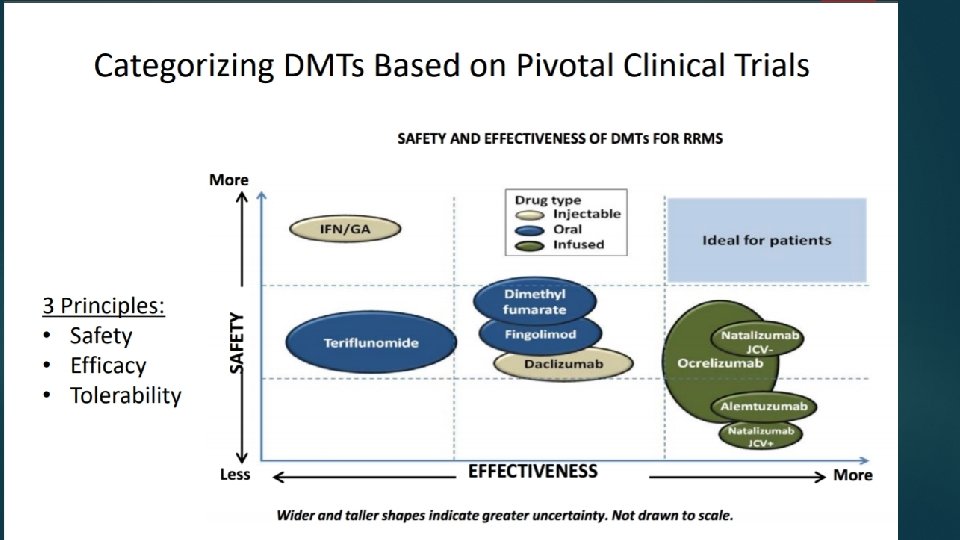
Disease Modifying Treatments (DMTs) f
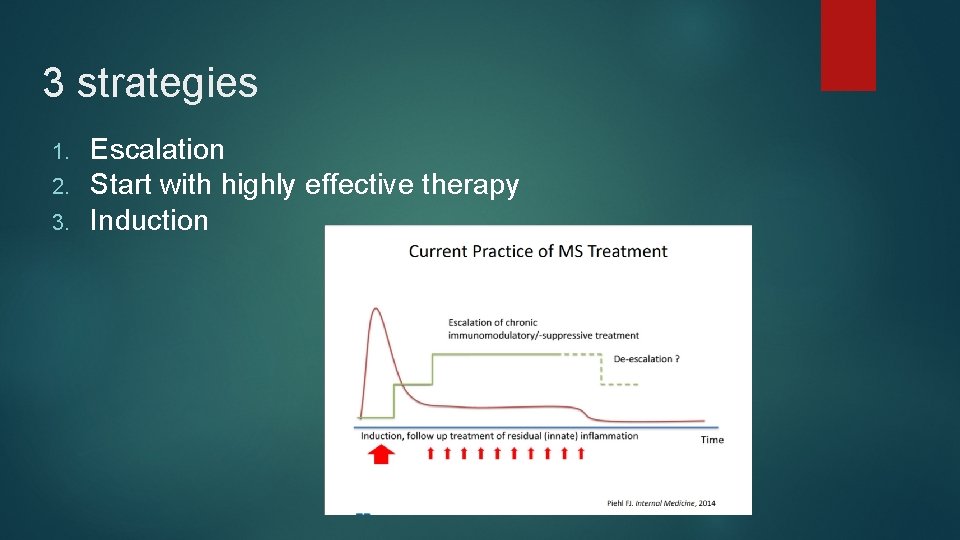
3 strategies 1. 2. 3. Escalation Start with highly effective therapy Induction
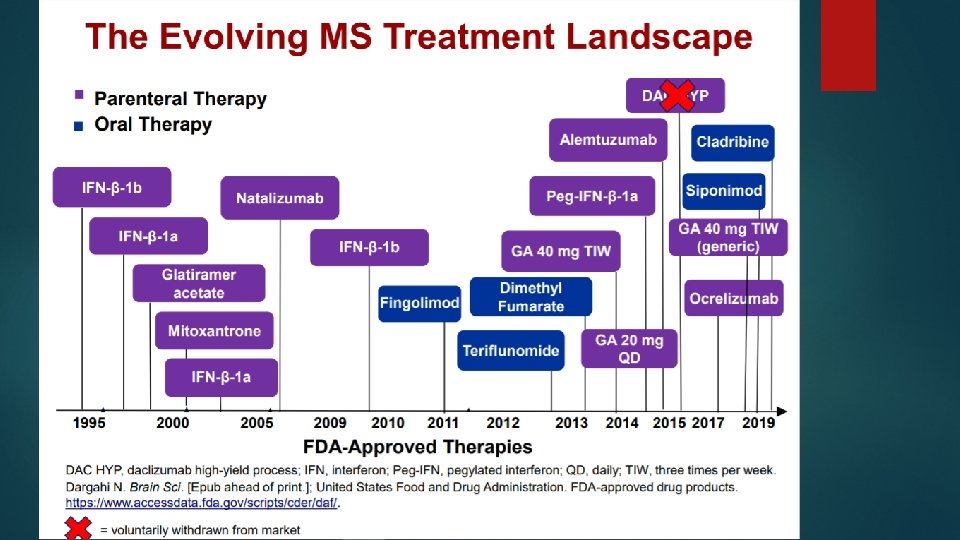
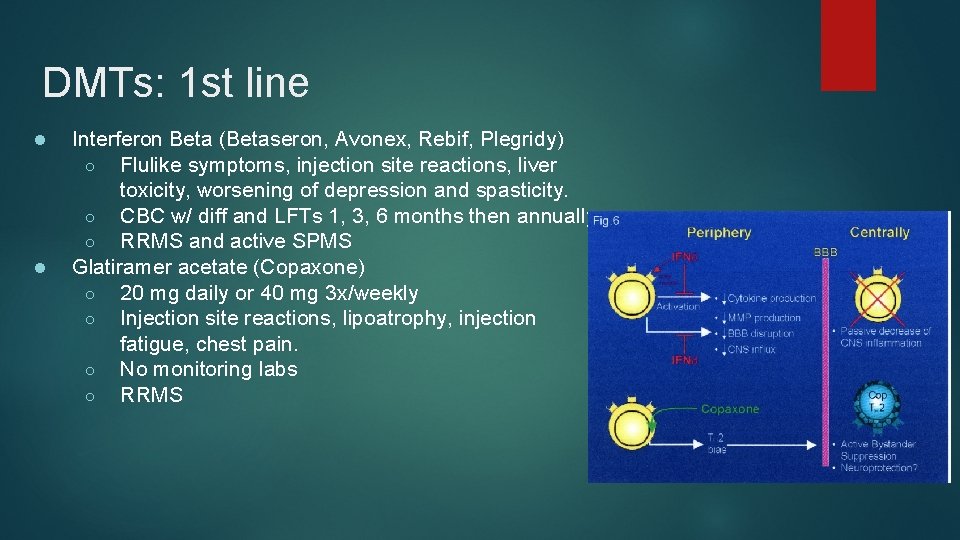
DMTs: 1 st line ● ● Interferon Beta (Betaseron, Avonex, Rebif, Plegridy) ○ Flulike symptoms, injection site reactions, liver toxicity, worsening of depression and spasticity. ○ CBC w/ diff and LFTs 1, 3, 6 months then annually ○ RRMS and active SPMS Glatiramer acetate (Copaxone) ○ 20 mg daily or 40 mg 3 x/weekly ○ Injection site reactions, lipoatrophy, injection fatigue, chest pain. ○ No monitoring labs ○ RRMS
DMTs: 1 st line (Fumarates) ● Dimethyl fumarate (Tecfidera) ○ ○ ○ ○ 240 mg BID Nrf-2 activation? AE: flushing (ASA 81), abd pain, nausea, diarrhea, infections (VZV) PML: 6 cases. All had prolonged lymphopenia (ALC < 0. 5) Labs: CBC, LFT’s q 6 months. CBC/LFTs prior to start. RRMS and active SPMS Diroximal fumarate (Vumerity) ○ ○ Fewer GI adverse effects ■ Less frequent by about 10 -15% ■ Less severe. Discontinuation rate down to 1. 6% vs. 6% Same baseline labs and monitoring as Dimethyl
DMTs: 1 st line ● Teriflunomide (Aubagio) ● Pyrimidine synthesis inhibitor ○ 7 or 14 mg BID AE: hair thinning, HA, nausea, diarrhea, HTN, neuropathy, liver failure. 1 PML. Teratogen: requires use of two effective birth control methods in women. Cholestyramine washout. Also detectable in semen. Labs: TB, LFTs, CBC prior to start. LFTs monthly x 6 months, CBC q 3 -6 months. RRMS and active SPMS ○ ○
DMTs: 2 nd line (Mods) ● Fingolimod (Gilenya) ○ 0. 5 mg daily PO ○ Sequesters lymphocytes in lymph nodes ○ RRMS and active SPMS ○ Initiation: first dose monitoring, ophtho exam x 2, CBC w/ diff, LFTs, BUN, Cr, Varicella Ig. G (if not immune vaccinate and wait 3 months). ○ Monitoring: CBC and LFTs q 3 -6 m ○ AE: liver, PRES, macular edema, skin cancer, HTN. Infection? ○ PML: 20 cases (1 : 12, 000). No markers are known to predict risk.
DMTs: 2 nd line (Mods) ● Siponimod (Mayzent) ● ● ● Mostly same baseline and monitoring studies No FDO unless HR<55, AV block, MI, CHF Need genotyping of metabolic enzyme to determine dose RRMS and active SPMS Ozanimod ○ Very similar to Fingolimod ○ No cardiac events Ponesimod ○ Appears to have fewer AE’s than Fingolimod
DMTs: 2 nd line (CD 20 MAB) ● Ocrelizumab (Ocrevus) ○ CD 20 MAB. 300 mg IV q 2 w (x 2) then 600 mg q 6 m ○ RRMS and (active? ) PPMS ○ AE: infusion rxn, infection, Hep B reactivation (0), breast cancer(? ) ■ ○ ○ ○ Infusion: 34 -40% will have flushing/throat irritation (B-cell lysis). Slow rate. PML: 0 cases Initiation: Hep B core and surface antigen. Monitor: annual CBC
DMTs: 2 nd line (CD 20 MAB) ● Ofatumumab ● ● ● Submitted to FDA Differences from Ocrevus? Ublituximab ○ Ongoing studies
DMTs: 2 nd line ● Natalizumab (Tysabri) ○ MAB against alpha integrin (Ig. G 4 subclass). ○ Prevents leukocytes from entering CNS ○ Initiation: JCV, LFTs. Monitor: JCV q 6 m ○ PML: risk based on 3 factors ■ Time on drug ■ Prior immunosuppression ■ JC virus index ○ Rebound. 3 -6 months after last dose. Start another DMT 4 weeks after last dose
DMTs: 2 nd line ● Alemutuzumab (Lemtrada) CD 52 MAB, 12 mg daily x 5 days. One year later for 3 days. If relapse occurs, repeat for 3 days (separated by 1 year) ○ RRMS with “inadequate” response to 2+ DMTs ○ AE: autoimmune diseases, malignancy ○ ○ ○ Initiation: CBC w/ diff, LFTs, BUN, Cr, Varicella titer, UA w/ micro, TB test, derm referral. Vaccines should be administered 6 weeks prior to treatment Monitor: CBC w/ diff, Cr, UA w/ micro qmonth x 48 months. TSH and thyroid exam q 3 m x 48 months. Derm & Pap smear annually.
DMTs: 2 nd line ● Cladribine (Mavenclad) ● FDA approved for RRMS and active SPMS (inadequate response to other meds) ○ Rarely used due to malignancy rate (2 X placebo) Mitoxantrone ○ Causes DNA crosslinks and strand breaks ○ Cardiotoxic and AML ○ Active SPMS ○ ● Purine analog, concentrated in lymphocytes and monocytes (only) – causes DNA breaks
Minocycline ● If DMT is delayed due to cost, consider “Bridging” with minocycline 100 mg BID ○ 2017 phase 3 RCT showed it was effective between 3 -12 months, no benefit at 24 months. ■ Monitor LFTs periodically
DMTs: 2 nd line Not FDA approved ● Rituximab (Rituxan) ○ Mouse moiety CD 20 MAB (more immunogenic than Ocrevus) ○ HERMES trial ○ 500 -1000 mg IV q 6 m
DMTs: Other ● Bone Marrow/Stem Cell ○ Mobilize and collect patient stem cells ○ Chemo to ablate bone marrow ○ Reconstitute bone marrow with collected stem cells ○ Mortality about 2. 8% ○ Best “no evidence of disease activity” (NEDA); ~70% at 5 years ○ ○ NEDA is no relapses, no new or enlarging plaques on MRI, no disability progression Only phase II studies so far
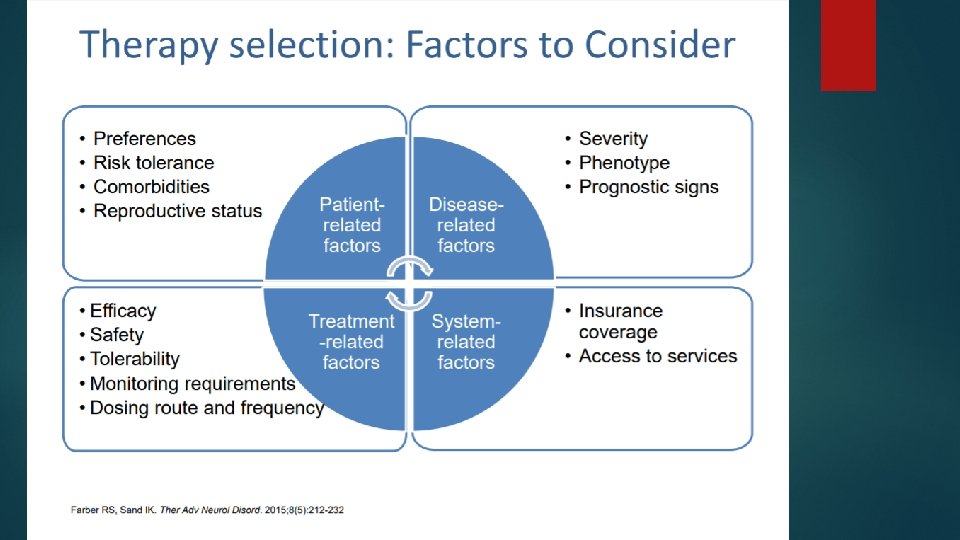
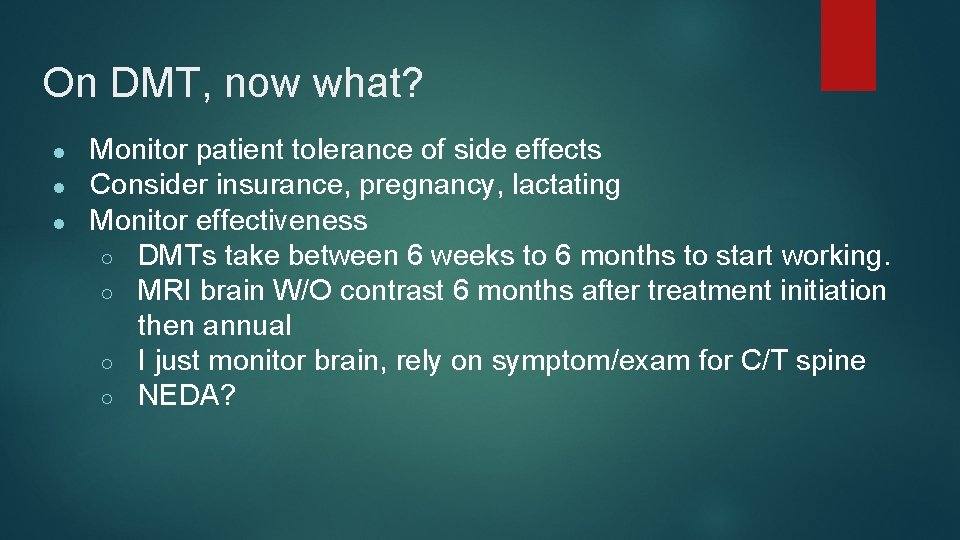
On DMT, now what? ● ● ● Monitor patient tolerance of side effects Consider insurance, pregnancy, lactating Monitor effectiveness ○ DMTs take between 6 weeks to 6 months to start working. ○ MRI brain W/O contrast 6 months after treatment initiation then annual ○ I just monitor brain, rely on symptom/exam for C/T spine ○ NEDA?
Stopping DMTs
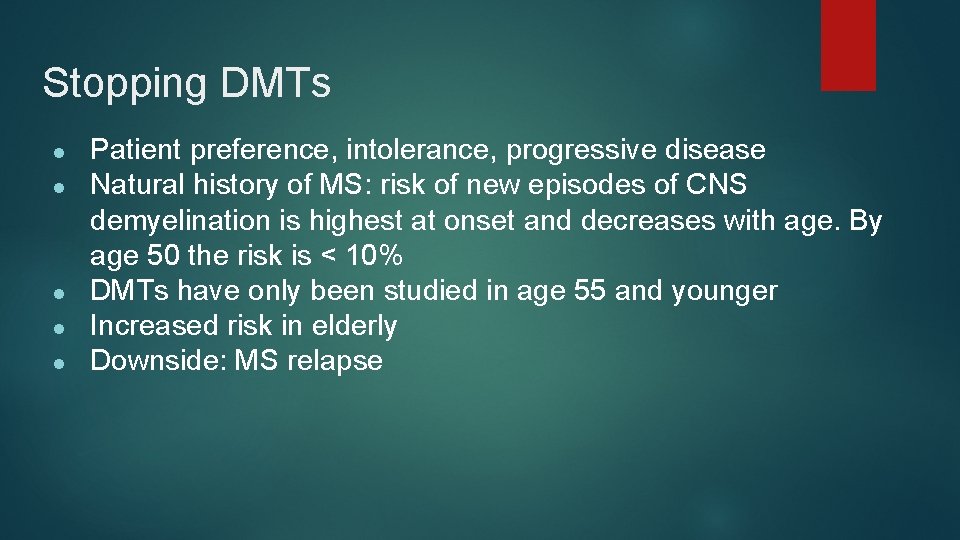
Stopping DMTs ● ● ● Patient preference, intolerance, progressive disease Natural history of MS: risk of new episodes of CNS demyelination is highest at onset and decreases with age. By age 50 the risk is < 10% DMTs have only been studied in age 55 and younger Increased risk in elderly Downside: MS relapse
Stopping DMTs ● ● “Discontinuation of DMT may be safe and appropriate in older individuals, especially those who have been quiescent clinically, with no relapses and no new activity on MRI scans for significant periods of time. ” RCT results expected in 2021.
Protective ● ● Biotin ○ B vitamin (B 7) ○ May promote remyelination and energy production ○ Modestly improved EDSS in one phase III trial. Additional studies planned. Simvastatin ○ 43% less brain volume loss in phase II study of SPMS ○ Mechanism of action unclear ○ Phase III study in progress
Protective ● ● Ibudilast ○ Suppresses cytokines ○ Less volume loss in both PPMS and SPMS ○ Phase III study planned Failed ○ Riluzole ○ Amiloride ○ Fluoxetine
References 16. Vanopdenbosch, L, Oliver, D. , Kass, J. Palliative Care in Multiple Sclerosis. Continuum: Lifelong learning in Neurology. 22(3): 943 -946. , June 2016 Jones, D. Early Relapsing Multiple Sclerosis. Continuum: Lifelong learning in Neurology. 22(3): 744 -760, June 2016 Scalfari, A. , Neuhaus A. , Degenhardt A. , The natural history of multiple sclerosis: a geographically based study 10: relapses and long-term disability. Brain. 2010; 133: 1914 -1929. Eriksson et al. , Long-term follow up of patients with clinically isolated syndromes, relapsing-remitting and secondary progressive MS. Mult Scler, 9(2003): 260 -274, 2003. L. D. Jacob, et al. Intramuscular interferon beta-1 a therapy initiated during a first demyelinating event in MS. N Engl J Med, 343: 898 -904, (2000) G. Gomi et al. , Effect of early interferon treatment on conversion to definite MS: a randomised study. Lancet, 357: 1576 -1582 (2001). R. W. Beck et al. , Interferon B-1 a for early MS: CHAMPS trial subgroup analyses. Ann Neurol, 51: 481 -490 (2002). U. Patzold, P. R. Pocklington. Course of MS. First results of a prospective study carried out of 102 MS patients from 1976 -1980. Acta Neurol Scand, 65: 248 -266 (1982). K. m. Myhr, et al. Disability and prognosis in MS: demographic and clinical variables important for the ability to walk and awarding of disability pension. Mult Scler, 7: 59 -65 (2001). C. Confavreux. Course and prognosis of MS assessed by the computerized data processing of 349 patients. Brain, 103: 281 -300 (1980). S. Vukusic, C. Confavreux. Prognostic factors for progression of disability in the secondary progressive form of MS. J Neurol Sci, 206: 135137 (2003). B. G. Weinsheknker, B. Bass, G. Rice, et al. The natural history of MS: a geographically based study. 1. Clinical coures and disability. Brain, 112: 133 -146 (1989). S. J. Pittock, et al. Change in MS-related disability in a population-based cohort: a 10 -year follow-up study. Neurology, 62: 51 -59 (2004). C. Confavreux, et al. Early clinical predictors and progression of irreversible disability in MS: an amnesic process. Brain, 126: 770 -782 (2003). H. Bronnum-Hanse, N. Koch-Henriksen Stenager. Trends in survival and cause of death in Danish patients with MS. Brain, 127: 844 -850 (2004). D. A. Cottrell, et al. The natural history of MS: a geographically based study. 5. The clinical features and natural history of primary progressive 17. MS. Brain, 122: 625 -639 (1999). Confavreux C. , Vukusic S. , Moreau T et al. Relapses and progression of disability in MS. N Engl J MEd 343: 1430 -1438 (2000). 1. 2. 3. 4. 5. 6. 7. 8. 9. 10. 11. 12. 13. 14. 15.
18. 19. 20. 21. 22. 23. 24. 25. 26. 27. 28. 29. 30. 31. Haghikia A. , Hohlfeld R. , et al. Therapies for multiple sclerosis: translational achievements and outstanding needs. Trends Mol Med 19: 309 -319 (2013). Weinshenker B. , et al. A randomized trial of plasma exchange in acute central nervous system inflammatory demyelinating disease. Ann Neurol. 46: 878 -886 (1999). Gill, C. Health professionals, disability, and assisted suicide: An examination of relevant empirical evidence and reply to Batavia. Psychol Public Policy Law; 6: 526 -545 (2000). CDC: Environmental barriers to health care among persons with disabilities - Los Angeles County, California, 2002 -2003. MMWR Morb Mort Wkly Rep 20066; 55: 1300 -1303. Bach, JR: Threats to ‘nformed’ advanced directive for the severely physically challenged. Arch Phys Med Rehabil 2003; 84: S 23 S 27. Stein, G. , Kerwin J. Disability perspectives on health care planning and decision-making. J Palliat Med. 2010. Sep; 13(9): 1059 -64 Bach, J. Amyotrophic lateral sclerosis: communication status and survival with ventilatory support. Am J PHys Med Rehab 1993; 72: 343 -9. Mc. Donald E. et al. Evaluation of the psychological status of ventilatory-supported patients with ALS/MND. Palliat Med 1996; 10: 3541. Moos, A. et al. Patients with amyotrophic lateral sclerosis receiving long-term mechanical ventilation: advanced care planning and outcomes. Chest 1996; 110: 249 -255. Moss, A. , et al. Home ventilation for amyotrophic lateral sclerosis patients: outcomes, costs, and patient, family and physician attitudes. Neurology 1993; 43: 438 -43. Gelinas, D. , et al. Quality of life for ventilator-dependent ALS patients and their caregivers. J Neurol Sci 1993; 160: S 134 -6. Bach, J. , Barnett V. , Psychosocial, vocational, quality of life and ethical issues In: Bach JR, editor. Pulmonary rehabilitation: the obstructive and paralytic conditions. Philadelphia: Hanley Belfus; 1996. P. 395 -411. Boeschoten, R. , et al. Prevalence of depression and anxiety in Multiple Sclerosis: A systematic review and meta-analysis. J Neurol Sci. 2017: Jan 15; 372: 331 -341. Di. Bardino, D, Wunderink, R. Aspiration Pneumonia: a review of modern trends. J Crit Care. 2015, 30: 1 -40 -48.