Mott Physics Sign Structure and High Tc Superconductivity


- Slides: 45
Mott Physics, Sign Structure, and High -Tc Superconductivity Zheng-Yu Weng Institute for Advanced Study Tsinghua University, Beijing Newton Institute, Cambridge 2013. 9. 16
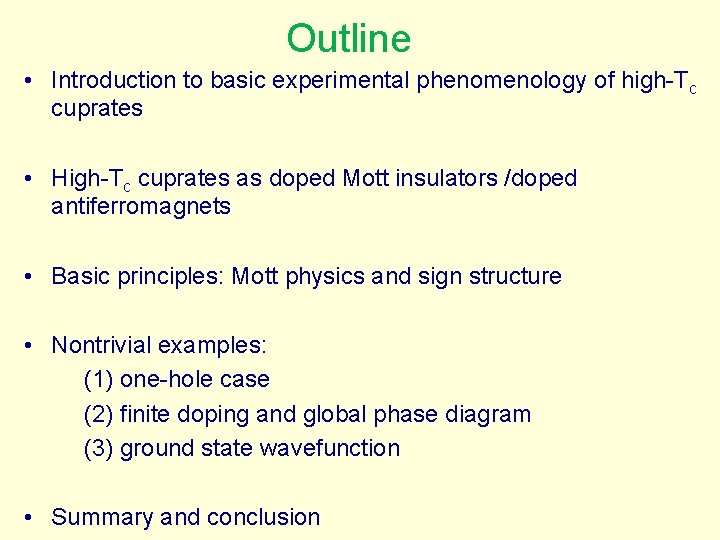
Outline • Introduction to basic experimental phenomenology of high-Tc cuprates • High-Tc cuprates as doped Mott insulators /doped antiferromagnets • Basic principles: Mott physics and sign structure • Nontrivial examples: (1) one-hole case (2) finite doping and global phase diagram (3) ground state wavefunction • Summary and conclusion
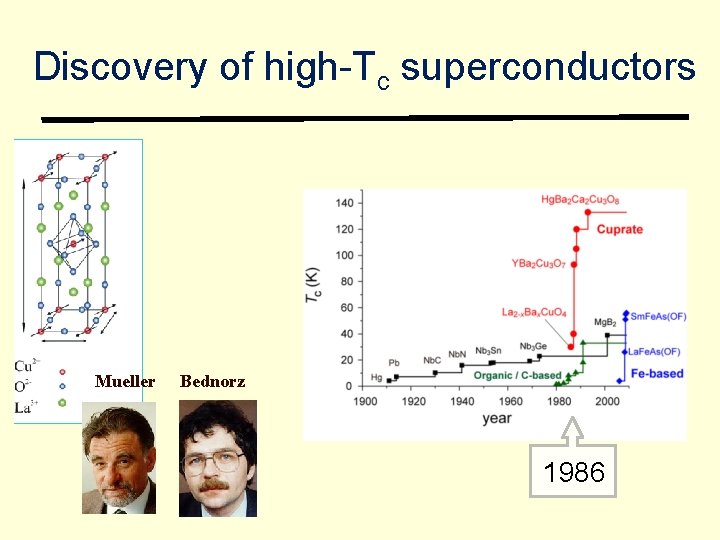
Discovery of high-Tc superconductors Mueller Bednorz 1986
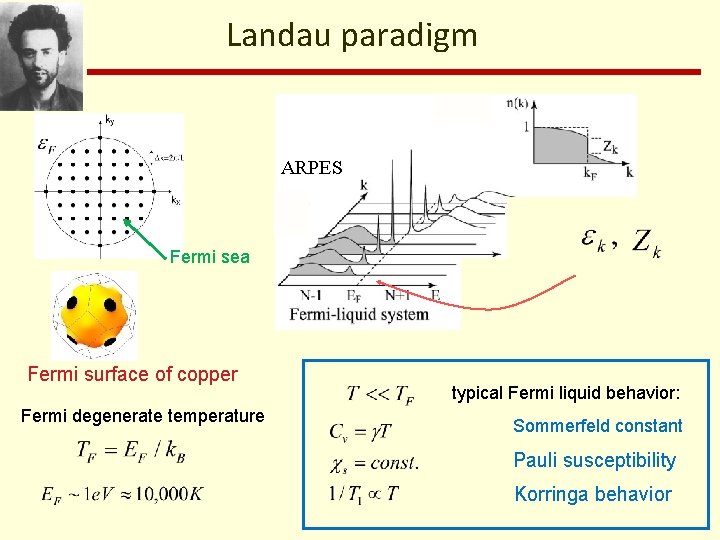
Landau paradigm ARPES Fermi sea Fermi surface of copper Fermi degenerate temperature typical Fermi liquid behavior: Sommerfeld constant Pauli susceptibility Korringa behavior
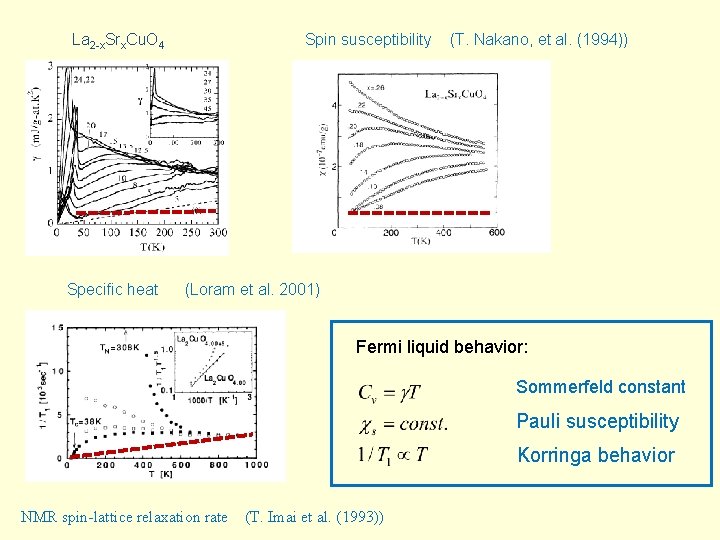
La 2 -x. Srx. Cu. O 4 Specific heat Spin susceptibility (T. Nakano, et al. (1994)) (Loram et al. 2001) Fermi liquid behavior: Sommerfeld constant Pauli susceptibility Korringa behavior NMR spin-lattice relaxation rate (T. Imai et al. (1993))
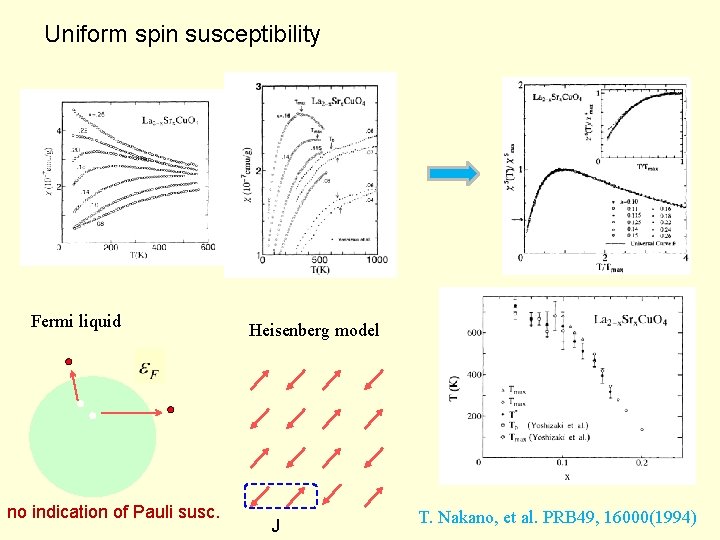
Uniform spin susceptibility Fermi liquid no indication of Pauli susc. Heisenberg model J T. Nakano, et al. PRB 49, 16000(1994)
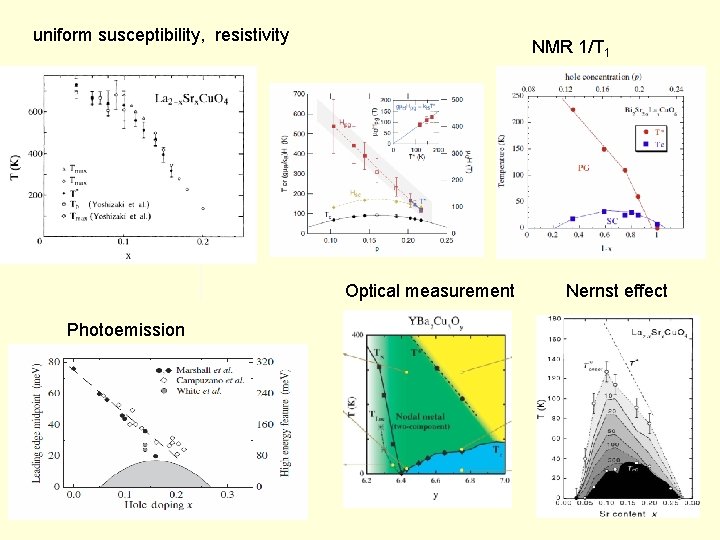
uniform susceptibility, resistivity NMR 1/T 1 Optical measurement Photoemission Nernst effect
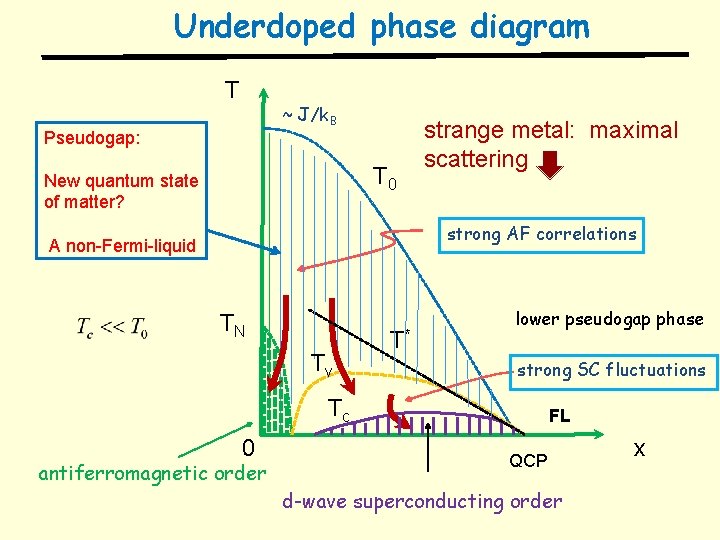
Underdoped phase diagram T ~ J/k. B Pseudogap: T 0 New quantum state of matter? strange metal: maximal scattering strong AF correlations A non-Fermi-liquid TN Tv T* lower pseudogap phase strong SC fluctuations Tc 0 antiferromagnetic order FL QCP d-wave superconducting order x
Outline • Introduction to basic experimental phenomenology of high-Tc cuprates • High-Tc cuprates as doped Mott insulators /doped antiferromagnets • Basic principles: Mott physics and sign structure • Nontrivial examples: (1) one-hole case (2) finite doping and global phase diagram (3) ground state wavefunction • Summary and conclusion
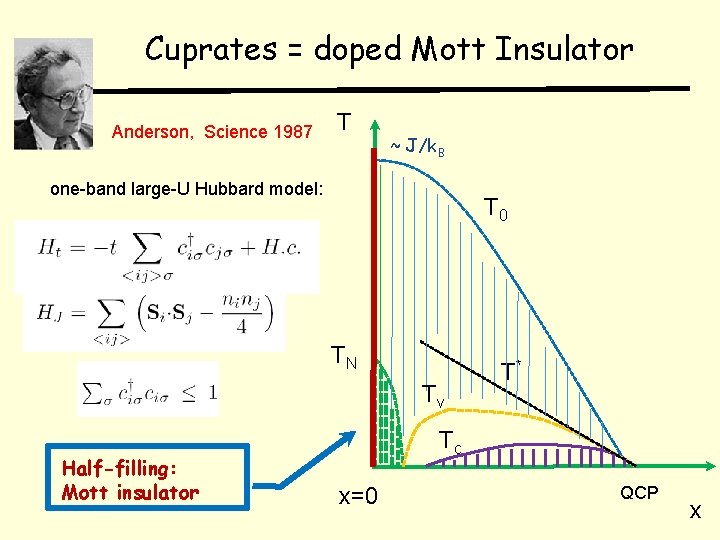
Cuprates = doped Mott Insulator Anderson, Science 1987 T ~ J/k. B one-band large-U Hubbard model: T 0 TN Tv Half-filling: Mott insulator T* Tc x=0 QCP x
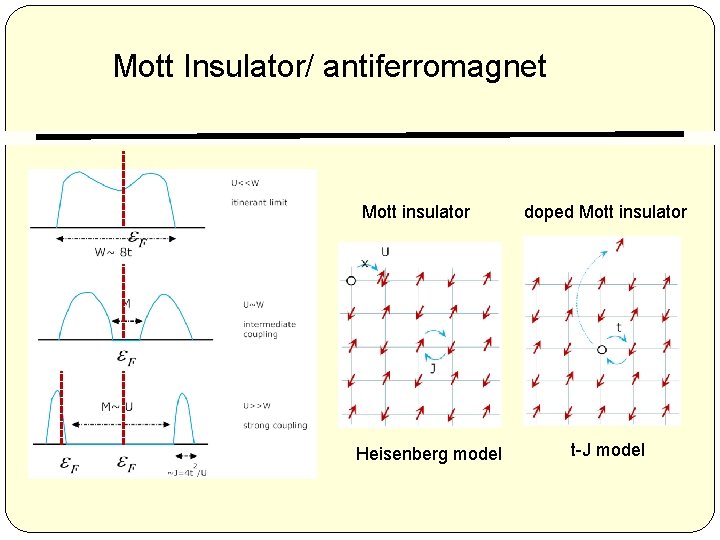
Mott Insulator/ antiferromagnet Mott insulator Heisenberg model doped Mott insulator t-J model
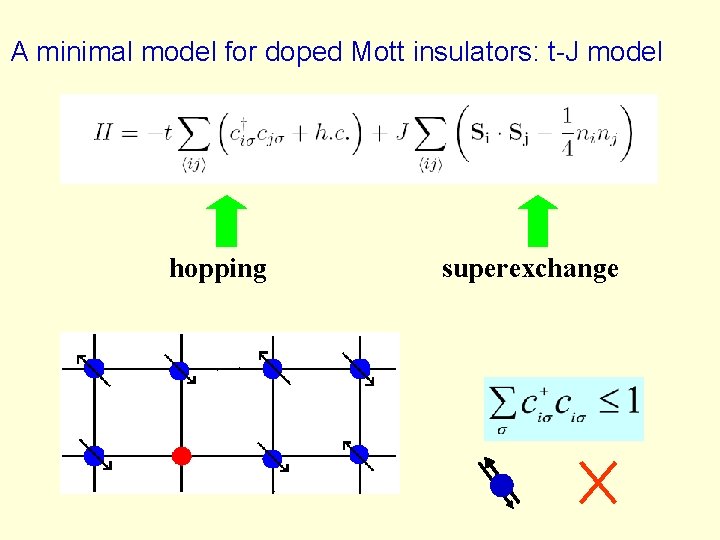
A minimal model for doped Mott insulators: t-J model hopping superexchange
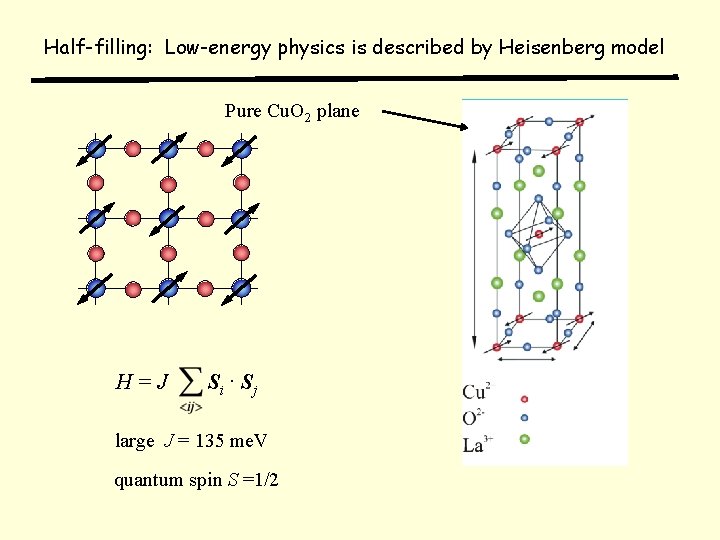
Half-filling: Low-energy physics is described by Heisenberg model Pure Cu. O 2 plane H=J Si · Sj large J = 135 me. V quantum spin S =1/2
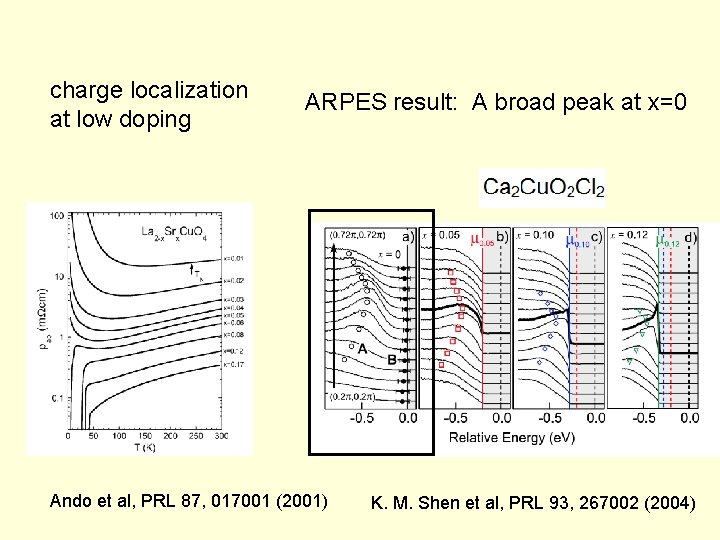
charge localization at low doping ARPES result: A broad peak at x=0 Ando et al, PRL 87, 017001 (2001) K. M. Shen et al, PRL 93, 267002 (2004)
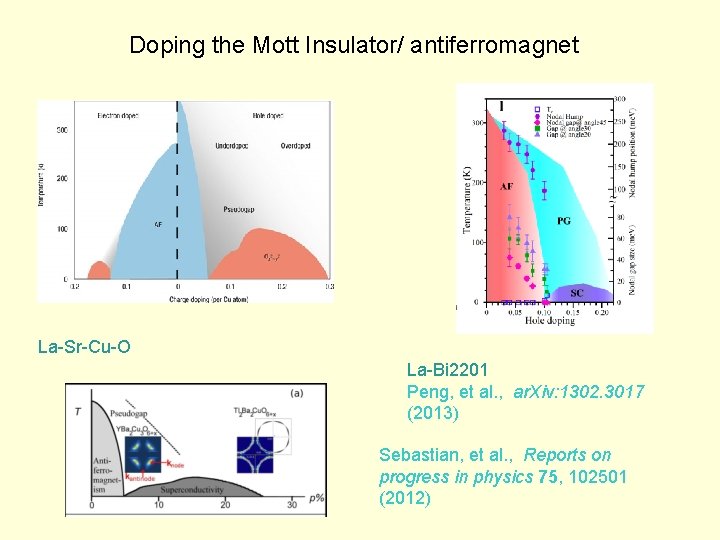
Doping the Mott Insulator/ antiferromagnet La-Sr-Cu-O La-Bi 2201 Peng, et al. , ar. Xiv: 1302. 3017 (2013) Sebastian, et al. , Reports on progress in physics 75, 102501 (2012)
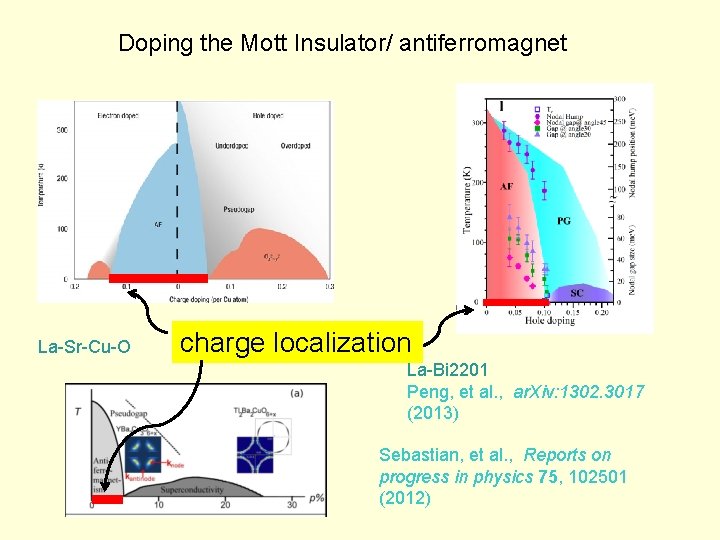
Doping the Mott Insulator/ antiferromagnet La-Sr-Cu-O charge localization La-Bi 2201 Peng, et al. , ar. Xiv: 1302. 3017 (2013) Sebastian, et al. , Reports on progress in physics 75, 102501 (2012)
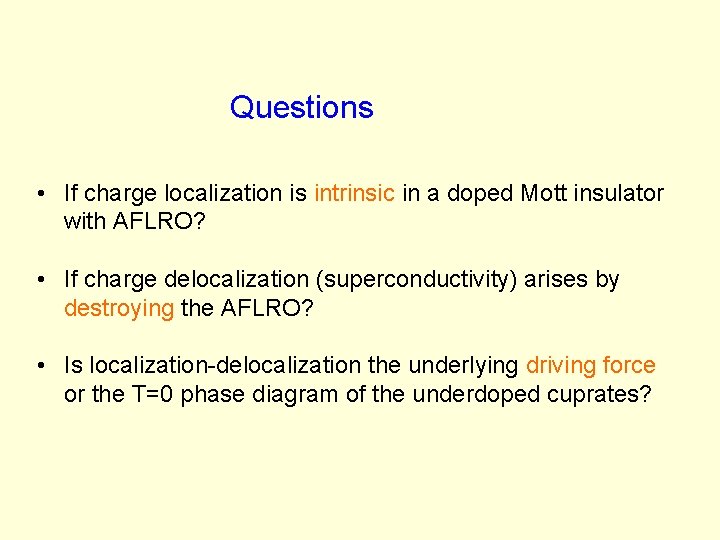
Questions • If charge localization is intrinsic in a doped Mott insulator with AFLRO? • If charge delocalization (superconductivity) arises by destroying the AFLRO? • Is localization-delocalization the underlying driving force or the T=0 phase diagram of the underdoped cuprates?
Outline • Introduction to basic experimental phenomenology of high. Tc cuprates and high-Tc cuprates as doped Mott insulators /doped antiferromagnets • Basic principles: Mott physics and sign structure • Nontrivial examples: (1) one-hole case (2) finite doping and global phase diagram (3) ground state wavefunction • Summary and conclusion
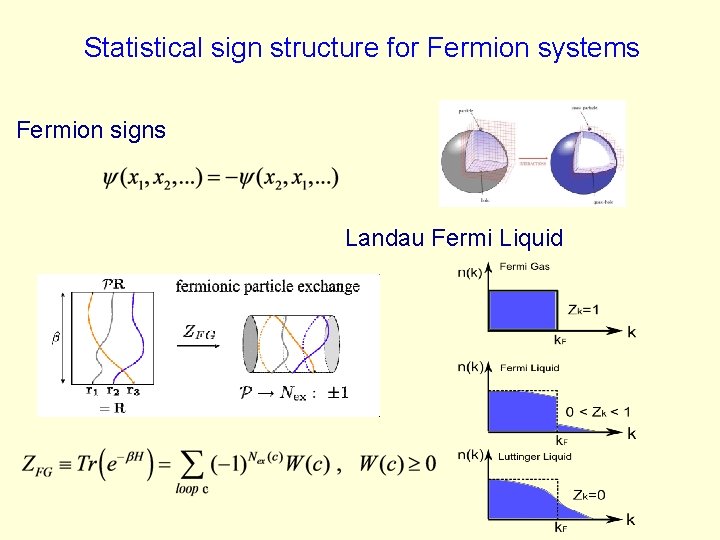
Statistical sign structure for Fermion systems Fermion signs Landau Fermi Liquid
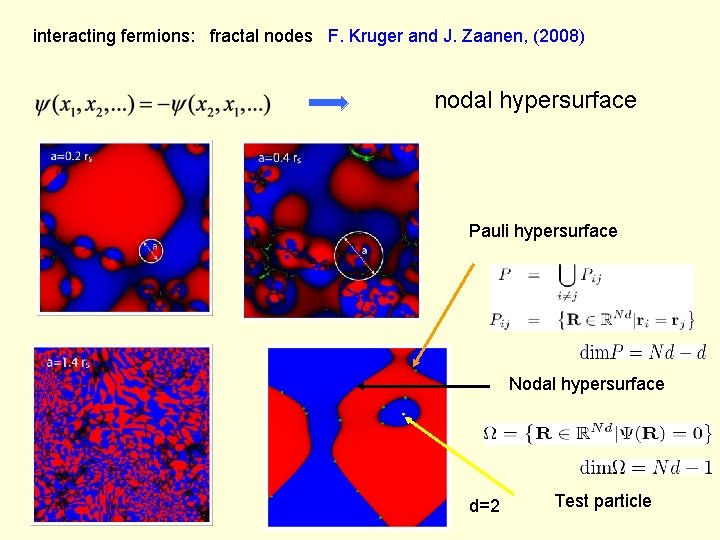
interacting fermions: fractal nodes F. Kruger and J. Zaanen, (2008) nodal hypersurface Pauli hypersurface Nodal hypersurface d=2 Test particle
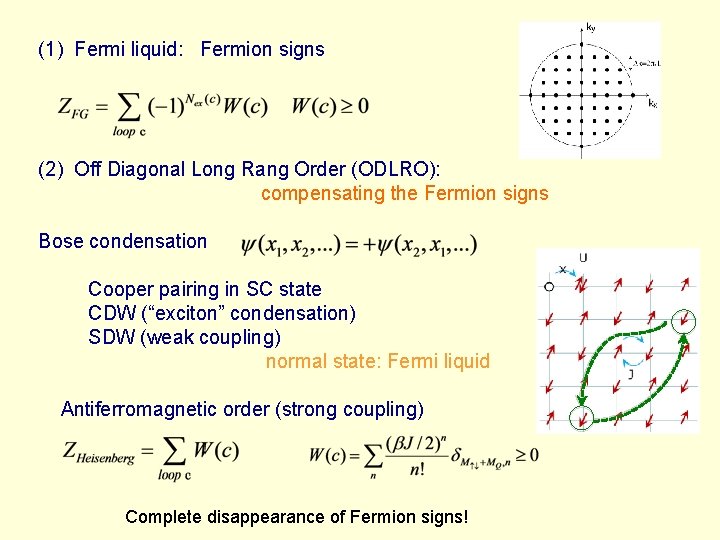
(1) Fermi liquid: Fermion signs (2) Off Diagonal Long Rang Order (ODLRO): compensating the Fermion signs Bose condensation Cooper pairing in SC state CDW (“exciton” condensation) SDW (weak coupling) normal state: Fermi liquid Antiferromagnetic order (strong coupling) Complete disappearance of Fermion signs!
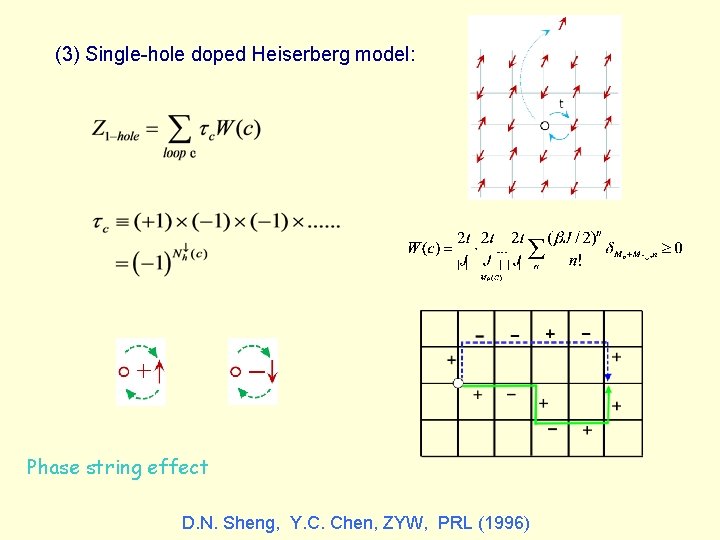
(3) Single-hole doped Heiserberg model: + - Phase string effect D. N. Sheng, Y. C. Chen, ZYW, PRL (1996)
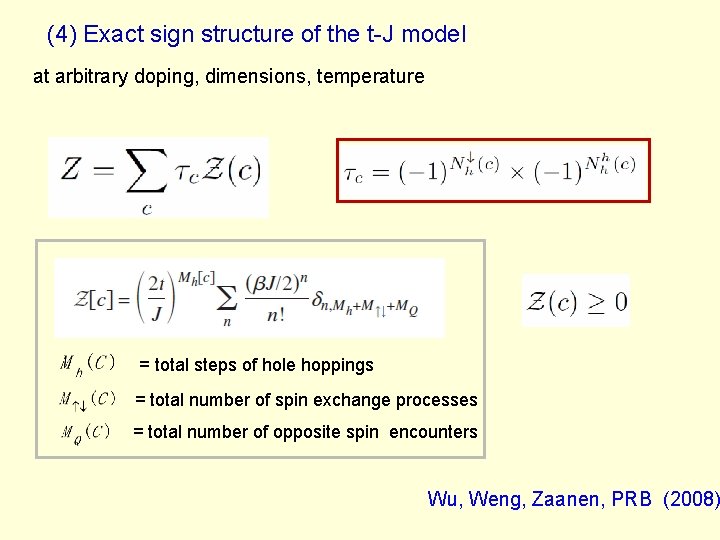
(4) Exact sign structure of the t-J model at arbitrary doping, dimensions, temperature = total steps of hole hoppings = total number of spin exchange processes = total number of opposite spin encounters Wu, Weng, Zaanen, PRB (2008)
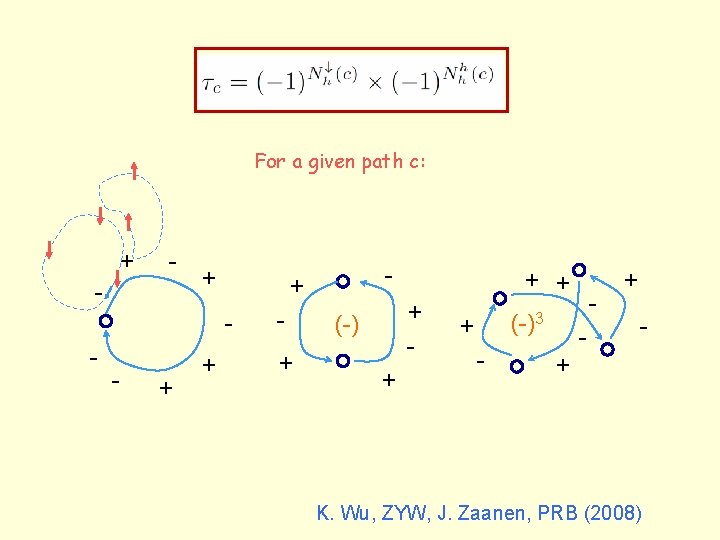
For a given path c: + - - - + + + + + - (-) + (-)3 + - - + K. Wu, ZYW, J. Zaanen, PRB (2008)
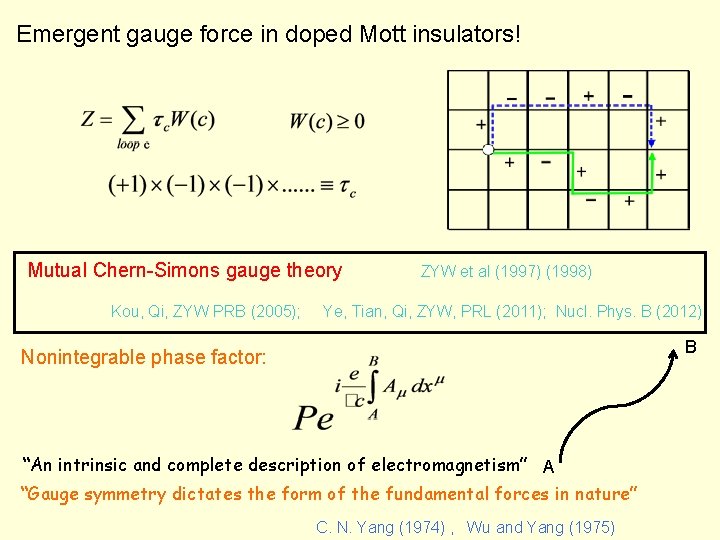
Emergent gauge force in doped Mott insulators! Mutual Chern-Simons gauge theory Kou, Qi, ZYW PRB (2005); ZYW et al (1997) (1998) Ye, Tian, Qi, ZYW, PRL (2011); Nucl. Phys. B (2012) B Nonintegrable phase factor: “An intrinsic and complete description of electromagnetism” A “Gauge symmetry dictates the form of the fundamental forces in nature” C. N. Yang (1974) , Wu and Yang (1975)
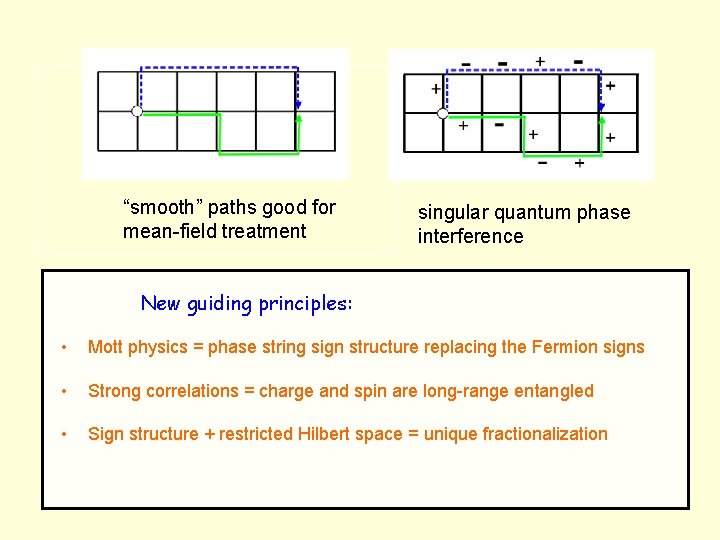
“smooth” paths good for mean-field treatment singular quantum phase interference New guiding principles: • Mott physics = phase string sign structure replacing the Fermion signs • Strong correlations = charge and spin are long-range entangled • Sign structure + restricted Hilbert space = unique fractionalization
Outline • Introduction to basic experimental phenomenology of high. Tc cuprates and high-Tc cuprates as doped Mott insulators /doped antiferromagnets • Basic principles: Sign structure and Mott physics • Nontrivial examples: (1) one-hole case (2) finite doping and global phase diagram (3) ground state wavefunction • Summary and conclusion
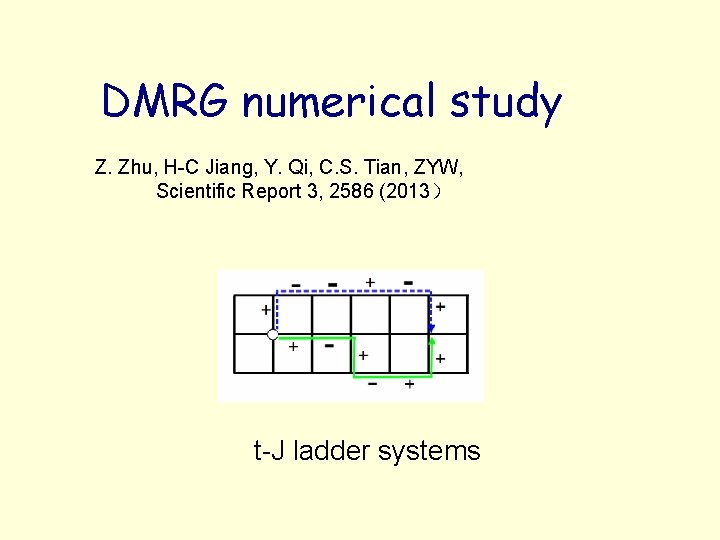
DMRG numerical study Z. Zhu, H-C Jiang, Y. Qi, C. S. Tian, ZYW, Scientific Report 3, 2586 (2013) t-J ladder systems
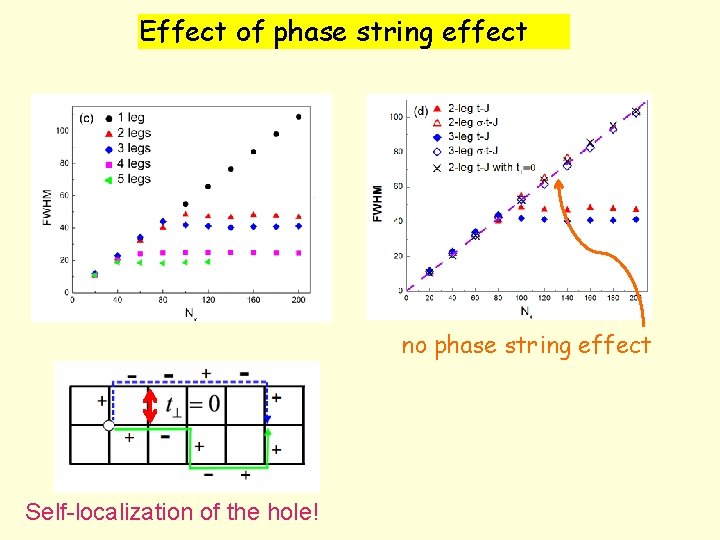
Effect of phase string effect no phase string effect Self-localization of the hole! σ
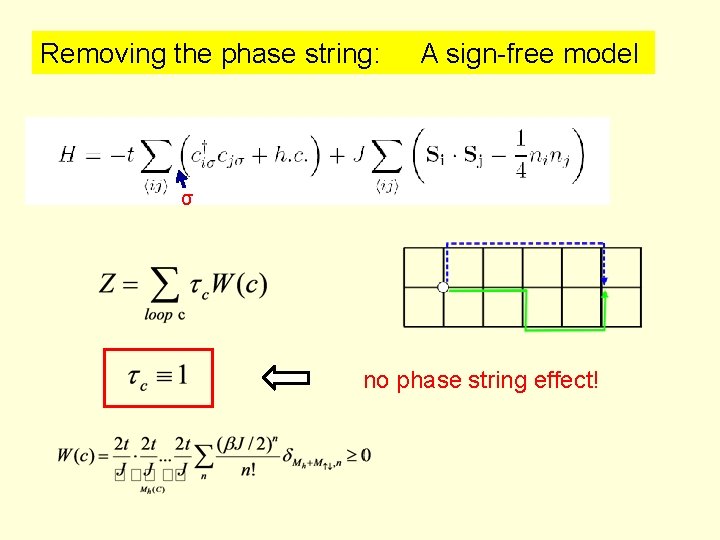
Removing the phase string: A sign-free model σ no phase string effect!
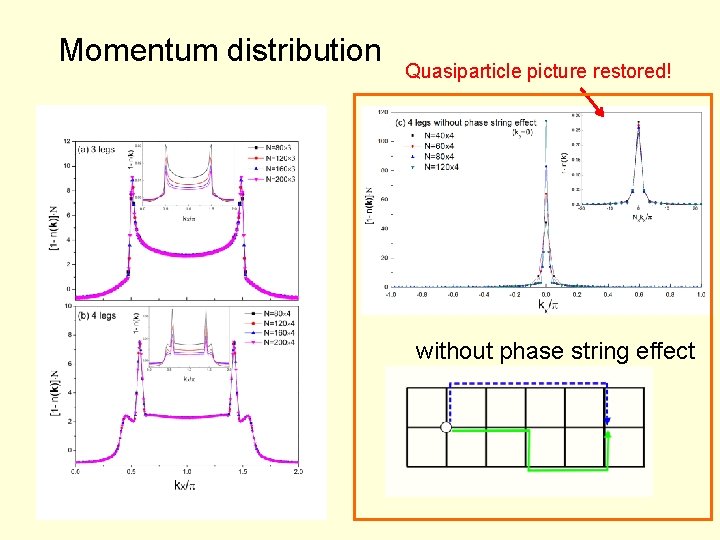
Momentum distribution Quasiparticle picture restored! without phase string effect
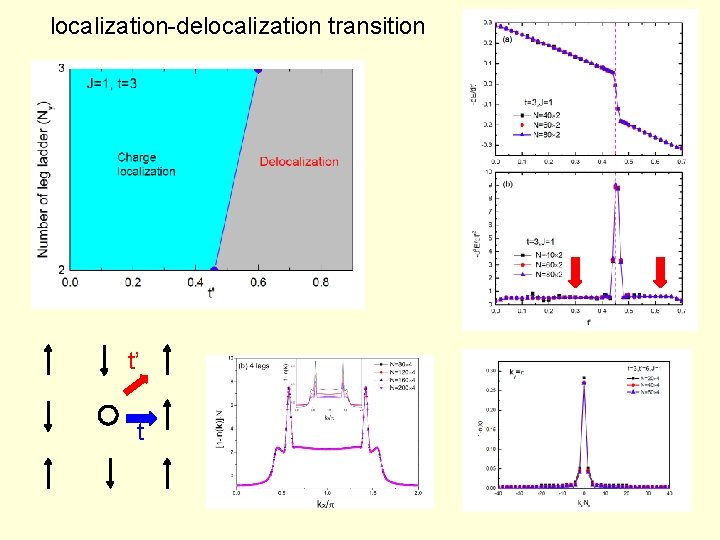
localization-delocalization transition t’ t
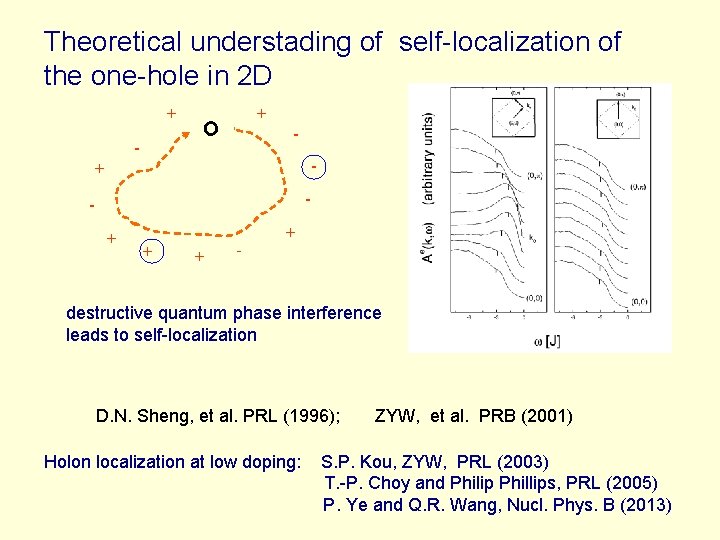
Theoretical understading of self-localization of the one-hole in 2 D -+ + - - - + + destructive quantum phase interference leads to self-localization D. N. Sheng, et al. PRL (1996); Holon localization at low doping: ZYW, et al. PRB (2001) S. P. Kou, ZYW, PRL (2003) T. -P. Choy and Philip Phillips, PRL (2005) P. Ye and Q. R. Wang, Nucl. Phys. B (2013)
Outline • Introduction to basic experimental phenomenology of high. Tc cuprates and high-Tc cuprates as doped Mott insulators /doped antiferromagnets • Basic principles: Sign structure and Mott physics • Nontrivial examples: (1) one-hole case (2) finite doping and global phase diagram (3) ground state wavefunction • Summary and conclusion
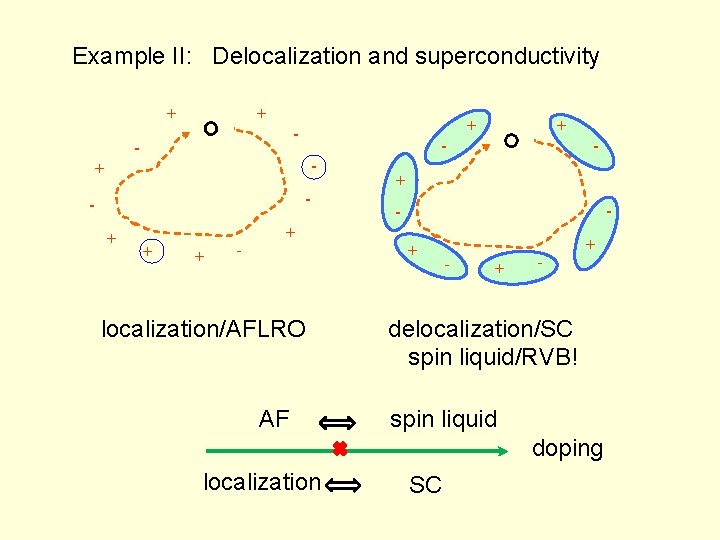
Example II: Delocalization and superconductivity -+ - - + - + + localization/AFLRO AF - + + -+ + - - + + delocalization/SC spin liquid/RVB! spin liquid doping localization SC
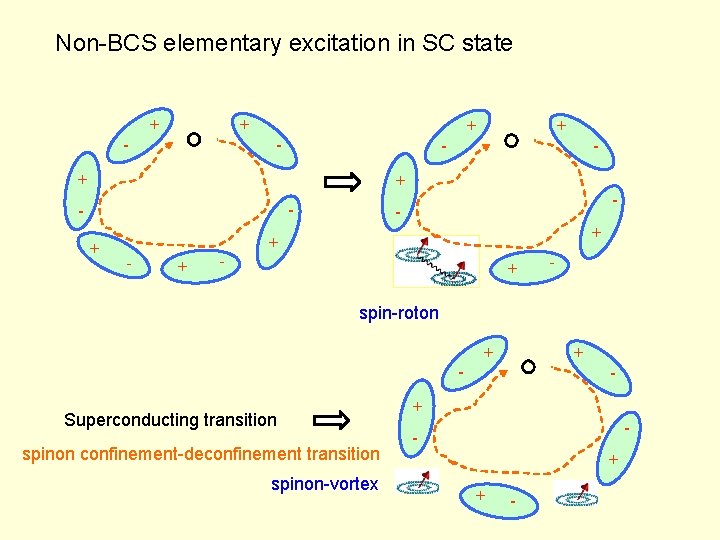
Non-BCS elementary excitation in SC state -+ + - - + - + - - spin-roton -+ + - spinon-vortex - + spinon confinement-deconfinement transition + + Superconducting transition - -
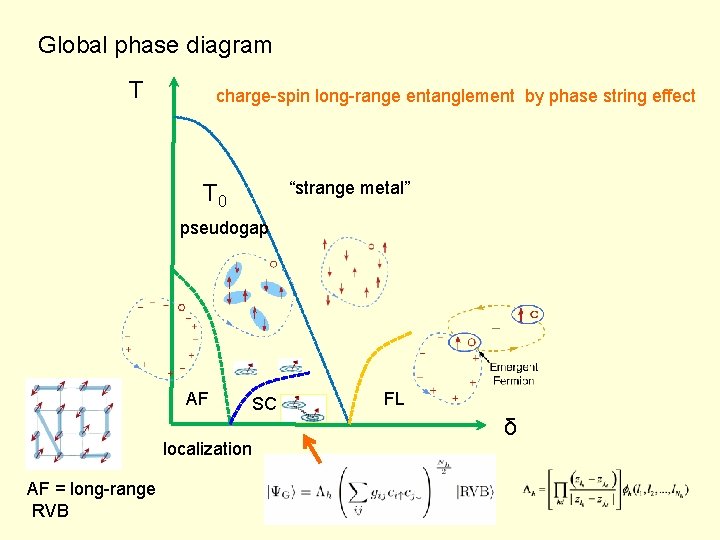
Global phase diagram T charge-spin long-range entanglement by phase string effect “strange metal” T 0 pseudogap AF SC localization AF = long-range RVB FL δ
Outline • Introduction to basic experimental phenomenology of high. Tc cuprates and high-Tc cuprates as doped Mott insulators /doped antiferromagnets • Basic principles: Sign structure and Mott physics • Nontrivial examples: (1) one-hole case (2) finite doping and global phase diagram (3) ground state wavefunction • Summary and conclusion
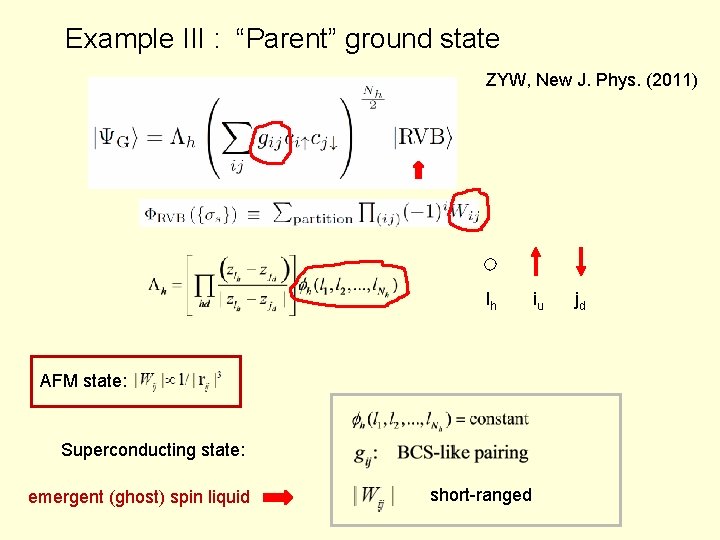
Example III : “Parent” ground state ZYW, New J. Phys. (2011) lh AFM state: Superconducting state: emergent (ghost) spin liquid short-ranged iu jd
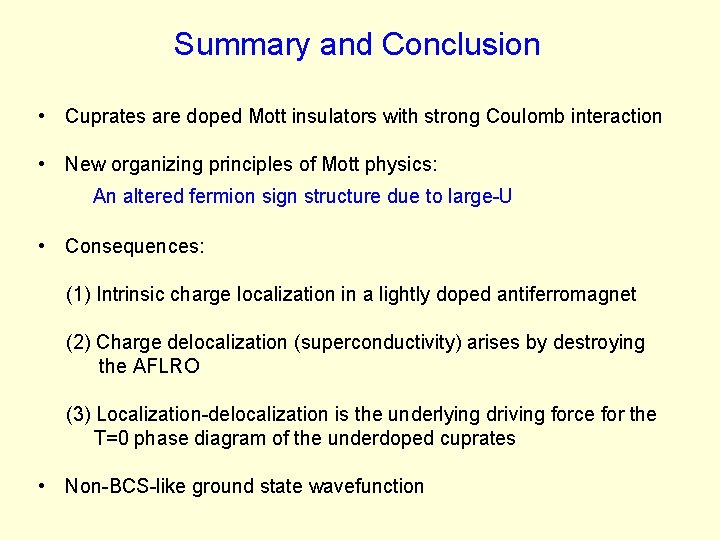
Summary and Conclusion • Cuprates are doped Mott insulators with strong Coulomb interaction • New organizing principles of Mott physics: An altered fermion sign structure due to large-U • Consequences: (1) Intrinsic charge localization in a lightly doped antiferromagnet (2) Charge delocalization (superconductivity) arises by destroying the AFLRO (3) Localization-delocalization is the underlying driving force for the T=0 phase diagram of the underdoped cuprates • Non-BCS-like ground state wavefunction
Thank you For your attention!
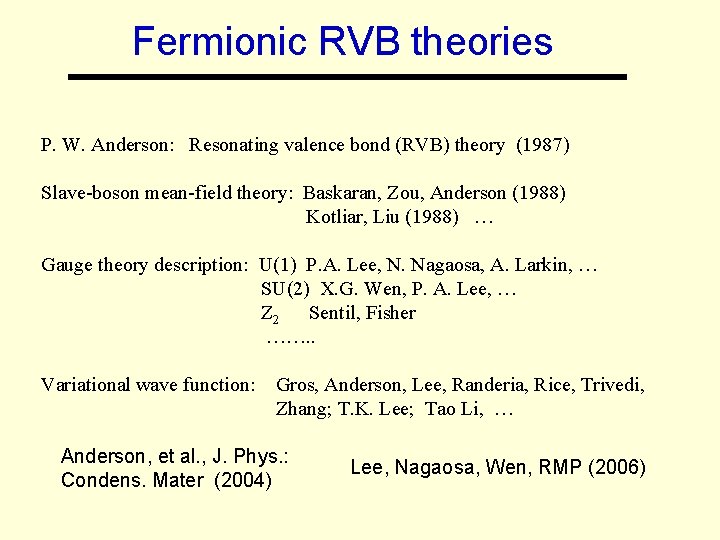
Fermionic RVB theories P. W. Anderson: Resonating valence bond (RVB) theory (1987) Slave-boson mean-field theory: Baskaran, Zou, Anderson (1988) Kotliar, Liu (1988) … Gauge theory description: U(1) P. A. Lee, N. Nagaosa, A. Larkin, … SU(2) X. G. Wen, P. A. Lee, … Z 2 Sentil, Fisher ……. . Variational wave function: Gros, Anderson, Lee, Randeria, Rice, Trivedi, Zhang; T. K. Lee; Tao Li, … Anderson, et al. , J. Phys. : Condens. Mater (2004) Lee, Nagaosa, Wen, RMP (2006)
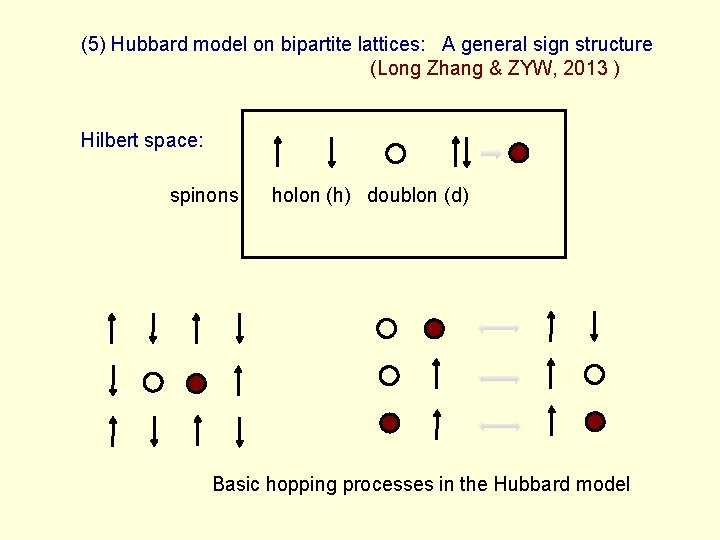
(5) Hubbard model on bipartite lattices: A general sign structure (Long Zhang & ZYW, 2013 ) Hilbert space: spinons holon (h) doublon (d) Basic hopping processes in the Hubbard model
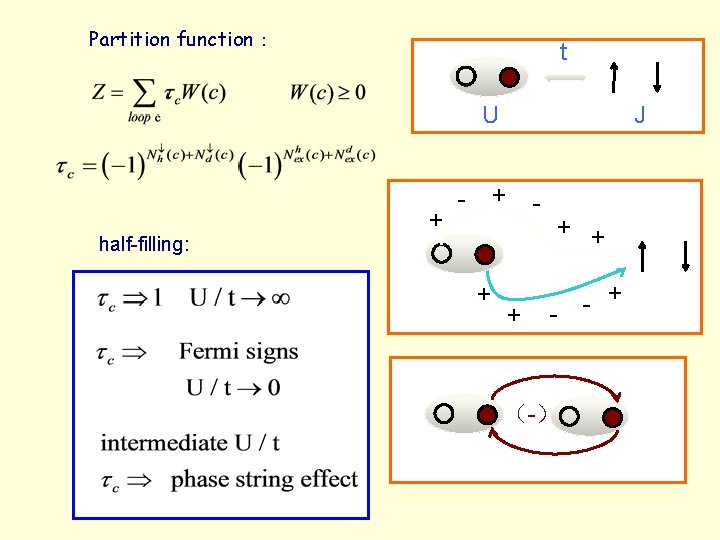
Partition function: t U + J + - - half-filling: + + - (-) - +
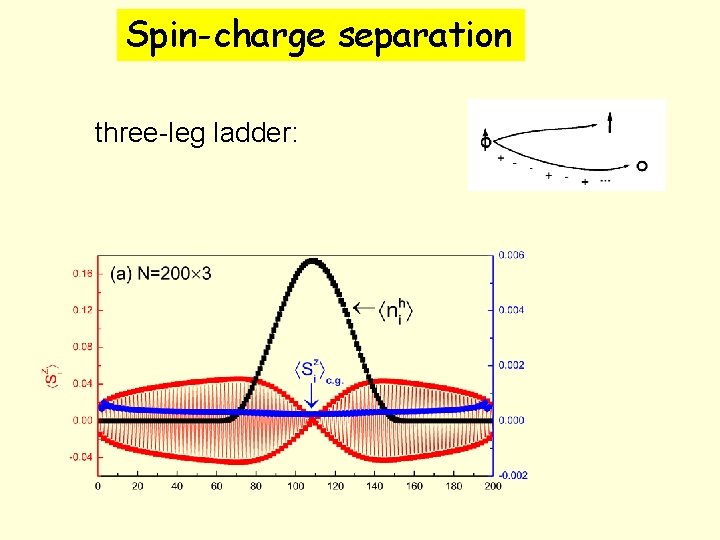
Spin-charge separation three-leg ladder: