Motors Jiasheng He Scott Koziol Kelvin Chen Chih
- Slides: 54
Motors Jiasheng He Scott Koziol Kelvin Chen Chih Peng ME 6405 1
Overview DC Motors (Brushed and Brushless) Brief Introduction to AC Motors Stepper Motors Linear Motors 2
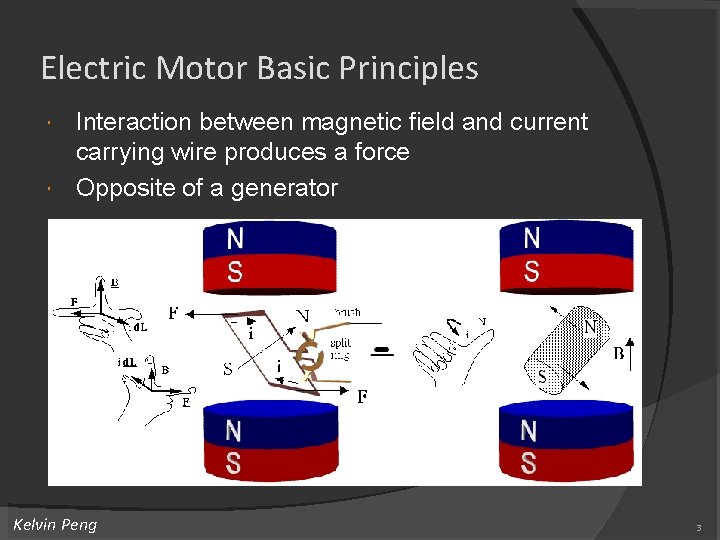
Electric Motor Basic Principles Interaction between magnetic field and current carrying wire produces a force Opposite of a generator Kelvin Peng 3
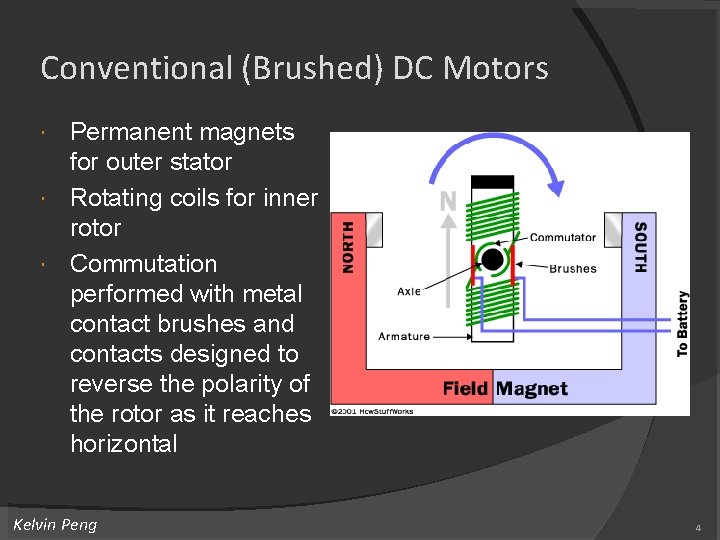
Conventional (Brushed) DC Motors Permanent magnets for outer stator Rotating coils for inner rotor Commutation performed with metal contact brushes and contacts designed to reverse the polarity of the rotor as it reaches horizontal Kelvin Peng 4
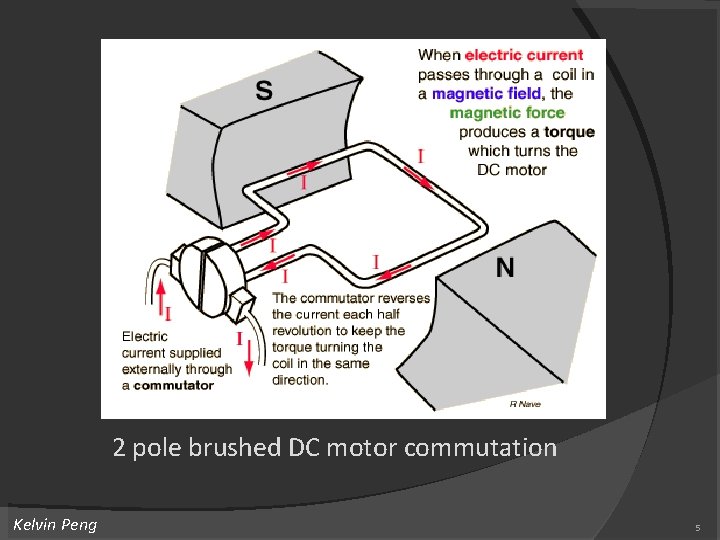
2 pole brushed DC motor commutation Kelvin Peng 5
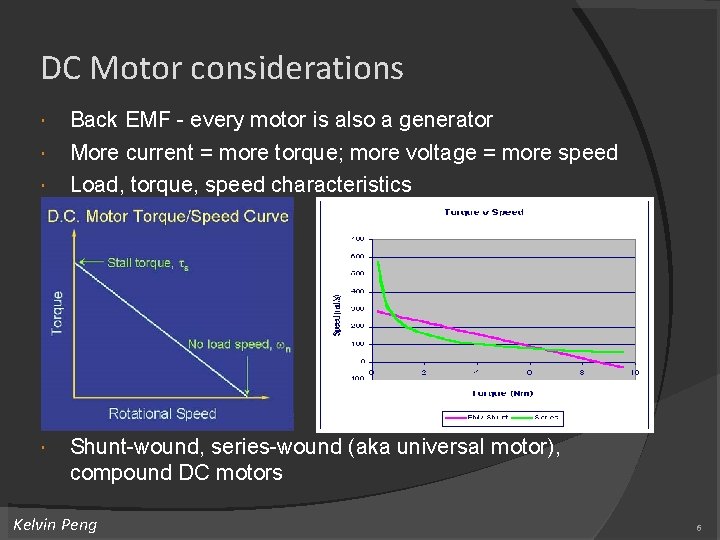
DC Motor considerations Back EMF - every motor is also a generator More current = more torque; more voltage = more speed Load, torque, speed characteristics Shunt-wound, series-wound (aka universal motor), compound DC motors Kelvin Peng 6
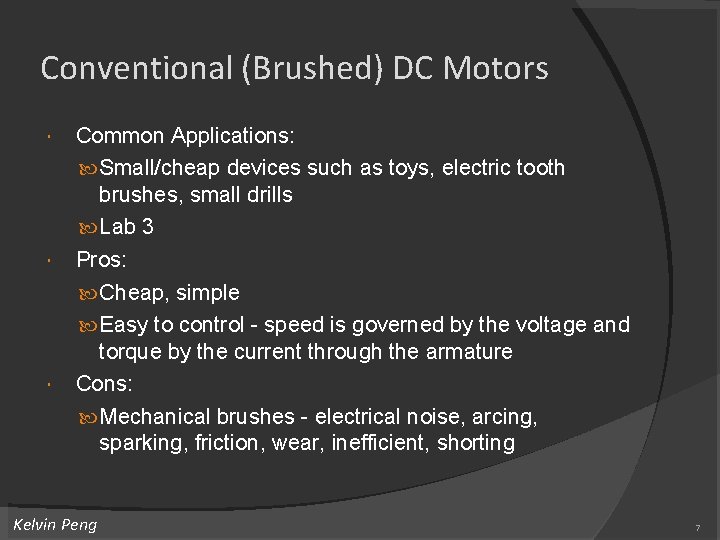
Conventional (Brushed) DC Motors Common Applications: Small/cheap devices such as toys, electric tooth brushes, small drills Lab 3 Pros: Cheap, simple Easy to control - speed is governed by the voltage and torque by the current through the armature Cons: Mechanical brushes - electrical noise, arcing, sparking, friction, wear, inefficient, shorting Kelvin Peng 7
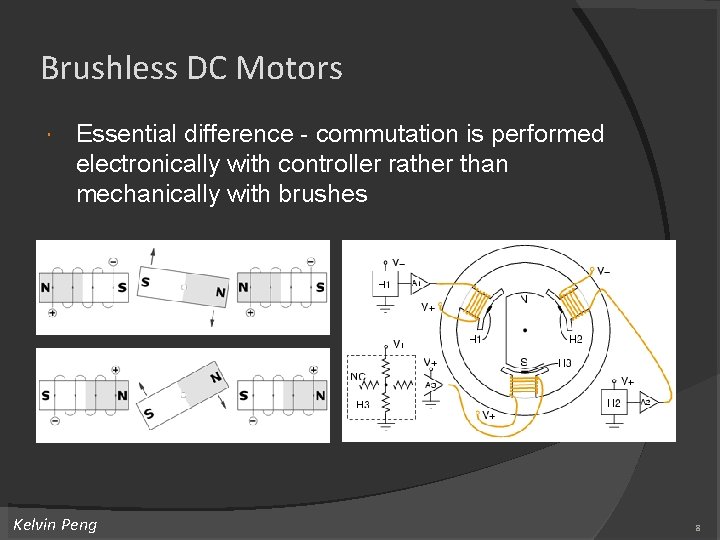
Brushless DC Motors Essential difference - commutation is performed electronically with controller rather than mechanically with brushes Kelvin Peng 8
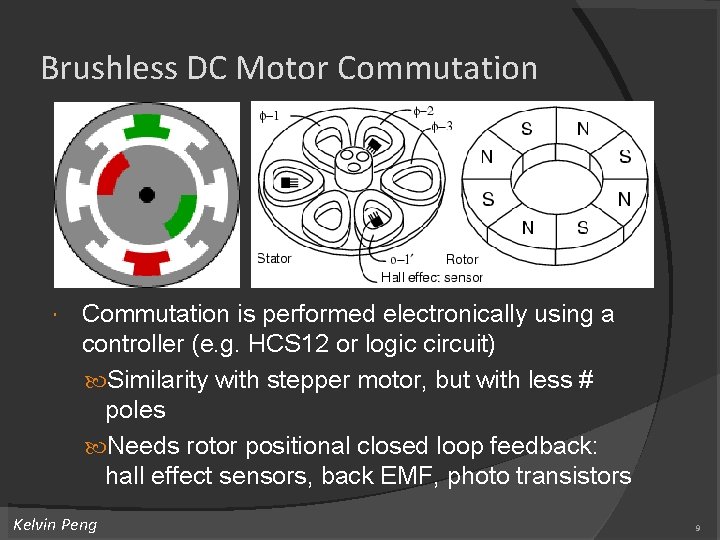
Brushless DC Motor Commutation is performed electronically using a controller (e. g. HCS 12 or logic circuit) Similarity with stepper motor, but with less # poles Needs rotor positional closed loop feedback: hall effect sensors, back EMF, photo transistors Kelvin Peng 9
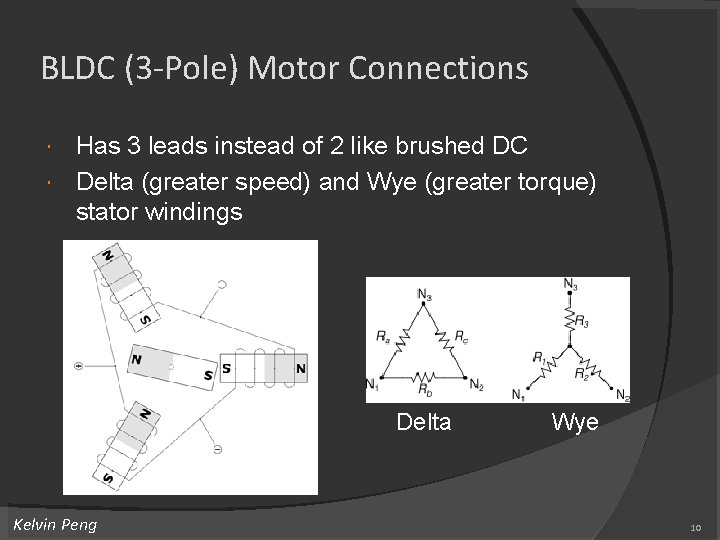
BLDC (3 -Pole) Motor Connections Has 3 leads instead of 2 like brushed DC Delta (greater speed) and Wye (greater torque) stator windings Delta Wye Kelvin Peng 10
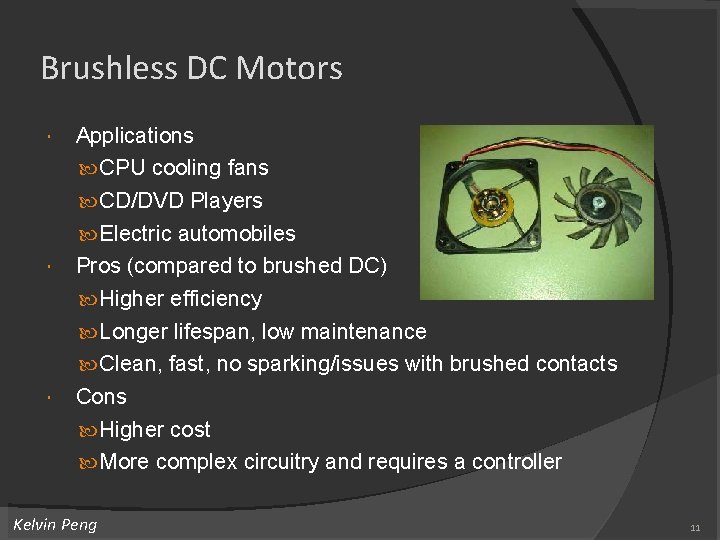
Brushless DC Motors Applications CPU cooling fans CD/DVD Players Electric automobiles Pros (compared to brushed DC) Higher efficiency Longer lifespan, low maintenance Clean, fast, no sparking/issues with brushed contacts Cons Higher cost More complex circuitry and requires a controller Kelvin Peng 11
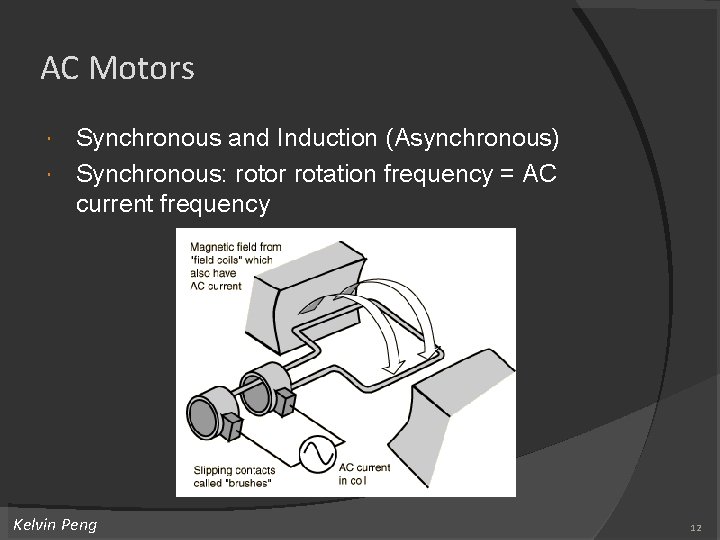
AC Motors Synchronous and Induction (Asynchronous) Synchronous: rotor rotation frequency = AC current frequency Kelvin Peng 12
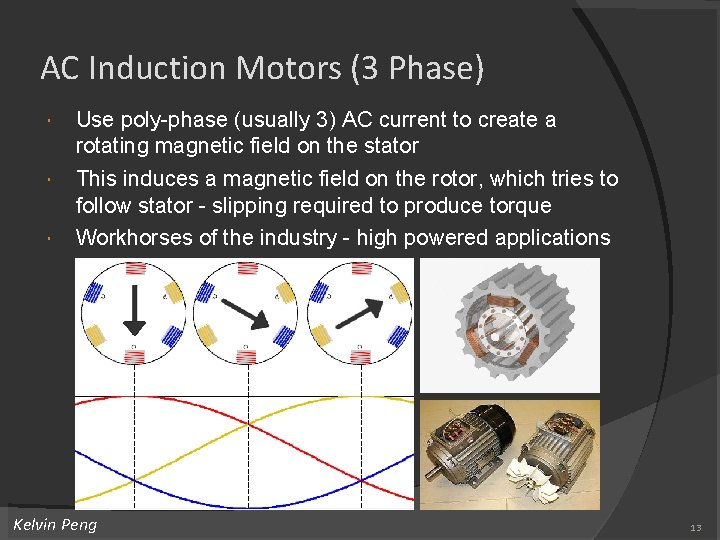
AC Induction Motors (3 Phase) Use poly-phase (usually 3) AC current to create a rotating magnetic field on the stator This induces a magnetic field on the rotor, which tries to follow stator - slipping required to produce torque Workhorses of the industry - high powered applications Kelvin Peng 13
Stepper Motors Jiasheng He 14
Stepper Motor Characteristics Brushless Incremental steps/changes Holding Torque at zero speed Speed increase -> torque decreases Usually open loop Jiasheng He 15
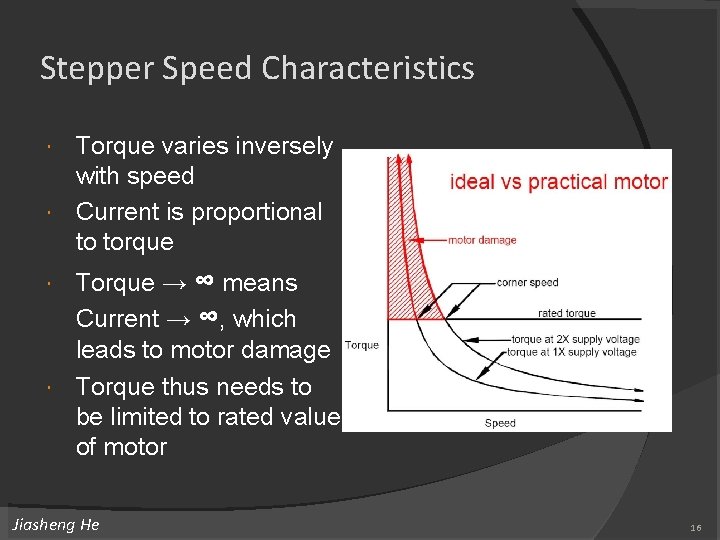
Stepper Speed Characteristics Torque varies inversely with speed Current is proportional to torque Torque → ∞ means Current → ∞, which leads to motor damage Torque thus needs to be limited to rated value of motor Jiasheng He 16
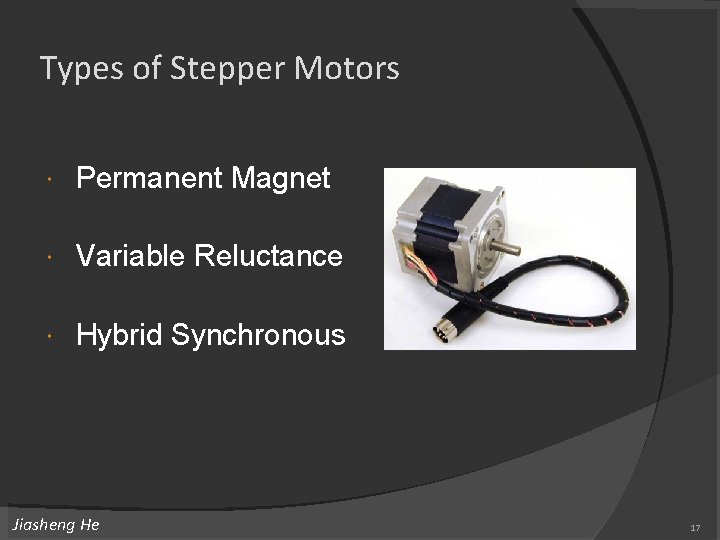
Types of Stepper Motors Permanent Magnet Variable Reluctance Hybrid Synchronous Jiasheng He 17
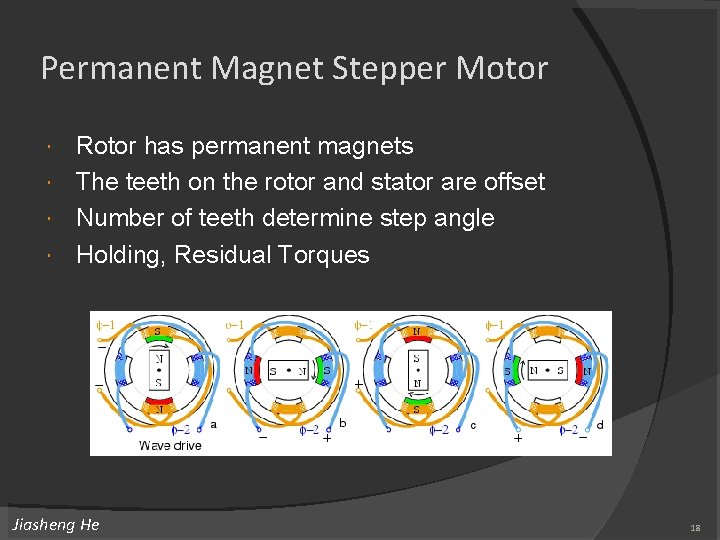
Permanent Magnet Stepper Motor Rotor has permanent magnets The teeth on the rotor and stator are offset Number of teeth determine step angle Holding, Residual Torques Jiasheng He 18
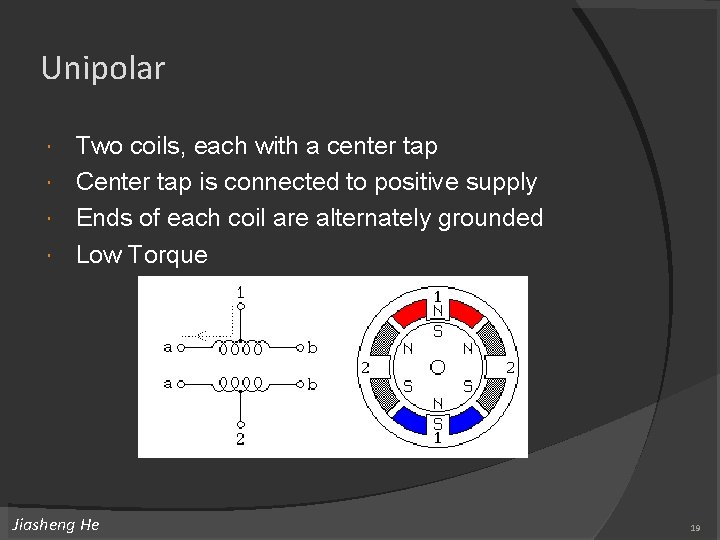
Unipolar Two coils, each with a center tap Center tap is connected to positive supply Ends of each coil are alternately grounded Low Torque Jiasheng He 19
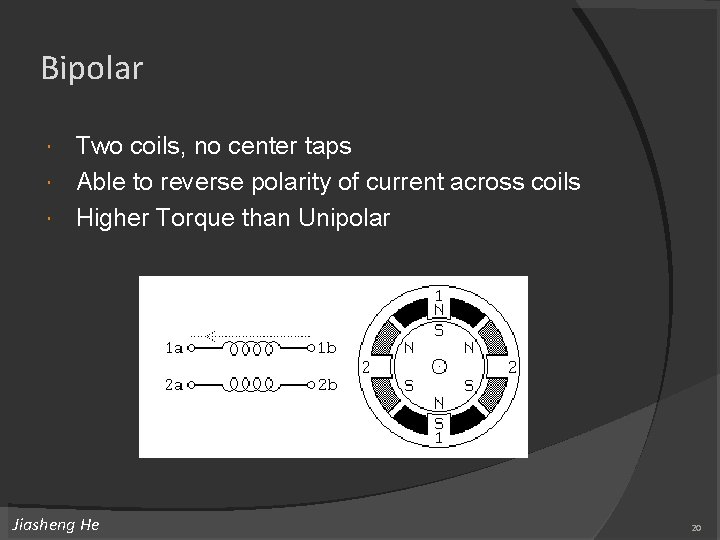
Bipolar Two coils, no center taps Able to reverse polarity of current across coils Higher Torque than Unipolar Jiasheng He 20
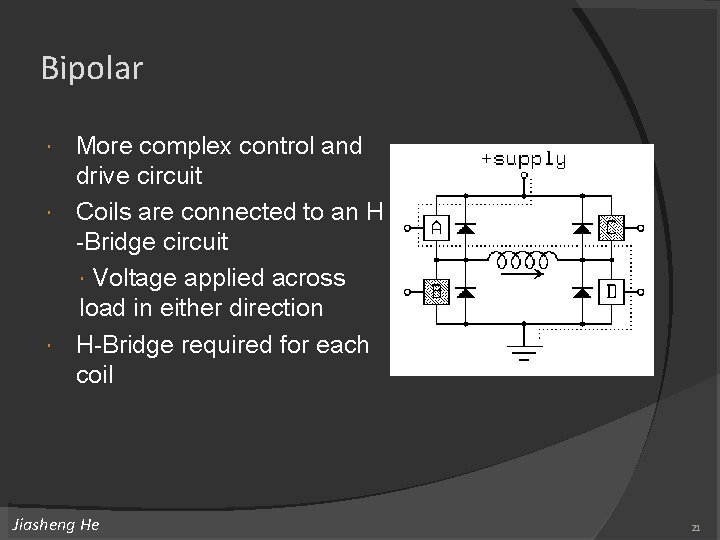
Bipolar More complex control and drive circuit Coils are connected to an H -Bridge circuit Voltage applied across load in either direction H-Bridge required for each coil Jiasheng He 21
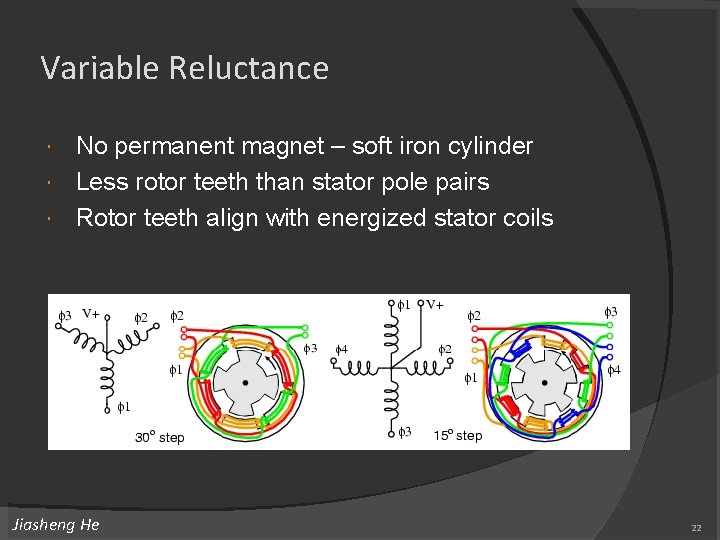
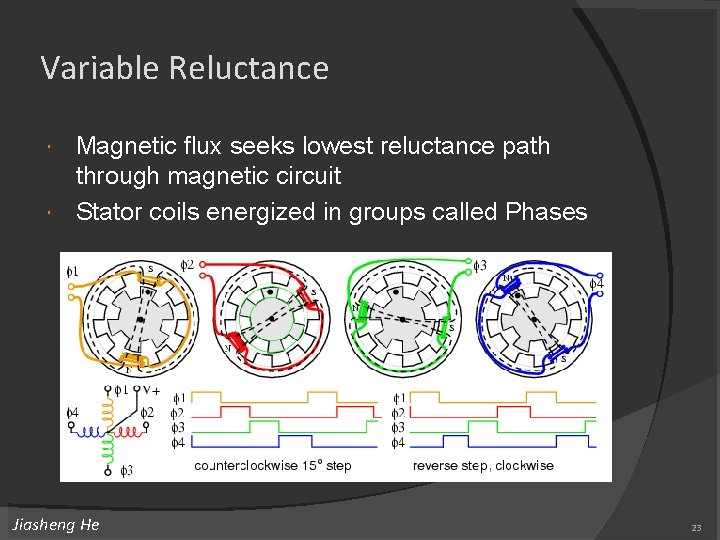
Variable Reluctance No permanent magnet – soft iron cylinder Less rotor teeth than stator pole pairs Rotor teeth align with energized stator coils Jiasheng He 22
Variable Reluctance Magnetic flux seeks lowest reluctance path through magnetic circuit Stator coils energized in groups called Phases Jiasheng He 23
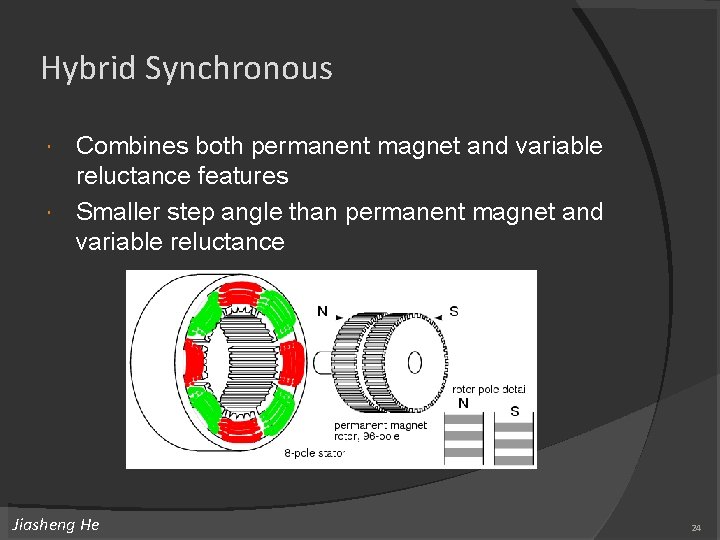
Hybrid Synchronous Combines both permanent magnet and variable reluctance features Smaller step angle than permanent magnet and variable reluctance Jiasheng He 24
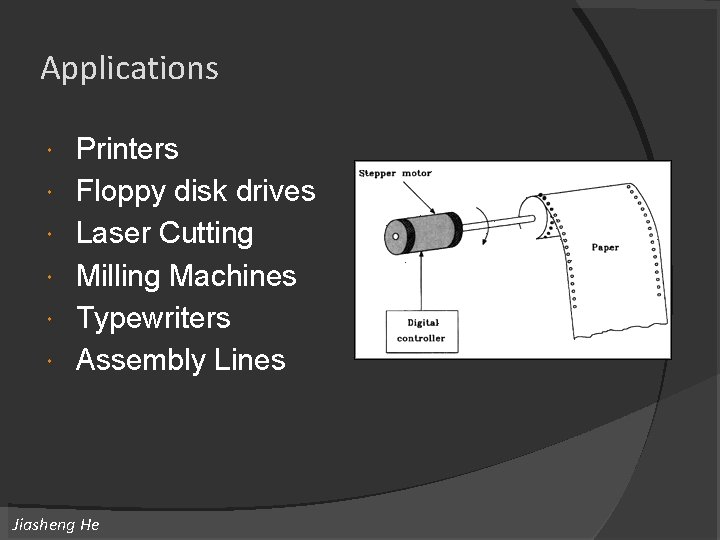
Applications Printers Floppy disk drives Laser Cutting Milling Machines Typewriters Assembly Lines Jiasheng He
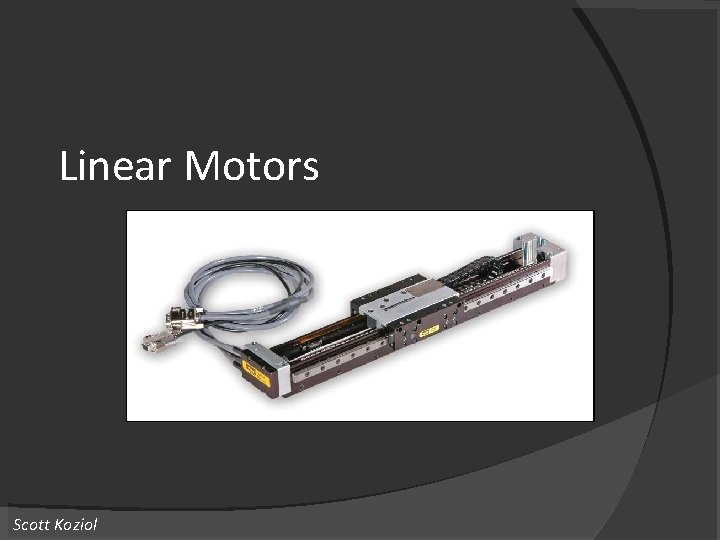
Linear Motors Scott Koziol
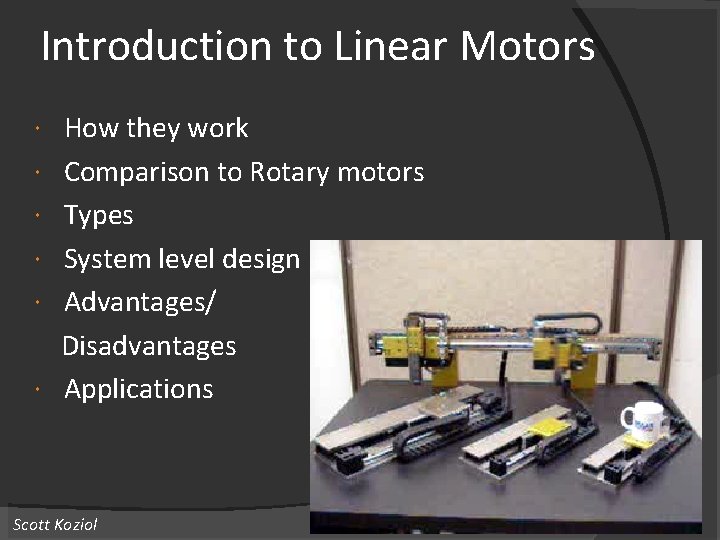
Introduction to Linear Motors How they work Comparison to Rotary motors Types System level design Advantages/ Disadvantages Applications Scott Koziol
Key Points you’ll learn: The Good: ○ High linear position accuracy ○ Highly dynamic applications ○ High Speeds The Bad: ○ Expensive! (>$3500) Scott Koziol
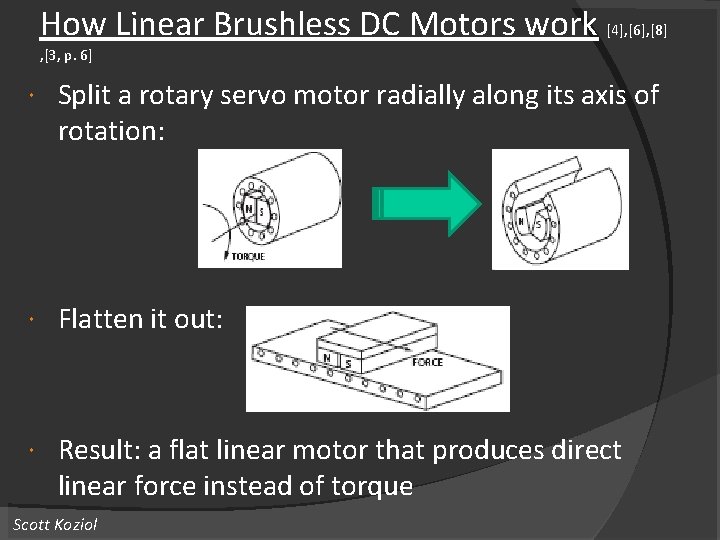
How Linear Brushless DC Motors work [4], [6], [8] , [3, p. 6] Split a rotary servo motor radially along its axis of rotation: Flatten it out: Result: a flat linear motor that produces direct linear force instead of torque Scott Koziol
Analysis Method Analysis is similar to that of rotary machines [1] Linear dimension and displacements replace angular ones Forces replace torques Scott Koziol
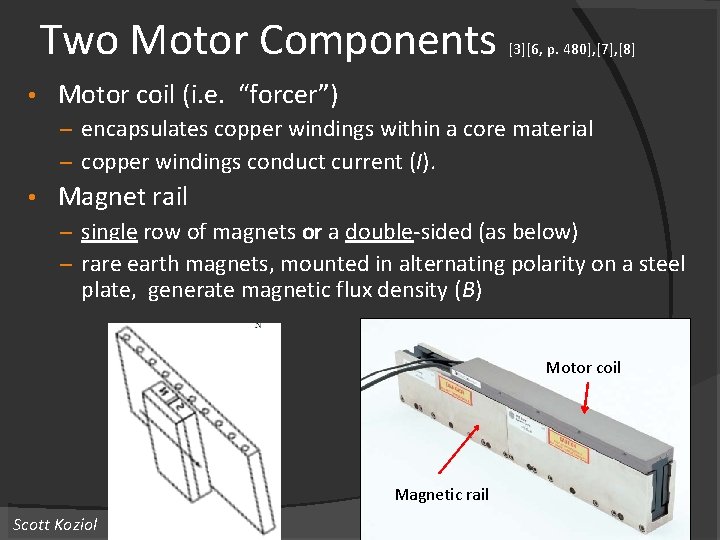
Two Motor Components • [3][6, p. 480], [7], [8] Motor coil (i. e. “forcer”) – encapsulates copper windings within a core material – copper windings conduct current (I). • Magnet rail – single row of magnets or a double-sided (as below) – rare earth magnets, mounted in alternating polarity on a steel plate, generate magnetic flux density (B) Motor coil Magnetic rail Scott Koziol
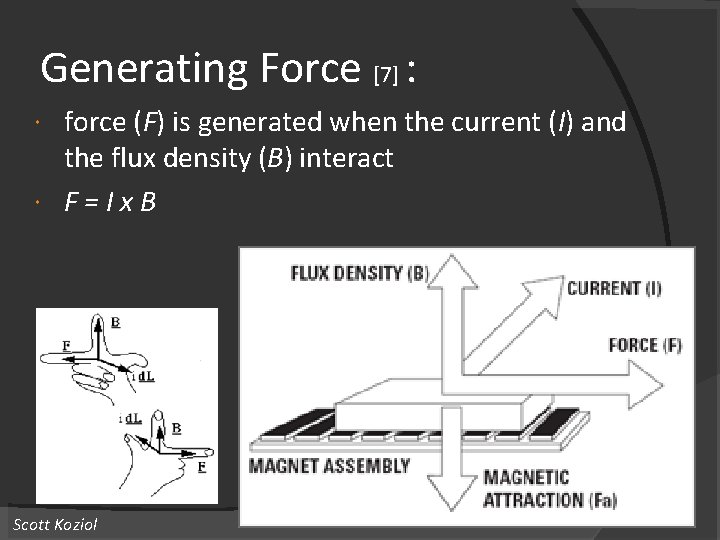
Generating Force [7] : force (F) is generated when the current (I) and the flux density (B) interact F=Ix. B Scott Koziol
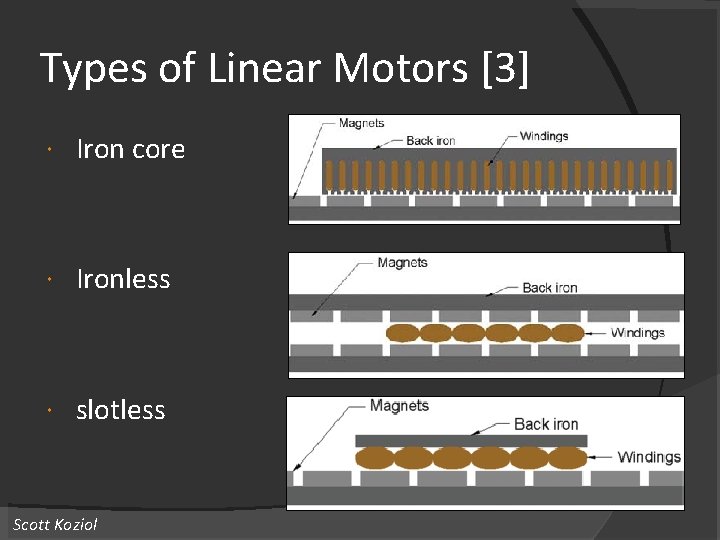
Types of Linear Motors [3] Iron core Ironless slotless Scott Koziol
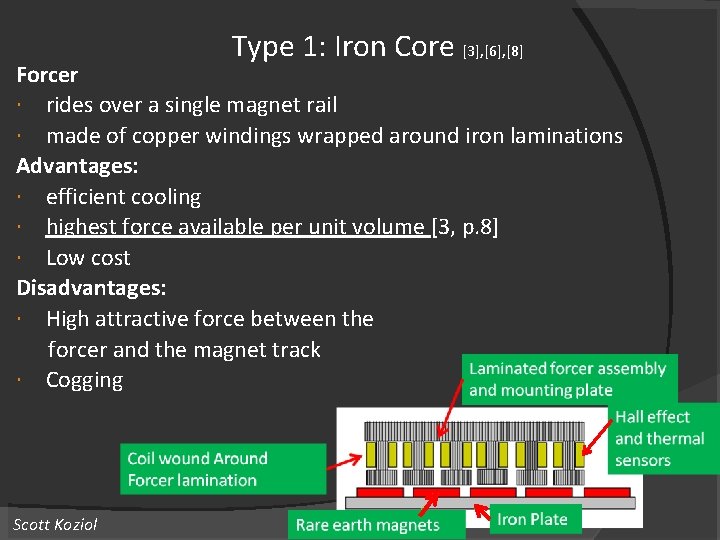
Type 1: Iron Core [3], [6], [8] Forcer rides over a single magnet rail made of copper windings wrapped around iron laminations Advantages: efficient cooling highest force available per unit volume [3, p. 8] Low cost Disadvantages: High attractive force between the forcer and the magnet track Cogging Scott Koziol
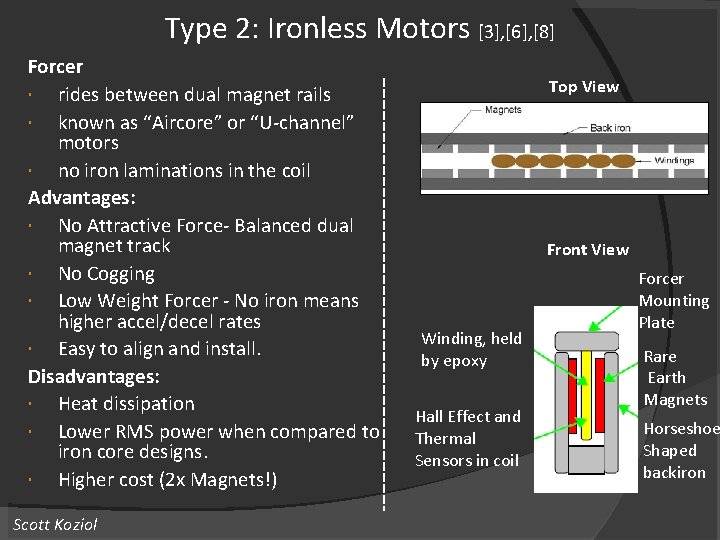
Type 2: Ironless Motors [3], [6], [8] Forcer rides between dual magnet rails known as “Aircore” or “U-channel” motors no iron laminations in the coil Advantages: No Attractive Force- Balanced dual magnet track No Cogging Low Weight Forcer - No iron means higher accel/decel rates Easy to align and install. Disadvantages: Heat dissipation Lower RMS power when compared to iron core designs. Higher cost (2 x Magnets!) Scott Koziol Top View Front View Winding, held by epoxy Hall Effect and Thermal Sensors in coil Forcer Mounting Plate Rare Earth Magnets Horseshoe Shaped backiron
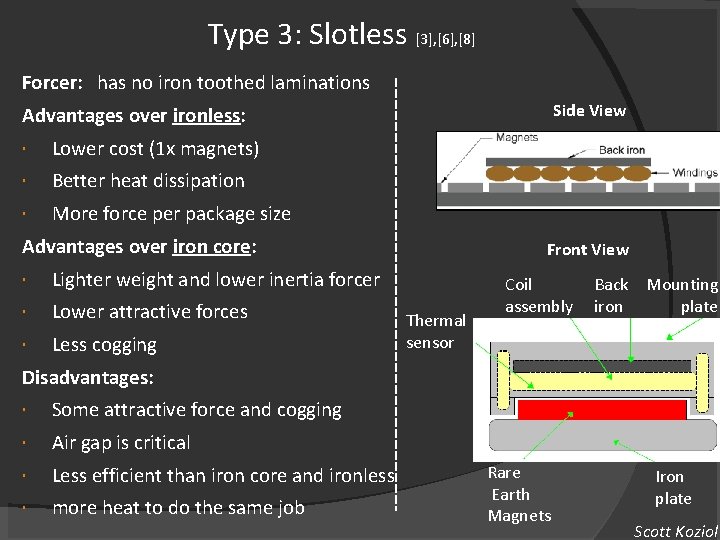
Type 3: Slotless [3], [6], [8] Forcer: has no iron toothed laminations Side View Advantages over ironless: Lower cost (1 x magnets) Better heat dissipation More force per package size Advantages over iron core: Lighter weight and lower inertia forcer Lower attractive forces Less cogging Front View Thermal sensor Coil assembly Back Mounting iron plate Disadvantages: Some attractive force and cogging Air gap is critical Less efficient than iron core and ironless more heat to do the same job Rare Earth Magnets Iron plate Scott Koziol
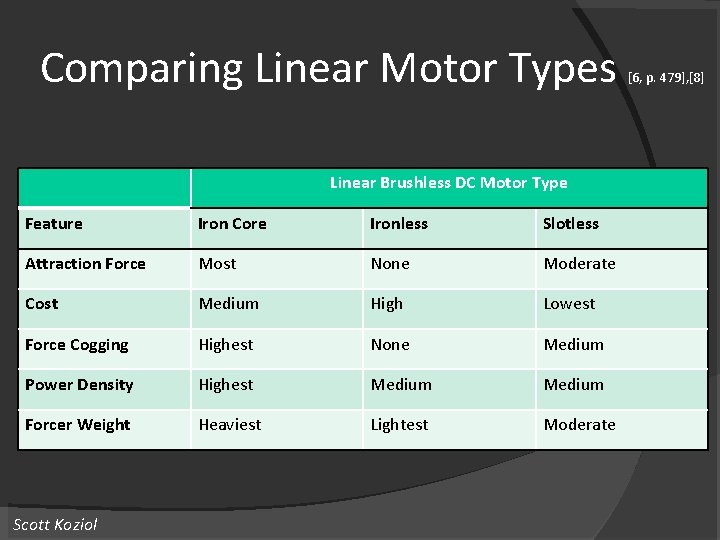
Comparing Linear Motor Types Linear Brushless DC Motor Type Feature Iron Core Ironless Slotless Attraction Force Most None Moderate Cost Medium High Lowest Force Cogging Highest None Medium Power Density Highest Medium Forcer Weight Heaviest Lightest Moderate Scott Koziol [6, p. 479], [8]
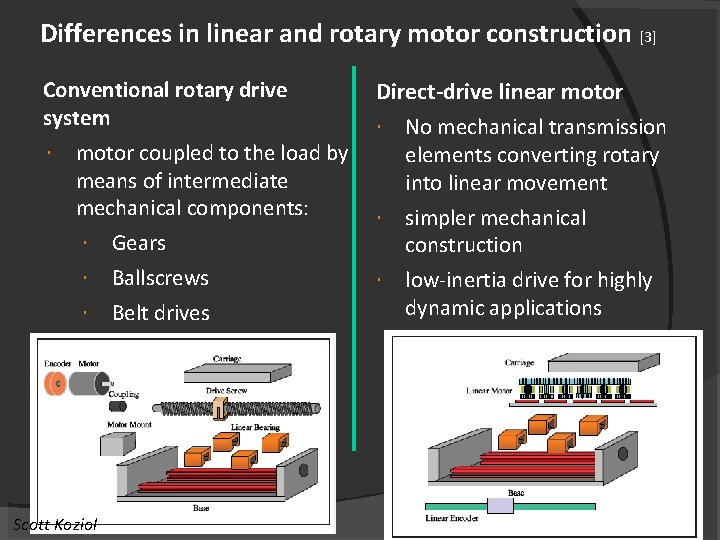
Differences in linear and rotary motor construction [3] Conventional rotary drive system Direct-drive linear motor No mechanical transmission motor coupled to the load by elements converting rotary means of intermediate into linear movement mechanical components: simpler mechanical Gears construction Ballscrews low-inertia drive for highly dynamic applications Belt drives Scott Koziol
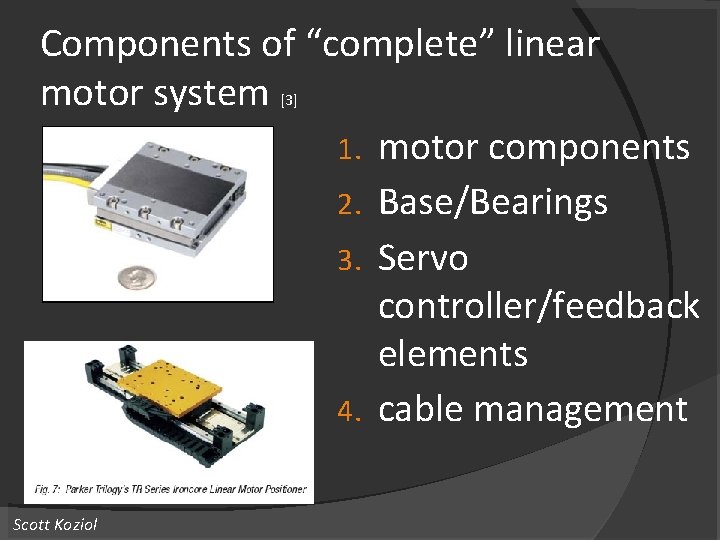
Components of “complete” linear motor system 1. motor components 2. Base/Bearings 3. Servo controller/feedback elements 4. cable management [3] Scott Koziol
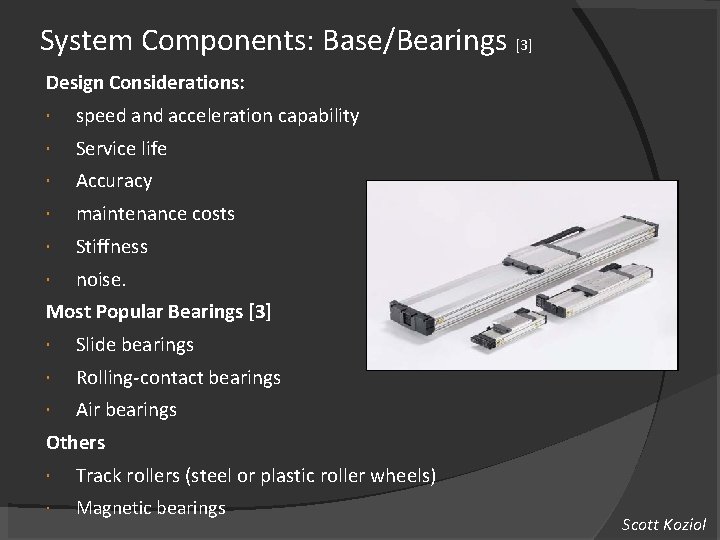
System Components: Base/Bearings [3] Design Considerations: speed and acceleration capability Service life Accuracy maintenance costs Stiffness noise. Most Popular Bearings [3] Slide bearings Rolling-contact bearings Air bearings Others Track rollers (steel or plastic roller wheels) Magnetic bearings Scott Koziol
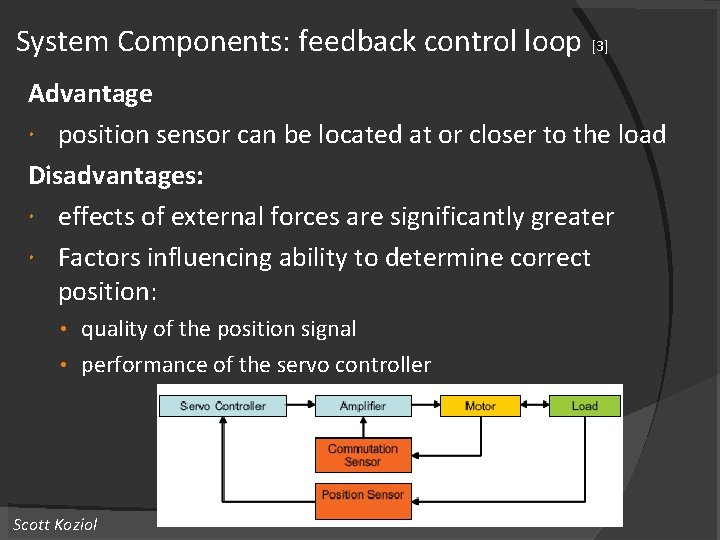
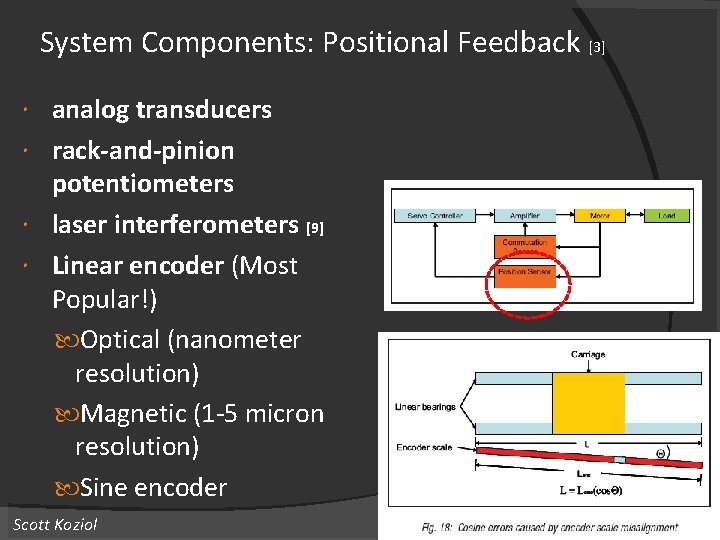
System Components: feedback control loop [3] Advantage position sensor can be located at or closer to the load Disadvantages: effects of external forces are significantly greater Factors influencing ability to determine correct position: • quality of the position signal • performance of the servo controller Scott Koziol
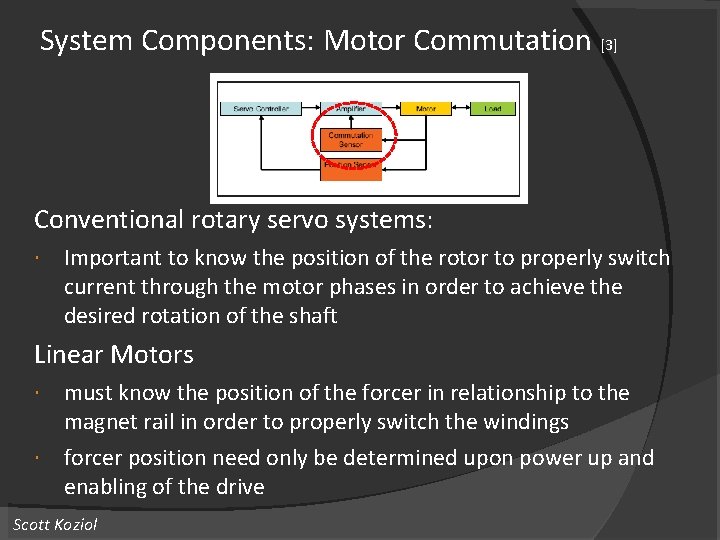
System Components: Motor Commutation [3] Conventional rotary servo systems: Important to know the position of the rotor to properly switch current through the motor phases in order to achieve the desired rotation of the shaft Linear Motors must know the position of the forcer in relationship to the magnet rail in order to properly switch the windings forcer position need only be determined upon power up and enabling of the drive Scott Koziol
System Components: Positional Feedback [3] analog transducers rack-and-pinion potentiometers laser interferometers [9] Linear encoder (Most Popular!) Optical (nanometer resolution) Magnetic (1 -5 micron resolution) Sine encoder Scott Koziol
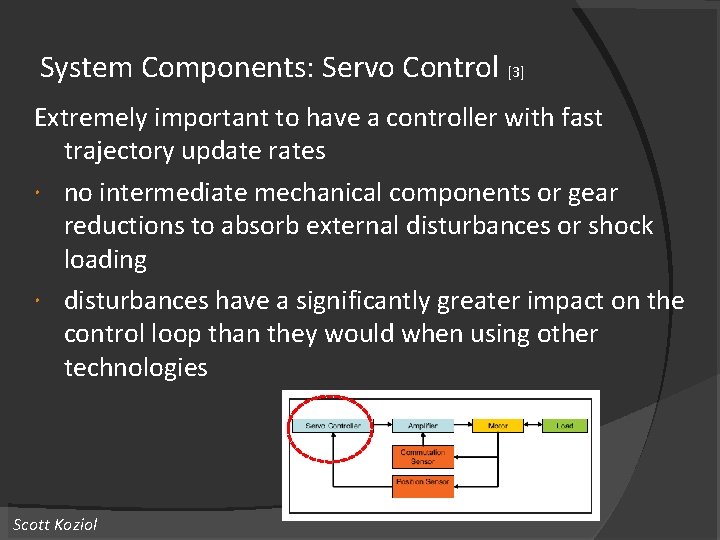
System Components: Servo Control [3] Extremely important to have a controller with fast trajectory update rates no intermediate mechanical components or gear reductions to absorb external disturbances or shock loading disturbances have a significantly greater impact on the control loop than they would when using other technologies Scott Koziol
Linear Motor Advantages [3], [4] Zero Backlash low-inertia drive High Speeds High Accelerations Fast Response High repeatability Highly accurate Clean Room compatibility Scott Koziol
Linear Motor Advantages cont… [3], [4] Stiffness Maintenance Free Operation Long Travels Without Performance Loss Suitable for Vacuum and Extreme Environments Better reliability and lower frictional losses than traditional rotary drive systems 46
Linear Motor Disadvantage COST! In most cases, the upfront cost of purchasing a linear motor system will be more expensive than belt- or screw-driven systems 47
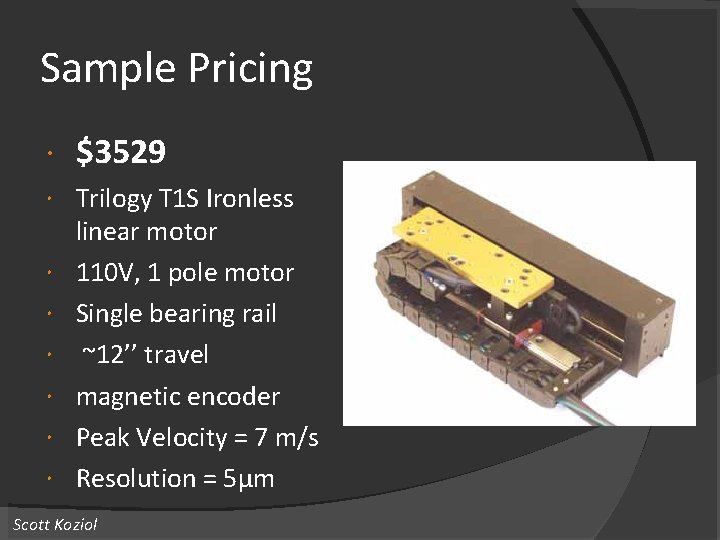
Sample Pricing $3529 Trilogy T 1 S Ironless linear motor 110 V, 1 pole motor Single bearing rail ~12’’ travel magnetic encoder Peak Velocity = 7 m/s Resolution = 5μm Scott Koziol
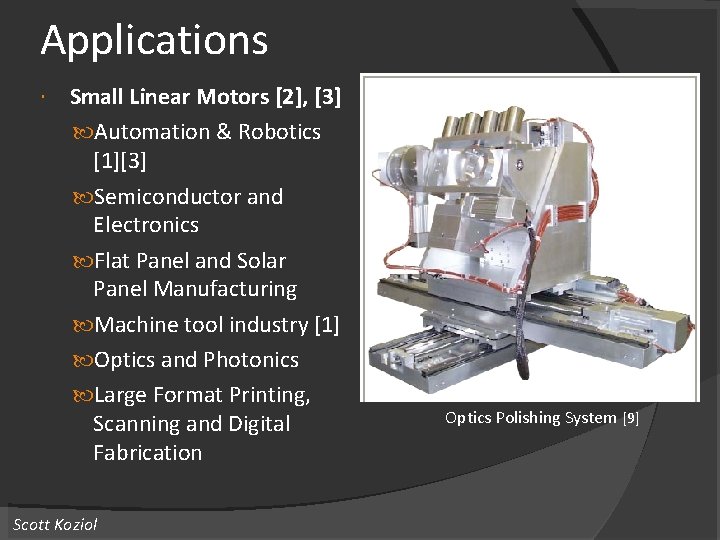
Applications Small Linear Motors [2], [3] Automation & Robotics [1][3] Semiconductor and Electronics Flat Panel and Solar Panel Manufacturing Machine tool industry [1] Optics and Photonics Large Format Printing, Scanning and Digital Fabrication Scott Koziol Optics Polishing System [9]
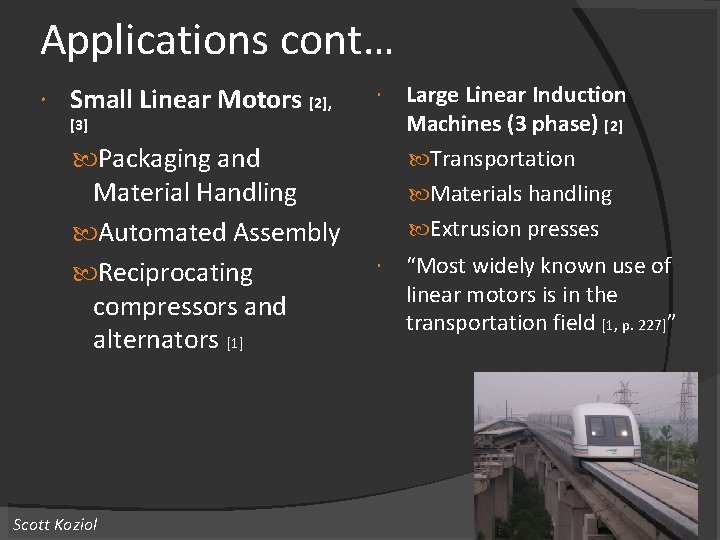
Applications cont… Small Linear Motors [2], Large Linear Induction Machines (3 phase) [2] Transportation Materials handling Extrusion presses “Most widely known use of linear motors is in the transportation field [1, p. 227]” [3] Packaging and Material Handling Automated Assembly Reciprocating compressors and alternators [1] Scott Koziol
References [1] A. E. Fitzgerald, C. Kingsley, Jr, S. Umans, Electric Machinery, Sixth Edition, Mc. Graw Hill, Boston, 2003. [2] M. S. Sarma, Electric Machines, Steady-State Theory and Dynamic Performance, Second Edition, West Publishing Company, Minneapolis/St. Paul, 1985. [3] Trilogy Linear Motor & Linear Motor Positioners, Parker Hannifin Corporation, 2007 [4] Baldor's Motion Solutions Catalogs, Linear Motors and Stages – Brochure, Literature Number: BR 1202 -G [5] Greg Paula, Linear motors take center stage, The American Society of Mechanical Engineers, 1998.
References (continued) [6] S. Cetinkunt, Mechatronics, John Wiley & Sons, Inc. , Hoboken 2007. [7] Rockwell Automation, http: //www. rockwellautomation. com/anorad/products/lin earmotors/questions. html [8] J. Barrett, T. Harned, J. Monnich, Linear Motor Basics, Parker Hannifin Corporation, http: //www. parkermotion. com/whitepages/linearmotorar ticle. pdf [9] Aerotech Engineering Reference, http: //www. aerotech. com/products/PDF/Engineering. Ref. pdf [10]http: //www. electricmotors. machinedesign. com/gui. Edi ts/Content/bdeee 3_7. aspx [11] http: //en. wikipedia. org/wiki/Rare-earth_magnet
References (continued) http: //zone. ni. com/devzone/cda/ph/p/id/287 http: //zone. ni. com/devzone/cda/ph/p/id/286 http: //www. cs. uiowa. edu/~jones/step/types. html http: //en. wikipedia. org/wiki/H-bridge http: //www. stepperworld. com/Tutorials/pg. Bipolar. Tutor ial. htm http: //electojects. com/motors/stepper-motors-1. htm http: //www. howstuffworks. com/motor. htm http: //hyperphysics. phyastr. gsu. edu/hbase/magnetic/mothow. html#c 1 http: //en. wikipedia. org/wiki/Electric_motor 53
References (continued) http: //www. physclips. unsw. edu. au/jw/electricmotors. h tml http: //www. speedace. info/solar_car_motor_and_drivet rain. htm http: //www. allaboutcircuits. com/vol_2/chpt_13/1. html http: //www. tpub. com/neets/book 5/18 d. htm single phase induction motor http: //www. stefanv. com/rcstuff/qf 200212. html Brushless DC motors https: //www. geckodrive. com/upload/Step_motor_basic s. pdf 54