
Motion David Hoult 2009 Displacement is distance moved

- Slides: 92
Motion © David Hoult 2009
Displacement is distance moved in a specified direction
Displacement is distance moved in a specified direction Displacement is therefore a vector quantity
Displacement is distance moved in a specified direction Displacement is therefore a vector quantity S I unit of displacement is the meter, m
“S I” - système international d'unités… the modern system based on the three fundamental units: Meter for distance
“S I” - système international d'unités… the modern system based on the three fundamental units: Meter for distance Second for time
“S I” - système international d'unités… the modern system based on the three fundamental units: Meter for distance Second for time Kilogram for mass
All other units (for force, electric current, energy etc) are called derived units and are based on the three fundamental units of mass, distance and time.
Speed is distance moved per unit time
Speed is distance moved per unit time When stating a speed, no direction needs to be given because speed is a scalar quantity.
Speed is distance moved per unit time When stating a speed, no direction needs to be given because speed is a scalar quantity. The units of speed are meters per second, ms-1
Velocity is distance moved per unit time in a specified direction (and sense)
Velocity is distance moved per unit time in a specified direction (and sense) Velocity is therefore a vector quantity
Velocity is distance moved per unit time in a specified direction (and sense) Velocity is therefore a vector quantity The units of velocity are meters per second, ms-1
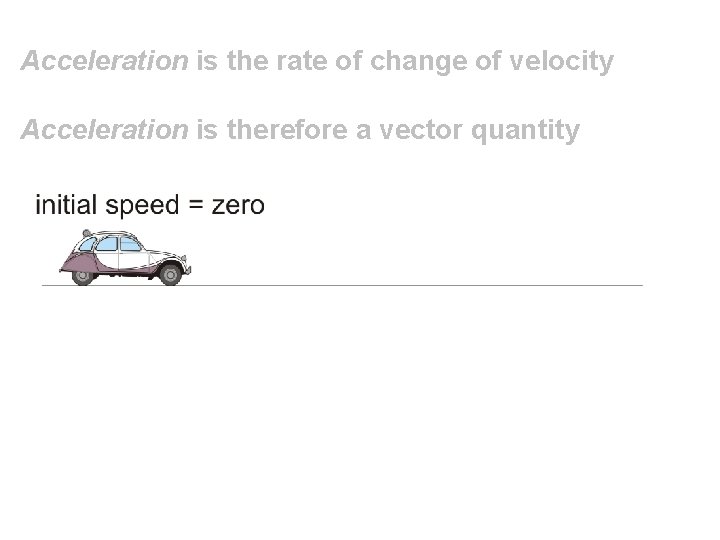
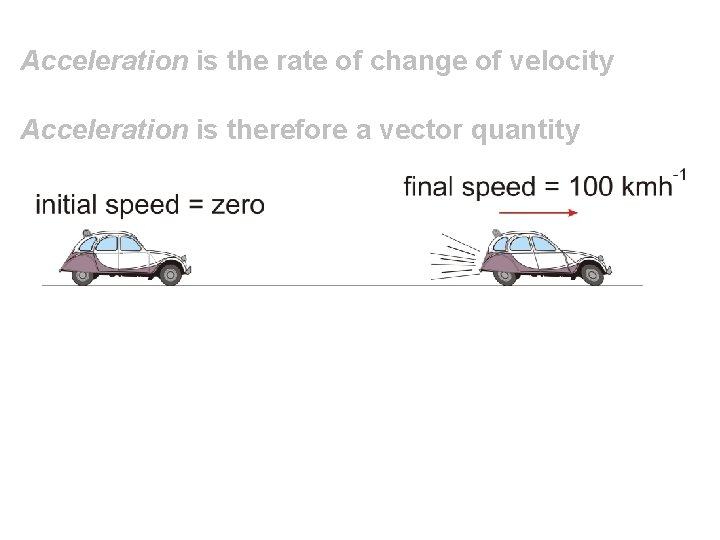
Acceleration is the rate of change of velocity
Acceleration is the rate of change of velocity Acceleration is therefore a vector quantity
Acceleration is the rate of change of velocity Acceleration is therefore a vector quantity
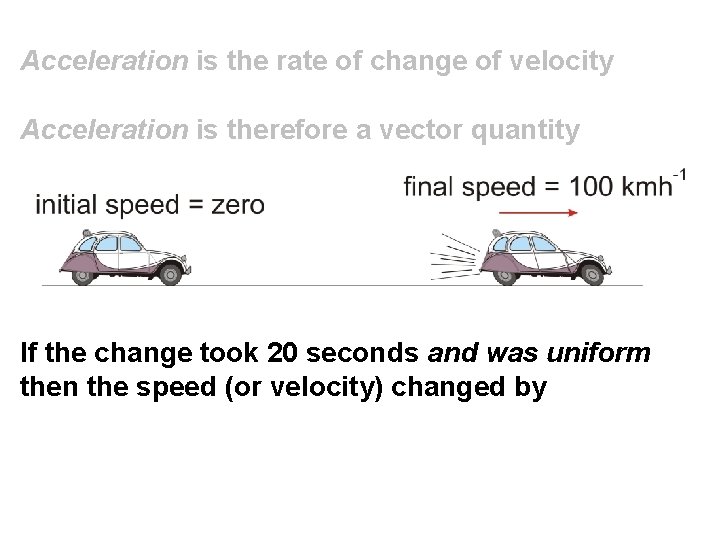
Acceleration is the rate of change of velocity Acceleration is therefore a vector quantity
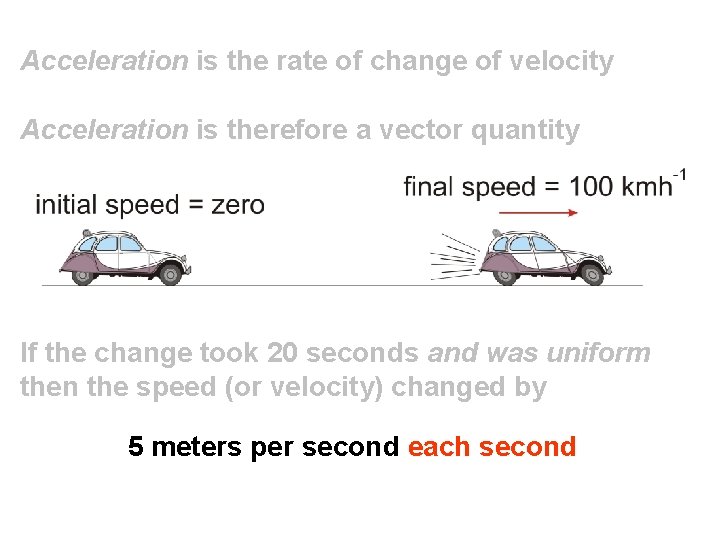
Acceleration is the rate of change of velocity Acceleration is therefore a vector quantity If the change took 20 seconds and was uniform then the speed (or velocity) changed by
Acceleration is the rate of change of velocity Acceleration is therefore a vector quantity If the change took 20 seconds and was uniform then the speed (or velocity) changed by 5 meters per second each second
The units of acceleration are meters per second, ms-2
Using Graphs to represent Motion
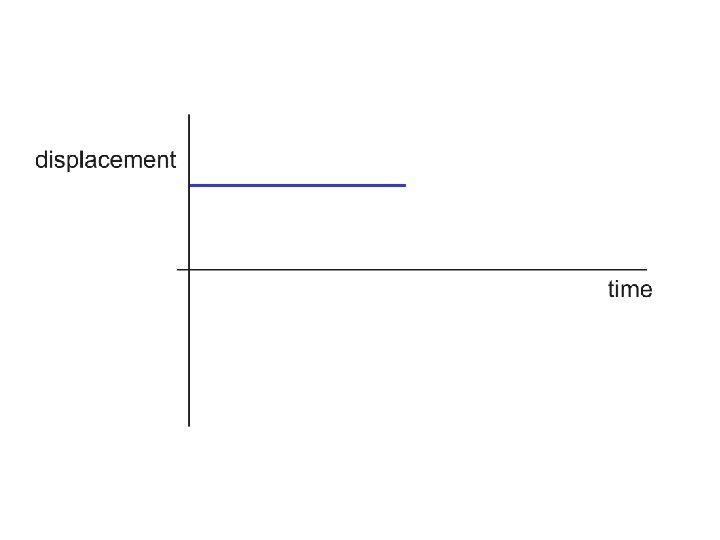
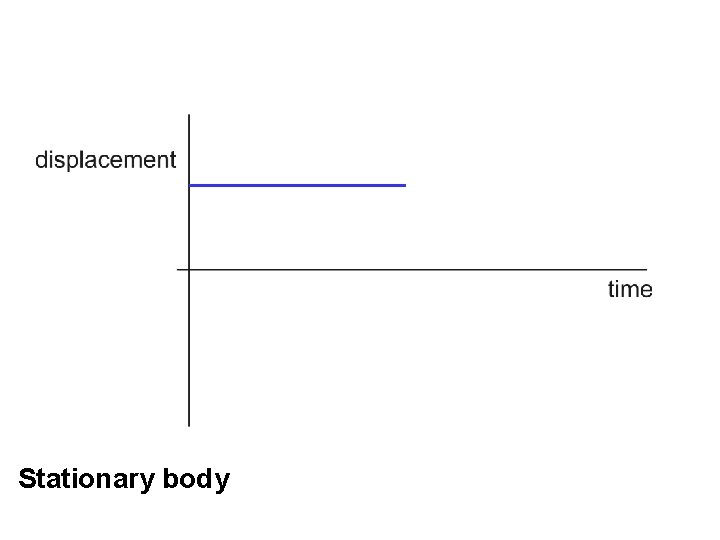
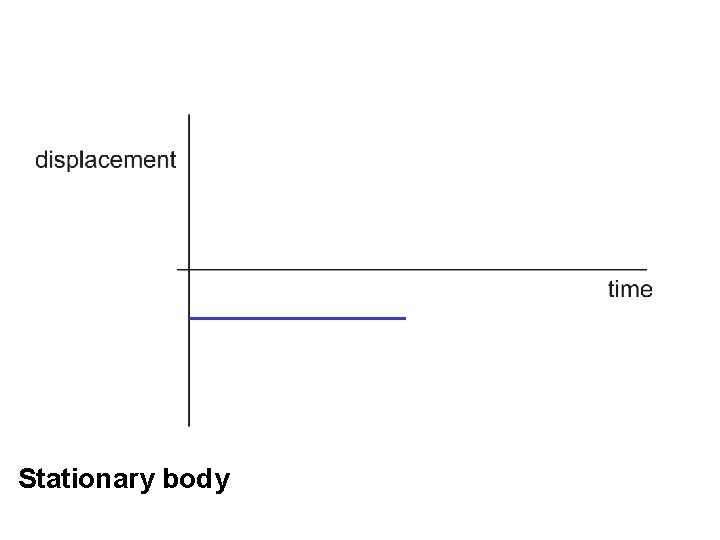
Stationary body
Stationary body
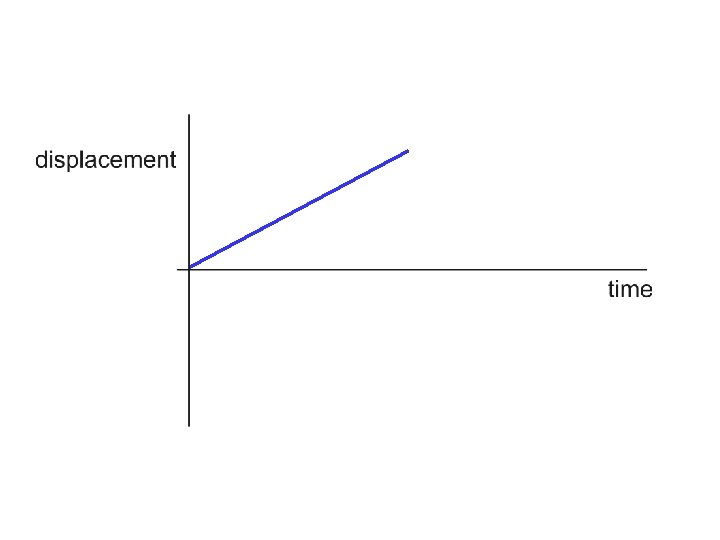
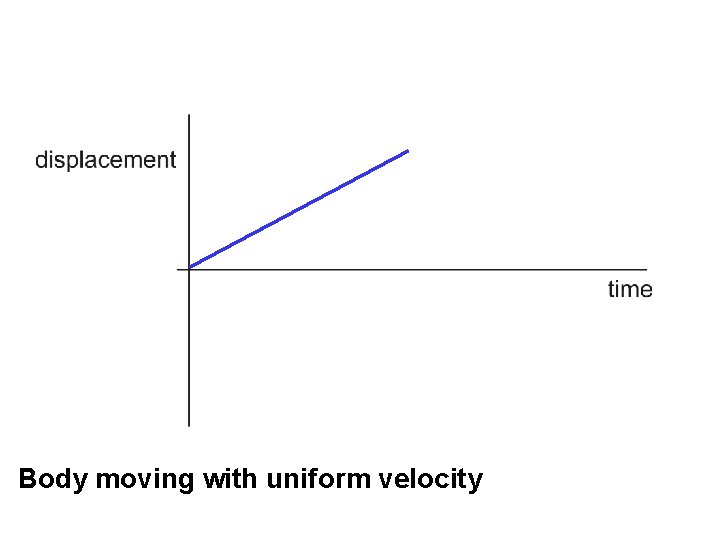
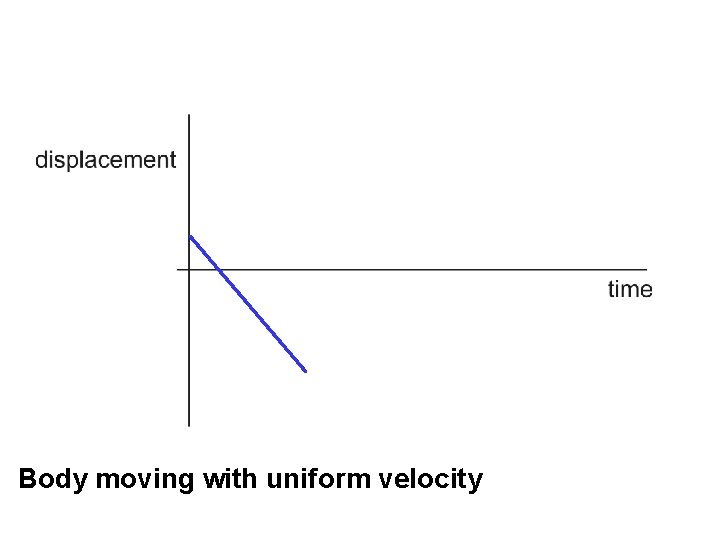
Body moving with uniform velocity
Body moving with uniform velocity
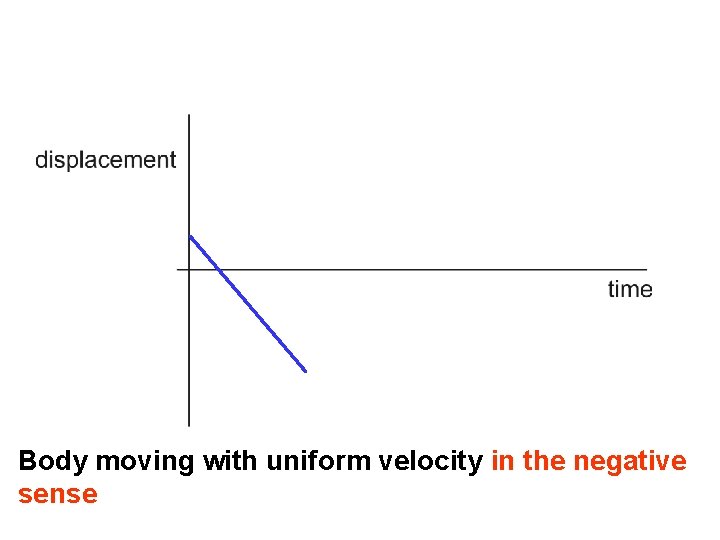
Body moving with uniform velocity in the negative sense
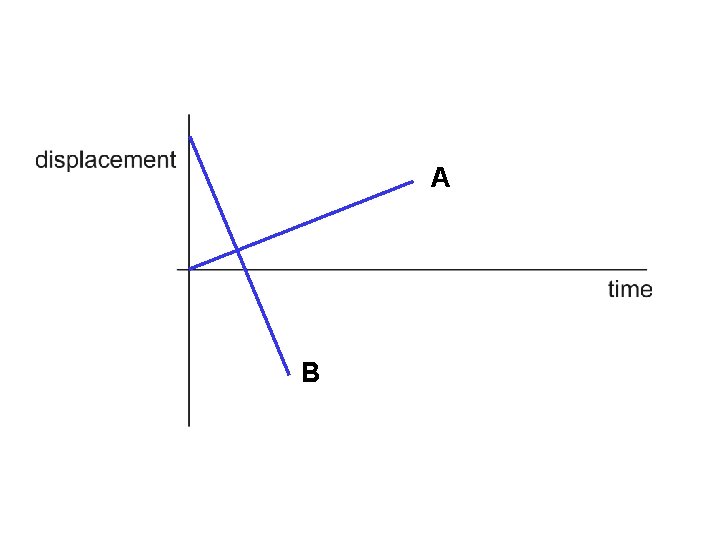
A B
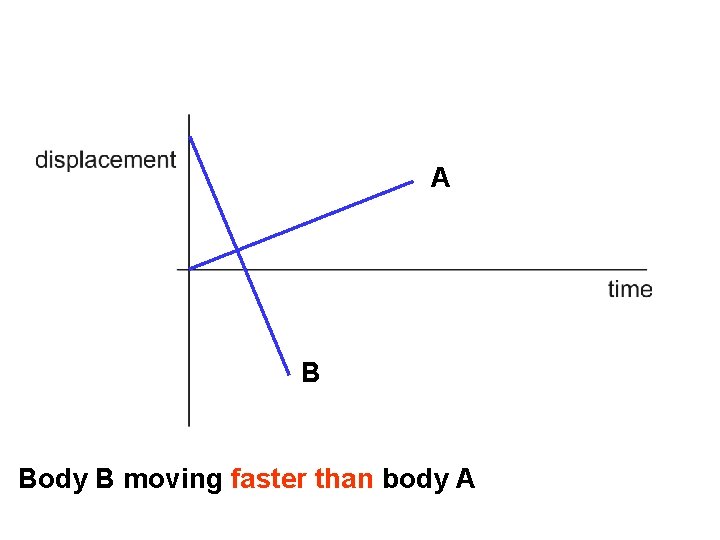
A B Body B moving faster than body A
The slope of a displacement / time graph gives the magnitude and sense of the velocity of the body
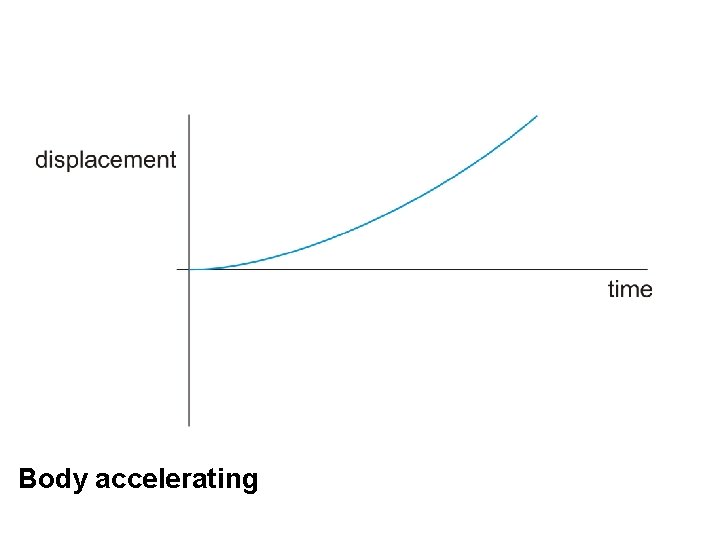
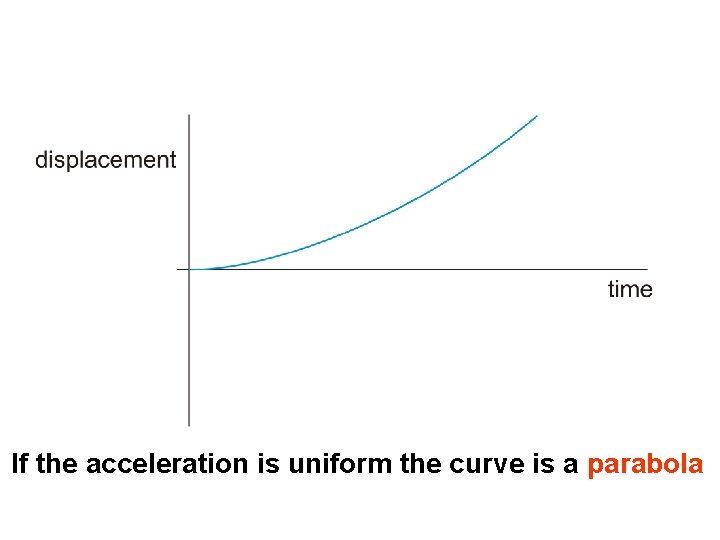
Body accelerating
If the acceleration is uniform the curve is a parabola
Body accelerating
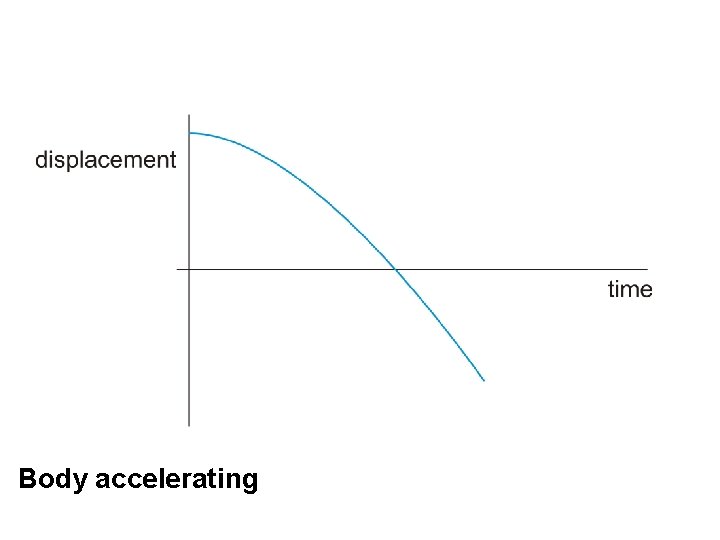
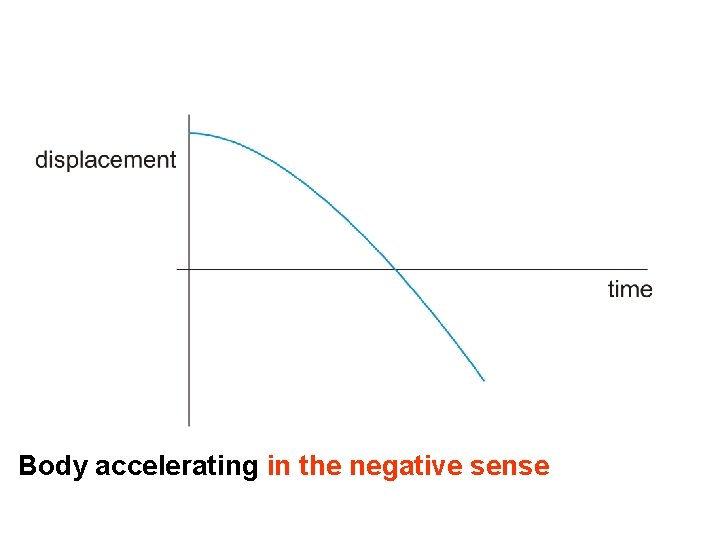
Body accelerating in the negative sense
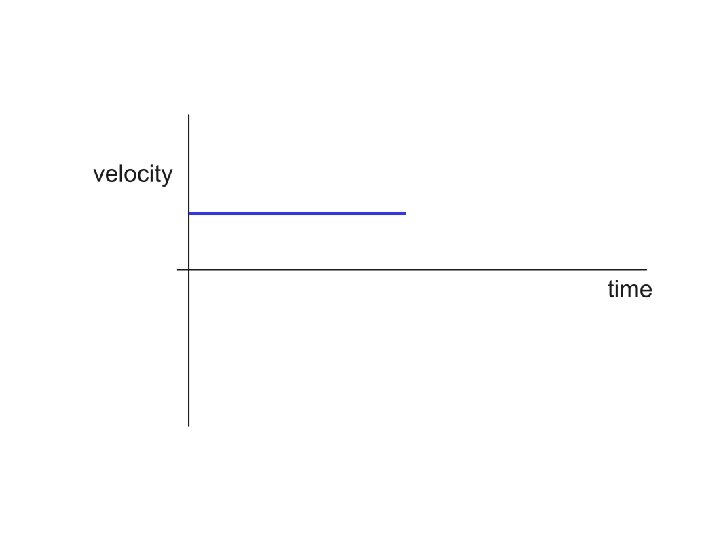
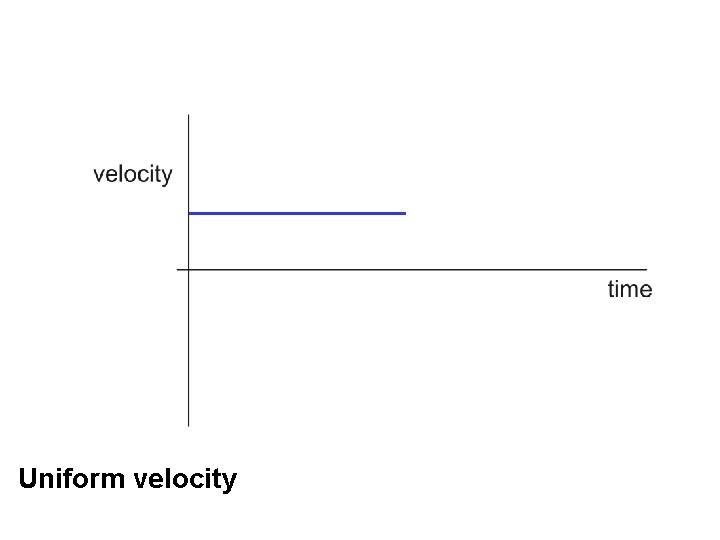
Uniform velocity
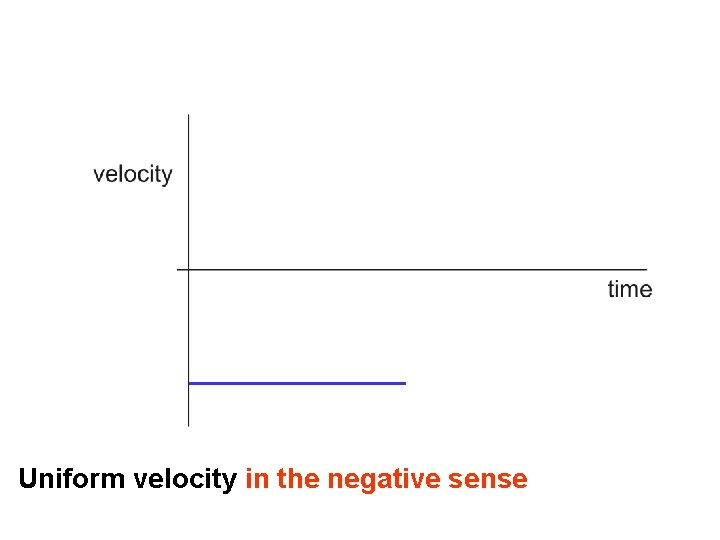
Uniform velocity in the negative sense
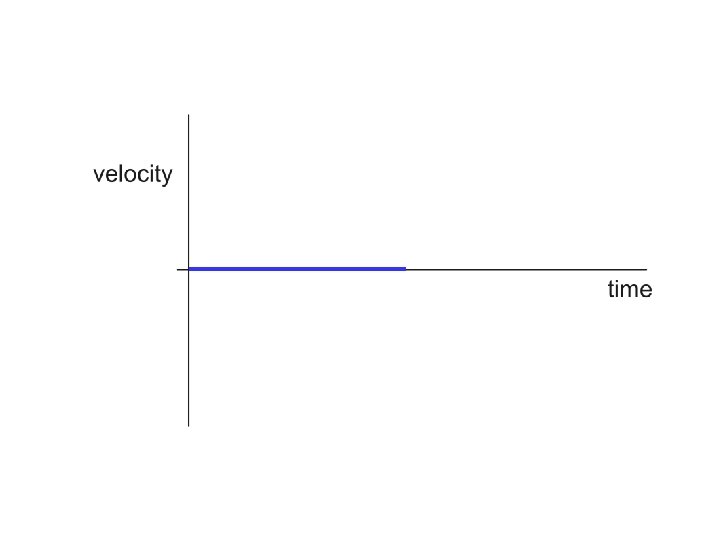
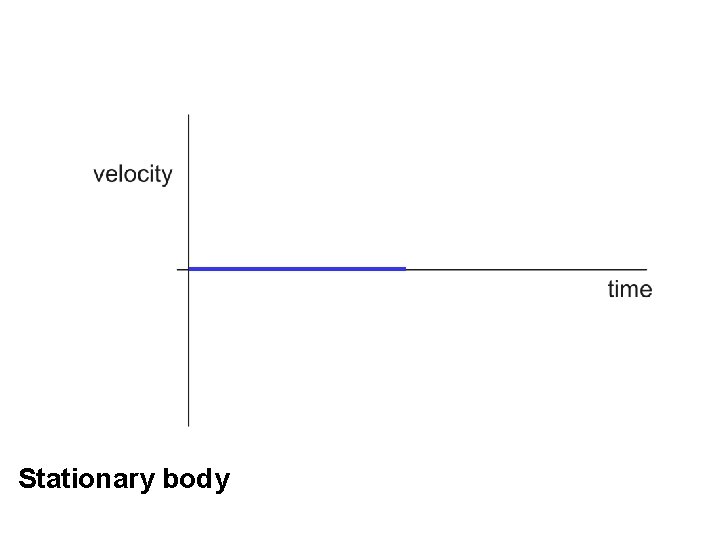
Stationary body
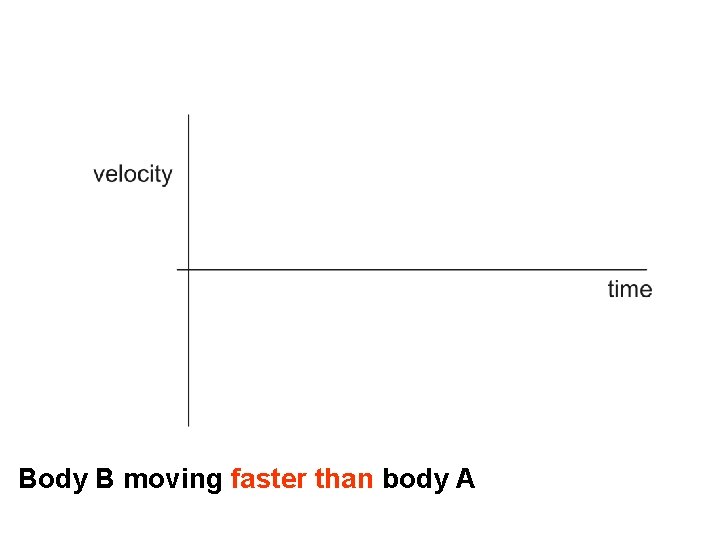
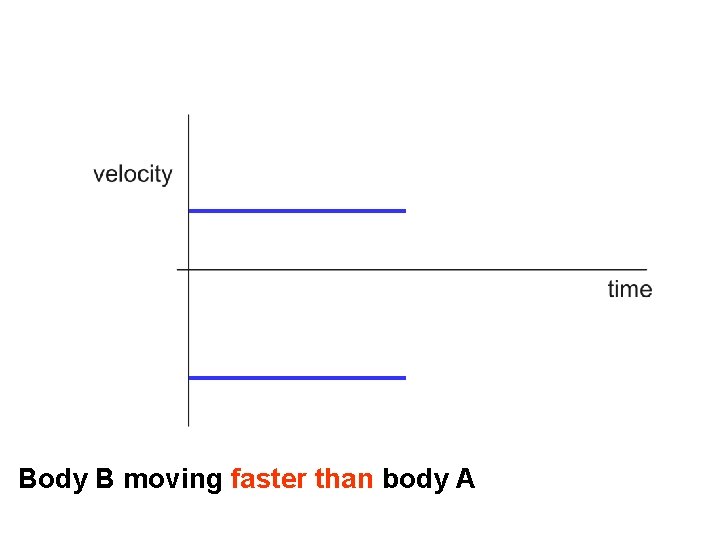
Body B moving faster than body A
Body B moving faster than body A
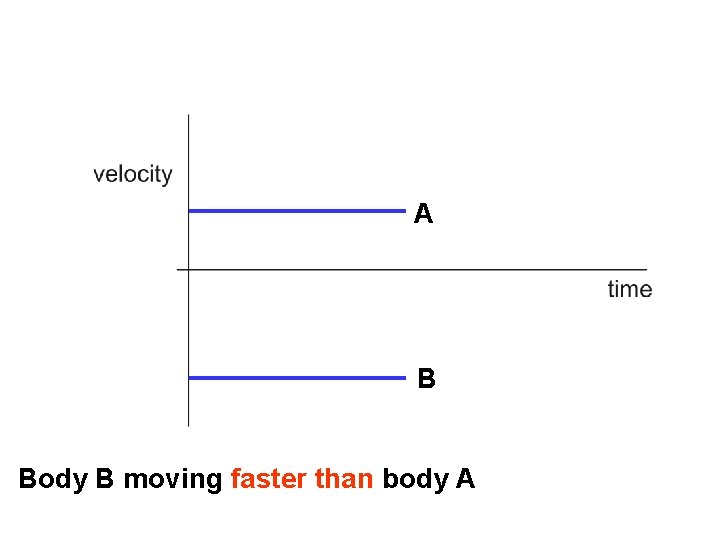
A B Body B moving faster than body A
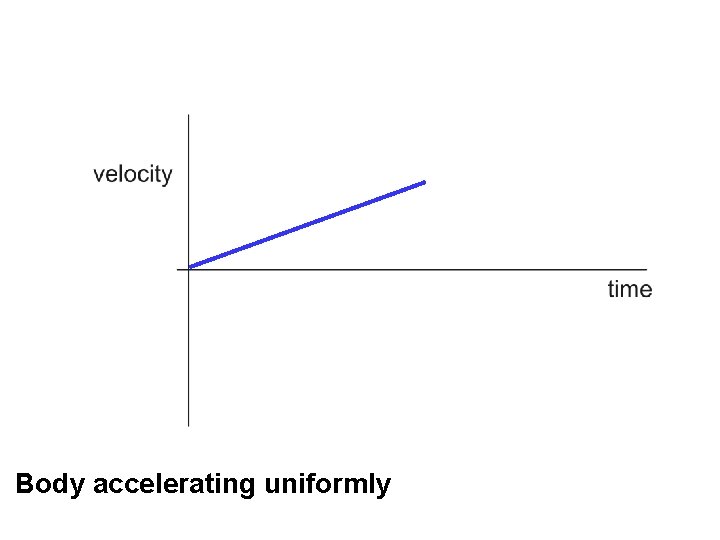
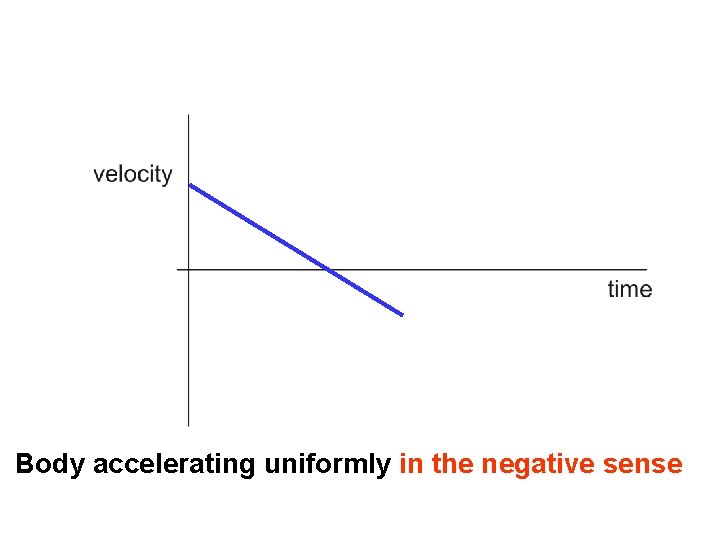
Body accelerating uniformly
Body accelerating uniformly
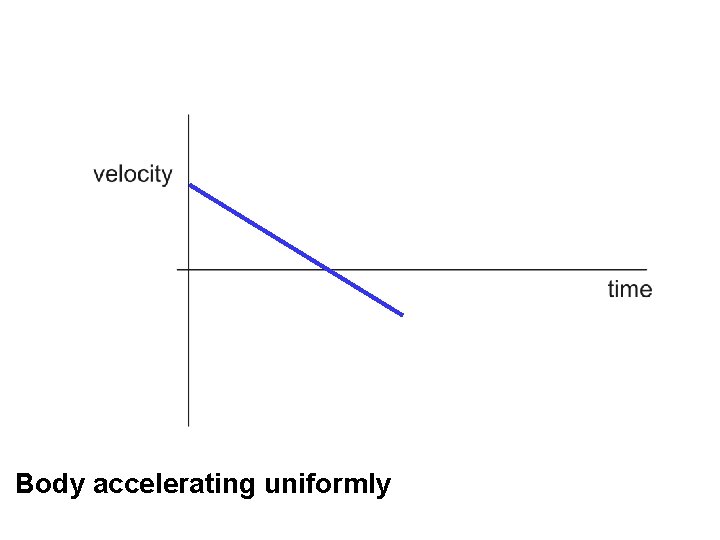
Body accelerating uniformly in the negative sense
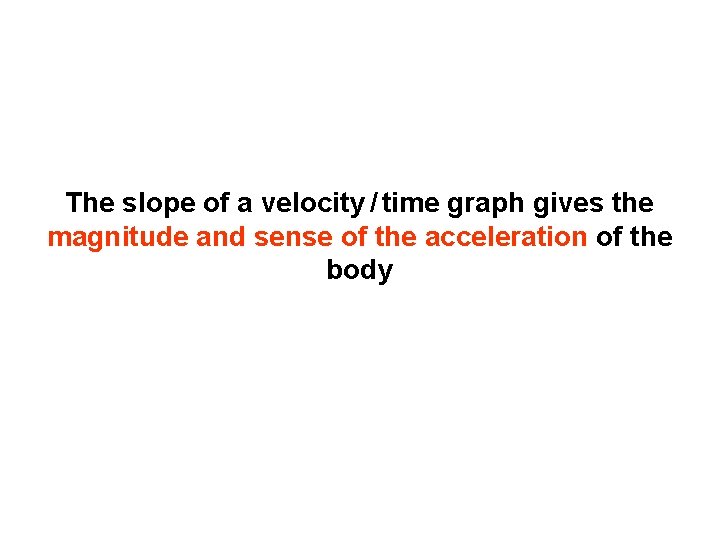
The slope of a velocity / time graph gives the magnitude and sense of the acceleration of the body
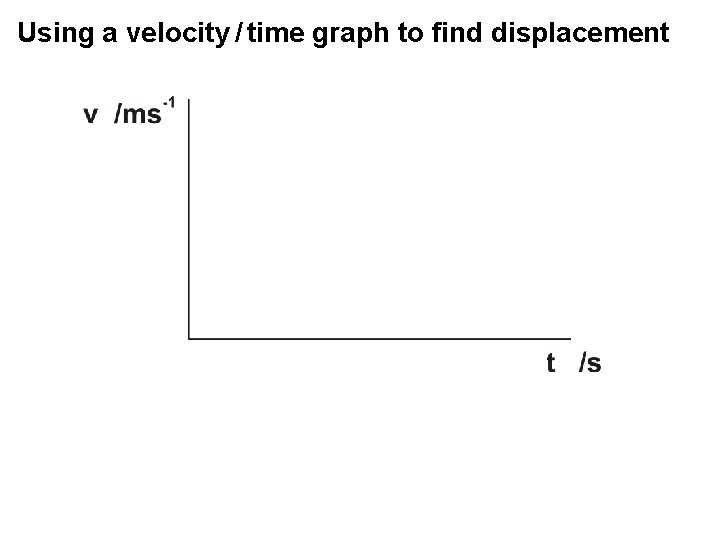
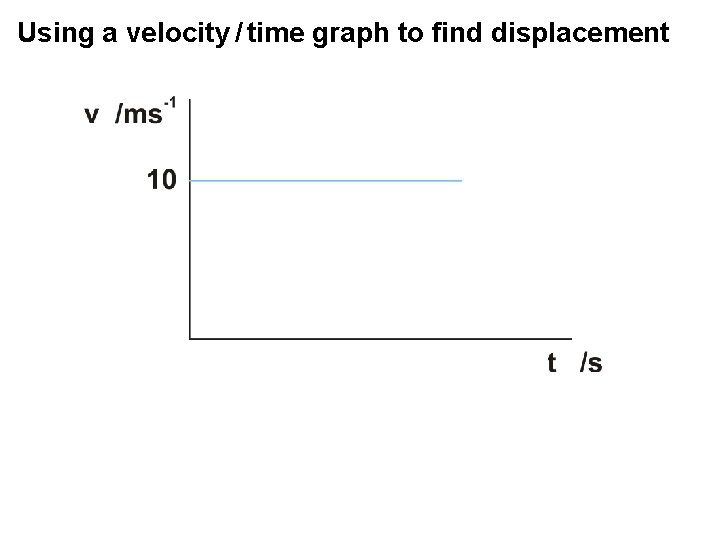
Using a velocity / time graph to find displacement
Using a velocity / time graph to find displacement
Using a velocity / time graph to find displacement
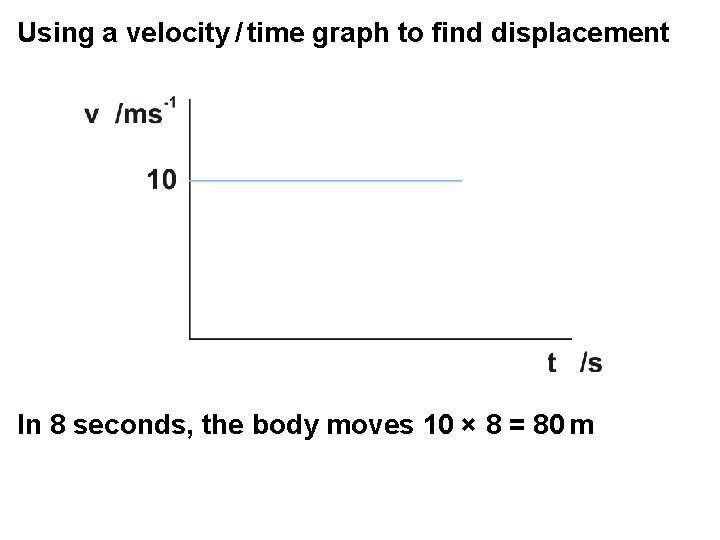
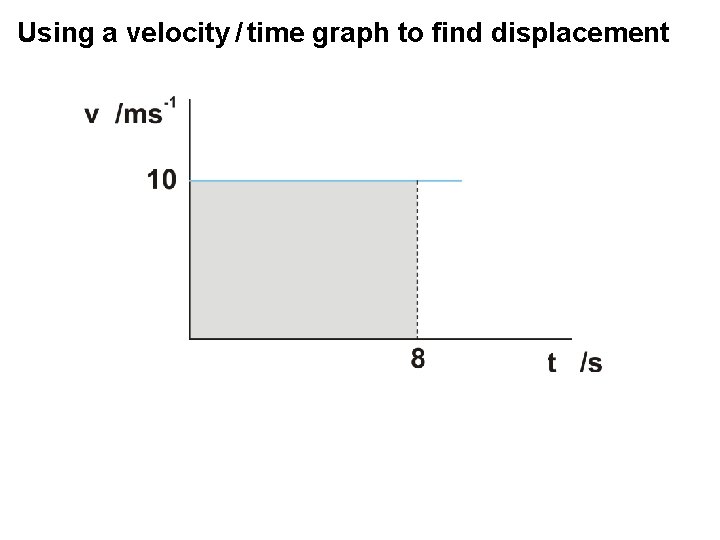
Using a velocity / time graph to find displacement In 8 seconds, the body moves 10 × 8 = 80 m
Using a velocity / time graph to find displacement
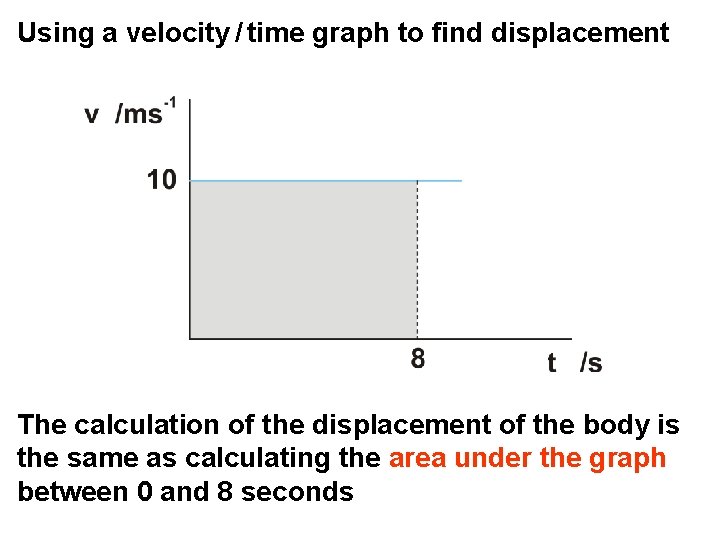
Using a velocity / time graph to find displacement The calculation of the displacement of the body is the same as calculating the area under the graph between 0 and 8 seconds
The area under a velocity / time graph represents the displacement of the body
Equations of Motion
These equations are useful when bodies move with uniform acceleration. Symbols used in the equations:
These equations are useful when bodies move with uniform acceleration. Symbols used in the equations: t represents time
These equations are useful when bodies move with uniform acceleration. Symbols used in the equations: t represents time a represents acceleration
These equations are useful when bodies move with uniform acceleration. Symbols used in the equations: t represents time a represents acceleration u represents “initial” velocity (or speed)
These equations are useful when bodies move with uniform acceleration. Symbols used in the equations: t represents time a represents acceleration u represents “initial” velocity (or speed) v represents “final” velocity (or speed)
These equations are useful when bodies move with uniform acceleration. Symbols used in the equations: t represents time a represents acceleration u represents “initial” velocity (or speed) v represents “final” velocity (or speed) s represents the displacement of the body from a reference point (usually the position of the body at t = 0)
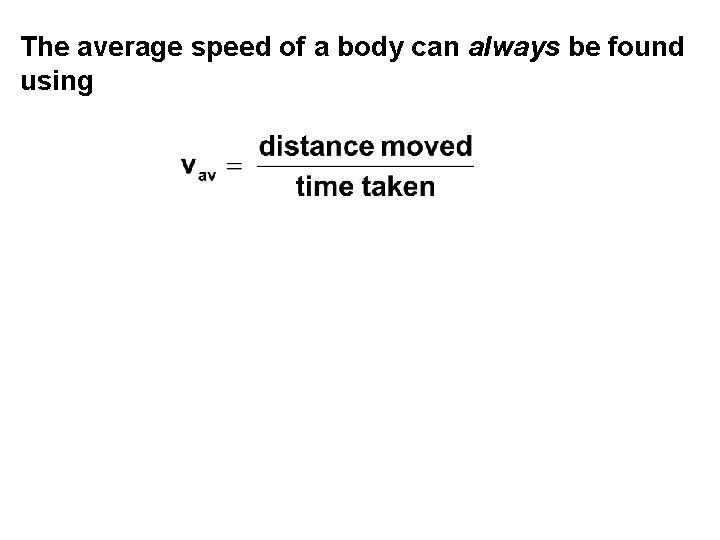
The average speed of a body can always be found using
The average speed of a body can always be found using
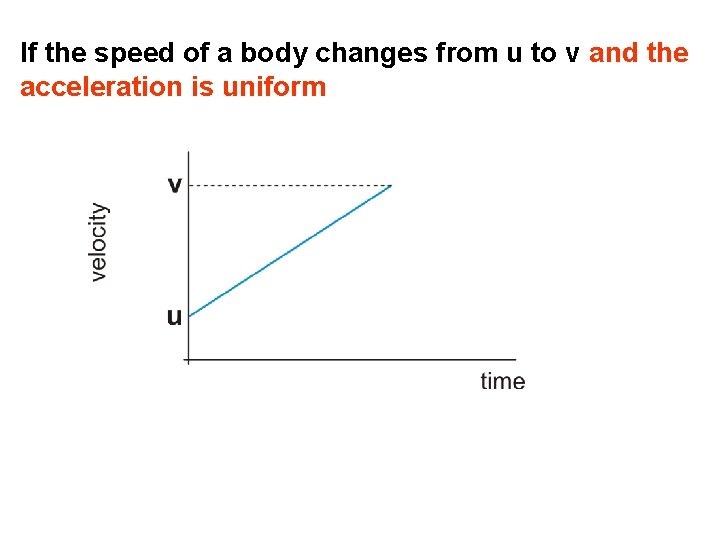
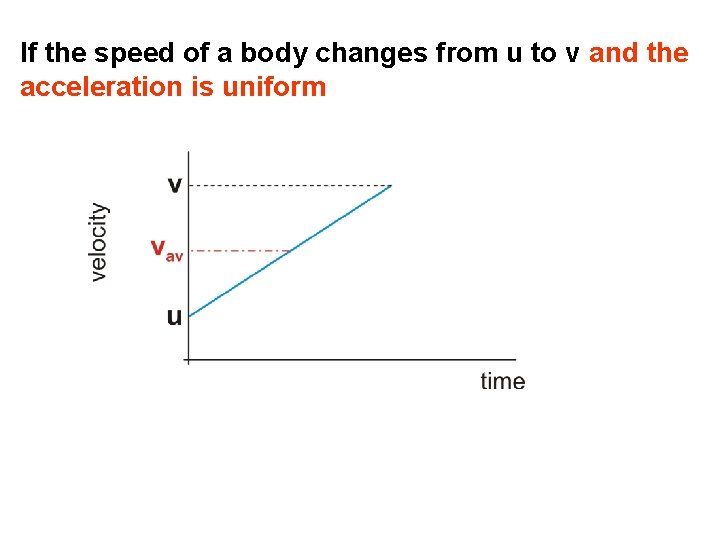
If the speed of a body changes from u to v and the acceleration is uniform
If the speed of a body changes from u to v and the acceleration is uniform
If the speed of a body changes from u to v and the acceleration is uniform
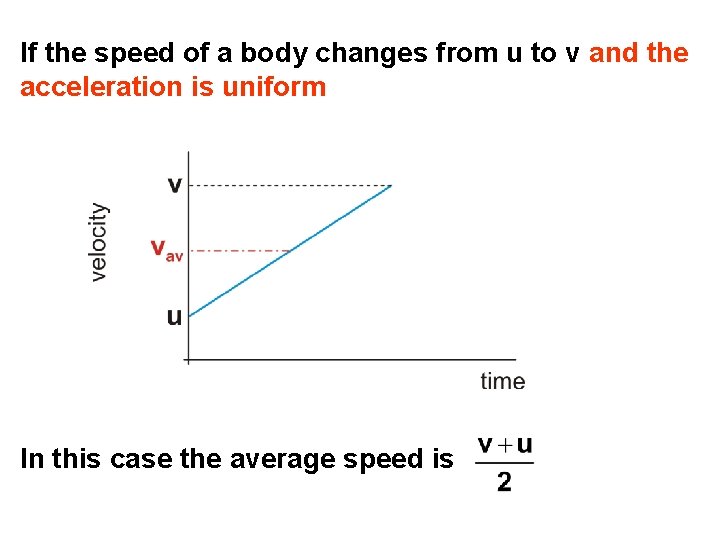
If the speed of a body changes from u to v and the acceleration is uniform In this case the average speed is
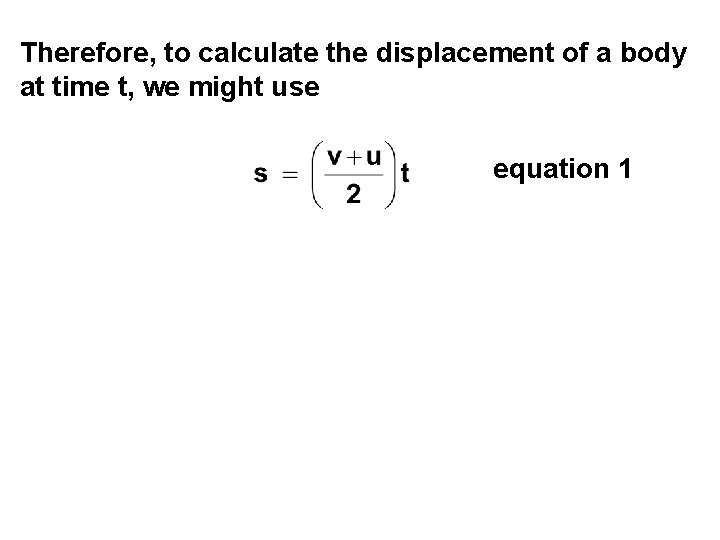
Therefore, to calculate the displacement of a body at time t, we might use
Therefore, to calculate the displacement of a body at time t, we might use equation 1
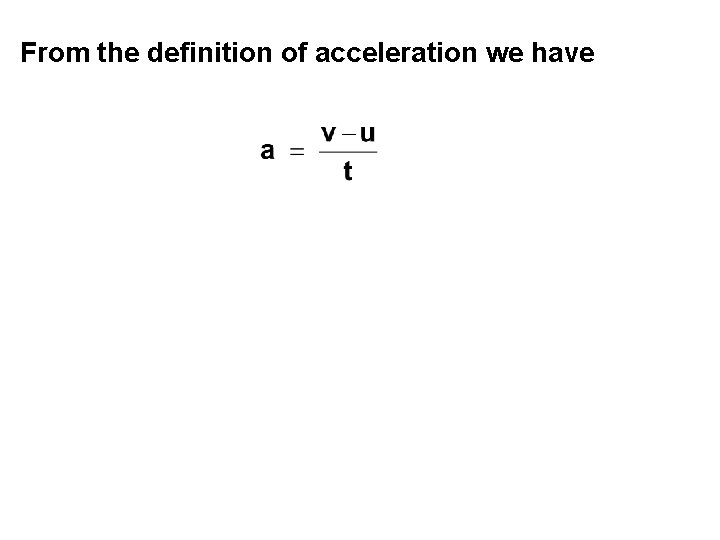
From the definition of acceleration we have
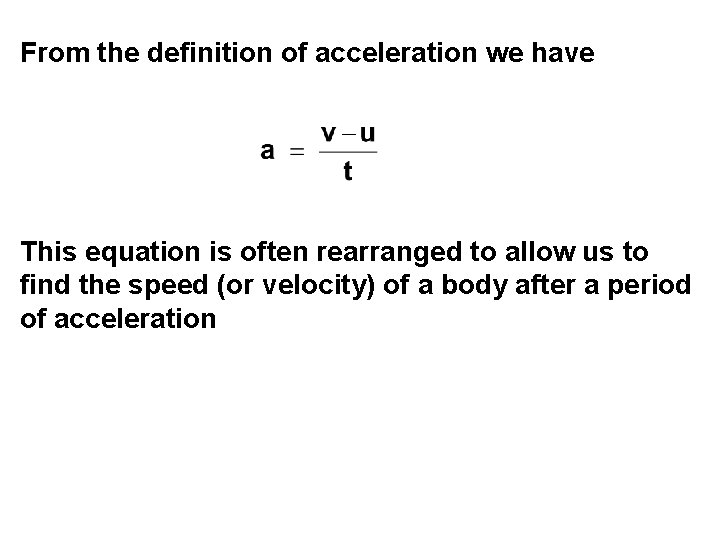
From the definition of acceleration we have This equation is often rearranged to allow us to find the speed (or velocity) of a body after a period of acceleration
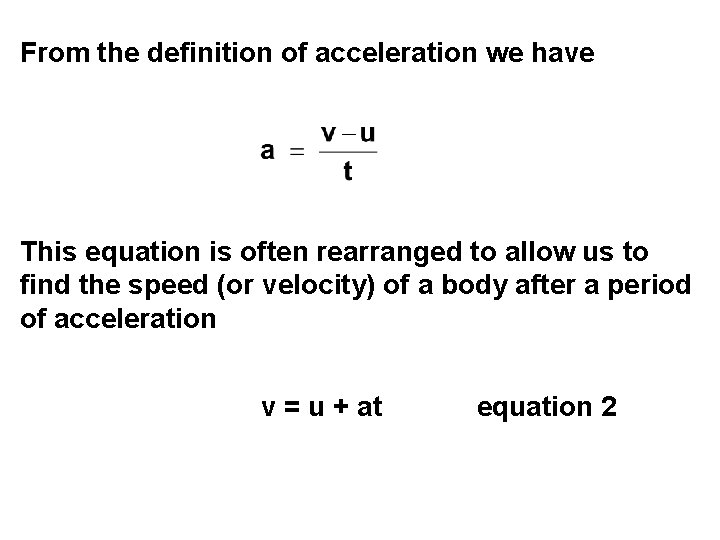
From the definition of acceleration we have This equation is often rearranged to allow us to find the speed (or velocity) of a body after a period of acceleration v = u + at equation 2
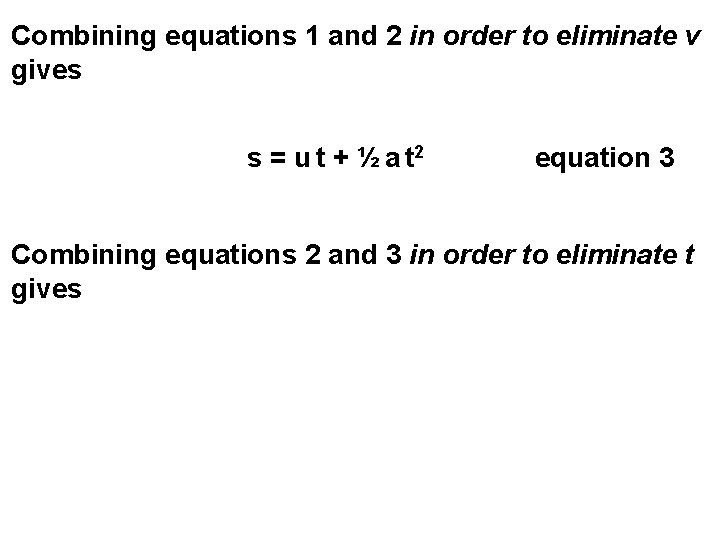
Combining equations 1 and 2 in order to eliminate v gives
Combining equations 1 and 2 in order to eliminate v gives s = u t + ½ a t 2 equation 3
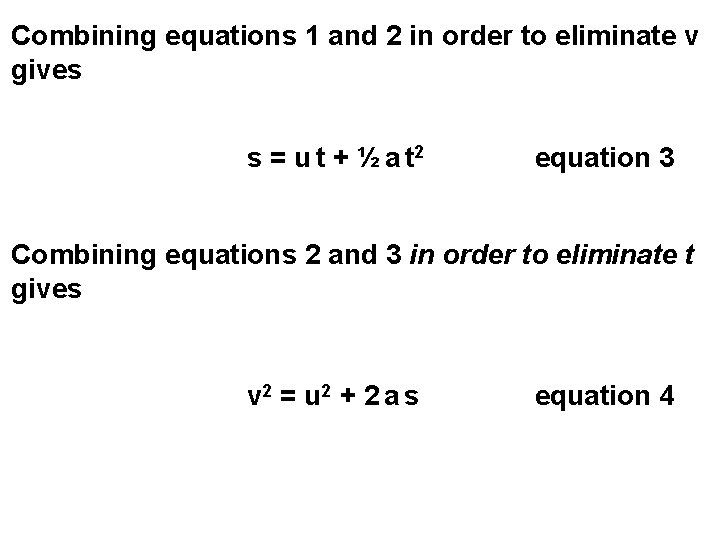
Combining equations 1 and 2 in order to eliminate v gives s = u t + ½ a t 2 equation 3 Combining equations 2 and 3 in order to eliminate t gives
Combining equations 1 and 2 in order to eliminate v gives s = u t + ½ a t 2 equation 3 Combining equations 2 and 3 in order to eliminate t gives v 2 = u 2 + 2 a s equation 4
The Acceleration due to Gravity (g) (also called Acceleration of Free Fall)
The Acceleration due to Gravity (g) (also called Acceleration of Free Fall) Experiments show that all bodies fall with the same acceleration
The Acceleration due to Gravity (g) (also called Acceleration of Free Fall) Experiments show that all bodies fall with the same acceleration as long as air resistance is negligible.
The Acceleration due to Gravity (g) (also called Acceleration of Free Fall) Experiments show that all bodies fall with the same acceleration as long as air resistance is negligible. g (in Paris) is about 9. 8 ms-2
The value of g is not the same at all points on the Earth.
The value of g is not the same at all points on the Earth. The value of g is affected by:
The value of g is not the same at all points on the Earth. The value of g is affected by: i) altitude
The value of g is not the same at all points on the Earth. The value of g is affected by: i) altitude
The value of g is not the same at all points on the Earth. The value of g is affected by: i) altitude ii) latitude
The value of g is not the same at all points on the Earth. The value of g is affected by: i) altitude ii) latitude; the Earth is not a perfect sphere
The value of g is not the same at all points on the Earth. The value of g is affected by: i) altitude ii) latitude; the Earth is not a perfect sphere iii) the rotation of the Earth
The value of g is not the same at all points on the Earth. The value of g is affected by: i) altitude ii) latitude; the Earth is not a perfect sphere iii) the rotation of the Earth The value of g is less than it would be if the earth did not rotate.
The value of g is not the same at all points on the Earth. The value of g is affected by: i) altitude ii) latitude; the Earth is not a perfect sphere iii) the rotation of the Earth The value of g is less than it would be if the earth did not rotate. The value of g is affected most at places where the speed of circular motion is greatest, that is, on the equator