KINEMATICS DISTANCE AND DISPLACEMENT DEFINITIONS DISTANCE is a
- Slides: 23
KINEMATICS
DISTANCE AND DISPLACEMENT - DEFINITIONS • DISTANCE is a numerical (scalar) description of how far apart objects are. – Distance is length of the path • DISPLACEMENT is the distance moved in particular direction (vector quantity) • Unit of both distance and displacement is the meter (m)
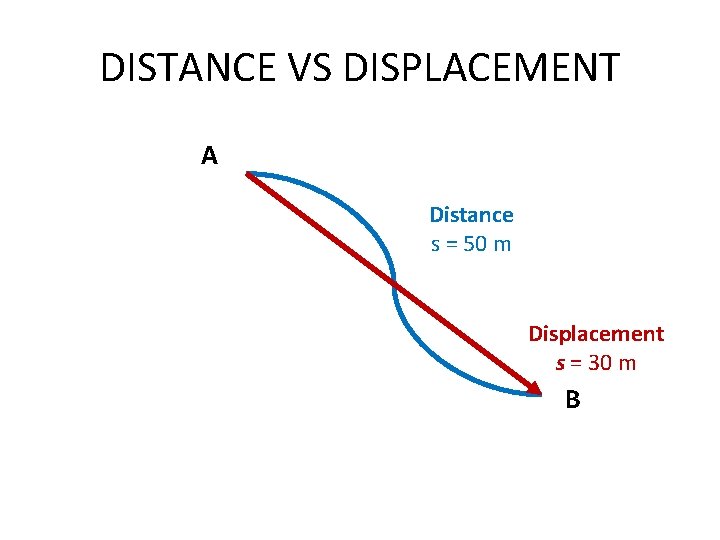
DISTANCE VS DISPLACEMENT A Distance s = 50 m Displacement s = 30 m B
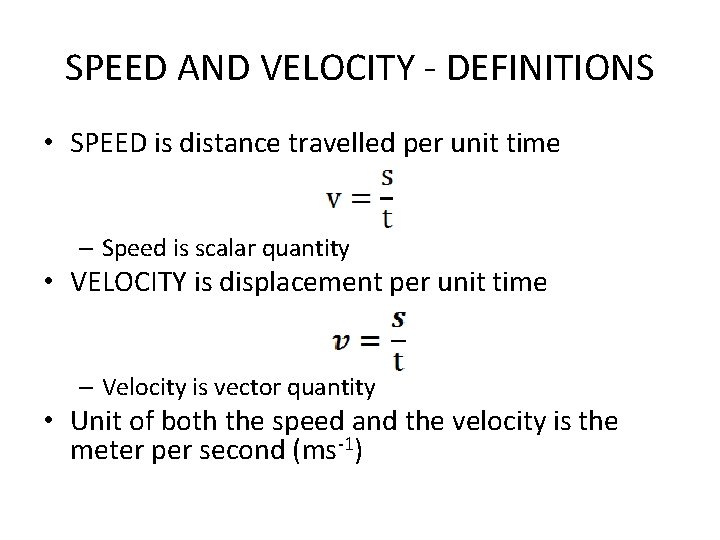
SPEED AND VELOCITY - DEFINITIONS • SPEED is distance travelled per unit time – Speed is scalar quantity • VELOCITY is displacement per unit time – Velocity is vector quantity • Unit of both the speed and the velocity is the meter per second (ms-1)
AVERAGE AND INSTANTANEOUS VELOCITY • Usually the body cannot travel with constant velocity. If we describe – the whole displacement of body and – whole time the body travelled, we can calculate AVERAGE VELOCITY of the body, • AVERAGE VELOCITY describes average displacement of the body per unit time. • If we broke our trip into lots of small pieces, we can consider each piece as the straight line travelled with constant velocity called INSTANTANEOUS VELOCITY. • INSTANTANEOUS VELOCITY describes how fast the body going in that moment of time and in witch direction
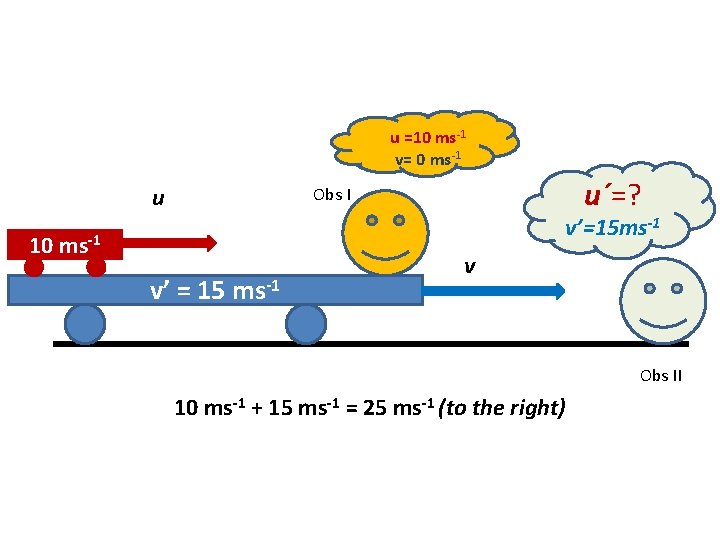
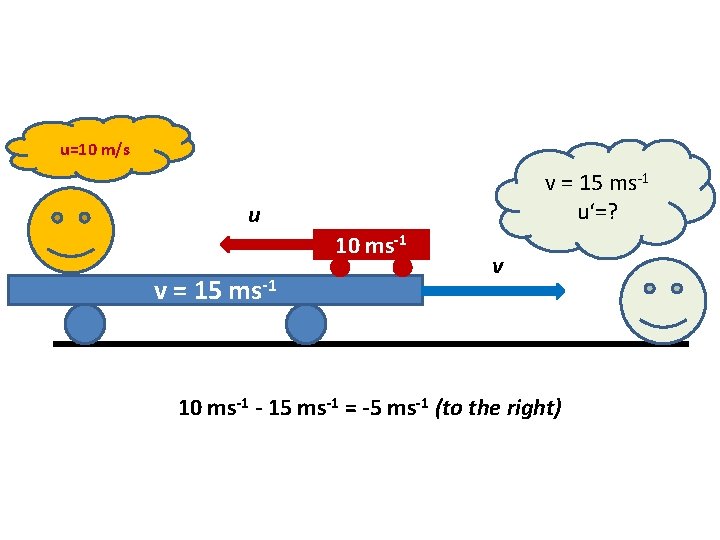
VELOCITY IS RELATIVE • One body moves with different velocity consider different bodies. • It means, that velocity is relative to body we measure the velocity.
u =10 ms-1 v= 0 ms-1 u u´=? Obs I v’=15 ms-1 10 ms-1 v’ = 15 ms-1 v Obs II 10 ms-1 + 15 ms-1 = 25 ms-1 (to the right)
u=10 m/s v = 15 ms-1 u‘=? u 10 ms-1 v = 15 ms-1 v 10 ms-1 - 15 ms-1 = -5 ms-1 (to the right)
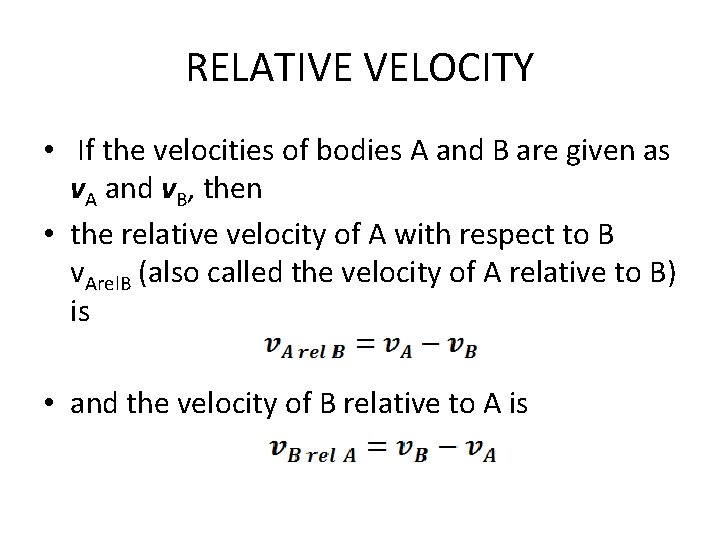
RELATIVE VELOCITY • If the velocities of bodies A and B are given as v. A and v. B, then • the relative velocity of A with respect to B v. Arel. B (also called the velocity of A relative to B) is • and the velocity of B relative to A is
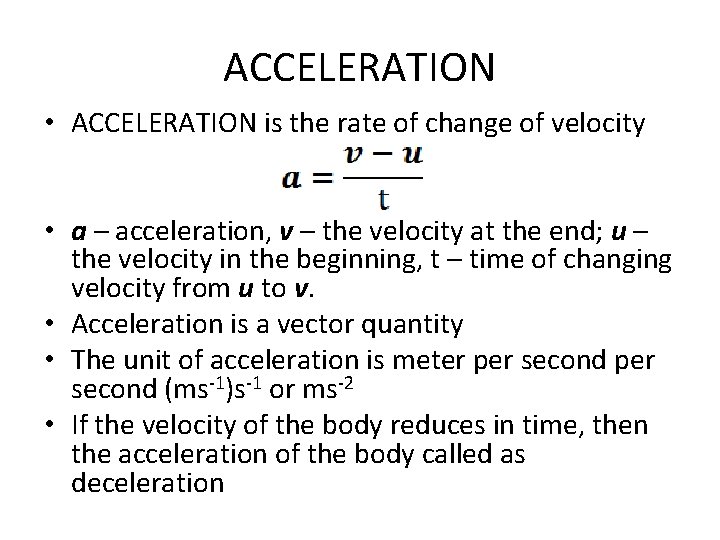
ACCELERATION • ACCELERATION is the rate of change of velocity • a – acceleration, v – the velocity at the end; u – the velocity in the beginning, t – time of changing velocity from u to v. • Acceleration is a vector quantity • The unit of acceleration is meter per second (ms-1)s-1 or ms-2 • If the velocity of the body reduces in time, then the acceleration of the body called as deceleration
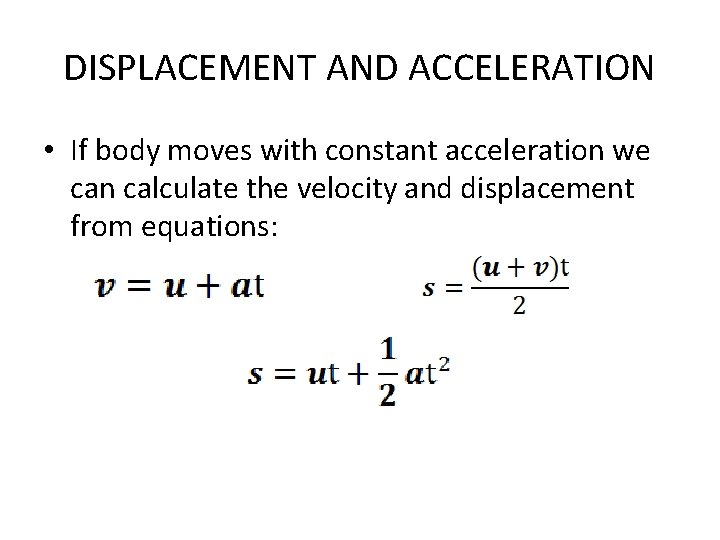
DISPLACEMENT AND ACCELERATION • If body moves with constant acceleration we can calculate the velocity and displacement from equations:
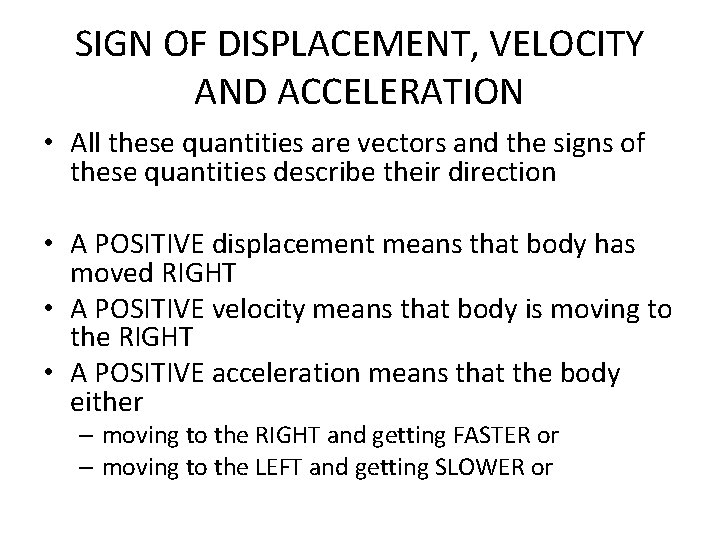
SIGN OF DISPLACEMENT, VELOCITY AND ACCELERATION • All these quantities are vectors and the signs of these quantities describe their direction • A POSITIVE displacement means that body has moved RIGHT • A POSITIVE velocity means that body is moving to the RIGHT • A POSITIVE acceleration means that the body either – moving to the RIGHT and getting FASTER or – moving to the LEFT and getting SLOWER or
FREE FALL • When body is allowed to fall freely, we say it is in free fall • Bodies falling freely on the earth fall with acceleration of about g=9. 81 ms-2 • The body falls because of gravity, it means that direction of the vector g is always vertically down • To calculate displacement, velocity etc we can use the same equations, we described, but we free falls acceleration g instead acceleration a.
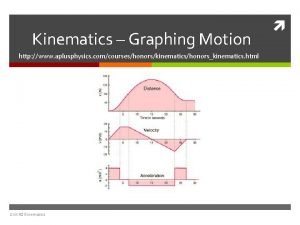
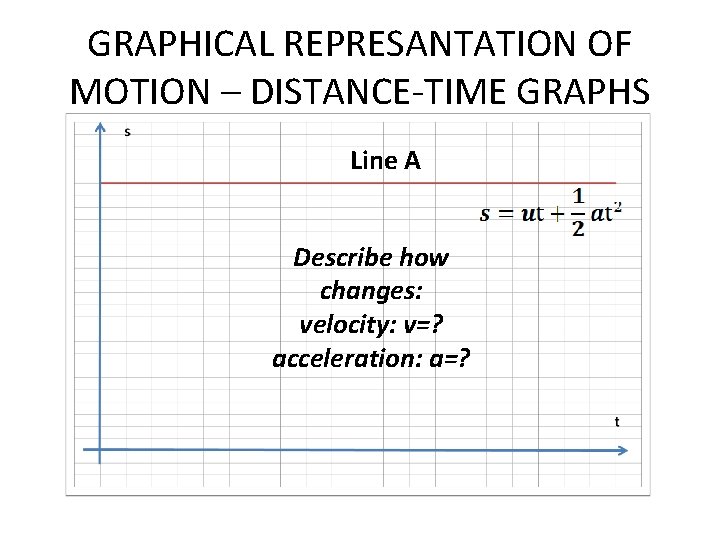
GRAPHICAL REPRESANTATION OF MOTION – DISTANCE-TIME GRAPHS Line A Describe how changes: velocity: v=? acceleration: a=?
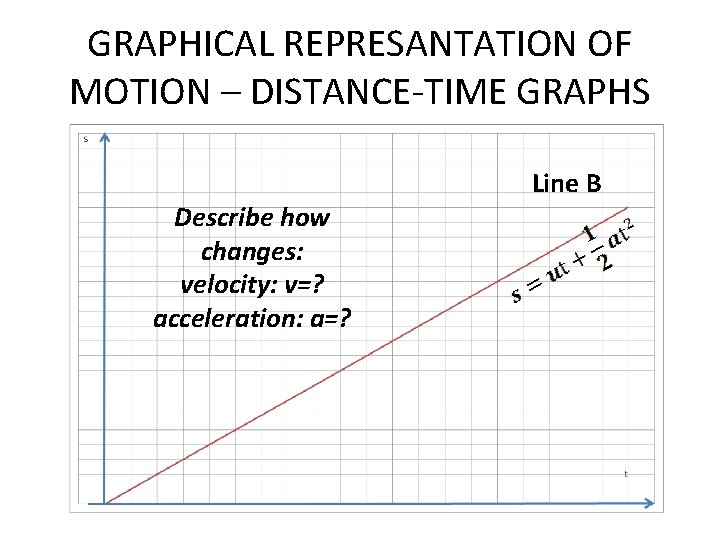
GRAPHICAL REPRESANTATION OF MOTION – DISTANCE-TIME GRAPHS Describe how changes: velocity: v=? acceleration: a=? Line B
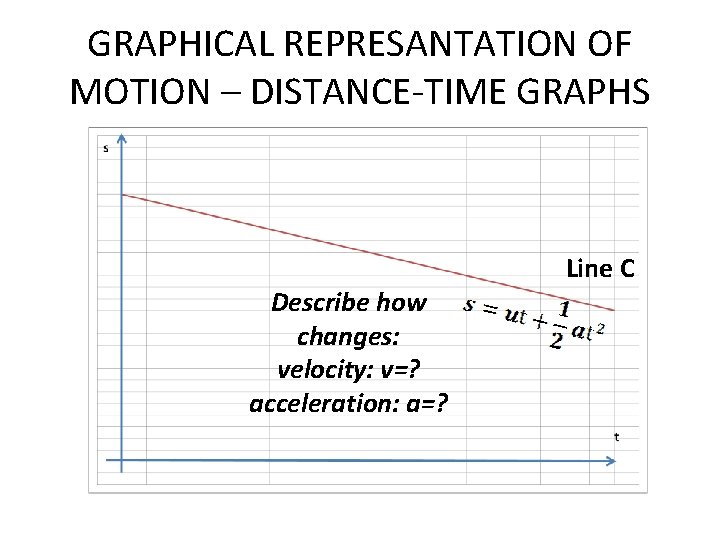
GRAPHICAL REPRESANTATION OF MOTION – DISTANCE-TIME GRAPHS Describe how changes: velocity: v=? acceleration: a=? Line C
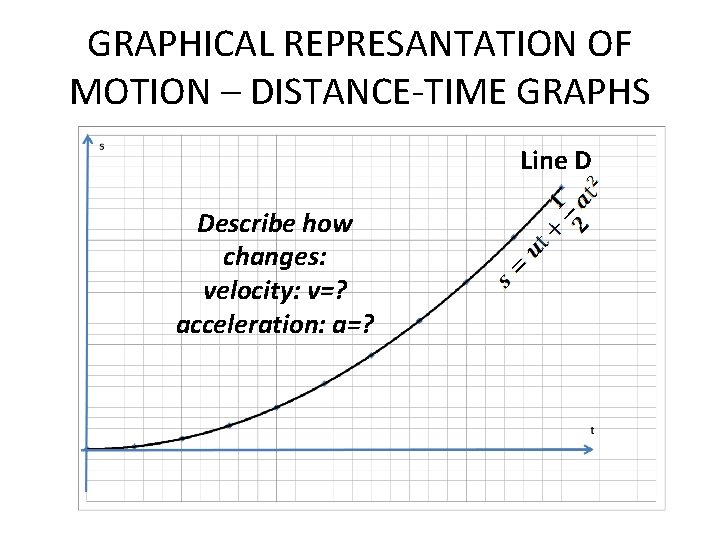
GRAPHICAL REPRESANTATION OF MOTION – DISTANCE-TIME GRAPHS Line D Describe how changes: velocity: v=? acceleration: a=?
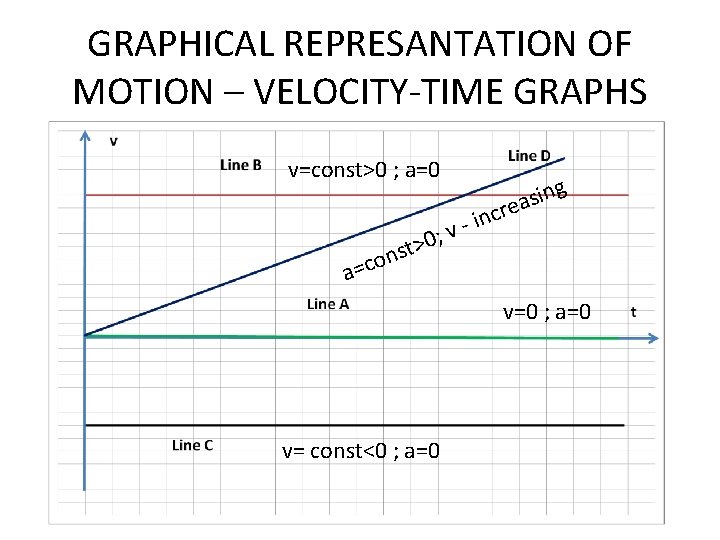
GRAPHICAL REPRESANTATION OF MOTION – VELOCITY-TIME GRAPHS v=const>0 ; a=0 v ; t>0 s n o =c a g n i s a e r c - in v=0 ; a=0 v= const<0 ; a=0
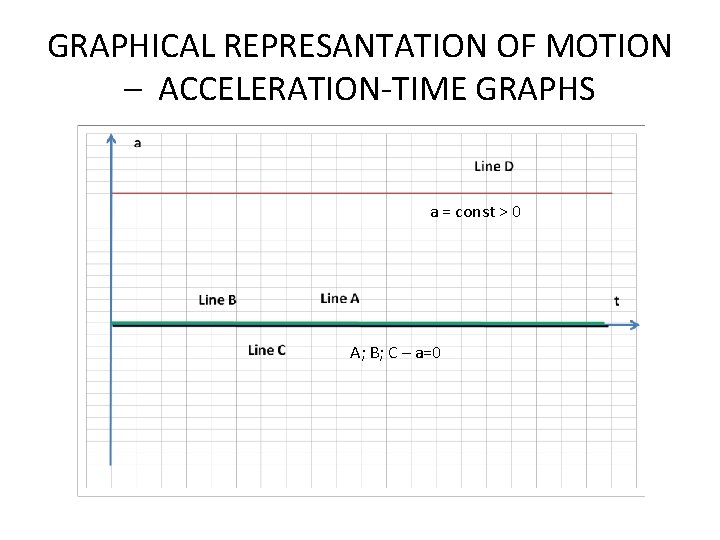
GRAPHICAL REPRESANTATION OF MOTION – ACCELERATION-TIME GRAPHS a = const > 0 A; B; C – a=0
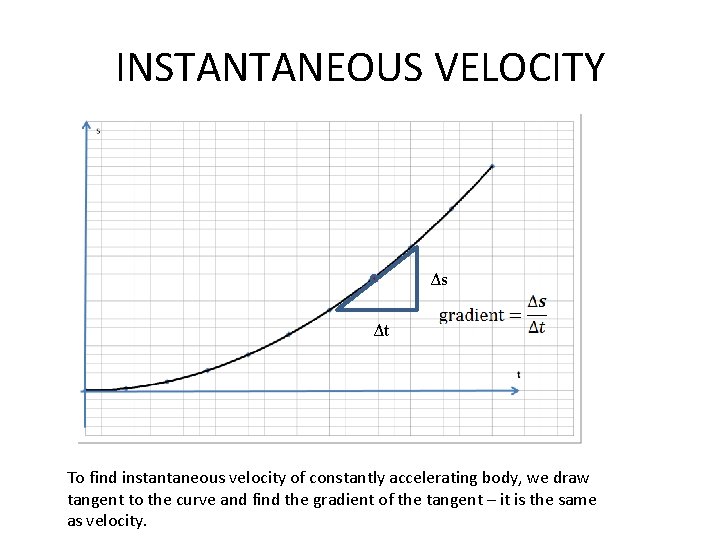
INSTANTANEOUS VELOCITY Δs Δt To find instantaneous velocity of constantly accelerating body, we draw tangent to the curve and find the gradient of the tangent – it is the same as velocity.
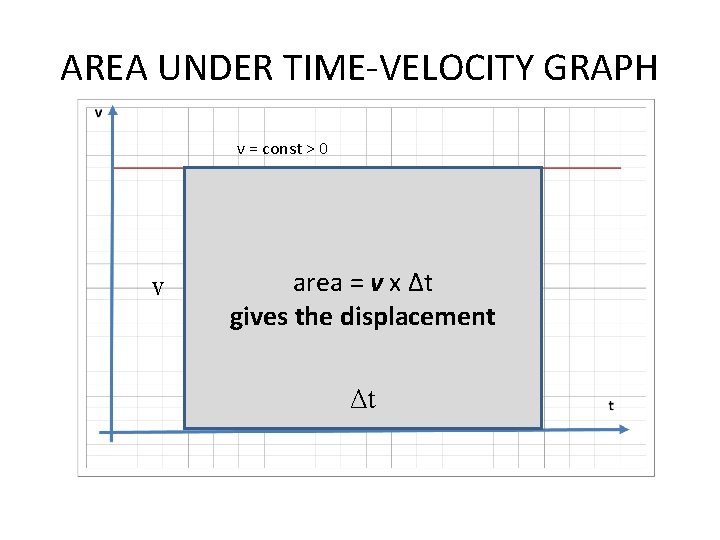
AREA UNDER TIME-VELOCITY GRAPH v = const > 0 v area = v x Δt gives the displacement Δt
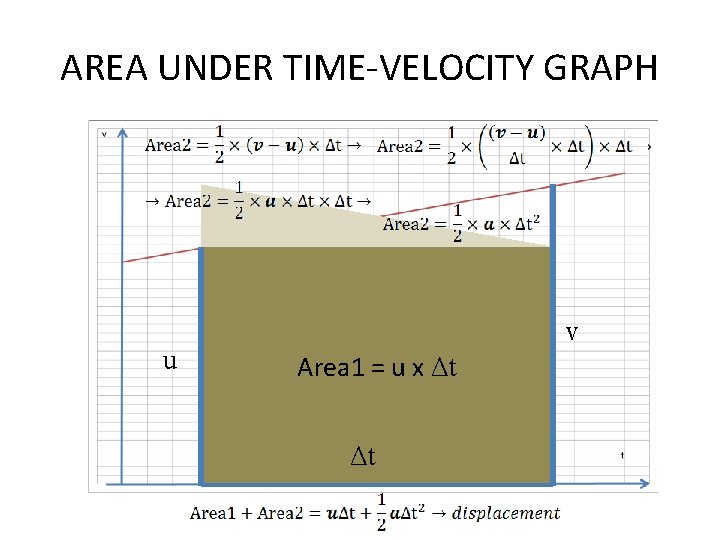
AREA UNDER TIME-VELOCITY GRAPH u v Area 1 = u x Δt Δt
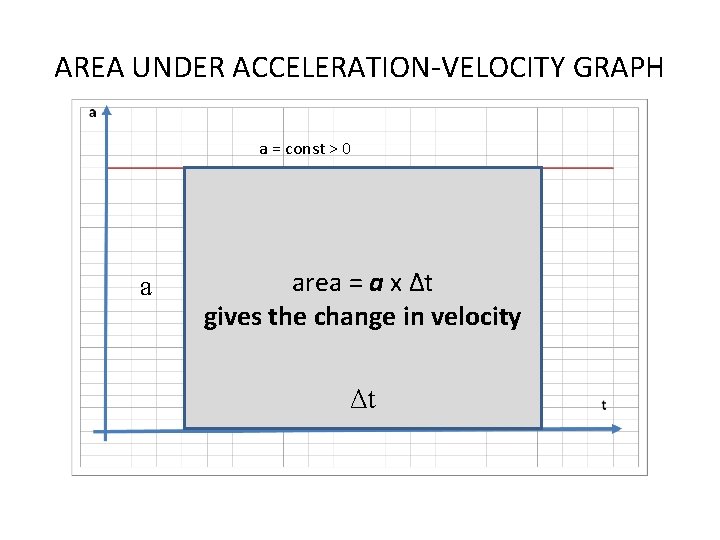
AREA UNDER ACCELERATION-VELOCITY GRAPH a = const > 0 a area = a x Δt gives the change in velocity Δt