Molecular Genetics of Muscle Disorders Chapter 13 pp



















- Slides: 55
Molecular Genetics of Muscle Disorders Chapter 13 (pp. 369 -376) 650 different Muscles !
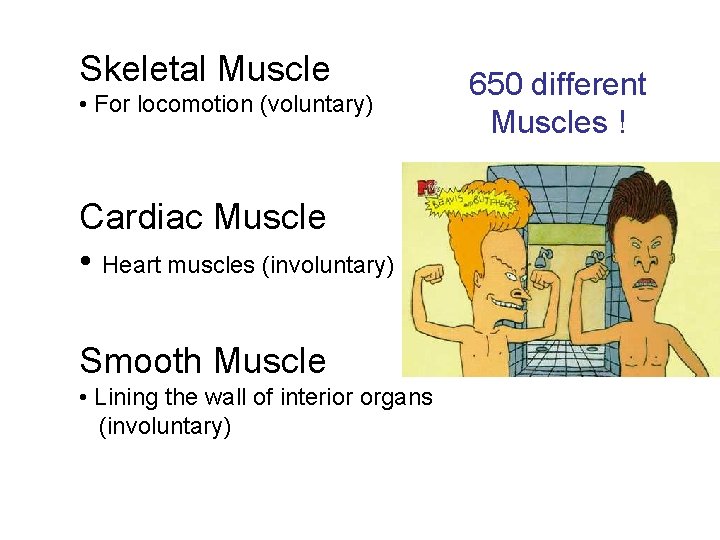
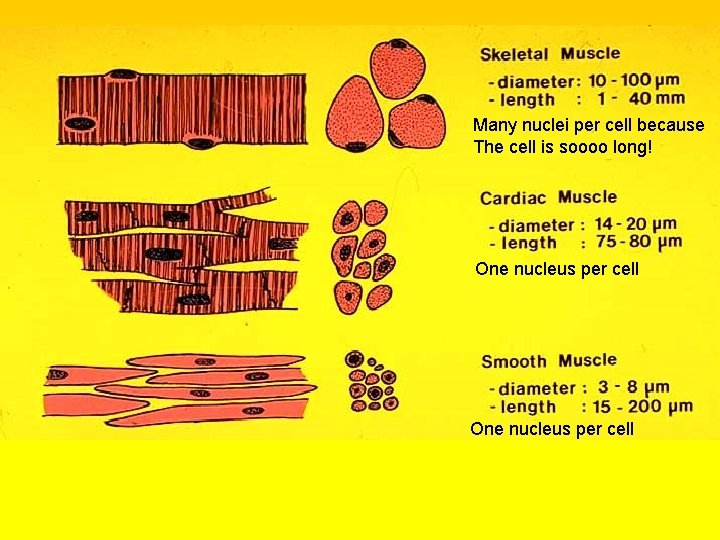
Skeletal Muscle • For locomotion (voluntary) Cardiac Muscle • Heart muscles (involuntary) Smooth Muscle • Lining the wall of interior organs (involuntary) 650 different Muscles !
More than 1000 genes required for proper muscle formation and functioning: • Providing energy to the cell (respiration) • Structure of muscles • Involved in contraction process Mutations have been found in all of Dystrophy these categories Muscular
Muscle Cells: • Can be very long (12 inches) • Multinucleate Figure 13. 1
Many nuclei per cell because The cell is soooo long! One nucleus per cell
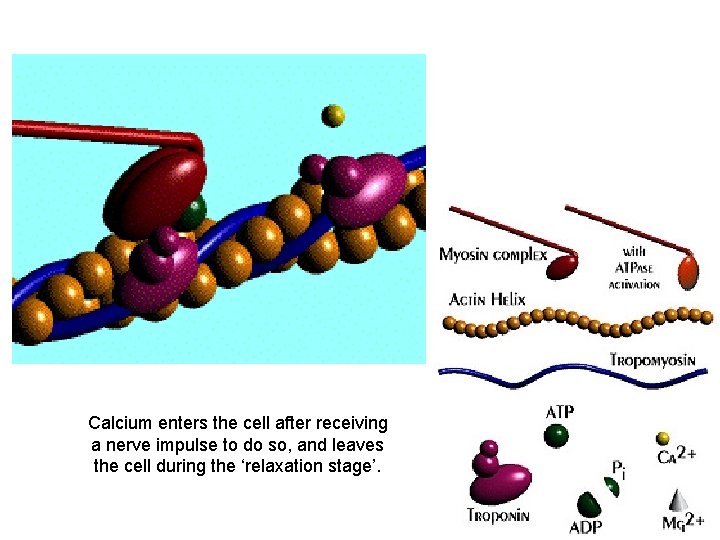
Calcium enters the cell after receiving a nerve impulse to do so, and leaves the cell during the ‘relaxation stage’.
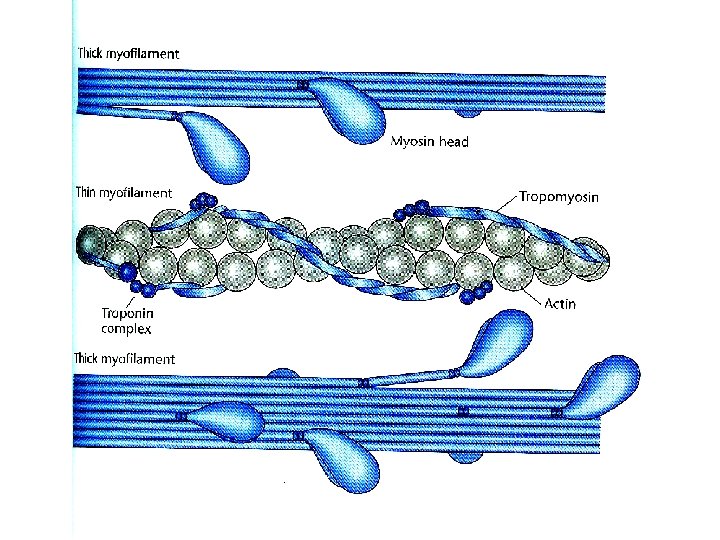
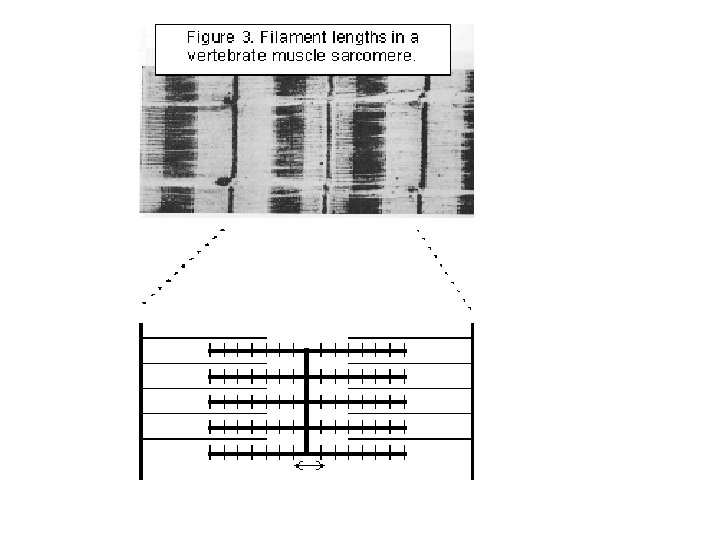
Thick Myofilaments Thin Myofilaments
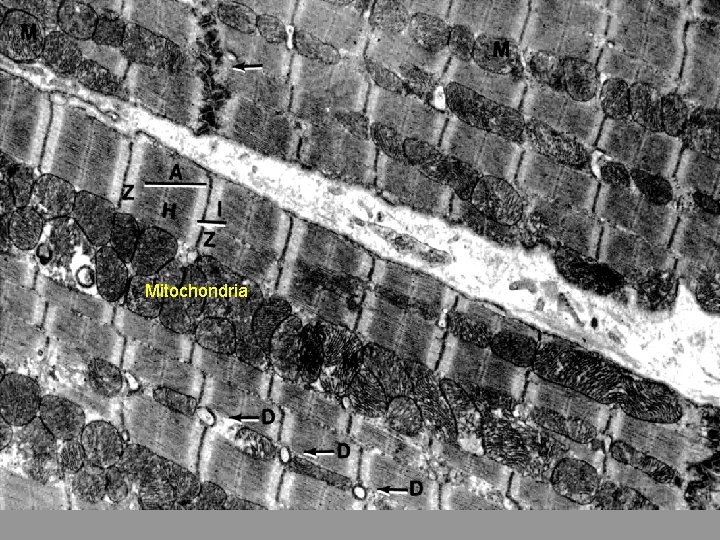
Mitochondria
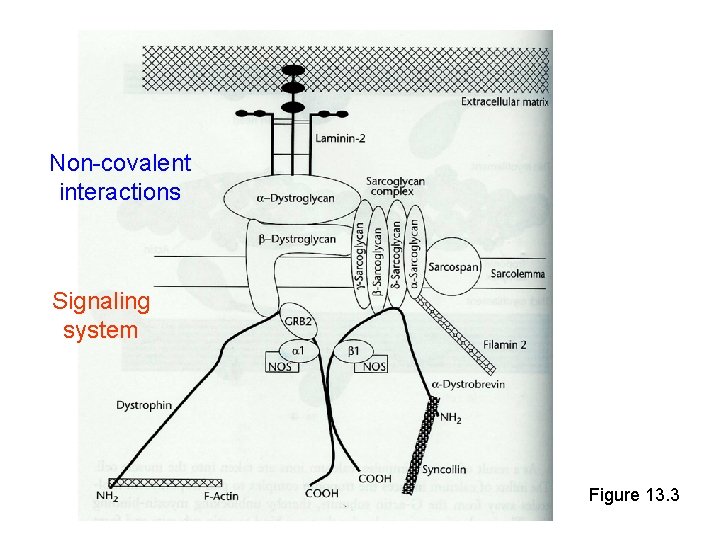
Non-covalent interactions Signaling system Figure 13. 3
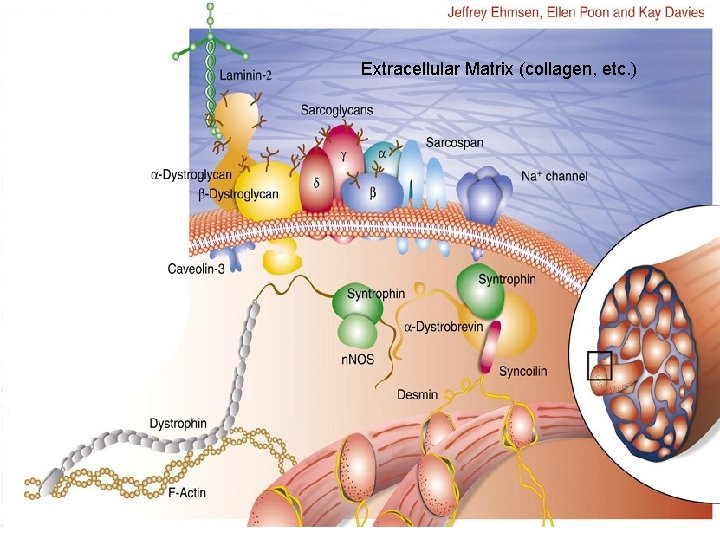
Extracellular Matrix (collagen, etc. )
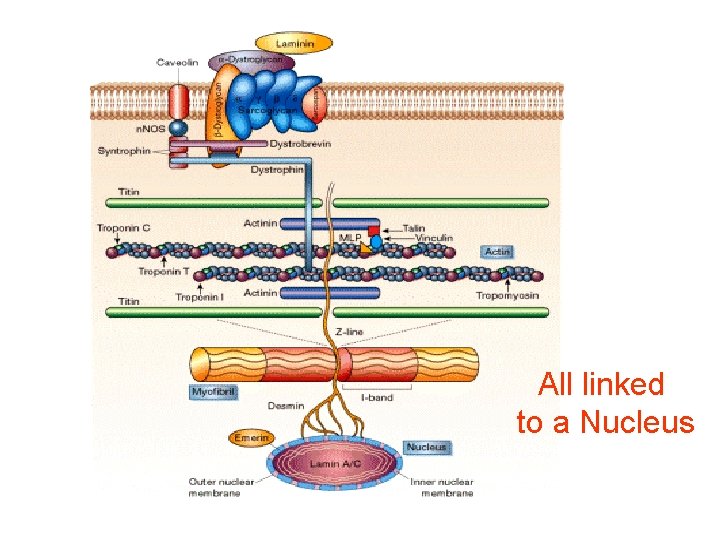
All linked to a Nucleus
A lot of good, easy-to-understand information is at this < hyperlink
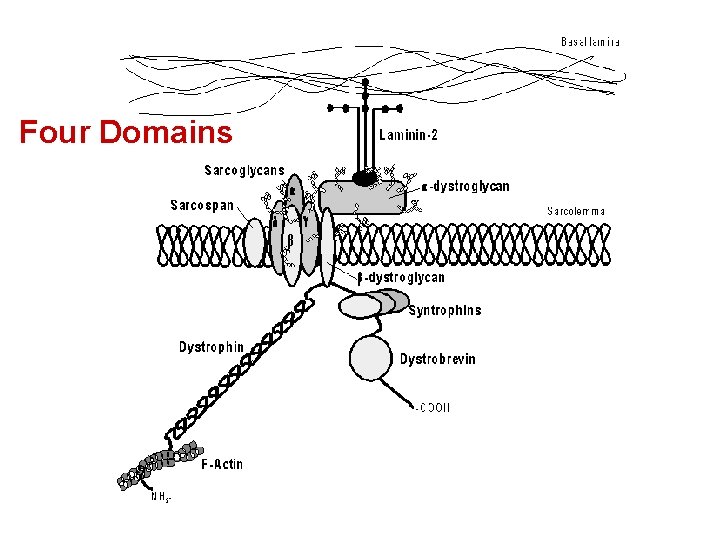
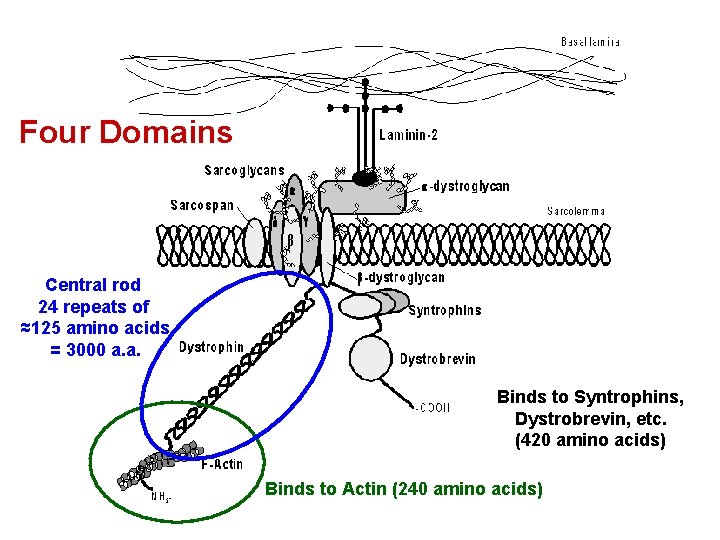
Four Domains
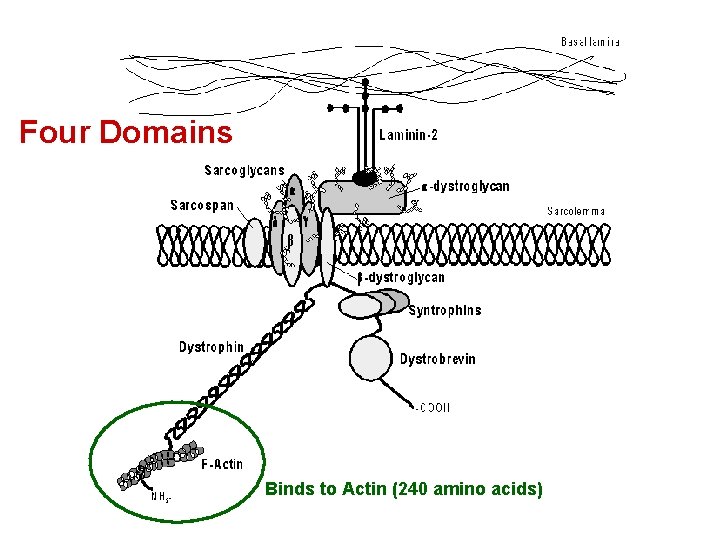
Four Domains Binds to Actin (240 amino acids)
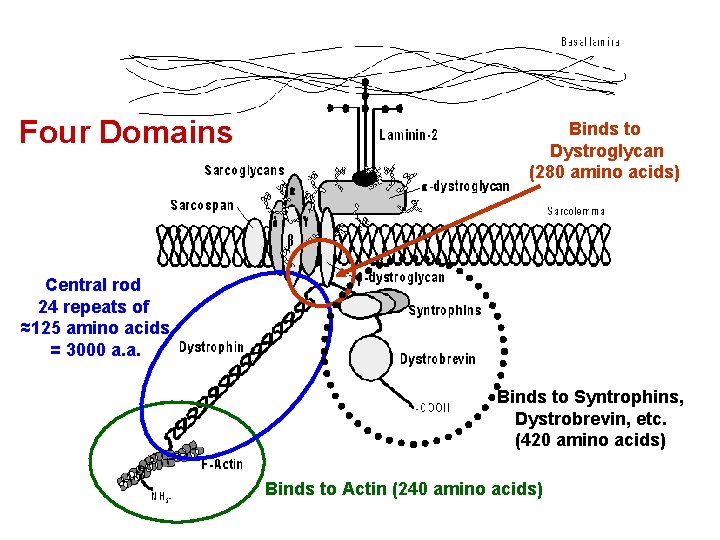
Four Domains Central rod 24 repeats of ≈125 amino acids = 3000 a. a. Binds to Syntrophins, Dystrobrevin, etc. (420 amino acids) Binds to Actin (240 amino acids)
Four Domains Binds to Dystroglycan (280 amino acids) Central rod 24 repeats of ≈125 amino acids = 3000 a. a. Binds to Actin (240 amino acids)
Four Domains Binds to Dystroglycan (280 amino acids) Central rod 24 repeats of ≈125 amino acids = 3000 a. a. Binds to Syntrophins, Dystrobrevin, etc. (420 amino acids) Binds to Actin (240 amino acids)
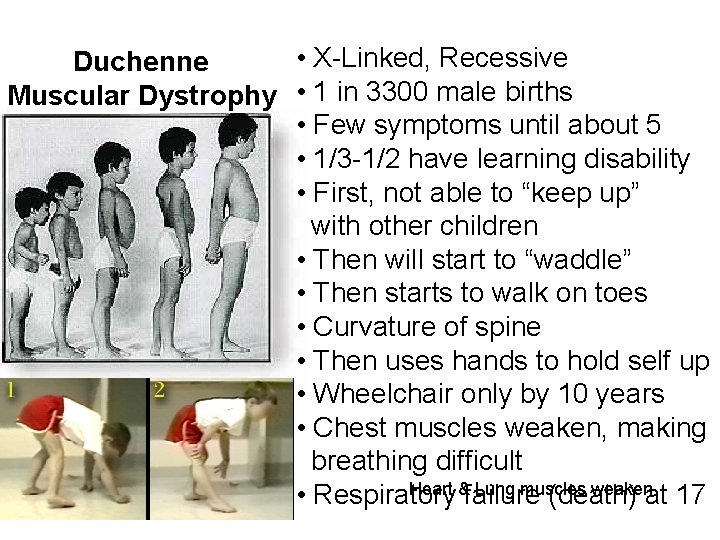
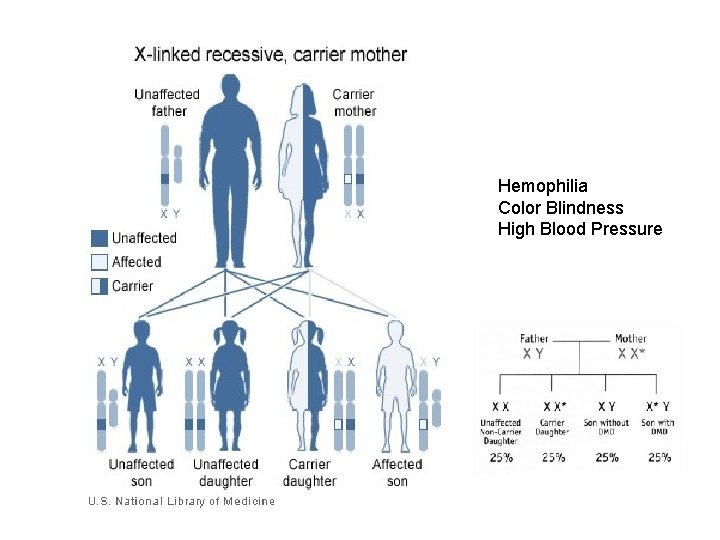
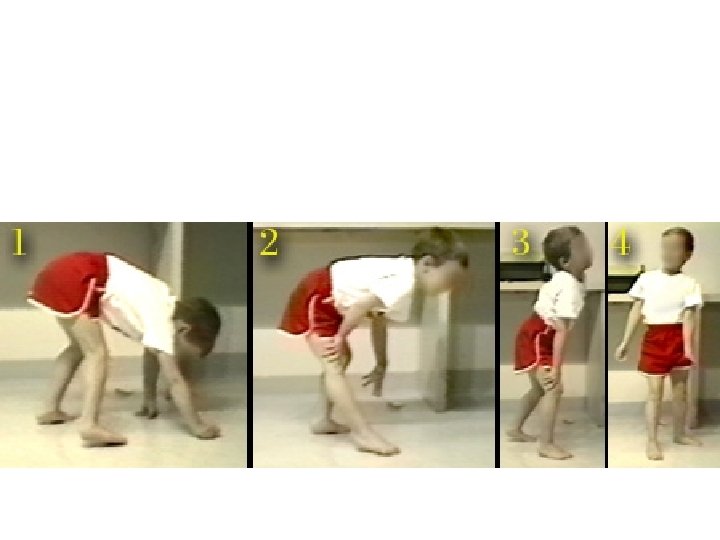
• X-Linked, Recessive Duchenne Muscular Dystrophy • 1 in 3300 male births • Few symptoms until about 5 • 1/3 -1/2 have learning disability • First, not able to “keep up” with other children • Then will start to “waddle” • Then starts to walk on toes • Curvature of spine • Then uses hands to hold self up • Wheelchair only by 10 years • Chest muscles weaken, making breathing difficult Heart &failure Lung muscles weakenat 17 • Respiratory (death)
Muscles of shoulders & pelvis weaken first
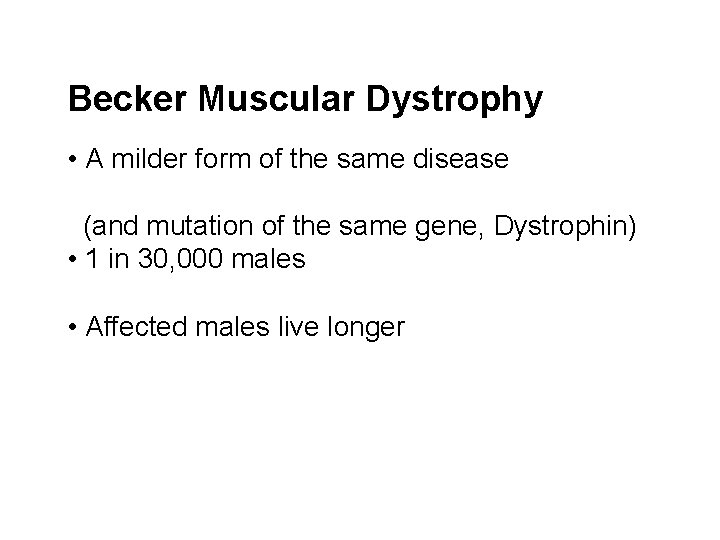
Becker Muscular Dystrophy • A milder form of the same disease (and mutation of the same gene, Dystrophin) • 1 in 30, 000 males • Affected males live longer
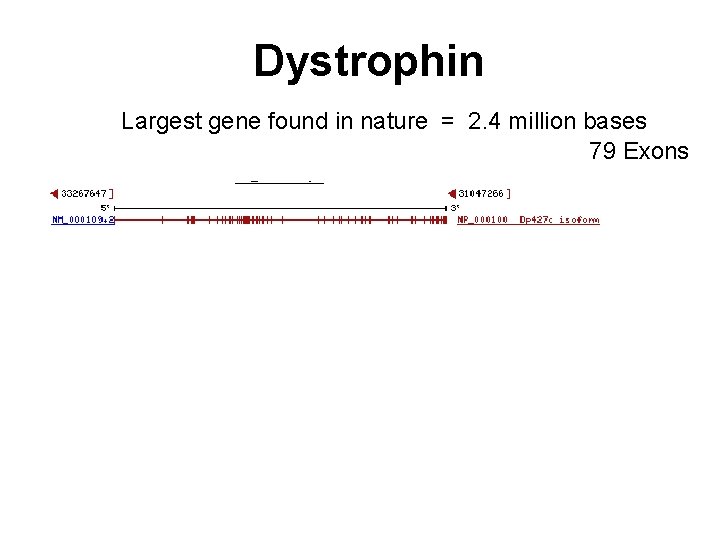
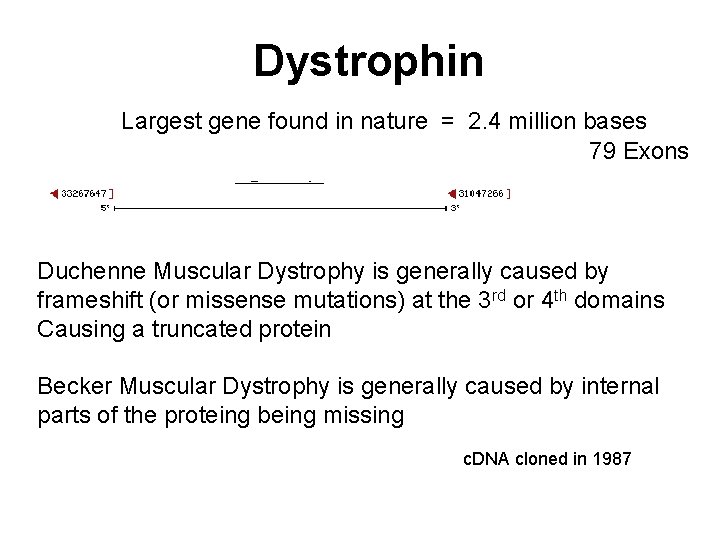
Dystrophin Largest gene found in nature = 2. 4 million bases 79 Exons
Dystrophin Largest gene found in nature = 2. 4 million bases 79 Exons Duchenne Muscular Dystrophy is generally caused by frameshift (or missense mutations) at the 3 rd or 4 th domains Causing a truncated protein Becker Muscular Dystrophy is generally caused by internal parts of the proteing being missing c. DNA cloned in 1987
How would you go about cloning this gene?
Dystrophin 2/3 of cases are inherited, 1/3 are sporadic (new mutations) Second human gene cloned by “Positional Cloning” (the third was Cystic Fibrosis gene) Lots of different labs were looking for this gene, and they took different approaches
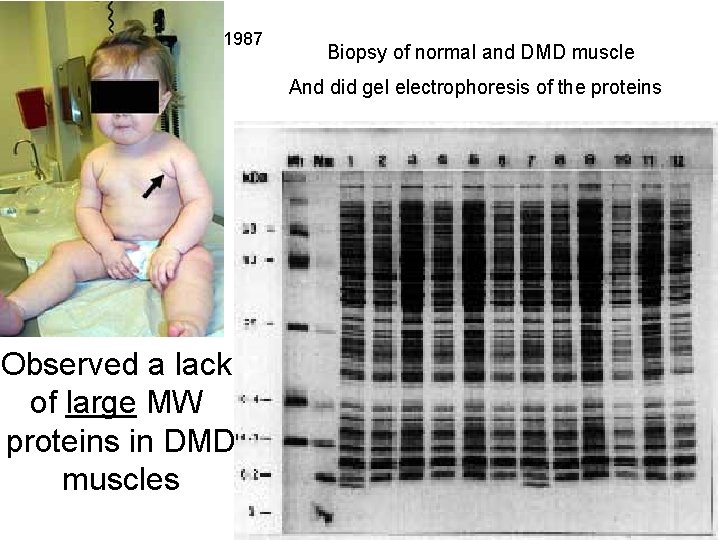
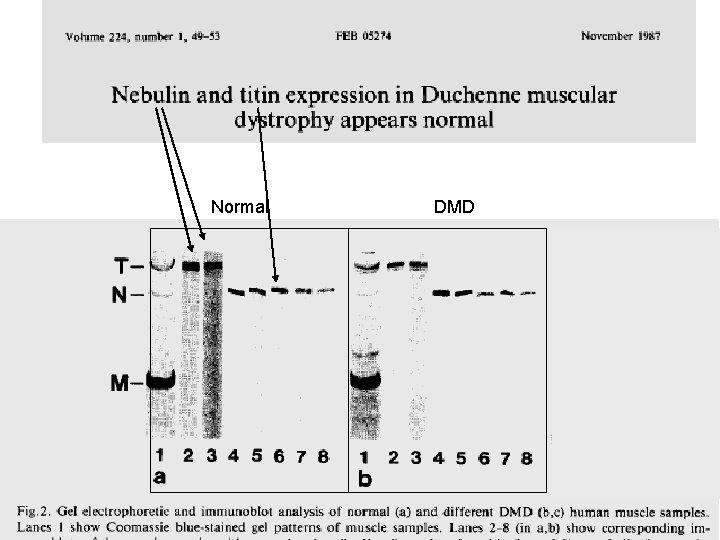
1987 Biopsy of normal and DMD muscle And did gel electrophoresis of the proteins
1987 Biopsy of normal and DMD muscle And did gel electrophoresis of the proteins Observed a lack of large MW proteins in DMD muscles
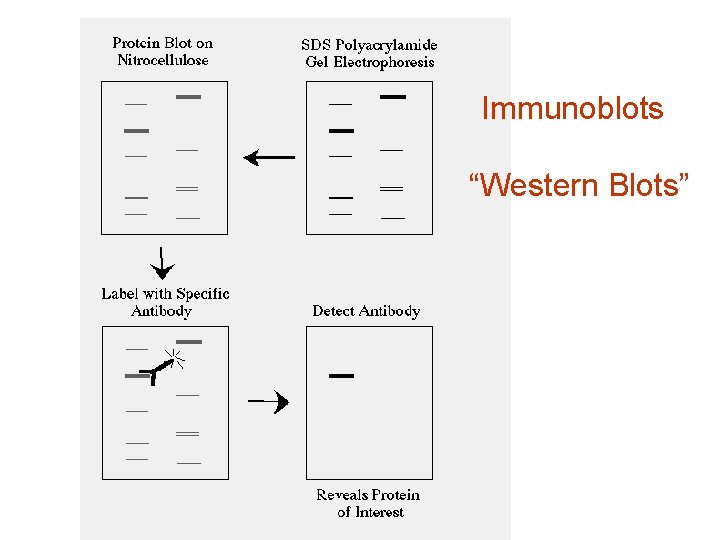
Immunoblots “Western Blots”
Normal DMD
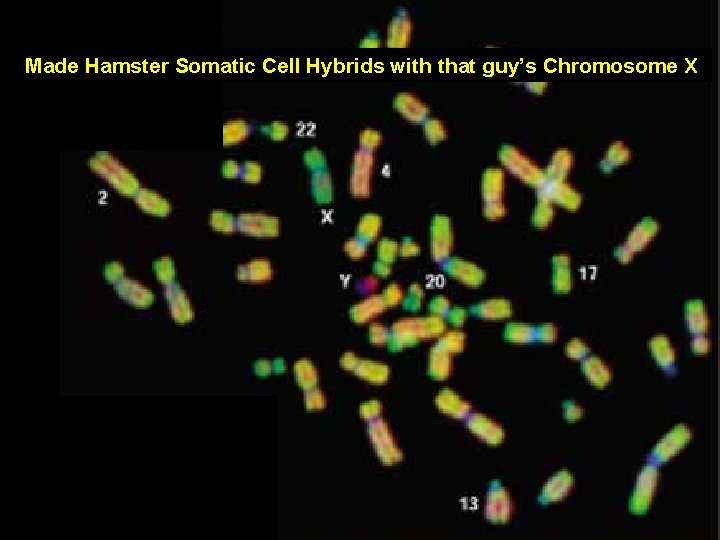
Cytogenetic analysis of one DMD patient showed a thinner chromosome band here.
Made Hamster Somatic Cell Hybrids with that guy’s Chromosome X
Made Hamster Somatic Cell Hybrids with this guy’s Chromosome X And probed with 20 random pieces of DNA from a genomic library of Chromosome X (from a healthy person). …. 19 probes hybridized, 1 didn’t !
Example of a DMD RFLP Digested with Xmn. I Koenig, et al. , 1987 Cell, Vol. 50: 509.
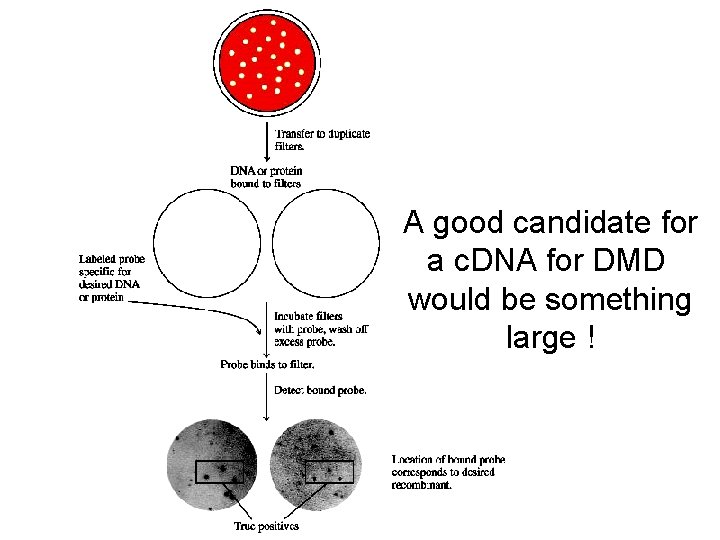
As they got closer to figuring out that the DMD gene was in the middle of the short arm of the X chromosome they used various fragments of the Genomic Library to screen a c. DNA Library. The c. DNA Library was made from fetal muscle tissue (female).
A good candidate for a c. DNA for DMD would be something large !
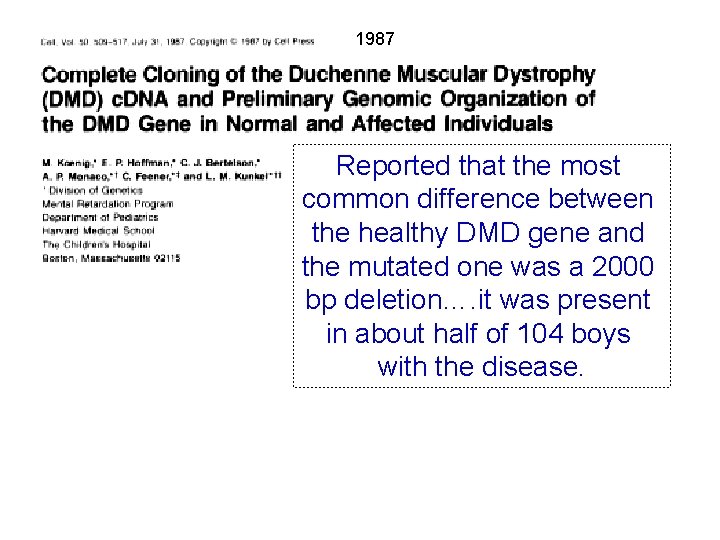
1987 Reported that the most common difference between the healthy DMD gene and the mutated one was a 2000 bp deletion…. it was present in about half of 104 boys with the disease.
1988
Four Domains Binds to Dystroglycan (280 amino acids) Central rod 24 repeats of ≈125 amino acids = 3000 a. a. Binds to Syntrophins, Dystrobrevin, etc. (420 amino acids) Binds to Actin (240 amino acids)
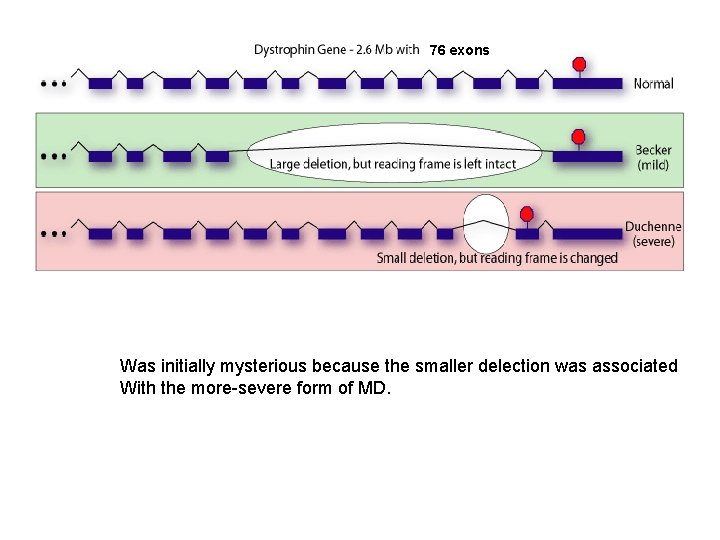
76 exons Was initially mysterious because the smaller delection was associated With the more-severe form of MD.
http: //www. bms. ed. ac. uk/research/others/smaciver/MD%20 cause. htm
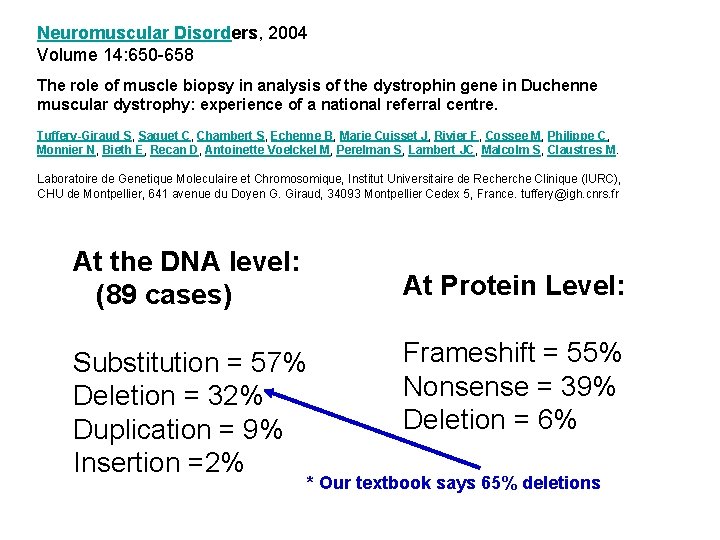
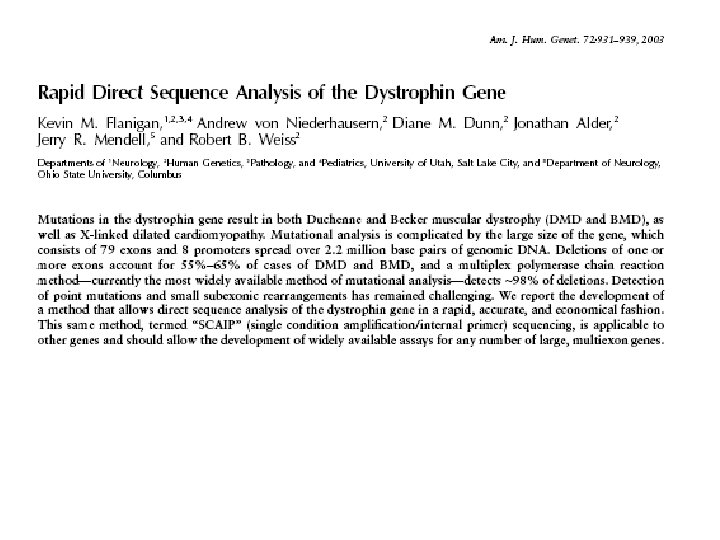
Neuromuscular Disorders, 2004 Volume 14: 650 -658 The role of muscle biopsy in analysis of the dystrophin gene in Duchenne muscular dystrophy: experience of a national referral centre. Tuffery-Giraud S, Saquet C, Chambert S, Echenne B, Marie Cuisset J, Rivier F, Cossee M, Philippe C, Monnier N, Bieth E, Recan D, Antoinette Voelckel M, Perelman S, Lambert JC, Malcolm S, Claustres M. Laboratoire de Genetique Moleculaire et Chromosomique, Institut Universitaire de Recherche Clinique (IURC), CHU de Montpellier, 641 avenue du Doyen G. Giraud, 34093 Montpellier Cedex 5, France. tuffery@igh. cnrs. fr At the DNA level: (89 cases) At Protein Level: Substitution = 57% Deletion = 32% Duplication = 9% Insertion =2% Frameshift = 55% Nonsense = 39% Deletion = 6% * Our textbook says 65% deletions
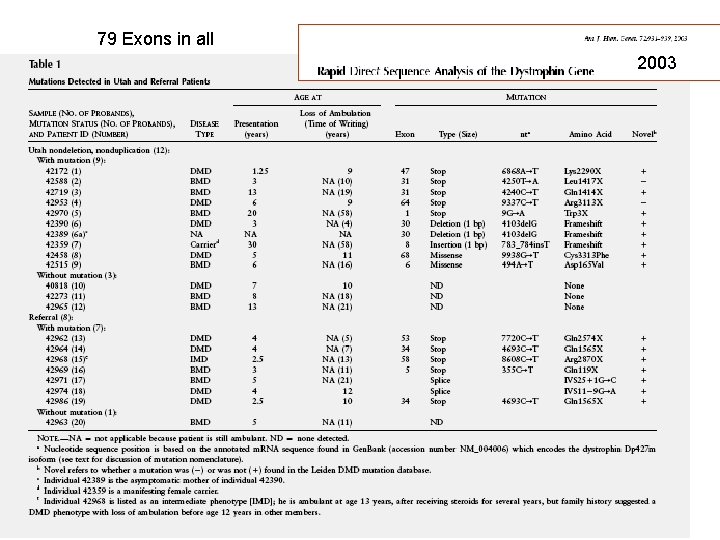
79 Exons in all 2003
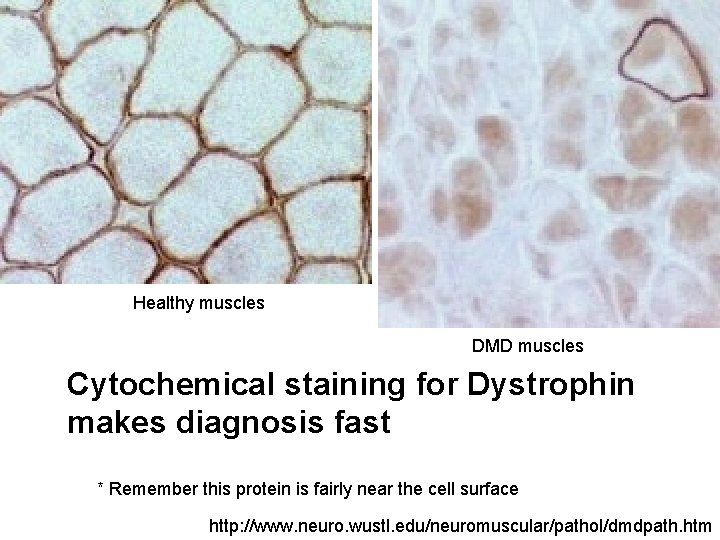
Healthy muscles DMD muscles Cytochemical staining for Dystrophin makes diagnosis fast * Remember this protein is fairly near the cell surface http: //www. neuro. wustl. edu/neuromuscular/pathol/dmdpath. htm
What can be done with boys with DMD? At early stages • Physical Therapy • Splints, Crutches, Wheelchairs • Surgery At later stages • Cardiological medicines • Assisted breathing devices (later stages) • Prednisone, a corticosteroid, similar to a hormone produced by the adrenal glands. Lots of side effects: weight gain, bone brittleness, cataracts, mood changes… …more aggressive)
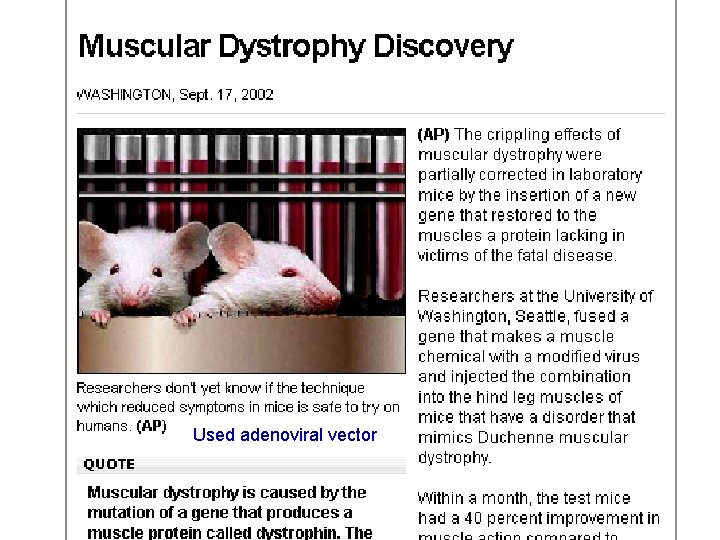
Used adenoviral vector
Hemophilia Color Blindness High Blood Pressure
Dystrophin Largest gene found in nature = 2. 4 million bases 79 Exons Alternative splicing
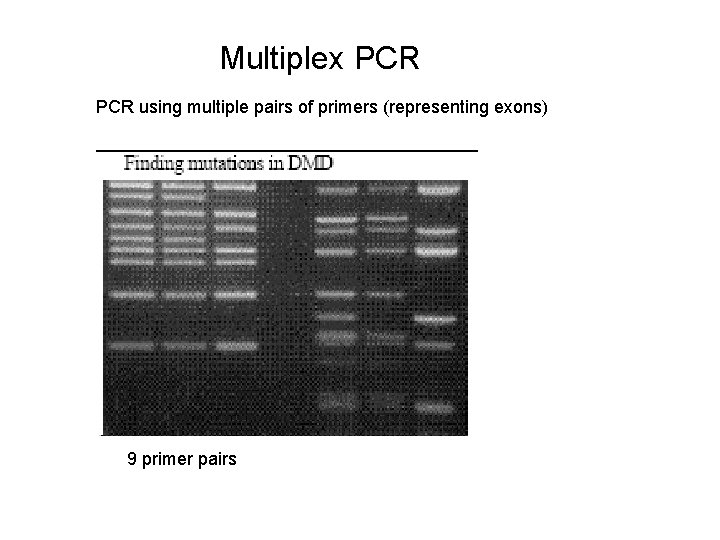
Multiplex PCR using multiple pairs of primers (representing exons) 9 primer pairs