Manuel Lora Tamayo School SPAIN ESPAA The situation

- Slides: 32
Manuel Lora Tamayo School
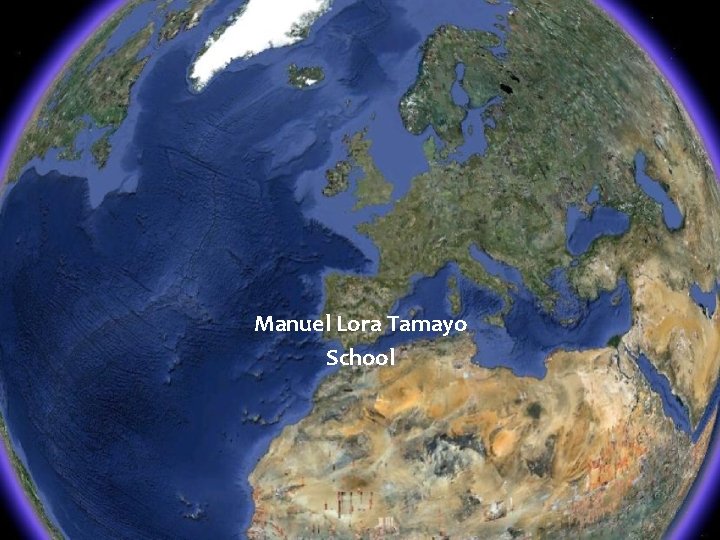
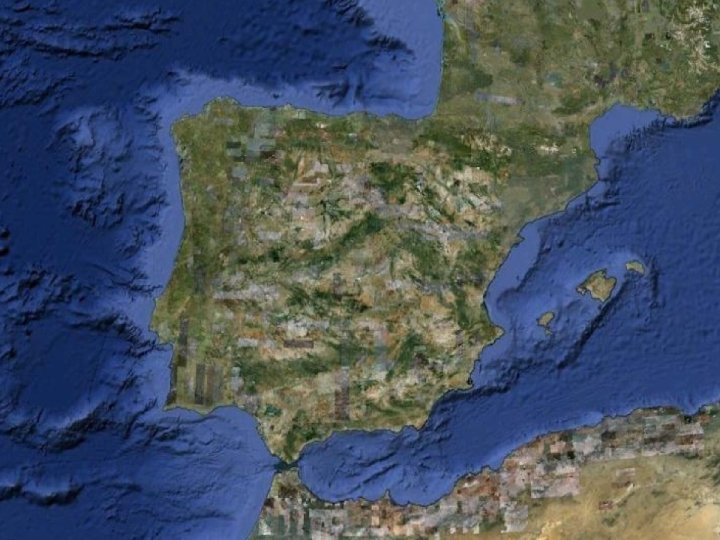
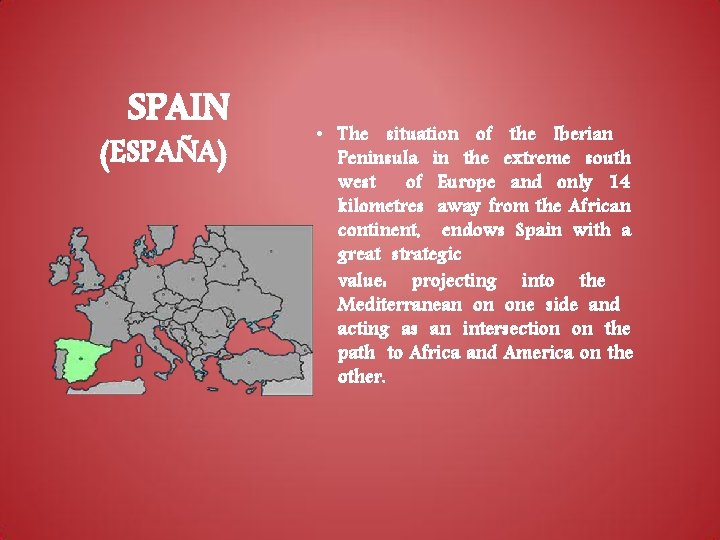
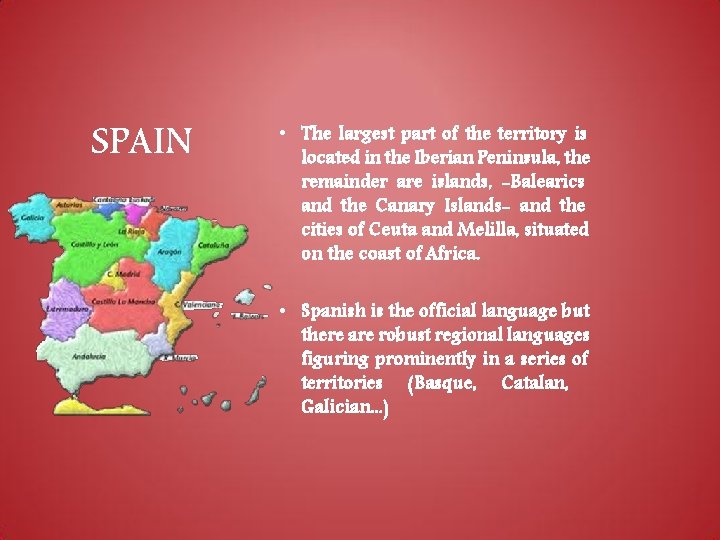
SPAIN (ESPAÑA) • The situation of the Iberian Peninsula in the extreme south west of Europe and only 14 kilometres away from the African continent, endows Spain with a great strategic value: projecting into the Mediterranean on one side and acting as an intersection on the path to Africa and America on the other.
SPAIN • As a result of is position, the climate ranges from the mild oceanic climate in the North, to the continental Mediterranean in the centre and the Mediterranean in the East and South, factors which combine to create a wet Spain in the North and mountainous areas, green Spain with luxuriant forests and a dry Spain in the Mediterranean.
SPAIN • The largest part of the territory is located in the Iberian Peninsula, the remainder are islands, -Balearics and the Canary Islands- and the cities of Ceuta and Melilla, situated on the coast of Africa. • Spanish is the official language but there are robust regional languages figuring prominently in a series of territories (Basque, Catalan, Galician. . . )
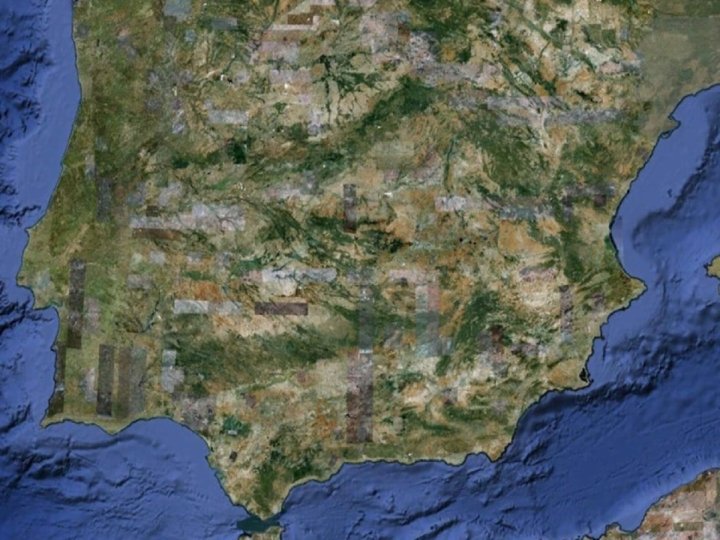
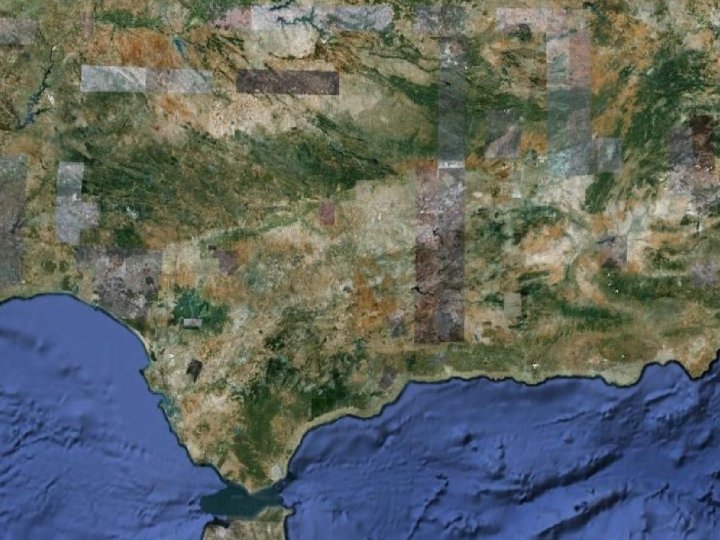
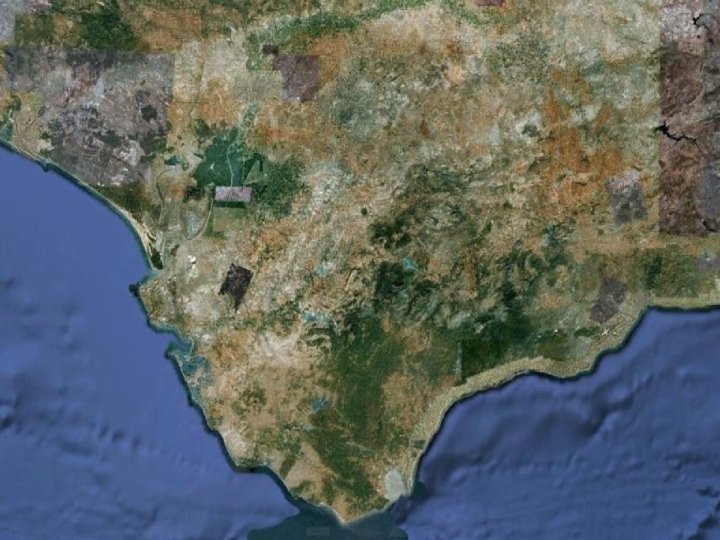
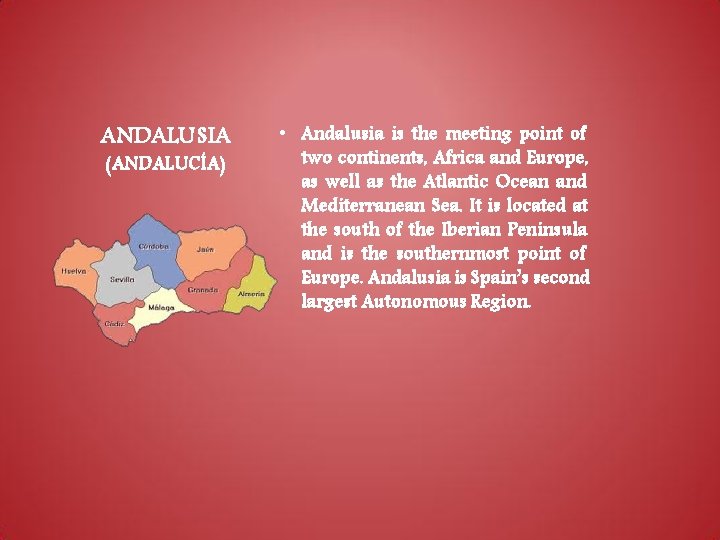
ANDALUSIA (ANDALUCÍA) • Andalusia is the meeting point of two continents, Africa and Europe, as well as the Atlantic Ocean and Mediterranean Sea. It is located at the south of the Iberian Peninsula and is the southernmost point of Europe. Andalusia is Spain’s second largest Autonomous Region.
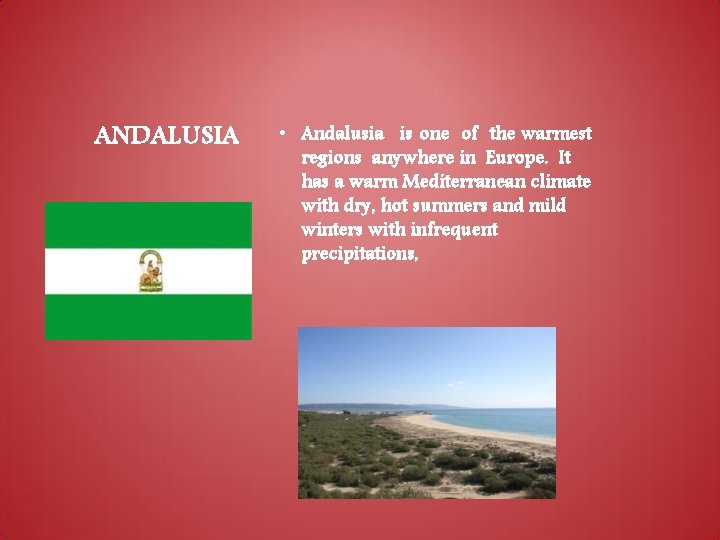
ANDALUSIA • Andalusia is one of the warmest regions anywhere in Europe. It has a warm Mediterranean climate with dry, hot summers and mild winters with infrequent precipitations,
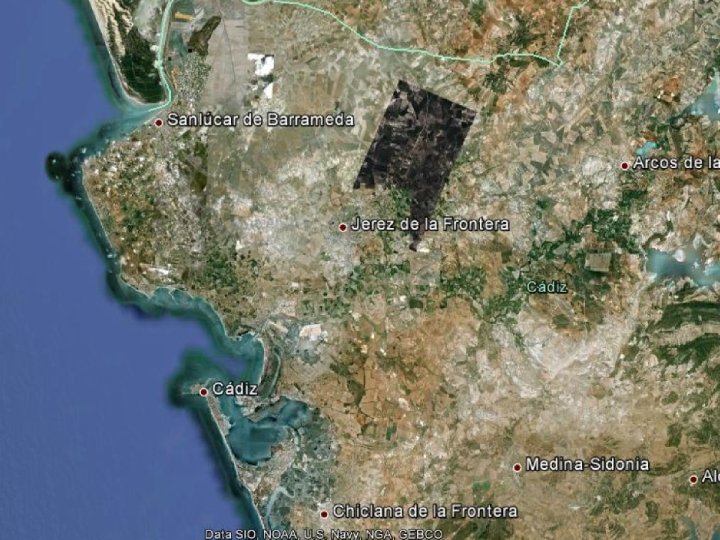
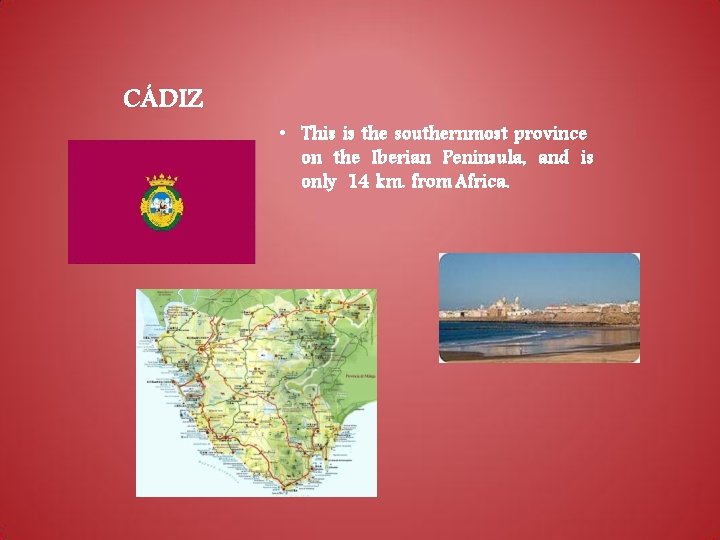
CÁDIZ • This is the southernmost province on the Iberian Peninsula, and is only 14 km. from Africa.
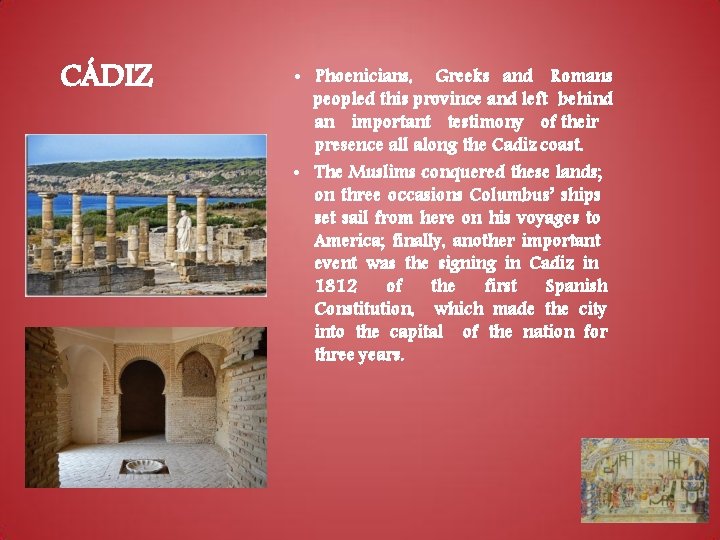
CÁDIZ • Phoenicians, Greeks and Romans peopled this province and left behind an important testimony of their presence all along the Cadiz coast. • The Muslims conquered these lands; on three occasions Columbus’ ships set sail from here on his voyages to America; finally, another important event was the signing in Cadiz in 1812 of the first Spanish Constitution, which made the city into the capital of the nation for three years.
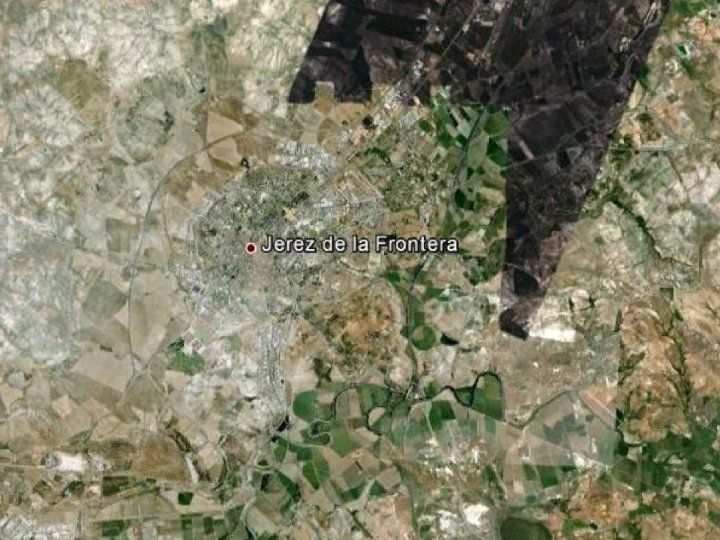
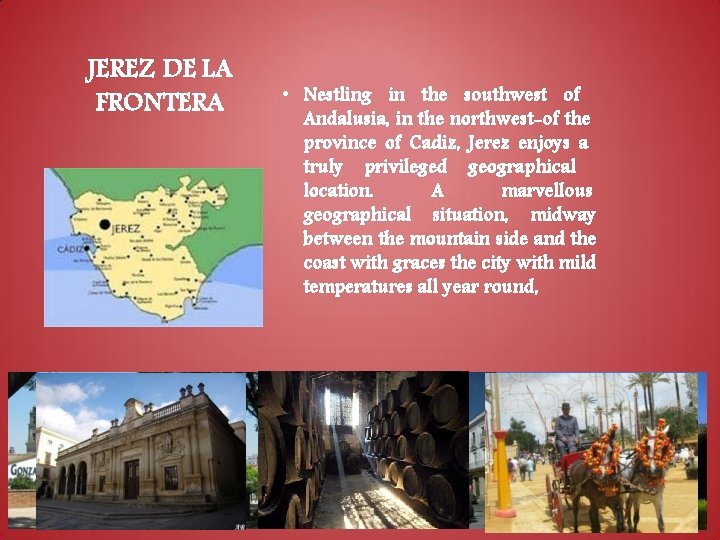
JEREZ DE LA FRONTERA • Nestling in the southwest of Andalusia, in the northwest-of the province of Cadiz, Jerez enjoys a truly privileged geographical location. A marvellous geographical situation, midway between the mountain side and the coast with graces the city with mild temperatures all year round,
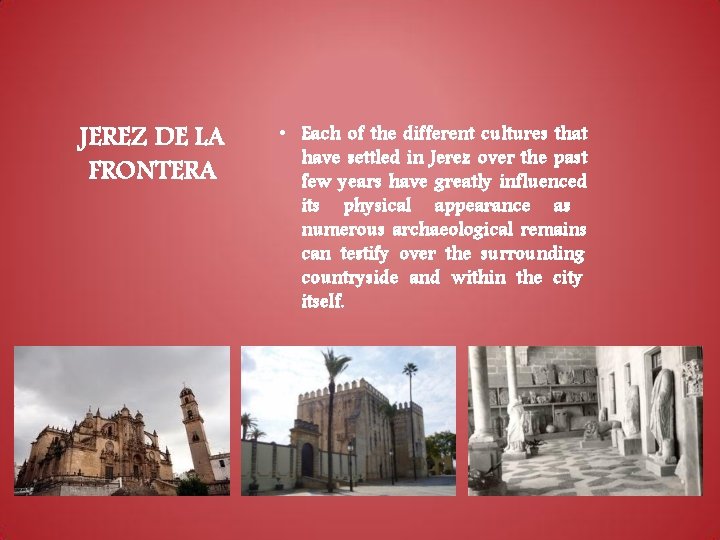
JEREZ DE LA FRONTERA • Each of the different cultures that have settled in Jerez over the past few years have greatly influenced its physical appearance as numerous archaeological remains can testify over the surrounding countryside and within the city itself.
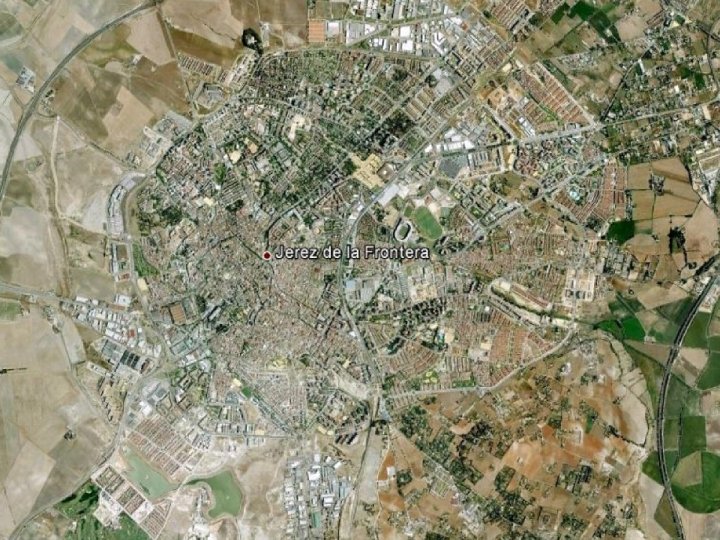
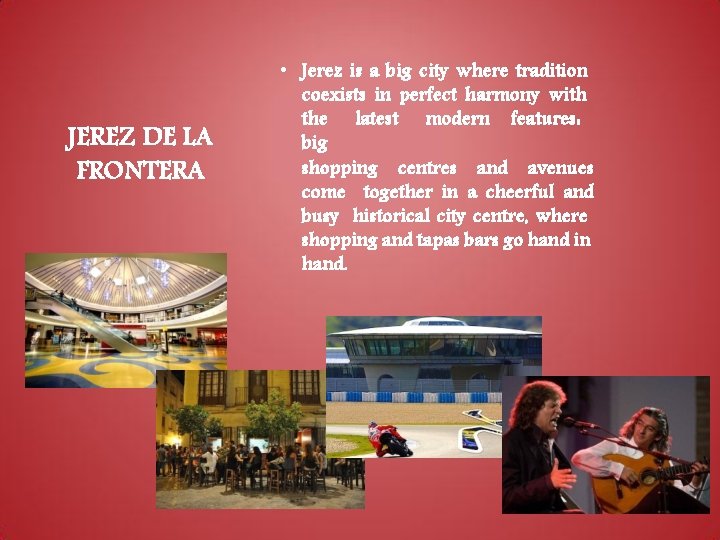
JEREZ DE LA FRONTERA • Jerez is a big city where tradition coexists in perfect harmony with the latest modern features: big shopping centres and avenues come together in a cheerful and busy historical city centre, where shopping and tapas bars go hand in hand.
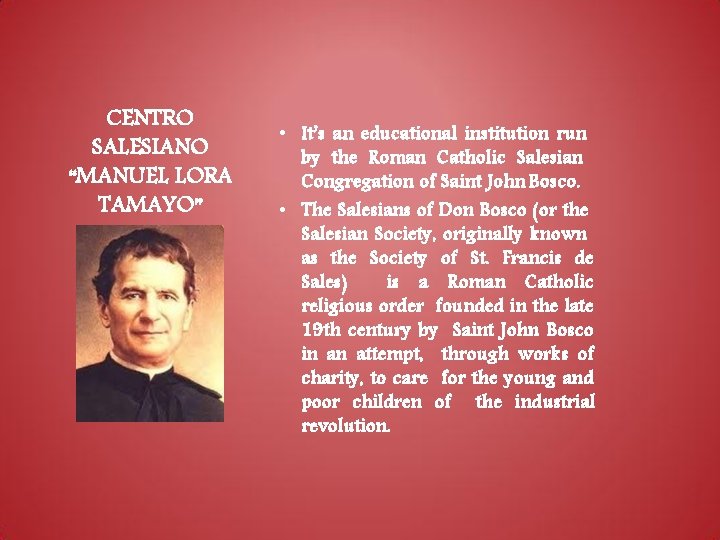
CENTRO SALESIANO “MANUEL LORA TAMAYO” • It’s an educational institution run by the Roman Catholic Salesian Congregation of Saint John Bosco. • The Salesians of Don Bosco (or the Salesian Society, originally known as the Society of St. Francis de Sales) is a Roman Catholic religious order founded in the late 19 th century by Saint John Bosco in an attempt, through works of charity, to care for the young and poor children of the industrial revolution.
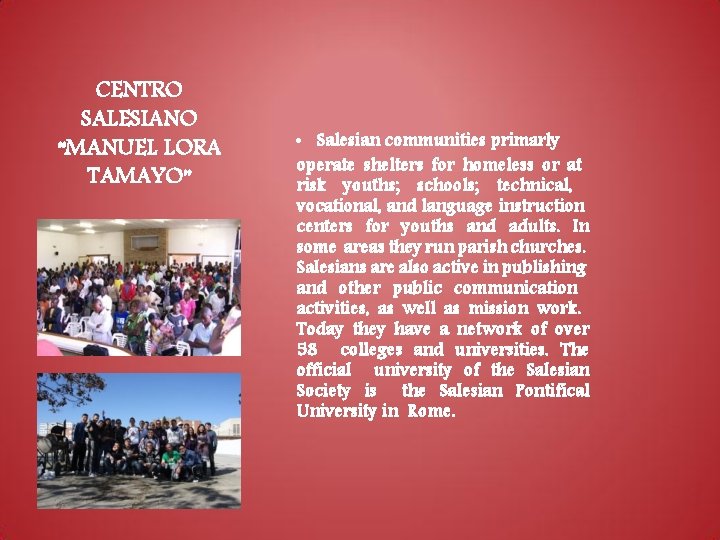
CENTRO SALESIANO “MANUEL LORA TAMAYO” • Salesian communities primarly operate shelters for homeless or at risk youths; schools; technical, vocational, and language instruction centers for youths and adults. In some areas they run parish churches. Salesians are also active in publishing and other public communication activities, as well as mission work. Today they have a network of over 58 colleges and universities. The official university of the Salesian Society is the Salesian Pontifical University in Rome.
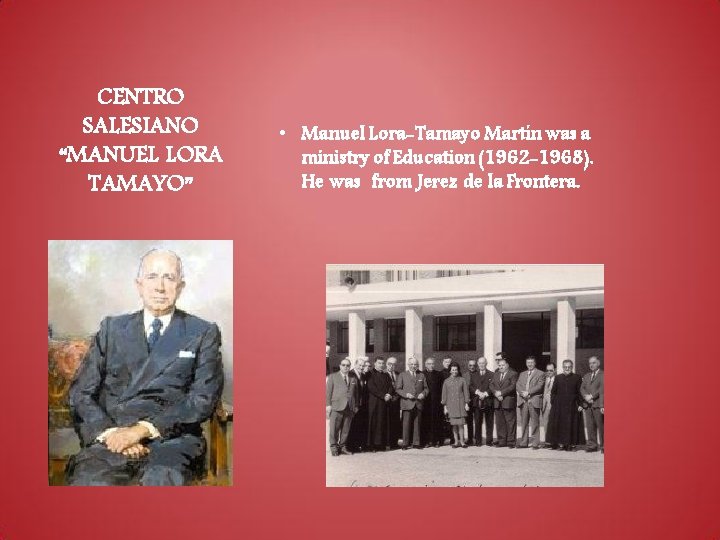
CENTRO SALESIANO “MANUEL LORA TAMAYO” • Manuel Lora-Tamayo Martín was a ministry of Education (1962 -1968). He was from Jerez de la Frontera.
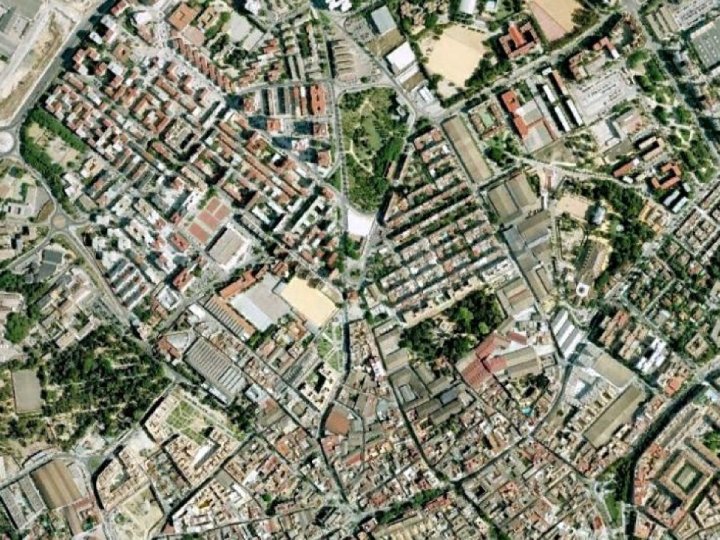
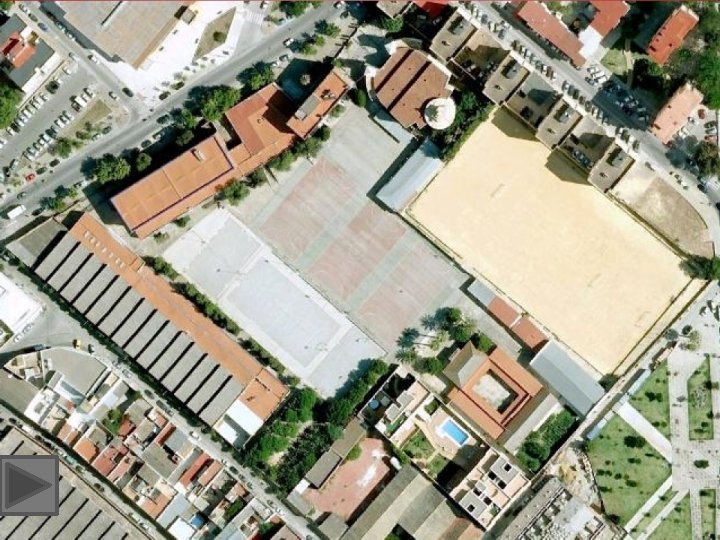
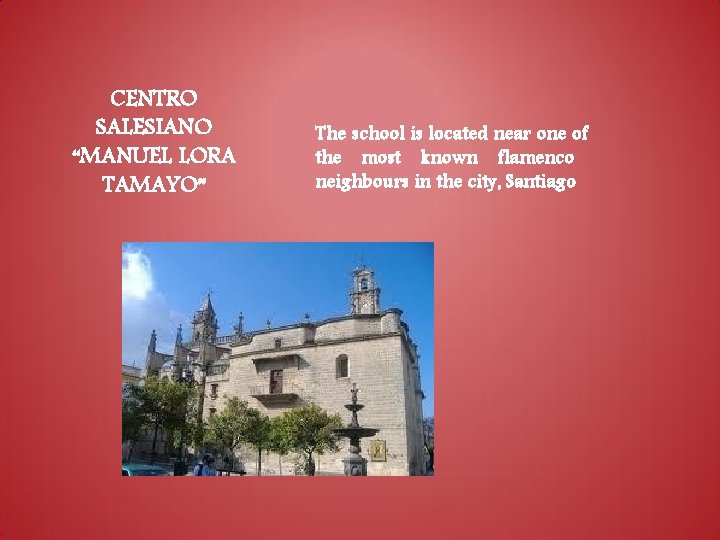
CENTRO SALESIANO “MANUEL LORA TAMAYO” The school is located near one of the most known flamenco neighbours in the city, Santiago
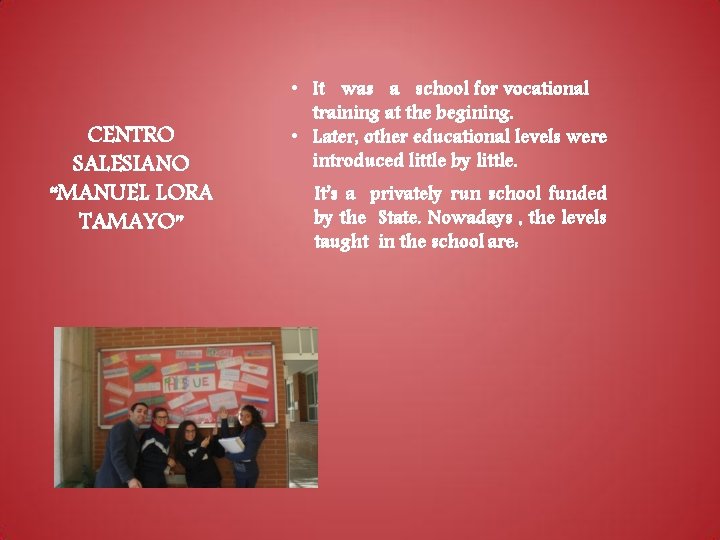
CENTRO SALESIANO “MANUEL LORA TAMAYO” • It was a school for vocational training at the begining. • Later, other educational levels were introduced little by little. It’s a privately run school funded by the State. Nowadays , the levels taught in the school are:
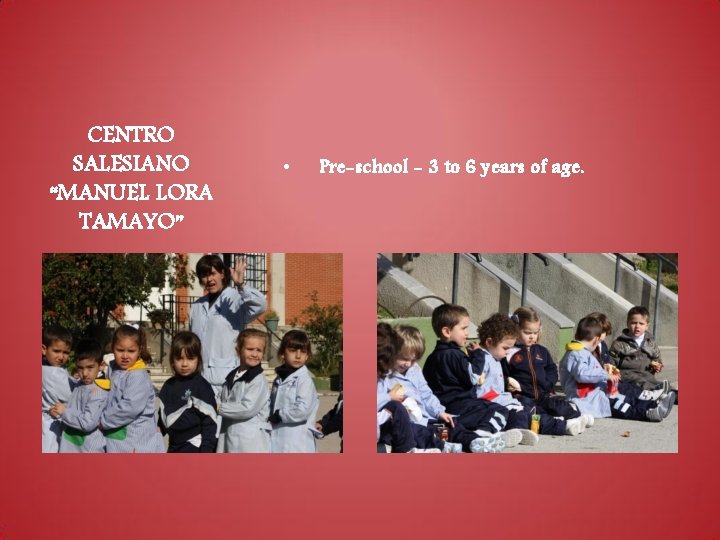
CENTRO SALESIANO “MANUEL LORA TAMAYO” • Pre-school - 3 to 6 years of age.
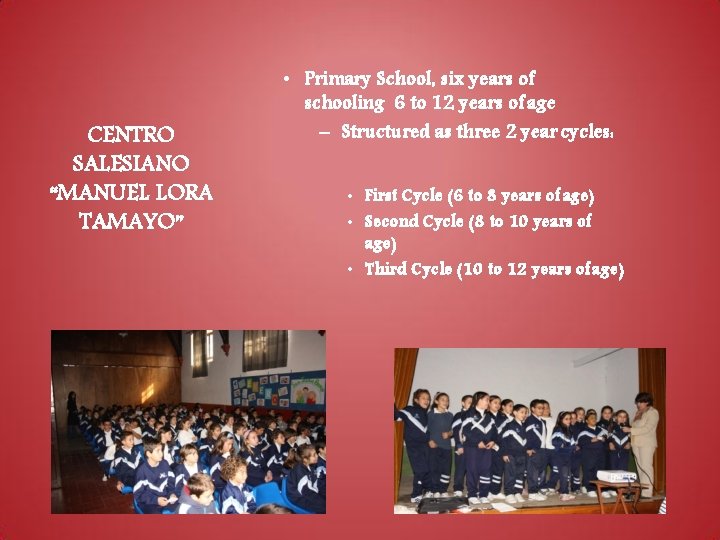
CENTRO SALESIANO “MANUEL LORA TAMAYO” • Primary School, six years of schooling 6 to 12 years of age – Structured as three 2 year cycles: • First Cycle (6 to 8 years of age) • Second Cycle (8 to 10 years of age) • Third Cycle (10 to 12 years of age)
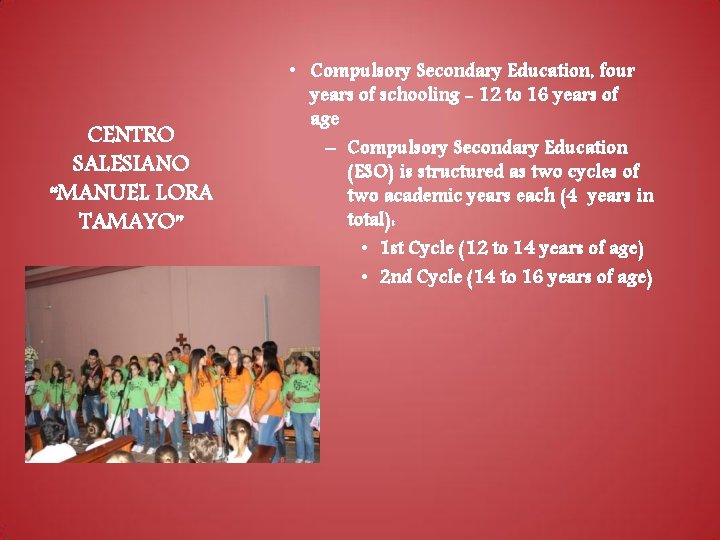
CENTRO SALESIANO “MANUEL LORA TAMAYO” • Compulsory Secondary Education, four years of schooling - 12 to 16 years of age – Compulsory Secondary Education (ESO) is structured as two cycles of two academic years each (4 years in total): • 1 st Cycle (12 to 14 years of age) • 2 nd Cycle (14 to 16 years of age)
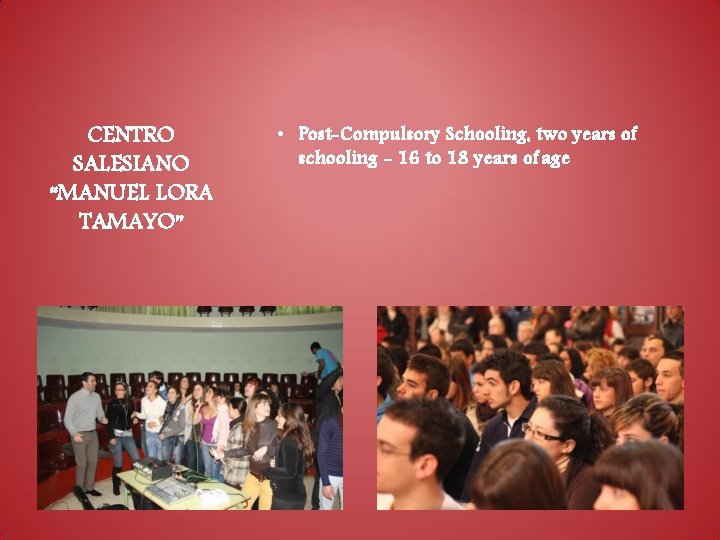
CENTRO SALESIANO “MANUEL LORA TAMAYO” • Post-Compulsory Schooling, two years of schooling - 16 to 18 years of age
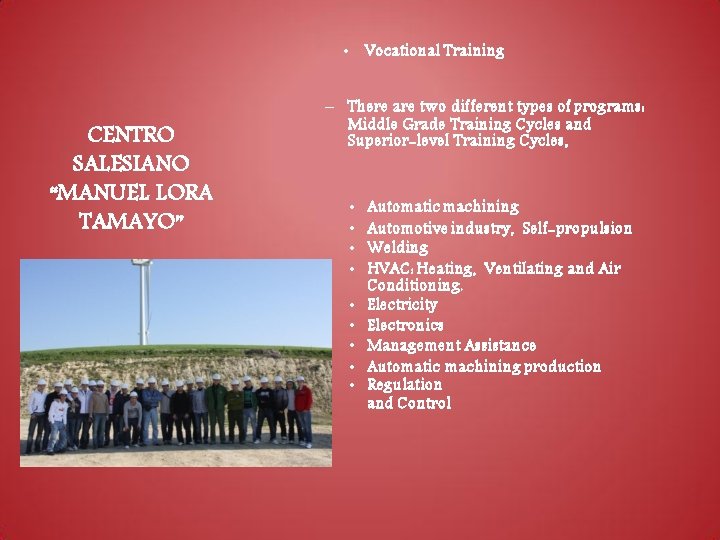
• Vocational Training CENTRO SALESIANO “MANUEL LORA TAMAYO” – There are two different types of programs: Middle Grade Training Cycles and Superior-level Training Cycles, • • • Automatic machining Automotive industry, Self-propulsion Welding HVAC: Heating, Ventilating and Air Conditioning. Electricity Electronics Management Assistance Automatic machining production Regulation and Control
LINKS: Spain: https: //www. youtube. com/watch? v=w_Gt. Uo. Vcs 4 g Jerez: https: //www. youtube. com/watch? v=g 8 Sz. U 8 mms. MY