Main Characteristics of Anthropology Senior Seminar University of














- Slides: 127
Main Characteristics of Anthropology Senior Seminar University of Minnesota Duluth Tim Roufs’ © 2009 -2017 http: //www. d. umn. edu/cla/faculty/troufs/anth 4653/index. html#title
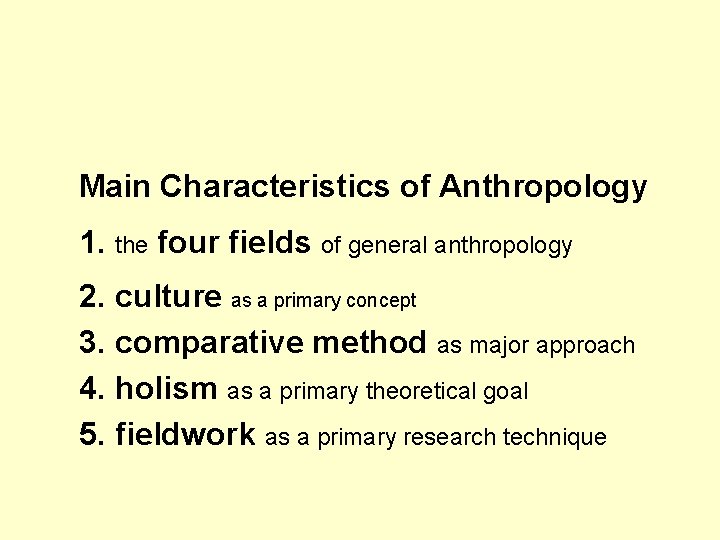
Main Characteristics of Anthropology 1. the four fields of general anthropology 2. culture as a primary concept 3. comparative method as major approach 4. holism as a primary theoretical goal 5. fieldwork as a primary research technique
In other classes we included images of examples of items. This time try to think of examples on your own. . . for. . .
Main Characteristics of Anthropology 1. the four fields of general anthropology 2. 3. 4. 5. culture as a primary concept comparative method as major approach holism as a primary theoretical goal fieldwork as a primary research technique
American Anthropology • socio-cultural • physical • archaeology • linguistics
American Anthropology • socio-cultural • bio-physical • archaeology • linguistics
American Anthropology • socio-cultural • bio-physical • archaeology • linguistics
American Anthropology • socio-cultural • bio-physical • archaeology • linguistics
Main Characteristics of Anthropology 1. the four fields of general anthropology 2. culture as a primary concept 3. comparative method as major approach 4. holism as a primary theoretical goal 5. fieldwork as a primary research technique
Main Characteristics • “culture” is – learned – shared – transmitted from generation to generation – based on symbols – integrated
Main Characteristics • “culture” – learned –some sharedfocus on the idea that it involves – transmitted from generation to generation “shared understanding” – based on symbols – integrated
Main Characteristics • “culture” • is not inherited (i. e. , is not biological) • is not “instinct”
Main Characteristics • “cultures” • are groups of people sharing a common heritage (and usually a common language)
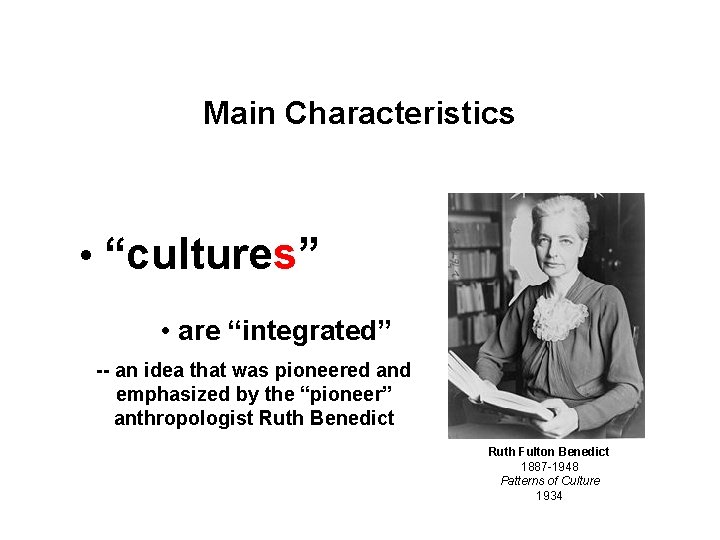
Main Characteristics • “cultures” • are “integrated” -- an idea that was pioneered and emphasized by the “pioneer” anthropologist Ruth Benedict Ruth Fulton Benedict 1887 -1948 Patterns of Culture 1934
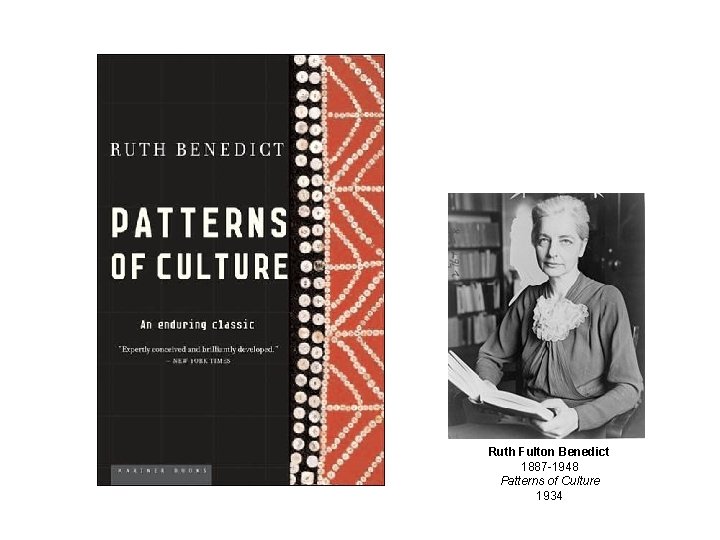
Ruth Fulton Benedict 1887 -1948 Patterns of Culture 1934
Main Characteristics • “cultures” • are integrated • Interact and change – the idea that some cultures (like “hunting and gathering” cultures, or the Amish) do not change is not correct
The Concept of Culture • Microculture – are smaller groups with distinct pattern of learned and shared behavior and thinking found within larger cultures such as ethnic groups in localized regions – some people like to think of these as “local cultures”
The Concept of Culture • Microculture – are smaller groups with distinct pattern of learned and shared behavior and thinking found within larger cultures such as ethnic groups in localized regions – some people like to think of these as “local cultures”
What are some examples of microcultures?
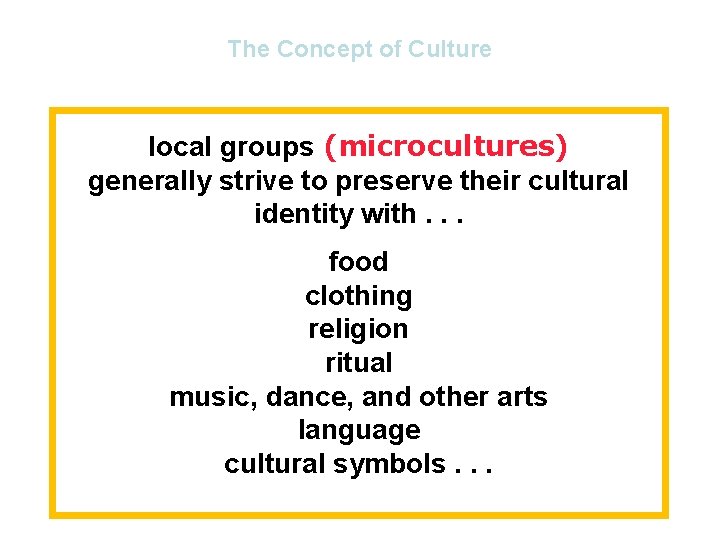
The Concept of Culture local groups (microcultures) generally strive to preserve their cultural identity with. . . food clothing religion ritual music, dance, and other arts language cultural symbols. . .
Examples?
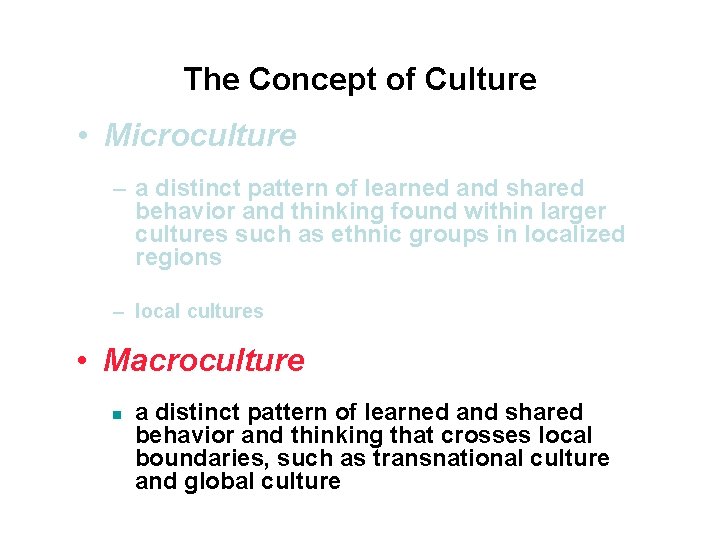
The Concept of Culture • Microculture – a distinct pattern of learned and shared behavior and thinking found within larger cultures such as ethnic groups in localized regions – local cultures • Macroculture n a distinct pattern of learned and shared behavior and thinking that crosses local boundaries, such as transnational culture and global culture
What are some examples of macrocultures?
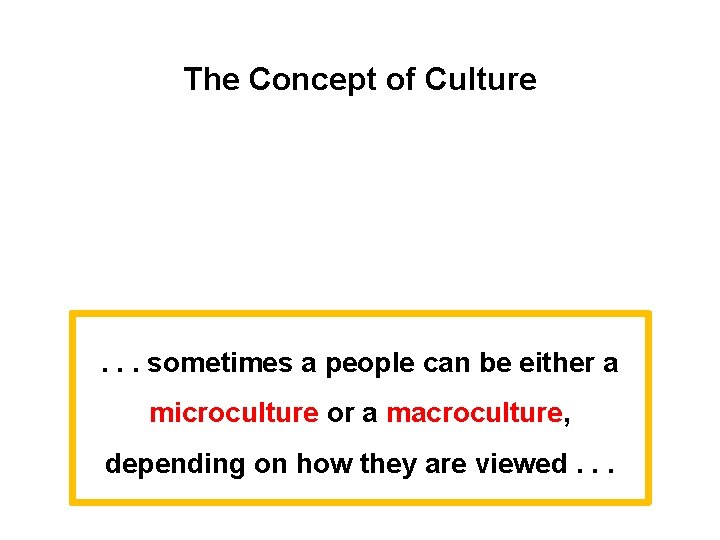
The Concept of Culture . . . sometimes a people can be either a microculture or a macroculture, depending on how they are viewed. . .
Examples?
Main Characteristics of Anthropology 1. the four fields of general anthropology 2. culture as a primary concept 3. comparative method as major approach development and structure 4. holism as a primary theoretical goal 5. fieldwork as a primary research technique
Compare. . . Main Characteristics • comparative method – as a major approach to the study of human behavior – the comparative method compares things
Compare. . . Main Characteristics • comparative method – One form of comparative method was pioneered by Fred Eggan (University of Chicago) “Social anthropology and the method of controlled comparison” American Anthropologist, 56: 743 -61 (1954)
Compare. . . Main Characteristics • comparative method – One form of comparative method was pioneered by Fred Eggan (University of Chicago) “Social anthropology and the method of controlled comparison” American Anthropologist, 56: 743 -61 (1954)
Compare. . . Main Characteristics • comparative method – Other methods. . . compare things regionally in an attempt to understand process
Compare. . . Main Characteristics • comparative method – Other methods. . . compare things regionally in an attempt to understand process
Compare. . . Main Characteristics • comparative method process – Other methods. . . essentially refers to how things compare things change regionally or how things came to be in an attempt to understand process the way they are now
Compare. . . Main Characteristics • the comparative method compares things
Can you think of examples of comparative studies in Anthropology?
Main Characteristics of Anthropology 1. the four fields of general anthropology 2. culture as a primary concept 3. comparative method as major approach 4. holism or the study of "humankind" as a whole, as a primary theoretical goal 5. fieldwork as a primary research technique
Main Characteristics of Anthropology 1. the four fields of general anthropology 2. culture as a primary concept 3. comparative method as major approach 4. holism or the study of "humankind" as a whole, as a primary theoretical goal 5. fieldwork as a primary research technique
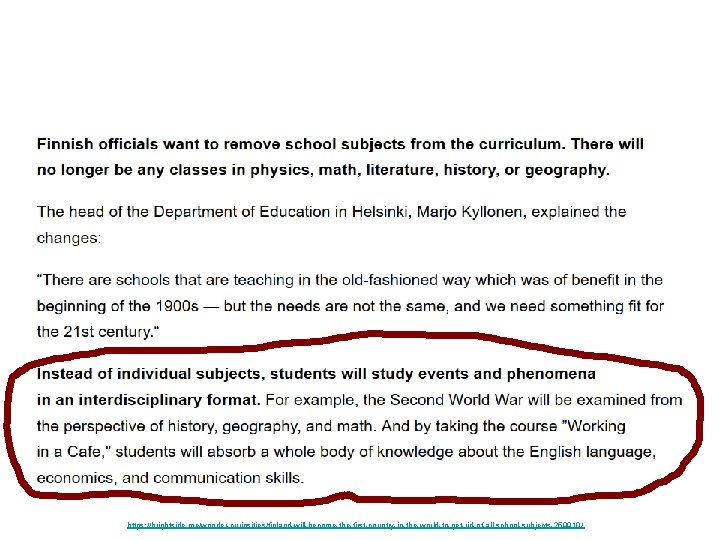
https: //brightside. me/wonder-curiosities/finland-will-become-the-first-country-in-the-world-to-get-rid-of-all-school-subjects-259910/
https: //brightside. me/wonder-curiosities/finland-will-become-the-first-country-in-the-world-to-get-rid-of-all-school-subjects-259910/
A simple example. . .
http: //blog. nature. org/science/2015/01/05/winter-bird-feeding-good-or-bad-for-birds/
Is it good to feed the winter birds? Yes. . . for the reasons one might suspect. . . http: //blog. nature. org/science/2015/01/05/winter-bird-feeding-good-or-bad-for-birds/
Is it good to feed the winter birds? Yes. . . for the reasons one A simple answer. . might. suspect. . . http: //blog. nature. org/science/2015/01/05/winter-bird-feeding-good-or-bad-for-birds/
Is it good to feed the winter birds? Yes. . . for the reasons one might suspect. . . http: //blog. nature. org/science/2015/01/05/winter-bird-feeding-good-or-bad-for-birds/
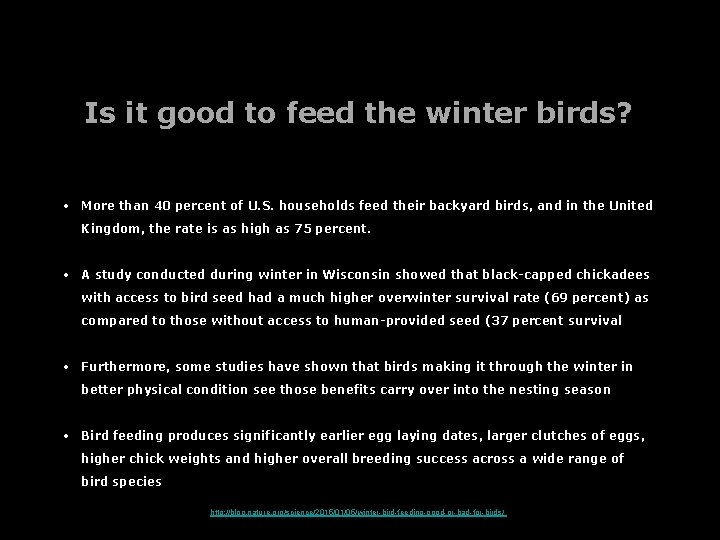
Is it good to feed the winter birds? • More than 40 percent of U. S. households feed their backyard birds, and in the United Kingdom, the rate is as high as 75 percent. • A study conducted during winter in Wisconsin showed that black-capped chickadees with access to bird seed had a much higher overwinter survival rate (69 percent) as compared to those without access to human-provided seed (37 percent survival • Furthermore, some studies have shown that birds making it through the winter in better physical condition see those benefits carry over into the nesting season • Bird feeding produces significantly earlier egg laying dates, larger clutches of eggs, higher chick weights and higher overall breeding success across a wide range of bird species http: //blog. nature. org/science/2015/01/05/winter-bird-feeding-good-or-bad-for-birds/
Is it good to feed the winter birds? Yes. . . for the reasons BUT. . . one might suspect. . . http: //blog. nature. org/science/2015/01/05/winter-bird-feeding-good-or-bad-for-birds/
Is it good to feed the winter birds? Yes. . . A holistic view would also for the one might suspect consider. . . http: //blog. nature. org/science/2015/01/05/winter-bird-feeding-good-or-bad-for-birds/
Is it good to feed the winter birds? • feeding can promote the survival and reproduction of the not-quite-fittest • one research group found that birds fed during winter subsequently laid a smaller number of eggs that had lower hatching success and ultimately fledged fewer young than birds that weren’t fed at all • the offspring that did fledge weighed less and had a lower survival rate than the young of unfed birds http: //blog. nature. org/science/2015/01/05/winter-bird-feeding-good-or-bad-for-birds/
Is it good to feed the winter birds? • both species [in two U. K. studies], when they had access to bird food, laid fewer eggs, had lower hatching success, and ultimately had fewer chicks fledged • feeding an irresistible diet that was unbalanced – too high in fat to produce high-quality eggs http: //blog. nature. org/science/2015/01/05/winter-bird-feeding-good-or-bad-for-birds/
Is it good to feed the winter birds? • bird feeding allowed individuals with a lower reproductive capacity which ordinarily would not survive the winter the chance to nest • the feeders may be in poor quality nesting habitat – leading the birds to choose these suboptimal sites as nesting areas in the spring http: //blog. nature. org/science/2015/01/05/winter-bird-feeding-good-or-bad-for-birds/
Is it good to feed the winter birds? So from the holistic view, one must look at things like the impacts of bird feeding not only on the survival of the birds fed, but also on things like. . . http: //blog. nature. org/science/2015/01/05/winter-bird-feeding-good-or-bad-for-birds/
Is it good to feed the winter birds? • overall reproductive success • other factors such as disease transmission • species range expansion • population trajectories • and the long-range evolutionary effects on the species http: //blog. nature. org/science/2015/01/05/winter-bird-feeding-good-or-bad-for-birds/
with humans, in anthropology, holism looks at an item including the many subdisciplines in the areas of. . .
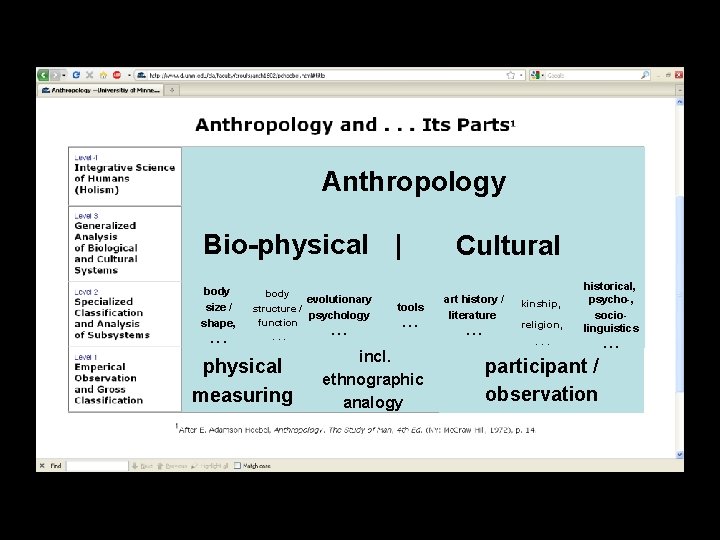
Holism tries to put all of the pieces together. . . Peoples and Cultures of Europe and its. . . • cultural / social • physical (bio-physical) • archaeology • linguistics
Holism tries to put all of the pieces together. . . • socio-cultural • bio-physical • archaeology • linguistics
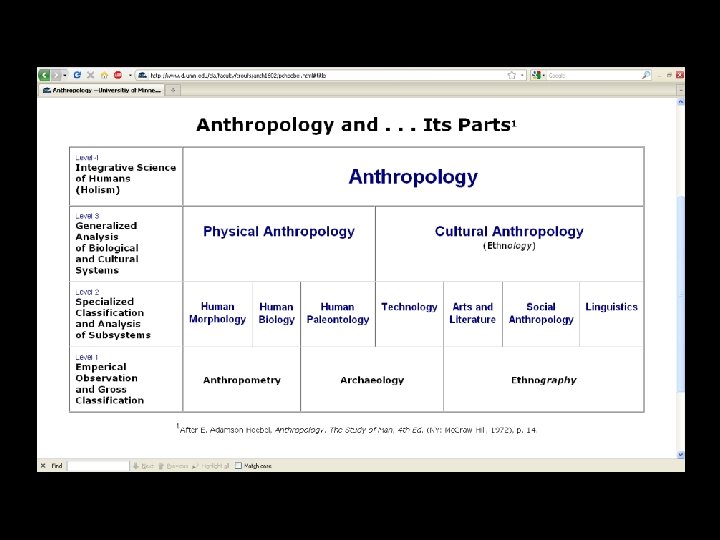
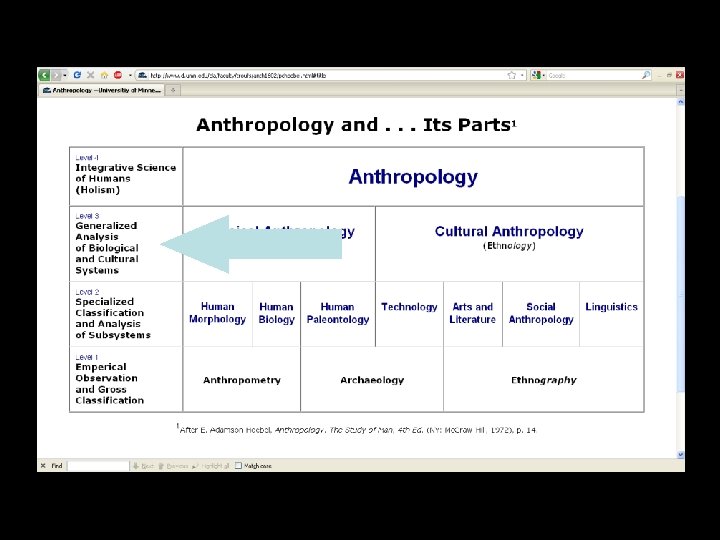
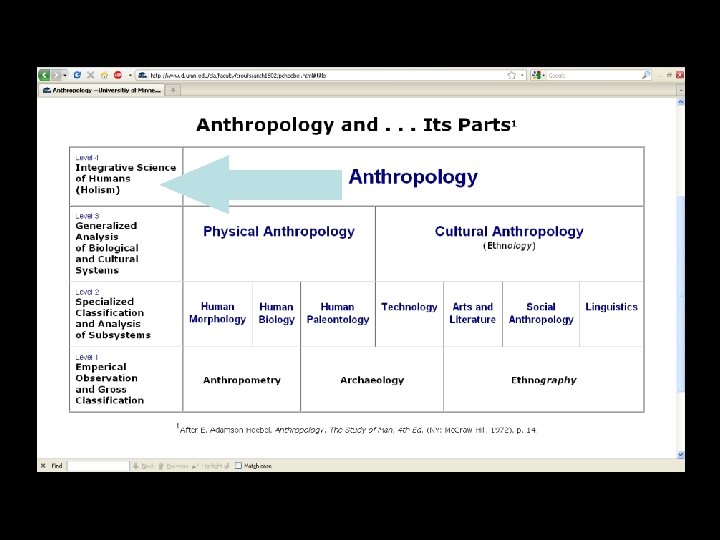
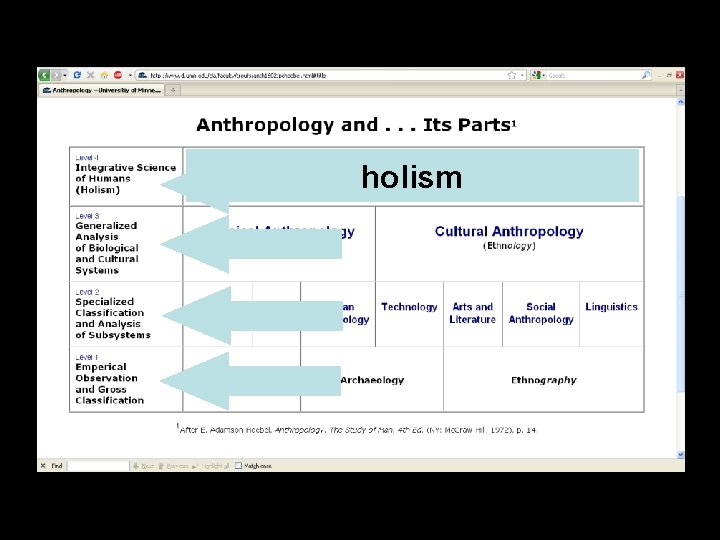
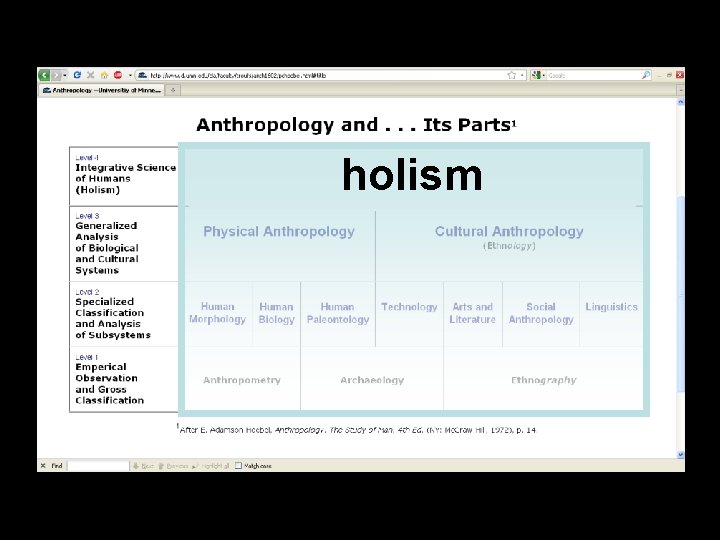
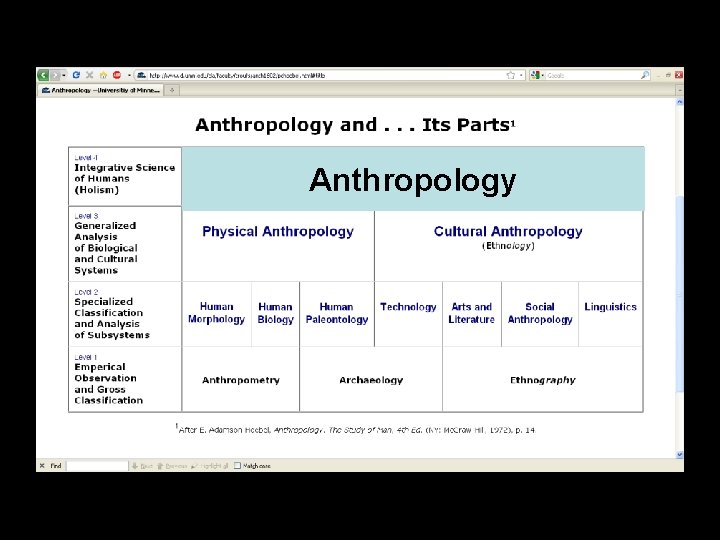
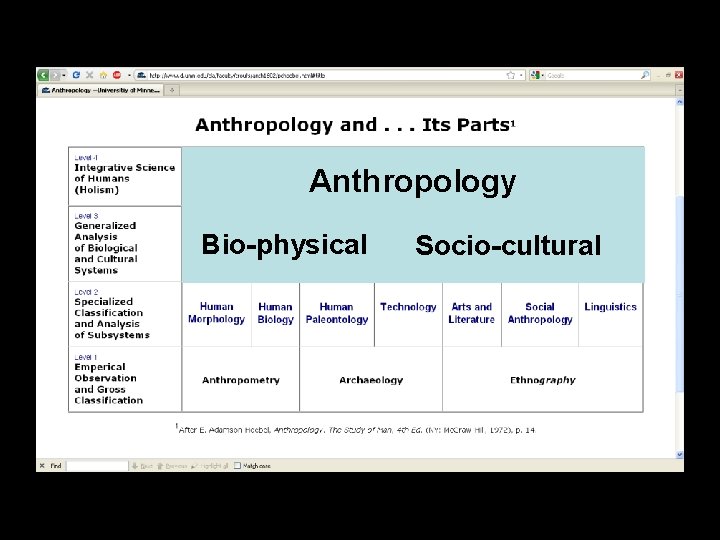
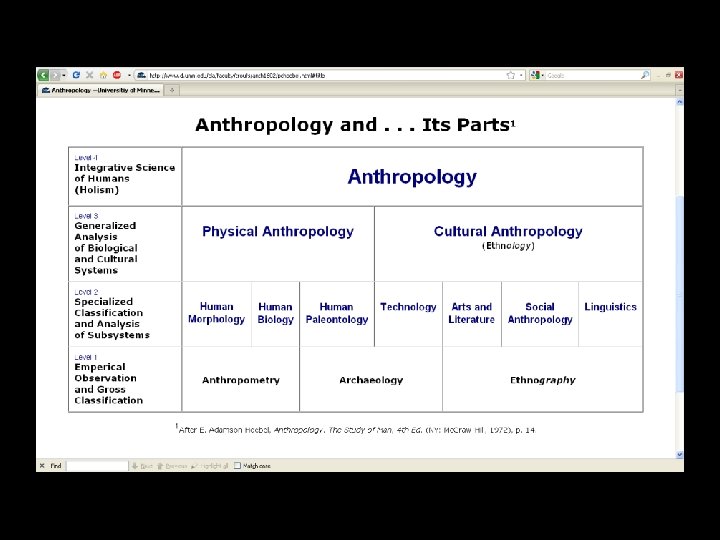
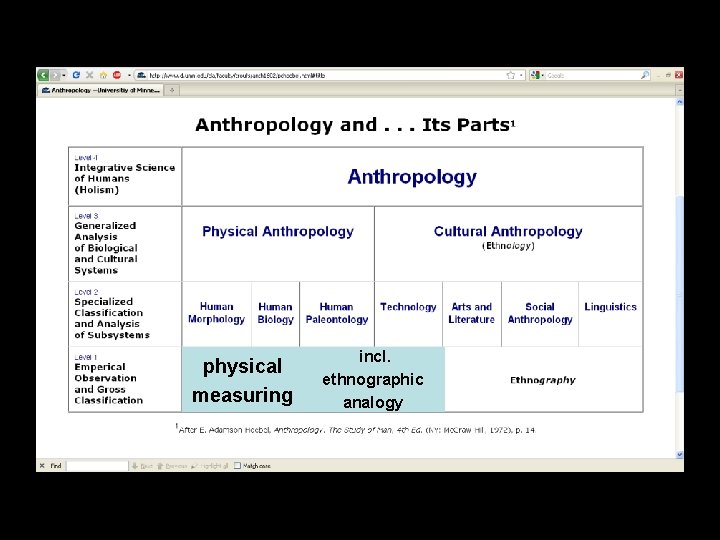
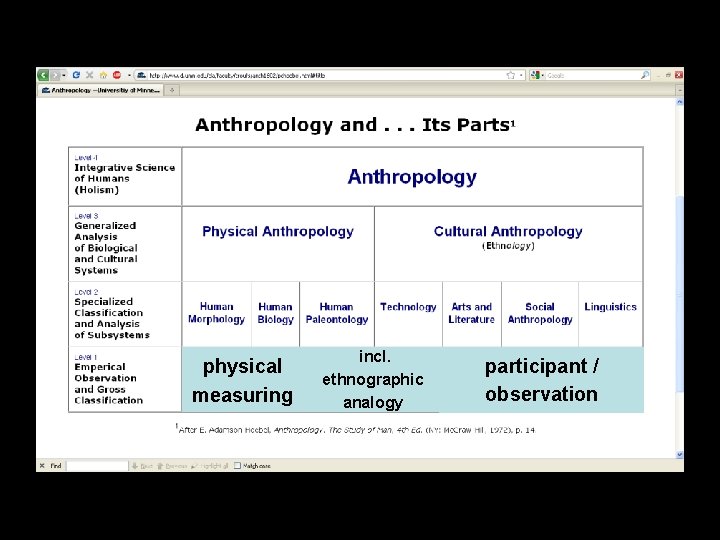
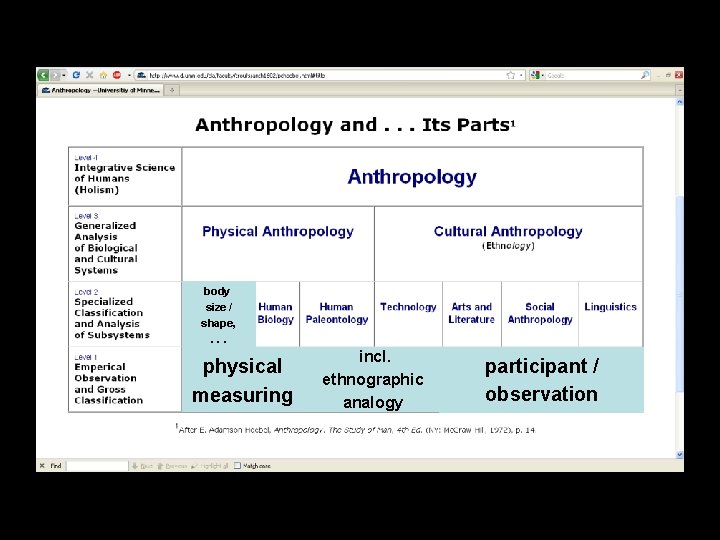
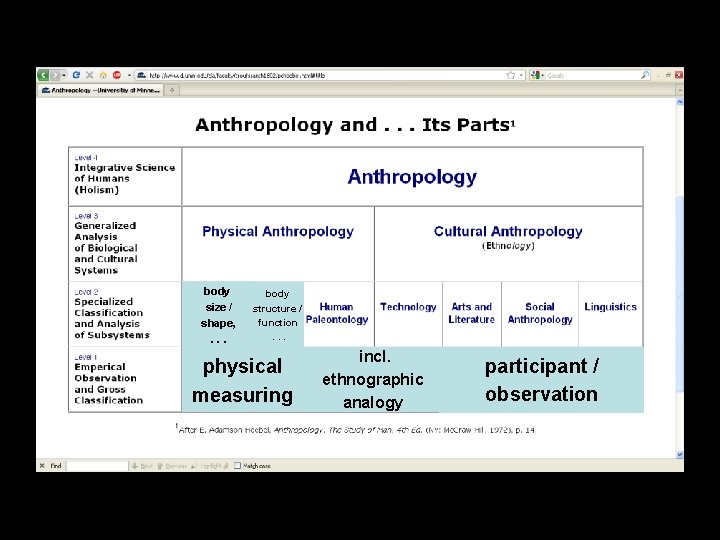
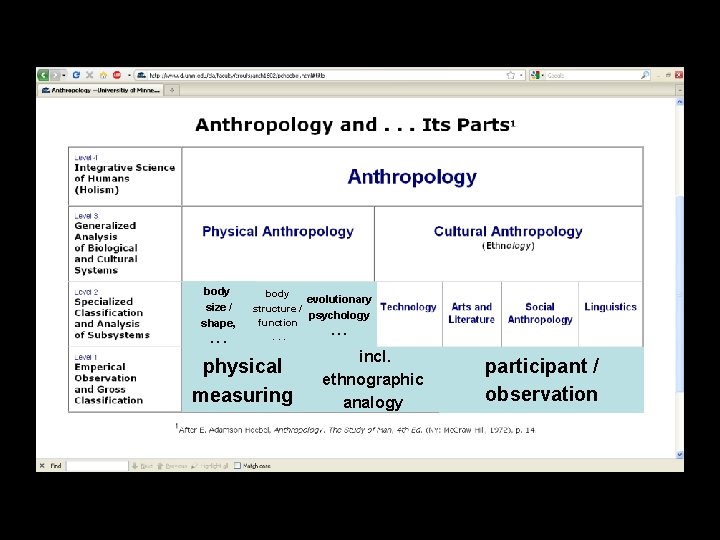
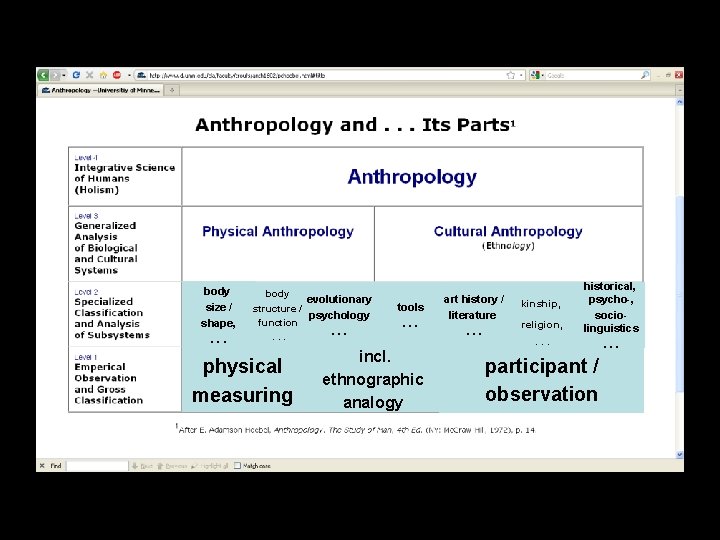
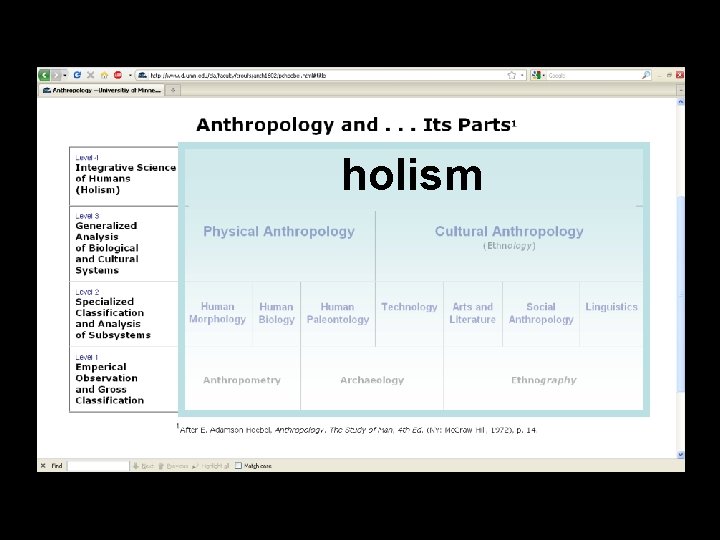
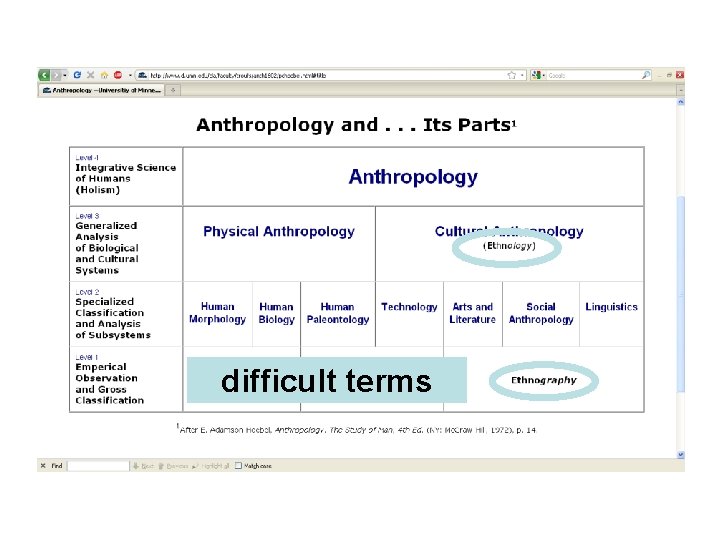
let’s have a look at that on the “Anthropology and. . . Its Parts” chart. . .
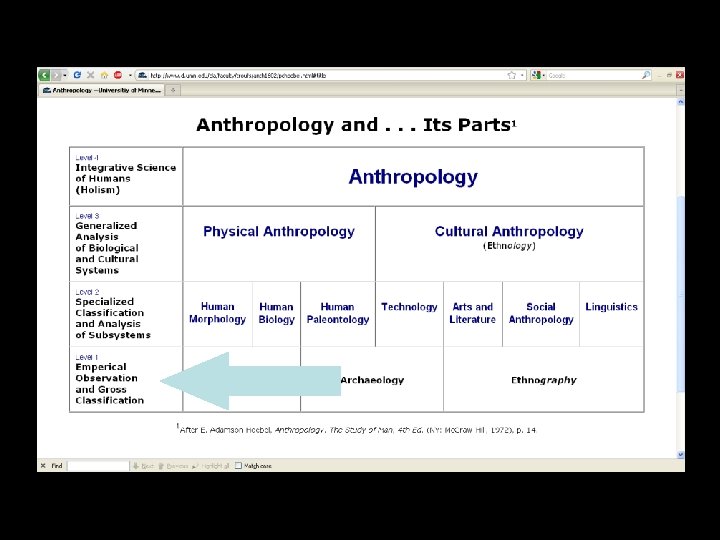
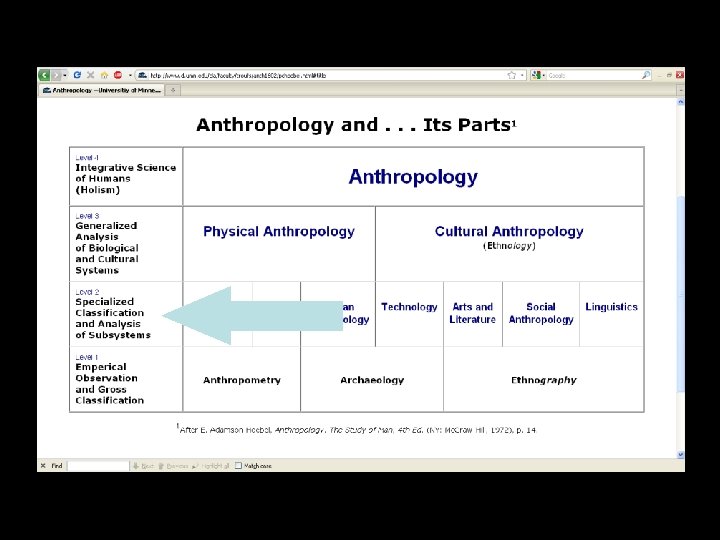
NOTE: Usually anthropologists read charts from the bottom up That has to do with the fact that in archaeology the oldest layers are at the bottom of a site and the newer ones are on top
NOTE: There are four levels. . . (REM: read from the bottom up)
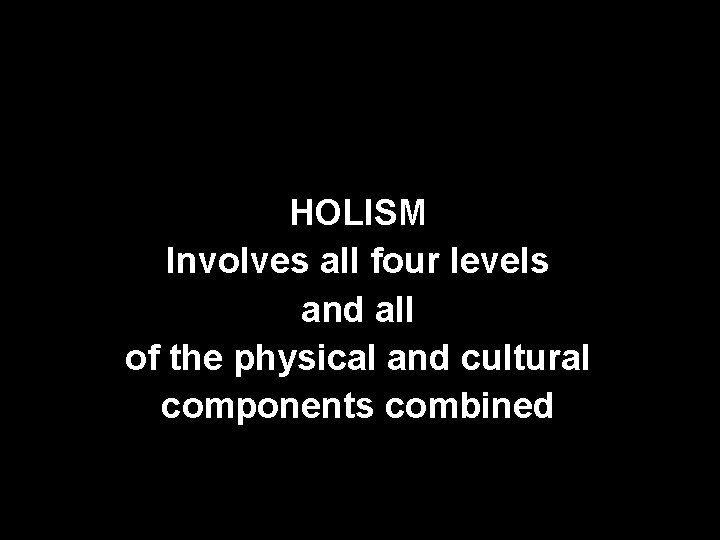
HOLISM Involves all four levels and all of the physical and cultural components combined
holism
holism
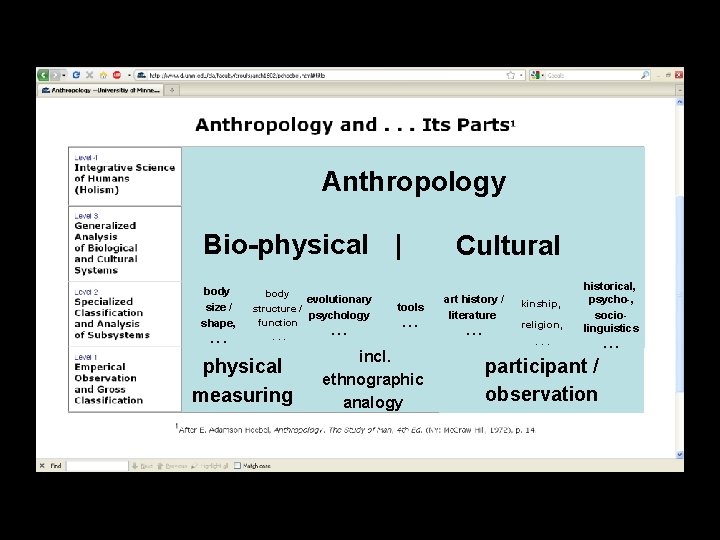
Anthropology
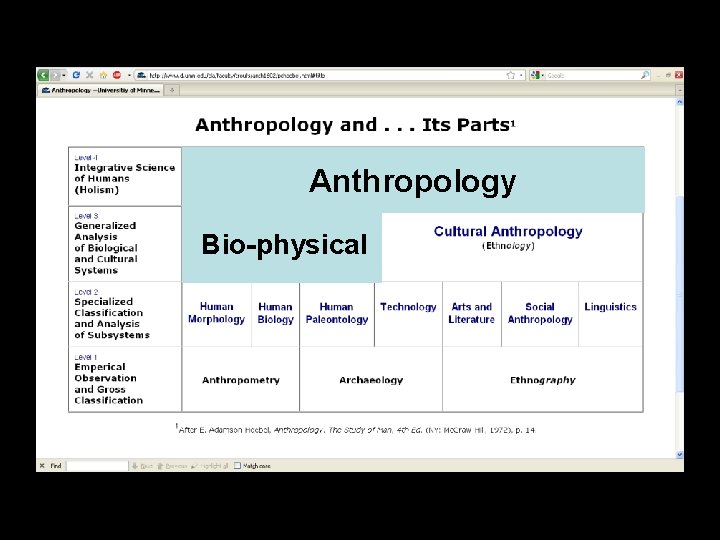
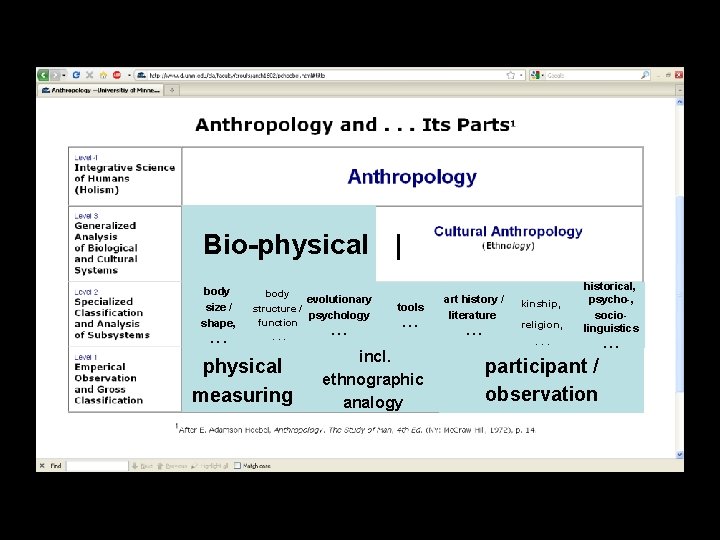
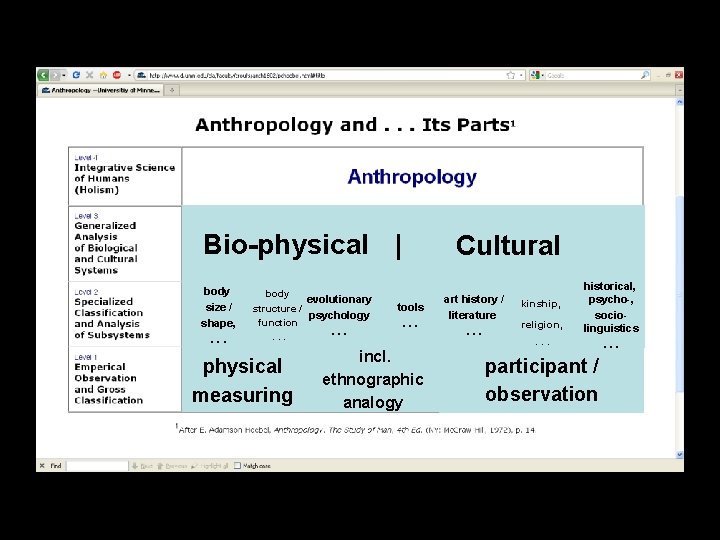
. . . and the two main divisions of Anthropology are bio-physical and cultural. . .
Anthropology Bio-physical
Bio-physical examples?
Anthropology Bio-physical Socio-cultural
Socio-cultural examples?
. . . but ultimately anthropologists seek to study phenomena in terms of both physical and cultural aspects. . .
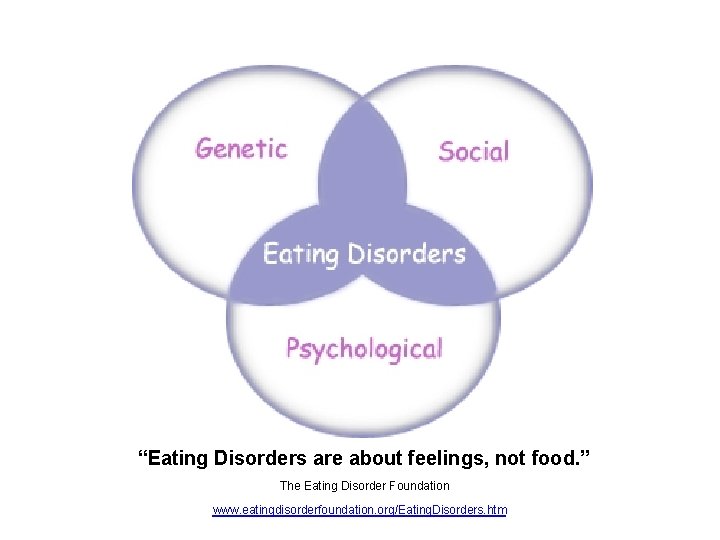
. . . but ultimately anthropologists seek to study phenomena in terms of both physical and cultural aspects. . . as well as other aspects, for e. g. , the psychological. . .
“Eating Disorders are about feelings, not food. ” The Eating Disorder Foundation www. eatingdisorderfoundation. org/Eating. Disorders. htm
. . . and that ultimately involves lots of subdisciplines. . .
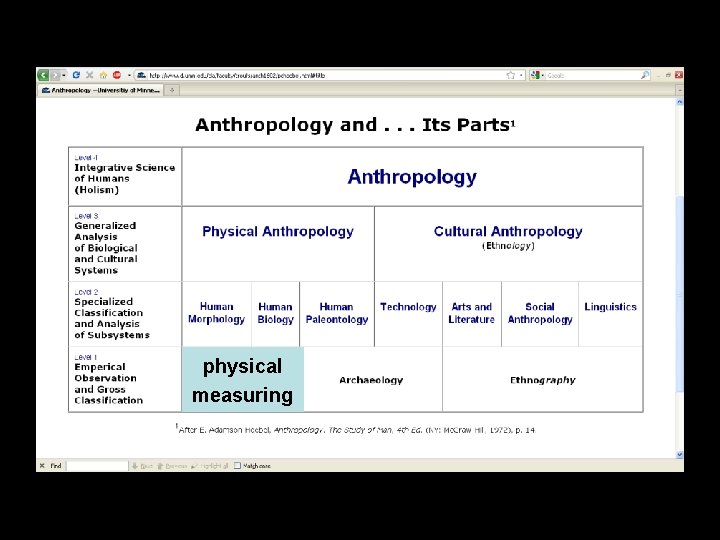
physical measuring
physical measuring incl. ethnographic analogy
physical measuring incl. ethnographic analogy participant / observation
body size / shape, . . . physical measuring incl. ethnographic analogy participant / observation
body size / shape, . . . body structure / function. . . physical measuring incl. ethnographic analogy participant / observation
body size / shape, . . . body evolutionary structure / psychology function. . . physical measuring incl. ethnographic analogy participant / observation
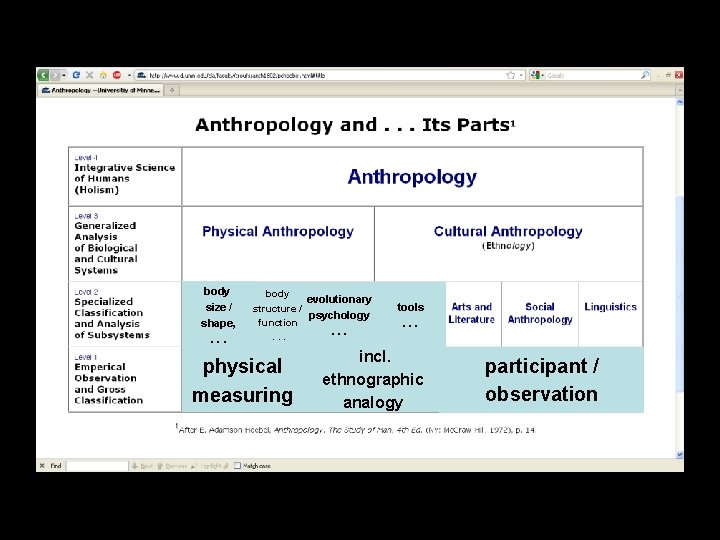
body size / shape, . . . body evolutionary structure / psychology function. . . physical measuring tools. . . incl. ethnographic analogy participant / observation
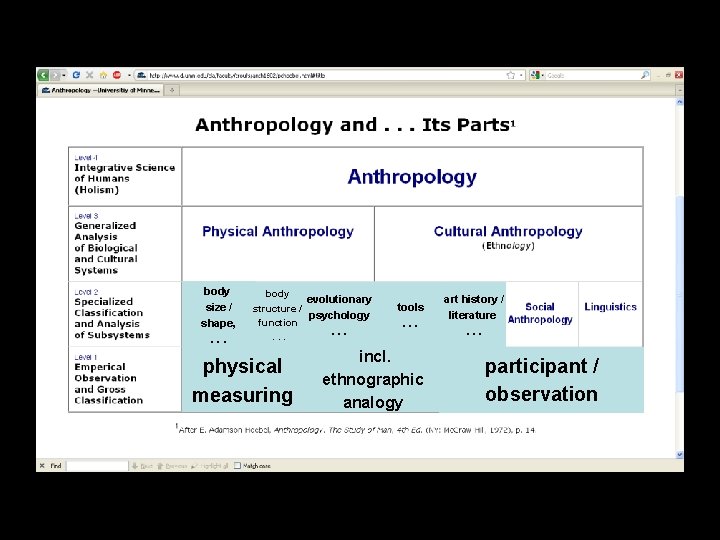
body size / shape, . . . body evolutionary structure / psychology function. . . physical measuring tools. . . incl. ethnographic analogy art history / literature. . . participant / observation
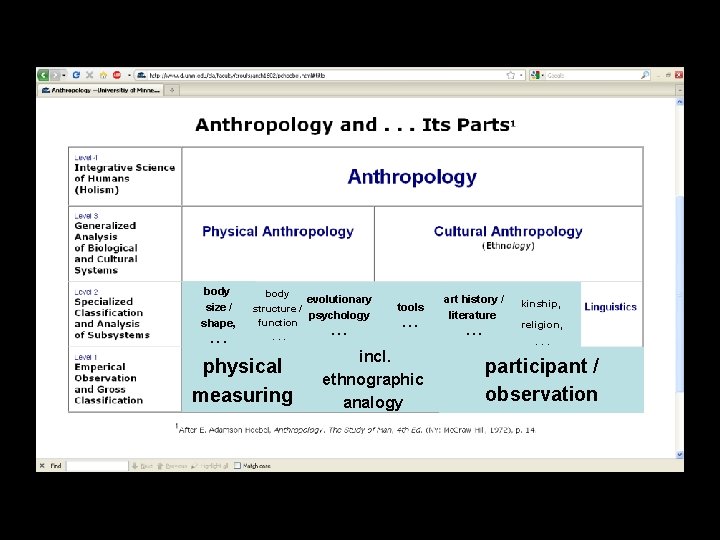
body size / shape, . . . body evolutionary structure / psychology function. . . physical measuring tools. . . incl. ethnographic analogy art history / literature. . . kinship, religion, . . . participant / observation
body size / shape, . . . body evolutionary structure / psychology function. . . physical measuring tools. . . incl. ethnographic analogy art history / literature. . . kinship, religion, . . . historical, psycho-, sociolinguistics. . . participant / observation
Bio-physical | body size / shape, . . . body evolutionary structure / psychology function. . . physical measuring tools. . . incl. ethnographic analogy art history / literature. . . kinship, religion, . . . historical, psycho-, sociolinguistics. . . participant / observation
Bio-physical | body size / shape, . . . body evolutionary structure / psychology function. . . physical measuring tools. . . incl. ethnographic analogy Cultural art history / literature. . . kinship, religion, . . . historical, psycho-, sociolinguistics. . . participant / observation
Anthropology Bio-physical | body size / shape, . . . body evolutionary structure / psychology function. . . physical measuring tools. . . incl. ethnographic analogy Cultural art history / literature. . . kinship, religion, . . . historical, psycho-, sociolinguistics. . . participant / observation
holism
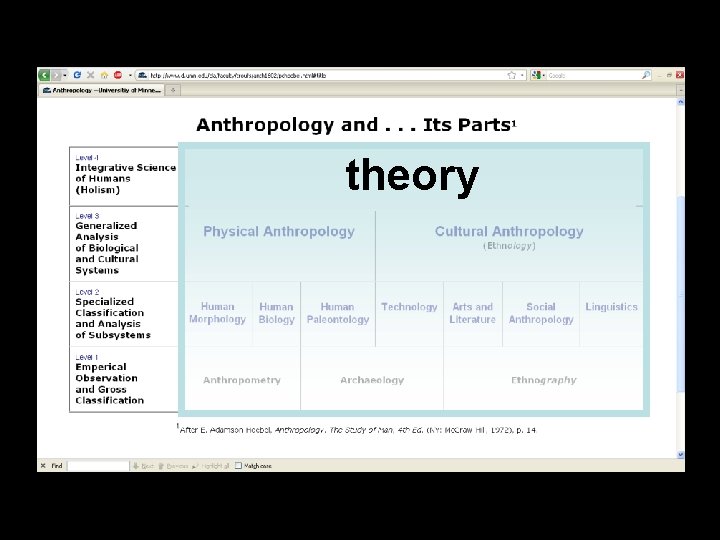
In some ways this chart business is all about Theory but key theory that is important to the understanding of Anthropology
theory holism
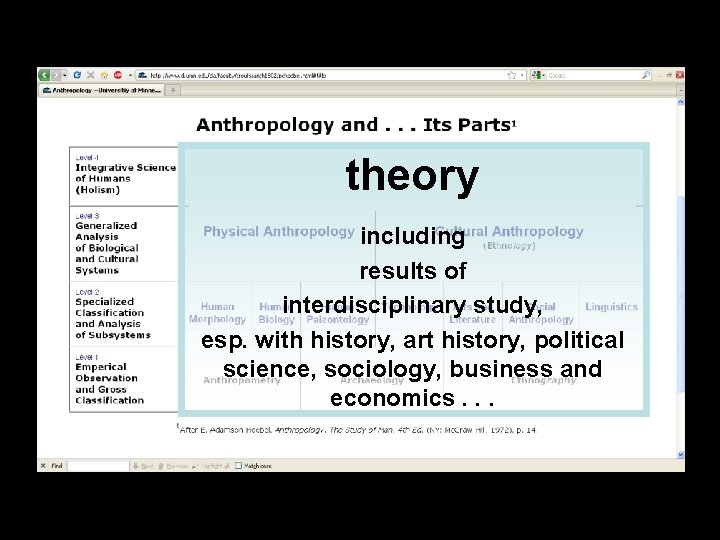
theory holism including results of interdisciplinary study, esp. with history, art history, political science, sociology, business and economics. . .
Anthropology Bio-physical | body size / shape, . . . body evolutionary structure / psychology function. . . physical measuring tools. . . incl. ethnographic analogy Cultural art history / literature. . . kinship, religion, . . . historical, psycho-, sociolinguistics. . . participant / observation
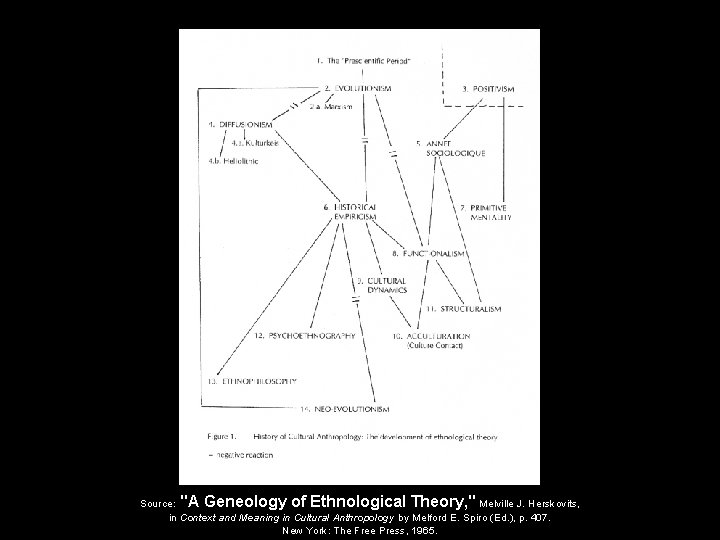
Source: "A Geneology of Ethnological Theory, " Melville J. Herskovits, in Context and Meaning in Cultural Anthropology by Melford E. Spiro (Ed. ), p. 407. New York: The Free Press, 1965.
And finally, we have the last main characteristic of anthropology. . .
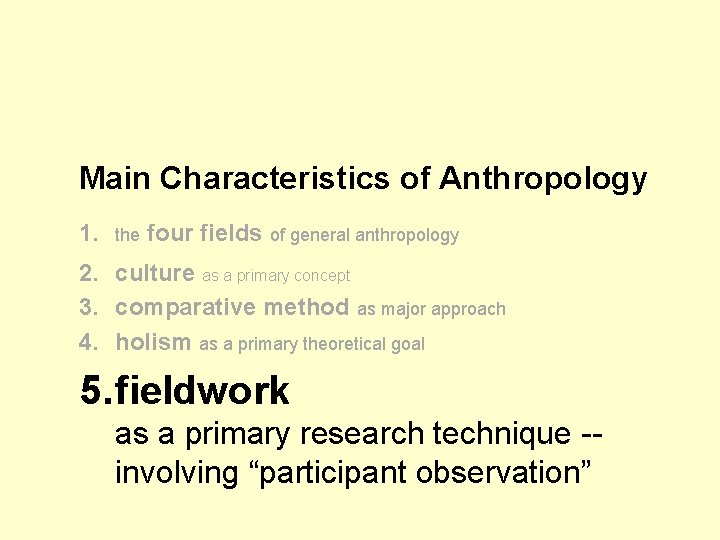
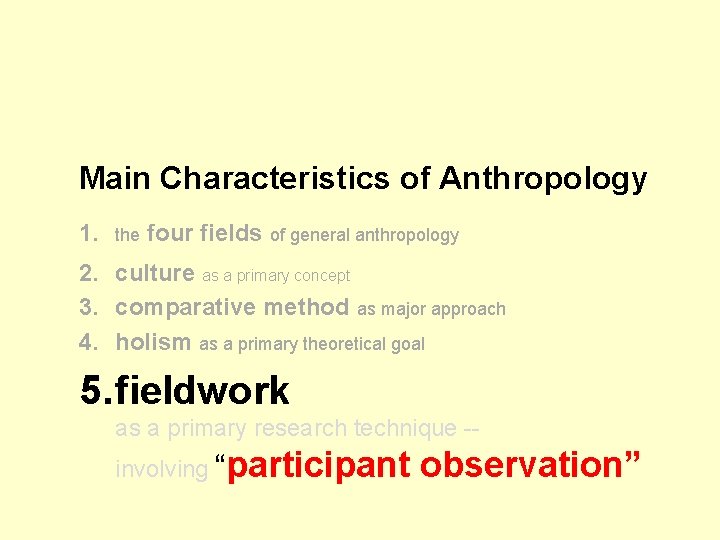
Main Characteristics of Anthropology 1. the four fields of general anthropology 2. culture as a primary concept 3. comparative method as major approach 4. holism as a primary theoretical goal 5. fieldwork as a primary research technique -involving “participant observation”
What anthropologists can you name who are famous for their fieldwork?
Note two terms in the “major characteristics of anthropology” listing. . .
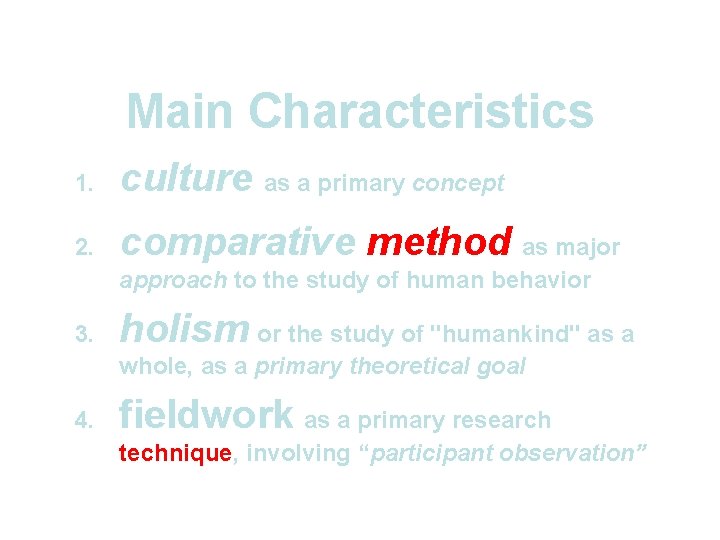
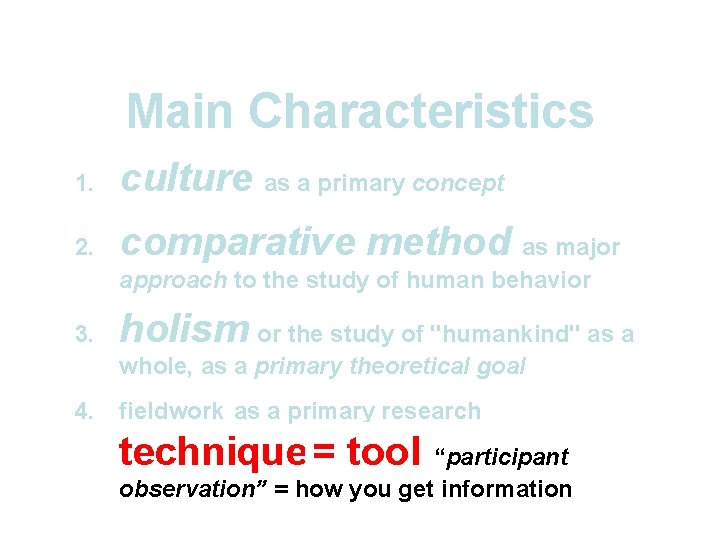
Main Characteristics 1. culture as a primary concept 2. comparative method as major approach to the study of human behavior 3. holism or the study of "humankind" as a whole, as a primary theoretical goal 4. fieldwork as a primary research technique, involving “participant observation”
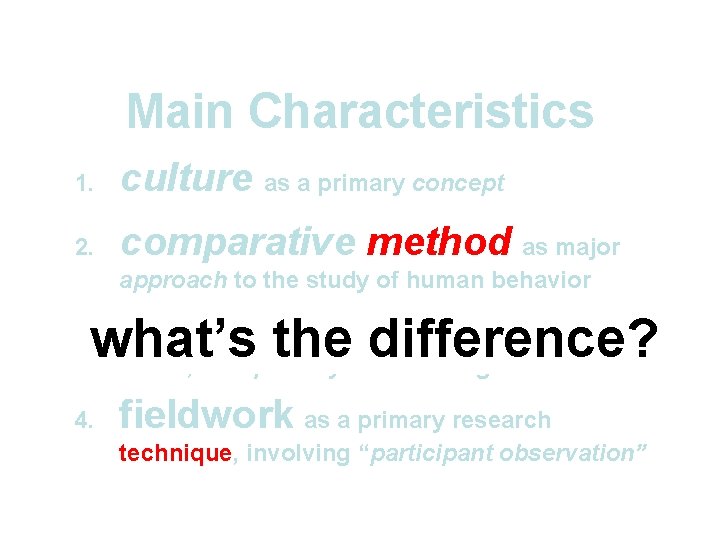
Main Characteristics 1. culture as a primary concept 2. comparative method as major approach to the study of human behavior holism or the study of "humankind" as a what’s the difference? 3. whole, as a primary theoretical goal 4. fieldwork as a primary research technique, involving “participant observation”
Main Characteristics 1. culture as a primary concept 2. comparative method as major approach to the study of human behavior 3. holism or the study of "humankind" as a whole, as a primary theoretical goal 4. fieldwork as a primary research technique, =involving tool “participant observation” = how you get information
Main Characteristics 1. culture as a primary concept 2. comparative method as major 3. participant observation holism or the study of "humankind" as a data gathering technique — approach to the study of human behavior whole, as a primary theoretical goal (fieldwork) 4. fieldwork as a primary research technique, =involving tool “participant observation” = how you get information
Main Characteristics 1. culture as a primary concept Anthropologists use other tools. . . like questionnaires, interview schedules, comparative method as major psychological tests, documentary filming approach to the study of human behavior. . . but “participant observation” is a 3. holism or the study of "humankind" characteristic technique use by as a whole, as a primary theoretical anthropologists, especiallygoal cultural anthropologists 4. fieldwork as a primary (ethnologists) research 2. technique, =involving tool “participant observation” = how you get information
Main Characteristics 1. culture as a primary concept Anthropologists use other tools. . . like questionnaires, interview schedules, 2. comparative method as major psychological tests, documentary filming approach to the study of human behavior. . . but “participant observation” is a 3. holism or the study of "humankind" characteristic technique use by as a whole, as a primary theoretical NOTE: anthropologists, especiallygoal cultural 4. fieldwork as a primary research anthropologists (ethnologists) technique, =involving tool “participant observation” = how you get information
Main Characteristics 1. culture as a primary concept 2. comparative method as major approach to the study of human behavior 3. holism or the study of "humankind" as a whole, as a primary theoretical goal 4. fieldwork as a primary research technique, =involving tool “participant observation” = how you get information
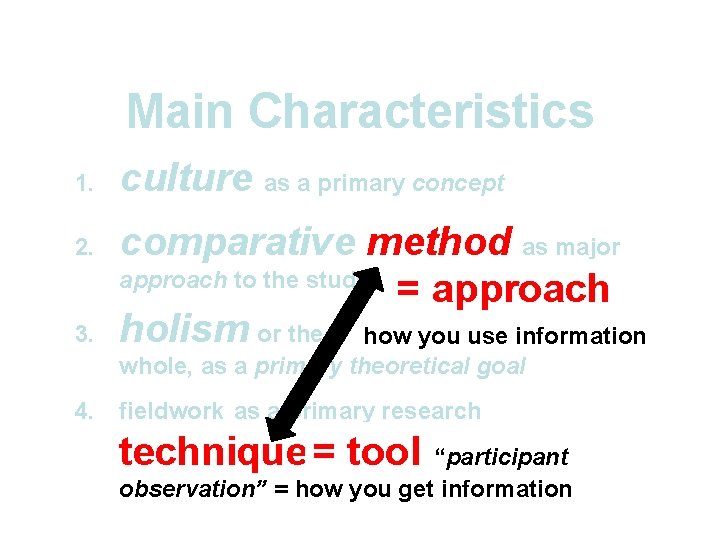
Main Characteristics 1. 2. 3. culture as a primary concept comparative method as major approach to the study of human behavior = approach holism or the study "humankind" as a howofyou use information whole, as a primary theoretical goal 4. fieldwork as a primary research technique, =involving tool “participant observation” = how you get information
Main Characteristics 1. culture as a primary concept 2. comparative method as major approach to the study of human behavior 3. holism or the study of "humankind" as a whole, as a primary theoretical goal 4. fieldwork as a primary research technique, =involving tool “participant observation” = how you get information
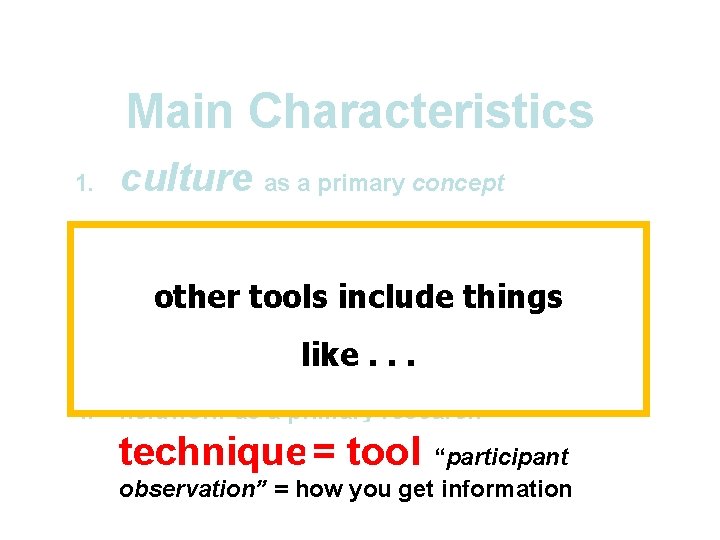
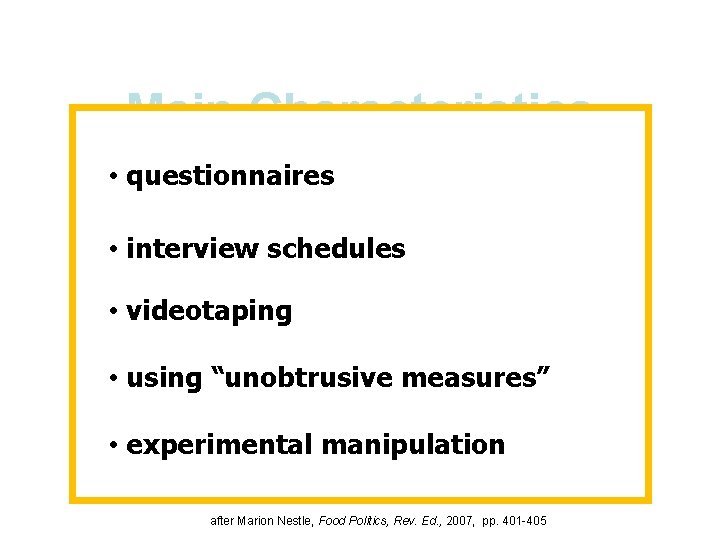
Main Characteristics 1. culture as a primary concept 2. comparative method as major approach to the study of human behavior other tools include things 3. holism or the study of "humankind" as a 4. fieldwork as a primary research liketheoretical. . . whole, as a primary goal technique, =involving tool “participant observation” = how you get information
What are some of those techniques?
Main Characteristics culture 1. • questionnaires as a primary concept comparative method 2. • interview schedules as major approach to the study of human behavior 3. • videotaping holism or the study of "humankind" as a a primary theoretical goal • whole, usingas “unobtrusive measures” 4. fieldwork as a primary research • technique experimental, = manipulation involving tool “participant observation” = how you get information after Marion Nestle, Food Politics, Rev. Ed. , 2007, pp. 401 -405
Anthropologists often like to use a research “technique” based on “unobtrusive measures”. . . (either in the field or elsewhere)
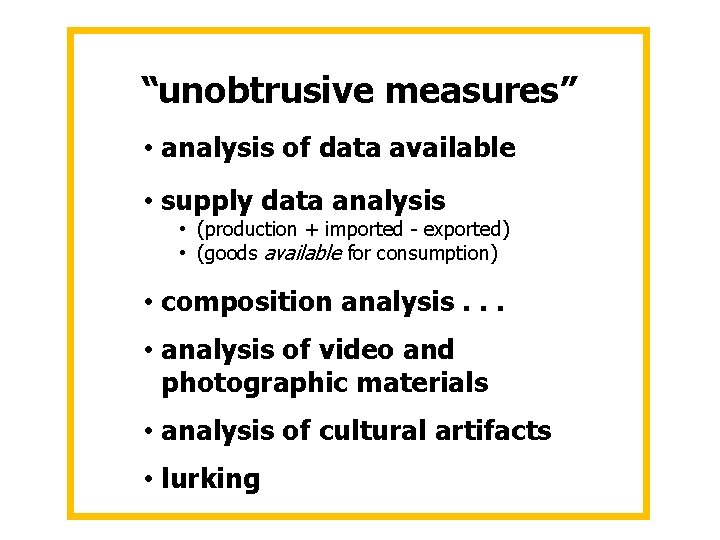
“unobtrusive measures” • analysis of data available • supply data analysis • (production + imported - exported) • (goods available for consumption) • composition analysis. . . • analysis of video and photographic materials • analysis of cultural artifacts • lurking
But most of all (generally) Anthropologists LOVE. . .
Main Characteristics of Anthropology 1. the four fields of general anthropology 2. culture as a primary concept 3. comparative method as major approach 4. holism as a primary theoretical goal 5. fieldwork as a primary research technique -involving “participant observation”
around the world
Don’t forget about two difficult terms. . .
difficult terms
Glossary • ethnography – scientific description of cultures (“a portrait of a people”)
Glossary • ethno – graphy – graph from the Greek, meaning something “written” or “drawn”
Glossary • ethnology – comparative study of cultures
Glossary • ethn – ology – comparative study of cultures
Glossary • ethnology – comparative study of cultures
Glossary • ethology – comparative study of cultures
Glossary • ethology – scientific study of the social – comparative study of cultures behavior of animals, especially in their natural environments
Glossary • primatology – scientific study of the social behavior of primates, especially (non-human primates) apes and monkeys – a good e. g. .
Grand Central Publishing, 2006