LWA SEE PROGRAM PROFESSIONAL DEVELOPMENT WORKSHOP 2017 LWA








- Slides: 59
LWA SEE PROGRAM PROFESSIONAL DEVELOPMENT WORKSHOP 2017 LWA is a contracted supplier of assessment validation services, moderation workshops and professional development services under the Skills for Education and Employment Program funded by the Department of Education and Training
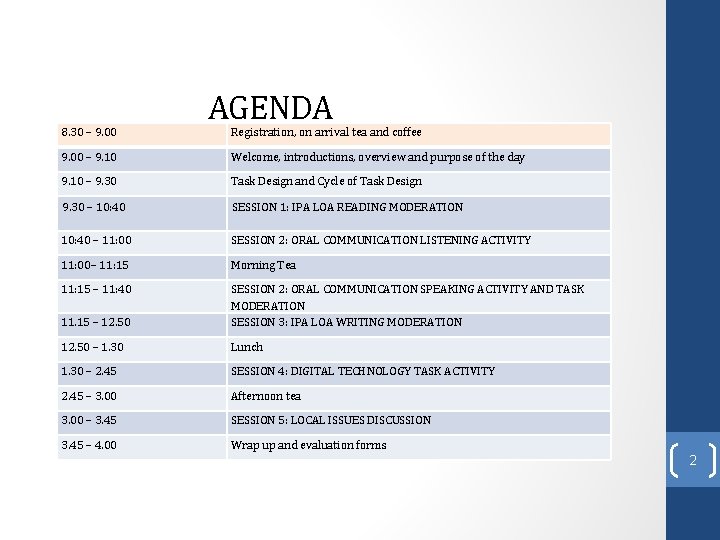
8. 30 – 9. 00 AGENDA Registration, on arrival tea and coffee 9. 00 – 9. 10 Welcome, introductions, overview and purpose of the day 9. 10 – 9. 30 Task Design and Cycle of Task Design 9. 30 – 10: 40 SESSION 1: IPA LOA READING MODERATION 10: 40 – 11: 00 SESSION 2: ORAL COMMUNICATION LISTENING ACTIVITY 11: 00– 11: 15 Morning Tea 11: 15 – 11: 40 11. 15 – 12. 50 SESSION 2: ORAL COMMUNICATION SPEAKING ACTIVITY AND TASK MODERATION SESSION 3: IPA LOA WRITING MODERATION 12. 50 – 1. 30 Lunch 1. 30 – 2. 45 SESSION 4: DIGITAL TECHNOLOGY TASK ACTIVITY 2. 45 – 3. 00 Afternoon tea 3. 00 – 3. 45 SESSION 5: LOCAL ISSUES DISCUSSION 3. 45 – 4. 00 Wrap up and evaluation forms 2
Purpose of the Day • Consistency in interpretation and application of the ACSF • Build on professional knowledge • Support teaching and assessment practices • Discuss local issues 3
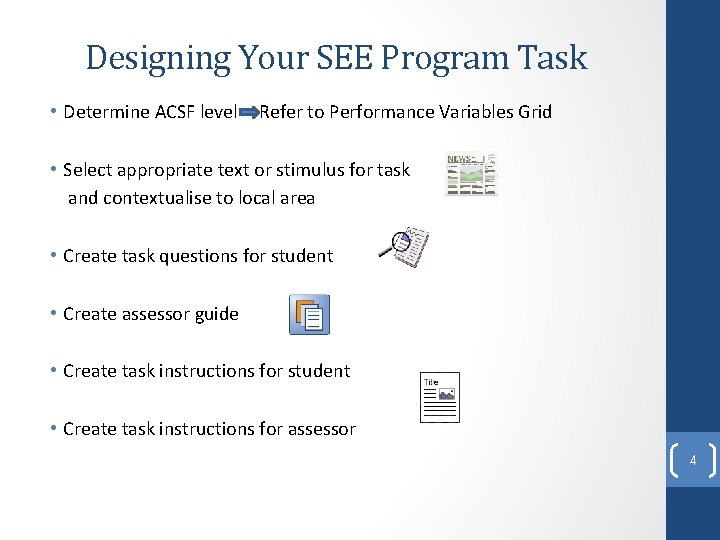
Designing Your SEE Program Task • Determine ACSF level Refer to Performance Variables Grid • Select appropriate text or stimulus for task and contextualise to local area • Create task questions for student • Create assessor guide • Create task instructions for student • Create task instructions for assessor 4
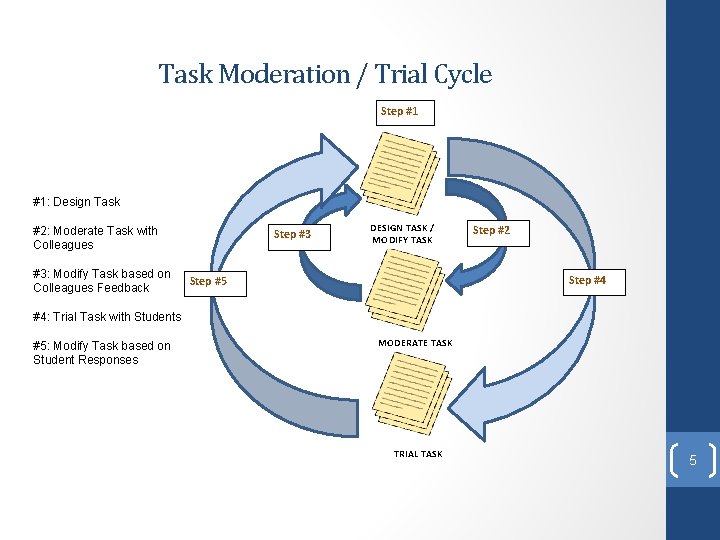
Task Moderation / Trial Cycle Step #1 #1: Design Task #2: Moderate Task with Colleagues #3: Modify Task based on Colleagues Feedback Step #3 DESIGN TASK / MODIFY TASK Step #2 Step #4 Step #5 #4: Trial Task with Students #5: Modify Task based on Student Responses MODERATE TASK TRIAL TASK 5
WHEN MODERATING TODAY: Ø Tasks and client responses stand alone Ø Align material against ACSF considering: • Indicator Descriptor • Performance Variables Grid • Performance Features • Sample Activities Ø Review all elements of Task: text, instructions, questions, answers Ø Consider client cohort targeted: EAL, ESB, ATSI 6
SESSION ONE READING MODERATION 7
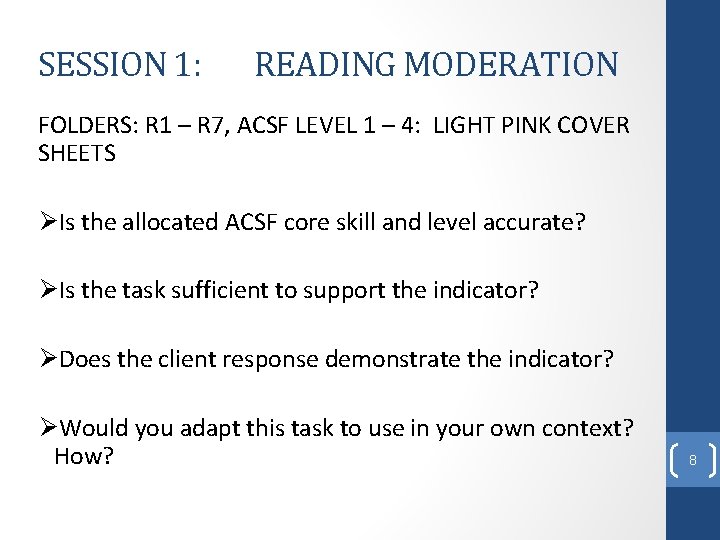
SESSION 1: READING MODERATION FOLDERS: R 1 – R 7, ACSF LEVEL 1 – 4: LIGHT PINK COVER SHEETS ØIs the allocated ACSF core skill and level accurate? ØIs the task sufficient to support the indicator? ØDoes the client response demonstrate the indicator? ØWould you adapt this task to use in your own context? How? 8
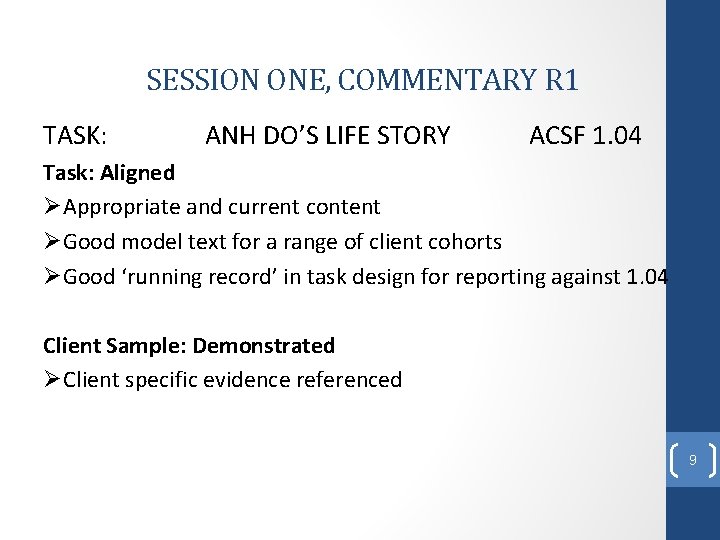
SESSION ONE, COMMENTARY R 1 TASK: ANH DO’S LIFE STORY ACSF 1. 04 Task: Aligned ØAppropriate and current content ØGood model text for a range of client cohorts ØGood ‘running record’ in task design for reporting against 1. 04 Client Sample: Demonstrated Ø Client specific evidence referenced 9
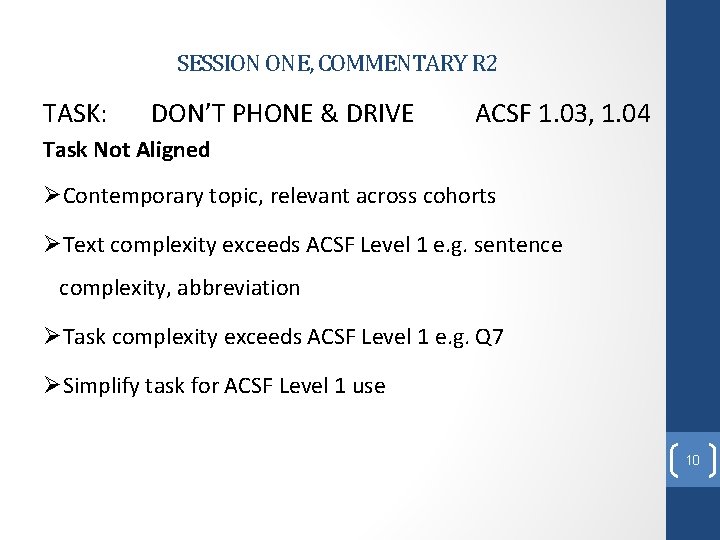
SESSION ONE, COMMENTARY R 2 TASK: DON’T PHONE & DRIVE ACSF 1. 03, 1. 04 Task Not Aligned ØContemporary topic, relevant across cohorts ØText complexity exceeds ACSF Level 1 e. g. sentence complexity, abbreviation ØTask complexity exceeds ACSF Level 1 e. g. Q 7 ØSimplify task for ACSF Level 1 use 10
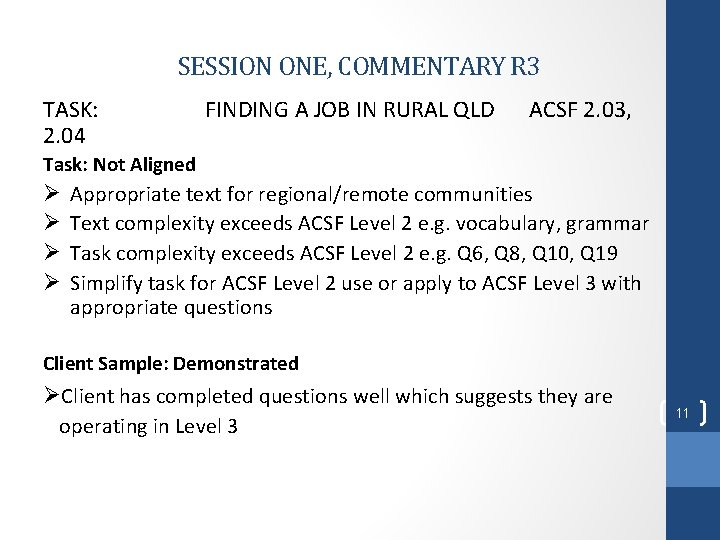
SESSION ONE, COMMENTARY R 3 TASK: 2. 04 FINDING A JOB IN RURAL QLD ACSF 2. 03, Task: Not Aligned Ø Ø Appropriate text for regional/remote communities Text complexity exceeds ACSF Level 2 e. g. vocabulary, grammar Task complexity exceeds ACSF Level 2 e. g. Q 6, Q 8, Q 10, Q 19 Simplify task for ACSF Level 2 use or apply to ACSF Level 3 with appropriate questions Client Sample: Demonstrated ØClient has completed questions well which suggests they are operating in Level 3 11
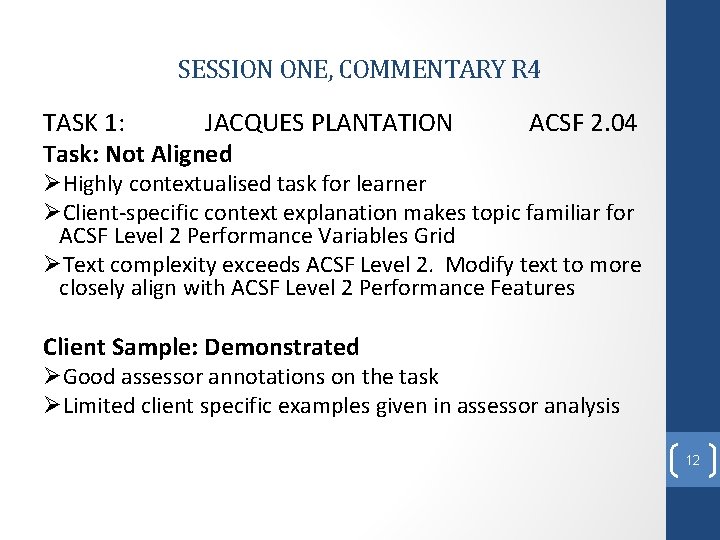
SESSION ONE, COMMENTARY R 4 TASK 1: JACQUES PLANTATION Task: Not Aligned ACSF 2. 04 ØHighly contextualised task for learner ØClient-specific context explanation makes topic familiar for ACSF Level 2 Performance Variables Grid ØText complexity exceeds ACSF Level 2. Modify text to more closely align with ACSF Level 2 Performance Features Client Sample: Demonstrated ØGood assessor annotations on the task ØLimited client specific examples given in assessor analysis 12
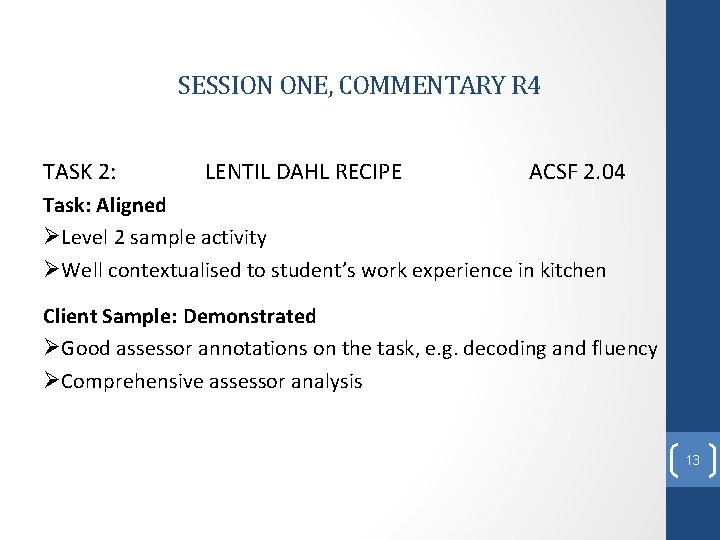
SESSION ONE, COMMENTARY R 4 TASK 2: LENTIL DAHL RECIPE ACSF 2. 04 Task: Aligned ØLevel 2 sample activity ØWell contextualised to student’s work experience in kitchen Client Sample: Demonstrated ØGood assessor annotations on the task, e. g. decoding and fluency ØComprehensive assessor analysis 13
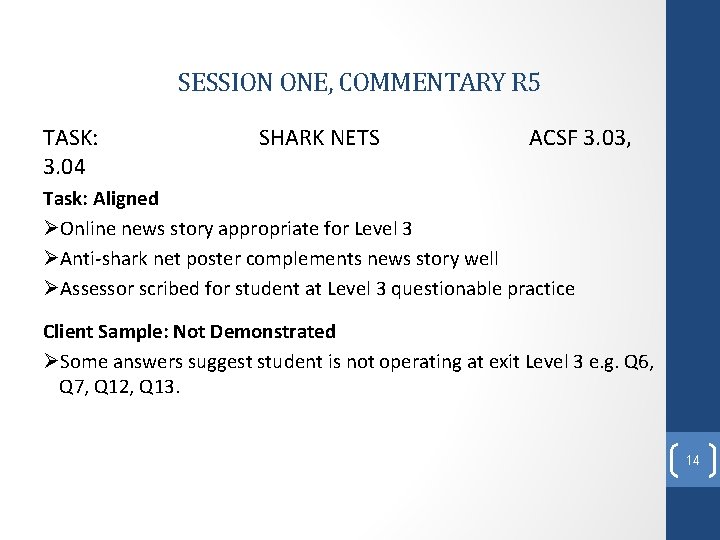
SESSION ONE, COMMENTARY R 5 TASK: 3. 04 SHARK NETS ACSF 3. 03, Task: Aligned ØOnline news story appropriate for Level 3 ØAnti-shark net poster complements news story well ØAssessor scribed for student at Level 3 questionable practice Client Sample: Not Demonstrated ØSome answers suggest student is not operating at exit Level 3 e. g. Q 6, Q 7, Q 12, Q 13. 14
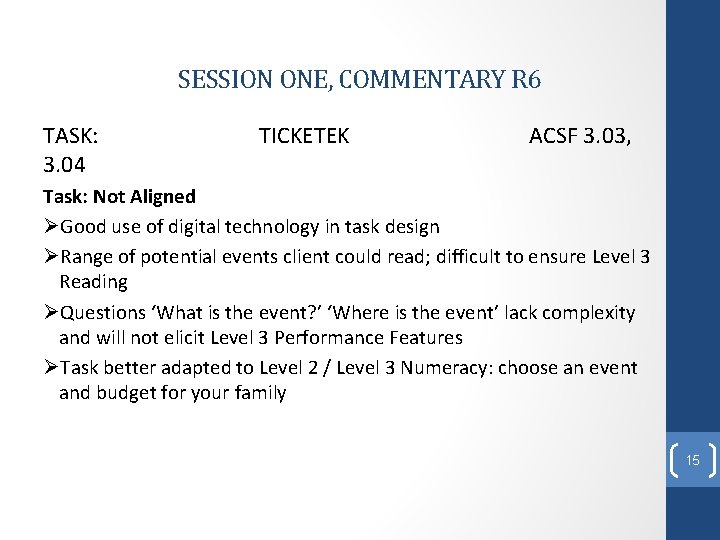
SESSION ONE, COMMENTARY R 6 TASK: 3. 04 TICKETEK ACSF 3. 03, Task: Not Aligned ØGood use of digital technology in task design ØRange of potential events client could read; difficult to ensure Level 3 Reading ØQuestions ‘What is the event? ’ ‘Where is the event’ lack complexity and will not elicit Level 3 Performance Features ØTask better adapted to Level 2 / Level 3 Numeracy: choose an event and budget for your family 15
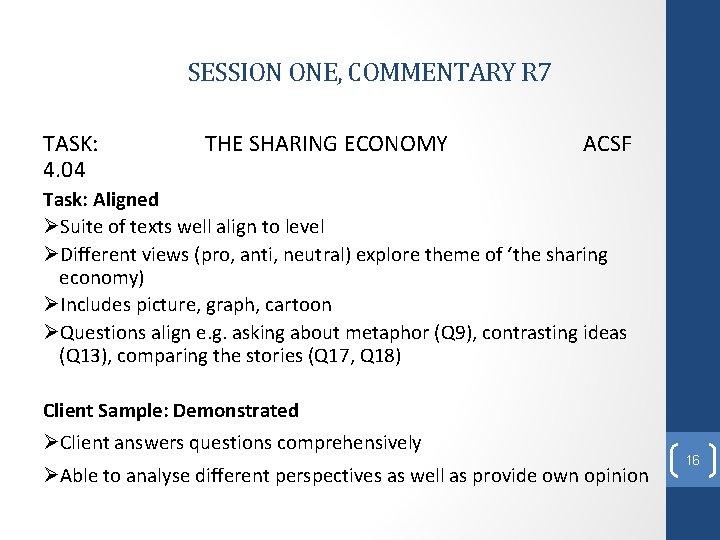
SESSION ONE, COMMENTARY R 7 TASK: 4. 04 THE SHARING ECONOMY ACSF Task: Aligned ØSuite of texts well align to level ØDifferent views (pro, anti, neutral) explore theme of ‘the sharing economy) ØIncludes picture, graph, cartoon ØQuestions align e. g. asking about metaphor (Q 9), contrasting ideas (Q 13), comparing the stories (Q 17, Q 18) Client Sample: Demonstrated ØClient answers questions comprehensively ØAble to analyse different perspectives as well as provide own opinion 16
SESSION TWO ORAL COMMUNICATION LISTENING ACTIVITY AND TASK MODERATION 17
TASK: Home Fire Safety Listen to the audio and answer: ØWhat ACSF Level is the listening? Note examples to support your answer. Video 18
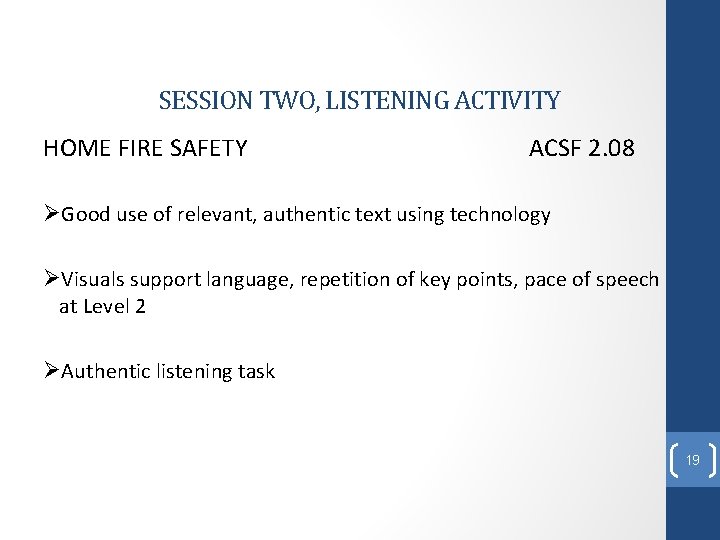
SESSION TWO, LISTENING ACTIVITY HOME FIRE SAFETY ACSF 2. 08 ØGood use of relevant, authentic text using technology ØVisuals support language, repetition of key points, pace of speech at Level 2 ØAuthentic listening task 19
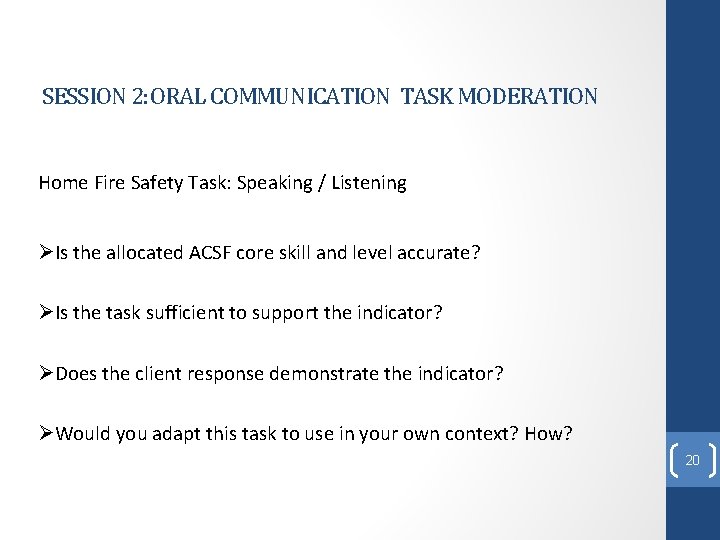
SESSION 2: ORAL COMMUNICATION TASK MODERATION Home Fire Safety Task: Speaking / Listening ØIs the allocated ACSF core skill and level accurate? ØIs the task sufficient to support the indicator? ØDoes the client response demonstrate the indicator? ØWould you adapt this task to use in your own context? How? 20
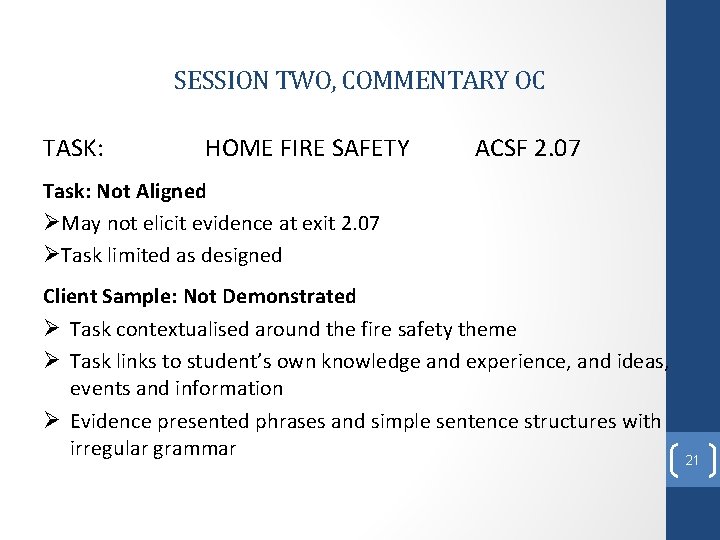
SESSION TWO, COMMENTARY OC TASK: HOME FIRE SAFETY ACSF 2. 07 Task: Not Aligned ØMay not elicit evidence at exit 2. 07 ØTask limited as designed Client Sample: Not Demonstrated Ø Task contextualised around the fire safety theme Ø Task links to student’s own knowledge and experience, and ideas, events and information Ø Evidence presented phrases and simple sentence structures with irregular grammar 21
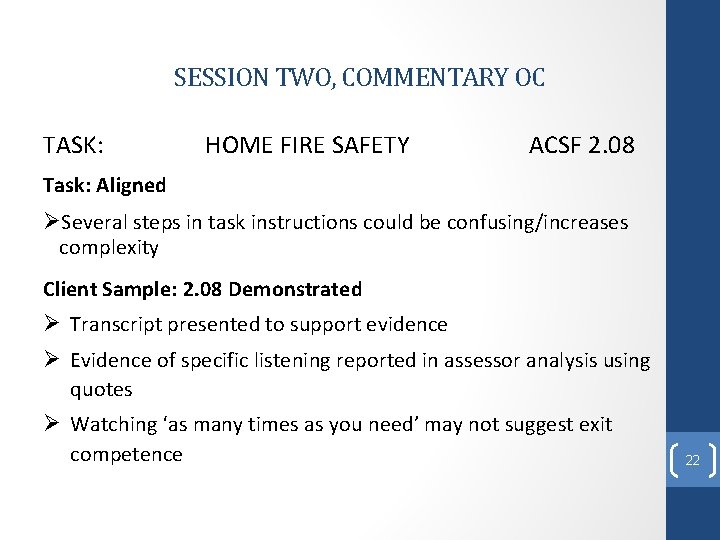
SESSION TWO, COMMENTARY OC TASK: HOME FIRE SAFETY ACSF 2. 08 Task: Aligned ØSeveral steps in task instructions could be confusing/increases complexity Client Sample: 2. 08 Demonstrated Ø Transcript presented to support evidence Ø Evidence of specific listening reported in assessor analysis using quotes Ø Watching ‘as many times as you need’ may not suggest exit competence 22
SESSION TWO ORAL COMMUNICATION SPEAKING ACTIVITY 23
TASK: Visiting the Doctor Listen to the audio and answer: ØWhat ACSF level is the speaking? Note examples to support your answer. Audio 24
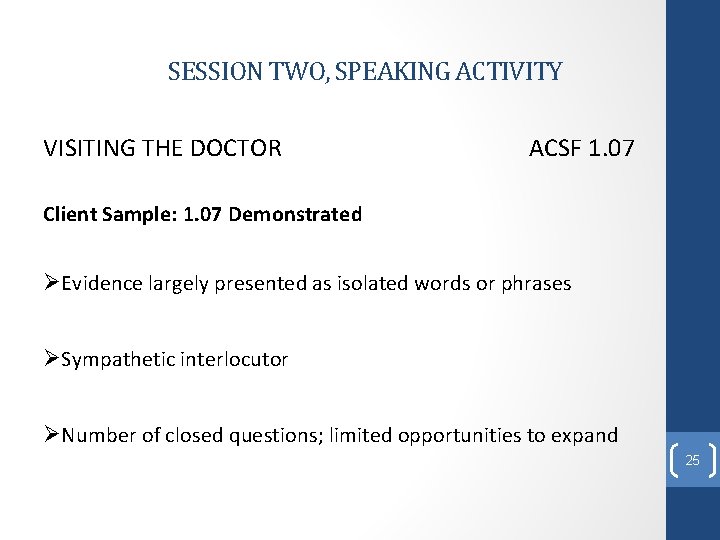
SESSION TWO, SPEAKING ACTIVITY VISITING THE DOCTOR ACSF 1. 07 Client Sample: 1. 07 Demonstrated ØEvidence largely presented as isolated words or phrases ØSympathetic interlocutor ØNumber of closed questions; limited opportunities to expand 25
SESSION 2: ORAL COMMUNICATION TASK MODERATION Visiting The Doctor: Listening ØIs the allocated ACSF core skill and level accurate? ØIs the task sufficient to support the indicator? ØDoes the client response demonstrate the indicator? ØWould you adapt this task to use in your own context? How? 26
SESSION TWO, COMMENTARY OC TASK: VISITING THE DOCTOR ACSF 2. 08 Task: Aligned ØClear task instructions ØContext given but could be strengthened with classroom activities ØComplexity of scenario is Level 2 ØAble to respond to statement of 1 or more clauses ØUnderstands vocabulary related to most aspects of everyday life ØUnderstood non-verbal communication e. g. intonation 27
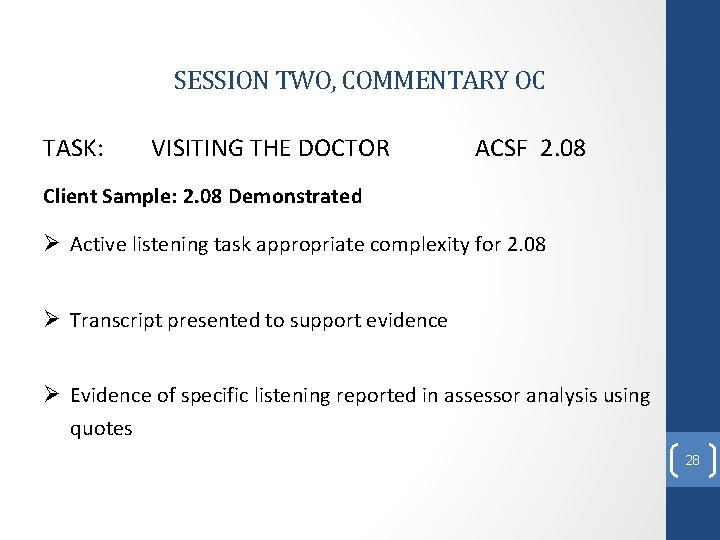
SESSION TWO, COMMENTARY OC TASK: VISITING THE DOCTOR ACSF 2. 08 Client Sample: 2. 08 Demonstrated Ø Active listening task appropriate complexity for 2. 08 Ø Transcript presented to support evidence Ø Evidence of specific listening reported in assessor analysis using quotes 28
SESSION THREE WRITING MODERATION 29
SESSION 3: WRITING MODERATION FOLDERS: W 1 – W 6, ACSF LEVEL 1 – 3: LIGHT BLUE COVER SHEETS ØIs the allocated ACSF core skill and level accurate? ØIs the task sufficient to support the indicator? ØDoes the client response demonstrate the indicator? ØWould you adapt this task to use in your own context? How? 30
SESSION THREE, COMMENTARY W 1 TASK 1: YOUR DETAILS ACSF 1. 05 Task 1: Aligned ØDifferent types of forms demonstrated Client Sample: Demonstrated ØDemonstration of filling different forms exit competence 31
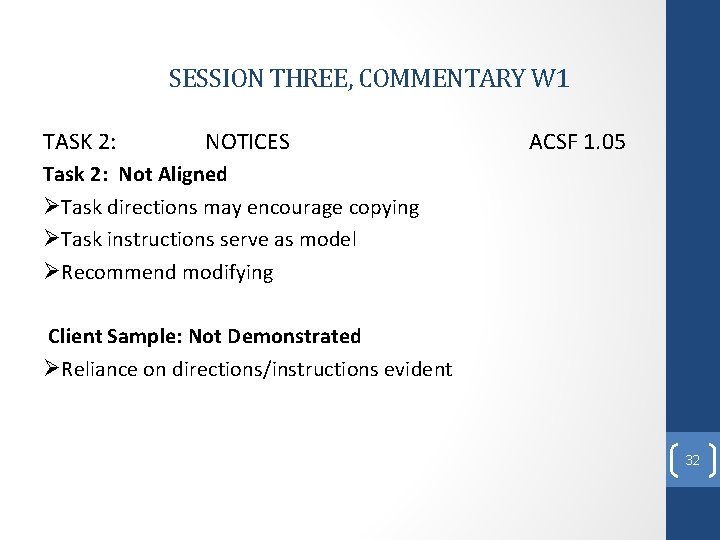
SESSION THREE, COMMENTARY W 1 TASK 2: NOTICES ACSF 1. 05 Task 2: Not Aligned ØTask directions may encourage copying ØTask instructions serve as model ØRecommend modifying Client Sample: Not Demonstrated ØReliance on directions/instructions evident 32
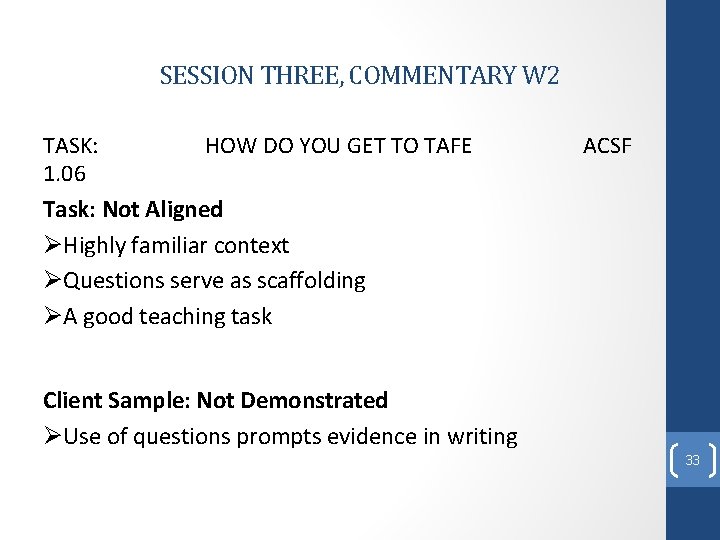
SESSION THREE, COMMENTARY W 2 TASK: HOW DO YOU GET TO TAFE 1. 06 Task: Not Aligned ØHighly familiar context ØQuestions serve as scaffolding ØA good teaching task ACSF Client Sample: Not Demonstrated ØUse of questions prompts evidence in writing 33
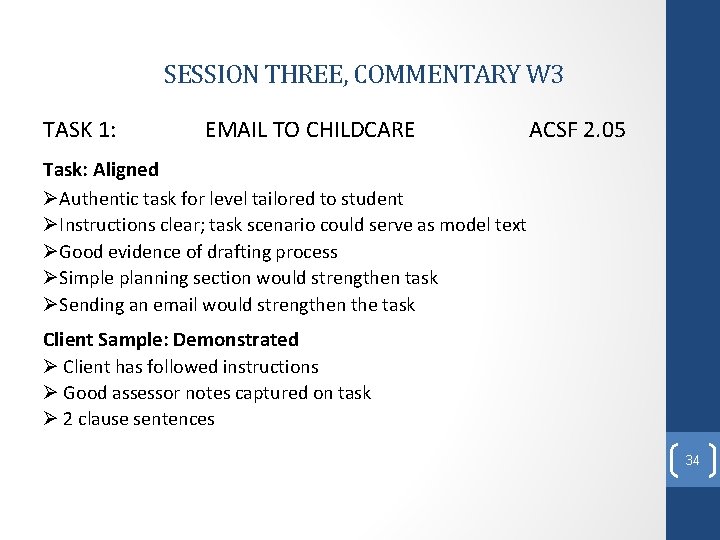
SESSION THREE, COMMENTARY W 3 TASK 1: EMAIL TO CHILDCARE ACSF 2. 05 Task: Aligned ØAuthentic task for level tailored to student ØInstructions clear; task scenario could serve as model text ØGood evidence of drafting process ØSimple planning section would strengthen task ØSending an email would strengthen the task Client Sample: Demonstrated Ø Client has followed instructions Ø Good assessor notes captured on task Ø 2 clause sentences 34
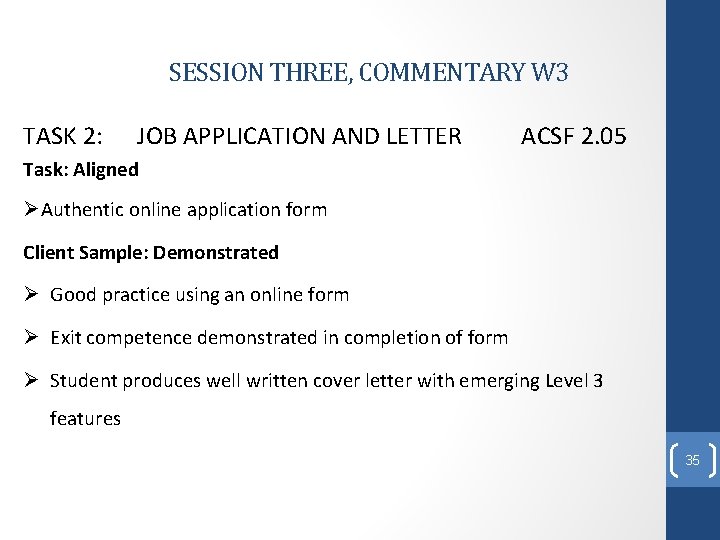
SESSION THREE, COMMENTARY W 3 TASK 2: JOB APPLICATION AND LETTER ACSF 2. 05 Task: Aligned ØAuthentic online application form Client Sample: Demonstrated Ø Good practice using an online form Ø Exit competence demonstrated in completion of form Ø Student produces well written cover letter with emerging Level 3 features 35
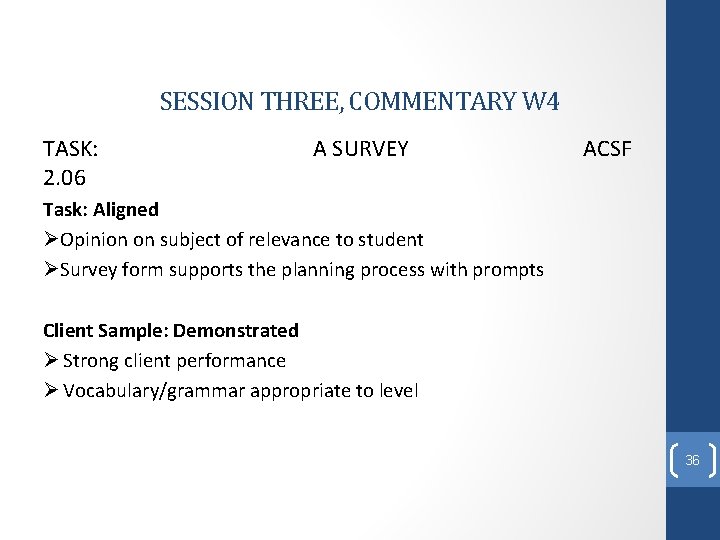
SESSION THREE, COMMENTARY W 4 TASK: 2. 06 A SURVEY ACSF Task: Aligned ØOpinion on subject of relevance to student ØSurvey form supports the planning process with prompts Client Sample: Demonstrated Ø Strong client performance Ø Vocabulary/grammar appropriate to level 36
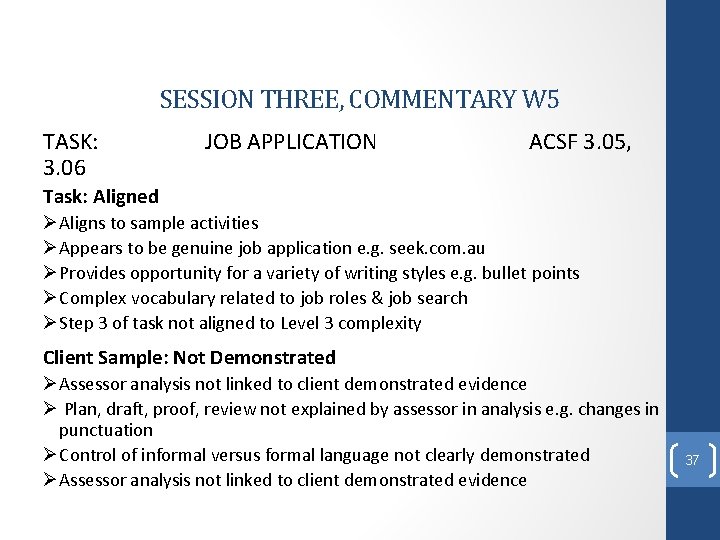
SESSION THREE, COMMENTARY W 5 TASK: 3. 06 JOB APPLICATION ACSF 3. 05, Task: Aligned Ø Aligns to sample activities Ø Appears to be genuine job application e. g. seek. com. au Ø Provides opportunity for a variety of writing styles e. g. bullet points Ø Complex vocabulary related to job roles & job search Ø Step 3 of task not aligned to Level 3 complexity Client Sample: Not Demonstrated Ø Assessor analysis not linked to client demonstrated evidence Ø Plan, draft, proof, review not explained by assessor in analysis e. g. changes in punctuation Ø Control of informal versus formal language not clearly demonstrated Ø Assessor analysis not linked to client demonstrated evidence 37
SESSION THREE, COMMENTARY W 6 TASK 1: RESUME WRITING ACSF 3. 05, 3. 06 Task: Aligned ØLevel 3 sample activity ØInstructions are clear and appropriate for ACSF Level 3 Performance Variables Grid e. g. independently sourced models for resume ØDrafting process well-supported in task design Client Sample: Demonstrated Ø Student has completed their resume appropriately Ø Client-specific detailed assessor analysis Ø Appropriate correction code for the ACSF level 38
SESSION THREE, COMMENTARY W 6 TASK 2: LETTER OF COMPLAINT ACSF 3. 05, 3. 06 Task: Aligned ØTask design appropriate to elicit 3. 05 performance features. ØTask design allows for demonstration of some specialised vocabulary and complex sentences Client Sample: Demonstrated Ø Use of correction code appropriate for Level 3 evident Ø Good recognition of audience and purpose e. g. word choice Ø Appropriate level of formality e. g. formal letter layout, vocabulary 39
SESSION FOUR DIGITAL TECHNOLOGY RESOURCE AND TASK ACTIVITY 40
Digital Technology Resource PURPOSE • To build and strengthen on existing teachers’ / assessors’ skills and knowledge in use of digital technology • Inspire teachers and assessors with new ideas • Increase use of digital technology in teaching and assessment • To engage students in digital technology beyond the personal and social domain Types of Technology • Smart Phones • Tablets • Personal Computer/Laptops 41
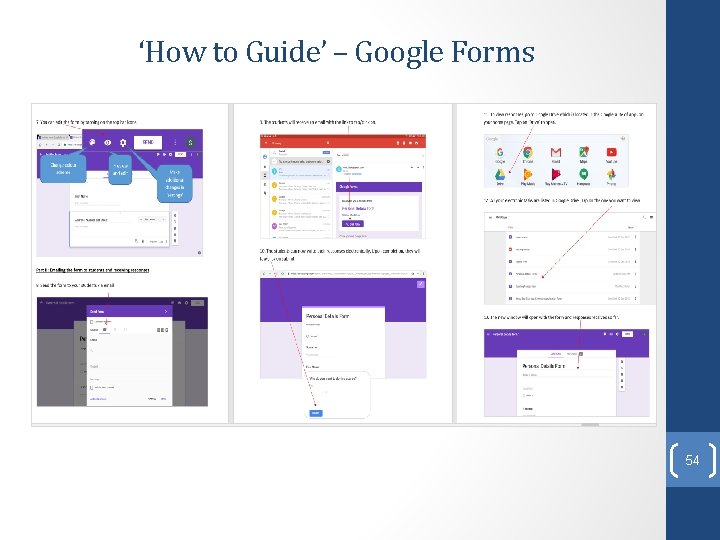
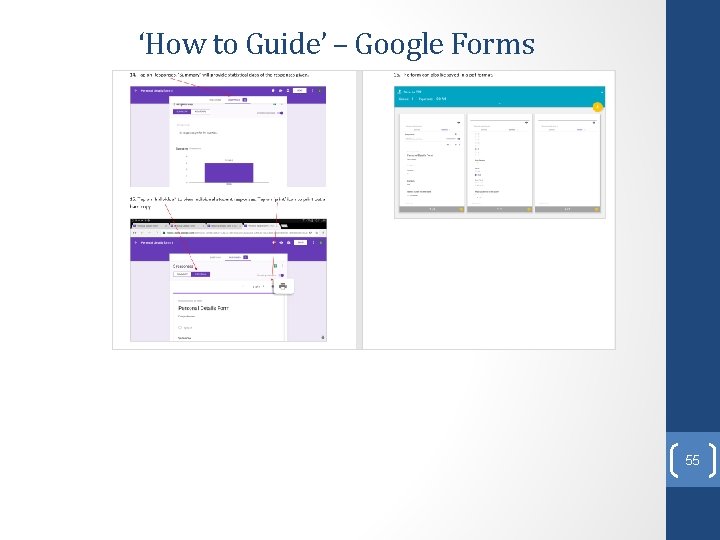
DIGITAL TECHNOLOGY RESOURCE Total of 19 ‘How To Guides’ • ‘How To Guide’ is a PD tool for teachers/assessors • Four Basics to Get You Started: the underpinning skills • 15 ‘How To Guides’ demonstrating range of applications • A Glossary of Terms 10 ACSF Aligned Assessment Tasks • Showing application of 10 ‘How To Guides’ in ACSF aligned assessment tasks NB: Digital Technology is a fluid environment; please view Resource in this context 42
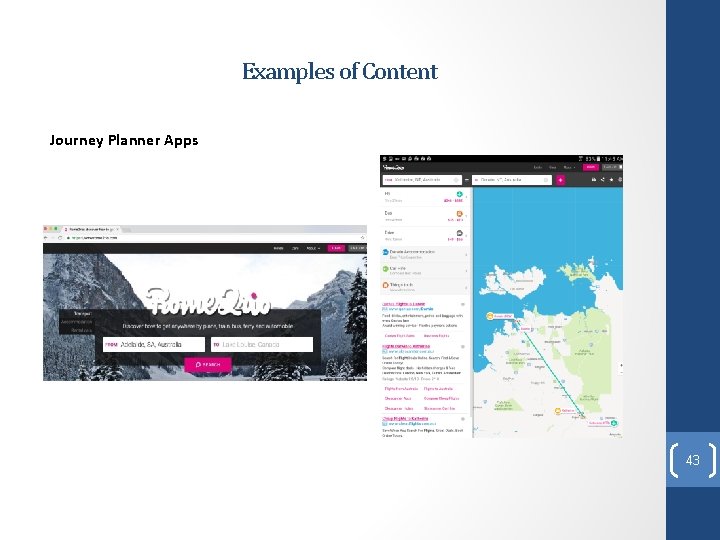
Examples of Content Journey Planner Apps 43
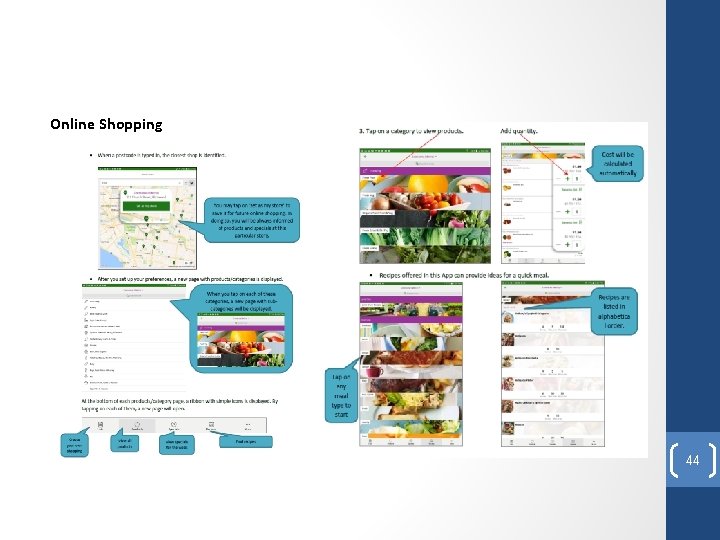
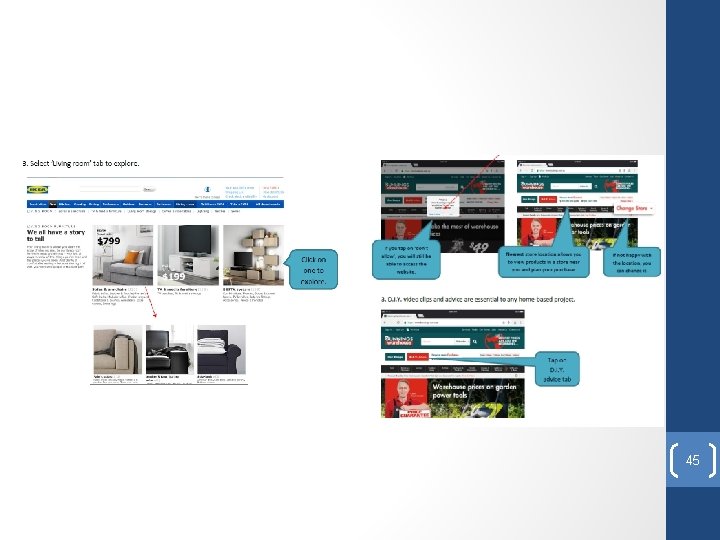
Online Shopping 44
45
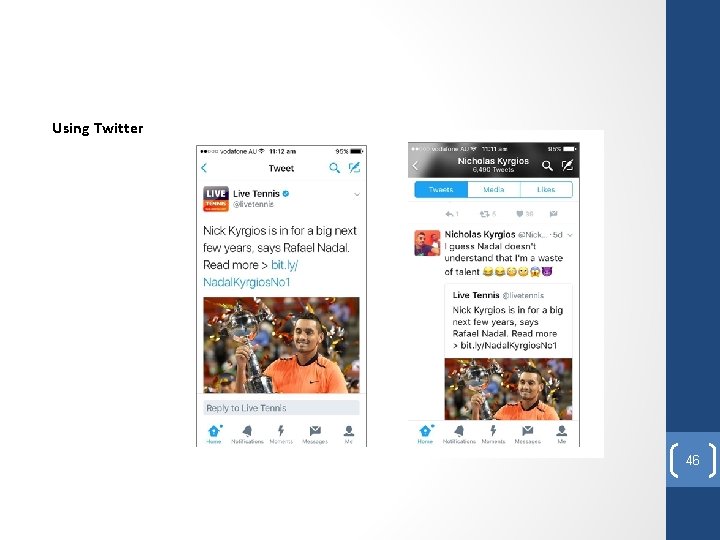
Using Twitter 46
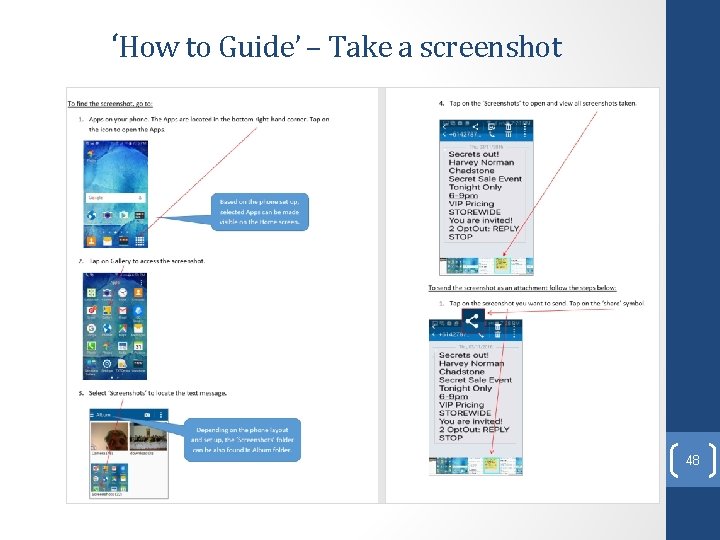
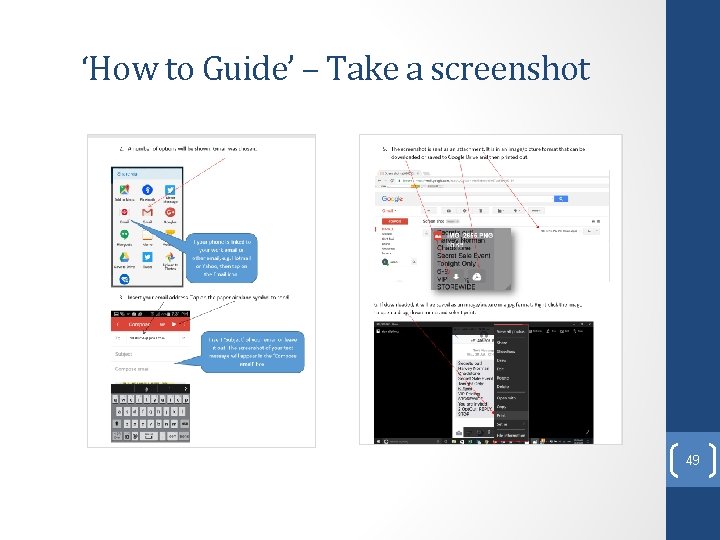
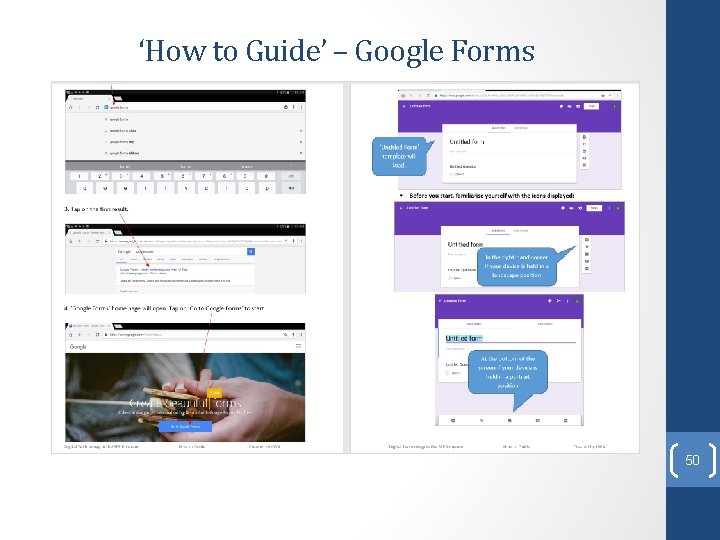
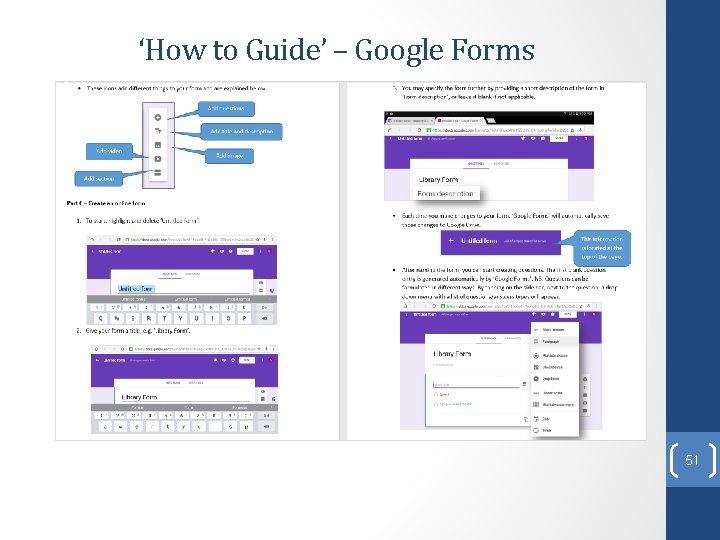
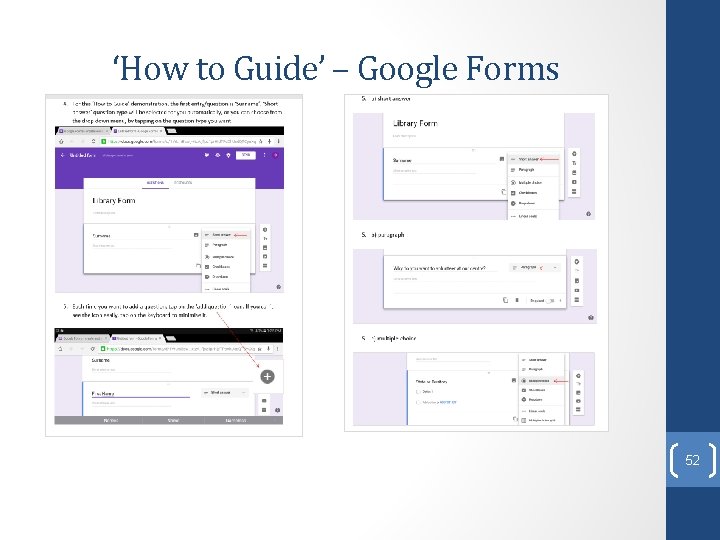
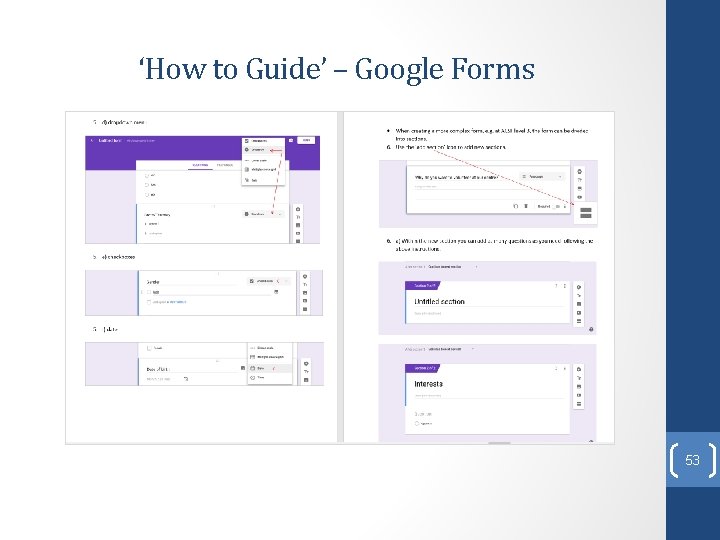
Digital Technology Task Activity A: Write and Screenshot a text message OR Activity B: Use Google Forms to create an online writing assessment task • ACSF Level 1 : Library Application Form • ACSF Level 2 : Wood End Community Centre Application Form • ACSF Level 3 : Time Off Request 47
‘How to Guide’ – Take a screenshot 48
‘How to Guide’ – Take a screenshot 49
‘How to Guide’ – Google Forms 50
‘How to Guide’ – Google Forms 51
‘How to Guide’ – Google Forms 52
‘How to Guide’ – Google Forms 53
‘How to Guide’ – Google Forms 54
‘How to Guide’ – Google Forms 55
Handouts • Laminated set of ‘How To Guide’ to familiarise yourself • An LWA tablet • Activity A: Written task for you to follow • Activity B: Three written tasks for you to follow. Select according to your level of confidence. 56
Digital Access • Please log-on to Wi-Fi. Log-on instructions will be given. • If using the LWA tablet, you are already logged in with a Gmail account. • If using your own tablet/ipad or laptop, please use your own personal/work email. 57
SESSION FIVE LOCAL ISSUES DISCUSSION 58
PLEASE FILL IN YOUR EVALUATION FORM Contact us: T: 03 9429 7551 F: 03 9429 7221 Office admin: juliana@lwa. net. au www. lwa. net. au SEE admin: see@lwa. net. au Verification: Directors and verifiers: fiona@lwa. net. au mary@lwa. net. au Verifiers: suzana@lwa. net. au julie@lwa. net. au sandya@lwa. net. au dina@lwa. net. au prue@lwa. net. au charlie@lwa. net. au anna@lwa. net. au 59