
Lecture Outlines Power Point Chapter 9 Earth Science


- Slides: 49
Lecture Outlines Power. Point Chapter 9 Earth Science 11 e Tarbuck/Lutgens © 2006 Pearson Prentice Hall
Earth Science, 11 e Volcanoes and Other Igneous Activity Chapter 9
Volcanic eruptions Section 9. 1 v Factors that determine the violence of an eruption • Composition of the magma • Temperature of the magma • Dissolved gases in the magma v Viscosity of magma • Viscosity is a measure of a material's resistance to flow
Volcanic eruptions v Viscosity of magma • Factors affecting viscosity �Temperature (hotter magmas are less viscous) �Composition (silica content) • High silica – high viscosity (e. g. , rhyolitic lava) • Low silica – more fluid (e. g. , basaltic lava) �Dissolved gases (volatiles) • Mainly water vapor and carbon dioxide • Gases expand near the surface
Volcanic eruptions v Viscosity of magma • Factors affecting viscosity �Dissolved gases (volatiles) • Provide the force to extrude lava • Violence of an eruption is related to how easily gases escape from magma • Easy escape from fluid magma • Viscous magma produces a more violent eruption
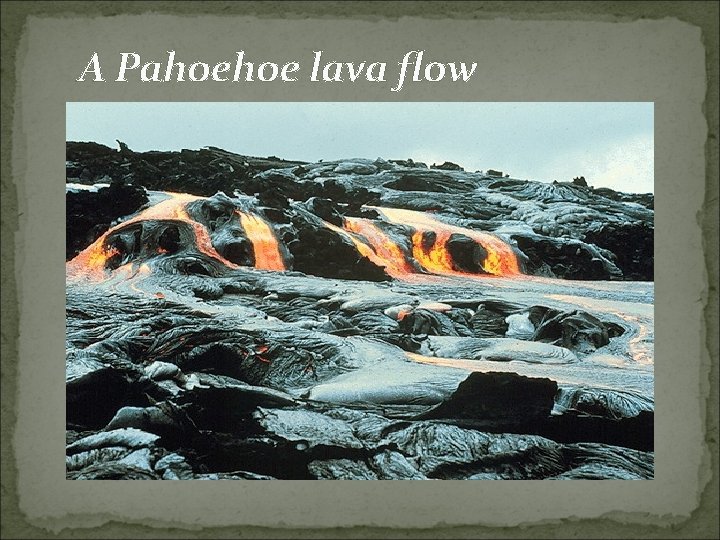
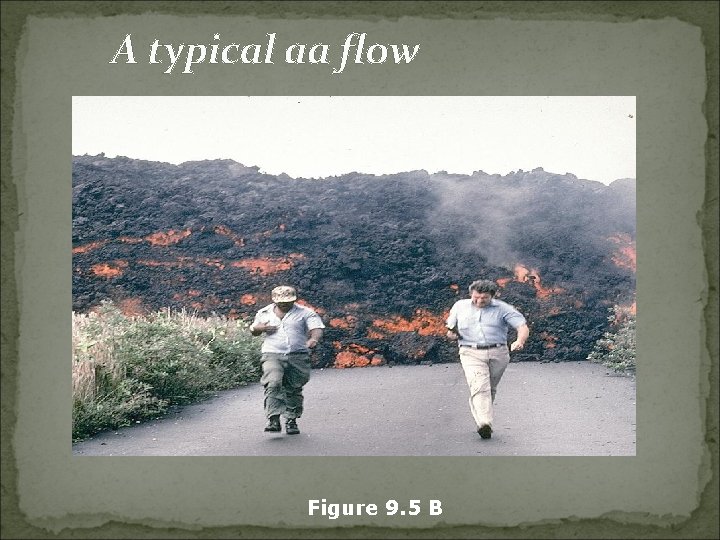
Materials associated with volcanic eruptions v Lava flows • Basaltic lavas are more fluid • Types of lava �Pahoehoe lava (resembles braids in ropes) �Aa lava (rough, jagged blocks) v Gases • One to five percent of magma by weight • Mainly water vapor and carbon dioxide
A Pahoehoe lava flow
A typical aa flow Figure 9. 5 B
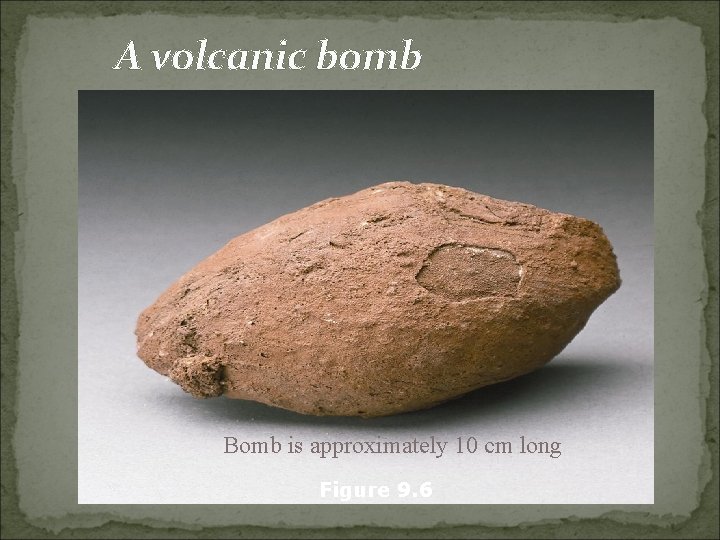
Materials associated with volcanic eruptions v Pyroclastic materials • "Fire fragments" • Types of pyroclastic material �Ash and dust – fine, glassy fragments �Pumice – from "frothy" lava �Lapilli – "walnut" size �Cinders – "pea-sized" �Particles larger than lapilli • Blocks – hardened lava • Bombs – ejected as hot lava
A volcanic bomb Bomb is approximately 10 cm long Figure 9. 6
Section Break
Volcanoes Section 9. 2 v General features • Conduit, or pipe carries gas-rich magma to the surface • Vent, the surface opening (connected to the magma chamber via a pipe) • Crater �Steep-walled depression at the summit �Caldera (a summit depression greater than 1 km diameter)
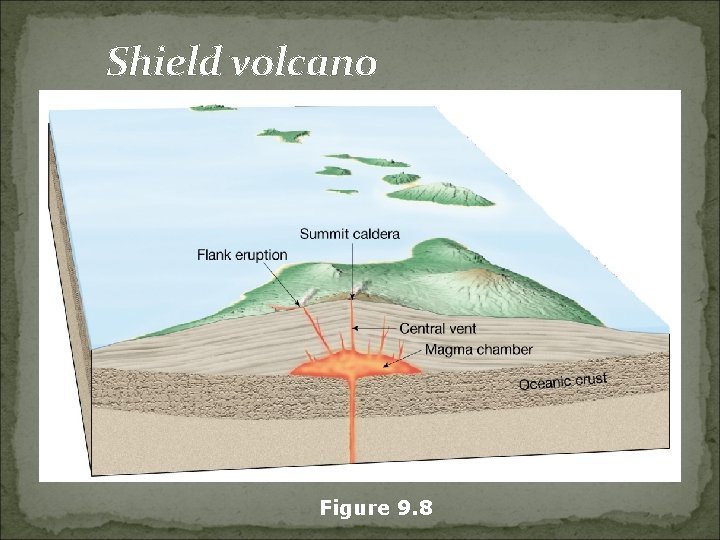
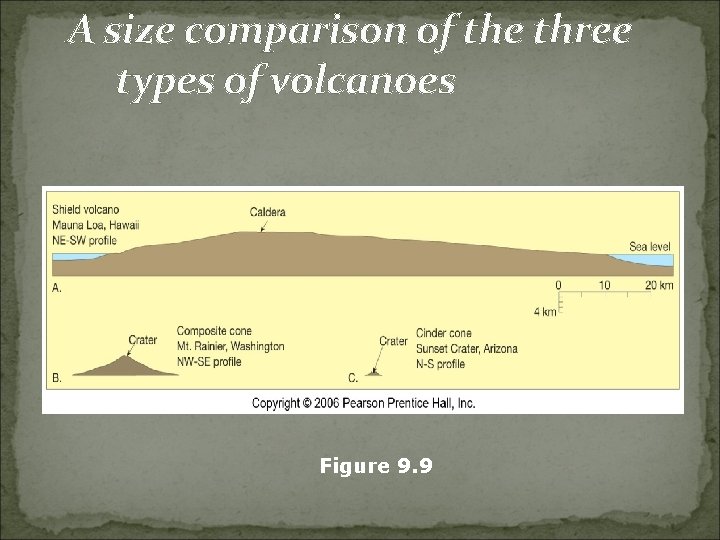
Volcanoes v General features • Parasitic cones • Fumaroles v Types of volcanoes • Shield volcano �Broad, slightly domed �Primarily made of basaltic (fluid) lava �Generally large size �e. g. , Mauna Loa in Hawaii
Shield volcano Figure 9. 8
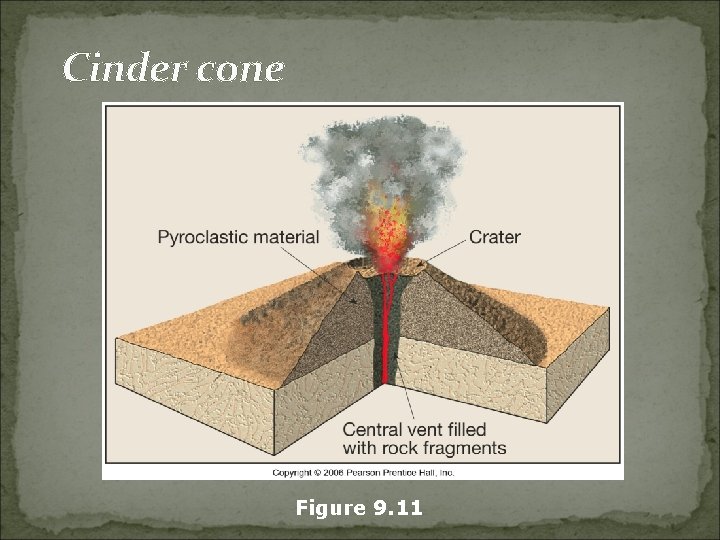
Volcanoes v Types of volcanoes • Cinder cone �Built from ejected lava fragments �Steep slope angle �Rather small size �Frequently occur in groups
Cinder cone Figure 9. 11
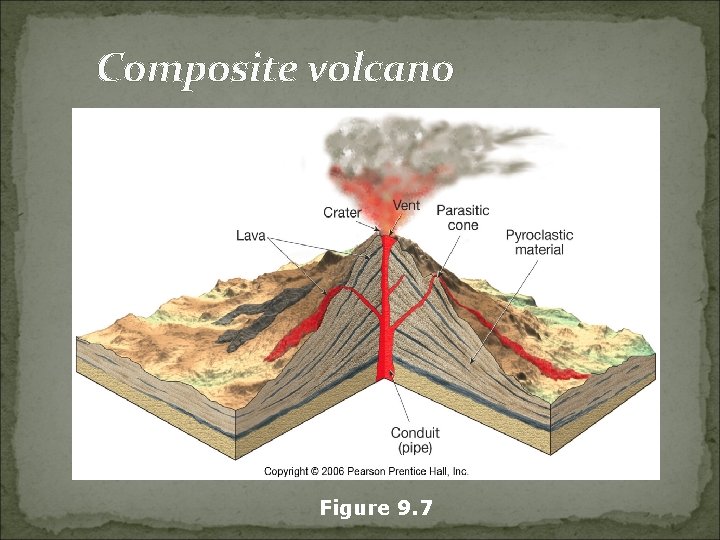
Volcanoes v Types of volcanoes • Composite cone (or stratovolcano) �Most are adjacent to the Pacific Ocean (e. g. , Mt. Rainier) �Large size �Interbedded lavas and pyroclastics �Most violent type of activity
Composite volcano Figure 9. 7
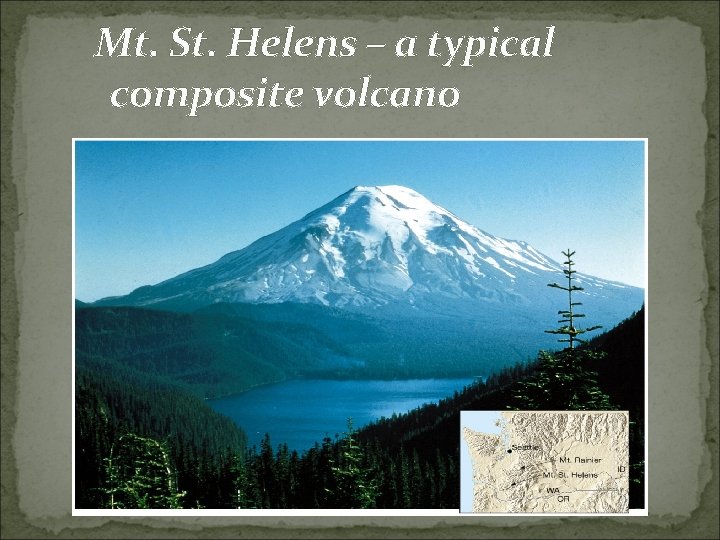
Mt. St. Helens – a typical composite volcano
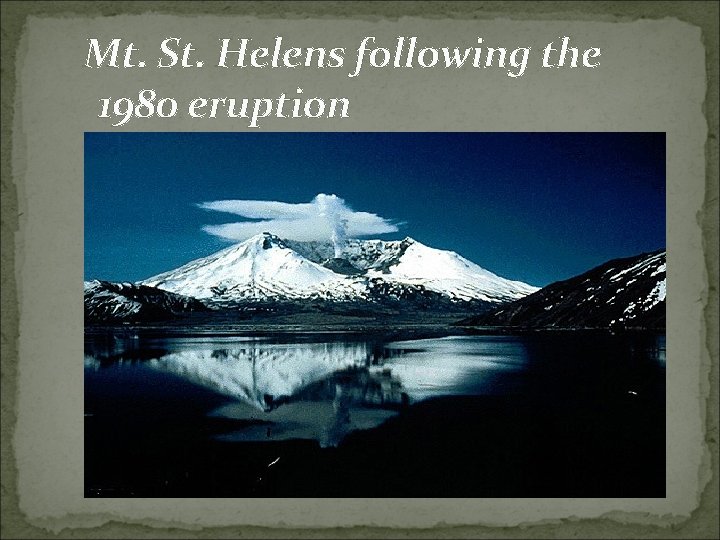
Mt. St. Helens following the 1980 eruption
A size comparison of the three types of volcanoes Figure 9. 9
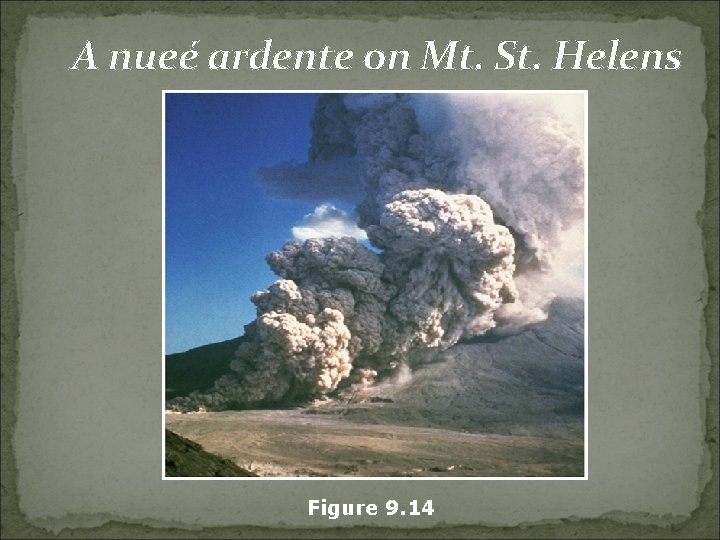
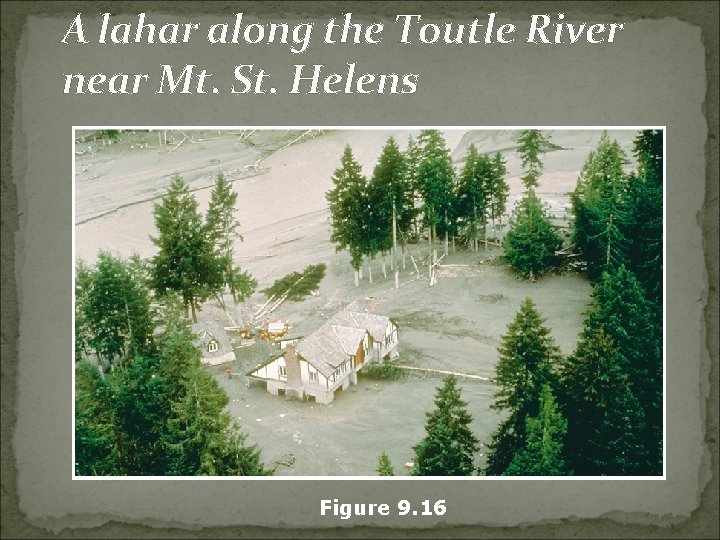
Volcanoes v Types of volcanoes • Composite cone (or stratovolcano) �Often produce nuée ardente • Fiery pyroclastic flow made of hot gases infused with ash • Flows down sides of a volcano at speeds up to 200 km (125 miles) per hour �May produce a lahar - volcanic mudflow
A nueé ardente on Mt. St. Helens Figure 9. 14
A lahar along the Toutle River near Mt. St. Helens Figure 9. 16
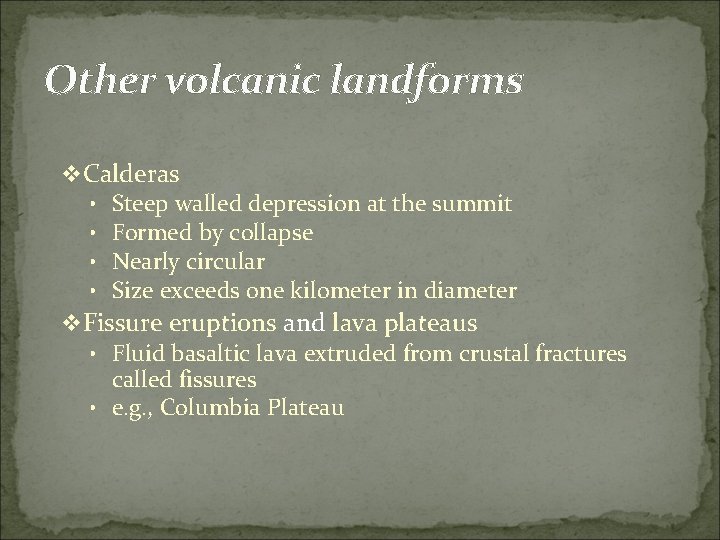
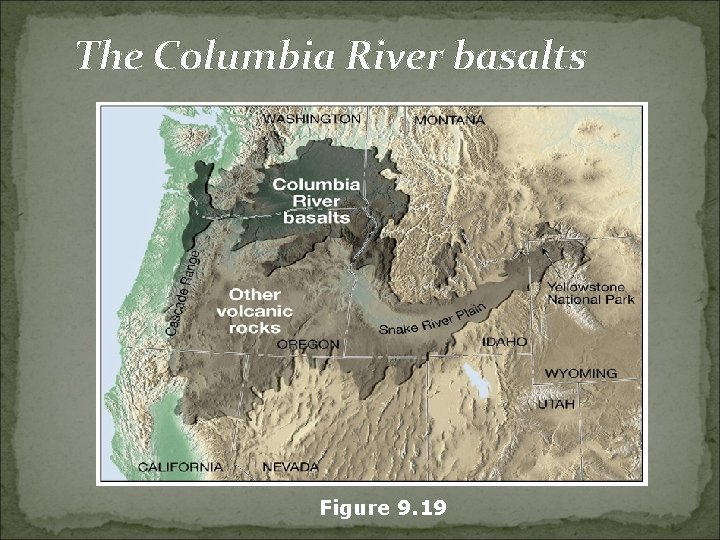
Other volcanic landforms v Calderas • • Steep walled depression at the summit Formed by collapse Nearly circular Size exceeds one kilometer in diameter v Fissure eruptions and lava plateaus • Fluid basaltic lava extruded from crustal fractures called fissures • e. g. , Columbia Plateau
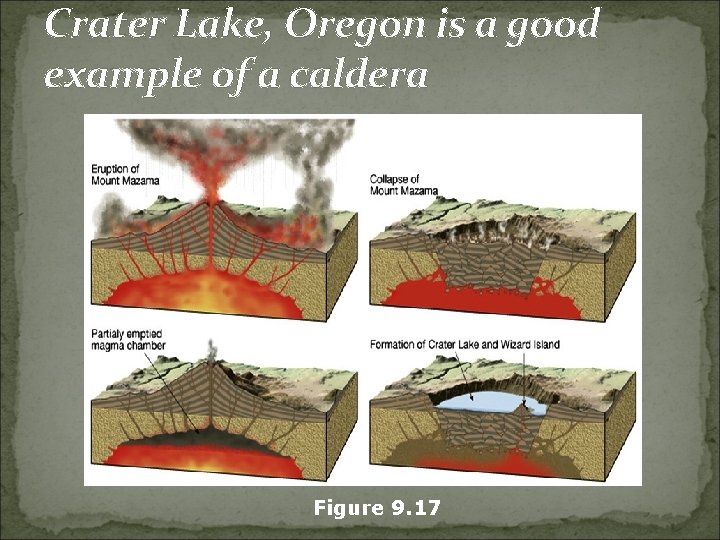
Crater Lake, Oregon is a good example of a caldera Figure 9. 17
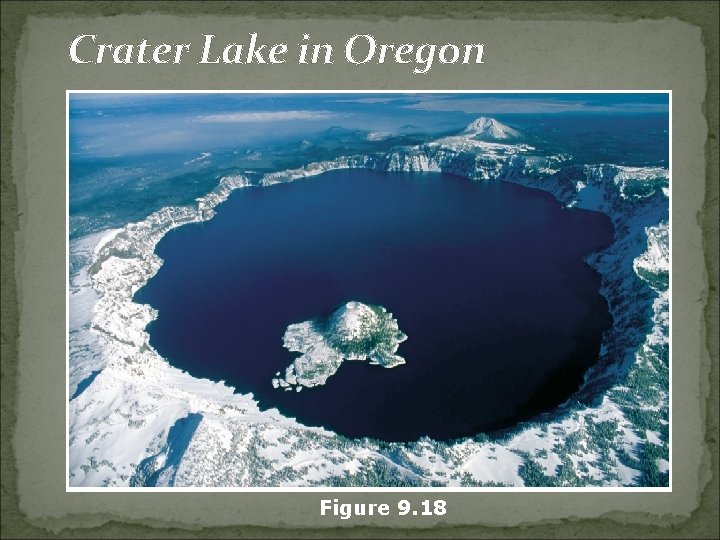
Crater Lake in Oregon Figure 9. 18
The Columbia River basalts Figure 9. 19
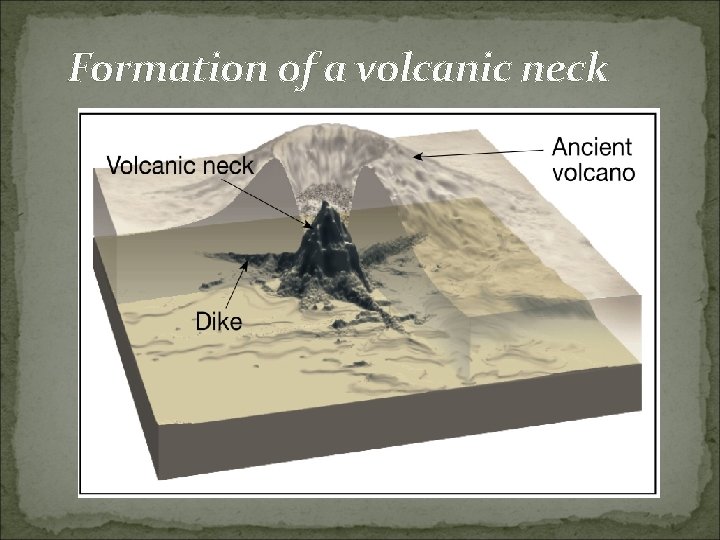
Other volcanic landforms v Volcanic pipes and necks • Pipes are short conduits that connect a magma chamber to the surface • Volcanic necks (e. g. , Ship Rock, New Mexico) are resistant vents left standing after erosion has removed the volcanic cone
Formation of a volcanic neck
Intrusive igneous activity v Most magma is emplaced at depth v An underground igneous body is called a pluton v Plutons are classified according to • Shape �Tabular (sheetlike) �Massive
Intrusive igneous activity v Plutons are classified according to • Orientation with respect to the host (surrounding) rock �Discordant – cuts across existing structures �Concordant – parallel to features such as sedimentary strata
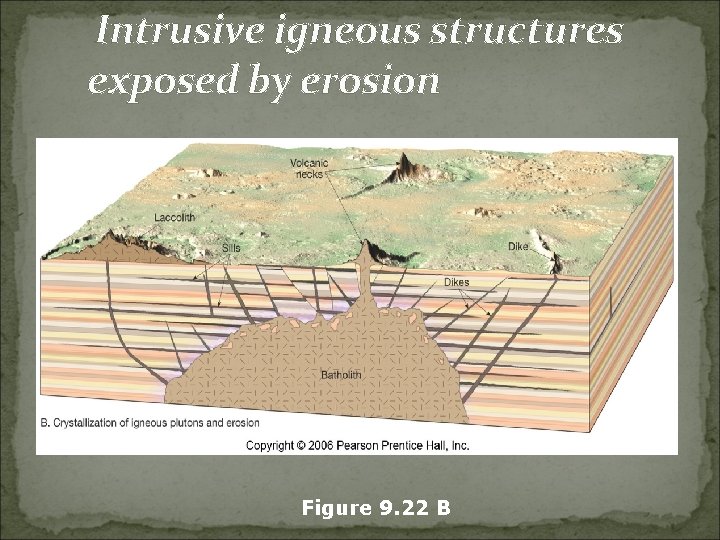
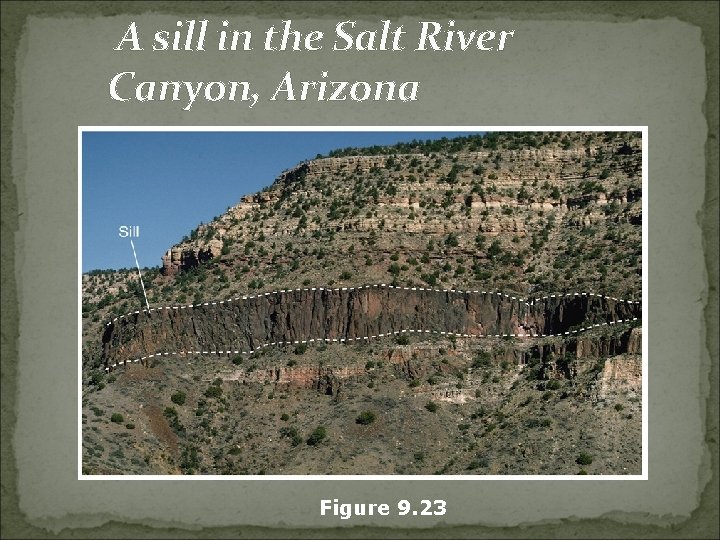
Intrusive igneous activity v Types of igneous intrusive features • Dike, a tabular, discordant pluton • Sill, a tabular, concordant pluton �e. g. , Palisades Sill, NY �Resemble buried lava flows �May exhibit columnar joints • Laccolith �Similar to a sill
Intrusive igneous structures exposed by erosion Figure 9. 22 B
A sill in the Salt River Canyon, Arizona Figure 9. 23
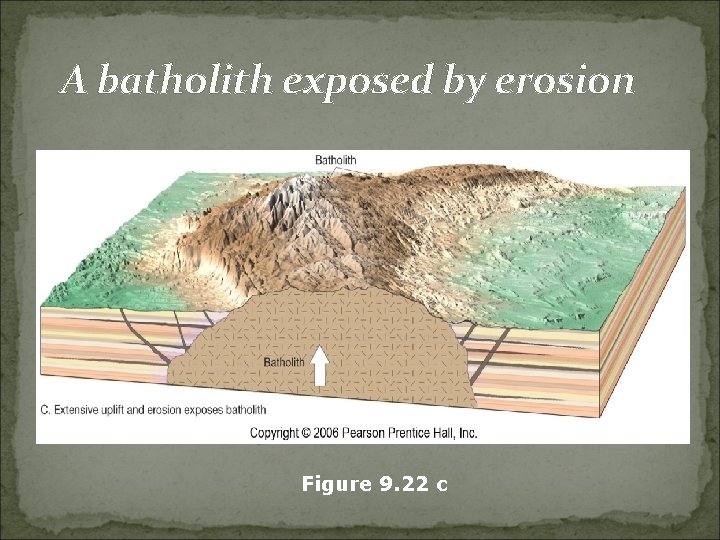
Intrusive igneous activity v Types of igneous intrusive features • Laccolith �Lens shaped mass �Arches overlying strata upward • Batholith �Largest intrusive body �Often occur in groups �Surface exposure 100+ square kilometers (smaller bodies are termed stocks) �Frequently form the cores of mountains
A batholith exposed by erosion Figure 9. 22 c
Section Break
Origin of magma Section 9. 3 v Magma originates when essentially solid rock, located in the crust and upper mantle, melts v Factors that influence the generation of magma from solid rock • Role of heat �Earth’s natural temperature increases with depth (geothermal gradient) is not sufficient to melt rock at the lower crust and upper mantle
Origin of magma v Factors that influence the generation of magma from solid rock • Role of heat �Additional heat is generated by • Friction in subduction zones • Crustal rocks heated during subduction • Rising, hot mantle rocks
Origin of magma v Factors that influence the generation of magma from solid rock • Role of pressure �Increase in confining pressure causes an increase in melting temperature �Drop in confining pressure can cause decompression melting • Lowers the melting temperature • Occurs when rock ascends
Origin of magma v Factors that influence the generation of magma from solid rock • Role of volatiles �Primarily water �Cause rock to melt at a lower temperature �Play an important role in subducting ocean plates
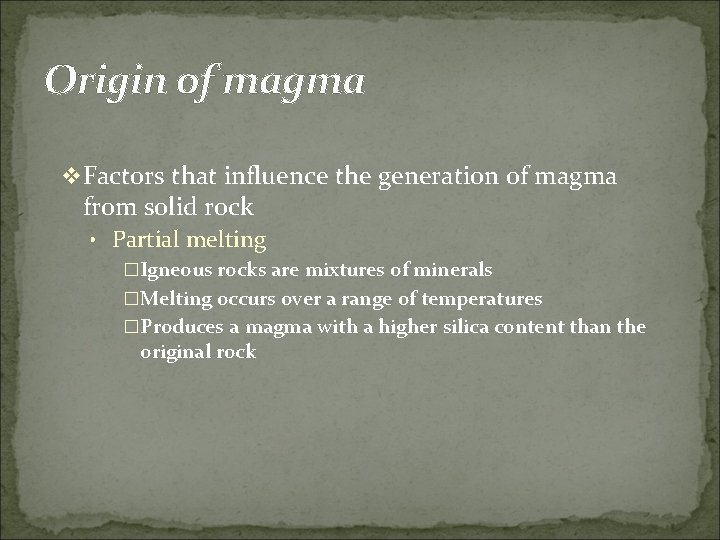
Origin of magma v Factors that influence the generation of magma from solid rock • Partial melting �Igneous rocks are mixtures of minerals �Melting occurs over a range of temperatures �Produces a magma with a higher silica content than the original rock
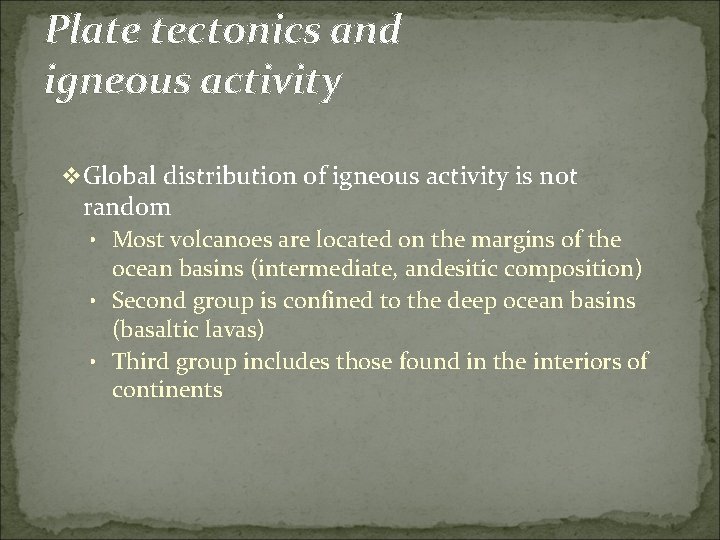
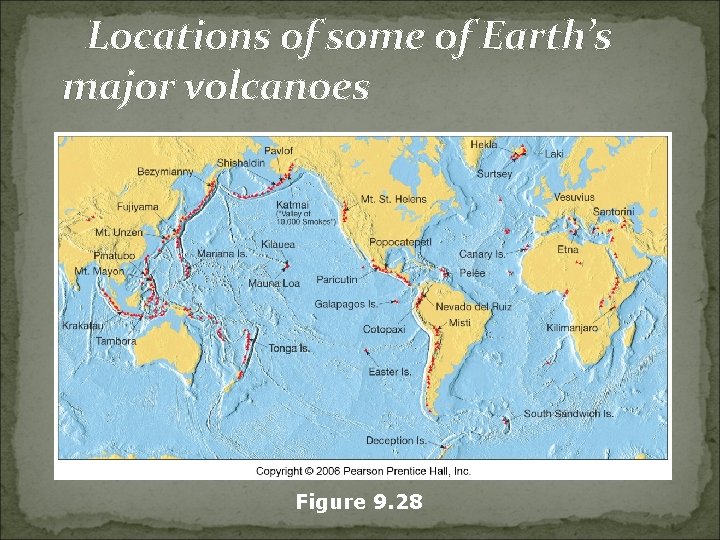
Plate tectonics and igneous activity v Global distribution of igneous activity is not random • Most volcanoes are located on the margins of the ocean basins (intermediate, andesitic composition) • Second group is confined to the deep ocean basins (basaltic lavas) • Third group includes those found in the interiors of continents
Locations of some of Earth’s major volcanoes Figure 9. 28
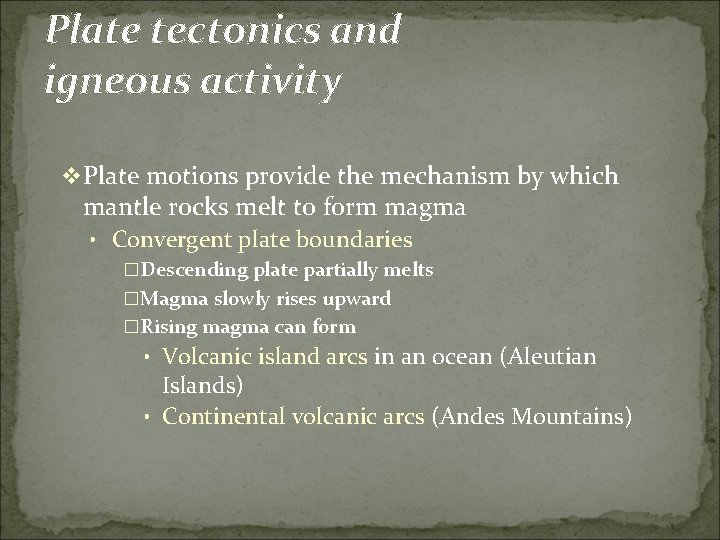
Plate tectonics and igneous activity v Plate motions provide the mechanism by which mantle rocks melt to form magma • Convergent plate boundaries �Descending plate partially melts �Magma slowly rises upward �Rising magma can form • Volcanic island arcs in an ocean (Aleutian Islands) • Continental volcanic arcs (Andes Mountains)
Plate tectonics and igneous activity v Plate motions provide the mechanism by which mantle rocks melt to form magma • Divergent plate boundaries �The greatest volume of volcanic rock is produced along the oceanic ridge system • Lithosphere pulls apart • Less pressure on underlying rocks • Partial melting occurs • Large quantities of fluid basaltic magma are produced
Plate tectonics and igneous activity v Plate motions provide the mechanism by which mantle rocks melt to form magma • Intraplate igneous activity �Activity within a rigid plate �Plumes of hot mantle material rise �Form localized volcanic regions called hot spots �Examples include the Hawaiian Islands and the Columbia River Plateau in the northwestern United States
End of Chapter 9