
Power Point Lecture Outlines 13 Reducing Your Risk
- Slides: 20
Power. Point® Lecture Outlines 13 Reducing Your Risk of Cancer Copyright © 2009 Pearson Education, Inc.
Objectives • • • Define cancer and how it develops. Discuss how lifestyle choices, biological factors, and environmental exposures affect an individual’s risk of developing cancer. Identify five common types of cancer and the risk factors for each. Identify your own risk factors and make choices to reduce those risks. Discuss approaches to cancer treatment and recovery. Copyright © 2009 Pearson Education, Inc.
What Is Cancer? • A group of diseases characterized by the uncontrolled growth and spread of abnormal cells. • The second most common cause of U. S. deaths. • Nearly 1/2 of men and 1/3 of women will develop it. • Lifestyle choices play a significant role in risk. Copyright © 2009 Pearson Education, Inc.
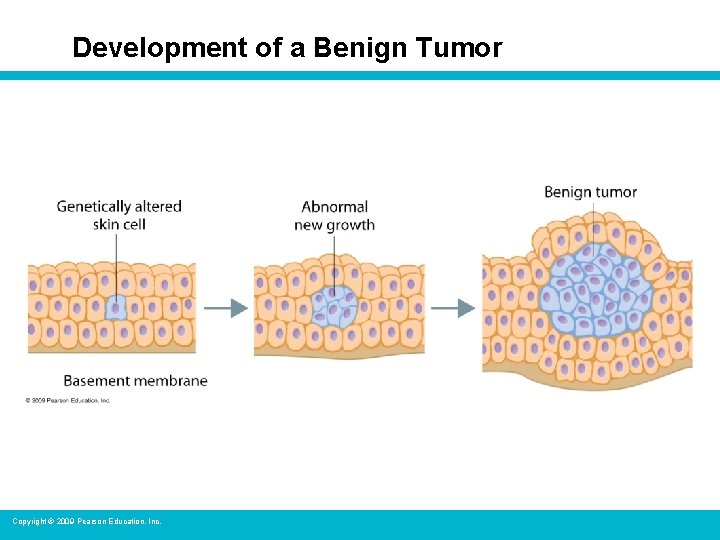
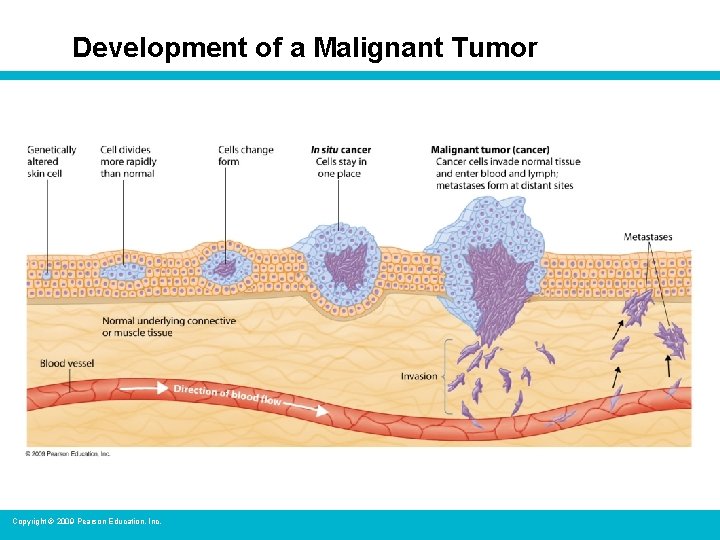
Aspects of Cancer is characterized by damaged genes that mutate, forming a tumor. • • Benign tumors are noncancerous. Malignant tumors are cancerous. A biopsy surgically removes cells to diagnose them. A carcinogen is an external cancer-causing agent. Oncogenes are genes that may play a role in causing cancer. Copyright © 2009 Pearson Education, Inc.
Development of a Benign Tumor Copyright © 2009 Pearson Education, Inc.
Development of a Malignant Tumor Copyright © 2009 Pearson Education, Inc.
How Cancer Spreads • Metastasis is the spread of cancer. It occurs when malignant cells spread into other body tissue. • Tumors need oxygen to grow. Angiogenesis occurs when malignant cells produce growth factors that induce capillaries (blood vessels) to supply the tumor with oxygen, helping it to grow. • Some cancer treatments target these blood vessels, attempting to “starve” the tumor. Copyright © 2009 Pearson Education, Inc.
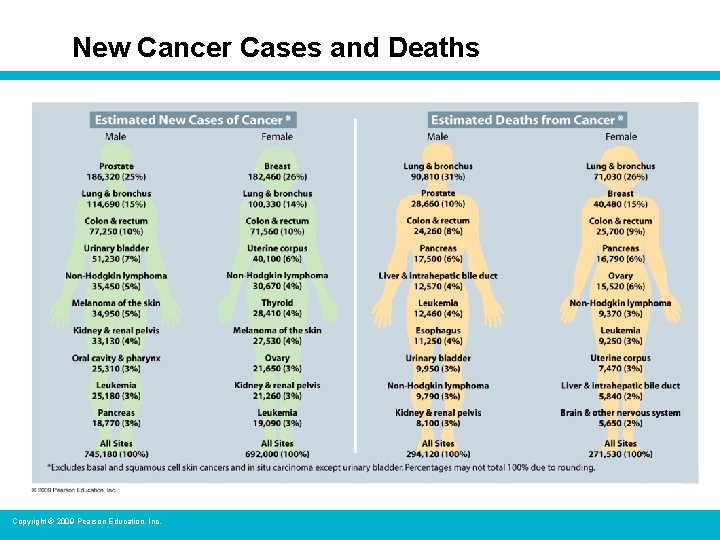
New Cancer Cases and Deaths Copyright © 2009 Pearson Education, Inc.
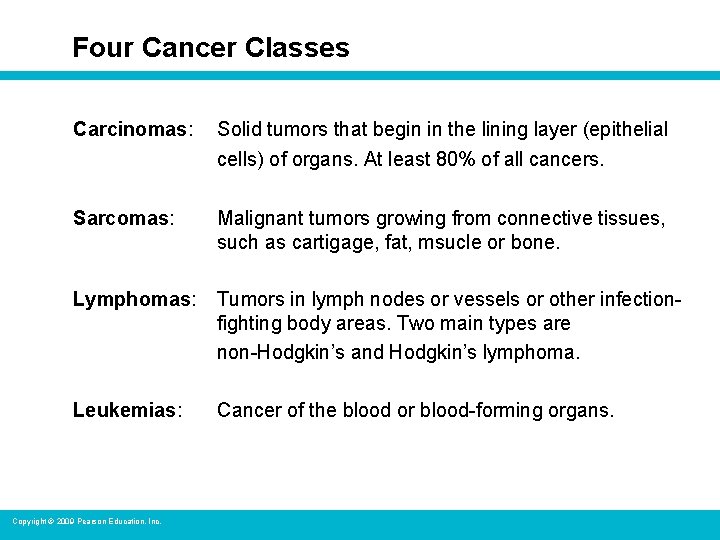
Four Cancer Classes Carcinomas: Solid tumors that begin in the lining layer (epithelial cells) of organs. At least 80% of all cancers. Sarcomas: Malignant tumors growing from connective tissues, such as cartigage, fat, msucle or bone. Lymphomas: Tumors in lymph nodes or vessels or other infectionfighting body areas. Two main types are non-Hodgkin’s and Hodgkin’s lymphoma. Leukemias: Cancer of the blood or blood-forming organs. Copyright © 2009 Pearson Education, Inc.
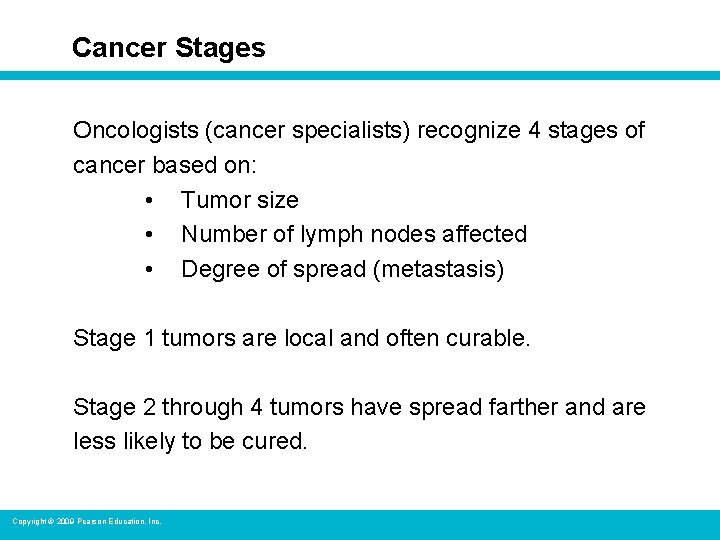
Cancer Stages Oncologists (cancer specialists) recognize 4 stages of cancer based on: • Tumor size • Number of lymph nodes affected • Degree of spread (metastasis) Stage 1 tumors are local and often curable. Stage 2 through 4 tumors have spread farther and are less likely to be cured. Copyright © 2009 Pearson Education, Inc.
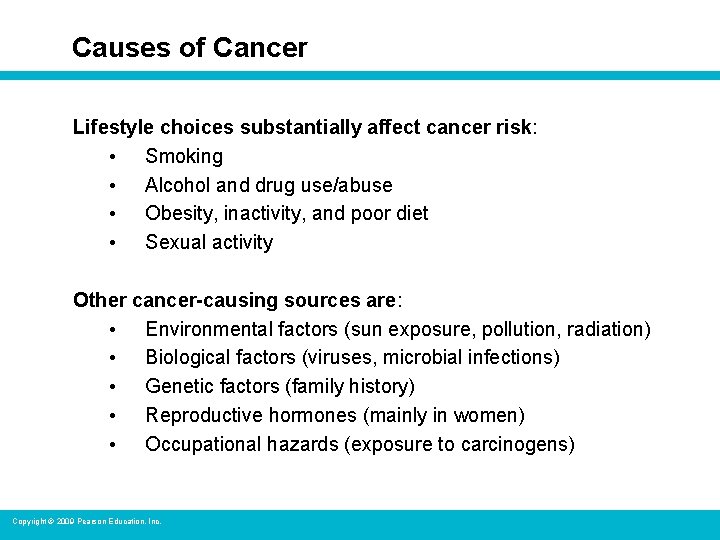
Causes of Cancer Lifestyle choices substantially affect cancer risk: • Smoking • Alcohol and drug use/abuse • Obesity, inactivity, and poor diet • Sexual activity Other cancer-causing sources are: • Environmental factors (sun exposure, pollution, radiation) • Biological factors (viruses, microbial infections) • Genetic factors (family history) • Reproductive hormones (mainly in women) • Occupational hazards (exposure to carcinogens) Copyright © 2009 Pearson Education, Inc.
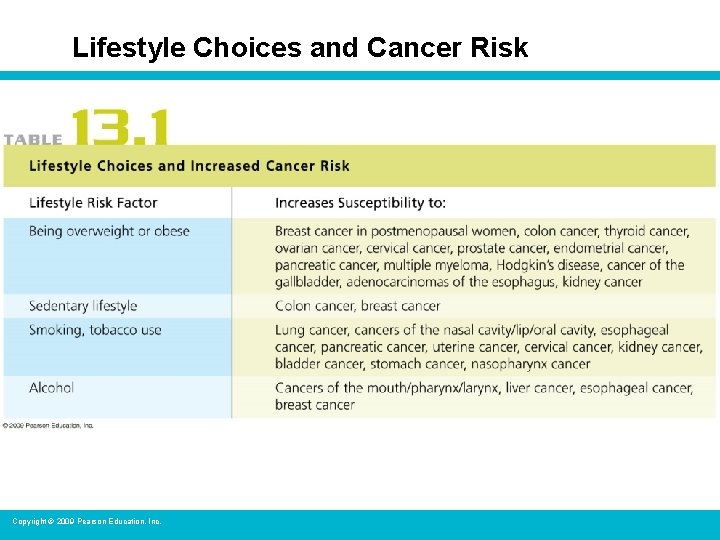
Lifestyle Choices and Cancer Risk Copyright © 2009 Pearson Education, Inc.
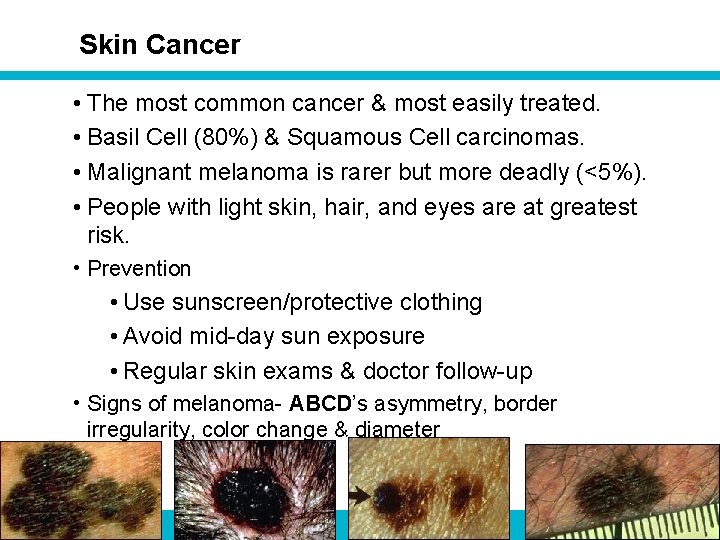
Skin Cancer • The most common cancer & most easily treated. • Basil Cell (80%) & Squamous Cell carcinomas. • Malignant melanoma is rarer but more deadly (<5%). • People with light skin, hair, and eyes are at greatest risk. • Prevention • Use sunscreen/protective clothing • Avoid mid-day sun exposure • Regular skin exams & doctor follow-up • Signs of melanoma- ABCD’s asymmetry, border irregularity, color change & diameter Copyright © 2009 Pearson Education, Inc.
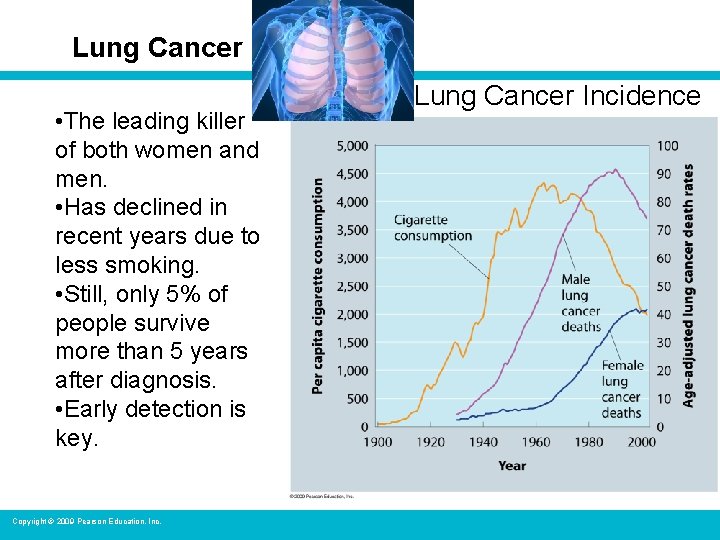
Lung Cancer • The leading killer of both women and men. • Has declined in recent years due to less smoking. • Still, only 5% of people survive more than 5 years after diagnosis. • Early detection is key. Copyright © 2009 Pearson Education, Inc. Lung Cancer Incidence
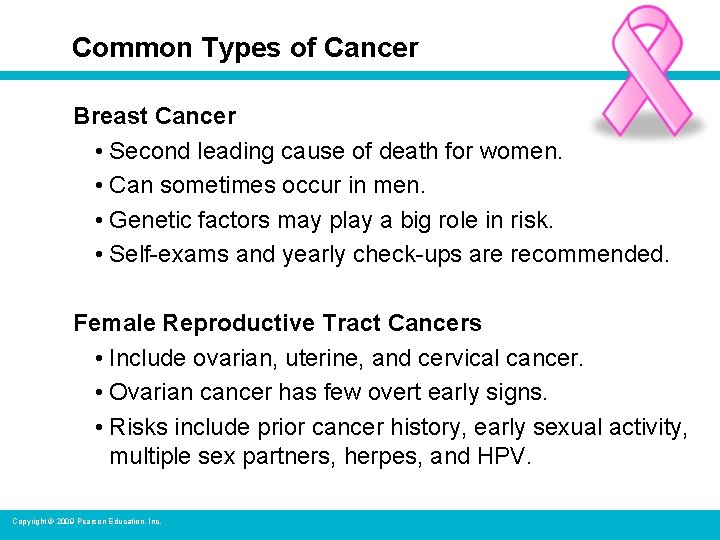
Common Types of Cancer Breast Cancer • Second leading cause of death for women. • Can sometimes occur in men. • Genetic factors may play a big role in risk. • Self-exams and yearly check-ups are recommended. Female Reproductive Tract Cancers • Include ovarian, uterine, and cervical cancer. • Ovarian cancer has few overt early signs. • Risks include prior cancer history, early sexual activity, multiple sex partners, herpes, and HPV. Copyright © 2009 Pearson Education, Inc.
Common Types of Cancer Male Reproductive Tract Cancers • Include prostate and testicular cancer. • Prostate cancer can be symptom-free in early stages. • Genetic factors play a role in testicular cancer. • Prostate cancer risk factors include older age, race, genetics, high BMI, and poor diet. Colon and Rectal Cancers • Third most common cancer in both men and women. • Colorectal cancer has no symptoms in early stages. • Risk factors are similar to male reproductive cancer risks, in addition to a family history of polyps. Copyright © 2009 Pearson Education, Inc.
Common Types of Cancer Pancreatic Cancer • More common now than 20 years ago. • Often undiagnosed until late in its development. • Risk factors include being male, age over 45, smoking, and eating a high-fat diet. Leukemia • Several types exist as acute or chronic cases. • Strikes both sexes and all age groups. • Most common form of childhood cancer. • Symptoms include frequent infections, headaches, vomiting, anemia, and swelling in joints. Copyright © 2009 Pearson Education, Inc.
Reducing Your Risk of Cancer • • • Don’t smoke. Limit alcohol consumption. Limit grilled, blackened, and processed meats. Limit saturated and trans fats. Eat at least five servings daily of fruits and vegetables. Eat several servings daily of whole-grain foods. Get regular physical exercise. Keep BMI within recommended levels. Manage stress. Limit exposure to environmental carcinogens. Do self-exams and get regular check-ups. Copyright © 2009 Pearson Education, Inc.
Cancer Treatment Options Radiation • Most effective with localized (early stage) cancers. • Works by destroying malignant cells or inhibiting their growth. • Still is one of the most effective forms of treatment. Chemotherapy • Administered via intravenous drugs. • Often causes hair loss, nausea, and nutritional deficiencies. • Along with radiation treatment, it may also cause long-term damage to the heart, brain, and other organs. Immunotherapies • New treatments that may enhance the immune system. • Also includes gene therapies and potential stem cell treatments. Copyright © 2009 Pearson Education, Inc.
ABC News: Cancer Discussion Questions: • Discuss the difficulties Lance Armstrong faced during and after his cancer treatment. • What were other things he wanted to prove beside winning another Tour de France title? Provide examples. Copyright © 2009 Pearson Education, Inc.