Juan Izquierdo FAO RLC The start Meeting on


- Slides: 47
Juan Izquierdo FAO RLC
The start…. . . Meeting on Appropriate Biotechnology for Crop Production, Campinas, Sao Paulo, Brazil, from 20 to 24 November l 989.
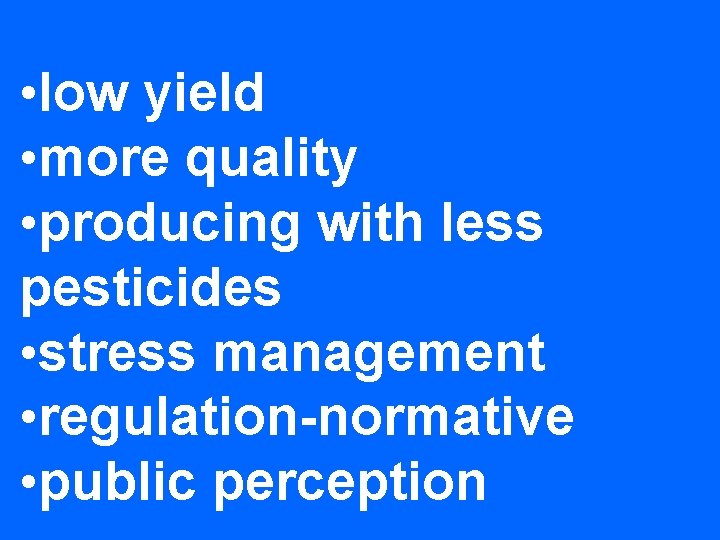
• low yield • more quality • producing with less pesticides • stress management • regulation-normative • public perception
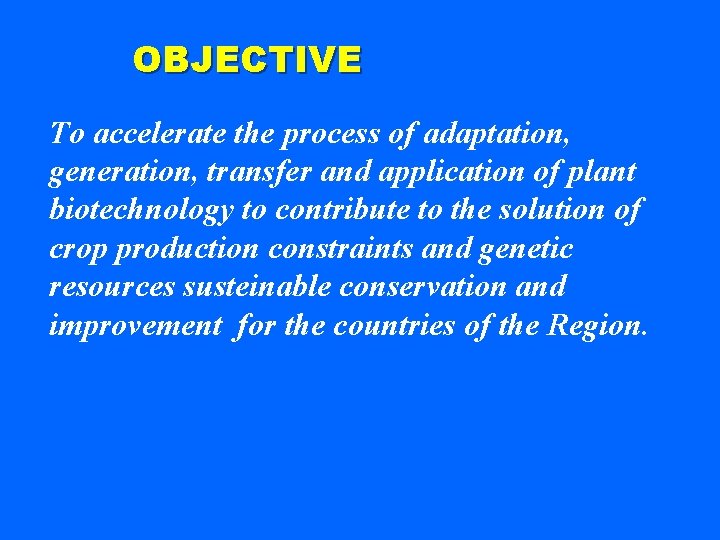
OBJECTIVE To accelerate the process of adaptation, generation, transfer and application of plant biotechnology to contribute to the solution of crop production constraints and genetic resources susteinable conservation and improvement for the countries of the Region.
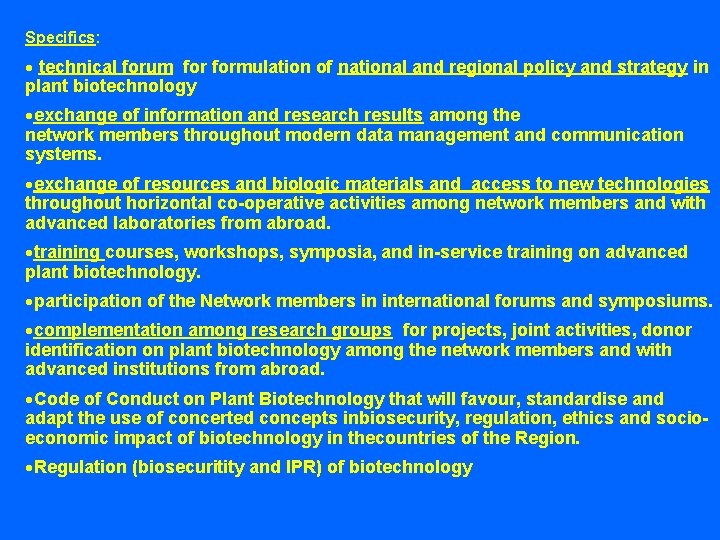
Specifics: · technical forum formulation of national and regional policy and strategy in plant biotechnology ·exchange of information and research results among the network members throughout modern data management and communication systems. ·exchange of resources and biologic materials and access to new technologies throughout horizontal co-operative activities among network members and with advanced laboratories from abroad. ·training courses, workshops, symposia, and in-service training on advanced plant biotechnology. ·participation of the Network members in international forums and symposiums. ·complementation among research groups for projects, joint activities, donor identification on plant biotechnology among the network members and with advanced institutions from abroad. ·Code of Conduct on Plant Biotechnology that will favour, standardise and adapt the use of concerted concepts inbiosecurity, regulation, ethics and socioeconomic impact of biotechnology in thecountries of the Region. ·Regulation (biosecuritity and IPR) of biotechnology
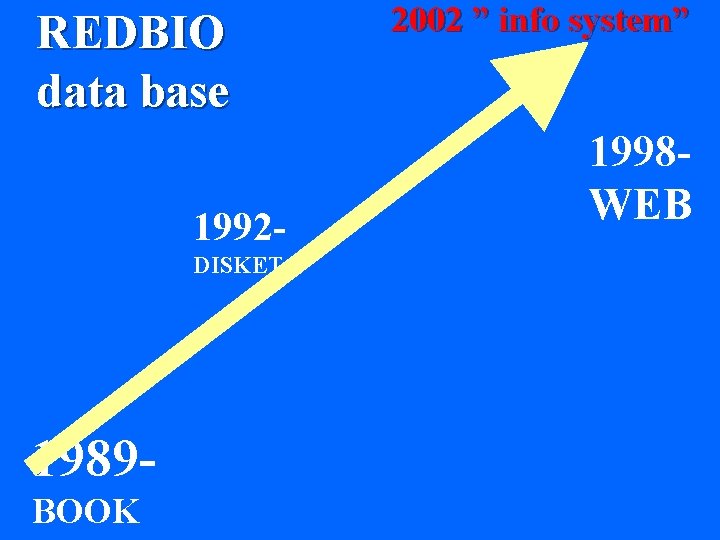
REDBIO data base 1992 DISKET 1989 BOOK 2002 ” info system” 1998 WEB
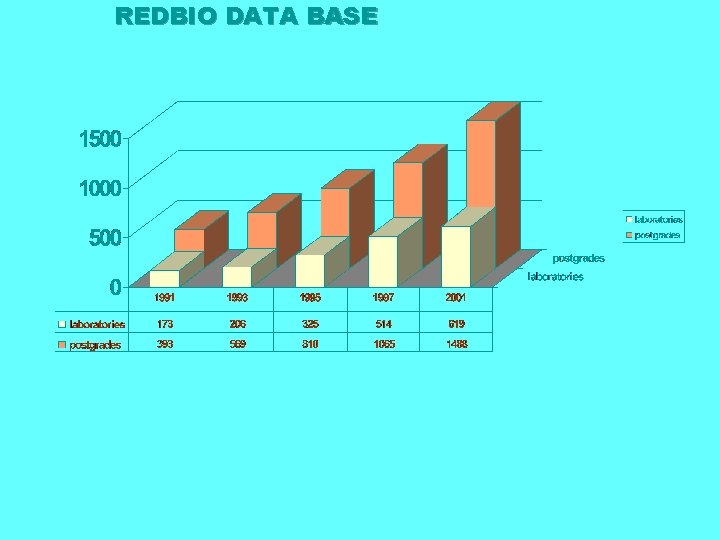
REDBIO DATA BASE
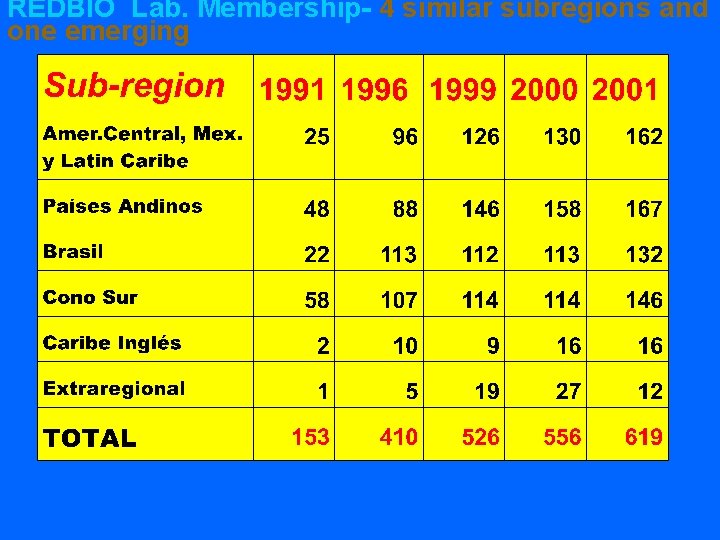
REDBIO Lab. Membership- 4 similar subregions and one emerging
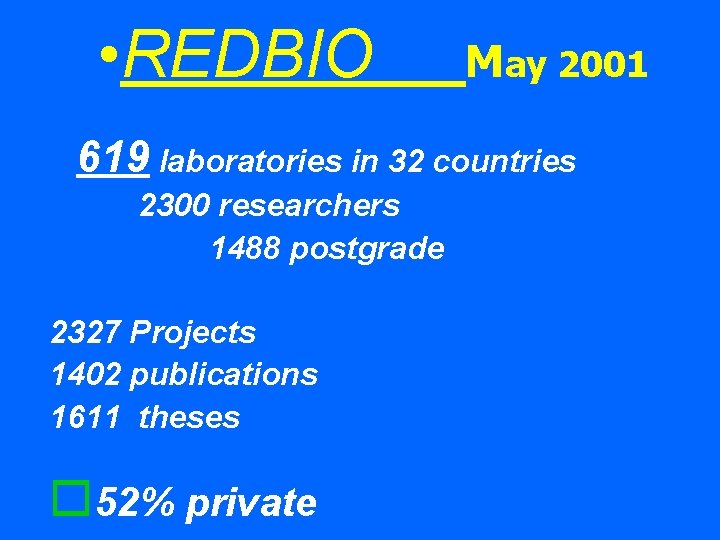
• REDBIO May 2001 619 laboratories in 32 countries 2300 researchers 1488 postgrade 2327 Projects 1402 publications 1611 theses o 52% private
ISSN 0117 3458 http: //www. ejb. org
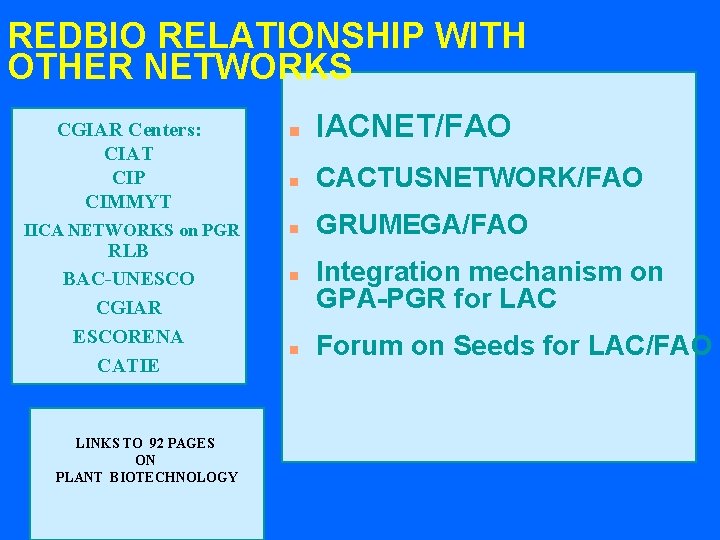
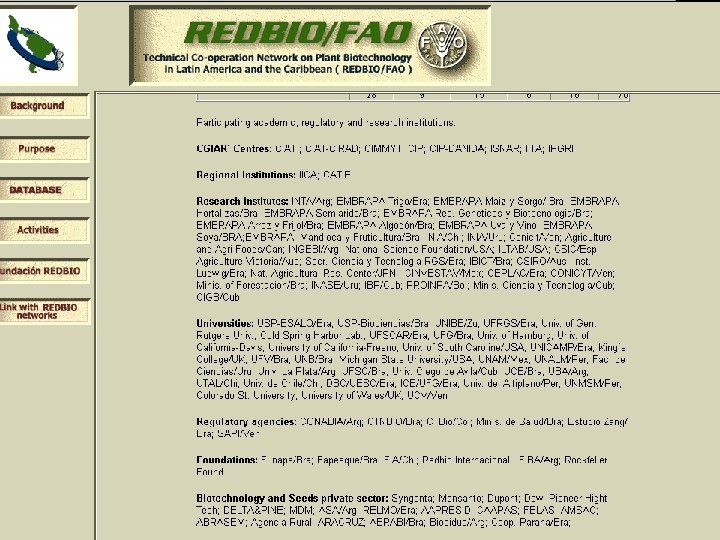
REDBIO RELATIONSHIP WITH OTHER NETWORKS CGIAR Centers: CIAT CIP CIMMYT n IACNET/FAO n CACTUSNETWORK/FAO IICA NETWORKS on PGR n GRUMEGA/FAO RLB BAC-UNESCO CGIAR ESCORENA CATIE LINKS TO 92 PAGES ON PLANT BIOTECHNOLOGY n n Integration mechanism on GPA-PGR for LAC Forum on Seeds for LAC/FAO
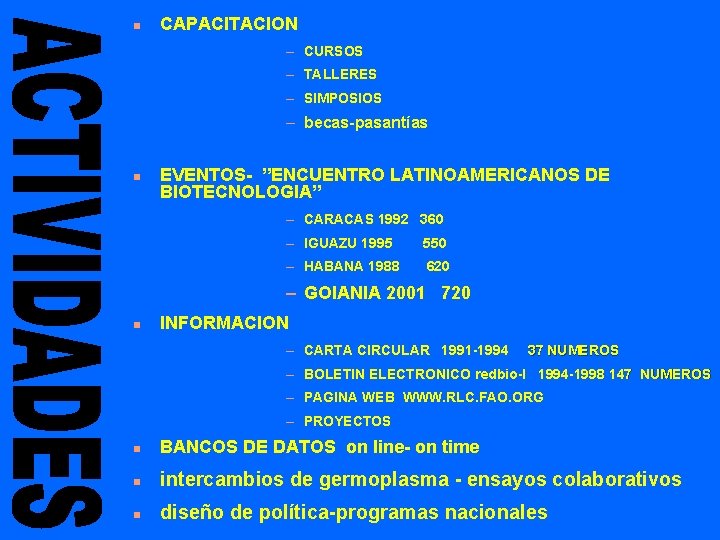
n CAPACITACION – CURSOS – TALLERES – SIMPOSIOS – becas-pasantías n EVENTOS- ”ENCUENTRO LATINOAMERICANOS DE BIOTECNOLOGIA” – CARACAS 1992 360 – IGUAZU 1995 550 – HABANA 1988 620 – GOIANIA 2001 720 n INFORMACION – CARTA CIRCULAR 1991 -1994 37 NUMEROS – BOLETIN ELECTRONICO redbio-l 1994 -1998 147 NUMEROS – PAGINA WEB WWW. RLC. FAO. ORG – PROYECTOS n BANCOS DE DATOS on line- on time n intercambios de germoplasma - ensayos colaborativos n diseño de política-programas nacionales
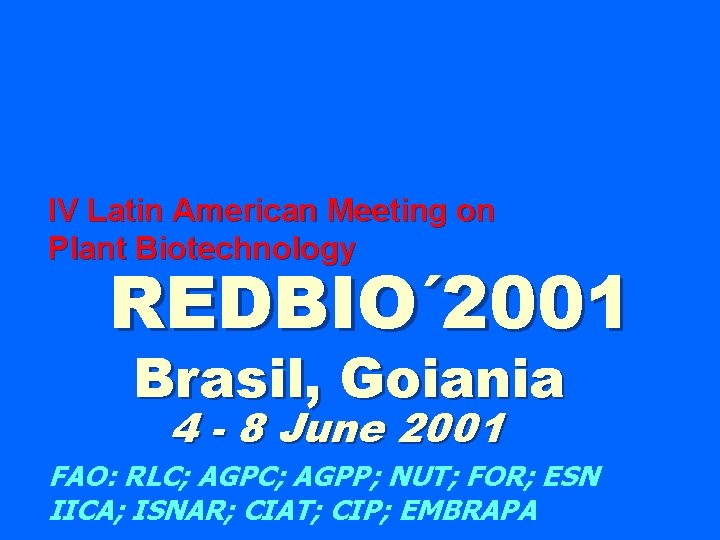
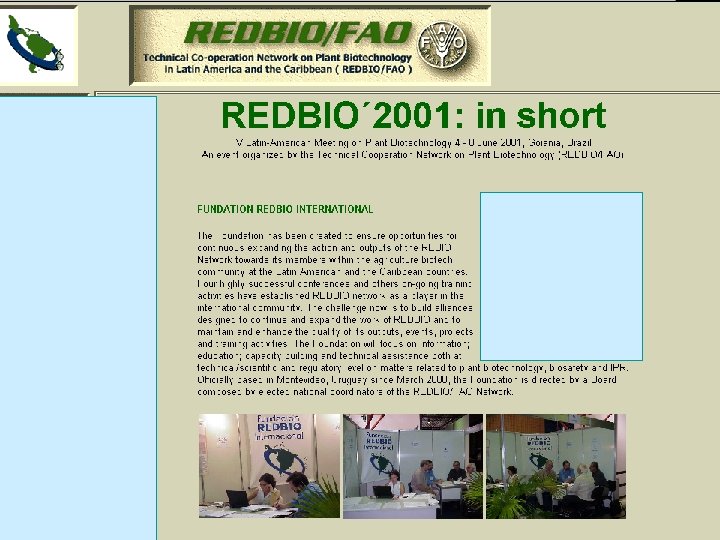
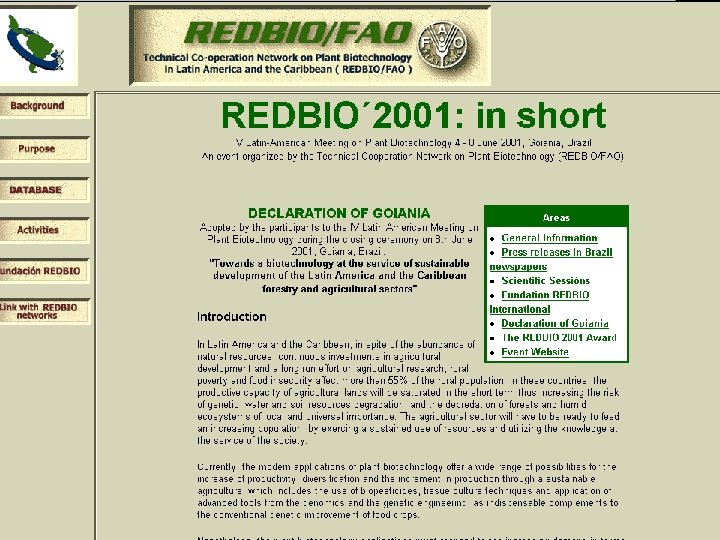
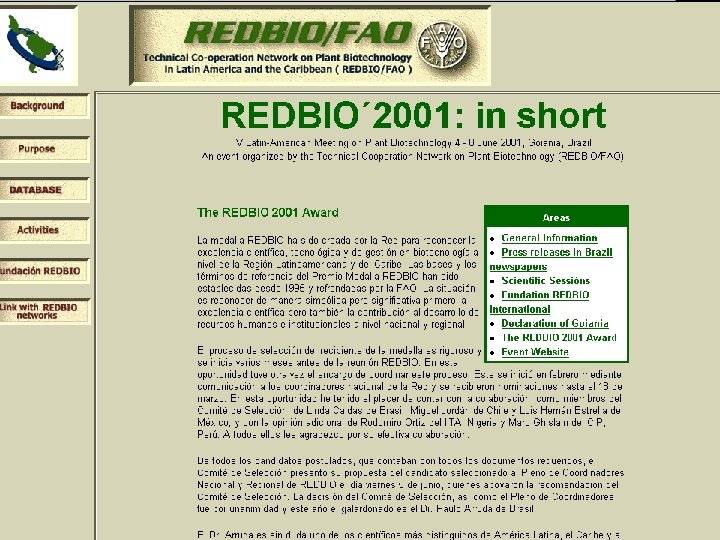
IV Latin American Meeting on Plant Biotechnology REDBIO´ 2001 Brasil, Goiania 4 - 8 June 2001 FAO: RLC; AGPP; NUT; FOR; ESN IICA; ISNAR; CIAT; CIP; EMBRAPA
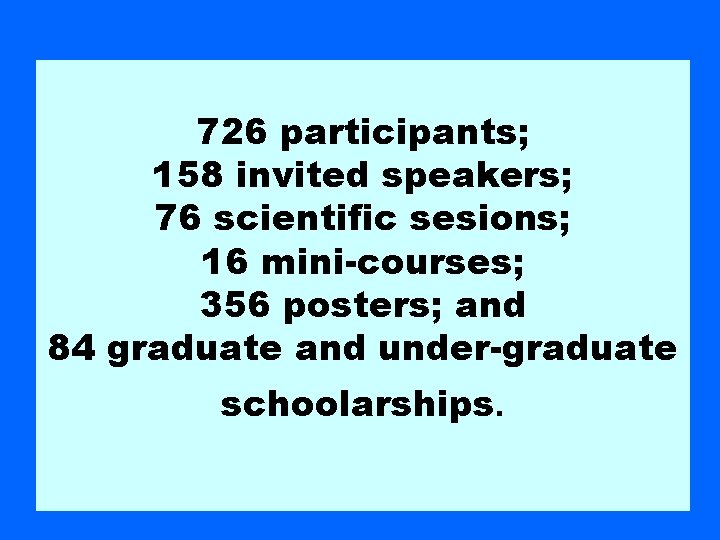
726 participants; 158 invited speakers; 76 scientific sesions; 16 mini-courses; 356 posters; and 84 graduate and under-graduate schoolarships.
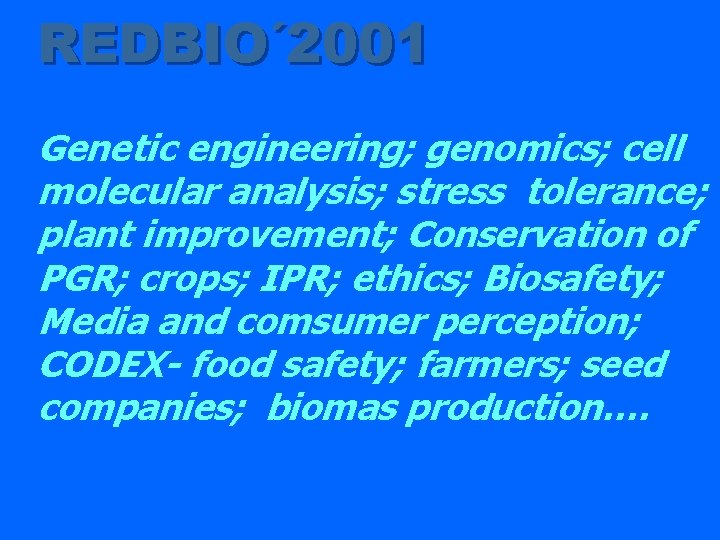
REDBIO´ 2001 Genetic engineering; genomics; cell molecular analysis; stress tolerance; plant improvement; Conservation of PGR; crops; IPR; ethics; Biosafety; Media and comsumer perception; CODEX- food safety; farmers; seed companies; biomas production….
REDBIO 2004 pais sede? ? Chile Peru Rca. Dominicana
1990 -1996 LABORATORIES CAPACITY n. CROPS, PROTOCOLS, n. BIOTECHNICS n
1996 -2001 CAPACITY BUILDING n. SOCIO-ECONOMIC IMPACT; IPR; GMOS ´BIOSAFETY n. NETWORKING n“internalizatión” within FAO n
REDBIO direct and indirect results and products Bio-fábricas CUB n Micropropagación COS/ECU/PER/BRA/CHI n Bio-plaguicidas BRA/CUB n Genómica enfermedades BRA n Dagnóstico molecular COS/URU/CHI n Ingeniería genética papa ARG/PER/CUB/BRA/MEX n
Tissue culture n n n main technology for developing countries production of disease-free, high-quality planting material, identity-confirmed commercial applications, fruitexport, hornamentals, medicinal plantas, generates employment, particularly for women cost, quality, standardization COS; CUB; ECU; CHI
• ARROZ: caso exitoso de biotecnología aplicado al mejoramiento genético del cultivo - 300 variedades en los ultimos 10 años en LAC
• arroz: CULTIVO DE ANTERAS amplia utilización en LAC simple, barata , util o. Acelerar líneas homocigotas ofijar caracteristivcas deseables orecuperar recombinantes en cruces oinducir variacion somaclonal ARG/BRA/CHI/COL/COS/GUA/PAN/SUR/URU/VEN
arroz: MARCADORES • MOLECULARES rflp, rapd, aflp, ssr, sslp apoyo a la selección en LAC o. Base genetica de líneas restauradoras y mantenedoras --híbridos odistancia genetica entre lineas parentales oestudios de linaje para Pyrecularia ogenes de resistencia a VHB ocaracteres cuantitativos. . QTL / silvestres ocol/bra/arg/chi/ven/mex/cub
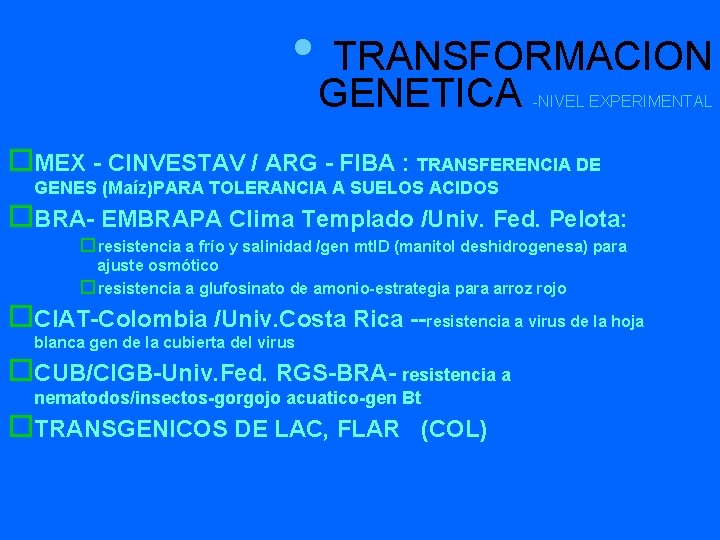
• TRANSFORMACION GENETICA -NIVEL EXPERIMENTAL o. MEX - CINVESTAV / ARG - FIBA : TRANSFERENCIA DE GENES (Maíz)PARA TOLERANCIA A SUELOS ACIDOS o. BRA- EMBRAPA Clima Templado /Univ. Fed. Pelota: oresistencia a frío y salinidad /gen mtl. D (manitol deshidrogenesa) para ajuste osmótico oresistencia a glufosinato de amonio-estrategia para arroz rojo o. CIAT-Colombia /Univ. Costa Rica --resistencia a virus de la hoja blanca gen de la cubierta del virus o. CUB/CIGB-Univ. Fed. RGS-BRA- resistencia a nematodos/insectos-gorgojo acuatico-gen Bt o. TRANSGENICOS DE LAC, FLAR (COL)
2000 - 2004 ”NUEVA conceptualización de la biotecnología” La biotecnología agrícola en América Latina requiere de una expresión endógena, que considere la fitodiversidad cultivada, creatividad y adaptabilidad a las condiciones del agricultor y la la extrema complejidad del sístema agrícola.
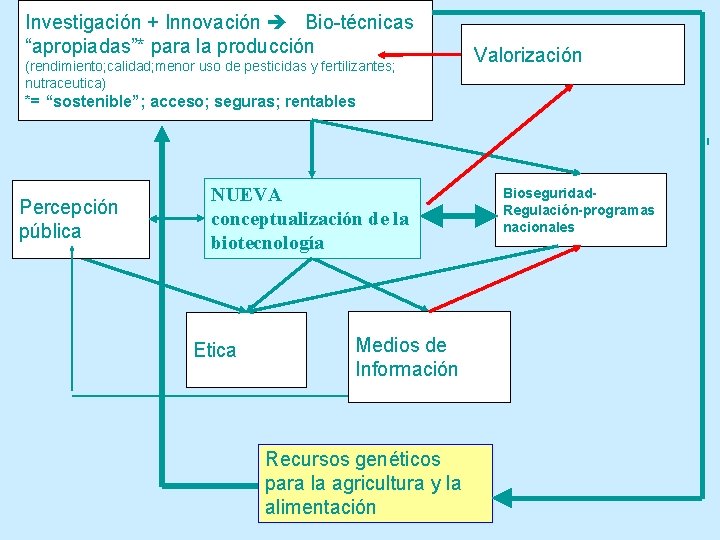
Investigación + Innovación Bio-técnicas “apropiadas”* para la producción (rendimiento; calidad; menor uso de pesticidas y fertilizantes; nutraceutica) Valorización *= “sostenible”; acceso; seguras; rentables Percepción pública NUEVA conceptualización de la biotecnología Etica Medios de Información Recursos genéticos para la agricultura y la alimentación Bioseguridad. Regulación-programas nacionales
”New institutional form for a new concept” FUNDACION REDBIO Established in May, 2000, Montevideo, Uruguay n
Fundación REDBIO Internacional n n non profit ONG established to implement the activities of the network REDBIO/FAO scope Latin America and the Caribbean 500 members, 2001 3 Fundaciones Nacionales, Uruguay, Chile y Argentina, …. .
Proyectos Info REDBIO n Edu REDBIO en preparación n Perci REDBIO financiamiento donantes externos n n TCP Regional FAO Gestión de la biotecnología F F PROYECTO ISNAR-REDBIO/FAO CURSO A DISTANCIA PARA POLITICOS PROYECTO FODEPAL ESPAÑA “broker” de tecnología n creación de capacidad nacional n Fbioseguridad PAR/GUA/ECU/CO FPROGRAMAS NACIONALES DE BIOTE Chile
Desertificación y salinización 300. 000 hás. en Amer. Latina, al ritmo presente afectarán 50% de las tierras agrícolas en el 2050)
PRODUCCION EN CONDICIONES ADVERSAS sequia, salinidad, acidez
n Eco-geographic and socio-economic scenarios for biotechnology development in LAC countries
• Sierra- Altiplano r Fragility environment r 60 M, 50% extreme povery r migration r Income US$300 year r food insecurity, under nutrition and health problems r Multiple agro-ecologic variation ancient agriculture-autochthonous high nutritious crops r ICM; breeding (germplasm)/ biotechnology; in situ conservation PGR r improved genetic material of introduced or autochthonous crops- processing
Amazon basin q 8 countries in the Amazon basin affected q by intense deforestation, migratory animal husbandry, non sustainable crop production technology that have caused severe environmental impact in this very weak bio-system. R/TT key subjects: soil management, fertility, germplasm tolerant to acidity/Al; integration of biotechnologies for agriforestry production systems with native fruit trees (camu-camu, copoazu, araza, aguaje, vegetables, medicinal plants, flowers), acuaculture, and agriprocessing to transform "extractivism" to an multiple agri-forestry production system environmentally sustainable
urban agriculture n n Promotion of vegetable consumption as a key role in the diet (vitamins, minerals, fibers, proteins, ? factors) for improved health status Need for a productive “clean” animal and plants systems in confined structure; sustainable biotechnology to interact with the city environment Goal: activities to secure income and food, to increase nutrition, and also to create a commercial activity and generate employment. Women participation. Risks: environmental contamination of the water supply from agrochemical and animal manures, and contamination of foods from air pollution. Urban gardening offers potential positive opportunities for recycling city garbage for productive purposes
Conflictos - percepción pública
Public perception and risk assessment of transgenic crops irrespective of the on-going dispute and ensuing democratic disagreements, biotechnology products will be accepted by people who support scientific-based progress, in a similar way that new cultivars or innovative crop husbandry techniques have previously become integral parts of farming systems elsewhere
n Regulation and normative of agbiotechnology in LAC countries
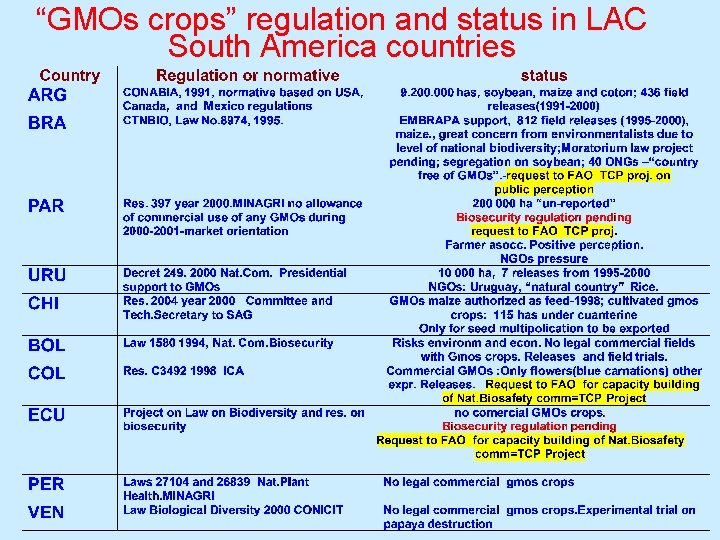
“GMOs crops” regulation and status in LAC South America countries
Ideas and learned lessons from REDBIO ·FAO continuity (10 years) and visibility is esential ·is a network, not a program or a project, committment is more important than resources ·sharing resources with national institutions and programes and other networks ·coordination of the national branches is flexible, rotation every 3 years ·a big event every three years · 1 -2 training activities at regional level per year ·multidisplinary ·good relationship and integration with PGR networks and GPA on PGR ·emerging issues(biosafety; ethics; IPR) must be considered but sustaining plant biotechnology development for improved production and quality