Incentive Compensation for Recruiting and Retention CFMA Silicon








- Slides: 46
Incentive Compensation for Recruiting and Retention CFMA Silicon Valley January 15, 2020 1
Presenters Paul Johnson, CMA Nathan Bennett, CFP, CBEC, Ch. FC, CLU Profit Sherpa The Business Trek Partner, Financial Advisor Summit Financial Group, LLC Paul founded The Business Trek to provide CFO level guidance to owners and accounting teams on a fractional and project basis. As a founding partner of Summit Financial Group, LLC, Nathan has a specialized practice working with business owners on Exit Planning. 2
Agenda Goals How do incentive programs fail Best practices Employers’ interests Employee participants’ interests Survey of Incentive Comp programs Non-monetary comp Variety of bonus programs Executive Benefit Plans
What are the goals of incentive compensation?
Goals of Incentive Comp include: Keep and attract talent Positively impact performance and results Affordable for the company Participants are happy and grateful
What components are important to a program that meets these goals? Well-defined Participants understand the program Recruits understand the program and potential for upside Incentive compensation tied to performance Performance is measurable Measure what matters
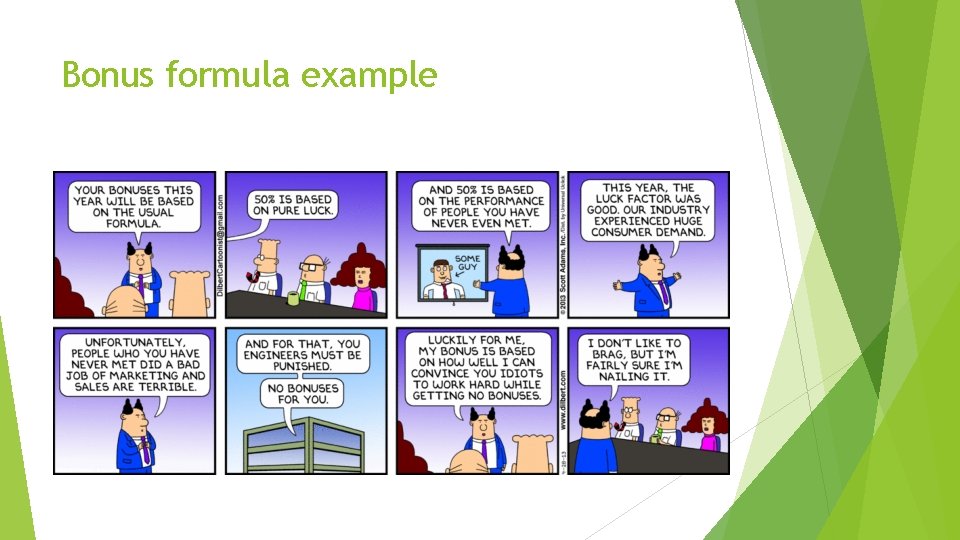
How do incentive programs fail to meet these goals? Thank you, Scott Adams, for showing us some familiar bonus plan shortcomings
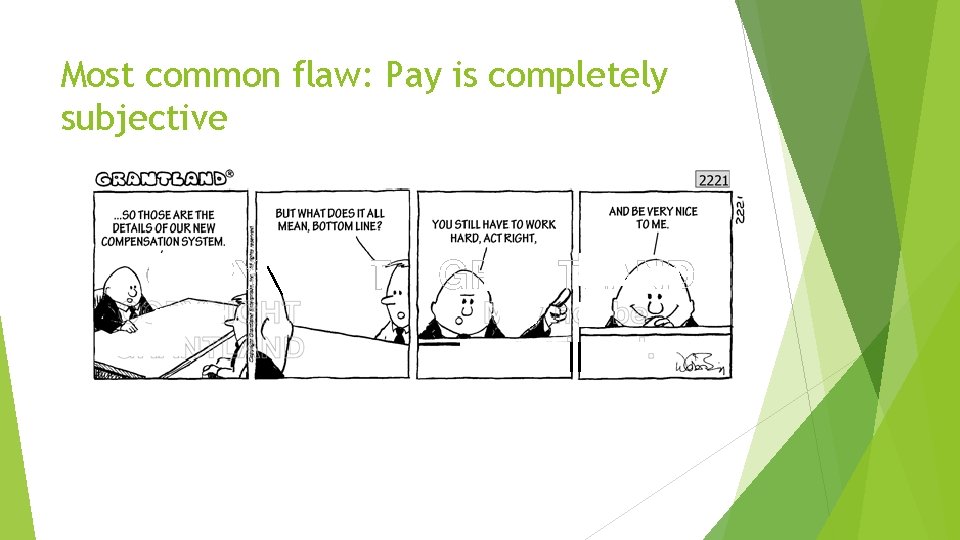
Most common flaw: Pay is completely subjective
Owners/Bosses may retain full discretion on who gets how much Why: Bosses are stressed because they are funding significant payouts Why: Desire for control or “flexibility” because what they can afford is uncertain Participants may feel bonus pay is based on a popularity contest May demotivate employees who do not feel they can make enough of a difference “No matter how hard I work, my effort may not (will not) be rewarded” “Since the I have no idea how much bonuses will be, I will just plug away and hope for the best” RESULT: Significant payouts do not meet objectives of IC program
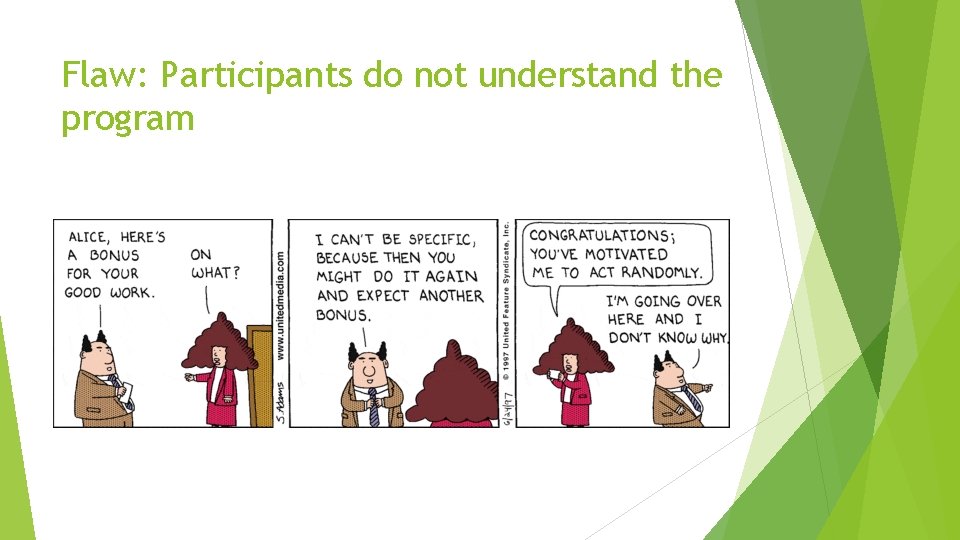
Flaw: Participants do not understand the program
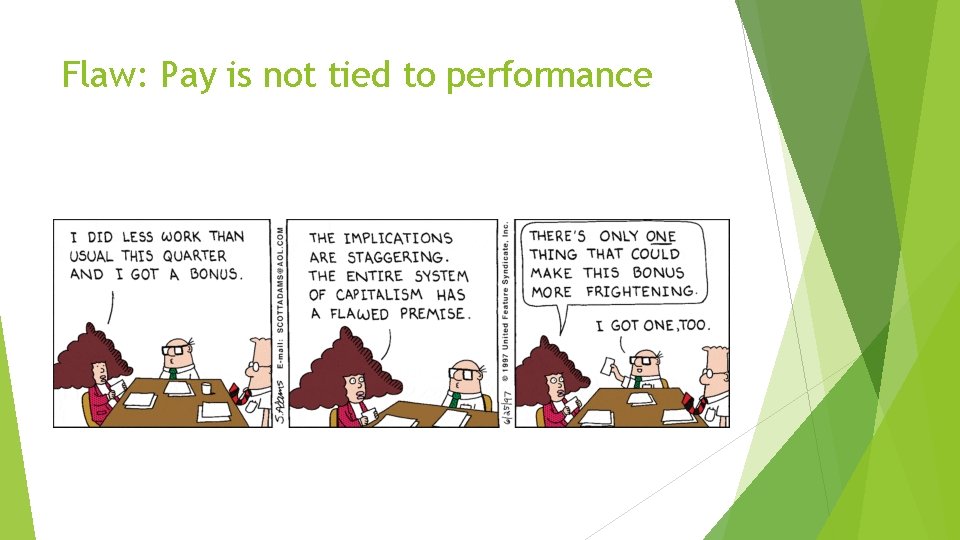
Flaw: Pay is not tied to performance
Recommendation: Tie incentive comp to performance towards objectives Select the right key performance indicators Company Department Individual “Not everything that can be measured matters and not everything that matters can be measured” – Albert Einstein paraphrase
Include both Personal achievements and Group achievements Personal achievements are more in control of participant Group achievements encourage teamwork and helps ensure affordability Weightings? Depend on role Recommend everyone has at least some weight on company results Top executives’ payout is heavily weighted on company results “You do well when we do well”
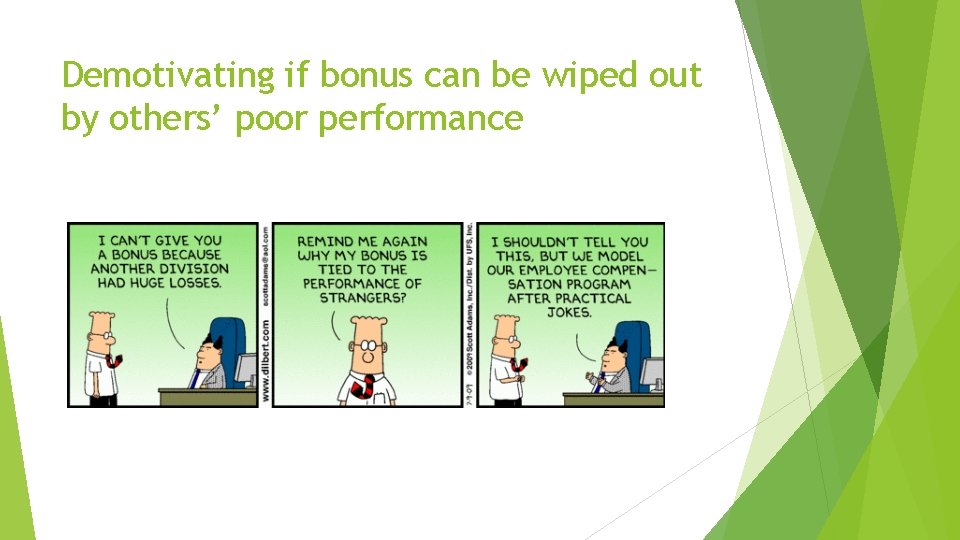
Demotivating if bonus can be wiped out by others’ poor performance
Make sure you (and participants) can measure the criteria for the bonus easily Have measurements available for the participants to check all along the way Set Target, Threshold, Maximum results/payouts Studies show this increases individual performance and results Improves motivation if a minimum can be earned even if target is missed Decide when to use unlimited, uncapped potential earnings – sales commissions?
Document the plan for each individual participant Written plan that clearly explains what will lead to incentive comp payout Include examples of results and related payouts Provide payout calculators (Excel) Claw back provisions, if appropriate Language that allows the plan to be changed during the year (not popular with employees but can correct unintended consequences) Signed by employee and manager
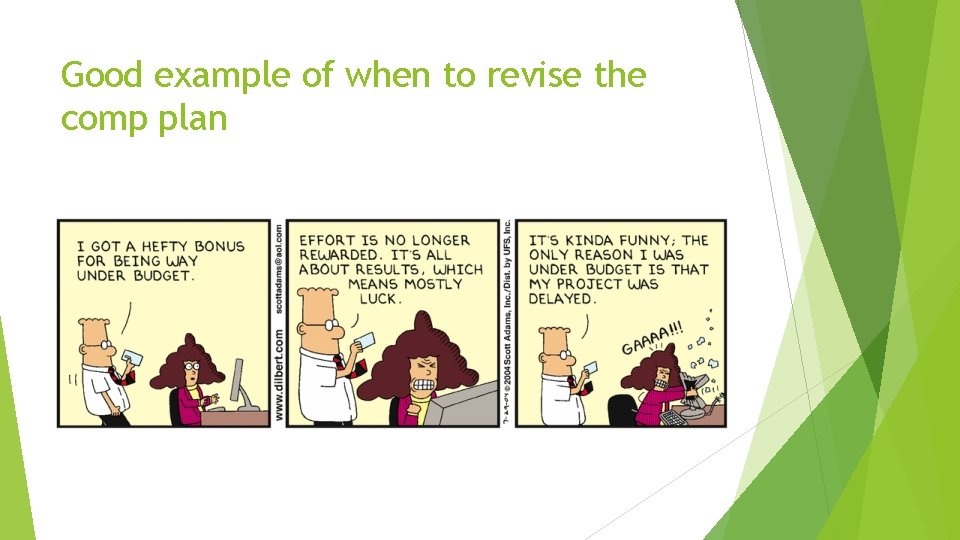
Good example of when to revise the comp plan
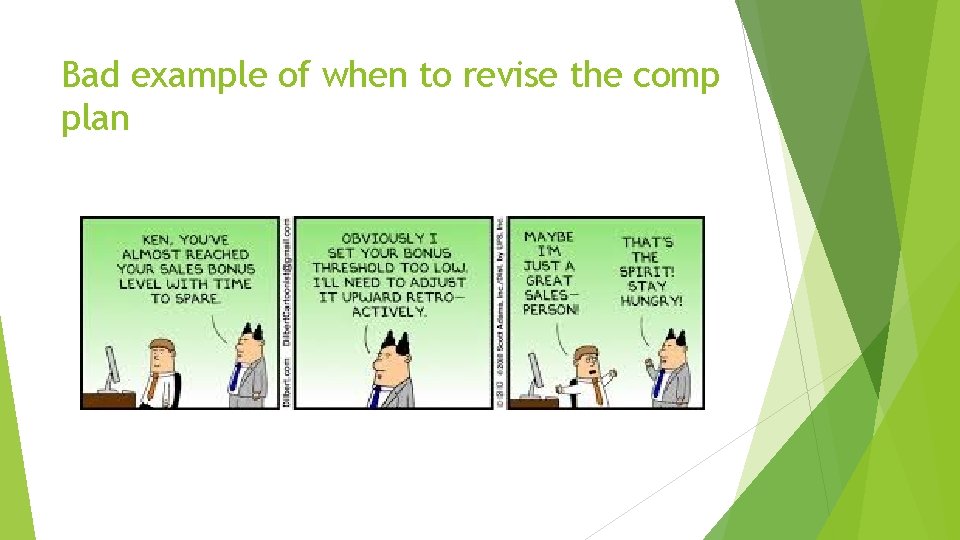
Bad example of when to revise the comp plan
Resources for goal setting and managing the process John Doerr – Measure What Matters OKRs (Objective and Key Results) https: //www. whatmatters. com/ EOS System Entrepreneurs Operating System for Business https: //www. eosworldwide. com/
Beware of unintended consequences Avoid giving rewards for participants simply doing their job May create a sense of entitlement Giving discretionary bonuses when objectives are missed to show appreciation of employee effort May break employees’ motivation to work to meet objectives
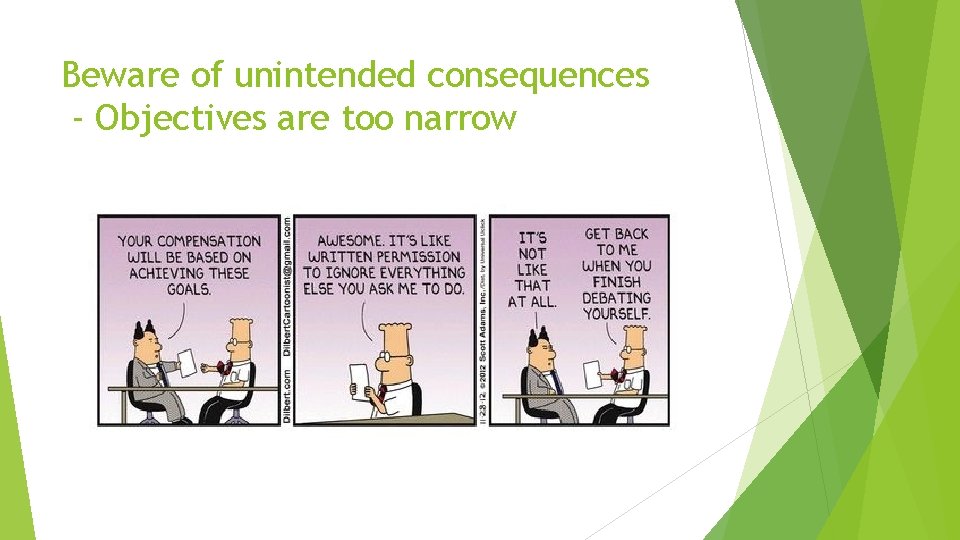
Beware of unintended consequences - Objectives are too narrow
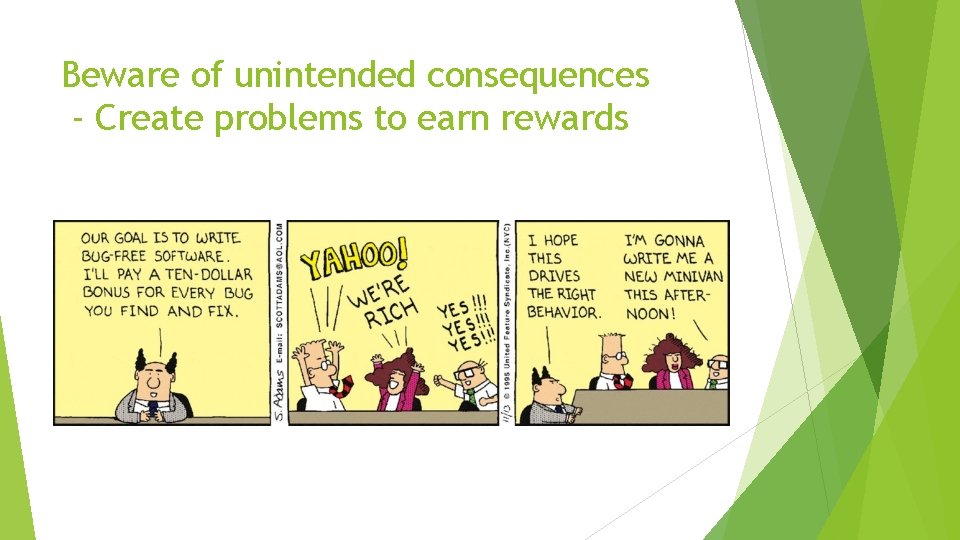
Beware of unintended consequences - Create problems to earn rewards
Consider the Incentive plan within the context of overall compensation Base pay, PTO, other fringe benefits, flexible schedule, etc. Salespeople who are hunters (high % variable) or harvesters (higher % base) Retirement plans, 401 K, ESOPs Profit sharing Deferred compensation (e. g. , SARs)
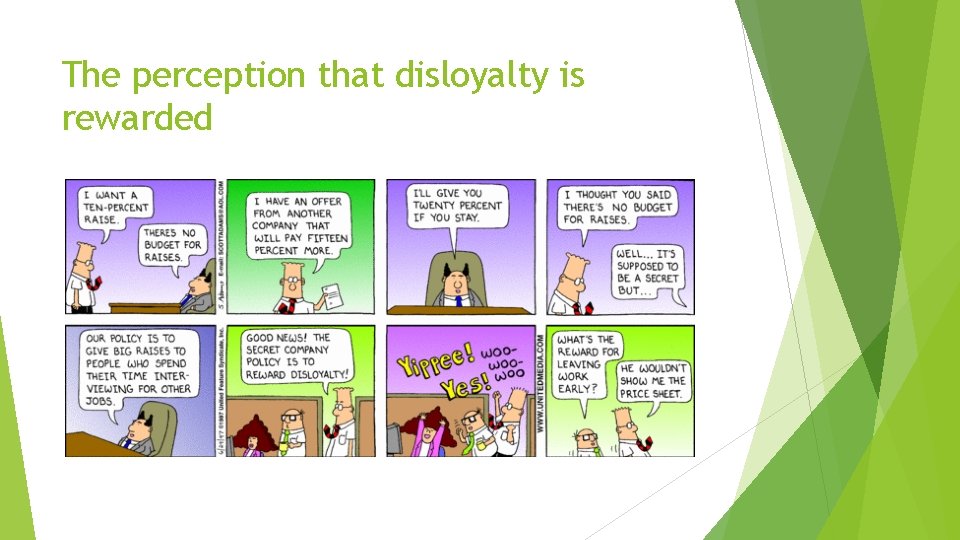
The perception that disloyalty is rewarded
Recap: What considerations are important to the employer (manager, owner, C-suite)? 1. Will the program help the company achieve its goals? 2. Does the program incent the desired behaviors? 3. Will there be unintended consequences to the plan? 4. Is the program affordable? 5. What are the expectations of employees/ candidates? 6. What are competitors offering? 7. Will the employees be thankful and show their appreciation?
Recap: What considerations are important to the employee (participant): 1. Do I realistically have significant upside potential from this program? 2. Will my efforts be recognized and rewarded the way they should be? i. e. , in line with my expectations? 3. Do I understand how the program works? 4. Do I understand what I need to do to earn the compensation from the program? 5. What are the metrics? Can I track my performance against these goals? 6. To what extent can I affect the results/outcomes being measured/rewarded? 7. How much of the results are out of my control? 8. What are the experiences (rewards) of other employees?
Bonus formula example
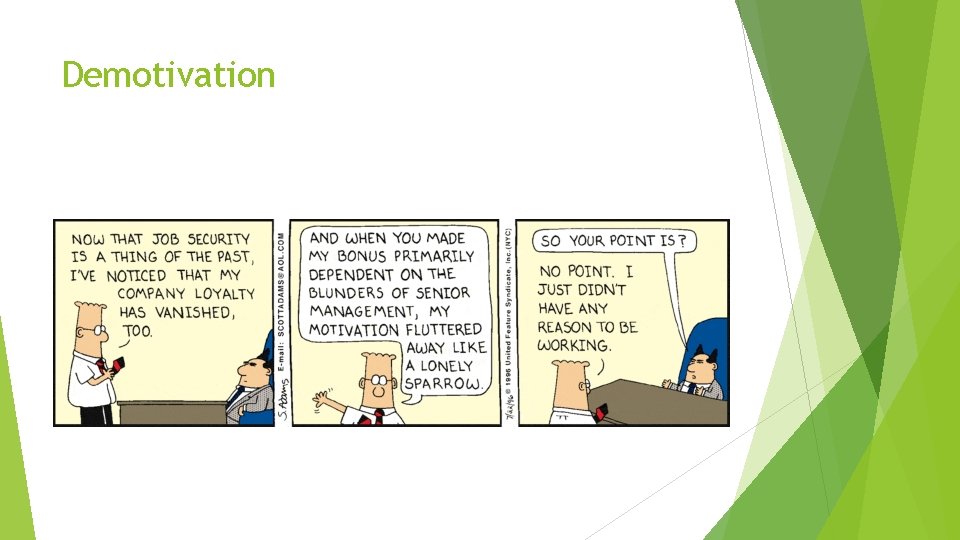
Demotivation
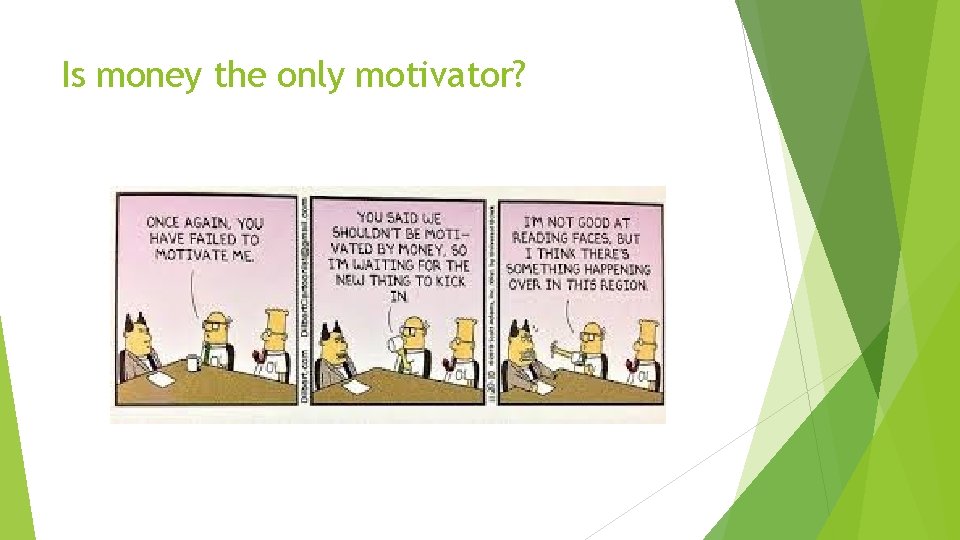
Is money the only motivator?
A few non-monetary motivators Time-off Flexible schedule, work from home Trips Recognition Opportunity to pursue personal career goals Customized “gifts” based on personal interests
Several types of bonuses Profit-sharing – typically a fixed percentage of payroll; encourage employees to understand how their work affects the company's performance and to improve the company's profitability. Gain-sharing –bonuses for statistical improvements in production and quality on a quarterly or sometimes monthly basis, providing a sense of excitement for participants. Spot bonus awards - reward employees on the spot for achievements that deserve special recognition. Noncash bonus – recognition at a special ceremony; often with token tangible reward Sign-on bonus – common in tight labor market; establish goodwill and buy out compensation “left on the table” from a previous employer Mission bonus (aka Task or Milestone bonus) - given to a team of employees for achieving a milestone or for completing an important project. Referral bonus - employers prefer to avoid recruiter’s fees, and instead, offer referral bonuses to employees for recommending friends and acquaintances. Retention bonus - designed to provide continuity when there is potential uncertainty about an employee's continued employment at the company, such as M&A circumstances. Holiday bonus - range from small gifts; from cash to the ubiquitous holiday turkey to one month's salary; not a true bonus since no performance is required to receive it. Sales commission - are paid out as a percentage of sales volume; a significant source of income for sales employees.
Executive Benefit Plans Nathan Bennett, CFP, Ch. FC, CLU, CBEC
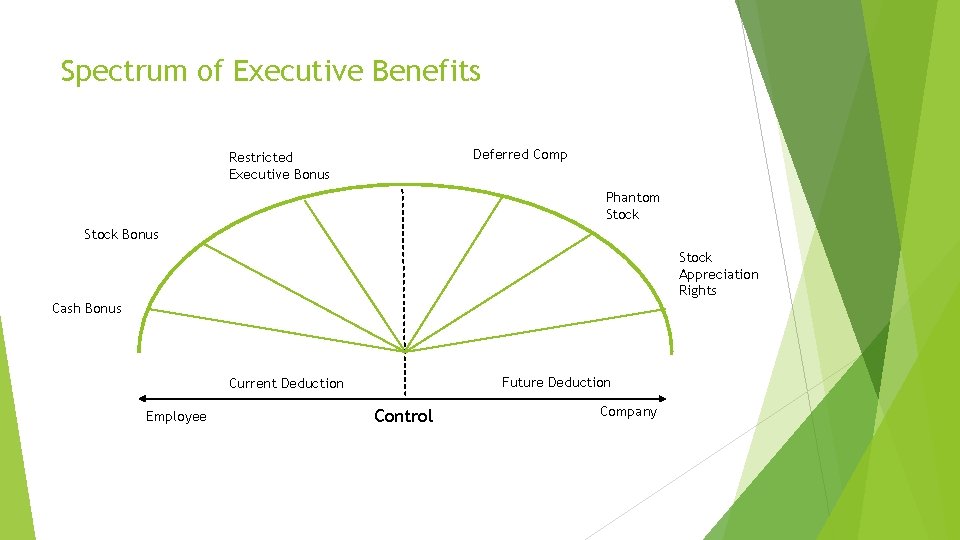
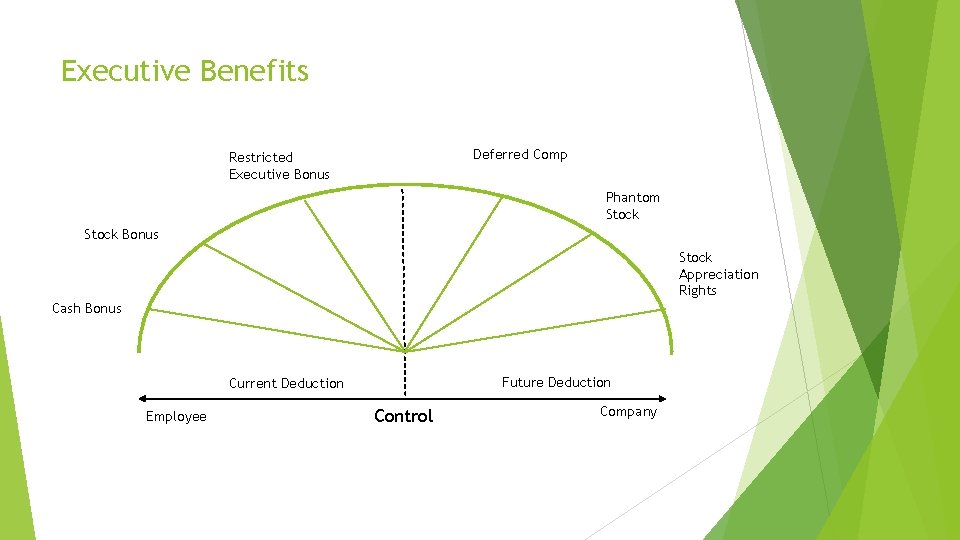
Spectrum of Executive Benefits Deferred Comp Restricted Executive Bonus Phantom Stock Bonus Stock Appreciation Rights Cash Bonus Future Deduction Current Deduction Employee Control Company
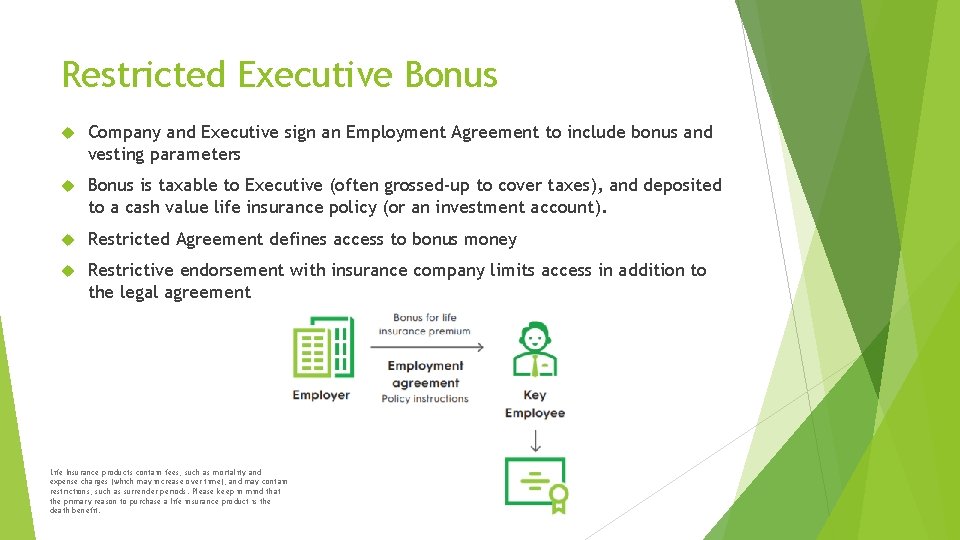
Restricted Executive Bonus Company and Executive sign an Employment Agreement to include bonus and vesting parameters Bonus is taxable to Executive (often grossed-up to cover taxes), and deposited to a cash value life insurance policy (or an investment account). Restricted Agreement defines access to bonus money Restrictive endorsement with insurance company limits access in addition to the legal agreement Life Insurance products contain fees, such as mortality and expense charges (which may increase over time), and may contain restrictions, such as surrender periods. Please keep in mind that the primary reason to purchase a life insurance product is the death benefit.
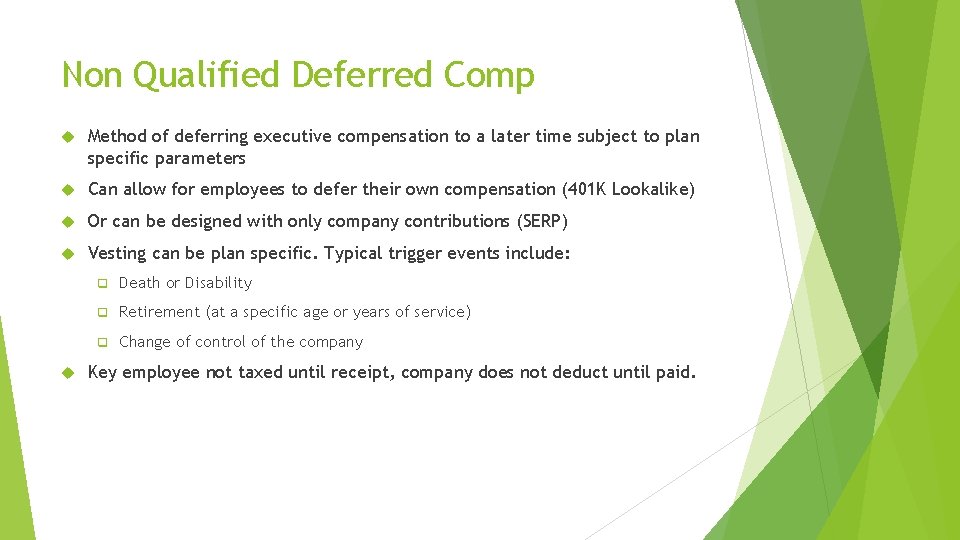
Non Qualified Deferred Comp Method of deferring executive compensation to a later time subject to plan specific parameters Can allow for employees to defer their own compensation (401 K Lookalike) Or can be designed with only company contributions (SERP) Vesting can be plan specific. Typical trigger events include: q Death or Disability q Retirement (at a specific age or years of service) q Change of control of the company Key employee not taxed until receipt, company does not deduct until paid.
Non Qualified Deferred Comp Important Notes: Documents need to be drafted by legal counsel to comply with IRS and ERISA regulations. Plans need to comply with 409 A requirements for Deferred Comp. Individual assets cannot be tied directly to promised benefits, otherwise the executive will recognize the benefit as taxable income. Best practice is to informally fund future liabilities so that a trigger event does not cause financial harm to the sponsoring company.
Phantom Stock A Non Qualified Deferred Compensation Plan with the value of the benefit determined by the stock price of the company. A Phantom Stock Unit is valued based on company stock value. Company Valuation must be performed annually to “keep score”. When triggered, the value of the Phantom Stock is paid out as taxable income to the employee and is deductible to the company.
Phantom Stock - Advantages Phantom stock is not real stock. Recipients have no shareholder rights, nor do they have any liability associated with stock ownership. Allows a meaningful dollar value to be issued to an executive without any liability being created until vesting in the future. Helpful in a slow growth business where the incentive is to maintain profitability vs pushing for significant growth Third party administration not required. Scorekeeping is relatively simple.
Phantom Stock - Drawbacks Each grant is dilutive to overall value of the company. May limit the amount owners are willing to issue as they don’t want to give away too much. Valuation is an annual cost to maintain the plan. Subject to vesting, Phantom stock creates an immediate potential liability. Liabilities need to be forecasted, and best practice is to start informally funding the future payments.
Stock Appreciation Rights (SARs) A Non Qualified Deferred Compensation Plan with the value of the benefit determined by the APPRECIATION in the stock price between issuance and vesting. A SAR Unit has no value at issue, but has a grant price above which the SAR will accrue value. Company Valuation must be performed annually to “keep score”. When triggered, the value of the SAR is paid out as taxable income to the employee and is deductible to the company.
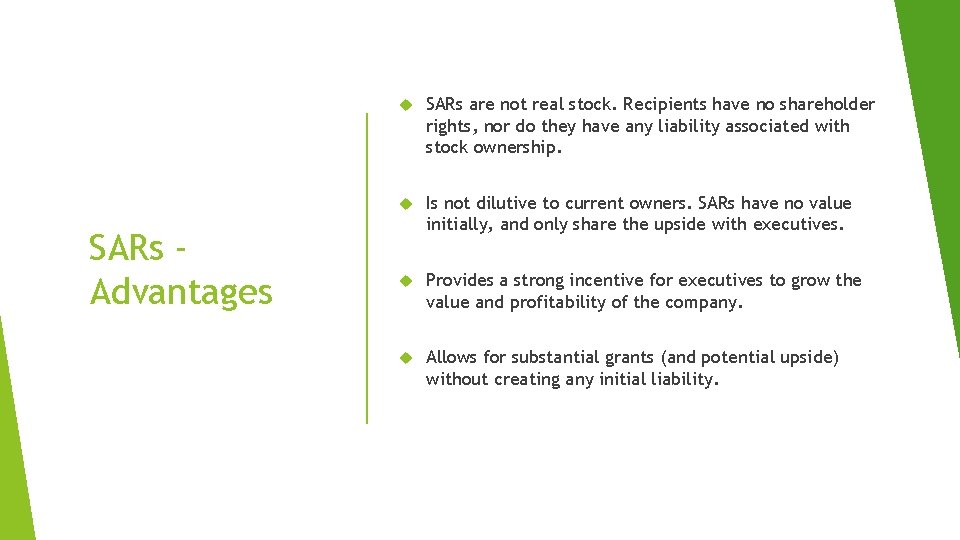
SARs Advantages SARs are not real stock. Recipients have no shareholder rights, nor do they have any liability associated with stock ownership. Is not dilutive to current owners. SARs have no value initially, and only share the upside with executives. Provides a strong incentive for executives to grow the value and profitability of the company. Allows for substantial grants (and potential upside) without creating any initial liability.
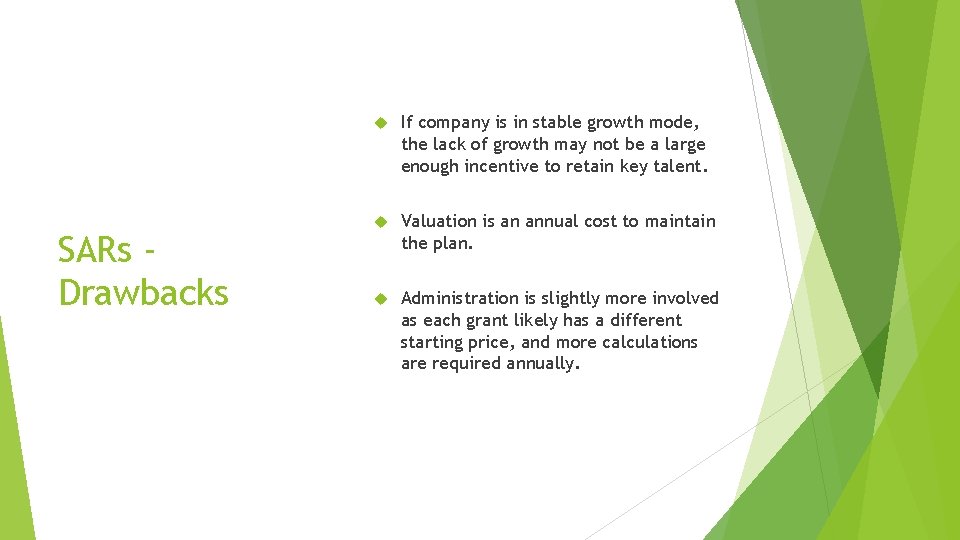
SARs Drawbacks If company is in stable growth mode, the lack of growth may not be a large enough incentive to retain key talent. Valuation is an annual cost to maintain the plan. Administration is slightly more involved as each grant likely has a different starting price, and more calculations are required annually.
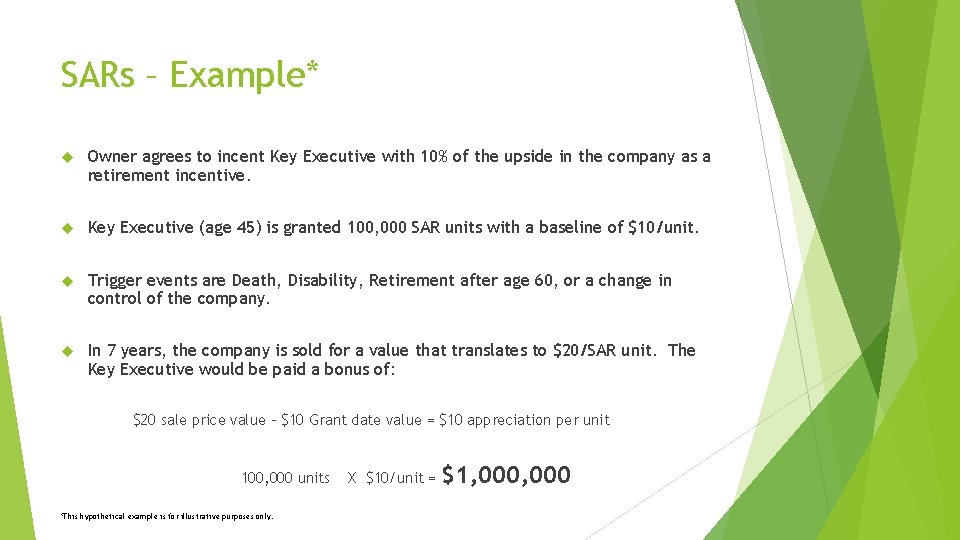
SARs – Example* Owner agrees to incent Key Executive with 10% of the upside in the company as a retirement incentive. Key Executive (age 45) is granted 100, 000 SAR units with a baseline of $10/unit. Trigger events are Death, Disability, Retirement after age 60, or a change in control of the company. In 7 years, the company is sold for a value that translates to $20/SAR unit. The Key Executive would be paid a bonus of: $20 sale price value - $10 Grant date value = $10 appreciation per unit 100, 000 units *This hypothetical example is for illustrative purposes only. X $10/unit = $1, 000
Executive Benefits Deferred Comp Restricted Executive Bonus Phantom Stock Bonus Stock Appreciation Rights Cash Bonus Future Deduction Current Deduction Employee Control Company
Thank You Financial Professionals do not provide specific tax/legal advice and this information should not be considered as such. You should always consult your tax/legal advisor regarding your own specific tax/legal situation. Nathan is a registered representative and investment advisor representative of Securian Financial Services, Inc. Securities and investment advisory services offered through Securian Financial Services, Inc. Member FINRA/SIPC. Summit Financial is independently owned and operated. 2000 Crow Canyon Place, Suite 450, San Ramon, CA 94583. TR#2902792 DOFU 1/2020
Questions?