
MATERIAL SCIENCE GROUP MEMBERS INTAN NAJIHA LEADER IZZAH
MATERIAL SCIENCE GROUP MEMBERS • INTAN NAJIHA (LEADER) • IZZAH ATHIRAH • WAN NUR FATIN NURSYUHADAH • ASMAK SAFIYYAH • • NUR FATHIAH • HAFIZUDDIN • AMINURAIMAN
WHAT IS SILICATES? • Silicates is made up of silicon and many other elements like, oxygen, and metals such as aluminium, etc. • Silicate is any of a class of minerals formed by combining an anion of silicon and oxygen with a metal salt. • Many ceramic materials contain silicate structures which consists of silicon and oxygen atoms bonded together in various arrangement. • Many silicates occur naturally as minerals and gemstones.
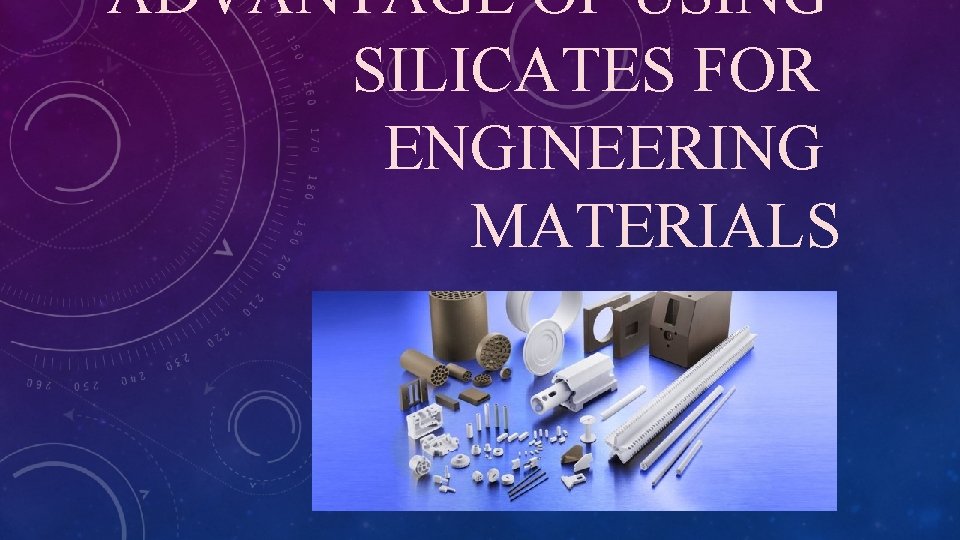
ADVANTAGE OF USING SILICATES FOR ENGINEERING MATERIALS
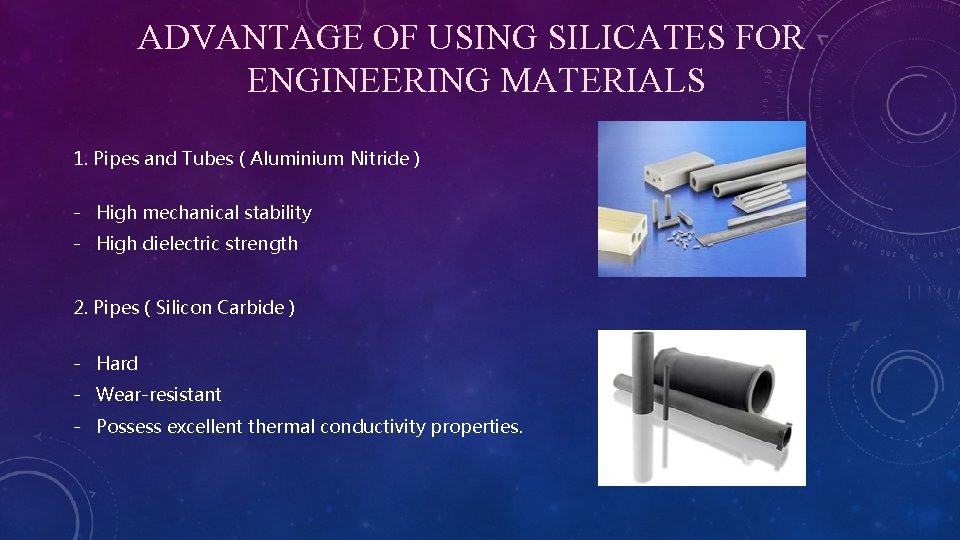
ADVANTAGE OF USING SILICATES FOR ENGINEERING MATERIALS 1. Pipes and Tubes ( Aluminium Nitride ) - High mechanical stability - High dielectric strength 2. Pipes ( Silicon Carbide ) - Hard - Wear-resistant - Possess excellent thermal conductivity properties.
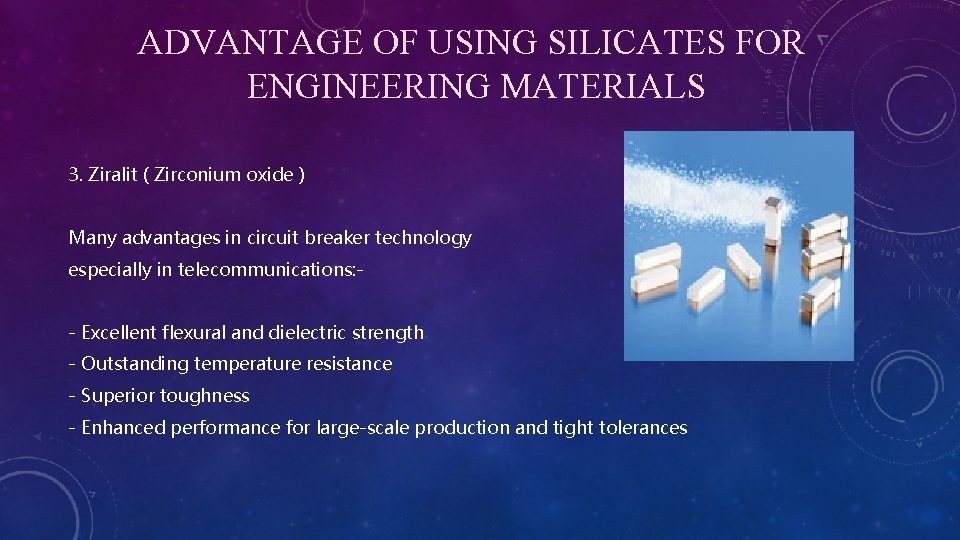
ADVANTAGE OF USING SILICATES FOR ENGINEERING MATERIALS 3. Ziralit ( Zirconium oxide ) Many advantages in circuit breaker technology especially in telecommunications: - Excellent flexural and dielectric strength - Outstanding temperature resistance - Superior toughness - Enhanced performance for large-scale production and tight tolerances
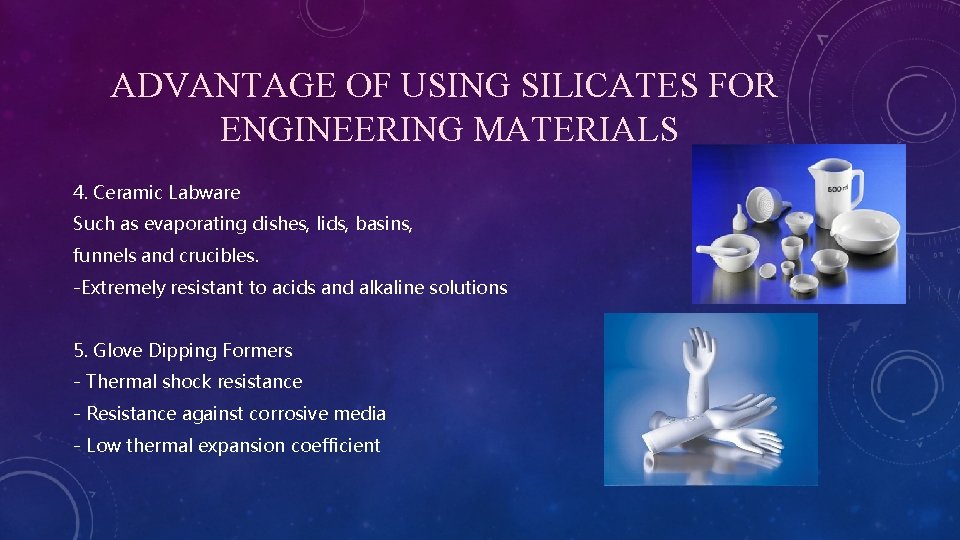
ADVANTAGE OF USING SILICATES FOR ENGINEERING MATERIALS 4. Ceramic Labware Such as evaporating dishes, lids, basins, funnels and crucibles. -Extremely resistant to acids and alkaline solutions 5. Glove Dipping Formers - Thermal shock resistance - Resistance against corrosive media - Low thermal expansion coefficient
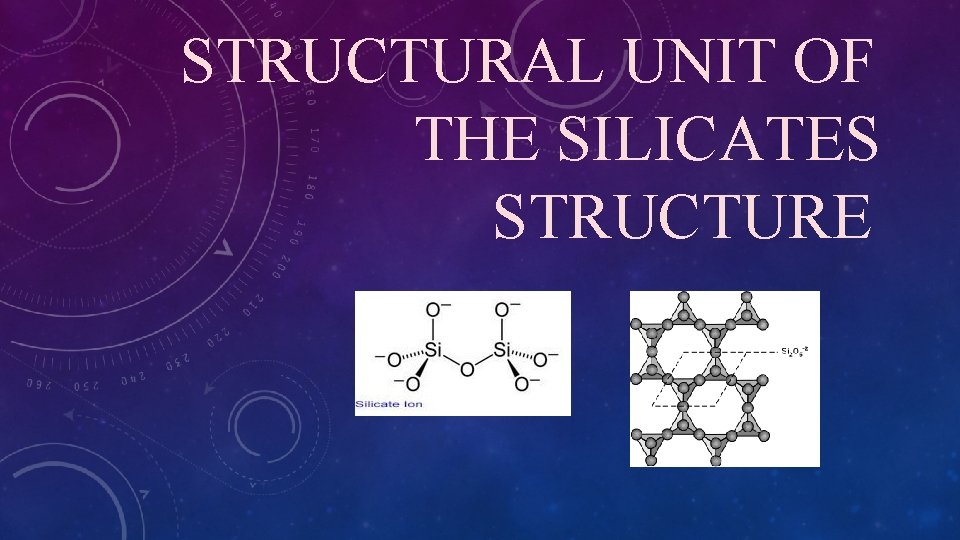
STRUCTURAL UNIT OF THE SILICATES STRUCTURE
STRUCTURE AND FORMULA • The basic building block, the structural unit, of silicate minerals is the Si. O 44 -tetrahedron. • In the Si. O 44 - tetrahedron each Si atom is covalently bonded to 4 oxygen atoms. • In the tetrahedron Si has an oxidation state of +4 and O has an oxidation state of -2. • Overall charge on the tetrahedron = +4 + (4 x -2) = -4 • Representations of the Si. O 44 - tetrahedron are shown below: • The tetrahedra can link together by sharing corners resulting in Si-O-Si covalent bonds.
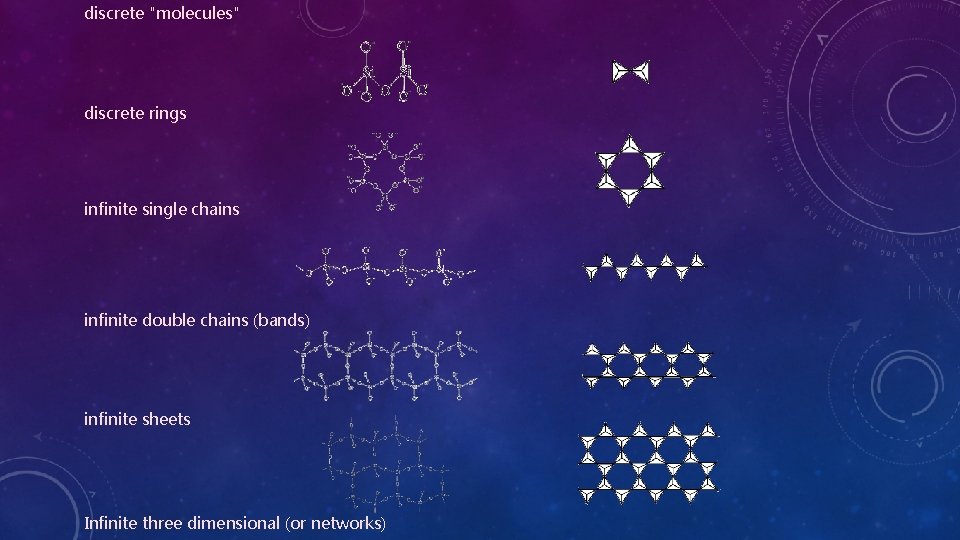
discrete "molecules" discrete rings infinite single chains infinite double chains (bands) infinite sheets Infinite three dimensional (or networks)
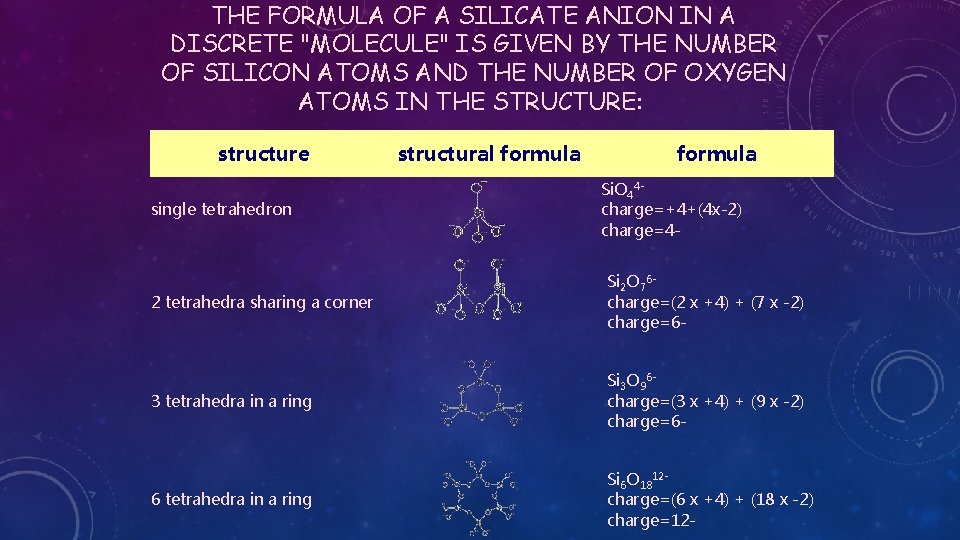
THE FORMULA OF A SILICATE ANION IN A DISCRETE "MOLECULE" IS GIVEN BY THE NUMBER OF SILICON ATOMS AND THE NUMBER OF OXYGEN ATOMS IN THE STRUCTURE: structure single tetrahedron structural formula Si. O 44 charge=+4+(4 x-2) charge=4 - 2 tetrahedra sharing a corner Si 2 O 76 charge=(2 x +4) + (7 x -2) charge=6 - 3 tetrahedra in a ring Si 3 O 96 charge=(3 x +4) + (9 x -2) charge=6 - 6 tetrahedra in a ring Si 6 O 1812 charge=(6 x +4) + (18 x -2) charge=12 -
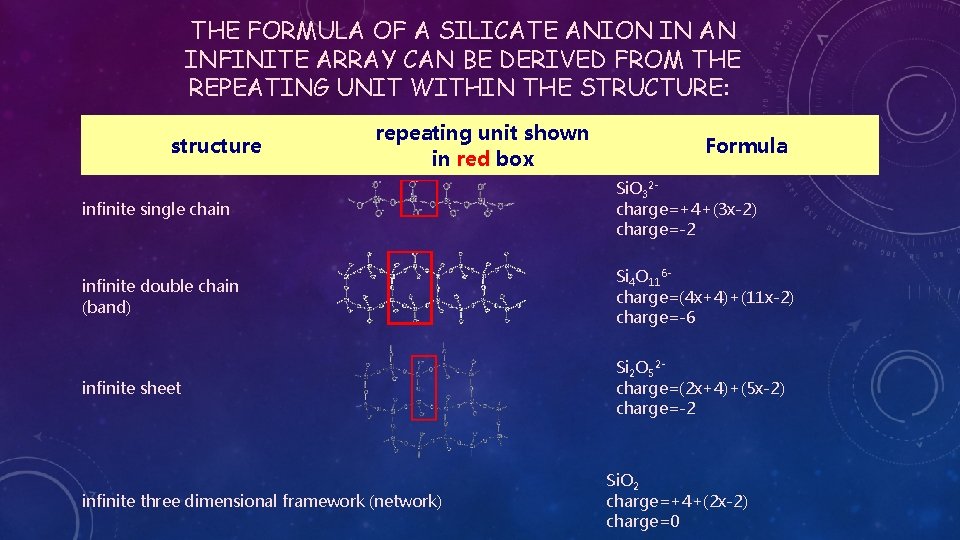
THE FORMULA OF A SILICATE ANION IN AN INFINITE ARRAY CAN BE DERIVED FROM THE REPEATING UNIT WITHIN THE STRUCTURE: structure repeating unit shown in red box Formula infinite single chain Si. O 32 charge=+4+(3 x-2) charge=-2 infinite double chain (band) Si 4 O 116 charge=(4 x+4)+(11 x-2) charge=-6 infinite sheet Si 2 O 52 charge=(2 x+4)+(5 x-2) charge=-2 infinite three dimensional framework (network) Si. O 2 charge=+4+(2 x-2) charge=0
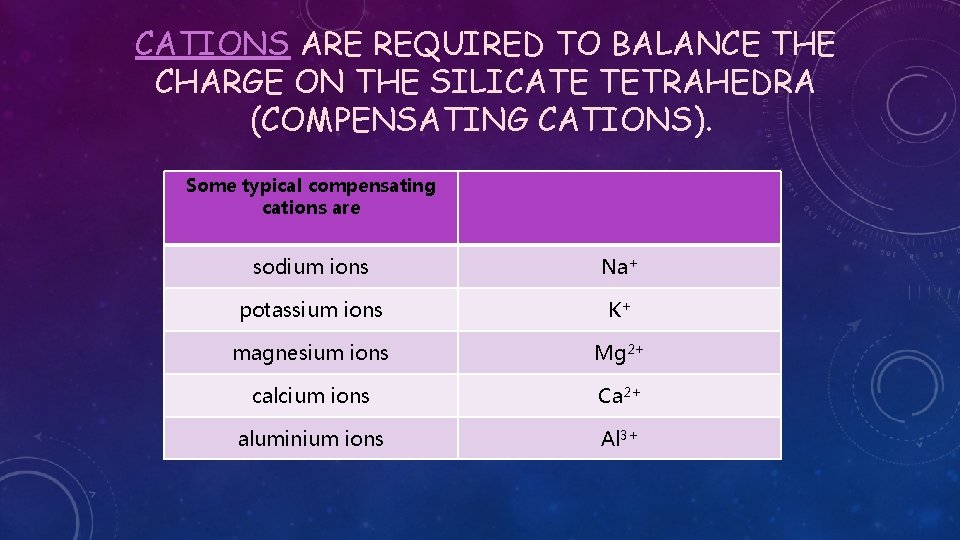
CATIONS ARE REQUIRED TO BALANCE THE CHARGE ON THE SILICATE TETRAHEDRA (COMPENSATING CATIONS). Some typical compensating cations are sodium ions Na+ potassium ions K+ magnesium ions Mg 2+ calcium ions Ca 2+ aluminium ions Al 3+
TYPE OF VARIOUS CERAMIC GLASSES
• relatively inexpensive, chemically stable, reasonably hard, and extremely workable. Because it can be resoftened and remelted numerous times, it is ideal for glass recycling. • Soda-lime glass is prepared by melting the raw materials, such as sodium carbonate, lime, dolomite, silica, aluminium, and small quantities of fining agents (sodium sulphate, sodium chloride) in a glass furnace at temperatures locally up to 1675 °C. • inexpensive minerals such as trona, sand, and feldspar are usually used instead of pure chemicals.
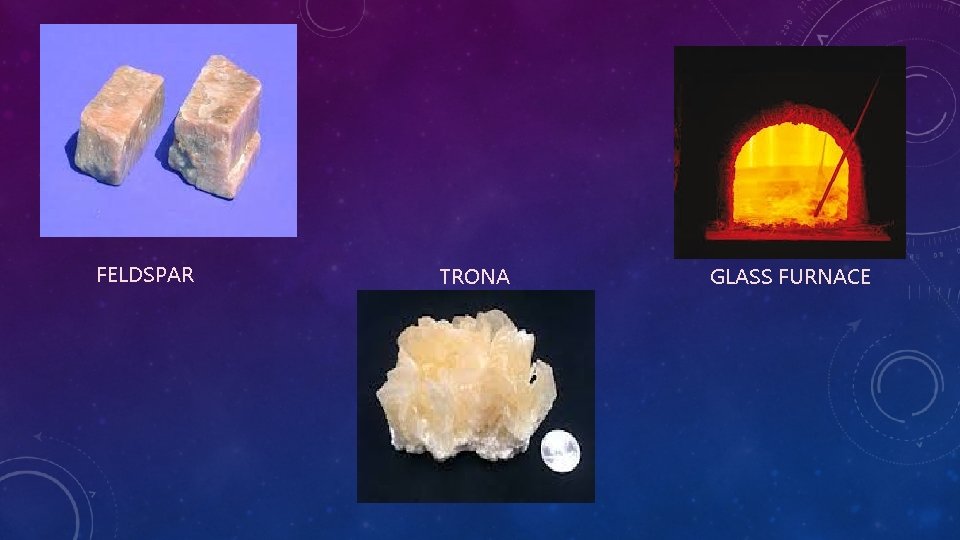
FELDSPAR TRONA GLASS FURNACE
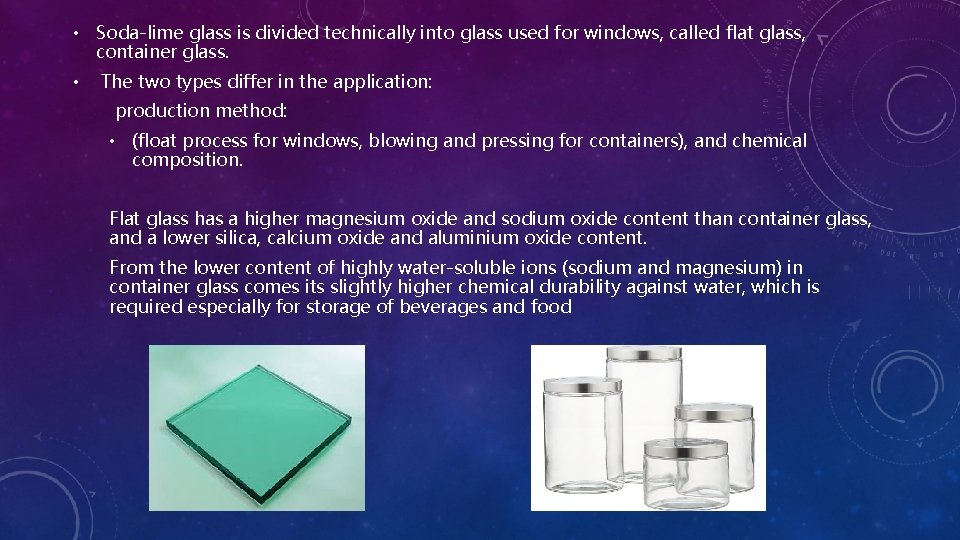
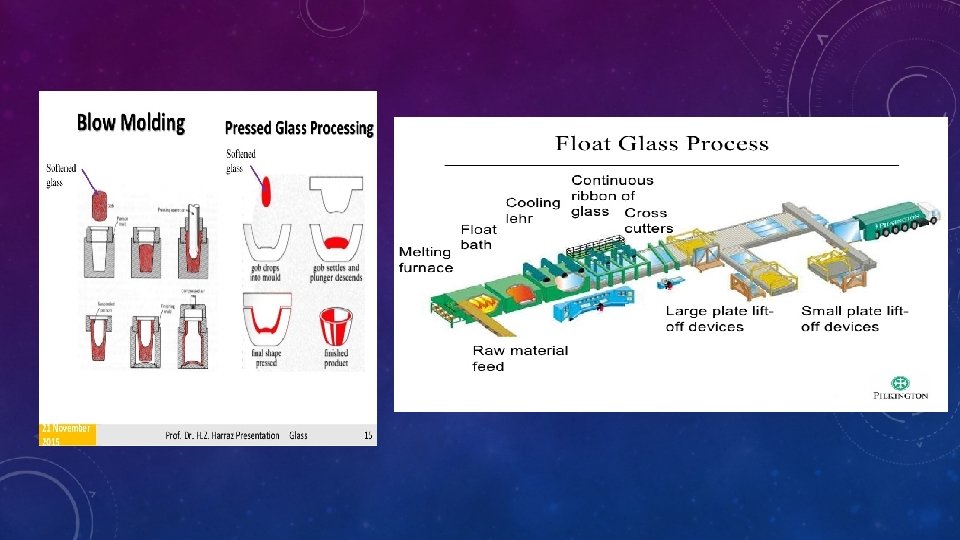
• Soda-lime glass is divided technically into glass used for windows, called flat glass, container glass. • The two types differ in the application: production method: • (float process for windows, blowing and pressing for containers), and chemical composition. Flat glass has a higher magnesium oxide and sodium oxide content than container glass, and a lower silica, calcium oxide and aluminium oxide content. From the lower content of highly water-soluble ions (sodium and magnesium) in container glass comes its slightly higher chemical durability against water, which is required especially for storage of beverages and food
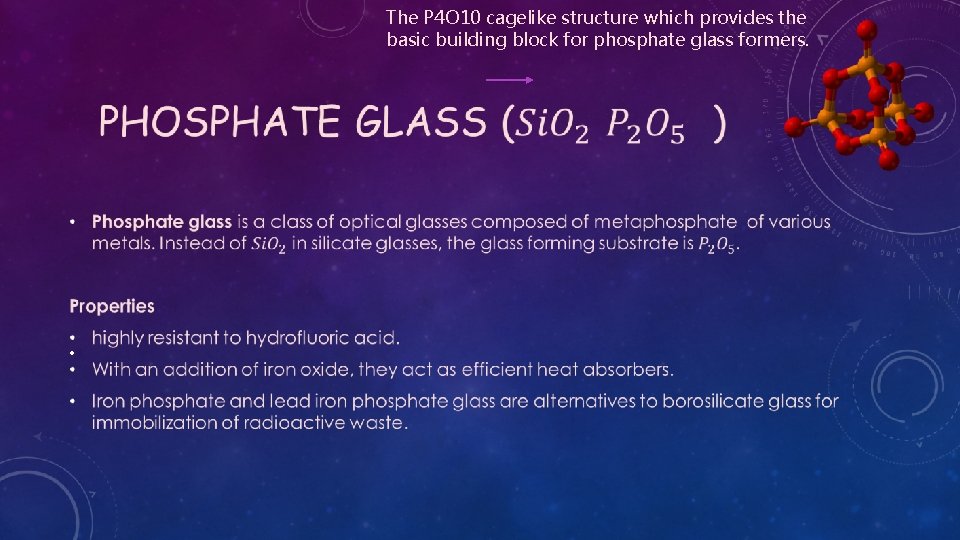
The P 4 O 10 cagelike structure which provides the basic building block for phosphate glass formers. •
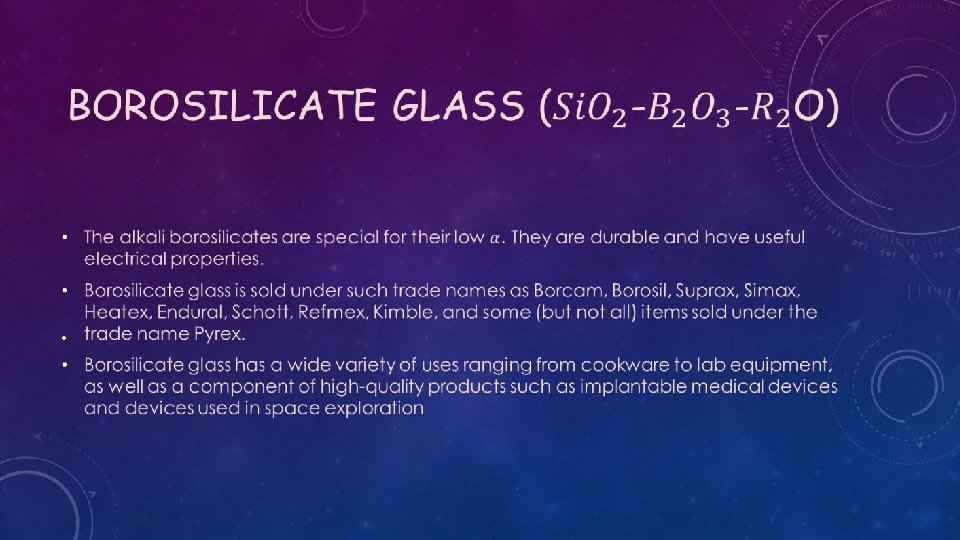
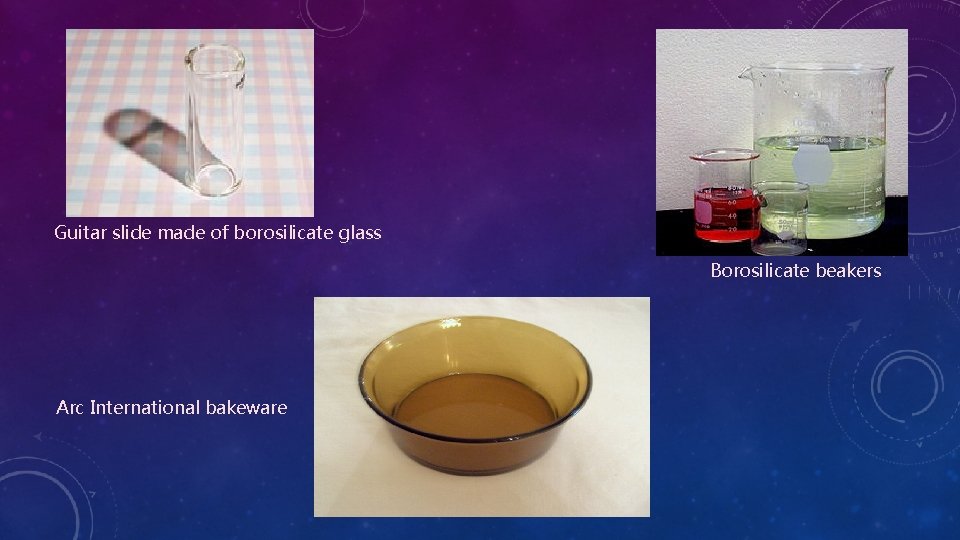
Guitar slide made of borosilicate glass Borosilicate beakers Arc International bakeware
• Fluoride glass is a class of non-oxide optical glasses composed of fluorides of various metals. Due to their low viscosity, it is very difficult to completely avoid the occurrence of any crystallization while processing it through the glass transition (or drawing the fiber from the melt). • Thus, although heavy metal fluoride glasses (HMFG) exhibit very low optical attenuation, they are not only difficult to manufacture, but are quite fragile, and have poor resistance to moisture and other environmental attacks.
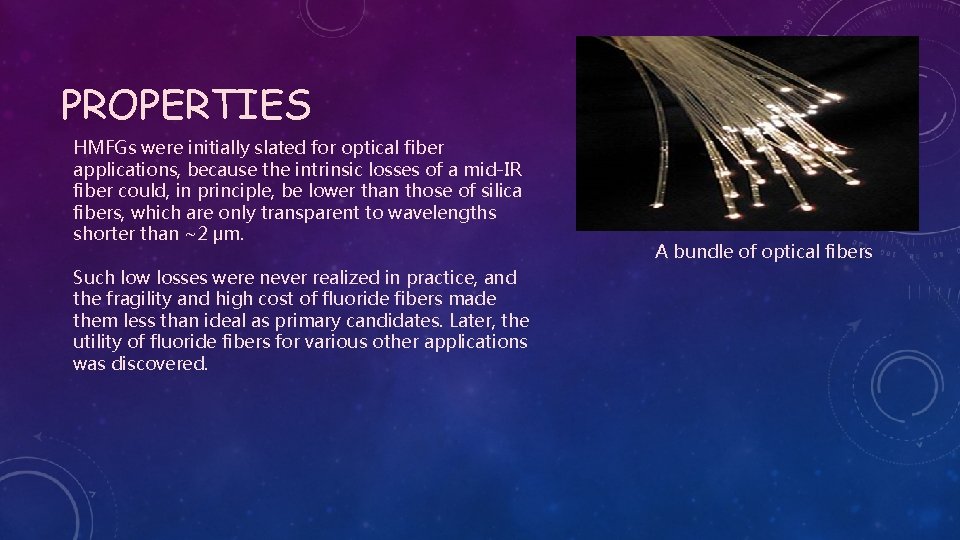
PROPERTIES HMFGs were initially slated for optical fiber applications, because the intrinsic losses of a mid-IR fiber could, in principle, be lower than those of silica fibers, which are only transparent to wavelengths shorter than ~2 μm. Such low losses were never realized in practice, and the fragility and high cost of fluoride fibers made them less than ideal as primary candidates. Later, the utility of fluoride fibers for various other applications was discovered. A bundle of optical fibers
THE GLASS TRANSITION TEMPERATURE
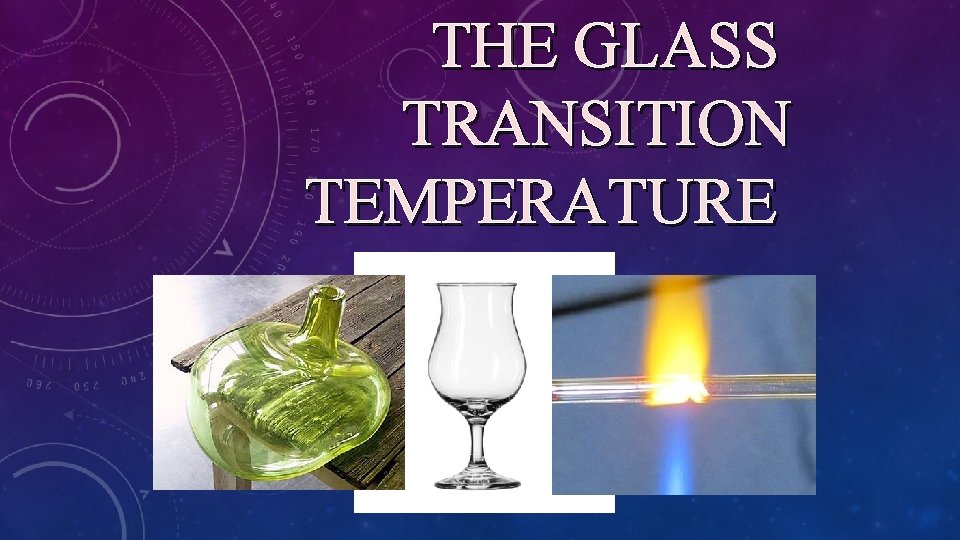
DEFINITION THE GLASS TRANSITION TEMPERATURE (TG), NOT TO BE CONFUSED WITH MELTING POINT (TM), IS THE TEMPERATURE RANGE WHERE A THERMOSETTING POLYMER CHANGES FROM A HARD, RIGID OR “GLASSY” STATE TO A MORE PLIABLE, COMPLIANT OR “RUBBERY” STATE.
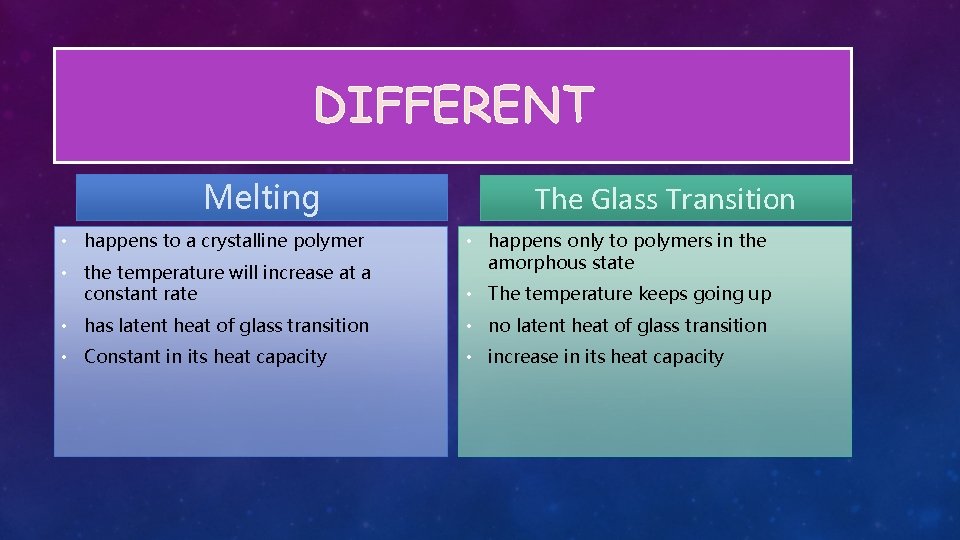
DIFFERENT Melting • happens to a crystalline polymer • the temperature will increase at a constant rate The Glass Transition • happens only to polymers in the amorphous state • The temperature keeps going up • has latent heat of glass transition • no latent heat of glass transition • Constant in its heat capacity • increase in its heat capacity
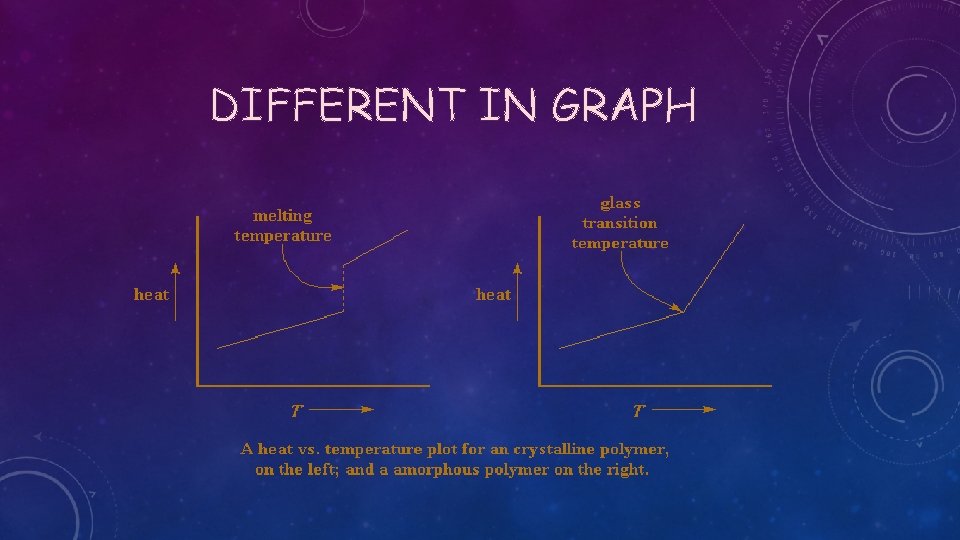
DIFFERENT IN GRAPH

THANK YOU
- Slides: 28