Goals of Family Planning services n n 2252021







- Slides: 52
Goals of Family Planning services : n n 2/25/2021 1 - Enable women and men to limit family size 2 - It safeguards individual health and rights 3 - Preserves our planet’s resources 4 - Improves the quality of life for individual women, their partners, and their children 2
n n n 2/25/2021 5 - Prevent unwanted or risky pregnancies 6 - Decreases incidence of congenital abnormalities 7 - Decreases Maternal and infant mortality rates 8 - Control the world population size 9 - Improves all aspects of life standers economical , educational, and health psychological 3
Family Planning Family planning, by definition, respects the right of each family to decide on the number of children they desire, but aiming to protect the health & welfare of the family, offers counseling & means for deliveries to occur at optimum ages (20 to 35 years), in optimal numbers (less than 5) & at optimal intervals (at least 2 years). 2/25/2021 4
Counseling n n n 2/25/2021 a) Great b) Reassure c) Explain d) Answer e) T/Rx. 5
Counseling n n n 2/25/2021 Choosing a birth control method is an important decision. Some of the things you might want to consider when choosing a method are : 1 - Personal consideration 2 - Effectiveness 3 - Safety 4 - Cost 6
Counseling on Family Planning: 1) A detailed history 2) Information on all available methods 3) All practical points related to the use of the selected method must be discussed in detail 2/25/2021 7
Contraceptive Methods: n • • n 2/25/2021 Traditional or Natural Methods Abstinence : not having sexual intercourse Withdrawal ( Coitus interrupts ): pulling out Fertility Awareness Method (FAM) : basal body temperature (BBT 8
Contraceptive Methods Traditional Methods ( cont. ) a) Breast Feeding LAM (Lactation Amenorrhea Method). - Risk of pregnancy is 1. 8% at the end of 6 months after delivery in women who exclusively breast-feed & who have not yet started to menstruate. - Cheap method - No side effects - Many other advantages. 2/25/2021 9
b) Hormonal Contraceptives: 1 -Combined Oral Contraceptives (COC): -Contain estrogen & progesterone. -Efficacy rate is 0. 1 per 100 case per year -Easily taken, temporary -S. effects: DVT, HTN, CVA, weight gain, nausea, dizziness, headache 2 -Progesterone- only Pills: -Contain only progesterone -Can be taken while lactating -S. effects: Irregular vaginal bleeding, Headache, Depression 2/25/2021 10
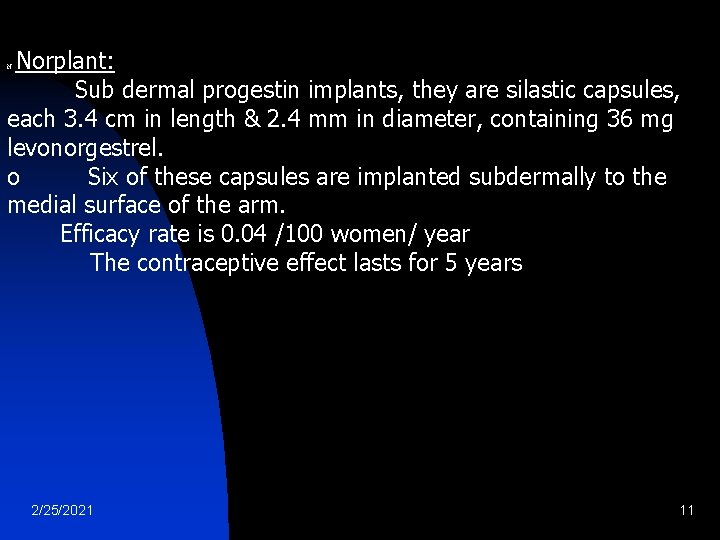
Norplant: Sub dermal progestin implants, they are silastic capsules, each 3. 4 cm in length & 2. 4 mm in diameter, containing 36 mg levonorgestrel. o Six of these capsules are implanted subdermally to the medial surface of the arm. Efficacy rate is 0. 04 /100 women/ year The contraceptive effect lasts for 5 years N 2/25/2021 11
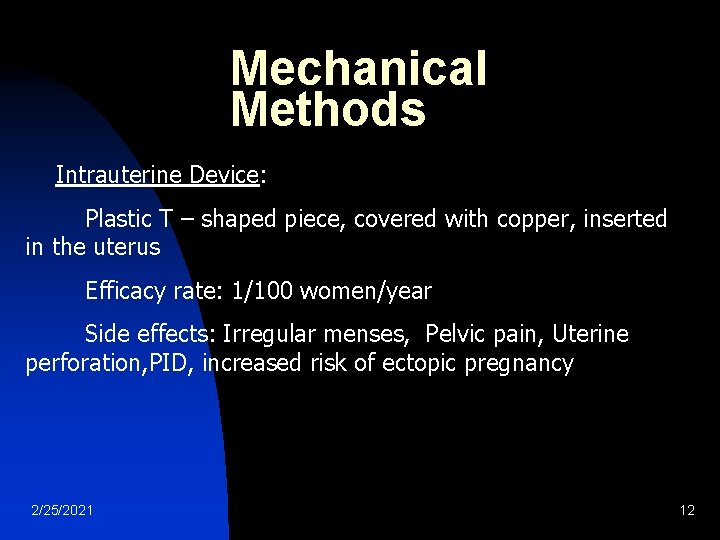
Mechanical Methods Intrauterine Device: Plastic T – shaped piece, covered with copper, inserted in the uterus Efficacy rate: 1/100 women/year Side effects: Irregular menses, Pelvic pain, Uterine perforation, PID, increased risk of ectopic pregnancy 2/25/2021 12
Condoms: Rubber pouches which prevent the ejaculation from reaching the vagina No side effects whatsoever Effective in prevention of STD transmission Does not affect lactation Contraindicated in cases of sensitivity to latex 2/25/2021 13
Surgical Methods Surgical Sterilization: Tubal ligation in females & vasectomy in males Efficacy rate is 0. 1 -0. 5 /100 women/year Irreversible 2/25/2021 14
Family Planning in Jordan n 2/25/2021 A high fertility rate combined with relatively low infant mortality and high levels of immigration make Jordan one of the fastest growing countries in the world. 15
n 2/25/2021 Indeed, Jordan's total population now exceeds 6. 5 million, compared with less than 600, 000 in the early 1950 s. This rapid growth puts severe pressure on scarce water supplies. 16
n 2/25/2021 It also makes it harder and harder to generate sufficient employment and finance essential health, education, and other social services. 17
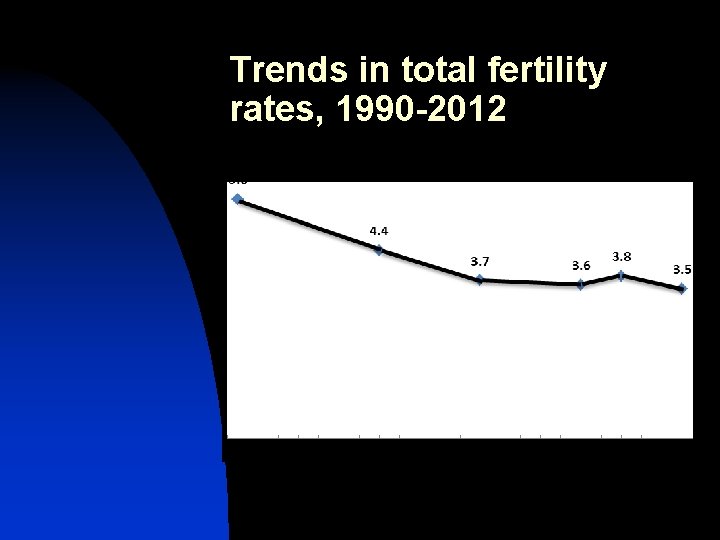
Total Fertility Rate (TFR). n n n 2/25/2021 Although fertility dropped dramatically between 1983 and 2002. It has remained almost constant since 2002. Currently women in Jordan have an average of 3. 5 children, compared to 3. 6 in 2007. 18
n 2/25/2021 The 1997 Contraceptive Prevalence Rate (CPR) was 52. 6 percent, almost reaching the target set by the National Population Commission three years ahead of time. 19
n 2/25/2021 Effective family planning is increasingly seen as an important part of Jordan's overall development strategy. 20
n 2/25/2021 In contrast to several years ago, such programs are openly discussed and rarely encounter public opposition. 21
n 2/25/2021 According to survey research, 83 percent of the Islamic religious leaders in Jordan believe that family planning is permitted under Islam 22
The private sector is leading the way in making family planning services available to the Jordanian public. Seventy two percent of married women of reproductive age purchase family planning services in the private sector. 2/25/2021 23
Prices have not increased since 1994 and all four modern methods are available at private pharmacies throughout the country. 2/25/2021 24
Fertility The JPFHS looks at a number of fertility indicators, including 1 -Patterns, and trends in both cumulative fertility. 2 - the length of birth intervals. 3 - Age at which women marry and initiate child bearing. 2/25/2021 25
Information on current and cumulative fertility is essential in monitoring the progress and evaluating the impact of the population programs in Jordan. 2/25/2021 26
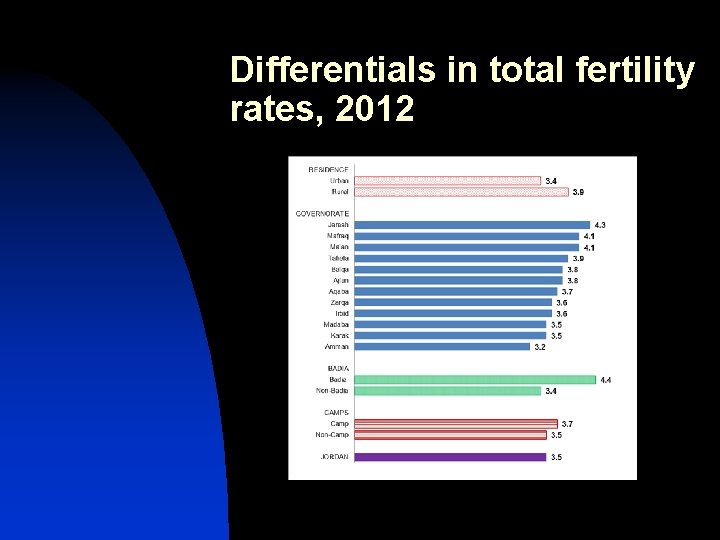
Fertility indicators / 1 Levels and Trends n 2/25/2021 At current fertility levels, a woman in Jordan will have an average of 3. 5 children – a total fertility rate that is 50 percent lower than the rate recorded in 1976 ( 7. 4 children per woman). 27
n 2/25/2021 While fertility has continued to decline in recent years, its pace of decline (16 percent) has slowed since the 1997 survey, which showed a 21 percent decline between 1990 and 1997. 28
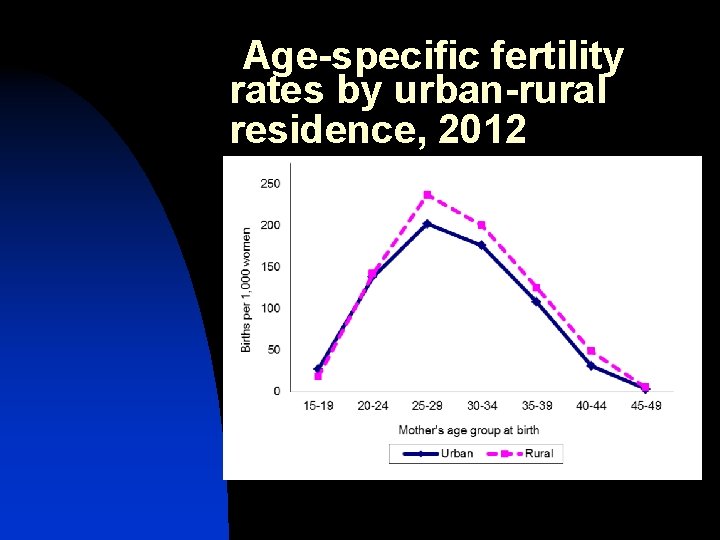
Rural /Urban Fertility is almost identical in urban and rural areas, but does vary by governorate. n Fertility is the lowest in Karak, at 3. 2 children per woman, compared to 4. 1 in Aqaba. Fertility is much higher in the Badia areas than in the non-Badia areas (4. 2 n compared to 3. 5). n 2/25/2021 29
Wealth / fertility n n n 2/25/2021 Fertility increases as the wealth of the respondent’s household decreases. Women living in the poorest households, in general, have almost twice as many children as women who live in the wealthiest households (4. 8 compared to 2. 5 children per woman). 30
Fertility indicators / 2 Birth intervals. n n 2/25/2021 About two-fifths of children are born at least three years after their siblings. Half of children are born after an interval of 31. 2 months or more. 31
Desired Family Size. n n 2/25/2021 Women report a mean ideal family size of 3. 9 children. Ideal family size is slightly higher among women in rural areas than urban areas (4. 2 compared to 3. 9). Ideal family size decreases as women’s education increases 32
Education / Fertility n n 2/25/2021 women with no education would like to have 4. 7 children compared to only 3. 8 among those with higher education. 33
Fertility indicators / 3 Age at First Marriage n 2/25/2021 One of the factors influencing the fertility decline has been the rising age at which Jordanian women marry. 34
Age at First Marriage and First Birth. n n n 2/25/2021 In Jordan, half of women are married by age (Average median age) is 22. 2. Only 18 percent are married by age 18. The median age at first marriage ranges from 21. 1 in Aqaba to 23. 8 in Karak. Women with high education get married five years later than those with no education (median age of 24. 7 compared to 19. 7). 35
Childbearing Age n n 2/25/2021 Childbearing begins at a relatively late age in Jordan. Half of women have their first birth by age 23. 9. Only 8 percent of women had their first birth by age 18. Urban women have their first birth at a slightly younger age than rural women— 23. 8 years versus 24. 3 years. 36
n n 2/25/2021 Women with more education wait much longer to have their first birth. Women with higher education have their first birth at a median age of more than 25 years, compared to only 21. 6 among those who have had no education. 37
Teenage Fertility. n n 2/25/2021 Teenage childbearing is rare in Jordan. Only 3 percent of teenage girls (age 15 -19) have already had a birth, and another 1 percent is pregnant with their first child. In general, teenage childbearing is much more common among women with less education (16 percent among those with only elementary) and among those in the poorest households (8 percent). 38
Knowledge of Family Planning. n n 2/25/2021 Knowledge of family planning methods in Jordan is universal: almost 100 percent of ever-married women age 15 -49 know at least one modern method of family planning. The most commonly known methods are the IUD and pill (99 percent each). 39
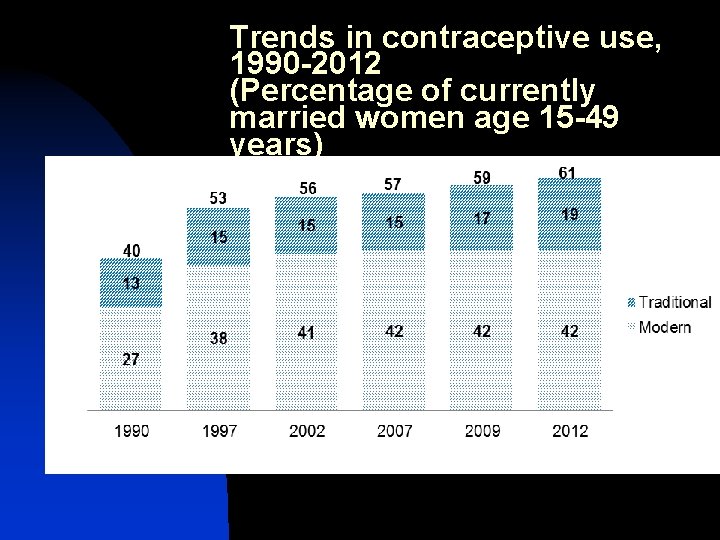
Use of Family Planning. n 2/25/2021 Although contraception use increased greatly between 1990 and 2002, it has since stabilized. According to the 2012 JPFHS, 61 percent of married women are currently using a contraception method (Contraceptive prevalence rate); 42 percent are using a modern method. The IUD is the most popular method, with 22 percent of married women, followed by the pill (8 percent). 40
n n n 2/25/2021 Use of modern family planning does not vary significantly by residence or governorate. Modern methods are used by 43 percent of married women in urban areas, compared with 36 percent in rural areas. Modern contraceptive use ranges from a low of 34 percent of married women in Ma’an and Mafraq to a high of 46 percent in Zarqa. 41
n n n n 2/25/2021 Modern contraceptive use increases slightly as women’s education increases, from 36 percent of women with no education to 42 percent among those with higher education. Use of modern methods increases more markedly with wealth— 47 percent of married women in the wealthiest households use a modern method compared to only 35 percent of married women in the poorest households. 42
n n 2/25/2021 Fifteen percent of married women use a traditional method of family planning. Withdrawal is used by 11 percent and 4 percent use periodic abstinence. 43
Source of Family Planning Methods. n n n 2/25/2021 Public sources such as government hospitals, health centers, and the Royal Medical Services currently provide contraceptives to about 42 percent of current users, while private hospitals and clinics provide methods to 58 percent of users 44
n n 2/25/2021 . Pills and IUDs are most frequently obtained from private sources, while injectables and female sterilization are usually obtained through public sources. 45
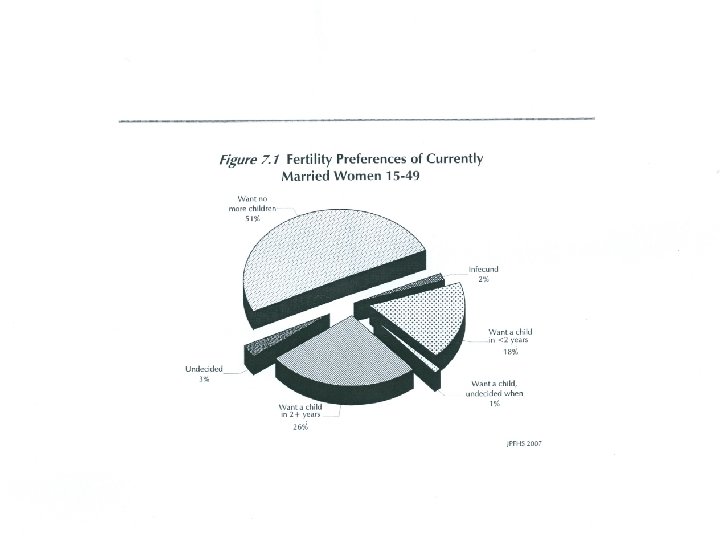
Unmet Need for Family Planning. n 2/25/2021 Unmet need for family planning is defined as the percentage of married women who want to space their next birth or stop childbearing entirely but are not using contraception. 46
n 2/25/2021 The 2007 JPFHS reveals that 12 percent of married women have an unmet need for family planning— 5 percent for spacing and 7 percent for limiting. Unmet need is highest among those with no education, and among those in the poorest households. Unmet need varies by governorate, ranging from only 9 percent in Zarqa to 21 percent in Ma’an. 47
Differentials in total fertility rates, 2012
Age-specific fertility rates by urban-rural residence, 2012
Trends in total fertility rates, 1990 -2012
Trends in contraceptive use, 1990 -2012 (Percentage of currently married women age 15 -49 years)