
Demography and Family Planning Dr Pracheth R Assistant





- Slides: 68
Demography and Family Planning Dr. Pracheth R, Assistant Professor, Community Medicine, Yenepoya Medical College 1
Outline • Demographic cycle • Birth and death rates • Growth rates • Sex ratio • Age pyramids • Dependency ratio • Urbanization • Fertility and related statistics • Population explosion 2
Introduction • Scientific study: human population üChanges in population size üComposition of population üDistribution • Census, vital events registration 3
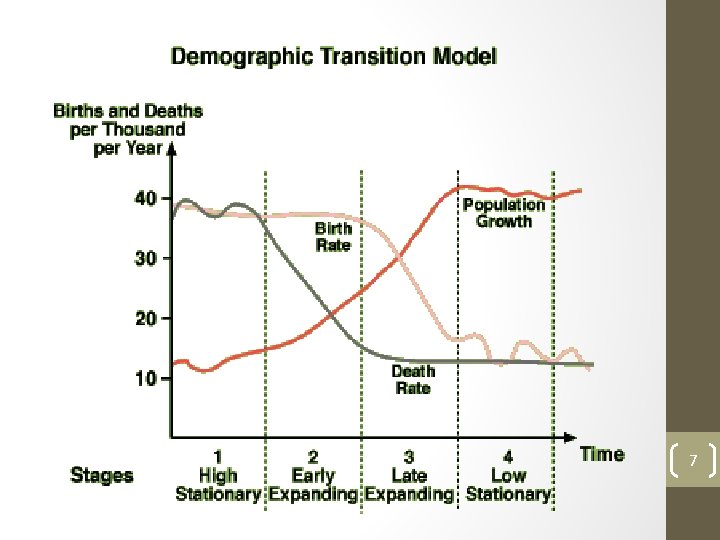
Demographic cycle • First stage- High stationary üHigh birth rate, death rate üCancel ; stationary üIndia: in this stage-1920 • Second stage-Early expanding üDeath rate decline, birth rate unchanged üSouth Asia, African countries 4
Continued…. . • Third stage-Late expanding üDeath rate declines further üBirth rate tends-fall üBirth>death-population grows üIndia • Fourth stage-Low stationary üLow birth, death rate üStationary population- zero population growth üUS, UK, Austria, Denmark, Sweden 5
Continued…. . • Fifth stage-Declining üBirth rate less than death rate üSo declines üGermany, Hungary 6
7
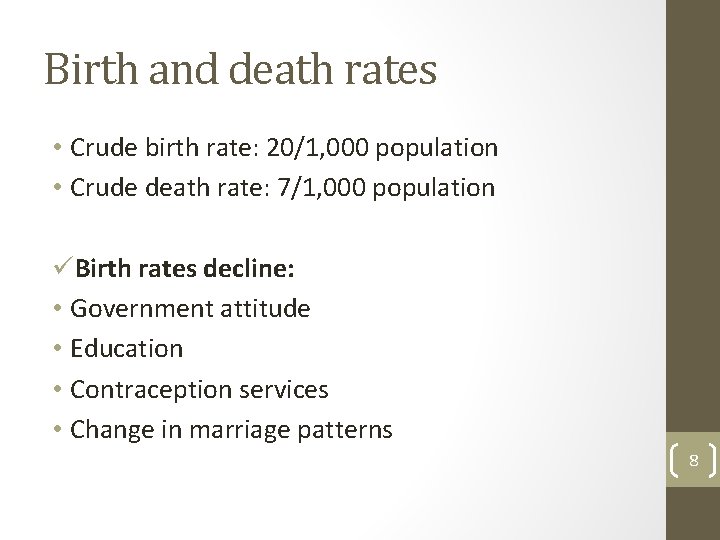
Birth and death rates • Crude birth rate: 20/1, 000 population • Crude death rate: 7/1, 000 population üBirth rates decline: • Government attitude • Education • Contraception services • Change in marriage patterns 8
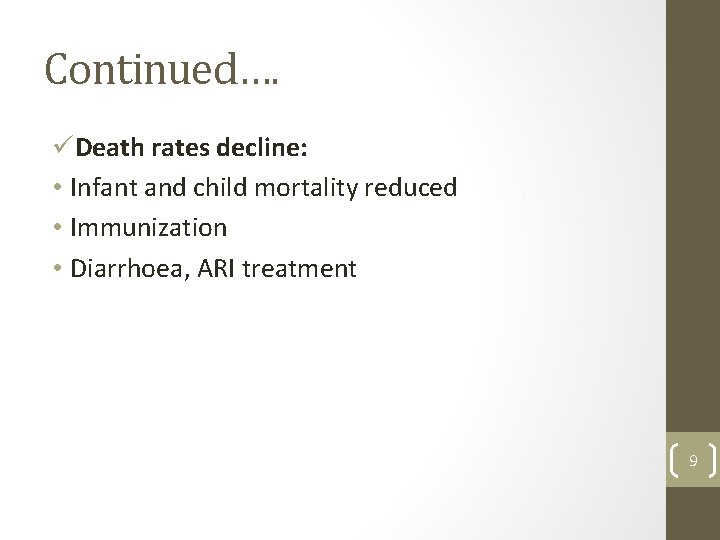
Continued…. üDeath rates decline: • Infant and child mortality reduced • Immunization • Diarrhoea, ARI treatment 9
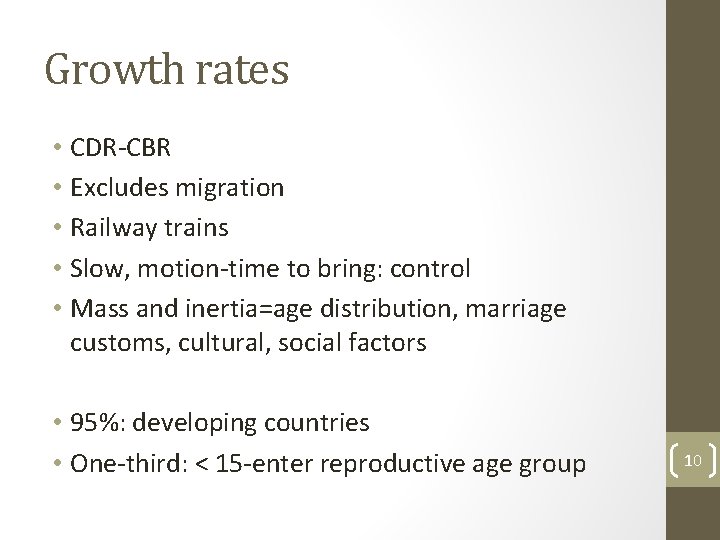
Growth rates • CDR-CBR • Excludes migration • Railway trains • Slow, motion-time to bring: control • Mass and inertia=age distribution, marriage customs, cultural, social factors • 95%: developing countries • One-third: < 15 -enter reproductive age group 10
Sex ratio • Number of females/1, 000 males • Sex ratio at birth-India: 943, child: 919 • Female deficit syndrome 11
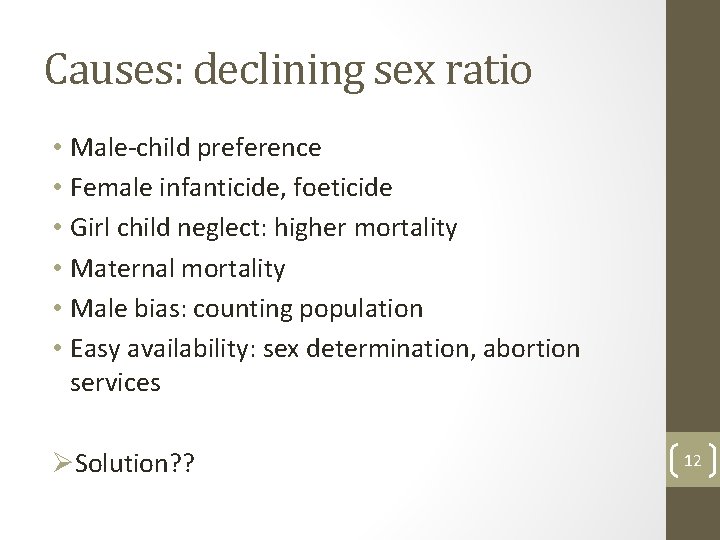
Causes: declining sex ratio • Male-child preference • Female infanticide, foeticide • Girl child neglect: higher mortality • Maternal mortality • Male bias: counting population • Easy availability: sex determination, abortion services ØSolution? ? 12
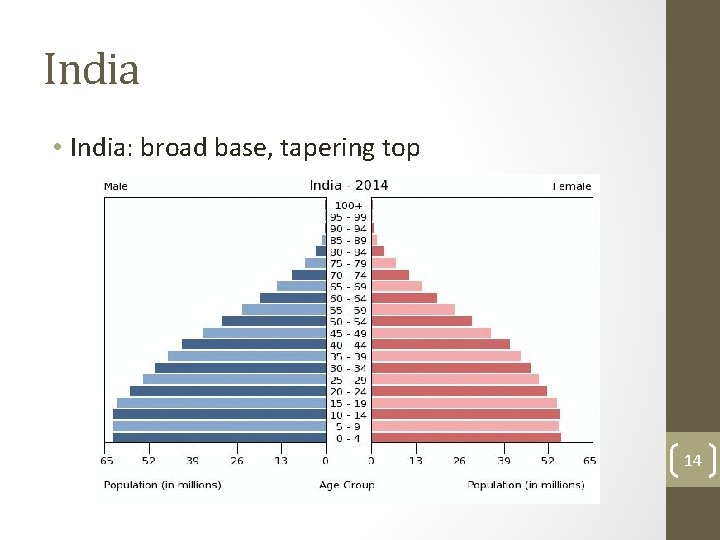
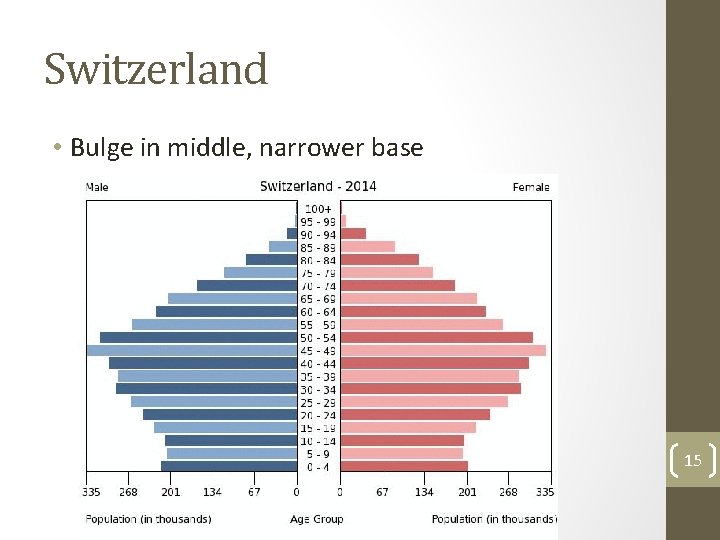
Population/age pyramid • Graphical illustration : distribution of various age groups in population • 2 back-to-back bar graphs, with the population plotted : X-axis, age : Y-axis • Males, females in 5 year age groups 13
India • India: broad base, tapering top 14
Switzerland • Bulge in middle, narrower base 15
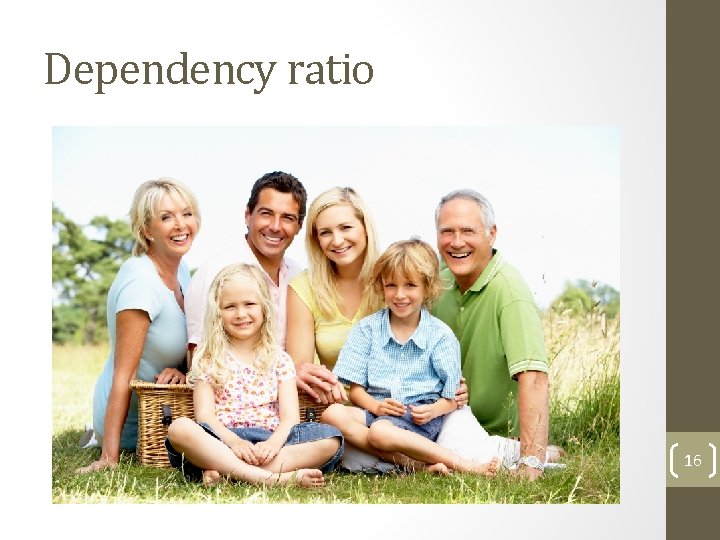
Dependency ratio 16
Dependency ratio • Proportion: people above 65 years and children below 15 years • Young age, old age • Use: study demographic burden • Decreases: early stages development-rapid decline: fertility • Rapid decline: child dependency-key factor: development 17
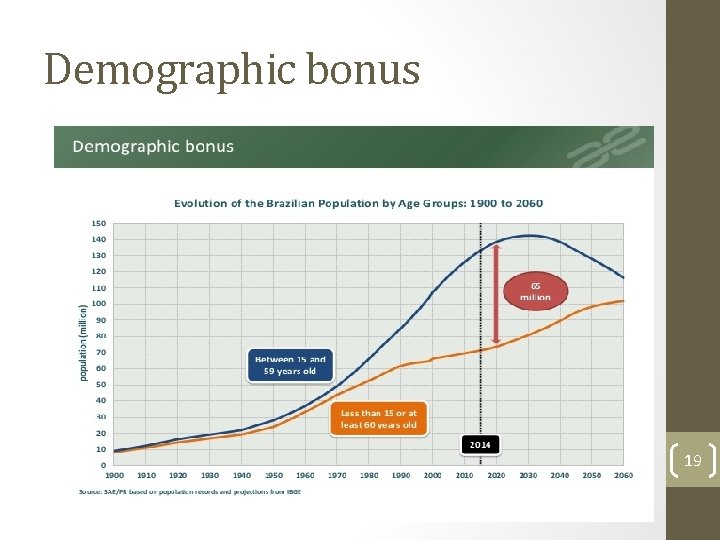
Continued…. • Demographic bonus: üRatio declines: decline in fertility üBegins to rise: increased longevity üLead to development üInvest: health care, education in this periodmaximum advantage-high economic growth 18
Demographic bonus 19
Demographic burden • Increase total dependency ratio in any period • Mostly : old age dependency ratio • Inevitable: demographic transition 20
Urbanization • Causes: üIndustrialization üSocial factors: better quality of life, standard of living, education üEmployment v. Rural-urban transformation 22
Positive effects • Employment • Transport, communication • Education • Standard of living 23
Adverse effects • Slums- diseases • Cost of living • Disintegration : joint families • Crime rates • Stress • Pollution 24
Fertility • Actual bearing of children • 15 -45/49 years • High in India: üUniversality : marriage üLower age : marriage üLow literacy üLimited use contraceptives üBeliefs 25
Factors influencing fertility • Age at marriage • Duration: married life • Spacing of children • Education • Economic status • Family planning • Others: customs, beliefs, status: women, industrialization 26
Fertility indicators • Birth Rate: üSimplest üUnsatisfactory • General Fertility Rate (GFR): ü(No live births: area, 1 year/ MY female population (15 -49 years) same area, year) X 1, 000 üBetter: denominator üWeakness: not all women-birth 27
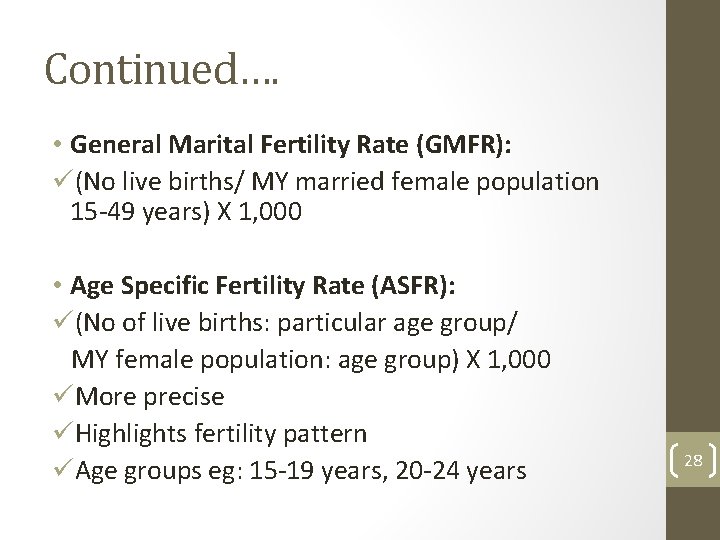
Continued…. • General Marital Fertility Rate (GMFR): ü(No live births/ MY married female population 15 -49 years) X 1, 000 • Age Specific Fertility Rate (ASFR): ü(No of live births: particular age group/ MY female population: age group) X 1, 000 üMore precise üHighlights fertility pattern üAge groups eg: 15 -19 years, 20 -24 years 28
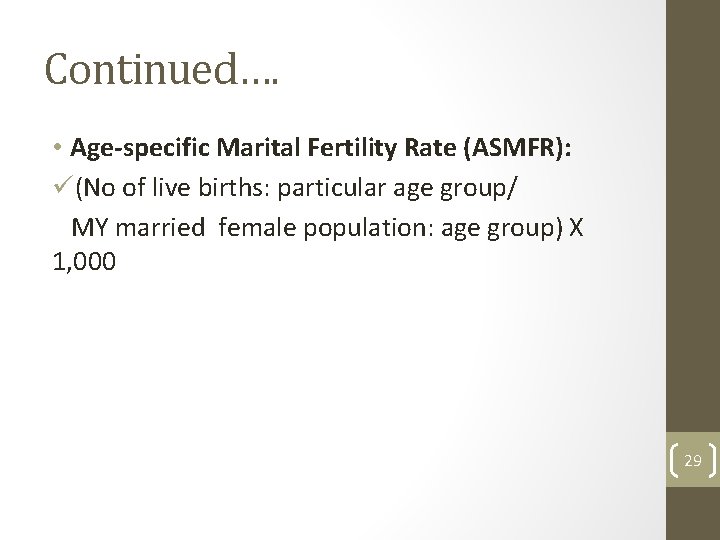
Continued…. • Age-specific Marital Fertility Rate (ASMFR): ü(No of live births: particular age group/ MY married female population: age group) X 1, 000 29
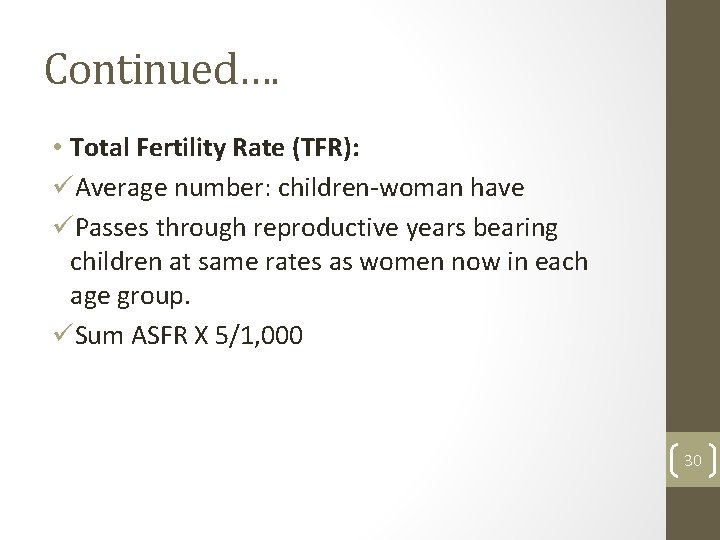
Continued…. • Total Fertility Rate (TFR): üAverage number: children-woman have üPasses through reproductive years bearing children at same rates as women now in each age group. üSum ASFR X 5/1, 000 30
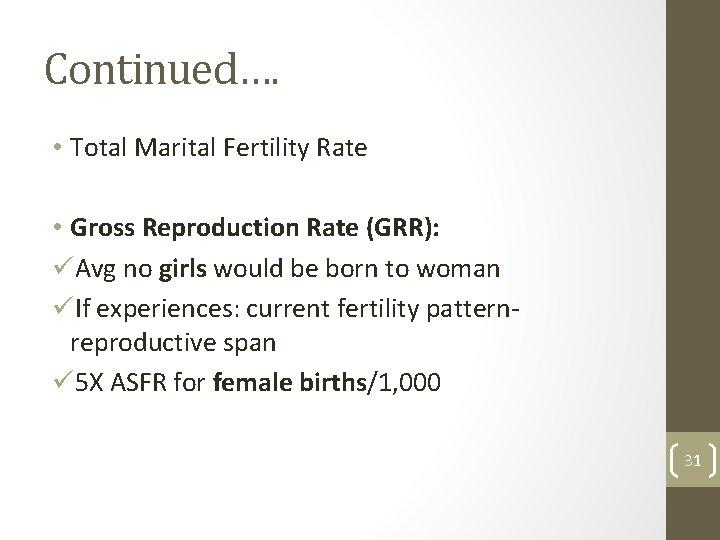
Continued…. • Total Marital Fertility Rate • Gross Reproduction Rate (GRR): üAvg no girls would be born to woman üIf experiences: current fertility patternreproductive span ü 5 X ASFR for female births/1, 000 31
Continued…. . • Net Reproduction Rate (NRR): üNo of daughters a newborn girl bear in lifetime üAssuming fixed age-specific fertility and mortality rates üNRR=1: small family 32
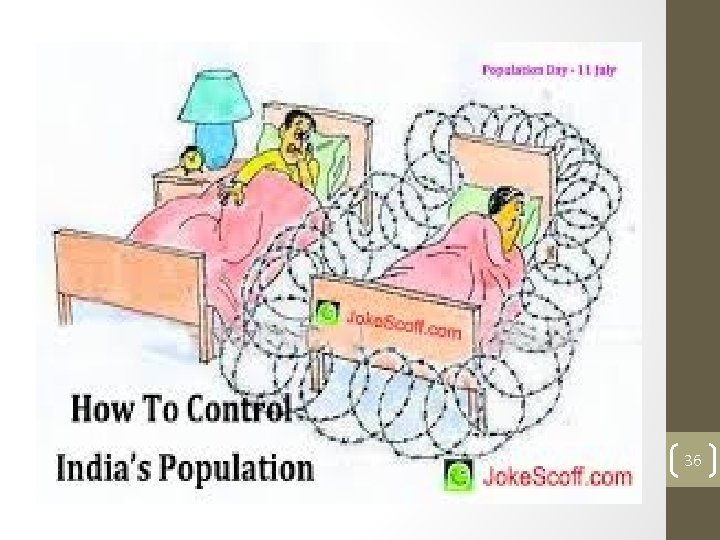
Population explosion • India: 1, 210, 193, 422 • Projected: 2025> China • Sudden, rapid increase : population size • Two main causes üBirth rate> death rate üFertility rate falling but still higher> developed 33
Social factors: population explosion • Early marriage, universal marriage • Poverty, illiteracy • Male bias • Beliefs • Illegal migration 34
Effects of population explosion • Unemployment • Manpower utilization • Pressure on infrastructure • Decreased production, increased costs • Burden: health care services 35
36
Family Planning
Outline • Definition • Objectives • Scope • Health aspects • Small family norm • Eligible, target couples • Couple Protection Rate
Definition Expert Committee 1971: • Way of thinking, living-adopted voluntarily • Upon basis : knowledge, attitude, responsible decisions by individuals, couples • To promote health and welfare of family • Overall social development of country
Objectives • Avoid unwanted births • Bring wanted births • Regulate intervals between pregnancies • Control time in which birth occurs in relation to parents age • Determine number of children in family
Scope of family planning services • Proper spacing, birth limitation • Advice on sterility • Education for parenthood • Screening –pathological conditions related to reproductive system (cervical cancer) • Genetic counselling
Continued…. • Premarital consultation, examination • Carrying out pregnancy tests • Prepare couples for arrival of first child • Provide services-unmarried mothers • Provide adoption services • Teach nutrition, home economics.
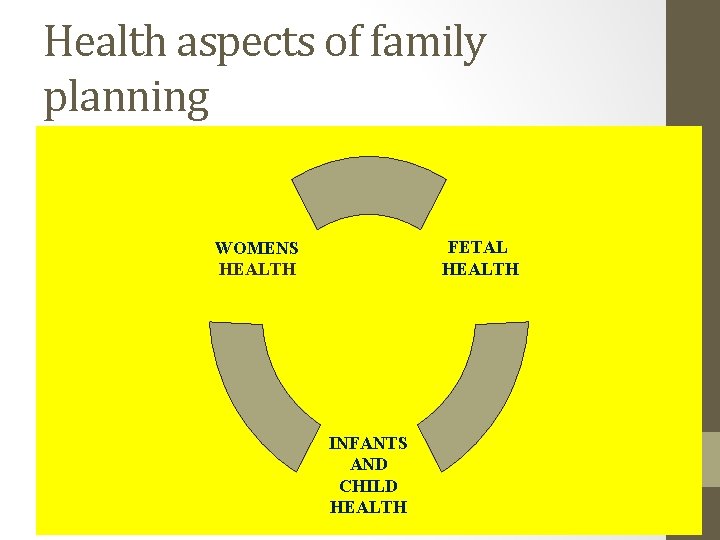
Health aspects of family planning FETAL HEALTH WOMENS HEALTH INFANTS AND CHILD HEALTH
Health aspects of family planning • Women’s health: üPregnancy damages mother’s health üRisk increases after 3 -4 children üFamily planning improves health through: ØAvoid unwanted pregnancies ØLimit number of births and proper spacing ØTiming of births
Continued… • Foetal health: ü Congenital anomalies (Eg: Down’s syndrome): increasing maternal age üAvoided: timing births in relation to mother’s age üQuality of population improved : avoiding unwanted births
Continued… • Child health: üChild mortality: ØRepeated births , rapid succession ØBirth intervals: 2 to 3 years-reduce child mortality § Birth spacing, family size:
Small family norm • Small differences in family size: big difference in birth rate • Objective in India: stabilize population -1, 533 million : 2050 • 1970 s: Do Ya Teen Bas • 1980 s: 2 -child norm
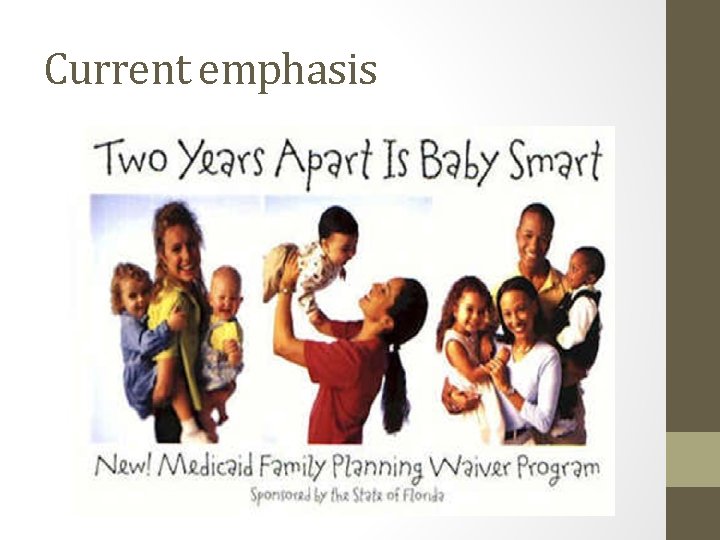
Current emphasis
Continued…. • Current: Sons or daughters –two will do, üSecond child after 3 years, üUniversal immunization • Decline in fertility rate in India: 6. 4 in 1950 s to 2. 6 in 2010 • National target: NRR=1 by 2006= 2 child norm
Eligible couple • Currently married couple: wife-reproductive age 15 -45/49 years • India: 150 -180/ 1000 population • About 20%: age group 15 -24 years • Eligible Couple Register: document to organize family planning work
Target Couple • Couples: 2 -3 living children • Family planning largely directed • Definition enlarged: families with 1 child or newly married couples- acceptance
Couple Protection Rate (CPR) • Indicator of contraceptive prevalence in community • Percent of eligible couples effectively protected against childbirth by one or other methodsfamily planning • NRR=1 achieved only when CPR=60%
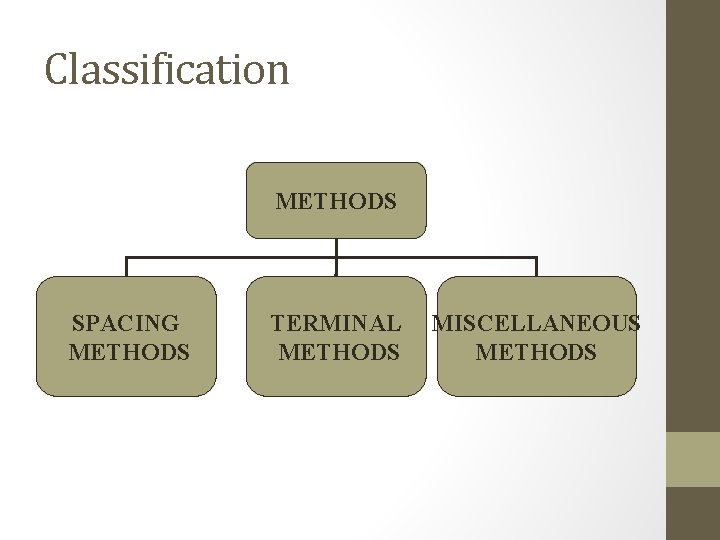
Classification METHODS SPACING METHODS TERMINAL METHODS MISCELLANEOUS METHODS
Classification • Spacing methods: üBarrier methods: üIntra-uterine device üHormonal methods üPost-conceptional methods • Terminal methods:
Barrier methods • Prevent live sperm: meet ovum • Absence of side effects • Protect: STDs • Reduce: PID, cervical cancer • But, less effective
Physical methods: Condom • NIRODH, simple spacing method • Fitted on erect penis • Held carefully while withdrawing-vagina • Spermicidal jelly: effective, additional protectionslips • Failure rate: 2 -3 to 14 per 100 Women Years • Incorrect use • Social marketing
Condom • Advantages: üEasily available üInexpensive, easy to use üDisposable üProtect-STD • Disadvantages: ü Slip off /tear: coitus üInterfere: sex sensation
Diaphragm
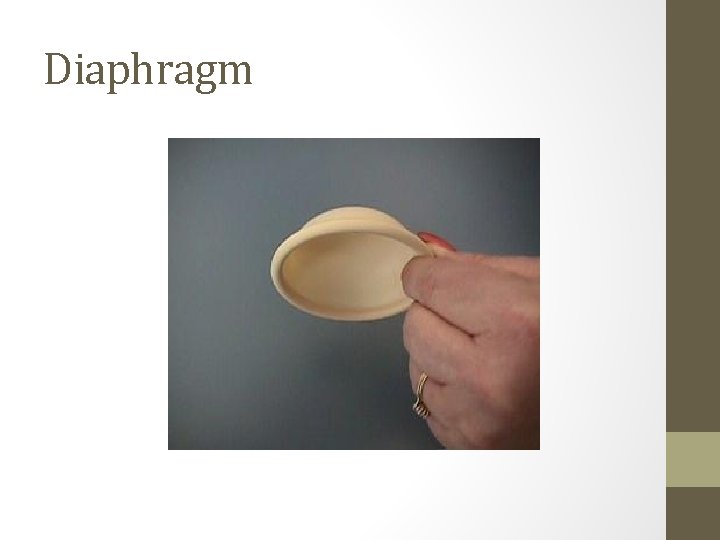
Diaphragm • Dutch cap • Shallow cup: synthetic rubber/plastic • Proper size • Held in position: spring tension, vaginal muscle tone • Spermicidal jelly: hold • Failure rate: 6 -12 per 100 Women Years
Continued…. • Advantages: no risk, contraindications • Disadvantages: üTrained person demonstrate üOnly after involution üPrivacy, washings üLong time: Toxic Shock Syndrome
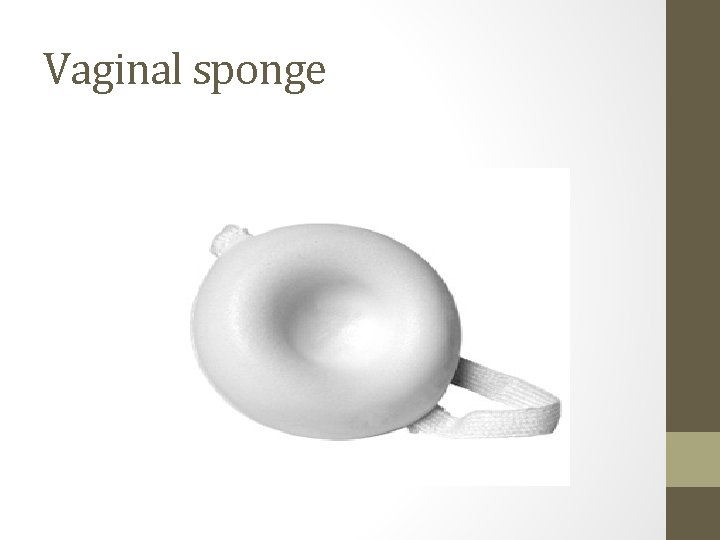
Vaginal sponge
Vaginal sponge • Sponge soaked : vinegar • Saturated with spermicide • Less effective • 20 -40/100 Women Years
Chemical methods. SPERMICIDE
Continued… • Foams • Creams • Suppositories üSurface-active agents üAttach sperms, inhibit oxygen uptake, kill
Drawbacks of spermicides • High failure • Used immediately before intercourse, repeated before each act • Introduced: those areas-sperms likely deposit • Irritation
Questions 1. Describe different stages of demographic cycle. Explain in which stage India is and how (4+2=6 marks) 2. Define population explosion. Enumerate causes for population explosion in India. What measures do you suggest for controlling the same? (1+3+2=6 marks) 66
Continued…. 3. Enumerate the factors influencing fertility India. List out the fertility related statistics (3+3= 6 marks) 4. Crude birth rate and death rate (3 marks) 5. Growth rate (3 marks) 6. Population pyramid (3 marks) 67
Continued…. 7. Dependency ratio (3 marks) 8. Effects of urbanization (3 marks) 9. Sex-ratio and causes for its decline in India (3 marks) 10. Health aspects of family planning (3 marks) 11. Advantages and disadvantages of condom (3 marks) 68
Continued…… 12. Demographic bonus (2 marks) 13. Demographic burden (2 marks) 14. PNDT Act (2 marks) 15. Net Reproduction Rate and its importance (2 marks) 16. Eligible couple (2 marks) 17. Target couple (2 marks) 18. Couple protection rate (2 marks) 19. Define family planning (2 marks) 69