FREE RADICAL and Health Divya Sr Scientist Avian
- Slides: 34
FREE RADICAL and Health Divya Sr. Scientist Avian Nutrition and Feed Technology CARI, Izatnager Bareilly.
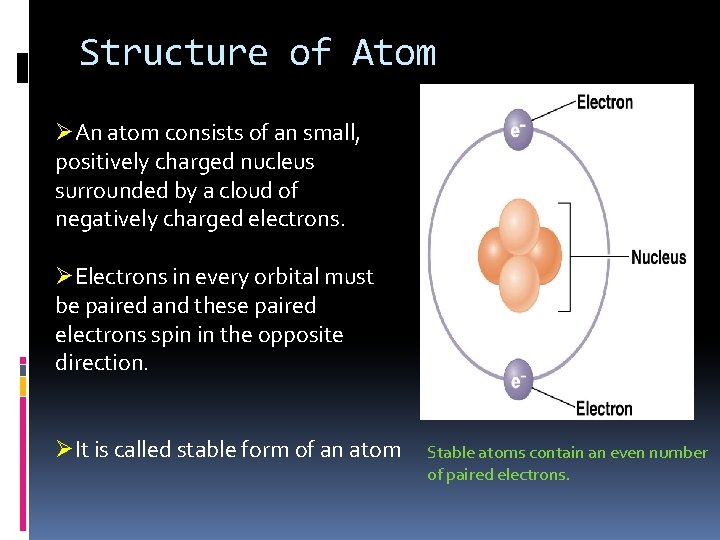
Structure of Atom ØAn atom consists of an small, positively charged nucleus surrounded by a cloud of negatively charged electrons. ØElectrons in every orbital must be paired and these paired electrons spin in the opposite direction. ØIt is called stable form of an atom Stable atoms contain an even number of paired electrons.
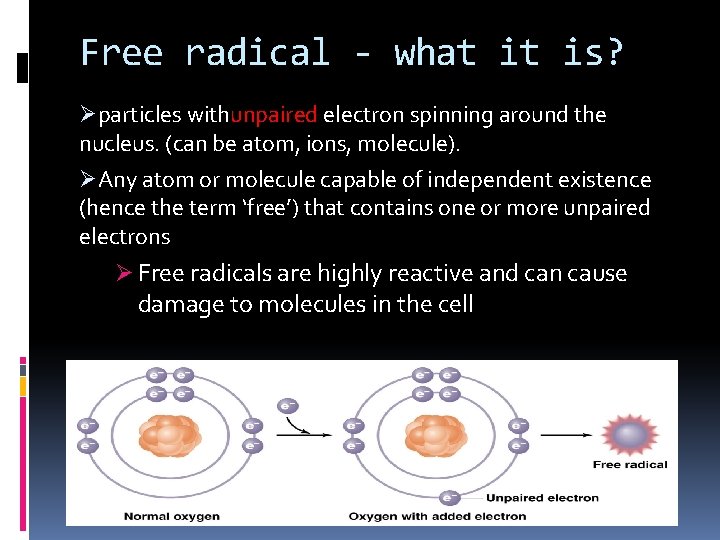
Free radical - what it is? Øparticles withunpaired electron spinning around the nucleus. (can be atom, ions, molecule). ØAny atom or molecule capable of independent existence (hence the term ‘free’) that contains one or more unpaired electrons Ø Free radicals are highly reactive and can cause damage to molecules in the cell
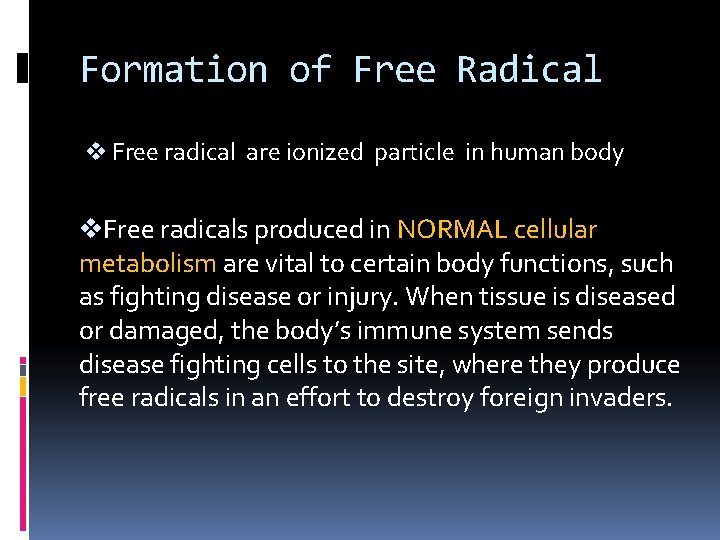
Formation of Free Radical v Free radical are ionized particle in human body v. Free radicals produced in NORMAL cellular metabolism are vital to certain body functions, such as fighting disease or injury. When tissue is diseased or damaged, the body’s immune system sends disease fighting cells to the site, where they produce free radicals in an effort to destroy foreign invaders.
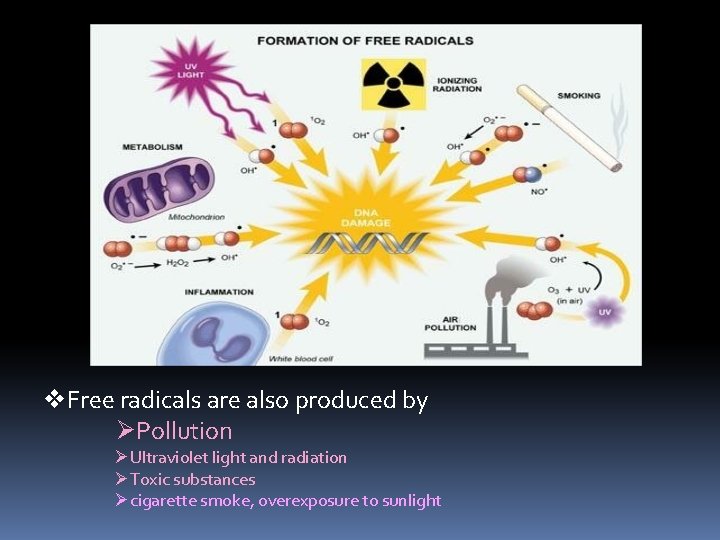
v. Free radicals are also produced by ØPollution ØUltraviolet light and radiation ØToxic substances Øcigarette smoke, overexposure to sunlight
• 3. H 2 O 2 Hydrogen peroxide 1 O 2 Singlet oxygen NO Types of Free radicals There are two major types of free radical species: reactive oxygen species (ROS) reactive nitrogen species (RNS).
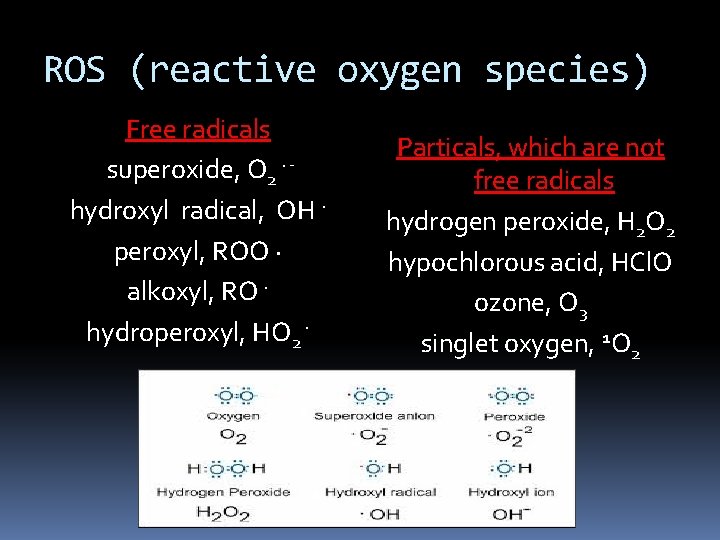
ROS (reactive oxygen species) Free radicals superoxide, O 2 · hydroxyl radical, OH · peroxyl, ROO · alkoxyl, RO · hydroperoxyl, HO 2 · Particals, which are not free radicals hydrogen peroxide, H 2 O 2 hypochlorous acid, HCl. O ozone, O 3 singlet oxygen, 1 O 2
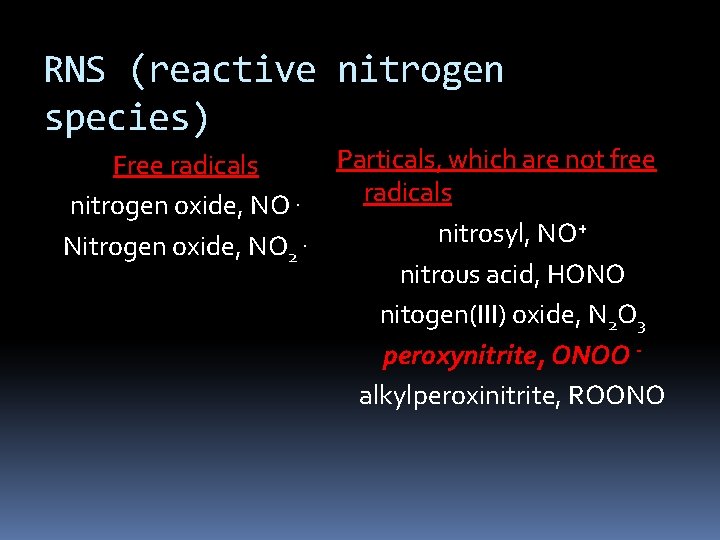
RNS (reactive nitrogen species) Free radicals nitrogen oxide, NO. Nitrogen oxide, NO 2. Particals, which are not free radicals nitrosyl, NO+ nitrous acid, HONO nitogen(III) oxide, N 2 O 3 peroxynitrite, ONOO alkylperoxinitrite, ROONO
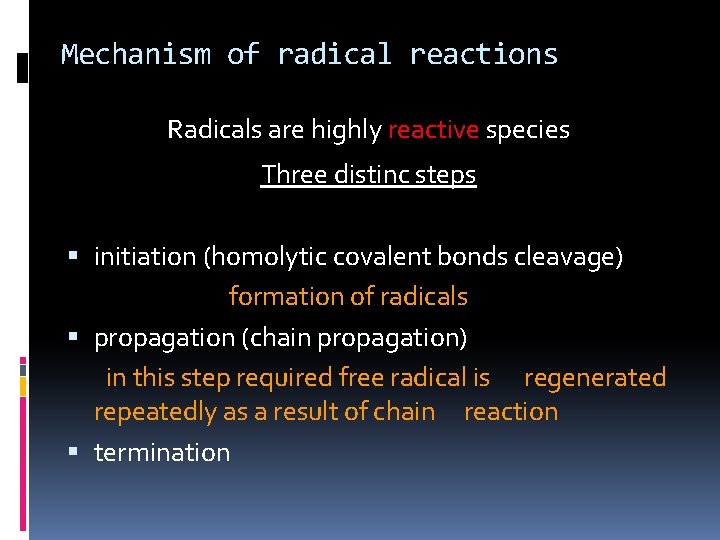
Mechanism of radical reactions Radicals are highly reactive species Three distinc steps initiation (homolytic covalent bonds cleavage) formation of radicals propagation (chain propagation) in this step required free radical is regenerated repeatedly as a result of chain reaction termination
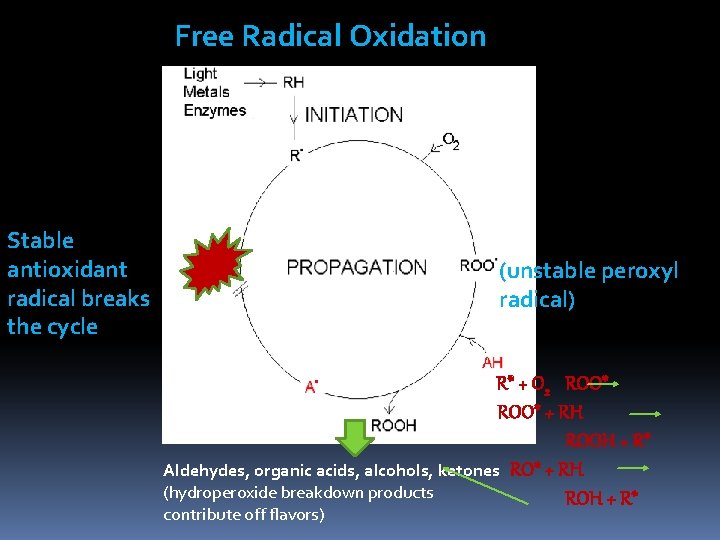
Free Radical Oxidation Stable antioxidant radical breaks the cycle (unstable peroxyl radical) R* + O 2 ROO* + RH ROOH + R* Aldehydes, organic acids, alcohols, ketones RO* + RH (hydroperoxide breakdown products ROH + R* contribute off flavors)
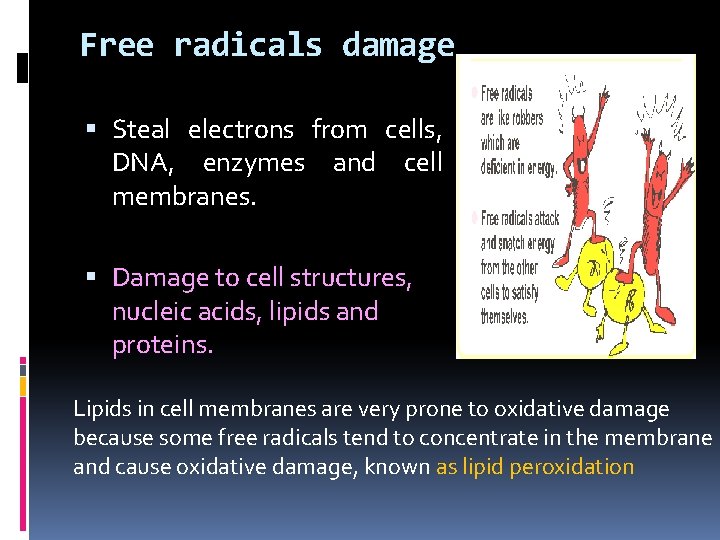
Free radicals damage Steal electrons from cells, DNA, enzymes and cell membranes. Damage to cell structures, nucleic acids, lipids and proteins. Lipids in cell membranes are very prone to oxidative damage because some free radicals tend to concentrate in the membrane and cause oxidative damage, known as lipid peroxidation
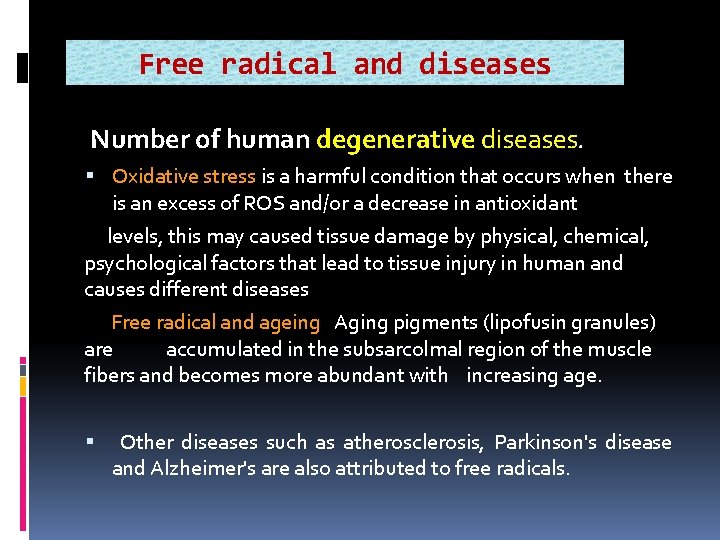
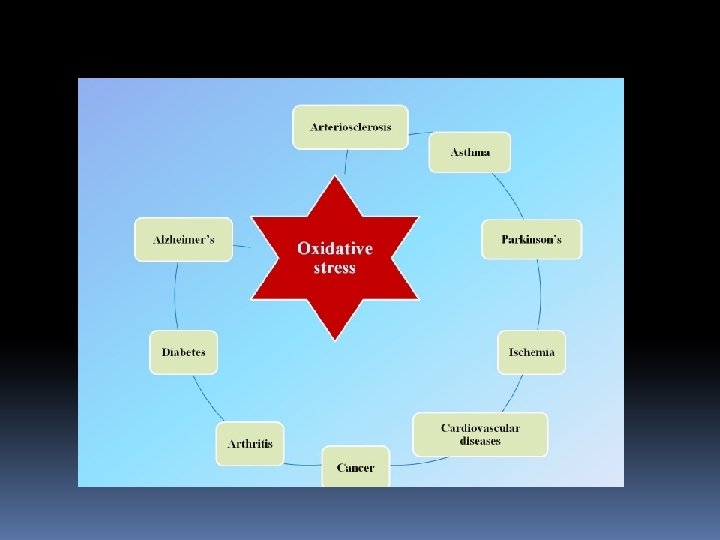
Free radical and diseases Number of human degenerative diseases. Oxidative stress is a harmful condition that occurs when there is an excess of ROS and/or a decrease in antioxidant levels, this may caused tissue damage by physical, chemical, psychological factors that lead to tissue injury in human and causes different diseases Free radical and ageing Aging pigments (lipofusin granules) are accumulated in the subsarcolmal region of the muscle fibers and becomes more abundant with increasing age. Other diseases such as atherosclerosis, Parkinson's disease and Alzheimer's are also attributed to free radicals.
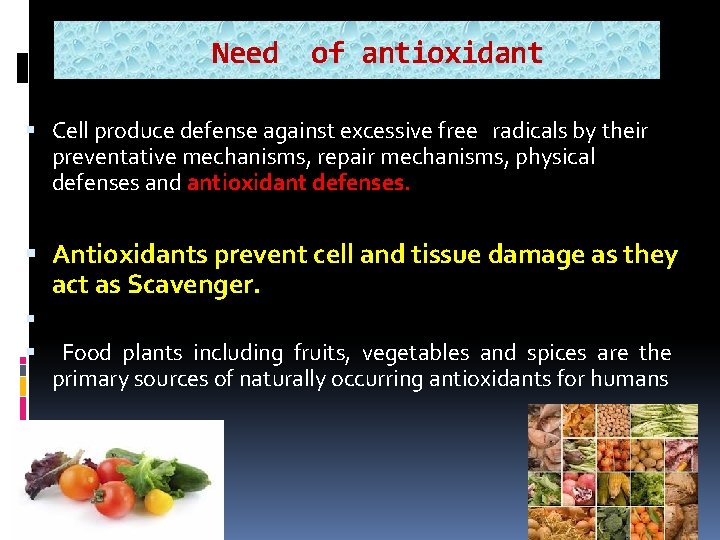
Need of antioxidant Cell produce defense against excessive free radicals by their preventative mechanisms, repair mechanisms, physical defenses and antioxidant defenses. Antioxidants prevent cell and tissue damage as they act as Scavenger. Food plants including fruits, vegetables and spices are the primary sources of naturally occurring antioxidants for humans
Antioxidant means "against oxidation. " Antioxidants are an inhibitor of the process of oxidation, even at relatively small concentration and thus have diverse physiological role in the body. Antioxidants are any substance that delay or inhibits oxidative damage to a target molecule. At a time one antioxidant molecule can react with single free radicals and are capable to neutralize free radicals by donating one of their own electrons, ending the carbon-stealing reaction.
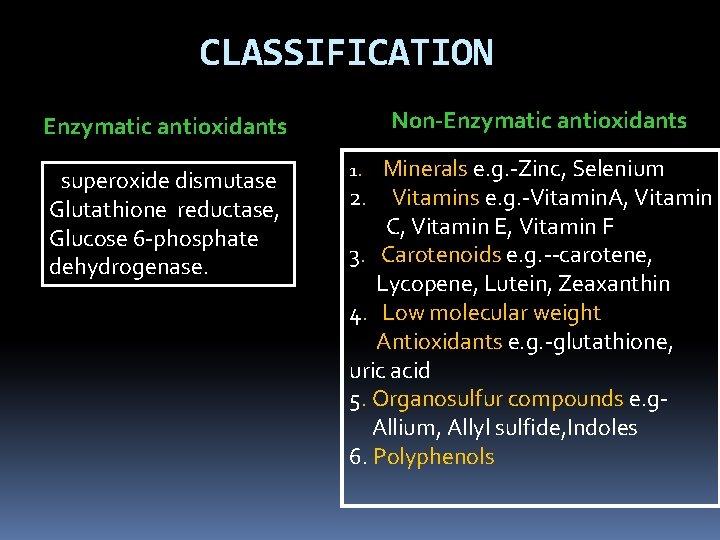
CLASSIFICATION Enzymatic antioxidants superoxide dismutase Glutathione reductase, Glucose 6 phosphate dehydrogenase. Non-Enzymatic antioxidants 1. Minerals e. g. Zinc, Selenium 2. Vitamins e. g. Vitamin. A, Vitamin C, Vitamin E, Vitamin F 3. Carotenoids e. g. carotene, Lycopene, Lutein, Zeaxanthin 4. Low molecular weight Antioxidants e. g. glutathione, uric acid 5. Organosulfur compounds e. g Allium, Allyl sulfide, Indoles 6. Polyphenols
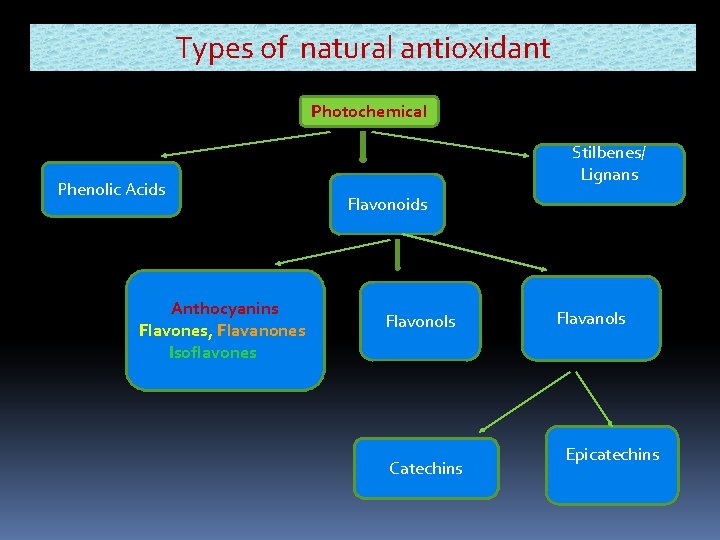
Types of natural antioxidant Photochemical Phenolic Acids Anthocyanins Flavones, Flavanones Isoflavones Stilbenes/ Lignans Flavonoids Flavonols Catechins Flavanols Epicatechins
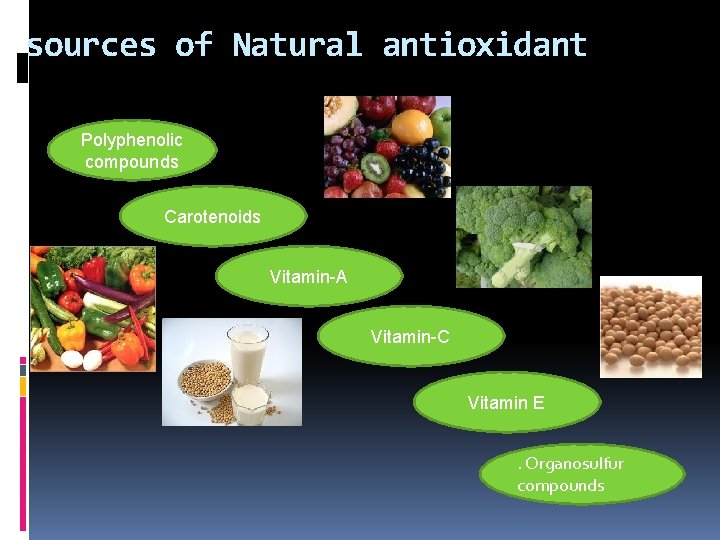
sources of Natural antioxidant Polyphenolic compounds Carotenoids Vitamin-A Vitamin-C Vitamin E. Organosulfur compounds
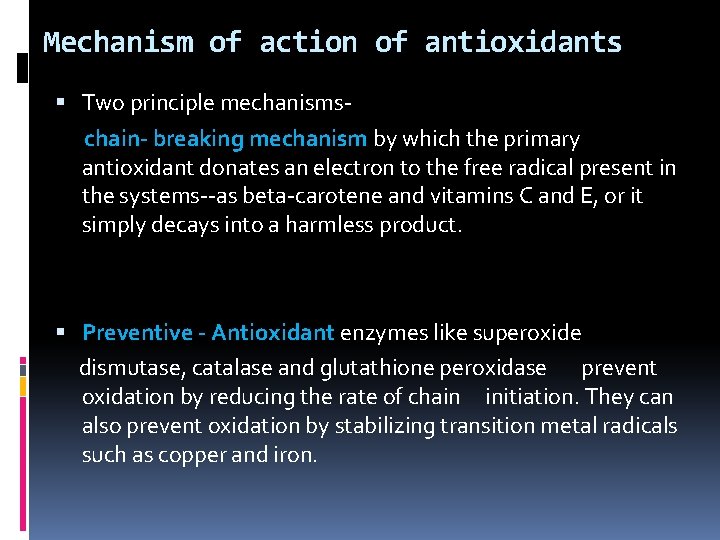
Mechanism of action of antioxidants Two principle mechanisms chain- breaking mechanism by which the primary antioxidant donates an electron to the free radical present in the systems as beta carotene and vitamins C and E, or it simply decays into a harmless product. Preventive - Antioxidant enzymes like superoxide dismutase, catalase and glutathione peroxidase prevent oxidation by reducing the rate of chain initiation. They can also prevent oxidation by stabilizing transition metal radicals such as copper and iron.
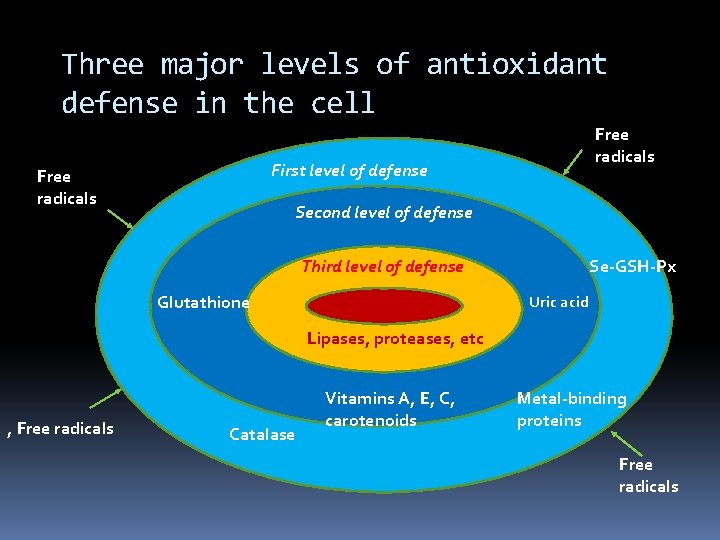
Three major levels of antioxidant defense in the cell Free radicals First level of defense Free radicals Second level of defense Third level of defense Glutathione Se-GSH-Px Uric acid Lipases, proteases, etc , Free radicals Catalase Vitamins A, E, C, carotenoids Metal-binding proteins Free radicals
Levels of antioxidant defense in the cell The first line of defense is the preventive antioxidants, which suppress the formation of free radicals. The second line of defense is the antioxidants that scavenge the active radicals to suppress chain initiation and/or break the chain propagation reactions The third line of defense is the repair and de novo antioxidants. The proteolytic enzymes, proteinases, proteases, and peptidases, present in the cytosol and in the mitochondria of mammalian cells
Function Destroying the free radicals that damage cells. Promoting the growth of healthy cells. Protecting cells against premature, abnormal ageing. Help fight age related macular degeneration. Provide excellent support for the body’s immune system. prevent the oxidation of unsaturated fats
Antioxidant defense system Antioxidants act as radical scavenger, hydrogen donor, electron donor, peroxide decomposer, singlet oxygen quencher, enzyme inhibitor, metal chelating agents.
Antioxidants in Human health Considerable research demonstrates the human health benefits of naturally occurring antioxidant compounds. Claims of Various properties Ø anti viral, Øanti inflammatory, Ø anti cancer, Øanti mutagenic, Øanti tumour, Ø hepatoprotec tive
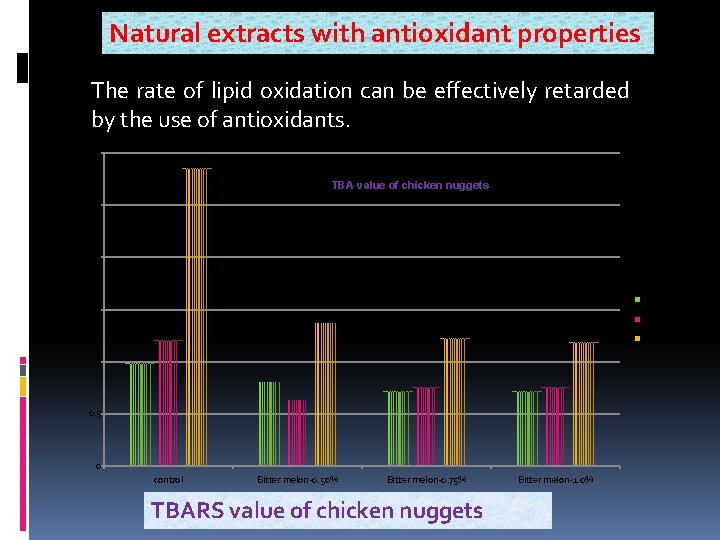
Natural extracts with antioxidant properties The rate of lipid oxidation can be effectively retarded by the use of antioxidants. 3 TBA value of chicken nuggets 2. 5 2 1 days 1. 5 7 days 14 days 1 0. 5 0 control Bitter melon 0. 50% Bitter melon 0. 75% TBARS value of chicken nuggets Bitter melon 1. 0%
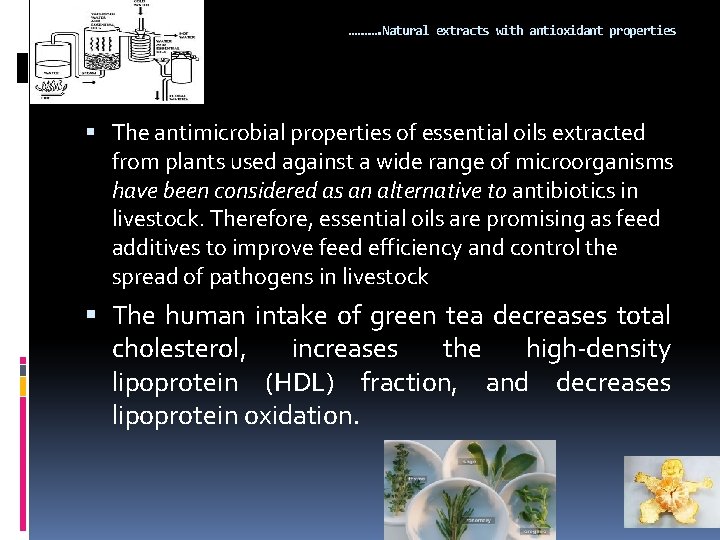
…………. Natural extracts with antioxidant properties The antimicrobial properties of essential oils extracted from plants used against a wide range of microorganisms have been considered as an alternative to antibiotics in livestock. Therefore, essential oils are promising as feed additives to improve feed efficiency and control the spread of pathogens in livestock The human intake of green tea decreases total cholesterol, increases the high density lipoprotein (HDL) fraction, and decreases lipoprotein oxidation.
Antioxidants in Poultry health Hatching time is an environmental stress for the chick. At this time stress caused by environment is very height. Though natural antioxidants level maximum at this stage but in the cycle process enhance lipid unsaturation in tissues. Low level concentrations of ascorbic acid (can limit vitamin E recycling) and high temperature and humidity increase risk of lipid peroxidation
……. . Antioxidants in Poultry health Effect on egg production In the production system time between the egg laid and cooling is variable. Whatever effort may be made some changes are bound to happen in composition of egg due to high temperature and time gap. Free radical is responsible accelerating these compositional change and damage to lipids and proteins. Addition of antioxidant in feed may retard such changes ultimately improve egg production.
……Antioxidants in Poultry health Transport of chicks: Transportation from hatchery to farm is another source of stress. For breeding companies where chicken transportation could involve several thousand miles, a very high degree of stress would be associated with temperature fluctuation and dehydration. Oxidation of fat in feed: Oxidized fat in the diet can cause oxidative stress in the intestine increasing antioxidant nutrient requirements. When a chicken diet includes spent fat after its high temperature treatment, the fat usually contains peroxides and hydroperoxides that can contribute substantially to oxidative stress. It is necessary to evaluate benefits vs disadvantages of using such fat sources.
……. . Antioxidants in Animal health Vaccination stress: Vaccination is also a substantial stress; and in some cases using vitamin E, for example, as a vaccine adjuvant can help improve vaccination efficiency. Exposure to Mycotoxin: Mycotoxins can substantially decrease antioxidant assimilation from the feed and increase their requirement to prevent damaging effects of free radicals produced as a result of mycotoxin exposure.
Applications of some antioxidant in poultry production Increased antioxidant supplementation for improvement of meat quality during storage. It is recorded that vitamin E and selenium combination is very effective to reduce drip loss. Decline in egg production due to heat related stress is increased due to less Vitamin E in feed. Increased antioxidant supplementation decreased mycotoxin toxicity.
continue- Poultry has become a very competitive business and any addition on coast or change in feed ingredient will affect the cost of production and quality of the products. While adding antioxidant in the feed one has to be careful about coast, age, feed and food laws of the country. Certainly there are reports available for beneficial effect of antioxidants improving the immunity system, health management and quality of the poultry products but all of them cannot be introduced in poultry feed. Most precise study has been undertaken on available antioxidants and their scope of application in poultry feed.
continue-- On the other hand, under conditions of oxidative stress where free radical production dramatic increases, then without external help it is difficult to prevent damage to major organs and systems. This external help takes the form of increased dietary supplementation of natural antioxidants. For the poultry business it need to understand at the time of feed formulator when and how much fed additive is needed and economically justified.
Thanks