Fort Scott St Andrews Aquifer Reservoir Landfill 2

- Slides: 28
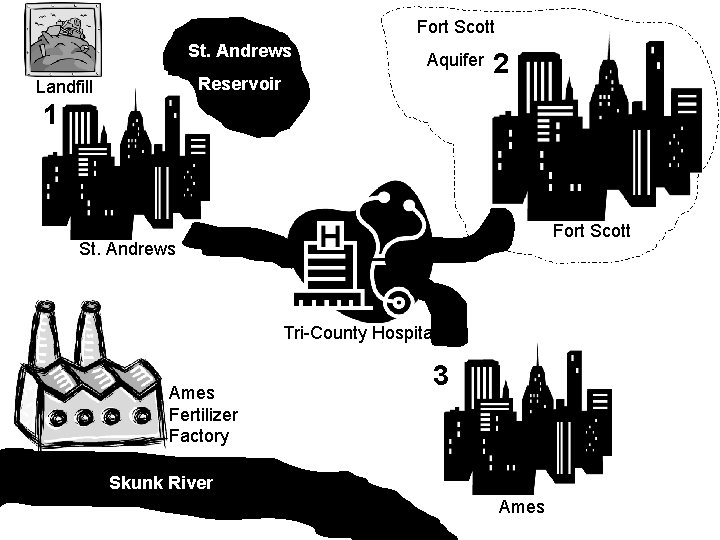
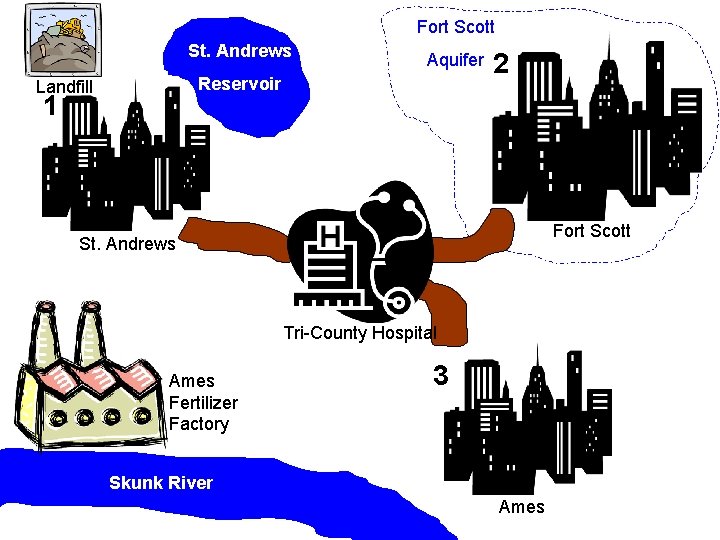
Fort Scott St. Andrews Aquifer Reservoir Landfill 2 1 Fort Scott St. Andrews Tri-County Hospital Ames Fertilizer Factory 3 Skunk River Ames
Water Sources Your name, school and grade here Date
Where Does Water Come From? • When you get water from a faucet where does it come from? • All water comes from one of two places: – Ground Water – Surface Water • Where does your city get its water?
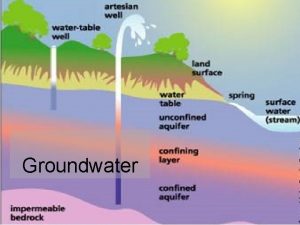
Ground Water • Ground water is water that is below the ground in places called aquifers. • An aquifer is a layer of permeable, waterholding gravel or sand beneath the earth’s surface. • On top of that layer is a layer of impermeable rock. • Can you name a well known aquifer located in Central Texas?
Permeable and Impermeable Rock A permeable layer is a layer of the ground that holds water and allows it to flow freely. An example of a permeable layer is gravel or sand. An impermeable layer is a layer of the ground that does not hold water and does not allow it to pass. An example of an impermeable layer is clay.
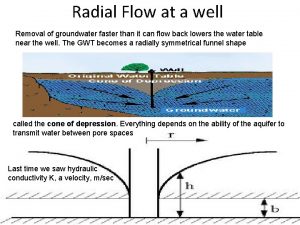
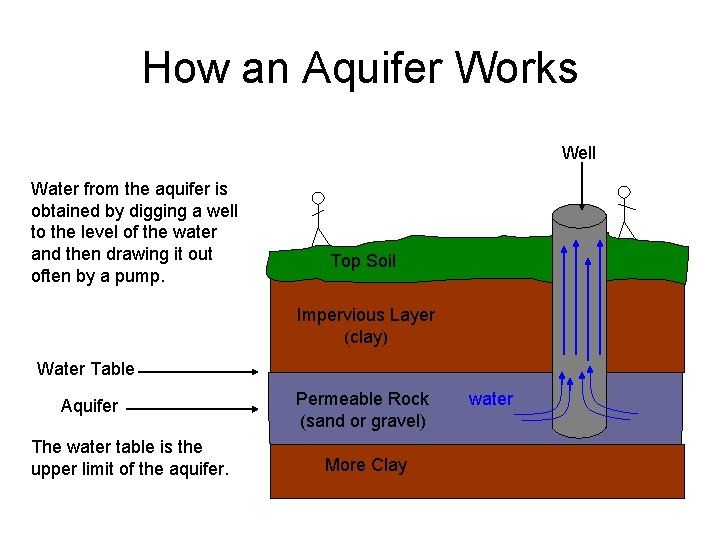
How an Aquifer Works Well Water from the aquifer is obtained by digging a well to the level of the water and then drawing it out often by a pump. Top Soil Impervious Layer (clay) Water Table Aquifer The water table is the upper limit of the aquifer. Permeable Rock (sand or gravel) More Clay water
Ground Water Dangers There are many dangers in obtaining water from the ground. • Arsenic is a dangerous element which can be leached from the ground if an aquifer is drawn from too much. • Other contaminants such as lead or nitrates can soak into the aquifer by rain water from landfills.
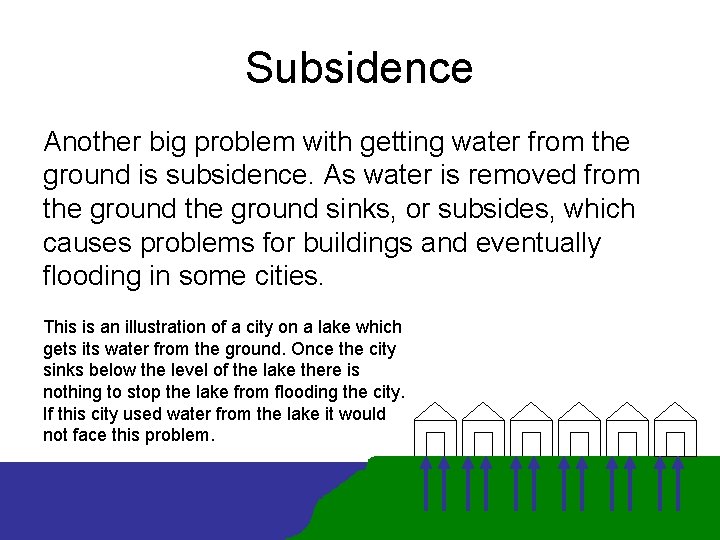
Subsidence Another big problem with getting water from the ground is subsidence. As water is removed from the ground sinks, or subsides, which causes problems for buildings and eventually flooding in some cities. This is an illustration of a city on a lake which gets its water from the ground. Once the city sinks below the level of the lake there is nothing to stop the lake from flooding the city. If this city used water from the lake it would not face this problem.
Surface Water • Surface water is any water found on the surface of the earth such as reservoirs, lakes, rivers, oceans, and other. • The majority of surface water is not drinkable because it is mostly salt water. • Lakes, rivers, and reservoirs are the best sources of fresh water. • What are some sources of surface water near you?
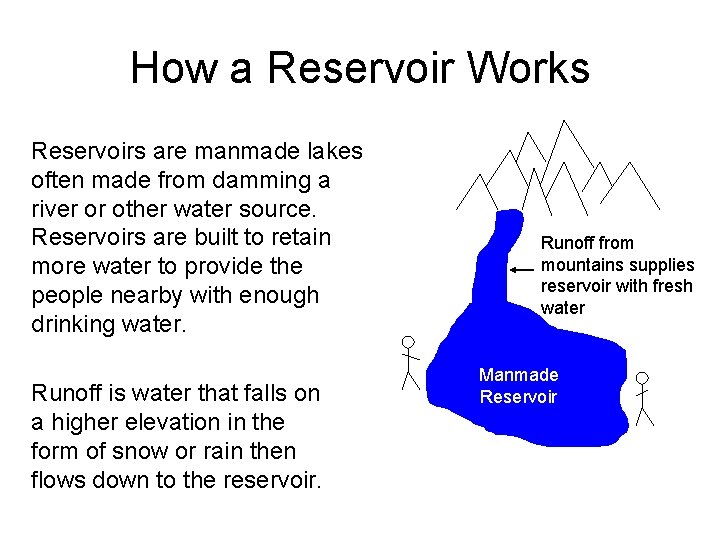
How a Reservoir Works Reservoirs are manmade lakes often made from damming a river or other water source. Reservoirs are built to retain more water to provide the people nearby with enough drinking water. Runoff is water that falls on a higher elevation in the form of snow or rain then flows down to the reservoir. Runoff from mountains supplies reservoir with fresh water Manmade Reservoir
Surface Water Dangers • Surface water is more easily contaminated because it is more exposed to ground water. • Contaminants can come from a variety of sources such as factories, landfills, or cities. • Arsenic is not as big a problem for surface water as for ground water, but lead and nitrates can contaminate surface water more easily than ground water.
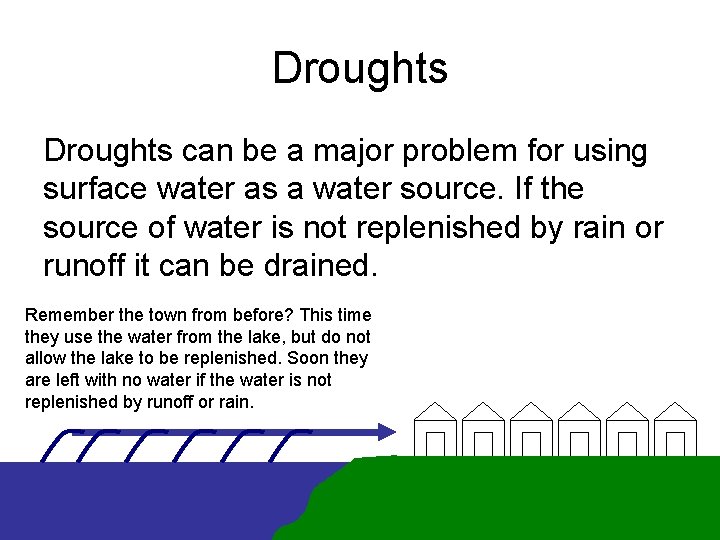
Droughts can be a major problem for using surface water as a water source. If the source of water is not replenished by rain or runoff it can be drained. Remember the town from before? This time they use the water from the lake, but do not allow the lake to be replenished. Soon they are left with no water if the water is not replenished by runoff or rain.
Applying Your Knowledge Let’s apply what we have learned by solving a problem in the three cities of Tri-County. The cities of Tri-County are Ames, St. Andrews, and Fort Scott. Each city has a different source of water: Ames source of water is a River St. Andrews source of water is a Reservoir Fort Scott source of water is an Aquifer
Fort Scott St. Andrews Aquifer Reservoir Landfill 1 2 Fort Scott St. Andrews Tri-County Hospital Ames Fertilizer Factory 3 Skunk River Ames
The Problem A hospital that services all three cities has been noticing an unusual number of patients with diabetes, cancer, high blood pressure, and newborns with birth disorders. The doctors suspect that the illnesses are being caused by contaminated water, but don’t know where the contaminated water is, or how it is being contaminated.
Water Contaminants To further understand the problem let’s take a closer look at three common contaminants: • Lead • Arsenic • Nitrates The Environmental Protection Agency (EPA) regulates the allowable amount of each contaminant in water.
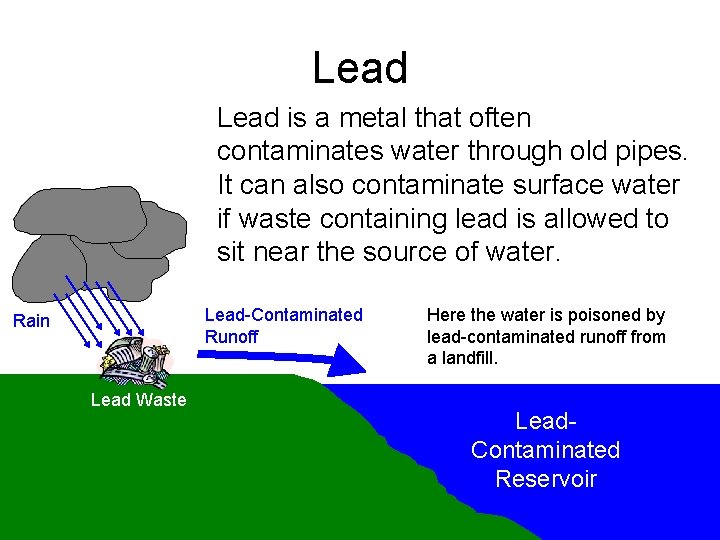
Lead is a metal that often contaminates water through old pipes. It can also contaminate surface water if waste containing lead is allowed to sit near the source of water. Lead-Contaminated Runoff Rain Lead Waste Here the water is poisoned by lead-contaminated runoff from a landfill. Lead. Contaminated Reservoir
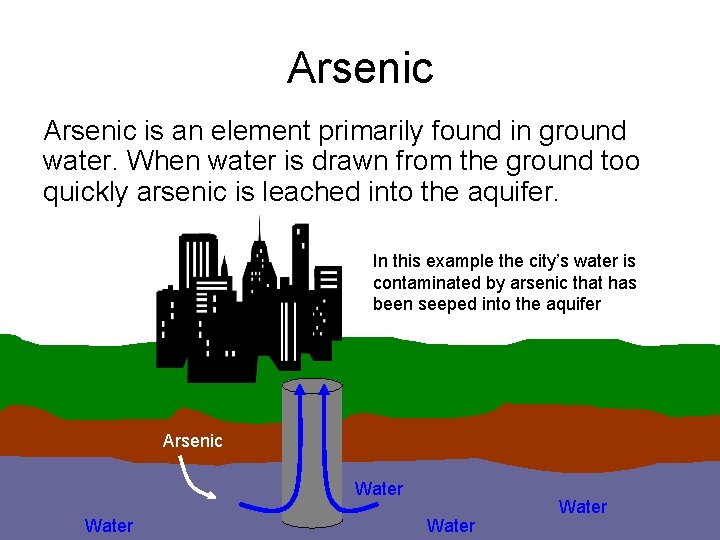
Arsenic is an element primarily found in ground water. When water is drawn from the ground too quickly arsenic is leached into the aquifer. In this example the city’s water is contaminated by arsenic that has been seeped into the aquifer Arsenic Water
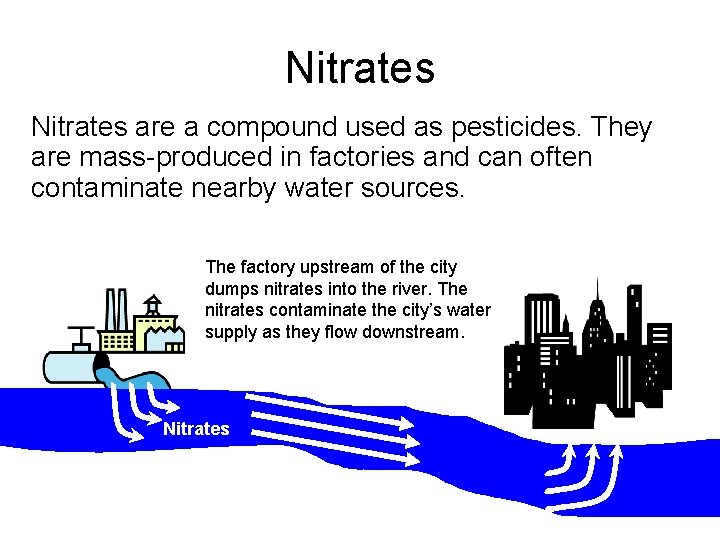
Nitrates are a compound used as pesticides. They are mass-produced in factories and can often contaminate nearby water sources. The factory upstream of the city dumps nitrates into the river. The nitrates contaminate the city’s water supply as they flow downstream. Nitrates
Planning an Experiment To determine what the contaminant is and where it is coming from, we must conduct an experiment. How would you discover the source? 1. See if there is a trend in sick patients 2. Test each city’s water supply for common contaminants 3. Determine the contaminant by diagnosing patients’ illnesses
Scientific Method • Here might be a good place to insert a few slides about the scientific method….
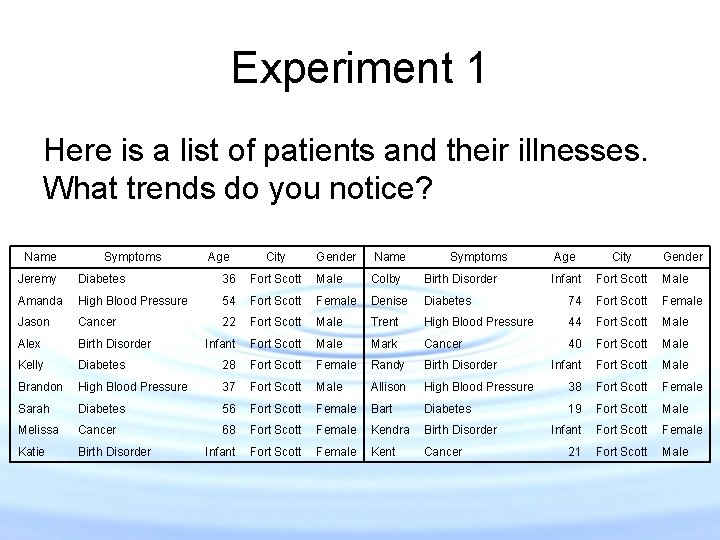
Experiment 1 Here is a list of patients and their illnesses. What trends do you notice? Name Symptoms Age City Gender Infant Fort Scott Male Jeremy Diabetes 36 Fort Scott Male Colby Birth Disorder Amanda High Blood Pressure 54 Fort Scott Female Denise Diabetes 74 Fort Scott Female Jason Cancer 22 Fort Scott Male Trent High Blood Pressure 44 Fort Scott Male Alex Birth Disorder Infant Fort Scott Male Mark Cancer 40 Fort Scott Male Kelly Diabetes 28 Fort Scott Female Randy Birth Disorder Infant Fort Scott Male Brandon High Blood Pressure 37 Fort Scott Male Allison High Blood Pressure 38 Fort Scott Female Sarah Diabetes 56 Fort Scott Female Bart Diabetes 19 Fort Scott Male Melissa Cancer 68 Fort Scott Female Kendra Birth Disorder Infant Fort Scott Female Katie Birth Disorder Infant Fort Scott Female Kent Cancer 21 Fort Scott Male
Experiment 1 After looking at the list of patients, their illnesses, and their hometowns what do you notice? What does this imply? Knowing what you know about how different water sources can become contaminated what would you hypothesize the contaminant is? What would you do to test your hypothesis?
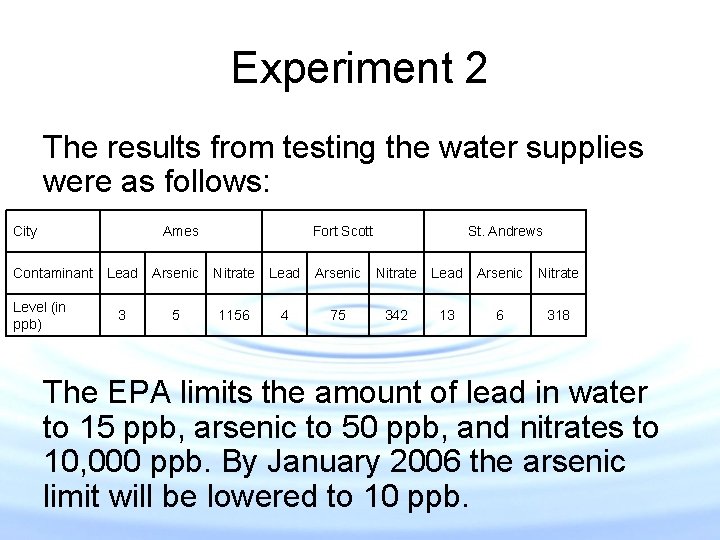
Experiment 2 The results from testing the water supplies were as follows: City Ames Contaminant Level (in ppb) Fort Scott St. Andrews Lead Arsenic Nitrate 3 5 1156 4 75 342 13 6 318 The EPA limits the amount of lead in water to 15 ppb, arsenic to 50 ppb, and nitrates to 10, 000 ppb. By January 2006 the arsenic limit will be lowered to 10 ppb.
Experiment 2 From the tests for contaminants in each city’s water what did you determine to be the contaminant? What city would you guess the patients at the hospital were from? Why?
Experiment 3 Look up the health risks from the three most common water contaminants: lead, nitrates, and arsenic. Which best fits the illnesses described by the doctors? How would you determine which city has the contaminated water now that you know the contaminant?
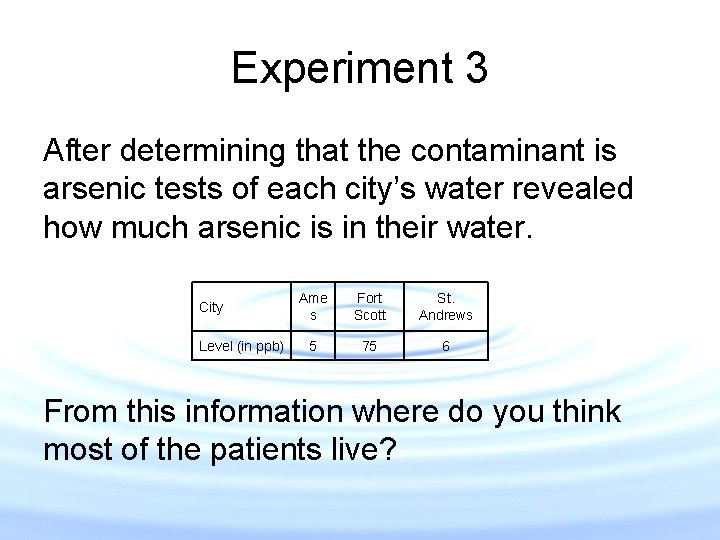
Experiment 3 After determining that the contaminant is arsenic tests of each city’s water revealed how much arsenic is in their water. City Level (in ppb) Ame s Fort Scott St. Andrews 5 75 6 From this information where do you think most of the patients live?
Which is Best? So is ground water or surface water a better source of water? It really depends on the location. Maybe some cities should even use a little of both. What do you think your city should do?