
Groundwater Continued Aquifers Consolidated Unconsolidated Confined Unconfined Basic
Groundwater Continued
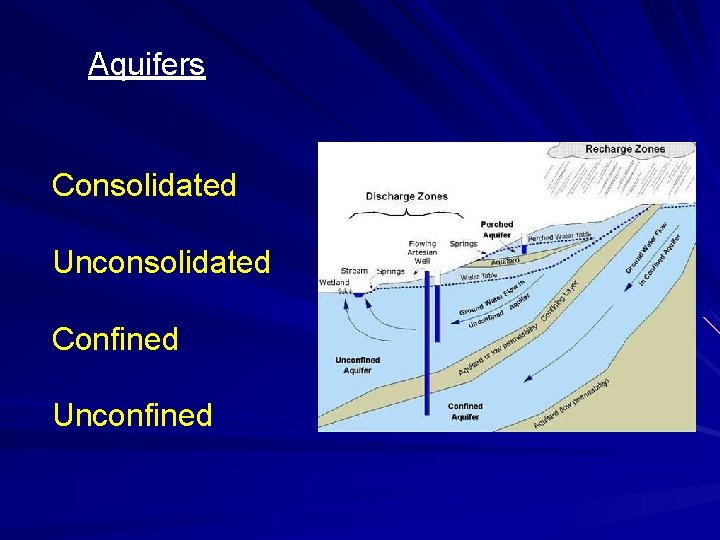
Aquifers Consolidated Unconsolidated Confined Unconfined
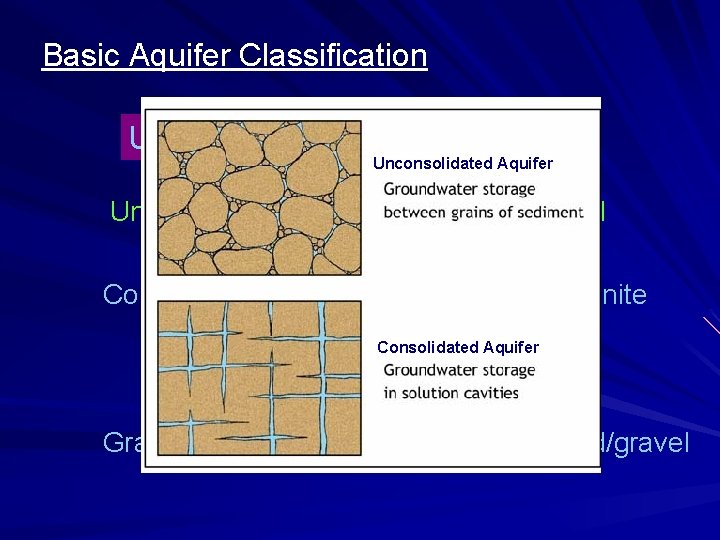
Basic Aquifer Classification Unconsolidated or Consolidated Unconsolidated Aquifer Unconsolidated: granular sand or gravel Consolidated: sandstone, limestone, granite Consolidated Aquifer Can be low-yield or high-yield Granite, sandstone Limestone, sand/gravel
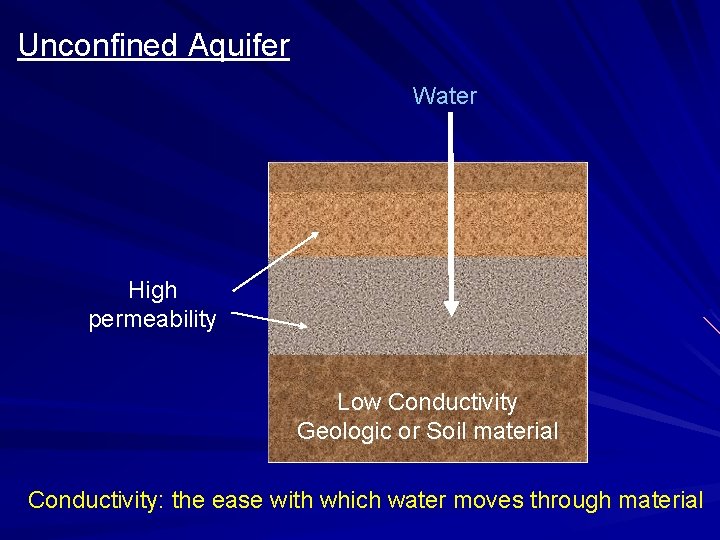
Unconfined Aquifer Water High permeability Low Conductivity Geologic or Soil material Conductivity: the ease with which water moves through material
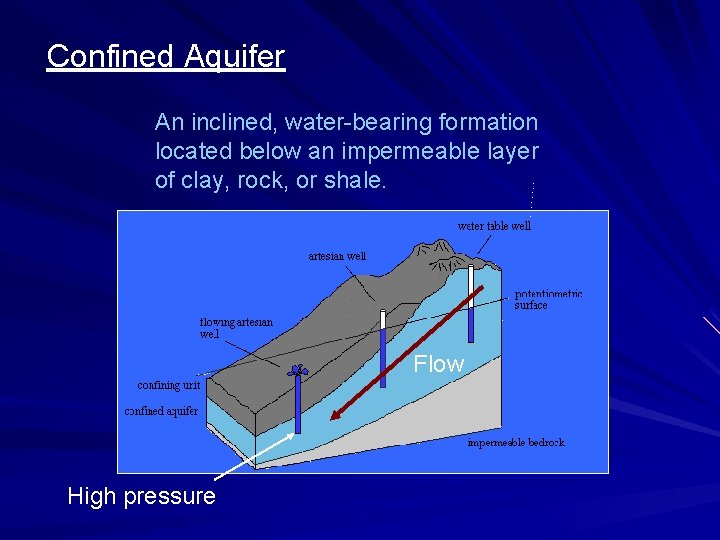
Confined Aquifer An inclined, water-bearing formation located below an impermeable layer of clay, rock, or shale. Flow High pressure

Confined and Unconfined Flow aquitard High pressure
Florida’s Aquifers
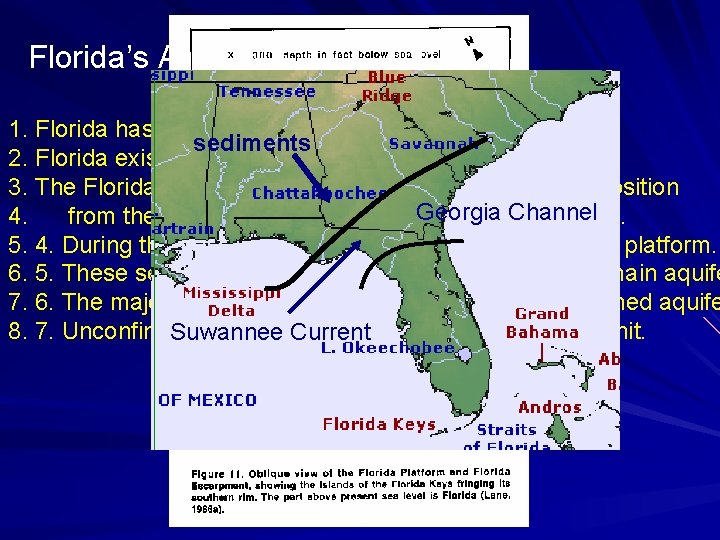
Florida’s Aquifers 1. Florida has both confined and unconfined aquifers sediments 2. Florida exists on a raised platform 3. The Florida platform was dominated by carbonate deposition Channel 4. from the Jurassic (-200 my) to the. Georgia Miocene (-25 my). 5. 4. During the Miocene, clayey sediments blanketed the platform. 6. 5. These sediments form a confining unit for Florida’s main aquife 7. 6. The major aquifer is a consolidated, carbonate confined aquife 8. 7. Unconfined aquifers exist above the clay confining unit. Suwannee Current
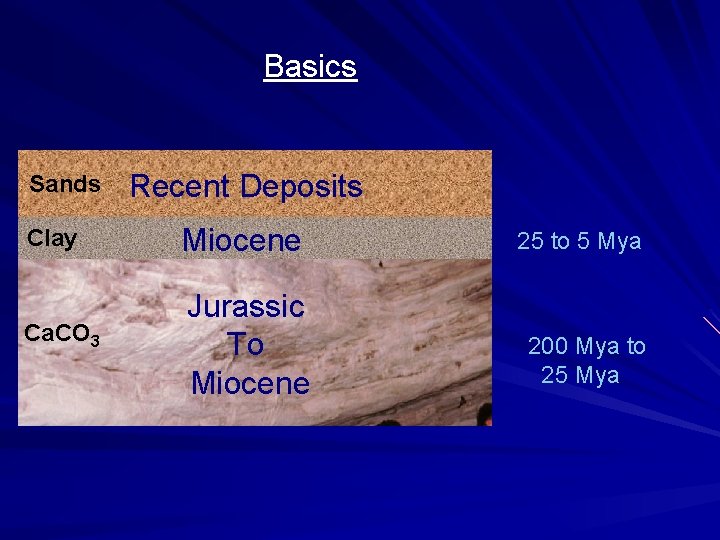
Basics Sands Recent Deposits Clay Miocene Ca. CO 3 Jurassic To Miocene 25 to 5 Mya 200 Mya to 25 Mya
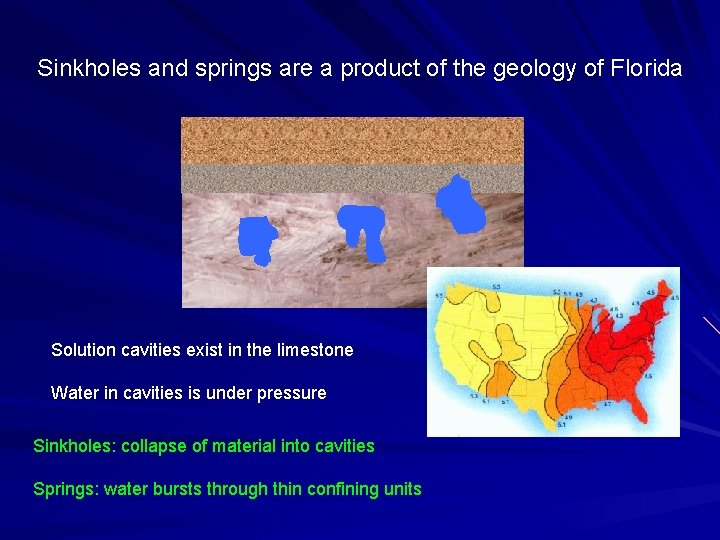
Sinkholes and springs are a product of the geology of Florida Solution cavities exist in the limestone Water in cavities is under pressure Sinkholes: collapse of material into cavities Springs: water bursts through thin confining units
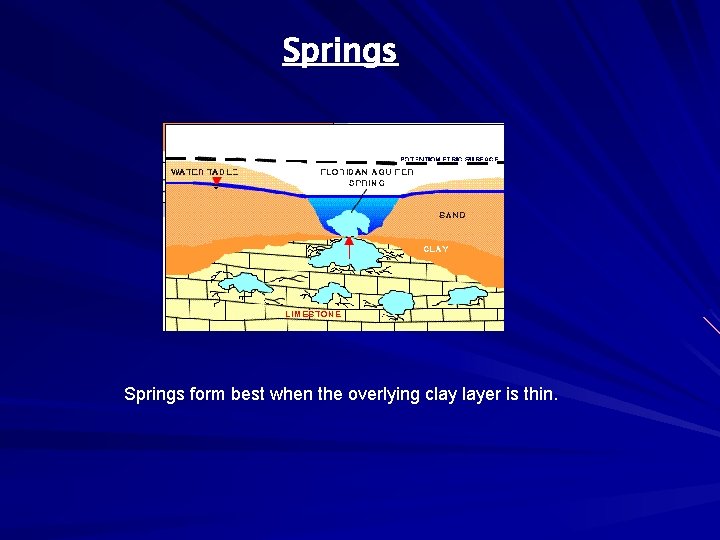
Springs form best when the overlying clay layer is thin.
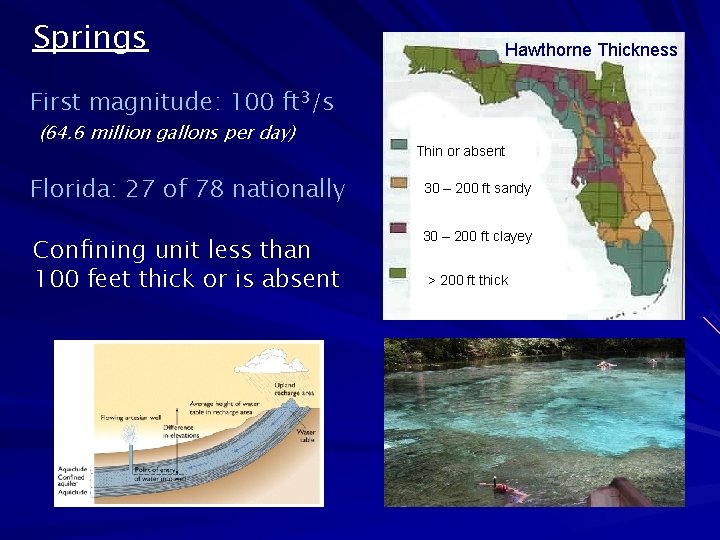
Springs Hawthorne Thickness First magnitude: 100 ft 3/s (64. 6 million gallons per day) Florida: 27 of 78 nationally Confining unit less than 100 feet thick or is absent Thin or absent 30 – 200 ft sandy 30 – 200 ft clayey > 200 ft thick
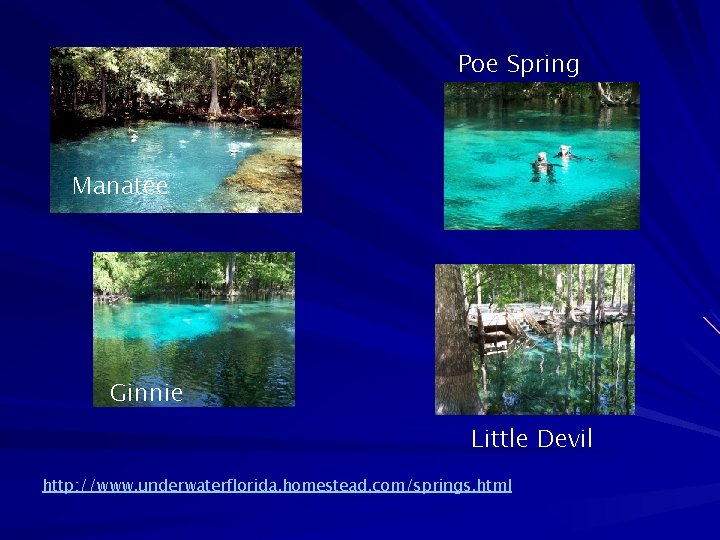
Poe Spring Manatee Ginnie Little Devil http: //www. underwaterflorida. homestead. com/springs. html
Florida’s Dominant Aquifer Systems Florida is the largest groundwater user east of the Mississippi
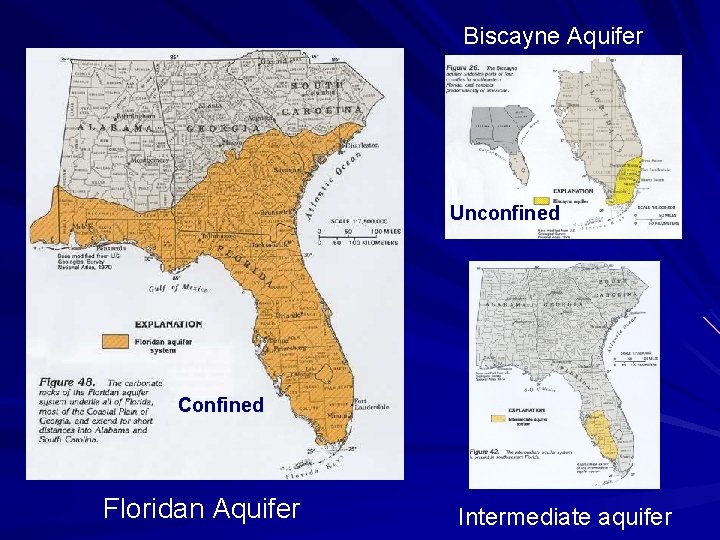
Biscayne Aquifer Unconfined Confined Floridan Aquifer Intermediate aquifer
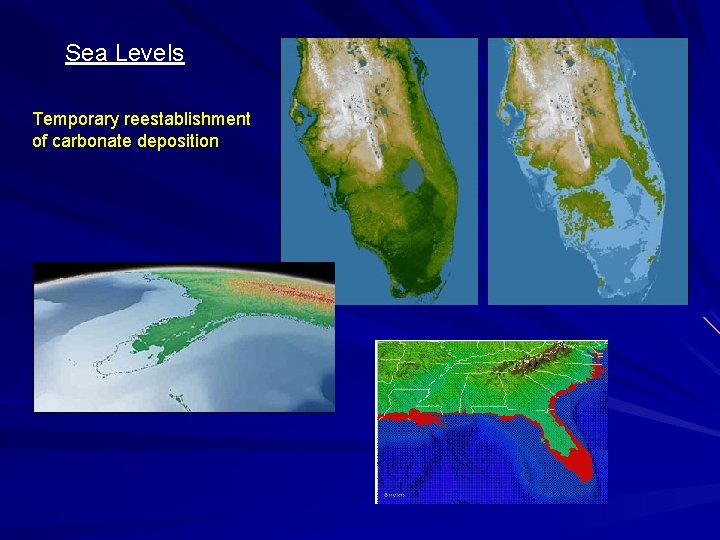
Sea Levels Temporary reestablishment of carbonate deposition
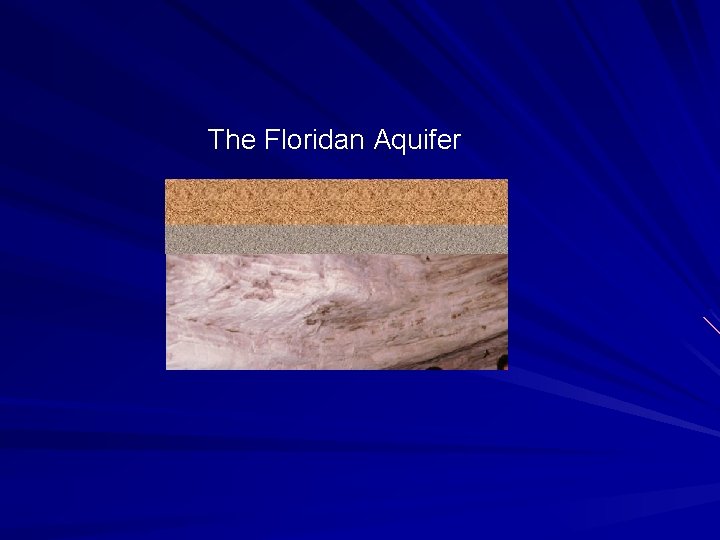
The Floridan Aquifer
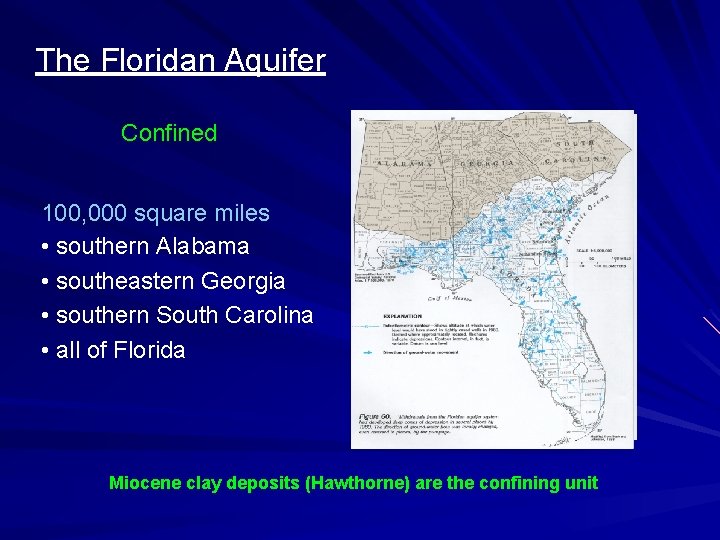
The Floridan Aquifer Confined 100, 000 square miles • southern Alabama • southeastern Georgia • southern South Carolina • all of Florida Miocene clay deposits (Hawthorne) are the confining unit
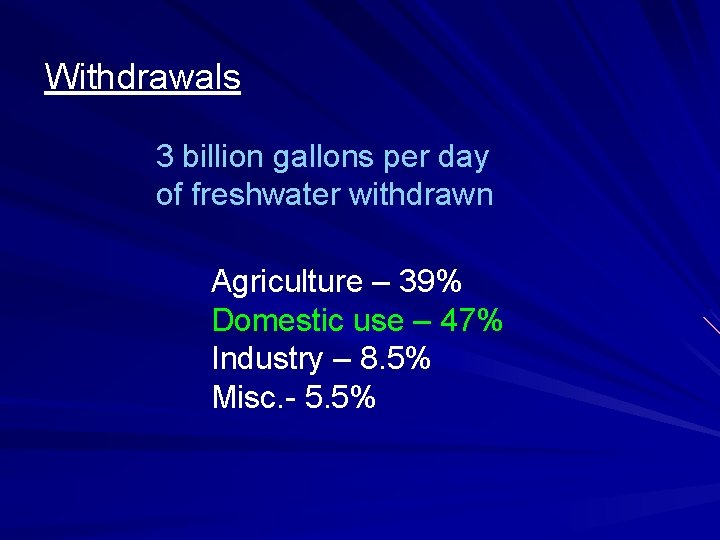
Withdrawals 3 billion gallons per day of freshwater withdrawn Agriculture – 39% Domestic use – 47% Industry – 8. 5% Misc. - 5. 5%
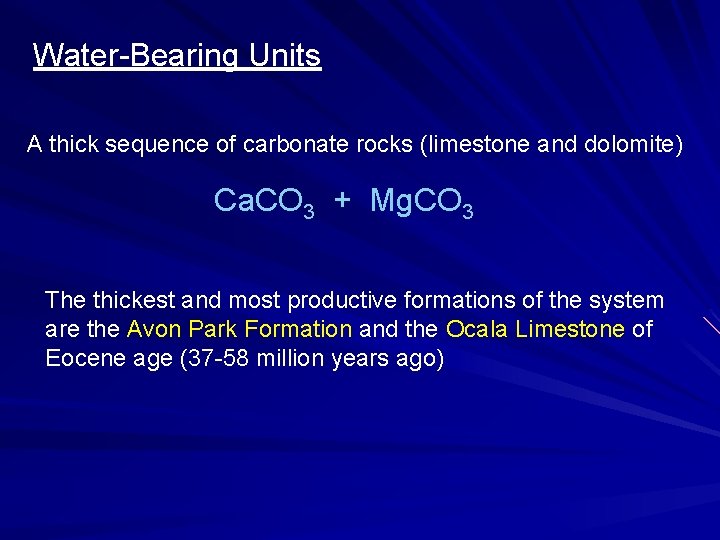
Water-Bearing Units A thick sequence of carbonate rocks (limestone and dolomite) Ca. CO 3 + Mg. CO 3 The thickest and most productive formations of the system are the Avon Park Formation and the Ocala Limestone of Eocene age (37 -58 million years ago)
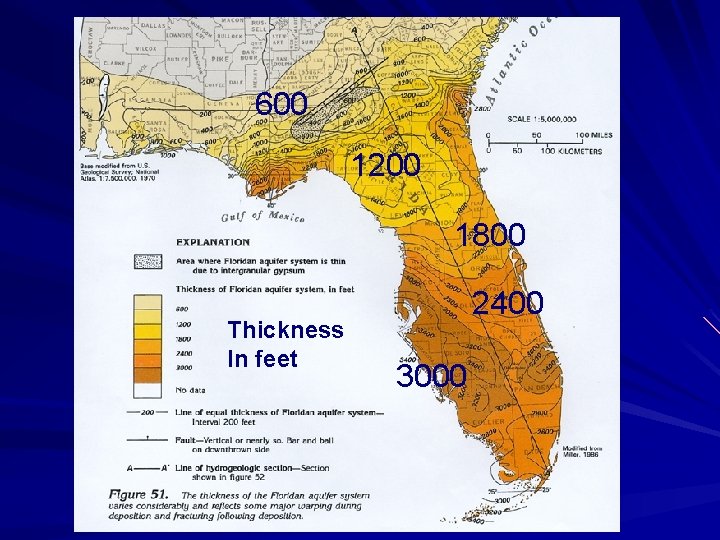
600 1200 1800 Thickness In feet 2400 3000
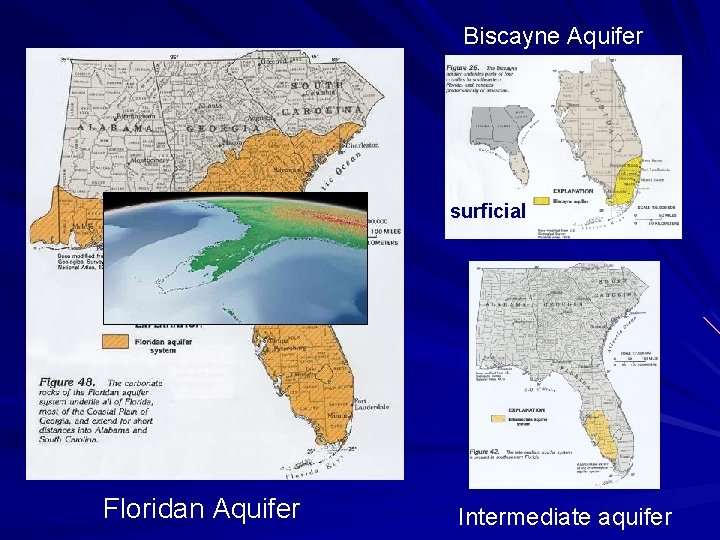
Biscayne Aquifer surficial Floridan Aquifer Intermediate aquifer
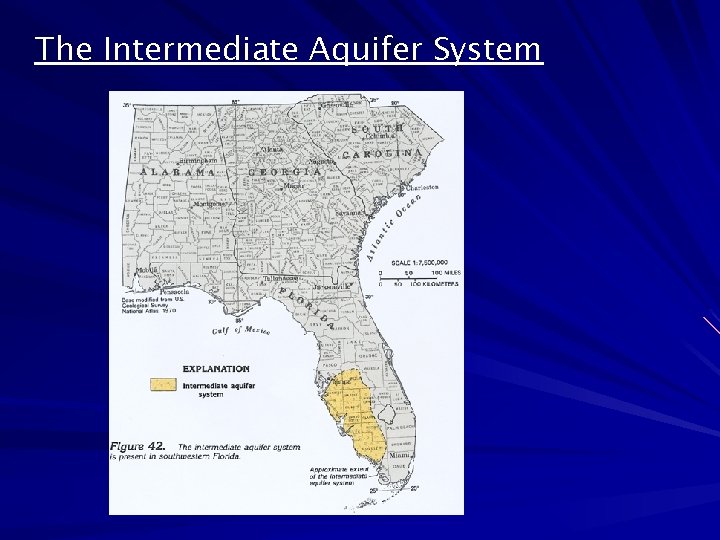
The Intermediate Aquifer System
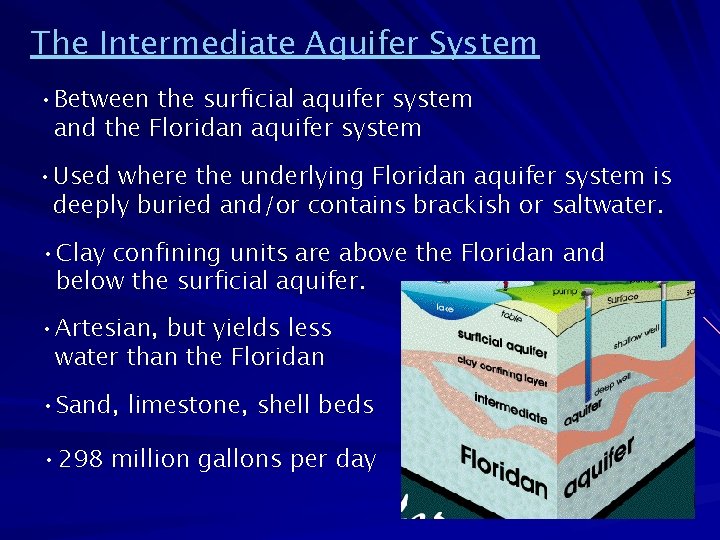
The Intermediate Aquifer System • Between the surficial aquifer system and the Floridan aquifer system • Used where the underlying Floridan aquifer system is deeply buried and/or contains brackish or saltwater. • Clay confining units are above the Floridan and below the surficial aquifer. • Artesian, but yields less water than the Floridan • Sand, limestone, shell beds • 298 million gallons per day
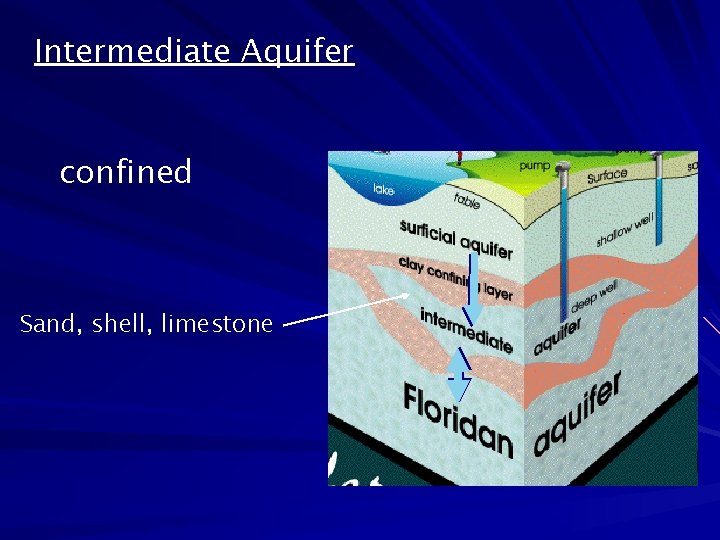
Intermediate Aquifer confined Sand, shell, limestone
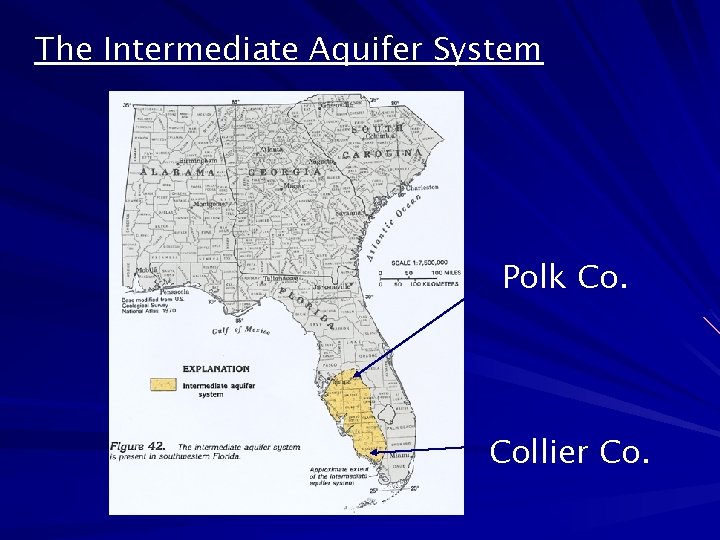
The Intermediate Aquifer System Polk Co. Collier Co.
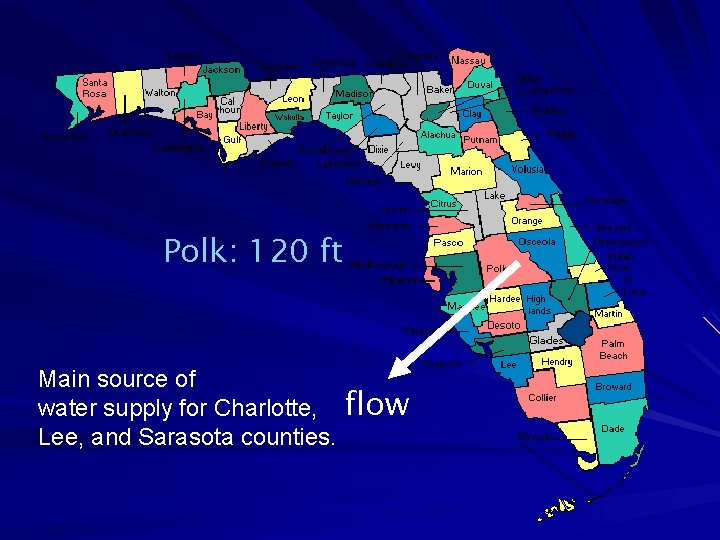
Polk: 120 ft Main source of water supply for Charlotte, Lee, and Sarasota counties. flow
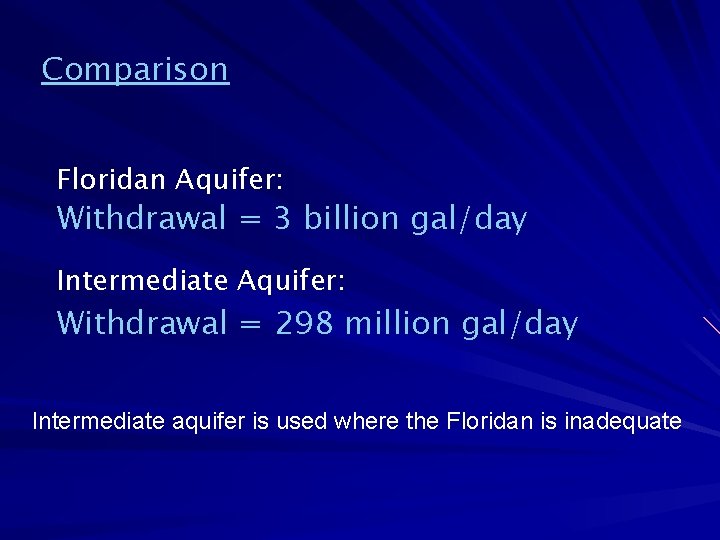
Comparison Floridan Aquifer: Withdrawal = 3 billion gal/day Intermediate Aquifer: Withdrawal = 298 million gal/day Intermediate aquifer is used where the Floridan is inadequate

Surficial aquifers: The Biscayne
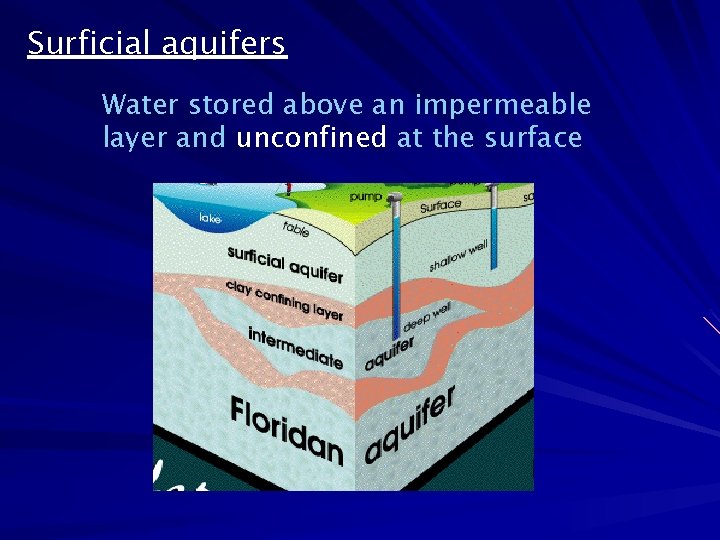
Surficial aquifers Water stored above an impermeable layer and unconfined at the surface
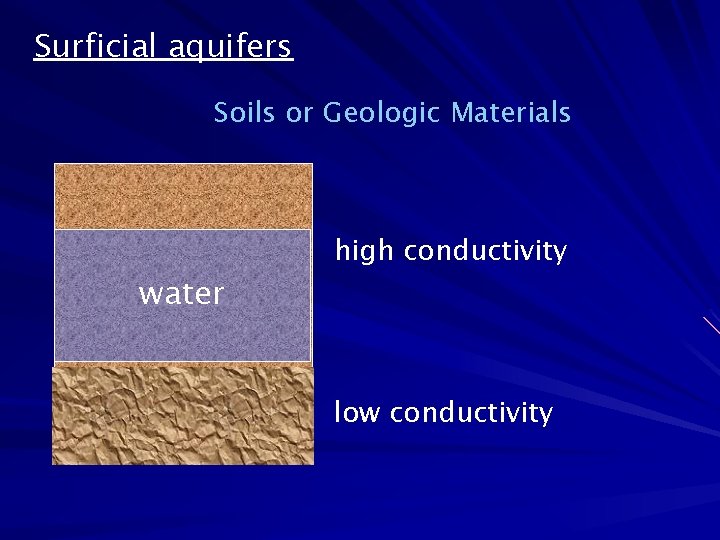
Surficial aquifers Soils or Geologic Materials water high conductivity low conductivity
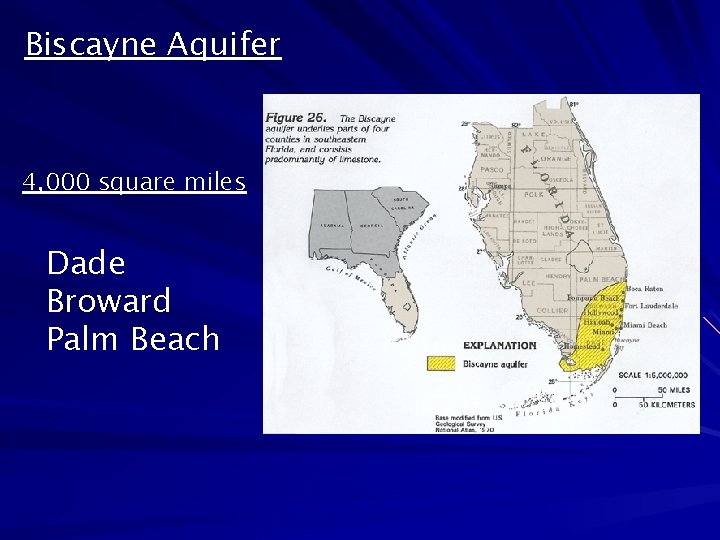
Biscayne Aquifer 4, 000 square miles Dade Broward Palm Beach
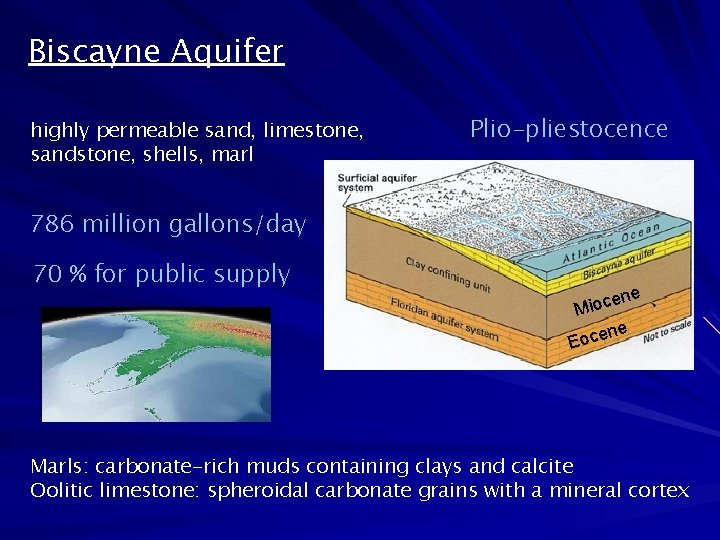
Biscayne Aquifer highly permeable sand, limestone, sandstone, shells, marl Plio-pliestocence 786 million gallons/day 70 % for public supply ene c o i M ne e c o low-permeability. Esandy silt Marls: carbonate-rich muds containing clays and calcite Oolitic limestone: spheroidal carbonate grains with a mineral cortex
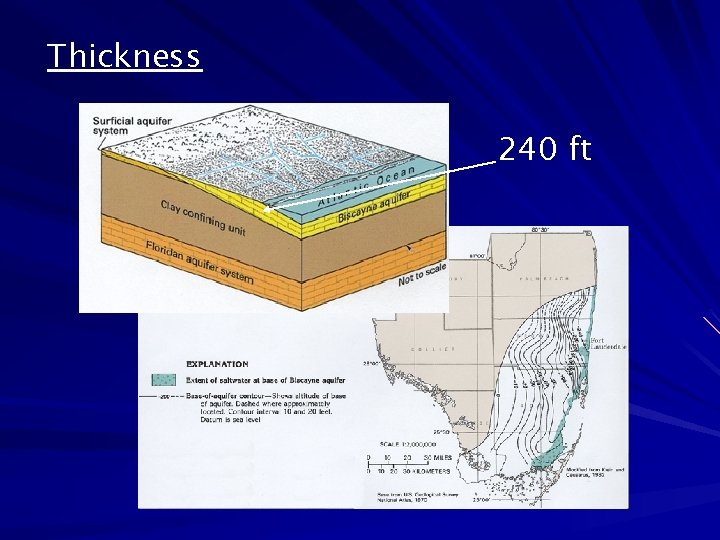
Thickness 240 ft
Water in the Biscayne
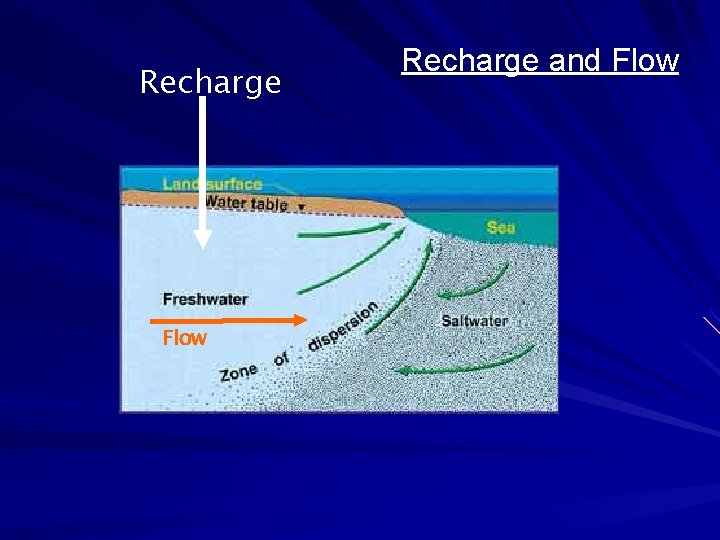
Recharge Flow Recharge and Flow
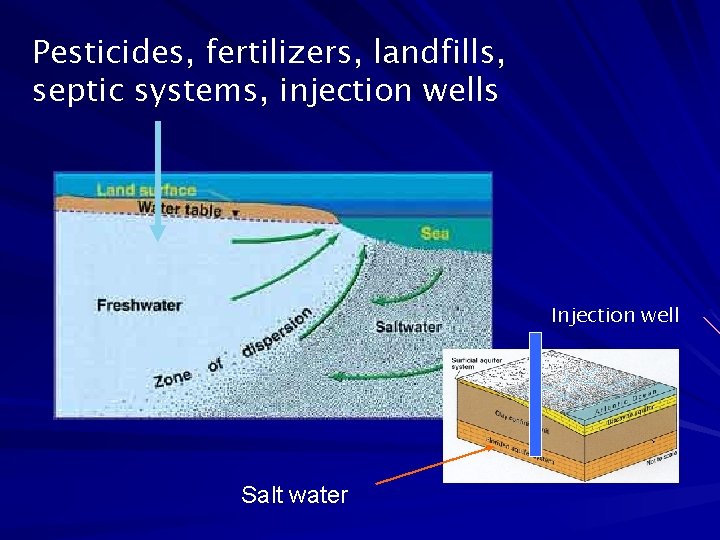
Pesticides, fertilizers, landfills, septic systems, injection wells Injection well Salt water
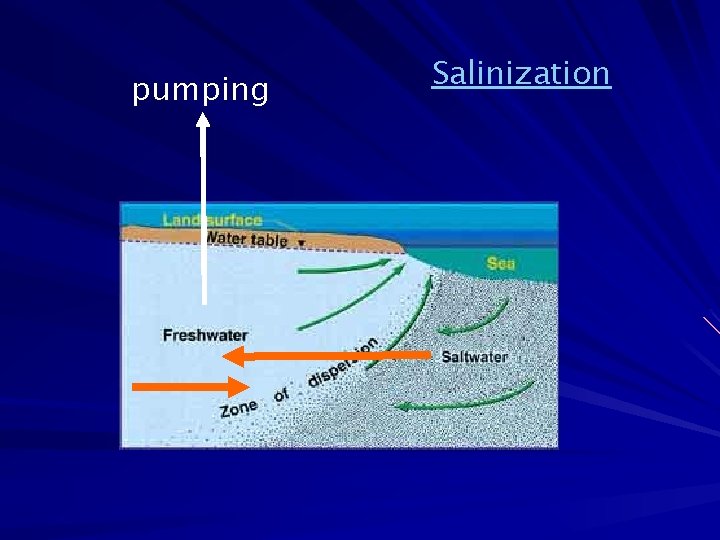
pumping Salinization
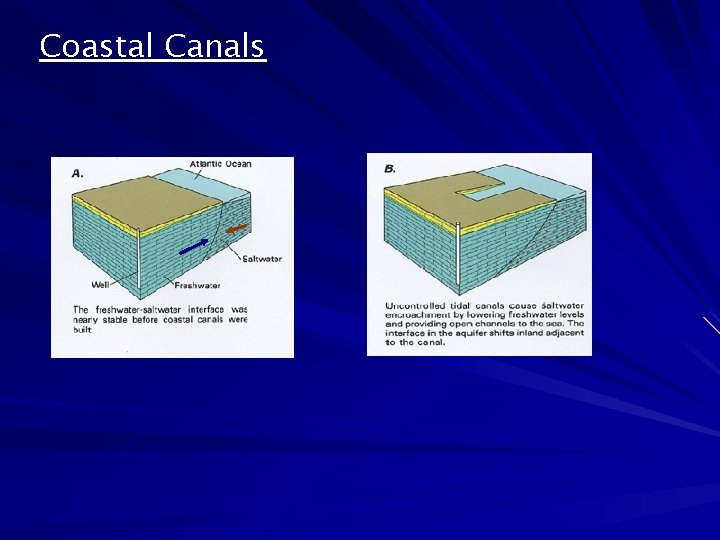
Coastal Canals
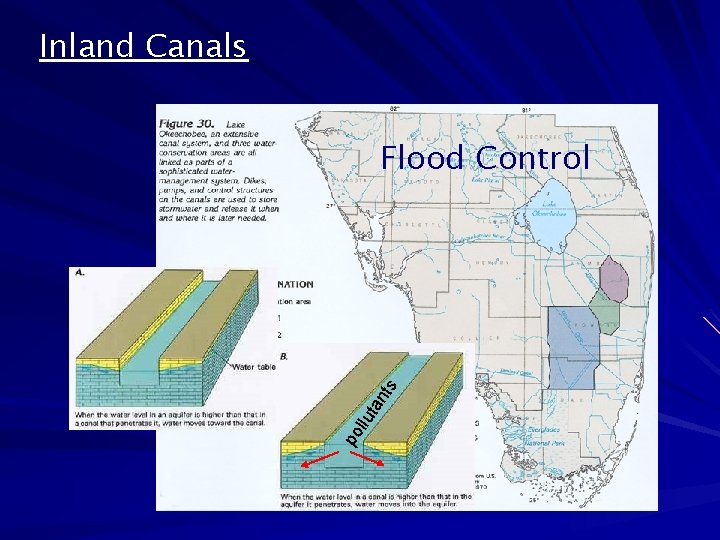
Inland Canals po llu tan ts Flood Control
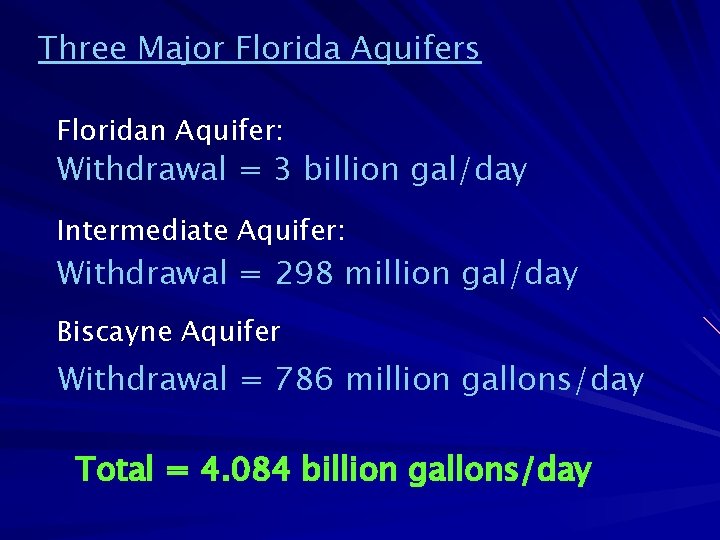
Three Major Florida Aquifers Floridan Aquifer: Withdrawal = 3 billion gal/day Intermediate Aquifer: Withdrawal = 298 million gal/day Biscayne Aquifer Withdrawal = 786 million gallons/day Total = 4. 084 billion gallons/day
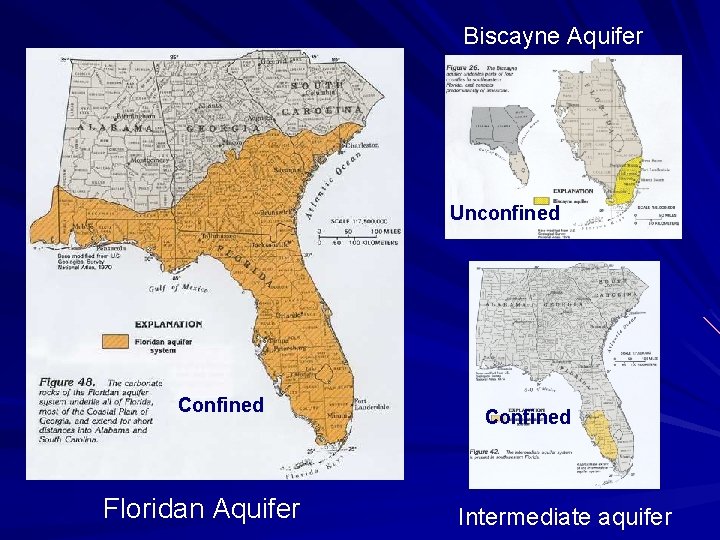
Biscayne Aquifer Unconfined Confined Floridan Aquifer Confined Intermediate aquifer
- Slides: 42