Fish and food security SPC Strategic Engagement Policy


- Slides: 36
Fish and food security SPC Strategic Engagement, Policy and Planning Facility
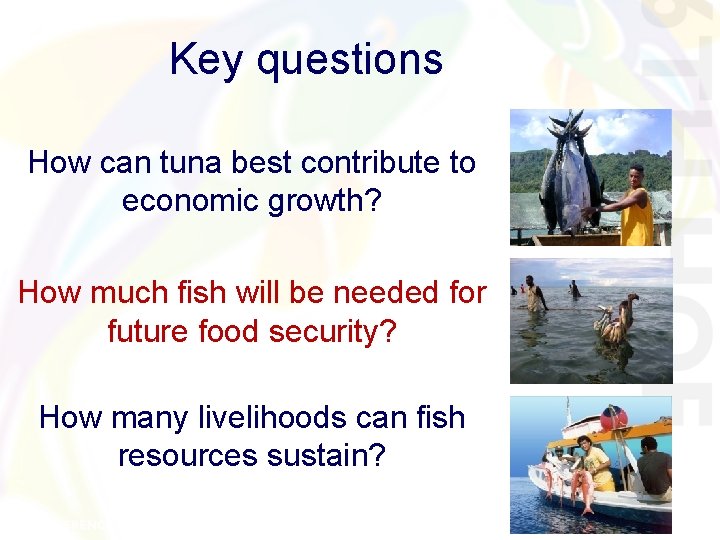
Key questions How can tuna best contribute to economic growth? How much fish will be needed for future food security? How many livelihoods can fish resources sustain?
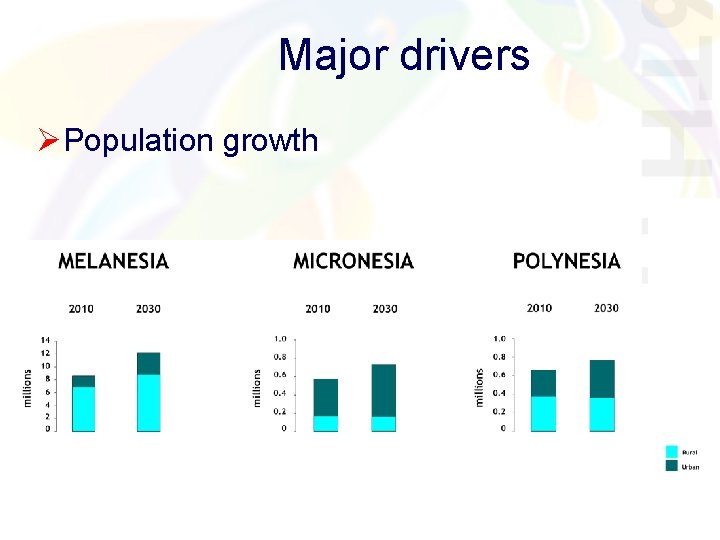
Major drivers ØPopulation growth Major drivers
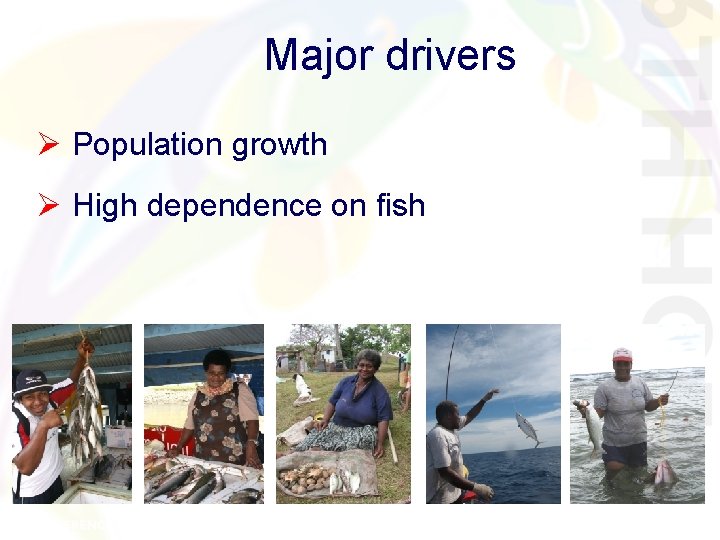
Major drivers Ø Population growth Ø High dependence on fish
SPC Study ‘Planning the use of fish for food security in the Pacific’ • Estimate fish needed for good nutrition, and current consumption • Forecast the fish required (to 2030) • Identify how to meet future needs for fish Ø Joint project: Division Marine Resources, Statistics & Demography, Public Health, Strategic Engagement, Policy and Planning Facility
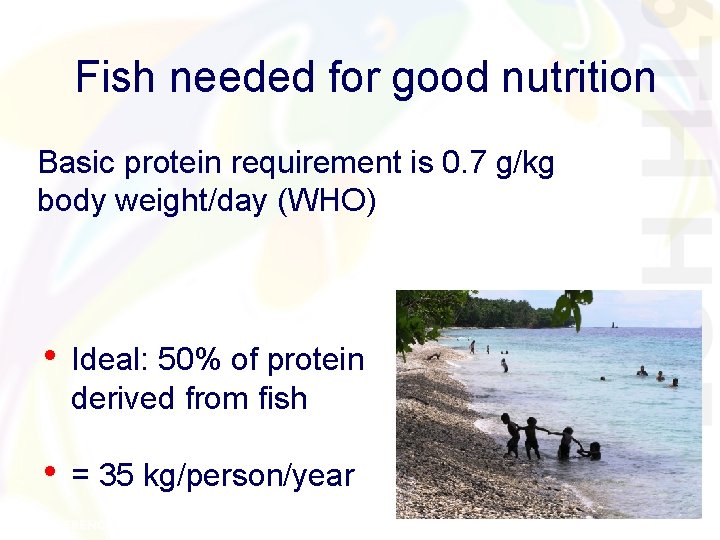
Fish needed for good nutrition Basic protein requirement is 0. 7 g/kg body weight/day (WHO) • Ideal: 50% of protein derived from fish • = 35 kg/person/year
Current consumption of fish • Based on household income and expenditure surveys (HIES) for 15 PICTs • Socio-economic surveys of fishing villages in 16 PICTs during PROCFish
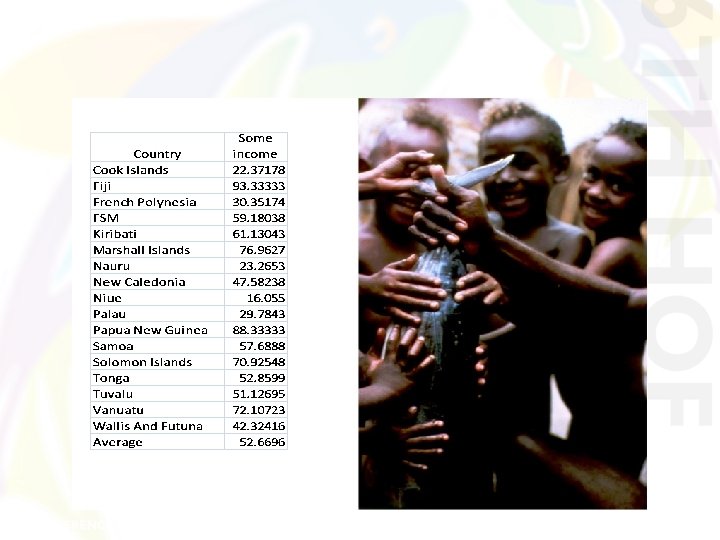
Key findings on fish consumption ØVery high! • >70 kg per capita for 6 PICTs in Micro. & Poly. • >35 kg in 5 PICTs • ~20 kg in 4 PICTs • ~10 kg in PNG
Key findings on fish consumption Ø Very high! Ø Great dependence in rural areas! • Rural > urban • >90 kg for 7 PICTs • PNG is an exception
Key findings on fish consumption ØVery high! ØGreat dependence in rural areas! ØSubsistence! • In rural areas, 60 -90% of fish is caught by household • ~50% in urban areas of smaller PICTs
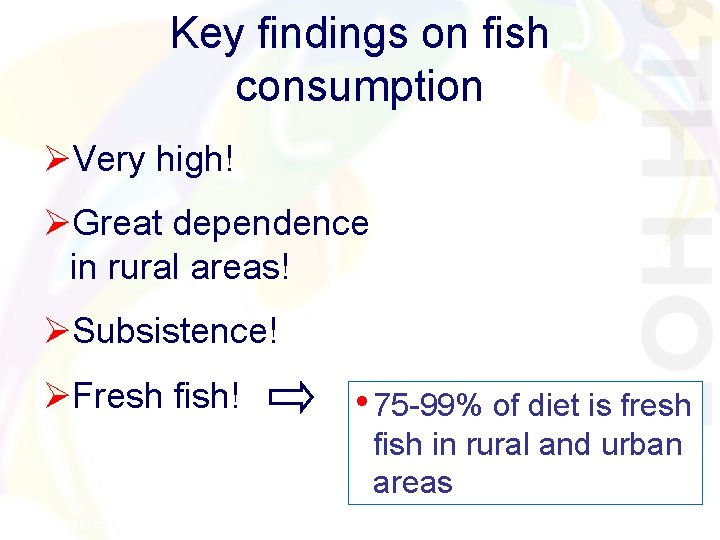
Key findings on fish consumption ØVery high! ØGreat dependence in rural areas! ØSubsistence! ØFresh fish! • 75 -99% of diet is fresh fish in rural and urban areas
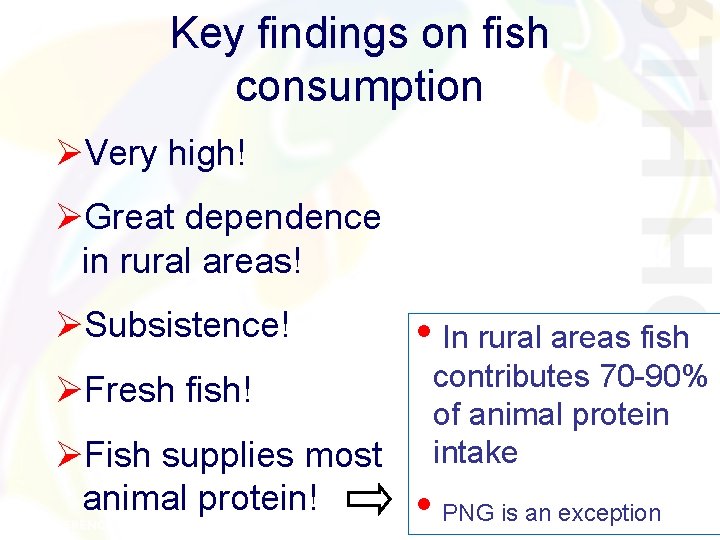
Key findings on fish consumption ØVery high! ØGreat dependence in rural areas! ØSubsistence! ØFresh fish! ØFish supplies most animal protein! • In rural areas fish contributes 70 -90% of animal protein intake • PNG is an exception
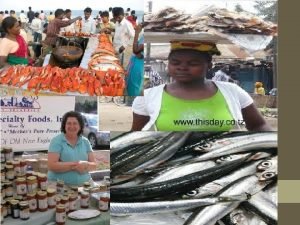
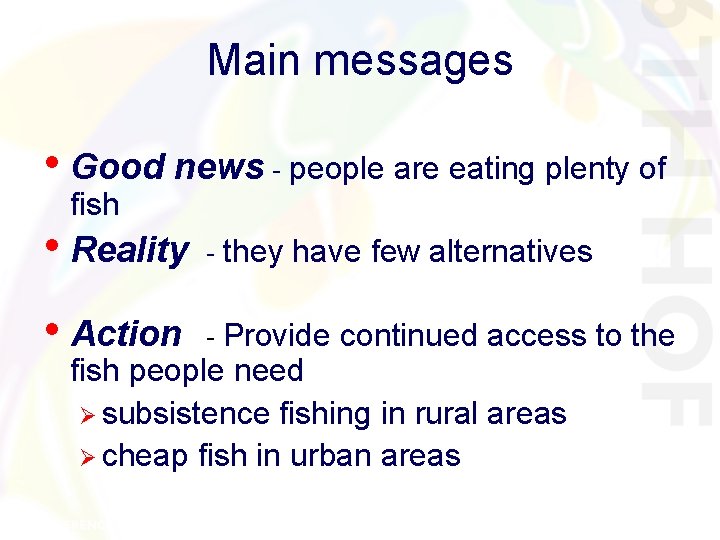
Main messages • Good news - people are eating plenty of fish • Reality - they have few alternatives • Action - Provide continued access to the fish people need Ø subsistence fishing in rural areas Ø cheap fish in urban areas
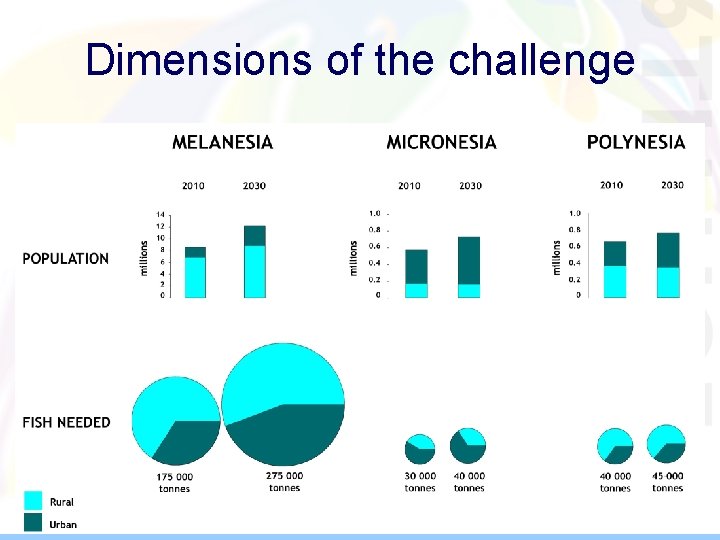
Dimensions of the challenge
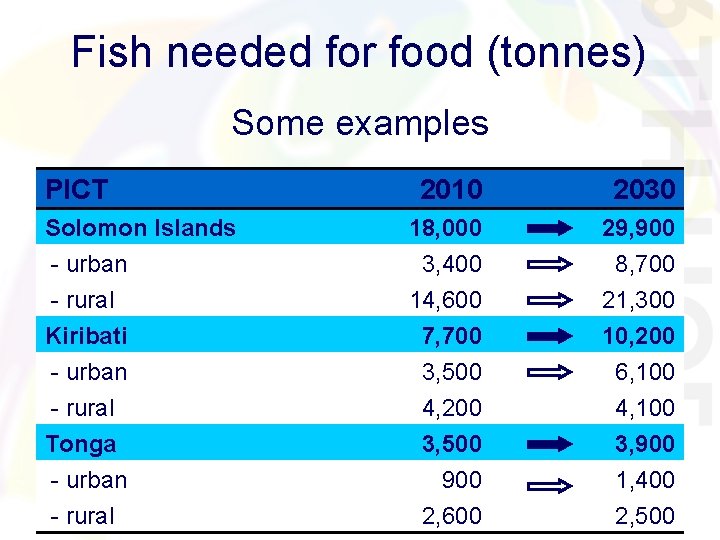
Fish needed for food (tonnes) Some examples PICT Solomon Islands - urban - rural Kiribati - urban - rural Tonga - urban - rural 2010 2030 18, 000 3, 400 14, 600 7, 700 3, 500 4, 200 3, 500 900 2, 600 29, 900 8, 700 21, 300 10, 200 6, 100 4, 100 3, 900 1, 400 2, 500
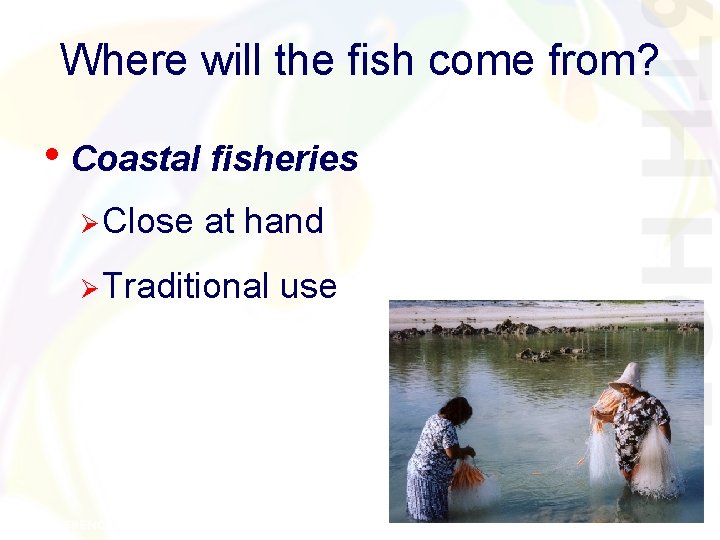
Where will the fish come from? • Coastal fisheries Ø Close at hand Ø Traditional use
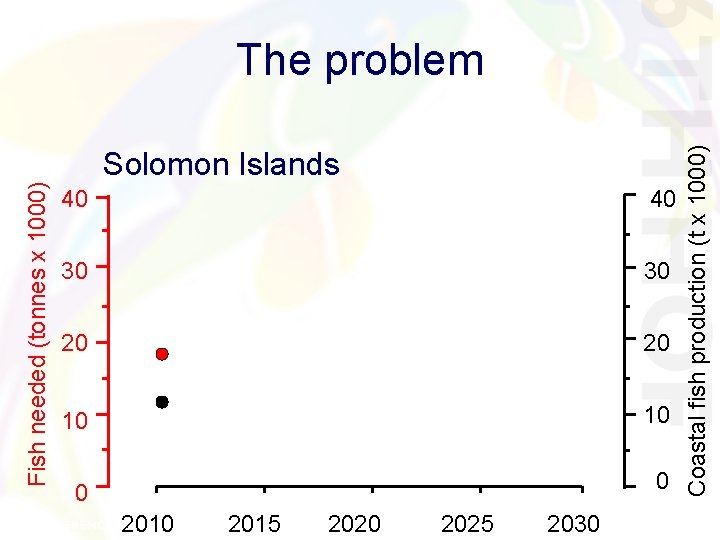
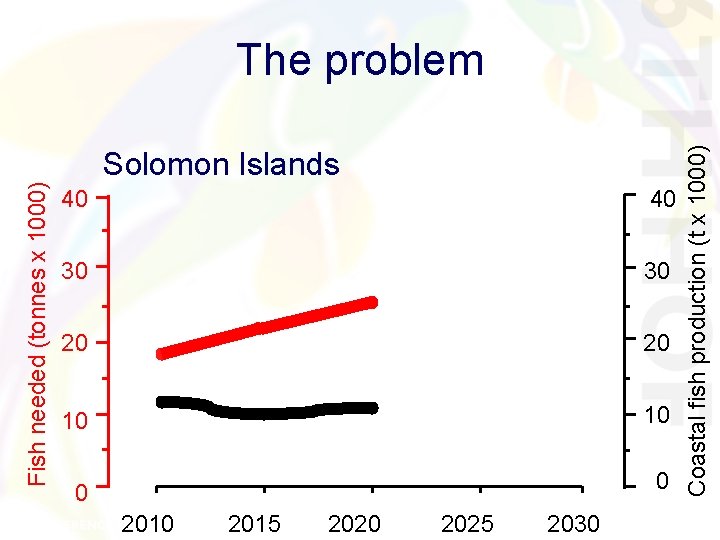
Solomon Islands 40 40 30 30 20 20 10 10 0 0 2015 2020 2025 2030 Coastal fish production (t x 1000) Fish needed (tonnes x 1000) The problem
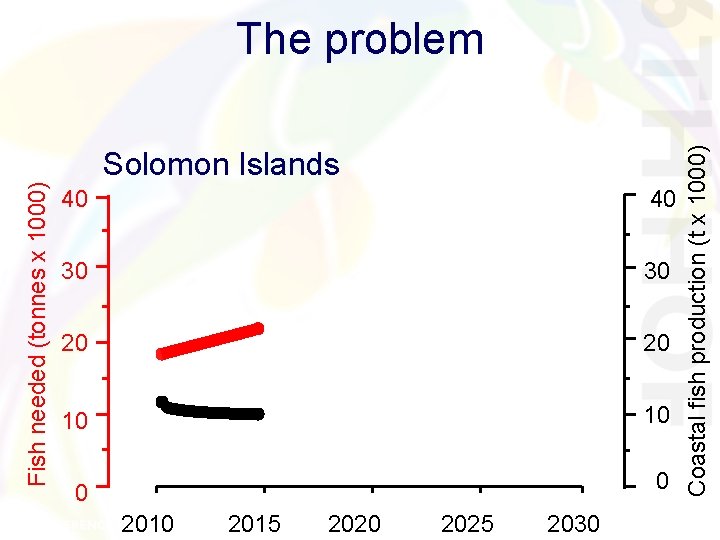
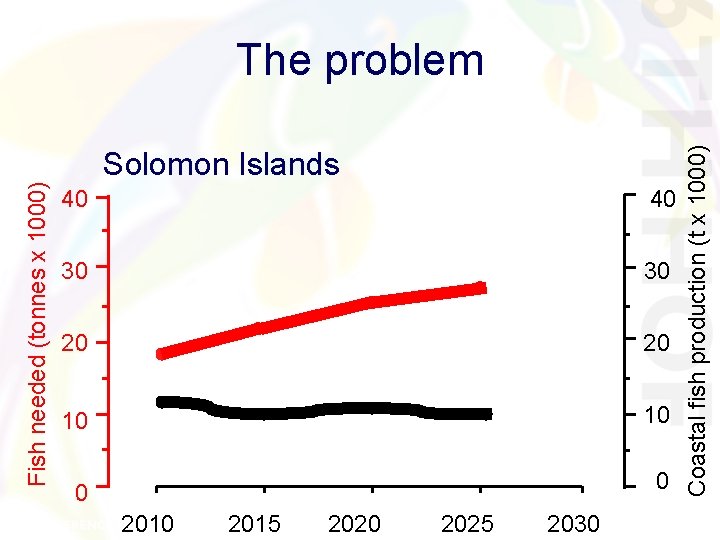
Solomon Islands 40 40 30 30 20 20 10 10 0 0 2015 2020 2025 2030 Coastal fish production (t x 1000) Fish needed (tonnes x 1000) The problem
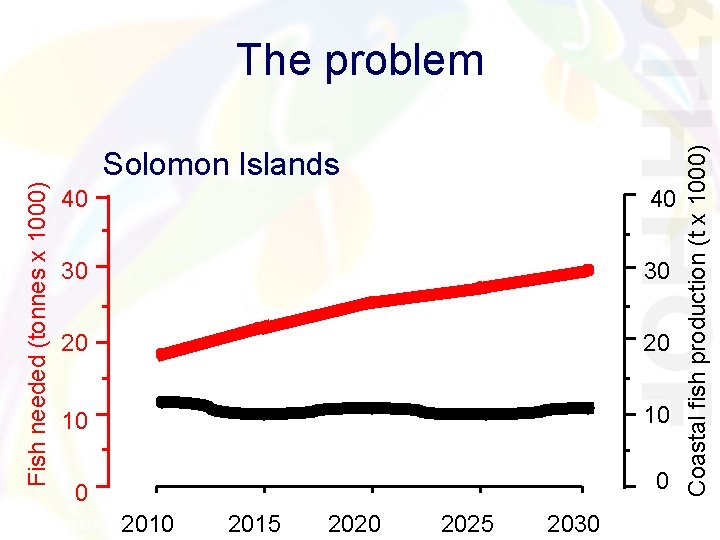
Solomon Islands 40 40 30 30 20 20 10 10 0 0 2015 2020 2025 2030 Coastal fish production (t x 1000) Fish needed (tonnes x 1000) The problem
Solomon Islands 40 40 30 30 20 20 10 10 0 0 2015 2020 2025 2030 Coastal fish production (t x 1000) Fish needed (tonnes x 1000) The problem
Solomon Islands 40 40 30 30 20 20 10 10 0 0 2015 2020 2025 2030 Coastal fish production (t x 1000) Fish needed (tonnes x 1000) The problem
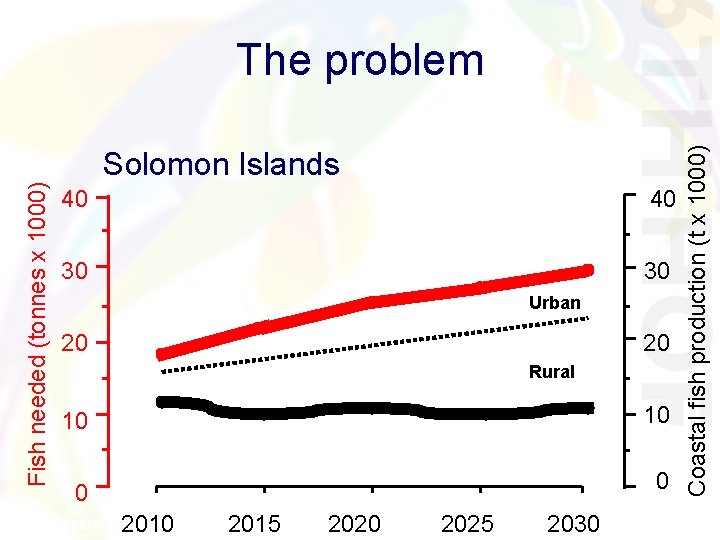
Solomon Islands 40 40 30 30 Urban 20 20 Rural 10 10 0 0 2015 2020 2025 2030 Coastal fish production (t x 1000) Fish needed (tonnes x 1000) The problem
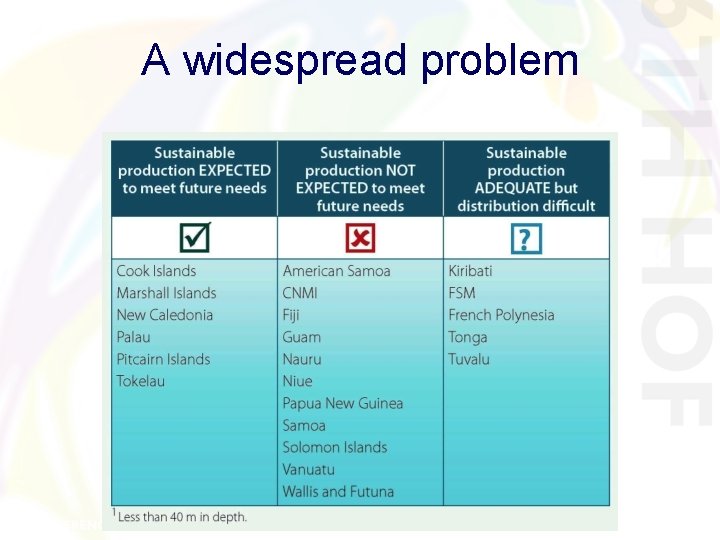
A widespread problem
What is the solution?
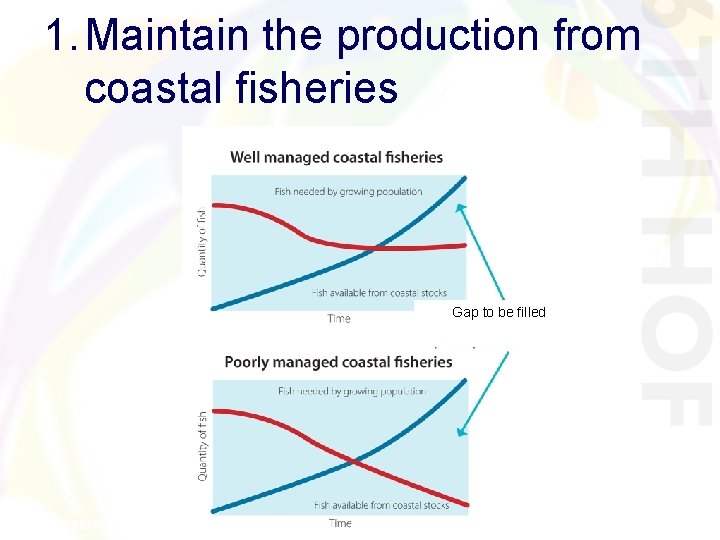
1. Maintain the production from coastal fisheries Gap to be filled
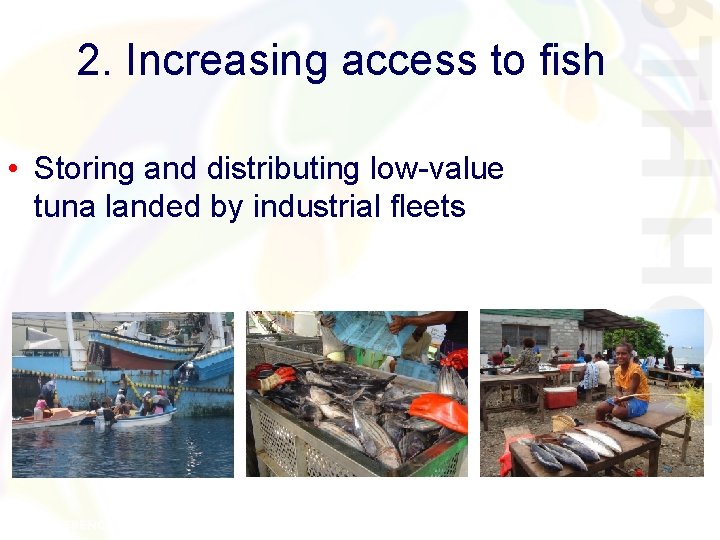
2. Increasing access to fish • Storing and distributing low-value tuna landed by industrial fleets
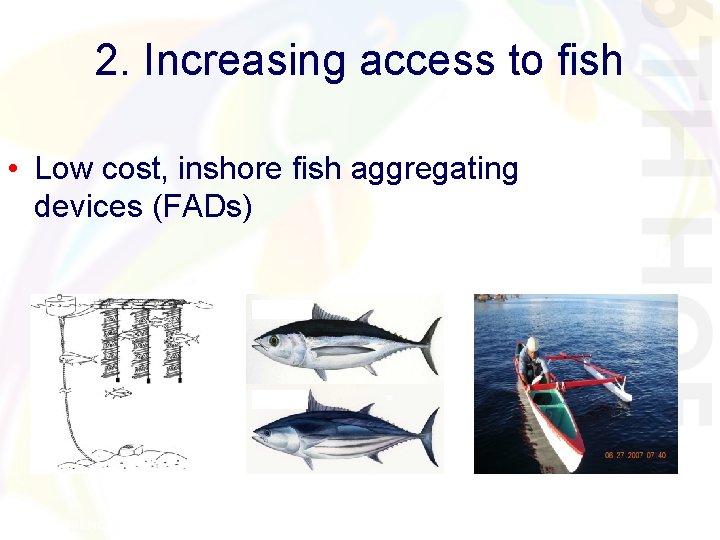
2. Increasing access to fish • Low cost, inshore fish aggregating devices (FADs)
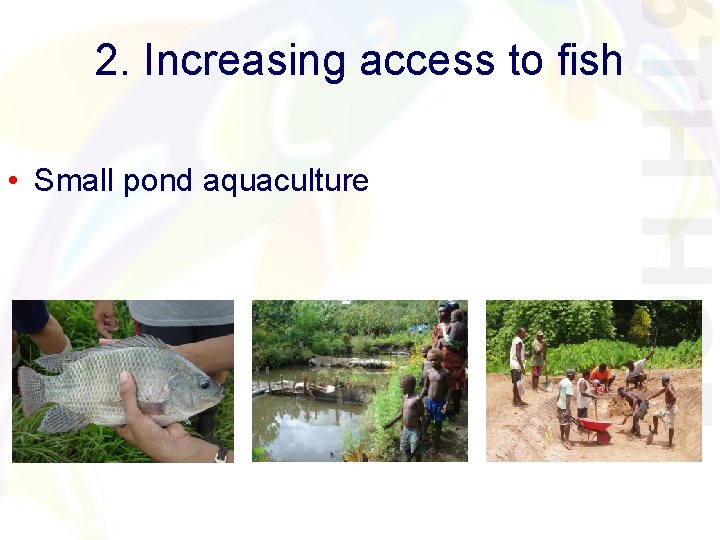
2. Increasing access to fish • Small pond aquaculture
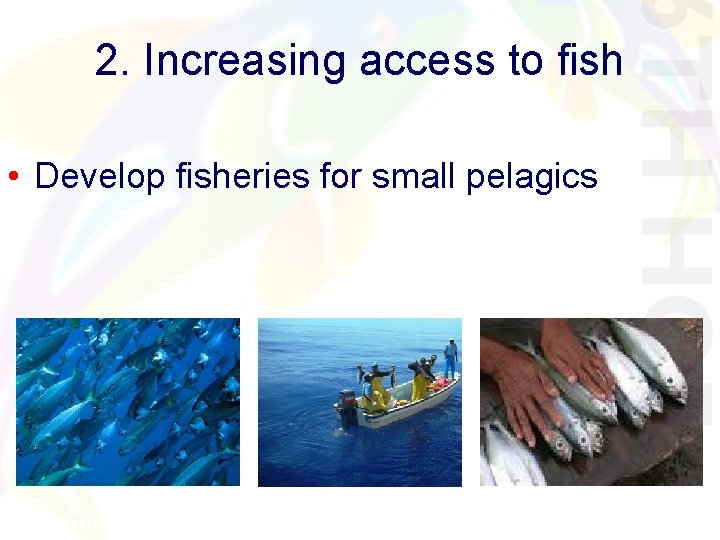
2. Increasing access to fish • Develop fisheries for small pelagics
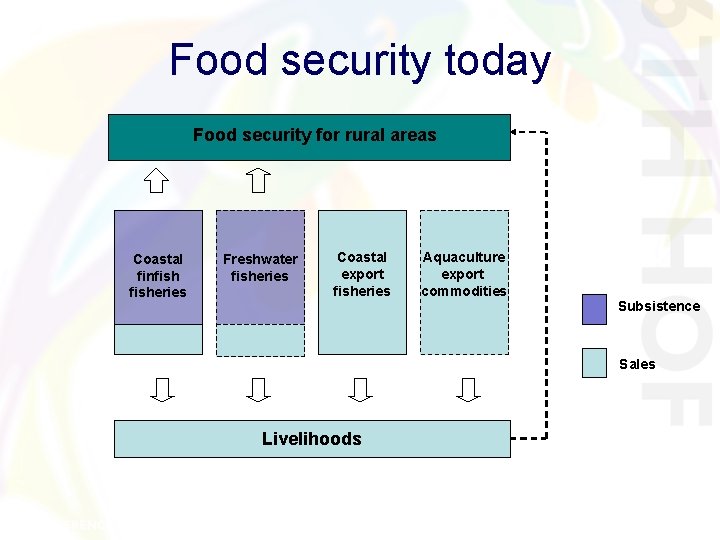
Food security today Food security for rural areas Coastal finfisheries Freshwater fisheries Coastal export fisheries Aquaculture export commodities Subsistence Sales Livelihoods
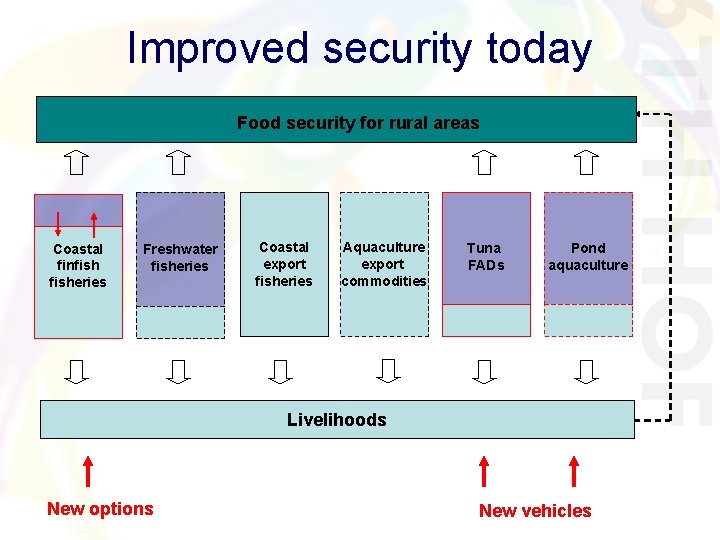
Improved security today Food security forfor rural areas Food security rural areas Coastal finfisheries Freshwater fisheries Coastal export fisheries Aquaculture export commodities Tuna FADs Pond aquaculture Livelihoods New options New vehicles
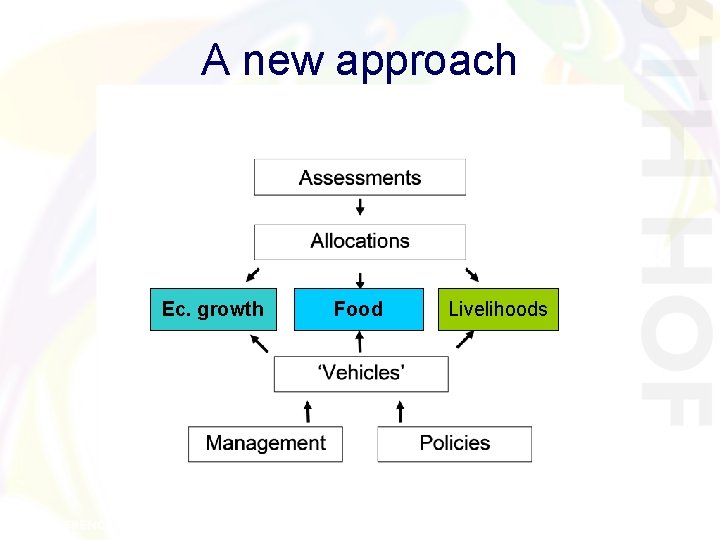
A new approach Ec. growth Food Livelihoods
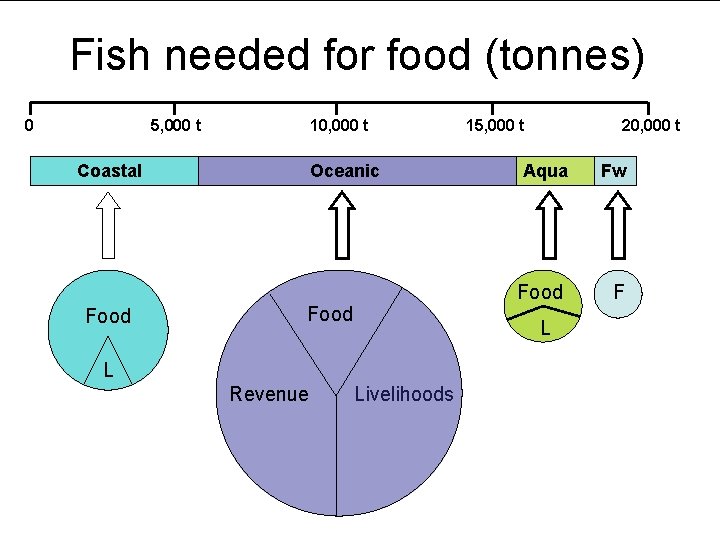
Fish needed for food (tonnes) 0 5, 000 t 10, 000 t Coastal Food Oceanic 20, 000 t Aqua Food L L Revenue 15, 000 t Livelihoods Fw F
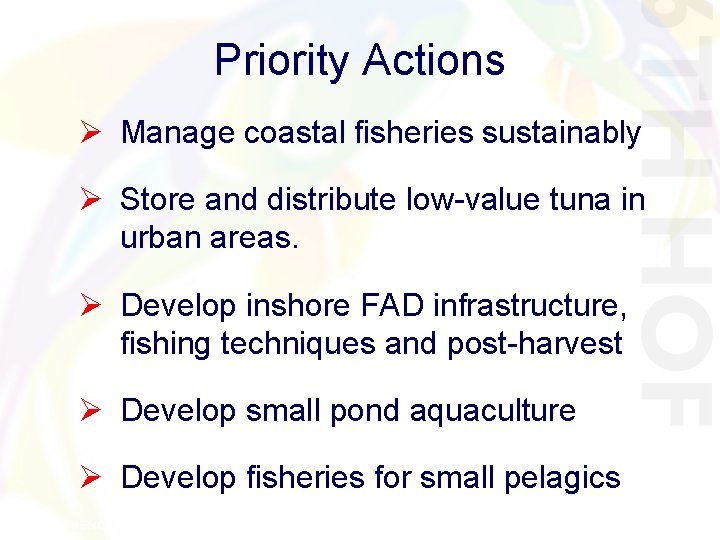
Priority Actions Ø Manage coastal fisheries sustainably Ø Store and distribute low-value tuna in urban areas. Ø Develop inshore FAD infrastructure, fishing techniques and post-harvest Ø Develop small pond aquaculture Ø Develop fisheries for small pelagics
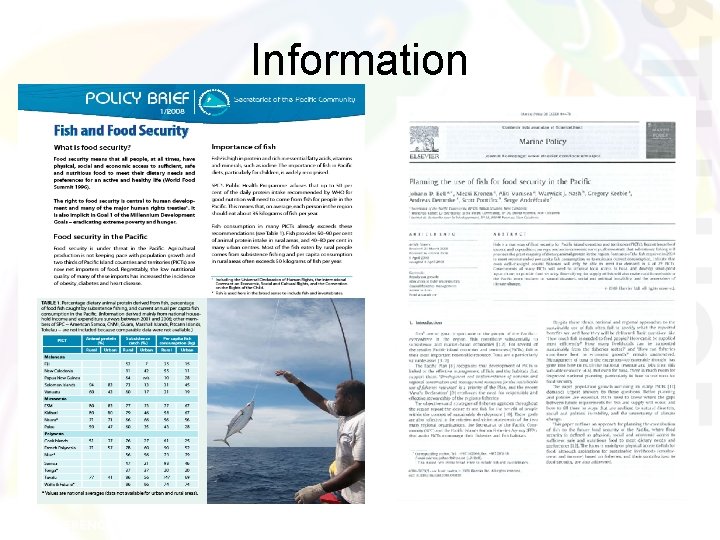
Information