
SPC ED 587 Reading Methods MRSD Assessment Part

- Slides: 23
SPC ED 587 Reading Methods MR/SD Assessment: Part I September 6, 2006
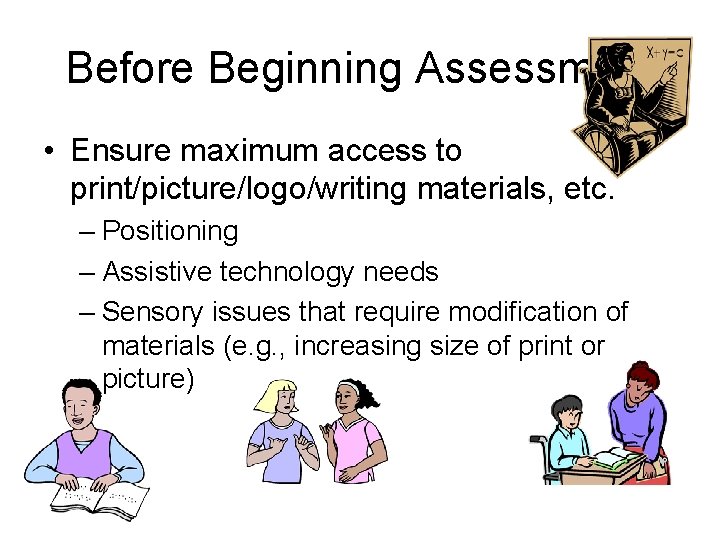
Before Beginning Assessment • Ensure maximum access to print/picture/logo/writing materials, etc. – Positioning – Assistive technology needs – Sensory issues that require modification of materials (e. g. , increasing size of print or picture)
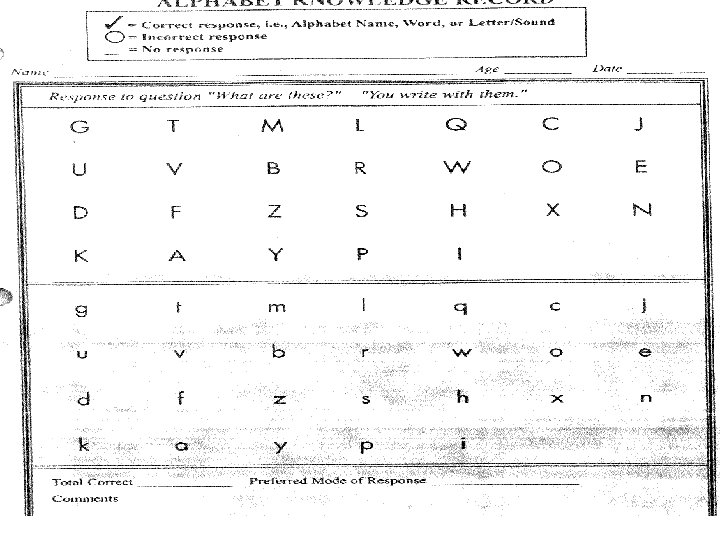
Organizing Assessment: Areas to Evaluate • Student’s language level (if appropriate) – Intentional communication? Symbolic communication? • Symbol recognition (if appropriate) – Might include sight words or be limited to concrete objects, photographs, or picsyms • Listening & Speaking vocabulary – E. g. , Observation; Peabody Picture Vocabulary (ask SL/P) • Phonological awareness (if appropriate) – E. g. , observation, Dibbles, Yopp-Singer
Organizing Assessment: Areas to Evaluate • Student’s understanding of print & attitudes toward reading/literacy activities – E. g. , Concepts About Print; Early Literacy Checklist; Parent & Student Interviews • Word Recognition Skills – Automatic and mediated word recognition – Phonological awareness; phonemic awareness; letter name/sound knowledge; single words; connected text • E. g. , running records w/ miscue analysis, Informal
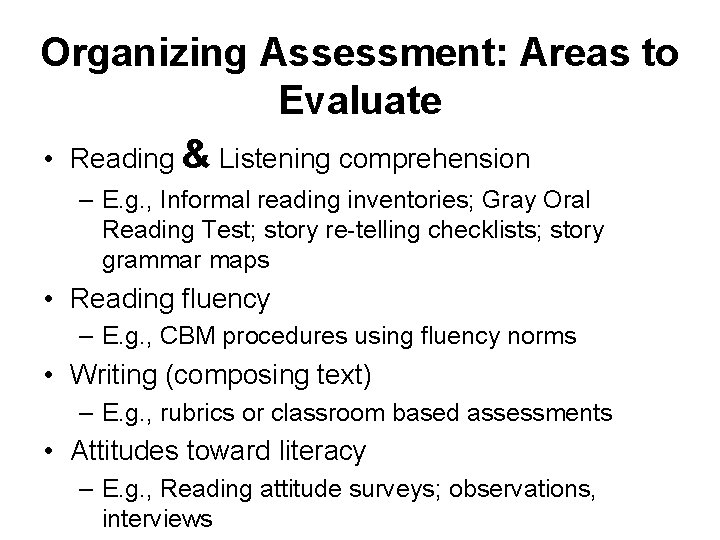
Organizing Assessment: Areas to Evaluate • Reading & Listening comprehension – E. g. , Informal reading inventories; Gray Oral Reading Test; story re-telling checklists; story grammar maps • Reading fluency – E. g. , CBM procedures using fluency norms • Writing (composing text) – E. g. , rubrics or classroom based assessments • Attitudes toward literacy – E. g. , Reading attitude surveys; observations, interviews
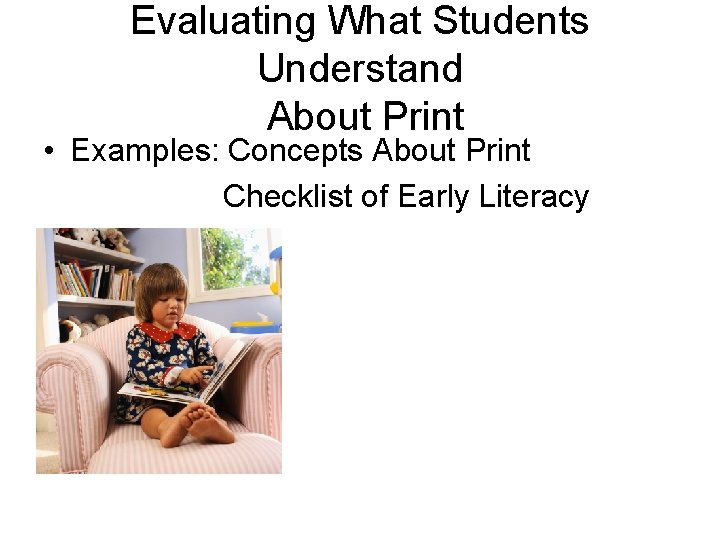
Evaluating What Students Understand About Print • Examples: Concepts About Print Checklist of Early Literacy
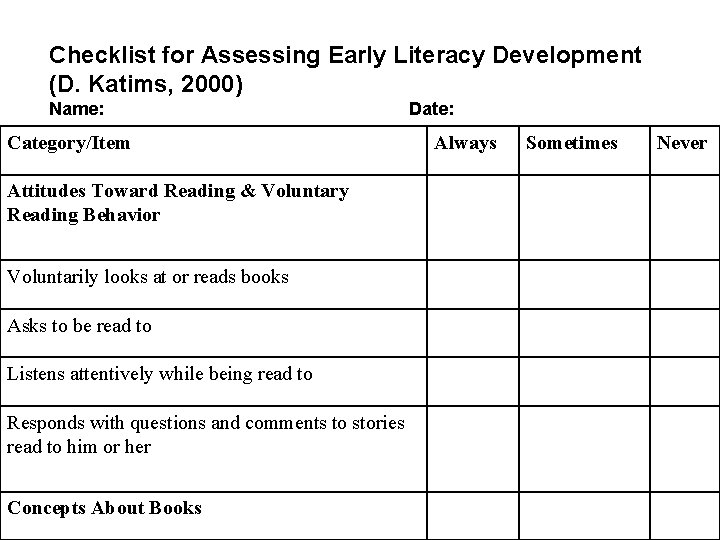
Checklist for Assessing Early Literacy Development (D. Katims, 2000) Name: Category/Item Attitudes Toward Reading & Voluntary Reading Behavior Voluntarily looks at or reads books Asks to be read to Listens attentively while being read to Responds with questions and comments to stories read to him or her Concepts About Books Date: Always Sometimes Never
Attitudes Toward Literacy • Parent and student interviews • Observation
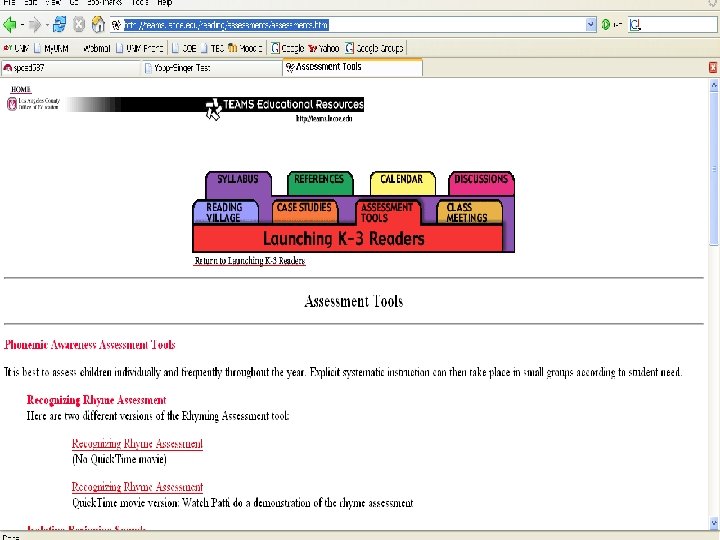
Phonological Awareness • Example: Yopp-Singer • Also see reading for next week (Copeland & Calhoon for additional ways to assess with students with complex communication needs)
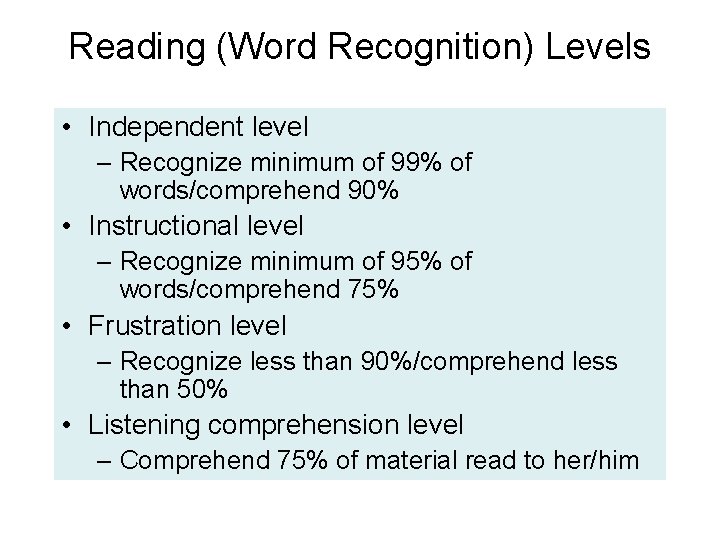
Reading (Word Recognition) Levels • Independent level – Recognize minimum of 99% of words/comprehend 90% • Instructional level – Recognize minimum of 95% of words/comprehend 75% • Frustration level – Recognize less than 90%/comprehend less than 50% • Listening comprehension level – Comprehend 75% of material read to her/him
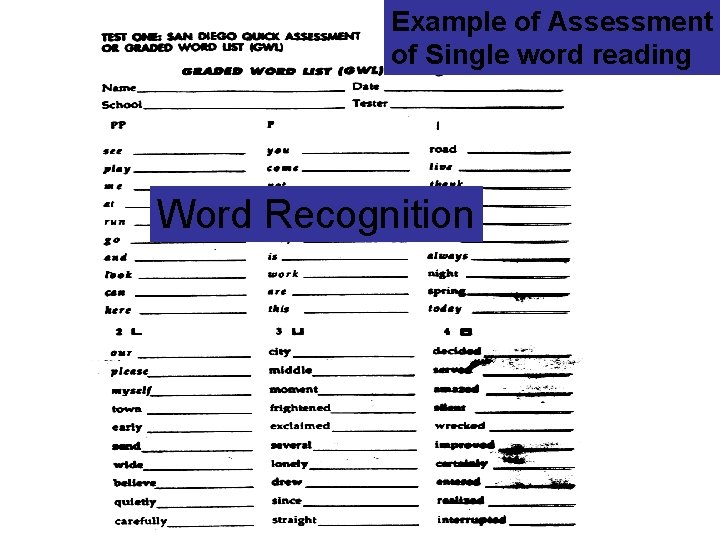
Example of Assessment of Single word reading Word Recognition
• Running Records – method of assessing oral reading skills – Looking at student’s errors (and analyzing to see what types they are): – self-corrections, – Repetitions and re-readings, – hesitations, and – requests for help
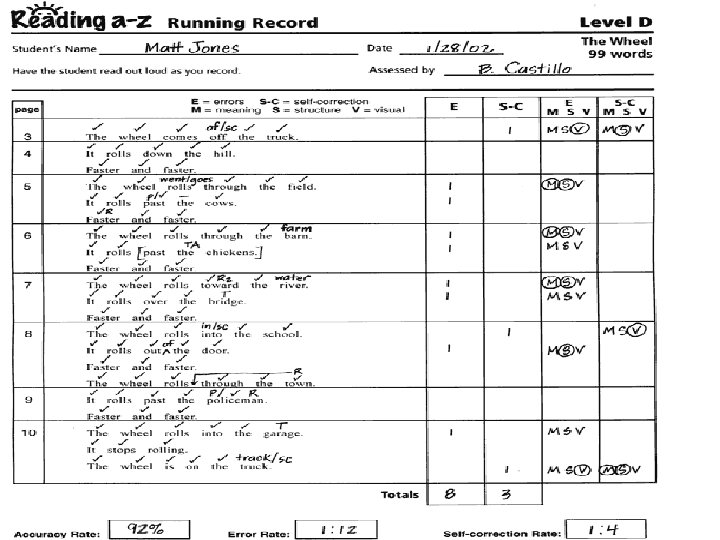
Running Records • Use material at student’s instructional level • Record student performance on top line/text on bottom line • Calculate % of errors • Can also examine comprehension w/ running records by using re-tellings, summarizing, etc.
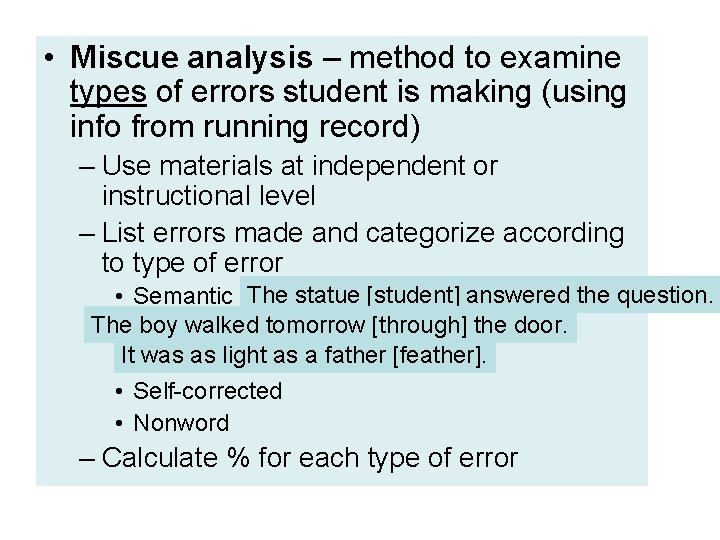
• Miscue analysis – method to examine types of errors student is making (using info from running record) – Use materials at independent or instructional level – List errors made and categorize according to type of error The statuerelated) [student] answered the question. • Semantic (meaning The boy walked tomorrow • Graphophonic (visual, [through] phonic) the door. was as light as a father [feather]. • It. Syntactic • Self-corrected • Nonword – Calculate % for each type of error
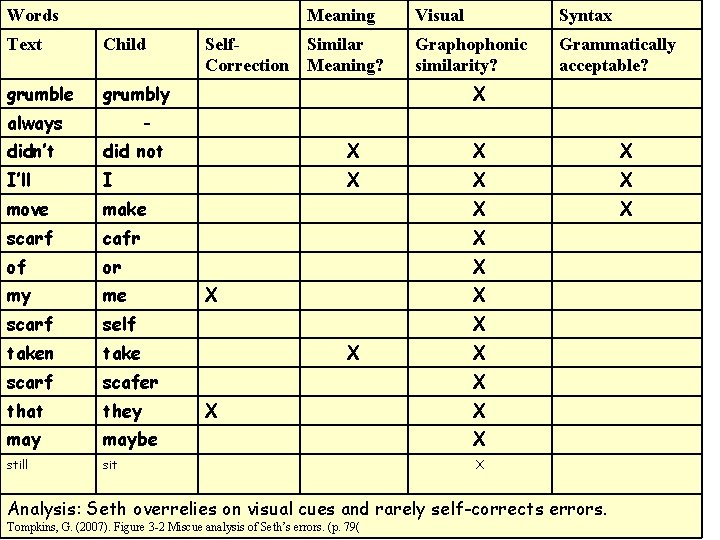
Words Text Child grumble grumbly always Self. Correction Meaning Visual Syntax Similar Meaning? Graphophonic similarity? Grammatically acceptable? X - didn’t did not X X X I’ll I X X X move make X X scarf cafr X of or X my me scarf self taken take scarf scafer that they maybe X still sit X X X X X Analysis: Seth overrelies on visual cues and rarely self-corrects errors. Tompkins, G. (2007). Figure 3 -2 Miscue analysis of Seth’s errors. (p. 79(
Informal reading inventory (IRI) – • Assess student’s reading level and reading and listening comprehension – Graded Word Lists (single words) – Graded Reading Passages • Reading comprehension • Listening Comprehension
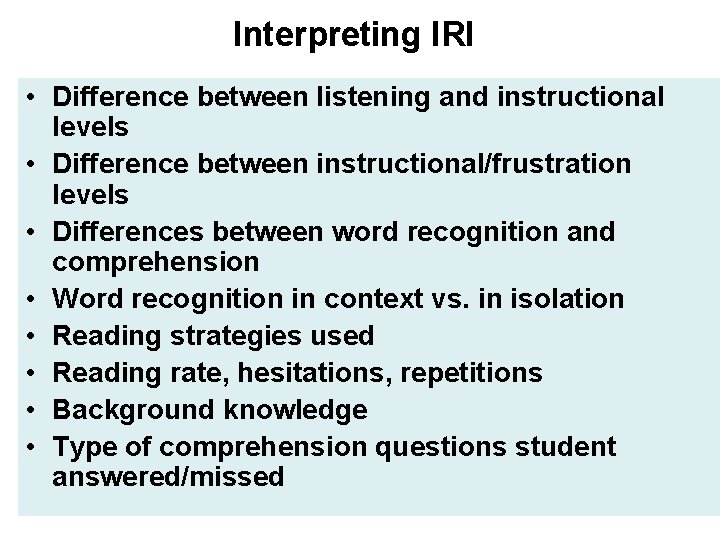
Interpreting IRI • Difference between listening and instructional levels • Difference between instructional/frustration levels • Differences between word recognition and comprehension • Word recognition in context vs. in isolation • Reading strategies used • Reading rate, hesitations, repetitions • Background knowledge • Type of comprehension questions student answered/missed
Alternate Ways to Assess Reading Comprehension • Re-telling (with/ or w/o picture support) • Think-alouds
Reading Fluency • Calculate rate (# of correctly read words/time) • Also observe phrasing (chunking), hesitations, prosody (stress and intonation)
Assessing Writing • Teacher-made rubrics and checklists