FAMILY PLANNING MTP Terminal Dr Pracheth R Outline



- Slides: 50
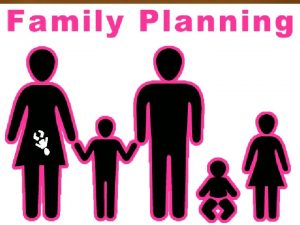
FAMILY PLANNING (MTP, Terminal) Dr. Pracheth R.
Outline • Medical Termination of Pregnancy • Miscellaneous • Terminal methods • Social aspects • Unmet need • National Programme
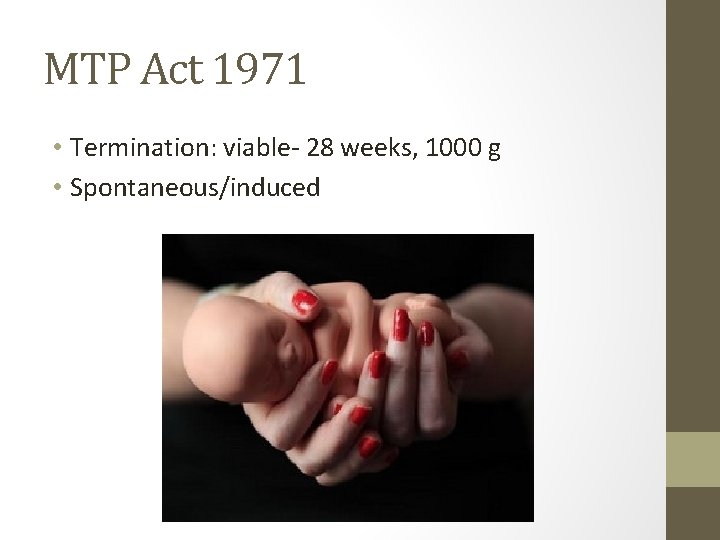
MTP Act 1971 • Termination: viable- 28 weeks, 1000 g • Spontaneous/induced
Continued…. . • Conditions: terminated • Persons: perform • Places
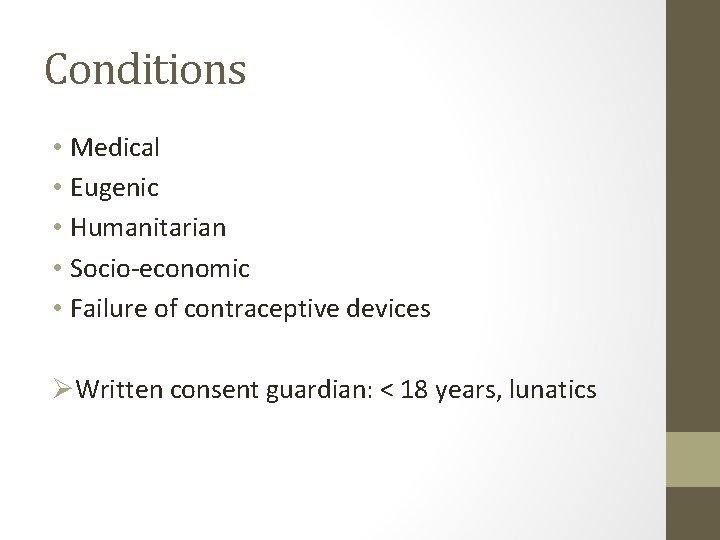
Conditions • Medical • Eugenic • Humanitarian • Socio-economic • Failure of contraceptive devices ØWritten consent guardian: < 18 years, lunatics
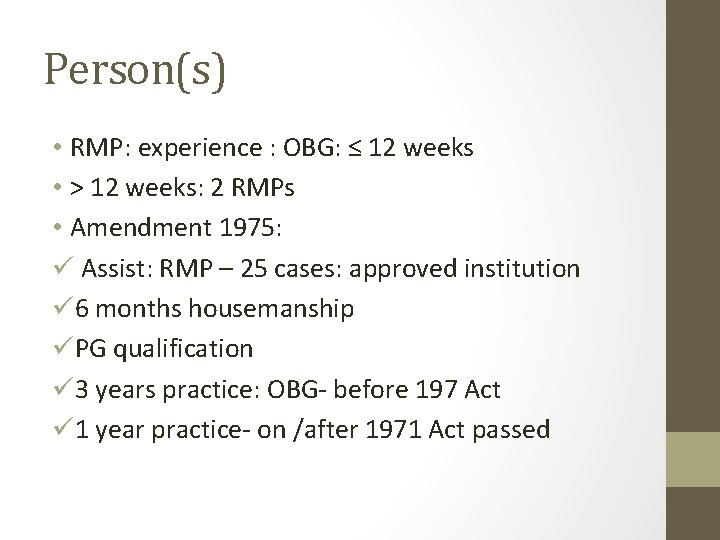
Person(s) • RMP: experience : OBG: ≤ 12 weeks • > 12 weeks: 2 RMPs • Amendment 1975: ü Assist: RMP – 25 cases: approved institution ü 6 months housemanship üPG qualification ü 3 years practice: OBG- before 197 Act ü 1 year practice- on /after 1971 Act passed
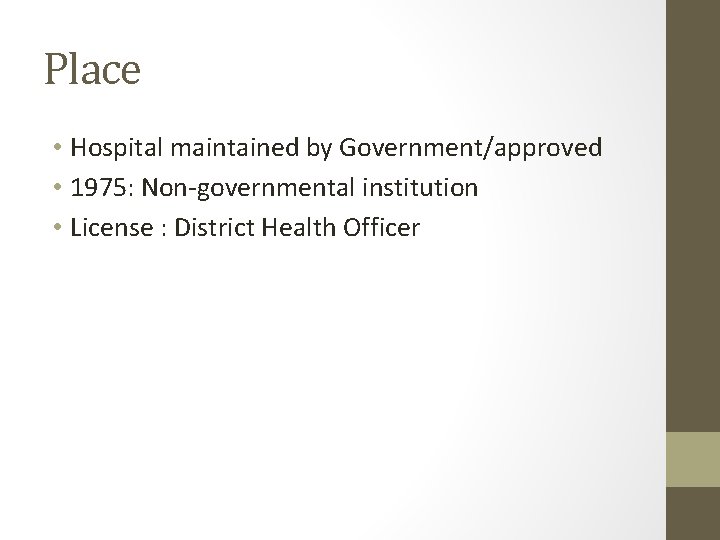
Place • Hospital maintained by Government/approved • 1975: Non-governmental institution • License : District Health Officer
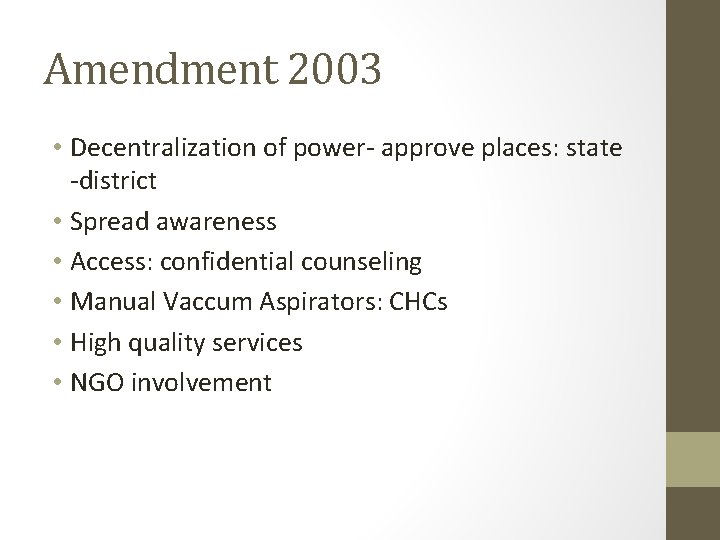
Amendment 2003 • Decentralization of power- approve places: state -district • Spread awareness • Access: confidential counseling • Manual Vaccum Aspirators: CHCs • High quality services • NGO involvement
Miscellaneous • Abstinence • Coitus interruptus üMale partner: withdraws before ejaculation üPre-coital secretion: sperm
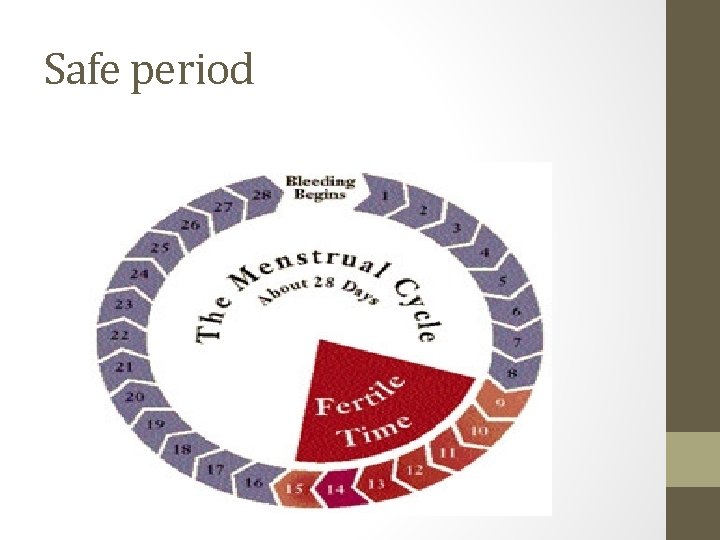
Safe period (Rhythm method) • Ovulation: 12 -16 days before onset of menstruation • Shortest cycle-18 days: first day-fertile period • Longest cycle-10 days: last day: fertile period • Woman: 26 -31 days
Safe period
Drawbacks • Menstrual cycles not always regular • Educated, responsible people • Compulsory abstinence: one half of every month -programmed sex • High failure rate: 9/100 women years • Ectopic pregnancy: conception late menstrual cycle • Embryonic abnormalities: conception-over aged sperm/ovum
Natural family planning • Self-recognition: signs, symptoms • Associated with ovulation • Help in finding out: fertile period begins üBasal Body Temperature method üCervical mucus method üSymptothermic method
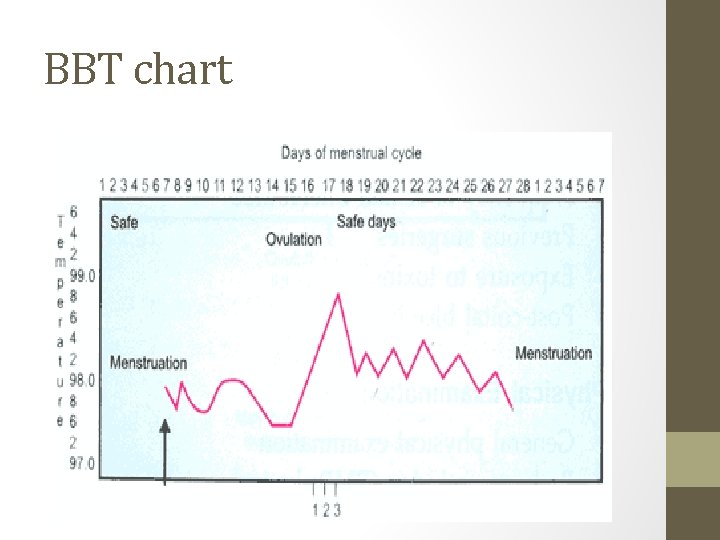
Basal Body Temperature method (BBT) • Rise of BBT: time of ovulation • Increase in progesterone • Small rise temperature: 0. 3 -0. 5 degree C • Before getting out of bed: morning • Reliable: intercourse- post-ovulatory period • 3 days after ovulatory temperature risebeginning of menstruation
BBT chart
Drawback of BBT • Abstinence: entire pre-ovulatory period • Only few couples use this
Cervical mucus/ billings/ovulation • Change in characteristics: cervical mucus • Time of ovulation: watery, clear • Raw egg white, smooth, slippery • After ovulation: progesterone • Thickens, lessens in quantity • Tissue paper: wipe inside of vagina • Assess quantity and characteristics of mucus • High motivation
Symptothermic method • Temperature+cervical mucus+ calendar • Double check • Conclusion: ü Discipline üUnderstanding üEducated
Breastfeeding • Prolongs postpartum amenorrhea • Only 5 -10% conceive • Risk: month preceding resumption of menstruation • Once menstruating: no protection
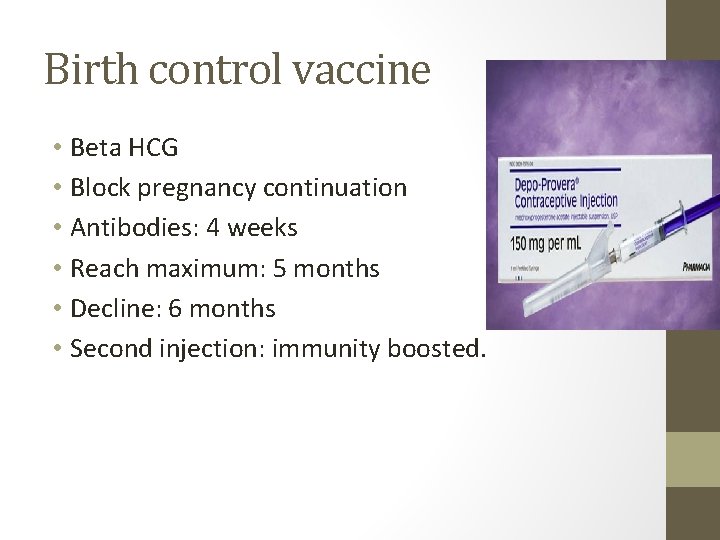
Birth control vaccine • Beta HCG • Block pregnancy continuation • Antibodies: 4 weeks • Reach maximum: 5 months • Decline: 6 months • Second injection: immunity boosted.
Terminal (sterilization) • Female: 85% • One-time method • No sustained motivation • Most effective protection • Risk of complication less
Guidelines • Free of charge in government institutions. • Issued time to time: ü Husband age: not <25 years and > 50 years üWife age: not <20 years and >45 years ü 2 living children ü 3/ more children: lower limit relaxed üConsent : spouse
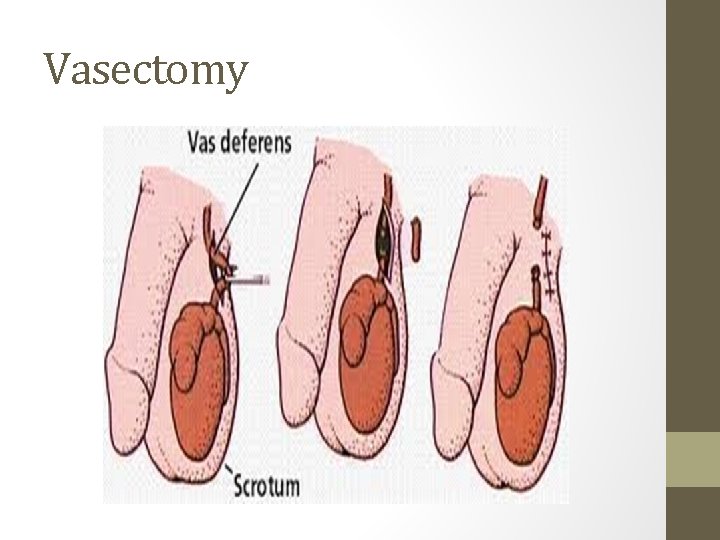
Male sterilization (Vasectomy) • Permanent contraception for men • Simple, under local anaesthesia • Strict asepsis, no mortality risk • Small incision in scrotum, locate vas deferens, block- cutting/tying/cautery.
Principle • Blocks vas deferens : carries sperm to penis • Sperm kept out of semen • Steps: üPiece of vas removed üEnds ligated, fold back on themselves, sutured into position-cut ends face away from each other
Vasectomy
Continued…. . • Not sterile: 30 ejaculations • If properly performed: 100% effective • Sperm production, hormone output not affected. • Sperm : destroyed- phagocytosis. Rate increased post vasectomy. • Simpler, faster, less expensive
Complications • Operative: pain, haematoma, infection • Sperm granules: ü 10 -14 days after operation üPain, swelling, mass • Spontaneous recanalization of vas
Failure • Very low: 0. 15/100 women years • Mistaken identification of vas • Thrombosed vein/thickened lymphatics
Post-operative advice • Sterile: 30 ejaculations • Contraceptives: till aspermia. • Avoid bath : upto 24 hours of operation • T-bandage/scrotal support-15 days, clean , dry • Avoid cycling/ lifting heavy weights: 15 days • Sutures removed: 5 th day of operation
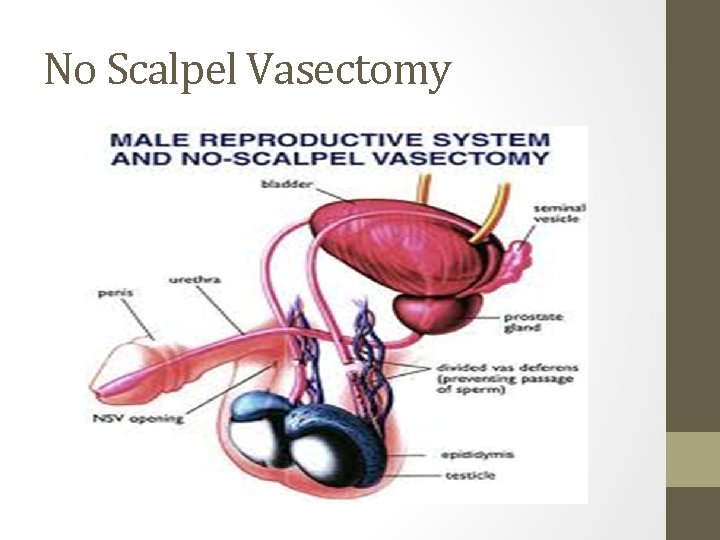
No Scalpel Vasectomy
No Scalpel Vasectomy • Vas grasped: specially designed forceps • Stretched skin over vas: punctured with forceps • No skin suturing • Less time, fast recovery : less tissue injury • More skill
Continued… • Performed under local anaesthesia • Safe, convenient, acceptable • Voluntary basis- Family Welfare Programme • Medical personnel : to be trained • If available at peripheral level: increased acceptance in country.
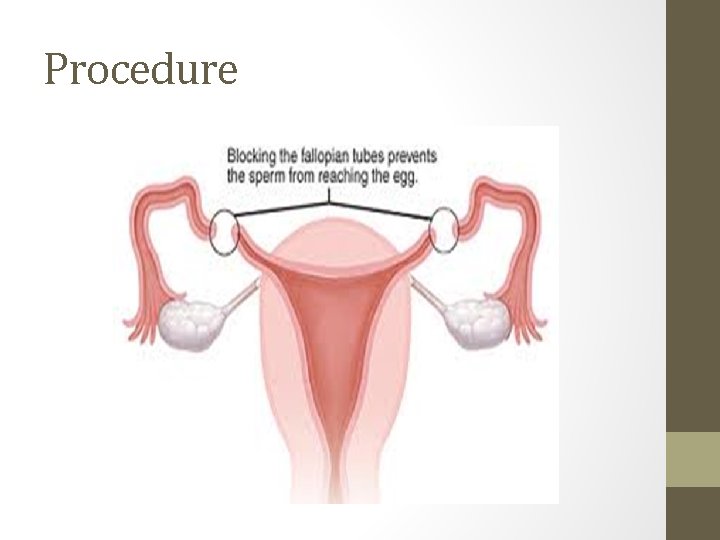
Female sterilization (Tubectomy) • Permanent contraception for women • Interval postpartum/time of abortion • Principle: üOcclusion of fallopian tube üEggs from ovaries can’t move down tubes: do not meet sperm
Procedure
Types of tubectomy • Abdominal: ü Conventional ü Minilaparotomy • Vaginal • Laparoscopy • Minilaparotomy
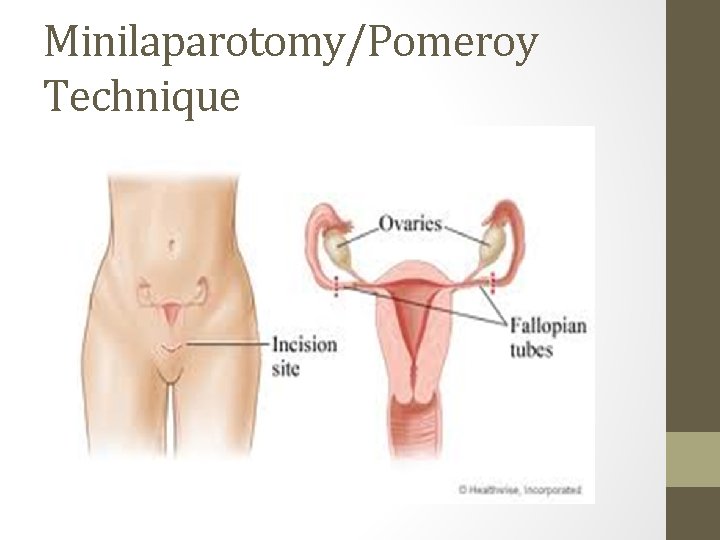
Minilaparotomy/Pomeroy Technique
Continued…. . • Modification: abdominal tubectomy • Much simpler, small incision: 2. 5 - 3 cms under local anaesthesia • PHC level, mass campaigns • Advantage : safety, efficient, ease in dealing complications
Advantages • Short operating time • Short stay in hospital • Small scar
Social aspects • Deep-rooted religious beliefs : larger families • Children: gift of God • Poor man’s wealth • Asset for parents- dependency • Ignorance, lack of communication.
Unmet need for family planning • Women: sexually active • Prefer avoiding pregnancy • Lack of awareness, support, facilities • Opposition: husband/relatives • Applied to married women
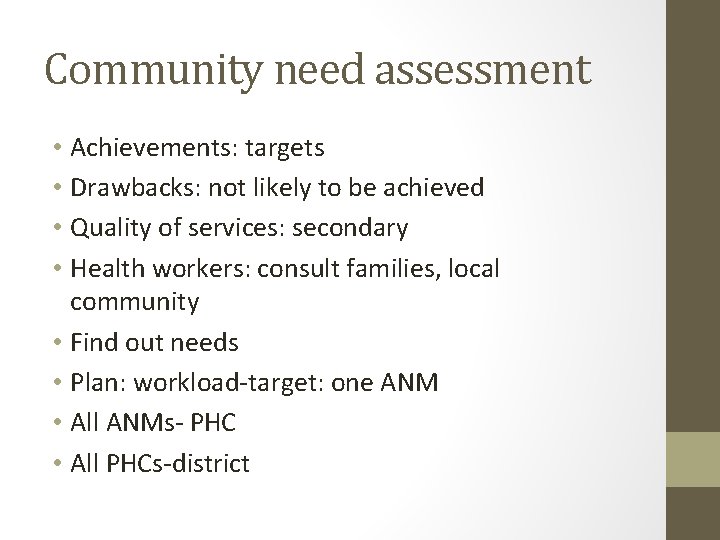
Community need assessment • Achievements: targets • Drawbacks: not likely to be achieved • Quality of services: secondary • Health workers: consult families, local community • Find out needs • Plan: workload-target: one ANM • All ANMs- PHC • All PHCs-district
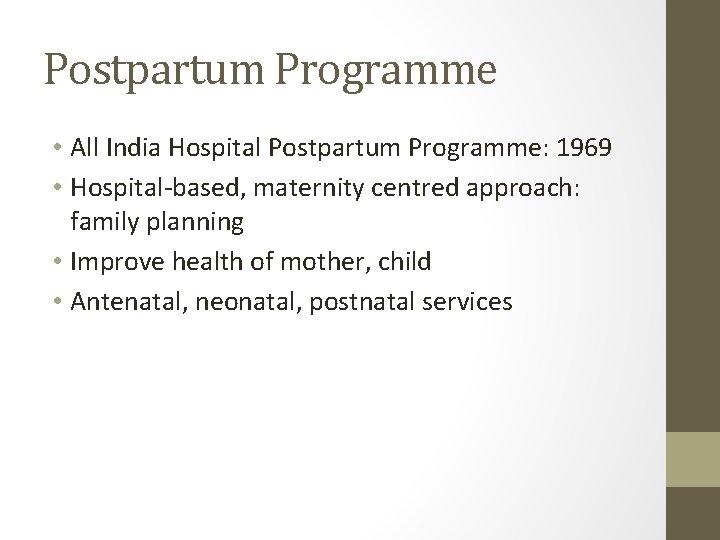
Postpartum Programme • All India Hospital Postpartum Programme: 1969 • Hospital-based, maternity centred approach: family planning • Improve health of mother, child • Antenatal, neonatal, postnatal services
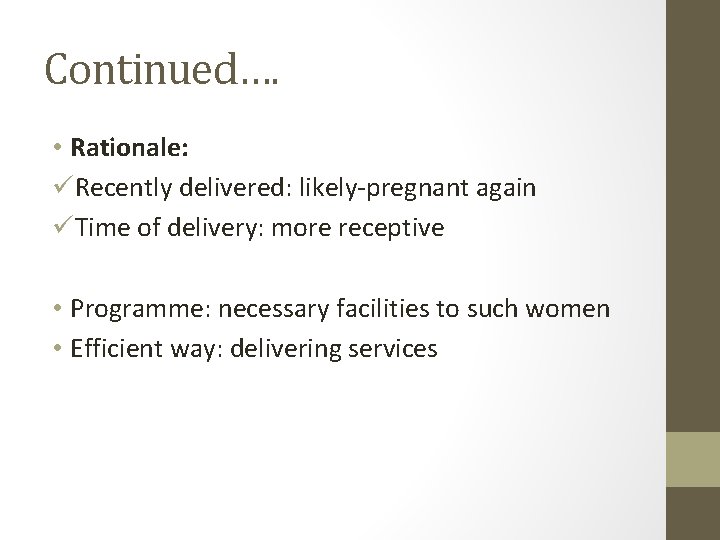
Continued…. • Rationale: üRecently delivered: likely-pregnant again üTime of delivery: more receptive • Programme: necessary facilities to such women • Efficient way: delivering services
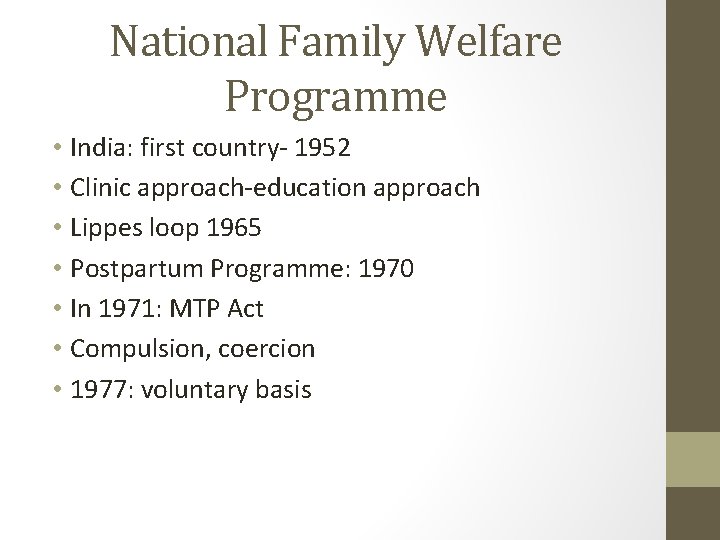
National Family Welfare Programme • India: first country- 1952 • Clinic approach-education approach • Lippes loop 1965 • Postpartum Programme: 1970 • In 1971: MTP Act • Compulsion, coercion • 1977: voluntary basis
Continued…. . • National Health Policy: 1982 • NRR: 1 by 2000 – 2 child norm • Universal Immunization Programme: 1985 -86 • In 1992: Child Survival and Safe Motherhood Programme • RCH: need based, client oriented • Cafetaria approach
Questions 1. Explain in detail about MTP Act (6 marks). 2. Explain natural family planning methods (3 marks) 3. Describe calendar method (3 marks) 4. Unmet need of family planning (3 marks) 5. Community Needs Assessment Approach (3 marks)
Questions 6. Guidelines for male sterilization ( 3 marks) 7. No Scalpel Vasectomy (2 marks) 8. Minilap operation (2 marks)
Summary
THANKS